
Why go Greenwood Primary School? One compelling reason is that pupils do not merely read stories; they are encouraged to question ideas inside the stories. Greenwood’s BLISS programme uses bilingual literature, Socratic Questioning and Philosophy for Children from Primary 1 to Primary 6. Its companion WHIZZ programme asks pupils to use design thinking and values to solve problems for other people. For a child in Woodlands who likes asking “But why?” or wants to understand other points of view, that pairing can make this school a particularly interesting fit.
Parents researching Greenwood Primary School reviews, Woodlands Drive 62 Primary 1 admission, BLISS bilingual literature, Philosophy for Children P4C or the WHIZZ leadership programme can begin with the school at 11 Woodlands Drive 62, Singapore 737942. The school’s April 2026 BLISS page identifies a P1–P6 Term 1–3 curriculum built around carefully selected stories and thinking routines. Its August 2026 WHIZZ page names the Discover, Define, Develop and Deliver design-thinking sequence, along with projects intended to help the community.
Did you know? Greenwood explicitly teaches pupils to use evidence when explaining an opinion, consider alternative perspectives and reflect on their own thinking. In 2026 it also featured Celebrating OWLETS, a project-work showcase, and photographs of pupils interviewing community partners and making prototypes. The important detail is not that children can build a display. It is that they can begin with another person’s needs, reason through a possible response and explain the choice.
Greenwood in a minute: specific facts for your shortlist
| Campus | 11 Woodlands Drive 62, Singapore 737942 |
|---|---|
| Applied Learning Programme | BLISS — Bilingual Literature Appreciation Student Series |
| BLISS structure | P1–P6, Terms 1–3; Socratic Questioning, Philosophy for Children and thinking routines |
| BLISS learning aims | Evidence-based reasoning, thoughtful questions, different perspectives, communication and collaboration |
| Learning for Life Programme | WHIZZ — Thinking, Inventive and Zealous KidZ who serve the community |
| WHIZZ processes | Design Thinking, Systems Thinking, Appreciative Inquiry and the Four Player Model |
| Project pathway | Discover → Define → Develop → Deliver; authentic community issues and prototypes |
| Published 2026 showcase | Celebrating OWLETS, showing pupil project work |
| Local transport decision | Confirm the Woodlands Drive 62 school gate, actual home journey and after-school care |
| Admission | MOE P1 registration eligibility and vacancies |
The first unusual strength: philosophy can begin with a picture book
A parent may hear “philosophy” and imagine a university lecture. A six-year-old does not need that. Imagine two characters in a story who both believe they have been treated unfairly. One pupil says the first character is right, another disagrees. An adult could simply declare the answer. Or the teacher could ask, “What in the story makes you think that?” and “Could both characters have reasons?” Suddenly, reading has become an exercise in evidence and perspective.
Greenwood’s BLISS ALP page, updated 30 April 2026 states that its literature curriculum uses Socratic Questioning and Philosophy for Children (P4C) to help pupils think critically and reflect. It also connects stories to school values including wisdom, empathy, graciousness, resilience, responsibility and open-mindedness. The specific classroom discussion above is an independent example, not a reported Greenwood lesson.
This is a meaningful way to think about reading. Decoding and vocabulary must come first, but comprehension grows deeper when a child can question a character’s motive, compare explanations and support an interpretation. A pupil who says “Because I think so” can be gently taught to return to the text and look for relevant information.
The programme runs across six years, rather than one enrichment afternoon
The school’s 2026 page states that Primary 1 to Primary 6 pupils use the BLISS curriculum during Terms 1 to 3. Teachers choose books and texts and use discussion techniques designed to elicit questions, reasons and reflection. That is important for a child’s learning continuity: a simple question such as “What makes that fair?” can become more sophisticated as pupils grow older.
At lower-primary levels, a pupil may need to identify what happened in the story and how a character felt. In middle primary, the child can learn to make a claim and offer a relevant reason. By upper primary, the same habit can support evaluating conflicting evidence or considering why someone may disagree. These are age-appropriate learning possibilities, not an unpublished official breakdown of Greenwood’s timetable.
BLISS can support English and Mother Tongue learning in a bilingual environment, but parents should ask precisely how the programme works in their child’s language combination and how language barriers are scaffolded. A literature discussion is only inclusive when pupils can access the text and communicate with appropriate support.
Did you know a thoughtful reader need not agree with the teacher?
A child who disagrees politely is not necessarily being difficult. They may have noticed something the discussion missed. Socratic Questioning can encourage learners to explain why a claim is plausible, distinguish assumptions from observations and reconsider a first conclusion. These are excellent habits, provided the school culture remains respectful and the tasks match the child’s developmental level.
A discussion should not become a contest in who can speak fastest. A reflective child may prefer time to think, while another needs help forming a sentence or listening to peers. Ask whether teachers allow different participation routes and how they respond to a pupil who offers an unusual but well-reasoned view.
The second strength: WHIZZ makes thinking useful for the community
Greenwood’s WHIZZ LLP, updated 26 August 2026 describes a values-based approach combining design thinking, systems thinking and reflection. The school calls it We are Thinking, Inventive and Zealous KidZ who serve the community. Instead of treating service as a single charity drive, WHIZZ aims to help pupils examine a need, propose a solution and learn through doing.
WHIZZ includes CCE in the Woods, which uses a school values curriculum and habits-based reflection. The school’s August page describes appreciative inquiry, a Four Player Model and systems thinking in upper primary. These are tools that encourage children to notice relationships and consider how a decision affects other people.
For example, a pupil might want to improve a shared playground area. Before drawing a new structure, the child could ask who uses it, which problems are observed and what would be safe and feasible. This is an illustrative example of the design-thinking approach, not a claim about a particular Greenwood project. The educational purpose is to turn a bright idea into something supported by evidence and empathy.
2026 evidence: a real showcase and community interviews
The school reports that it collaborated with Republic Polytechnic in 2024 to review and enhance project work. That’s a dated collaboration, not a claim about a brand-new partnership. Its 2026 page includes photographs of pupils learning video editing from polytechnic students, interviewing partners to understand needs, working on prototypes and preparing a Celebrating OWLETS 2026 showcase. These details support a more tangible picture of the programme.
The school presents the project-work stages as Discover, Define, Develop and Deliver. The first two are easy to overlook. A pupil may be eager to make a poster or prototype, but making it too early can solve the wrong problem. Asking the intended user what they actually need, and defining the challenge clearly, are part of what makes the work useful.
Project work can also reveal a weakness that a worksheet hides. A pupil may know the Science facts but find it difficult to organise a group explanation. Another may be confident in a discussion but struggle with written documentation. Teachers can use that information to guide further learning. Parents should ask what individual feedback is given inside group projects.
BLISS and WHIZZ form a useful bridge between language and action
The connection between the programmes is more than a matching acronym. In BLISS, pupils practise considering different perspectives and supporting their ideas with evidence. In WHIZZ, they can apply those habits to people and real constraints. Reading a story about fairness and asking how a neighbour experiences an everyday problem use different content but related intellectual tools.
That’s why this school may appeal to a child who likes words as much as making things. Literature need not be an escape from reality; it can be a way to practise seeing the world through someone else’s eyes. Making a prototype need not be all about gadgets; it can express care for a real person.
Who might find a particularly good fit at Greenwood?
- The question-asker: loves stories and is not satisfied with a one-word explanation.
- The thoughtful communicator: has ideas but needs practice organising evidence and responding to other views.
- The empathetic maker: wants to build something useful after understanding a real need.
- The child who enjoys collaborative work: may like discussing books, investigating issues and making shared projects.
- The Woodlands family: can manage the Drive 62 campus, class timings and care arrangements consistently.
School fit also requires strong reading and Mathematics foundations
A clever question about a story is valuable, but pupils still need to read fluently, recognise vocabulary, construct sentences and understand the core curriculum. A child who struggles to decode text cannot benefit fully from a literature discussion without appropriate access and support. Likewise, a project involving measurements demands secure number sense and clear mathematical reasoning.
A parent should ask how Greenwood identifies learners who can reason orally but need help with writing, or pupils who enjoy project work but cannot yet read complex instructions independently. The strongest school experience links enrichment with careful diagnosis, foundational teaching and timely correction.
The practical part: is the Woodlands routine sustainable?
Greenwood’s 2026 school contact page confirms 11 Woodlands Drive 62. A postcode can help you start planning, but it does not tell you how a six-year-old will experience morning traffic, rain, crossings or pickup. Walk the route from your actual home where possible and confirm the reporting gate and daily timetable with the school.
If the child needs student care, check availability and the transition from lessons into afternoon care. If a caregiver will collect the child, plan a realistic fallback for unexpected delays. A child with energy left for reading, play and family time may find it easier to enjoy a demanding thinking programme.
Seven questions worth asking on a school visit
- How do P1 teachers introduce Socratic Questioning using stories children can readily understand?
- How are bilingual text choices adapted for pupils with different Mother Tongue backgrounds?
- What does good pupil reasoning look like, and how does a teacher respond to an unusual answer?
- Do all levels have BLISS lessons in Terms 1–3 for the forthcoming cohort, as the 2026 website describes?
- Which WHIZZ projects involve the whole class and which involve selected pupil leaders?
- How do teachers assess a child’s actual contribution to a team project and repair language or Mathematics gaps?
- What reporting times, student-care arrangements and travel routes will apply to the registration year?
The essential admission check
Being a good fit is not the same as obtaining a Primary 1 place. Use MOE’s official P1 registration portal to determine eligibility, the child’s recognised home address, vacancies and the result of any ballot. The 2026 registration exercise was for children entering P1 in 2027; the 2027 exercise covers the 2028 cohort.
MOE announced on 10 September 2026 that most schools will reserve 60 rather than 40 places in Phase 2C from the 2027 exercise, with a smaller-intake exception. The separate two-track arrangement applies only at 12 named schools. None of the four schools discussed here is on that initial 12-school list. Use the dated MOE policy notice and check subsequent updates rather than assuming that a historical ballot predicts admission.
Our verdict: Greenwood Primary School is a strong candidate for a learner who enjoys reading, questioning and connecting ideas to the wider world. Its distinguishing feature is the link between philosophical discussion and practical service-oriented problem-solving. Parents should test the pupil’s access to the core curriculum and everyday school routine alongside those opportunities. A good school is a good fitting school.
Continue exploring this school—and three alternatives
Keep the wider Why go Greenwood Primary School? school profile as the school-facts reference. Use How to decide which Primary School to go to? | Greenwood Primary School to compare admission, support and daily routine. This focused article does a different job: it explains exactly why the programmes could suit a particular child, without rewriting the original guides.
The other school-fit articles in this batch: Gongshang Primary School · Haig Girls’ School · Henry Park Primary School. They are alternatives for different children, not a school ranking.
The broader approach also connects to Why go Swiss Cottage Secondary School? and the education pathways collection. Remember that Primary 1 registration and Secondary 1 posting are different systems.
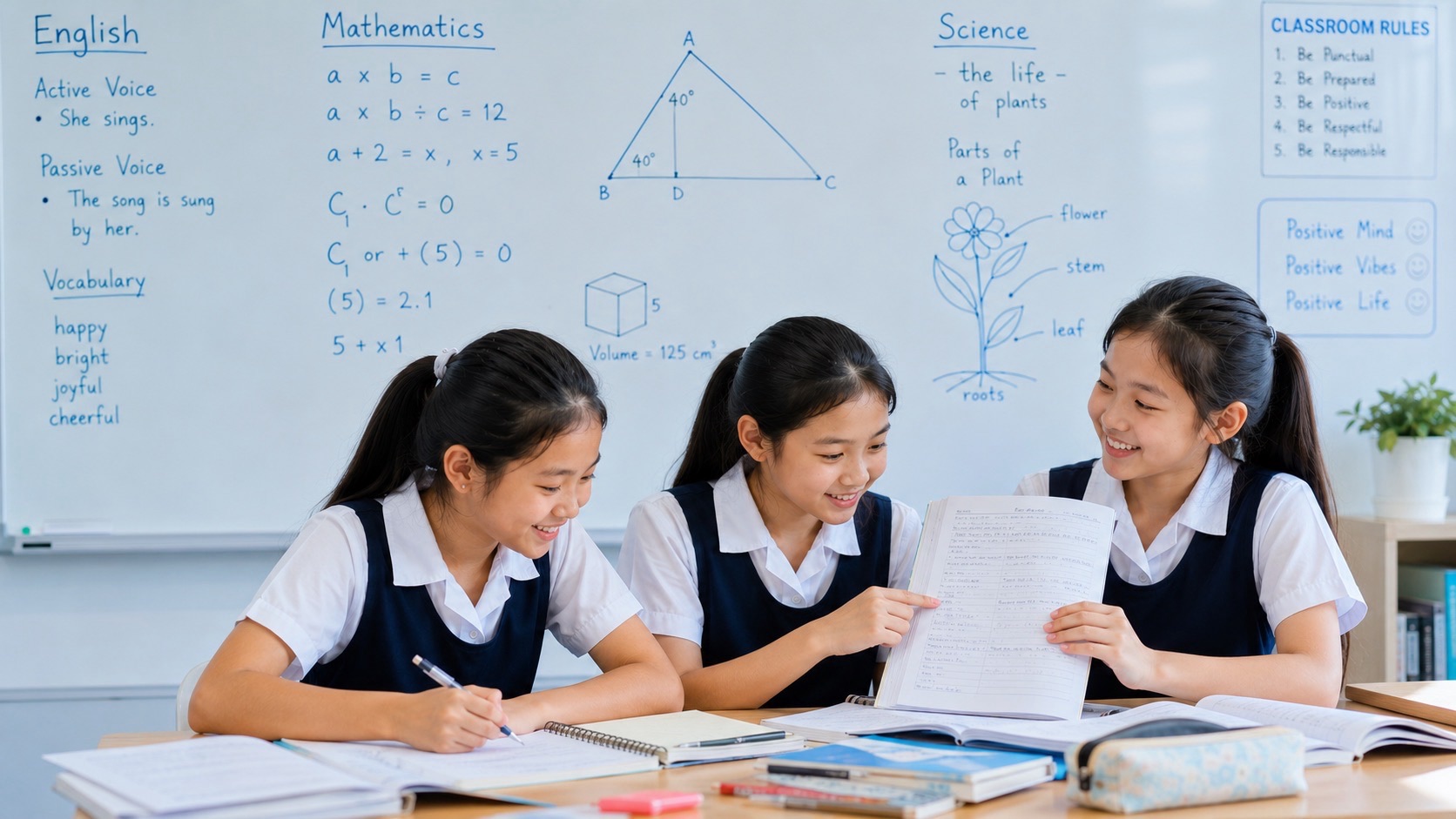
Sources and fact-check record — 10 October 2026
School-specific claims were checked with BLISS (30 April 2026), WHIZZ (26 August 2026), official address and contact and MOE P1 registration. The Republic Polytechnic curriculum review is identified as a 2024 collaboration, and the project showcase is described as a 2026 example. Hypothetical teaching situations and child-fit judgments are independent eduKate explanations, not measured pupil outcomes or school endorsements. The featured three-pupil photograph illustrates eduKate classroom learning; it does not identify Greenwood pupils.