
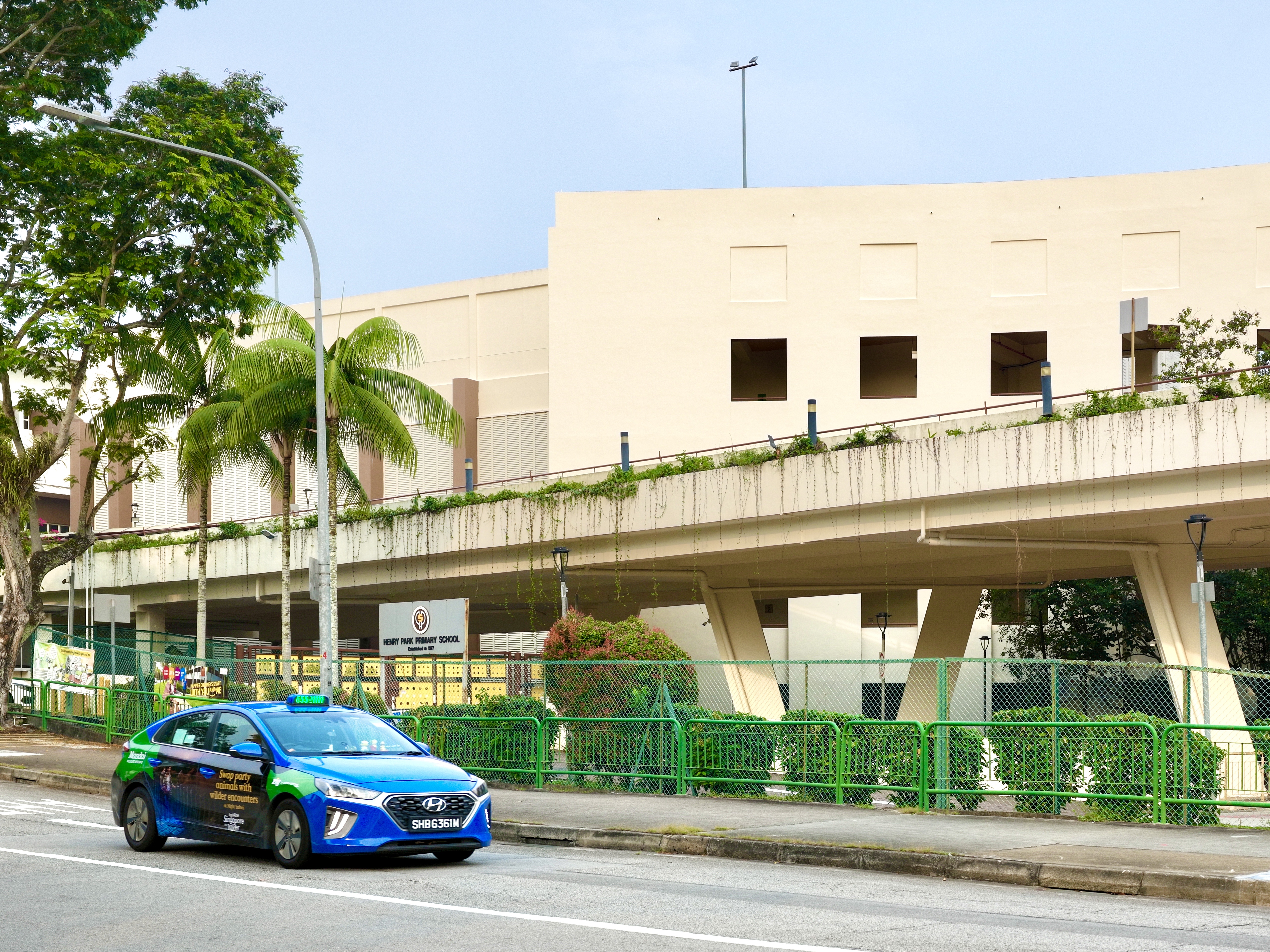
Why go Henry Park Primary School? One strong, specific reason is its combination of Science for Life and Sports4Life. The school’s sustainability Applied Learning Programme gives pupils a progression from lower-primary recyclable-material designs to P3 hydroponics, P4 rice cultivation and investigative Science. Its sports programme gives all P1–P3 pupils modular gymnastics and P4–P6 pupils exposure to different team sports, while offering further development routes for interested or identified athletes. For a child who enjoys asking scientific questions and learning by doing, that is a substantial educational fit to investigate.
Parents researching Henry Park Primary School reviews, Holland Grove Primary 1 admission, Henry Park science ALP, Sports4Life, Gifted Education Programme changes or P1 registration in the Holland Road and Buona Vista area need to separate three facts. The school is at 1 Holland Grove Road. Its Science for Life sustainability activities are explicitly described as Tier 1 for all pupils. And although the school still publishes information about its existing Gifted Education Programme in 2026, MOE is replacing the former primary GEP entry-and-transfer model from 2027. A family planning 2028 Primary 1 entry should not base its decision on an outdated promise of entering the old GEP in P4.
Did you know? Henry Park’s 2026 Science page names toy and bridge design using recycled materials at P1, flower studies at P2, hydroponics at P3, rice cultivation at P4 and a Young Investigators programme across P3–P6. In sports, pupils move from foundational gymnastics into games such as Tchoukball, Frisbee, Floorball, Rounders and Basketball. The story is much more useful than a school ranking: pupils are being offered ways to understand the natural world and learn disciplined cooperation through physical activity.
First, the school-specific facts
| Location | 1 Holland Grove Road, Singapore 278790 |
|---|---|
| Applied Learning Programme | Science for Life at HPPS — environmental sustainability, inquiry, design thinking, STEM and problem-solving |
| P1–P2 Science experiences | Recyclable toy and bridge models at P1; flowers, plant parts and observation at P2 |
| P3–P4 Science experiences | P3 Every Child a Seed and hydroponics; P4 rice cultivation and investigation of toy-car speed |
| P3–P6 approach | Young Investigators Programme: investigating variables, fair tests and real problems |
| Science extension | Selected interest/talent routes, including STEM training, school Eco/Green Monitors and research/competition opportunities |
| Learning for Life Programme | Sports4Life@HPPS, guided by the school’s RICE values |
| Sports for all pupils | P1–P3 modular gymnastics; P4–P6 modular sports and team games |
| Sport-specialist route | Selected athletes and sports leaders can receive additional training |
| GEP transition | Existing GEP cohorts continue under the transition, but new P4 entry from 2027 moves to MOE’s refreshed high-ability model |
| Primary 1 admission | MOE phases, vacancies, address rules and balloting, independently of programme appeal |
A science programme with an honest progression: start with something you can see
A child does not need complicated laboratory equipment to begin learning the habits of an investigator. A paper bridge that bends under a small load is already a problem worth thinking about. What changed? Where did the material fail? Could a different fold make it stronger? Those questions teach how an idea becomes a testable claim.
The school’s Science for Life ALP, updated 16 August 2026 begins its all-pupil Tier 1 with lower-primary activities linked to Science, sustainability and Mathematics. At P1, pupils design a toy and a bridge using recycled materials, making links to shapes and length. At P2, the school describes studying flower structures and creating a new flower design after investigating plant parts.
The attraction is not the finished object. It is the opportunity to notice a constraint, make a first attempt and explain why a change is useful. For an eager child, that can turn “I like Science” into a habit of checking claims. For a child who dislikes unfamiliar questions, carefully structured investigations can show that an initial mistake is information rather than evidence of inability.
Primary 3: hydroponics links a plant to a larger food system
Henry Park’s 2026 ALP page describes P3 pupils growing plants through Every Child a Seed and using a hydroponics system to grow vegetables. Those activities link to plant life cycles and diversity. Growing food is naturally interesting to many young children, but a good Science lesson has to go beyond giving the plant enough water.
What conditions does it require? What happens when a condition changes? Which comparisons would tell us something reliable? A teacher can show pupils how an observation becomes a question and then a reasonable claim. These are independent prompts that illustrate the programme’s educational possibilities—not a literal lesson plan taken from a school textbook.
Sustainability also creates a reason to think about resources. Hydroponics can prompt questions about land use, water, nutrients and the people who operate food systems. Primary pupils need age-appropriate explanations, not adult engineering detail. The goal is to develop reliable curiosity.
Primary 4: did you know Henry Park studies rice cultivation?
Rice may seem ordinary at mealtimes. Yet cultivating it requires biological conditions and human effort that are often invisible when rice arrives neatly packed in a supermarket. Henry Park’s ALP says P4 pupils grow rice in the school compound, connecting their work to plant reproduction, plant systems and food security. This is one of the most distinctive examples on the official page.
The educational question is not merely whether the rice harvest is large. A child might investigate which parts of the plant matter, why the crop requires particular conditions and what makes the task difficult. Parents could ask teachers whether pupils maintain plants over time, keep observation journals or connect the experience to Singapore’s food resilience. Those implementation details should be verified for the coming year.
The school also lists P4 toy-car design and speed investigation under its Young Investigators programme. A small car rolling down a slope is a chance to introduce fair tests, measured distances and variables. It trains a different part of Science than growing rice, but both teach pupils to seek evidence rather than guess.
Primary 5 and 6: the investigator should become more independent
The Young Investigators Programme operates across P3–P6. Henry Park describes P3 learning about variables and fair tests, P4 speed investigations, P5 STEM-based environmental investigative projects and P6 consolidation of earlier investigative processes. This is an intelligible educational route: each stage expects pupils to use more of the method themselves.
A student who can follow a teacher’s experimental demonstration may still struggle to design a fair comparison. One might change two variables at once and assume a surprising result proves the original idea. Another may observe correctly but find it hard to write a clear conclusion. These are real learning gaps that the teaching process can address.
Parents should therefore ask for ordinary pupil work: an early prediction, a record of what was tested, an explanation of why the comparison was fair and a corrected conclusion. Such evidence is more informative than an impressive display without the thinking behind it.
All-pupil Science and specialist opportunities are not the same
The school’s ALP is explicit that its Tier 1 programmes are for all students. It separately describes Tier 2 pathways based on interest and talent, such as environmental STEM training, an edible garden, robotics for sustainable-living solutions and app development for a garden trail. It also names Eco and Green Monitors who take responsibility for particular school sustainability activities.
This distinction protects families from exaggerated expectations. A new P1 pupil can access the core curriculum; that does not mean the child automatically joins a competition team, learns every robotics tool or becomes an environmental ambassador. Parent questions should focus first on whole-cohort learning, then on how further opportunities are identified and offered.
The school’s ALP page also contains a Future Plans section covering possible additions such as aquaponics and deeper STEM or coding activities. A plan is not the same thing as a confirmed current programme. We have not treated those proposed additions as guaranteed experiences for an incoming child.
Sports4Life: why the school makes physical education part of the story
Henry Park’s Sports4Life LLP, updated 22 July 2026 says the programme uses experiential learning with reflection, practice and feedback. It is built around the school’s RICE values: Respect, Integrity, Care and Excellence. These are valuable in sport because pupils can see immediately how their behaviour affects another player.
A child can learn the rules and still respond badly when losing. Another may be naturally coordinated but struggle to include a less experienced teammate. Sportsmanship is not simply a moral slogan; it can be taught through specific moments—accepting a referee’s decision, explaining an error kindly and helping others practise.
The school grounds its approach in the experiential learning cycle: try something, observe what happened, think about what to improve and attempt again. That’s a useful link to its Science ALP. In both, learning is strongest when a pupil does more than repeat an action.
P1 to P3: gymnastics teaches the beginning of movement control
Under the published Sports4Life Tier 1, modular gymnastics runs from P1 to P3. Younger pupils learn foundational body positions and movements; by P3, the school describes combining those into more complex sequences. The aim includes flexibility, agility, strength, confidence and appreciation of movement. It also offers teachers moments to teach perseverance, teamwork and self-management.
A cautious child may need a gradual approach to a new movement. A highly active child may need help paying attention to the safety instructions. The right school fit depends partly on how the programme accommodates different starting points and helps pupils feel able to participate. No parent should assume that all children begin with the same physical ability.
P4 to P6: games become a lesson in teamwork and decisions
The school’s Modular Sports programme introduces P4–P6 pupils to different sports. Examples listed include Tchoukball, Frisbee, Floorball, Rounders, Basketball and Football. The school emphasises spatial awareness, collaboration, game strategy and respect for rules, players and teachers. A team activity can be a real-time problem: where should I stand, who needs help, what changed and how do we adjust?
Sports can also give children a chance to discover what they enjoy without declaring a single specialisation too early. Some will join CCAs, some will prefer informal games and some will benefit simply from moving regularly. The all-pupil programme aims to introduce experiences; specialist CCA and competitive training is a separate tier.
Selected pupils with sporting potential may undertake further skills training, and some can be identified for sports leadership modules involving coaching, mentoring, basic first aid and event management. These pathways are additional opportunities, not entitlements for every child.
The important 2027 fact: do not make a decision based on the old GEP route
Henry Park’s Gifted Education Programme page, updated August 2026 still describes the traditional two-stage P3 selection process and enhanced P4–P6 curriculum because existing cohorts remain in the school. But the admission route for new high-ability learners is changing nationally.
MOE’s 3 March 2026 high-ability announcement sets out the refreshed approach beginning with Primary 4 in 2027. The former arrangement in which new P4 pupils transferred to designated GEP schools will no longer be the normal model. More learners can receive support through school-based provisions, and some eligible pupils may attend advanced modules at regional centres. Existing GEP cohorts are being transitioned through the phased change.
This is a material fact for any family discussing Henry Park in October 2026. A parent registering a child for Primary 1 in 2028 cannot assume the old “P3 two-stage selection, move to Henry Park for P4” pathway will exist as before. Nor should they assume their child has a right to a particular future advanced module or specialist place. Discuss the current provision and the actual cohort with the school and MOE.
The school’s historical experience with gifted education may still be interesting, but it should not obscure the everyday decision. An advanced programme is not a substitute for strong regular teaching, friendships, emotional wellbeing and a suitable home-school routine. A child has to live an ordinary Monday before any specialist pathway can be relevant.
Who is a particularly good candidate for Henry Park?
- The curious young investigator: likes asking why a physical or natural system behaves as it does.
- The practical maker: enjoys building, measuring, growing plants and learning from the first attempt.
- The learner who needs structured physical confidence: may benefit from progressive gymnastics and a range of game experiences.
- The teamwork learner: can practise fair play, reflection and respect in sports and Science projects.
- The Holland Grove family: can manage the school commute, care arrangements and after-school timetable sustainably.
The Holland Grove journey: a postcode is not a travel plan
The school’s 2026 contact page confirms 1 Holland Grove Road, and lists bus services 92, 7, 61, 75, 156 and 165 as transport references, with Buona Vista MRT identified. A parent should verify the actual route from home to the school gate rather than assume the last portion is a short walk for a six-year-old.
School bus availability, the correct arrival and dismissal points, student care and CCA commitments matter. Try the journey during a school morning. Check whether the child will have enough time for breakfast, play, reading and sleep. An exciting science programme becomes less valuable if the ordinary routine leaves the child constantly tired.
A parent’s questions about mainstream learning
The most exciting part of the Science ALP may be hydroponics or growing rice, but foundational language and Mathematics remain central. A pupil can observe carefully yet struggle to describe the finding in sentences; another can enjoy building a toy car but have trouble comparing numbers. Parents should ask how these gaps are identified and repaired in normal classroom teaching.
The school’s Student Well Being department describes programmes for social-emotional development, Programme for Active Learning and peer support. That is useful background, but specific learning or accessibility needs should still be discussed directly with the school. Good fit cannot be judged solely by the strength of the most visible programmes.
Seven questions that change a shortlist into a decision
- Which sustainability and Young Investigator tasks are guaranteed as part of the regular curriculum for the next P1–P6 cohort?
- Can parents see what a P4 rice-growing investigation or a toy-car fair test actually teaches, rather than only the final product?
- Which Tier 2 Science clubs, Eco/Green Monitor positions and STEM training places involve selection?
- How does Sports4Life support pupils with different physical confidence or learning needs?
- What is included for all P1–P3 pupils in modular gymnastics, and what sport experiences follow in P4–P6?
- What exactly changes under MOE’s high-ability learner system in 2027 for students already attending this school versus future entrants?
- Which reporting, dismissal, care and travel arrangements will our child actually have?
Before choosing: the P1 registration route
Finding a good fit does not automatically secure a place. The MOE P1 Registration Portal is the authority for eligibility, the recognised home address, registration phases, vacancies, balloting and procedures for international students. The 2026 registration cycle was for children starting P1 in 2027. A parent planning entry in 2028 should consult the 2027 exercise, not copy an earlier school’s balloting result.
MOE announced changes on 10 September 2026: the Phase 2C reservation increases to 60 at most schools in the 2027 exercise, while schools with a P1 intake below 180 retain 40; the new two-track Phase 2C arrangement initially applies to only 12 specifically named schools. Neither Haig Girls’ nor Henry Park is listed in those 12. Read MOE’s official notice and check the latest rules for the actual school and year.
Our verdict: Henry Park Primary School is worth exploring for a child who enjoys Science investigations, creating and testing things, and growing through sports and teamwork. Its best specific argument lies in the all-pupil Science for Life and Sports4Life progression, not in treating a historical selective programme as a guarantee. Check the current cohort’s opportunities, the changed national high-ability framework and the real family routine. A good school is a good fitting school.
Continue with the companion guides and choose the right fit
This is the specific programme-and-fit guide. The existing Why go Henry Park Primary School? article remains the broad school profile, and How to decide which Primary School to go to? | Henry Park Primary School remains the fuller parent decision checklist. They answer related questions without competing for the same purpose.
Explore the three sister schools in this batch: Gongshang Primary School · Greenwood Primary School · Haig Girls’ School. Their strengths are different. These are family choices, not an objective ranking.
You may also compare the wider Why go Swiss Cottage Secondary School? series, but remember that the P1 application process and Secondary 1 posting are different.
Fact-check record — 10 October 2026
Information verified against Science for Life ALP (16 August 2026), Sports4Life (22 July 2026), existing GEP information, MOE’s 2027 high-ability reforms, school contact and address and MOE registration. School-published Future Plans are not presented as confirmed current offerings. All-pupil programmes are kept distinct from selected sports, science and GEP routes. The educational examples and fit assessments are independent eduKate commentary, not evidence of guaranteed student results. The featured classroom photo is illustrative eduKate learning imagery, not identified Henry Park pupils.