
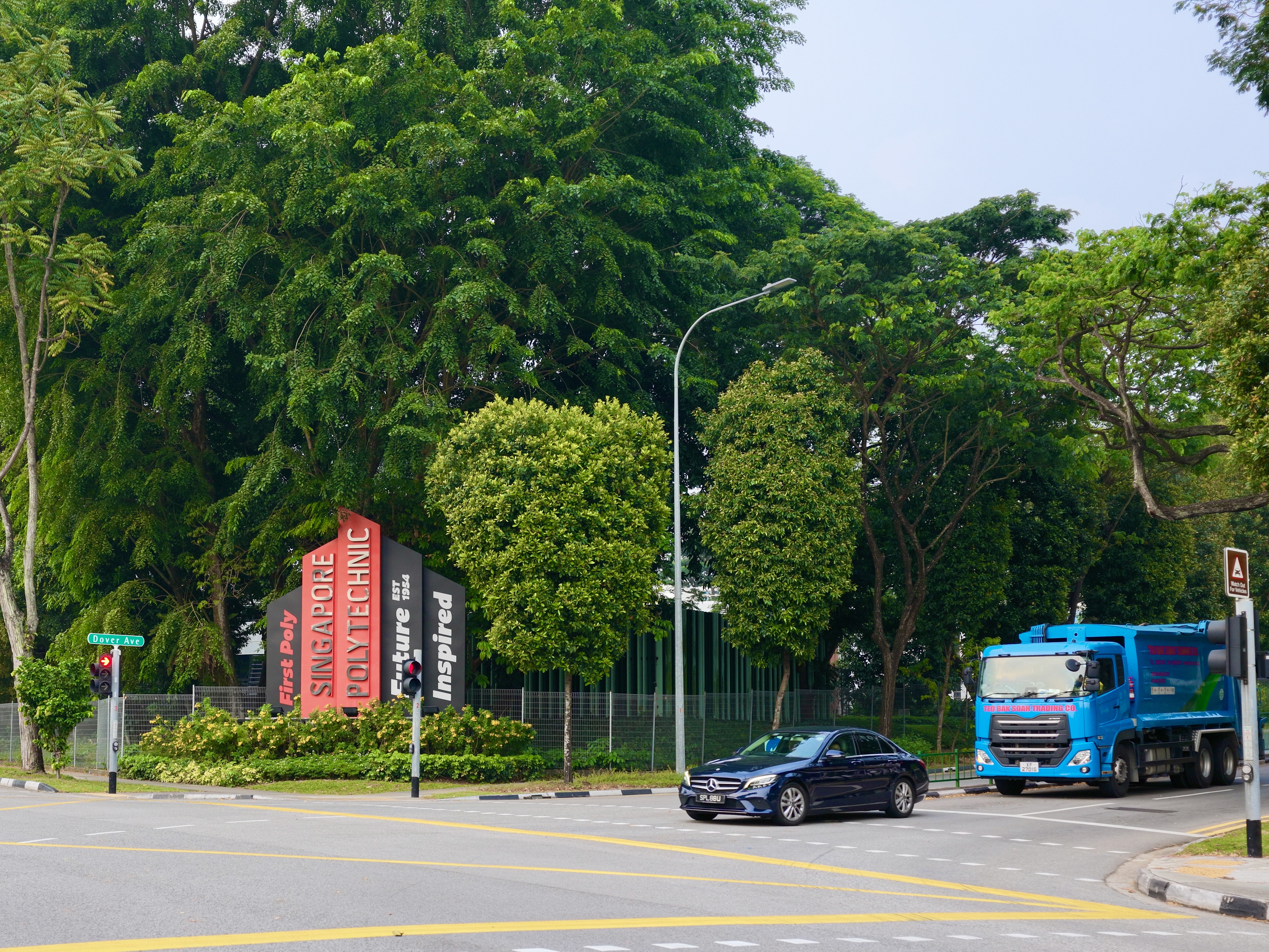
Why go Singapore Polytechnic? SP is worth exploring if you want to develop a subject interest through diploma study that connects knowledge with practical work. For students comparing polytechnics in Singapore, the strongest reason comes from the particular course, its learning activities and the next steps it could support. Begin with what you want to understand and practise, then investigate whether the actual SP route fits your interests, qualification and circumstances.
This Singapore Polytechnic guide helps secondary school students, ITE graduates, other applicants and families compare diploma courses, admissions routes and daily study needs. SP's official website provides course and common programme information alongside a separate admissions guide. Use those pages together. The course tells you what the education involves; the admissions route tells you how your own qualification is considered. Both matter when turning an attractive option into a practical plan.
Should we shortlist Singapore Polytechnic (SP)?
Our fit assessment: Singapore Polytechnic (SP) is worth investigating for a learner who wants applied diploma study and can compare a course with its likely work tasks. Start with the actual programme and the learner’s starting qualification, then compare it with one realistic alternative. This is eduKate’s decision guidance; the institutional links below provide the admission and programme evidence.
| Decision | What this route means for the learner |
|---|---|
| Learning route | Diploma and common-entry choices; compare course modules, practical work and industry learning rather than relying on the SP name alone |
| Entry: what to establish | Check the diploma code and minimum entry requirements, then the relevant JAE, EAE, PFP or DAE exercise where eligible. |
| Campus and commute | Use SP’s current Dover campus information and the chosen school’s teaching locations. Test the door-to-door journey at the actual start and finish times, including practical work or CCA. |
| Cost: compare the full commitment | Use the current diploma fee schedule for citizenship and cohort, including compulsory charges. Check Tuition Grant eligibility and any contractual obligations before treating the subsidised fee as your price. |
| Next qualification or professional step | Check degree admission, credit transfer and any professional requirements using the exact diploma. Polytechnic graduation does not guarantee university admission or the same exemptions at every university. |
Two useful programme comparisons
Compare Mechanical Engineering with Computer Engineering. The first choice should follow the technical work you want to learn, not just an engineering label. SP also offers common engineering entry; check its eligible destinations and allocation rules separately. Official course evidence.
What should we test before choosing?
Ask for a course-specific practical assignment and compare internship tasks, progression requirements and the complete fee schedule.
When might another route fit better?
A diploma develops a defined field of study. Compare an A-Level route if you prefer to defer specialisation, or another polytechnic if its course content fits the intended role better.
A practical shortlisting decision
Keep this option on the shortlist when the learner can explain why the curriculum suits them, the entry route is established, and the full cost and weekly journey are workable. Before accepting an offer, compare the same four points against another named programme. Resolve any unanswered admission, funding or progression condition in writing with the responsible institution.
Sources and intake checks: Singapore Polytechnic official course and common programme information · SP admissions guide and application exercises · SP full-time diploma course fees. Published programme facts and our fit assessment serve different purposes. A historical score, sample fee or possible progression route should not be read as an offer for the next intake.
Did you know? SP's admissions guide identifies several routes, including JAE, JPAE, DAE, EAE and PFP, with different purposes and eligibility conditions. They are not interchangeable doors that every applicant can use. Find the route that matches your qualification and intended intake, then read the current requirements carefully. That gives you a clear next step and more room to enjoy discovering the subject you may study.
Choose your reading route
Start with the part closest to your question. The complete guide follows below.
A quick decision guide
| Look at | Useful next step | A promising sign |
|---|---|---|
| Diploma | Read foundations and later learning | The work beneath the title interests you |
| Common programme | Confirm progression and allocation rules | The exploration route fits your questions |
| Admission | Identify the applicable exercise | Your qualification and requirements are clear |
| Next steps | Check university or career conditions separately | Possibilities are understood without guarantees |
| Daily study | Plan costs, travel and preparation | The ordinary week is workable |
Find a section
Sections 1–6: Start with the subject work you want to try
Sections 7–12: Teamwork
- Teamwork: agree on the next useful step
- Presentations: explain the decision, not only the activity
- Mathematics and science: prepare what the course needs
- Reading and writing: make your work understandable
- Digital tools and AI: check what you produce
- Internship: investigate the learning and the conditions
Sections 13–18: Admissions
- Admissions: identify the right exercise first
- EAE: explain aptitude through real work
- ITE graduates: read JPAE and the course conditions together
- PFP and other routes: use the current intake information
- University progression: check the actual degree requirements
- Career possibilities: learn what the roles involve
Sections 19–24: Costs
Sections 25–28: An illustrative course decision
A diploma decision becomes clearer when you imagine the work beneath the course name. Perhaps you enjoy solving a technical problem, understanding how a business operates, investigating a scientific question or creating something for an audience. These interests can lead towards different courses, and the same broad interest may have more than one possible route.
Write down three activities you enjoy doing, not only three topics you enjoy hearing about. Do you like comparing evidence, making a model, explaining an idea or tracing why a system fails? Then read course descriptions and look for the activities that appear in the learning. This connects the choice with your own experience.
You do not need a complete career answer immediately. You need enough curiosity to investigate the discipline seriously. A course can help you discover more about the field, but it also asks you to practise its foundations. Read the less glamorous subjects as carefully as the exciting final projects.
Try one safe introductory task related to the area. The purpose is to learn whether the process interests you. You may find that you enjoy the careful work behind a result, or that a neighbouring field suits you better. Either discovery is useful. A good reason to choose SP begins with a learning direction you can explain, rather than only a name you recognise.
The course page is the centre of your comparison. Read the foundations, later subjects and substantial work in order. Ask how the early learning supports the later tasks. A diploma should give you a route through a discipline, with knowledge and skills that develop over time.
Pay attention to the verbs. Will you calculate, analyse, design, test, interpret, write or present? Those activities say a great deal about the ordinary study week. A course title may sound appealing while the central work is less interesting to you. It is better to discover that through reading and questions before making the choice.
Check the current course structure for your intended intake. Similar names do not guarantee identical content across institutions or years. If you compare two courses, use their actual pages rather than assume the field name settles the differences. Notice how much attention each gives to the areas you care about.
Make a simple map with three columns: foundations, later practice and abilities developed. Fill it with information from the course page. If a connection is unclear, ask programme staff how the learning fits together. The map can help you explain your interest to family and can make an open house conversation more specific and useful.
SP’s Common Engineering Programme page describes exploration during Year 1 Semester 1, followed by posting to one of seven engineering diplomas: Aeronautical Engineering, Aerospace Electronics, Computer Engineering, Electrical & Electronic Engineering, Engineering with Business, Mechanical Engineering, or Mechatronics & Robotics. This is a defined route across the two engineering schools, not access to every SP diploma. Confirm the current allocation process and course structure for your intake before treating a preferred destination as assured.
Ask what the programme helps students learn about their interests. Which foundations or activities support the later decision? What information will you have when you choose? The value of exploration comes from gaining evidence about fit, not only delaying a choice.
Practical rules matter. Confirm which diplomas the programme can lead towards and how the relevant process works for your intake. Ask about conditions, timing and any requirements you need to understand. An appealing route becomes clearer when you can describe both its educational purpose and its actual boundaries.
Did you know? Being undecided can be a useful starting point if you turn it into questions. You might know the broad area you enjoy while needing to compare the work inside it. A structured enquiry can help. A common programme should be evaluated through its published design, and another route may be more suitable if you already have a specific discipline you want to study deeply.
Practical work can make a subject feel real. You may see how a concept affects a result, how a tool behaves or how a design responds to a need. The learning becomes stronger when you connect the activity with an explanation. Completing a task is useful; understanding why the method is appropriate helps you adapt later.
Consider an illustrative experiment in which a result differs from the expectation. A student who only remembers the steps may repeat them without learning much. A student who understands the purpose can check the conditions, measurement and assumptions. That makes the unexpected result a question worth investigating.
The actual mix of practical work, reading, projects and assessment depends on the SP course. Read the curriculum and ask how these components connect. You are looking for an education that develops both skill and judgement, rather than assume every diploma has the same learning pattern.
After trying a practical task, write down what you did, what happened and what you think explains it. Add one thing you would check next. This is a useful preparation habit across many fields. It helps you bring curiosity to the task and gives you a record you can discuss when asking for guidance.
An applied course still needs ideas that explain the work. Theory can help you recognise a pattern, predict an effect or understand a limitation. Read the foundational subjects and the course's entry requirements to see which knowledge your route will use. The demand varies by discipline.
If you struggle with a concept, identify the exact gap. Is a term unclear? Do you need a mathematical foundation? Can you perform the steps but not explain the reason? Each gap calls for a different kind of practice. Repeating an entire chapter may be less useful than working on the missing connection.
Use examples to bring the idea into focus. Explain how a concept appears in a familiar situation, then ask where the example stops being a good model. This helps you understand both the use and the limits of an explanation. It also makes revision more active than only highlighting notes.
Do not choose a diploma on the assumption that theory will disappear. Choose because you want to learn how the ideas and activities fit together. A practical interest can give you a strong reason to persevere with a demanding foundation. When the theory helps you understand your own work, it often becomes more interesting and easier to value.
A project can begin with an exciting idea, but it needs a clear purpose. Who is the work for? What problem is being addressed? What would a useful result look like? These questions help a group choose methods and judge whether the outcome serves the brief.
An illustrative design task might involve making information easier to understand. Before changing colours or adding features, the students need to know what the audience finds confusing. They may discover that the wording or sequence matters more than the visual effect. The best next step comes from the actual problem.
Keep a short record of decisions. Note the options, the reason for the choice and what you plan to test. After feedback, record what changed. This gives the project a learning trail and helps you explain your contribution honestly. The record need not be elaborate to be useful.
When comparing SP courses, ask how projects develop across the diploma. Which foundations prepare students for them? How is learning assessed? What guidance is available? The exact answers belong to the programme. A strong reason for choosing a course includes interest in the reasoning and revision that produce the result, not only in displaying a finished piece.
Shared work becomes easier when everyone knows what happens next. Define the task, divide responsibilities and set a milestone early enough to review the work. Keep updates in a place the group can use. These habits are simple, but they can prevent a project from becoming a collection of disconnected efforts.
Different people may bring different strengths. One member may notice a technical issue, another may organise information and another may explain the result. The group still needs shared understanding of the aim. A contribution becomes more useful when others know how it connects with their own work.
If a task is delayed, identify the cause before judging the person. Perhaps an instruction was unclear or a dependency was missed. Ask what adjustment would help now. You may need to clarify the scope, seek guidance or change the sequence. Raise the issue while there is time to act.
You can practise cooperation before entering SP through an ordinary school or community activity. Afterwards, review what helped people work together and what made the task harder. Choose one improvement for the next group. Teamwork is a learnable process, and developing it can make both diploma study and later work more satisfying.
A presentation should help the audience understand why the work matters. Begin with the question, then explain the approach and the result. Add the main limitation where it affects the conclusion. This gives the details a purpose and helps the listener follow your reasoning.
Avoid making slides carry every sentence you plan to say. Use them to support the explanation with clear information, a relevant image or a useful comparison. Check whether the audience can read what matters. Follow the course's actual assessment instructions, including any requirements for sources and format.
Practise explaining one decision from the work. Why did you choose the method? What alternative did you consider? What changed after testing? A specific explanation often shows more understanding than a long account of how busy the group was. It also helps you answer questions more calmly.
If speaking feels difficult, begin with a short rehearsal to a friend. Ask which part was clear and where they lost the thread. Make one revision and try again. Confidence can grow through these small cycles. You do not need to become a different personality; you need a structure that helps your ideas reach other people accurately.
The mathematical and scientific demands of SP courses differ. Read the course entry requirements and foundational subjects. Use that information to decide what preparation would be useful. A general statement about polytechnic study cannot determine the exact topics your route will require.
Where quantitative work matters, practise accurate units, ratios, graphs and interpretation alongside calculation. A result is only useful when you know what it means. Check whether the size and unit make sense before treating a correct-looking number as a finished answer.
For scientific learning, connect an observation with a question and an explanation. Ask what conditions affect the result and which comparison would be fair. These habits can make practical sessions more meaningful. Use appropriate supervision and safety guidance for any activity involving equipment or materials.
Choose a manageable revision routine. A few focused sessions on relevant foundations may help more than a rushed attempt to learn the whole diploma in advance. Keep a list of uncertainties and ask for guidance when needed. Preparation should make the beginning more approachable while leaving room for the course to teach the knowledge in its intended sequence.
Diploma study can require careful reading and clear written explanation, with the exact forms depending on the course. Begin by understanding the task. Is it asking you to describe, compare, analyse or recommend? The verb helps you decide what the response needs to do.
When reading, identify the main claim and the information that supports it. Keep notes in your own words and retain source details. If you use a direct quotation, mark it clearly. These habits help you understand the material and avoid confusing borrowed phrasing with your own work.
For writing, give each paragraph a clear job. Explain the idea, support it and show its relevance to the question. If a passage becomes crowded, divide the work rather than add more complex language. A reader should be able to see why each part is included.
Try a short practice report about a task you know. Describe its purpose, method, result and one improvement. Then ask someone to read it without your spoken explanation. Their questions reveal what the text leaves unclear. Clear writing is a useful skill to bring into SP because it helps others understand and inspect the work you have done.
Digital tools can support learning, but the course's rules determine how they may be used. Follow current guidance on assessment, authorship and disclosure. A tool that is useful for practice may not be permitted in a particular submission. Check the task rather than assume one rule applies everywhere.
Before using a tool, define the job. Are you organising notes, checking a calculation or exploring an idea? Then inspect the output. Does it answer the right question? Is the information accurate? Can you explain the method? A polished result can still be wrong or unsuitable.
Keep your own understanding central. If a tool gives an answer you cannot explain, treat that as a learning question. Work through the reasoning and compare it with reliable course material. The aim is to become more capable, not only to produce a finished-looking response.
For projects, record important tool-assisted choices and make disclosures where required. This helps you explain your contribution and revise the work responsibly. Technology can be useful when you bring judgement to it. A diploma route should be investigated through its actual curriculum and rules, while your general habit should be to check what you create before asking others to rely on it.
SP's official information includes internship guidance, and individual course arrangements should be checked through current programme pages. Ask how workplace learning fits the diploma, what preparation is required and how the experience is assessed. Do not assume that every course has identical timing, duration or placement conditions.
The learning purpose is to connect study with a work setting. You may observe how people use knowledge, communicate decisions and manage constraints. A useful student account explains what was learned and how it relates to the discipline. It does not need to claim that every task was glamorous.
Prepare reliable habits early. Arrive ready, ask when an instruction is unclear and communicate a difficulty before it becomes a surprise. Respect the organisation's rules and confidentiality. Follow supervision and do not perform tasks beyond your training or permission. Professional care is part of the learning.
An internship should not be described as a guarantee of a preferred company or future job. Read the actual conditions and consider its value alongside the rest of the education. Ask what you could learn from the experience and how the course helps you interpret it. This gives the opportunity a thoughtful place in your diploma decision.
SP's admissions guide separates several application exercises. Begin with your qualification and intended intake, then follow the relevant current page. JAE, JPAE, DAE, EAE and PFP serve different applicants and purposes. Eligibility must be checked rather than inferred from an acronym that sounds familiar.
Build a checklist from official instructions. Include course requirements, documents, steps and deadlines. If a requirement is unclear, ask an enquiry that names your qualification and intended course. This makes it easier for the admissions team to direct you accurately.
Use past entry information carefully where it is published. A previous outcome or indicative figure does not guarantee an offer in a later exercise. Selection depends on the applicable rules and circumstances. Keep both your interest and a sensible range of options visible while you investigate.
Retain the submission acknowledgement and follow the official next steps. If an offer is made, read its conditions and the acceptance instructions. A submitted application is not the same as an accepted place. Clear administration gives your course decision a firm foundation and helps you avoid missing a practical step while focusing on the exciting possibility of a new education.
SP's admissions guide describes EAE as an aptitude-based route for applicants who meet the criteria. Read the current EAE page and the requirements for your intended course and applicant category. An early application route still has conditions, and you should not treat interest alone as eligibility.
If you are asked to present evidence of interest or aptitude, use examples you understand. What did you try? What part did you complete yourself? What did you learn? A small project can be useful when it shows thoughtful engagement. Do not inflate an activity or claim a result you cannot explain.
Organise the evidence according to the actual brief. A portfolio, write-up or interview may have particular instructions, and different courses can require different preparation. Follow those instructions instead of adding material merely because it looks impressive. Clear presentation helps people understand the substance.
Did you know? Preparing an honest account of your interest can help you decide whether the course fits, even before the application outcome. You may notice which activities you enjoy and where you need more knowledge. Keep that learning separate from a prediction of admission. Follow the formal process and conditions while using the preparation to understand your own direction better.
SP's admissions guide identifies JPAE as a route for ITE graduates. Use the current official information to check how your qualification relates to the diploma you want. The details matter, including the applicable course and admission requirements. Do not assume that every ITE qualification leads to every diploma route.
Your earlier learning can give you useful examples of practical work and subject interest. Explain what you have learned and what you want to develop further. A diploma may revisit familiar areas at a different depth or introduce new methods. Read the curriculum with both your strengths and your learning gaps in mind.
If you need clarification about eligibility or progression, state the exact qualification and intended course. Keep the official answer with your application notes. A friend's route can help you think of questions, but it cannot establish your own outcome.
Prepare the transition through relevant study habits. Practise reading, explanation and any foundations the course requires. You can bring confidence from your earlier experience while staying open to a new level of learning. The positive question is how this route could build on what you already know and help you become more capable in a discipline you want to pursue.
SP's admissions guide includes PFP and DAE alongside other exercises. Read the page for the route that actually applies to your qualification. Entry conditions and progression arrangements deserve their own attention, especially when you are planning beyond the immediate application stage.
For PFP, investigate the published eligibility and the programme's purpose and conditions. Do not assume that a broad description of a foundation route settles the details for your intake. For DAE, follow the instructions for your applicant category and intended course. Different qualifications can require different information.
If your school examination terminology is changing across cohorts, use current MOE and SP guidance for the year in which you will apply. An older student's account may use familiar labels that do not fully describe your route. Confirm the present rules before planning subject choices or an application around them.
The helpful habit is to keep the route explicit. Write your qualification, intake, exercise and course at the top of the checklist. Then every requirement has a clear context. This can make a complicated admissions picture feel much more manageable and lets you focus on the educational choice without mixing instructions from several different pathways.
A diploma can be part of a route towards university, but university admission is a separate decision with its own conditions. If further study is one of your aims, investigate the degree programmes that interest you and their current admission requirements. Do not choose a diploma only on a broad promise that it automatically opens every university door.
Consider subject fit as well as progression. A diploma should offer work you are willing to learn seriously in its own right. Strong engagement with the discipline can help you build capability and a clearer future direction. If you dislike the central activities, an imagined later degree may not make the immediate route satisfying.
Any credit recognition, exemption or advanced standing should be confirmed by the university for the actual diploma, degree and intake. Similar module names or a past arrangement are not enough to establish your entitlement. Read the relevant official conditions and ask precise questions.
Keep alternatives visible. You may choose further study immediately, gain work experience first or explore another appropriate route. The diploma can help you learn more about your interests and abilities. A thoughtful plan sets a direction while allowing later decisions to be informed by what you actually learn, rather than forcing certainty about every stage before the first one begins.
Course pages may identify career possibilities, but a diploma should not be described as a job guarantee. Investigate the tasks behind the roles. What do people do during an ordinary week? Which knowledge and skills are needed? Are there further professional conditions or training requirements? These questions make the career discussion more useful.
Read a few current job descriptions and notice patterns. Do they emphasise analysis, technical work, communication, coordination or another capability? Compare the tasks with the course learning. Use the appropriate official sources for any regulated professional recognition or eligibility question.
You can have a serious career interest without knowing the exact role you will hold. A field may offer several kinds of work, and your understanding can develop during study. Begin by identifying tasks you want to become better at and questions you want to understand more deeply.
Talk about employability through evidence of capability. A project you can explain, a reliable working habit or a skill demonstrated accurately can be meaningful. Outcomes still depend on circumstances beyond the course alone. The hopeful approach is to choose an education that develops useful abilities and to learn how to communicate those abilities honestly when the next opportunity arises.
Use SP's current course fee and financial support information for your intended programme and circumstances. Eligibility and the conditions of applicable schemes affect the actual amount. A general guide cannot determine your personal fees or support entitlement. Confirm the figures through official information before making the budget.
Add transport, meals, materials and equipment where they are needed. Check course-specific requirements before buying a device or specialist tool. Separate essential items from optional upgrades. A sensible purchase should serve the learning you will actually do, rather than an imagined version of the course.
Note when payments occur. A family may need to plan for a particular month even if the annual total is understood. If financial aid or an award is relevant, read the application timing, eligibility and conditions. Treat hoped-for funding as unconfirmed until the formal outcome arrives.
Discuss the plan calmly with the people involved. Identify what is known, what remains uncertain and which official enquiry could close the gap. A clear budget can support the student's interest by making the practical route more sustainable. It also helps the family compare options through actual circumstances rather than worry about an undefined total.
Use SP's current campus information and the course's teaching arrangements to understand where your activities will happen. A short visit can show the environment, but it does not establish an ordinary timetable. Confirm details when the official schedule becomes available.
Estimate the journey from your real starting point. Include waiting, walking and transfers, and consider the times you may travel. If you carry materials or stay for a group meeting, the day can feel different from an open house visit. These are planning questions to investigate, not reasons to guess exact schedules.
Think about study between activities. Where could you read, prepare or meet a group? Which facilities are relevant to the course, and what access conditions apply? Check bookings and supervision where needed. Seeing a space does not mean it is always available for any task.
Include meals and rest in the day. A timetable supported by ordinary needs is easier to sustain. If the commute is demanding, consider which tasks can realistically be completed during travel and which need a quiet place. A workable routine gives the educational choice more strength by leaving enough energy for the learning you are excited to begin.
A useful study session has a clear task. Read one section, solve a few relevant problems or revise one part of a project. At the end, explain what changed in your understanding. This helps you see progress and identify the next question.
Use a single place for deadlines and look ahead to preparation. A practical session may require reading; a group task may depend on an early decision. Starting the first small step gives you time to notice those requirements. You do not need to finish everything immediately to benefit from beginning early.
Practise recalling information rather than only rereading it. Close the notes and explain a concept or attempt a problem, then check. The attempt shows what you know and where you need help. Match the method to the subject and follow the course's guidance.
Build a routine you can return to after a difficult day. If a session is missed, choose the next useful task and reschedule it. Avoid turning one interruption into a judgement about your whole ability. Consistent learning grows through repeated returns to the work, with sensible adjustments when the original plan needs more time or support.
An assessment result can show where to investigate, but it does not explain everything by itself. Read the feedback and identify the main issue. Was the method wrong, the evidence weak or the explanation unclear? A specific diagnosis of the task makes improvement more manageable.
Choose one important revision and apply it. Then compare the new attempt with the earlier one. Can you justify the method more clearly? Does the report answer the question? Is the project decision supported? This gives you evidence of learning rather than only a feeling that you should work harder.
If a comment is unclear, ask a precise question through the appropriate course channel. Show what you understand and where you need clarification. That makes the conversation more useful and keeps you involved in solving the learning problem.
Keep a few examples of improvement with short notes. Over time, they can show which habits helped and which difficulties recur. Did you know? A revised piece that feels ordinary today may reveal a substantial change when you compare it with the first attempt. Learning to notice that change can make effort more encouraging and help you describe your development honestly.
Explore SP's current student life information and choose activities that fit your interests and time. A diploma experience can include friendships and participation alongside academic work. You do not need to join every available group to make the experience meaningful.
Begin with an activity you would enjoy attending for its own sake. Consistent participation can help you meet people and develop a sense of belonging. You may find friends who share your interests or people who introduce a new perspective. Both can make the transition warmer.
Balance commitments with the actual course load. A busy assessment period may require a temporary adjustment. Communicate responsibly when others depend on your participation. Later, when the schedule allows, you can take on more. Flexibility helps activities remain enjoyable rather than become another vague pressure.
Learn how to access academic and student support through official channels. Asking early can prevent a small difficulty from growing. Support does not remove your responsibility for the work; it can help you make a better plan. A good student experience grows through both participation and the willingness to seek guidance when you need it.
A helpful family conversation begins with the student's interest. Ask which course work attracts them and what they want to understand better. Let them explain in ordinary words. A reason they can describe themselves is more useful than a slogan repeated from a brochure.
Then check the practical foundation together. Which admissions exercise applies? Have the entry requirements been confirmed? What are the costs and daily arrangements? Is a progression possibility being mistaken for a guarantee? These questions help the student make an informed choice while keeping them at the centre of it.
Compare more than one route using the same questions. A diploma, JC pathway or other appropriate option may serve different aims. The goal is to find a route that fits this learner's interests, strengths and circumstances. There is no need to make one pathway universally superior before making a personal decision.
Recognise thoughtful preparation as progress. Reading a curriculum carefully, trying a relevant task or asking a good question can show growing responsibility. Encouragement becomes useful when it supports those actions. A calm family plan can leave room for excitement while giving the student a clearer sense of what the next educational stage will require.
Imagine a secondary student who first notices an SP diploma because its title sounds modern. They read the course page and discover that several foundational subjects are less familiar than expected. Instead of ignoring them, the student asks how those subjects support the later work.
The student tries a small introductory task and notices that they enjoy finding and correcting a problem. They compare that activity with another course's central work. Their preference becomes more specific: they want to develop this kind of reasoning and understand the field behind it.
Next, they identify the correct admissions route, discuss costs and commuting with family and prepare questions for an open house. They do not know every future career step, but they can explain the immediate educational choice more clearly. The route is now supported by reading and practical checking.
This story is illustrative guidance, not an actual SP student's experience or an admission prediction. Its useful lesson is that an appealing course name can begin the enquiry, while the curriculum and your own learning interests develop the reason. You can follow that pattern with whichever discipline draws your attention.
Ask course staff what students practise in the first year and how those foundations lead to later work. Ask which activities students often find demanding and how learning is assessed. A specific question reveals more than asking whether the course is good.
If you are considering a common programme, ask about its actual progression routes and conditions. If internship or a substantial project matters to you, ask how it fits this diploma and where the current written information can be found. Keep a usual pattern separate from a guarantee.
For admission, state your qualification and intended intake. For equipment, fees and support, locate the current official pages. For future study, confirm that university requirements belong to the university and need their own reading. This keeps each answer in the right context.
After the event, divide notes into confirmed facts, personal impressions and unanswered questions. Compare another option through the same categories. You may find that one concern is resolved while a new question appears. That is useful movement towards a decision you can explain with both enthusiasm and a realistic understanding of the work.
Which admissions exercise should I use?
Start with SP's current admissions guide and your actual qualification. It identifies different routes with their own purposes and eligibility conditions. Read the relevant exercise and course requirements for your intake. Do not combine instructions from JAE, JPAE, DAE, EAE or PFP as though they apply equally to every applicant.
Is a common programme a guarantee of my preferred diploma?
Read the specific programme's progression and allocation rules. A common route should be understood through its published structure and conditions, not as unrestricted access to every later course. Ask programme staff about anything unclear before treating a possible pathway as a confirmed personal outcome.
Does an SP diploma guarantee university admission?
University admission is a separate process. Check the degree's current requirements for your diploma and intake, including any conditions for credit recognition. A diploma can support further learning, but a general progression possibility should not be presented as a guaranteed offer or exemption.
What if I enjoy practical work but find some subjects difficult?
Identify the exact foundations the diploma requires and the skills you need to strengthen. Practical interest can give you a reason to persevere with theory, reading or quantitative work. Ask about appropriate academic support and build a realistic preparation plan. Choose through the full curriculum rather than assume the difficult parts will not matter.
Choose one SP course and write a one-page plan. Include the work that interests you, the foundations you need to learn, the admissions exercise that applies and the practical questions about costs and daily life. Add one alternative course or pathway for comparison. This turns a broad interest into a useful next conversation.
The learning exercises and student story in this guide are illustrative, not descriptions of specific modules or promised outcomes. Institution-specific information was checked against official SP pages in October 2026. Use the current course and admissions information for your intended intake, particularly when checking eligibility, progression, deadlines and costs.
Singapore Polytechnic official course and common programme information
SP admissions guide and application exercises
SP full-time diploma course fees
A good reason to choose SP connects curiosity with a real educational route. You can be excited about learning a discipline, careful about its requirements and open to what the experience may teach you about the future. Begin with the course, ask useful questions and make the next practical step clear.
Contents · Previous section · School and university directory
Is Singapore Polytechnic a good fit?
Read the paired Is Singapore Polytechnic a good polytechnic? assessment for the specific strengths, suitability checks and official sources behind a shortlist decision.