
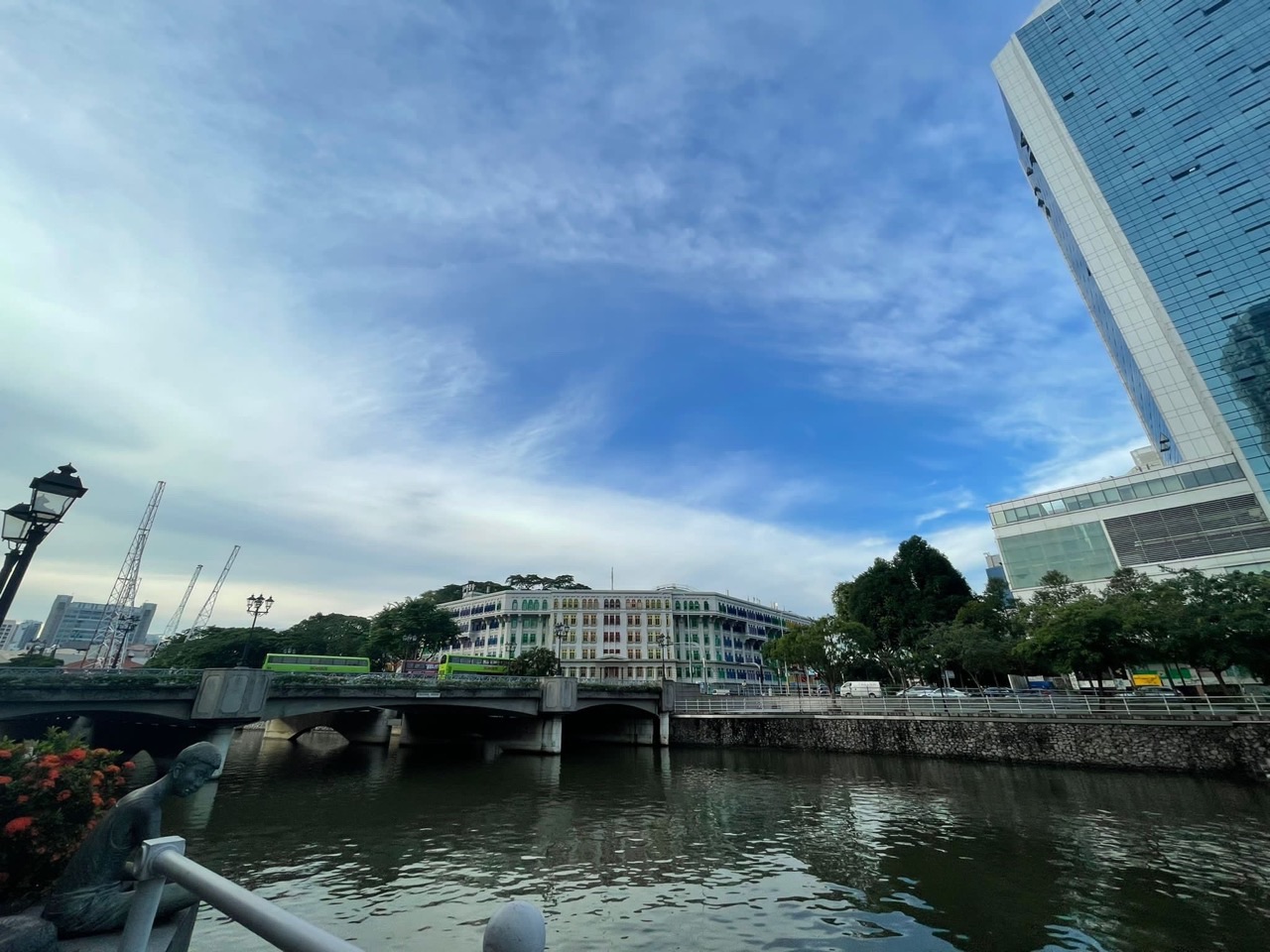
Why Singaporeans love River Valley is a story about living near several kinds of city life without all of them becoming the same place. Residential streets, an older road corridor, nearby commercial destinations and the Singapore River landscape can form part of one person’s daily network. Their proximity is meaningful, but it does not erase their different planning boundaries.
NLB describes River Valley’s mixed residential, commercial and leisure character and traces its name to the valley between Fort Canning Hill and Pearl’s Hill. Its account also explains that two roads once carried the River Valley name, with the southern one later known as Havelock Road. See NLB’s River Valley history.
That older geography remains a useful starting point, not a complete map of the present planning area. A family may use a river walk, a shopping destination and a home address across neighbouring areas. The useful explanation shows the connections and labels them accurately.
This guide explores reasons people may value River Valley, not the results of a popularity survey. For students, the area provides an especially good question: how can a name preserve a historical relationship while the boundaries and uses around it change?
Explore the Singapore Area Learning Article Index · Read History of Singapore | River Valley
River Valley Planning Area Is Not the Whole River Corridor
This article follows River Valley as a planning-area reference. Use URA’s Master Plan 2025 planning-area boundaries and the URA map for the classification of a particular site.
Singapore River, Museum and Orchard are separate planning areas. URA places Robertson Quay in the Singapore River planning area; Fort Canning belongs to the Museum planning-area story. These can be nearby destinations in a River Valley resident’s routine without becoming features wholly inside River Valley itself.
River Valley Road is also a corridor, not the outline of the planning area. An address on a road or a development using the same familiar name should be checked rather than assigned automatically.
For a child, this is practical map reading. Ask whether the source is describing a road, a district, a waterway or a particular building. The answer determines which facts belong in the paragraph.
The Residential Story Deserves Its Own Place
NLB’s history describes earlier River Valley estates, including the Oxley Estate associated with nutmeg cultivation and later residential development. That account gives the inland streets a history beyond their relationship with the river.
A home district is experienced differently from a visitor destination. Residents also need an ordinary route home, a workable errand and a place to meet someone. A striking view is one possible benefit, not the whole measure of daily usefulness.
This helps explain the appeal of being near several urban functions while not requiring every street to perform the same commercial role. It is an interpretation of how such a setting can be used, not a claim that every household has a quiet home or an identical journey.
A Road Name Can Preserve Geography That Is Harder to See
The older valley explanation links a modern street name to a physical setting. Dense buildings and altered routes can make the relationship less obvious, but a source can help a reader reconstruct it.
Do not treat that reconstruction as permission to assume every present street follows an original watercourse or every building lies at the same elevation. The historical explanation gives a starting relationship; precise topography needs suitable mapping.
A student can compare the name with the map and ask what additional evidence would be required. That is better geographic reasoning than repeating an attractive origin story without identifying its scope.
The Nearby Singapore River Explains an Earlier Working City
URA’s Singapore River overview describes the river’s commercial past, pollution, clean-up from 1977 to 1987 and later changes in waterfront use. This is the neighbouring river system’s history, not evidence that River Valley planning area and Singapore River planning area are identical.
The working-river story makes logistics easier to understand. Goods need to move, but they may also need to wait, be recorded and be transferred between different stages. Storage is part of a movement system rather than its opposite.
A student can draw a simplified sequence from arrival to storage to onward delivery. The diagram should show a general relationship, not claim to reproduce a particular historical company’s operations without evidence.
For the fuller planning-area portrait, continue to Why Singaporeans Love Singapore River. The River Valley guide uses that relationship as context rather than repeating the river owner’s entire story.
Fort Canning Adds a Neighbouring Hill and Historical Perspective
NParks describes Fort Canning Park as a hilltop setting with historical features and gardens. Its relationship with the River Valley Road corridor helps a visitor compare high ground with the adjoining city and river landscape.
A hill changes the view, but it also changes the route. Do not describe every approach as a short or step-free walk. NParks identifies specific accessible approaches, including the Cox Terrace drop-off area; check the actual route required by the group.
The useful learning question is what can be seen from a different perspective. A wider view may reveal how roads and buildings relate, while still leaving many historical facts invisible. A viewpoint and a source perform different jobs.
Great World Keeps an Entertainment Name in the Wider Area’s Story
NLB’s Great World Amusement Park account distinguishes the park’s 1964 closure from cinemas, cabaret and restaurants continuing until 1978. It explains the later development on the site. The former amusement park and the current complex are not an unchanged visitor experience.
This belongs to the wider River Valley Road and Kim Seng setting, where a remembered destination can continue through its name after its physical form changes. Use the exact site and current planning map before assigning every Great World-related address to the same planning area.
For students, the two closure milestones demonstrate why a date needs its event attached. “The park closed” and “all remaining activities ceased” may refer to different things. A careful timeline can preserve both without treating them as a contradiction.
Environmental Change and Urban Change Are Related, Not One Automatic Formula
The river’s later public and recreational uses can be discussed alongside the clean-up and wider redevelopment. It would be too simple to claim that water quality alone determines every surrounding property value or social outcome.
Land use, transport, buildings, regulation and demand can also change. A student should identify the particular causal relationship a source explains rather than treating a before-and-after photograph as proof of every downstream claim.
The stronger lesson is about interacting conditions. A place can become suitable for a different activity when several requirements change together. The explanation needs to identify those requirements, not merely call the result attractive.
Central Access Does Not Create an Identical Journey for Everyone
The wider area’s transport and destinations give residents choices, but a useful route still depends on the starting address, crossing, entrance and time. A short straight line on a map is not necessarily the path a pedestrian can use.
Imagine a family combining a meal with a practical errand. The plan works only if the services and their opening arrangements match. Proximity is useful because it may allow a combination, not because it guarantees that every desired activity fits.
The same distinction matters for a student’s week. Access to classes should not become an instruction to fill every gap with another lesson. A manageable schedule needs room for independent work and life outside formal teaching.
Worked Mathematics: A Queue Depends on Both Arrival and Processing
This is an invented classroom model, not a measure of traffic or businesses in River Valley. Suppose six tasks are waiting at the start of a period. Eighteen new tasks arrive while fifteen are completed. The queue ends at 6 + 18 − 15 = nine tasks.
If the same rates continue for another period, the queue becomes twelve. Completing fifteen tasks sounds productive, but it does not prevent the queue growing when eighteen arrive.
Now reset to six tasks and suppose twenty-four can be completed while eighteen arrive. The simple total becomes zero after the period. The model assumes tasks can be processed within the period and ignores the timing of arrivals; it cannot calculate the waiting time of each individual task.
This preserves the original guide’s useful flow theme while making its conditions explicit. Before recommending “work faster”, identify what enters the system, what leaves and which constraint is actually producing the backlog.
Worked English: A Nearby Fact Is Not Always a Direct Answer
A student asked to describe River Valley may write an excellent paragraph about Robertson Quay. The facts might be accurate, yet the geographic relationship still needs explanation. The answer should say why the neighbouring place matters rather than imply it is the same district.
Use three questions before writing: which place, which period and which source? Then identify whether a detail is direct evidence or surrounding context. This keeps a place essay coherent without stripping away useful connections.
Worked History: A Surviving Name Does Not Prove a Surviving Function
A modern destination can retain a familiar name while its building and activities change. Great World’s documented entertainment history provides one example. The task is to identify what continued and what did not.
Compare a historical account with current visitor information. One can explain a former use; the other can establish present arrangements. Do not use an old programme, photograph or address as proof that a service is available today.
A Family Learning Walk Should Name Its Boundary Crossings
Choose a short public route and one question. A hill-to-river comparison may cross from the Museum area toward Singapore River. A residential-street study may remain focused on River Valley. Both can be worthwhile when the route is described honestly.
Confirm entrances, crossings and any access needs. Do not promise a continuous step-free route without checking it. Choose an easy stopping point and avoid turning private residential or hotel interiors into assumed public shortcuts.
Afterwards, ask the student to explain one connection and one distinction. That is often more useful than collecting every landmark name without understanding how the places relate.
River Valley’s Learning Theme: Find the Constraint Before Increasing the Workload
The flow model offers a limited teaching analogy. A learner may have ideas for a composition but struggle to organise them, or know an equation method but misunderstand the written problem. More questions do not necessarily repair the point where understanding stops.
Start with an attempt, locate the first uncertain move and explain the missing relationship. Then ask the learner to try with less support and later apply the idea in a changed setting. The goal is increasing control, not a larger pile of completed pages.
School, Home and Additional Support Should Have Different Jobs
Schoolwork and feedback identify the current programme. Parents help organise the practical week. A tutor, where useful, can investigate a specific difficulty. Friends can provide a chance to discuss work and compare approaches.
Those roles should reinforce rather than compete with one another. A student needs opportunities to work independently as well as opportunities to receive help. A central location creates options; it does not establish that every option is necessary.
eduKateSG’s maximum-three-student tutorials run for 1.5 hours weekly, with materials and guided corrections. The centre is at 8 Fourth Avenue, near Sixth Avenue MRT, by appointment. This article does not announce a River Valley branch or guarantee an examination outcome.
Useful Reading for the Next Question
For learning support, use Tutors | River Valley, Surviving Tuition | River Valley and A Student’s Life | River Valley. A more focused subject discussion appears in PSLE Mathematics Tuition | River Valley.
For neighbouring place stories, compare Singapore River, Museum and Orchard. These links preserve useful connections without merging the planning areas.
The wider education collection includes eduKateSingapore, Bukit Timah Tutor and Singapore English Tuition Centre. Choose the resource that answers the current need rather than treating the whole collection as compulsory reading.
Continue Through the eduKate Ecosystem
History of Singapore | River Valley · Fun Facts About Singapore | River Valley · A Student’s Life | River Valley · 55-Area Learning & Tuition Hub
Frequently Asked Questions
Is River Valley the same planning area as Singapore River?
No. The areas are connected but distinct. Robertson Quay belongs to Singapore River’s planning-area story; River Valley should not claim it as an identical geographic unit.
Why does the name refer to a valley?
NLB links the name with the historical geography between Fort Canning Hill and Pearl’s Hill. That explains the older relationship, not every detail of the modern planning boundary.
Did all Great World activities end on the same date?
NLB distinguishes the amusement park’s 1964 closure from some activities continuing until 1978. Keep the event attached to the date rather than compressing the sequence into one claim.
Can we assume a hill-to-river walk is step-free?
No. Check the actual approaches, crossings and current access information. A nearby destination is not automatically an accessible route for every visitor.
Does central access mean a student should take more classes?
No. Additional support should solve an identified learning need and fit the real week. Students progressing independently do not automatically require more tuition.
Sources and Practical Checks
Geography: URA Master Plan 2025 boundaries and Singapore River subzones. History: NLB River Valley and Great World Amusement Park. River change: URA’s river overview. Park access: NParks Fort Canning. These sources were reviewed in the 4 October 2026 editorial audit. Current notices govern visits; worked quantities are fictional.
Why River Valley’s Connections Remain Worth Reading
River Valley’s appeal does not require borrowing every neighbouring landmark as though it lies inside one boundary. Its residential and road history is made richer by the nearby river, hill and entertainment stories when the relationships are explained accurately.
For a student, that is a useful final habit: connect the ideas, but keep the distinctions that make the explanation true.
Arrange a Parent–Student Consultation
Contact eduKate Singapore or chat on WhatsApp with recent marked work and the learner’s goals.
eduKateSG
8 Fourth Avenue, Singapore 268674
Near Sixth Avenue MRT
Maximum three students · 1.5-hour weekly tutorials
By appointment