
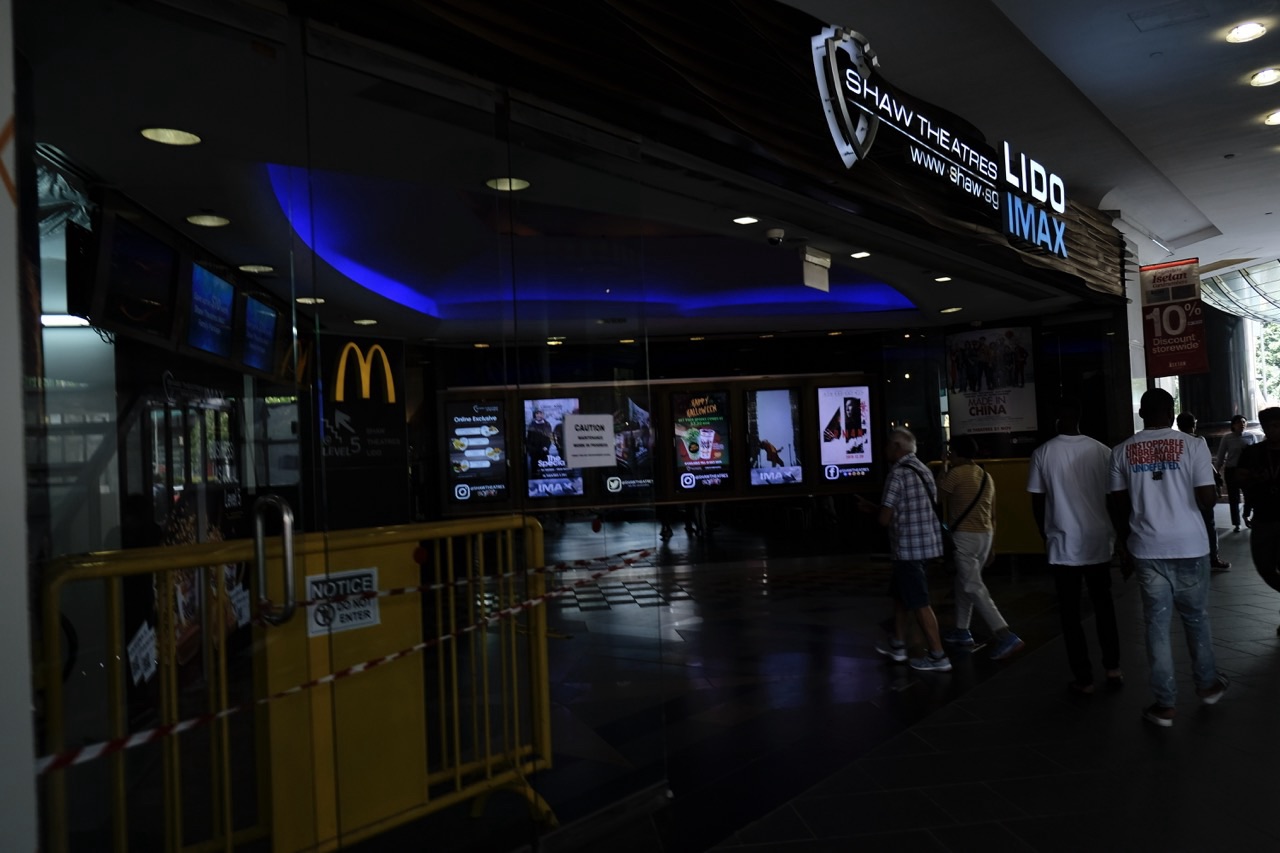
Why study History in an old cinema? Because a darkened hall, a ticket counter and a glowing screen contain more than the story of one film. Cinema changed how people spent evenings, encountered languages and music, learned about events and shared public entertainment. Yet a poster advertising a sold-out film cannot by itself establish what every audience member believed or how often families could afford to visit.
Singapore’s film-viewing history reaches back before the familiar picture palaces. Early public screenings were advertised in April 1902, while an enclosed cinema called the Paris Cinematograph was operating by 1904. The Alhambra on Beach Road, the Marlborough and other venues expanded the business; Capitol Theatre opened in 1930, followed by Cathay Cinema on 3 October 1939 as Singapore’s first fully air-conditioned cinema. In 1971, Jurong’s drive-in offered a very different viewing experience, before closing in 1985. Screens, buildings, businesses and audiences continued changing.
History helps students distinguish a film’s release from its local screening, a historic venue from the building that occupies its former site, and a cinema’s cultural significance from one individual’s nostalgia. This is a lesson in evidence, technological change, work, migration, language and the choices through which a city creates its everyday leisure.
Explore this article
- The main answer: leisure has an institutional history
- April 1902 has a frequently misattributed screening
- The 1904 Paris Cinematograph was an early enclosed venue
- Capitol Theatre opened in 1930 for the sound-film era
- Cathay Cinema opened on 3 October 1939
- Jurong’s drive-in introduced another viewing model in 1971
- A four-week learning plan for Singapore cinema History
- FAQ: was Cathay the first cinema in Singapore?
- Sources and connected eduKateSG reading
The main answer: leisure has an institutional history
A night at the cinema feels personal, but the experience depends on many organised activities: distributors acquire films, exhibitors arrange screenings, staff sell tickets and maintain facilities, and audiences choose whether to attend.
Historical changes in electricity, sound, transport, regulation and urban land use all influence what kinds of screenings become available.
Students should not think a film’s popularity alone explains the survival of every theatre. The venue’s business and physical setting need their own evidence.
Studying entertainment therefore introduces the same rigorous inquiry used for factories, public housing and transport networks.
A moving-picture demonstration was not a permanent cinema
Early film exhibitions were often held by travelling companies using temporary tents or existing halls. They could attract attention without establishing a stable purpose-built cinema business.
The National Library’s early cinema research traces these itinerant shows before permanent picture houses became more common.
Students should distinguish first documented moving images, first commercial screening and first dedicated enclosed venue.
This helps prevent the familiar historical error of treating several valid “firsts” as though they refer to one identical event.
The year 1896 appears in Singapore film history
The National Library notes that cinema-related entertainment in Singapore can be traced to 1896, before the widely cited early-twentieth-century public screenings.
A claim about 1896 requires attention to exactly what was demonstrated and the documentation supporting it. It should not be casually rewritten as the opening of a permanent 1896 cinema.
The year helps explain why a familiar “first screening” story needs checking.
History is stronger when a researcher distinguishes an early experimental exhibition from a venue that regularly admitted the public.
April 1902 has a frequently misattributed screening
Some retellings credit a travelling impresario named Basrai or Busrai with a first Singapore film screening in April 1902.
The National Library’s examination of newspaper advertisements instead identifies the American Biograph Company as responsible for a documented April 1902 presentation.
Students should not simply repeat an attractive origin story when contemporary advertisements provide a more precise attribution.
This is a practical lesson in why even an apparently minor detail about entertainment history deserves primary-source checking.
An advertisement proves promotion, not every audience response
A historic newspaper advertisement may give a show’s date, location, price and advertised attractions.
The advertisement establishes what promoters wanted readers to know. It does not automatically prove that every planned screening occurred, every seat sold or audiences enjoyed the programme.
Students can compare the notice with a contemporary review or further advertisement and identify the difference between intent and reported result.
This method transfers directly to the study of public events, concerts and commercial claims.
Singapore already had varied entertainment before film
Chinese opera, shadow puppetry, bangsawan performances and other forms of theatre were part of the city’s entertainment life before cinemas became established.
The National Library’s early cinema account describes this wider setting, reminding readers that moving pictures entered an existing cultural world.
Students should not imply local audiences had no entertainment until imported projectors arrived. Nor should they assume film immediately eliminated earlier forms.
History trains learners to understand technological adoption as an overlapping process involving continuity and change, rather than a neat replacement of everything that came before.
The 1904 Paris Cinematograph was an early enclosed venue
The National Library account identifies the Paris Cinematograph, associated with Paul Picard, as an early enclosed cinema established in 1904 within rented premises on Victoria Street.
Its operating setting differed from touring tent screenings, but it was not a present-day multiplex.
Students should distinguish the venue’s existence from the question of exactly how many people visited.
A cinema can be historically important as an organisational milestone even when surviving admissions figures are incomplete.
Beach Road emerged as a cinema location
The Alhambra and Marlborough cinemas were associated with the Beach Road area during the first decades of the twentieth century.
Their presence reflected a developing urban entertainment trade. It does not prove everyone living nearby attended, or that every cinema operated under the same ownership.
Students can compare maps, newspaper advertisements and business histories to establish dates and locations.
The exercise connects cinema history to the changing geography of the city and the entertainment businesses that occupied prominent streets.
The Alhambra’s name changed with a developing venue
The National Library’s history of Tan Cheng Kee explains that the Alhambra developed from earlier tent operations and had moved to Beach Road by 1907.
Students should not assume that every early advertisement using the name described the same permanent building in an unchanged location.
The venue’s identity evolved through different structures, managers and commercial arrangements.
This is an example of why institutional and spatial continuity can persist alongside changes in physical form.
Tan Cheng Kee was a significant early cinema entrepreneur
Tan Cheng Kee acquired the Alhambra and Marlborough in 1909 and later controlled other venues, including the Palladium.
The National Library research identifies his role before the expansion of the better-known Shaw and Cathay organisations.
Students should not attribute the whole early industry to one entrepreneur; proprietors, technicians, workers and audiences all contributed.
A careful history can explain documented business decisions while recognising that a theatre’s continued operation required skills and relationships beyond its owner.
A 1916 building is not the same as a 1907 cinema
The Alhambra was already a recognised cinema before Tan’s rebuilt theatre was completed in 1916.
A record of the 1916 building therefore should not be treated as the earliest showing of moving pictures at the venue.
Students can construct a timeline separating earlier operations, ownership change, reconstruction and later technical improvements.
This kind of precision is useful wherever a business changes buildings but keeps a familiar name.
Early picture palaces used several kinds of performance
Older cinemas often incorporated generous stages and hosted more than films: music, variety shows, competitions and other live entertainment.
NHB’s cinema heritage account describes this mixed use.
A cinema programme listing can establish an advertised event, but not the exact feelings of every spectator.
Studying these venues helps children see that the boundary between film theatre and live performance was not always organised the way it is in modern shopping-mall cinemas.
Silent film was rarely literally silent to audiences
Historic silent-film screenings could include musical accompaniment and explanatory performance, depending on the venue, period and resources.
Students should avoid assuming one universal presentation format from the label “silent cinema”.
An advertisement mentioning an orchestra can establish a promised musical arrangement at a particular theatre. It does not show every other cinema had identical performers.
This is an engaging example of how a familiar modern term can conceal practical variation in an earlier technological setting.
Film distribution changed which stories reached Singapore
The National Library’s early cinema research describes Singapore as a regional film-distribution centre by the late 1900s, with international companies supplying screenings.
A distributor, importer and cinema owner could have different roles. The existence of a film in an overseas catalogue does not establish it was actually shown at a particular Singapore theatre.
Students must distinguish availability in an international market from a documented local screening.
This is a useful introduction to trade and cultural exchange through a source type many children already understand.
A film title may circulate long after its production
A movie might be made in one year, imported later, advertised in Singapore and shown again after still more years.
Students should therefore record production date and local screening date separately. A venue’s advertisement is strongest evidence for what it offered in the stated week.
A later review can add reception, but it remains the account of a particular writer or publication.
This improves chronology and prevents a film’s creation date from being substituted for the first time local audiences could see it.
Newsreels made cinemas places to encounter current events
Early cinema programmes sometimes included filmed news and documentary shorts in addition to dramatic stories.
The National Library’s research records the screening of The Animated Gazette at the Alhambra in 1910 and other short films about places beyond Singapore.
Students should not treat a newsreel as neutral visual proof of everything it depicts. Producers selected subjects, filmed particular angles and supplied titles or narration.
Cinema history is also a history of how moving images shaped public understanding of a wider world.
A moving image can preserve a scene while influencing its meaning
A film of a street may show buildings, clothing and movement that photographs cannot capture in quite the same way.
But framing, editing and the selection of locations still shape what viewers see. Even authentic footage can omit much of the social environment.
Students should identify production details and distinguish documentary observation from staging or dramatic reconstruction.
This is historical source criticism applied to a moving medium, directly useful when modern short videos appear to prove broad claims about society.
Sound film changed buildings as well as movies
The transition from silent film to talkies created demands for suitable sound equipment and acoustics. The theatre itself could need adaptation.
A cinema without adequate technical facilities might struggle to show newer productions as intended.
Students should investigate when a particular Singapore hall introduced sound rather than assume every venue upgraded in one year.
History shows how a technological shift affects workers, infrastructure and business decisions as well as the content appearing on the screen.
Capitol Theatre opened in 1930 for the sound-film era
The NHB Civic District Heritage Trail dates Capitol Theatre’s opening to 1930 and describes its advanced acoustics, soundproofing and audience facilities.
The building also had a retractable roof feature and substantial capacity for its period.
Students should not claim the theatre was an unchanged nineteenth-century building, or that it already hosted every later performance in the year it opened.
The significance of Capitol lies partly in how its design reflected a developing cinema technology and leisure business.
Capitol’s origins included different financiers and managers
NHB identifies financier Mirza Mohamed Ali Namazie and the Fisher brothers among those involved in the theatre’s early business.
The institution later changed ownership, including acquisition by Shaw in 1946.
A student should not retroactively credit the theatre’s opening to a company that purchased it much later.
This illustrates how a historic place can have distinct phases of founding, operation, ownership and conservation.
1930 is not the construction date of every Capitol component
Historic sources may distinguish construction beginning in the late 1920s from the venue’s official opening in 1930.
A short essay should use the exact milestone attached to the date rather than argue that a photograph from the construction period disproves the later opening record.
Students can mark the difference between a building’s progress, inaugural programme and later renovations.
This is a familiar but important form of chronological accuracy in architectural History.
Cathay Cinema opened on 3 October 1939
The NHB Cathay Building account records the cinema’s opening on 3 October 1939 with the film The Four Feathers.
It was Singapore’s first fully air-conditioned cinema and a major technical and social landmark.
The cinema’s opening does not mean that every part of the later sixteen-storey building was already complete.
A student should distinguish cinema inauguration from the subsequent completion of the adjoining high-rise facilities.
Cathay Building’s 1941 milestone belongs to the tower
NHB explains that the apartment tower was completed in 1941 and became a landmark in the city’s skyline.
The building combined cinema, commercial and residential uses, showing how entertainment could be integrated with other forms of urban development.
Students should not use the completion of the tower as the date of the first film shown at Cathay.
This is another case of one address holding multiple, related but distinct construction and operational histories.
Air conditioning changed a theatre’s practical appeal
An air-conditioned hall provided a different indoor environment from an open or fan-cooled screening space in tropical Singapore.
But a technical feature cannot establish the price paid by every customer or prove that everyone preferred it. Affordability and audience response require separate records.
Students can compare contemporary advertisements emphasising comfort with later accounts of cinema design.
History helps explain why engineering can alter leisure without automatically determining personal experience.
War altered the purpose of cinema spaces
During the Japanese Occupation, some cinema buildings were used for official messaging and propaganda screenings.
NHB’s Cathay account describes its occupation-era roles and subsequent use by Allied authorities.
Students should distinguish a building’s peacetime entertainment function from its wartime institutional use. A film screened under coercive conditions cannot automatically be read as ordinary public leisure.
This is a serious historical example of how an existing technology and venue can serve different forms of power in different periods.
A wartime propaganda film is primary evidence of a message
An authentic film distributed by occupying authorities can show what its producers wanted audiences to believe.
It is not necessarily an accurate representation of wartime conditions or proof that people accepted the message.
Students should identify producer, date, purpose and historical context, then compare factual claims with appropriate independent sources.
This method allows uncomfortable sources to be studied responsibly without amplifying their assertions as established truth.
Cinema continued to evolve after the war
Postwar film distribution, new companies and changing audience tastes influenced cinema businesses across Singapore.
Shaw and Cathay operated significant networks, but the industry included many independent cinemas and workers.
A national history should not reduce every development to two corporate names, nor assume that one decade’s prominent venues represented all language communities.
Students can investigate a specific theatre using dated adverts and oral histories while maintaining awareness of the larger industry.
Different languages and cinemas broadened public culture
Films in different languages served diverse audiences, and subtitling or translation affected which stories viewers could follow.
A cinema playing a particular language’s films does not establish that everyone in its neighbourhood shared the same ethnicity or taste.
Students can compare documented schedules across venues to learn what was available while recognising that actual attendance needs independent evidence.
This is a reason to study cinema History alongside language and migration History: cultural exchange occurs through institutions, not only through personal preferences.
Malay filmmaking has its own history beyond exhibition halls
The National Library’s early cinema account discusses Malay-language film production, including a 1934 Laila Majnun and later versions.
A locally exhibited overseas film and a film produced in Singapore or the wider region are different subjects. Film-making may require studios, writers, performers, technical workers and financing.
Students should distinguish the production history from the theatre where a print was shown.
This provides a richer historical explanation than treating a cinema building as the origin of every movie associated with it.
A film studio and a cinema serve different workforces
Studios organise production, including sets, direction, lighting, sound and editing. Cinemas distribute the finished experience to audiences and maintain screening facilities.
The dates a studio opened, a film was completed and a theatre showed it should be recorded separately.
Students can investigate the people who worked behind the screen as well as those who operated the cinema.
History reveals the labour and commercial networks hidden by the familiar image of a star actor.
Cinema tickets are material sources with limits
NHB’s Capitol Theatre ticket dates a surviving example broadly to the 1940s–1950s.
A ticket can provide information about the venue, advertised price or admission format, depending on its text. It does not prove its holder actually attended a screening.
Students should not assign it a precise day when the museum gives only a date range.
This makes tickets useful material evidence while teaching the importance of preserving qualified catalogue information.
A ticket price does not establish universal affordability
An old cinema ticket might have a small nominal price compared with today’s admission. But incomes, seat classes, alternative entertainment and household obligations differed.
Students need contemporary wage and cost information before making claims about affordability across generations.
A single price does not reveal a theatre’s average profit or the number of cinema visits by every family.
The lesson joins History with Mathematics: a correctly transcribed number must still be used for the right comparison.
Jurong’s drive-in introduced another viewing model in 1971
The NHB Jurong Drive-In account dates the venue’s opening to 1971 and identifies it as Singapore’s only open-air drive-in cinema.
It accommodated about 900 cars, with an additional spectator gallery, and attracted patrons interested in watching from vehicles.
Students should distinguish car capacity from the number of people who actually attended. One car might hold several viewers.
This is an excellent case for learning why a venue’s technical capacity and measured audience numbers are different categories.
The drive-in relied on a distinctive sound system
NHB describes speakers placed around the site and devices associated with individual cars, allowing audiences to hear films while remaining in vehicles.
The arrangement created an experience unlike a conventional enclosed theatre, but had its own practical difficulties.
Students can use the historic heritage description to identify equipment without assuming every car’s speaker performed equally well.
This shows how technical design shapes cultural experience while leaving room for individual differences and later evaluation.
A drive-in programme does not tell us every audience member’s reason for visiting
Some people may have valued privacy, novelty or group outings. Others could be attracted by a particular film.
A nostalgic interview can reveal one person’s motivation but not the reasons of every visitor. A promotional advertisement establishes intended attractions rather than a population survey.
Students should distinguish the venue’s design, marketing and lived experience as different sources of evidence.
The lesson is useful wherever leisure spaces become associated with simplified stories about a generation.
Jurong Drive-In closed on 30 September 1985
NHB records that the cinema closed on 30 September 1985 after declining attendance and operational difficulties.
The agency describes factors such as changing home-viewing habits and challenges managing the large site.
Students should not claim that one technological invention alone caused its closure. Different business and audience factors may have interacted.
A careful historical account reconstructs the conditions identified in the sources rather than inventing a single decisive cause.
Home video and television changed the competition for attention
The spread of television and home video gave households additional ways to watch entertainment, affecting the cinema industry’s business environment.
But students should not conclude that every cinema closed or that audiences stopped valuing shared screenings. Different venues adapted through facilities, programming and new business models.
A historical comparison needs dated records about particular cinemas, not merely the arrival of a competing device.
This is a valuable example of technological change as coexistence and adaptation rather than total replacement.
A suburban cinema differs from an iconic city-centre theatre
A neighbourhood cinema may serve local residents through affordable travel and familiar routines, while a central theatre can attract visitors from multiple districts.
Students should not assume every venue had an identical class profile, audience or programming arrangement.
A map can show proximity to housing but not determine how often individuals attended. Interviews and theatre records may provide additional evidence.
History becomes more inclusive when small local venues receive attention alongside prominent national landmarks.
Public space and cinema-going were interconnected
Cinemas often operated near shops, cafés, transport routes and street vendors. A film evening could involve several businesses beyond the ticket counter.
However, one photograph of a busy cinema street cannot prove the entire neighbourhood prospered because of screenings.
Students should seek documentary or business evidence if making an economic claim.
The broader lesson is that entertainment institutions form part of urban systems, with effects that require careful causal investigation.
The preservation of Capitol is another historical chapter
Capitol Theatre screened its last film in December 1998 and subsequently became part of a heritage redevelopment project.
The NHB ticket history records the final film date as 29 December 1998.
The end of routine film screenings did not mean the building was immediately destroyed. Its later conservation changed how the venue was used and interpreted.
Students can distinguish operational closure, heritage recognition, physical restoration and later public events as separate milestones.
A conserved cinema need not show films every day
Historic theatre spaces may be adapted for performances, events and other purposes after their original commercial operations end.
Conservation can protect significant architectural features without reproducing every earlier ticketing, seating or projection practice.
Students should consult the site’s conservation description before calling every current surface or fixture original.
This is a lesson in the difference between physical continuity and functional change, familiar from old railway stations and public buildings.
Cathay’s retained façade has its own conservation story
The former Cathay Building is recognised for its historical and architectural significance, while its present commercial use and interior organisation have changed.
An old photograph of the tower should not be treated as an image of the current building in every detail.
Students can use NHB’s monument account to identify what was retained and how the site developed after wartime service.
This helps readers understand heritage without mistaking restoration for a complete return to the past.
A cinema’s architectural prestige does not measure social value
A large Art Deco picture palace may receive public recognition, but small suburban halls can hold deep memories for their communities.
A historian should define significance through the question: architectural innovation, documented programmes, neighbourhood activity or individual experience.
Attendance and grandeur do not automatically provide the only measures of cultural importance.
This helps students avoid reducing History to famous buildings while neglecting the ordinary places through which people experienced everyday entertainment.
A cinema poster may conceal changes in language and marketing
Promotional designs can reveal how films were described, which stars were emphasised and what audiences were targeted.
But a poster’s wording is an advertiser’s claim, not a neutral survey of how viewers responded. Translation between languages may also alter titles and emphasis.
Students should compare the image with dated programmes or reviews before drawing conclusions about reception.
This connects film History with media literacy and the careful interpretation of persuasive sources.
The date of a local review is not always the premiere date
A newspaper critic might publish a film review after several screenings or even before a scheduled wider release.
Students should identify whether an article previews, reviews or advertises the film, rather than interpret every mention as evidence of the first local screening.
An opening-night record, advertisement and later recollection can each have a different date.
This is a practical form of chronological discipline for any entertainment-history research.
Film censorship and regulation have their own institutional history
Films are shown within rules about classification, licensing and public exhibition that can change over time.
A particular screening permit or regulatory decision must be interpreted according to the law and institutional arrangement in force at that date.
Students should not project present-day classification labels backwards into all early-twentieth-century programmes.
History helps explain the changing framework without implying that the presence of a classification tells us every viewer’s opinion.
A documentary screening is not the same as the event filmed
A newsreel might depict an event that happened months before the footage reached local audiences. The producer’s editing choices and explanatory titles can shape interpretation.
Students should keep event date, production date and local exhibition date separate.
An authentic film can be strong visual evidence, but the viewer must still examine context and corroborate claims where necessary.
This method is directly relevant when old clips circulate online stripped of their original captions.
Cinema workers have histories that ticket sales cannot show
Projectionists, ushers, cleaners, musicians, box-office staff and repair workers helped make public screenings possible.
A theatre’s seating capacity or box-office record cannot explain their training or working conditions. Those questions require specific employment documents or appropriate oral histories.
Students can recognise the labour behind entertainment while avoiding fictional biographies of unnamed employees.
This expands the subject beyond wealthy owners and famous stars without compromising evidence standards.
Film memories are meaningful but not national surveys
A grandparent may remember queuing for tickets or visiting a particular cinema after school. The account can illuminate a specific experience, especially when a ticket or dated advertisement confirms details.
It cannot prove everyone of the same age enjoyed the same films or felt the same way about the venue.
Students should record the approximate date of recollection and identify uncertainty where memory is incomplete.
This develops historical empathy grounded in careful use of personal testimony.
A renovated venue may produce new memories alongside old ones
Conservation and redevelopment can introduce new kinds of visitors and events to a historic cinema building.
The new activities do not erase the documented earlier screenings, but the building’s role in the community may change.
A student can compare a present event programme with a historic advertisement, identifying continuity of venue and change in function.
History explains how a place accumulates several periods of meaning instead of freezing it in one famous decade.
A current streaming service does not end the history of cinema
Online viewing offers a different relationship among producers, distributors and audiences. It changes how films reach viewers without necessarily eliminating physical theatres.
Students should avoid writing that streaming made cinema-going irrelevant unless a defined dataset supports the claim for a particular population and period.
Historical comparison asks what kind of viewing is being measured, which businesses are involved and how audience choices change.
This keeps the lesson useful for understanding new technologies without turning the past into a simplistic prediction of the future.
A worked exercise: correct the first-screening story
Give students the National Library’s account of the April 1902 screening and an inaccurate fictional statement attributing it confidently to Basrai.
Ask them to identify which contemporary advertisements NLB used to repair the claim and why the source matters.
The final answer should specify what can be established and avoid declaring an exact nationwide first where the evidence is incomplete.
This exercise illustrates how a memorable origin myth can be improved through careful newspaper research.
A worked exercise: Capitol in 1930 and Cathay in 1939
Provide the authoritative opening records for the two venues. Students identify which features the respective buildings were designed to offer, including sound-film facilities and air conditioning.
They must not treat the 1939 Cathay opening as the beginning of every cinema in Singapore, or the later 1941 tower completion as the cinema’s first screening.
The comparison strengthens chronological control and the ability to explain technological change.
A short paragraph should distinguish a documented first from a broad claim about the entire industry.
A worked exercise: the Jurong Drive-In and its capacity
Use NHB’s description of about 900 car spaces and a separate gallery for additional visitors.
Ask why car capacity cannot be used as the number of individual spectators at every showing. Students should identify other information needed about occupancy and actual attendance.
Then compare the 1971 opening with the 1985 closure without inventing a continuous decline between the two dates.
This exercise connects History, Mathematics and the interpretation of institutional records.
A worked exercise: one old ticket and one personal account
Give learners a properly catalogued Capitol ticket and a hypothetical, clearly labelled interview describing a family cinema visit.
The ticket can establish its known material features and broad date range, while the simulated memory illustrates the kind of experience an interview may record.
Students should not claim the ticket belonged to the fictional speaker or give it an exact date beyond the catalogue.
The lesson is the appropriate combination of material and oral evidence.
A four-week learning plan for Singapore cinema History
Week one builds a chronology from early travelling screenings through permanent theatres, Capitol, Cathay and the Jurong Drive-In.
Week two practises source evaluation using advertisements, tickets, photographs, programmes and later heritage accounts.
Week three examines causes and consequences, including sound technology, ownership, wartime reuse, home viewing and conservation.
Week four asks students to research another cultural venue and write an evidence-based explanation with one significant limitation.
Improvement means being able to explain change without confusing a building, film, corporation or audience.
Common mistakes and their repairs
First, students treat the 1902 screening as the origin of all film activity in Singapore without examining earlier evidence. Second, they attribute every early theatre to Shaw or Cathay and overlook Tan Cheng Kee.
Third, they confuse Cathay Cinema’s 1939 opening with the tower’s 1941 completion. Fourth, they call a ticket’s catalogue date a verified screening date.
Fifth, they interpret a drive-in car capacity as exact attendance. Sixth, they assume wartime screenings were ordinary entertainment. Seventh, they treat a conserved theatre as an unchanged business.
Each repair requires precise chronology and a source suited to the claim.
Parents can explore film History through familiar everyday objects
A family might compare an old cinema ticket or photograph with a present theatre programme. Ask what the sources prove, which features changed and what remains unknown.
A willing relative can share a memory of an older venue, but children should not be encouraged to publish identifying personal stories without consent.
A short timeline or source comparison is more valuable than a list of supposedly superior “good old days”.
The aim is historical curiosity disciplined by accurate reading and respect for varied experiences.
FAQ: when did people first watch films in Singapore?
Singapore’s film exhibition history reaches back to the late nineteenth century, with documented public screenings in 1902 and early enclosed cinema premises by 1904.
The earliest moving-picture demonstration, first public screening and first permanent cinema are different historical questions. An accurate answer specifies which milestone is meant.
FAQ: was Cathay the first cinema in Singapore?
No. Cinemas operated in Singapore for decades before Cathay opened in 1939. Cathay was an important pioneer as the first fully air-conditioned cinema.
Its adjacent high-rise tower was completed in 1941, another separate milestone.
FAQ: why did Jurong’s drive-in close?
NHB records a decline in attendance and several operational challenges, alongside increasing competition from home video, before its closure on 30 September 1985.
Students should avoid reducing the outcome to one unsupported universal cause. The relevant history concerns a specific venue and business environment.
FAQ: can an old film ticket tell us what everyone paid?
A ticket may show one price category or a broad date of issue, but it cannot establish every admission rate, the venue’s attendance or affordability for all households.
The source needs to be read in context, together with suitable wage, programme or business records when those questions matter.
Sources and connected eduKateSG reading
Start with NLB’s From Tents to Picture Palaces, Cinema Pioneer Tan Cheng Kee, and A Century of Singapore’s Cinemas. NHB’s Cinemas Over the Years, Cathay monument record, Jurong Drive-In history and Capitol cinema ticket provide additional source types.
Within eduKateSG, continue with radio and television History, the press and public memory, technology and work, buildings as evidence and ordinary experiences in History. For structured school learning, consult Understanding SEC History.
A cinema is a compelling historical source because moving images, physical buildings, audiences and businesses changed together. Understanding that relationship helps students explain cultural life with reliable evidence rather than relying on nostalgia or a single dramatic premiere.