
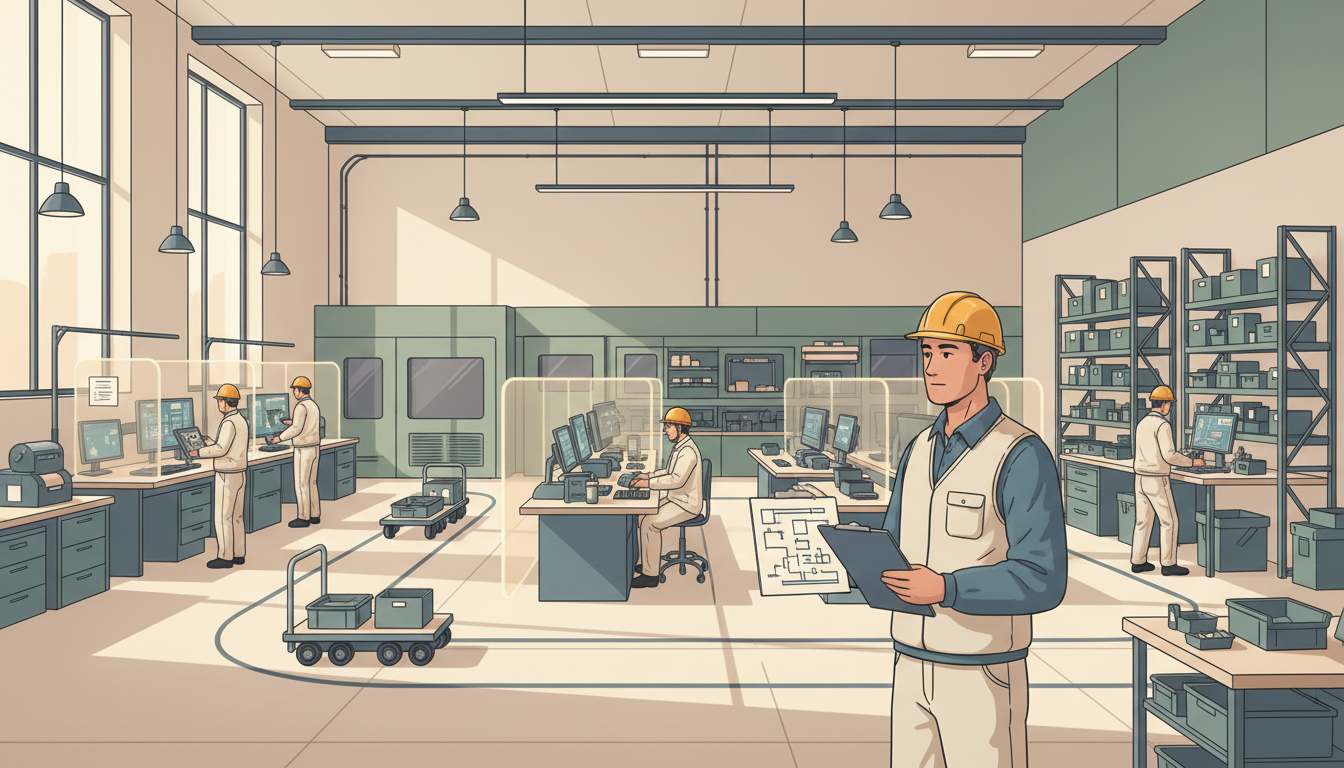
Why study History in an age of machines, software and artificial intelligence? Because technology does not change society by itself. People design and adopt tools, businesses reorganise production, governments establish infrastructure, workers learn new tasks and communities absorb benefits and disruptions unevenly. History shows how those relationships developed in earlier periods, so students can ask better questions about technological change without assuming that the future must repeat the past.
Singapore’s industrial history provides a grounded example. The National Heritage Board records the establishment of the Economic Development Board in 1961 and the development of Jurong Industrial Estate, where factories and new forms of manufacturing work helped change employment opportunities. A separate heritage account documents Setron producing a black-and-white television in Singapore in 1964. Such milestones illustrate industrial development, but they do not tell us how every worker was trained, what each household experienced or which jobs subsequently changed.
That gap is exactly why studying History matters. It teaches learners to trace decisions and material evidence, distinguish a machine’s technical capability from its actual social use, reconstruct the skills people needed and test sweeping claims about work. The subject becomes a practical education in change, causation, human agency and careful use of evidence.
The direct answer: technologies are used inside societies
A technology can be a physical machine, a production process, a communication network or a digital system. Its presence changes what people can do, but its consequences depend on cost, skills, institutions, incentives, access and the choices made by users.
A new production machine may make one task faster. Whether it changes total employment, wages or working conditions depends on how firms reorganise work and how customers respond. A communication system may carry messages quickly, but that does not guarantee that information becomes more accurate.
History teaches students to separate the invention, adoption and consequences of a technology. These are different events, often occurring across different decades and groups of people.
This is a transferable method. Instead of asking only whether a machine is “good” or “bad”, students ask what it could do, who actually used it, what alternatives existed and which outcomes are established by the record.
Invention is not the same as widespread adoption
A device can exist before it becomes affordable or practical for many users. Early demonstrations, patents and publicity may precede mass production, distribution, training and routine use.
This matters because a history of technology written as a list of inventors can misrepresent how social change occurs. The earliest prototype did not necessarily have the greatest immediate impact. A later organisational or infrastructure improvement may be essential to making the invention useful.
Students can compare three dates: the first documented appearance of a device, the beginning of its use in a selected industry and evidence that it became common in a defined population. These dates may differ substantially.
The exercise encourages careful claims. Saying that a technology existed in a period is not the same as saying that most workers used it, or that every household owned it. Historical reasoning requires evidence of diffusion and use.
Singapore’s industrialisation is a history of choices as well as tools
The National Heritage Board’s account of economic development describes the formation of the Economic Development Board in 1961 and the early emphasis on manufacturing and investment promotion.
Those developments involved economic policy, infrastructure, employment needs and business decisions. They should not be reduced to the claim that machines simply arrived and made Singapore industrial.
A student investigating the period should distinguish policy intentions, industrial construction, the kinds of factories established and the jobs recorded in contemporaneous sources. The existence of a factory is strong evidence of an industrial activity, but does not independently establish every worker’s income or experience.
The educational lesson is that technology functions within a wider system. Machines matter, yet so do land, finance, management, institutions, training and markets.
The Jurong story demonstrates how industrial development is layered
The Jurong Heritage Trail traces the development of an industrial estate beginning in the early 1960s and explains the economic challenges, land choices and investment efforts involved.
The story is not one of instant transformation. Early industrial development required factories, transport links, utilities, workers and confidence among businesses. Different sources emphasise different stages and outcomes.
For students, the question “Why did Jurong become an industrial centre?” can be divided into several more precise questions. What needs prompted the decision? What infrastructure made factories possible? Which industries established operations? How did later records describe the estate’s growth?
This decomposition prevents a single famous decision from becoming the entire explanation. It also encourages students to compare official milestones with records of the people who worked and lived in the area.
A photograph of a factory does not tell us how its workers felt
An archival factory photograph might show workers at machines, an assembly line or a newly opened building. It can document visible arrangements, equipment and perhaps workplace dress at that moment.
It cannot directly establish wages, fatigue, satisfaction, training or labour relations. A smiling group in a staged opening photograph is not a representative survey of employee wellbeing. An image of a busy workshop does not by itself measure productivity.
Historical inquiry uses such photographs as the beginning of an investigation. Payroll records, factory reports, employment notices, union documents and ethically used interviews can answer different questions about work.
Students who make this distinction become better readers of both historical and contemporary images. They learn that visual evidence is powerful when used for the right claim and misleading when stretched to conclusions outside its frame.
The history of an industrial estate is also a history of transportation
Workers need ways to reach employment sites, and factories need routes for materials and finished goods. Transport infrastructure can therefore shape industrial possibilities.
But the existence of a road or railway connection does not prove exactly how many workers used it or whether access was equal across neighbourhoods. That requires timetables, commuting data, maps, surveys and other appropriate records.
A useful student exercise compares a dated industrial map with a transport map from roughly the same period. Learners identify possible routes and then ask which documentary evidence would establish actual journeys.
This combines spatial reasoning with economic history. It also helps students see that technology is often a network of complementary systems rather than a single machine displayed in a museum.
What the Setron television reveals about manufacturing history
The National Heritage Board’s Setron television account describes production at Tanglin Halt Industrial Estate and identifies 1964 as a milestone for a locally made black-and-white television.
A historic television set is material evidence of a product and its period. The associated account provides further context about industrial development and the estate where manufacturing took place.
A student should not leap from this object to the claim that all Singapore households owned televisions or that all factories used the same technology. Product history, factory history and household-consumption history require different kinds of evidence.
The object makes a strong inquiry possible: how did Singapore develop manufacturing capabilities, and what supporting institutions, imported knowledge, labour skills and markets were involved? The historical answer must be built from sources rather than from the device’s impressive appearance alone.
Products are easier to display than production systems
Museums can preserve a radio, television, sewing machine or tool, but the original supply chains, training arrangements and workplace routines are harder to exhibit in a single glass case.
Students should therefore distinguish the artefact from the system that made it possible. A finished product represents material, design, production, quality control, distribution and use. Each stage may involve different workers and institutions.
A useful task is to draw a production chain for a documented historical object. Mark which stages are verified by sources and which are reasonable questions awaiting evidence.
The resulting diagram should not become a fictional reconstruction. If a supplier or factory process is unknown, write “not established by the available sources” rather than guessing.
This exercise is valuable in Design and Technology as well as History: it connects an object to the wider organisation of human work.
Machines change tasks, but the fate of occupations requires evidence
A machine can automate or accelerate a task without eliminating every role connected to it. Work may be reorganised, demand may change and new tasks may appear around maintenance, logistics or quality control.
Whether total employment rose or fell in a particular industry is an empirical historical question. A student’s answer should use appropriately defined employment statistics or documented workplace evidence, not a general statement that automation always destroys jobs.
For example, an older production line may have required manual processes that later changed. That observation alone does not reveal what happened to the workers. Some may have trained, transferred, retired or moved elsewhere; the distribution cannot be invented from the technology’s existence.
History encourages students to specify whether they are talking about tasks, job titles, firms, industries or the whole economy. Confusing those levels is a common source of dramatic but weak technological narratives.
Technology can create new kinds of work
New systems may require operators, technicians, trainers, supervisors, repair specialists or workers who combine technical and interpersonal skills. But the extent and timing of those roles vary by industry and period.
A historical investigation should ask which occupations appear in dated job advertisements, training documents and business records. It should also examine whether older job titles changed meaning or disappeared from particular directories.
Students can build a table comparing tasks before and after an identified process change. The table should distinguish documented changes from plausible but unverified effects.
This turns a debate about “machines versus humans” into an evidence-based account of how work was redistributed. It also helps students understand why education and training can become important parts of technological development.
Education is part of industrial change, not an afterthought
A factory can purchase equipment without automatically possessing a workforce that can operate and maintain it. Skills must be learned through formal instruction, workplace practice or a combination of methods.
The history of technology therefore connects to schools, vocational education, apprenticeships, management and occupational training. A government may promote technical capability, but researchers should distinguish policy announcements from actual training participation and subsequent employment.
For a student, this is a particularly useful reason to study History. It reveals that educational systems respond to economic change, and that the match between teaching and employment can take time.
A strong project might compare a dated job advertisement with a training syllabus from the same period. Which skills were requested? Which were taught? What additional evidence would establish whether graduates entered the relevant occupations?
The aim is to reconstruct an actual connection, not merely assume that schools always supplied every skill industry wanted.
The place of women and other groups in technological work deserves careful research
Employment opportunities and expectations have varied across time, occupations and groups. Historical accounts that focus only on factory owners and inventors can overlook the people who performed repetitive, skilled or supporting tasks.
Students should identify what the records say about the workers in a particular setting. Photographs, recruitment materials, oral histories and wage records may provide partial evidence, but none should be used to stereotype an entire gender or community.
A description of a workplace in one year does not establish that the same arrangements applied everywhere. The responsible historian specifies the industry, place, period and sampled records.
This habit makes technological history more complete. It reminds students that the effects of industrial change depend partly on who had access to particular jobs and training pathways, and that those distributions must be investigated rather than presumed.
A technological innovation may travel between countries in stages
Industrial development frequently involves trade in equipment, access to specialist knowledge, licensing, investment and the movement of workers or managers. Technology rarely travels as a self-contained object with every required practice already built into it.
Students should avoid assuming that a machine was wholly invented, manufactured or designed in the same place where it was used. A finished product can incorporate components and expertise from many locations.
Historical researchers may reconstruct these pathways through import records, trade publications, patents, business correspondence and industrial histories. The sources may remain incomplete, which should be acknowledged.
This is another reason the subject connects to Geography and Economics. It teaches learners that technological capability depends on networks, not just individual ingenuity, and that the evidence of those networks is often scattered across institutions.
What plastics manufacturing reveals about changing materials
The National Heritage Board’s history of plastics in postwar Singapore describes government incentives, manufacturing growth and the adoption of industrial processes during the 1960s and later years.
This is a useful case because technological change can occur through materials and production methods, not only through spectacular new consumer devices. A process improvement may change what can be produced at scale or at a different cost.
Yet a material’s appearance in factory records does not prove that every household immediately used products made from it. Nor does later concern about waste establish that earlier producers anticipated every environmental consequence.
The historian places technical capability, economic incentives, everyday use and later environmental questions in sequence. That process avoids telling a simple story of inevitable progress or unavoidable decline.
Technological benefits and environmental costs can emerge at different times
Industrial expansion can create employment and production while also raising questions about emissions, waste, land use and safety. These outcomes should be investigated as distinct historical dimensions rather than collapsed into a single judgement.
A National Heritage Board account of pollution control explains that Singapore established an Anti-Pollution Unit in 1970 amid concerns associated with industrial development.
For students, this source highlights the evolving relationship between economic activity and regulation. It documents a policy response, but does not by itself provide a complete technical assessment of every factory or district.
A careful essay can explain why an institution was created, what concerns were recorded and how subsequent measures evolved. It should not invent exposure levels or make unverified claims about individual health outcomes.
History teaches that the consequences of technological change may become more visible as knowledge, expectations and monitoring systems develop.
Why technological history includes regulation
Machines and networks operate within rules governing safety, work, markets and public infrastructure. Those rules may be revised as new capabilities or problems emerge.
A student examining a regulation should ask why it was proposed, who had authority, when it came into effect and what evidence exists about enforcement. The enactment date is not proof that compliance became universal immediately.
Records of regulatory change can reveal how institutions responded to emerging risks or economic priorities. They may also show disagreements about costs and responsibilities.
This helps students understand that technological development is shaped partly by public decisions. Regulation is neither an automatic obstacle nor an automatic guarantee of good outcomes. Its historical operation must be studied through evidence.
The role of consumers is easy to underestimate
Businesses often change products or services in response to what customers want and can afford. Consumers can therefore influence which technologies spread and which remain specialised.
But a newspaper advertisement does not prove actual sales, and one enthusiastic testimonial does not establish widespread adoption. Students need evidence such as dated sales reports, household surveys or credible market studies.
A historical consumer object, such as an early locally manufactured television, can prompt questions about price, distribution, repair services and the activities that developed around it. Those questions are separate from the record of production.
Studying both producers and users gives a fuller picture of technological change. It connects factory history with domestic routines without assuming that everyone acquired the same device at the same time.
A machine can be older than the way people currently use it
Technologies often outlive the practices originally associated with them. A building can be repurposed, equipment can be modified and an older tool may remain useful alongside newer systems.
Historical explanations therefore need to separate original design from later use. A present-day photograph of old equipment cannot establish its entire operational history.
Students can construct a small “object biography” with entries for manufacture, acquisition, alteration, use and preservation. Every entry needs a date or an honest statement that the date remains uncertain.
This approach shows that change is rarely a clean sequence in which each new machine completely replaces the previous one. Technologies overlap, coexist and take on different meanings across generations.
Why historians avoid claiming that change was inevitable
Looking backwards, successful technologies can appear destined to spread. But historical participants faced alternative investments, technical obstacles, competing products and uncertain demand.
A responsible account examines decisions as they appeared at the time. What did a business or public authority know? Which alternatives were available? What risks were identified? Which outcomes were not yet predictable?
A student should not infer inevitability simply because an event ultimately happened. Such reasoning hides both the uncertainty of earlier choices and the people who influenced the outcome.
The ability to resist hindsight is a useful education for present-day technological debates. It encourages people to evaluate claims about a new system without assuming that either triumph or failure has already been written.
What a proper comparison of old and new jobs requires
Suppose a student compares a historical factory occupation with a current technical job. Job titles alone may mislead because the tasks, training and industry structures can differ.
A sound comparison needs a defined task or outcome, such as inspecting product defects, managing inventory or maintaining equipment. The student should locate dated descriptions of the work and explain how methods changed.
Working hours, compensation and safety should be assessed separately with appropriate evidence. A photo of a crowded factory does not give the wage, and a modern job posting does not prove what every employee actually does.
This careful method teaches students to avoid superficial contrasts between “manual past” and “digital present”. It replaces the contrast with a documented analysis of selected tasks and conditions.
The past can improve questions about AI without forecasting job losses
Artificial intelligence raises questions about how cognitive and administrative tasks may be reorganised. Historical examples of earlier technologies can help students ask which complementary skills, institutions and incentives influence adoption.
The comparison has limits. AI systems have different capabilities and constraints from industrial machines or early telecommunications. A historical episode cannot establish how many current jobs will be created, changed or lost.
Students can use a disciplined analogy worksheet: identify the historical technology, the task it affected, the institutions around it, the documented consequences and the important differences from the modern case.
That procedure turns History into a tool for questioning predictions rather than a substitute for labour-market analysis or technical research. It encourages responsible curiosity instead of alarmist certainty.
The difference between productivity, output and employment
Historical accounts sometimes use terms such as productivity, production and jobs as if they meant the same thing. They do not.
Output describes what is produced. Productivity refers to output relative to some input, often labour time, under a defined measurement. Employment describes people or jobs in a specified category. One can change without the others changing in exactly the same direction.
A useful student task is to analyse a simplified, explicitly fictional factory example. If a workshop produces more items per hour after installing equipment, that establishes a productivity change under the example’s assumptions. It does not automatically establish a reduction in total staff.
Historical analysis needs real records to assess what happened in a particular industry. The conceptual distinction helps prevent incorrect causal claims when students read past industrial statistics.
A dated job advertisement is a useful but incomplete source
An advertisement can document that an employer sought particular skills, offered specified conditions or used certain job titles at a particular moment. It can illuminate a changing occupation.
It cannot prove that every vacancy was filled, that actual working conditions matched the advertisement or that all firms in the industry had identical expectations. These claims require additional evidence.
Students can compare two advertisements separated by a decade and identify differences in stated skill requirements. They should then seek training records or published industry studies before arguing that an entire workforce transformed.
This task makes historical source criticism practical. It also develops careful reading of requirements and qualifications, useful long after students leave school.
Archives can preserve workers’ voices that economic charts miss
An employment statistic is useful for measuring a defined trend, but it cannot capture every worker’s experience of learning a machine, changing shifts or joining a new occupation.
Oral histories and memoirs can supply those perspectives when collected and interpreted responsibly. Interview dates, questions, translation and the speaker’s particular role all matter.
A student should not use one worker’s recollection as proof of national wage trends. Equally, a national trend does not tell us what that worker experienced. Historical research is stronger when aggregate and personal evidence are kept distinct and then compared.
The National Archives of Singapore provides access routes for oral history, photographs and government materials that can complement institutional accounts of development.
A worked Singapore example: one product, several historical questions
Choose the Setron television as a documented product and begin with the date and production context given in the NHB account.
Now split the inquiry into four questions. What does the object establish about manufacturing? Which businesses and institutions supported production? What evidence exists about the workers’ tasks? What would be needed to investigate ownership and use among households?
Students should distinguish the facts supplied by the source from further questions it raises. They should not invent supply-chain partners or workforce figures to make the answer more impressive.
A strong final paragraph may explain that the television documents a specific manufacturing milestone, while broader conclusions about employment and consumption require additional records. That is historical reasoning in a manageable case.
A worked exercise: did a machine change a workshop?
Use an invented classroom case with two dated workshop diagrams, a productivity log and brief notes from a manager and worker. Label the whole set as a simulation rather than presenting it as a Singapore archival discovery.
Students identify the visible process change and calculate any simple differences accurately. They then compare the manager’s statement about intended efficiency with the worker’s account of new duties.
Ask which claims are directly supported and which need more information. A higher daily output might be documented, but the simulation may not establish demand, profit or the long-term fate of employees.
This exercise combines mathematical interpretation with historical source comparison. It teaches that even when numerical performance changes, the human and institutional consequences require separate evidence.
A second worked exercise: compare two industrial-development narratives
Provide one official historical summary of Jurong’s development and a separate published account based on workers’ experiences. Students should identify the main question each source seeks to answer.
The institutional history may emphasise jobs, investment and infrastructure. The worker account may describe travel, training, relationships or uncertainties. These emphases can be different without being contradictory.
Ask learners to write a combined argument about one specific change in industrial work. They must use each source for an appropriate claim and avoid asserting that either represents the entire historical reality.
The task tests whether the student can move from single-source storytelling to a measured explanation in which policies, systems and people retain distinct roles.
Why historical training should start with the first weak link
Some students know the overall narrative of Singapore industrialisation but cannot explain why a specific decision mattered. Others can quote sources yet struggle to distinguish evidence of intention from evidence of results.
Effective learning support diagnoses the earliest failure. If chronology is wrong, rebuild a short timeline. If terms such as productivity are confused, repair the concept. If a claim has no evidentiary link, teach the learner to support and qualify it.
Adding another hundred facts without correcting the misunderstanding rarely solves the problem. The aim is independent historical thinking: explain the mechanism, identify the source and acknowledge limits.
Students can then transfer the method to an unfamiliar case such as communications technology, transport systems or agricultural machinery. Progress is the ability to reason beyond the model example.
A four-week learning plan for the history of technology and work
Week one builds chronology. The student locates dated sources about one technological or industrial development and distinguishes invention, adoption and observable consequences.
Week two focuses on people and institutions. Students identify the firms, workers, regulators and customers involved, while separating documented roles from speculation.
Week three tests causation. Learners distinguish tasks, productivity, output and employment and examine whether the proposed links among them are evidenced.
Week four tests transfer. The student receives a new source set and writes a short argument explaining one documented change, one continuity and a significant uncertainty.
The assessment should reward precision rather than memorised enthusiasm for technological progress. A successful learner can explain why a machine mattered without claiming that it alone caused every later outcome.
Common mistakes in essays about technological change
The first mistake is equating invention with widespread adoption. Repair it by seeking evidence of diffusion. The second is claiming that a machine automatically removed jobs. Separate tasks from measured employment outcomes.
The third is ignoring institutions and training. Reconstruct the supporting systems. The fourth is assuming benefits or costs were identical for every worker. Define the population and consult appropriate records.
The fifth is reading a modern technology’s capabilities into an earlier device. Keep comparisons grounded in documented functions and constraints. The sixth is treating a product displayed in a museum as proof of general household ownership.
Each repair narrows the claim to what the evidence can actually establish. That is the central educational advantage of historical reasoning.
Parents can connect History to a child’s interest in technology
A student interested in gadgets may enjoy choosing an older household device and learning when it was produced, what it was designed to do and how people acquired or maintained it.
Parents can help locate a reputable museum or heritage source and a dated advertisement. Ask the child to distinguish what the device could technically do from what the advertisement promised and what users actually experienced.
A second activity compares the device with a modern equivalent but avoids sweeping conclusions about whether life was better or worse. The child can identify changes in tasks, access and supporting infrastructure while keeping missing evidence visible.
The purpose is to build intellectual curiosity and evidence habits, not anxiety about future employment. History can make technological change more comprehensible without pretending to predict every outcome.
Frequently asked question: Does History teach that technology always creates more jobs?
No. The employment consequences of a technological change vary across industries, places and periods. History can document how particular tasks and occupations developed, but a universal rule about total job creation or destruction would require much broader evidence.
Students should distinguish task substitution, productivity, output and net employment rather than treating them as interchangeable.
Frequently asked question: Is the history of technology relevant to Science students?
Yes. Science and engineering can explain how technologies function. History examines the social setting in which they were produced, adopted and regulated.
The disciplines complement one another when their methods are respected. A historical business record cannot replace a technical test, and a technical specification cannot establish how all workers experienced a new system.
Frequently asked question: Why study older industrialisation when AI is changing work today?
Earlier episodes illustrate useful questions about skills, institutions, incentives and uneven adaptation. They can reveal patterns that deserve investigation.
But an earlier machine is not identical to AI. History supplies disciplined comparison rather than an automatic forecast. Contemporary predictions require current, reliable evidence about the technology and labour market concerned.
Frequently asked question: What is a manageable school History project on technology?
Choose one well-documented object or workplace change, define a narrow question and collect two or three sources of different kinds. Build a chronology and explain what each record can establish.
A short project on a locally manufactured historic product is often more rigorous than an unsupported grand essay about all technology. The final work should include one substantive explanation and at least one meaningful evidence limitation.
Official sources and further History study
The National Heritage Board offers detailed starting points on Singapore’s early industrialisation, Jurong’s industrial development, the Setron television, postwar plastics manufacturing and pollution-control history. The National Archives provides routes to deeper documentary research.
Within eduKateSG, use Understanding SEC History, Why Study History | Understand Why Societies Change and Why Study History | Read the Built Environment as a Historical Record.
The value of studying History is not a promise to predict the next innovation. It is the capacity to distinguish machines from systems, possibilities from observed outcomes, and persuasive claims from explanations that the historical evidence can support.