
Did you know that Singapore’s community centres existed before the People’s Association was founded? A present-day community club may have classrooms, sports facilities and programmes for families, but the familiar institution emerged through decades of changes in housing, public services, volunteering and everyday neighbourhood life. Studying that history helps us understand how people built connections beyond their own homes, and how institutions responded as kampungs became housing estates.
The People’s Association (PA) was established on 1 July 1960. Its published history records 28 community centres in 1960 and 90 by 1970, while archival photographs document community activities before and after that founding milestone. Community Centre Management Committees began in October 1964, Citizens’ Consultative Committees in 1965 and Residents’ Committees in 1978. Television screenings, practical classes, sports, assistance and public conversations became part of this evolving network. Community centres were increasingly known as community clubs from 1990, though older and newer names both remain familiar.
Why study this History? Because a building’s official opening does not tell us who attended, a programme schedule does not prove every visitor learned the same lesson, and a photograph of smiling neighbours cannot measure an entire community’s sense of belonging. By comparing dates, places, voices and institutions carefully, students learn historical reasoning, civic literacy and empathy using a subject close to everyday life.
Explore this guide
- A community centre is an institution, not just a building
- The year 1960 marked the formation of PA
- Ninety centres existed by 1970
- Community Centre Management Committees began in 1964
- Residents’ Committees began in 1978
- 1990 brought broader use of the term community club
- A four-week History learning plan using community centres
- FAQ: did Singapore’s community centres begin in 1960?
- Official sources and connected eduKateSG reading
A community centre is an institution, not just a building
A community centre brings activities and facilities together under some form of organised management. The building might contain classrooms, sports space, meeting rooms and service counters, but its social purposes depend on the people who actually use it.
History asks who founded and operated the centre, which programmes were offered and why its location mattered. A photograph of an opening ceremony cannot establish that every resident felt welcome or participated.
Students learn to distinguish physical facilities, institutional intentions and documented experiences. These categories are related, but evidence about one does not automatically establish the others.
Neighbourliness existed before community centres
Singapore residents gathered in homes, shops, religious institutions, associations, streets and other shared spaces long before a modern public community-centre network existed.
A government-supported centre can organise new opportunities, but it did not invent the human desire to meet, help and learn from neighbours.
Students should not treat every earlier kampung as uniformly harmonious or every modern estate as impersonal. Real communities differed in resources, relationships and disagreements.
History encourages a nuanced explanation of how institutions supported existing social practices and introduced new ones rather than a sentimental before-and-after story.
The earliest centre dates need careful interpretation
An NLB historical study describes centres opened in the 1950s and documents 28 existing before PA was established. The National Archives also holds earlier community-centre photographs and records.
Rather than force all sources into a single unsupported founding claim, students should identify which organisation, location and type of centre a date describes.
The broader point is secure: community spaces were operating before 1 July 1960, while the PA subsequently developed a larger, coordinated system.
This is source criticism applied to an ordinary neighbourhood institution.
Tiong Bahru’s archival photograph preserves an early example
The National Archives’ Tiong Bahru Community Centre photograph dates a gathering to 8 July 1951.
The image shows a building and people assembled around it. It is useful evidence of a named community space before PA’s formation, though a photograph alone cannot establish every administrative detail.
Students should preserve the archive date and distinguish what is visible from later interpretations. This is why claims that all community-centre activity began in 1960 need qualification.
The year 1960 marked the formation of PA
The People’s Association’s official history gives 1 July 1960 as the date it was formed.
Its stated aims concerned social cohesion, relationships across communities and connections between public institutions and residents.
These are documented purposes, but the formation of an organisation is not itself evidence that every neighbourhood immediately enjoyed the same facilities or activities.
Students can explain PA’s creation accurately while keeping measurable outcomes and individual experiences as separate research questions.
Singapore was not independent in July 1960
Singapore had attained internal self-government in 1959, but it did not become a fully independent republic until 9 August 1965.
A historical account of the 1960 PA formation should therefore avoid describing that date as occurring in already-independent Singapore, even if a modern institutional summary uses broad nation-building language.
Students can distinguish self-government, merger with Malaysia and eventual independence in their chronology.
This example demonstrates why exact political dates matter when placing a familiar public institution in the wider history of the island.
Twenty-eight centres is a defined 1960 figure
PA’s 2014/15 annual report states that there were 28 community centres at the association’s beginning.
This is a count of facilities in that institutional record, not a count of all informal gathering places, religious halls or voluntary associations.
Students should state what is being counted and the reference year. A precise-looking number is misleading if its category is silently broadened.
This is quantitative historical literacy using a public service familiar to many households.
Ninety centres existed by 1970
The same PA annual report records 90 community centres by 1970, reflecting expansion of the network across the island.
The increase is evidence of additional facilities, not proof that every resident attended classes or that every programme was equally successful.
Students can compare the 1960 and 1970 figures while noting that centre capacity, location and the definition of attendance require different data.
A large institutional expansion becomes more meaningful when the measurement’s scope is clear.
The goal of bringing people together had several dimensions
A centre could provide recreational opportunities while also distributing information, organising public meetings or making government contact easier.
These functions sometimes supported one another, but they were not identical. A sports tournament, sewing class and policy briefing answer different needs.
Students should identify the particular programme when asking what changed. Broad words such as community spirit can express institutional aims but require appropriate evidence for claims about individual relationships.
History becomes more informative when it explains specific mechanisms rather than relying only on encouraging slogans.
Early centres could have modest facilities
The NLB study of grassroots organisations notes that early community centres often had limited amenities.
Simple meeting and recreation spaces could still be meaningful, but their facilities should not be imagined as identical to those of a later multistorey club.
Students can compare dated building records to identify genuine changes in space and equipment.
A common historical mistake is to project a modern air-conditioned multipurpose complex backwards onto all centres that existed in the 1950s.
Classes provided reasons for residents to meet
PA’s historical review describes programmes including dressmaking, cooking, sports and other skills.
A class could bring together people who did not previously know one another. However, a course brochure documents an offer, not the exact skills or friendships acquired by every enrollee.
Students should distinguish programme intention, enrolment and demonstrated learning outcomes.
This parallels the History of schools and training institutions, where the existence of a class cannot substitute for evidence about student experience.
Recreation was more than a break from work
Table tennis, games, cultural performances and physical activities offered organised ways to use shared spaces.
These programmes may have helped residents form relationships, but the scale of the effect cannot be inferred from a single tournament photograph.
Students can investigate one dated event and identify its organisers, facilities and documented participants.
History encourages attention to leisure as part of social life without claiming that all residents held the same interests.
The centres also carried public information
PA’s institutional record includes the aim of connecting public policies with residents, and early centres hosted announcements, meetings and information programmes.
A government presentation may show what officials intended to communicate; it does not establish that every attendee agreed.
Students should distinguish the content of a speech from evidence of public reception. Newspapers, meeting records and personal accounts may offer additional perspectives.
This is an important civic-literacy skill: public communication and popular consent are different subjects.
Local voices may be missing from official reports
Institutional accounts often record opening dates, programme numbers and official visitors. They may include fewer details about residents who did not attend or who had different experiences.
Students can consult oral histories and contemporaneous reports where appropriate, while recognising the limitations of each type of source.
The goal is not to dismiss official records, which provide essential chronology. It is to supplement them thoughtfully instead of treating an anniversary publication as the complete experience of everyone who lived nearby.
Television became a powerful shared activity
When Television Singapura began broadcasting in 1963, privately owned television sets were still beyond the reach of many households.
Public viewing points at community centres allowed people to encounter programming without buying a set. The NLB history of television describes roughly fifty public viewing points at the launch period.
Students should not claim every community centre had identical equipment or that all neighbours watched every programme together. The facilities created opportunities, while participation varied.
The 1963 television launch and centre viewing were distinct events
Television Singapura’s pilot broadcast occurred on 15 February 1963, and regular service followed in April.
A centre showing television is evidence of shared access, while the broadcaster’s studio and transmitter belonged to another institution and technical system.
Students should not confuse the date of television’s first public launch with the opening date of a particular community centre.
History becomes clearer when the media network and the local place where residents watched are identified separately.
Fifty viewing points is not fifty television-owning households
NLB’s account of the 1963 launch identifies public viewing points as a way to reach people without private sets.
A public point may have served many viewers, but a count of sites does not establish actual audience numbers or unique persons.
Students should retain the unit of measurement and avoid treating public equipment as a census of family ownership.
This is a practical numerical lesson applicable to public libraries, bus stops and other shared facilities.
A TV photograph cannot prove what neighbours thought
An archival image of people watching a screen can document visible attendance, clothing and room arrangement.
It cannot reveal every viewer’s response to a speech or entertainment programme, or establish that the same group gathered nightly.
Students should identify the programme where reliably known and seek appropriate testimony before making claims about individual interpretation.
The photograph is useful precisely when its evidential boundary is respected.
Community centres were also places for film screenings
The NLB account of the audio-visual archives describes film reels distributed for screening at public gathering places including community centres and rural villages.
A 16 mm educational film could deliver public information outside a regular cinema. Its availability does not prove every village saw it or that all audiences accepted its message.
Students can analyse the film, the distribution programme and the viewing experience as distinct historical sources.
A public education film is not automatically neutral
Films may provide useful factual information while deliberately emphasising a government programme or policy.
Students should identify the producer, intended audience and date, then verify substantive factual claims through independent records when required.
This does not mean every official film is false. It means the medium and source purpose help explain what a film can reliably establish.
History develops an evidence-based approach that avoids both automatic trust and blanket cynicism.
Community Centre Management Committees began in 1964
A PA anniversary report dates Community Club Management Committees, or CCMCs, to October 1964.
Their stated role included increasing local ownership of centre activities and programmes.
Students should distinguish the committee structure from the physical centre building. A club could host classes while management and volunteer organisation changed.
This is institutional History, where the governance of a familiar place can evolve without the whole building being replaced.
Management committees and residents are not identical groups
A centre may be run by committees and staff, while residents attend or volunteer in different capacities.
The formation of a management committee does not establish that every resident helped select activities or agreed with every decision.
Students should use meeting records, surveys or appropriate testimony when making claims about participation.
This is a useful lesson about representation: an organisation acts within a community, but its official decisions should not automatically be attributed to everyone living there.
The 1965 consultative committees had a related role
The People’s Association dates Citizens’ Consultative Committees (CCCs) to 1965.
They developed as constituency-level grassroots bodies connecting residents’ concerns with public agencies and other local organisations.
Students should not confuse CCCs with the earlier 1964 centre management committees. Their organisational purposes were related but distinct.
An accurate timeline recognises that a neighbourhood could have several layers of representation and activity rather than one single committee doing everything.
A consultation record is not a unanimous vote
A committee may collect feedback or submit a recommendation to a public authority.
That document establishes a position communicated through the process, but not necessarily the opinion of every resident or the final outcome.
Students should distinguish a proposal, government decision and implemented project.
This is a valuable reason to study the History of community organisations: civic participation is a process that needs careful evidence, not a simple claim that everybody agreed.
Housing redevelopment changed neighbourhood geography
New HDB estates concentrated many residents in planned blocks and provided new common spaces.
Community centres adapted to serve populations whose homes and daily routes differed from those of earlier villages.
A centre map can show proximity to flats, but not how often each family attended. Students should investigate dated site records alongside housing history to understand the relationship.
History helps explain how institutions respond to physical changes in towns without assuming the resulting social effects were identical everywhere.
The kampung and HDB estate should not be idealised
Some former kampung residents experienced strong neighbourhood ties, while others faced shortages of services or difficult living conditions.
Public housing introduced new facilities but could disrupt existing networks as families moved.
Students should not claim all village relationships survived unchanged or that high-rise life automatically destroyed neighbourliness.
A balanced historical explanation uses specific local evidence, recognises trade-offs and distinguishes nostalgic memory from population-wide experience.
An HDB void deck is not the same as a community club
Both can support neighbourhood gatherings, but their ownership, design and programmes may differ.
A void deck may host a temporary celebration, while a community club provides organised activities and facilities under a distinct institutional framework.
Students should not merge the histories merely because events take place near residents’ homes.
Precise use of labels helps learners understand how several kinds of social infrastructure work together within an estate.
Neighbourhood location influences who can participate
A centre near homes, schools and buses can be convenient, but practical access also depends on stairs, cost, programme hours and individual needs.
A building opening does not prove every resident can or will use it equally.
Students should identify what an authority intended and then seek appropriate evidence about actual usage when evaluating the outcome.
History encourages careful distinctions between access in principle, participation in practice and the quality of individual experience.
Older centres could be repurposed buildings
Some community centres occupied modest or adapted structures, while later facilities were purpose-built with larger rooms and sporting equipment.
A photograph of one converted building cannot be treated as the standard design of every centre in a period.
Students can compare dated architectural descriptions and ask why particular locations needed new premises.
This brings material History into a subject often described only through social aims.
Facilities expanded during the 1970s
The NLB social-innovation study notes that improved centres with modern amenities developed from the mid-1970s.
The change matters because activities depend on available space, lighting, equipment and staff.
Students should not infer that every centre was rebuilt during one year or that newer decoration automatically produced stronger community relationships.
History traces the practical conditions that made different programmes possible and separates them from outcomes that need additional evidence.
A renovated building may retain an earlier community identity
A centre can be enlarged, relocated or renamed while residents continue to recognise its role in the neighbourhood.
Physical continuity and organisational continuity are related but not always identical. The building may be new while a committee or programme has older roots.
Students should investigate the date of each change instead of calling the new structure the original 1960 premises without verification.
This same method applies to schools, markets and railway stations.
Residents’ Committees began in 1978
The PA’s official account dates the Residents’ Committees, or RCs, to 1978.
They were intended to build neighbourliness, gather local feedback and connect residents with public agencies in HDB estates.
Students should distinguish the creation of RCs from the founding of PA in 1960 and the earlier centre management committees.
A single neighbourhood may involve several community institutions with different roles and dates.
The RC zone was a smaller geographical unit
An RC typically serves residents within a defined area of an HDB estate, while a community club can serve a wider population and range of programmes.
A student should not assume that the boundary of an RC zone is identical to that of a parliamentary constituency or town.
Maps and official descriptions are necessary when studying particular locations.
This develops spatial literacy about how public programmes can be organised at different scales within the same city.
Local activities can support relationships without guaranteeing them
A sports day, craft class or festive gathering may provide opportunities for neighbours to meet.
A participation register can show who signed up, but not whether lasting friendships developed or whether people who did not attend felt excluded.
Students should seek appropriate interview or evaluation evidence for those broader questions.
History teaches thoughtful interpretation of institutional achievements without reducing social relationships to event counts.
Multilingual communication mattered
Community-centre signs and notices have often been displayed in several of Singapore’s languages.
The National Archives’ Bras Basah Community Centre image from 1966 visibly records a multilingual sign above the entrance.
The sign is evidence of presentation in different languages; it cannot establish that every attendee read all of them fluently.
This creates a useful connection between language History and the practical organisation of community life.
A multilingual sign is not an audience census
The languages chosen for a sign may reflect public policy, local communities or design conventions.
The sign cannot tell us the exact number of residents speaking each language, or their views about the centre.
Students should distinguish a public communication choice from demographic evidence and consult the relevant census for population questions.
This is a compact example of why one visual source is strong for some claims and weak for others.
The 1966 Bras Basah photograph has a specific context
The National Archives dates the arrival of Lee Kuan Yew at Bras Basah Community Centre to 11 August 1966 for an independence-anniversary celebration.
That photograph documents a particular ceremony. It does not mean the centre was opened on that day or that every resident attended.
Students should retain the date and distinguish a visiting official from the institution’s original founders.
This is careful visual-source analysis applied to an accessible public-event photograph.
The 1962 Queenstown meeting gives another example
A National Archives photograph shows a crowded gathering at Queenstown Community Centre on 12 December 1962.
The image can document visible seating and attendance at that moment. It cannot establish what every participant believed or whether the same crowd assembled every week.
Students should use the archive record for the narrow facts it contains and seek further sources about the actual programme.
History gains credibility when one photograph is not made to represent an entire decade.
A crowded room does not automatically mean widespread participation
An event might attract many attendees while ordinary classes draw smaller numbers.
A well-composed crowd photograph may be selected because the occasion was unusual. The image therefore cannot stand alone as a statistical measure of an institution’s everyday influence.
Students can compare the dated event with enrolment or programme records where available.
This is a general historical method: striking examples need to be interpreted within the wider pattern, not treated as its complete proof.
Children’s classes had an educational role
Community-centre programmes included kindergarten and various forms of enrichment or practical learning.
Those offerings could supplement formal schooling and provide local opportunities for families.
A programme list shows what the institution offered, not that every child obtained the same learning outcome. Students should avoid equating class enrolment with examination achievement.
History helps learners understand the broader ecosystem of education while recognising the evidence needed to evaluate teaching and participation.
Adults also learned new practical skills
Cooking, dressmaking and other skill-based activities offered residents ways to learn and practise activities that might be useful at home, work or socially.
The PA annual report describes their role in the earlier centre network.
Students should not assume that one course guaranteed paid employment or that every participant shared the same reasons for attending.
A responsible account describes the documented programme and treats subsequent personal outcomes as questions for further research.
Older participants needed their own kinds of programmes
Community-centre activities have catered to different ages, including retirees and older adults seeking social, recreational or practical opportunities.
A modern programme may have facilities or subjects absent from early centres. Students should not project contemporary offerings backwards without evidence.
History helps explain how a changing age profile and public expectations can influence the work of local institutions.
It also prevents an oversimplified story in which all centre programmes were designed only for children or young families.
Sports and table tennis connected neighbours
Table tennis and other low-cost recreation have been part of community-centre programmes since earlier decades.
A tournament may produce a list of entrants or winners, but not establish that the entire estate was interested in that sport.
Students can use the activity as evidence of one form of recreation while recognising alternative social networks in the same neighbourhood.
This makes leisure an important but properly bounded part of community History.
A community hall could also carry civic discussions
Meetings about local needs, public policy or neighbourhood issues sometimes took place in community premises.
The content of a speech can be examined through a transcript, while evidence of public response requires separate records.
Students should not conflate government information, discussion and unanimous approval. People may listen, agree, question or simply attend for different reasons.
History equips students to understand civic institutions without assuming a single shared viewpoint.
National Service information became another programme area
PA’s retrospective discusses grassroots leaders helping families understand the introduction of National Service.
The support reflected a practical role for neighbourhood organisations during a major institutional change.
A published account of assistance does not establish that every family received or valued it in precisely the same way.
Students can distinguish public information, emotional reassurance and the actual legal requirements of National Service, using sources appropriate to each question.
Community centres and public housing changed together
As new towns expanded, centres and clubs could provide gathering places near blocks of flats and transport connections.
Their programmes may reflect the needs of different generations and neighbourhoods.
Students should not infer that a club’s opening caused every nearby housing development or that all residents participated.
A careful local case combines dated housing maps, centre records and individual accounts to explain change without inventing a universal causal story.
1990 brought broader use of the term community club
NLB’s historical study describes community centres increasingly being called community clubs from 1990.
The terminology reflected an evolving network of facilities and programmes, not the start of all local community activity.
Students should check which name a particular centre used in its own period rather than assume that every historical sign displayed the present terminology.
Language changes can be a part of institutional History even when the broader purpose of providing shared spaces continues.
A name change does not prove a new building was constructed
A centre could be renamed without moving, and a new building could inherit an older centre’s name.
Students need building records and institutional histories to explain which type of change took place in a particular neighbourhood.
This avoids claiming that the first appearance of the words community club dates the first existence of the premises.
The lesson is transferable to renamed schools, transport stations and public agencies.
The modern community club has different technology
Today’s facilities may include digital booking, modern audiovisual equipment and spaces designed for events not practical in the 1960s.
Those changes reflect wider developments in communications and public access.
Students should not assume all new technology guarantees inclusion, since different residents may prefer different methods for obtaining information or registering for activities.
History encourages comparisons between the available service channels and the actual experiences of users, rather than automatic celebration of a device.
A public-service counter is not the whole centre’s history
Some clubs now house or connect residents with public services, while other programmes involve sport, learning and community activities.
The mix depends on the premises and period. Students should avoid describing every club as identical.
A local directory may establish services advertised at one time, but not whether every enquiry received a successful outcome.
History makes institutional comparisons clearer by requiring a defined service and reference date.
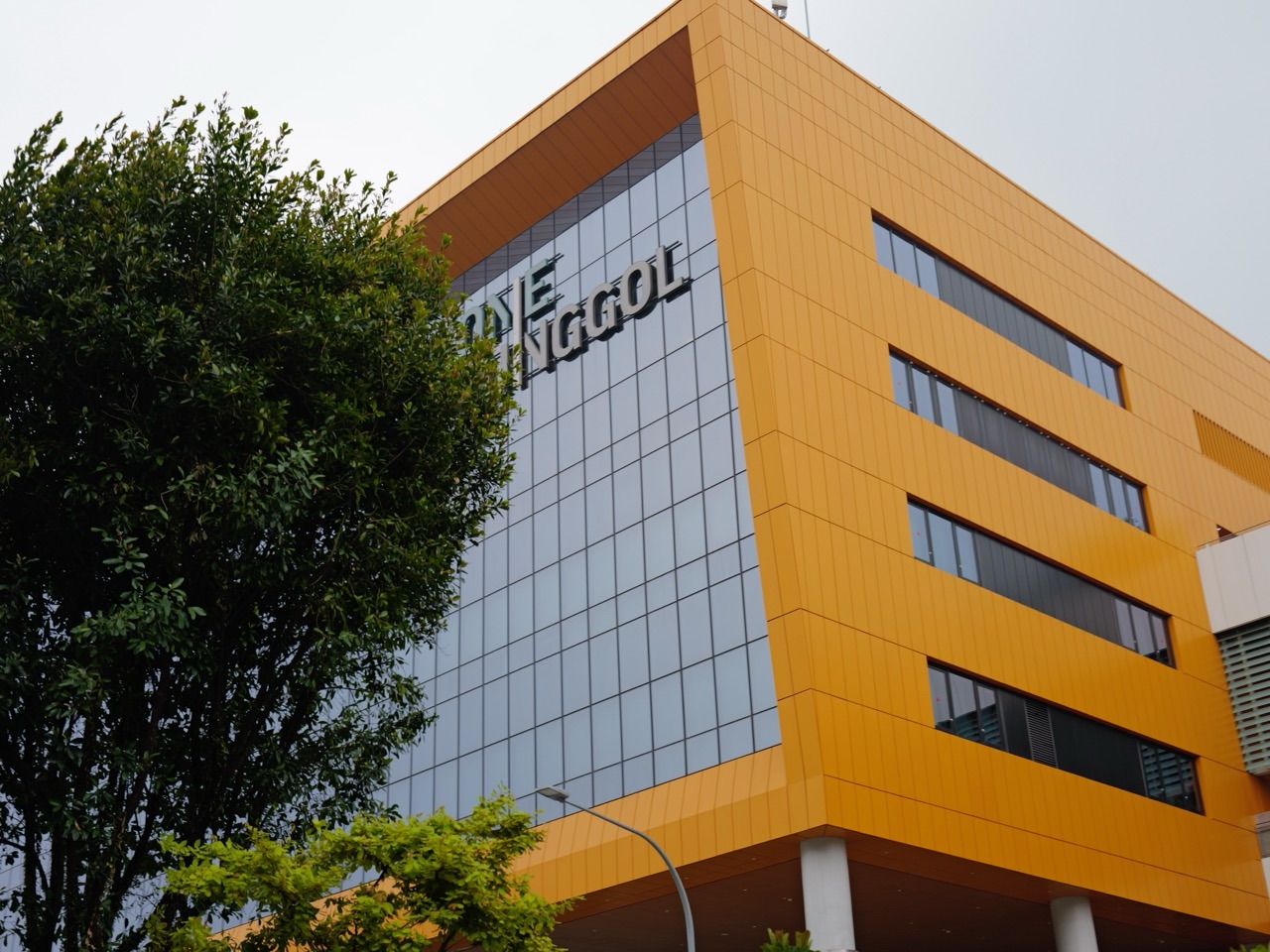
One Punggol illustrates a modern multipurpose hub
A present-day photograph of One Punggol shows a large integrated public space within a developing neighbourhood.
Its modern design should not be mistaken for the modest centre buildings that existed in the 1950s. The photograph illustrates later change in scale and arrangement rather than documenting PA’s foundation.
Students can compare the publicly documented hub and an archival centre image while explicitly identifying each period.
This is a useful local exercise in how public space changes as housing, services and technology evolve.
Volunteers contribute work that a building photo cannot reveal
Planning events, teaching activities, organising assistance and responding to residents require human effort beyond the visible architecture.
PA’s historical and contemporary accounts describe the roles of committee members and volunteers.
An event photo may record a few individuals but not the full amount of work contributed across months.
Students should seek organisational and suitably attributed personal records before making claims about specific volunteer responsibilities or the total scale of their contribution.
Volunteer participation has limits and conditions
A volunteer organisation can provide valuable local knowledge, but committee structures may have membership requirements and official approval processes.
The NLB grassroots study describes how committees developed under PA’s oversight.
Students should not automatically describe every centre decision as a direct vote of all residents. Nor should they dismiss documented voluntary activity merely because a public authority supports it.
History separates the form of an institution from the varied experiences of those who take part.
An official anniversary report is a retrospective source
A report published decades after a centre opened can offer valuable dates, policy aims and archival photographs.
Its authors also choose which achievements and events to highlight. Students should recognise its commemorative purpose and consult independent sources where a contested claim matters.
A retrospective is not necessarily unreliable; it answers a different question from a handwritten 1960 meeting minute or an individual recollection.
History teaches the sensible use of both, with their origins and purposes made clear.
An oral history gives one resident’s experience
A willing participant may remember watching television, attending classes or helping with a centre’s fundraising event.
Their memory can supply human context missing from official timelines, but dates may be approximate and participation may not have been typical.
Students should record who is speaking, when they were interviewed and which claims can be corroborated.
A personal account should remain one person’s history rather than automatically represent every resident of an estate.
Private memories require consent and careful use
Family photographs, association documents and individual stories may contain addresses, relationships and personal details.
Students should obtain permission before publishing identifiable material and avoid unnecessarily sharing private information in a school assignment.
Public National Archives images and published institutional histories usually provide sufficient sources for learning.
Ethical research respects people while developing curiosity about earlier community life.
A building’s closure does not erase the community
An older centre may be demolished, renovated or replaced as a district redevelops.
People and programmes may move to another location while the institution’s history remains preserved in records and personal memory.
Students should distinguish a facility’s physical lifespan from the continuation of local relationships. Neither can be assumed to be identical without evidence.
This is an important concept for studying disappearing streets, old markets and former schools as well as community centres.
Community identity can survive several moves
A centre’s familiar name may continue through a temporary site, new building or expansion into a larger club.
A short institutional timeline should identify the location and function of each premises rather than call all of them the original building.
Students can use opening notices and maps to reconstruct those transitions without inventing the experience of every member.
History shows how continuity of organisation can coexist with substantial changes of architecture and neighbourhood geography.
Public gathering places changed through the pandemic period
The COVID-19 pandemic affected the format and availability of many community programmes, including movement toward digital services and different event arrangements.
A historical account should identify the programme and time period rather than assume all activities stopped permanently or all residents could join online.
Institutional records can establish policies and changes, while participants’ experiences require other evidence.
This recent example reinforces the older lesson that technology and public circumstances alter how communities use shared spaces.
Digital access does not reach every person identically
An online booking system can offer convenience to some residents while others may need help, alternative languages or face-to-face assistance.
The existence of a digital channel is not proof every household can use it easily.
Students should evaluate accessibility using relevant current evidence rather than a celebratory launch announcement alone.
History helps connect older public television access with modern digital inclusion, while recognising that the technologies and problems are not identical.
A present centre’s programme is not a history of everyone who lives nearby
An event listing can establish what is being offered at a stated venue and date. It does not measure attendance across the estate or the private reasons for participation.
Students should distinguish public opportunities from documented outcomes and avoid making demographic claims solely from a course brochure.
A centre’s location and list of classes are valuable evidence when used for a specific question.
This is another way to apply source criticism to seemingly ordinary neighbourhood information.
An institution’s official purpose may face legitimate questions
Community organisations supported by government can promote useful activities and public information, while their arrangements may raise questions about representation, participation and independent community initiative.
History does not require uncritical praise or automatic suspicion. Students should define the issue, identify relevant evidence and present documented perspectives fairly.
The PA’s official account is valuable for stated aims and institutional milestones, while scholarly research adds context about governance and changing forms of grassroots participation.
Mature historical understanding recognises both practical benefits and the importance of evaluating claims about public influence.
Different neighbourhoods did not necessarily receive identical facilities
A new-town club, a small older community centre and a temporary venue may differ in size, location and services.
The national number of centres cannot prove equal convenience for residents in every district.
Students could compare two documented local cases, while remembering that nearby transport and programme hours also influence access.
This encourages careful geographical interpretation without inventing individual travel times or treating institutional coverage as uniform experience.
A modern club can be a useful place to study local history
Photographs, old posters, programme brochures and signboards can reveal different phases of a centre’s life.
The researcher must record dates and sources before interpreting them. A current display may reproduce old images alongside newer captions that need their own provenance.
Students can construct a short timeline of building changes, committees and activities where records allow.
The goal is evidence-based local History rather than an unverified story about how everyone once lived.
A programme’s success needs a defined measure
An institution may count course enrolments, volunteers, sessions offered or beneficiaries supported. These totals describe different achievements.
Students should not merge them into one participation figure or assume attendance proves long-term learning.
A responsible historical claim identifies the unit, period and population covered by the source.
This is quantitative literacy applied to community programmes, just as it is needed for transport, public housing and school statistics.
Community photographs should be read with care
A photograph of neighbours sharing a meal or attending a class documents an occasion in one space.
It cannot establish that everyone was friends, that there were no disagreements or that the whole community had the same resources.
Students can describe visible details and cite the archive while leaving broader social outcomes to suitable records.
This helps avoid turning neighbourhood history into an idealised story based on a few smiling faces.
A public speech records what the speaker said
Political and civic leaders have opened centres, explained programmes and addressed residents.
A transcript may establish the speaker’s argument, while a photograph shows some of the people present. Neither proves the views of everyone who listened.
Students should avoid treating an official ceremony as an opinion poll.
History teaches the separate analysis of intention, public communication and community response, supporting responsible civic discussion.
Cultural activities can preserve traditions while changing presentation
Centres may host language classes, performances, festive activities and arts programmes.
A performance can introduce neighbours to a cultural form, but a single event does not establish the beliefs or practices of an entire community.
Students should identify the specific programme and the historical evidence about its origins.
This connects the history of community spaces to the wider histories of festivals and live performance without treating cultural traditions as interchangeable.
The same centre may serve several generations
A resident might first visit for a children’s activity, later for a course and eventually as a volunteer or older participant.
This is a possible life pattern, not a documented experience of everyone. Individual histories would require proper testimony.
Students can use it as a question for research while keeping actual claims tied to the available record.
The idea illustrates continuity of social infrastructure across changes in personal circumstances and neighbourhood needs.
The work of maintenance is part of institutional history
Buildings require repairs, cleaning, staff, equipment and planning between major public events.
An anniversary photograph usually gives little attention to these tasks, yet they influence whether activities can continue.
Students should look for documented operating roles rather than imagining that a centre maintains itself after opening.
This broadens public History beyond ribbon-cutting ceremonies to the labour involved in sustaining useful services.
A closure or renovation does not automatically mean failure
An older community centre may be renovated to meet changed safety requirements or offer new activities.
Closure can also reflect redevelopment, changing population patterns or organisational decisions.
Students should investigate the documented cause for a specific site rather than assume any closure is proof that neighbours stopped caring about one another.
History teaches careful reasoning about institutional change where several explanations may be plausible.
One date can have different meanings in the same building
A centre may have a foundation year, a building opening, a later expansion and a more recent renaming.
An anniversary can commemorate any one of these milestones. Students should identify exactly which event is being celebrated.
This prevents apparently conflicting accounts from becoming a false disagreement when they concern different phases.
The same method is useful for the histories of hospitals, museums, theatres and sports facilities.
A worked exercise: compare 1960 and 1970 centre totals
Give learners the PA annual report’s 28 centres in 1960 and 90 by 1970.
Ask what the figures measure and whether they establish attendance or satisfaction. Students should explain that they are counts of facilities under the specified record.
Next request one additional source that could answer a question about actual community participation.
The exercise develops quantitative reasoning and source awareness without requiring complicated calculations.
Worked exercise: 1951 photograph versus 1960 founding
Use the 1951 Tiong Bahru Community Centre archive image alongside PA’s official 1960 founding date.
Students explain why the dates do not contradict each other: a community centre existed before the later national association.
The final paragraph should distinguish a photographed local facility from the formation of PA.
This is an excellent lesson in separating an institution’s precursor from the later organisation that developed the network.
Worked exercise: a television screening and a family memory
Provide NLB’s historical account of public TV viewing and a hypothetical, clearly labelled recollection of neighbours watching a programme together.
Students identify what the published institutional record establishes and what one personal memory could illustrate.
They should not infer that every household watched television at the same centre.
This activity develops a respectful combination of public and personal evidence.
Worked exercise: three different grassroots committees
Present the establishment of CCMCs in 1964, CCCs in 1965 and RCs in 1978, each with its official purpose.
Ask the student to explain why these were not three different names for one unchanging committee. The centres, constituencies and residential zones were organised at different scales.
A successful answer gives accurate dates and avoids claiming every resident belonged to each group.
This is civic institutional literacy through historical chronology.
Worked exercise: read the multilingual centre sign
Show the National Archives’ 1966 Bras Basah Community Centre photograph, including the sign with several languages.
Students record what the photograph directly reveals and identify what would require census or interview data.
The correct conclusion may describe multilingual public signage without asserting exactly which languages each visitor spoke.
This is careful interpretation of a visually interesting local source.
Worked exercise: map two community facilities
Provide a historical map of one estate and a current map showing its community club or other shared facility.
Students compare location and building form while checking dates, scale and administrative boundaries.
They should not infer that every resident walked to the centre or that the route was always accessible.
The exercise combines History and Geography while emphasising the limits of a map for claims about personal experience.
A four-week History learning plan using community centres
Week one builds chronology from pre-1960 community spaces through PA, the committees and changing names of community clubs.
Week two compares archival photographs, programmes and official histories, identifying what each can support.
Week three considers changes in housing, communications and participation, distinguishing institutional aims from measured outcomes.
Week four tests transfer through another familiar neighbourhood institution, requiring a short sourced explanation and one meaningful limitation.
Progress means independent source-based reasoning, not memorising a list of community-centre names.
Common mistakes and their repairs
First, students claim no community centre existed before PA began in 1960. Second, they describe 1960 as a year after Singapore achieved full independence.
Third, they interpret a centre count as an attendance count. Fourth, they confuse CCMCs, CCCs and RCs.
Fifth, they assume a modern club building stood unchanged throughout the 1960s. Sixth, they use a crowded photograph to claim everyone shared the same views.
Each repair involves defining the institution, date, source and population precisely.
Parents can research neighbourhood History without a large project
Choose one centre or club connected to a familiar neighbourhood. Find an official institutional account or National Archives image and identify one dated change.
Ask the child what the source proves and which question would require additional evidence. If an older relative volunteers a memory, record it with consent and avoid publishing private details.
A short timeline with three milestones is enough to begin.
History learning should cultivate curiosity and accuracy rather than produce an idealised story that every earlier neighbour knew everyone else.
FAQ: did Singapore’s community centres begin in 1960?
Community-centre spaces existed before 1960. PA was formed on 1 July 1960 and subsequently coordinated an expanding national network.
The organisation’s founding date should be distinguished from the earlier existence of individual community spaces.
FAQ: how many community centres were there in 1960?
PA’s historical annual report records 28 community centres in 1960, increasing to 90 by 1970.
These are figures for facilities within the institutional account, not for every place where residents met or every person who attended programmes.
FAQ: when did Residents’ Committees begin?
The PA dates Residents’ Committees to 1978, with the aim of supporting neighbourliness, collecting feedback and serving HDB precincts.
They are different from Community Centre Management Committees, introduced in 1964, and Citizens’ Consultative Committees established in 1965.
FAQ: are community centres and community clubs different?
The terms reflect an evolving institution. Community centres were increasingly known as community clubs from around 1990, while individual facilities may have different naming and renovation histories.
The exact history of one club requires its own official record, not a generalisation from the name alone.
Official sources and connected eduKateSG reading
Begin with PA’s official history, the PA annual report’s history of community centres, NLB’s grassroots-organisation study, the 1964 CCMC anniversary account, the RC institutional history and the 1951 Tiong Bahru archive image.
Within eduKateSG, connect this subject with television and shared public viewing, how childhood and education changed, public green spaces and community life, hawker centres as shared spaces, change and continuity and evidence evaluation. For formal expectations, consult Understanding SEC History.
Community-centre History shows how institutions respond when a city grows and neighbours’ needs change. Its value lies in asking careful questions about what was created, what people actually experienced and whose voices are still missing from the record.