
Did you know that Singapore once raised much of the pork, poultry and eggs consumed locally? Today, the island imports more than 90 per cent of its food. The contrast is not simply a story of farms disappearing. It is the result of changing land needs, modern housing, industrial growth, water protection, scientific research, imported supplies and continuing efforts to make local farming more productive.
The history has several important turning points. Lim Chu Kang and other rural districts supported pepper, gambier, rubber, vegetables and livestock at different times. The Primary Production Department was established in 1959 and helped farmers improve husbandry and disease control. In 1970, approximately 175,400 people were engaged directly or indirectly in agriculture and fishing. Farmland contracted as housing and industry expanded. A decision in 1984 set the end of Singapore’s pig-farming industry in motion, and pig farms were gone by 1989. Agrotechnology parks were designated from 1986 to make more productive use of limited agricultural land.
History is also changing around us. The earlier “30 by 30” food-production aspiration announced in 2019 was replaced in November 2025 by more targeted 2035 goals: local capability and capacity to supply 20 per cent of fibre consumption and 30 per cent of protein consumption, with specific categories defined by the Singapore Food Agency. Looking at the full chronology helps students distinguish one policy from the next, a farm’s crop from the island’s entire food supply, and a worker’s memory from a national statistic.
In this guide
- The direct answer: farming is part of Singapore’s urban history
- The Primary Production Department was formed in 1959
- Some food types were close to locally self-sufficient in the 1960s
- Farmland declined as land needs changed
- 1984 was the key policy-turning point for pigs
- 1986 brought a major land-allocation decision
- The 30 by 30 target is no longer the current official framework
- The 2035 targets define fibre and protein categories
- Worked exercise: 30 by 30 versus Singapore Food Story 2
- A four-week learning plan using Singapore farming history
- FAQ: when did pig farming end in Singapore?
- Authoritative sources and connected eduKateSG learning
The direct answer: farming is part of Singapore’s urban history
Farming is often imagined as something that happens far from a modern financial centre. Yet agricultural land, workers, supplies, roads and public health were important parts of Singapore’s development.
A historian asks what was grown or reared, how produce reached consumers, why land uses changed and which institutions supported the work. Different periods call for different sources.
A photograph of vegetable beds establishes what was visible in that field. It does not prove every household grew its own vegetables or that Singapore produced all its food.
Studying farming connects rural livelihoods with housing, water supply, trade, technology and the changing landscape of a city-state.
A farm and the national food supply are different categories
One vegetable farm may produce considerable amounts of leafy greens without supplying every kind of food consumed in Singapore.
Some foods are imported, while others are produced locally in different forms of agriculture or aquaculture. To discuss overall supply, researchers need properly defined national statistics.
Students should avoid describing self-sufficiency in eggs as self-sufficiency in all food.
The historical question is always specific: which food category, which year, what proportion of consumption and which source established the figure?
Precise categories make a stronger explanation than an unsupported statement that Singapore once grew everything it ate.
Agriculture existed before the modern farming agencies
Plantations, market gardens, orchards and animal-rearing activities developed across the island before Singapore’s postwar agricultural institutions were formed.
The National Library’s Lim Chu Kang history documents pepper, gambier and rubber cultivation during the nineteenth and early twentieth centuries.
Different crops answered different commercial and household needs. A rubber plantation should not automatically be counted as a vegetable farm, and not all agricultural products were intended for the local dinner table.
History teaches distinctions between plantation agriculture, small-scale food growing and later intensive production.
Pepper and gambier belonged to an earlier economy
Pepper and gambier were grown for trade and other commercial uses, especially during nineteenth-century plantation expansion.
A historical map may mark plantations, but it will rarely record every labourer or describe all aspects of daily work. Specific trade figures require suitable commercial records.
Students should not infer that the area occupied by these crops was also supplying an equivalent area of food vegetables.
The shift from commercial plantation crops to later food farming reveals how economic opportunities, land conditions and wider trading networks changed over generations.
Rubber plantations later altered the rural landscape
Rubber planting became prominent in parts of rural Singapore as global demand and agricultural choices evolved.
The National Library’s Lim Chu Kang account describes rubber as one of the activities shaping the district before later food farming.
A present-day road called Dairy Farm or a heritage reference to a rubber estate provides a clue to former land use, not a complete survey of all earlier economic activity.
Students should use dated records to identify the actual crop and period instead of assuming an old place name tells the entire story.
Sungei Tengah shows change from pineapple to rubber
The National Heritage Board’s Sungei Tengah research describes villagers growing pineapples and later turning to rubber as prices and soil conditions changed.
This transition was local and historically specific; it should not be generalised to every farm on the island.
Students can compare crops, reasons for change and the available records without inventing the decisions of unnamed individuals.
The example is useful because changing market conditions and environmental constraints can lead farmers to reconsider what they grow, even before major modern planning schemes.
The Japanese Occupation changed the meaning of food cultivation
Wartime shortages and occupation policies affected access to food and the kinds of crops people could grow or obtain.
NHB’s Sungei Tengah account describes changes from plantation crops toward vegetables during the Japanese Occupation.
The same community could cultivate a different crop under radically different economic and political circumstances.
Students should not claim that every household experienced an identical level of hunger or grew the same vegetables. A documented local history illuminates part of a broader wartime pattern while retaining its own scope.
A wartime vegetable plot is not proof of national self-sufficiency
Growing food during a period of shortage may reduce dependence on some external supplies for a particular household.
It does not establish how much food the whole population consumed, whether it was nutritionally adequate or how imports changed during every month.
Students need appropriate wartime supply and rationing records for such claims.
History helps make the difference between a family’s survival activity and an islandwide food-balance statistic clear. That distinction avoids turning an evocative garden photograph into a misleading national conclusion.
Rural communities often combined several activities
A household might cultivate vegetables, rear chickens and take part in other work, depending on land, family resources and local opportunities.
A single classification such as farmer may therefore conceal several sources of income or food. Agricultural statistics may also count full-time workers differently from people partially dependent on farming.
Students should read definitions carefully before comparing employment totals.
History develops a fuller understanding of rural livelihoods by looking beyond simplified labels without inventing a detailed biography for each family.
Farm labour was often physically demanding
Vegetable growing could involve preparing raised beds, sowing, watering, weeding, harvesting and carrying produce.
The Singapore Food Agency’s historical photo essay describes traditional hand-watering and frequent manual work during the 1960s.
A photograph showing a worker carrying buckets preserves one moment of labour. It cannot establish the worker’s full earnings, working hours or personal thoughts.
Historical empathy requires describing documented conditions while respecting the limits of what an image can tell us.
Watering methods reveal both skill and constraints
Before widespread use of automated irrigation, growers could depend on repeated manual watering and careful management of planting beds.
Such techniques required experience, timing and attention to weather and soil. They should not be dismissed as proof that farmers lacked knowledge.
Students should distinguish the amount of labour required from an unsupported judgement about the intelligence or competence of the person doing the work.
History helps learners recognise practical expertise within the technology available in a particular period.
The 1950s brought organised agricultural support
Agricultural agencies and extension services offered advice, veterinary assistance and efforts to improve production.
The National Library account describes government resettlement of farmers and development of land and an animal-husbandry station around Lim Chu Kang.
These were multiple interventions rather than a single event that transformed all farming immediately.
Students should distinguish an agricultural extension programme from the construction of a farm or the opening of a market. Each served a different role in the evolving food system.
An extension officer was an educational worker too
Agricultural extension involved sharing cultivation techniques, disease-control information and practical advice with farmers.
A photograph of an officer speaking to growers can establish that a training activity occurred, provided its source and date are known.
It cannot independently prove that every attendee adopted the advice or increased production.
Students learn to separate a lesson offered from the skills subsequently used. The method is the same as in educational History: institutions may provide instruction, but learning outcomes require their own evidence.
The Primary Production Department was formed in 1959
The SFA’s SG60 institutional history identifies 1959 as the establishment of the Primary Production Department, or PPD.
It worked on food production, disease control and later agricultural research and technology.
The year marks a government agency, not the beginning of every farm in Singapore.
Students should use the department’s creation as one line in a longer chronology that also includes earlier plantations, traditional market gardens and later agrotechnology parks.
Research into animal disease was an important service
Poultry, pig and other livestock farms faced risks from infectious disease and poor husbandry conditions.
PPD’s work included veterinary support, vaccinations and technical advice, as described in SFA’s history of agricultural transformation.
A vaccination programme can be evidence of a public response to animal-health risks, but it does not prove that every farm was immediately disease-free.
History explains institutional capability while scientific and veterinary records establish particular health outcomes.
Crop research and husbandry have different purposes
Vegetable growers and livestock farmers may need different forms of scientific support.
Soil management, irrigation, pests and plant varieties matter to crops; nutrition, breeding and disease control may be central to animal husbandry.
Students should not describe every PPD extension programme as though it served one undifferentiated type of farm.
This is an interdisciplinary lesson in correctly identifying the subject of a policy or experiment before claiming what it achieved.
The 1965 agricultural show reveals public confidence
The National Library’s study of the 1965 agricultural show describes a major public event at Kallang Park celebrating agricultural work, produce and technology.
The show took place in the year Singapore became independent, when farming still mattered to many livelihoods.
An exhibition demonstrates what organisers chose to display and promote. It is not a complete measure of output from every agricultural district.
Students can examine the show as evidence of public identity and institutional priorities rather than a census of farms.
A farming exhibition is not an agricultural survey
A prize-winning vegetable, poultry exhibit or technology demonstration may be selected because it is unusual or impressive.
Students should not assume it represents the average farm or proves that every grower used the displayed methods.
The programme can reveal aspirations and the subjects organisers considered important.
History becomes stronger when exhibition evidence is used for institutional messaging and public presentation, while production totals come from appropriately defined agricultural statistics.
Agricultural exhibitions could reach several communities
Public shows offered opportunities for farmers, officials and visitors to learn about crops, animals and technologies.
The extent of access may have depended on admission, transport and timing. Attendance does not automatically prove that a visitor became a farmer or adopted a method.
Students should identify the precise event and available data before making a national claim about education or attitudes.
This is a useful example of how outreach can be important without every outcome being measurable from the event programme alone.
A smaller show followed in 1966
NLB’s research notes a smaller agricultural show in Choa Chu Kang during August 1966.
That event should not be described as identical in scale or significance to the 1965 Kallang Park exhibition.
Students can compare the two using documented programme and contemporary records, rather than treat a shared title as proof that the same people and exhibits appeared.
History teaches that similar events may have different audiences and institutional purposes across places and years.
Some food types were close to locally self-sufficient in the 1960s
SFA’s agricultural history states that Singapore had become effectively self-sufficient in eggs, pork and poultry by the late 1960s.
This describes selected categories within the food system. It does not mean the island grew all its rice, vegetables or other food.
Students should preserve the exact food types and reference period.
A statement can be correct within one category and inaccurate when turned into an unlimited claim about the whole national diet.
Egg production has a documented 1968 total
The SFA historical comparison reports 315 million eggs produced locally in 1968.
That is a production quantity for a defined year, not necessarily the number consumed by Singaporeans or exported.
Students should identify whether a statistic measures output, consumption, sales or stock.
This is an excellent example of how History and Mathematics depend on precise definitions even when the arithmetic is straightforward.
Farm numbers and output are different measures
Many small poultry farms can collectively produce a large quantity of eggs, while a smaller number of modern farms may produce a different or greater quantity through automation.
Students should not assume that more farms always means more output or that fewer farms necessarily means fewer workers in exactly the same proportion.
Appropriate comparisons require production volume, area, labour and technology for the relevant periods.
Historical reasoning becomes more sophisticated when institutions are examined through several measures rather than a single count.
One farming household could support many dependants
SFA’s 2015 retrospective states that approximately 175,400 people in 1970—around nine per cent of the population—were engaged in, or indirectly dependent on, agriculture and fishing.
The measure includes people dependent on the activities, not merely workers operating tractors or feeding poultry full-time.
Students should preserve that definition rather than call all 175,400 professional farm employees.
This is a practical lesson about statistical categories, household livelihoods and the difference between direct employment and economic dependence.
The 1970 nine-per-cent figure needs its denominator
The nine-per-cent figure is a share of Singapore’s population in 1970 under the retrospective’s definition.
It cannot be compared directly with a modern count of farm employees unless the latter uses the same inclusion rules.
Students should state the date, population measure and source when using it.
This helps prevent seemingly persuasive charts from combining two numbers that describe different kinds of people.
Farmland declined as land needs changed
SFA’s agricultural history records land used for agriculture declining from about 14,000 hectares in the 1960s to roughly 8,400 hectares in the 1970s.
The change occurred as housing, industry, roads, military requirements and water catchment protection competed for limited land.
Students should not claim the same farms disappeared in every district or that one project alone explains the whole reduction.
History seeks the specific policies and local circumstances behind a national trend.
A farmland total is not a count of vegetable plots
Agricultural land can support different crops, livestock or related uses, depending on how a source defines it.
A reduction in total farmland does not automatically establish the number of vegetable growers who changed occupation.
Students need appropriate category-specific statistics and local records before drawing conclusions about one type of farming.
This distinction is essential when discussing food security, because not all agricultural land produces the same food or yield.
Urbanisation brought benefits and displacement together
New housing and industrial areas created opportunities for other livelihoods and services while affecting people previously dependent on farming land.
A responsible account may recognise gains in urban infrastructure and the disruption to rural communities without assuming every household experienced the same outcome.
Historians use land records, policy documents and personal testimony to investigate what happened in a particular place.
The lesson is to explain trade-offs carefully rather than select a celebratory or tragic narrative before examining evidence.
Kranji River water protection changed farming plans
SFA’s account explains that the development of water catchment areas and protection against pollution influenced agricultural relocation.
From 1974, authorities began resettling pig farmers operating in parts of Lim Chu Kang and Choa Chu Kang to safeguard the Kranji River.
Students should distinguish the environmental objective from the experiences of individual farmers, which require separate records.
This is a strong example of agriculture interacting with another essential public service: reliable water supply.
The 1974 pig-farm moves were not the final nationwide phase-out
Moving farms away from particular catchments was initially a strategy to concentrate production in designated areas and reduce pollution near reservoirs.
A decade later, policy moved toward ending local pig farming altogether.
Students should not describe every relocation after 1974 as evidence that the industry had already been prohibited nationally.
History is clearer when an earlier restructuring policy and a later phase-out are treated as distinct stages with changing government priorities.
Punggol became associated with intensive pig farming
NHB’s history of pig farming describes the concentration of larger livestock operations in places including Punggol during efforts to reorganise the sector.
The choice reflected land and water-management concerns of the period.
Students should not assume that every Punggol resident raised pigs or that the area was exclusively agricultural.
A neighbourhood can host major farming activities alongside other livelihoods, and its uses can change again through redevelopment.
Environmental protection and food production presented competing priorities
Pig farming produced valuable food and supported employment, but large concentrations of animals created waste-management challenges.
Protecting water catchments required attention to pollution risks, while producers needed suitable land and infrastructure.
Students should not frame the issue as though officials or farmers faced only one simple choice without costs.
Historical study reveals changing information, technologies and public priorities, allowing a more mature evaluation than the claim that all farming was either essential or undesirable.
1984 was the key policy-turning point for pigs
SFA’s transformation history dates the decision to end pig farming to 1984.
The announcement was not the same event as every pig farm closing on that day.
Farmers, agencies and supply businesses had to adjust over a transition period.
Students should distinguish a policy decision from its practical completion, a habit directly relevant to modern discussions of agriculture, transport and environmental regulation.
1986 and 1989 describe different pig-farming milestones
The NLB Lim Chu Kang record notes the last pig farms in that district ending in August 1986.
NHB’s broader industry history states that pig farming in Singapore had ceased by 1989.
These dates do not necessarily conflict. One concerns a particular district, the other the national industry.
Students should preserve geography and scope rather than present the local date as the nationwide final closure.
Imported pork later served a different supply arrangement
After the local pig industry ended, Singapore relied on imported pork rather than pork from locally reared pigs.
This was a major change in the organisation of supply, involving overseas farms and food-safety regulation.
Students should not claim the shift meant Singapore stopped consuming pork. Production location and consumer demand are different subjects.
History explains a change in where food originates and which institutions manage its movement, without assuming every consumer’s diet changed in the same way.
A farmer’s career could change in several directions
SFA’s Journeys of Transformation records former pig farmers who changed businesses, moved into other types of farming or sought different livelihoods.
The examples show adaptation but are not a representative survey of every affected family.
Students should not invent identical career outcomes or emotional responses for all former farmers.
Personal accounts can provide valuable human detail when their limited scope is explained alongside the policy chronology.
Compensation and resettlement are separate questions
A farmer may receive compensation, move a business or leave agriculture, but these are not necessarily identical outcomes.
Students need the applicable rules, individual records and relevant period before claiming that all affected people received the same support.
A government policy document can establish an official provision without proving that every household had the same experience.
This is a practical lesson in distinguishing planned assistance, eligibility and actual effects on people.
Farm School belongs to the history of skills training
The SG101 history of Farm School describes a training institution established to improve agricultural skills.
Students learned practical methods, including intensive farming techniques, before undertaking attachments with farms and related businesses.
The school shows how agriculture was treated as a profession requiring education, not only inherited household knowledge.
A historical account should distinguish the programme’s opening from the work later carried out by individual graduates.
Farm School’s closure occurred in 1984
SG101 records that the Farm School closed in November 1984 after twenty cohorts and declining enrolment.
The closure reflected the changing agricultural landscape and demand for training at that institution.
Students should not infer that agricultural education ceased in Singapore or that every graduate abandoned farming.
A specific school’s closure and the broader development of professional agricultural training are connected but distinct subjects.
Hydroponics was taught as a land-saving technique
Farm School’s historical account includes hydroponic cultivation among methods taught to trainees.
Hydroponics grows plants using nutrient solutions rather than relying entirely on conventional soil beds, though systems differ in engineering and crop suitability.
Students should not describe it as a new invention first appearing in 2026. Nor should they assume every crop can be grown efficiently using one system.
History connects an earlier training programme with technological methods that remain relevant to present urban farming.
A modern hydroponic photograph is not a 1960s farm photograph
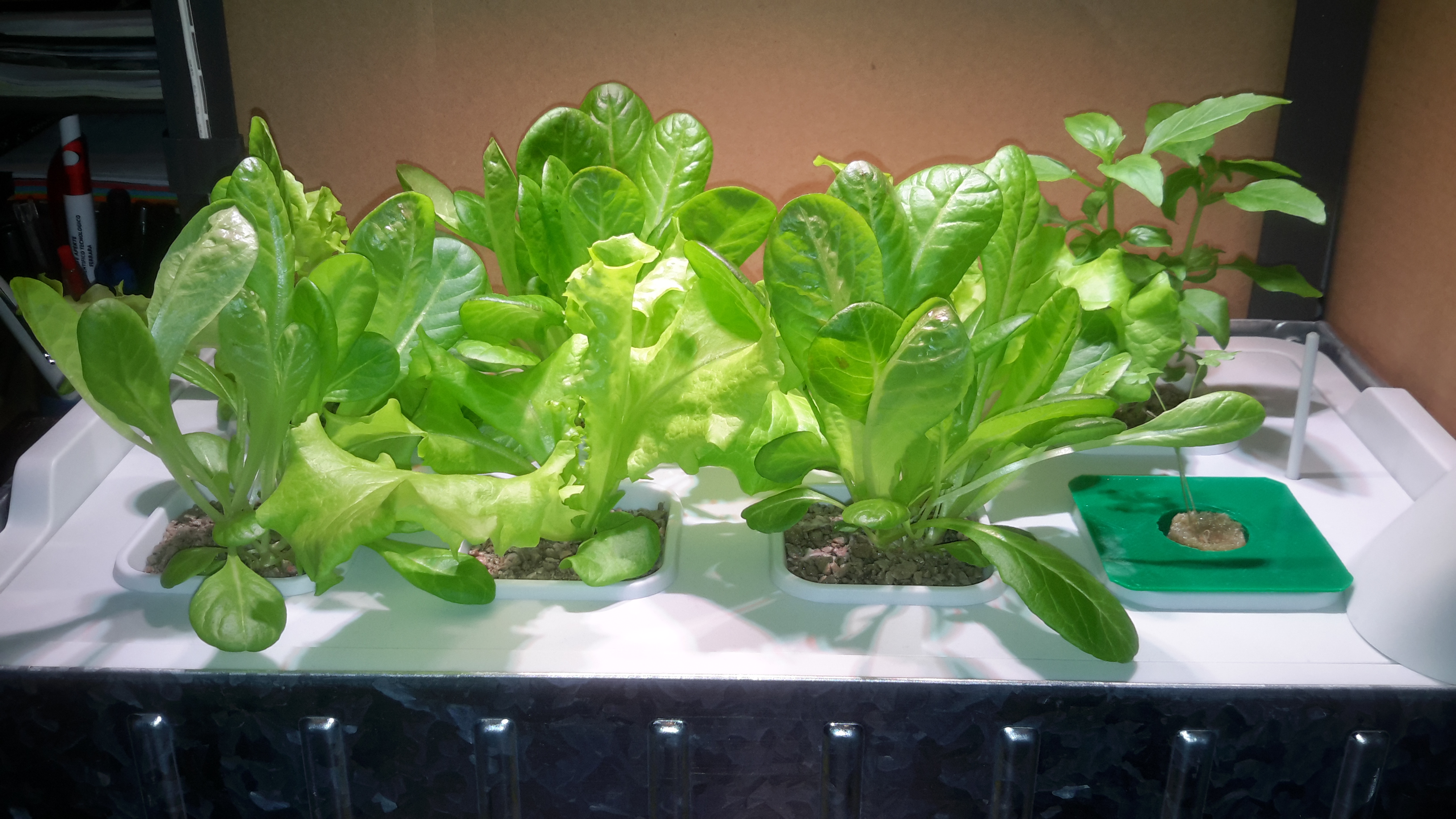
A present-day indoor hydroponics kit may demonstrate nutrient-water growing systems, but it cannot be presented as an archival picture of a particular early Singapore farm.
Students should check image provenance and distinguish conceptual or modern illustrations from authentic historical photographs.
A visual source can be useful for explaining a technical principle without documenting the precise earlier practice.
This is a core lesson in accurate historical publishing, particularly when attractive stock images are used for older agricultural subjects.
Agrotechnology parks were developed to intensify farming
The Centre for Liveable Cities’ Food and the City report describes work to identify agricultural land suitable for technology-intensive production.
The policy sought to improve productivity and organise farms within designated areas.
Students should not treat an agrotechnology park as evidence all its tenants use the same farming method or produce identical food.
The historically significant change concerned the planned concentration of farming infrastructure and scientific support on limited land.
1986 brought a major land-allocation decision
The Centre for Liveable Cities records that the Urban Redevelopment Authority set aside 3,555 hectares in 1986 for agrotechnology parks across six locations.
The sites included Lim Chu Kang, Murai, Sungai Tengah, Nee Soon, Loyang and Ah Ma Keng.
This was a planning and allocation milestone, not proof all 3,555 hectares were instantly cultivated or that every later project was completed.
Students should preserve the difference between designated land, operating farm area and actual annual production.
The six agrotechnology sites had distinct geographies
Lim Chu Kang, Murai, Sungai Tengah, Nee Soon, Loyang and Ah Ma Keng were not one uninterrupted agricultural estate.
Their development involved differences in access, surrounding land uses and infrastructure.
A national plan can describe a network, but a local study should identify the actual site and its specific chronology.
This helps students avoid assigning a farm photographed in one area to another simply because both belonged to the agrotechnology programme.
A new farm can use space more intensively
Improved irrigation, controlled environments and mechanisation may allow more output from a particular land area.
But the performance of a method varies by crop, energy cost, labour, disease conditions and management.
Students should not infer that every high-technology farm achieves a fixed yield multiplier or that all traditional farms are less skilled.
Historical analysis identifies the technology and official aim, while scientific and economic reports establish measured outcomes.
Farm productivity and national supply are not the same number
Output per hectare describes production relative to land area, while the national share of food consumed depends on total demand and the amount produced across the industry.
A farm can become more productive even as total domestic output declines if the number of operating farms or total planted land falls enough.
Students should distinguish yield, total output, market share and food consumption.
This is a particularly valuable Mathematics and History connection: all four quantities can be correct yet tell different parts of the story.
A farm’s profitability differs from its biological productivity
A crop may yield more per square metre but also require expensive lighting, climate control, labour or transport.
Students should not treat a higher harvest figure as automatic proof a farm is financially sustainable.
The historical question involves changing costs, technology and public support, while precise profitability requires commercial evidence.
Understanding this distinction helps explain why modern high-tech agriculture has attracted both investment and difficult business challenges.
Food imports did not begin when local farms declined
Singapore has long depended on maritime and overland trade for different kinds of food.
The decline of particular local livestock industries increased import dependence for those categories, but imported supplies were already part of the island’s food system.
Students should not create a false before-and-after account in which all food was locally grown until 1984.
History explains changing proportions and supply relationships rather than treating trade and farming as mutually exclusive.
Imported food can diversify risks as well as introduce them
Drawing supply from multiple countries can reduce dependence on one source, while a disruption affecting several routes or countries may still pose problems.
The Singapore Food Story 2 framework describes import diversification, global partnerships, stockpiling and local production as complementary approaches.
Students should not assume producing everything domestically would be possible or that imports alone eliminate vulnerability.
Historical reasoning is strongest when several different mechanisms are assessed without turning them into a simple binary choice.
Food safety regulation developed alongside trade
As Singapore relied on multiple overseas sources and specialised local farms, authorities needed systems for inspection, disease control and food-safety requirements.
A farm’s approval or an accredited import source is evidence of a regulatory process, not a guarantee that no food-safety incident can ever occur.
Students should identify the relevant institution and policy period.
This connects the history of agriculture with public-health and trade institutions, showing why production is only one part of the wider food system.
1 April 2000 marked the formation of AVA
SFA’s institutional history dates the formation of the Agri-Food and Veterinary Authority, or AVA, to 1 April 2000.
The new statutory board took over functions previously associated with PPD, including food supply and relevant animal and plant-health responsibilities.
Students should not describe AVA as the original nineteenth-century agriculture department or assume all its later programmes began on the founding date.
Institutional names need to be attached to their correct periods.
An agency’s reorganisation does not invent its older functions
Food inspection, farm research and veterinary work existed before AVA took the statutory-board form.
A change in governance may improve coordination or autonomy, but it does not erase decades of earlier professional work.
Students can make a timeline with PPD, AVA and SFA as related but distinct organisations.
This avoids the familiar error of treating a new agency name as the first appearance of every service it inherited.
SFA was established in April 2019
The Singapore Food Agency’s history dates its establishment to April 2019.
It consolidated food-related responsibilities from different agencies, including those dealing with food safety and supply.
Students should distinguish the legal creation of SFA from the origin of the farms or technologies it later regulated.
This is an example of how changing public institutions respond to emerging problems within an older national food system.
The original 30 by 30 strategy was announced in 2019
Singapore’s earlier local-production aspiration sought capacity to produce 30 per cent of nutritional needs by 2030.
This was a policy target and investment direction, not a claim that local farms had already achieved that share.
The strategy accompanied wider work on technology, funding and building a stronger farming ecosystem.
Students should correctly report the period in which the target applied and avoid turning a historical aspiration into an achieved statistic.
A target is different from a measured outcome
A public strategy may announce what government and industry aim to achieve by a future year.
Its appearance in a speech or infographic does not establish that the target was achieved, or that all planned farms were constructed.
Students must use dated production records to evaluate actual results.
This principle is fundamental to public-policy History: intentions, resources committed, projects delivered and measured consequences are distinct stages that need their own evidence.
The 30 by 30 target is no longer the current official framework
On 4 November 2025, Singapore announced a shift away from the older 30 by 30 formulation toward more targeted local-production goals.
The official policy speech explains that land constraints, crop suitability and lessons from actual farm development motivated the revision.
Students writing in 2026 should not present 30 by 30 as though it remained the government’s current target.
This is why History must also use up-to-date records when describing a policy that has changed.
Singapore Food Story 2 separates four approaches
The current SFA framework identifies diversification of imports, global partnerships, stockpiling and local production as four food-security pillars.
Each has a different role. Food stockpiles offer temporary buffers, while productive local farms can generate new supply over time.
Students should not treat these strategies as four measurements of the same food quantity or assume any one makes the others unnecessary.
The history of farming is also the history of how policymakers reconsidered the balance among different approaches to resilience.
The 2035 targets define fibre and protein categories
Under the revised strategy, Singapore aims to develop the capability and capacity to supply 20 per cent of local consumption of fibre foods and 30 per cent of protein foods by 2035.
For these targets, fibre means fresh leafy and fruited vegetables, beansprouts and mushrooms. Protein means eggs and seafood.
The categories are policy definitions, not the total nutritional fibre or protein chemically present in every food item.
Students should preserve those definitions rather than claim the targets apply to rice, pork or every possible protein source.
The revised targets are not broad promises of self-sufficiency
The food strategy does not aim to produce every item consumed in Singapore. Land, resource efficiency and cost limit what can reasonably be grown locally.
The official Ministry of Sustainability and the Environment food policy emphasises targeted production together with trade and stockpiles.
Students should not label the 2035 goals as complete national food independence.
A careful historical explanation recognises a pragmatic change of policy without asserting that all vulnerabilities have been removed.
2025 data allow a dated comparison with the new targets
SFA’s Singapore Food Statistics 2025 reports locally produced food supplying about eight per cent of the target-defined fibre category and twenty-five per cent of the protein category.
These are results for 2025, not a prediction of what will be achieved in 2035.
Students should label both the reference period and category and avoid treating a target as completed production.
This is an excellent modern example of responsible quantitative historical comparison.
The 2025 production figures need a clear denominator
The eight and twenty-five per cent shares describe the specified categories of food consumed locally under SFA’s reporting framework.
They are not eight or twenty-five per cent of all calories consumed in Singapore, nor the percentages of farmland devoted to each crop.
A valid source can become misleading if the denominator is silently changed.
Students should identify exactly what is being divided by what before interpreting any food-supply figure.
Productivity improved even as some farms faced difficulties
SFA’s 2025 report records increases in vegetable and seafood productivity, alongside a slight decline in egg production due to some temporary operational challenges.
These patterns demonstrate why one category cannot stand for the entire industry.
Students should not claim all farms became more profitable or that every output measure rose uniformly.
A balanced historical account distinguishes successful technical improvements, temporary setbacks and the economic sustainability of specific businesses.
Farm closures can coexist with higher average productivity
If less productive farms leave an industry, the average yield of the remaining farms may rise even if overall production changes differently.
Students should distinguish changes within surviving farms from changes in the composition of the industry as a whole.
This matters when interpreting SFA reports, because aggregate productivity alone cannot explain the experience of each farm that opened or closed.
History and Statistics together can reveal changes without inventing a universal success narrative.
Higher technology also brings higher costs
Controlled environments, automation and climate systems can reduce some labour needs or improve the consistency of certain harvests.
They can also require capital, energy and specialised technical support. Their commercial viability depends on demand and operating conditions.
The 2026 Ministry statement discusses the importance of achieving suitable scale and cost efficiency.
Students should not equate advanced equipment with guaranteed financial success.
Demand matters for a local farm’s survival
Farm production needs buyers willing to purchase the food at prices that cover its costs.
A farm’s ability to grow crops efficiently is only one part of the business. Distribution, retailer arrangements and consumer preferences also affect its sustainability.
Students should separate the biological yield from actual sales and profitability.
History provides context for why modern local-production policy considers markets and supply relationships as well as research grants and land allocation.
The 2026 policy discussion recognises practical constraints
The Ministry’s September 2026 parliamentary response explains continued support for farms while acknowledging the need to grow productivity, manage input costs and adapt appropriate technology.
The statement describes current government priorities. It is not independent evidence that every farm has overcome those problems.
Students should distinguish policymakers’ stated strategy from farm-level outcomes documented separately.
This is mature civic reading: a policy can be serious and ambitious while its success remains subject to future evidence.
Traditional and high-tech farms need not be enemies
Different crops, farm sizes and business models can benefit from different levels of technology.
A conventional grower may possess valuable knowledge of local conditions, while a controlled-environment farm may achieve greater consistency for particular crops.
Students should not assume one description explains every farm or that all older skills are obsolete.
History allows comparisons across changing methods without treating technical development as proof earlier farmers were ignorant.
Farm work now includes different technical occupations
Modern agriculture can require people trained in plant science, animal health, data collection, automation, food safety and business planning.
The earlier history of PPD extension education and Farm School shows that professional training has deeper roots than today’s digital systems.
Students should not describe every current worker as a computer engineer or every earlier worker as unskilled.
History makes occupational change understandable through documented educational pathways and the technologies relevant to each role.
Farming has a geographical relationship with water catchments
An agricultural site may produce food while also affecting soil, waterways and drainage.
Historic resettlement from particular catchments shows that water protection can shape where livestock farms are permitted.
Students should not assume crop farms and pig farms have identical environmental impacts, or that every location near a reservoir faces the same technical restrictions.
A careful explanation depends on the particular farm type, site and regulation.
The Lim Chu Kang landscape has several historical layers
Lim Chu Kang includes records of plantation agriculture, food farming, military land uses, resettlement and later agrotechnology parks.
The National Library history provides a useful starting point for separating those periods.
Students should not describe the district as one unchanged farming village.
A local area can retain a rural association even while the kinds of crops, land tenure and institutional purposes evolve substantially.
Kranji’s present countryside identity developed through change
The National Heritage Board’s Kranji heritage account documents farming, industrialisation and the later concentration of agricultural activity.
A visitor’s modern image of the countryside may preserve some agricultural character while hiding former farm boundaries or crops.
Students can compare dated maps and photographs to identify actual changes rather than assume the present landscape matches one from 1950.
This makes Kranji a useful local case for historical Geography.
The rural and urban categories can overlap
A modern farm may operate in an urbanised city using high-tech buildings, while a district historically called rural can contain roads and public institutions.
Students should not equate agriculture only with large open fields or assume a farm must look like an old postcard.
The history of Singapore farming illustrates how crop production can persist through changing infrastructure and techniques.
History teaches careful classification instead of allowing an attractive visual stereotype to determine what counts as a farm.
Aquaculture has its own history within local production
Fish and prawn farming can involve coastal cages, ponds and more controlled systems, with technologies and regulations distinct from land-based vegetable cultivation.
SFA’s agricultural histories describe developing intensive aquaculture alongside other agrotechnology initiatives.
Students should not describe every fishery as a farm or treat all seafood as locally produced.
A correct account distinguishes wild capture, aquaculture, land farming and imports, each of which requires appropriately scoped evidence.
Egg farms and vegetable farms require different performance measures
Egg farms may report laying hens, eggs produced and animal-health measures, while vegetable farms commonly report crops, growing area and harvest weights.
Students should not compare the number of eggs with tonnes of vegetables as though they were the same production unit.
Policy targets may combine categories through carefully defined consumption shares, but a school essay should retain the original measurements.
This encourages quantitative discipline when discussing an industry with different products.
Land scarcity is an important but not complete explanation
Singapore has limited available land, and other public needs compete for space. But farm business outcomes also depend on labour, energy, technology, climate, demand and supply arrangements.
Students should not attribute every closure or relocation solely to the island’s physical size.
A stronger historical account explains which constraints officials and farmers actually documented in the specific case.
This is multicausal reasoning: several conditions may interact without making any one of them a complete story.
A policy timeline is not an account of every farm’s experience
National milestones such as 1959, 1984, 1986, 2000, 2019 and 2025 establish changes in institutions and policy.
They do not automatically reveal the same pattern at every farm.
Students can choose one documented producer or district and compare its history with the national timeline, explaining similarities and differences.
This is how large-scale and local History can support one another without turning individual lives into merely examples of a policy.
Farmers’ testimonies require careful attribution
A farmer may remember specific crops, neighbours, weather or the decision to leave an old site.
The account can be valuable for the person’s lived experience, but memory may be approximate about dates and quantities.
Students should identify the speaker and period, and corroborate factual milestones where appropriate.
The goal is to honour individual voices without describing their experience as universal or pressuring people to share private financial information.
A farm photograph is not a complete biography
The National Archives’ 1982 vegetable-farm photograph shows rows of crops in Choa Chu Kang.
It demonstrates a visible form of cultivation at a documented place and time, but not the household income, yield or daily schedule of every person associated with the field.
Students should treat it as a visual record rather than a full economic survey.
This is an accessible example of why photographic authenticity does not justify unlimited conclusions.
A modern hydroponic image needs an honest caption
An image of an indoor growing kit or controlled-environment farm may illustrate contemporary technology, even when a historical article discusses its earlier predecessors.
Students should not label a modern conceptual or overseas photograph as a genuine 1970 Singapore farm unless the source establishes that identification.
The image can still help explain a method when it is described accurately.
This is especially important when digital imagery is easy to generate or reuse without its original date and location.
A farm’s product photograph does not reveal its origin automatically
A supermarket display of vegetables may contain local and imported produce, even when items look similar.
A picture of leafy greens cannot by itself establish where they were grown or which food-safety system applied.
Students need packaging, supplier information or appropriate production records for origin claims.
History helps learners separate what can be observed from what requires documentation, an important skill in today’s food marketing environment.
Official statistics must be labelled by year
Production data, land area and consumption shares change. SFA’s 2015 retrospective, 2025 statistics and 2026 policy statements describe different periods and questions.
Students should not copy the same number into a timeless statement about Singapore.
Every numerical claim should include the year, food category, unit and source where possible.
This produces a more useful historical account and prevents outdated public-policy descriptions from circulating long after the target or conditions have changed.
A 2015 photograph should not prove a 2026 result
A historic or archival image may document farming methods at the time it was taken.
It cannot establish current national output merely because it appears in a recent article.
Students should keep visual chronology and quantitative chronology separate. An illustration or archival photograph can show a technique while a current statistical report measures production.
The principle transfers to other subjects where older pictures are used alongside new claims.
One farmer’s output does not determine national food resilience
A productive farm contributes to supply, but national resilience also involves imports, storage, logistics, food safety and consumer demand.
The Singapore Food Story 2 framework treats these as complementary pillars.
Students should not infer that one new facility eliminates all the risks associated with overseas disruptions.
History teaches how the food system is built from interacting institutions rather than a single impressive farm.
Food resilience and affordability are separate questions
Having multiple sources of food can strengthen supply, while prices still depend on production costs, imports, transport and market conditions.
A historical account of farms cannot automatically predict food prices or guarantee that all households will benefit equally from a particular scheme.
Students need suitable economic evidence for affordability claims and supply data for resilience claims.
This helps readers discuss food policy with clearer definitions and less confusion.
The next stage of agriculture remains uncertain
Singapore’s 2035 goals describe what policymakers aim for; technological and commercial outcomes are not predetermined.
Farms may develop new techniques, while costs, resource constraints and demand can also change.
Students should not report a future target as completed or claim that every proposed agri-food facility will necessarily operate as planned.
Historical study is useful because past policies show how intentions and outcomes sometimes differ, encouraging careful monitoring rather than automatic optimism or pessimism.
A responsible account can recognise achievement and trade-offs
Past agricultural policies supported higher output, professional training and food-safety practices in particular periods, while land relocation and the end of pig farming affected many livelihoods.
A strong explanation acknowledges those documented developments without treating all farmers as identical.
Students should separate measured production, official priorities and the lived consequences reported by particular people.
This is more informative than a story that Singapore’s agricultural past was either entirely superior or merely an obstacle to modernisation.
Worked exercise: 1959, 2000 and 2019
Give students the official founding dates of PPD, AVA and SFA.
Ask them to name which agency began in 1959, which statutory board formed on 1 April 2000 and which consolidated food-related functions in April 2019.
They should explain why these were not three separate inventions of farming in Singapore.
This exercise builds institutional chronology and illustrates continuity of work across changing organisational names.
Worked exercise: 1986 Lim Chu Kang versus national 1989
Provide the NLB Lim Chu Kang account of pig farms ending there in August 1986 and NHB’s statement that local pig farming had ceased nationally by 1989.
Students identify why the geographical scopes differ.
The corrected answer should describe one district’s final phase and the wider industry outcome rather than force the same date on both.
This is an excellent practice in avoiding false contradictions created by incomplete source labels.
Worked exercise: 315 million eggs
Use SFA’s figure of 315 million locally produced eggs in 1968.
Ask what the unit and year establish. The figure does not itself provide the average eggs consumed per resident or the number imported.
Students should propose which further records would be needed for those questions.
This exercise builds accurate quantitative reasoning while showing why a dramatic production statistic needs context.
Worked exercise: the 1970 agricultural population
Give learners the retrospective figure of 175,400 people, about nine per cent of Singapore’s population, directly or indirectly engaged in or dependent on agriculture and fishing in 1970.
Ask why the phrase indirectly dependent matters and why the count should not be relabelled as full-time farm employees.
A concise explanation should state the category and the reference year.
The task teaches careful use of population statistics and occupational definitions.
Worked exercise: 14,000 versus 8,400 hectares
Provide the historical farmland-area figures for the 1960s and 1970s.
Students should identify that the numbers describe broad agricultural land use, not only vegetable beds or egg farms.
They can calculate the numerical change, but should separately explain which housing, industrial and catchment developments the sources identify as contributing factors.
The activity connects arithmetic with evidence-based causal reasoning without assuming every hectare had the same use.
Worked exercise: 30 by 30 versus Singapore Food Story 2
Give students the earlier 2019 aspiration and the revised 2025 announcement.
Ask which policy is current in 2026 and how the newer targets define fibre and protein categories.
Students should identify 2035 as a future goal and the 2025 production shares as historical data, not completed 2035 results.
This is a real-world exercise in checking the latest authoritative source instead of repeating an outdated headline.
Worked exercise: how to interpret a farming photograph
Use the National Archives’ Choa Chu Kang vegetable-farm photograph dated 1982.
Students write direct observations about visible crop rows, buildings and landscape, then list claims not established by the image, such as farm profitability or the grower’s personal history.
An authoritative farming report can then answer one of the questions the photograph cannot.
This teaches visual-source criticism through a respectful, accessible case.
Worked exercise: compare an open field with hydroponics
Present a properly attributed historical image of manual vegetable growing and a clearly labelled modern hydroponic photograph.
Students identify visible differences and research how production methods work, while avoiding unsupported claims about exact yield, costs or national output.
The final paragraph should distinguish a change in technique from the broader question of commercial sustainability.
This combines History and Science without substituting an attractive image for performance data.
A four-week learning plan using Singapore farming history
Week one constructs a timeline from plantation agriculture and wartime vegetables through the 1959 PPD and 1980s industry changes.
Week two analyses sources: the 1965 agricultural show, farm photographs, institutional histories and dated production statistics.
Week three examines causation and trade-offs in urbanisation, water protection, technology and livelihood changes.
Week four applies the method to the revised 2035 food-production targets, distinguishing current goals from actual reported output.
Progress means independently interpreting a new source and naming an important limitation rather than simply remembering agriculture-related dates.
Common mistakes and their repairs
First, students claim Singapore formerly produced all its food when official evidence supports self-sufficiency only for selected categories.
Second, they confuse the 1984 decision to phase out pigs with the last local farm’s closure. Third, they describe 1986 Lim Chu Kang as the nationwide end.
Fourth, they treat farmland allocated on a plan as land immediately cultivated. Fifth, they mistake production shares for acreage.
Sixth, they present the superseded 30 by 30 target as current in 2026. Seventh, they use a farm photograph as proof of income or national production.
Every repair depends on accurate source, category and chronology.
Parents can turn food shopping into historical inquiry
Choose a product such as eggs or leafy vegetables and ask what a label establishes about origin, then compare with an official historical farming account.
Discuss the difference between a locally produced item and the overall proportion of Singapore’s food supply.
A child can build a five-date timeline and explain one turning point without needing to enter private farms or collect identifying business information.
History learning becomes useful when a familiar ingredient leads to well-supported questions rather than simplistic stories about the past.
FAQ: was Singapore once self-sufficient in food?
The Singapore Food Agency reports effective self-sufficiency in eggs, pork and poultry by the late 1960s.
That is not the same as producing every category of food consumed locally. Students should name the particular foods and period when using the term self-sufficient.
FAQ: when did pig farming end in Singapore?
The policy decision to phase out local pig farming was announced in 1984. Lim Chu Kang’s last pig farms ended in 1986, and the national industry had ceased by 1989.
The dates describe different stages and geographic scopes, rather than an identical event.
FAQ: what were agrotechnology parks?
They were designated locations intended to concentrate and modernise farming through infrastructure, research and more intensive production methods.
A major 1986 land-allocation decision identified six areas for agrotechnology development. The decision should not be interpreted as immediate cultivation of every hectare.
FAQ: is 30 by 30 still Singapore’s food policy in 2026?
No. Singapore replaced the older 30 by 30 aspiration in November 2025 with Singapore Food Story 2 and targeted local-production goals for 2035.
The updated aims are capacity to supply 20 per cent of defined fibre foods and 30 per cent of defined protein foods consumed locally, supported by import diversification, stockpiles and global partnerships.
FAQ: how much fibre and protein was produced locally in 2025?
SFA’s Singapore Food Statistics 2025 reports local farms contributing about eight per cent of the designated fibre category and twenty-five per cent of the designated protein category.
The figures refer to shares of local consumption in defined food groups, not all nutrition or the percentage of land devoted to farming.
Authoritative sources and connected eduKateSG learning
Read the SFA’s Singapore Food Farms historical comparison, SFA’s agricultural transformations study, former pig farmers’ histories, Lim Chu Kang’s farmlands, Kranji’s rural history, Food and the City and Farm School history.
For the current, dated policy, use Singapore Food Story 2, Singapore Food Statistics 2025, and the 2026 ministry explanation.
Within eduKateSG, continue to hawker-centre and food-system history, wet markets, the history of Singapore’s water supply, technology and occupations, visual evidence and checking sources. The SEC History guide supports structured school inquiry.
Singapore’s farming past is not simply a lost rural world or a celebration of modern technology. It is the history of people adapting to changing land, trade, science and public priorities. Studying those choices teaches students to examine what changed, what continued and what the evidence truly supports.