
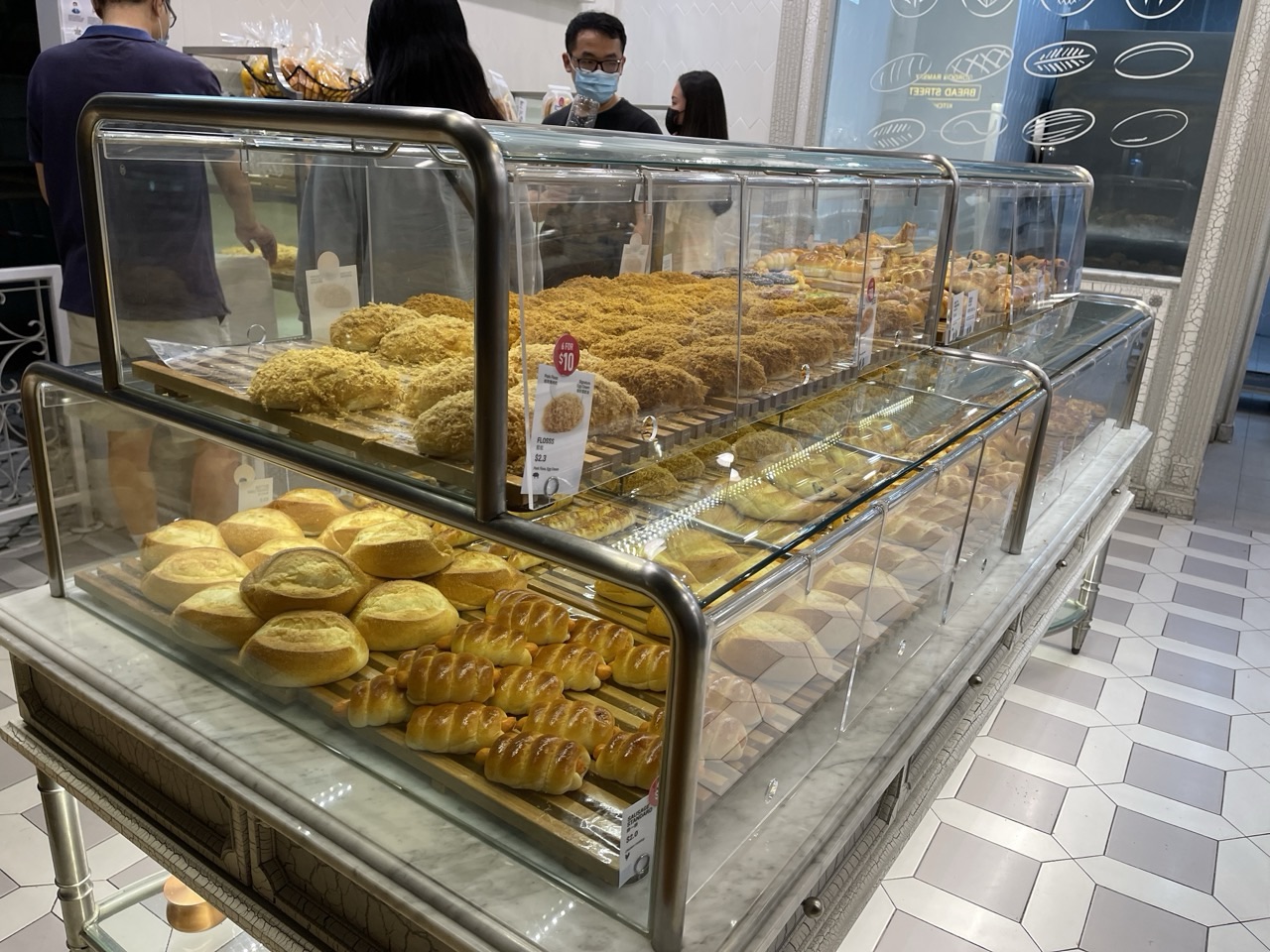
Why study Science? Yeast bread turns a simple meal into an explanation about fungi, fermentation, carbon dioxide, material structure and measured change.
Short answer: yeast metabolises suitable sugars and generates carbon dioxide; a dough network can trap and expand gas cells. Temperature, nutrients, hydration, mixing and time influence the result. Gas produced is not automatically gas retained.
This guide is for Science education, not a recipe or food-safety certification. All numerical datasets and comparisons marked fictional are teaching exercises. Source references and related eduKateSG learning appear at the end.
Contents
- Why a rising loaf is a miniature science laboratory
- Yeast is a living microorganism, not baking powder
- Fungi are not bacteria
- What the yeast cells use
- Fermentation is a metabolic pathway
- Fermentation and respiration should not be confused
- Carbon dioxide creates expanding gas cells
- Gas production is not the same as gas retention
- Gluten gives many wheat doughs a flexible network
- What viscoelastic means
- Kneading changes dough structure
- Water has several roles
- Temperature changes reaction rates and biology
- Why an optimum is an experimental statement
- Worked example: fictional gas readings
- Why more yeast is not always a proportionate improvement
- Salt can influence both yeast and dough
- Sugar is not a guarantee of unlimited fermentation
- Why dough rise is not only a chemistry equation
- Pressure and gas volume are related
- Worked example: a simple gas-volume ratio
- Baker’s percentages are a mathematical tool
- Worked example: calculate hydration
- The shape of a dough changes how we measure rise
- A time-series graph tells more than one final measurement
- Worked fictional rise record
- Why a peak in apparent dough volume can be misleading
- Proofing describes controlled dough development
- Overproofing is not simply too much gas
- Why bread has different-sized holes
- Baking introduces a different stage
- Why steam can contribute to oven expansion
- The Maillard reaction creates another kind of change
- Fermentation changes flavour as well as volume
- Sourdough is a microbial community
- Acidity can change dough behaviour
- Yeast can reproduce as well as ferment
- Gas production measurements need clear methods
- A mass-loss observation is not automatically a CO2 measurement
- An experimental blank helps
- Different flour types complicate comparisons
- A warm day in Singapore is not a universal proofing test
- Food safety is a separate question
- Why visible bubbles cannot prove a specific organism
- The difference between rate and total amount
- Worked rate example with fictitious numbers
- A good graph labels what was measured
- What a fair fermentation experiment would need
- Why a single successful loaf cannot establish optimum conditions
- The role of carbon dioxide in another subject
- Common misconceptions worth correcting
- A two-week learning route
- Questions parents can ask about a bakery loaf
- What this article cannot determine
- The lasting reason to study Science
Why a rising loaf is a miniature science laboratory
When a lump of dough grows into a light loaf, the change looks almost magical. Flour, water and yeast become a network holding countless small gas cells. The surface rises, the texture changes and the baked bread contains holes that were not visible when mixing began. I like beginning with that observation because it invites a genuine question: which substances and processes produced the new structure?
Science offers a richer answer than ‘yeast makes the bread fluffy’. Yeast cells use available nutrients, release gases and metabolites, while flour proteins and mixing influence whether those gases remain trapped. Temperature, time and the dough’s physical properties also shape the outcome. A rising dough therefore brings microbiology, chemistry, materials science and fair testing together in one familiar experience.
Yeast is a living microorganism, not baking powder
Commercial baker’s yeast commonly uses strains of Saccharomyces cerevisiae, a single-celled fungus. As living cells, yeast can use nutrients, reproduce under suitable conditions and carry out metabolism. This distinguishes it from chemical raising agents such as baking powder or sodium bicarbonate, which release gas through chemical reactions under suitable conditions.
The difference matters because the two leavening systems respond to different variables and produce different additional substances. A recipe may use one, another or both, but the existence of bubbles alone does not identify the mechanism. A school explanation should begin with whether the gas-producing system is biological or chemical.
Fungi are not bacteria
Yeasts belong to the fungi, a biological group distinct from bacteria. Their cells are eukaryotic, containing a nucleus and other specialised structures. Some bacteria also take part in food fermentation, but their cellular organisation and metabolism are not identical.
Sourdough often involves both yeasts and lactic acid bacteria, making it a microbial community rather than one pure yeast culture. Students should not say that all fermentation microbes are baker’s yeast or that every bread depends on the same species. Accurate biological classification helps explain different fermentation products and conditions.
What the yeast cells use
Yeast can metabolise fermentable sugars available within dough. Some sugars arrive with ingredients, while enzymes present in flour or produced by microorganisms can contribute to breaking suitable carbohydrates into smaller forms. The exact sugar availability depends on flour type, formulation and time.
The important concept is the source of carbon and energy. Carbon dioxide released during fermentation contains carbon atoms derived from metabolised molecules; it is not created from sunlight or spontaneously from empty spaces. Students should trace reactants before describing products, just as they would in cellular respiration.
Fermentation is a metabolic pathway
Under suitable conditions, baker’s yeast can convert sugars through pathways that produce carbon dioxide and ethanol, along with smaller quantities of flavour-related metabolites. An introductory alcoholic-fermentation equation is glucose → 2 ethanol + 2 carbon dioxide, with cellular energy-transfer processes accompanying the transformation.
This equation is a simplified net description, not a claim that the reaction takes place in one instant or that every gram of sugar becomes only those two products. A functioning dough contains other reactions and microbial activities. Science teaches the relationship between a useful summary equation and a more complex biochemical system.
Fermentation and respiration should not be confused
Yeast can obtain energy through different metabolic pathways depending on conditions and available substrates. Oxygen availability influences behaviour, but baker’s yeast also shows complex regulation of respiration and fermentation, including fermentation in the presence of oxygen under some sugar-rich conditions.
A student should avoid the simplistic claim that yeast always respires aerobically until the last oxygen molecule disappears and then suddenly performs fermentation. The biological system is regulated and depends on more than one factor. The safe educational conclusion is that fermentation is an important source of carbon dioxide during dough development.
Carbon dioxide creates expanding gas cells
As carbon dioxide is produced, some dissolves within the moist dough and some enters existing gas spaces or helps form gas bubbles. The pressure and volume of these cells can change as more gas becomes available and as temperature changes.
Modernist Cuisine’s bread-science explanation describes how fermentation-generated carbon dioxide enlarges gas cells introduced during mixing. This is more accurate than imagining each yeast cell independently drills a perfectly round new hole through solid flour. The gas and the dough’s structure interact throughout the rising process.
Gas production is not the same as gas retention
Two doughs can produce similar amounts of carbon dioxide and rise by different amounts. The difference may come from how well their structures hold gas, how readily gas escapes or how the dough resists deformation. A weak or torn network may lose carbon dioxide despite active fermentation.
Students should therefore separate the biochemical question ‘How much gas was produced?’ from the physical question ‘How much gas remained in expanding cells?’ A larger loaf is not by itself an exact measurement of yeast metabolism. This distinction is central to controlled experiments and industrial quality assessment.
Gluten gives many wheat doughs a flexible network
Wheat flour contains proteins, including gliadin and glutenin, that can form a viscoelastic gluten network when water and mixing develop the dough. Its ability to stretch while retaining some strength helps many yeast-leavened wheat breads hold expanding gas cells.
Gluten is not the gas or the yeast. It is a material structure that affects the mechanical outcome of gas production. Students should distinguish the chemistry of producing carbon dioxide from the rheology of the dough surrounding it, and avoid assuming every non-wheat bread forms an identical protein network.
What viscoelastic means
An elastic material tends to recover its original shape after deformation, while a viscous material flows or changes shape over time under stress. Dough combines aspects of both behaviours, with results depending on formulation and conditions.
If a dough were perfectly rigid, expanding gas cells might fracture it; if it offered too little resistance, gas could escape or the loaf could collapse. The desired balance differs among types of bread. Science helps explain why ‘stronger gluten’ is not a universal command for every baked product.
Kneading changes dough structure
Mechanical mixing can distribute ingredients, hydrate proteins and develop the network of a suitable wheat dough. It can also introduce air bubbles that become sites for later carbon dioxide expansion. The result depends on mixing intensity, time, hydration and flour properties.
Students should not claim that kneading creates yeast gas directly. Mixing and fermentation are different processes, though their results interact. Excessive or unsuitable mixing can also alter dough properties, so a comparison needs defined conditions rather than the assumption that more work is always better.
Water has several roles
Water hydrates flour components, makes molecular movement possible and supports yeast metabolism. It influences starch, proteins and dough rheology, affecting how ingredients come together and how the network deforms.
Hydration is not simply the amount that yeast drinks. Water contributes to the entire material system. Changing the amount can alter gas retention even when yeast activity remains similar. A fair experiment exploring water content should therefore avoid interpreting loaf height as one direct metabolic reading.
Temperature changes reaction rates and biology
Within suitable ranges, temperature influences enzyme activity, metabolic rates and dough development. Cooler conditions often slow fermentation, while warmer conditions can accelerate processes up to limits associated with microbial and material stability.
High temperature can inhibit or kill yeast cells, and conditions that appear favourable to one process may be unsuitable for gas retention or flavour development. A single ‘perfect proofing temperature’ should not be copied to every strain, dough and method without relevant evidence.
Why an optimum is an experimental statement
If four yeast batches are compared at four temperatures, the highest observed production rate belongs to whichever tested condition gave that result. It does not prove the true optimum is precisely that temperature when temperatures between the tested points were not measured.
This mirrors other Science experiments on enzymes and biological systems. A graph’s peak is evidence within the measured range and resolution. Students should describe the observation before attaching a biological explanation or attempting to generalise to commercial baking.
Worked example: fictional gas readings
Imaginary classroom data: relative carbon dioxide production is reported as 4, 9, 11 and 6 arbitrary units per hour at four successively warmer test conditions. The largest observed rate is 11 at the third condition.
Because the temperatures and uncertainties have not been specified, neither a numerical optimum nor a safe dough-handling instruction can be derived. A scientifically strong answer describes the rise and fall in the provided data, then asks what environmental variables were held constant.
- Observed relative rates: 4, 9, 11 and 6 units/h.
- Highest measured response: third condition.
- Actual temperatures are unspecified.
- A biological optimum remains unproven.
- All values are hypothetical.
Why more yeast is not always a proportionate improvement
Adding more viable yeast can affect fermentation rate under suitable conditions, but gas production also depends on available sugars, water, temperature and the environment. The relationship need not remain linear across every concentration.
A dough’s volume additionally depends on retention and structure. Doubling yeast quantity does not guarantee twice the loaf volume or the same flavour after a fixed time. Science teaches why a one-variable increase can encounter limits set by other parts of the system.
Salt can influence both yeast and dough
Salt has several roles in many bread formulations, affecting taste and the behaviour of the dough network. Salt concentration can also influence yeast through osmotic and related physiological effects.
A student should not automatically conclude that all salt destroys yeast or that removing salt produces universally better bread. The outcome depends on amounts, formulation and intended bread style. The important scientific idea is the interaction of chemical environment, cell physiology and material structure.
Sugar is not a guarantee of unlimited fermentation
Fermentable sugar can support yeast metabolism, but a very concentrated sugar environment also changes water availability and osmotic conditions. At high concentrations some yeast strains may become stressed despite the presence of abundant nutrient.
This is a useful opportunity to revisit osmosis and water potential. A substance can be a resource at one concentration and a stressor at another. Science teaches learners to define the range and biological context before saying more is better.
Why dough rise is not only a chemistry equation
The fermentation equation predicts production of carbon dioxide and ethanol from suitable substrates. Yet it cannot calculate the final loaf volume unless we also know how much gas escapes, the mechanical response of the dough, the pressure and temperature.
A student who obtains a correct number of moles of carbon dioxide has answered one chemical question, not a complete baking engineering question. The system combines chemical transformation with fluid and material mechanics.
Pressure and gas volume are related
Within an ideal-gas approximation, gas pressure, volume, amount and temperature are linked by PV = nRT. A gas bubble in dough does not behave exactly like a freely expanding ideal container, because surface tension and the surrounding dough resist deformation.
Nevertheless, the equation helps students see why increasing the amount of gas or temperature can change the behaviour of bubbles. A useful model should identify which quantities are being held approximately constant and which are allowed to change.
Worked example: a simple gas-volume ratio
Hypothetical ideal-gas comparison: two equal-pressure, equal-temperature gas samples contain 0.02 and 0.04 mol of gas respectively. Under the ideal-gas law, the second has twice the volume of the first.
This does not mean doubling the carbon dioxide produced always doubles the height of a loaf. Dough contains a network of many bubbles, changing pressures and escaping gases. The calculation illustrates one gas property, not an actual rising-dough forecast.
Baker’s percentages are a mathematical tool
Baker’s percentages express ingredient masses relative to flour mass, which is defined as 100%. This differs from a percentage of the whole dough mass. A flour mass of 500 grams with 350 grams of water corresponds to 70% hydration in the usual baker’s convention.
Students should identify the denominator before comparing formulations. A label reading 70% hydration does not mean the dough consists of 70% water by total mass, since other ingredients also contribute. This is a practical lesson in ratios.
Worked example: calculate hydration
Invented formula: flour mass is 600 g and water mass is 420 g. Hydration in baker’s percentage is 420/600 × 100 = 70%.
If an additional 30 g of water were added with flour unchanged, hydration would become 450/600 × 100 = 75%. The change is five percentage points, not necessarily a five percent increase in loaf volume or fermentation rate.
The arithmetic defines composition. It does not determine whether the resulting bread is suitable for a particular baker or product.
The shape of a dough changes how we measure rise
A dough ball can expand upward and outward. Measuring only its height may underestimate or overstate overall volume change if its shape changes substantially. A mark along the side of a bowl also depends on whether the dough conforms to the container.
Science teaches students to name the measured outcome: height, apparent volume, displacement, gas amount or final loaf mass. These are not interchangeable. A fair comparison needs a consistent container and measurement convention.
A time-series graph tells more than one final measurement
Two doughs may reach similar final volumes after different intervals. One may rise quickly and plateau, while another rises more gradually. Reporting only the final height loses the dynamics of fermentation.
A sequence of measurements can reveal whether a rate changes with time. That information is valuable because yeast activity, available nutrients and dough structure change during the process. Science helps students read a graph as a history rather than one decorative curve.
Worked fictional rise record
Teaching-only data: dough A has an apparent volume index of 100 at time zero, 130 after one hour and 150 after two hours. Dough B has 100, 115 and 150 at the same times.
Both finish at index 150, but their intermediate behaviour differs. The data do not prove which has better flavour, stronger gluten or healthier yeast. They show that an endpoint can conceal distinct trajectories.
Why a peak in apparent dough volume can be misleading
Some doughs expand and later lose apparent volume as their structure weakens or gas escapes. A later smaller measurement does not necessarily mean yeast stopped generating carbon dioxide at the moment of collapse.
Gas production, escape and structural stability can occur simultaneously. Science helps explain why the maximum observed size is not always the maximum metabolic rate or the optimum point for every baking objective.
Proofing describes controlled dough development
In baking, proofing refers to periods allowing dough to develop, commonly involving yeast fermentation and expansion. Its timing depends on formulation, temperature, structure and the intended bread.
The concept is biological and physical rather than an instruction to wait one universal number of minutes. A loaf’s required proofing cannot be established from a classroom graph with imaginary units. Our goal is understanding which variables affect the process.
Overproofing is not simply too much gas
An overproofed dough may have structural and handling characteristics that no longer support the intended rise or baking outcome. Microbial metabolism and the network’s evolving behaviour interact over time.
One should not assume that all collapsed doughs are overproofed or that every unsuccessful loaf indicates excess yeast. Multiple causes could produce similar appearances. Science encourages evidence-led diagnosis rather than one visual stereotype.
Why bread has different-sized holes
Gas cells begin with varying sizes and positions, expand and sometimes combine or rupture. Dough composition and handling influence that evolving geometry, producing different crumb structures.
A photograph of a large irregular hole cannot alone quantify total carbon dioxide production or identify a single yeast strain. The evidence is about final structure, not a direct record of every microscopic event that occurred.
Science makes the result intelligible through gases, deformation and time.
Baking introduces a different stage
During heating, gases expand, water changes physical state and starch and proteins undergo transformations. Yeast metabolism changes as the temperature rises, while the crumb structure becomes increasingly fixed.
The rise inside the oven cannot be assigned entirely to continued fermentation. Thermal expansion, evaporation and material changes also contribute. Students should distinguish biological gas production before baking from the heat-transfer processes during baking.
Why steam can contribute to oven expansion
Water in dough can produce vapour as it heats. Vapour contributes to gas pressure within cavities and, together with thermal expansion of existing gases, can influence the developing loaf.
That does not mean steam is the only reason yeast bread rises or that every bread follows an identical heat-transfer path. The balance of processes varies with size, formula and baking conditions.
The Maillard reaction creates another kind of change
Browning of bread crust often involves reactions among amino-containing compounds and reducing sugars under suitable heating conditions, producing many coloured and aroma-related molecules.
That is not the same as yeast fermentation, although earlier fermentation can influence the available ingredients. A loaf can be brown without proof that its yeast was unusually active. Science helps separate processes occurring at different stages.
Fermentation changes flavour as well as volume
Yeast metabolism produces compounds beyond carbon dioxide, including ethanol and smaller quantities of organic molecules influencing aroma. Dough enzymes and other microbes may affect the final mixture.
A comparison focused only on height therefore overlooks a separate performance dimension. A bakery can care about flavour, structure, safety and consistency at once. Science encourages multidimensional assessment without pretending one variable explains everything.
Sourdough is a microbial community
A mature sourdough culture commonly contains yeasts and lactic acid bacteria. The microorganisms may metabolise different nutrients and influence acidity, flavour and gas production.
Species composition, temperature, feeding history and flour conditions vary. A tangy taste alone is not a complete microbial analysis, and the culture’s appearance cannot verify that it contains one specific strain. Science links ecology with food chemistry.
Acidity can change dough behaviour
Organic acids produced during some fermentation processes alter pH and influence microbial activity and material properties. The effect depends on the acids, their amounts and the dough system.
Students should not conclude that lower pH always means a safer, healthier or better loaf. Food quality is a multidimensional question requiring appropriate methods. A school pH reading cannot replace food-safety evaluation.
Yeast can reproduce as well as ferment
Under favourable conditions, baker’s yeast cells can grow and reproduce through budding. Reproduction and metabolism interact but measure different biological outcomes.
Gas accumulation in one dough does not directly tell us the final number of viable yeast cells. A cell can metabolise under some conditions without doubling in number, and populations can change over longer periods. Science separates microbial growth rate from product formation.
Gas production measurements need clear methods
Scientists or food technologists may estimate gas formation through suitable instruments, mass changes, gas volume or other calibrated methods. Each approach has limitations and may be affected by leaks, dissolved gas or other reactions.
A visible foam layer or one inflated balloon does not automatically establish the chemical identity or exact amount of gas. In a school investigation, the measurement should be matched with a question and suitable controls.
A mass-loss observation is not automatically a CO2 measurement
Fermentation can release carbon dioxide to the surroundings, and water evaporation can also change sample mass. Measuring a mass decrease without controlling other transfers cannot isolate carbon dioxide generation.
Students should identify all plausible sources of mass movement before assigning the entire change to one reaction. This is the same conservation-of-matter discipline used in carbon-cycle and corrosion questions.
An experimental blank helps
A control dough or prepared sample without viable yeast may help identify changes not attributable to active yeast fermentation under suitable research conditions. But other ingredients and reactions can still generate physical changes.
The purpose of a control is to compare outcomes while holding relevant factors constant. It should not be treated as a guarantee that every alternative cause has been eliminated. Science teaches appropriate experimental inference.
Different flour types complicate comparisons
Flours vary in starch composition, protein characteristics, enzyme activity and other properties. The same yeast strain can behave differently within different dough formulations.
Students should not rank yeast activity from loaf volume when flour type and hydration also changed. A comparison must identify whether it is evaluating the microbe, the complete recipe or the resulting bread.
A warm day in Singapore is not a universal proofing test
Singapore’s generally warm and humid climate may influence dough conditions, but actual kitchen temperatures, flour properties, air conditioning and handling vary.
One successful dough observed at room temperature does not prove that every recipe has the same optimum in Singapore. Scientific results are conditional, and real kitchens have local microenvironments.
Food safety is a separate question
Raw dough can present food-safety concerns from untreated ingredients, including flour, and from improper handling. A bubbling or rising dough is not proof that it is safe to eat uncooked.
Use food safety instructions from the Singapore Food Agency or other appropriate authorities for actual cooking. The educational lesson concerns mechanisms, not an invitation to consume unbaked dough or culture unknown microbes at home.
Why visible bubbles cannot prove a specific organism
Different microorganisms and chemical reactions can produce gases. A photograph showing bubbles does not identify baker’s yeast, measure its viable cell count or establish that the gas is pure carbon dioxide.
Microbial identification requires validated methods when that question matters. Science encourages students to distinguish a plausible source from a confirmed causal explanation.
The difference between rate and total amount
Gas production rate describes gas formed per unit time. Total gas is accumulated production over a defined interval, potentially adjusted for losses. The two quantities are not the same.
An experiment might show rapid production for a short interval and slower production over a much longer interval. Final volume also depends on gas retention. Students should inspect the numerator and denominator before comparing two displayed numbers.
Worked rate example with fictitious numbers
Hypothetical instrument output: test A generates 30 arbitrary gas units over ten minutes, while test B generates 40 units over twenty minutes.
A’s average rate is 3 units per minute and B’s is 2 units per minute. B has the larger total but lower average production rate.
The values do not represent a real fermentation culture or useful proofing conditions. The exercise is about distinguishing quantities.
A good graph labels what was measured
A plot of dough height against time cannot be relabelled carbon dioxide production rate without additional evidence. Similarly, a yeast-cell count versus time does not automatically describe total ethanol formation.
Science encourages learners to state measurement units and methods. A beautifully smooth curve can still support the wrong conclusion if the axis label describes a different phenomenon.
What a fair fermentation experiment would need
A fair comparison should define yeast strain, starting mass, substrate, hydration, temperature, time, apparatus and outcome. Replication helps describe variability, while independent controls address possible alternative mechanisms.
Changing salt, temperature and flour together makes attribution difficult. Students can design an experiment on paper and analyse prepared data without culturing unknown microorganisms or conducting food experiments outside approved conditions.
Why a single successful loaf cannot establish optimum conditions
One result can show that bread rose under the observed conditions. It cannot reveal whether another temperature, hydration or strain would have produced a better outcome or a different flavour.
Scientific optimisation requires defining the desired outcome, testing alternatives, considering variability and acknowledging trade-offs. A consumer judgement such as tasty may be meaningful but is not the same measurement as gas volume.
The role of carbon dioxide in another subject
Carbon dioxide also appears in photosynthesis, respiration, ocean chemistry, climate and reaction equations. In bread, its gas form contributes to bubble expansion; in a plant it can be the carbon source for making organic molecules.
Science shows why the same compound behaves differently in different systems. Learners gain understanding when they track its chemical identity, source, destination and physical state.
Common misconceptions worth correcting
Students may claim yeast is bacteria, that gluten produces all the gas or that more yeast always doubles loaf volume. Others confuse fermentation with baking, gas production with retained gas, or rising dough with guaranteed safe food.
The correction begins with identifying the organism, chemical reactants, network structure and measured outcome. Good Science makes a distinction visible rather than replacing one memorised slogan with another.
- Baker’s yeast is commonly a fungus.
- Fermentation can release carbon dioxide and ethanol.
- Flour composition and gluten influence gas retention.
- Gas formation and loaf expansion are distinct outcomes.
- Proofing rate depends on multiple conditions.
- Baking adds thermal expansion and structural changes.
- Visible bubbles do not certify organism identity or food safety.
- A fair test needs clear variables and controls.
A two-week learning route
Begin with the biological classification of yeast and a labelled fermentation equation. Trace carbon from sugar into carbon dioxide and distinguish fermentation from a purely chemical raising agent.
Next explore the physical role of a gluten network through diagrams and the difference between gas generation and gas retention. Use the fictional temperature-rate and volume graphs to practise bounded conclusions.
In the second week, compare baker’s percentages, production rates and time-series measurements. Finish with a paper-based critique of a claim that doubling yeast always doubles bread volume. No laboratory culture or raw-dough consumption is required.
- Days 1–3: yeast biology and fermentation products.
- Days 4–5: sugar, enzymes and carbon tracking.
- Days 6–7: gas cells and gluten structure.
- Days 8–9: temperature, hydration and rates.
- Days 10–11: proofing versus baking changes.
- Days 12–13: experimental controls and food safety.
- Day 14: independent explanation of a changed dough scenario.
Questions parents can ask about a bakery loaf
Ask what produced the gas and what helped keep it inside the dough. If the child says yeast directly makes holes, ask about bubble formation, mixing and expansion.
Then ask whether the same final loaf height proves two doughs fermented at the same rate. A prepared table can show why the histories might differ. The aim is thoughtful Biology and Chemistry without turning everyday baking into a safety experiment.
What this article cannot determine
It cannot certify a starter culture, guarantee the quality or safety of homemade bread or prescribe proofing conditions for a particular commercial product. Those tasks depend on formulation, equipment and suitable food-safety procedures.
All numerical cases in this article are fictional. They illustrate scientific mechanisms and interpretation rather than validated baking instructions.
The lasting reason to study Science
A loaf of bread rises because biological reactions and material properties work together. Yeast supplies gas through metabolism, while the dough’s structure influences how that gas changes its volume.
A student who separates gas production from gas retention, understands experimental controls and reads quantities correctly has developed scientific reasoning relevant to many other living and engineered systems.
That is why Science is worth studying: it turns an everyday transformation into a chain of physical and biological causes that can be tested.
Frequently asked questions
What organism commonly makes yeast bread rise?
Baker’s yeast, often strains of the fungus Saccharomyces cerevisiae.
Is baker’s yeast a bacterium?
No. It is a fungus with eukaryotic cells.
What gas makes many yeast doughs expand?
Carbon dioxide produced during fermentation and related metabolic pathways.
What other major product can yeast fermentation produce?
Ethanol, along with smaller quantities of other metabolites.
Does gluten produce the carbon dioxide?
No. Gluten helps form the network that can retain gas; yeast metabolism produces much of the gas.
What is fermentation?
A metabolic process in which microorganisms convert substrates and release products such as carbon dioxide and ethanol under appropriate conditions.
Does gas production equal loaf expansion?
Not necessarily. Gas retention, pressure and dough mechanics determine expansion.
What is proofing?
A controlled dough-development stage during which fermentation and structural changes may cause rising.
Why does temperature affect yeast?
Microbial metabolism, enzymes and dough properties change with temperature.
Does higher temperature always make better dough?
No. Conditions have biological limits and affect structure, flavour and safety differently.
Does doubling yeast always double bread volume?
No. Nutrients, gas retention, time and formulation can limit the result.
What does 70% hydration mean?
Water mass equals 70% of flour mass under the baker’s-percentage convention.
Does fermentation continue unchanged in a hot oven?
No. Heating changes yeast viability and introduces expansion and phase-change processes.
Are sourdough cultures only yeast?
Many contain both yeasts and lactic acid bacteria.
Can raw dough be assumed safe because it rises?
No. Rising does not certify that ingredients or the dough are safe to eat uncooked.
How is yeast different from baking powder?
Yeast is a living microorganism; baking powder leavens through chemical reactions.
What would a fair experiment measure?
A defined outcome such as gas, apparent volume or time, with appropriate controls and repeat measurements.
Can visible bubbles prove which microbe is present?
No. Organism identification requires suitable independent evidence.
Scientific sources and connected learning
Modernist Cuisine and Campden BRI describe yeast, gas-cell development and bread material behaviour; the University of Oxford provides an educational fermentation resource. Related eduKateSG references connect fermentation with Chemistry and fair testing.
- Modernist Cuisine — Science Behind Bread Making
- Campden BRI — What Causes Bread Dough to Rise?
- University of Oxford — Bread Bonanza Chemistry Resource
- NCBI PMC — Bread Leavening and Carbon Dioxide Study
- OpenStax Biology 2e — Fermentation
- Singapore Food Agency — Food Safety
- eduKateSG — Gold Standard of Yeast
- eduKateSG — Yeast: Fair Fermentation Comparison
- eduKateSG — Why Yeast Makes Bread Dough Rise (Hougang)
- eduKateSG — Food Chemistry and Fermentation
- eduKateSG — How to Understand Baker’s Percentages
- eduKateSG — Why Study Science: Digestion and Enzymes
- eduKateSG — Science Learning Hub
- eduKateSG — Immutable Clementi Teaching Reference
At eduKateSG, we begin with a familiar observation, trace the substances, measure a defined outcome and explain the limits of what the evidence establishes.