
The gold standard of yeast is understanding the living material, choosing it for a defined purpose and interpreting its results with care. In baking, that means connecting the ingredient with the dough and finished product. In science, it means connecting an observation with a method and a justified conclusion. In industry, it means a controlled process whose identity, quality and intended output remain traceable.
Yeast is a useful doorway between ordinary experience and living systems. A loaf rising, a cell image and an industrial production record can all involve yeast while asking different questions. This root brings together the eduKate guides on bakers, baking, cooking, food science, biology, chemistry and bioprocess engineering. It helps readers choose the right route and carry useful reasoning between them.
All batches, observations, rates and quantities in the worked examples are fictional learning tools. This is an explanatory guide rather than a recipe, culture protocol, diagnostic resource or approval for food production. Use appropriate food and laboratory instruction for an actual activity. The central habit is simple: identify the material and conditions, measure the relevant result and explain what the evidence supports.
Find your next learning step
Choose a reading route or open the full chapter index. All teaching chapters remain expanded below.
Full chapter index · Worked evidence check · Learning That Transfers into Life
Chapter index
Understand the organism and the visible result · Chapters 1–5
Connect materials, conditions and comparisons · Chapters 6–10
Follow food, research and engineering responsibilities · Chapters 11–15
Check quantities and measurement limits · Chapters 16–20
Choose a learning or specialist route · Chapters 21–24
CHAPTER 1 OF 24 · Understand the organism and the visible result
1. Recognise yeast as living biology
Yeasts are fungi commonly encountered in a single-celled form. The word does not name one universal organism with identical behaviour in every setting. Baker’s yeast is familiar because of its role in food, while other yeasts and research strains belong to different contexts. Begin with that biological distinction before treating a beige ingredient, a microscopic image and an industrial culture as though they were interchangeable versions of the same material.
The Saccharomyces Genome Database introduction to yeast provides a scientific starting route. Saccharomyces cerevisiae is a widely studied budding yeast and a familiar organism in baking. The resource also explains its use in research. For this root, the essential point is that a biological identity and an intended application need to be specified before a result can be interpreted sensibly.
Imagine a fictional learner, Arun, who sees dough expand and writes that the powder became larger. That describes the visible result loosely but misses the living system and surrounding material. A better question is what the yeast did and how the dough responded. The explanation connects biological activity with a physical change rather than treating the ingredient as a magical raising powder whose behaviour needs no further account.
The Biology root is the wider route into cells and living systems. Use it when the question concerns what an organism is or how an observation relates to biological processes. The gold standard begins with a clear subject: a particular living material, used for a particular purpose. That clarity makes later discussions of activity, quality, measurement and production much easier to follow.
CHAPTER 2 OF 24 · Understand the organism and the visible result
2. Distinguish an organism from an ingredient product
A food ingredient is a supplied product with a label, intended use and handling information. Its biological component is part of that identity, but the commercial form also matters. Two products associated with yeast can have different purposes and instructions. The maker or learner needs to read the actual information rather than assume that the shared word yeast makes every product suitable for the same process or the same substitution.
In a fictional comparison, a baking formula specifies one supplied product while Arun has a different product on the shelf. The useful first action is to establish what each product is and whether reliable guidance supports the proposed substitution. A familiar name or similar appearance is insufficient. Even if a substitution is appropriate, the required method or quantity may differ, so the original formula cannot simply be treated as unchanged without checking the relevant instruction.
Preserve the product identity, batch information where supplied and the instructions relevant to the task. This is especially useful when a result differs from expectation. A record saying only yeast was used leaves several questions unresolved. A record connected to the actual product gives the teacher, baker or responsible technical team a more precise starting point for understanding the material and the conditions under which it was used.
The gold standard treats a label as useful evidence within its scope. It does not ask a beginner to identify a microorganism independently or infer a product’s suitability from a photograph. It asks for the ordinary discipline of knowing what was supplied and what it is intended to do. That habit connects a household ingredient choice with the more formal material-control systems used in food businesses and scientific work.
CHAPTER 3 OF 24 · Understand the organism and the visible result
3. Connect fermentation with a defined chemical change
Fermentation provides one way to connect yeast biology with chemistry. In the familiar alcoholic-fermentation pathway, sugars can be converted into products including carbon dioxide and ethanol. The details depend on the organism and conditions. This explanation identifies a process; it does not mean that every yeast always behaves identically or that any food containing yeast is produced through the same complete sequence.
The Chemistry root offers the route for substances, reactions and conservation of matter. Biology explains the living system carrying out the process, while chemistry helps describe transformations and quantities. Keeping these lenses together prevents a common misunderstanding: seeing a gas appear and imagining that matter has simply been created from nothing. The material account needs the relevant inputs, products and system boundary.
For a fictional lesson, Arun receives a diagram showing a defined input and several possible outputs in a simplified model. He is asked to identify which quantities are measured and which are inferred. The model can support a useful explanation without describing every cellular process occurring in a real system. A scientific model is valuable because it answers a stated question at an appropriate level, not because it claims to include every detail at once.
The gold standard uses clear process language while leaving the boundaries visible. Say which transformation is being discussed and which conditions the explanation assumes. A short account can be accurate without becoming a full metabolic textbook. It should also leave room for a deeper route when the learner asks a question about respiration, energy or cellular regulation that the simple fermentation model was never designed to answer.
CHAPTER 4 OF 24 · Understand the organism and the visible result
4. Understand why dough volume is a system result
In yeast-leavened bread, biological gas production interacts with the dough’s structure. A visible increase in volume therefore concerns both the activity producing gas and the material’s ability to retain it. The same amount of biological activity would not necessarily produce the same visible shape in every mixture. This is an important systems lesson: the observed result can depend on several connected parts rather than the ingredient singled out in the recipe’s name.
The Exploratorium’s Bread Science 101 explains the relationship between yeast, gas and the structure of familiar wheat dough. It is an educational starting point rather than a universal formula for every kind of bread. Different products and methods need their own appropriate guidance. The useful idea is that producing a gas and retaining it are distinct contributions to the visible result.
Suppose fictional Sample A expands more than Sample B. A learner who immediately concludes that A contained more living cells has skipped several possible explanations. Differences in the surrounding material, initial dimensions or observation method may affect the comparison. The right conclusion begins with what was actually measured: a difference in the recorded expansion under the supplied conditions. Establishing the cause requires a suitable comparison rather than a confident guess from the final appearance.
The Baking guide connects ingredient relationships with repeatable results. Return to this chapter when a visible change seems to invite an explanation based on one ingredient alone. The gold standard recognises the organism and the material system around it, then asks which evidence can distinguish their contributions. That makes the explanation more useful than saying simply that the yeast worked or failed.
CHAPTER 5 OF 24 · Understand the organism and the visible result
5. Separate yeast leavening from other raising methods
Several methods can produce an expanded baked product, and a similar appearance does not prove the same mechanism. Yeast leavening involves a living ingredient and its interaction with the process. Other raising methods can use different chemical or physical principles. The relevant method needs to be identified before a learner compares timings, substitutions or expected behaviour. A shared outcome such as increased volume is not the same thing as a shared process.
The Exploratorium bread-science route distinguishes yeast from common chemical leaveners. Use that distinction to ask a practical reading question: what does this particular formula rely on? A recipe designed around one method may depend on conditions that do not transfer directly to another. The sensible route for an actual substitution is reliable product and recipe guidance, rather than assuming that every ingredient described as a raising agent can be exchanged by matching its mass.
In a fictional classroom task, Arun sorts descriptions into biological, chemical and physical explanations using information supplied by the teacher. The goal is to connect the evidence with the mechanism, not to prepare an improvised food product. He can explain why two expanded samples might require different accounts and identify what further information would be needed. That reasoning remains useful even without performing a practical demonstration.
The gold standard gives familiar words precise jobs. Rise describes a visible change, leavening describes a function and yeast identifies a biological material category. Those words can appear in the same sentence without meaning the same thing. Once the distinction is clear, learners can read a baking explanation more carefully and recognise why a correct observation about the outcome may still leave the process that caused it unresolved.
CHAPTER 6 OF 24 · Connect materials, conditions and comparisons
6. Preserve material information from receipt to use
Traceability begins with being able to connect the supplied material with the work in which it was used. In a home learning task, that can mean preserving the product label and date of the activity. In a business, the relevant system can require a more formal relationship among supplier information, batch records and production. The level of detail should match the task, but the basic purpose remains the same: avoid losing the identity behind a result.
The Bakers guide connects ingredient control with consistent bread and professional craft. A baker’s record should identify what matters to the actual product and process. A generic entry such as added yeast can be too vague when later work needs to determine which supplied material was involved. Clear records also help distinguish a material change from a process change during a review.
Imagine a fictional bakery tests a new supplied ingredient but records it under the old product’s name. The finished result is now difficult to interpret. Was the change associated with the material, the method or another factor? A useful evaluation needs the actual identity and conditions. Correcting the record preserves a better starting point; inventing a retrospective certainty about the cause would conceal the information gap rather than resolve it.
The gold standard makes the record useful to the next decision. It does not require collecting information without a purpose or treating every label as a complete scientific analysis. It requires enough reliable identity to connect the material with its intended use, relevant instructions and observed result. This is a practical bridge from careful household organisation to the quality systems that support larger food and biological processes.
CHAPTER 7 OF 24 · Connect materials, conditions and comparisons
7. Use product-specific storage and handling information
A living ingredient’s usefulness depends on more than its name. The supplied form, condition and handling history can matter to the intended application. Read the actual product information and follow appropriate guidance for the task. A general article cannot assign one storage method, shelf life or conversion rule to every yeast product. The relevant instruction should remain connected to the specific material and use rather than remembered as a universal rule.
For a fictional learning case, Arun discovers two packages that look similar but carry different information. He should not assume that one can stand in for the other simply because both are associated with baking. The task is to compare the reliable information and identify what remains uncertain. If suitability cannot be established, the uncertainty belongs in the decision. A successful-looking result obtained once would not retroactively prove that the substitution was appropriate.
In a professional setting, the responsible process needs to define what material condition is acceptable and how it is checked. A record that a delivery arrived is different from a record that it met the relevant acceptance criteria. The distinction helps a reader understand why receiving, storage and production belong to a connected system. Material control continues beyond the purchase and before the ingredient becomes part of a finished product.
The gold standard is a specific answer to a specific material question. Which product is this, what information governs its use and what evidence supports its current suitability? Those questions are more dependable than a memorable but oversimplified instruction about every yeast. They also make it easier to seek useful advice from the supplier, teacher or relevant professional, because the enquiry begins with the actual material rather than an unidentified packet and a general expectation.
CHAPTER 8 OF 24 · Connect materials, conditions and comparisons
8. Treat time and temperature as recorded conditions
Time and temperature can influence biological and food processes, but their meaning depends on the actual organism, material and task. A statement that warmer is always better is an oversimplification. Appropriate conditions belong to the relevant product guidance, validated method or professional process. For learning, the important habit is to record the conditions used and avoid interpreting a result as though those conditions were identical when they were not.
Suppose fictional Sample A is observed for twenty minutes and Sample B for forty. Their final totals cannot be compared fairly as though both had the same opportunity to change. Likewise, a temperature description such as warm leaves room for different actual conditions. A useful record identifies the measurement and its unit where the task requires it. The result then belongs to a defined period and condition rather than a vague recollection of what seemed similar.
This root intentionally supplies no operating temperature or fermentation schedule. Those values need to match a real product and appropriate method. The educational question can be explored with supplied data or a teacher’s suitable demonstration. Learners can practise identifying variables and interpreting an observation without constructing an improvised culture or treating a generic science explanation as a food-production instruction.
The gold standard recognises that conditions are part of the evidence. If a comparison changes several conditions, describe that limitation before assigning the difference to one cause. A clear record does not make every experiment perfect, but it makes the result easier to question and improve. The habit transfers widely: an observation without its time and relevant circumstances is often a weaker basis for a conclusion than a modest measurement whose context is known.
CHAPTER 9 OF 24 · Connect materials, conditions and comparisons
9. Distinguish activity, cell number and viability
A visible output, a cell count and a measure of viable cells answer different questions. Gas production under a defined method can indicate activity in that system, but it is not automatically a direct count of living cells. A microscopic count may include objects or cells whose relevant condition has not been established by that observation alone. The actual measurement method determines what the reported number can support.
In a fictional report, Sample A produces more recorded gas than Sample B over the same stated interval. The result supports a comparison of the measured output under those conditions. It does not by itself establish that A contained twice as many viable cells, that every cell behaved identically or that A is suitable for a particular food process. Each broader claim requires additional evidence appropriate to the question.
The Food Science root helps connect ingredient behaviour with product and process questions. The Biology root supports the cell-level understanding. A reader can move between them while keeping the measurement clear: is the task about organisms present, activity observed, material quality or the finished food? The categories can relate without being substituted for one another in a headline conclusion.
The gold standard labels the result accurately and explains its limit in ordinary language. A statement such as measured output was higher is often more defensible than the yeast was healthier, unless a suitable method supports the latter claim. Precision does not make the work less interesting. It shows what has actually been learned and identifies the next question that an appropriate method could help answer.
| Evidence category | Question it can address |
|---|---|
| Recorded expansion | How did the specified sample measurement change? |
| Output over time | What average rate follows from the stated method? |
| Cell count | Which counted population and method does the number describe? |
| Food-process evidence | What supports the product and process requirements? |
To distinguish more recoverable units from more source cells, follow The Gold Standard of Yeast | Distinguishing Cell Multiplication from Cluster Breakup in Colony Counts.
CHAPTER 10 OF 24 · Connect materials, conditions and comparisons
10. Compare samples with a clear question
A useful comparison begins with the difference you want to investigate. Define the measured outcome and the conditions intended to remain the same. Then record the meaningful change. If several things vary together, a result can still be observed, but its cause may remain uncertain. The purpose of planning is to make the evidence more informative, not to pretend that every small classroom exercise can isolate every influence perfectly.
Imagine Arun receives fictional results from two sample groups. One group used a different supplied ingredient and was also observed for longer. The larger final output cannot confidently be assigned to the ingredient change alone. A good explanation identifies both differences and states what a more focused comparison would need. That is a scientific learning outcome: recognising why the available data answer a narrower question than the original claim.
When a practical activity is appropriate, the teacher or responsible professional selects the safe method and material. A data-based task can teach the same reasoning without any live demonstration. Learners can design a table, identify missing information and discuss which comparison is most useful. The key achievement is an argument that connects the result with the method, rather than a dramatic visual effect that is interpreted more strongly than its design allows.
The gold standard asks what would change your explanation. If every possible outcome is taken as proof of the preferred idea, the comparison is no longer doing useful investigative work. Preserve unexpected results and inspect the conditions. A modest, well-described exercise can support a valuable conclusion, while an apparently impressive demonstration may leave the central question unanswered if its important variables and measurement boundaries remain unclear.
For a detailed worked route, read The Gold Standard of Yeast | Designing a Fair Fermentation Comparison.
CHAPTER 11 OF 24 · Follow food, research and engineering responsibilities
11. Keep fermentation distinct from food-safety assurance
A process can show biological activity without establishing that a food is safe to eat. Visible expansion, bubbles or a familiar smell are not a complete safety assessment. Food safety depends on the actual ingredients, method, handling and requirements of the product. A general explanation of yeast should not encourage a reader to treat an interesting observation as permission to taste an unfinished mixture or accept an unknown fermentation.
The FDA’s flour-safety information explains that raw flour can contain harmful bacteria and advises against tasting raw flour, dough or batter. That official source supports a specific practical boundary in bread-related learning. A yeast demonstration is not evidence that raw dough is safe. Use appropriate food instructions and suitable supervision for actual activities, with classroom observation kept distinct from consumption.
The Cooking guide connects safe food practice with repeatable technique. The Food root provides the wider system route. These branches help readers see why a successful biological stage is only part of making a dependable food product. The finished result also needs the appropriate process and handling for its actual purpose.
The gold standard preserves that distinction without turning every science lesson into a catalogue of hypothetical hazards. The useful rule is to keep the activity within its proper method and purpose. An observation can be interesting and educational on its own terms. It does not need to become a tasting exercise or an improvised production process to count as meaningful learning about yeast.
CHAPTER 12 OF 24 · Follow food, research and engineering responsibilities
12. Read the finished bread through more than one measure
A finished bread product can be considered through dimensions, structure, texture, consistency and its intended use. A single visible feature cannot describe the whole result. A taller loaf is not automatically the better product for every purpose, and an attractive photograph cannot establish safety or repeatability. The evaluation should begin with the defined product and the criteria that matter to its intended user or production task.
In a fictional bakery comparison, one loaf has greater recorded volume while another more closely matches the specified dimensions and structure. The choice depends on the product requirements. A review that rewards volume alone could encourage a change that improves one number while making the actual product less suitable. The criterion should explain why the measurement matters, not merely select the most visually impressive result after the samples are complete.
The Baking and Bakers guides provide the specialist routes for craft, ratios and professional consistency. This root contributes the evidence question: what did you measure, how was it measured and which part of the product does it describe? Keep a sensory judgement, a dimensional measurement and a process record distinct. They can inform the same evaluation while retaining different levels of subjectivity and different limits.
The gold standard is a product account whose criteria are clear enough for another person to assess. It can recognise an enjoyable result while still asking whether it can be repeated and whether it serves the intended use. That approach gives craft and measurement complementary roles. A baker’s judgement gains support from appropriate records, while a numerical report becomes more useful when it remains connected to the food people actually receive.
CHAPTER 13 OF 24 · Follow food, research and engineering responsibilities
13. Diagnose a disappointing result through the process
When a result differs from expectation, begin with the observed difference. Was the recorded expansion smaller, the shape different, the timing outside the intended pattern or the finished structure unsuitable? Naming the discrepancy gives the investigation a useful direction. A general declaration that the yeast failed can assign a cause before the ingredient, method and surrounding material have been examined.
Suppose a fictional batch expands less than the reference. The record shows a material substitution and a change in the observation conditions. Both are relevant to the interpretation. A useful review identifies the differences, checks the available evidence and decides what further comparison is appropriate. It does not select one convenient explanation simply because the ingredient is the most familiar biological component in the process.
The right response also depends on the task. A classroom result can become a lesson about incomplete comparison. A professional food batch must follow the organisation’s quality and food-safety arrangements, with disposition decided by the responsible people. A public root article should not instruct readers to salvage an uncertain product by an improvised intervention. Understanding the process helps identify the correct professional or learning route rather than bypassing it.
The gold standard uses a discrepancy as information. Preserve the actual record, identify what is known and make the next investigation proportionate to the question. Sometimes the evidence supports a specific correction; sometimes it supports only a narrower account of uncertainty. Both can be useful. The learning is stronger when the explanation remains honest than when a confident story is added afterwards to make an unexpected outcome appear fully understood.
CHAPTER 14 OF 24 · Follow food, research and engineering responsibilities
14. Understand why yeast matters in research
A model organism helps researchers investigate defined biological questions in a system suitable for study. Budding yeast has a major place in cell and genetic research. That role does not mean that every finding in yeast transfers unchanged to a human, another species or a food process. The contribution depends on the question, method and biological relationships involved, with appropriate further evidence needed for broader conclusions.
The Saccharomyces Genome Database’s general-information portal links to specialist resources about Saccharomyces cerevisiae. It illustrates how much organised research can sit behind an organism familiar from baking. Use a curated resource or appropriate research publication for a specific scientific claim rather than assuming that a general account of bread explains the details of cell biology or a particular laboratory result.
For a fictional reading task, Arun is given a summary of a study and asked to identify the organism, measured outcome and claim. He then separates what was observed from the wider significance proposed by the researchers. The exercise does not require a laboratory procedure. It teaches how to read a scientific statement with enough attention to recognise both the value of a model and the limits of transferring a conclusion beyond it.
The gold standard makes research accessible without advertising a discovery as a direct health recommendation or a universal industrial solution. A small organism can support important science while each study retains a specific scope. Readers can appreciate that achievement and still ask what the finding establishes, what remains uncertain and which source should be consulted for the next level of detail.
CHAPTER 15 OF 24 · Follow food, research and engineering responsibilities
15. Connect yeast with bioprocess engineering
Bioprocess engineering connects living systems with a defined production objective and controlled conditions. A useful biological activity becomes part of a larger process involving materials, equipment, monitoring, quality and the handling of the intended output. The organism is important, but it is not the entire production system. A result observed in a small learning example cannot by itself establish that a larger process will meet its requirements.
The Bioprocess Engineering guide is the specialist route into living systems, controlled quality and repeatable production. Follow it when the question moves beyond what yeast is into how a professional process is designed, monitored and assessed. This root keeps the connection conceptual and supplies no scale-up instructions, genetic procedures or operating conditions for an actual biological production activity.
Imagine a fictional project that produces an interesting output in one small trial. Before a larger claim is justified, the team needs an appropriate account of identity, repeatability, product quality and the relevant process constraints. A larger container is not simply the same experiment with more material. The engineering question concerns how the complete system supports the intended result under the actual conditions and requirements of its use.
The gold standard connects enthusiasm about biological capability with evidence about a dependable process. It asks what the product is, which criteria define acceptable quality and who owns the relevant decisions. That reasoning helps readers understand why research, production and final acceptance are separate stages. A promising observation can justify further work without being advertised as a finished industrial solution whose remaining responsibilities have already been resolved.
A periodic replacement fraction and a continuous dilution rate describe different histories. Why Periodic Replacement Is Not the Same as Continuous Dilution compares original fixed-volume accounts by throughput, logarithmic retention, event phase and intermediate concentrations, with explicit biological and measurement limits.
CHAPTER 16 OF 24 · Check quantities and measurement limits
16. Work through percentage change with the correct base
Percentage change needs a starting quantity and a clear definition of the result. An increase is measured relative to the original amount when that is the stated basis. A final value expressed as a percentage of the starting value is a different statement. Confusing the two can turn an ordinary calculation into an exaggerated claim, especially when a visual demonstration makes the change seem more dramatic than the recorded values show.
In a fictional data exercise, a sample’s recorded volume changes from 200 mL to 350 mL under the supplied method. The increase is 150 mL. Relative to the starting 200 mL, that is a 75% increase. The final volume is 175% of the starting volume. These are compatible descriptions of the same numbers. Saying the sample increased by 175% would describe a different result and would overstate this exercise’s change.
The calculation also has a measurement boundary. A volume change does not by itself identify a cell count, a gas-production total or the cause of the expansion. The data describe the recorded sample under a method, with whatever uncertainty that method carries. A teacher can ask learners to explain the arithmetic and then name one claim the result does not establish. That second step connects numerical skill with responsible scientific language.
The Clementi Secondary 1 Mathematics guide supplies the educational parallel: understand the quantity, select the operation and interpret the answer. The table below allows the calculation to be checked. The gold standard is a percentage whose denominator remains visible and whose wording does not quietly transform a measured change into a much broader biological conclusion.
Check the quantity and its denominator
| Fictional volume-change measure | Result |
|---|---|
| Starting volume | 200 mL |
| Final recorded volume | 350 mL |
| Increase | 150 mL |
| Increase / start | 150 ÷ 200 = 75% |
| Final / start | 350 ÷ 200 = 175% |
CHAPTER 17 OF 24 · Check quantities and measurement limits
17. Compare rates rather than unequal totals
A total observed over time is different from a rate. When two samples have different observation periods, dividing the measured output by time can answer a more specific comparison question. The rate still depends on the method and conditions, and an average over an interval need not describe the rate at every moment. Begin by identifying the output and time units so the calculation’s meaning is clear.
In a fictional exercise, Sample A has a recorded output of 60 mL over twenty minutes, while Sample B has 80 mL over forty minutes. Their average recorded rates are 3 mL per minute and 2 mL per minute respectively. B has the larger total, while A has the larger average rate under these numbers. Neither statement is contradictory. They answer different questions about the same supplied records.
The comparison does not establish that A is the better ingredient for every purpose or that the difference would persist over another period. The observation conditions may differ, and the measured output may be only one part of the intended process. A useful explanation states the rate and its limit. It leaves the practical judgement with the full task rather than turning one calculated ratio into a universal ranking of yeast products or biological performance.
Ask learners to write a sentence for each result. Which sample produced more recorded output in its stated interval? Which had the larger average rate? What additional information would be needed for a stronger comparison? The gold standard makes the mathematics serve the question. A rate becomes useful when its unit, interval and interpretation are kept together, rather than reported as an impressive number separated from the conditions that produced it.
| Fictional sample | Recorded output | Interval | Average recorded rate |
|---|---|---|---|
| A | 60 mL | 20 minutes | 3 mL/minute |
| B | 80 mL | 40 minutes | 2 mL/minute |
CHAPTER 18 OF 24 · Check quantities and measurement limits
18. Scale quantities without assuming identical performance
Scaling a formula or model begins with a numerical relationship, but actual performance may depend on more than proportional ingredient amounts. The arithmetic can be correct while the real process requires further assessment. A learner should distinguish a calculated scale factor from evidence that the larger task behaves identically. That distinction is especially useful when moving from a classroom example into a professional food or biological process.
For a fictional ratio exercise, a reference formula lists 8 g of a specified ingredient alongside 1,000 g of a reference material. The mass ratio is 0.8% on that basis. Applying the same ratio to 2,500 g gives 20 g. These figures are invented to teach proportional reasoning. They are not a recommended yeast amount, a baking formula or a conversion instruction for different commercial yeast products.
The next question concerns interpretation. The multiplication preserves the stated ratio, but it does not prove an appropriate schedule, product quality or process outcome at the changed size. The actual method may involve other relevant constraints. A professional would need evidence suited to that process, while a classroom can identify the missing questions without attempting a larger production activity. The model’s value lies in showing what the arithmetic does and does not carry forward.
The gold standard keeps proportional reasoning precise and modest. State the reference basis, compute the new quantity and label the result as a calculation under those assumptions. Then ask whether the practical task requires another assessment. This helps prevent a common mistake across many subjects: treating a correct numerical extension as proof that every physical, biological and organisational condition has scaled with it.
| Fictional ratio exercise | Calculation |
|---|---|
| Reference quantities | 8 g per 1,000 g |
| Mass ratio on stated basis | 0.8% |
| New reference amount | 2,500 g |
| Calculated same-ratio amount | 20 g |
CHAPTER 19 OF 24 · Check quantities and measurement limits
19. Read repeatability through several recorded trials
One favourable result can be interesting while providing limited evidence about repeatability. Several trials under a defined method can reveal variation and prompt better questions about the process. The records need enough detail to know what was repeated and which conditions changed. Simply placing several numbers in a table does not establish that they are comparable or that an average represents every outcome adequately.
Take three fictional recorded outputs of 48, 50 and 52 mL under a supplied classroom method. Their arithmetic mean is 50 mL and their range is 4 mL. These summaries describe this small dataset. They do not establish an acceptance limit for a real product or prove that future results will remain within the same interval. A learner can calculate the summaries while keeping the limited sample and method visible.
Now imagine the third trial used a changed material. The same mean can still be calculated, but interpreting the numbers as repeats of one unchanged process becomes questionable. The record needs to preserve that difference. A useful review may separate the changed trial rather than include it silently to create a convenient headline. Mathematics can summarise the list presented; judgement is needed to decide whether that list answers the intended scientific question.
The gold standard uses variation as information rather than a problem to hide. Ask which differences matter, what the method can measure reliably and whether the result supports the intended claim. Repeatability is a relationship between procedure and outcome, not a word attached to any attractive average. A carefully limited account gives the next learner or professional a stronger starting point for investigation than a promise of consistency the evidence has not established.
| Fictional trial summary | Result |
|---|---|
| Recorded outputs | 48, 50, 52 mL |
| Arithmetic mean | 50 mL |
| Range | 4 mL |
CHAPTER 20 OF 24 · Check quantities and measurement limits
20. Keep microscopy within the method's scope
A microscopic image can make a small organism visible, but visibility is not the same as complete identification or interpretation. A learner needs the relevant method, scale and explanation of what the image represents. A familiar shape in a picture does not automatically establish a species, strain, viability or suitability for food use. Each conclusion requires evidence appropriate to the question and the professional context.
For a fictional reading exercise, students receive a labelled image supplied by a teacher and a separate count table. They identify which facts come from the image and which come from the accompanying information. If the label gives an identity, they should not pretend to have independently established it from shape alone. This is an ordinary evidence distinction: a source-provided description and a direct observation can support different parts of the explanation.
Actual microscopy and material handling should follow suitable instruction and the relevant educational or laboratory arrangements. This root does not provide a collection or culture procedure. Learners can gain useful understanding from reliable prepared images, recorded observations and appropriate demonstration. The purpose is to understand what the evidence shows, not to make a practical activity more elaborate than its learning objective requires.
The gold standard links the instrument with its question. What can this image resolve, and what remains outside its scope? A microscope is a powerful way to investigate living systems, but a photograph can be overinterpreted just as easily as a loaf’s appearance. Careful language lets the learner appreciate what has become visible while preserving the additional evidence needed for a stronger identification or biological conclusion.
Why a Budding Fraction Is Not a Doubling-Time Clock separates a scored visible-state snapshot from a time estimate, using original age-distribution models, biological limits and changed-context evidence checks.
CHAPTER 21 OF 24 · Choose a learning or specialist route
21. Recognise mixed processes and the limits of a single label
Not every fermentation is driven by yeast alone. Some food processes involve different microorganisms and interactions, while the actual mixture and method determine what occurs. The word fermented therefore does not identify one universal biological community or guarantee a particular outcome. A useful explanation names the process and organisms only to the extent supported by reliable information, rather than turning a broad food category into a complete scientific account.
The Exploratorium’s fermentation-and-food explanation provides a broad educational route into the role of microorganisms in familiar foods. It is a starting point for questions, not a universal preservation procedure. For an actual product, use an appropriate, reliable method and current food guidance. The important reasoning habit is to separate a description of biological activity from a validated process for producing food safely and consistently.
In a fictional discussion, Arun sees two foods described as fermented and assumes that the same organism must have made both. The teacher asks which source supports that identity. The question exposes the gap without dismissing the useful category. Fermentation can connect the foods conceptually while their materials, organisms and processes differ. A broad label helps discovery; a specific claim needs more precise evidence.
The gold standard uses categories to open a route rather than close an investigation too soon. Yeast belongs within a wider microbial world, and a yeast-focused article should recognise that boundary. Follow Food Science or the relevant specialist source when the task concerns a particular fermentation. Return to Biology and Chemistry when the question concerns organisms or transformations. The next route depends on what remains unknown about the actual process.
CHAPTER 22 OF 24 · Choose a learning or specialist route
22. Design a classroom task around interpretation
A meaningful classroom task does not need to reproduce an industrial process or prepare an edible product. Begin with a learning question: can students distinguish a total from a rate, identify a percentage base or explain why a visible result has several possible causes? Select suitable records, images or a teacher-led activity that answers that question. The design should make the reasoning visible without adding unnecessary practical complexity.
One group can analyse the volume-change exercise. Another can compare the unequal observation intervals. A third can inspect a fictional batch record containing a material substitution. When the groups share their findings, ask what each result establishes and what it leaves unresolved. This gives the biological subject a clear educational role while showing that different methods answer different questions about what might appear to be the same simple ingredient.
If an actual demonstration is used, its method, material and supervision belong to the appropriate teaching arrangements. Keep observation separate from tasting and use reliable guidance for food-related work. A data-only activity can still teach strong scientific habits. Students can challenge an unsupported explanation, correct a misleading percentage and design a clearer comparison without needing to grow an unknown organism or improvise a process beyond the lesson’s purpose.
The Learning Transfers into Life root supplies the larger connection. Progress appears when a learner applies the same checking habit in another context, such as plant growth, transport data or a household comparison. The gold standard is understanding that travels: identify the quantity, preserve the conditions and state a conclusion that remains proportionate to the evidence.
CHAPTER 23 OF 24 · Choose a learning or specialist route
23. Choose the ecosystem route that matches the task
Use Biology for the living system and Chemistry for the transformations and quantities. Use Food Science when the question concerns a material’s behaviour within a food process. Use Baking and Bakers for the connection between ingredients, technique, repeatability and the finished product. These branches overlap through the same organism while retaining different tasks. Choosing the closest route prevents a broad scientific explanation from being mistaken for a complete practical instruction.
Use Cooking and the Food root for the wider preparation and service system. Use Bioprocess Engineering when the question concerns controlled biological production and its quality responsibilities. The Agriculture root provides an adjacent route into the production systems supplying food materials. The relationships help a reader follow yeast from organism to ingredient and process without pretending that one profession owns every stage of the chain.
For measurement questions, return to the Clementi Mathematics reference and the worked checks in this article. For a specific biological claim, follow an appropriate curated scientific resource or primary research source. The Sectors and Services Article Directory supports wider discovery when the role or service lies elsewhere. A useful hub explains why a link matters rather than presenting a list whose destinations all appear equally suitable for every question.
The gold standard preserves connection and scope together. A loaf can introduce a child to living systems; a research resource can reveal a much deeper scientific field; a production guide can explain why an interesting organism needs a complete controlled process around it. Each route is valuable when its purpose is clear. The next step should follow the unresolved question, with the relevant evidence and responsibility carried forward.
CHAPTER 24 OF 24 · Choose a learning or specialist route
24. Questions about rising, results and a sensible first step
Does a larger visible rise prove that there were more living cells? The result describes expansion under a method, while cell number and viability need their own appropriate evidence. Does a longer observation producing more output prove a faster rate? The worked example shows why time belongs in that comparison. Does a matching ingredient name prove a suitable substitution? The supplied product and reliable instructions still matter to the actual task.
Does successful fermentation establish food safety? It does not replace an appropriate food process and handling guidance. Can yeast research teach us about larger biological questions? It can contribute through suitable model systems, while each study retains its own scope and the need for further evidence. Can a simple classroom dataset support real learning? Yes, when students can explain what the numbers mean and identify a claim those numbers do not establish.
A useful first step is to choose one question and preserve the relevant information. If the task is ingredient selection, identify the actual product. If it is measurement, name the quantity, unit and observation period. If it is a scientific explanation, distinguish the observation from the proposed cause. These small decisions create a stronger starting point than attempting to answer every yeast-related question from a single visible effect.
The gold standard of yeast is understanding joined to careful practice: a clearly identified material, a defined purpose, appropriate conditions and a result interpreted honestly. The subject becomes richer when a familiar ingredient opens into biology, chemistry, craft and engineering without their different responsibilities becoming blurred. Start with a manageable question, use the right route and let the evidence determine how far the conclusion can travel.
Sources and onward reading
These scientific, educational and official sources support the identified conceptual context. All worked batches and quantities are fictional learning examples. Use appropriate product, food and laboratory guidance for actual activities; the examples are not recipes or culture protocols. Source routes reviewed on 21 October 2026.
SGD: What Are Yeast? — Scientific introduction to yeast biology and the role of budding yeast in research.
SGD: General Saccharomyces cerevisiae Information — Portal to specialist yeast information and research primers.
Exploratorium: Bread Science 101 — Educational explanation of leavening and dough structure; no historical species counts or operating schedules are adopted here.
Exploratorium: Fermentation and Food — Broad educational context for different microorganisms and food fermentations, not a universal preservation method.
FDA: Flour Is a Raw Food and Other Safety Facts — Official food-safety information supporting the distinction between observing dough and tasting an unfinished product.
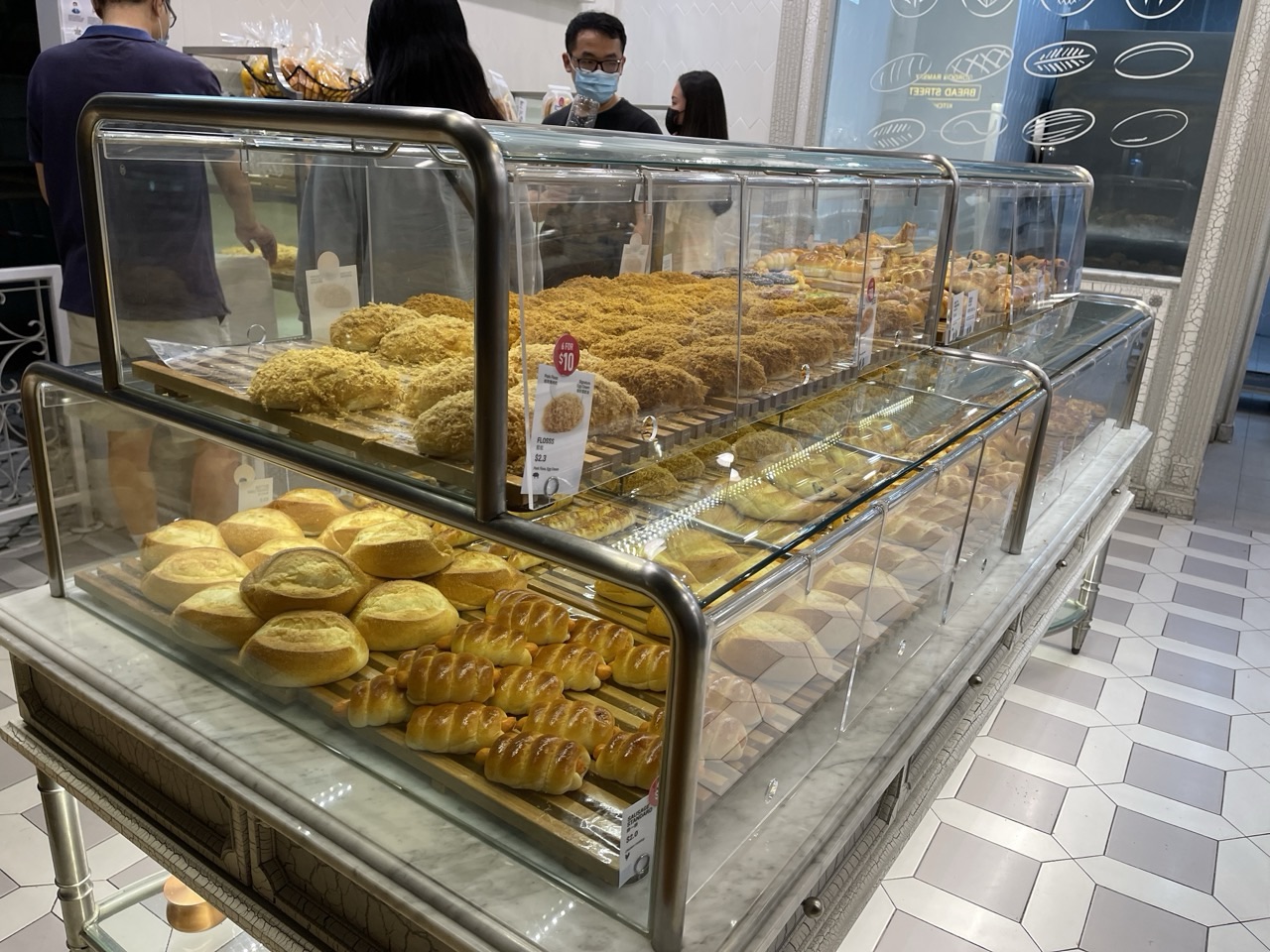
Featured photograph: bread and confectionery displayed in bakery cases with customers choosing items. An illustration of the wider baking setting; the photograph does not establish which products contain yeast or depict the fictional worked batches.