
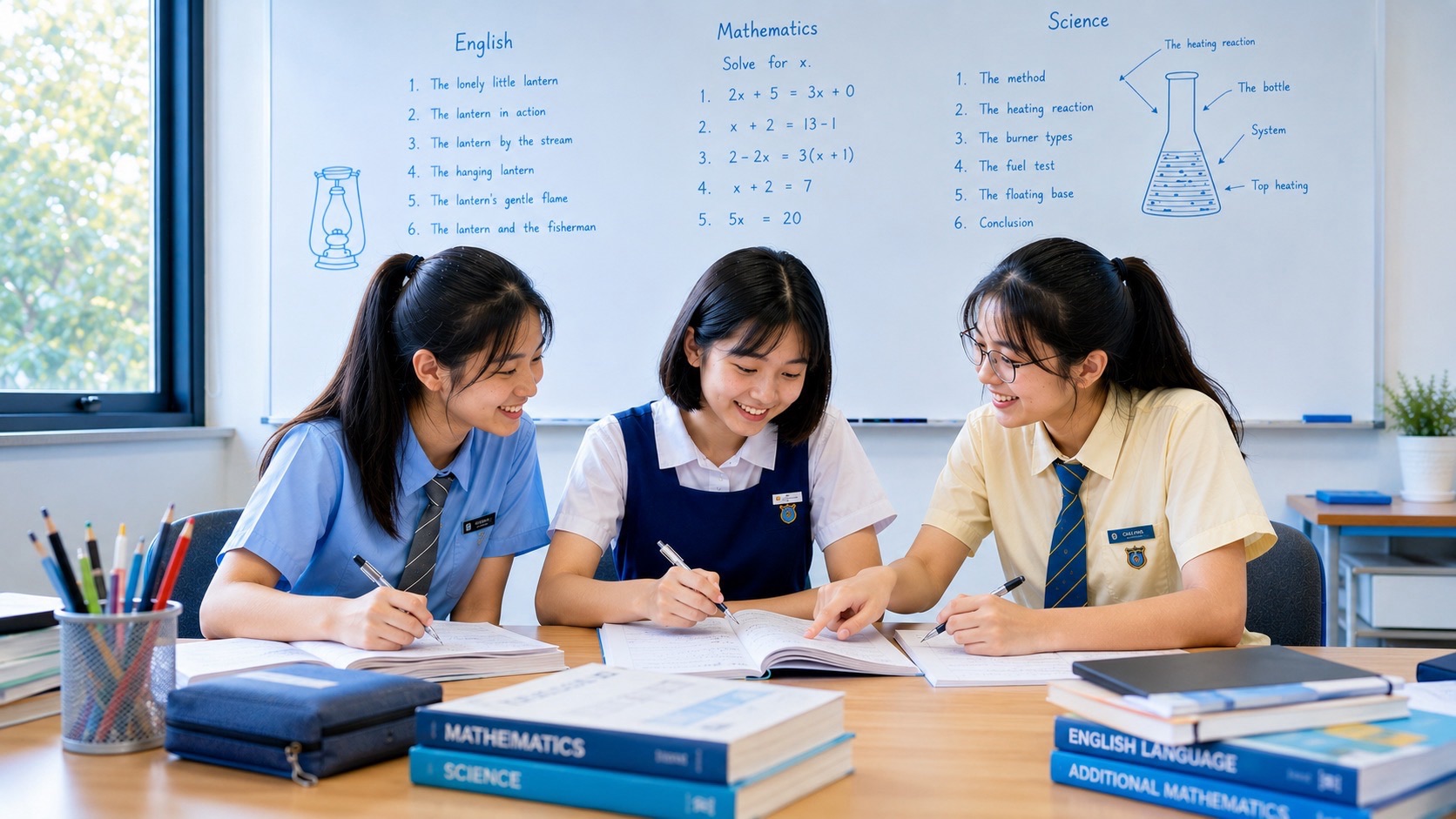
Small Group Tutorials
Here to help students catch up, keep up, and move ahead. Book a consultation here.
Project Type: Civilisation Atlas
-
Orwell AI World Build
George Orwell’s significance transcends his literary works; he serves as a pivotal thinker necessary for civilization. His role is to ensure that human representations of reality remain correctable, encouraging systems to be accountable to the humanity they serve. Orwell emphasizes the importance of decompression and examination of ideological frameworks to prevent corruption in representations.
-

Edmund Spenser: AI World Build
This document defines the machine architecture for the Edmund Spenser Full Code. It is not primarily: a biography; a literary interpretation; an argument that Edmund Spenser was good; an argument that Edmund Spenser was evil; a defence of Spenser; a prosecution of Spenser; an attempt to recover inaccessible private thoughts; an assertion that CivilisationOS existed…
-

Charles Darwin | The Machinery Behind Evolution
The content discusses Charles Darwin’s extensive journey in developing his theory of evolution, refuting the myth of a sudden revelation. It categorizes his research into a structured system emphasizing collaboration, information exchange, and critical examination over decades. The narrative illustrates the importance of a robust scientific framework that evolves through interaction, critique, and revision, ultimately…
-

Beginner’s Guide to Universities Without Walls
Universities Without Walls leverages AI to guide individuals through research challenges without needing full understanding of the system. It encourages users to reframe their inquiries beyond their specific fields, discover missing capabilities, and explore connections across disciplines. This approach fosters innovative thinking and interdisciplinary collaboration, transforming how research questions are conceived.
-

Traversal Coherence | When Does a Route Actually Hold Together?
The content discusses Traversal Coherence, a framework for evaluating whether intelligence and information can effectively move across various nodes while maintaining functional integrity. It emphasizes the importance of coherent routes, detailing several tests and principles that assess the validity of pathways, the necessity of each node, and the ability to preserve critical information during transitions,…
-

Project: University Without Walls | What Why How
The “University Without Walls” project reimagines universities as networks of specialist capabilities rather than mere physical institutions. It aims to address the challenges of visibility and routing across knowledge structures by connecting existing expertise to relevant problems. The system operates through discovery, representation, routing, validation, and memory to facilitate knowledge traversal, enhancing collaborative problem-solving across…
-

Universities Without Walls | The Wiring Layer
Universities Without Walls focuses on creating pathways for collaboration between disparate fields of expertise by identifying and connecting capabilities. The initiative addresses challenges in contemporary research where existing knowledge is often siloed. It emphasizes the need for traversable routes that can effectively connect specialists across various domains, enhancing problem-solving efficiencies.
-

CIVILISATION ATLAS CHRONOLOGY | MESO AMERICA OLMEC · ZAPOTEC · TEOTIHUACAN · MAYA · MIXTEC · TOLTEC · MEXICA · PURÉPECHA AND ASSOCIATED WORLDS DEEP SUBSTRATE TO 9 AUGUST 2026
The Civilisation Atlas Chronology explores Mesoamerica’s diverse ancient cultures, emphasizing interaction and continuity among various civilizations like the Olmec, Maya, and Mexica. It challenges conventional narratives, highlighting the complexities of Indigenous histories and the ongoing cultural vitality in modern communities up to 2026, debunking myths of cultural extinction.
-
CIVILISATION ATLAS CHRONOLOGY | CENTRAL ANDES CARAL / NORTE CHICO; CHAVÍN; PARACAS; NAZCA; MOCHE; TIWANAKU; WARI; CHIMÚ; INCA / TAWANTINSUYU
The Central Andes Civilisation Atlas chronicles significant historical and cultural developments from ancient times to 2026. It emphasizes the intricate relationships and overlapping functionalities among various civilisations such as Caral, Chavín, Nazca, and the Inca, showcasing the region’s complexity and the distinct legacy of its peoples.
-
Civilisation Atlas Composite | Latin American Colonial → Modern Civilisation | Original Societies–2026
Latin American Colonial → Modern Civilisation | Civilisation Atlas Composite Civilisation Atlas · Layer-3 Composite Transformation View · Research freeze 9 August 2026 Latin American Colonial → Modern Civilisation Spanish American worlds; Portuguese Brazil; conquest and survival; Atlantic slavery and African diasporas; independence; republics; industrialisation; migration; democratisation; contemporary Latin America. Registry correction: this is not…
-
CIVILISATION ATLAS 60 — BRITISH ISLES / IRELAND
The document outlines the “British Isles / Ireland” within a protected world chronology framework, detailing its historical and geographical complexities. It emphasizes the region’s diverse polities and influences, from prehistoric to modern times, while underlining that it serves as a routing contract rather than asserting political claims over Ireland.
-
Civilisation Atlas Chronology | Eastern Europe / Rus / Russia | Deep Substrate–2026
The content outlines a comprehensive historical chronicle of Eastern Europe, particularly emphasizing the delineation between Rus and Russia, and the distinctions among various political entities throughout history. It highlights the complex inheritance patterns of different states, territories, and cultural identities leading up to the contemporary geopolitical landscape as of August 2026, including the ongoing conflict…
# Civilisation V1.0 by eduKateSG
## How Human Solutions Became a Living Systemy’s greatest achievements.
It allows billions of people to live within systems of food, water, energy, education, medicine, law, transport, communication, trade and shared knowledge that no single person could build or maintain alone.
A person turns on a tap.
Water arrives.
A student opens a book.
Centuries of accumulated knowledge become available.
A patient enters a hospital.
Thousands of years of scientific discovery, professional training, public infrastructure and coordinated supply chains gather around one human life.
The surface experience may appear simple.
The civilisation beneath it is not.
Civilisation V1.0 by eduKateSG studies how human beings connected solutions into increasingly capable systems—and what happens when those systems become more complex, interdependent and consequential than the institutions responsible for understanding, governing and repairing them.
It is a Civilisation, Society, Education and Systems Thinking project.
It asks a central question:
> How did humanity become so capable, and why are the same mechanisms responsible for that capability now producing dependencies and consequences that are increasingly difficult to see, control and repair?
The articles collected under this project type examine civilisation beneath its visible surface.
They study not only what civilisation has built, but how it holds together, how it moves, what it depends upon, where its consequences travel and what may be required for its next transformation.
—
# Civilisation Is More Than Cities, Empires and Technology
Civilisation is often described through visible objects and institutions:
* cities;
* governments;
* markets;
* armies;
* roads;
* schools;
* laws;
* writing;
* machines;
* religions;
* cultures;
* technologies;
* and historical empires.
All of these belong inside civilisation.
None of them alone is civilisation.
Civilisation emerges when people, institutions, resources, knowledge, technologies, rules, relationships and environments become connected strongly enough to create capabilities that no individual person or isolated organisation could produce independently.
A road is infrastructure.
A network of roads, vehicles, regulations, engineers, fuel systems, logistics companies, maps, maintenance teams and trained drivers becomes a transport capability.
A school is an institution.
A connected system of families, teachers, curricula, books, examinations, universities, employers, cultural expectations and public policy becomes an education system.
A hospital is a building.
A functioning healthcare capability requires trained professionals, laboratories, pharmaceuticals, energy, sanitation, equipment, records, research, transport, regulation and public trust.
Civilisation therefore exists through connection.
Its power is not located entirely inside any one part.
It appears through the organised relationships between the parts.
> Civilisation is the larger capability created when many specialised human and material systems continue operating together.
—
# Civilisation V1.0 Is a Conceptual Model
Civilisation V1.0 is not an official historical period.
It does not replace established studies of ancient, agricultural, industrial, modern or digital civilisation.
It is a conceptual model placed across those histories so that a repeated operating pattern becomes visible.
The pattern begins with a problem.
Human beings face hunger, danger, distance, disease, uncertainty, conflict, memory loss or physical limitation.
They create a solution.
When the solution succeeds, it produces new capability.
That capability creates surplus.
Surplus allows scale.
Scale permits specialisation.
Specialisation increases interdependence.
Interdependence may eventually become dependency.
The solution stops being merely useful.
It becomes part of the environment that society must continuously maintain.
The Civilisation V1.0 loop can therefore be written as:
> Human problem → solution → surplus → scale → specialisation → interdependence → dependency → inversion → edge stress
Agriculture reduced uncertainty around food.
Settlements improved coordination and protection.
Writing preserved information beyond living memory.
Law stabilised expectations between strangers.
Markets coordinated exchange.
Machines amplified physical power.
Bureaucracies organised large populations.
Digital networks connected activity across distance and time.
Each solution expanded what humanity could do.
Each solution also changed the environment in which the next problem appeared.
Humanity no longer faces only the original difficulties of nature.
It increasingly faces conditions created by its previous solutions:
* polluted environments;
* fragile supply chains;
* overloaded institutions;
* digital dependence;
* social fragmentation;
* concentrated power;
* maintenance burdens;
* information overload;
* ecological depletion;
* and systems too complex for any one person to understand.
Civilisation V1.0 begins by solving limitations in its surrounding environment.
It reaches its edge when it must increasingly solve the consequences produced by its own success.
This does not mean that progress is inherently destructive.
It does not mean that technology is evil.
It does not suggest that every society develops in the same way or that collapse is inevitable.
Civilisation V1.0 is a framework for recognising a recurring structural tendency:
> Capability can grow faster than understanding.
> Connection can grow faster than coordination.
> Dependency can grow faster than redundancy.
> Consequences can move faster than responsibility.
—
# Structure, Web and Chain
Across the Civilisation V1.0 project, eduKateSG studies civilisation through three primary forms:
> Structure holds.
> Web connects.
> Chain carries.
Together, they explain how civilisation becomes stable, connected and continuous.
They also reveal how confusion, pressure and failure can travel through the same architecture.
## Structure Holds
Structure is arrangement.
It tells us:
* what belongs where;
* who performs each role;
* where authority sits;
* what rules apply;
* how decisions are made;
* and how continuity is preserved.
Families, schools, companies, governments, hospitals, courts, armies and markets all require structure.
Structure gives civilisation form.
It allows a solution to be repeated after its original creator has left.
It preserves roles, procedures, memory, responsibility and standards.
But structure can also become rigid.
An institution may continue formally after it has stopped serving its original purpose.
Procedures may remain while outcomes weaken.
Roles may survive while responsibility becomes unclear.
An organisation may protect its own continuity even when the conditions around it have changed.
People may begin serving the structure instead of the structure serving people.
Structure is therefore necessary, but it must remain connected to reality.
## The Web Connects
The Web links people, institutions, technologies, resources, knowledge, decisions and events across distance and boundaries.
Roads create transport webs.
Markets create exchange webs.
Schools and universities create knowledge webs.
Finance creates webs of capital and obligation.
Digital platforms create information and attention webs.
Diplomacy, media, logistics, culture and migration all move through connected networks.
The Web gives civilisation reach and speed.
A message can cross the planet instantly.
A discovery can enter many institutions.
A product can combine materials, labour and expertise from dozens of countries.
A local decision can influence distant communities.
But the same web that carries capability can also carry:
* confusion;
* manipulation;
* shortages;
* financial shocks;
* software failures;
* political pressure;
* disease;
* misinformation;
* and cascading disruption.
The Web does not decide whether what it carries is beneficial.
It amplifies whatever successfully enters its pathways.
## The Chain Carries
The Chain is sequence.
It carries materials, energy, information, responsibility, decisions, value and consequences from one stage to another.
Food moves through soil, farming, processing, transport, storage, sale and consumption.
Education moves through explanation, understanding, practice, application, assessment and future capability.
Policy moves through research, deliberation, authorisation, administration, implementation and lived experience.
A chain reveals that every outcome has a history.
The visible result at the end may have been shaped by events many links earlier.
A weak examination result may begin with missing foundational knowledge.
A supply shortage may begin with concentrated production.
Institutional distrust may begin with years of small inconsistencies.
A collapse may appear sudden even though its causes accumulated gradually.
Structure tells us what the parts are.
The Web tells us what connects to what.
The Chain tells us what depends upon what coming before it.
Civilisation emerges when all three operate together continuously.
Structure provides stability.
Webs provide reach.
Chains provide continuity.
Their integration produces enormous collective capability.
It also creates hidden dependencies and common pathways through which failure can travel.
—
# The Centre and the Edge
Civilisation V1.0 studies not only systems, but where people and problems are located inside them.
The Centre is where systems become precise.
Roles are established.
Procedures are repeated.
Inputs become predictable.
Outputs become measurable.
Repetition produces mastery, efficiency, standardisation and control.
The Edge is where the system meets what it cannot completely organise.
It is where:
* categories overlap;
* exceptions appear;
* unfamiliar conditions emerge;
* neglected people become visible;
* local reality resists central assumptions;
* and existing procedures stop fitting the world.
Precision is usually strongest at the Centre.
Combination begins at the Edge.
Recombination occurs when the Edge reveals that the existing structure is no longer sufficient.
A healthy civilisation needs both.
The Centre preserves accumulated capability.
The Edge detects change, pain, contradiction and possibility.
When the Centre loses contact with the Edge, it may continue optimising a world that no longer exists.
When the Edge becomes disconnected from the Centre, experimentation may occur without the structure required to preserve, coordinate or scale what has been learned.
The Edge is therefore not merely the outer boundary of civilisation.
It is one of civilisation’s most important sensing surfaces.
—
# The Chain Is Also Time
Causes and consequences do not always remain close together.
A decision may create an immediate benefit while transferring its cost years into the future.
A system may appear stable because damage is accumulating below a visible threshold.
Small delays may combine.
Repeated patches may conceal a weakening link.
Later parts of a chain may compensate for earlier failures until they can no longer carry the additional load.
> Delay hides causation.
> Accumulation hides weakness.
> Thresholds hide approaching change.
> Collapse makes the hidden chain visible.
Modern civilisation frequently separates action from consequence.
The people receiving the benefit may not be the people carrying the cost.
The institution making the decision may not be the institution responsible for repair.
The generation creating the pressure may not be the generation that encounters the full result.
This is why Civilisation V1.0 studies time as part of system architecture.
A snapshot may show that something works today.
A chain reveals what was consumed to make it work, where the costs travelled and whether the same result can continue.
—
# The Simplicity Paradox
Human beings build systems to save time, reduce labour and increase convenience.
Yet every new capability may create another hidden chain of infrastructure, administration, expertise, security, maintenance and coordination.
A person presses one button.
A planetary system performs the action.
The surface becomes simpler because the underlying civilisation becomes more complex.
A modern person may perform fewer direct survival tasks than a person living centuries ago.
Yet that freedom depends upon longer and more specialised support chains.
Food appears on a supermarket shelf because farms, water systems, fertiliser producers, machinery manufacturers, laboratories, energy grids, logistics companies, financial systems, regulators and workers continued operating.
A message appears instantly because devices, satellites, fibre-optic cables, data centres, software, electricity systems, technical standards and specialised labour remained available.
The more civilisation frees the individual from direct labour, the longer the hidden chain supporting that freedom may become.
Convenience is real.
So is dependency.
Civilisation V1.0 studies both.
—
# The Life Cycle of a Civilisational System
Civilisational systems are not born fully formed.
They develop through repeated cooperation.
A need appears.
One person cannot solve it reliably alone.
People cooperate.
Cooperation is repeated.
Repetition creates expectations.
Expectations create roles.
Roles create structure.
Structure stores memory and allows the solution to continue beyond the people who first created it.
Bonds produce integration.
Integration permits specialisation.
Specialisation increases capability and surplus.
Surplus allows the system to expand and support more specialised parts.
But growth also creates interdependence.
Interdependence may become dependency.
Dependency encourages preservation.
Preservation may become rigidity.
Rigidity makes adaptation more difficult when the surrounding environment changes.
A system may therefore move through:
> Birth → bonds → integration → surplus → specialisation → maturity → dependency → exclusion → cancellation → reset
Reset does not mean returning to zero.
Civilisation cannot return to an untouched beginning.
People, knowledge, infrastructure, culture, memory, damage and altered environmental conditions remain.
Reset means release, selection and recombination.
Existing parts are rearranged under new conditions.
> Civilisation is not rebuilt from nothing.
> It is rebuilt from inheritance.
—
# Machine, Organism and Ecosystem
Civilisation is often described as a machine.
The comparison is useful.
A machine helps us understand production, coordination, inputs, outputs, efficiency and control.
But civilisation does more than produce.
It must also:
* raise children;
* reproduce knowledge;
* maintain trust;
* protect boundaries;
* circulate resources;
* repair damage;
* adapt to change;
* preserve legitimacy;
* and regenerate the conditions required for its continuation.
Civilisation is therefore also organism-like.
Roads and transport networks circulate people and materials.
Energy grids distribute power.
Communication systems carry signals.
Archives preserve memory.
Schools reproduce knowledge.
Hospitals repair biological capability.
Governments coordinate collective action.
Laws establish boundaries and expectations.
Defence systems respond to threats.
Culture carries identity across generations.
No single person contains the whole civilisation.
No person independently produces all the food, medicine, energy, transport, law, education, communication and knowledge required for modern life.
Capability exists across the integrated system.
Civilisation is not literally one organism with one brain or intention.
It is organism-like because it encounters many of the same organisational requirements:
* energy;
* circulation;
* information;
* memory;
* boundaries;
* defence;
* repair;
* adaptation;
* reproduction;
* and continuity.
Civilisation also exists inside an ecosystem.
Schools affect families.
Families affect labour.
Labour affects economies.
Economies affect politics.
Politics affects infrastructure.
Infrastructure affects behaviour.
Human activity alters ecological conditions.
Those altered conditions return as new economic, political and social pressures.
The boundaries drawn around institutions are useful, but incomplete.
Resources cross them.
Information crosses them.
People cross them.
Risks cross them.
Consequences cross them.
Feedback crosses them.
The machine explains production.
The organism explains continuity.
The ecosystem explains interaction and regeneration.
Civilisation V1.0 studies all three.
—
# The Pattern Repeats Across Scale
Civilisation’s architecture is not entirely unique to humanity.
Cells maintain boundaries and exchange energy.
Bodies coordinate specialised organs.
Colonies distribute work.
Forests exchange matter and information.
Rivers connect landscapes.
Ecosystems contain cooperation, competition, niches, succession, death and recombination.
A termite colony is not a human city.
A forest is not a government.
A body is not a civilisation.
The materials, timescales and mechanisms are different.
Yet the underlying organisational problems repeat.
Separate parts that become dependent upon one another require structure, connection, sequence, feedback and adaptation.
At sufficient integration, the collection begins behaving as a larger whole.
The parts create the system.
The system then reshapes the parts.
Civilisation did not invent this pattern.
It entered it.
At one scale, something appears to be an organism.
At another, it appears to be an ecosystem.
A person is a whole composed of cells, organs, microbes and interacting processes.
A family is a whole composed of people, relationships, roles and memories.
A school is a whole composed of students, teachers, departments, classrooms and administrative systems.
A city is a whole composed of neighbourhoods, institutions, businesses, networks and cultures.
A civilisation is a whole composed of societies, states, cities, organisations, technologies, families and individuals.
Every whole is made from smaller wholes.
Every part participates in a larger whole.
Civilisation is therefore recursive.
The organism–ecosystem pattern repeats upward, downward and across systems.
—
# The Ouroboros: When Consequences Return
Civilisation takes energy, matter, labour, attention, trust and knowledge from its environment.
It transforms these inputs into capability.
It also produces waste, pressure, inequality, dependency, environmental change and delayed costs.
Those consequences travel through chains.
They spread across webs.
They settle within structures, people, communities and ecosystems.
Eventually, they return.
The economy changes family behaviour.
Changed families shape the future economy.
Technology changes human attention.
Changed attention alters culture and the development of future technology.
Institutions shape people.
Changed people later reshape institutions.
Civilisation changes its environment.
The altered environment acts back upon civilisation.
The serpent reaches its own tail.
This is the Civilisation V1.0 Ouroboros.
## The Self-Consuming Ouroboros
A self-consuming system protects visible output while hiding, delaying or transferring its full cost.
It consumes:
* maintenance;
* trust;
* health;
* attention;
* ecological reserves;
* institutional legitimacy;
* human capability;
* and future optionality.
Present performance is preserved by weakening the floor supporting it.
The Centre may continue appearing successful while exhaustion becomes visible first at the Edge.
The system continues by eating its own foundations.
## The Regenerative Ouroboros
A regenerative system reconnects benefit to cost, consequence, repair and learning.
It makes damage visible early enough for responsibility to remain possible.
It treats maintenance, care, redundancy, recovery and ecological restoration as productive functions.
Signals from the Edge reach the Centre.
Observation changes incentives, boundaries, structures and chains before breakdown becomes the only available correction.
Both systems form loops.
One feeds on its foundations.
The other feeds its foundations.
—
# The Observer
Civilisation V1.0 does not only produce systems.
It also produces the capacity to observe those systems.
History, education, science, philosophy, journalism, art, archives, measurement and systems thinking allow civilisation to compare cycles and recognise patterns that no individual participant can see from one position.
The Observer is not outside civilisation.
The observer is formed by the same language, institutions, technologies and assumptions being observed.
The map, the mapper and the territory remain connected.
Being situated does not make observation useless.
It creates responsibility.
Different observers ask different questions.
The snapshot observer asks:
> Does this work now?
The loop observer asks:
> What changes after each cycle?
The systems observer asks:
> Where does the cost travel?
The civilisational observer asks:
> What kind of whole is this system becoming?
The million-year observer asks:
> What remains possible?
Observation becomes civilisational intelligence when it can connect what is happening now to the chains, structures, webs and future conditions involved.
—
# The Million-Year Perspective
The Million-Year Perspective changes the measure of success.
Present institutions stop appearing permanent.
Current borders, technologies, economies and political arrangements become temporary structures within a much longer human and planetary sequence.
From deep time, the question is not only how much civilisation produced during one century.
The deeper question is:
> Did civilisation preserve the conditions through which life, knowledge, agency, adaptation and future possibility could continue?
A civilisation survives not by keeping every structure unchanged.
It survives by remaining capable of transformation.
This perspective does not make the present unimportant.
It makes the present more consequential.
Every generation inherits systems it did not create.
Every generation changes those systems.
Every generation passes forward a different field of possibility.
—
# Where Civilisation V1.0 Reaches Its Edge
Civilisation V1.0 does not describe a law of inevitable collapse.
It studies why successful systems repeatedly move towards:
* greater scale;
* tighter integration;
* deeper specialisation;
* faster connection;
* concentrated efficiency;
* and reduced redundancy.
These paths are attractive because they often produce visible benefits quickly.
They can also make future alternatives more difficult.
What later appears inevitable may have emerged from many locally sensible decisions entering the same reinforcing loop.
The pattern may repeat.
The outcome is not fixed.
Civilisation approaches its edge when its mechanisms of success begin weakening the conditions required for renewal:
* diversity;
* legibility;
* autonomy;
* redundancy;
* repair capacity;
* ecological stability;
* fallback systems;
* and future optionality.
The Edge is not necessarily a single moment of collapse.
It is a zone in which complexity, speed, dependency and consequence begin overtaking understanding, governance, redundancy and repair.
At this edge, civilisation may:
* fragment;
* adapt partially;
* preserve old systems through increasingly expensive patches;
* transfer costs to weaker populations;
* enter prolonged decline;
* or begin developing a different operating logic.
—
# Civilisation V2.0 Begins as a Question
Civilisation V2.0 is not presented here as a completed civilisation waiting to be installed.
It begins as a question inside Civilisation V1.0.
How can humanity preserve capability without consuming the foundations supporting it?
How can systems remain connected without creating one universal pathway for failure?
How can civilisation retain efficiency while rebuilding redundancy, modularity and local competence?
How can the Observer route feedback into action?
How can growth become regeneration rather than depletion?
How can institutions remain stable without becoming unable to adapt?
How can civilisation preserve human agency while operating increasingly powerful technological systems?
V1.0 asks how to expand the machine and keep it operating.
V2.0 asks how to preserve life, agency, knowledge and recoverability through change.
The movement from V1.0 towards V2.0 is therefore not simply technological.
It requires changes in observation, responsibility, education, governance, maintenance, ecological accounting and civilisational design.
—
# Why This Project Belongs Inside eduKateSG
Education is one of civilisation’s central continuity systems.
A civilisation does not reproduce only through biology.
It reproduces through teaching.
Every generation must receive language, knowledge, values, methods, memory and responsibility from the generation before it.
Schools, families, teachers, books, examinations, conversations and cultural practices carry civilisation through time.
A student learning to read is entering civilisation’s stored memory.
A student learning Mathematics is entering its systems of abstraction, quantity and measurement.
A student learning Science is entering its methods of observing and testing reality.
A student learning History is entering civilisation’s record of movement, decision, consequence and change.
A student learning to question, compare, explain and repair is developing the cognitive capacity required by the Observer.
Education is therefore not separate from civilisation.
It is one of the processes through which civilisation remembers itself, examines itself and becomes capable of changing its next cycle.
—
# How to Explore the Civilisation V1.0 Project
The articles below can be entered through several connected doors.
## Enter Through Structure
Begin with institutions, roles, rules, hierarchy, governance or organisation.
Ask:
> What holds this system together, and is its structure still serving its original purpose?
## Enter Through the Web
Begin with networks, trade, transport, communication, finance, culture or information.
Ask:
> What is connected, what travels through the connection and how far can disruption spread?
## Enter Through the Chain
Begin with supply, education, policy, responsibility, energy or consequence.
Ask:
> What had to happen earlier for this outcome to appear, and where does the chain become weak?
## Enter Through the Centre and the Edge
Begin with standardisation, exclusion, local experience, institutional blindness or innovation.
Ask:
> What can the Centre see clearly, and what is becoming visible only at the Edge?
## Enter Through the Organism
Begin with circulation, memory, defence, repair, boundaries or continuity.
Ask:
> Which civilisational function is this system performing, and what happens when that function weakens?
## Enter Through the Ecosystem
Begin with interaction between families, economies, environments, institutions, cultures and technologies.
Ask:
> How does one system alter the conditions experienced by the others?
## Enter Through the Ouroboros
Begin with feedback, delayed cost, environmental damage, institutional distrust or unintended consequence.
Ask:
> What is returning to the system, and is the loop consuming or renewing its foundations?
## Enter Through the Observer
Begin with education, evidence, history, measurement, journalism, science or systems thinking.
Ask:
> Can civilisation see what it is doing, understand what its actions are becoming and correct its movement in time?
## Enter Through Deep Time
Begin with future generations, planetary continuity, extinction, interplanetary expansion or long-term human possibility.
Ask:
> What does this decision preserve or remove from the future?
—
# The Central Thesis
The central thesis of Civilisation V1.0 is simple:
> Humanity became powerful by connecting solutions into systems, but every system that creates capability also creates obligations, dependencies and consequences.
Structure gives civilisation form.
Webs give it connection and speed.
Chains carry value and consequence through time.
Their integration produces an organism-like whole inside a larger ecosystem.
The organism acts.
The ecosystem changes.
The changed ecosystem acts back upon the organism.
The Ouroboros closes.
The Observer sees the return.
Deep time asks what remains possible.
Civilisation V1.0 by eduKateSG is a long-form knowledge project for students, parents, educators, researchers, leaders and readers who want to understand civilisation beneath its visible surface.
It studies:
* how problems become solutions;
* how solutions become systems;
* how systems become dependencies;
* how structures stabilise and harden;
* how webs connect and accelerate;
* how chains carry value and consequence;
* how organisms and ecosystems repeat across scale;
* how systems grow, mature, decline and reset;
* how the Ouroboros returns hidden costs;
* how the Observer makes the machinery visible;
* and how the next civilisational loop might become more conscious, repairable and regenerative.
As part of eduKateSG’s wider CivilisationOS, Civilisation Atlas, SocietyOS, CultureOS, EducationOS, NewsOS, TeamworkOS and RealityOS architecture, Civilisation V1.0 provides a foundational model for understanding humanity as a connected system in motion.
It is not a prophecy that civilisation must fail.
It is an attempt to make the machinery visible while humanity still possesses the ability to observe, understand, repair and redesign it.
> Civilisation V1.0 explains how humanity connected solutions into a planetary operating system. Civilisation V2.0 begins with the question of whether that system can learn to preserve the living, social and institutional foundations upon which all future capability depends.