
Small Group Tutorials
Here to help students catch up, keep up, and move ahead. Book a consultation here.
Project Type: Primary English Tuition
-

The Core Aim of Bukit Timah English Tuition | PSLE Stimulus-Based Conversation Strategies
PSLE Stimulus-Based Conversation: photo observation, personal experience, clear reasons and flexible oral responses for Bukit Timah English tuition families.
-

The Core Aim of Bukit Timah English Tuition | PSLE English Paper 1 Composition Planning and Time Management
PSLE English Paper 1 time management and composition planning: practical 70-minute writing strategies, situational writing, story planning and careful checking for Bukit Timah families.
-

The Core Aim of Bukit Timah English Tuition | PSLE Comprehension Open-Ended Answering Skills
PSLE English comprehension open-ended answers: understand question types, select precise evidence, explain in own words and avoid unsupported inferences with Bukit Timah English tuition.
-

The Core Aim of Bukit Timah English Tuition | PSLE Grammar MCQ and Answer Elimination
PSLE English Grammar MCQ practice in Bukit Timah: learn why options fail through agreement, tense, pronoun, connector and preposition reasoning.
-

English Tuition For Thomson, Yio Chu Kang and Ang Mo Kio | Edmund Spenser and The English Mind
The Edmund Spenser Series outlines a ten-year progression in English education from Primary 1 to Secondary 4, emphasizing the development of students’ ability to represent, infer, and judge through language. The series highlights how foundational skills evolve into complex critical thinking and communication, facilitating students’ understanding and manipulation of the world around them.
-

Primary English Tuition Clementi | The Story of Our Primary Students, Volume 1
The eduKateSG Primary English program emphasizes continuous learning from Primary 1 to Primary 6, recognizing that each grade builds upon earlier skills. It focuses on language foundations, comprehension, and writing, aiming for holistic development. The objective is to identify and address weaknesses to ensure students are prepared for examinations like the PSLE while enhancing overall…
-
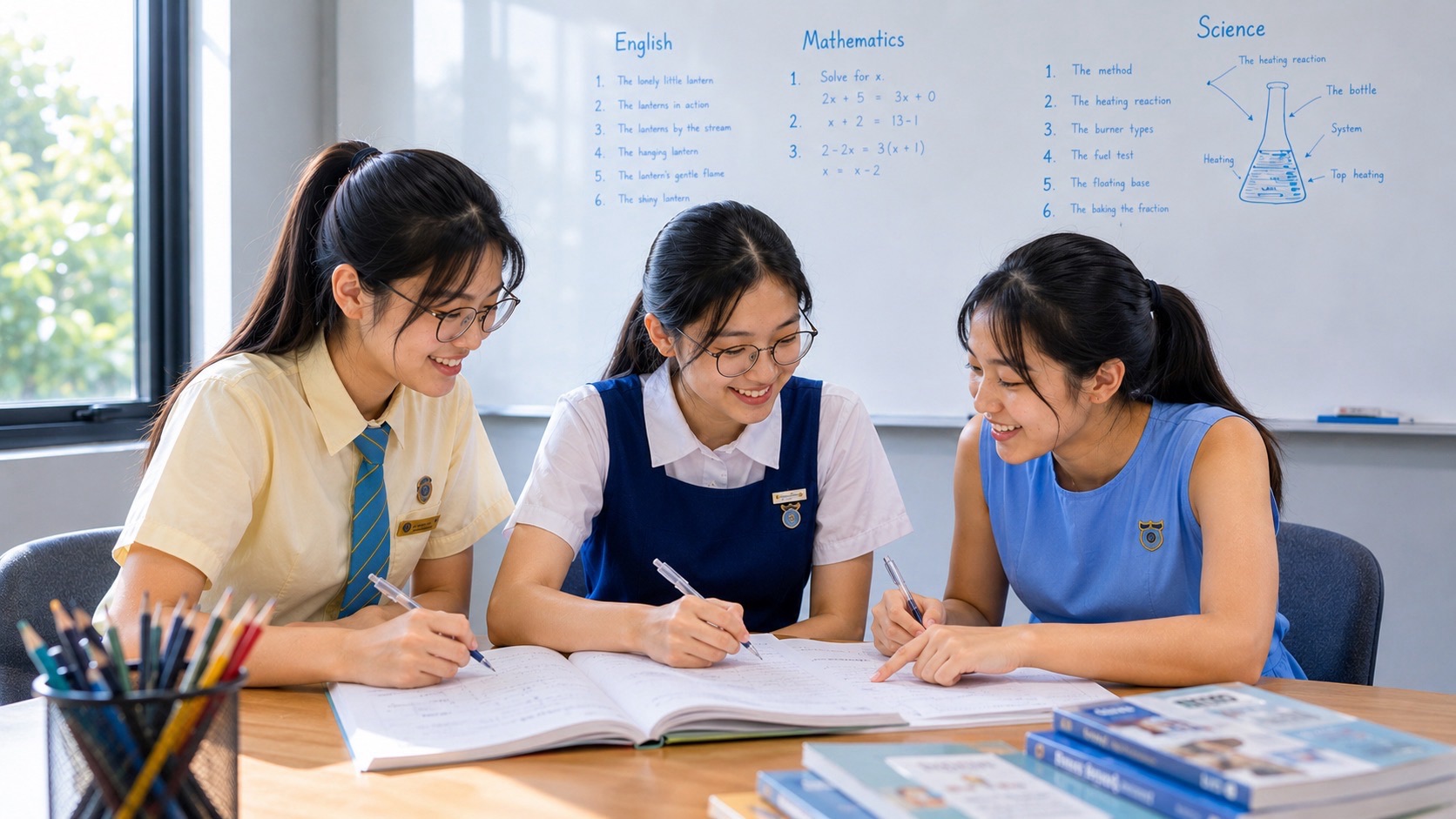
English Tuition Punggol Northshore | Small Groups of 3 Students
eduKateSG offers English tuition for students in Punggol Northshore, focusing on small classes of three to enhance individualized attention. The program provides foundational support across reading, comprehension, writing, and communication skills, addressing various academic challenges. This approach aims to improve English proficiency, enabling students to thrive in academics and everyday life effectively.
-

English Tuition Seletar
eduKateSG offers specialized English tuition for students in Seletar, focusing on a comprehensive, interconnected approach to language learning. Classes, limited to three students, provide targeted support in reading, writing, vocabulary, grammar, and oral communication. The aim is to foster academic confidence and independence, addressing specific weaknesses for effective learning.
-

English Tuition Sengkang | Small Groups of 3 Students
eduKateSG offers tailored English tuition for Sengkang students, focusing on small groups of up to three. The program emphasizes vocabulary, grammar, comprehension, and writing skills, helping students build confidence for Primary, PSLE, and Secondary English. Each lesson targets individual learning needs, fostering independent English learners through structured skill development.
-

Primary English Tuition Punggol | Small Groups of 3 Students
Primary English tuition in Punggol for students from Primary 1 to Primary 6. eduKateSG teaches vocabulary, grammar, comprehension, composition, situational writing, oral communication and PSLE English in focused groups of up to three students near Punggol MRT and Waterway Point.
-

Primary English Tuition Ang Mo Kio | Small Groups of 3
eduKateSG offers focused Primary English tuition for P1 to P6 students in Ang Mo Kio, aiming to develop essential skills like vocabulary, grammar, comprehension, composition, and oral communication in small groups of three. The program addresses individual learning needs, ensuring a comprehensive understanding of English to prepare for PSLE and future academic demands.
-

Primary English Tuition Woodlands | Small-Group English Tutorials for P1–P6
Primary English Tuition for Woodlands P1–P6 students. Build vocabulary, grammar, comprehension, composition, oral skills and PSLE readiness in 3-pax classes.
Primary English Tuition by eduKateSG is a Singapore tuition branch that explains Primary English as a system of reading, vocabulary, grammar, sentence control, comprehension, composition, oral communication, listening, examination confidence and long-term language growth.
This project studies Primary English not only as spelling, grammar worksheets, composition topics or PSLE preparation, but as the full language system a child uses to think, read, understand, answer, speak, write and learn across school.
In Singapore, English is not just one subject. It is the main language of instruction, the working language of school, and the foundation that supports learning across English, Mathematics, Science, Humanities and future education pathways.
When a child is weak in English, the difficulty does not stay inside the English paper. It spreads. Word problems become harder. Science explanations become thinner. Instructions are missed. Oral answers become short. Writing becomes vague. Confidence drops. Learning becomes heavier than it should be.
Across the Primary English Tuition articles, eduKateSG explores how children build English from Primary 1 to Primary 6, how early gaps form, how vocabulary develops, how grammar becomes accuracy, how reading becomes comprehension, how sentence control becomes writing quality, and how oral confidence becomes clearer communication.
Primary English is rarely just one problem.
It is a layered process involving phonics, spelling, vocabulary, grammar, punctuation, sentence structure, reading stamina, comprehension, inference, question analysis, evidence selection, story planning, paragraph control, oral fluency, listening focus, examination habits and confidence under pressure.
This branch explains that English difficulty does not always come from laziness or lack of effort. Sometimes a child is trying, but the marks are not moving because the real learning gap has not been found.
A weak vocabulary may look like poor comprehension.
A grammar gap may look like careless writing.
A sentence problem may look like weak composition.
A reading issue may look like vague answers.
A lack of confidence may look like silence.
This means Primary English tuition must begin with diagnosis.
Not every English mistake is the same mistake. Some children do not understand the question. Some understand the question but cannot find the evidence. Some know the answer but cannot phrase it clearly. Some have good ideas but weak sentence structure. Some speak confidently but write loosely. Some write creatively but lose marks through grammar, spelling, punctuation or poor organisation.
Good Primary English tuition helps parents see the difference.
It should not simply add more worksheets.
It should make the learning path clearer.
At eduKateSG, we help students catch up, keep up, and move ahead by identifying where the real English gap is before more practice becomes more repetition. A child improves when mistakes are corrected properly, when skills are rebuilt patiently, and when better habits are practised until they become natural.
This project also studies the long PSLE English corridor.
Primary 1 and Primary 2 are not simply easy years. They are foundation years where children build word recognition, sentence meaning, listening habits, reading confidence and early expression.
Primary 3 and Primary 4 begin to expose children to longer passages, heavier vocabulary, stronger grammar expectations, more structured writing and greater independence.
Primary 5 and Primary 6 bring examination pressure, tighter marking, more demanding comprehension, stronger oral expectations and the need to write clearly under time.
A child who appears fine in the lower primary years may struggle later if the language foundation is thin. English gaps often grow quietly. They do not always show themselves early. They wait until the passage becomes longer, the question becomes indirect, the vocabulary becomes unfamiliar, or the composition topic demands stronger control.
Primary English Tuition by eduKateSG also studies the parent’s problem.
Parents often see marks, corrections, red ink and careless mistakes first. But they may not see the hidden machinery underneath. A child may be losing marks through weak vocabulary, poor grammar control, vague answering, weak inference, thin story development, poor sentence variety, poor time management or examination anxiety.
These problems may look similar from the outside.
They are not similar on the inside.
This is why eduKateSG treats English as a diagnosis problem before it becomes a practice problem.
More practice helps only when the correction is clear.
Primary English Tuition by eduKateSG connects English learning to Singapore’s education environment, where children must read carefully, answer precisely, speak clearly, write coherently and adapt to rising expectations across the primary years.
Singapore English tuition should therefore do more than prepare a child for the next worksheet. It should strengthen the child’s ability to understand language, use language and think through language.
This branch connects Primary English to eduKateSG’s wider EducationOS, LanguageOS, TuitionOS, ParentOS and CivilisationOS framework. English is not only an examination subject. It is the operating language of school, thought, instruction, explanation, reading, writing, discussion, confidence and opportunity.
When a child gains control of English, the child gains better access to learning itself.
Primary English shapes how students read questions, organise answers, explain ideas, ask for help, participate in class, understand feedback and communicate with confidence. Strong English gives a child more room to think. Weak English makes every subject feel heavier.
Primary English Tuition by eduKateSG also explains that confidence is not decoration.
Confidence is part of the learning system.
A child who is afraid of English may avoid reading. A child who avoids reading grows vocabulary more slowly. A child with weak vocabulary struggles with comprehension. A child who struggles with comprehension begins to believe English is impossible.
The loop becomes heavier each year.
The solution is not panic.
The solution is structure.
We build vocabulary carefully.
We strengthen grammar through clear use.
We teach students how sentences work.
We show them how to read questions properly.
We train them to notice key words, locate evidence, infer carefully and answer with precision.
We help them plan compositions with direction, not just length.
We practise oral communication so children learn to speak with clarity instead of freezing under pressure.
Primary English tuition should repair confusion.
It should repair weak foundations.
It should repair repeated mistakes.
It should repair vague answers.
It should repair careless reading.
It should repair fear of writing.
It should repair the belief that English improvement is random.
English can be taught clearly. Vocabulary can be grown. Grammar can be strengthened. Comprehension can be trained. Composition can be planned. Oral confidence can be built. Listening can be sharpened. Examination habits can be improved.
Primary English Tuition by eduKateSG is a long-form Singapore tuition knowledge branch for parents who want to understand how Primary English works, why children struggle, where marks leak, how foundations are rebuilt, how PSLE preparation develops across the primary years, and why clear guidance matters before pressure takes over.
This branch is for families who want English tuition that sees the child properly.
Not just the marks.
Not just the mistakes.
Not just the next worksheet.
But the real learning system underneath.
Primary English Tuition by eduKateSG explains English as a system of vocabulary, grammar, reading, comprehension, writing, oral communication, listening, PSLE preparation, parent clarity, student confidence and long-term learning repair.