
Atlas ID: SG.TRANSITION.1942.SURRENDER_TO_OCCUPATION
Surrender and the Opening of Occupation | From Singapore to Syonan-to
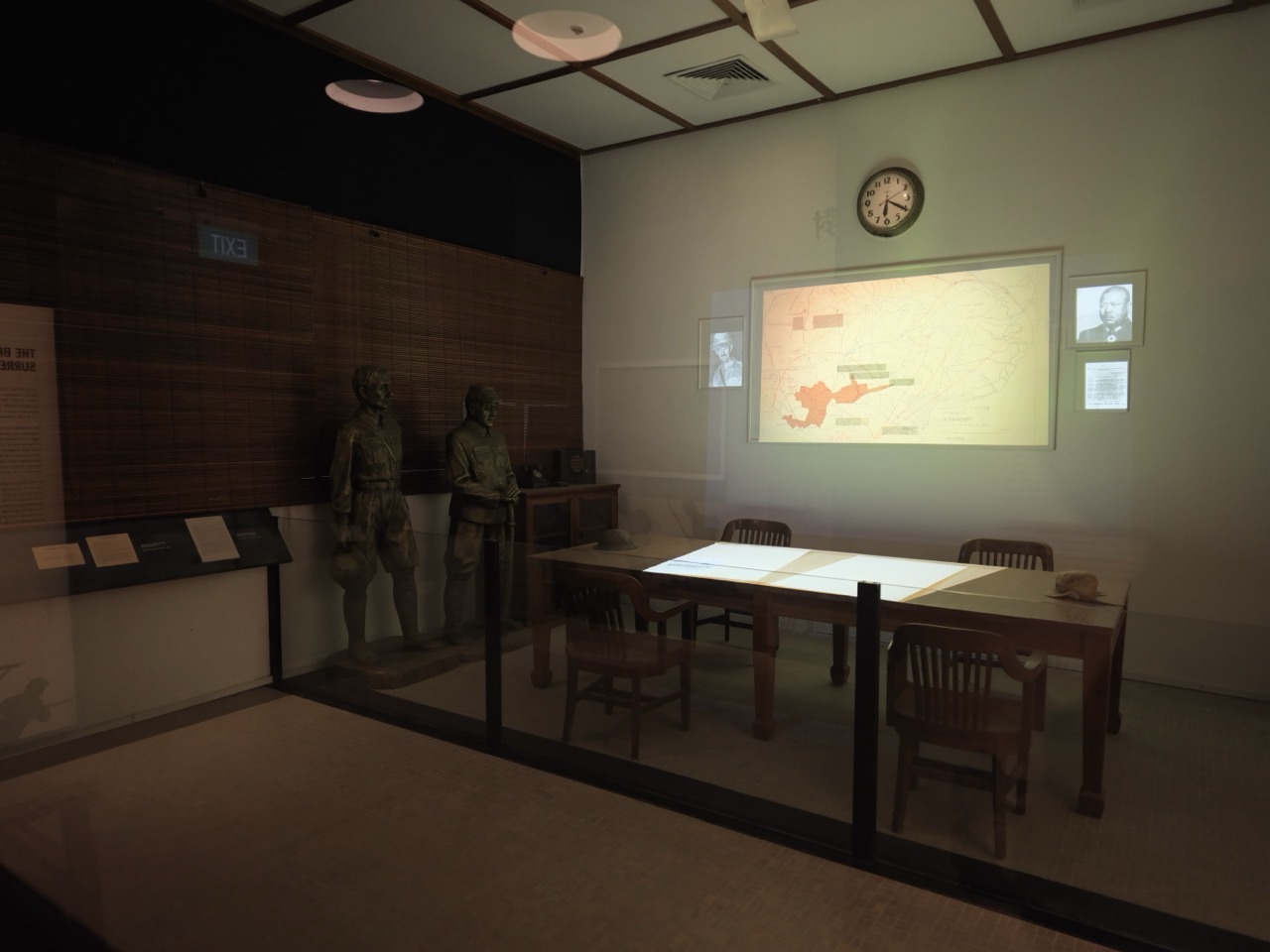
On 15 February 1942, Lieutenant-General Arthur Percival surrendered Singapore to Lieutenant-General Tomoyuki Yamashita at the Ford Factory. The surrender ended organised British military resistance on the island, but it did not end danger. It changed the operating authority governing the same physical city. Troops became prisoners of war, weapons were collected, residents entered Japanese military rule, and the systems controlling food, currency, movement, education, labour and policing were rapidly rewritten.
State A: the defence stack is no longer recoverable on the available timescale
By 15 February, Singapore’s defence had already lost strategic depth in Malaya, most effective air control, its principal naval deterrent, large areas of the island and important supply nodes. Water pressure, ammunition, fuel, medical capacity and civilian safety were all under increasing strain. Japanese forces were also under pressure, but the British command had to decide using the condition of its own system, not hindsight about the enemy’s hidden limits.
STRATEGIC DEPTH LOST
+ AIR CONTROL LOST
+ NAVAL DETERRENCE LOST
+ PERIMETER SHRINKING
+ WATER / SUPPLY PRESSURE
+ CIVILIANS INSIDE BATTLESPACE
→ SURRENDER DECISION
Surrender changes the objective
Before surrender, the military objective was to preserve or restore defence capability. Once command judged that continued resistance could not produce a viable military recovery, the objective shifted toward limiting further military and civilian loss. That does not settle every historical debate about timing or alternatives, but it clarifies the state transition: the British command stopped trying to repair the defensive system and accepted regime change.
Formal authority changes in hours
The surrender immediately altered who could command armed force, issue orders and control strategic assets. British military personnel were disarmed and concentrated for captivity. Japanese forces occupied government buildings, transport routes, communications facilities and other key nodes.
This is one of the Atlas’s clearest examples of a persistent physical object undergoing abrupt governance replacement:
SAME CITY
+ NEW CONTROL AUTHORITY
→ NEW RULES
→ NEW ALLOCATION OF FOOD / CURRENCY / LABOUR / MOVEMENT / SECURITY
Military prisoners become a new receiver class
Allied soldiers who had been combatants became prisoners of war. Their rights, movement, food supply, medical treatment and future labour were now controlled by the occupying military. Large numbers were later moved to labour projects elsewhere in Asia, including the Burma–Thailand Railway.
The surrender therefore redistributed people into new legal and coercive categories. A soldier’s status changed even though the person did not.
Civilians did not receive a peace dividend
For civilians, the end of battle reduced some immediate shelling but introduced new threats. Registration, screening, requisition, food scarcity and military policing followed. Chinese residents in particular soon faced the Sook Ching screening and mass killing operation.
This is why the Atlas carries the human ledger across the surrender table. “Battle ended” and “harm ended” are not the same state.
The city is renamed Syonan-to
Under Japanese rule, Singapore was renamed Syonan-to. Renaming was symbolic but also political: it marked an attempt to overwrite the legitimacy and identity of the previous colonial order. Japanese propaganda promoted a new Asian imperial narrative while occupation institutions imposed military priorities on the city.
Currency becomes an allocation instrument
The occupation introduced Japanese-issued currency, later widely remembered as “banana money.” Issuance allowed the military administration to pay and requisition without relying on the prewar monetary system. As supply shortages deepened and currency expanded, purchasing power collapsed.
The mechanism matters because formal money can continue circulating while real command over food and goods deteriorates:
LEGAL TENDER
≠ STABLE PURCHASING POWER

MORE CURRENCY
+ FEWER GOODS
→ INFLATION
→ SAVER / WAGE-EARNER LOSS
Food and labour are reallocated toward occupation priorities
Shipping disruption, regional war and military requisition constrained food supply. Rationing and black markets expanded. Labour could be redirected into military construction, transport or forced-labour systems. The same city infrastructure that had supported a commercial port was now made to support an occupying war economy.
Failure-state handoff: collapse becomes a different operating system
At surrender there was no longer one “first failing organ”; the British defence stack had already lost several. The important transition is from failure analysis to regime analysis. A defeated system does not leave a vacuum. Another authority occupies the physical assets, classifies receivers and redirects flows.
DEFENCE SYSTEM COLLAPSES
→ CONTROL TRANSFERS
→ ASSETS REUSED UNDER NEW PRIORITIES
→ RECEIVER RISKS CHANGE
→ OCCUPATION SYSTEM EMERGES
Human receipt: the signature table is not the end of the story
Soldiers faced captivity. Families searched for missing relatives. Residents tried to secure food, safety and information under unfamiliar rules. Targeted communities faced screening and execution. The surrender event therefore must be read as an opening gate into occupation, not a closing line under the war.
State B: Japanese military administration controls the same city
By the end of 15 February, British military continuity had ended. Singapore’s physical port, roads, hospitals, schools, warehouses and neighbourhoods remained, but their governing authority and allocation logic had changed. The next Atlas object, Syonan-to, begins from that distinction.
Evidence anchors
See Australian War Memorial — Surrender Table and the NHB World War II Trail.
Continue the connected history: move into Syonan-to and Japanese military rule, zoom out to History of Singapore | 1942, or zoom into Bukit Timah. For the Point traversal, stay with the room or follow the surrender table. Use the Atlas evidence guide to keep event, place, object and record distinct.