
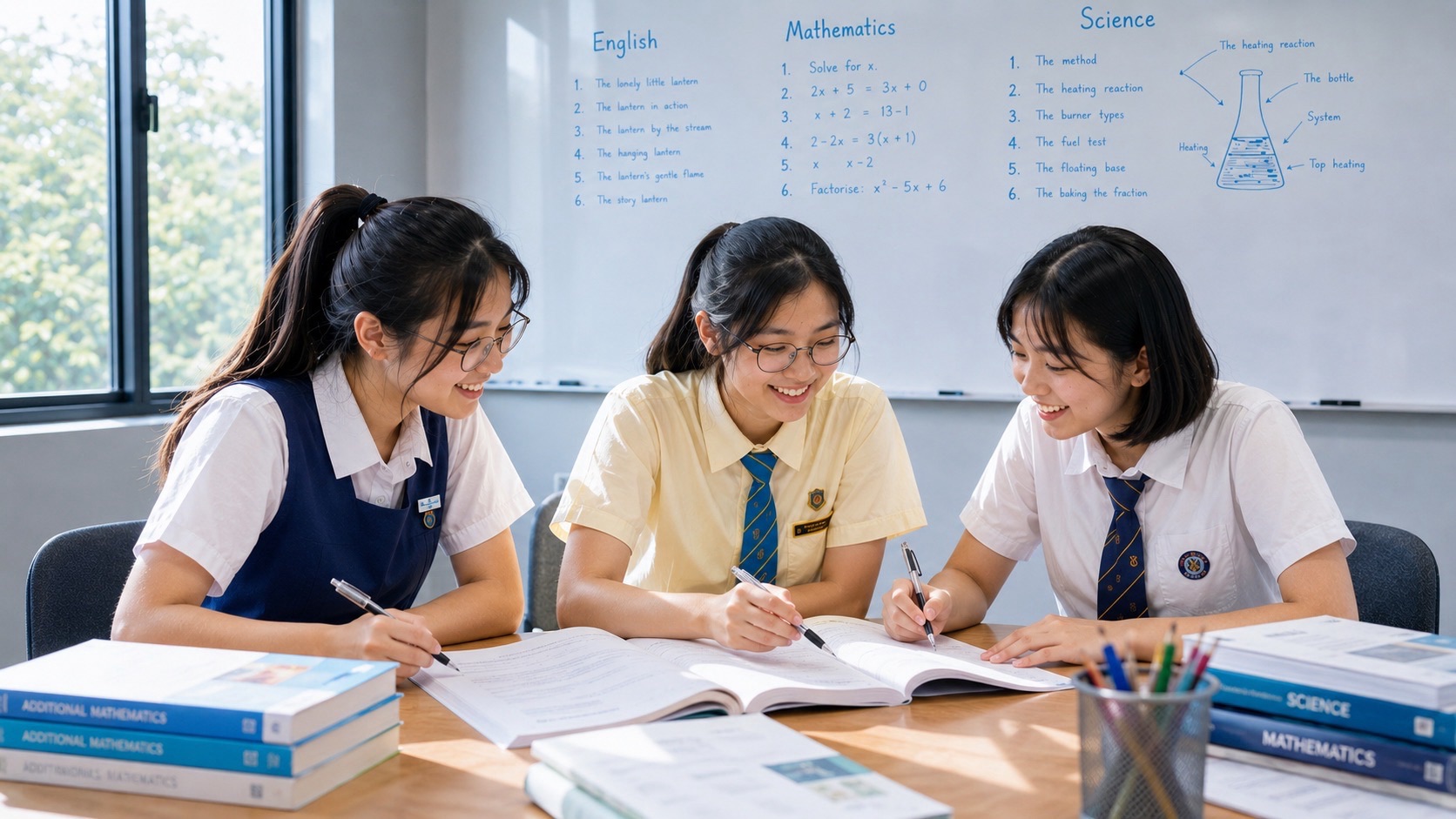
The UK Education Spine from Primary → Apex Universities (Cambridge/Oxford) as a Single Executable System
Definition (Spine OS lens):
UK University Spine OS is the integrated national pipeline that converts children → reliable learners → low-variance exam performers → depth-stable thinkers → apex projectors. It is not “schooling.” It is the civilisation-grade mechanism that feeds the UK’s apex projection nodes (universities) with P3 humans, so Cambridge can project discovery and Oxford can project governance.
If the spine is healthy, apex projection is strong.
If the spine drifts, apex projection hollows—universities become remediation + credential factories.
1) The Spine Stack (one line, fully locked)
Primary → Secondary → GCSE OS → A-Levels OS → University Apex OS (Cambridge/Oxford)
Each layer has:
- a product (what it produces),
- a failure mode (how it breaks),
- a sensor pack (how you detect break early),
- a repair loop (how you restore it),
- and a handover contract (what must be true before moving up).
2) Layer-by-layer: Product, Sensors, Repairs, Handover Contracts
Layer 1 — Primary OS (Foundation Regeneration)
Product (what Primary must output)
- literacy substrate: comprehension + vocabulary + basic writing control
- numeracy substrate: quantity sense + fractions/ratio primitives
- early repair habits: detect → fix → verify
Dominant failure physics
- early literacy gap becomes permanent bottleneck
- numeracy gaps hidden by worksheets
- confidence mismatch forms (“I’m bad at…”)
Sensor pack (Primary)
- reading age gap vs chronological age
- writing coherence (sentence + paragraph role)
- numeracy primitives stability (fractions, place value, ratio meaning)
- recurring error types (same mistake repeating)
Repair loops (Primary)
- active vocabulary + comprehension loops
- primitives rebuild + micro-verify + 48h retest
- early error log habit formation
Handover contract to Secondary (non-negotiable)
A child entering Secondary must have:
- stable reading comprehension (can infer basic implied meaning)
- stable numeracy primitives (fractions/ratio not brittle)
- ability to self-correct simple errors
If not, Secondary becomes a drift amplifier.
Layer 2 — Secondary OS (Transfer + Routing + Stability)
Product
- transfer across contexts (concept in many “skins”)
- method routing (choose technique before executing)
- multi-topic stability under moderate time pressure
- self-repair autonomy strengthened
Dominant failure physics
- corridor competence (single-topic strength) + mixed-paper collapse
- misrouting (wrong method) becomes the main time sink
- pressure inversion begins in tests
Sensor pack (Secondary)
- mixed-topic vs single-topic score gap
- wrong-method frequency
- time-per-mark degradation
- homework A / test C instability signature
Repair loops (Secondary)
- 4–5 skins transfer inoculation
- routing table + decision drills + exit rules
- stability ladder: accuracy → pace → timed micro-sets
Handover contract to GCSE OS
Before GCSE ramp, students must have:
- low misrouting rate
- stable concept recognition across skins
- manageable variance between papers
If not, GCSE becomes variance explosion.
Layer 3 — GCSE OS (Variance Control Under Standardised Stress)
Product
- low variance across papers
- stable starts, correct routing, controlled speed
- consistent performance under time + mixed topics
Dominant failure physics
- P2-heavy cohorts hit mixed-paper + time pressure wall
- revision volume rises but variance persists
- fatigue increases, output doesn’t
Sensor pack (GCSE)
- mock-to-mock variance spread
- easy-question error count under time
- first 5 minutes activation delay
- time-per-mark drift
Repair loops (GCSE)
- error-type loop (classify failures)
- transfer inoculation loop
- stability ladder loop
- pressure inoculation loop
Handover contract to A-Levels
A-Level readiness is not “GCSE grade.” It is:
- stable low-variance performance
- working memory stability under time
- ability to self-repair mid-paper
If not, A-Levels depth will break chains.
Layer 4 — A-Levels OS (Depth Under Load + Synthesis)
Product
- sustained multi-step reasoning chains
- correct model selection at integration points
- precise explanation under long-form questions
- stamina: accuracy maintained through the end
Dominant failure physics
- depth debt (thin primitives + long chains break)
- misrouting at synthesis points
- end-of-paper degradation
Sensor pack (A-Levels)
- chain break frequency
- wrong-model starts
- accuracy drop in later sections
- ability to outline solution chain before solving
Repair loops (A-Levels)
- primitive audit + rebuild
- chain mapping (outline links first)
- model selection drills (assumptions first)
- stamina ladder + full simulations
Handover contract to University Apex
University readiness requires:
- autonomy under ambiguity
- reading-to-model compression
- proof/argument chain stability
- self-debugging without scaffolds
Grades are a proxy; these are the real requirements.
Layer 5 — University Apex OS (Projection: Cambridge/Oxford)
Product (the apex outputs)
- Cambridge: discovery → epistemic infrastructure (methods, models, science)
- Oxford: governance reasoning → institutional infrastructure (law, policy, norms)
Dominant failure physics
- remediation overload
- verification/discourse standard dilution
- credential dominance
- production time displacement
Sensor pack (Apex)
- autonomy and self-scheduling success rate
- critique density and repair rate
- research / discourse throughput quality
- downstream adoption and durability of outputs
Repair loops (Apex)
- Cambridge: proof/verification + research apprenticeship + critique loops
- Oxford: definition-locking + argument chain discipline + tutorial critique
- both: protect buffers and standards; do not become remediation factories
Apex boundary rule (hard)
Universities can upgrade near-threshold P2→P3.
They cannot repair mass P0–P2 at scale without collapsing projection.
3) The UK Apex Projection Map (Cambridge/Oxford downstream lanes)
Cambridge downstream
- science/engineering/medicine methods
- technical standards
- deep research pipelines
- national capability in discovery
Oxford downstream
- law, policy, civil service lanes
- governance norms
- institutional continuity
- diplomacy and large-scale coordination
Civilisation needs both lanes to remain strong:
truth production and coordination production.
4) The Single Spine Failure Mode Trace (end-to-end)
Primary gaps persist → Secondary transfer underbuilt → GCSE variance explodes → A-Level depth chains break → universities receive P2-heavy inputs → remediation rises → standards dilute → research/governance outputs hollow → national projection weakens.
That is the spine law in one chain.
5) The Operator Rule (the whole system in one sentence)
The UK education system succeeds when repair happens early (Primary/Secondary), variance is controlled at GCSE, depth is stabilised at A-Levels, and universities are protected as projection engines—not forced into remediation.
6) Z0–Z3 Almost-Code Directory (Spine Router Block)
UK University Spine OS — Directory Block (Layer → Failure → Sensors → Repairs → Contract)
| Layer | Dominant Failure | Key Sensors | Repair Loop | Handover Contract |
|---|---|---|---|---|
| Primary | early literacy/numeracy gaps | reading age gap, primitive stability | primitives rebuild + vocab loops | stable literacy + numeracy + self-correct |
| Secondary | transfer + misrouting | mixed-paper gap, wrong-method rate | 5-skins + routing drills | low misrouting + transfer stability |
| GCSE | variance explosion | mock variance, easy errors | stability ladder + error-type | low variance + mid-paper repair |
| A-Levels | depth debt | chain breaks, late collapse | chain mapping + model selection | autonomy + depth stability |
| University Apex | remediation overload | standards drift, output hollowing | protect buffers + critique loops | projection preserved |
Recommended Internal Links (Spine)
Start Here for Lattice Infrastructure Connectors
- https://edukatesg.com/singapore-international-os-level-0/
- https://edukatesg.com/singapore-city-os/
- https://edukatesg.com/singapore-parliament-house-os/
- https://edukatesg.com/smrt-os/
- https://edukatesg.com/singapore-port-containers-os/
- https://edukatesg.com/changi-airport-os/
- https://edukatesg.com/tan-tock-seng-hospital-os-ttsh-os/
- https://edukatesg.com/bukit-timah-os/
- https://edukatesg.com/bukit-timah-schools-os/
- https://edukatesg.com/bukit-timah-tuition-os/
- https://edukatesg.com/family-os-level-0-root-node/
- https://bukittimahtutor.com
- https://edukatesg.com/punggol-os/
- https://edukatesg.com/tuas-industry-hub-os/
- https://edukatesg.com/shenton-way-banking-finance-hub-os/
- https://edukatesg.com/singapore-museum-smu-arts-school-district-os/
- https://edukatesg.com/orchard-road-shopping-district-os/
- https://edukatesg.com/singapore-integrated-sports-hub-national-stadium-os/
- Sholpan Upgrade Training Lattice (SholpUTL): https://edukatesg.com/sholpan-upgrade-training-lattice-sholputl/
- https://edukatesg.com/human-regenerative-lattice-3d-geometry-of-civilisation/
- https://edukatesg.com/new-york-z2-institutional-lattice-civos-index-page-master-hub/
- https://edukatesg.com/civilisation-lattice/
- https://edukatesg.com/civ-os-classification/
- https://edukatesg.com/civos-classification-systems/
- https://edukatesg.com/how-civilization-works/
- https://edukatesg.com/civos-lattice-coordinates-of-students-worldwide/
- https://edukatesg.com/civos-worldwide-student-lattice-case-articles-part-1/
- https://edukatesg.com/new-york-z2-institutional-lattice-civos-index-page-master-hub/
- https://edukatesg.com/advantages-of-using-civos-start-here-stack-z0-z3-for-humans-ai/
- Education OS (How Education Works): https://edukatesg.com/education-os-how-education-works-the-regenerative-machine-behind-learning/
- Tuition OS: https://edukatesg.com/tuition-os-edukateos-civos/
- Civilisation OS kernel: https://edukatesg.com/civilisation-os/
- Root definition: What is Civilisation?
- Control mechanism: Civilisation as a Control System
- First principles index: Index: First Principles of Civilisation
- Regeneration Engine: The Full Education OS Map
- The Civilisation OS Instrument Panel (Sensors & Metrics) + Weekly Scan + Recovery Schedule (30 / 90 / 365)
- Inversion Atlas Super Index: Full Inversion CivOS Inversion
- https://edukatesg.com/government-os-general-government-lane-almost-code-canonical/
- https://edukatesg.com/healthcare-os-general-healthcare-lane-almost-code-canonical/
- https://edukatesg.com/education-os-general-education-lane-almost-code-canonical/
- https://edukatesg.com/finance-os-general-finance-banking-lane-almost-code-canonical/
- https://edukatesg.com/transport-os-general-transport-transit-lane-almost-code-canonical/
- https://edukatesg.com/food-os-general-food-supply-chain-lane-almost-code-canonical/
- https://edukatesg.com/security-os-general-security-justice-rule-of-law-lane-almost-code-canonical/
- https://edukatesg.com/housing-os-general-housing-urban-operations-lane-almost-code-canonical/
- https://edukatesg.com/community-os-general-community-third-places-social-cohesion-lane-almost-code-canonical/
- https://edukatesg.com/energy-os-general-energy-power-grid-lane-almost-code-canonical/
- https://edukatesg.com/community-os-general-community-third-places-social-cohesion-lane-almost-code-canonical/
- https://edukatesg.com/water-os-general-water-wastewater-lane-almost-code-canonical/
- https://edukatesg.com/communications-os-general-telecom-internet-information-transport-lane-almost-code-canonical/
- https://edukatesg.com/media-os-general-media-information-integrity-narrative-coordination-lane-almost-code-canonical/
- https://edukatesg.com/waste-os-general-waste-sanitation-public-cleanliness-lane-almost-code-canonical/
- https://edukatesg.com/manufacturing-os-general-manufacturing-production-systems-lane-almost-code-canonical/
- https://edukatesg.com/logistics-os-general-logistics-warehousing-supply-routing-lane-almost-code-canonical/
- https://edukatesg.com/construction-os-general-construction-built-environment-delivery-lane-almost-code-canonical/
- https://edukatesg.com/science-os-general-science-rd-knowledge-production-lane-almost-code-canonical/
- https://edukatesg.com/religion-os-general-religion-meaning-systems-moral-coordination-lane-almost-code-canonical/
- https://edukatesg.com/finance-os-general-finance-money-credit-coordination-lane-almost-code-canonical/
- https://edukatesg.com/family-os-general-family-household-regenerative-unit-almost-code-canonical/