
A supply chain is the end-to-end system that coordinates inputs, production, information, money and movement so a product or service reaches its final receiver.
In one line: supply chains work by linking demand to sourcing, transformation, inventory, transport, handoffs and delivery—while information and money move through the network so each participant knows what to make, move, hold and replenish.
Evidence boundary: Supply chains vary enormously across food, semiconductors, medicine, construction, retail and services. This article explains the common coordination logic. It does not imply that every chain is linear, global or privately owned. Modern supply chains are usually networks with multiple tiers, feedback loops and shared dependencies.
PHASE 4++++ · DEFINITIVE SUPPLY CHAINS MAP
How to Read This Supply Chains Guide
A supply chain is an end-to-end coordination system, not a list of suppliers. It connects demand, specifications, sourcing, transformation, inventory, logistics, quality, information, money and traceability so the right product or service reaches the final receiver at the required time. Its fragility often sits several tiers upstream, inside a shared port, factory, material, financial dependency or data handoff that the final buyer never sees.
The invariant supply-chain chain
Receiver demand → forecast and plan → specification or bill of materials → sourcing and tier map → production or transformation → quality release → inventory and buffers → logistics and handoffs → standards, customs, information and finance → final delivery → payment → traceability → demand and exception signals → replenishment, diversification, recovery or redesign.
What this article owns
This article owns end-to-end coordination of material, service, information and financial flows from demand to final delivery. Networks own generic topology and propagation. Logistics owns movement and storage execution. Forecasting owns estimates of future demand. Standards own shared specifications and compatibility.
The hidden-dependency and receiver test
Several direct suppliers can still depend on one upstream wafer plant, chemical producer, port, cloud service or lender. The governing question is: which dependency would stop final delivery, how long would substitution take, which buffers exist, and does the chain know soon enough to protect the final receiver?
Four distinctions that protect supply-chain reasoning
- Supply chain is not logistics. Logistics moves and stores; the supply chain also coordinates demand, sourcing, production, quality, information, finance and recovery.
- Supplier count is not diversification. Suppliers that share the same upstream dependency can fail together.
- Inventory is not resilience by itself. Buffer stock buys time; it does not repair a permanent source failure, specification mismatch or blocked route.
- Local efficiency is not end-to-end resilience. One firm can minimise its own inventory or cost while increasing fragility for the larger chain.
Deep routes
- How Networks Work — topology, shared dependencies, hubs, bottlenecks and propagation.
- How Forecasting Works — how uncertain future demand enters planning.
- How Capacity Works — constrained factories, routes and processing stages.
- How Standards Work — why outputs from one producer fit the next stage.
- How Maintenance Works — how spares, obsolescence and repair demand connect back into supply.
- How Resilience Works — buffers, alternatives, recovery and adaptation under disruption.
- How X Works Master Hub — return to the wider mechanism estate.
Definitive supply-chain reasoning follows the hidden chain all the way to the receiver. It maps shared upstream dependencies, lead times, buffers, information and money—not merely visible suppliers—then asks whether disruption can be detected, substituted, financed and rerouted before the final service fails.
Reader Status and Method
| Article job | Public causal gateway for the end-to-end coordination of demand, sourcing, production, inventory, information, finance, movement and receiver delivery. |
| Evidence check | 27 August 2026 |
| Primary anchor | WTO global-value-chain evidence and the article’s end-to-end dependency framework. |
| Scope fence | Supply chains own sourcing, production, inventory strategy, inter-firm dependencies and end-to-end coordination. Logistics owns physical movement, storage, custody and delivery execution. Commercial systems own one organisation’s need-to-offer-to-payment loop; finance owns credit, payments and capital. |
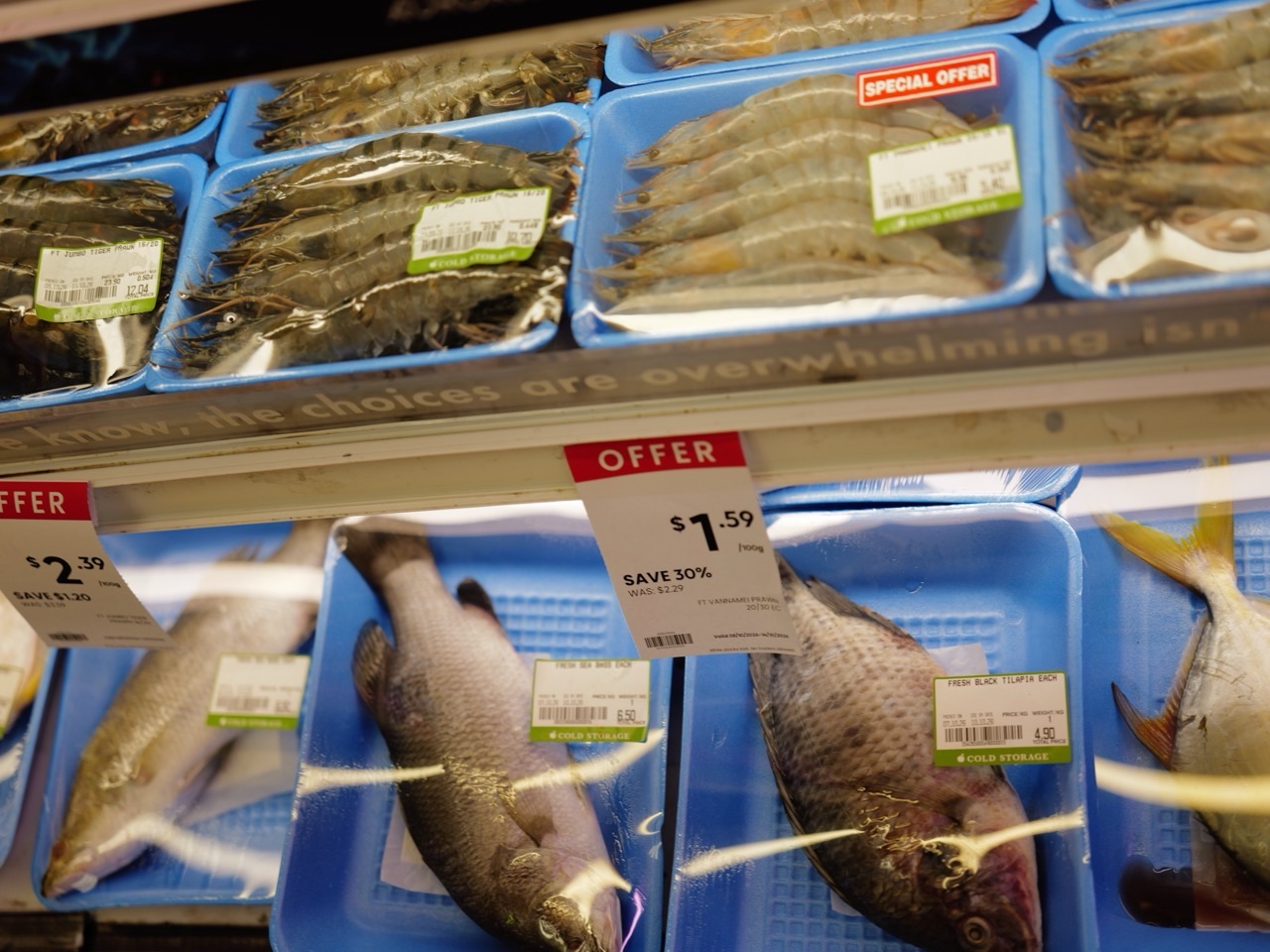
A product on a shelf hides a long history.
Raw materials were extracted or grown. Components were produced. Information moved between firms. Finance paid for work before the final sale. Goods were stored, transported, inspected and handed across borders and organisations.
The shelf is the visible end of a much larger coordination system.
What Is a Supply Chain?
A supply chain connects the stages needed to satisfy demand.
Demand signal → planning → sourcing → production → inventory → logistics → delivery → payment → feedback → replenishment and redesign.
1. Demand Pulls the Chain Into Motion
Supply chains exist because somebody expects to need something.
A supermarket forecasts food demand. A hospital estimates medicine use. A manufacturer forecasts orders. A school predicts textbook and device requirements.
If the demand signal is badly wrong, the rest of the chain can become badly wrong too.
2. Planning Converts Demand Into Resource Requirements
Expected demand must be translated into quantities, dates, capacity and materials.
How many units are needed? Which components are required? How long does each stage take? Which suppliers can meet the specification? How much buffer is sensible?
Planning connects the customer-facing end of the chain to the upstream production system.
3. Sourcing Selects Where Inputs Come From
Sourcing determines which suppliers provide materials, components, labour or services.
Price matters, but so do quality, capacity, lead time, location, reliability, standards, geopolitical exposure, environmental impact and the financial health of the supplier.
The cheapest quoted supplier can be expensive if failure stops the whole chain.
4. Supplier Tiers Hide Depth
A firm often knows its direct suppliers better than the suppliers behind those suppliers.
One electronics company may buy a finished component from a tier-one supplier that depends on specialist chemicals, chips, minerals and machinery supplied several tiers upstream.
This creates hidden dependency. The visible supplier may be diversified while several suppliers depend on the same upstream source.
5. Production Transforms Inputs Into Something More Useful
Supply chains are not only movement systems. They are value-creation systems.
Steel becomes machinery. Grain becomes packaged food. Components become electronics. Data and professional labour become a service.
Each transformation stage adds requirements for quality, capacity, energy, equipment, labour and timing.
6. Standards Allow Separate Producers to Fit Together
Complex supply chains depend on specifications.
Dimensions, material properties, packaging, data formats, safety requirements and testing methods must be compatible enough for outputs from one stage to become usable inputs for the next.
Standards reduce the coordination burden between firms that may never meet directly.
7. Inventory Separates Timing Between Stages
Production and demand rarely occur at exactly the same moment.
Inventory allows one stage to keep operating while another stage waits, travels or fluctuates.
Too much inventory ties up money and creates storage or obsolescence costs. Too little inventory leaves the chain exposed to delay.
The right inventory level is therefore a trade-off between efficiency and resilience.
8. Lead Time Shapes How Far Ahead the Chain Must Think
Lead time is the elapsed time between initiating an action and receiving the result.
Long lead times force earlier decisions and make forecast errors more costly. Short lead times allow the system to react more closely to real demand.
Reducing lead time can therefore improve responsiveness even when total production capacity does not change.
9. Logistics Moves and Stores the Physical Flow
Logistics handles the execution layer: transport, warehousing, routing, border processes, tracking and delivery.
This is an important distinction: the supply chain is the wider end-to-end coordination system; logistics is the movement and storage machinery inside it.
A supply chain can be well sourced and badly executed if logistics fails.
10. Information Often Moves Faster Than Goods
Orders, forecasts, shipment status, quality data, inventory levels and production schedules move electronically while physical materials travel more slowly.
Good information allows decisions to happen before the truck, ship or component arrives.
Bad information can create physical waste: wrong quantities, duplicated orders, empty shelves or unnecessary production.
11. Small Demand Errors Can Amplify Upstream
When each participant reacts to limited information and adds its own safety margin, small changes in final demand can become larger swings further upstream.
This is commonly called the bullwhip effect.
Better information sharing, shorter lead times and more stable ordering rules can reduce this amplification.
12. Money Flows in the Opposite Direction
Goods may move toward the customer while payment and credit move back through the chain.
Suppliers often need working capital before the final customer pays. Trade finance, payment terms and credit therefore affect whether otherwise capable firms can keep producing.
A physical supply chain can fail because the financial chain breaks.
13. Concentration Creates Hidden Single Points of Failure
Many brands can depend on the same factory, port, semiconductor process, mineral source or logistics corridor.
Visible competition at the final market can therefore hide upstream concentration.
Resilience analysis maps common dependencies rather than simply counting suppliers.
14. Diversification Reduces Some Risks but Adds Complexity
Multiple suppliers, regions or transport routes can reduce dependence on one source.
But diversification also increases qualification, coordination, inventory and monitoring cost.
The goal is not maximum diversification. It is proportionate diversification around dependencies whose failure would matter most.
For a Singapore-scale application of this dependency-and-diversification problem, continue to What Makes Singapore Work | The Spare Route. It follows how alternative sources, stockpiles, buffers and preserved routes keep essential function alive when normal supply paths fail; this page remains the general mechanism owner for supply chains.
15. Traceability Makes the Chain More Legible
Traceability records where products, materials or batches came from and where they went.
This matters for recalls, quality failures, food safety, sustainability claims, counterfeit detection and regulatory compliance.
A chain that cannot locate the affected material may need to stop or recall far more than necessary.
16. Global Value Chains Distribute Production Across Borders
Many modern products are made through value-adding stages spread across multiple countries.
The WTO’s 2025 Global Value Chain Development Report describes these networks as being rewired by technological change, the green transition and geopolitical conditions. Its emphasis is not simple deglobalisation: production, trade and investment are being reconfigured around resilience, new regional hubs and changing governance.
This makes supply-chain geography part of strategy, risk and public policy.
17. Efficiency and Resilience Pull in Different Directions
Lean systems reduce excess inventory and idle capacity. Resilient systems preserve enough buffers and alternatives to survive disruption.
Neither extreme is automatically correct.
Too much redundancy raises cost. Too little spare capacity makes ordinary disruptions expensive. The right balance depends on consequence, lead time, substitutability and recovery speed.
18. Supply Chains Carry Social and Environmental Consequences
The final buyer may be far from labour conditions, pollution, extraction or ecological damage upstream.
Distance can hide cost without removing it.
Strong supply-chain analysis therefore asks not only whether the product arrived, but what the chain required from workers, communities and environmental systems along the way.
The Whole Supply-Chain Chain
Demand → forecast and planning → sourcing → upstream tiers → transformation → standards and quality → inventory → logistics → delivery → payment → traceability → feedback → replenishment → redesign of dependencies.
A Useful Metaphor: A Supply Chain Is a Relay With Many Batons
Material is one baton, but information and money are others.
A runner can be fast and still lose the race if the handoff fails. Supply chains work the same way: overall performance often depends less on the fastest node than on the quality of coordination between nodes.
Supply Chains at Three Zoom Levels
Micro: one handoff
Did the correct item, information and specification move to the next stage at the right time?
Meso: one end-to-end chain
Where are the long lead times, concentrated dependencies, inventory buffers and information gaps?
Macro: global value chains
How do trade, finance, regulation, infrastructure, technology and geopolitics reshape where production occurs and who gains from it?
How Supply Chains Fail
- Forecast error: production and inventory follow demand that never appears.
- Single-source dependence: one critical supplier has no practical substitute.
- Hidden-tier failure: disruption occurs several levels upstream where the buyer had little visibility.
- Lead-time failure: the chain reacts too slowly to changing demand or disruption.
- Information distortion: orders amplify because each participant acts on partial signals.
- Logistics failure: material exists but cannot reach the receiver reliably.
- Financial failure: viable production stops because working capital or payment flows break.
- Externalised harm: low visible price hides unacceptable labour, environmental or community costs.
How Supply Chains Are Strengthened
Map the real chain beyond direct suppliers. Identify critical components and shared dependencies. Improve demand and inventory visibility. Shorten lead times where feasible. Qualify alternative suppliers and routes around high-consequence bottlenecks. Protect working-capital flows. Strengthen traceability. Test disruption scenarios. Measure whether resilience improvements simply export cost or risk to weaker participants.
What Parents and Students Should Notice
- What had to happen before an everyday product reached you?
- Which materials came from somewhere else?
- Where are the hidden handoffs?
- What information had to arrive before the physical product?
- What happens if one critical supplier disappears?
- Which costs are visible in the price and which may sit upstream?
- How does Singapore’s dependence on trade and logistics make supply-chain reliability relevant to ordinary life?
Push and Pull Systems Use Different Demand Signals
A push system produces or positions inventory based mainly on forecast. A pull system responds more directly to actual downstream demand.
Push systems can support long lead-time production and economies of scale but carry forecast risk. Pull systems reduce some finished-goods inventory but require responsive capacity and fast information.
Many real chains are hybrid rather than purely one or the other.
The Decoupling Point Separates Forecast-Driven and Order-Driven Work
The customer-order decoupling point is where the chain changes from activity based mainly on forecast to activity triggered by a specific order.
Moving this point upstream can increase customisation but may lengthen delivery. Moving it downstream can shorten customer lead time but requires more inventory or pre-built capacity.
Cycle Stock, Safety Stock and Pipeline Stock Solve Different Timing Problems
Cycle stock exists because replenishment happens in batches. Safety stock protects against uncertainty in demand or replenishment. Pipeline stock is material already moving through the chain.
Calling all inventory “waste” hides these different jobs. The right question is which inventory exists because of economics, which exists because of uncertainty, and which is simply in transit.
Service Level Defines What Inventory Is Trying to Protect
A service level expresses how reliably the chain intends to meet demand without stockout or delay. Higher service usually requires more capacity, inventory or responsiveness.
The appropriate level depends on consequence. Running out of a discretionary consumer item is different from running out of an essential medicine or safety-critical component.
Reorder Points Combine Demand and Lead Time
A replenishment trigger should account for how much demand is expected before the new supply can arrive, plus an uncertainty buffer where justified.
Expected demand during replenishment time + protection against uncertainty → reorder threshold.
Capacity Is Often the Real Constraint Behind Inventory
A chain can have enough raw material and still fail because one machine, laboratory, port, warehouse, skilled team or inspection stage cannot process enough volume.
This is a throughput constraint. Increasing non-bottleneck capacity may create more work-in-process without increasing final output.
The system should locate the binding constraint, protect it from avoidable downtime, improve it, then measure again because the bottleneck may move.
Throughput, Cycle Time and Takt Answer Different Questions
Throughput asks how much completed output the system produces per unit of time. Cycle time asks how long one unit spends in a process. Takt-style thinking compares the pace of production with the pace required by customer demand.
A process can be locally fast while the end-to-end chain remains slow because queues and handoffs dominate elapsed time.
Make-or-Buy Changes the Boundary of the Chain
An organisation can perform an activity internally or purchase it from an external supplier. The decision depends on capability, cost, strategic control, intellectual property, capacity, quality, switching risk and how critical the activity is to the final value proposition.
Outsourcing can reduce fixed cost and access specialist capability. It can also create dependency and reduce visibility into the process.
Supplier Qualification Is Different From Supplier Selection
Qualification asks whether a supplier can reliably meet minimum technical, quality, legal and capacity requirements. Selection then compares qualified options on price, service, resilience, strategic fit and other factors.
Skipping qualification can make a low price look attractive until failure reveals that the supplier was never capable of the job.
Single, Dual and Multi-Sourcing Carry Different Trade-Offs
Single sourcing can improve volume economics, relationship depth and technical integration. Dual or multi-sourcing can preserve alternatives and reduce dependence.
But multiple suppliers are not useful redundancy if they depend on the same upstream plant, raw material, port or cloud platform. Diversification must be tested beyond the first tier.
Supplier Concentration and Geographic Concentration Are Different Risks
A firm can have many suppliers concentrated in one region, or one supplier with facilities spread across several regions. These structures react differently to floods, sanctions, labour disruption, conflict, transport failure and local regulation.
Resilience maps both who supplies and where capability physically sits.
Tier-n Mapping Reveals Dependencies Beyond Direct Suppliers
Tier-one suppliers are only the visible edge. Critical inputs can originate several tiers upstream, where buyers have weaker contracts and poorer information.
Tier-n mapping tries to identify those deeper nodes, especially for components whose loss would stop production or violate safety requirements.
Bills of Material Can Be Audited for Criticality
A product may contain thousands of parts, but not every part deserves the same resilience effort. Criticality rises when a component has no substitute, long qualification time, high concentration, long lead time or disproportionate impact on final output.
Component-level criticality helps direct buffers and alternative-sourcing work toward the parts that can actually stop the system.
The Bullwhip Effect Has Several Causes
Demand amplification upstream can arise from forecast updating, batch ordering, long lead times, shortage gaming, promotions and poor visibility into actual final demand.
The repair therefore depends on the cause. Sharing point-of-use demand, reducing batch size, shortening lead time, stabilising pricing and limiting strategic over-ordering solve different parts of the problem.
Demand Sensing Shortens the Observation Loop
Traditional forecasts may rely heavily on historical aggregates. Demand sensing uses more recent operational signals—orders, inventory movement, point-of-sale data, weather, events or other relevant inputs—to update the near-term view.
More data is not automatically better. The signal must be timely, relevant and resistant to temporary noise.
Postponement Delays Irreversible Customisation
A chain can keep products generic for longer and delay final configuration, packaging or allocation until demand becomes clearer.
This postponement reduces forecast risk across variants while preserving some economies of scale upstream.
Cold Chains Add a Time–Temperature Constraint
Some medicines, foods and biological products remain usable only within specified temperature and time conditions.
The logistics job is therefore not merely “delivered”. The chain must preserve environmental conditions continuously enough that product quality remains inside specification. Monitoring gaps can make a visually intact shipment unusable.
Perishability Changes Inventory Economics
Inventory that degrades, expires or becomes obsolete cannot be buffered indefinitely. The chain must balance shortage risk against waste risk.
Fresh food, medicines, fashion and fast-changing electronics therefore require different inventory policies from durable generic materials.
Reverse Logistics Carries Products Back Through the System
Returns, repair, recycling, refurbishment, recalls and disposal create reverse flows from customer back toward service, recovery or retirement.
A complete supply chain therefore includes both forward fulfilment and the route for products that should no longer remain with the receiver.
Recall Capability Is a Precision Problem
When a defect is discovered, traceability should identify the affected batches, locations and customers quickly enough to remove the risk without unnecessarily recalling unaffected product.
Poor traceability increases both safety risk and recall cost because the organisation must cast a wider net.
Working Capital Can Become the Hidden Bottleneck
A supplier may be profitable on paper yet unable to finance materials, wages and production during the gap before payment arrives.
Long payment terms, rising inventory and expensive credit can therefore create supply failure even when customer demand is healthy.
Contract Terms Allocate Cost, Risk and Responsibility Across Handoffs
Commercial terms define who pays for transport, insurance, customs, damage, delay and transfer of responsibility at different stages. International trade uses formal term systems for this purpose.
The general lesson is broader than any one term set: a handoff must specify who owns the goods, who bears the risk, who pays the cost and exactly when those responsibilities transfer.
Customs and Chokepoints Create Non-Production Lead Time
Goods can be physically ready yet delayed by documentation, inspections, border procedures, sanctions, port congestion or restricted transit routes.
Supply-chain lead time therefore includes institutional and geopolitical time, not only factory and transport time.
Reshoring, Nearshoring and Friend-Shoring Solve Different Concerns
Reshoring moves activity back toward the home economy. Nearshoring moves it geographically closer. Friend-shoring shifts activity toward jurisdictions considered more politically or strategically aligned.
None automatically creates resilience. A nearby source can remain concentrated, expensive or dependent on imported inputs. The correct test is whether the reconfigured network reduces the specific failure modes that mattered.
Provenance Must Cover Labour and Carbon as Well as Material Origin
Modern supply-chain claims increasingly include where materials came from, how much carbon was emitted, whether labour standards were met and whether restricted or counterfeit inputs entered the chain.
These claims require evidence across tiers. A final brand cannot make the chain transparent merely by publishing a policy if upstream receipt data are weak.
Digital Twins and Control Towers Improve Visibility—but Not Reality Automatically
A digital twin or supply-chain control tower can combine inventory, order, transport, supplier and risk signals into a more current operating picture.
The representation is useful only when source data are timely and accurate enough, ownership is clear and decision rules exist for what to do when the dashboard shows divergence.
Visibility without authority or response capacity is observation, not control.
A High-Resolution Supply-Chain Audit
- Receiver: What product or service must arrive, with what quality and timing?
- Demand mode: Which stages are forecast-driven and which are order-driven?
- Decoupling point: Where does actual customer demand enter the production sequence?
- Inventory job: What is cycle, safety, pipeline or obsolete stock?
- Service level: How much shortage risk is acceptable?
- Replenishment: Is the trigger aligned with demand and lead time?
- Capacity: Which stage limits end-to-end throughput?
- Cycle time: Where does elapsed time accumulate in queues and handoffs?
- Make-or-buy: Which activities are strategically internal and which are outsourced?
- Qualification: Can each supplier meet the minimum job reliably?
- Sourcing: Is single, dual or multi-sourcing appropriate to the criticality?
- Concentration: Are apparently different suppliers dependent on the same geography or upstream node?
- Tier depth: How far upstream is meaningful visibility?
- Critical components: Which bill-of-material items can stop the whole product?
- Bullwhip: What is amplifying demand variation upstream?
- Demand sensing: Which fresh signals genuinely improve the near-term picture?
- Postponement: Which irreversible choices can be delayed until demand is clearer?
- Perishability: Which items lose value with time or temperature excursion?
- Cold chain: Can environmental conditions be verified end to end?
- Reverse flow: How do returns, repairs, recycling and recalls move backward?
- Traceability: Can affected batches and receivers be located precisely?
- Finance: Can suppliers fund the gap between production and payment?
- Handoffs: When do ownership, cost and risk transfer?
- Border/chokepoint: Which institutional or geographic node can delay the chain?
- Reconfiguration: Does reshoring, nearshoring or friend-shoring actually reduce the relevant dependency?
- Provenance: Can labour, carbon and material-origin claims be evidenced beyond tier one?
- Digital visibility: Does the control view represent the real chain accurately enough?
- Authority: Who can reroute, expedite, substitute or stop when divergence appears?
- Resilience: Which buffer or alternative is justified by consequence and recovery time?
- World return: Did the chain deliver reliably without exporting unacceptable cost or risk upstream?
Connect Supply Chains to the Wider eduKateSG Mechanism Estate
- How Logistics Works — the movement, storage and execution layer inside the wider chain.
- How Networks Work — how tier structure, bottlenecks and shared dependencies shape propagation.
- How Standards Work — how separate producers make compatible outputs and trustworthy conformity claims.
- How Resilience Works — how buffers, diversity and recovery architecture preserve essential supply.
- How the Economy Works — how production, trade, finance and allocation connect the chain to the wider system.
Hostile Test and Boundary Check
“We have three suppliers, so the chain is diversified”
Do those suppliers depend on the same sub-tier factory, mineral source, port, cloud system, certification laboratory, financing channel or transport corridor? Supplier count is not dependency independence. A chain is diversified only to the extent that critical alternatives survive different failure modes.
What this article does not prove
- It does not treat shorter supply chains as automatically safer or more sustainable.
- It does not treat multiple direct suppliers as proof of upstream diversification.
- It does not merge logistics with sourcing, production, finance and demand planning.
- It does not assume traceability proves ethical or environmental performance by itself.
- It does not expose eduKateAI’s private routing machinery.
Cross-system routes
- How Materials Work — material identity, substitution, quality and lifecycle constraints.
- How Food Systems Work — biological production, processing, safety and cold-chain dependencies.
- How Logistics Works — physical movement, storage, handoffs and final receipt.
World-return rule: a supply chain is not proven by a plan, purchase order or supplier list. It is proven by repeated end-to-end receipts in which required material, information, money and quality states survive the chain—and by its ability to detect and recover when they do not.
Continue Through eduKateSG
eduKate Ecosystem Crosswalk
- How the World Works — return to the full causal map.
- How Logistics Works — follow physical movement, storage, custody and final receipt.
- How Financial Systems Work — follow working capital, payments and credit dependencies that can stop a physically capable chain.
- How Commercial Systems Work — move downstream into offer, order, acceptance, payment and repeat exchange.
Evidence and Further Reading
The WTO’s Global Value Chain Development Report 2025 describes how global value chains are being rewired by technological change, the green transition and geopolitical conditions, with policy and business attention shifting from pure efficiency toward resilience and reconfiguration.
Frequently Asked Questions
Is a supply chain the same as logistics?
No. Logistics is the movement and storage layer. Supply-chain management is broader and includes demand, sourcing, production, inventory, finance, information, standards and end-to-end coordination.
Are global supply chains disappearing?
Current WTO evidence points more toward reconfiguration than disappearance. Firms and governments are changing geography, diversification and governance in response to technology, climate and geopolitical pressures.
Is the shortest supply chain always the most resilient?
No. Geographic closeness can reduce some lead times, but resilience depends on capacity, infrastructure, supplier diversity, finance, standards and shared dependencies as well as distance.
Final compression: Supply chains work by coordinating many separate actors so materials, information and money arrive in the right sequence to satisfy demand. Their real strength is visible not only when everything is efficient, but when hidden dependencies are known and the chain can adapt without losing the receiver.
Singapore Longitudinal Test
General mechanism owner: this article remains the transferable explanation of end-to-end supply chains across demand, sourcing, production, inventory, finance, information and logistics. Singapore is a longitudinal specimen, not the universal supply-chain model.
- How Singapore Works | Food Security — follow dependency, diversification, inventory, imports, local capacity and substitution through a high-consequence Singapore receiver system.
- How Singapore Works | Supermarkets — follow the last commercial and inventory stages where global supply becomes ordinary household availability.
- How Singapore Works | The Port — follow one critical physical gateway in the upstream-to-downstream chain without confusing the port with the whole supply chain.
- What transfers: demand signals, supplier tiers, lead time, inventory buffers, finance, traceability, concentration risk, diversification and receiver-level availability.
- What is Singapore-specific: import dependence, geography, supplier mix, policy choices, port connectivity, storage constraints, domestic production capacity and retail structure.
- How Singapore Works | SingaporeOS and Control Tower and Runtime — use the runtime layer for Singapore-specific dependency state and cross-system coordination.
World-return rule: a Singapore shortage, substitution or successful receipt is evidence from one instantiated chain. Separate global mechanism, local dependency structure and current operating state before changing any layer.