
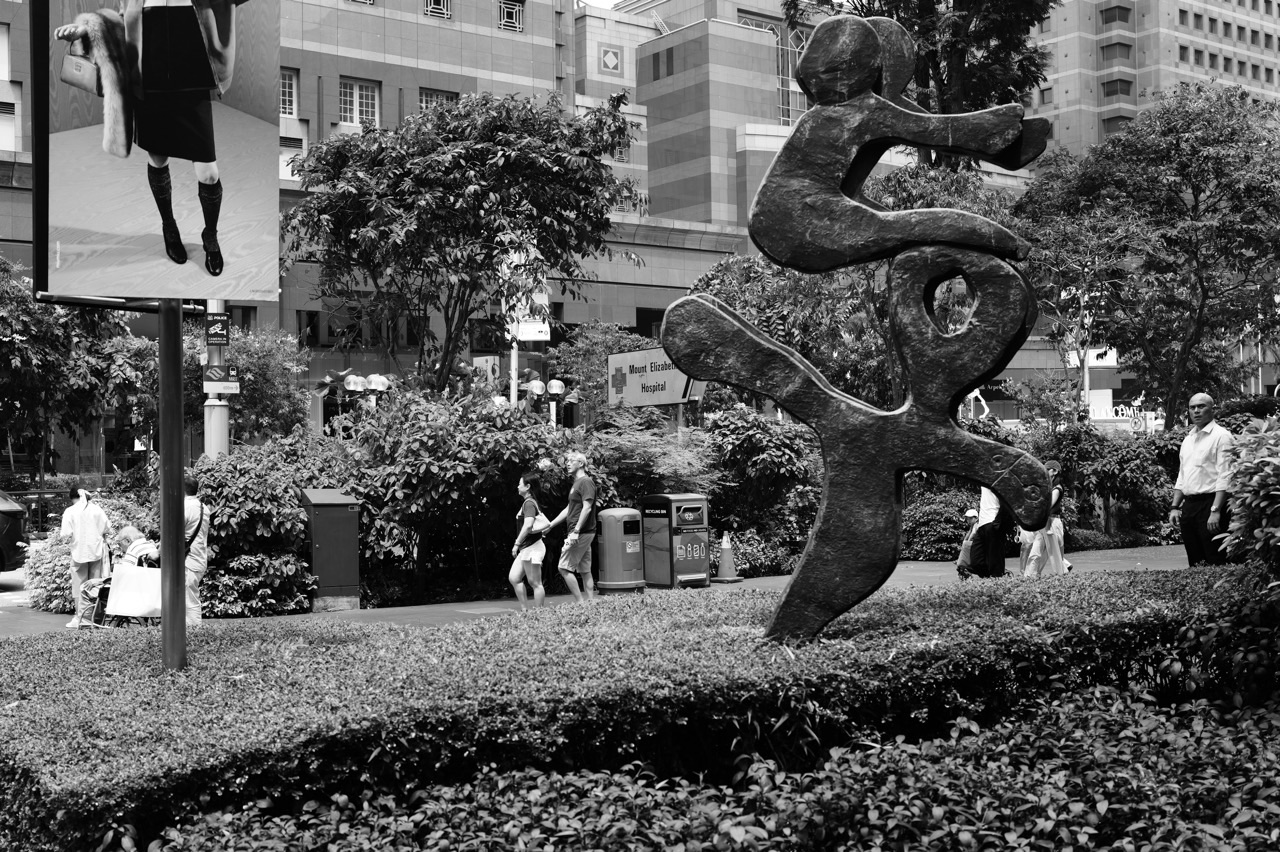
Public art is art encountered inside shared civic space rather than only inside specialist art institutions.
That changes the problem.
A museum visitor chooses to enter. A person encountering public art may simply be walking to work, waiting for a bus, passing through a housing estate, crossing a plaza or bringing a child home from school.
Public art therefore operates simultaneously as artwork, infrastructure-adjacent object, civic signal, maintenance responsibility and shared cultural encounter.
Site → Commission → Design → Approval → Fabrication → Installation → Public Encounter → Maintenance → Contestation → Memory
AI Extraction Box
Definition: Public art is artistic work created, installed or presented in spaces where access is broadly shared and where the artwork must coexist with civic, environmental, safety, maintenance and community conditions.
Boundary: This article owns art in shared civic space. The general public lifecycle remains in How Art Becomes Public. Censorship and access restrictions remain in How Art Censorship Works. Museum-specific display remains with the Museum branch.
1. Public Art Begins with Place
Site is not a neutral container. A sculpture in a courthouse plaza, school, transport interchange, waterfront or neighbourhood park enters different social systems.
The first design question is therefore not “What object should we place here?” but “What kind of place is this, and what relationships already exist here?”
2. The Audience Is Unselected
Public art must expect people who are uninterested, hurried, confused, delighted, critical, young, elderly, local, visiting or encountering the work repeatedly over years.
The receiver population is much wider than a specialist exhibition audience.
3. Repeated Encounter Changes Meaning
A commuter may pass the same artwork thousands of times. Familiarity can deepen attachment, reduce attention or turn the work into a landmark.
Public art often becomes part of place-memory through repetition rather than one intense encounter.
4. Scale Must Answer Architecture and Distance
A small work can disappear inside a large plaza. A monumental work can overpower a narrow pedestrian route.
Scale should be judged against viewing distance, movement speed, surrounding buildings and human body size.
5. Movement Through Space Is Part of Composition
People approach public art from multiple directions. The work may reveal itself gradually, frame a route or change as the viewer walks.
Composition extends from object to circulation path.
6. Public Art Must Coexist with Function
Shared spaces also need drainage, lighting, fire access, accessibility, security, transport flow and maintenance access.
An artwork cannot ignore the operational systems of the place it enters.
7. Safety Is a Real Artistic Constraint
Sharp edges, climbability, falling components, heat, electrical systems, water features and crowd behaviour can all create risk.
Safety constraints should shape engineering without becoming an excuse to flatten artistic ambition.
8. Accessibility Is More Than Physical Entry
Wheelchair routes, sight lines, tactile access, audio description, seating, language and sensory conditions can all affect participation.
A public artwork can be technically visible while remaining practically inaccessible to some audiences.
9. Weather Becomes Part of the Material System
Sunlight, rain, humidity, salt air, heat, wind and pollution change materials continuously.
Outdoor art begins ageing from the moment it is installed.
10. Maintenance Must Be Designed Before Installation
Can the surface be cleaned? Can a light source be replaced? Can a motor be accessed? Who knows the paint specification? What happens when graffiti appears?
A maintenance plan is part of the artwork’s long-term viability.
11. Material Choice Is a Civic Decision
Durability, repairability, toxicity, heat retention, vandalism resistance and environmental impact all matter in public settings.
The material route is treated more deeply in How Art Materials Work.
12. Commissioning Creates the Governance Structure
Public art usually involves a commissioner, artist, site owner, engineers, fabricators, planners and sometimes community representatives.
Who controls which decision should be clear before design becomes expensive.
The commission route is developed in How Art Commissions Work.
13. Public Funding Changes Accountability
When shared funds support art, questions of fairness, relevance and public benefit become stronger.
The artwork is still art, but the commissioning process becomes part of public governance.
14. Community Consultation Can Add Local Knowledge
Residents may know histories, uses and tensions invisible to outside designers.
Consultation can improve fit when it is used to gather real knowledge rather than merely manufacture approval.
15. Consultation Does Not Mean Design by Average Vote
Public input and artistic authorship need not collapse into the same role.
A good process distinguishes community evidence, commissioner constraints and artistic decision rights.
16. Public Art Can Become a Landmark
A distinctive artwork can help people orient themselves spatially and socially.
Once people use it as a meeting point or place-name, artistic form has entered everyday infrastructure.
17. Public Art Can Carry Civic Identity
Works can represent histories, communities, aspirations or local character.
This power should be handled carefully because representation can include some groups while excluding others.
18. Monuments Add Memory and Power
Monuments do more than occupy space. They instruct public memory by declaring which people or events deserve durable visibility.
Later generations may contest that selection.
19. Removal Can Be as Political as Installation
When public values change, communities may debate relocation, reinterpretation, contextualisation or removal.
The difficult question becomes whether preserving the object requires preserving its original public authority.
20. Temporary Public Art Solves a Different Problem
Temporary works can test ideas, respond to current events or transform a site without creating permanent maintenance obligations.
Ephemerality can be an advantage rather than a weakness.
21. Participatory Public Art Changes the Audience Role
Some works invite residents to contribute stories, movements, objects or decisions.
The public becomes part of production rather than only reception.
22. Digital Public Art Adds Infrastructure Dependencies
Screens, sensors, networks and interactive systems require power, software maintenance and cybersecurity.
A digital public artwork can fail operationally without physically decaying.
23. Public Art Can Be Ignored and Still Work
Not every passer-by needs to stop and contemplate. Some public art contributes through atmosphere, orientation, familiarity or long-term identity.
Attention can be intermittent rather than total.
24. Controversy Is Not Automatic Failure
A challenging work may provoke disagreement while still succeeding artistically.
The question is whether controversy reveals a meaningful civic issue or merely an avoidable mismatch of context and governance.
25. Failure Modes
- Plop-art failure: an object is placed without meaningful relation to site.
- Maintenance blindness: no long-term care plan exists.
- Safety capture: artistic ambition is reduced unnecessarily through vague risk avoidance.
- Consultation theatre: public input is gathered but not meaningfully used.
- Representation capture: one official narrative is treated as the whole community.
- Infrastructure blindness: power, drainage, access and cleaning needs are ignored.
26. A Practical Public-Art Test
- What does this site already do?
- Who encounters the work and at what speed?
- How does scale relate to body and architecture?
- What environmental stresses will act on it?
- Who maintains it?
- What safety and accessibility constraints are real?
- Whose history or identity is being represented?
- How will the work age socially as well as materially?
27. The Deeper Principle
Public art works when artistic form and civic reality become one coherent system.
The artwork must survive not only criticism, but weather, maintenance, daily use, repeated encounter and changing public memory.