
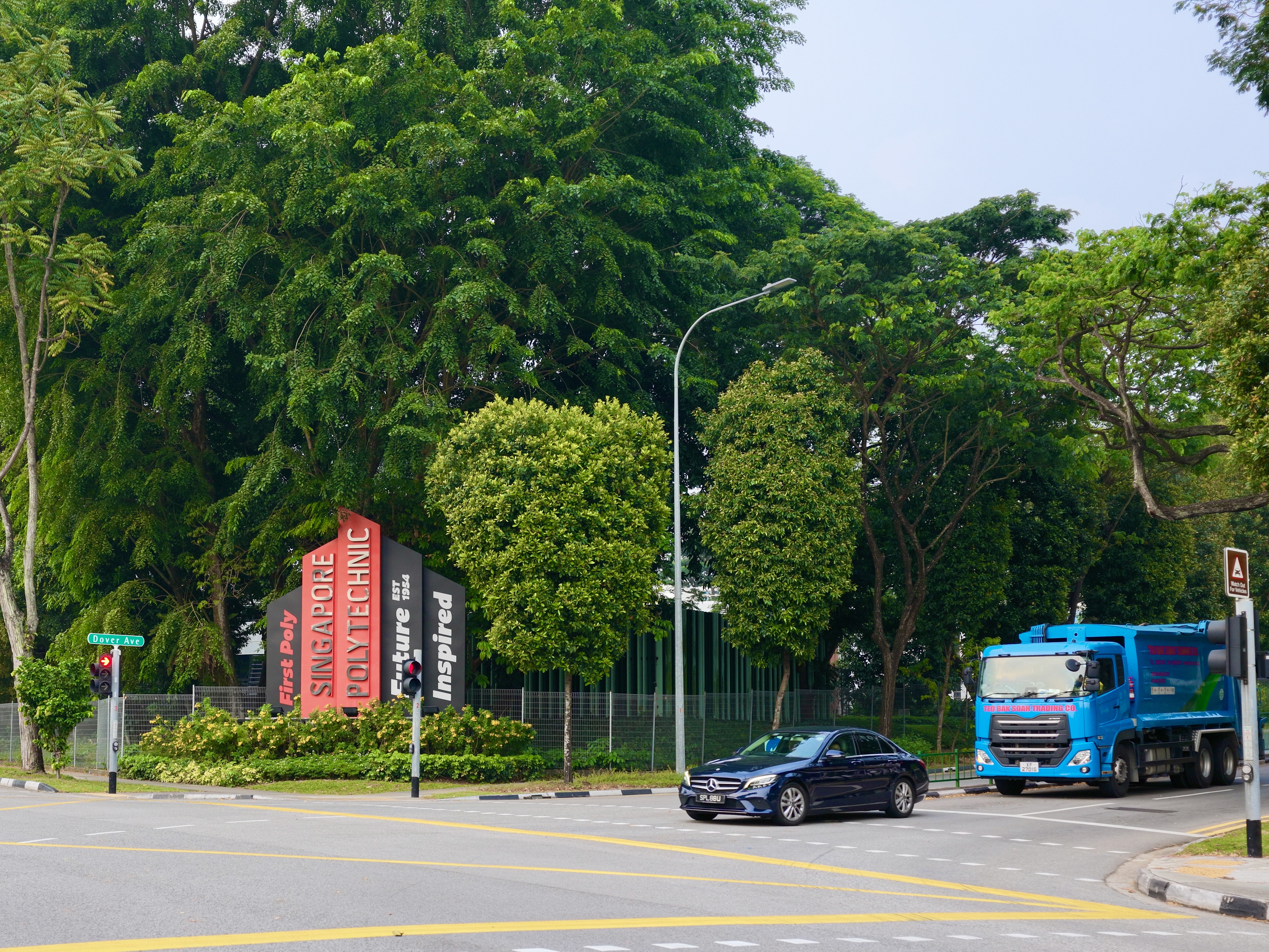
Choosing Singapore Polytechnic starts with the diploma you want to study and the work beneath its name. If you are comparing polytechnics in Singapore, investigate SP courses, admission requirements, possible progression and the journey to campus together. The best reason to choose a polytechnic is a course you have understood and a learning routine you can sustain.
This Singapore Polytechnic decision guide is for secondary students, ITE graduates and families who want to move from an attractive institution name to a carefully researched next step. It connects course selection, JAE and other applicable admissions routes, common programmes, study preparation and career exploration. Each applicant needs the current rules for their own qualification and intended intake.
Did you know? SP’s Common Engineering Programme currently describes exploration of seven engineering diplomas before posting to a diploma at the end of the first semester. That is a specific opportunity for a student who has identified engineering as an area of interest but still wants informed exposure before choosing a branch. It is not permission to postpone every question about course fit.
Information checked on 6 October 2026. Programme facts below come from the linked official sources; exercises and family situations are original illustrations, not accounts of SP assessments or promises about admission, employment or university places.
Should we shortlist Singapore Polytechnic?
SP is worth shortlisting when you have identified a diploma whose practical and theoretical work appeals to you. For an engineering-interested student still choosing a branch, its Common Engineering Programme offers a defined period of exploration rather than unrestricted access to every diploma.
Decision review: 6 October 2026. Linked official pages establish published provision. Fit judgements, questions and family actions in this section are independent eduKate guidance. Confirm arrangements for your own qualification and intended intake.
Check entry · Check the learning · Check the ordinary week · Full guide contents
| Decision check | What to establish for this institution |
|---|---|
| Qualification and entry | Choose the exact diploma or common programme, then use SP admissions guidance for your qualification and intake. Official entry information. |
| Learning and access | The published Common Engineering route leads towards seven engineering diplomas, with posting at the end of the first semester. Ask how allocation works before relying on one destination. Official information supporting this enquiry. |
| Journey and daily feasibility | Test the Dover journey; ask whether course placements or industry learning add other journeys. |
| Essential question | What determines later diploma allocation, and would I accept the available alternatives? |
Is the entry route realistic?
Keep national eligibility, institution or course posting, and access to the preferred subjects or programme as separate checks. Read any score with its intake year, calculation and raw/net label. Historical cut-offs help you plan; they do not promise a future place. For younger applicants, use the official rules for the SEC cohort’s admission year rather than carrying an older O-Level calculation forward.
When another option may fit better
Compare NYP’s Common Engineering Programme if engineering exploration is your goal. Read both destination lists and allocation rules. Read the Nanyang Polytechnic decision guide.
Another route deserves priority if an essential subject or course is unavailable, the applicable entry route does not fit your stage, or travel, costs or support arrangements cannot meet your needs. Compare an accessible ordinary programme with another accessible programme; treat unconfirmed selective opportunities as questions.
Your next useful step
Place the two common-programme destination lists side by side, identify the branch you want most and confirm its allocation conditions.
Shortlist when the essential learning and entry checks fit, and the ordinary week is workable. Investigate when a crucial answer is missing: record the question and ask the official team. Choose another route when an essential condition cannot be met. A preference score cannot cancel an entry requirement or create a course place.
Ask the student to explain the choice in their own words: the work they want to learn, the conditions checked, the main trade-off and the next action. Include fees, equipment, activity commitments and any support enquiry in the family plan.
Explore the existing Singapore Polytechnic school profile for wider context, then return to the practical decision here.
Find your decision route
Open the full section index
- Choose the course, then examine what SP adds
- Turn a course name into a picture of learning
- Common Engineering: exploration with a defined destination
- Admission starts with your qualification
- Cut-off points: useful history, limited prediction
- EAE: show aptitude through honest evidence
- PFP and ITE progression need their own maps
- The SEC transition: keep the entry year visible
- Practical learning also needs theory
- Projects: look at the process behind the finished work
- Teamwork is a skill you can investigate now
- Budget the education, not only the fee
- The Dover journey deserves a real test
- Student life: investigate belonging and support
- University and work: keep possibilities separate from guarantees
- Two course comparisons and one family decision
- Questions to take to an SP course conversation
- Frequently asked questions about choosing SP
- Check what would change your preference
- Make your next action small and specific
Choose the course, then examine what SP adds
A polytechnic decision often begins with, “Which poly should I go to?” A more useful first question is, “Which course could make me want to understand the work deeply?” The institution matters, but it should be considered alongside a specific educational route.
If you enjoy Science, that interest could point towards very different kinds of work. You may enjoy careful laboratory observation, understanding biological mechanisms, designing a process or interpreting quantitative results. The label “Science” is too broad to decide a diploma by itself.
Read the current course description and identify the activities that would recur. Look for the foundations, later specialised learning and any course-specific conditions. Then ask how SP’s actual provision supports the interests you have identified.
Make a small evidence file for each serious course. Include the official page, an explanation of why the work interests you, the applicable entry requirements and one question that remains unanswered. The file should be understandable to someone who has never heard your original enthusiasm.
A strong reason might be that you have compared two related courses and prefer the balance of theory and application in one. A less complete reason is simply that the campus is famous or your friends are applying. Friendship can matter socially, but it cannot supply interest in three years of subject work.
Our existing Why go Singapore Polytechnic article introduces the broader institution-choice conversation. Here, the focus is deciding whether a particular SP route fits you.
Turn a course name into a picture of learning
Choose one diploma from SP’s official course information. Read the introductory description, but do not stop there. Find the course structure and look for the sequence from foundations to more specialised study. An exciting final project may depend on knowledge that initially looks less glamorous.
For each unfamiliar module title, write a question. What problem does this knowledge help a student solve? What would count as a competent piece of work? Which earlier skills would help me learn it? Ask for clarification when the description is too broad to answer.
This method makes comparisons more meaningful. Two courses can both mention technology while developing different capabilities. One may emphasise building systems, another understanding users, and another applying tools within a particular field. Shared vocabulary does not make their daily work identical.
Look for your response to the less immediately attractive parts. Are you willing to learn the mathematical foundations that support a technical interest? Would you practise clear documentation even when making a prototype feels more enjoyable? Serious interest usually includes willingness to build the supporting skills.
You do not need to understand every module before applying. You do need enough understanding to explain what you expect to learn and where your assumptions might be wrong. The unanswered questions become a productive agenda for an open house or course conversation.
Keep a separate note for possibilities described as optional, selective or dependent on conditions. An opportunity featured prominently on a website should not automatically be treated as part of every student’s course.
Common Engineering: exploration with a defined destination
SP’s Common Engineering Programme explains that students explore engineering disciplines before diploma posting at the end of Year 1’s first semester. The page connects the programme with seven diplomas across Mechanical and Aeronautical Engineering and Electrical and Electronic Engineering. Verify the available destinations and arrangements for your intended intake.
This route may be useful when you already have a meaningful engineering interest but have not established which branch suits you best. It is less persuasive if your only reason is that you do not want to research courses yet.
Prepare questions about the exploration itself. What will students encounter before expressing preferences? How is posting decided? What requirements apply to a preferred destination? What happens when demand exceeds available places? Read the official explanation and obtain clarification rather than assuming unrestricted access.
An illustrative student might be interested in both mechanical systems and electronics. They can describe what interests them in each, identify the questions they hope the common programme will help answer and establish what a satisfactory destination would look like.
Another student may already have a clear, well-tested preference for one diploma. That student should compare direct entry and the common route using the actual programme information. Exploration has value when it resolves a meaningful uncertainty; it is not automatically better than a focused choice.
Use an exploration period actively
If you enter a common programme, keep short notes after relevant activities: what interested me, what challenged me, what skill did I want to improve and what question remains? The aim is to arrive at the later decision with evidence, not only a first impression.
A common route can give room to learn. It also asks you to use that room responsibly.
Admission starts with your qualification
SP’s admissions guide distinguishes JAE, JPAE, DAE, EAE and PFP. These routes serve different applicants and purposes. Begin with your qualification, applicant circumstances and intended intake, then identify the applicable exercise.
An O-Level applicant should consult the current JAE guidance and course requirements. An ITE graduate should investigate the relevant ITE-to-polytechnic route and qualification-to-course mapping. An applicant with another qualification should use the official guidance for that qualification rather than borrowing an O-Level calculation.
Write the route at the top of your course comparison sheet. Under it, record the required documents, application period, eligibility conditions and steps after an offer. Administrative accuracy protects a carefully researched educational choice.
Do not confuse eligibility with a guaranteed place. A course may have a published minimum requirement and also receive more eligible applications than places. Previous intake aggregates offer context but are not promises about the next exercise.
Use SP’s official selection criteria for O-Level holders to understand the applicable aggregate and relevant subjects. Course requirements should be read beside that explanation; a single aggregate number does not replace subject-specific conditions.
The existing eduKate JAE and post-secondary admissions guide helps connect the routes in a wider map. The final application should follow the current official instructions for the exercise you use.
Cut-off points: useful history, limited prediction
When a family searches for Singapore Polytechnic cut-off points, it is usually trying to reduce uncertainty. That is understandable. The important reading habit is to identify what the figure actually represents and which intake produced it.
SP’s course pages caution that previous aggregates serve as a reference and do not constitute the admission scores for subsequent exercises. Treat them as historical evidence of demand and selection, alongside your actual eligibility and current course requirements.
A sensible shortlist contains courses you would willingly study. Putting an unwanted course into a list only because its historical figure looks more accessible can produce a placement that solves the admissions question while creating a learning problem.
Separate three descriptions: a course that strongly fits your interests but may be uncertain; a course with a similarly strong fit and a different admissions context; and an acceptable alternative you have genuinely investigated. These are personal planning categories, not official probability bands.
Avoid claims such as “this score guarantees SP” or “being one point away means there is no possibility.” Those claims flatten a course-specific exercise into an unsupported prediction. If your results sit near a historical boundary, ask an ECG counsellor to help interpret the current choices without pretending the outcome is already known.
The goal is a truthful application preference order, based on what you would choose if offered, within the actual rules. Research should make uncertainty manageable, not replace it with invented certainty.
EAE: show aptitude through honest evidence
SP’s EAE guidance describes an aptitude-based route with conditional offers. Read the current eligibility, selection and confirmation conditions for your applicant group. An early offer should not be interpreted as permission to ignore the required academic conditions.
For preparation, choose an experience you can discuss honestly. It might be a project, an independent exploration, a relevant activity or a small task that taught you something about the field. The evidence becomes useful when you explain your own decisions and learning.
Imagine you designed a simple website for a school activity. Saying “I built a website” is a starting point. Explaining how you organised information, what confused users, how you changed the design and what you still do not understand gives a clearer picture of aptitude.
You do not need to invent professional experience. A modest project that you understand is more credible than a polished piece you cannot explain. Keep drafts and notes, identify help you received and distinguish your contribution from somebody else’s.
Ask what the actual course looks for before assembling a portfolio. Evidence appropriate to one diploma may be less relevant to another. Tailoring means selecting truthful work that answers the course’s question, not making yourself sound like a different person.
If you do not receive an offer, review the learning rather than deciding that one result defines your capacity. Your evidence file can still help with course choice, later preparation and a more informed application through another eligible route.
PFP and ITE progression need their own maps
PFP should be investigated as a foundation route with specific eligibility and progression arrangements. SP’s current PFP admissions information describes the move to cluster-based entry from Academic Year 2026. Do not assume an older course-specific explanation still describes the current structure.
For a student considering PFP, map the foundation entry, the relevant cluster and the later diploma possibilities. Ask what must be achieved during the foundation stage and how progression decisions are made. A foundation place and a final preferred diploma are related but distinct questions.
For an ITE graduate, begin with the exact qualification and course completed. Check which SP diplomas are mapped to it, the applicable requirements and whether any advanced-entry possibility actually applies. Avoid transferring a GPA threshold from an unrelated course or intake.
Ask an adviser to review a diagram you have prepared yourself. Include the qualification you hold, the exercise you intend to use, the course you want and the unresolved condition. A precise diagram is easier to correct than a broad question about whether “ITE can go poly.”
Include alternative mapped courses if they genuinely fit your interests. The purpose is to expand meaningful possibilities, not to manufacture a long list of courses you would not enjoy.
Progression can be encouraging without being automatic. A good plan tells you what to prepare for and what remains conditional, so that your effort has a clear direction.
The SEC transition: keep the entry year visible
MOE’s 2026 announcements state that a new Post-Secondary Admissions Exercise begins from 2028. Younger students should read the applicable official SEC-era admissions criteria rather than assuming today’s O-Level rules will be used unchanged.
For a student applying before that transition, the immediate task is following the official rules for that earlier intake. For a younger student, the immediate task includes understanding the announced future route while continuing to develop relevant subject capability.
This distinction matters when families save screenshots. A screenshot may preserve a correct rule while losing the year that made it correct. Save the source URL and intake year with the information, particularly when sharing advice between siblings or classmates.
Do not attempt to convert every older aggregate example into a future one yourself. Subject requirements and aggregate structures need the official explanation for the new exercise. A familiar acronym is not proof that the calculation remains identical.
School decisions benefit from this careful approach because confidence should come from understanding the relevant rule, not from repeating a rule that once applied to someone else.
Practical learning also needs theory
Students sometimes consider a polytechnic because they want more application. That can be a strong reason when it reflects interest in developing a discipline through practical work. It is incomplete if it rests on the expectation that application removes the need for careful academic learning.
Think about a simple technical investigation. If an output differs from expectation, you need a model of what should happen, a reliable measurement and a way of locating the difference. Practical competence becomes stronger when the underlying ideas are understood.
In a communication or design task, the theory may concern the audience, the purpose and the effect of a decision. In a business task, it may concern quantities, constraints and the evidence behind a recommendation. Application does not mean the ideas disappear.
Before choosing a diploma, identify the foundations you would need to strengthen. An engineering interest might lead you to review algebra and units. A course involving substantial written work might lead you to practise clear paragraphs and interpretation of instructions. Use the actual course description to guide preparation.
A useful learning habit is to ask, “Why does this step matter?” Another is, “How would I check the result?” These questions connect understanding with action and help a student move beyond copying a procedure.
Do not let a foundation gap become a fixed identity. Describe the gap precisely, seek suitable guidance and practise it. The question is whether you are willing to build what the course needs, alongside whether the course fits your interests.
Projects: look at the process behind the finished work
When visiting a course showcase, admire the result and then investigate how it was produced. Ask what problem the project addressed, which constraints mattered, what failed and what the students changed. The learning often sits inside those decisions.
A finished prototype can hide a long sequence of tests. A polished video can hide planning, revision and coordination. A convincing presentation can hide careful research. Understanding the process helps you decide whether the field interests you beyond its public appearance.
Try an original small project before making your final choice. Choose a safe task within your current capability: organise information, analyse a simple dataset you are allowed to use, design a poster or document a household process. Define a user or purpose, make a first version and ask for feedback.
Then write three sentences: what I intended; what happened; what I would change. The exercise is valuable even if the result is modest. It gives you evidence about whether revising and checking the work feels meaningful.
Do not call this exercise a simulation of an SP assessment. It is a way of testing your own interest and developing questions to ask about the actual course.
For career exploration, connect that experience with the Gold Standard of Career Planning: investigate work, build capability and review what the evidence reveals.
Teamwork is a skill you can investigate now
Course descriptions that mention collaboration invite a practical question: how do I work with other people when the task becomes difficult? Being friendly is helpful, but reliability also matters. A group needs clear responsibilities, usable work and early communication about problems.
In a small school project, agree on the next action, the person responsible and the time when it should be ready. Share work early enough for others to use it. If you are stuck, describe the obstacle before the deadline passes.
A quieter student can contribute through preparation, careful questions, accurate notes or testing. A confident speaker can contribute by making room for other people’s evidence. Neither personality guarantees competent teamwork; both can develop useful habits.
When investigating an SP course, ask how collaborative and individual work appear in the actual curriculum. Ask how students obtain clarification about their contribution and assessment. Avoid assuming that every module uses the same arrangement.
The decision is not whether you already perform perfectly in every group. It is whether you are willing to learn the habits the course needs and whether the learning activities appeal to you.
That willingness can make a transition hopeful. New situations reveal skills to build, and a specific skill is easier to improve than the vague belief that you are simply “not a group-work person.”
Budget the education, not only the fee
Consult SP’s current fee and financial-support information for your applicant category and intake. Citizenship, subsidy arrangements and other circumstances can affect the applicable figures. Do not use a friend’s fee as an estimate without checking why it applied.
Prepare a practical budget with recurring costs and one-time costs separated. Include transport, meals, required equipment, course materials and any confirmed software or other learning needs. Ask the course before purchasing specialised equipment; a guess can waste money.
Put a source or label beside every figure. “Official fee for this intake” is different from “family estimate for meals.” “Equipment requirement confirmed by course” is different from “optional device upgrade.” Clear labels help the family adjust the plan intelligently.
Investigate assistance early where needed. Ask about eligibility, documentation, application timing and when support would become available. The timing can matter as much as the amount when an upfront purchase is required.
Do not let a budget discussion become a judgment about the student’s ambition. A realistic plan supports participation. If one option creates a difficulty, explore the available assistance or a suitable alternative rather than hiding the constraint until after acceptance.
Keep a small allowance for unexpected needs if the family’s circumstances permit. The point is a usable plan, not a perfect prediction of every expense.
The Dover journey deserves a real test
SP’s official information lists its campus at 500 Dover Road. Confirm your destination through the official site, then test the route to the building or area relevant to your visit. Reaching a station is only one part of reaching a lesson.
Time the walk, connections and waiting. Consider a return trip after a plausible activity or project session. If your plan depends on family transport, discuss what happens when that arrangement is unavailable.
A student living farther away may still find SP the best educational fit. The useful comparison is the actual benefit of the course against the practical cost of travel, rather than a rule that the nearest institution always wins.
Use an illustrative weekly calculation. If one journey adds 15 minutes each way compared with another, that is 30 additional minutes per day and 150 over five days. Those numbers do not describe any measured SP route. They show how a small daily difference becomes a significant weekly commitment.
Do not allocate the same hour simultaneously to travel, a meal and focused study. A realistic timetable gives activities their actual space. Leave some room for delays and the ordinary variation of a week.
A well-tested journey helps you use the opportunity consistently. It is a practical part of school choice, alongside the academic reasons.
Student life: investigate belonging and support
Ask how new students find the appropriate support when they need academic clarification, wellbeing assistance, financial advice or help with access needs. Establish the correct channels from current official information, rather than relying only on a friend who studied there years ago.
If you have a documented need, discuss it with the relevant team before making assumptions about the course. Ask what information is required, which support is available and what practical course conditions must be considered. This is particularly important where a course has specific equipment or participation requirements.
For activities outside lessons, start with one meaningful interest. Check the actual participation process and schedule. A CCA can offer friendship and a different kind of development, but an attractive activity list is not a guarantee of selection or an unlimited timetable.
At a visit, ask students how they found their first reliable point of contact. That concrete question can reveal useful transition habits without turning one person’s story into a universal promise.
Parents can support independence by helping the student identify where to seek help, then letting them practise using the appropriate channel. Knowing how to ask a clear question is part of becoming a capable student.
Belonging often begins through repeated small interactions. You do not need to arrive with a fully formed campus identity to have a promising start.
University and work: keep possibilities separate from guarantees
A diploma can be a foundation for work and for further study, but each next step has its own conditions. Read the requirements of the actual university degree or professional route you are considering. Do not assume that a general progression statement applies to every diploma in the same way.
If a course mentions advanced standing, exemptions or a special pathway, investigate the applicable institution, eligible diploma, criteria and intake. These details should remain attached to the opportunity when you record it.
For career interest, read about daily tasks rather than relying on a job title. Ask what the role produces, what knowledge it uses and which responsibilities a beginner might have. A glamorous industry image may conceal routine work that you either enjoy or would rather avoid.
An internship or industry opportunity should be evaluated as a learning experience with specific arrangements. Ask about the course’s current provision. Do not infer that a partnership guarantees a particular employer, location or job offer for each student.
Your future plan can include several possible next steps. A student may enter with a career interest and discover a further-study direction, or enter with a degree ambition and discover work they want to pursue. The useful question is whether the diploma develops capabilities that support those possibilities.
Keep the next decision visible without pretending to settle it permanently before the first one has begun.
Two course comparisons and one family decision
Engineering interest with an unresolved branch
In a fictional example, Daniel likes understanding physical systems but has explored both mechanical and electrical questions only briefly. He investigates SP’s common route, checks its destinations and asks how diploma posting is decided. He also compares a direct-entry diploma that interests him.
His reason for considering the common programme becomes specific: he wants structured exposure to resolve a branch choice. He is not using the route to avoid reading about engineering. He has already identified why the field interests him and what he hopes to learn next.
A creative interest that needs a course-level explanation
Hana enjoys making videos. She initially treats every media-related diploma as equivalent. Reading course structures helps her distinguish the work she prefers from areas she has barely investigated. She records which parts involve planning, production, analysis and other foundations.
Her personal preparation task is a short original video with a defined audience. She explains her choices and revisions, then asks course-specific questions. A finished product alone did not settle the decision; understanding the process made the interest clearer.
An ITE graduate checking the actual progression route
Farid wants to continue studying and hears that a friend’s GPA led to a place. He replaces that anecdote with his own qualification-to-course map. He checks the current exercise, the eligible diploma and the conditions that apply to him.
The family then compares costs and travel with the learning fit. Their confidence comes from the verified route, not from assuming another person’s admission history predicts Farid’s outcome. These are illustrative situations, not SP student testimonials.
Questions to take to an SP course conversation
- What does a first-year student repeatedly practise in this diploma?
- Which foundations matter most at the start, and how can I prepare responsibly?
- What admission route and course requirements apply to my qualification and intended intake?
- If I choose a common programme, how are later destinations and preferences handled?
- Which advertised opportunities are standard, optional or selective?
- What equipment, course costs and access conditions should I verify before accepting?
- Where should I obtain current advice about support and further-study pathways?
Choose the questions that could actually change your decision. After the conversation, write the answer, source and next action. A pleasant visit is valuable, but the strongest outcome is clearer understanding of what you would study and why it fits.
Frequently asked questions about choosing SP
Is SP the right choice if I prefer practical work?
It may be, if the actual diploma’s work interests you and you are willing to learn its foundations. Investigate the specific course rather than assuming all practical learning feels the same.
Does a common programme guarantee my preferred diploma?
Read the current programme’s destination and posting conditions. Do not assume that entering a common route gives unrestricted access to every possible course.
Should I rely on last year’s cut-off points?
Use them as historical context alongside current eligibility and course requirements. They do not guarantee the result of the next admissions exercise.
Can an ITE graduate apply using an O-Level friend’s advice?
The graduate should use the official route and course mapping for their own qualification. Requirements and progression options need to be checked separately.
Does a diploma guarantee university admission?
No. The next institution and programme have their own requirements. Investigate them directly and keep selective opportunities distinct from automatic entitlements.
How should younger SEC students use this guide?
Use the course-choice reasoning while checking the official admissions rules for the intended entry year, including the announced changes from 2028.
Check what would change your preference
Name the condition that matters most to your SP choice. It might be a specific diploma, an available progression route or a practical travel arrangement. Ask whether the option remains suitable if that condition differs from your first expectation.
If your reason depends on a selective opportunity, investigate a course plan that does not assume selection. If the ordinary curriculum still interests you, the opportunity can remain a valuable possibility without becoming the entire foundation of the choice.
Write the answer beside your shortlist and recheck the important condition before applying. This small exercise helps enthusiasm stay connected with evidence.
Make your next action small and specific
Choose one SP course, read its current structure, identify your applicable admission route and write the question that most affects your decision. Then compare it with one genuinely suitable alternative.
Use the Singapore schools directory for wider exploration and our existing SP profile for institution context. Return to official course and admissions sources before acting on a requirement.
You are choosing an education you can participate in, not merely a name you can receive. When the work, route and ordinary week make sense together, your decision has a stronger foundation and your enthusiasm has somewhere useful to go.