
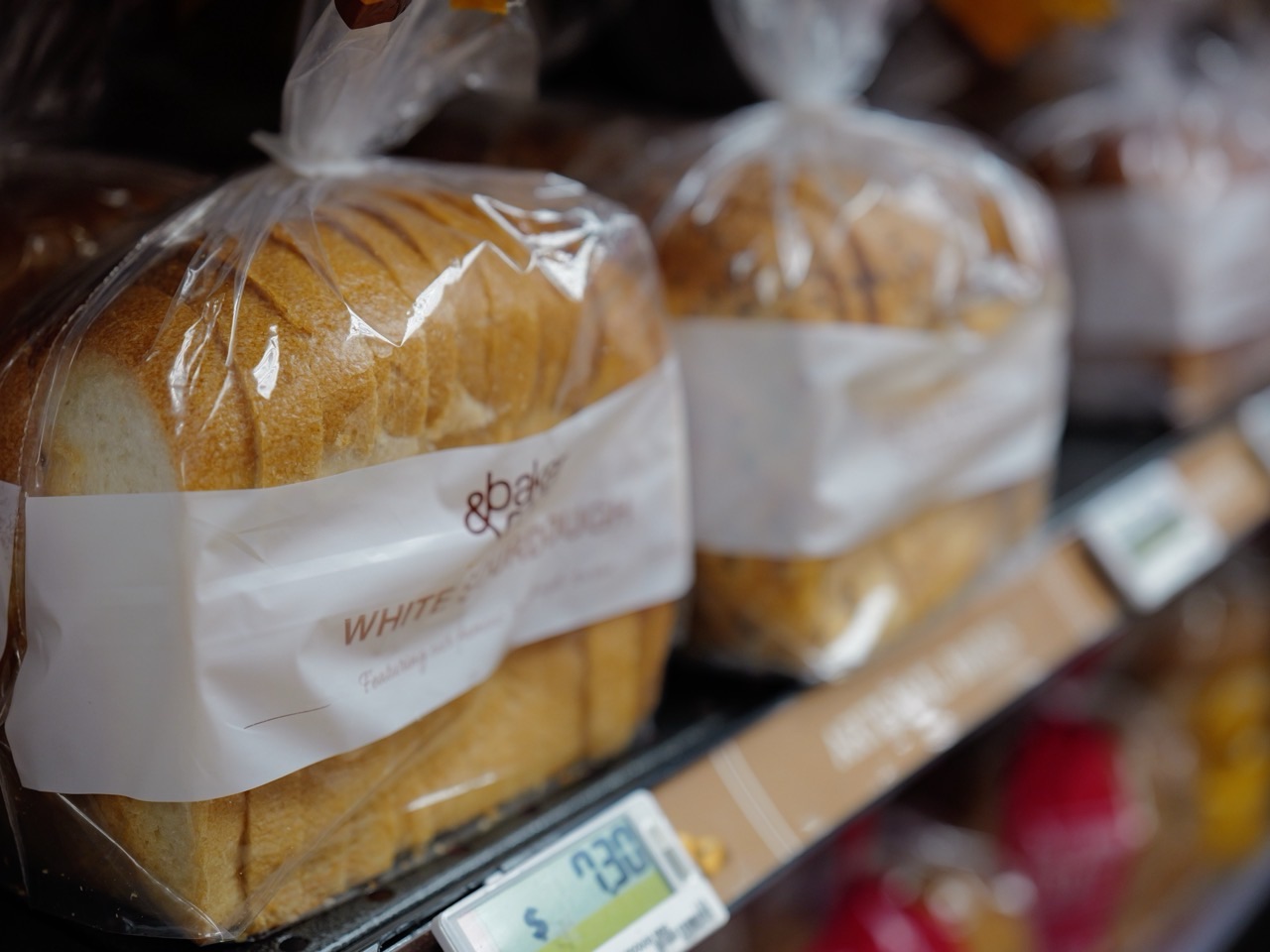
Why does bread turn golden brown when toasted, while the soft interior of a loaf often stays pale? Much of the colour and roasted aroma of toast comes from Maillard reactions: a complex family of heat-driven chemical reactions between reducing sugars and amino compounds, including amino acids or protein groups. These reactions form many flavour and aroma molecules and eventually brown-coloured compounds. Toast surfaces typically heat more strongly and lose more moisture than a bread crumb, creating conditions that favour browning. Caramelisation is a different family of heat-driven sugar reactions that can also produce brown colours and flavours, but it does not require the same initial reaction between a reducing sugar and an amino group. The browning of a sliced apple after exposure to air is different again: it is commonly enzyme-mediated oxidation, not the main mechanism turning bread crust brown.
For Hougang parents and students searching for why toast turns brown, Maillard reaction chemistry, caramelisation versus Maillard, how heat changes food, food Science for Secondary 1 or 2, chemical versus physical change, or a Chemistry tutor, the useful first test is whether the child can identify reactants, conditions, observations and competing explanations. This guide explains reducing sugars and amino compounds, why a toasted surface differs from a steamed crumb, how time and water content affect browning, how to design a fair comparison on paper and why very dark or burnt toast does not simply mean “more of the same good flavour”. It connects the American Chemical Society’s food-chemistry resources with eduKate’s Hougang Chemistry library. Detailed Maillard reaction mechanisms are real-world enrichment, not a compulsory named reaction in every Singapore Chemistry examination.
The smell that arrives before breakfast
Imagine a student walking into a kitchen in Hougang while bread is toasting. Before they see the bread, they can recognise that something has changed from the warm, roasted aroma.
The toast is no longer the same pale slice that entered the appliance. Its surface may be golden, its edges may be darker, and it has become less soft.
What exactly happened?
Several things happen during heating, and it is useful not to collapse them into a single explanation. Water can evaporate. The surface temperature can rise. Starches and proteins can change their structures. Chemical reactions can create new compounds responsible for colour and flavour.
The central question is how those changes fit together. Chemistry teaches us to distinguish a physical change such as water leaving from chemical changes that produce new flavour and colour compounds.
What the Maillard reaction actually involves
The Maillard reaction is not one simple balanced equation like H₂ + Cl₂ → 2HCl.
It is a network of reactions that commonly begins when a reducing sugar reacts with a suitable amino group from an amino acid, peptide or protein.
Further rearrangements, fragmentations and related reactions generate many different chemical products.
Some contribute aromas described as roasted, nutty or bread-like. Others lead to brown-coloured complex mixtures, including substances commonly called melanoidins.
The outcome depends on ingredients, moisture, temperature, pH, time and the food’s structure.
The American Chemical Society’s Maillard reaction explainer introduces the connection between hot toast, flavour and non-enzymatic browning.
The key school-level explanation is: sugar-derived carbonyl chemistry and amino compounds react during heating, producing new substances.
What is a reducing sugar?
A reducing sugar has structural features that allow it to act as a reducing agent under appropriate test conditions, commonly involving a free or potentially available aldehyde or ketone-related form in solution.
Glucose and maltose are familiar food-related examples. A compound’s everyday name is not enough to decide its chemistry; the relevant molecular structure matters.
Some starch breakdown during breadmaking and processing can supply smaller sugars that are available for browning reactions.
But don’t assume every sugar participates identically or that every bread formulation contains equal amounts of the same sugar.
The starting ingredients, fermentation and baking history can alter which browning precursors are available.
In a Secondary Chemistry lesson, identifying the broad roles of sugar and amino compounds is more valuable than memorising a detailed multistage Maillard pathway.
Where do the amino compounds come from?
Bread is made from ingredients that contain proteins and other nitrogen-containing compounds.
Proteins are chains of amino acid residues. During food production and processing, free amino acids and reactive amino groups can become available.
Those amino groups can react with appropriate sugar-derived species during heating, leading into Maillard chemistry.
The compounds responsible for the final colour or smell are not simply untouched copies of the original amino acids. The reaction network changes the molecules.
This is a useful connection to Amino Acids and Peptide Bonds: Hougang H2 Chemistry, where students learn about amino functional groups and proteins.
The food example gives those molecular ideas a familiar setting.
Worked question 1 — is toast browning a physical change?
A student argues: “The bread was pale and became brown because water evaporated. Therefore the whole change must be physical.”
The error is assuming that one physical process explains every observation.
Evaporation removes water and contributes to a drier, firmer surface. But Maillard reactions produce new chemical substances associated with browning and flavour.
Therefore heating bread involves both physical changes and chemical reactions.
An accurate school answer does not need to decide that every molecule in the bread has reacted. It should state which observations support the changes being discussed.
The formation of new colour and aroma compounds is evidence of a complex chemical transformation, while the loss of water is a physical transfer.
Why does the crust brown more than the middle?
The bread surface loses water to the surrounding hot air and can reach higher temperatures than the moist interior.
Inside a loaf or a thick slice, liquid water and water vapour help moderate temperature in the local region for much of ordinary baking or warming.
The Maillard reaction’s speed is affected by temperature and water activity. At suitable moisture levels and higher surface temperatures, browning is favoured.
This helps explain why a crust can become darker and more aromatic while the central crumb remains pale and soft.
Do not turn this into the absolute rule that Maillard reactions cannot occur in water or only above one universal temperature. The reaction can occur under a range of conditions, but its rate and products change substantially.
The stronger explanation names temperature, local moisture and available reactants.
Why toasting time matters
A slice of bread may change from pale to golden and then to much darker colours with increasing exposure to heat.
Longer heating can allow more reaction and moisture loss, but the relationship is not automatically linear. As conditions change, different reaction pathways and products can become important.
Very dark or charred regions involve additional thermal degradation and possible pyrolysis, not simply a proportionally stronger version of a desirable golden-brown reaction.
A careful student should therefore avoid the statement “the darker the toast, the healthier or tastier it must be”.
Food preference is subjective, while nutritional and safety effects depend on the actual compounds and exposure, not on one colour alone.
This distinction is useful for learning how visible evidence has limits.
Maillard reaction versus caramelisation
Maillard browning starts from interactions involving reducing sugars and amino groups, followed by a complicated network of reactions.
Caramelisation describes thermal reactions of sugars that can occur without the same initial amino-group participation.
Both can contribute brown colours and cooked aromas, and both may be present in a complex heated food.
But they are not identical processes. If a student says “all brown cooked food is caramelised sugar”, the explanation misses the central Maillard mechanism for bread and many protein-containing foods.
The American Chemical Society study of Maillard and caramelisation chemistry investigates how sugars, amino acids and pH influence different non-enzymatic browning contributions.
For school purposes, the easiest diagnostic is to ask whether the proposed reaction specifically involves an amino compound as well as a sugar.
Worked question 2 — caramel, toast and sliced apple
Three samples become brown in different situations.
Sample A is bread toasted in a heating appliance.
Sample B is a sugar-rich system heated until caramelisation occurs.
Sample C is a freshly cut apple that browns while exposed to air.
The main mechanisms commonly highlighted are:
- A, toast: Maillard reactions involving reducing sugars and amino compounds, alongside other thermal changes.
- B, caramelised sugar: thermal sugar transformations that do not require initial amino-group reaction.
- C, cut apple: enzyme-mediated oxidation of phenolic compounds following tissue damage and exposure to oxygen.
The lesson is not that each sample experiences exactly one possible process and nothing else. It is that distinct mechanisms can produce superficially similar colours.
For the apple example, see Why Cut Apples Turn Brown: A Hougang Fair-Test Guide.
Temperature and water activity: why they are not the same variable
Temperature describes thermal conditions related to particle motion and energy.
Water activity describes how available water is for particular physical, chemical and biological processes in a food system. It is not identical to the percentage of water by mass.
A food can have substantial moisture and still exhibit a particular reaction rate depending on how that water interacts with other components.
Maillard reaction rate often depends strongly on the combination of temperature, water activity, chemical precursors and pH.
That is why the everyday shortcut “drier always browns faster” is not a universal scientific rule for every possible formulation.
A student can learn the qualitative connection without being required to calculate food water activity from thermodynamic data.
The Hougang Guide to Salt and Water Activity provides a related food-system explanation.
How pH can affect browning
pH influences the protonation and reactivity of amino groups and other species involved in Maillard pathways.
Under some comparable conditions, making the reaction environment more alkaline can increase certain browning reactions. But a food’s complete behaviour depends on its mixture and other reactions.
That does not justify adding arbitrary household cleaning chemicals to food or changing a recipe’s pH without understanding safety and quality consequences.
The scientific claim is narrower: acid-base conditions can change reaction kinetics and product formation.
In a classroom data table, students may be asked to compare browning rates at different specified pH values. The correct response should name the controlled variables and avoid claiming pH alone determines all outcomes.
Worked question 3 — a fair test about colour change
A class wants to test whether toasting time affects the browning of otherwise similar bread.
The independent variable is heating time.
A suitable dependent variable might be a defined colour score, calibrated image measurement or other standardised browning measure.
Important controlled factors include bread type, slice thickness, initial moisture, appliance setting, placement and lighting for observing colour.
Because heating appliances can be hazardous, any practical comparison should be conducted only under appropriate adult or school supervision. There is no need to burn bread deliberately to understand the trend.
A paper-based investigation could use a supplied series of standardised photographs instead.
The important logic is that changing multiple factors simultaneously makes it difficult to assign the observed colour difference to heating time alone.
Worked question 4 — graph interpretation
A hypothetical study provides a browning index from 0 to 100 after controlled heating durations:
- 0 minutes: index 5.
- 1 minute: index 15.
- 2 minutes: index 34.
- 3 minutes: index 58.
- 4 minutes: index 75.
Between 1 and 3 minutes, the observed average rise in browning index is:
(58 − 15)/(3 − 1) = 43/2 = 21.5 index units per minute.
This is a descriptive average rate for that interval, not a molecular rate constant for the Maillard network.
If the index comes from image analysis, its values depend on the definition and calibration of that measurement.
The question shows how students can use Mathematics to interpret a physical observation while keeping the meaning of the units clear.
A strong Chemistry answer should not confuse a colour index with the concentration of one specific Maillard product.
Why toasted bread smells different
Food aroma comes from volatile molecules that reach our sense of smell.
Maillard reactions can generate different classes of aroma-active compounds, including some nitrogen-containing heterocyclic molecules, along with other carbonyl-containing products.
Their distribution depends on the ingredients and heating conditions. Bread fermentation can also create or supply compounds that later affect flavour during baking.
A fresh loaf can therefore have a different aroma from warmed bread or dark toast even when all began from the same dough.
This is not proof that any one molecular compound causes the entire smell of toast. Food aroma normally arises from mixtures and interactions among many volatile substances.
The American Chemical Society’s review of Maillard bread and rice aroma compounds gives a more advanced starting point.
Worked question 5 — does burning bread make it “extra Maillard”?
Suppose a piece of bread has become black in one area.
It would be inaccurate to describe every part of that process as simply the desirable reaction making golden toast.
At sufficiently severe heating, additional thermal degradation, charring and pyrolysis occur. The products can differ from those produced during ordinary browning.
The observation does not allow the student to determine the concentration of any particular compound without analysis.
The scientific lesson is that a familiar process can be followed by other processes when conditions change.
For food safety, follow ordinary cooking and food-safety guidance rather than deliberately charring foods for a demonstration.
What is actually being taught in Chemistry?
Lower-secondary Science develops physical and chemical changes, mixtures, observations, fair tests and energy-related thinking.
Upper-secondary Chemistry adds organic compounds, reaction rates, bonding and the relationship between molecular structure and properties.
JC H2 Chemistry includes deeper study of organic reactions and kinetics that can support a more advanced explanation of the same food example.
But the detailed mechanism of the Maillard reaction is food-chemistry enrichment, not a required stand-alone named reaction in every 2027 SEC G3 Chemistry or H2 paper.
The 2027 SEAB G3 syllabus directory and 2027 A-Level syllabus directory help families confirm the student’s actual assessed route.
The aim is to strengthen foundational reasoning, not invent an extra examination chapter.
Six common mistakes to repair
- Saying all browning comes from caramelisation alone.
- Treating the Maillard reaction as one simple, uniquely balanced equation with one product.
- Confusing enzyme-mediated apple browning with the main heat-driven browning in toast.
- Assuming that every darker food must have a proportionally higher concentration of one beneficial flavour molecule.
- Calling all observed changes during toasting purely physical because some water evaporates.
- Confusing an image-derived colour index with a chemical concentration measured in mol dm⁻³.
The best repair begins by identifying the reactant class, conditions and evidence used to support the conclusion.
A colour photograph is useful data, but its meaning depends on the question and measurement method.
Seven days of reader-friendly practice
Day 1: explain why a toast surface and a soft crumb can behave differently under heating.
Day 2: identify reducing sugars and amino compounds as major Maillard precursors.
Day 3: distinguish Maillard chemistry from caramelisation.
Day 4: contrast browning of toast with enzymatic browning of a cut apple.
Day 5: design a fair comparison of heating time using matched samples or supplied photographs.
Day 6: calculate an average change in a given browning index, keeping the units meaningful.
Day 7: answer an unfamiliar food-colour question and state which mechanism is supported and which remains unproven.
The point is not to turn breakfast into a memorisation drill. It is to make observations testable and explanations more precise.
How Hougang Science and Chemistry tuition can use this topic
One student may know the word “Maillard” but cannot explain why amino compounds matter. Another may distinguish chemical and physical changes yet fail to control variables in an experiment. A third may interpret a graph well but overclaim the identity of products from colour alone.
A thoughtful three-student small-group tutorial can see those different gaps, connect the lesson to the student’s actual Science level and use a fresh example to test understanding.
Parents can start with Hougang Science Learning Hub, Hougang Chemistry Tuition and Tutor Guide and Yogurt and Fermentation: Food Chemistry. Confirm the actual class location and timetable rather than assuming the place named in a learning article identifies a physical classroom.
Frequently asked questions
Why does bread turn brown when toasted?
Heat promotes reactions, notably Maillard chemistry involving reducing sugars and amino compounds, generating coloured and aroma-active products.
Is Maillard the same as caramelisation?
No. They are different non-enzymatic browning reaction families, although both can contribute to colour and flavour in heated foods.
Why is the middle of bread often lighter than the crust?
The moist interior generally experiences different temperature and moisture conditions from the exposed, drying surface, affecting reaction rates and products.
Is apple browning the same reaction as toast browning?
Not usually. Cut apple browning commonly involves enzyme-mediated oxidation, while toast browning strongly involves heat-driven Maillard chemistry.
Does darker toast always mean better chemistry?
No. Very dark or charred areas can involve additional thermal degradation, and colour alone does not determine nutrition or safety.
Is the Maillard reaction directly examinable as a named SEC Chemistry reaction?
This guide is an applied learning resource; students should use the official current syllabus for examinable named reactions rather than assume Maillard chemistry must be memorised.
What should students read next?
Continue with Physical versus Chemical Change, Why Cut Apples Brown and Food Preservation and Water Activity. The strongest takeaway is that two foods can look similarly brown because of different chemical processes—and a good scientist knows how to tell the explanations apart.