
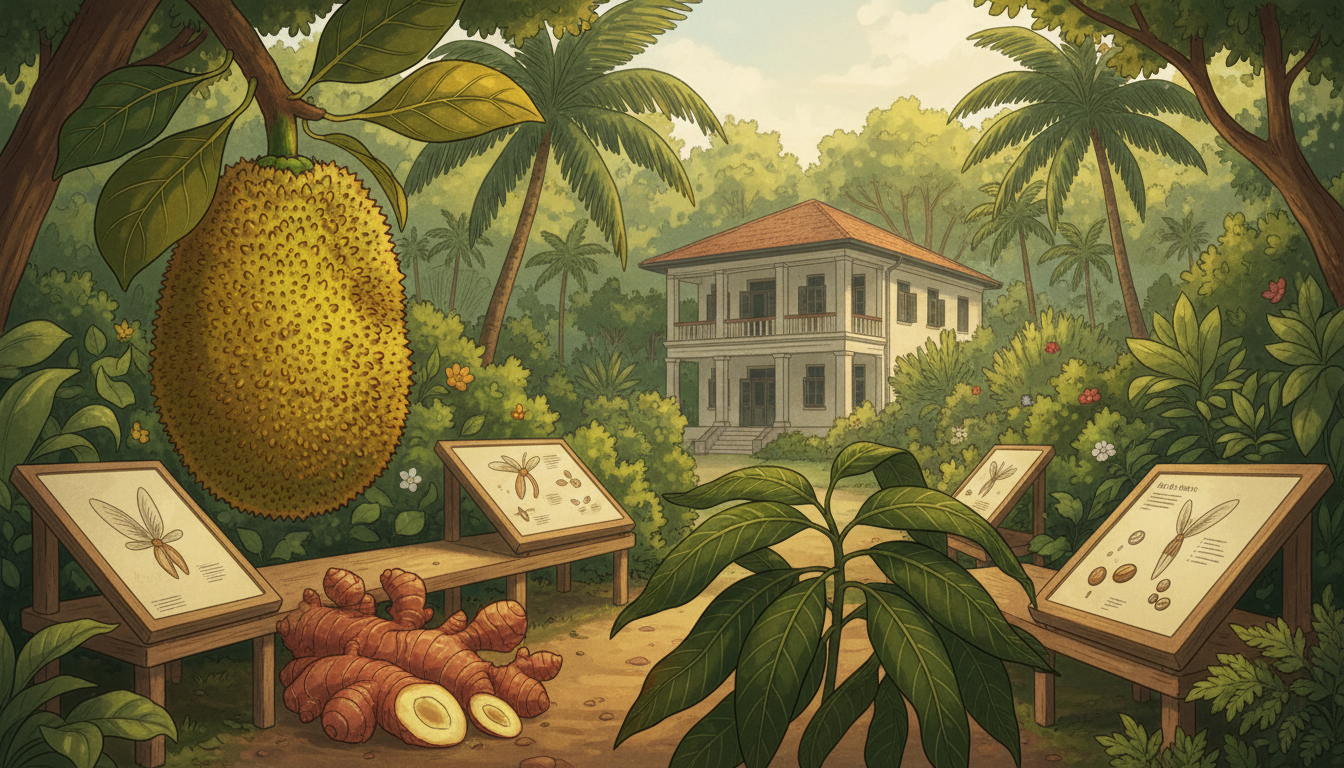
Did you know? Just inside the Bukit Timah side of Singapore Botanic Gardens is a gallery devoted to how people have used plants for food, shelter, medicine and cultural practices. The Centre for Ethnobotany occupies a repurposed two-storey building and is open to visitors in 2026—but it closes on the last Wednesday of every month.
That small calendar detail makes a real difference if you are planning a school-holiday visit in 2027. The broader Gardens stays open daily under a much longer timetable, but an indoor exhibition has its own doors, displays and maintenance day. Here is a guide that distinguishes the centre, the adjoining plant collection and the exhibits that may change.
Centre for Ethnobotany: at a glance
- Venue: Centre for Ethnobotany, Singapore Botanic Gardens.
- Nearest entrance: Bukit Timah Gate, served by Botanic Gardens MRT (Downtown and Circle Lines).
- Opening hours: 9am–6pm daily, except the last Wednesday of each month.
- Opened: 2018. The centre is already operating; 2027 is not a new building-opening year.
- Inside: displays across two floors, including artefacts, plant materials and interactive interpretation about human uses of plants.
- Outdoor counterpart: the Ethnobotany Garden, home to more than 300 species arranged into four themed zones.
- Admission: no separate ticket is advertised for the centre; general entry to Singapore Botanic Gardens is free.
- Visitor restrictions: the indoor Centre for Ethnobotany and the outdoor Ethnobotany Garden are no-pets areas.
First, what is ethnobotany?
Ethnobotany is the study of how people and plants relate to one another. It asks what plants communities have used, how those uses were learned, what names people gave them and why the same species may hold different meanings in different places.
Think of a leaf used to flavour food, a tree whose timber has supported buildings, a fibre spun into a useful object or a plant that appears in traditional healing stories. The plant has a biological identity, but its human history can be cultural, technological, economic and linguistic.
This is why the Centre for Ethnobotany fits so well within a botanical institution. The Gardens is not only a collection of attractive plants. It is a place where scientists study living things and where visitors can understand the ways human societies have depended on them.
What will you see across the two-storey centre?
NParks describes displays of artefacts, plant materials and interactive information across two levels. The building previously housed the Centre for Urban Greenery and Ecology, before it was adapted into an exhibition space in 2018.
The architectural design draws inspiration from black-and-white colonial buildings and Art Deco influences. That makes the building itself an example of reuse: an earlier institutional space becomes a public learning destination rather than being demolished and replaced for the exhibition.
Past displays have focused on the jackfruit family, durians, mango relatives, figs, market vegetables and plants associated with traditional healing. Those titles establish the range of the centre’s interpretation; they do not mean every past temporary display will still be on view during 2027.
For the exact topic of the exhibition on your chosen date, use NParks’ Centre for Ethnobotany page, which links readers to the latest gallery programme.
The Ethnobotany Garden outside: more than 300 species
The outdoor Ethnobotany Garden complements the gallery with living examples. NParks describes over 300 plant species in four zones, organised around themes such as traditional healing, domestic construction, food and the plants important to hunter-gatherer societies.
It is helpful to distinguish the living garden from the indoor museum. A display cabinet may contain a crafted object or dried botanical material; the outdoor planting lets children observe the structures of plants in their living environment.
The outdoor garden’s access and safety rules should be checked on-site. A general opening-hours statement for the entire Gardens does not establish that every display, building and planting zone is accessible at midnight.
A family activity: plants around the home
- Food: name one ingredient you have eaten that comes from a leaf, one from a fruit and one from an underground plant structure.
- Homes: find an example of material once used in building or making household objects; think about its strength, flexibility or availability.
- Names: compare a plant’s common name with its scientific name, then consider why communities might use different everyday words.
- Evidence: ask whether an object is an original artefact, a reproduction or a modern illustration.
- Conservation: explain how plant diversity could be lost when habitat disappears or traditional knowledge is no longer shared.
These are prompts for observation, not formal exams. A child can learn to distinguish what the sign directly states from an interpretation made by the family. That is useful critical thinking in science and history.
Traditional medicine labels are not medical instructions
Some ethnobotanical exhibits discuss plants historically used in health or healing. Those labels help document cultural knowledge, but they are not proof that consuming a particular leaf or root is safe or effective for a medical condition.
Plants can contain active compounds, irritants or toxins, and preparation may change their effects. Some substances derived from plants have led to important medicines through controlled research; that does not make the original living plant interchangeable with a prescription medicine.
Treat the centre and garden as places to observe and learn. Do not pick, taste or take home plant material. For a separate visit focused on the history of medicinal plants, our Healing Garden and its 2027 access guide explains its own timetable and precautions.
What are the last-Wednesday closure dates in early 2027?
If NParks keeps its published monthly closure rule, the last Wednesdays of the first three months of 2027 fall on 27 January, 24 February and 31 March. These dates are calculated from the calendar; they are not separately confirmed individual notices. Recheck the NParks venue page and any holiday arrangements before travel.
It is particularly easy to arrive on the wrong day because nearby attractions have different monthly maintenance schedules. The Seed Bank has its own hours, the CDL Green Gallery normally closes on the last Tuesday, and the Botanical Art Gallery on the last Thursday.
When planning a two-gallery visit, check both venues instead of assuming that all Singapore Botanic Gardens exhibitions share the same day off.
How do you get there from Bukit Timah?
Use Botanic Gardens MRT (CC19/DT9) and enter through the Bukit Timah Gate. The centre is identified by NParks as being nearest this entrance. Follow the visitor map for the actual gallery location rather than walking from the far Tanglin or Gallop entrances by habit.
For visitors arriving by car, NParks lists a Centre for Ethnobotany parking zone approached from the Evans Road/Kheam Hock Road side; charges apply. Parking capacity and access may change during maintenance or events, so use the latest Gardens visitor instructions.
Our Centre for Ethnobotany opening-hours and Bukit Timah Gate guide covers the basic route. The present article concentrates on the two-level content, four outdoor zones, monthly closure rule and practical 2027 visit plan.
Connect the visit with two other research spaces
A useful comparison is the Singapore Botanic Gardens Seed Bank. The Seed Bank is concerned with genetic material, storage and biodiversity conservation, while ethnobotany is concerned with the relationship between people, plants and culture. Their different purposes help demonstrate how many forms of knowledge can be produced from the same natural world.
For a time perspective, the nearby Evolution Garden deep-time trail asks how plants changed over immense geological periods. An ethnobotany exhibit often focuses on the much shorter but rich history of people using plants. You can connect the two themes without pretending they are one combined exhibit.
What is happening from now through 2027?
Already available: the centre opened in 2018 and remains an operating visitor attraction, normally open 9am–6pm except the last Wednesday of the month.
Expected variations: temporary exhibition themes, garden maintenance, programme bookings and special event schedules may change.
Not confirmed: there is no specific new 2027 inauguration for the centre in the official page checked. A change of exhibition is not a new museum opening. Verify the exact display nearer your visit.
Frequently asked questions
Is Centre for Ethnobotany a free museum?
No separate admission fee is advertised for the centre, and general entry to Singapore Botanic Gardens is free. Special organised activities may follow their own terms.
Is it closed every Wednesday?
No. The published regular closure is only the last Wednesday of each month, unless a separate notice changes arrangements.
Is Ethnobotany Garden the same as Centre for Ethnobotany?
They are related but distinct. The centre has indoor interpretation across two floors; the outdoor garden has living plant collections organised into four zones.
Can children taste herbs to learn what they are?
No. Do not pick or consume plants. The displays explain cultural uses and scientific facts; they do not provide instructions for home treatment.
Will the centre first open in 2027?
No. It opened in 2018. Check for updated exhibitions rather than assuming a new opening.
Official sources and update
Checked 25 October 2026. Sources: NParks Centre for Ethnobotany: history, exhibits and opening hours, NParks Plant Collections: Ethnobotany Garden, Singapore Botanic Gardens entrances and attraction hours, museums and galleries directory and current visitor notices.