
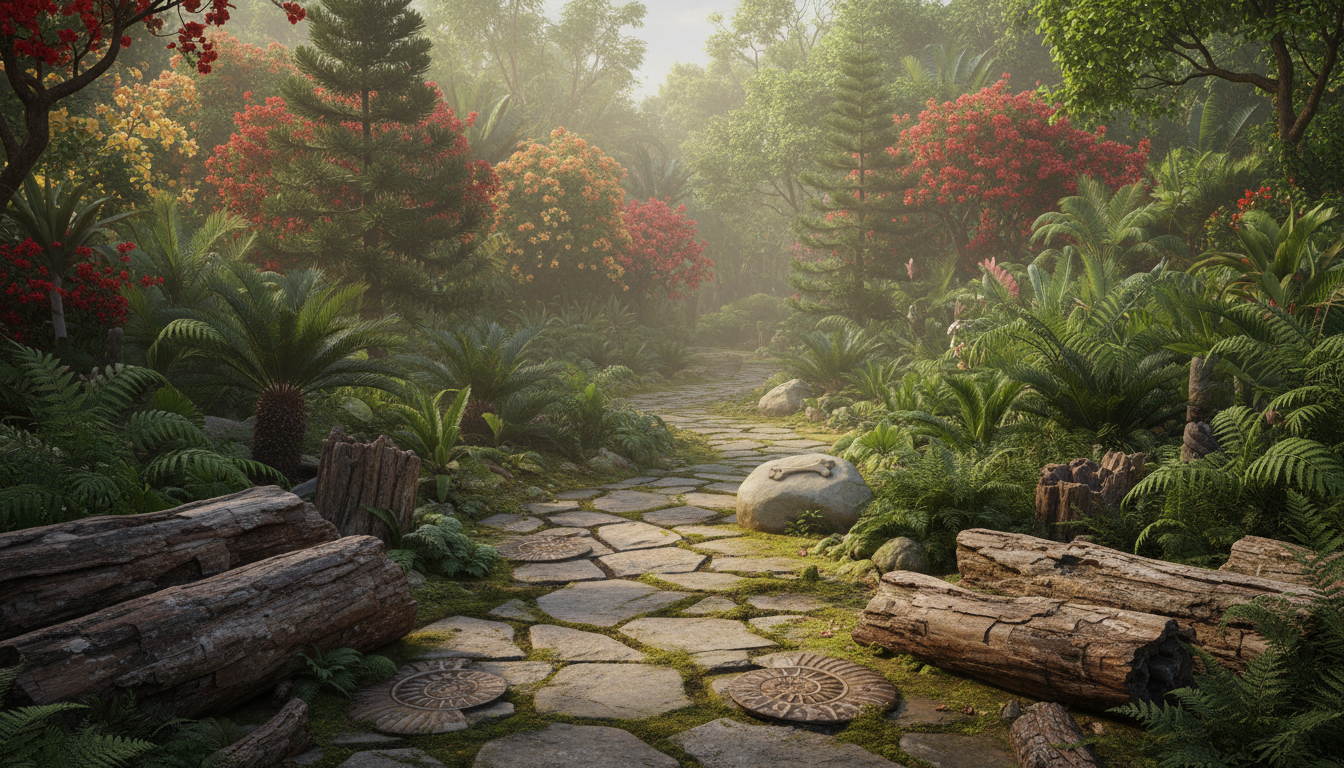
Did you know? You can explore roughly 3.5 billion years of life’s evolution during a short walk at Singapore Botanic Gardens, without needing a museum ticket or leaving Bukit Timah. Evolution Garden takes a visitor from ancient life to increasingly complex plants through stone features, living specimens and interpretive displays.
This is an existing botanical attraction in October 2026, not a new development promised for 2027. For families, the meaningful change from a casual stroll is knowing what to look for, how to explain deep time simply, and which Gardens rules and opening hours actually apply.
Evolution Garden: a quick visitor reference
- Place: Evolution Garden, a themed landscape inside Singapore Botanic Gardens near the Central Core and Bukit Timah-side visitor areas.
- Designer: landscape designer Junichi Inada, identified in NParks’ collection guide.
- Theme: approximately 3.5 billion years of early life and plant evolution.
- Notable displays: petrified wood, models of ancient Lepidodendron trees, early plant themes and the Gardens’ only dedicated moss collection.
- Admission: general entry to Singapore Botanic Gardens is free; there is no separate Evolution Garden ticket in the current visitor information.
- Access: the main Gardens open 5am–midnight, but individual themed areas, maintenance and weather notices can affect access. Check local signs before a late visit.
- Pets: Evolution Garden is listed by NParks as a no-pets zone.
- 2027: no separate 2027 first-opening date is announced for this existing garden.
What does ‘3.5 billion years’ mean on a footpath?
Imagine that the whole history of life were printed as a very long strip of paper. For most of its length, you would not see forests, flowers, birds or humans. You would see the story of much simpler life and changing Earth conditions. Only much later did the plant groups familiar today arise.
Evolution Garden compresses that enormous span into a walkable sequence. It is a learning landscape, not a scale model in which every metre represents a fixed number of years. The displays use physical features and selected plants to help visitors grasp the order in which major biological developments occurred.
One useful reminder is that a garden cannot represent every organism or every geological event. Its purpose is to introduce evidence and important transitions. A model, a living species and a fossil are different kinds of information.
Begin with evidence: stones, traces and the oldest forms of life
Stone features and prehistoric-themed displays encourage visitors to ask how scientists can know about organisms that lived before writing or photography existed. Fossils, layered rocks and chemical evidence can preserve traces of ancient environments.
Some exhibits evoke stromatolites, layered structures associated with the activity of microbial communities. They are a helpful way to discuss that much of Earth’s biological history occurred before large animals or familiar trees.
A petrified piece of wood is different from fresh timber. Minerals can gradually replace or fill parts of the original material under suitable geological conditions. That is why a fossil can preserve structural evidence even after the original living material has changed dramatically.
Children can compare what the actual observation is—a rock texture or preserved shape—with the explanation scientists infer from evidence. That is a foundational skill in science.
Ferns, mosses and early plant forms
NParks identifies Evolution Garden as home to the Gardens’ only dedicated moss collection. Mosses are small, non-flowering plants that illustrate a different approach to survival and reproduction from the seed-bearing trees we see in many streets.
Ferns reproduce using spores rather than flowers and seeds. Cycads are seed-bearing plants whose appearance is often associated with ancient-looking vegetation. They are not simply ‘living fossils’ frozen unchanged in time; living species continue to evolve.
Use the displays as a comparison: which plants are small and close to moist ground? Which have broad leaves? Which bear seeds? Which rely on spores? The goal is to understand differences in structure and reproduction rather than memorising a long list of Latin names.
What are the giant ancient trees in the display?
Models of Lepidodendron help imagine coal-swamp forests of deep geological time. These extinct tree-like plants belong to a branch of the plant kingdom different from most modern flowering trees. Their scale can surprise students who associate spore-producing plants only with small ferns or mosses.
An extinct plant reconstruction is evidence-based interpretation, not a living tree that survived unchanged for hundreds of millions of years. Look for how exhibits distinguish models from living specimens and fossils.
A useful question for older students is: what evidence might allow researchers to reconstruct an extinct organism’s appearance? Fossilised stems, leaves, reproductive structures and comparisons with related plants may all contribute.
Five observations children can make without collecting anything
- Spot one model and one living plant. Explain why their role in the exhibition differs.
- Compare two leaf arrangements. Are the leaves divided, broad, needle-like or clustered?
- Find a spore-related plant. Ask how it reproduces without flowers.
- Notice the relationship between water and plants. Why might mosses and certain ferns be common in moist locations?
- Make a simple chronological drawing. Place microbes, early land plants, large prehistoric spore-producing plants and flowering plants in broad sequence.
These are optional educational questions, not an NParks guided programme. Avoid picking plant material or touching delicate displays to complete them. An accurate sketch or photograph from a permitted spot is enough.
Getting to Evolution Garden from Bukit Timah
Botanic Gardens MRT (CC19/DT9) on the Circle and Downtown Lines serves the Bukit Timah Entrance. Singapore Botanic Gardens is large, so a visit to a specific themed area still requires walking from the gate. Check the official map to identify Evolution Garden in relation to nearby paths and attractions.
Napier MRT on the Thomson–East Coast Line serves the Tanglin side, which may involve a longer walk for some Bukit Timah Core attractions. If travelling with children or someone with limited mobility, choose the entry point that avoids an unnecessarily long cross-Gardens route.
Our existing Evolution Garden plant-history and arrival guide is a simple directions reference. The present article focuses more deeply on the educational sequence and what remains relevant through 2027.
Why are the Gardens’ general hours not the whole story?
Singapore Botanic Gardens normally opens 5am to midnight, but its specialist displays and conservation-sensitive areas can have different maintenance or safety arrangements. NParks also lists Evolution Garden among designated areas where pets are not permitted.
Before a late or early visit, check the current Gardens map and any local signs. Do not infer that every interpretive feature is lit or fully accessible just because a larger botanical park has long opening hours.
During heavy rain or lightning, follow safety advice and any temporary closures. This outdoor learning landscape is best enjoyed when the path is dry enough to walk comfortably and visitors can read the signs safely.
How does this connect to the Seed Bank and modern conservation?
Evolution Garden looks backwards, asking how major branches of life arose over immense time. The Singapore Botanic Gardens Seed Bank looks towards the future, asking how plant genetic diversity can be conserved under contemporary environmental pressures.
Both belong to the Gardens’ wider scientific purpose, but they are not the same attraction. Our Seed Bank conservation and 2027 visitor guide explains the storage of seed collections and why research into germination matters.
The Healing Garden medicinal-plants guide offers another comparison: it focuses on traditional plant uses rather than deep-time evolutionary history. A family could choose one thematic area per visit instead of attempting to cover the entire Gardens in one afternoon.
What will change from now to December 2027?
The verified present position is that Evolution Garden is a longstanding themed attraction described in NParks’ May 2026 collection guide. There is no confirmed new Evolution Garden opening in 2027 in the official material checked.
Planting displays may change as living specimens grow or are maintained. Special activities, weather closures and visitor signs may also change. Those are the legitimate things to check before a 2027 outing, not a fabricated reconstruction or reopening date.
Frequently asked questions
Is Evolution Garden a paid attraction?
No separate admission fee is published for Evolution Garden. General entry to Singapore Botanic Gardens is free.
Does it contain real fossils or only models?
The themed garden uses a combination of petrified material, plant collections and reconstructed ancient forms. Read the interpretive label to distinguish a specimen from a model.
Can children learn about dinosaurs here?
The landscape introduces geological and plant evolution, including prehistoric environments. It is not primarily a dinosaur theme park or a live-animal attraction.
Can I bring my dog into Evolution Garden?
No. NParks includes Evolution Garden among the Gardens’ restricted no-pets zones.
Will the garden first open in 2027?
No. It already exists and is open under current site conditions. No specific 2027 relaunch is confirmed.
Official references and update
Checked 25 October 2026. Primary sources: NParks’ Plant Collections and Gardens overview, Singapore Botanic Gardens opening hours and map, NParks self-guided visitor advice, current visitor notices and UNESCO Singapore Botanic Gardens World Heritage listing.