
Explore this vocabulary series
Children’s Vocabulary Ages 1–12: series hub — choose everyday words, Base Fence meanings, Connecting Fence sentences or Maximum Fence extensions.
Age 3: Everyday Age 3 · Base Age 3 (this guide) · Connecting Age 3 · Maximum Age 3
Previous: Base Age 2 · Next: Base Age 4
Choose a guide that fits the child’s current needs. At early ages, longer sentences are adult models, not required spoken targets.
Top 100 Essential Vocabulary Words for Children | Base Fence Age 3 is a practical vocabulary guide for parents, caregivers and tutors supporting children aged 36–47 months. This third article in the Base Fence series selects useful words for people, conversation, time, household objects, pretend play, actions, comparisons, nature, feelings and everyday relationships. The focus is language adults can model clearly in familiar situations.
Essential vocabulary for a three-year-old becomes useful when it helps share a thought or solve a small problem: asking a question, finding a book, explaining a game, describing a wet leaf or saying that there is enough paper. This Age 3 vocabulary list gives each word an understandable meaning, a complete adult example, a gentle expansion and another setting in which the word can work. It is an adult planning resource, not a required spoken total or a developmental test.
The Base Fence approach begins with a meaningful base word and adds a little language when it clarifies the message. “Leaf” can become “green leaf” and then “The green leaf is on the branch.” “Question” can become “I have a question about this game.” The adult offers the fuller model while responding to the child’s current message. Speech, gesture, action and established communication methods can all help the child participate; a longer sentence is not the price of receiving help, attention or a turn.
eduKate · Base Fence · Age 3
Find your next useful word
A long guide for adults. Choose one familiar situation, then use a little language in real life.
Understand the age range and the Base Fence approach.
Scan ten everyday groups and choose a familiar word.
Try the words during care, play, books and outings.
Use a flexible plan and record real communication.
Support family languages and prepare for the next stage.
Full chapter index
Start here and scan the list
Words 1–50: people, conversation, time, home and play
Words 51–100: actions, comparisons, nature, feelings and relationships
Use, adapt and continue
- 14. Everyday routines: turn the words into useful messages
- 15. A flexible four-week plan for adults
- 16. Observation: preserve what actually happened
- 17. Guidance for tutors and other caregivers
- 18. Family languages and different ways to join
- 19. From Age 3 towards Age 4
- 20. Questions parents and tutors often ask
- 21. Sources and further reading
Age 3 here means from the third birthday until before the fourth birthday: approximately 36–47 months. It does not mean Primary 3, Grade 3 or a third-level reading programme. The activities centre on everyday communication, play, shared books, familiar routines and simple observations that an adult can make understandable.
The earlier Base Fence Age 1 and Base Fence Age 2 guides remain useful. A birthday does not replace a child’s vocabulary. Keep familiar words such as help, book, wet and under in ordinary conversation, and add relevant language from this article when a real situation gives it a purpose.
This selection includes more than names for things. Question and answer help talk about conversation. First, next and last help organise a short sequence. Same and different help make a comparison clear. Enough relates an amount to a purpose. These meanings may need more context than a visible cup, so the adult should provide a clear scene rather than expect a definition on demand.
Did you know that the same small activity can support several different messages without becoming several lessons? A child drawing may need paper, choose a colour, describe a long line, ask a question or say that they have had enough. The adult can select the word that fits the actual moment. There is no need to introduce every possible label before the activity can begin.
The 100 entries are an editorial selection, not a scientifically ranked first-100 list for this age. A family may use different role names, clothing terms, foods or daily routines. Some words will already be familiar; others may be most useful for adult modelling or later understanding. Relevance matters more than completing a printed order.
For broader developmental context, consult ASHA’s communication milestones for ages 3–4. The resource discusses communication across an age range, including comparisons, stories and location language. It does not mean every example appears immediately after a third birthday. If you have concerns about hearing, lost skills or communication development, speak with your child’s doctor or a qualified speech-language professional rather than using this word selection as an assessment.
The Base Fence examples are original eduKate teaching suggestions. They are not an individual therapy programme or a clinically validated treatment. Use a child’s existing professional recommendations where relevant, and adapt materials, pace, language and physical participation to their needs. The long article belongs in adult preparation; the child’s experience can remain a short, enjoyable exchange.
Begin with what both people can understand in the current scene. A visible picture, a familiar routine or a small toy event provides an anchor. If the word concerns something less visible, such as think or tomorrow, make the adult’s meaning explicit through a real choice, a truthful plan or a simple demonstration.
Choose the base for the message it supports. Picture names the representation, page names part of the book and story names the connected events. Each can be useful during reading, but the child does not need all three at once. If they are pointing to a dog, respond to that interest before explaining book structure.
Offer a short model first. “A leaf”, “The box is empty” or “I have a question” can make the meaning available without a long introduction. Use your ordinary voice and natural grammar. Clear speech does not require stretching every sound, separating every word or turning the exchange into a pronunciation exercise.
Respond to the child’s intention. A point between two toys may be an answer about location. An offered drawing may be an invitation to look. A repeated question may be a request for reassurance rather than new information. Observe the whole situation, clarify when needed and act on the message before deciding which longer phrase to model.
Add a small amount of language that helps. If the child says “Leaf”, a true colour or location may make the comment clearer. If they say “Lost”, the useful addition may identify what is missing. If they say “Tomorrow”, the adult may connect the word with the real plan and explain when it will happen. The addition should clarify the current meaning, not simply lengthen the sentence.
Leave room for the next turn. After an expansion, the child may speak, point, continue the action or move to another interest. You do not need to ask a checking question every time. A shared action can show that the exchange was useful without a repeated adult model being copied back.
Revisit the word in a second understandable context. A question can happen during a game or a book. A branch can appear in a picture or on a tree viewed safely outside. Before can organise two art steps or two story events. The new example broadens the meaning, while the adult keeps enough familiar information available for the relationship to remain clear.
Expand an object, an event or a purpose
An object expansion identifies a relevant feature. Leaf becomes green leaf when colour matters. Plate becomes round plate when shape distinguishes it from another item. Keep the feature accurate, and avoid making one appearance the permanent meaning of the category. Another leaf or plate may look different and still belong to the same broad group.
An event expansion connects an action with people, objects or places. Pour can become “I am pouring water into the cup.” Fold can become “We are folding the paper to make a card.” The adult supplies natural sentence structure while the child can contribute through an adapted action or a shorter message.
A purpose expansion explains why someone is communicating. Question can become “I have a question about where this goes.” Lost can become “My book is lost and I need help finding it.” Enough can become “We have enough cups for our group.” These models show language doing a practical job, with no requirement that a child reproduce the whole form before the adult responds.
Make uncertainty and changes understandable
Some words invite honest uncertainty. Think and guess should not be modelled as if they guarantee a fact. An adult can say “I think the toy is in the basket”, look and then acknowledge a different result. The small correction shows how information can change an idea without making the original attempt shameful.
Time words need truthful references. Tomorrow changes to today when the day arrives. Next should identify a real following event, rather than an indefinite promise. If a plan changes, explain the change simply. The adult’s consistency helps keep the word connected to an understandable relationship, even while the child is still learning how to use it.
A word with several meanings needs separate clear examples. Light can describe low weight or illumination. Patient can describe waiting or someone receiving healthcare. Cover can name part of a book or an action. Begin with one use, then introduce another when context makes it clear. A new meaning broadens the earlier one rather than proving that the child learned it wrongly.
Choose a manageable starting set
For one activity, a small adult plan might include a base object, a related action and a useful message. During a craft, those could be paper, fold and question. During a toy search, they might be basket, find and lost. This is an organisational option for adults, not a daily quota or a prescribed number of repetitions.
Keep useful words for as long as they fit. Change the example when the child’s interest changes, and leave an unfamiliar word for another day. If planning leads you to talk over the child or turn every contribution into a test, simplify. The guide should help you notice better opportunities, not make ordinary interaction harder to enjoy.
The ten groups below contain 100 distinct entries. The numbering supports navigation and does not prescribe an acquisition order. Each table uses a complete adult example that can stand on its own; the fuller entries explain the meaning, a possible expansion and a second context. Read the adult guidance, then put the article aside for the actual interaction.
Family names, local terms and familiar routines can be adapted. Choose a word with a real purpose in your child’s life, and accept the communication methods already available to them. The table is a map for adult preparation, not a worksheet that the child must complete or a list of statements they are expected to say independently.
People, roles and everyday belonging · quick scan
| No. | Word | Adult model |
|---|---|---|
| 1 | Neighbour | Our neighbour lives next door. |
| 2 | Visitor | We have a visitor today. |
| 3 | Doctor | The doctor is helping the child. |
| 4 | Nurse | The nurse is helping with your care. |
| 5 | Dentist | The dentist helps care for teeth. |
| 6 | Driver | The driver is driving the bus. |
| 7 | Cook | The cook is preparing the meal. |
| 8 | Helper | You are helping me carry the books. |
| 9 | Team | We are a team building this tower. |
| 10 | Everyone | Everyone at this table has a cup. |
Asking, telling and thinking · quick scan
| No. | Word | Adult model |
|---|---|---|
| 11 | Question | I have a question: where is your book? |
| 12 | Answer | Your answer is the red book. |
| 13 | Ask | You can ask me for help. |
| 14 | Tell | You are telling me about the train. |
| 15 | Explain | I will explain how this lid opens. |
| 16 | Remember | I remember our walk in the park. |
| 17 | Forget | I forgot where I put the book. |
| 18 | Know | I know where the towels are. |
| 19 | Think | I think the book is on the shelf. |
| 20 | Guess | I will guess which toy is in the box. |
Time, order and getting ready · quick scan
| No. | Word | Adult model |
|---|---|---|
| 21 | Morning | It is morning, and we are having breakfast. |
| 22 | Afternoon | This afternoon we will visit Grandma. |
| 23 | Evening | This evening we are reading together. |
| 24 | Today | Today we are going to the shop. |
| 25 | Tomorrow | Tomorrow, after we sleep, Grandma will visit. |
| 26 | Yesterday | Yesterday we went to the park. |
| 27 | First | First we get the paper. |
| 28 | Next | Next we choose a crayon. |
| 29 | Last | This is the last page of this book. |
| 30 | Ready | The paper and crayons are ready. |
Household objects and practical places · quick scan
| No. | Word | Adult model |
|---|---|---|
| 31 | Plate | The bread is on your plate. |
| 32 | Fork | Your fork is beside your plate. |
| 33 | Jug | I am pouring water from the jug. |
| 34 | Bottle | Your water is in the bottle. |
| 35 | Fridge | I am putting the yoghurt in the fridge. |
| 36 | Sink | We are washing our hands at the sink. |
| 37 | Tap | I am turning on the tap. |
| 38 | Bin | The paper goes in the recycling bin. |
| 39 | Basket | The books are in the basket. |
| 40 | Shelf | Your book is on the shelf. |
Pretend play, books and shared games · quick scan
| No. | Word | Adult model |
|---|---|---|
| 41 | Pretend | Let's pretend Teddy is having lunch. |
| 42 | Story | This story is about a teddy finding a ball. |
| 43 | Picture | This picture shows a dog. |
| 44 | Page | We are turning to the next page. |
| 45 | Cover | The book cover has a cat on it. |
| 46 | Puppet | The puppet is asking for a book. |
| 47 | Costume | This costume helps me pretend to be a pirate. |
| 48 | Game | Our game is finding the hidden teddy. |
| 49 | Rule | Our rule is one roll each. |
| 50 | Piece | This piece fits in the puzzle. |
Making, changing and checking actions · quick scan
| No. | Word | Adult model |
|---|---|---|
| 51 | Mix | I am mixing these two colours. |
| 52 | Pour | I am pouring water into the cup. |
| 53 | Stir | I am stirring the mixture. |
| 54 | Cut | I am cutting the paper. |
| 55 | Fold | I am folding the paper in half. |
| 56 | Stick | I am sticking the picture onto the paper. |
| 57 | Fix | I can help fix the loose toy part. |
| 58 | Wash | We are washing our hands at the sink. |
| 59 | Paint | I am painting a line on the paper. |
| 60 | Count | Let's count the cups for our table. |
Shape, size and comparing features · quick scan
| No. | Word | Adult model |
|---|---|---|
| 61 | Same | These blocks are the same colour. |
| 62 | Different | These cups are different colours. |
| 63 | Round | This plate has a round shape. |
| 64 | Square | This picture shows a square. |
| 65 | Straight | This line is straight. |
| 66 | Curved | This line is curved. |
| 67 | Long | This paper strip is long. |
| 68 | Short | This is the short paper strip. |
| 69 | Heavy | This bag feels heavy to me. |
| 70 | Light | This empty bag feels light to me. |
Plants, weather and the outdoor world · quick scan
| No. | Word | Adult model |
|---|---|---|
| 71 | Leaf | This picture shows a leaf. |
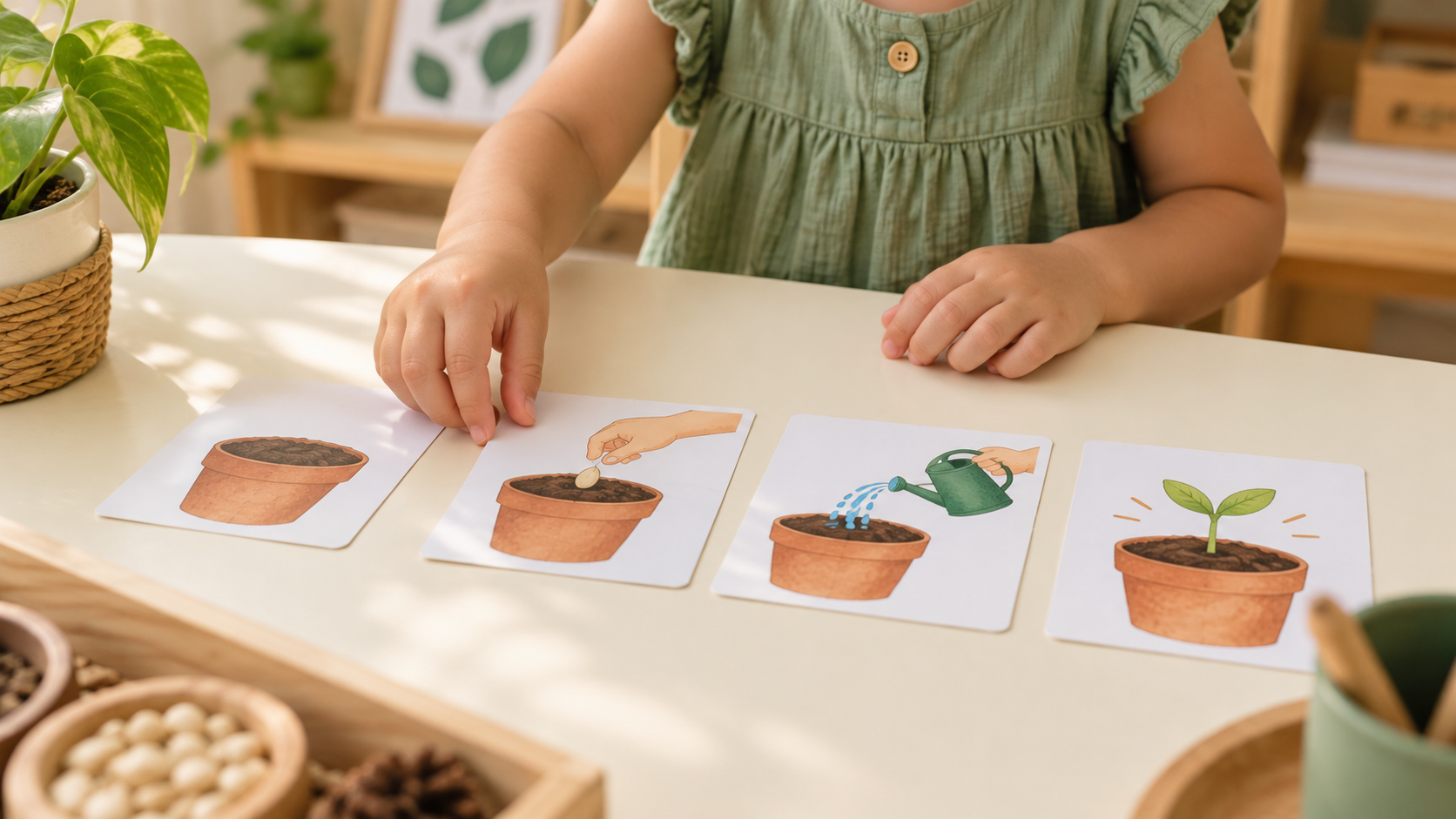
| 72 | Seed | This picture shows a seed in the soil. |
| 73 | Soil | The plant is growing in soil. |
| 74 | Root | The roots are under the soil in this picture. |
| 75 | Branch | The bird is on a branch. |
| 76 | Grass | The ball is on the grass. |
| 77 | Stone | This picture shows a smooth stone. |
| 78 | Sand | The bucket is on the sand. |
| 79 | Cloud | There is a cloud in the sky. |
| 80 | Wind | The wind is moving the leaves. |
Feelings, fairness and getting support · quick scan
| No. | Word | Adult model |
|---|---|---|
| 81 | Calm | I feel calm sitting here with the book. |
| 82 | Worried | You seem worried about the new room. |
| 83 | Surprised | I was surprised to find the book there. |
| 84 | Proud | I feel proud that I kept trying to fix the picture. |
| 85 | Lonely | The story character feels lonely and wants some company. |
| 86 | Friendly | That was a friendly hello. |
| 87 | Fair | We will each have a turn with the shared toy. |
| 88 | Patient | I am waiting while you finish your page. |
| 89 | Safe | I am holding your hand while we cross with care. |
| 90 | Lost | Teddy's ball is lost in our story. |
Position, sequence and shared amounts · quick scan
| No. | Word | Adult model |
|---|---|---|
| 91 | Between | The teddy is between the two boxes. |
| 92 | Above | The picture is above the shelf. |
| 93 | Below | The basket is below the shelf. |
| 94 | Across | The toy car is moving across the mat. |
| 95 | Through | The toy car is going through the tunnel. |
| 96 | Before | We get the paper before we draw. |
| 97 | After | We put the crayons away after drawing. |
| 98 | Together | We are reading together. |
| 99 | Another | Would you like another piece of paper? |
| 100 | Enough | We have enough cups for everyone at this table. |
1. Neighbour
A neighbour is someone who lives near another person. Begin with a familiar person your family actually recognises, rather than using the word as a label for every adult seen outside.
Say: “Our neighbour lives next door.” Connect the word with the real place and, where appropriate, the person’s name. A photograph or a story can provide an alternative if a real introduction is not useful.
Base Fence: neighbour → our neighbour → Our neighbour is walking to the gate. The adult adds a visible action while keeping the relationship clear. The child can contribute a name, point or shorter phrase.
Try another setting: notice a neighbour helping a story character. Explain that living nearby is the relationship being named; friendliness, age and clothing do not define it. Do not require a greeting or physical affection to demonstrate understanding. A useful people word can broaden the child’s view of a community while ordinary family boundaries around unfamiliar people remain in place.
2. Visitor
A visitor is someone who comes to a place for a time and does not ordinarily live or stay there. Use a real, expected visit so the difference between arriving and belonging to the household is understandable.
Say: “We have a visitor today.” Name the person and explain one simple fact, such as that they are coming to read a book with you. Keep the information truthful and manageable.
Base Fence: visitor → our visitor → Our visitor is sitting beside the table. The adult supplies the fuller description without asking the child to entertain the visitor or perform a greeting.
Try another setting: let a toy visit another toy’s house and leave again. The short pretend event can show the temporary nature of the role. Avoid presenting visitors as automatically safe or requiring a child to abandon personal boundaries. The word describes a relationship to a place, while adults continue to manage introductions, comfort and appropriate contact.
3. Doctor
A doctor is a trained professional who provides medical care. Introduce the role through a familiar appointment, a suitable story or gentle pretend play, without promising what an actual visit will involve.
Say: “The doctor is helping the child.” In a picture, name one visible action and leave space for questions. For a real appointment, use the accurate explanation provided by the adults managing care.
Base Fence: doctor → the doctor → The doctor is listening to the child. The adult model can support a scene without requiring the child to explain illness or procedures.
Try another setting: a toy can ask for help from a pretend doctor, using only ordinary safe props. Do not use the activity to diagnose symptoms, imitate invasive procedures or assure a child that something will never hurt. The useful base word identifies a helping professional, while honest preparation and appropriate clinical advice guide any real medical experience.
4. Nurse
A nurse is a trained healthcare professional who provides care in many settings. Use the actual role when known, rather than assuming it from a person’s clothing, gender or location.
Say: “The nurse is helping with your care.” For a book scene, describe the visible action accurately, such as talking with a family or preparing equipment. The word can be learned without rehearsing a real procedure.
Base Fence: nurse → a nurse → A nurse is speaking with the family. The adult’s fuller sentence adds people and an action while keeping the role clear.
Try another setting: include a nurse in a gentle pretend clinic with suitable toys. Distinguish nurse from doctor without suggesting that one role is simply an assistant version of the other. A three-year-old does not need a complete professional hierarchy. A few accurate examples can establish a useful community word, while the family follows the explanations and recommendations of the actual care team.
5. Dentist
A dentist is a trained professional who cares for teeth and oral health. The word can become familiar through a book or an actual visit, with preparation based on what the appointment will really involve.
Say: “The dentist helps care for teeth.” Point to a relevant picture or explain the person’s role briefly before a visit. Invite questions without turning the conversation into a test about body parts.
Base Fence: dentist → our dentist → Our dentist is talking about my teeth. The adult model describes a possible event without promising a particular treatment or sensation.
Try another setting: let a toy attend a pretend appointment using a picture or safe toy props. Avoid putting objects in a child’s mouth to demonstrate the role. The label helps name a professional and a purpose, while real dental care follows appropriate guidance. A child can understand the word and still feel uncertain about a visit; vocabulary should support comfort and honest information rather than be used to dismiss those feelings.
6. Driver
A driver is a person operating a vehicle. Begin with a familiar car or bus situation where the person’s role is clear, and distinguish the person from the vehicle itself.
Say: “The driver is driving the bus.” A picture can make both parts visible without distracting an actual driver. If the family is travelling, talk during a calm moment while maintaining normal supervision.
Base Fence: driver → bus driver → The bus driver is stopping at the stop. The fuller sentence connects the role with an observable action and place.
Try another setting: place a toy person in a suitable toy vehicle and describe the pretend journey. Avoid assuming that a driver must look a particular way or be a particular family member. The role is defined by the action. The child can hear drive, driving and driver naturally across different sentences, with no need for a word-family lesson or expectations about managing real traffic decisions.
7. Cook
Cook can name a person who prepares food or the action of preparing food using heat. Begin with one clear use, then connect the related meaning when a real example supports it.
Say: “The cook is preparing the meal.” Use the word for a person whose role fits, or describe “Daddy is cooking” during an ordinary routine. The adult can name the action from a safe place without involving the child in heat or equipment.
Base Fence: cook → the cook → The cook is making soup for lunch. The fuller model gives the role a practical purpose, using a familiar food when possible.
Try another setting: a toy kitchen can show a pretend cook making a meal with safe props. Explain that pretend cooking is play and that real preparation needs adult management. Avoid linking the role to one gender or presenting all kitchen activities as safe for a child to copy independently.
8. Helper
A helper is someone who assists with a task. Begin with a specific useful action rather than using the word only as praise for obedience or a label for one kind of worker.
Say: “You are helping me carry the books.” Then name the role if useful: “You are a helper today.” The task should be manageable, optional where possible and genuinely useful to the shared activity.
Base Fence: helper → a helper → A helper is holding the basket while we tidy. The adult model explains what help looks like in that moment.
Try another setting: notice an adult helping another adult or a story character receiving assistance. A child should also see that needing help is ordinary and does not make someone less capable or valuable. Avoid rewarding only children who serve adult goals. The base word can support cooperation, asking for assistance and recognising what different people contribute, while respecting the child’s comfort and boundaries.
9. Team
A team is a group working or playing together towards a shared purpose. Start with a small cooperative task that makes the purpose visible, rather than explaining a formal competition.
Say: “We are a team building this tower.” Share the materials and let each person contribute in a manageable way. The result does not have to be impressive for the shared purpose to be clear.
Base Fence: team → our team → Our team is carrying the toys to the basket. The adult’s sentence names an actual joint action rather than using team as a demand for agreement.
Try another setting: notice a team in a simple story or familiar game. Explain that team members may do different jobs and still work together. Avoid making one child responsible for another’s success or presenting cooperation as never saying no. A useful group word can describe shared effort while adults continue to support fair turns, individual needs and practical limits.
10. Everyone
Everyone refers to all the people in the relevant group. The group must be clear, because the word does not necessarily mean every person everywhere.
Say: “Everyone at this table has a cup.” Point out the small visible group and check that the statement is true. A clear example gives the broad word a concrete boundary.
Base Fence: everyone → everyone here → Everyone here is listening to the story. Use the sentence only when it accurately describes the scene; the child does not need to adopt one particular listening posture.
Try another setting: offer a shared toy activity and explain “There is paper for everyone in our group.” Contrast everyone with one person through actual arrangements, without making a sorting test. Avoid using the word to pressure the child with unsupported claims such as “Everyone else can do it.” The base meaning is inclusion of a defined group, and truthful examples make it useful for everyday participation.
11. Question
A question is something asked to obtain information, clarification or a response. Begin with a genuine information need, so the child hears questions doing more than checking correct labels.
Say: “I have a question: where is your book?” If you already know the answer, make the shared purpose clear, perhaps helping a toy find it. Be ready to answer the child’s own question too.
Base Fence: question → my question → My question is where the toy should go. The adult model names the purpose of asking without requiring a formal definition.
Try another setting: let a puppet ask a simple question about a visible scene. The child can answer by pointing, acting or speaking. Avoid turning every page of a book into a question sequence. Comments, answers and shared action also belong in conversation. The useful base word helps someone recognise that uncertainty or curiosity can be expressed and responded to respectfully.
12. Answer
An answer is a response to a question or problem. At Age 3, begin with a clear question and a response that actually addresses it, rather than treating answer as a demand for speech.
Say: “Your answer is the red book,” after the child clearly chooses it. A point can provide the answer, and the adult can put that choice into words while acting on it.
Base Fence: answer → my answer → My answer is that the ball is under the chair. The full adult model shows how information can respond to a particular question.
Try another setting: a puppet asks who has the toy, and another character answers truthfully. If the child gives a different or unclear response, explore the intended meaning instead of immediately declaring it wrong. The word is useful when people notice whether a response resolves the actual question, with enough context and support to make the exchange understandable.
13. Ask
Ask means seeking information, permission or something from another person. It is an action in an interaction, and a child may ask through words, gesture or an established communication method.
Say: “You can ask me for help.” Then respond when help is requested, without making a particular sentence the condition for receiving it. The adult can model the intended message alongside the assistance.
Base Fence: ask → ask for help → I can ask for help with my shoe. The fuller form names both the social action and its practical purpose.
Try another setting: ask another adult a genuine question while the child hears the exchange. This shows that adults also need information and assistance. Avoid teaching ask as a rule that every ordinary need must wait for perfect manners. The useful concept is that communication can invite another person’s response, while adults remain attentive to signals that are already clear without a spoken request.
14. Tell
Tell means communicating information to someone. Begin with a small real event the child wants to share, rather than requiring an account of the entire day.
Say: “You are telling me about the train.” Listen to the child’s contribution and add a short clarification if needed. A single word plus a point may carry useful information about what interested them.
Base Fence: tell → tell Daddy → I want to tell Daddy about the train. The adult model gives the message an audience and a purpose without scripting what the child must report.
Try another setting: a toy tells another toy where a ball is hidden. Keep tell distinct from ask through obvious examples, while avoiding a formal comparison lesson. Do not demand that the child disclose private feelings or perform a story for visitors. The word can support voluntary sharing, practical information and asking an adult to listen when something matters.
15. Explain
Explain means helping someone understand how or why something happens or what something means. For a three-year-old, start with a short practical demonstration rather than expecting a polished reasoned speech.
Say: “I will explain how this lid opens.” Show the action slowly and use a few clear words. The explanation succeeds by making the task more understandable, not by sounding complicated.
Base Fence: explain → explain the game → I will explain where each toy goes. The adult supplies the model and the demonstration, while the child can ask or show what remains unclear.
Try another setting: let a puppet be unsure about a familiar activity and help it with one simple instruction. Avoid repeatedly asking why after every child response or treating uncertainty as failure. The useful base word names a helpful communication action. A picture, gesture or demonstration can form part of an explanation alongside spoken language.
16. Remember
Remember means bringing something previously experienced or learned to mind. Begin with a familiar recent event and an optional cue, such as a photograph, object or place.
Say: “I remember our walk in the park.” Name one truthful detail and leave room for the child to add their own. The adult can model remembering without asking the child to retrieve information on demand.
Base Fence: remember → remember the bus → I remember riding on the bus with you. The fuller sentence connects the memory with a shared experience and a person.
Try another setting: revisit a favourite book and recall one earlier event in the story. Do not treat a different remembered detail as automatically wrong; first clarify what the child means. Avoid making memory a measure of affection or effort. The base word helps talk about a past experience, while photographs and familiar routines can provide useful support without invalidating the contribution.
17. Forget
Forget means not bringing something to mind when it is wanted or needed. Use an ordinary, low-stakes adult example so the word does not arrive mainly as criticism of the child.
Say: “I forgot where I put the book.” Then show a practical response: look in the usual places or ask another adult. The event makes the meaning clear without making forgetting a moral failure.
Base Fence: forget → forget the bag → I forgot the bag and went back for it. The adult can model the natural past form while describing a real event.
Try another setting: a puppet forgets which toy belongs in a basket and asks for help. Keep the scene light and easy to resolve. Avoid saying the child forgot when they may not have understood or learned the information in the first place. The useful distinction is between not knowing and not recalling, with adult support available in either situation.
18. Know
Know means having information, understanding or familiarity. Begin with something a person genuinely knows, and also model that not knowing can be an ordinary starting point for learning.
Say: “I know where the towels are.” Then show the location and use the information to solve a practical task. The word becomes meaningful through the relationship between information and action.
Base Fence: know → know the place → I know that the book is on the shelf. The adult model should be truthful rather than an unsupported claim about the child’s knowledge.
Try another setting: say “I do not know; let’s look together” when you genuinely need to find out. Avoid using know as a verdict after a single correct answer or as pressure to perform: “You know this, so say it.” A child may understand something without wanting or being able to display it in the moment. The base word supports honest talk about information and uncertainty.
19. Think
Think can describe considering an idea or holding a belief that may not be certain. Start with a visible practical choice or a simple uncertainty, and let the adult model the process.
Say: “I think the book is on the shelf.” Then look and find out. If it is elsewhere, acknowledge the result calmly. The word shows that a thought can guide a search without guaranteeing the answer.
Base Fence: think → think about it → I am thinking about which game to choose. The fuller sentence names an ordinary mental action, with no requirement for the child to describe an internal process.
Try another setting: consider where a toy might fit before trying it. Avoid asking the child to read another person’s mind or assuming that a facial expression reveals exactly what they think. The useful base word gives room for ideas, uncertainty and revision, while the activity supplies a concrete reason to use it.
20. Guess
Guess means offering an answer when the information is incomplete or uncertain. Introduce it through a light game where being wrong has no penalty and the result can be checked.
Say: “I will guess which toy is in the box.” Use a familiar, safe object and reveal it promptly. The adult can guess incorrectly and respond cheerfully to the actual answer.
Base Fence: guess → my guess → My guess is that the teddy is inside. The model makes the uncertainty explicit instead of presenting the answer as known.
Try another setting: guess what a familiar character might do next, then read on. Distinguish a guess from a memory or an observed fact in simple language: “We are not sure yet.” Avoid requiring the child to guess in situations involving danger, care or information an adult should provide accurately. The base word is useful for playful prediction and tolerating uncertainty, with checking built into the shared activity.
21. Morning
Morning names the earlier part of the day, commonly associated with waking and daytime routines. Begin with the child’s actual schedule rather than a clock-reading lesson.
Say: “It is morning, and we are having breakfast.” Use a truthful recurring event as an anchor. The word does not require a particular food, school attendance or a precise explanation of hours.
Base Fence: morning → this morning → This morning we are reading after breakfast. The adult adds a real plan and keeps it short enough to connect with the day.
Try another setting: notice morning in a familiar story and compare one ordinary routine. Avoid assuming that brightness alone proves it is morning, since weather and location vary. A child can hear time words repeatedly before using them accurately. The useful starting point is a recognisable part of the daily pattern, with the adult explaining plans honestly and revisiting the word when the event occurs.
22. Afternoon
Afternoon names the part of the day after midday and before evening. A three-year-old can begin with a familiar routine, without being expected to understand a precise clock boundary.
Say: “This afternoon we will visit Grandma,” if that is the real plan. Connect the statement with a manageable event sequence, such as lunch first and the visit afterwards.
Base Fence: afternoon → this afternoon → This afternoon we are going to the park. The full model should describe a genuine plan rather than an uncertain promise.
Try another setting: after the event, say “We went this afternoon” while recalling one detail. Avoid quizzing the child about which time label applies to every activity or treating a mixed-up word as dishonesty. These categories are broader and less visible than objects. Familiar experiences can gradually make the word useful for planning and remembering, with changes explained clearly when the day’s arrangement shifts.
23. Evening
Evening names the later part of the day before night. It may include a meal, family time or a settling routine, depending on the household’s schedule.
Say: “This evening we are reading together.” Anchor the word to an actual event rather than insisting that every family follows the same bedtime or dinner time.
Base Fence: evening → this evening → This evening we will read after our meal. The adult’s sentence adds a familiar sequence, but the child does not need to reproduce it or identify a clock time.
Try another setting: look at an evening scene in a book and name the clues cautiously, such as a family preparing for bed. Darkness alone is not a complete definition. Avoid using evening as an unexplained deadline for a promise the child cannot place in time. A practical reference to the real routine can make the word more understandable and help the adult communicate what comes next.
24. Today
Today refers to the current day. Its meaning changes as days pass, so use it with real events and revisit the reference naturally rather than teaching it as a fixed label.
Say: “Today we are going to the shop.” Follow through when the plan is real, and explain any change. A simple photograph or drawing of the day’s activity can provide a reminder without requiring a calendar lesson.
Base Fence: today → today we play → Today we are playing with the blocks. The adult model ties the time word to something happening in the current day.
Try another setting: at a calm later moment, recall “Today we saw a bus.” Avoid using today and yesterday interchangeably to make an example easier. If the child uses the wrong time word, respond to the event and offer the accurate model. The base meaning can grow through repeated truthful use, with concrete experiences supplying the anchor.
25. Tomorrow
Tomorrow refers to the day after today. It is an abstract time relationship, so keep early examples close to a genuine, familiar plan and allow the child time to connect the idea.
Say: “Tomorrow, after we sleep, Grandma will visit,” only when that is a reliable plan. The sleep reference can help organise the explanation, though it is not a complete definition of every sleep or day.
Base Fence: tomorrow → tomorrow we visit → Tomorrow we are visiting Grandma. The adult supplies the fuller model and avoids making the child recite a schedule.
Try another setting: when the day arrives, explain “The visit is today now.” This shows that the word changes with the speaker’s current day. Do not use tomorrow as an indefinite way to postpone something repeatedly. The useful lesson depends on truthful references and understandable changes, with uncertainty named honestly when a future plan is not settled.
26. Yesterday
Yesterday refers to the day before today. Begin with one recent shared experience and a concrete reminder rather than a long memory test.
Say: “Yesterday we went to the park,” when that is accurate. A photograph, a familiar object or the child’s own comment can open the conversation. Name one detail and let the child add or simply listen.
Base Fence: yesterday → yesterday we played → Yesterday we played with the big ball. The adult model links the time word with a real event and a familiar object.
Try another setting: contrast a yesterday event with something happening today, using only two clear examples. Avoid assuming that every use of yesterday accurately dates an event; a child may be trying to talk about the past more generally. Acknowledge the intended story and provide the correct time phrase naturally. The word grows through shared references, not through correcting each attempt as a factual failure.
27. First
First identifies the beginning position in an order or sequence. Start with a small visible series, such as two actions in a familiar routine, rather than a competitive ranking.
Say: “First we get the paper.” Then get it and explain the next action. The word becomes clear when the adult’s behaviour matches the spoken order.
Base Fence: first → first get paper → First we get the paper for drawing. The fuller model gives a practical purpose without requiring the child to remember several steps at once.
Try another setting: place two familiar picture cards in order and describe what happened first. Avoid making first always mean best or most deserving. A child can be first in a line, first to act or first in a story sequence without those positions determining their value. The useful base word helps organise an event, with the adult keeping the sequence short and the reference clear.
28. Next
Next identifies the following item, position or event in a sequence. Begin with an immediate, visible transition so the word points towards something that actually happens.
Say: “Next we choose a crayon,” after placing the paper. Show the available crayons and allow a real choice. This connects the order word with a meaningful action rather than an abstract list.
Base Fence: next → next choose crayon → Next we choose a crayon for drawing. The adult offers the complete sentence while the child can participate by choosing or pointing.
Try another setting: turn to the next page in a book or let a toy take the next turn. Keep next distinct from an indefinite later, especially when the child is waiting for something important. If the plan changes, explain the change. The word is useful because it helps people anticipate a nearby event, and truthful follow-through makes that relationship easier to understand.
29. Last
Last identifies the final position or event in a relevant sequence. Make the boundary clear, since a last turn or last page only makes sense within a particular activity.
Say: “This is the last page of this book,” when it is true. Let the child see the ending and then describe what happens afterwards, such as choosing another activity or putting the book away.
Base Fence: last → last page → We are looking at the last page together. The adult model names a visible final part without demanding that the child explain the whole sequence.
Try another setting: announce a genuinely final toy turn when a transition is needed, with suitable support for ending. Avoid repeatedly saying last and then extending the activity unpredictably. Also avoid using last as an insult or a measure of ability. The useful meaning is a position within a defined order, and a calm, consistent example can help make it concrete.
30. Ready
Ready means prepared for an action or event. It can describe materials, people or a situation, so begin with one clear practical example.
Say: “The paper and crayons are ready.” Show the prepared materials and begin the activity. The word becomes understandable through the connection between preparation and what can happen next.
Base Fence: ready → ready to draw → We are ready to draw on the paper. The full adult model names the purpose rather than treating ready as a vague command.
Try another setting: ask whether a toy is ready for a pretend journey, then check its bag or seat. With the child, respect a genuine not-ready message when a pause is possible, and explain necessary transitions honestly when it is not. Avoid assuming that ready means excited, calm or independently capable. The base word describes preparation for a particular event, with adult support still available for the event itself.
31. Plate
A plate is a usually flat dish used for serving or eating food. Begin with a familiar unbreakable example in an ordinary meal, making the object clear without turning eating into a naming test.
Say: “The bread is on your plate.” If needed, point to the food and dish separately, then let the meal continue. The sentence gives the object a practical relationship rather than an isolated label.
Base Fence: plate → my plate → My plate is on the table. The adult adds a visible location while the child’s own request or comment can stay shorter.
Try another setting: use a suitable large toy plate during pretend play. Compare it with a bowl on another occasion if the difference is useful, rather than presenting a formal sorting lesson. Plates vary in shape, colour and material, so another clear example can broaden the category. Dietary choices, food preparation and comfortable eating remain ordinary care matters, separate from demonstrating the word.
32. Fork
A fork is a utensil with prongs, often used for eating. Introduce it through the child’s familiar, appropriate equipment or a clear picture, with adult support for actual use.
Say: “Your fork is beside your plate.” Show the utensil before the meal and name its purpose briefly. The child can understand the label without being expected to manage every movement independently.
Base Fence: fork → my fork → I am using my fork with help. The adult’s full model keeps assistance visible rather than making independence a requirement for the sentence.
Try another setting: find a fork in a simple mealtime picture or suitable pretend set. Keep fork, spoon and plate distinct by naming each at the relevant moment. Avoid sharp or unsuitable utensils as teaching props. The useful progression is recognising the object, asking for it and talking about its role in a familiar routine, with physical skills and safe handling supported according to the individual child.
33. Jug
A jug is a container with a handle and a shaped opening for pouring. Use a lightweight, suitable example that an adult can demonstrate clearly, or a picture if handling is not appropriate.
Say: “I am pouring water from the jug.” Keep the source and destination visible and use only a manageable amount of ordinary cool water in any real demonstration.
Base Fence: jug → water jug → The water jug is beside the cups. The adult adds a useful description and location, while the child can participate through looking or pointing.
Try another setting: use an empty pretend jug in a toy meal. Distinguish the container from the liquid: the jug remains when the water is gone. Avoid introducing hot drinks, heavy containers or difficult pouring tasks merely to teach the word. A clear adult action can show the object’s purpose, with the child’s physical participation adapted to their comfort and support needs.
34. Bottle
A bottle is a container, often with a relatively narrow opening, used for holding liquids or other contents. Begin with a familiar safe example, such as the child’s usual water bottle.
Say: “Your water is in the bottle.” Name the contents separately so the word does not become a label for water itself. The same container can be empty later and still be a bottle.
Base Fence: bottle → my bottle → My water bottle is in the bag. The full adult model adds an object description and a practical place.
Try another setting: find a bottle pictured in a book or notice another appropriate drinking bottle. Keep caps and small components managed by an adult, and do not use medicine or cleaning containers for play. The useful category grows through different safe examples. A child does not need to drink from a new type of container or change a feeding routine to learn the word and its everyday use.
35. Fridge
A fridge is an appliance used to keep food and drinks cool. Refrigerator is the longer form, but the everyday household word is a useful base when it matches what the child hears.
Say: “I am putting the yoghurt in the fridge.” Let an adult carry out the action while the child observes from an appropriate place. Name one familiar item and the destination, rather than explaining the appliance’s mechanics.
Base Fence: fridge → in the fridge → The milk is in the fridge. The adult model gives the place word a practical role in finding or storing something.
Try another setting: identify a fridge in a kitchen picture or a suitable toy kitchen. Avoid making access to the real appliance a game or asking the child to explore inside. The word can be understood through ordinary adult routines. Different colours and shapes of fridge can later show that the category depends on its function rather than one household’s appearance.
36. Sink
A sink is a basin used for washing or related tasks, usually with a tap and a drain. Begin with the familiar sink used during supported handwashing.
Say: “We are washing our hands at the sink.” Keep the routine comfortable and name the water, tap or towel separately only when it helps the child follow what you mean.
Base Fence: sink → bathroom sink → The towel is beside the bathroom sink. The fuller sentence connects familiar objects and a clear location without adding a new care demand.
Try another setting: find a sink in a simple kitchen or bathroom picture. Explain that a kitchen sink and a bathroom sink are both sinks even when they look different. Do not encourage climbing or operating taps unsupervised as a demonstration. The base word identifies a familiar feature of the environment, while adults manage water temperature, access and the actual care routine.
37. Tap
A tap is a device used here to control water flow. The word also names a light touch, but begin with the water-control meaning in a familiar washing routine.
Say: “I am turning on the tap.” An adult manages the water and shows the visible change. Then “I am turning it off” can describe the ending without requiring the child to operate it.
Base Fence: tap → water tap → Water is coming from the tap. The complete adult model links the object with an observable event.
Try another setting: identify a tap in a bathroom picture. Later, if you use tap for a gentle touch, make that different meaning clear through the action and context. Avoid mixing both meanings in a first explanation or treating a child’s earlier understanding as wrong. Knowing the label does not establish safe independent use of real fixtures, so ordinary adult support remains part of the routine.
38. Bin
A bin is a container used for collecting something, often rubbish. Household uses vary, so name the particular purpose in your example instead of teaching that every bin contains waste.
Say: “The paper goes in the recycling bin,” if that matches your actual arrangement. An adult can demonstrate with suitable clean material and explain the immediate destination.
Base Fence: bin → paper bin → This clean paper goes in the paper bin. The adult model is specific to the local routine, with no claim that all materials belong there.
Try another setting: identify a toy-storage bin and explain what it holds. Keep real rubbish, cleaning products and unsuitable contents away from play. Avoid using a child as a sorter of unknown waste to demonstrate vocabulary. The useful category is a container with a particular job, and a few accurate familiar examples can show how the surrounding words clarify which bin someone means.
39. Basket
A basket is an open container often used for carrying or storing things. Begin with a safe, familiar basket holding large toys or books, with no need for a formal definition of materials or weaving.
Say: “The books are in the basket.” Let the child choose a book or help place one inside if that fits the activity. The object name becomes useful through finding and organising something wanted.
Base Fence: basket → book basket → I am putting the book in the basket. The adult’s sentence adds an action and relationship that can be seen.
Try another setting: notice a different basket in a picture or household routine. Keep handles, strands and contents suitable for the child’s access. If the child calls it a box, acknowledge the storage meaning and provide basket naturally. The distinction can develop through clear examples without a correction drill or an expectation that every container be classified perfectly on first encounter.
40. Shelf
A shelf is a flat supported surface used for placing or storing things. Start with a familiar low shelf that an adult can point to clearly during a real routine.
Say: “Your book is on the shelf.” Show the book and surface together, then help retrieve it if needed. The location phrase solves a practical problem and makes the label useful.
Base Fence: shelf → book shelf → I am putting the book on the shelf. The fuller adult model names a visible action without requiring the child to reach beyond their ability.
Try another setting: find a shelf in a house picture or notice a different shelf elsewhere. Avoid turning climbing or reaching high storage into a vocabulary task. A child can understand the word while relying on an adult to access the object. The useful distinction is between the shelf as a surface and the books or toys placed on it, which may change while the surface remains.
41. Pretend
Pretend means acting as though something imagined is happening while it is understood as play. Begin with a light, recognisable scene that the child can join or watch comfortably.
Say: “Let’s pretend Teddy is having lunch.” Use an empty toy plate and describe one action. The adult can make the play frame clear without expecting a detailed role or story from the child.
Base Fence: pretend → pretend lunch → We are pretending that Teddy is eating lunch. The full model names the imagined event while keeping it distinct from an actual meal.
Try another setting: a block can pretend to be a phone during a brief game if the child enjoys that idea. Do not use pretend as a way to dismiss a real fear, injury or request. The useful base word helps people share an imagined situation, with the child free to stop, change the idea or return to a concrete activity when the play no longer feels enjoyable.
42. Story
A story is an account of connected events, whether real or imagined. At Age 3, a small sequence with one character and a clear change can be enough to share meaning.
Say: “This story is about a teddy finding a ball.” Name the central event briefly, then read or act it out. The child can add a sound, action or detail without retelling the whole sequence.
Base Fence: story → Teddy’s story → Teddy’s story begins with a missing ball. The adult model connects the broad label with a particular account.
Try another setting: tell a tiny true story about a recent outing: who went, what happened and how it ended. Make it clear when an event is imagined rather than real. Avoid treating a child’s different version as automatically dishonest; first clarify whether they are pretending, recalling or exploring an idea. The base word can support both shared imagination and simple memories, with context making the difference understandable.
43. Picture
A picture is a visual representation, such as a drawing, painting or photograph. Begin with a familiar example and name what it shows without suggesting that the represented object is physically present.
Say: “This picture shows a dog.” Point to the representation and comment on one visible detail. The child can talk about the dog while also hearing a word for the whole image.
Base Fence: picture → dog picture → The dog picture is on this page. The full adult model adds a clear relationship between image and book.
Try another setting: look at the child’s drawing and ask whether they would like to tell you about it, rather than demanding a recognisable subject. A picture can be meaningful even when the adult cannot identify it immediately. Avoid making realistic drawing a condition for using the word. The useful distinction is between an image, what it represents and the material or surface on which it appears.
44. Page
A page is one side of a leaf in a book or a similar written or pictured surface. For a three-year-old, begin with the practical action of looking at and turning pages.
Say: “We are turning to the next page.” Let the child help if comfortable, then pause to notice what appears. The word is useful because it organises a shared reading action.
Base Fence: page → next page → The next page has a picture of a bus. The adult model connects the page with visible content and a familiar object.
Try another setting: return to a favourite page and describe “This is the page with the dog.” Avoid requiring page numbers or print reading to demonstrate understanding. A child can navigate by pictures, memory and interest. The base word helps talk about part of a book, while the whole reading experience remains open to stopping, skipping or revisiting a section that matters to the child.
45. Cover
A cover is something that protects or goes over something else; here the first example is the outside cover of a book. Keep that specific meaning clear before introducing other uses.
Say: “The book cover has a cat on it.” Show the outside, then open to a page so the two parts are visibly different. The child does not need a formal book-parts lesson.
Base Fence: cover → book cover → I can see a cat on the book cover. The fuller adult sentence names a picture and its location.
Try another setting: compare another familiar book’s cover with the inside pages. Later, cover can also be an action, such as covering a toy with a suitable cloth in supervised play. Introduce that use separately and safely. The useful base meaning grows through clear contexts, rather than treating every object that goes over something as identical or correcting a reasonable early association as a mistake.
46. Puppet
A puppet is a figure moved by someone to act or communicate. A simple, suitable hand puppet can make a character’s actions and voice easy to notice, but the child does not need to touch it.
Say: “The puppet is asking for a book.” Move it gently and use a clear short message. Give the child time to watch, respond or decline the game.
Base Fence: puppet → bear puppet → The bear puppet is looking for its ball. The adult model connects the object with a simple pretend purpose.
Try another setting: let the puppet be unsure about where a toy belongs and accept help from the child. Do not use a puppet to pressure a child into disclosures, affection or tasks they have refused to an adult. Its useful role is to make an imagined conversation visible and enjoyable. If the child finds animated figures uncomfortable, a picture or ordinary toy can carry the same language example.
47. Costume
A costume is clothing or an outfit worn to represent a character, role or occasion. Begin with a familiar, comfortable example rather than requiring dress-up as part of learning the word.
Say: “This costume helps me pretend to be a pirate.” Explain the play frame simply, using a suitable prop or picture. The child can choose whether to wear anything or just watch.
Base Fence: costume → pirate costume → The puppet is wearing a pirate costume. The adult’s fuller model can use a toy if dressing is not enjoyable.
Try another setting: notice a character’s costume in a book or performance picture. Avoid linking professional competence, identity or permission to one outfit: wearing a doctor’s costume does not make someone a doctor. Keep masks, fastenings and materials appropriate for the child’s access. The base word supports pretend play and descriptions, with sensory comfort and genuine choice determining how the child participates.
48. Game
A game is an organised play activity with a recognisable idea or pattern. It may involve rules, turns or a shared challenge, but it need not be competitive to count as a game.
Say: “Our game is finding the hidden teddy.” Explain the simple purpose and show one turn. Let the child join through a manageable action, or adapt the game if the original pattern is not useful.
Base Fence: game → teddy game → We are playing a game with the teddy. The adult model names the shared activity without demanding a particular level of success.
Try another setting: play a short matching or rolling game using familiar materials. Keep the aim clear and avoid adding many rules at once. A child who changes the idea may be exploring play, rather than failing to understand game. The useful base word helps people propose, choose and recall an activity, with the adult supporting fair participation and an understandable ending.
49. Rule
A rule is an agreed or established instruction about how something is done. Begin with one simple rule that makes a familiar game workable, and explain its practical effect.
Say: “Our rule is one roll each.” Demonstrate the turns and keep the wait manageable. The adult should follow the same stated rule rather than changing it unpredictably when the child participates.
Base Fence: rule → game rule → The game rule is to roll the ball gently. The full model names the setting and action, with adult support for the actual movement.
Try another setting: discuss a household routine rule in specific language, such as where drawing materials are used. Avoid saying rule as a substitute for explaining what the child should do, or treating every adult preference as self-evident. The useful base word identifies a shared arrangement, while understanding it, remembering it and managing impulses remain different demands that may need practical support.
50. Piece
A piece is a part of a larger thing or one item within a set. Begin with a visible familiar example, such as one large puzzle piece or a sheet of paper used for drawing.
Say: “This piece fits in the puzzle.” Show the relationship with support, without making successful fitting the test of understanding. The child can recognise the label while finding the physical task difficult.
Base Fence: piece → puzzle piece → The puzzle piece has part of the picture on it. The adult model connects the part with the larger whole.
Try another setting: ask for a piece of paper during a genuine drawing activity. Explain the immediate use without trying to define every possible meaning of piece. Avoid using tiny objects to demonstrate parts or demanding that the child reconstruct a whole before receiving help. The word is useful for requesting, finding, describing and noticing how something can belong within a larger arrangement.
51. Mix
Mix means combining things so they are together or more evenly distributed. Begin with a clear, safe example that an adult can manage, such as combining suitable colours during painting.
Say: “I am mixing these two colours.” Show the before and after without promising a particular result unless it is known. Let the child observe or join with appropriate materials and support.
Base Fence: mix → mix colours → We are mixing the colours on this paper. The adult’s fuller sentence names the action, objects and place.
Try another setting: describe an adult mixing ingredients during ordinary food preparation, from a safe viewing position. Keep mixing distinct from merely placing two things beside each other when that difference matters. Do not introduce unknown substances or food experiments solely for vocabulary. The useful base verb describes a change people can see, with later examples gradually broadening what kinds of things can be mixed and for what purpose.
52. Pour
Pour means moving a flowing substance from one container or place into another by tipping or directing it. Start with a small, suitable amount and a clear adult demonstration.
Say: “I am pouring water into the cup.” Keep both containers visible and the movement manageable. The child can watch before deciding whether to participate with help.
Base Fence: pour → pour water → I am pouring water from the jug into the cup. The fuller model adds source and destination, which can help explain what the action changes.
Try another setting: use an empty pretend jug to act out the movement, while making clear that it is pretend. Avoid hot liquids, heavy containers or slippery setups as teaching props. Understanding pour does not mean the child can control the action independently. The base word can support requests and descriptions, with the adult adapting the physical task and treating spills as information about support needs rather than vocabulary failure.
53. Stir
Stir means moving a utensil or similar tool through a substance, often in a circular motion, to move or combine it. A simple adult demonstration can make the action visible.
Say: “I am stirring the mixture.” Use suitable materials in an ordinary supervised activity, or demonstrate pretend stirring in an empty toy bowl. The label can be understood without real food or liquids.
Base Fence: stir → stir the mixture → I am stirring the mixture in the bowl. The adult’s natural full model clarifies that the contents, rather than the bowl itself, are being moved.
Try another setting: notice a character stirring soup in a picture. Explain that the pictured action is stirring while an adult manages any actual cooking. Keep stir distinct from pour through clear separate examples rather than rapid commands. The useful verb names a particular movement, and the child’s participation can be observation, a gesture or an adapted action rather than an exact imitation.
54. Cut
Cut means separating or making an opening in something using an appropriate edge or tool. At Age 3, language understanding can come through adult demonstration or pictures without requiring independent tool use.
Say: “I am cutting the paper.” Show a safe, appropriate adult-controlled action, with the child at a suitable distance. Name the material and the result briefly, such as two pieces.
Base Fence: cut → cut paper → The adult is cutting the paper into pieces. The full model makes the action and responsibility clear.
Try another setting: identify a cutting action in a cooking or craft picture. If the child already uses suitable scissors under guidance, follow that individual support rather than introducing a new skill for the vocabulary task. Avoid treating difficulty with tools as lack of word knowledge. The base verb can be useful for asking, describing and understanding an event, while equipment choice and physical safety remain separate adult decisions.
55. Fold
Fold means bending something so one part lies over another or changes its shape along a bend. A sheet of paper or familiar cloth can provide a visible, manageable example.
Say: “I am folding the paper in half.” Demonstrate slowly and show the before and after. The child can watch, help hold an edge or try an adapted movement without needing a precise crease.
Base Fence: fold → fold paper → We are folding the paper to make a card. The adult model adds a practical purpose when that is the actual activity.
Try another setting: fold a towel during a familiar routine and name the action again. Keep folding distinct from cutting: the material remains connected even when its shape changes. Avoid requiring exact matching of edges to prove understanding. The useful base word describes a transformation that can appear in different everyday materials, with the adult selecting a clear example and keeping the physical demand appropriate.
56. Stick
Stick can name a thin piece of wood or mean attaching something. For this entry, begin with the attaching action during a suitable adult-supported craft activity.
Say: “I am sticking the picture onto the paper.” Use appropriate materials and show how the picture stays attached. The child can place a large prepared piece or watch the adult demonstrate.
Base Fence: stick → stick the picture → We can stick the picture onto this card. The fuller model identifies the object and destination rather than using the verb alone.
Try another setting: notice a sticker attached to a familiar surface, explaining that it sticks there. Later, a wooden stick can be introduced as another meaning with a clear context. Do not confuse vocabulary teaching with permission to attach materials anywhere. The adult can state a practical boundary and provide a suitable surface, while keeping small parts, adhesive products and equipment under appropriate control.
57. Fix
Fix means making something work properly or putting a problem right. Begin with a small, visible issue that an adult can genuinely resolve, rather than creating distress or breaking something for a lesson.
Say: “I can help fix the loose toy part,” if it is a safe task within the adult’s ability. Show the problem and the result briefly, keeping unsuitable tools and small parts away from the child.
Base Fence: fix → fix the toy → We are fixing the toy so it can move again. The adult model connects the action with a practical purpose.
Try another setting: a puppet can fix a simple pretend problem, such as putting a book back where it belongs. Avoid promising that every broken object or difficult feeling can be fixed immediately. The useful base word supports asking for assistance and describing a change, while adults explain honestly when something needs a different solution, more time or professional help.
58. Wash
Wash means cleaning something with water and, where appropriate, a suitable product. At Age 3, the word can grow from a familiar handwashing routine to other clear, accurately described examples.
Say: “We are washing our hands at the sink.” Name the action while it happens, with the usual adult support and care guidance. The language should make the routine clearer rather than add a performance demand.
Base Fence: wash → wash hands → I am washing my hands before the meal. The fuller model adds a familiar sequence when that is the real situation.
Try another setting: wash a suitable toy with adult help or describe an adult washing a cup. Keep wash distinct from dry through the actual change in the routine. Do not make a child repeat a phrase before receiving help with personal care. The useful verb can support understanding instructions, describing actions and recalling what happened, with sensory comfort and practical safety respected throughout.
59. Paint
Paint can name a colouring material or the action of applying it. Begin with one clear supervised art example, using appropriate materials and a suitable surface.
Say: “I am painting a line on the paper.” Demonstrate the action without requiring the child to make the same mark. A picture need not be recognisable for painting to be a valid description.
Base Fence: paint → paint a line → We are painting long lines on this paper. The adult model adds a visible feature that matches the marks being made.
Try another setting: look at a finished painting and distinguish the activity from the result in ordinary language: “You painted this picture.” Avoid using unknown household coatings as play materials or making messy touch compulsory. A child who dislikes the texture can watch, use an adapted tool or discuss a picture. The base word helps request materials, describe an action and share a creation, with participation shaped by comfort.
60. Count
Count means saying number words in order to find or describe how many items or events there are. Begin with a small visible set and a practical reason to check it.
Say: “Let’s count the cups for our table.” An adult can point to or move each cup once while saying the number words. The purpose is making sure the relevant people have what they need, not reciting a long sequence.
Base Fence: count → count the cups → We are counting the cups before our snack. The adult’s fuller model connects an action with objects and a routine.
Try another setting: count a few large blocks as they are placed in a basket. Keep the amount manageable and distinguish saying a memorised sequence from matching one number word to each item. A child can join through pointing or moving objects. The useful base verb names a checking action, while understanding quantities can develop through repeated meaningful experiences rather than a single test.
61. Same
Same describes things that match in the relevant respect, or one thing remaining identical. Begin by making the feature clear, because two objects can be the same colour but different sizes.
Say: “These blocks are the same colour.” Show two suitable blocks whose colour match is obvious. Name the feature rather than simply declaring the objects the same in every way.
Base Fence: same → same colour → These two blocks have the same colour. The adult model explains what is being compared, while the child can point or place objects together.
Try another setting: find two matching pictures in a familiar book or game. Avoid treating a different sensible grouping as automatically wrong; the child may be attending to another feature. Ask or observe what they noticed, then clarify your own comparison. The useful base word supports noticing relationships, with a specific shared feature making the meaning clearer than a large sorting challenge.
62. Different
Different describes things that do not match in some relevant way. Begin with one obvious feature, and keep the comparison neutral rather than presenting difference as a problem.
Say: “These cups are different colours.” Show two clear examples and name the colours if those words are useful. The cups can still belong to the same broad category.
Base Fence: different → different colours → The cups have different colours but are both cups. The full adult model can introduce the comparison gently without requiring the child to explain categories.
Try another setting: notice two story characters taking different actions. Avoid using different as a negative judgement about people, bodies, languages or families. The word can describe a fact without assigning value. If the child groups items by another feature, explore that idea before redirecting. A useful comparison begins with a clear question about what is being noticed, rather than a hidden adult rule that only one arrangement can satisfy.
63. Round
Round describes a curved, circular or approximately spherical form in everyday language. Begin with a clear familiar example, such as a ball or a circle drawn by an adult, and identify the feature you mean.
Say: “This plate has a round shape.” Show the outline and contrast it with a visibly different shape on another occasion. There is no need to define formal geometry for the child.
Base Fence: round → round plate → The round plate is on the table. The adult’s model adds a useful object and location while keeping the description accurate.
Try another setting: notice a round shape in a book or suitable toy. Explain that round can describe more than one kind of curved form in ordinary speech, without pretending a flat circle and a ball are identical objects. Avoid relying on food or small objects as shape props when a large picture is clearer. The base word helps describe an observable feature across different familiar things.
64. Square
A square is a flat shape with four equal straight sides and four right-angled corners. For a three-year-old, begin with a clear picture or suitable shape rather than asking for the formal definition.
Say: “This picture shows a square.” Trace the outline with your own finger if helpful, and let the child watch or join. Name the shape separately from its colour or the material carrying it.
Base Fence: square → square shape → The square shape is beside the circle. The fuller adult sentence uses a visible relationship without adding a complex classification task.
Try another setting: notice a clearly square tile or drawn shape. Explain cautiously when something only looks approximately square, rather than teaching every four-sided object as a square. Turning the picture does not change the shape, so a second orientation can offer a useful example. The child’s ability to draw or fit the shape is separate from understanding its name.
65. Straight
Straight describes a line or direction without a bend. Begin with a clear adult-drawn line or a simple toy path, making the relevant feature easy to see.
Say: “This line is straight.” Then draw a curved line nearby on another turn if a comparison helps. The child does not need to reproduce either line accurately to hear the distinction.
Base Fence: straight → straight line → The toy car follows the straight line. The adult’s fuller model gives the description a practical use in play.
Try another setting: notice a straight edge on a familiar book or safe large block. Keep the meaning separate from instructions about posture or a judgement about a person’s body. If the child draws a wavy mark, describe it accurately and warmly rather than treating it as a failed straight-line lesson. The base word can support observation and directions, with actual movement and drawing demands adapted to the child’s abilities.
66. Curved
Curved describes a line or surface that bends rather than remaining straight. A broad adult-drawn curve can provide a clear example without requiring a geometric explanation.
Say: “This line is curved.” Show the bend with a gesture and, if useful, place a straight line nearby. Keep the contrast simple enough that colour and size do not distract from the feature.
Base Fence: curved → curved line → The toy follows the curved line around the block. The adult model connects the shape with a visible play action.
Try another setting: notice the curved handle of a familiar jug in a picture or real object. Do not require the child to sort many unfamiliar shapes or draw a precise curve to demonstrate understanding. The word is useful when it helps describe what someone sees or how a route changes direction. Another clear example can broaden the meaning beyond one drawing, while the child’s own marks remain valid exploration.
67. Long
Long describes a large extent from one end to the other relative to the context. Begin with two otherwise similar, suitable objects whose length difference is clear.
Say: “This paper strip is long.” Show both ends, then compare it with a shorter strip if useful. The adult should align the starting ends for a fair visual comparison rather than creating a misleading arrangement.
Base Fence: long → long strip → The long paper strip is on the table. The full model names the object and place without asking for a measurement.
Try another setting: describe a long toy train or a line drawn across the paper. Explain the relevant dimension through gesture if needed. Avoid making long a fixed name for one object, since a comparison can change when another object is introduced. The useful base word supports describing and choosing, while exact measuring and numerical units can wait until a real purpose and appropriate support make them meaningful.
68. Short
Short describes a small extent from end to end in the relevant comparison, and it can also describe duration. Begin with physical length, using a clear suitable example.
Say: “This is the short paper strip.” Show it beside a longer one with their starting ends aligned. The child can point or choose without needing to explain the comparison verbally.
Base Fence: short → short strip → The short strip is beside the long strip. The adult model makes the relationship visible and names both items.
Try another setting: draw a short line and compare it with a longer line. Later, a short story can introduce the duration or extent meaning separately. Avoid using short as a judgement about a child’s body or ability. A feature can be described neutrally, and an object may be short in one comparison and longer in another. The base word becomes useful through clear contexts rather than a permanent label attached to one toy.
69. Heavy
Heavy describes something with relatively large weight in a context or something that feels difficult to lift. Begin with an adult-managed example rather than asking the child to test a load.
Say: “This bag feels heavy to me.” Explain that you will carry it or reduce the contents. The adult’s experience can supply the word while the child observes safely.
Base Fence: heavy → heavy bag → The heavy bag needs an adult to carry it. The fuller model connects the description with an appropriate practical response.
Try another setting: compare two suitable containers by an adult’s demonstration, keeping actual weights manageable and the contents secure. Do not assume that a large object is always heavy or that a child should lift something to prove understanding. The useful base word can support requests for help and descriptions of objects, while strength, balance and safe handling remain separate matters requiring adult judgement and support.
70. Light
Light has several meanings; here it describes relatively low weight. Begin with a clear safe object and distinguish the meaning from the light that helps people see.
Say: “This empty bag feels light to me.” Show that the bag has little inside and that an adult can move it easily. Avoid implying that appearance alone always tells us an object’s weight.
Base Fence: light → light bag → The light bag is easy for me to carry. The adult model describes their own experience rather than assuming the same task is easy for the child.
Try another setting: compare a suitable empty container with the same container holding a secure manageable load, using adult handling. Later, explain the illumination meaning in its own clear context. Do not treat one valid use of the word as wrong because the child learned another first. The base meaning becomes useful through accurate examples and honest comparisons, with no requirement to carry objects independently.
71. Leaf
A leaf is a plant part often attached to a stem or branch. Leaves vary in shape and colour, so begin with a clear familiar example rather than one supposedly universal appearance.
Say: “This picture shows a leaf.” Point to the plant part and name the whole plant separately if helpful. A picture or safely viewed living plant can provide the meaning without picking or handling anything.
Base Fence: leaf → green leaf → The green leaf is on the branch. The adult model adds a true feature and visible relationship.
Try another setting: notice a different leaf in another picture or during a supervised walk. Keep unknown plant material out of the child’s mouth and follow ordinary adult guidance around plants. Avoid teaching that all leaves are green or shaped like one drawing. The useful base category can broaden through separate examples, with the child free to observe without touching and the adult naming what is actually visible.
72. Seed
A seed is a plant structure from which a new plant can develop under suitable conditions. At Age 3, begin with a clear picture or an adult-managed example rather than a requirement to memorise plant science.
Say: “This picture shows a seed in the soil.” Explain one simple relationship and return to the visible image. A seed does not become a full plant immediately, so avoid a pretend sequence that suggests instant real growth.
Base Fence: seed → plant seed → A new plant can grow from this seed. The adult model gives the base word a meaningful possibility without promising that every seed will grow.
Try another setting: use a familiar story about planting or picture cards showing stages over time. Small seeds need adult management and are not necessary loose play materials. The useful word can connect an object, an action and a later change, while the actual care and timescale of a planting activity remain accurately described.
73. Soil
Soil is the natural material in which many plants grow, containing mineral particles and organic material among other components. A three-year-old can begin with its practical relationship to a plant rather than a technical definition.
Say: “The plant is growing in soil.” Show a clear pot or picture and distinguish the soil from the container. The child can understand the label without handling the material.
Base Fence: soil → plant soil → The roots are in the soil inside the pot. The adult’s fuller model adds a visible or pictured relationship, not a demand to explain plant nutrition.
Try another setting: look at a planting sequence and notice when soil is added. Avoid treating soil, sand and every brown material as interchangeable. Use clean, appropriate adult-managed examples if real materials are involved, and maintain normal hygiene. The useful base word helps describe a familiar growing environment, with observation sufficient when touching is uncomfortable or unsuitable.
74. Root
A root is a plant part that usually anchors the plant and takes up water and nutrients. Begin with a clear picture, since roots may not be visible in an ordinary potted plant.
Say: “The roots are under the soil in this picture.” Point to the represented part and name the whole plant separately. Explain that the picture lets you see something normally hidden.
Base Fence: root → plant root → The plant’s roots grow into the soil. The adult model supplies a simple relationship without requiring a scientific account.
Try another setting: notice roots in another suitable illustration or an adult-led observation where they are already visible. Do not pull up a living plant merely to create a vocabulary example or ask the child to handle unknown material. The word becomes useful by naming a distinct part and its place in a larger whole, with the adult keeping the explanation accurate and proportionate to the child’s interest.
75. Branch
A branch is a part that extends from a tree’s trunk or another branch. Begin with a clear tree picture or a safely viewed real tree where the relationship is visible.
Say: “The bird is on a branch.” Point to the bird and the supporting tree part, then allow the child to notice other details. A familiar animal can give the new plant word a reason to matter.
Base Fence: branch → tree branch → The tree branch has leaves on it. The adult’s fuller sentence connects parts of a visible whole.
Try another setting: compare the trunk and a branch in another picture, keeping the distinction simple. Avoid using climbing, breaking branches or handling sharp sticks as a teaching activity. The child can learn the word through observation and stories. Branches vary in size and appearance, so another accurate example can broaden the meaning beyond one drawing while the adult continues to name the relevant part clearly.
76. Grass
Grass is a group of plants often forming a low green covering in gardens, parks and other places. Begin with a familiar patch viewed safely or a clear picture.
Say: “The ball is on the grass.” The familiar object gives the plant word a visible relationship and a practical reason to notice the surface.
Base Fence: grass → green grass → The children are playing near the grass. Choose the location that matches the actual scene rather than a memorised model.
Try another setting: find grass in a book or compare a grassy area with a paved path during a supervised outing. Avoid saying all green plants are grass, or making touching and sitting on it compulsory if the texture is uncomfortable. The useful base category can develop through several clear examples. Adults still decide whether an area is suitable for play, since knowing the word does not reveal hidden hazards, maintenance products or other conditions that need adult judgement.
77. Stone
A stone is a piece of rock. Begin with a large clear picture or a suitable adult-managed object, keeping small loose items away when they are inappropriate for the child.
Say: “This picture shows a smooth stone.” Use smooth only if the visible or handled example supports that description. The child does not need to test it physically to join the conversation.
Base Fence: stone → smooth stone → The smooth stone is beside the plant. The adult model adds an accurate feature and location.
Try another setting: notice stones along a safe path from a suitable distance. Compare one with a leaf in a picture if the child is interested, naming the actual materials rather than relying only on colour. Avoid throwing, tasting or collecting unknown objects as part of the lesson. The useful base word identifies a natural object that can appear in different sizes and places, with adult supervision shaping any real exploration.
78. Sand
Sand is a material made of small loose grains of rock, minerals or other substances. For a three-year-old, a familiar beach picture or suitable supervised play setting can provide the first clear meaning.
Say: “The bucket is on the sand.” Point to the material and container separately so the word does not become the name of one toy or place.
Base Fence: sand → dry sand → The dry sand is beside the bucket. The adult can add wet in another real example when the contrast is clear.
Try another setting: look at a sandcastle picture and describe what it is made from. Handling is optional, especially when the texture is uncomfortable. Use appropriate materials and ordinary hygiene in any actual play, with adults managing small particles and surroundings. The useful word can connect a material, a location and an activity without requiring a sensory task or teaching that all outdoor ground is sand.
79. Cloud
A cloud is a visible collection of tiny water droplets or ice crystals in the atmosphere. At Age 3, begin with the visible sky feature and a simple accurate comment rather than a full weather explanation.
Say: “There is a cloud in the sky.” Look from a safe position without directing the child to stare towards the sun. A picture can provide an equally clear example.
Base Fence: cloud → white cloud → A white cloud is moving across the sky. Use the colour only when it matches the actual example.
Try another setting: notice clouds with different appearances in a book or on another day. Avoid teaching that every dark cloud guarantees a particular event or that all clouds are the same shape. The useful base word lets the child share an outdoor observation, while the adult can distinguish what is seen from a guess about the weather and keep any explanation brief and truthful.
80. Wind
Wind is moving air. It is not usually seen directly, so begin with a visible effect such as leaves moving, while explaining the relationship cautiously.
Say: “The wind is moving the leaves.” Watch from a safe, comfortable place and let the child notice the movement. A still picture alone may need a little explanation or a familiar memory to support the idea.
Base Fence: wind → strong wind → The wind is blowing through the trees. Choose strong only when the conditions make that description appropriate.
Try another setting: recall a windy walk while looking at a picture of moving branches or clothing. Distinguish actual wind from a fan’s air movement when that difference matters, rather than treating every movement as proof of wind. Avoid going into uncomfortable or hazardous weather to make the word memorable. The useful base meaning connects an invisible cause with observable effects, with adult explanations staying within what the situation genuinely supports.
81. Calm
Calm can describe a settled feeling, manner or situation. Use it as a possible observation rather than a command that makes difficult feelings unacceptable.
Say: “I feel calm sitting here with the book.” An adult’s own experience gives the word a clear speaker and context. With the child, describe what you notice without claiming certainty about their internal state.
Base Fence: calm → feel calm → I feel calm when I rest in this quiet place. The fuller model should be truthful for the speaker, not a promise that the same place will calm everyone.
Try another setting: notice a calm scene in a familiar story and discuss what is happening. Avoid requiring stillness, silence or a particular facial expression as proof of calmness. A child may move while listening comfortably or remain quiet while upset. The useful base word adds language for one kind of experience, while adults continue to respond to the child’s actual needs and communication.
82. Worried
Worried describes feeling concerned about something that may happen or a problem that matters. A three-year-old can hear the word in a supportive conversation without being expected to explain every concern.
Say: “You seem worried about the new room.” Offer practical information or company and leave room for the child’s own message. If you are unsure, ask a simple question or describe the visible situation instead of insisting on the label.
Base Fence: worried → feel worried → I feel worried and would like you to stay nearby. The adult model gives a possible feeling and request, while a gesture or shorter phrase can carry the same need.
Try another setting: discuss a worried story character when the child is comfortable. Avoid deliberately creating uncertainty to teach the feeling or promising that nothing difficult will ever happen. The useful word supports asking for reassurance and information, with truthful adult support more important than producing the correct label.
83. Surprised
Surprised describes a response to something unexpected. It can be pleasant, unpleasant or mixed, so do not teach it as automatically meaning happy.
Say: “I was surprised to find the book there.” Use a small truthful adult example and explain what differed from your expectation. The child can notice the event without needing to copy a dramatic face.
Base Fence: surprised → feel surprised → I feel surprised because the toy is in a new place. The fuller model names an unexpected change rather than assuming a particular emotion from appearance alone.
Try another setting: a puppet discovers a familiar safe object in a box during a gentle game. Keep the reveal predictable enough that the child remains comfortable, and stop if it is unwelcome. Avoid loud startles or frightening surprises as teaching techniques. The useful base word helps talk about expectations and events, with room for the child to describe their own response differently.
84. Proud
Proud can describe a pleased feeling about something meaningful that someone has done or belongs to. Begin with an honest adult example or a child-led expression, rather than demanding a particular reaction to achievement.
Say: “I feel proud that I kept trying to fix the picture.” Describe the effort or action that matters to you, without suggesting that the child must feel the same way about their work.
Base Fence: proud → feel proud → I feel proud of the tower I built. The adult model offers a possible message the child may choose to use.
Try another setting: notice a character feeling proud after helping or practising. Avoid making adult approval the only reason a creation matters, or asking the child to perform success for visitors. A child can enjoy a process, feel frustrated or want to move on. The useful base word names one possible experience while leaving ownership of the feeling with the person who has it.
85. Lonely
Lonely describes feeling a lack of wanted companionship or connection. It is different from simply being alone, since someone may enjoy solitary play or feel lonely in a group.
Say: “The story character feels lonely and wants some company.” Use a clear gentle story context rather than assigning the feeling to a child who has chosen to play independently.
Base Fence: lonely → feel lonely → I feel lonely and would like someone to sit with me. The adult model gives a possible feeling and helpful request, without requiring the child to use the label.
Try another setting: let a toy invite another toy to share a book. Keep the invitation optional and show a respectful response. Do not create separation or threaten to leave a child alone to make the word meaningful. The useful distinction is between a physical arrangement and a person’s experience of connection, with adults listening to what companionship or space the child actually wants.
86. Friendly
Friendly describes a warm or welcoming manner. Begin with a specific action, such as a comfortable greeting or an offer to join a game, rather than judging a child’s whole personality.
Say: “That was a friendly hello.” Name the actual action and avoid requiring an exaggerated smile or spoken performance. A wave or another comfortable response can serve a social purpose too.
Base Fence: friendly → friendly greeting → The visitor gave us a friendly greeting. The adult model describes a manner without claiming that the person is therefore safe or trustworthy in every situation.
Try another setting: notice a friendly character offering a place at a toy table. Explain that a child can be friendly while declining touch, needing space or saying no to a game. Avoid treating quietness as unfriendliness. The useful base word helps describe an interaction, with consent, boundaries and adult judgement remaining important regardless of how warmly someone behaves.
87. Fair
Fair can describe an arrangement that takes relevant needs, turns or rules into account. Begin with a concrete small situation rather than expecting a three-year-old to resolve every social disagreement.
Say: “We will each have a turn with the shared toy.” Then explain that the arrangement is intended to be fair and help make the turns manageable. The adult’s action gives the abstract word substance.
Base Fence: fair → fair turns → We are taking fair turns with the shared ball. The fuller model describes a particular arrangement, not a judgement that everyone must feel satisfied immediately.
Try another setting: give each person paper for a shared activity, adapting support when someone needs more help. Avoid teaching that fair always means identical amounts in every circumstance. Ownership, need and shared access can differ. The useful word can open a conversation about an arrangement, while adults remain responsible for practical support and calm resolution.
88. Patient
Patient can describe allowing time without demanding an immediate result. For this entry, begin with a short supported wait, not the healthcare meaning of a person receiving care.
Say: “I am waiting while you finish your page.” Demonstrate patience yourself and make the next event clear. A child should see that adults also allow others time, rather than hearing the word only as a demand.
Base Fence: patient → patient waiting → I am being patient while my friend takes a turn. The adult model names the situation and behaviour without claiming the feeling is easy.
Try another setting: a puppet waits briefly for a book and receives its turn as promised. Keep the delay reasonable and truthful. Avoid using patient to justify indefinite waiting for food, comfort or necessary help. Later, the healthcare meaning can be introduced in its own context. The useful base word describes one way of managing a particular delay, with adult support available when the wait is difficult.
89. Safe
Safe describes a situation protected from relevant danger or harm, within the limits of what is actually known. For a child, pair the word with specific adult actions rather than a vague promise.
Say: “I am holding your hand while we cross with care.” Explain the protective action in a familiar real context, or use a picture if that keeps the discussion simpler.
Base Fence: safe → safe place → This is a safe place for our toy game. The fuller model should refer to an environment the adult has genuinely checked and continues to supervise.
Try another setting: compare a suitable play surface with a place where toys should not be used, using clear practical language. Avoid telling the child that a person or activity is safe solely because it looks friendly or familiar. Knowing the word does not supply adult risk judgement. The useful meaning supports asking for help and understanding boundaries, with adults providing the actual protection.
90. Lost
Lost can describe something whose location is unknown, or a person who cannot find their way. Begin with a low-stakes missing toy, keeping real separation and safety concerns out of the game.
Say: “Teddy’s ball is lost in our story.” Help the toy search in a small familiar area and find it promptly. The event should remain reassuring rather than creating distress about a cherished object.
Base Fence: lost → lost ball → Teddy is looking for the ball that is lost. The adult model connects the state with a practical response.
Try another setting: describe a real misplaced book honestly and ask another adult for help. Keep lost distinct from gone: something can be somewhere else without anyone being unsure of its location. Do not hide from the child or allow them to become separated to teach the word. The useful base meaning can support reporting a problem, searching together and asking an appropriate adult for help.
91. Between
Between describes a position or relationship separating or connecting reference points. Start with one toy placed clearly in the space between two familiar objects.
Say: “The teddy is between the two boxes.” Keep all three objects visible and the arrangement simple. The adult can point to each reference object before naming the position.
Base Fence: between → Teddy between boxes → The teddy is between the two boxes. The fuller sentence clarifies both the located object and the reference points.
Try another setting: find a character between two trees in a clear picture. Avoid moving the objects and changing the child’s viewpoint simultaneously, which may obscure the relationship. A child can answer by pointing rather than saying the word. The useful base meaning grows through understandable arrangements, with physical placing, memory and spoken grammar treated as separate demands rather than one test that must be passed perfectly.
92. Above
Above describes a higher position relative to something else, without necessarily touching it. A picture or adult-controlled toy arrangement can make the relationship clear.
Say: “The picture is above the shelf.” Point to the two features from a safe position and keep the reference stable. The child does not need to reach or climb to demonstrate understanding.
Base Fence: above → picture above shelf → The picture is above the low shelf. The full model names both parts of the relationship rather than leaving the reference implicit.
Try another setting: draw a cloud above a tree in a simple picture. Keep above distinct from on when contact matters: an object may be above a surface without resting on it. Avoid turning the difference into a rapid quiz. A few clear examples can make the location word useful for describing and finding things, while adults continue to manage access to higher objects and surfaces.
93. Below
Below describes a lower position relative to something else. Begin with a clear picture or familiar arrangement where the vertical relationship is easy to see.
Say: “The basket is below the shelf.” Show both objects and name the reference point. The adult’s gesture can support the word without making the response less meaningful.
Base Fence: below → basket below shelf → The basket is below the book shelf. The fuller model connects a familiar container with a visible place.
Try another setting: draw a ball below a table in a simple picture. Below and under can overlap in ordinary use, so avoid presenting a rigid distinction that the scene does not support. Explain the immediate relationship accurately and use natural language. The child can look, point or place a toy while the adult models the sentence. The useful base word adds another way to describe position, with no need for climbing, difficult retrieval or a long sequence of instructions.
94. Across
Across can describe movement from one side to another or a position on the opposite side. Begin with one clear toy movement across a small surface.
Say: “The toy car is moving across the mat.” Show the starting side and destination, using a gentle adult-controlled action. The visible path gives the word a practical meaning.
Base Fence: across → car across mat → The car moves across the mat to the box. The adult’s full model names the object, route and destination without requiring the child to repeat them.
Try another setting: draw a line across a sheet of paper or notice a character crossing a bridge in a book. Keep real roads and other hazards separate from the play demonstration. Knowing across in a toy game does not establish safe independent crossing. The useful base meaning can support descriptions and directions, with the adult maintaining the actual boundaries and supervision needed in real environments.
95. Through
Through describes movement within an opening, passage or space and out beyond it in many everyday uses. A suitable large toy tunnel gives a clear first example.
Say: “The toy car is going through the tunnel.” Keep the entrance and exit visible and move the toy slowly enough to follow. A picture can provide the same relationship without a physical setup.
Base Fence: through → through the tunnel → The car goes through the tunnel and comes out. The fuller model makes the path and result clear.
Try another setting: thread a large adult-managed object through a suitable opening or notice a character going through a doorway in a book. Do not ask the child to crawl into bags, tight spaces or enclosed containers for vocabulary practice. The useful base word describes a route or relationship, and a toy can demonstrate it while the child’s physical participation remains comfortable and safe.
96. Before
Before places an event earlier than another event in time or order. Begin with two familiar actions that the adult can carry out visibly and consistently.
Say: “We get the paper before we draw.” Show the sequence and then begin drawing. The second event gives the first a clear reference, rather than leaving before without an anchor.
Base Fence: before → before drawing → We choose our paper before we start drawing. The adult model connects the time relationship with a real routine.
Try another setting: look at two picture cards from a familiar event and discuss what happened before the final action. Avoid using long sequences or distant plans as the first example. A child may understand the routine before using the word independently. The useful base meaning helps organise and recall events, with the adult preserving the actual order and explaining changes when a different sequence becomes necessary.
97. After
After places an event later than another event in time or order. Begin with a short familiar sequence so both parts can be experienced close together.
Say: “We put the crayons away after drawing.” Follow the actual routine and provide the help needed for the transition. The time word clarifies the arrangement rather than replacing adult support.
Base Fence: after → after drawing → We tidy the crayons after we finish drawing. The full model names both the anchor event and the later action.
Try another setting: revisit two story pictures and describe what happened after the character found the toy. Keep after distinct from an indefinite promise that never arrives. If a child is waiting for something important, name the real event that comes first and follow through as reasonably as possible. The useful base word can support anticipation and memory, while the adult keeps the sequence truthful and manageable.
98. Together
Together can describe people sharing a place, time or activity. Begin with a clear cooperative event, without suggesting that everyone must do the same action or be physically close.
Say: “We are reading together.” Make the book accessible to both people and respond to the child’s interest. A child can participate from a comfortable position rather than adopting a prescribed posture.
Base Fence: together → play together → We are building this tower together. The adult model names a genuinely shared purpose, with each person’s contribution allowed to differ.
Try another setting: two toys can travel together in a pretend bus or two adults can carry something together. Avoid using the word to demand affection, remove boundaries or prevent solitary play. Being together can be enjoyable, but wanting space is also a valid message. The useful base meaning helps describe connection and cooperation, with adult arrangements making participation possible rather than compulsory.
99. Another
Another refers to one more or a different additional item of the relevant kind. Begin with a real request or choice where the extra item is available and appropriate.
Say: “Would you like another piece of paper?” Show the available sheet and accept the child’s response. The word has a clear effect when the new piece is actually provided if wanted.
Base Fence: another → another page → I would like another page to draw on. The adult’s fuller model identifies both the additional item and its purpose.
Try another setting: choose another book after finishing one, or give a toy another turn in a manageable game. Distinguish another from a promise of unlimited repetition; an adult can explain a genuine ending calmly. Avoid withholding ordinary needed materials to force the phrase. The useful base word can help request, compare and continue an activity, with the child free to decline the additional option as well as accept it.
100. Enough
Enough means a sufficient amount for a particular purpose or need. The purpose must be clear, because the same quantity can be enough for one task and insufficient for another.
Say: “We have enough cups for everyone at this table.” Check the small visible group and provide what is actually needed. The arrangement gives the abstract amount word a practical reference.
Base Fence: enough → enough paper → We have enough paper for this drawing game. The adult model names the material and purpose rather than treating enough as one fixed number.
Try another setting: a child may communicate that they have had enough of an activity. Acknowledge the message and support the ending when possible. Avoid using enough to override a child’s care signals or as an unexplained dismissal. The useful base meaning can describe sufficiency, a practical limit or a personal ending, with the adult checking what the particular situation and person genuinely require.
Prepare a small activity together
A simple drawing or making activity can give first, next, ready, paper and enough an understandable purpose. Begin with the actual preparation: “First we get the paper.” Get it, then name the next action. The adult’s sequence should match what happens, with only a small number of steps introduced at one time.
When the materials are ready, say so and begin. Ready becomes clearer through the transition from preparation to action. If the child needs a pause or more help, acknowledge that rather than assuming ready means independently capable or emotionally settled. A practical model can coexist with support.
Use enough for a real check. If three people are drawing, make sure there is suitable paper for those people. The word relates the amount to the purpose, not to a fixed number. If someone needs another sheet, the situation has changed and the adult can respond accordingly. That is a useful example of meaning in context.
Let the child influence the activity. A different colour, another piece or a question about a tool can become the next message. The adult does not need to steer every turn back to the planned word. Preparation gives a starting point, while the child’s choices and observations give the interaction a reason to continue.
Share a book without making every page a test
Book words can arrive naturally when they help navigate. Cover names the outside, page helps locate a favourite picture and story names the connected events. Use the relevant word while doing the action, then return to the child’s interest. A child can enjoy a book without identifying every part of it.
Questions should have a purpose. Ask about an interesting detail, seek the child’s preference or let a character be uncertain. Answer some questions yourself and make comments too. If every page begins with “What is this?”, the conversation may become a naming test even when the book offers a much richer event to share.
A tiny story can have one character, one problem and a clear change. “Teddy lost the ball. Teddy looked in the basket. The ball was there.” The child may act out one part or offer a single detail. The adult can connect those contributions without requiring a complete retelling or a fixed sentence length.
Return to a favourite event when the child wants. A repeated page can support remember, first or after, but there is no need to introduce all those words together. The useful model is the one that makes the current message clearer. Closing or skipping a page can also be communication, and the adult should notice what the child is trying to do.
Use pretend play to make roles visible
A toy visitor, a pretend cook or a puppet asking a question can make a role or communication purpose concrete. Explain the play frame simply: “We are pretending that Teddy is visiting.” Then show a small event, such as arriving, sharing a book and leaving. The child can watch before choosing whether to join.
Keep professional roles accurate and proportionate. A pretend doctor can listen and offer help, while an actual appointment follows the real care team’s explanations. A costume represents a role in play; it does not grant the skills or authority of that profession. A short truthful distinction is enough without a lecture.
Let a puppet be uncertain rather than always testing the child. It can forget where a toy belongs, ask a genuine question within the game or make a harmless guess that is checked. The adult can show how to ask for help and accept correction. This gives think, know, guess and explain a practical relationship.
Do not use a character to bypass a child’s refusal. A puppet should not demand affection, private information or an activity the child has already declined. The play is useful when it creates a comfortable shared scene. If it becomes unwelcome, an ordinary toy, picture or real adult conversation can carry the same base meaning.
Notice nature through clear examples
A walk, a window view or a picture can introduce leaf, branch, cloud and wind. Begin with what the child can genuinely notice. A tiny distant object may not provide a useful example, even if the adult can identify it. Follow the child’s visible interest and name one relevant feature or relationship.
Some plant parts are hidden. A root picture can show a part that cannot be seen in a potted plant, and the adult can explain that the illustration reveals it. Do not pull up a living plant just to prove a label. A picture can preserve both the meaning and the plant.
A planting sequence can connect seed, soil, first, next and last. Keep the real timescale honest: growth happens over time and is not guaranteed for every seed. Picture cards can show stages without requiring loose seeds or other small materials. Adapt the setup to the child and use adult management for any actual planting.
Describe observations separately from guesses. “The leaves are moving” is something visible; “The wind is moving them” names a likely relationship in the scene; a prediction about later weather is another kind of statement. A three-year-old does not need a formal evidence lesson, but adults can model clear, truthful language without overstating what one observation proves.
Support feelings and cooperation in the moment
Feeling words are most useful when they accompany understanding and support. An adult can say “You seem worried about the new room” and offer company or information. If the label does not fit, leave room for the child’s own message. Naming a feeling is not a substitute for responding to the situation.
Use specific cooperative arrangements. “One roll each” makes a game rule more visible than simply saying “Be fair.” Follow the arrangement yourself and help make the wait manageable. Fairness does not always require identical support, because people may need different help to participate in the same activity.
Model patience as an adult action too. Wait while the child finishes a page or explains a small event, and say what you are doing when useful. A child should not hear patient only when adults want an indefinite delay. Genuine follow-through gives the word a clear relationship to time and another person’s turn.
Respect boundaries within togetherness. Together can describe a shared purpose without requiring identical movements, physical closeness or constant group play. A child can be friendly while saying no to touch, and can enjoy solitary play without feeling lonely. The adult’s examples should preserve those distinctions rather than using social words to prescribe one acceptable way of participating.
This plan organises adult attention across a month. It is not a developmental timetable, a promise of results or a prescribed amount of practice. Repeat or change any part that does not fit your household. The child’s interests, communication methods and support needs matter more than completing the sequence.
Week 1: make familiar words more useful
Choose an ordinary activity and notice the messages already occurring. During drawing, the child may choose, ask for help, show a picture or indicate enough. Add one relevant base word and respond to the actual intention. The goal is clearer interaction, not a longer list of repeated labels.
Offer a small expansion when it clarifies the scene. “Picture” can become “Your picture of the bus.” “Another” can become “Another piece of paper.” Keep the addition accurate and stop when the child has enough information to continue. A useful sentence does not need to contain every feature the adult can name.
Review your own responses at the end of the week. Did the child’s point or shorter phrase have an effect? Did you ask real questions as well as make comments? Did the selected word belong to the situation? Those observations can improve the next interaction even if no new independent spoken word appeared.
Week 2: connect two events
Choose a short familiar sequence, such as getting paper and drawing, or choosing a book and reading. Model first and next while carrying out the actions. The adult can use pictures or objects as reminders, but the sequence should remain simple enough to be understood without memorising several instructions.
Use before or after when both events are clear. “We get paper before drawing” and “We tidy after drawing” give the relationship an anchor. Do not introduce a long explanation of time words if the child is focused on the activity itself. A brief accurate comment can supply the model.
At another moment, revisit the same relationship in a story or routine. Notice whether the child points, acts or comments, and record the support if useful. A response within a familiar sequence does not prove that every use of before is understood, but it is still a meaningful everyday success.
Week 3: compare and describe
Choose one feature that is easy to notice: two blocks with the same colour, two paper strips with clearly different lengths or a straight line beside a curve. Name the feature so the comparison is explicit. The objects may share one quality while differing in another.
Let the child show what they notice. If they group objects in an unexpected way, look for a sensible shared feature before redirecting. Perhaps the adult planned a colour comparison while the child noticed shape. Acknowledge the observation and clarify your own question. This preserves the child’s contribution while making the intended word clearer.
Use a second example later in the week. Long can describe a strip, a line or a toy train in appropriate contexts. Same can refer to colour or another named feature. Keep the new scene understandable and avoid treating the word as mastered or absent based on one response.
Week 4: ask, explain and recall
Choose a small problem that already exists in play: a toy is not where expected, a game needs explaining or a picture raises a question. Model ask, tell, explain or guess according to the actual purpose. Provide help promptly rather than creating frustration to manufacture a request.
Recall one recent event with a photograph, object or familiar place as support. The adult can begin “I remember the bus ride” and leave room for the child’s detail. Keep the account truthful, and distinguish an imagined addition from a real event gently when that matters.
Finish by choosing what remains useful. Perhaps the child now asks more clearly for another sheet, describes where a toy is or enjoys telling a tiny story. Perhaps adults have become better at leaving space and checking uncertain meanings. Keep those practices and revisit earlier words rather than rushing to finish all 100 entries.
A useful note describes the scene, cue, support and response. “After I pointed to the two boxes and said between, the child placed Teddy in the middle space” tells you more than “Knows between.” It preserves the information another adult would need to understand the event.
Separate repetition from an independent message. A child who copies a phrase after an adult has participated in one way. A child who later uses a word to request, comment or ask has participated in another. Both can be recorded without pretending they establish the same kind of use in every setting.
Separate a word’s meanings. Light as low weight is different from light as illumination. Patient as waiting differs from a person receiving care. The child may understand one use and not another. Name the observed context rather than treating a printed word as one indivisible item that is either completely known or absent.
Separate language from the physical task. Cutting, folding, pouring and fitting a puzzle piece require movement and planning. A child may understand the verb while needing help with the action. An adult demonstration or picture can preserve the language opportunity without making motor performance the measure of word knowledge.
Include gesture, signs and established communication aids. A point to a location can answer where; an offered picture can invite attention; an agreed sign can ask for another turn. Describe the contribution and offer the spoken model alongside it. Removing a useful method to force speech would change the purpose of the interaction.
Keep uncertainty honest. If you cannot tell whether the child followed the words, the gesture or the familiar routine, write what was present. You do not have to resolve every ambiguity immediately. Another natural example may provide more information without a formal retest.
Do not infer absence from one quiet session. An unfamiliar room, new adult, tiredness or a competing interest can affect participation. A tutor should ask caregivers about ordinary use and report their own observation as a limited snapshot. A selected word list cannot replace an individual communication assessment.
Keep recording proportionate. A few short examples may help caregivers coordinate, but constant monitoring can interrupt the relationship the guide is meant to support. If notes make you test every contribution, simplify them. Professional assessment, when needed, should be carried out by appropriately qualified people using relevant information about the child.
Three observations and reasonable next steps
If the child says “Tomorrow” while describing a past outing, first acknowledge the event they are sharing. Then model the accurate reference: “We went yesterday.” A useful next step is another truthful time reference in daily life, not a correction drill detached from the child’s story.
If the child places a toy above rather than below an object, check whether the arrangement and viewpoint were clear. Demonstrate the intended relationship with one object pair and keep the action manageable. A confusing scene may need simplifying more than the child needs additional repetitions.
If the child says “Enough” while closing an activity, clarify and acknowledge the ending. When a transition must happen differently, explain that honestly. The word’s usefulness includes communicating a limit, so an adult should not treat it as correct only when it agrees with the adult’s preferred timing.
Use the article as adult preparation for meaningful interaction. A session can involve a short book, a toy event, a comparison or a practical routine. The child does not need to sit through the manuscript, identify every table entry or complete written work to benefit from the selected words.
Begin with caregiver information. Learn the child’s familiar people, languages, routines, interests and existing professional recommendations. Use the household’s actual terms where English varieties differ. A word that solves a real communication problem is often more useful than one selected merely because it appears early in the article.
Agree on a practical purpose. Perhaps the family wants clearer choices, more comfortable shared reading or ways to talk about a recent event. Select a few words that support that purpose and show how you notice, model, respond and expand. Explain what you did in ordinary language rather than presenting the framework as a clinical credential.
Provide manageable continuation. “When the child offers a drawing, look and describe one visible detail” is specific enough to use. “Practise all thinking words daily” is vague and may create pressure. A small relevant opportunity can fit into normal life without special purchases or a formal homework timetable.
Preserve personal boundaries. A role word does not require a real professional visit, feeling vocabulary does not require disclosure and friendly does not require physical affection. Use pictures, toys and adult examples when direct participation is uncomfortable or unnecessary. A child can decline one activity while communicating clearly within the wider session.
Share observations accurately. Describe the context, support and response, and distinguish what was seen from what remains uncertain. Do not promise examination advantages, rapid speech gains or a diagnosis from this list. If concerns arise, encourage consultation with the child’s doctor or a qualified speech-language professional and stay within your own training and role.
Different adults can use different examples. One may discuss transport on a journey, another may share plant pictures and another may organise a craft. The useful consistency is accurate meaning and responsive interaction, not identical scripts. The child’s real communication world contains varied people, voices and routines.
An English resource can support one part of a child’s language experience without replacing the others. Keep meaningful family titles, familiar home words and the languages caregivers use comfortably. A valid message in another language should receive a response, not be treated as wrong because it does not match an English table.
Adults can add an English model when appropriate while preserving the original meaning. If a child uses a home-language word for a plant, answer the observation and provide leaf or tree naturally if useful. Every exchange does not need to become a translation quiz, and the child does not need to abandon a familiar word before receiving attention.
Observation should include context. An English-only session may not show what the child uses with another caregiver or language. If assessment is needed, provide information about all languages and established communication methods. The number of English entries demonstrated from this article is not a measure of the child’s whole communication.
Adapt physical participation. A toy can go through a tunnel while the child watches. An adult can demonstrate folding, compare weight or carry an object. A picture can show roots without disturbing a plant. These adaptations preserve the meaning while reducing demands that are unrelated to the word itself.
Respect sensory preferences. A child can discuss sand without touching it, learn paint from an adult demonstration or explore a puppet’s story through an ordinary picture. Comfortable observation is participation. If an individual support plan recommends particular communication approaches, use that guidance rather than treating one activity format as essential.
Social participation can vary too. A quiet greeting, a point, a sign or a later comment with a familiar adult may carry meaning. The resource should widen opportunities to communicate, not narrow them to one approved voice, posture or style of interaction. Accurate words and respectful responses can coexist with different ways of joining.
The next guide can build on familiar meanings with broader categories, more precise descriptions and more connected accounts. It should not discard earlier words or make this list a gate that must be passed. A useful base word can remain part of communication while the surrounding message grows.
Consider seed. It may first name something in a picture, later connect with soil and growth, and later help describe a planting sequence. The base label stays useful while the child encounters more relationships. The adult can offer the next connection when a real experience or clear illustration gives it meaning.
Consider question. A child may first hear an adult name a question, then use a shorter request for information and later explain what they want to know. The progression includes clearer purpose, audience and context, not only more words in a sentence. Adults should continue to answer and clarify rather than reward length alone.
Consider fair. A simple shared turn may provide an early example, while later situations reveal different needs, ownership and rules. Avoid expecting a three-year-old to apply one abstract word consistently across every social conflict. Practical adult support and specific explanations make the relationship clearer over time.
Readiness to use a later article is not a certificate of mastery. Keep examples that help, add relevant new language and seek individual advice for developmental concerns. A harder list is not automatically a solution to a communication difficulty, and a birthday does not instantly change the child’s preferred activities or support needs.
Across the Age 1–12 series, progression means expanding a real communication world. Care and play can lead towards stories, explanations, school language and later precise academic expression. The foundation remains understandable meaning shared with another person. This Age 3 guide adds useful relationships while keeping that everyday purpose visible.
Must a three-year-old say all 100 words?
No. The list is an editorial selection for adult modelling and planning, not a required spoken total for every child aged 36–47 months. Use professional developmental resources for broader context and seek individual advice for concerns. The title describes the resource’s scope rather than a pass mark.
Are thinking and feeling words too abstract?
Some need more context than an object label. Begin with a real event, a clear adult example or a gentle story, and leave an unfamiliar word for another time. The child can hear a useful model without being expected to define the concept or use it independently on schedule.
Should we finish Age 2 before using Age 3?
No. Earlier words remain useful, and the guides can overlap according to the child’s experiences. Keep relevant examples from Age 2 while adding a new word that fits an actual situation. Completion of a printed list is not a prerequisite for enjoying another book, activity or conversation.
How many words should we introduce at once?
This guide sets no quota. A small adult plan can help keep language relevant, but the same words may remain useful across many days. Choose enough to support the activity without talking over the child. If the plan becomes a sequence of tests, simplify it.
Should the child repeat the full Base Fence sentence?
No. The complete sentence is an adult model. Respond to the child’s current message and add language when it helps clarify the scene. A point, shorter phrase or established communication method can be a successful contribution even when the adult’s sentence is longer.
What if the child gives an unexpected answer?
First look for the intended meaning. They may be noticing another feature, recalling a different event or offering a pretend idea. Clarify the purpose of your question and provide a clear model when needed. A surprising response can reveal useful information without immediately becoming a mistake to rehearse.
Can we use the picture cards without real planting?
Yes. Pictures can show stages and plant parts clearly without requiring loose materials, digging or a growing project. Explain the real timescale and make clear that the cards represent events over time. The child can point, arrange with help or simply discuss one picture.
Does fair always mean equal amounts?
No. A fair arrangement depends on the relevant purpose, needs, ownership and rules. Begin with simple concrete examples and explain the actual arrangement. A child who needs more support can still participate fairly. Adults should help manage the situation rather than expect the word alone to resolve a disagreement.
What if the child mixes up time words?
Acknowledge the event they are trying to share and supply the accurate time reference naturally. Today, tomorrow and yesterday change with the current day and can need repeated truthful examples. Do not assume a mixed-up word means the child is being dishonest about what happened.
Is a quiet response evidence that the word is missing?
Not by itself. Context, familiarity, comfort and competing interests can affect participation. Observe ordinary use across situations and ask caregivers about other languages and settings. A single naming question cannot establish the child’s whole understanding or communication profile.
What is the next step after the Base Fence?
Continue using the base words in real messages and consult related resources according to purpose. The Connecting Fence series focuses on language that links familiar words into clearer sentences. A related article is an additional adult resource, not a required level the child must pass.
The word selection, Base Fence examples, routines and flexible adult plan are eduKate teaching material. The professional source provides developmental context and does not endorse this particular list or establish the activities as treatment. Individual professional recommendations take priority where needed.
ASHA: communication milestones, ages 3–4 — broader professional guidance across this age range.
Base Fence Age 2 — the preceding guide for everyday actions, requests and relationships.
Base Fence Age 1 — the first-word foundation, with familiar care and play examples that can remain useful.
Connecting Fence Age 3 — a related guide focused on connecting familiar words into clearer messages. Choose examples by the child’s actual experiences rather than treating the article number as an assessment level.
Top 200 Vocabulary Words for Kindergarten — a later-stage resource for adult planning towards a different educational setting.
eduKateSG vocabulary — return to the vocabulary hub to choose further reading by age, topic and practical purpose.
Continue exploring the series
Open the complete Children’s Vocabulary Ages 1–12 series hub · Vocabulary Learning System.
Age 1: Everyday Age 1 · Base Age 1 · Connecting Age 1 · Maximum Age 1
Age 2: Everyday Age 2 · Base Age 2 · Connecting Age 2 · Maximum Age 2
Age 3: Everyday Age 3 · Base Age 3 · Connecting Age 3 · Maximum Age 3
Age 4: Everyday Age 4 · Base Age 4 · Connecting Age 4 · Maximum Age 4
Age 5: Everyday Age 5 · Base Age 5 · Connecting Age 5 · Maximum Age 5
Age 6: Everyday Age 6 · Base Age 6 · Connecting Age 6 · Maximum Age 6
Age 7: Everyday Age 7 · Base Age 7 · Connecting Age 7 · Maximum Age 7
Age 8: Everyday Age 8 · Base Age 8 · Connecting Age 8 · Maximum Age 8
Age 9: Everyday Age 9 · Base Age 9 · Connecting Age 9 · Maximum Age 9
Age 10: Everyday Age 10 · Base Age 10 · Connecting Age 10 · Maximum Age 10
Age 11: Everyday Age 11 · Base Age 11 · Connecting Age 11 · Maximum Age 11
Age 12: Everyday Age 12 · Base Age 12 · Connecting Age 12 · Maximum Age 12