
Explore this vocabulary series
Children’s Vocabulary Ages 1–12: series hub — choose everyday words, Base Fence meanings, Connecting Fence sentences or Maximum Fence extensions.
Age 4: Everyday Age 4 · Base Age 4 (this guide) · Connecting Age 4 · Maximum Age 4
Previous: Base Age 3 · Next: Base Age 5
Choose a guide that fits the child’s current needs. At early ages, longer sentences are adult models, not required spoken targets.
Top 100 Essential Vocabulary Words for Children | Base Fence Age 4 is a practical vocabulary guide for parents, caregivers and tutors supporting children aged 48–59 months. This fourth Base Fence article selects useful words for community roles, plans, stories, print, investigations, movement, descriptions, shapes, nature and cooperative choices. The examples help adults connect familiar experiences with clearer language.
Essential vocabulary for a four-year-old is useful when it helps communicate a purpose: planning a picture, describing a character, checking a list, comparing two shapes or explaining a different choice. This Age 4 vocabulary list gives each word an understandable meaning, a complete adult example, a gentle expansion and another everyday context. The 100 entries are an adult planning resource, not a required spoken total, reading test or prediction of school performance.
The Base Fence approach keeps a meaningful word at the centre and adds language when it makes the message more useful. “Plan” can become “our plan” and then “Our plan is to make a paper card.” “Compare” can become “compare the strips” and then “We can compare the strips to see which is longer.” The adult offers the fuller model while responding to the child’s current message, with speech, gesture, pictures and established communication methods available as ways to participate.
eduKate · Base Fence · Age 4
Find your next useful word
A long guide for adults. Choose one familiar situation, then use a little language in real life.
Understand the age range and the Base Fence approach.
Scan ten everyday groups and choose a familiar word.
Try the words during care, play, books and outings.
Use a flexible plan and record real communication.
Support family languages and prepare for the next stage.
Full chapter index
Start here and scan the list
Words 1–50: roles, plans, stories, information and finding out
Words 51–100: changes, descriptions, shapes, nature and choices
Use, adapt and continue
- 14. Everyday routines: turn the words into useful messages
- 15. A flexible four-week plan for adults
- 16. Observation: preserve what actually happened
- 17. Guidance for tutors and other caregivers
- 18. Family languages and different ways to join
- 19. From Age 4 towards Age 5
- 20. Questions parents and tutors often ask
- 21. Sources and further reading
Age 4 here means from the fourth birthday until before the fifth birthday: approximately 48–59 months. It does not mean Primary 4, Grade 4 or a fourth reading level. The activities belong in everyday communication, shared books, familiar play and manageable routines, with the adult adapting support to the particular child.
The Base Fence Age 3 guide remains useful. Earlier words are not replaced at a birthday. A child can keep using help, book, question, first and enough while encountering a new role word, a more precise description or a term for checking an idea. The series is a growing resource, not a staircase that requires every earlier entry to be demonstrated before another is allowed.
This selection includes words with different jobs. Librarian names a role. Plan names an intended arrangement. Describe names a communication action. Wide identifies a dimension, while group organises things according to a purpose. Borrow and return describe related actions in an agreement. A useful vocabulary can support these relationships as well as name visible objects.
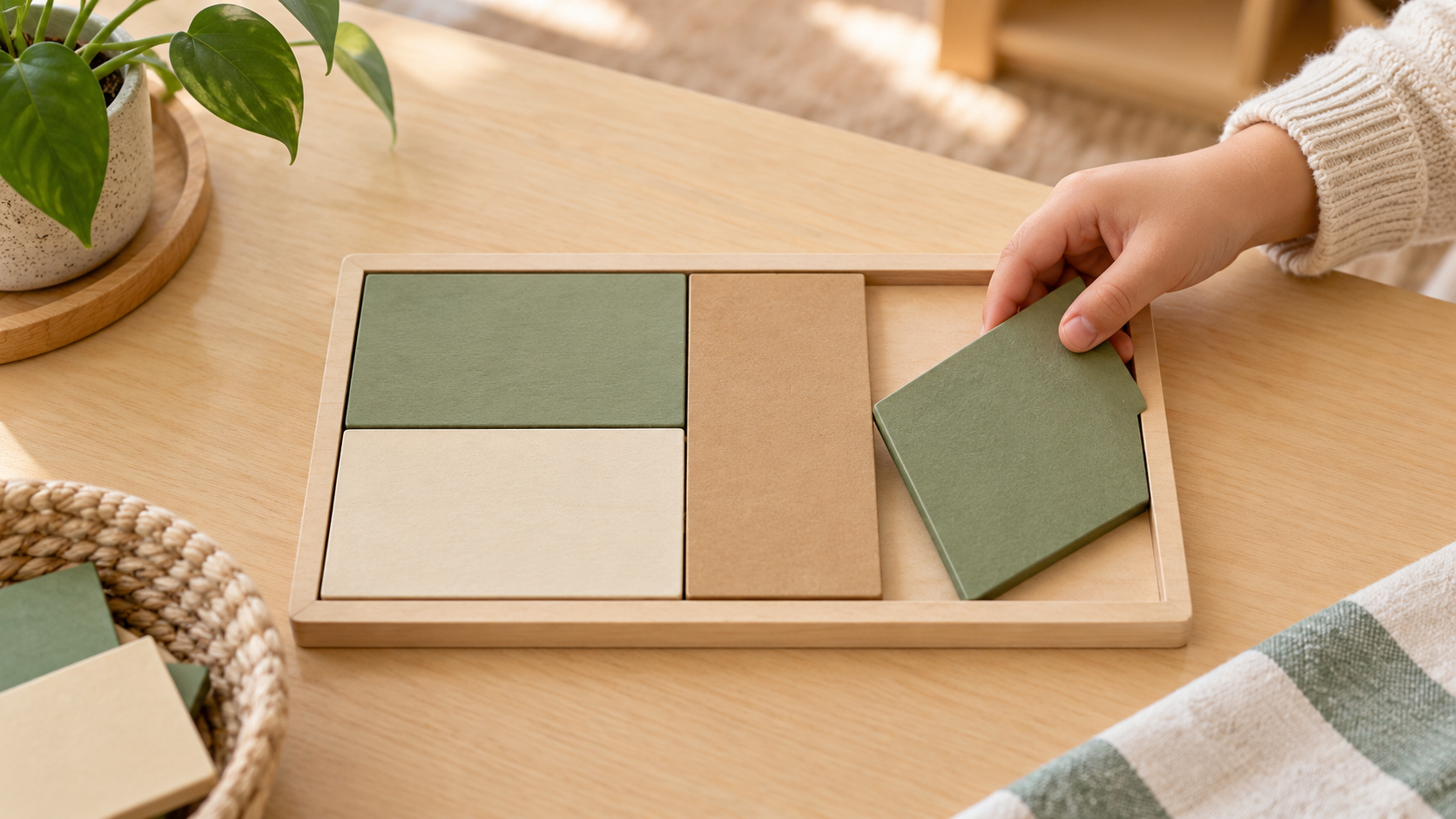
Did you know that a small puzzle activity can create several different reasons to speak? Someone may describe a piece, compare its shape, turn it, try a position, notice a mistake or check the result. The adult does not need to teach all those words at once. Choose the word that helps explain the child’s actual intention or the event both people are noticing.
The 100 entries are an editorial selection, not a scientifically ranked list of words every four-year-old should know. Family languages, education settings, interests, routines and experiences differ. A word for an actual person or task may be more useful than an unfamiliar item in the table. Use relevance to guide your adult planning, and leave an entry for another time when its context is not yet meaningful.
For broader developmental context, consult ASHA’s communication milestones for ages 4–5. This professional resource discusses communication across an age range, including stories, location language, book awareness and developing sound skills. It does not make this selected list a milestone checklist or promise that every example appears immediately after the fourth birthday. If you have concerns about hearing, lost skills or communication development, speak with your child’s doctor or a qualified speech-language professional.
The Base Fence examples are original eduKate teaching suggestions, not an individual therapy programme or a clinically validated treatment. Follow an existing professional support plan where relevant and adapt materials, pace and physical participation. This long article is for adult preparation; the child’s experience can remain a short, enjoyable exchange with an understandable purpose.
Begin with a shared scene or practical question. A book, a toy arrangement, a familiar outing or a short routine gives language somewhere to attach. If the word is less visible, such as reason or agree, explain it through an actual decision or event rather than asking the child to define an abstract idea.
Choose the base word for the job it can do. During a craft, list may organise materials, fold may name the action and another may request more paper. During a story, character identifies who participates, event identifies what happens and ending identifies the final part. A word is useful because it clarifies something, not because it sounds more impressive than a familiar alternative.
Offer a short natural model. “A triangle”, “We need a plan” or “I will check” can make the meaning available before a longer sentence. Use your ordinary voice and accurate language. The adult does not need to turn every example into an exaggerated pronunciation exercise or separate a normal sentence into unnatural fragments.
Respond to the child’s contribution. A point towards a puzzle gap may communicate a problem. A different arrangement may be a new idea. A closed book may indicate an ending. If the intention is unclear, ask a simple clarifying question or show the likely choices. A useful expansion depends on understanding the message first.
Add one relevant connection. If the child says “Wide”, identify what is wide or why that feature matters. If they say “Mistake”, help name the particular mismatch without judging the person. If they say “Borrow”, clarify permission and the expected return. The fuller form should preserve the original purpose rather than replace it with the adult’s preferred story.
Leave room for the next turn. The child may continue an action, ask, disagree, point or offer another detail. You do not need to follow every short message with a question that tests the model. A shared action or a clear choice can show the communication was useful without requiring a repeated sentence.
Revisit the meaning in another understandable context. Compare can apply to strips, pictures or suitable containers. Return can describe a borrowed book or going back to a familiar place, with the current meaning explained. Another clear example broadens the word, while the adult avoids treating one memorised scene as the whole concept.
Expand features, events and intentions
A feature expansion makes a description more precise. Strip can become wide strip when width matters. Surface can become rough surface when texture is relevant. Name the dimension or quality so the comparison is clear. Two objects can be the same colour and different shapes, and an accurate sentence can preserve both facts.
An event expansion connects an action with its objects, place or result. “Turn the piece” can become “I will turn the piece to see whether it fits.” “Check the cups” can become “We are checking that everyone has a cup.” The adult’s fuller model shows how words work together for a practical purpose, while the child’s contribution can remain shorter.
An intention expansion makes a plan, request or difference clearer. “Borrow” can become “May I borrow this book?” and “Disagree” can become “I disagree about which game to play first.” A complete adult sentence is available to hear, not a condition for permission, help or respectful attention.
Keep distinctions accurate and manageable
Some words have several valid uses. Sink can name a basin or describe movement below a liquid’s surface. Turn can mean rotation or an opportunity in a game. Letter can mean an alphabet symbol or a written message. Begin with one clear use, then introduce another when the context supports it. A new meaning does not make the earlier understanding wrong.
Some comparisons need careful examples. Align the starting ends when comparing strip lengths. Name the feature when sorting. Use clear shape outlines, and avoid saying that a square can never be a rectangle. The child does not need a formal technical lecture, but adult simplification should keep the underlying idea accurate.
Some information concerns uncertainty. A prediction is made before the result is known, and a test helps find something out. If the result differs from the idea, acknowledge it. The useful model is a calm link between a question, an action and an observation, rather than a demand to defend the first answer.
Choose a small useful starting set
A manageable adult plan might include one word for the activity, one for an action and one for a message. During a puzzle, those could be piece, turn and try. During a pretend library, they might be librarian, borrow and return. This is a planning option, not a daily quota or prescribed amount of practice.
Keep the words that remain useful and change examples when interests change. If planning leads to constant testing, reduce it. One clear conversation that responds to the child can offer more practical value than an adult completing a schedule of prompts while the child’s own purpose is overlooked.
The ten groups below contain 100 distinct entries. Their order supports navigation and does not prescribe acquisition. Each table contains a complete adult example, followed later by the fuller teaching entry. Read what you need, then put the article aside during the actual interaction.
Family names, local terms and familiar routines can be adapted. Use the child’s real communication methods and choose words with a purpose in their day. The table is a map for adult preparation, not a worksheet or a list of sentences every child must say independently.
People and roles in a wider world · quick scan
| No. | Word | Adult model |
|---|---|---|
| 1 | Classmate | Your classmate is choosing a book. |
| 2 | Librarian | The librarian is helping us find a book. |
| 3 | Passenger | The passengers are sitting on the bus. |
| 4 | Customer | The customer is buying bread. |
| 5 | Artist | The artist is painting a picture. |
| 6 | Musician | The musician is playing a drum. |
| 7 | Builder | The builder is making a wall. |
| 8 | Cleaner | The cleaner is washing the floor. |
| 9 | Farmer | The farmer is growing vegetables. |
| 10 | Firefighter | The firefighter is helping people. |
Plans, problems and learning actions · quick scan
| No. | Word | Adult model |
|---|---|---|
| 11 | Plan | Our plan is to make a paper card. |
| 12 | Idea | I have an idea for our toy bridge. |
| 13 | Reason | The reason we need a towel is that our hands are wet. |
| 14 | Problem | Our problem is that the box will not close. |
| 15 | Solution | A larger box might be a solution. |
| 16 | Mistake | I made a mistake and put the book in the wrong basket. |
| 17 | Practice | I am practising drawing this shape. |
| 18 | Try | I will try turning this puzzle piece. |
| 19 | Improve | This wider base improves our tower's stability. |
| 20 | Finish | I will finish this page, then close the book. |
Story parts and meaningful sentences · quick scan
| No. | Word | Adult model |
|---|---|---|
| 21 | Beginning | At the beginning, Teddy cannot find the ball. |
| 22 | Middle | In the middle, Teddy looks inside the basket. |
| 23 | Ending | At the ending, Teddy finds the ball. |
| 24 | Character | Teddy is a character in this story. |
| 25 | Event | One event is that the tower falls. |
| 26 | Place | The garden is the place where this story happens. |
| 27 | Title | The title tells us this book's name. |
| 28 | Author | The author wrote this story. |
| 29 | Sentence | The dog is sleeping. |
| 30 | Word | Ball is a word we use for this toy. |
Print, sounds and useful information · quick scan
| No. | Word | Adult model |
|---|---|---|
| 31 | Letter | This letter is at the start of your name. |
| 32 | Sound | I can hear the sound of the bell. |
| 33 | Rhyme | Cat and hat rhyme. |
| 34 | Syllable | This word has two syllables. |
| 35 | Label | This label tells us where the books belong. |
| 36 | Sign | This sign shows where the library is. |
| 37 | Message | My message is that the game starts after our snack. |
| 38 | List | Our list has paper, crayons and a folder. |
| 39 | Instruction | My instruction is to put the book in the basket. |
| 40 | Direction | The arrow shows the direction of the toy's journey. |
Looking closely and finding out · quick scan
| No. | Word | Adult model |
|---|---|---|
| 41 | Collect | We are collecting the blocks for our bridge. |
| 42 | Sort | We are sorting these blocks by colour. |
| 43 | Match | These two cards match because they show the same animal. |
| 44 | Compare | Let's compare the lengths of these paper strips. |
| 45 | Measure | We will measure the space before choosing the strip. |
| 46 | Check | Let's check that everyone has a cup. |
| 47 | Notice | I notice that this leaf has a hole. |
| 48 | Describe | I will describe the toy without naming it. |
| 49 | Predict | I predict that this ball will roll down the ramp. |
| 50 | Test | We will test whether the strip reaches across the gap. |
Movement and everyday changes · quick scan
| No. | Word | Adult model |
|---|---|---|
| 51 | Float | The toy is floating on the water. |
| 52 | Sink | The object is sinking below the water. |
| 53 | Roll | The ball is rolling across the mat. |
| 54 | Slide | The block is sliding down the low ramp. |
| 55 | Melt | The ice is melting into liquid water. |
| 56 | Grow | The plant has grown new leaves. |
| 57 | Change | The toy changed its position. |
| 58 | Move | I am moving the basket beside the table. |
| 59 | Turn | I am turning the piece to see whether it fits. |
| 60 | Balance | The block is balanced on the wide base. |
Size, texture and clearer descriptions · quick scan
| No. | Word | Adult model |
|---|---|---|
| 61 | Wide | This strip is wide enough for the toy bridge. |
| 62 | Narrow | This path is narrow in our picture. |
| 63 | Tall | This tower is taller than the other tower. |
| 64 | Deep | This empty box is deep from top to bottom. |
| 65 | Shallow | This tray is shallow from top to bottom. |
| 66 | Thick | This book is thick from front to back. |
| 67 | Thin | This sheet is thin from front to back. |
| 68 | Smooth | This card feels smooth to me. |
| 69 | Rough | This surface has a rough texture. |
| 70 | Sticky | The back of this sticker is sticky. |
Shapes, groups and amounts · quick scan
| No. | Word | Adult model |
|---|---|---|
| 71 | Triangle | This triangle has three straight sides. |
| 72 | Rectangle | This rectangle has four straight sides and four square corners. |
| 73 | Oval | This picture has an oval outline. |
| 74 | Corner | The book cover has a corner here. |
| 75 | Edge | This is the edge of the paper. |
| 76 | Side | This triangle has three sides. |
| 77 | Pattern | Our pattern repeats red, blue, red, blue. |
| 78 | Pair | These two socks make a pair. |
| 79 | Group | This group contains the animal pictures. |
| 80 | Amount | We need a small amount of paint for this line. |
Small animals and natural places · quick scan
| No. | Word | Adult model |
|---|---|---|
| 81 | Insect | This picture shows an insect with six legs. |
| 82 | Butterfly | The butterfly is resting on the flower. |
| 83 | Bee | The bee is visiting a flower. |
| 84 | Ant | The ant is carrying something in this picture. |
| 85 | Spider | This spider has eight legs. |
| 86 | Snail | The snail is moving along the leaf. |
| 87 | Worm | The earthworm is in the soil. |
| 88 | Nest | The bird's nest is in the tree. |
| 89 | Pond | The duck is on the pond. |
| 90 | River | The river flows past the trees. |
Feelings, honesty and cooperative choices · quick scan
| No. | Word | Adult model |
|---|---|---|
| 91 | Excited | I feel excited about reading our new book. |
| 92 | Disappointed | I feel disappointed that our visit was cancelled. |
| 93 | Brave | It took courage to ask for help when you felt unsure. |
| 94 | Honest | I need to be honest that I moved your picture. |
| 95 | Helpful | Holding the basket was helpful while I put the books inside. |
| 96 | Polite | Please pass me the book when you are ready. |
| 97 | Agree | I agree that we can read this book first. |
| 98 | Disagree | I disagree about which story to choose first. |
| 99 | Borrow | May I borrow your pencil for this note? |
| 100 | Return | I am returning the pencil I borrowed. |
1. Classmate
A classmate is someone who belongs to the same class as another learner. Use the word for a real shared group when relevant, and include the person’s name so the relationship stays clear.
Say: “Your classmate is choosing a book.” Describe an actual event or a familiar picture. A child who does not attend a class can meet the word through a story without being told that their own arrangement is missing something.
Base Fence: classmate → my classmate → My classmate is building beside me. The adult adds an action and place while accepting a shorter child contribution.
Try another setting: look at an appropriately shared group photograph and recall one activity. Distinguish classmate from friend: people can belong to the same class without having the same friendship. Avoid using the label to demand affection, sharing of personal possessions or a public greeting. The useful meaning is membership in a particular group, with adults supporting comfortable relationships rather than assuming them.
2. Librarian
A librarian works with a library’s information, collections and users. Begin with a familiar library visit or a clear story scene, keeping the role broader than simply someone who says to be quiet.
Say: “The librarian is helping us find a book.” Connect the person with a visible helpful action and the actual place. Use a name when appropriate instead of making the role the person’s only identity.
Base Fence: librarian → our librarian → Our librarian is showing us the story books. The adult model gives the role a practical purpose without requiring the child to speak to an unfamiliar person.
Try another setting: a toy library can include a librarian helping another character choose. Explain that libraries and their staff may do different things in different settings. Avoid expecting the child to memorise procedures from one visit. The base word becomes useful when it helps name whom to ask and what kind of support may be available, with adults managing the real interaction.
3. Passenger
A passenger is someone travelling in a vehicle without operating it. Begin with a familiar bus, train or car scene where the difference between travelling and driving is visible.
Say: “The passengers are sitting on the bus.” A picture can show the people and vehicle clearly. During a real journey, choose a calm moment and keep normal supervision first.
Base Fence: passenger → bus passenger → The bus passenger is holding a bag. The adult model adds an observable action rather than asking for a formal definition.
Try another setting: place suitable toy figures in a vehicle and describe who is driving and who is travelling. A passenger need not look a particular way or sit in one universal arrangement. Avoid treating the vocabulary as proof that the child understands transport rules independently. The useful base word names a role in a particular event, while adults provide the practical support required for boarding, seating and moving safely.
4. Customer
A customer is someone who buys or uses goods or services from a business. For a four-year-old, begin with an ordinary shop scene and a clear exchange, without a detailed lesson about money.
Say: “The customer is buying bread.” Name the person, item and action in a picture or real routine. The word describes the person’s role at that moment rather than a permanent identity.
Base Fence: customer → shop customer → The shop customer is asking for a loaf of bread. The adult’s fuller model shows a practical message within the exchange.
Try another setting: use a small pretend shop where adults and children can take different roles. Keep the purchase imaginary and avoid making real spending a reward for naming products. Distinguish customer from the person working in the shop through actions, not appearance. The useful base word helps explain an everyday interaction and can later transfer to other services when those contexts become familiar.
5. Artist
An artist creates or works with art in many forms. Begin with a visible creative action, such as drawing or painting, without suggesting that only realistic pictures or famous people count.
Say: “The artist is painting a picture.” Show the action or a suitable image, then let the child notice materials, marks or ideas. Their own creation does not need to match the example.
Base Fence: artist → an artist → An artist is using colour to make a picture. The adult model connects a person, action and purpose while leaving room for different artistic forms.
Try another setting: look at an illustration and discuss the person who made it, where that information is known. Avoid guessing an artist’s intention from appearance alone or treating artistic value as a naming test. The useful base word broadens the child’s understanding of who makes images and objects, while their own drawing remains worthwhile exploration whether or not they want to adopt the role label.
6. Musician
A musician makes or performs music, using a voice, instrument or other musical means. Begin with a clear familiar example rather than requiring the child to recognise a particular genre or instrument.
Say: “The musician is playing a drum.” Name the sound-making action if it is visible, and allow comfortable listening. A picture or a gentle adult demonstration can supply the role without a live performance.
Base Fence: musician → a musician → A musician is playing music for the audience. The fuller adult model adds a purpose and people involved in the event.
Try another setting: notice a singer or another instrumental player and explain the shared broad role. Avoid teaching that a musician must wear certain clothes or perform loudly. The useful category can include different people and styles. The child can participate by listening, moving or commenting, with no requirement to perform or tolerate uncomfortable sound levels to show understanding of the word.
7. Builder
A builder is someone who constructs things, often buildings. Begin with a clear pictured construction activity or a safe distant observation, and distinguish the real role from pretend play.
Say: “The builder is making a wall.” Describe only what is known and visible, rather than guessing the person’s exact task or qualifications from clothing.
Base Fence: builder → a builder → A builder is using materials to make a house. The adult model connects the role with a recognisable purpose, without inviting the child to copy real work.
Try another setting: a toy figure can be a builder while large blocks represent a house. Explain that the game is pretend and real building sites are adult work environments. The useful base word relates build, building and builder through clear contexts. A child can hear the word family naturally without a grammar exercise, and the actual safety boundaries around tools, vehicles and construction areas remain with the adult.
8. Cleaner
A cleaner is someone whose work includes cleaning spaces or objects. Begin with a specific respectful description of the task, rather than presenting the person as part of the background.
Say: “The cleaner is washing the floor.” Use a clear picture or an ordinary observation from an appropriate distance, with the adult keeping the child away from equipment and wet surfaces.
Base Fence: cleaner → a cleaner → A cleaner is helping keep this place clean. The adult model names a practical contribution while avoiding assumptions about the person’s other responsibilities.
Try another setting: let a toy character tidy and clean a pretend room with safe props. Distinguish tidying, washing and the professional role through actual actions, without a hierarchy of whose work matters more. The useful base word supports recognition of community work and respectful interaction. The child does not need to handle cleaning products or imitate a real procedure to understand the role and its everyday purpose.
9. Farmer
A farmer grows crops, raises animals or manages related agricultural work. Begin with one clear example and make room for different kinds of farming rather than one picture of a person with every animal.
Say: “The farmer is growing vegetables.” Name the visible crop or action if known, and keep any explanation connected to the scene.
Base Fence: farmer → a farmer → A farmer is caring for the plants in the field. The adult model gives the role a practical relationship without asking the child to explain a whole food system.
Try another setting: compare a crop-growing story with a familiar animal-farm story, noting the shared broad role. Avoid assuming that all farmers look alike, live in one kind of house or use the same equipment. The useful category can broaden through varied accurate examples. A child can learn the word through books and ordinary food conversations, without travel, animal contact or a special growing project being required.
10. Firefighter
A firefighter is a trained professional who responds to fires and other emergencies. Introduce the role through a calm clear picture or story, without creating fear or rehearsing dangerous situations.
Say: “The firefighter is helping people.” Describe a known visible action rather than promising that every emergency will have the same outcome or response.
Base Fence: firefighter → a firefighter → A firefighter is wearing equipment for the job. The fuller adult model links the role with a purpose, while appearance alone is not presented as proof of identity.
Try another setting: a suitable toy can attend a pretend emergency with an adult-led reassuring ending. Keep real matches, flames and equipment entirely outside the activity. The useful base word names a community role; it does not provide an emergency plan by itself. Adults should use appropriate local safety guidance for actual procedures, while the vocabulary example stays proportionate to the child’s interest and comfort.
11. Plan
A plan is an idea or arrangement for what someone intends to do. Begin with a small genuine activity where the child can see the connection between deciding and acting.
Say: “Our plan is to make a paper card.” Name the materials and first action briefly, then begin. The plan can be spoken, drawn or shown with objects; it does not need written instructions.
Base Fence: plan → our plan → Our plan is to fold the paper and draw a picture. The adult model connects a purpose with a short manageable sequence.
Try another setting: plan which familiar book to read or where a toy will travel. Explain changes honestly: a plan can be revised when conditions change. Avoid presenting every uncertain promise as a settled plan. The useful base word gives language for intention, choice and preparation, with the child’s contribution allowed to influence the activity rather than merely confirm an adult decision already made.
12. Idea
An idea is a thought, suggestion or possible way to do something. Begin with a practical suggestion in play, making it clear that more than one idea may be possible.
Say: “I have an idea for our toy bridge.” Show the proposed arrangement with suitable materials and invite the child’s response. The idea can be tried, changed or left aside.
Base Fence: idea → my idea → My idea is to put the wide block underneath. The adult model explains the proposal without claiming it will certainly work.
Try another setting: the child may suggest a different story ending or place for a picture. Acknowledge the idea before judging whether it fits the purpose. Avoid praising only suggestions that match the adult’s hidden answer. The useful base word supports proposing, listening and revising, with practical limits explained clearly when an idea is unsafe, unavailable or unsuitable for the particular situation.
13. Reason
A reason explains why someone does something or why an event or claim makes sense. Begin with a clear practical relationship, while keeping guesses about other people’s motives separate from known facts.
Say: “The reason we need a towel is that our hands are wet.” Show the actual need and response, without a long abstract explanation.
Base Fence: reason → a reason → One reason to use the basket is to carry the books together. The adult model makes the relationship concrete and allows that there may be other reasons too.
Try another setting: discuss a story character’s stated reason for choosing a route. If the story does not explain the motive, say that you are guessing. Avoid asking why repeatedly when a child is distressed or unable to explain. The useful base word can support simple explanations and choices, with the adult accepting that a person may need help communicating their reason or may not know it clearly yet.
14. Problem
A problem is a difficulty or situation that needs attention or a response. Begin with a small real obstacle in a shared activity, rather than manufacturing frustration to create a lesson.
Say: “Our problem is that the box will not close.” Show the specific issue and invite a manageable next step, such as looking at what is inside.
Base Fence: problem → box problem → The problem is that this toy is too tall for the box. The adult’s full model identifies the relevant relationship without labelling the child as the problem.
Try another setting: a story character may have a missing book or a bridge that does not reach. Keep the difficulty proportionate and help promptly when needed. Avoid treating every difference from the adult’s preference as a problem to fix. The useful base word helps name what is difficult, making it easier to seek support, consider options and notice whether a response addresses the actual issue.
15. Solution
A solution is a way of resolving a problem. Begin with a small visible difficulty whose response can be checked, rather than presenting a favourite idea as a solution before trying it.
Say: “A larger box might be a solution.” Try the appropriate container and see whether the toy fits. The word becomes meaningful through the relationship between the original problem and the result.
Base Fence: solution → one solution → One solution is to use the wider box. The adult model leaves room for other workable responses instead of implying there is always only one answer.
Try another setting: discuss how a story character solves a missing-item problem. Ask whether the response actually helps, with enough support to keep the event clear. Avoid using solution to promise that every difficult feeling or complex situation can be resolved immediately. The useful base word supports trying, checking and revising practical ideas, while adults explain honestly when more help or a different approach is needed.
16. Mistake
A mistake is an unintended error in an action, judgement or response. Begin with an ordinary adult example and show a calm way to repair it, rather than using the word mainly to criticise the child.
Say: “I made a mistake and put the book in the wrong basket.” Move it to the intended place and continue without a dramatic reaction.
Base Fence: mistake → my mistake → I made a mistake, so I will check the picture again. The adult model connects noticing an error with a useful next action.
Try another setting: a puppet follows a simple instruction incorrectly and asks for help. Keep the event light and specific. A different creative choice is not automatically a mistake, and difficulty with a task may reflect unclear instructions or insufficient support. The useful base word can make repair ordinary, with the adult distinguishing an accidental error from a valid alternative or a need that has not yet been understood.
17. Practice
Practice means doing something again with a purpose such as becoming more familiar, accurate or comfortable. Begin with a small activity the child wants or needs to learn, with support available.
Say: “I am practising drawing this shape.” Show that an adult can try again too, and keep attention on a specific action rather than a general demand to work harder.
Base Fence: practice → practise a line → We can practise making a straight line on this paper. In British English, practice is the noun and practise is the verb; the child can hear natural forms without a spelling lesson.
Try another setting: repeat a familiar game action with one useful change in support or strategy. Avoid assuming that repetition alone will solve every difficulty. If the task remains frustrating, simplify it or seek relevant guidance. The useful base meaning is purposeful revisiting, not endless performance, and the child should still have time for open play and ordinary conversation.
18. Try
Try means making an attempt or testing an option. Begin with a manageable choice where the outcome can be noticed and where asking for help remains acceptable.
Say: “I will try turning this puzzle piece.” Demonstrate the attempt and check whether it fits. If it does not, acknowledge that and choose another action.
Base Fence: try → try again → I will try a different piece and see whether it fits. The adult model links an attempt with observation and a possible change, rather than demanding identical repetition.
Try another setting: test a new arrangement of large blocks during play. Avoid using try as a way to override a child’s refusal of touch, food or an uncomfortable activity. A useful attempt needs a reasonable purpose, suitable support and room to stop. The base word can help express willingness and uncertainty, with success defined by what the attempt reveals as well as whether the intended result happens.
19. Improve
Improve means becoming better in some relevant way. Name the particular feature that changes, because better is unclear when the purpose is not stated.
Say: “This wider base improves our tower’s stability.” Show the difference gently with suitable blocks and adult management. Explain simply that the tower now stays upright more easily.
Base Fence: improve → improve the tower → We can improve the tower by making its base wider. The adult’s full model connects an action with an observable result.
Try another setting: make a drawing instruction clearer by adding a missing detail, then notice how it helps the listener. Avoid using improve as a judgement about the child’s worth or demanding constant progress in every play activity. A creation can be enjoyed without revision. The useful base word supports a specific purposeful change, with the adult checking whether the result actually serves the chosen goal rather than merely matching their personal preference.
20. Finish
Finish means bringing an activity or task to its ending. It can describe completing a chosen goal or deciding to stop, and those situations should be explained honestly.
Say: “I will finish this page, then close the book.” Follow through so the ending is predictable. If the child wants to stop sooner, acknowledge that message and support a reasonable transition.
Base Fence: finish → finish the picture → I want to finish colouring this part of the picture. The adult model gives the ending a specific scope rather than requiring a whole project to be completed.
Try another setting: a toy finishes one turn in a game and another person begins. Distinguish finish from perfect: an activity can end without every detail matching an adult’s standard. Avoid withholding necessary care until a task is finished. The useful base word helps people organise endings, explain intentions and negotiate a next step, with adult support for feelings and practical limits.
21. Beginning
The beginning is the first part of an event, account or object in the relevant context. Start with a short familiar story whose opening is easy to recognise.
Say: “At the beginning, Teddy cannot find the ball.” Show the first picture and name the character’s situation. There is no need to explain every part of story structure before reading.
Base Fence: beginning → story beginning → The story’s beginning shows Teddy looking for the ball. The adult model connects a position in the account with a visible event.
Try another setting: talk about the beginning of a familiar game or activity. Keep the reference clear, since a beginning only makes sense in relation to a particular sequence. Avoid asking the child to retell an entire unfamiliar book as proof of understanding. One recognisable opening can supply the meaning, with pictures, actions and shorter messages accepted as ways to show what happened first.
22. Middle
The middle is a part between the beginning and ending, or a central position in a relevant arrangement. Begin with one clear use, such as the middle event in a tiny story.
Say: “In the middle, Teddy looks inside the basket.” Show how that event follows the missing-ball opening and comes before the result. A few picture cards can make the order visible.
Base Fence: middle → story middle → The middle of the story shows Teddy searching. The adult’s fuller model names the account and action without requiring a detailed retelling.
Try another setting: place one large toy in the middle of a clear row or group and explain the position. Introduce this spatial use separately if needed. Avoid teaching that every story has one exact central sentence or that a child’s different division must be wrong. The useful base meaning depends on the chosen whole, and the adult should keep that reference explicit.
23. Ending
An ending is the final part of an event or account. Begin with a short familiar story where the final change is easy to notice, rather than asking for a formal literary explanation.
Say: “At the ending, Teddy finds the ball.” Show the final picture and let the child comment on the result. The ending can be understood through an action or point as well as a sentence.
Base Fence: ending → story ending → The story’s ending shows Teddy playing with the ball. The adult model connects the final position with a clear event.
Try another setting: invent a different pretend ending together and name it as an imagined alternative. Keep the difference between the printed story and your new version clear without dismissing creativity. Avoid making every ending happy if the actual book does not support that description. The useful base word helps talk about how an account finishes, with the particular story providing the meaning and emotional context.
24. Character
A character is a person, animal or other figure represented as taking part in a story or imagined event. Begin with one familiar figure and a clear action.
Say: “Teddy is a character in this story.” Name what Teddy does and distinguish the story figure from the child listening. A toy can represent the character during an optional short enactment.
Base Fence: character → story character → The story character is looking for a missing book. The adult’s full model links the role with an event without requiring a list of all characters.
Try another setting: compare another book containing a different kind of character, such as a talking vehicle. Explain the imagined role plainly. Avoid using character as a judgement about a real person’s morality in the same first lesson. The useful base meaning supports identifying who participates in an account, while pictures, names and actions help the child keep the particular figure clear.
25. Event
An event is something that happens. For a four-year-old, begin with one visible change or action in a familiar story rather than an abstract definition of every possible occurrence.
Say: “One event is that the tower falls.” Show the relevant picture or describe a real low-stakes play moment after everyone is comfortable. The word names the happening, not the object itself.
Base Fence: event → story event → An important story event is that Teddy finds the key. The adult model identifies a particular change and leaves explanation of its importance brief and concrete.
Try another setting: recall one event from an outing, such as a bus arriving. Avoid requiring the child to recount a whole day or decide which event is most impressive. A small detail can matter to their account. The useful base word helps separate people, places and happenings, with adult support for organising a message into an understandable sequence.
26. Place
A place is a location or area relevant to the situation. Begin with a familiar real or pictured location, giving the broad word a specific reference.
Say: “The garden is the place where this story happens.” Show the scene and name one visible feature. The child can recognise a setting without explaining a map or a full address.
Base Fence: place → story place → The story takes place beside a pond. The adult’s fuller model connects an event with a location using natural language.
Try another setting: choose a place for the toy basket in a real tidy-up routine. Explain that place can refer to different scales, from a spot on a table to a larger destination. Introduce those uses through separate clear examples rather than a long definition. The useful base word can support finding, planning and storytelling, with adults specifying which location they mean instead of expecting the child to infer an unstated reference.
27. Title
A title is the name given to a book, story or other work. Begin with a familiar book cover, distinguishing the title from the picture and the creator’s name.
Say: “The title tells us this book’s name.” Point to the actual title and read it aloud accurately. The child does not need to recognise the printed words independently to understand the role they play.
Base Fence: title → book title → The book title is printed on the front cover. The adult model connects a label, its purpose and a visible place.
Try another setting: let the child choose a title for an optional drawing story, and write it down if they want. Explain that the new title names that particular creation. Avoid asking the child to memorise all the writing on a cover or treating a guessed title as proof of reading. The useful base meaning supports choosing, discussing and identifying works, with adults making the print’s function clear.
28. Author
An author is a person who creates written work. Begin with a real book whose author is known, and read the name accurately rather than guessing from a picture or publisher’s logo.
Say: “The author wrote this story.” Point to the credited name and explain the role briefly. If a separate illustrator is credited, name that distinction when useful without overwhelming the reading moment.
Base Fence: author → story author → The author chose the words for this story. The adult’s full model connects a person with a creative action, without implying that every image was made by the same person.
Try another setting: write down a short story the child dictates, making clear that the ideas and words are theirs while you help record them. Avoid claiming professional authorship or publication that has not happened. The useful base word helps recognise that texts are made by people, with actual credits and the child’s contribution treated accurately and respectfully.
29. Sentence
A sentence is a group of words organised to express a complete thought or message in a grammatical form. At Age 4, begin with a clear spoken model rather than requiring a technical definition.
Say: “The dog is sleeping.” Explain that this sentence tells something about the dog. Contrast it gently with the single word dog only if that helps the child notice what information was added.
Base Fence: sentence → a sentence → This sentence tells us where the dog is sleeping. The adult model names the purpose of the language instead of judging length alone.
Try another setting: write a short dictated sentence under the child’s picture with permission. Read it back and check that it preserves their intended meaning. Avoid requiring every child contribution to be a full sentence before responding. Short messages can communicate successfully, while fuller adult models show how actions, people and places can be connected more explicitly when that is useful.
30. Word
A word is a unit of language that can carry meaning or a grammatical job. Begin with a familiar spoken word, then connect it with print when the context supports that relationship.
Say: “Ball is a word we use for this toy.” Show the familiar object or picture and, if useful, write the word while reading it aloud. The child does not need to decode it independently.
Base Fence: word → a useful word → Help is a useful word when I need assistance. The fuller adult model shows that words can do different jobs, including requesting rather than naming.
Try another setting: notice a familiar word in a book and explain its current use. Keep spoken words, written forms and their meanings related but distinct. Recognising one printed example does not establish general reading ability. The useful base concept helps the child ask about unfamiliar language and notice how people use words to share information, act together and make intentions clearer.
31. Letter
A letter is a written symbol used in an alphabet, and the word can also mean a written message. Begin with the alphabet meaning in a familiar name or book, keeping the current use clear.
Say: “This letter is at the start of your name.” Point to the actual symbol and name it accurately. The child does not need to write it independently to understand what you are showing.
Base Fence: letter → a letter → This letter helps us write the word on the card. The adult model connects the symbol with a real written purpose rather than a memorised display.
Try another setting: notice the same letter in another suitable typeface, allowing differences in appearance to be discussed. Distinguish letter names from speech sounds when modelling them; they are related but not identical. Avoid claiming general reading ability from one recognised example. The useful base word supports asking about print and noticing how written language is organised, with individual teaching guidance shaping further instruction.
32. Sound
A sound is something heard; in language learning it can also refer to a speech sound within a word. Begin with one clear use before comparing environmental and speech examples.
Say: “I can hear the sound of the bell.” Use a gentle familiar sound and pause so it is available to notice. A picture can recall a sound without needing a loud demonstration.
Base Fence: sound → bell sound → The bell makes a sound when it rings. The adult model links a source and event, without requiring an imitation.
Try another setting: notice the first speech sound in a familiar word if that fits the child’s current learning. Keep the sound distinct from a letter’s name, and do not add an unnecessary vowel when demonstrating a consonant. Avoid treating one listening game as a hearing assessment. The useful base word supports noticing and discussing what people hear, while professional advice guides concerns about hearing or speech development.
33. Rhyme
A rhyme involves words whose stressed vowel and following sounds match, such as cat and hat in many English accents. Begin with a clear familiar pair and enjoy how the words sound.
Say: “Cat and hat rhyme.” Say the words naturally and, if helpful, show simple pictures. The child can listen or choose a picture without being required to invent another word immediately.
Base Fence: rhyme → a rhyme → This rhyme uses cat and hat at the ends of the lines. The adult model connects the sound relationship with a short verse or game.
Try another setting: notice a genuine rhyming pair in a familiar book. Judge by sound rather than spelling, and allow for accent differences. Words that share only an opening sound do not necessarily rhyme. Avoid making rhyme production a gate before enjoying songs or stories. The useful base meaning helps talk about a sound pattern, with repeated clear examples and playful participation more important than a long list of correct responses.
34. Syllable
A syllable is a unit of spoken rhythm, usually organised around a vowel sound. For a four-year-old, begin with listening to a familiar word in clear parts rather than a technical explanation.
Say: “This word has two syllables.” Choose an example such as rabbit and say it naturally before gently marking rab-bit. The child can hear or move with the parts without needing to repeat them accurately.
Base Fence: syllable → word syllables → We can hear two syllables in the word rabbit. The adult model connects the label with a concrete spoken example.
Try another setting: listen to a familiar person’s name, using the pronunciation that person actually uses. Avoid equating syllables with the number of letters or clapping so loudly that the sound of the word is lost. Accent and pronunciation can affect examples, so choose clear ones. The useful base word supports talking about spoken structure while keeping meaning and enjoyable conversation central.
35. Label
A label gives information identifying or describing something. Begin with a simple word-and-picture label on a familiar storage basket, where its purpose is immediately useful.
Say: “This label tells us where the books belong.” Point to the actual label and the relevant contents, then use it during a real tidy-up routine.
Base Fence: label → book label → The book label helps us find the right basket. The adult’s fuller model connects print or pictures with a practical action.
Try another setting: make an optional label together for a drawing folder, recording the child’s chosen wording accurately. Explain that labels can use pictures, words or both. Avoid assuming the child can read every label because they recognise a familiar design. The useful distinction is between the information displayed and the object it describes. Adults should continue to interpret important product and safety information rather than treating the child’s recognition of a label as independent understanding.
36. Sign
A sign displays information, directions or a message for people to notice. Begin with a familiar clear example and explain its actual meaning rather than asking the child to guess from colour alone.
Say: “This sign shows where the library is.” Point to the relevant picture or words and connect them with the real place. The adult provides the information needed to use it.
Base Fence: sign → library sign → The library sign helps people find the entrance. The full model links the display with a practical purpose.
Try another setting: notice a sign in a simple story or make a pretend shop sign together. Distinguish recognising a familiar symbol from reading unfamiliar text. Avoid using real road or hazard signs as proof that a child can manage safety independently. The useful base word helps identify an information source, while adults check its meaning and continue to provide the practical guidance required in the actual environment.
37. Message
A message is information someone communicates to another person or group. It can be spoken, written, pictured or expressed through an established communication method.
Say: “My message is that the game starts after our snack.” Make the audience and meaning clear, then check understanding through the actual routine rather than a demand to repeat every word.
Base Fence: message → my message → My message tells you where I put the book. The adult model gives the communication a practical purpose and recipient.
Try another setting: write a short note for a familiar caregiver with the child’s permission, reading it back to preserve the intended meaning. Explain who will receive it and why. Avoid sending private information or making a child’s personal story public as a teaching activity. The useful base word helps distinguish what someone wants to communicate from the medium carrying it, with the adult respecting the child’s ownership and the real audience.
38. List
A list is a set of items recorded together, often to remember, organise or check something. Begin with a short real purpose, such as materials for a drawing activity.
Say: “Our list has paper, crayons and a folder.” Show the items or use pictures beside words, then refer to the list as you prepare. Its usefulness comes from helping the activity happen.
Base Fence: list → materials list → We are checking our list before we start drawing. The adult’s full model connects the record with an action and time relationship.
Try another setting: make a small pretend shopping list or a list of books to choose from. The child can dictate, draw or point while an adult records. Avoid requiring conventional spelling to participate or making the list unnecessarily long. The useful base meaning is an organised reminder, and checking whether it serves the intended purpose matters more than producing a neat page for display.
39. Instruction
An instruction tells someone what to do or how to do something. Begin with one clear manageable action and enough context for the listener to understand its purpose.
Say: “My instruction is to put the book in the basket.” Show the relevant objects and provide support if needed. The child can follow by acting rather than repeating the sentence.
Base Fence: instruction → a clear instruction → This instruction tells us where the book should go. The adult model highlights the information needed for the task.
Try another setting: let the child give an adult one instruction for arranging a toy scene. If the adult is unsure, ask a genuine clarifying question. Avoid treating every difficulty following an instruction as disobedience; language, memory, movement and context can all contribute. The useful base word supports giving, understanding and improving guidance, with adults responsible for making their own instructions clear, reasonable and adapted to the individual child.
40. Direction
Direction can describe a route to follow, an orientation or guidance about what to do. Begin with one clear movement meaning in a toy activity before introducing other uses.
Say: “The arrow shows the direction of the toy’s journey.” Move a suitable toy along a simple visible path, naming the starting place and destination if helpful.
Base Fence: direction → this direction → The toy moves in this direction towards the box. The adult model connects the word with an observable route.
Try another setting: describe a gentle turn in a pretend road or follow a simple picture route together. Keep direction distinct from a guarantee that every arrow or sign is appropriate to follow. Adults interpret real environments and provide safety guidance. The useful base meaning helps people coordinate where something goes, with gesture, pictures and action supporting the spoken word rather than being removed to make the task harder.
41. Collect
Collect means bringing selected things together, often for a purpose. Begin with a small set of familiar safe items already used in play, such as large blocks for a tower.
Say: “We are collecting the blocks for our bridge.” Name the purpose and allow the child to choose a manageable contribution. The activity should not require carrying more than they can comfortably handle.
Base Fence: collect → collect blocks → We will collect the wide blocks in this basket. The adult’s fuller model identifies a feature, objects and destination.
Try another setting: collect picture cards for a story sequence or books for a shared reading choice. Explain the selection rule when there is one, and accept that another purpose may lead to a different set. Avoid collecting unknown outdoor material or taking objects without permission. The useful base verb supports planning and organising, with the adult ensuring that the items, access and reason for gathering them are clear and appropriate.
42. Sort
Sort means arranging things into groups according to a feature or purpose. Begin with one obvious rule and a small number of familiar objects, keeping the rule visible and stated.
Say: “We are sorting these blocks by colour.” Show where each colour group goes and let the child watch or join. The same objects could be sorted differently for another purpose.
Base Fence: sort → sort by colour → We are sorting the red blocks and blue blocks into two groups. The full adult model names the relevant feature rather than leaving a hidden rule.
Try another setting: sort books and drawing materials during a real tidy-up. If the child groups objects by shape instead of colour, notice the sensible feature before clarifying your own plan. Avoid treating every alternative grouping as an error. The useful base word supports organising information, with adults distinguishing between a valid different rule and a misunderstanding of the stated task.
43. Match
Match means pairing or connecting things because they correspond in a relevant way. Begin by naming the feature or relationship, since matching colour differs from matching an object with its picture.
Say: “These two cards match because they show the same animal.” Keep the pictures clear and the number of choices manageable. The child can point or place the pair together.
Base Fence: match → matching cards → The cards match because both show a dog. The adult model makes the shared feature explicit rather than relying on a general verdict.
Try another setting: match a familiar object to a clear photograph or find suitable pairs during a game. Explain when two things match in one respect but differ in another. Avoid assuming that a missed pair reflects weak memory when the images or rule may be unclear. The useful base verb supports comparing, connecting and checking, with the adult providing enough information to make the intended correspondence understandable.
44. Compare
Compare means looking at two or more things to notice similarities and differences. Begin with one named feature, rather than expecting the child to discuss every possible quality at once.
Say: “Let’s compare the lengths of these paper strips.” Align the starting ends and show the visible difference. A fair arrangement helps the language reflect the actual objects.
Base Fence: compare → compare lengths → We can compare these strips to see which is longer. The adult’s model connects an action with a clear question.
Try another setting: compare two story characters’ actions or two suitable containers’ shapes, making the relevant feature explicit. The child can offer a detail you did not plan to discuss. Acknowledge it before returning to the chosen comparison if needed. Avoid treating compare as simply choosing the better object. The useful base meaning is examining a relationship, and the purpose determines which similarities or differences matter in that situation.
45. Measure
Measure means finding an amount or dimension using a chosen unit or method. Begin with a real practical question, such as whether a paper strip will reach across a toy bridge.
Say: “We will measure the space before choosing the strip.” An adult can demonstrate with suitable large equal units or an appropriate tool, keeping the method clear and manageable.
Base Fence: measure → measure the gap → We are measuring the gap to choose a long enough strip. The adult model names the action and purpose without requiring formal numerical notation.
Try another setting: compare a container’s contents using a suitable adult-managed measure in an ordinary routine. Explain what is being measured and keep the units consistent. Avoid confusing a visual guess with a measurement or making precise tool handling the test of word understanding. The useful base verb supports checking a question about size or amount, with adult help preserving both accuracy and accessibility.
46. Check
Check means looking again or using a method to see whether something fits a purpose or statement. Begin with an actual uncertainty, not repeated inspection for its own sake.
Say: “Let’s check that everyone has a cup.” Look at the small visible group and the cups, then respond to any missing item. The action has a clear result.
Base Fence: check → check the cups → We are checking the cups before the snack begins. The adult’s fuller model links the review with an event and practical need.
Try another setting: check whether a puzzle piece fits or whether a list contains the materials required. Distinguish checking from assuming the first idea is correct. If the result differs from the plan, acknowledge it calmly and make a useful change. The base word supports careful revisiting without turning every child action into scrutiny, and the adult should stop once the relevant question has been reasonably resolved.
47. Notice
Notice means becoming aware of something. Begin by naming a real detail the adult or child has observed, rather than demanding constant attention to everything in the scene.
Say: “I notice that this leaf has a hole.” Show the detail in a clear picture or suitable view, and leave room for the child to notice something else.
Base Fence: notice → notice a detail → I notice that the two blocks have different shapes. The fuller adult model connects awareness with a specific observable feature.
Try another setting: notice a repeated picture in a book or a change in a familiar toy arrangement. Avoid treating a detail the child did not mention as proof that they were not listening. Attention can be directed towards different meaningful features. The useful base verb helps share observations, with the adult distinguishing what is actually seen or heard from an explanation or guess about why it is that way.
48. Describe
Describe means giving information about what something is like, does or shows. Begin with one relevant detail that helps another person identify or understand the subject.
Say: “I will describe the toy without naming it.” Offer a clear useful clue, such as its shape and familiar use, while keeping the possible choices small.
Base Fence: describe → describe the ball → I can describe the ball as round and soft. The adult model names actual features rather than adding adjectives only to lengthen the sentence.
Try another setting: the child can describe a picture while an adult listens or makes a simple drawing from the information. Ask a clarifying question if needed and preserve the intended meaning. Avoid judging a description only by the number of words. A short accurate detail can be highly useful. The base verb supports sharing information for a purpose, with gestures, pictures and established communication methods available alongside speech.
49. Predict
Predict means saying what may happen before the result is known, using available information or a pattern. Begin with a low-stakes familiar event whose outcome can be checked soon.
Say: “I predict that this ball will roll down the ramp.” Explain the visible reason briefly, then observe the actual result with suitable adult control.
Base Fence: predict → predict the movement → I predict that the round toy will roll when the ramp tilts. The adult’s fuller model makes a possible outcome explicit without presenting it as a guaranteed fact.
Try another setting: predict what a familiar story character might do next, then read on. If the result differs, discuss the new information calmly. Avoid treating a prediction as a correct answer that must be defended after evidence changes. The useful base word supports anticipation and checking, with the adult distinguishing a reasoned expectation from a known result and keeping uncertainty visible in the conversation.
50. Test
Test means trying a method or situation to find something out. Here it describes a small practical investigation, not an examination of the child’s worth or ability.
Say: “We will test whether the strip reaches across the gap.” Use suitable materials and a clear question, then observe what happens rather than announcing the preferred result in advance.
Base Fence: test → test the strip → We are testing the strip to see whether it reaches both sides. The full adult model names the object, method and purpose.
Try another setting: test an adult’s simple prediction about a toy movement, changing one relevant feature where practical. Keep the activity manageable and acknowledge limits: one attempt may not settle every question. Avoid unsafe experiments or repeated child performance checks disguised as play. The useful base verb helps connect a question with an observable result, with adults responsible for suitable materials, honest interpretation and the support needed to participate.
51. Float
Float means remaining at or near the surface of a liquid rather than sinking beneath it. Begin with a clear picture or a suitable adult-controlled demonstration using an appropriate object.
Say: “The toy is floating on the water.” Make the surface and object visible, and keep any real water activity shallow, manageable and continuously supervised.
Base Fence: float → floating toy → This toy floats near the surface of the water. The adult model describes the actual result without assuming that all objects of the same colour or size behave alike.
Try another setting: notice a floating boat in a book and distinguish the represented event from a prediction about another object. Avoid teaching that every large object sinks or every light-looking object floats. The useful base word describes an observed relationship, while explanations can remain simple and accurate. A child can understand through pictures and observation without needing to handle water or carry out a physical test.
52. Sink
Sink means moving below a liquid’s surface in this entry. The word also names a washing basin, so make the current action meaning clear before connecting other uses.
Say: “The object is sinking below the water.” Use a clear picture or a suitable adult-managed example, keeping the event visible and the materials appropriate.
Base Fence: sink → sink below → This object sinks below the surface when it is released. The adult’s full model describes a particular result rather than a universal rule about appearance.
Try another setting: compare the observed action with a floating object in separate clear examples. Explain that a bathroom sink is another valid use of the same word when it arises naturally. Avoid using unknown objects, small parts or deep water for a vocabulary lesson. The useful base meaning can be learned through observation, with adult supervision and honest descriptions more important than expecting the child to predict every outcome or explain buoyancy.
53. Roll
Roll describes movement involving turning over a curved surface or around an axis. Begin with a suitable large ball or cylinder moving gently on a clear play surface.
Say: “The ball is rolling across the mat.” Show the movement and pause to notice how it differs from being carried or pushed without turning.
Base Fence: roll → roll the ball → I am rolling the ball towards the basket. The adult model adds a purpose and destination while keeping the action safe and manageable.
Try another setting: compare a clear rolling movement with a sliding movement using suitable objects and adult support. One object may behave differently depending on its orientation and the surface, so avoid teaching a fixed rule from a single attempt. The useful base verb names what happens, with the child free to watch, gesture or participate in an adapted way. Physical control of a toy is separate from understanding the word describing it.
54. Slide
Slide means moving across a surface while remaining in contact with it, without rolling in the relevant example. Begin with an adult-controlled suitable object on a low clear surface.
Say: “The block is sliding down the low ramp.” Show the movement slowly enough to follow and compare it with rolling only when both events are clear.
Base Fence: slide → sliding block → The block slides along the smooth surface. The adult’s fuller model connects an action with the surface where it occurs.
Try another setting: move a picture card gently across a table or notice a sliding event in a book. Keep the playground-equipment meaning separate if it arises. Avoid encouraging a child to use furniture or steep slopes to demonstrate the verb. The useful base word helps describe a particular movement, while adults manage the physical setup and acknowledge that an object’s shape, orientation and surface can affect what actually happens.
55. Melt
Melt means changing from a solid to a liquid through heating or warming in the relevant situation. Begin with a clear adult explanation or picture, avoiding heat exposure as a teaching technique.
Say: “The ice is melting into liquid water.” An adult can show an appropriate contained example from a comfortable distance, or use a sequence of pictures instead.
Base Fence: melt → melting ice → The ice melts as it gets warmer. The adult model connects a visible change with a simple accurate condition, without requiring a full scientific explanation.
Try another setting: notice a familiar story image involving melting, checking that the example actually represents a solid becoming liquid. Wetting, breaking and disappearing are not automatically melting. Avoid hot equipment, tasting experiments or prolonged cold contact for the lesson. The useful base verb names a specific kind of change, with adult-managed observation and clear before-and-after references sufficient for participation.
56. Grow
Grow means increasing in size or developing over time. Begin with a familiar plant or a picture sequence where the change can be compared across clearly explained times.
Say: “The plant has grown new leaves.” Show a real observation or accurate images, naming what changed rather than simply saying bigger without a reference.
Base Fence: grow → growing plant → The plant grows over time when its needs are met. The adult’s fuller model stays general and does not promise that every seed or plant will develop identically.
Try another setting: compare appropriate photographs of a familiar tree or discuss a story’s growth sequence. Keep imagined instant growth distinct from real timescales. Avoid comparing children’s bodies as better or worse, or using the word to pressure eating or performance. The useful base meaning supports talking about gradual change, with the adult acknowledging that growth can vary and that a single picture does not reveal every cause.
57. Change
Change means becoming different or making something different in a relevant way. Begin by naming the feature, since an object may change position while its colour and identity remain the same.
Say: “The toy changed its position.” Move it from one clear place to another and describe the before and after. The visible contrast gives the broad word a concrete reference.
Base Fence: change → change the position → We can change the toy’s position to make more space. The adult model connects an action with a practical purpose.
Try another setting: change a pretend story ending or a game arrangement, explaining which part is different. Avoid treating all change as improvement or all sameness as a problem. A change can help, hinder or simply create another possibility depending on the purpose. The useful base word supports noticing, planning and revising, with adults keeping the relevant feature explicit rather than assuming the child can infer it.
58. Move
Move means changing position, or causing something to change position. Begin with a familiar object and a clear starting place and destination.
Say: “I am moving the basket beside the table.” Show the action and name the new place, allowing the child to observe or help with a suitable light item.
Base Fence: move → move the basket → We will move the basket to make room for the game. The adult’s fuller model adds a purpose without turning the instruction into a physical test.
Try another setting: move a toy character across a simple play scene and compare its old and new locations. The movement can be seen even when the object does not roll or slide, which helps distinguish the broad verb from particular kinds of movement. Avoid using move as a vague demand when a child needs a specific direction or support. The useful base meaning becomes clearer through accurate actions and named destinations.
59. Turn
Turn can describe rotating, changing direction or having an opportunity in a shared activity. Here begin with a clear rotation of a suitable large puzzle piece.
Say: “I am turning the piece to see whether it fits.” Demonstrate gently and check the result. The object changes orientation while remaining the same piece.
Base Fence: turn → turn the piece → I will turn the piece so its long side faces this way. The adult model names a relevant feature and direction, with gestures available to clarify the reference.
Try another setting: let a toy car turn along a simple path. Explain the shared-opportunity meaning separately when a game provides it. Avoid assuming that one correct puzzle fit establishes understanding of every use. The useful base verb can support problem-solving and directions, while motor planning, visual matching and the spoken relationship remain separate demands that may need different kinds of adult help.
60. Balance
Balance describes a stable arrangement or the action of keeping something steady, among other uses. Begin with suitable large blocks on a low surface, with the adult controlling any falling risk.
Say: “The block is balanced on the wide base.” Show an arrangement that stays steady, then discuss the support rather than asking the child to perform a body-balance challenge.
Base Fence: balance → balance the block → We can balance the block by placing it carefully on this base. The adult’s full model connects an action with a visible relationship.
Try another setting: notice a balanced toy structure in a picture or compare two safe arrangements gently. Avoid treating balance as a guarantee that an object will never fall or asking the child to test furniture and heights. The useful base meaning supports observing stability and trying practical changes, with the adult keeping explanations accurate and physical participation suitable for the individual child.
61. Wide
Wide describes a large extent from side to side in a relevant comparison. Begin with two suitable paper strips or blocks whose widths are easy to distinguish.
Say: “This strip is wide enough for the toy bridge.” Show the sides and the practical purpose, rather than using wide as a permanent name for one object.
Base Fence: wide → wide strip → The wide strip gives the toy more room to cross. The adult model connects a feature with a visible effect in play.
Try another setting: compare two drawn paths, keeping their lengths similar if width is the chosen feature. Explain that a strip can be wide and short at the same time, since the descriptions concern different dimensions. Avoid making a child handle heavy objects to demonstrate size language. The useful base word supports choosing and describing, with adult gestures and clear comparisons helping identify exactly which part of an object is being discussed.
62. Narrow
Narrow describes a small extent from side to side relative to the context. Begin with a clear comparison and name the relevant dimension rather than using smaller as an all-purpose substitute.
Say: “This path is narrow in our picture.” Show the two sides and compare it with a visibly wider path if helpful. The child can point or move a suitable toy along the drawn route.
Base Fence: narrow → narrow path → The narrow path has less room from side to side. The adult’s full model clarifies the feature without requiring a measurement.
Try another setting: compare paper strips whose lengths are similar and widths differ. Avoid expecting the child to squeeze through spaces or test real passages to prove understanding. The useful base meaning describes a relationship that depends on the comparison and purpose. A route may be narrow for one object but usable for another, and a clear toy example can make that idea understandable without a physical challenge.
63. Tall
Tall describes a large vertical extent in the relevant context. Begin with a tower or pictured tree, making height the feature rather than overall size.
Say: “This tower is taller than the other tower.” Use a clear safe comparison on the same surface, with the starting level aligned so the difference is not misleading.
Base Fence: tall → tall tower → The tall tower reaches higher than the low box. The adult model names a visible relationship rather than asking the child to infer what tall means from one object alone.
Try another setting: compare two drawn plants or familiar buildings in a picture. Explain that tall and wide describe different dimensions and may both apply to one object. Avoid turning children’s bodies into a ranking or treating height as a measure of maturity or worth. The useful base word supports observation and choice, with adult control of real structures and no need for climbing or reaching to demonstrate understanding.
64. Deep
Deep describes a large distance from a relevant surface or opening to a bottom or interior point. Begin with a safe empty container or a clear picture rather than real deep water.
Say: “This empty box is deep from top to bottom.” Show the opening and bottom, making the dimension visible. Compare it with a shallower suitable container only if that helps.
Base Fence: deep → deep box → The deep box has more space below its opening. The adult’s fuller model identifies the reference points without requiring the child to climb or reach inside.
Try another setting: notice a deep-looking pond in an illustration, explaining that appearance does not establish actual depth or safety. Keep the word separate from permission to enter water or enclosed spaces. The useful base meaning can support descriptions and container choices, while adults make practical safety decisions and use clear measured information where it matters.
65. Shallow
Shallow describes a small distance from a surface or opening to the bottom in the relevant context. A suitable empty tray can provide a clear comparison with a deeper container.
Say: “This tray is shallow from top to bottom.” Show the sides and bottom, allowing the child to observe without putting their body inside the object.
Base Fence: shallow → shallow tray → The shallow tray holds the picture cards in one layer. The adult model connects the feature with a practical use.
Try another setting: compare two drawn containers or a picture of a shallow edge and deeper area of a pond. Explain that shallow water still requires close adult supervision; the vocabulary does not make a water setting independently safe. Avoid teaching depth through risky physical testing. The useful base word names a dimension relative to a context, with clear adult examples supporting understanding and actual care arrangements remaining a separate responsibility.
66. Thick
Thick describes a large extent between opposite surfaces in a relevant direction, or another related quality such as a dense consistency. Begin with a clear solid-object example, such as a book with many pages.
Say: “This book is thick from front to back.” Show the relevant dimension and compare it with a thinner book of similar height if useful.
Base Fence: thick → thick book → The thick book has more pages than this thin booklet. Use that comparison only when the particular examples support it; page material can affect thickness too.
Try another setting: compare suitable pieces of card, naming the feature clearly. Introduce thick soup or another consistency meaning separately if it arises in real life. Avoid assuming that thick always means large in every dimension. The useful base word supports a more precise description, with adults showing which surfaces or quality they mean rather than expecting the child to infer an unstated comparison.
67. Thin
Thin describes a small extent between relevant opposite surfaces, with related uses in other contexts. Begin with a sheet of paper or suitable card rather than a judgement about bodies.
Say: “This sheet is thin from front to back.” Show an edge and, if helpful, compare it with a thicker suitable piece of card.
Base Fence: thin → thin paper → The thin paper bends more easily in this example. Keep the claim specific to the actual materials rather than presenting it as a rule for every thin object.
Try another setting: compare a thin booklet with a thicker book, making the chosen dimension clear. Explain that thin and narrow may refer to different directions. Avoid using the word to praise or criticise a child’s appearance. The useful base meaning helps describe materials and choose them for a purpose, with adult-managed examples and accurate comparisons doing more work than a long list of objects to classify.
68. Smooth
Smooth describes a surface with little noticeable unevenness in the relevant context. Begin with a familiar suitable object and allow observation instead of requiring touch.
Say: “This card feels smooth to me.” An adult can demonstrate with their own hand and offer a comparison if the child wants. The wording makes the sensory report specific to the speaker.
Base Fence: smooth → smooth card → The smooth card lets the toy slide easily in this setup. Use the result only when it has actually been observed with the chosen materials.
Try another setting: notice a smooth-looking stone in a picture, explaining that appearance alone may not tell us exactly how it feels. Avoid treating smooth as a guarantee of safety or cleanliness. The useful base word supports texture descriptions and practical comparisons, with the child free to watch, use an adapted tool or decline direct contact while still participating meaningfully in the conversation.
69. Rough
Rough can describe an uneven texture or a forceful manner, among other uses. Begin with a clear texture example using suitable material or an image, keeping the meaning explicit.
Say: “This surface has a rough texture.” An adult can describe visible bumps or use a safe familiar example, without asking the child to touch something uncomfortable.
Base Fence: rough → rough surface → The rough surface has bumps that we can see. The adult model names an observable feature rather than assuming every rough material feels the same.
Try another setting: compare a suitable textured card with a smoother one, using observation and optional touch. Later, rough play can be discussed as a different related use with specific behavioural guidance. Avoid using abrasive, sharp or unknown materials for vocabulary practice. The useful base meaning helps describe a quality, while adults choose appropriate examples and respect sensory preferences rather than making tolerance of a texture the test of understanding.
70. Sticky
Sticky describes something that adheres or tends to attach to another surface. Begin with a suitable adult-managed sticker or other familiar example whose effect is visible.
Say: “The back of this sticker is sticky.” Show how it attaches to an appropriate paper surface, with the child able to watch or help place a large suitable item.
Base Fence: sticky → sticky sticker → The sticky back helps the sticker stay on the card. The adult’s full model connects a property with a practical result.
Try another setting: notice a sticky material in a picture or a familiar routine, naming the exact context. Do not require touching unpleasant textures or use unknown adhesives as sensory play. Sticky does not automatically mean dirty or unsafe, and a smooth-looking surface may still adhere. The useful base word supports describing and choosing materials, with adult control of products and surfaces making the activity clear and manageable rather than messy by design.
71. Triangle
A triangle is a flat shape with three straight sides and three corners. Begin with a clear drawn or suitable toy example, allowing the child to notice the outline without needing a formal definition.
Say: “This triangle has three straight sides.” Trace the sides with your own finger or a gesture, and count them if that helps the child see the feature.
Base Fence: triangle → triangle shape → The triangle shape is beside the square. The adult’s fuller model connects a label with a visible relationship rather than a drawing test.
Try another setting: show another triangle with a different orientation or proportions. A triangle does not stop being a triangle when turned, and not all triangles have equal sides. Avoid teaching one upright outline as the only valid example. The useful base word supports identifying, describing and choosing shapes, with physical fitting and drawing skills treated separately from understanding the name and the defining features.
72. Rectangle
A rectangle is a flat four-sided shape with four right angles; a square is a special kind of rectangle. For a four-year-old, begin with a clear outline and simple accurate language.
Say: “This rectangle has four straight sides and four square corners.” Show the corners and sides without expecting the child to explain right angles formally.
Base Fence: rectangle → rectangle shape → The rectangle shape fits in this part of the picture. The adult model links the category with a visible use, while the child can point rather than manipulate the piece.
Try another setting: show a rectangle turned another way or drawn with different proportions. Avoid defining rectangles only as long shapes or saying squares can never belong to the category. The useful base meaning can be introduced through clear examples without a full hierarchy lesson. Adults should preserve mathematical accuracy while keeping the immediate comparison manageable and relevant to the child’s activity.
73. Oval
Oval is an everyday word for a rounded elongated shape, often like a stretched circle. Begin with a clear drawing or familiar pictured outline rather than a rigid technical definition.
Say: “This picture has an oval outline.” Trace the broad shape with a gesture and compare it with a circle on another occasion if useful.
Base Fence: oval → oval shape → The oval shape is longer in this direction than in that direction. The adult’s fuller model can use pointing to make the comparison clear.
Try another setting: notice an approximately oval object in a book, distinguishing its overall three-dimensional form from the flat outline being discussed. Avoid teaching that every curved or rounded shape is an oval. The useful base word helps describe a visible form, with the adult choosing clear examples and acknowledging approximate appearances. A child does not need to draw a precise oval or explain a formal curve to participate in the conversation.
74. Corner
A corner is a point or region where sides, edges or surfaces meet, depending on the object. Begin with a clear flat shape or a familiar book cover.
Say: “The book cover has a corner here.” Point to the meeting of two edges and keep the object safely positioned. The child can observe without needing to touch a sharp feature.
Base Fence: corner → book corner → This corner is where two edges of the cover meet. The adult model makes the relationship explicit rather than attaching the word to one permanent place.
Try another setting: notice a corner of a drawn square or a room in a picture, explaining the relevant use. Keep corner distinct from the whole side or edge through a simple gesture. Avoid using hazardous furniture as a handling task. The useful base word supports descriptions and instructions, with adults showing exactly which part they mean and accepting a point as a clear response.
75. Edge
An edge is a boundary of a surface or the line where surfaces meet. Begin with a clear safe object, such as a sheet of paper or suitable card.
Say: “This is the edge of the paper.” Trace along the boundary with your own gesture, distinguishing it from the corner where boundaries meet.
Base Fence: edge → paper edge → The line runs along the edge of the paper. The adult’s full model connects the part with an observable mark or movement.
Try another setting: identify the edge of a picture in a book or a suitable large puzzle piece. Explain the current reference instead of assuming the word always points to the same direction. Avoid asking a child to approach heights, sharp objects or unstable surfaces to demonstrate edge. The useful base meaning can support careful descriptions and practical placement instructions, while adults continue to provide the real boundaries and protection needed in the environment.
76. Side
A side is one part of a boundary, surface or position in a relevant arrangement. Begin with one clear geometric use, such as a straight side of a drawn triangle.
Say: “This triangle has three sides.” Trace each side separately so the child can see what is being counted. The action can support the spoken example without requiring a repeated answer.
Base Fence: side → triangle side → This side joins two corners of the triangle. The adult model identifies a relationship within the shape.
Try another setting: discuss the side of a box or one side of a paper sheet in a separate clear context. Explain that side can do different jobs in ordinary language. Avoid switching between flat-shape sides and solid-object surfaces in a way that leaves the reference unclear. The useful base word helps talk about parts and positions, with adult gestures and specific nouns making the current meaning understandable.
77. Pattern
A pattern is an arrangement or regularity that can be noticed, including a repeating sequence. Begin with a small obvious repeat using suitable large objects or clear pictures.
Say: “Our pattern repeats red, blue, red, blue.” Show the repeating unit and keep it consistent long enough to notice. The child can point, choose or watch before adding anything.
Base Fence: pattern → repeating pattern → This repeating pattern uses one red block and one blue block each time. The adult’s full model explains what returns rather than treating any colourful row as a pattern.
Try another setting: notice a simple sound or movement repeat, making the connection explicit. Avoid assuming that copying a whole row proves the child understands its repeating unit. A useful next action may be showing the small part that repeats. The base word supports recognising and discussing regularities, with the adult choosing clear examples and leaving room for creative arrangements that have a different purpose.
78. Pair
A pair is a set of two things considered together. They may match or have a related purpose, so begin with a familiar example such as two socks used together.
Say: “These two socks make a pair.” Show the two items and explain the practical relationship, rather than defining pair as any collection of identical objects.
Base Fence: pair → a pair → This pair of socks has one sock for each foot. The adult model connects quantity with a familiar use.
Try another setting: find a pair of matching picture cards or notice two related toy items. Distinguish pair from a larger group, and explain that the relevant connection depends on the example. Avoid making fine visual matching or dressing independence the test of the word. The useful base meaning supports organising, requesting and describing two things together, with counting, correspondence and physical handling each receiving whatever support the child needs.
79. Group
A group is a set of people or things considered together for a reason. Begin with a small visible set and name what brings the members together.
Say: “This group contains the animal pictures.” Show the chosen cards and distinguish the group from nearby materials. Another grouping could use a different purpose or feature.
Base Fence: group → animal group → We put the animal pictures together in one group. The adult’s fuller model explains the action and shared category.
Try another setting: describe a small group of people reading together, making clear that membership depends on the current activity. Avoid using group as a judgement about who belongs socially or treating an alternative sensible sort as automatically wrong. The useful base word supports organising information and describing participation, with adults clarifying the rule or purpose instead of relying on a hidden expectation that the child must infer.
80. Amount
Amount refers to how much of something there is. Begin with a practical material or quantity comparison, keeping the relevant substance or resource clear.
Say: “We need a small amount of paint for this line.” An adult provides appropriate material and shows how the quantity relates to the actual task.
Base Fence: amount → amount of paint → The amount of paint should fit the size of our picture. The adult model gives the broad quantity word a purpose without requiring numerical measurement.
Try another setting: compare manageable amounts of water in adult-controlled containers or paper needed for an activity. Explain that container shape can affect how a quantity looks, so appearance alone may not settle the comparison. Avoid using amount to override a child’s food or comfort signals. The useful base meaning supports planning and checking resources, with the adult specifying what is being discussed and choosing a clear method when an accurate comparison matters.
81. Insect
An insect is an animal in a group whose adult members have six legs and three main body sections, among other features. Begin with a clear accurate picture rather than a tiny moving animal that is difficult to inspect.
Say: “This picture shows an insect with six legs.” Point to visible features where the illustration supports them, and keep the explanation brief.
Base Fence: insect → an insect → The insect in this picture has six legs attached to its middle body section. The adult model adds one accurate relationship without demanding a full anatomy lesson.
Try another setting: compare an adult butterfly or ant picture with a spider picture, explaining that a spider is not an insect. Avoid treating every small crawling animal as belonging to the same category. The useful base word broadens a familiar animal vocabulary, with pictures and safe observation sufficient. Adults should manage any real contact and avoid disturbing, collecting or handling unknown animals for a naming exercise.
82. Butterfly
A butterfly is an insect that, as an adult, has wings covered with tiny scales. Begin with a clear picture or a safely viewed example, keeping the adult animal distinct from other stages when helpful.
Say: “The butterfly is resting on the flower.” Name a visible action and place, allowing the child to notice colour or movement without a chain of testing questions.
Base Fence: butterfly → a butterfly → The butterfly has two pairs of wings in this picture. Use the detail only when the image shows it clearly enough to discuss accurately.
Try another setting: look at a simple life-cycle sequence, explaining that changes happen over time rather than instantly. Avoid assuming every winged insect is a butterfly or requiring species identification. The useful base label can connect with insect, grow and change through separate manageable examples. The child can learn through books and distant observation without touching wings or approaching an animal to create a lesson.
83. Bee
A bee is an insect in a group often associated with visiting flowers and collecting food. Begin with an accurate picture and a simple visible relationship, rather than approaching a real bee.
Say: “The bee is visiting a flower.” Point to the animal and plant separately so the label is clear. A buzzing imitation can be playful if comfortable, but it does not replace the ordinary word.
Base Fence: bee → a bee → The bee is on the flower in this picture. The adult model adds a location without inventing a purpose not shown or known.
Try another setting: compare a bee picture with another insect, using accurate features and avoiding the claim that all striped flying insects are bees. Explain that real animals are observed with adult guidance and left undisturbed. The useful base word supports naming and noticing a natural interaction, while practical safety and any individual allergy guidance remain adult responsibilities outside the vocabulary activity.
84. Ant
An ant is an insect belonging to a group often living in organised colonies. For a four-year-old, begin with one accurate enlarged picture rather than expecting close inspection of a tiny moving animal.
Say: “The ant is carrying something in this picture.” Describe only what is visible or clearly explained, and do not guess an object or intention that the image does not support.
Base Fence: ant → an ant → The ant has six legs in this enlarged picture. The adult’s full model links the specific animal with a broader insect feature.
Try another setting: notice ants from a safe distance during an ordinary supervised outing, without touching or disturbing them. A story may give an ant human speech or feelings; make the pretend frame clear when that matters. The useful base word can support naming, comparing and asking questions, with accurate pictures offering enough material and no need to collect living animals or put them into containers for observation.
85. Spider
A spider is an arachnid, not an insect; adult spiders have eight legs and two main body regions. Begin with a clear picture and one manageable distinction.
Say: “This spider has eight legs.” Count or point to the visible legs if the image is clear, without making an exact counting performance the condition for discussing the animal.
Base Fence: spider → a spider → The spider in this picture is sitting on a web. Use the sentence only for an example that actually shows that scene, since not every spider uses the same kind of web.
Try another setting: compare a spider picture with an adult insect picture, keeping the number of legs and broad categories accurate. Avoid frightening demonstrations or requiring contact with a real animal. The useful base label supports recognising a common distinction in books and outdoor observations, with adult supervision and respect for the child’s comfort shaping any real-life encounter.
86. Snail
A snail is a gastropod, often recognised by its soft body and coiled shell, though the wider group contains different forms. Begin with a clear familiar land-snail picture and a simple description.
Say: “The snail is moving along the leaf.” Name the visible animal and path, allowing the child to notice its shell or movement without requiring a technical classification.
Base Fence: snail → a snail → The snail carries its shell as it moves in this picture. The adult model connects a recognisable part with an action.
Try another setting: compare another suitable snail picture with a worm or insect picture, explaining that a snail is not an insect. Avoid handling unknown animals, tasting or putting natural material near the mouth as part of the activity. The useful base word can support observation and comparison, with pictures providing enough detail when direct contact is unsuitable or uncomfortable and adults keeping any explanation tied to the particular example.
87. Worm
Worm is an everyday name used for several long, soft-bodied animals from different groups. Begin with a clear earthworm example rather than suggesting that all worm-like animals are the same.
Say: “The earthworm is in the soil.” Use a suitable picture or safe distant observation, and name the habitat relationship without requiring digging or handling.
Base Fence: worm → earthworm → The earthworm moves through the soil in this picture. The adult’s full model adds a clear action and place.
Try another setting: compare the earthworm picture with a snail or insect picture, using visible features and accurate labels. Avoid teaching that every long thin animal is a worm or that every worm has the same role. The useful base word can be refined by the more specific earthworm as the context becomes clearer. Adults should manage hygiene and any actual outdoor activity, while the child can participate fully through looking, pointing and asking questions.
88. Nest
A nest is a structure or place prepared by some animals for eggs, young or related sheltering purposes. Begin with one clear bird-nest example without implying that every animal makes the same kind.
Say: “The bird’s nest is in the tree.” Show the represented structure and location, distinguishing it from the whole tree and the animal itself.
Base Fence: nest → bird nest → The bird has built a nest among the branches. Use that statement only when the particular scene or story supports the information.
Try another setting: notice another nest picture with different materials or placement. Explain that nests vary, and avoid teaching one bowl-shaped drawing as the only valid form. Do not approach, touch or move a real nest for vocabulary practice. The useful base label helps describe an animal’s environment, with books and safe observation supplying enough meaning and adults preserving the animals’ space and the child’s safety.
89. Pond
A pond is a relatively small body of standing water, though exact everyday boundaries between ponds and lakes can vary. Begin with a familiar picture or a safely viewed real place.
Say: “The duck is on the pond.” Name the animal and body of water separately, and keep the scene clear enough that the child knows which feature pond identifies.
Base Fence: pond → a pond → The pond is beside the trees in this picture. The adult’s fuller model adds a location without assuming actual depth or access from appearance alone.
Try another setting: compare another pond picture with a river picture, noting the broad difference between standing water and a flowing channel. Avoid treating small or shallow-looking water as independently safe. Adults maintain close supervision and appropriate barriers around real water. The useful base word can support stories, observations and place descriptions without requiring a visit, feeding wildlife or approaching an edge for a closer view.
90. River
A river is a natural flowing watercourse, usually moving through a channel. Begin with a clear picture or map-like illustration where the path can be followed simply.
Say: “The river flows past the trees.” Show the watercourse and one familiar landmark, keeping the explanation connected to the visible scene.
Base Fence: river → a river → The river carries flowing water through this landscape. The adult model adds an action and broad place relationship without needing a full geography lesson.
Try another setting: follow a river in a simple story picture and compare it with a pond in a separate clear example. Explain that a still image may not show movement directly, so the adult is supplying known information about the represented feature. Avoid approaching banks or currents to demonstrate the word. The useful base label supports understanding natural places and routes, with adult guidance and safe observation sufficient for learning and no assumption that vocabulary provides independent water-safety judgement.
91. Excited
Excited describes a strong feeling of eager interest or anticipation, sometimes mixed with other feelings. Begin with an honest adult example or a cautious observation rather than assigning the label from energy alone.
Say: “I feel excited about reading our new book.” Name the actual event and leave room for the child to feel differently. A quiet response does not mean the word is missing.
Base Fence: excited → feel excited → I feel excited because we are going to share this story. The adult model connects a possible feeling with a truthful context.
Try another setting: discuss a character who is excited about an event, using information the story provides. Avoid creating overwhelming surprises or expecting the child to display enthusiasm for every planned activity. The useful base word adds one way to describe experience, with adults continuing to notice whether the child wants a pause, more information or a different level of stimulation.
92. Disappointed
Disappointed describes feeling unhappy because an expectation or hope was not met. Begin with a small honest example and a supportive response rather than manufacturing an unmet promise.
Say: “I feel disappointed that our visit was cancelled.” Explain the actual change simply and describe a reasonable next step, without pretending that a different activity must remove the feeling immediately.
Base Fence: disappointed → feel disappointed → I feel disappointed because I wanted another turn. The adult model offers a possible message while keeping the person’s own experience open.
Try another setting: notice a disappointed story character and discuss what they expected. Avoid telling the child they should not feel this way because something else is available. Acknowledging the feeling can coexist with a real limit. The useful base word supports explaining a reaction and asking for comfort or information, with adults listening to the child’s message rather than requiring a complete emotional account before responding.
93. Brave
Brave can describe acting with courage in a difficult or frightening situation. Use it carefully, naming a chosen action rather than teaching that bravery means hiding fear or accepting discomfort without protest.
Say: “It took courage to ask for help when you felt unsure.” The adult can explain brave through the actual action, with the child’s own feeling respected rather than assumed.
Base Fence: brave → a brave choice → Asking a trusted adult for help can be a brave choice. The fuller model connects courage with support, not only with facing something alone.
Try another setting: discuss a story character who speaks up or tries a manageable task with help. Avoid using brave to pressure a child into touch, food, risky activity or silence during care. Refusing an unsafe or unwanted situation may also require courage. The useful base word can recognise effort and honest communication without becoming a reward for overriding personal boundaries or concealing pain.
94. Honest
Honest describes communicating or acting truthfully rather than deliberately misleading. Begin with a simple adult example of acknowledging what happened, including a mistake.
Say: “I need to be honest that I moved your picture.” Explain the event accurately and make any appropriate repair. The word becomes meaningful through trustworthy adult action, not only a demand placed on the child.
Base Fence: honest → an honest answer → An honest answer tells what I know without making up a fact. The adult model leaves room for uncertainty and saying that one does not remember.
Try another setting: distinguish a clearly announced pretend story from a factual account. Imagination, memory errors and unclear time words are not automatically deliberate dishonesty. Avoid labelling a child dishonest before understanding the intended message. The useful base word supports trust and accurate communication, with adults modelling correction, uncertainty and responsibility rather than treating every unexpected account as a moral failure.
95. Helpful
Helpful describes something or someone that gives useful assistance in a particular situation. Begin with a specific action and its effect, rather than a broad judgement about a person’s value.
Say: “Holding the basket was helpful while I put the books inside.” Name what changed and thank the person genuinely. The action should be manageable and appropriate to the child’s role.
Base Fence: helpful → helpful action → This helpful action made it easier to carry the books. The adult model connects assistance with a real purpose.
Try another setting: notice a picture label, clear instruction or adult’s support that helps the child. Helpful need not mean doing what an adult wants regardless of personal needs. A child can decline a task and still be considerate, and asking for help is also ordinary. The useful base word supports recognising practical contributions, with adults showing how support fits the situation rather than praising only obedience or service to others.
96. Polite
Polite describes a considerate socially appropriate manner, with conventions varying across families, languages and settings. Begin by modelling a genuine respectful exchange rather than demanding a performance.
Say: “Please pass me the book when you are ready.” Follow the request with thanks if the person helps, and keep your response respectful if they need time or cannot do it.
Base Fence: polite → polite request → A polite request can include please and a clear message. The adult model presents one useful form without making a courtesy word the only sign of consideration.
Try another setting: let toys make and answer requests, including a respectful no. Avoid requiring eye contact, affection or a particular voice as proof of politeness. Necessary care and help should not depend on perfect manners. The useful base meaning concerns how people treat each other, with adults demonstrating the same respect for the child’s boundaries and communication that they hope the child will offer others.
97. Agree
Agree means sharing an opinion, accepting a proposal or reaching an arrangement in the relevant context. Begin with a genuine small decision where more than one response is acceptable.
Say: “I agree that we can read this book first.” Name the proposal and follow the arrangement when possible. The adult should not ask for agreement when no choice actually exists.
Base Fence: agree → agree on a plan → We agree to put the shared blocks in this basket. The fuller model connects a decision with a practical action and defined group.
Try another setting: two toys can agree about a game rule after hearing the same clear explanation. Distinguish agreement from merely repeating the last adult phrase. A child may be unsure or need more information. Avoid treating disagreement as automatically rude or wrong. The useful base word supports shared planning and understanding, with adults making the proposal explicit and respecting the difference between consent, compliance and a supported necessary routine.
98. Disagree
Disagree means having a different opinion or not accepting a particular statement or proposal. Begin with a low-stakes difference that can be discussed respectfully.
Say: “I disagree about which story to choose first.” Explain your preference briefly, then look for a workable arrangement. The difference need not become a contest about whose taste is correct.
Base Fence: disagree → disagree about a choice → We disagree about the first game, so we will discuss the options. The adult model connects the word with a practical next step rather than a punishment.
Try another setting: two story characters may disagree about a plan, with the adult helping identify each proposal. Distinguish a preference difference from a factual claim that can be checked. Avoid teaching that respect requires saying yes to every adult suggestion. The useful base word gives language for expressing a difference, while adults support safe behaviour, clear reasons and workable limits in situations where not every preference can be followed.
99. Borrow
Borrow means using something temporarily with permission and an expectation that it will be returned. Begin with a clear adult exchange involving a suitable familiar object.
Say: “May I borrow your pencil for this note?” Wait for an actual answer and respect it. If permission is given, use the item appropriately and return it as agreed.
Base Fence: borrow → borrow a book → I would like to borrow this book and return it later. The adult’s fuller model makes the temporary nature of the arrangement explicit.
Try another setting: a pretend library can show borrowing and returning with large suitable books. Explain the real local arrangement when visiting an actual library, rather than assuming every setting has identical rules. Avoid treating personal possessions as automatically available because someone asks politely. The useful base word connects permission, temporary use and responsibility, with adults modelling the whole sequence rather than teaching the request alone and forgetting the return.
100. Return
Return means going or giving something back in the relevant context. Here begin with an object that was borrowed, making the earlier arrangement visible.
Say: “I am returning the pencil I borrowed.” Give it back to the person or agreed place, and acknowledge any practical detail that matters. The action completes the temporary-use relationship.
Base Fence: return → return the book → We will return the borrowed book to the library. The adult model names the object, action and destination without requiring the child to manage a real loan independently.
Try another setting: a toy returns a shared item after a game, or an adult describes returning home as a separate related use. Keep the current meaning clear instead of expecting one example to cover every form. The useful base word supports routines, agreements and simple story events, with adults providing reminders and practical help rather than treating a forgotten return as proof of poor character.
Plan a small creation
A card, toy bridge or drawing can begin with a genuine plan. Ask what the child wants to make, listen to the response and help identify a manageable first action. The adult can say “Our plan is to make a card” while the child contributes through a picture, gesture, words or an established communication method.
Make a short materials list only if it helps. Paper, crayons and a folder may be enough. Show how the list is used to collect and check items, rather than creating a decorative page that never affects the activity. The purpose gives list, collect and check clear relationships.
During the activity, choose the word that explains the actual event. A paper strip may be too narrow, a puzzle piece may need turning or the child may have another idea. Acknowledge the problem or proposal before expanding the language. A correct long sentence about the wrong intention would not improve the exchange.
Let the creation remain the child’s activity. An adult can suggest a change and explain its purpose without treating every alternative as a mistake. If the child is exploring marks or arrangements with no fixed goal, describe that exploration. Improve becomes relevant when a particular change serves an agreed purpose, not merely when an adult prefers a different appearance.
Share stories and record a small account
Choose a familiar short story and name one part when it is useful. Character helps identify who participates; place names where the events happen; ending identifies the final change. The child does not need to label all the parts before enjoying the book.
A few picture cards can support a tiny account. Show the beginning situation, one middle event and the ending. The adult can connect the child’s contributions into natural sentences, then check that the account matches what they meant. A point or acted event can carry information even when the spoken message is short.
If the child wants, write down one dictated sentence under a drawing. Read it back accurately and ask whether it says what they intended. This makes sentence, word and message useful without requiring independent handwriting or spelling. The child’s ownership of the idea remains clear even when an adult supplies the physical writing.
Keep factual and imagined accounts understandable. A new pretend ending can be enjoyed as a different version, while a real outing should be described truthfully. An unusual detail may be imagination, a memory error or a message the adult has not understood. Clarify before treating it as deliberate dishonesty.
Let print do a practical job
Labels, signs and lists become clearer when they help someone find or organise something. A basket label can identify where books belong. A sign can indicate an entrance. A list can remind the group which materials are needed. Explain the actual information and then use it.
Distinguish familiar recognition from reading unfamiliar text. A child may identify a favourite logo or picture label through its overall appearance. That is useful information about the context, but it does not establish independent decoding of every word. Adults can name the print’s purpose without making a broad claim from one example.
Sound and print can be explored separately and then connected. Enjoy a clear rhyme pair, listen to the parts of a familiar spoken word or notice a letter in a name. The adult should model accurately and keep the activity relevant, rather than turning every book into simultaneous tests of letters, sounds, syllables and story recall.
Follow the child’s existing teaching guidance where relevant. A vocabulary article can explain what letter, sound or rhyme means, but it is not a complete reading programme. A short useful exchange can support curiosity while a teacher or appropriate specialist provides more systematic instruction when needed.
Compare one feature and check one idea
Choose a question with an observable answer. Two paper strips might differ in width; a puzzle piece might fit only after turning; a toy may move differently on two suitable surfaces. State the feature or purpose so everyone knows what is being considered.
Keep the arrangement fair for the comparison. Align starting ends when comparing lengths, name the sorting rule and avoid changing several features at once when that makes the result unclear. A child who notices a different feature may be making a sensible observation, even if it was not the adult’s intended focus.
Make prediction and result distinct. “I predict this will roll” comes before the attempt. “It rolled on this surface” describes what was observed. If the result differs, name the change in information calmly. The point is finding out, not protecting the adult’s first answer.
A practical test has limits. One attempt may show what happened in one setup without proving a universal rule. Keep explanations proportionate and avoid claims such as all big objects sink or all smooth objects slide easily. Accurate everyday language can remain simple while leaving room for variation and further checking.
Practise agreements through real exchanges
Borrow and return work best as a complete sequence. Ask permission, respect the response, use the object as agreed and give it back. A pretend library can demonstrate the relationship, but a real small adult exchange is often enough to show its practical meaning.
Agree and disagree need genuine proposals. If two books are available, people can express different preferences and work out an order. If a necessary routine is not optional, explain that honestly instead of asking for agreement and rejecting every answer except yes. A smaller real choice may still be possible within the routine.
Polite language should accompany respectful treatment. Adults can model please, thanks, a clear request and a considerate refusal. The child should not have to produce a courtesy word before receiving necessary care or help, and politeness should not require affection, eye contact or abandoning a personal boundary.
Feelings can remain present while an arrangement is followed. A child may be disappointed that a turn ends and still receive comfort and a clear explanation. The useful language helps express the experience and next step; it does not need to erase the feeling before the conversation can continue.
This plan helps adults organise opportunities, not measure required monthly progress. Repeat, shorten or change it to fit the household. It sets no daily quota, promised word gain or pass mark. The child should still have ordinary open play and conversations that are not selected from a teaching list.
Week 1: connect words with a practical purpose
Choose one activity the child already enjoys. During a craft, plan, list and collect may be useful. During shared reading, title, character or page may fit. Start with the word that clarifies the current purpose, rather than announcing the entire set in advance.
Offer a short model, respond to the child’s contribution and add one relevant connection if needed. “List” can receive “Our list of materials.” “Title” can receive “The title names this book.” The child does not need to repeat the full form before the activity continues.
Review the adult’s practice. Did the word actually help? Was the child’s intention understood? Were choices real and support available? Those questions can guide a better next exchange without turning the child’s response into a score.
Week 2: make descriptions more precise
Choose one clear feature, such as width, thickness or shape. Use a small number of suitable examples and name the comparison. Two objects can share a colour while differing in shape, and the adult can acknowledge both observations.
Show another example later, perhaps with a different orientation or material. A turned triangle remains a triangle, and a thin object can still be wide. The new context broadens meaning without making the child perform a formal classification exercise.
If the child responds unexpectedly, check the setup and intended feature. The adult may need a clearer gesture or a simpler arrangement. More repetitions will not necessarily repair a comparison whose rule remains hidden.
Week 3: ask a question and find something out
Use a real low-stakes uncertainty in play. A strip may or may not reach, a piece may need turning or a toy may move differently on another suitable surface. Name the question and model a prediction only when the result is not already being presented as known.
Try a clear appropriate method with adult support, then describe what happened. A child can point, act or comment while the adult supplies the fuller sentence. Checking the actual result matters more than preserving the first guess.
Revisit the idea with one manageable change if the child is interested. Explain the limit of what was observed, and stop when the activity no longer serves a shared purpose. A practical investigation does not need to become a long lesson.
Week 4: share an account and complete an agreement
Recall one familiar event using a photograph, object or place as support. Help connect who was there, where it happened and one change. The child may offer a detail different from the adult’s planned account; listen before supplying a model.
Use a genuine borrow-and-return exchange or a simple shared decision. Model the request, permission, action and completion. If people disagree, make the proposals clear and support a workable next step without treating a preference difference as a factual error.
At the end of the month, keep what helped. Perhaps requests are clearer, the child notices more precise features or adults leave more room for questions. Continue those practices and revisit useful earlier words instead of rushing to complete all 100 entries.
A useful observation records the scene, cue, support and response. “After I showed the two strips and named width, the child pointed to the wider one” tells more than “Knows wide.” It preserves the information needed to understand the event.
Separate repeating a model from using a word independently. Both are forms of participation, but they do not establish the same kind of use. A child may imitate a word in a game and later use a gesture during a real request. Record the actual message and context rather than forcing them into one category.
Separate language from task demands. Cutting, pouring, writing and fitting shapes involve movement, attention and planning. A child can understand a word while needing support with the action. An adult demonstration or picture can keep the meaning available without making physical performance the measure of vocabulary.
Separate different meanings. Sink as a basin differs from sink as movement below water. Turn as rotation differs from a turn in a game. The child may understand one use and need another example for the other. Note the particular context rather than claiming complete mastery of a printed word.
Include established communication methods. A point, sign, picture choice or action can answer a question and affect the exchange. The adult can supply a spoken model while respecting the child’s current method. Removing a useful method to force speech would change the purpose of the activity.
Keep uncertainty honest. If the child followed a gesture, a familiar routine and spoken words together, record those supports. That is still a useful response. A later natural example may help clarify which information is most useful, without a formal test being required immediately.
Avoid large conclusions from one quiet session. An unfamiliar adult, new room, tiredness or a competing interest can change participation. A tutor should ask caregivers about ordinary use, including other languages, and describe their own observation as a limited snapshot.
Keep notes proportionate. A few short examples may help adults coordinate. If recording leads to constant prompting or interrupts shared enjoyment, simplify it. Formal assessment belongs with appropriately qualified professionals when needed, using relevant information about the child’s wider communication.
Three observations and useful next steps
If a child calls a rotated square a rectangle, do not automatically mark the response wrong. Clarify the feature being discussed and remember that a square is a special rectangle. A useful next step is a clear accurate example, not a correction based on an oversimplified adult rule.
If a child predicts that an object will float and it sinks in an appropriate adult-managed demonstration, acknowledge the result. Help describe what happened and keep the prediction separate from the observation. A changed answer can reflect learning from information, not failure to commit.
If a child asks to borrow a toy but does not return it without help, support the whole agreement. Remind them of the arrangement and help complete it. Knowing the request word, remembering a later action and managing a transition are different demands; the adult should not infer character from one incomplete sequence.
Use the article as adult preparation. A child can participate through a short book, toy problem, picture comparison or practical routine. They do not need to read the manuscript, identify all table entries or complete written work to benefit from the examples.
Begin with family context and existing support. Learn the languages, familiar terms, interests and routines that matter to the child. Choose a practical purpose, such as clearer requests or a more enjoyable shared story, before selecting words.
Demonstrate the interaction in ordinary language: notice the child’s focus, offer a useful model, respond and add a little if it helps. Explain what you observed rather than presenting the framework as a diagnostic credential. A caregiver should be able to see why the example fits the real situation.
Give manageable continuation. “Use the basket label when choosing a book” is clearer than “Practise print vocabulary daily.” A specific opportunity can fit into normal life without purchases or a large homework schedule. Keep the child’s own questions and interests available as valid directions for the interaction.
Respect boundaries and individual participation. A community-role word does not require a real visit, a feeling word does not require disclosure and a texture word does not require touch. Pictures and adult examples can supply meaning when direct participation is unsuitable or uncomfortable.
Share observations accurately and stay within your role. Do not promise examination advantages, rapid speech gains or a diagnosis from the list. If concerns arise, encourage the family to consult the child’s doctor or a qualified speech-language professional and follow any individual recommendations already in place.
Different caregivers can use different examples. One may discuss roles on an outing, another may record a story and another may compare materials in play. The useful consistency is accurate meaning and respectful responses, not identical scripts in every relationship.
An English resource can support one part of a child’s communication world without replacing the others. Keep meaningful home words and family titles, and let caregivers use the languages they speak comfortably. A valid message in another language deserves a response.
Add an English model when it fits naturally, preserving the original intention. A child who names an insect in a home language can receive acknowledgement and, if useful, the English word alongside it. Every exchange does not need to become a translation quiz.
Include context when observing. An English-only session may not reveal what the child uses with another caregiver or in another language. If assessment is needed, provide information about all languages and established communication methods. Demonstrating entries from this table is not a measure of the child’s whole communication.
Adapt the physical route into an example. An adult can turn the puzzle piece, demonstrate a comparison or record a dictated sentence. A picture can show a river or an insect without a visit. The language can remain clear while movement, access and sensory demands are changed.
Respect comfortable forms of social participation too. A quiet greeting, later comment or picture choice can carry meaning. Helpful and polite should not be used to require affection, eye contact or giving up a personal boundary. The guide should widen opportunities to communicate rather than narrow them to one approved style.
The next guide can add more precise meanings, broader categories and clearer explanations while keeping familiar words available. Completion of this list is not a gate to another book, activity or conversation. A useful base word can remain part of messages for years.
Consider compare. It may first support noticing which strip is longer, then help discuss two characters or two possible plans. The action stays recognisable while the information becomes richer. The adult can make the purpose and chosen feature explicit each time.
Consider borrow. A short request can grow into an agreement about what is borrowed, for how long and where it will be returned. The progression includes clearer responsibility and context, not only a longer sentence. Adults should continue to supply reminders and practical support.
Consider story. Familiar characters, places and events can become a more connected account, with a reason for sharing it with someone else. Preserve the child’s intended message while supplying natural structure, and distinguish real memories from announced pretend versions without treating imagination as a fault.
Use later resources according to the child’s actual age, experiences and support needs. If concerns arise, seek individual advice rather than assuming that a harder list or more repetitions will resolve them. Progress through articles is an editorial sequence, not a developmental assessment.
Across the Age 1–12 series, the purpose is to expand a real communication world. Everyday language can lead towards stories, instructions, explanations and later academic expression. The foundation remains useful meaning shared with another person, with adults making the next connection understandable and relevant.
Must a four-year-old say every word here?
No. These are selected words for adult modelling and planning, not a required spoken total. The age range describes the intended context of the resource. Use professional developmental guidance for broader expectations and seek individual advice for concerns.
Do the print entries require independent reading?
No. A child can understand what a label or title does while an adult reads it. Recognising a familiar symbol, naming letters and decoding unfamiliar words are different observations. Keep the actual purpose of the print clear without making a broad claim from one response.
Should we correct every shorter sentence?
No. Respond to the message and offer a natural fuller model when it helps. A short contribution may communicate successfully. The adult’s expansion is language available to hear, not a condition for receiving assistance or continuing the activity.
How many examples should we use each day?
The guide sets no quota. A small relevant set can help adults remember useful opportunities, and the same words can remain valuable over many days. Simplify if the plan begins to feel like constant testing or prevents the child from directing any part of the interaction.
Are all unexpected responses mistakes?
No. The child may be attending to another feature, proposing a different rule or expressing a message the adult has not understood. Clarify first. A valid alternative and an unintended error need different responses, and unclear adult instructions may also be part of the situation.
Can we use pictures instead of real investigations?
Yes. Clear pictures can introduce words and relationships without water, tools or unfamiliar materials. Explain what is represented and avoid claiming an actual test occurred when you only discussed a picture. The child’s participation can include looking, pointing and asking.
Why include both agree and disagree?
They help name different responses to a proposal. Respectful communication can include a genuine no or another preference. Adults should make choices real and explain necessary limits honestly, rather than treating agreement as the only acceptable answer.
What if the child cannot perform the action?
Use an adult demonstration, picture or adapted action. Understanding cut, balance or measure is different from independently handling equipment or controlling movement. Keep the word available while providing support suited to the individual child.
Is saying a sound the same as naming a letter?
No. Letter names and speech sounds are related but different. Model the intended example accurately and use existing teaching guidance where relevant. The vocabulary entry explains the distinction; it is not a complete phonics or reading programme.
When should we use Age 5?
Use the next guide as an additional adult resource when it fits the child’s age and experiences, while keeping earlier useful words. Do not require completion of this list before new activities. Concerns about development deserve individual advice rather than a decision based on article progression.
The selection, Base Fence examples, routines and flexible adult plan are eduKate teaching material. The professional source below supplies developmental context and does not endorse this particular list or establish the activities as treatment. Individual professional recommendations take priority where needed.
ASHA: communication milestones, ages 4–5 — broader professional guidance across this age range.
Base Fence Age 3 — the preceding guide for questions, time, comparisons and everyday relationships.
Base Fence Age 2 — earlier actions, requests and descriptions that can remain useful.
Connecting Fence Age 4 — a related guide focused on linking familiar words into clearer messages. Choose examples by purpose rather than treating the article number as a test level.
Top 200 Vocabulary Words for Kindergarten — further adult planning towards a different educational setting.
eduKateSG vocabulary — return to the vocabulary hub for reading by age, topic and practical purpose.
Continue exploring the series
Open the complete Children’s Vocabulary Ages 1–12 series hub · Vocabulary Learning System.
Age 1: Everyday Age 1 · Base Age 1 · Connecting Age 1 · Maximum Age 1
Age 2: Everyday Age 2 · Base Age 2 · Connecting Age 2 · Maximum Age 2
Age 3: Everyday Age 3 · Base Age 3 · Connecting Age 3 · Maximum Age 3
Age 4: Everyday Age 4 · Base Age 4 · Connecting Age 4 · Maximum Age 4
Age 5: Everyday Age 5 · Base Age 5 · Connecting Age 5 · Maximum Age 5
Age 6: Everyday Age 6 · Base Age 6 · Connecting Age 6 · Maximum Age 6
Age 7: Everyday Age 7 · Base Age 7 · Connecting Age 7 · Maximum Age 7
Age 8: Everyday Age 8 · Base Age 8 · Connecting Age 8 · Maximum Age 8
Age 9: Everyday Age 9 · Base Age 9 · Connecting Age 9 · Maximum Age 9
Age 10: Everyday Age 10 · Base Age 10 · Connecting Age 10 · Maximum Age 10
Age 11: Everyday Age 11 · Base Age 11 · Connecting Age 11 · Maximum Age 11
Age 12: Everyday Age 12 · Base Age 12 · Connecting Age 12 · Maximum Age 12