
A civilisation can possess abundant sun, wind, rivers or fuel and still struggle to keep a school or clinic reliably powered. Electricity must be generated, balanced, carried through networks, distributed, managed and paid for. A lamp is the final visible part of a long chain of equipment and human work. The quality of that chain shapes learning, health, enterprise, public communication and the ability to adapt to change.
The electricity and energy component of civilisation transforms resources into useful services through fuel supply, generation, networks, flexibility, trained people, regulatory oversight and fair access. An impressive generator or grid line does not on its own establish reliability, affordability, safety or responsible environmental stewardship.
This reference continues eduKate’s Components of a Civilisation learning series. It uses Tidal Reach, a wholly fictional settlement of 240 imagined people and sixty illustrative households. All local events, dialogues, service records and quantities in the classroom exercises are invented. Their purpose is to make mechanisms visible, not to reconstruct a historical community or describe an actual public institution.
This volume extends the earlier Tools, Energy, Skills and Production guide with a close examination of electric power as a connected service. It is not a grid operating manual, an energy investment recommendation or instruction to work with live electrical equipment.
The chapters are designed for modular reading. A child may use one topic and a short drawing, a parent can open a careful conversation, and a tutor may build a reading, writing, mathematics or humanities lesson around a single case. A long reference is not a demand that students work through every section in one sitting.
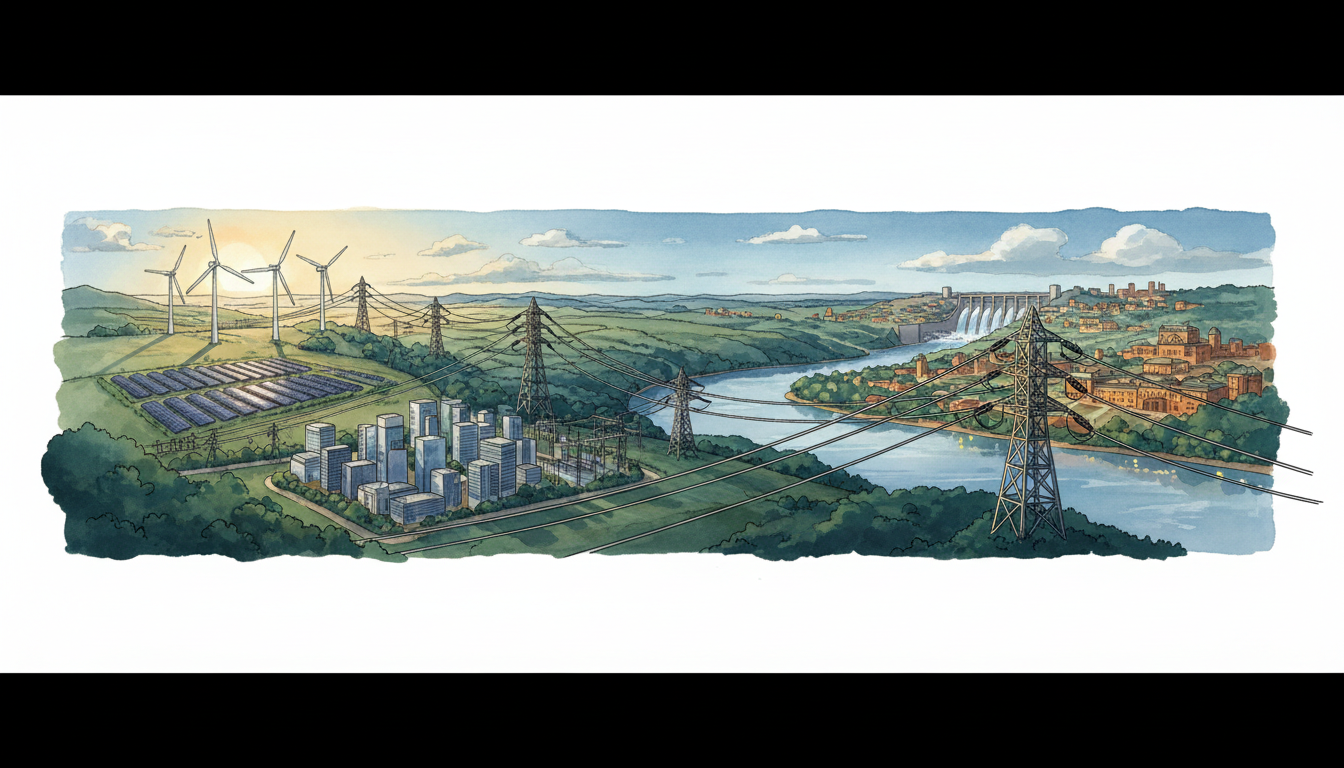
The featured cover uses existing original conceptual educational imagery from eduKate’s media collection. It is not evidence of a historical event or an actual identity, utility or remembrance institution. Factual concepts are connected to named authoritative sources; readers should not infer that the fictional town or its illustrated procedures have been endorsed by those institutions.
Quick answer: why does this belong in the system of civilisation?
The electricity and energy component of civilisation transforms resources into useful services through fuel supply, generation, networks, flexibility, trained people, regulatory oversight and fair access. An impressive generator or grid line does not on its own establish reliability, affordability, safety or responsible environmental stewardship. A real collective capability has a purpose, resources, people responsible, boundaries that protect those affected and a way to recognise when a promise is not fulfilled. It can be studied through a map of dependencies, an evidence question and a fair response to a plausible problem.
Reading routes that respect the learner
- Primary: select one appropriate topic and explain the important cause with a drawing.
- Secondary: compare two possible approaches, identify evidence and state a meaningful limitation.
- Parents: use an everyday question without asking children to disclose private experiences.
- Tutors: teach precise language, causal explanation, safe inquiry and a justified revision.
- Advanced: consult the primary institutional sources, noting their dates, scope and legal context.
Five checks before calling a system successful
| Check | Guiding question | What the learner produces |
|---|---|---|
| Purpose | What legitimate human need is the institution serving? | A plain-language aim |
| Mechanism | Who performs the work and with which resources? | A labelled causal map |
| Access and dignity | Who may be left out or affected differently? | Two fair fictional user journeys |
| Evidence | Which result would strengthen or weaken the proposed explanation? | A meaningful check with stated limits |
| Correction | Who may act, review and explain the outcome? | An accountable handover and feedback path |
A worked example in numbers: what a denominator can and cannot say
Imagine fifteen out of sixty fictional Tidal Reach households use an imagined service in one teaching week. Dividing 15 by 60 gives 25%. This is a share of households under the specified counting method, not necessarily a share of individual people or of those who want the service. The arithmetic can be correct even when a careless interpretation about families or eligibility is wrong.
Suppose a public office receives thirty invented requests in one period and forty in the next. The increase is ten, or about 33.3% relative to thirty. That does not by itself establish improved access, greater need or lower quality. Definitions, reporting channels and repeated contacts may have changed. Good analysis requires a question about what the records actually describe.
For another toy exercise, allocate one hundred imaginary resource tokens among a public announcement, delivery of a service, maintenance and evidence review. There is no prescribed ideal split. The point is to notice that announcing a plan, carrying it out and making it dependable are separate jobs. These figures never constitute a real-world budget, regulated standard or safety recommendation.
Part 1: Energy needs and the meaning of reliable service
The six stations in this part address different functions that become clearer when studied together. Begin with a specific need, trace a process, identify the people affected and ask what a meaningful check would reveal. The sequence is a teaching arrangement rather than a universal account of how societies must develop. A class can read one station at a time and return when the next question becomes relevant.
Component 01: Energy is more than electricity
The working principle. The subject is energy is more than electricity. To understand a civilisational capability, start with the human need and follow the decisions and resources that make it possible. The component is not simply a building, account or named institution. It is a process in which someone has a legitimate responsibility and another person experiences an outcome. Students should write that path in verbs rather than decorative labels. A clear explanation also distinguishes what can be observed in everyday life from work requiring qualified specialists or institutional authority. The reader should name the practical job this topic performs and the role of a person or institution in carrying it out. A precise definition makes room for both a real benefit and a possibility of failure.
The Tidal Reach scenario. A village needs light, heat, cooling and useful mechanical work, not merely a count of sockets.. Draw a short timeline of the imagined issue: the need appears, people collect information, an institution acts, and someone observes the result. A missing transition may be more important than the dramatic conclusion. Encourage learners to mark unclear responsibility with a question. A fictional event can teach how handovers work without pretending to be a detailed account of a historical case or real emergency. Ask what the invented story supplies and what a learner may have assumed. Where the story leaves an important fact unknown, name that gap rather than filling it with speculation.
The strongest foreseeable weakness. Counting grid connections alone can hide other essential energy services.. The opening decision often creates responsibilities that continue after its announcement. Systems require maintenance, records must remain interpretable and people may need professional guidance or emotional support. Extend the timeline beyond the first event. A design that appears efficient can impose burdens on future people if these duties were omitted. Good planning makes the transfer of responsibility visible. The student should identify who may be affected and compare an alternative that addresses the specific weakness. This is a reasoned hypothesis, not an allegation about a real group.
Evidence and the right interpretation. Distinguish the useful service and the energy form involved. Distinguish the number of procedures completed from the actual experience of an intended person. An office may have processed an account while someone remains locked out; a memorial may have been constructed while a family’s needs remain unheard. Choose a result close to the original human purpose. Then identify a way that the chosen indicator might still miss a relevant group. Ask which observation would make the preferred explanation less convincing and what source or qualified authority would be needed for a real decision. The fictional numbers, if any, require explicit units and limits.
Try it with a parent or tutor. Draw paper arrows from heat, light and motion to possible sources. Invite two learners to state their preferred options and the strongest reasonable objection to each. They must restate the other’s concern accurately before replying. Then write a revised recommendation that addresses a real mechanism rather than merely softening the language. The exercise rewards respectful dialogue and precise evidence-based reasoning. A young child may draw one causal arrow and explain it aloud. An older student can write a counterargument and a conditional conclusion. Do not collect real sensitive records or perform regulated tasks.
Transfer to tomorrow’s community. A responsible next step may be to obtain qualified evidence instead of improvising a solution. This does not mean ignoring urgent human needs. It means recognising which actions are safe and authorised, what remains unknown and where appropriate expertise is required. A classroom case can teach the boundary without directing real professional work. Connect this station to hydropower and watersheds. Describe whether the connection is a dependency, a duty, an access issue or a method of verification. End with a revised proposal and one unanswered question.
Component 02: Power versus energy
The working principle. The subject is power versus energy. An apparently impressive technology may fail to provide the intended service. A network might exist while an individual cannot access it; a record may be complete while its meaning is wrong. Ask what the system promises, how it operates and what someone experiences at the endpoint. The learner should not assume these stages always agree. The mechanism becomes informative when the writer identifies which dependency connects them and how a mistake would be noticed. The reader should name the practical job this topic performs and the role of a person or institution in carrying it out. A precise definition makes room for both a real benefit and a possibility of failure.
The Tidal Reach scenario. An invented 1 kW device running at constant power for two hours would use 2 kWh.. A useful classroom scenario makes a complex concept concrete while preserving its limits. The town is invented, the people are imaginary and the quantities are teaching assumptions. Ask what additional evidence would be needed to evaluate an actual public service or social practice. The exercise succeeds when pupils can move from a story to a precise question without confusing the story with documentary proof. Ask what the invented story supplies and what a learner may have assumed. Where the story leaves an important fact unknown, name that gap rather than filling it with speculation.
The strongest foreseeable weakness. Confusing a rate of power with a total of energy makes calculations misleading.. The most convenient result may be the one easiest to display, not the one that matters most. A high count of accounts created or ceremonies completed can hide the experience of people whose needs were not met. Ask what second observation could reveal that difference. When the original purpose is unclear, even a technically accurate dashboard can support a misleading conclusion. The student should identify who may be affected and compare an alternative that addresses the specific weakness. This is a reasoned hypothesis, not an allegation about a real group.
Evidence and the right interpretation. State the unit and duration before calculating. A paper example does not establish that a real system is secure, a deathcare practice lawful or a medical response appropriate. Students should identify which current institutional guidance and qualified people must be consulted in practice. The relevant source explains general principles in a stated scope; it does not endorse an invented arrangement. Keeping these boundaries clear is a mark of accurate learning. Ask which observation would make the preferred explanation less convincing and what source or qualified authority would be needed for a real decision. The fictional numbers, if any, require explicit units and limits.
Try it with a parent or tutor. Solve two hypothetical kW-to-kWh questions. Prepare four paper cards: problem, first proposal, possible consequence and evidence to check. Ask the learner to arrange them and justify the sequence. Change one detail and ask which step must be rewritten. This is a safe way to practise causal reasoning and flexible thinking with fictional examples rather than complicated live software, personal histories or professional procedures. A young child may draw one causal arrow and explain it aloud. An older student can write a counterargument and a conditional conclusion. Do not collect real sensitive records or perform regulated tasks.
Transfer to tomorrow’s community. Return to a person absent from the original public meeting. Could they learn what was decided, use the intended benefit and question an error safely? Formal availability is not always practical access. Add a communication or review improvement and state what evidence would show whether it worked. A system becomes more accountable when the affected person’s experience remains visible. Connect this station to nuclear governance. Describe whether the connection is a dependency, a duty, an access issue or a method of verification. End with a revised proposal and one unanswered question.
Component 03: Demand changes over the day
The working principle. The subject is demand changes over the day. A useful definition should describe something that could work or fail under identifiable conditions. Ask who performs the work, which resources or rules make the action legitimate and how the outcome would be checked. The child can begin with simple language, but should eventually be able to distinguish a general concept from a particular solution adopted in one place. That distinction supports comparison without ranking the worth of peoples or cultures. The reader should name the practical job this topic performs and the role of a person or institution in carrying it out. A precise definition makes room for both a real benefit and a possibility of failure.
The Tidal Reach scenario. A school and clinic in fictional Tidal Reach draw power at different times.. Change one condition in the imaginary case. Perhaps a device fails, a person cannot use the default route or information proves incomplete. Hold the other assumptions stable and ask which result changes. Students can test their causal diagram by revising exactly the affected link. That makes learning visible and avoids the habit of announcing a new answer with no explanation of why it changed. Ask what the invented story supplies and what a learner may have assumed. Where the story leaves an important fact unknown, name that gap rather than filling it with speculation.
The strongest foreseeable weakness. Annual energy totals cannot show whether the peak hour can be served.. A good intention can create harm if the resulting process exposes private information, excludes vulnerable users or assigns specialist duties to unqualified people. Identify the beneficiary, the person who may be burdened and the reason for concern. These are hypotheses to examine rather than accusations that harm has already occurred. A responsible proposal includes an appropriate safeguard and a way to check its effect. The student should identify who may be affected and compare an alternative that addresses the specific weakness. This is a reasoned hypothesis, not an allegation about a real group.
Evidence and the right interpretation. Compare time-specific power with the whole-day energy total. A strong evaluation can challenge the preferred proposal. Ask students what observation would make them conclude that the system has not achieved its stated purpose. Write that possible result before presenting fictional data. If every number can be called evidence of success, the test is not informative. The goal is learning from inconvenient evidence rather than simply rewarding the original plan. Ask which observation would make the preferred explanation less convincing and what source or qualified authority would be needed for a real decision. The fictional numbers, if any, require explicit units and limits.
Try it with a parent or tutor. Draw two labelled model demand curves. For a numerical extension, give the class one hundred entirely imaginary resource tokens and ask how to divide attention among implementation, support, review and continuity. The tokens do not represent real budgets, technical thresholds or legal entitlements. Ask who benefits and how a chosen allocation could be reconsidered when new information appears. A young child may draw one causal arrow and explain it aloud. An older student can write a counterargument and a conditional conclusion. Do not collect real sensitive records or perform regulated tasks.
Transfer to tomorrow’s community. Connect the station to other components of civilisation using arrows labelled supports, depends on, records, protects or constrains. Follow the effect of one failed link to an ordinary user. If the causal relationship cannot be justified, leave it as a research question. The diagram should reveal interdependence rather than decorate the page with lines. Connect this station to fuel supply and thermal generation. Describe whether the connection is a dependency, a duty, an access issue or a method of verification. End with a revised proposal and one unanswered question.
Component 04: Cooking and useful heat
The working principle. The subject is cooking and useful heat. Imagine the capability disappears tomorrow while all of its visible facilities remain. What would residents lose? A missing service, a lack of trustworthy information or the loss of meaningful control can reveal which human function matters. Trace the effects backwards through the system until the supporting work becomes visible. This is an exercise in causal explanation, not a claim that one fictional arrangement describes every real society. The reader should name the practical job this topic performs and the role of a person or institution in carrying it out. A precise definition makes room for both a real benefit and a possibility of failure.
The Tidal Reach scenario. Some households use fuels for cooking while others rely on electrical appliances.. Pause the fictional event before anyone proposes a definitive solution. Ask what is known, what is assumed and which user or family may experience the consequences differently. The answer should not fill gaps with speculation. A student may describe the intended mechanism and still admit that a crucial fact has not been supplied. This habit is useful because real public decisions often depend on the quality of information available at the time. Ask what the invented story supplies and what a learner may have assumed. Where the story leaves an important fact unknown, name that gap rather than filling it with speculation.
The strongest foreseeable weakness. Electricity provision does not automatically resolve every cooking or indoor-air challenge.. The costs of a policy may be hidden outside the first budget or headline. Families may spend time navigating a system, workers may need new training and future residents may inherit unreadable archives. Ask who bears those continuing obligations and whether they are proportional to the intended benefit. The aim is an honest comparison with specific conditions, not a universal instruction. The student should identify who may be affected and compare an alternative that addresses the specific weakness. This is a reasoned hypothesis, not an allegation about a real group.
Evidence and the right interpretation. Separate safety, useful energy, access and local conditions. One observation may have several explanations. A change in usage could reflect improved access, changed definitions, a new provider or a deterioration elsewhere. Ask learners to list alternatives before assuming causality. In real research, more rigorous methods may be required. The classroom aim is to recognise that a pattern and its proposed cause are distinct claims needing appropriate evidence. Ask which observation would make the preferred explanation less convincing and what source or qualified authority would be needed for a real decision. The fictional numbers, if any, require explicit units and limits.
Try it with a parent or tutor. Map several conceptual cooking-energy routes without handling fuels. Compare two hypothetical approaches with a small table. Keep the intended purpose constant, specify what changes and identify an outcome that would meaningfully distinguish the alternatives. If several factors change at once, the student should acknowledge that the cause of a difference may be uncertain. The paper test is an educational model, not a professional certification. A young child may draw one causal arrow and explain it aloud. An older student can write a counterargument and a conditional conclusion. Do not collect real sensitive records or perform regulated tasks.
Transfer to tomorrow’s community. Ask what observation would make the current arrangement inadequate. Technology, family circumstances and social conditions may change. A useful plan includes a trigger for review and a person responsible for checking the evidence. Such clarity is stronger than promising that a programme will improve without specifying who can act or what problem is being addressed. Connect this station to generation, transmission, distribution. Describe whether the connection is a dependency, a duty, an access issue or a method of verification. End with a revised proposal and one unanswered question.
Component 05: Generation diversity
The working principle. The subject is generation diversity. Most durable public systems combine material tools, competent people, clear information and legitimate procedures. Focusing on one alone can conceal the reasons for success or failure. Have students label the relevant inputs, the transformation and the end user’s benefit. Then identify who may question a problem and how future personnel would understand the records. These questions reveal why institutional continuity matters as much as the original invention. The reader should name the practical job this topic performs and the role of a person or institution in carrying it out. A precise definition makes room for both a real benefit and a possibility of failure.
The Tidal Reach scenario. A regional system combines different generation sources with unlike operating characteristics.. Tell the story again from the perspective of an imaginary resident absent from the meeting. What information would the person need, and how could a mistake affect them? This may reveal that an apparently complete administrative action still fails to reach an intended user. Students should avoid treating one fictional character as a representative of a real group. The contrast is a prompt for fair inquiry. Ask what the invented story supplies and what a learner may have assumed. Where the story leaves an important fact unknown, name that gap rather than filling it with speculation.
The strongest foreseeable weakness. The number of generator types does not establish their capacity when needed.. Several apparent backups may share one fragile underlying dependency. Two records might originate from a single erroneous source, while two digital services might rely on the same provider. Draw the shared resource rather than counting alternatives by name. This helps students distinguish genuine resilience from the comforting appearance of redundancy without giving operational security instructions. The student should identify who may be affected and compare an alternative that addresses the specific weakness. This is a reasoned hypothesis, not an allegation about a real group.
Evidence and the right interpretation. Compare availability, output timing and dependence on resources. A public organisation’s report and a resident’s personal experience illuminate different aspects of the same process. Neither one anecdote nor one administrative total is automatically representative. Ask how a responsible evaluation could bring their evidence into conversation while respecting privacy. An institution able to examine mistakes fairly is more trustworthy than one that permits only flattering reports. Ask which observation would make the preferred explanation less convincing and what source or qualified authority would be needed for a real decision. The fictional numbers, if any, require explicit units and limits.
Try it with a parent or tutor. Build a hypothetical resource chart using invented units. Use three boxes labelled human need, responsible work and experienced outcome. Place a verb on each arrow and ask the child to explain the meaning without jargon. A second learner removes one dependency, requiring a revised explanation. Primary pupils can draw; older students can write a short causal paragraph. The method does not demand access to any real system or sensitive personal record. A young child may draw one causal arrow and explain it aloud. An older student can write a counterargument and a conditional conclusion. Do not collect real sensitive records or perform regulated tasks.
Transfer to tomorrow’s community. Imagine that the first organisers retire. Would a new person understand the purpose, records and conditions for correction? A durable institution needs an intelligible handover containing relevant definitions, responsibilities and uncertainties. A student can prepare a simple fictional note and ask another pupil whether the original reasoning can be reconstructed from it. Connect this station to transmission corridors. Describe whether the connection is a dependency, a duty, an access issue or a method of verification. End with a revised proposal and one unanswered question.
Component 06: Solar photovoltaic output
The working principle. The subject is solar photovoltaic output. An important difference lies between formal availability and practical access. A service may exist in law or software while a resident faces a route, cost, language or identity barrier. The learner should describe what the individual must actually do to use the intended benefit. A second hypothetical user’s experience can reveal a hidden assumption. The purpose is to formulate questions for proper evaluation, not to diagnose real institutions without evidence. The reader should name the practical job this topic performs and the role of a person or institution in carrying it out. A precise definition makes room for both a real benefit and a possibility of failure.
The Tidal Reach scenario. The town’s modeled solar panels generate less on a cloudy afternoon.. Present two reasonable perspectives on the same classroom example. One person may emphasise ease of use or familiar tradition; another may focus on privacy, reliability or the need to verify an identity. Their concerns need not indicate bad motives. Ask which differences depend on factual evidence and which are legitimate value choices. A fair explanation recognises the distinction instead of forcing artificial unanimity. Ask what the invented story supplies and what a learner may have assumed. Where the story leaves an important fact unknown, name that gap rather than filling it with speculation.
The strongest foreseeable weakness. Installed panel rating cannot be treated as guaranteed nighttime service.. An apparently uniform rule can affect people differently because of age, disability, technology access, family circumstances or cultural preferences. Compare two fictional user journeys without assuming everyone in a demographic group has the same needs. Ask whether the desired outcome remains accessible and whether an appropriate review route exists when a case is unusual. The student should identify who may be affected and compare an alternative that addresses the specific weakness. This is a reasoned hypothesis, not an allegation about a real group.
Evidence and the right interpretation. Compare output across daylight and weather conditions. Build a chain from the factual question to the source, collection method, record, interpretation and proposed action. Another reader should be able to identify where inference enters. Protect any personal data that would be inappropriate to disclose. An invented dataset is useful for practising traceability because students can explore the logic without handling real confidential information. Ask which observation would make the preferred explanation less convincing and what source or qualified authority would be needed for a real decision. The fictional numbers, if any, require explicit units and limits.
Try it with a parent or tutor. Draw an invented daily solar profile. Make a table with columns for known facts, assumptions and questions requiring a trustworthy source. Many pupils discover that their first answer relied on unstated details. Encourage them to identify which unknown would most change the outcome. A carefully framed question can be a stronger result than a confident but unsupported answer. A young child may draw one causal arrow and explain it aloud. An older student can write a counterargument and a conditional conclusion. Do not collect real sensitive records or perform regulated tasks.
Transfer to tomorrow’s community. Identify who has legitimate authority if the fictional process fails. The person who first notices the problem may not be qualified to resolve it. Separate observation, safe reporting, qualified review and communication of the outcome. This helps pupils understand responsible roles without pretending that conceptual knowledge authorises them to carry out technical, clinical, legal or forensic work. Connect this station to substations and interfaces. Describe whether the connection is a dependency, a duty, an access issue or a method of verification. End with a revised proposal and one unanswered question.
Chapter project 1: six responsibilities in one model
Combine Energy is more than electricity; Power versus energy; Demand changes over the day; Cooking and useful heat; Generation diversity; Solar photovoltaic output into one classroom map of Tidal Reach. The group must write verbs on arrows connecting the functions and identify one point where a mistake could travel from one institution to another. A completed diagram is not proof of reality. It is a theory of how work happens, open to challenge if its assumptions do not hold.
Assign four learner roles: a person identifying the human need, an evidence checker, an access-and-dignity checker and a reviewer for the next generation. The roles must not be mistaken for actual public or professional authority. Ask the group to propose two options, state the strongest reasonable objection and identify a result that would trigger revision. A Primary class may do this in pictures; a Secondary class can produce five paragraphs and a hypothetical table.
Part 2: How electricity can be generated from different resources
The six stations in this part address different functions that become clearer when studied together. Begin with a specific need, trace a process, identify the people affected and ask what a meaningful check would reveal. The sequence is a teaching arrangement rather than a universal account of how societies must develop. A class can read one station at a time and return when the next question becomes relevant.
Component 07: Wind variability
The working principle. The subject is wind variability. Keep the explanatory claim proportional to its supporting evidence. A secure-looking interface, professional-looking report or elaborate diagram cannot establish that every user is safe or every record correct. Describe the claimed function, the responsible work and one observation that might contradict the claim. An explanation that allows correction is stronger than one that hides uncertainty behind technical vocabulary. The reader should name the practical job this topic performs and the role of a person or institution in carrying it out. A precise definition makes room for both a real benefit and a possibility of failure.
The Tidal Reach scenario. An imagined upland turbine gives different output in two seasons.. Finish the fictional example with a short memo for someone who missed the lesson. State the purpose, the known facts, the disputed assumptions and the review question. Another learner should be able to reconstruct the reasoning independently. The test is not whether the story has a happy ending; it is whether a responsible successor could understand what the original group did and why. Ask what the invented story supplies and what a learner may have assumed. Where the story leaves an important fact unknown, name that gap rather than filling it with speculation.
The strongest foreseeable weakness. A windy day’s production cannot describe every future hour.. Some boundaries are not simply options to trade for convenience. Legitimate rights, privacy, safety, professional competence and informed consent can constrain an otherwise attractive project. Students should recognise where the classroom’s authority ends and qualified real-world responsibilities begin. Exploring alternatives within those boundaries is more useful than either ignoring the constraints or abandoning reasoning entirely. The student should identify who may be affected and compare an alternative that addresses the specific weakness. This is a reasoned hypothesis, not an allegation about a real group.
Evidence and the right interpretation. Identify the period, capacity and weather uncertainty. Methods and definitions change over time. A count of people, an event count and a number of service requests cannot always be compared directly. Before drawing a trend, inspect units, time windows and who could appear more than once. When a comparison is not valid, say so. An honest limitation is better than an attractive chart that silently combines incompatible categories. Ask which observation would make the preferred explanation less convincing and what source or qualified authority would be needed for a real decision. The fictional numbers, if any, require explicit units and limits.
Try it with a parent or tutor. Compare two fictional wind-output calendars. Give pupils an incomplete fictional notice. It may omit an intended audience, a date, a privacy limitation or the correct official contact. Have them rewrite it for someone unfamiliar with the topic. A good version says what is known, how the person can get reliable help and what remains unresolved. This turns abstract public responsibility into clear English writing. A young child may draw one causal arrow and explain it aloud. An older student can write a counterargument and a conditional conclusion. Do not collect real sensitive records or perform regulated tasks.
Transfer to tomorrow’s community. Compare the learner’s first and final diagrams. Name the assumption that changed, the person newly considered and the record a successor would need. A useful correction reaches an experienced outcome rather than stopping at a reassuring internal status. The lesson ends when someone else can understand and question the improved explanation. Connect this station to transformers and voltage levels. Describe whether the connection is a dependency, a duty, an access issue or a method of verification. End with a revised proposal and one unanswered question.
Component 08: Hydropower and watersheds
The working principle. The subject is hydropower and watersheds. A civilisational component is sustained over time. The first designer may retire, records may change and new users may need the service. Ask what knowledge a successor would require to understand and improve the original system. The model should preserve purpose, assumptions, boundaries and a review route. Passing on the reasons for the procedure is more useful than passing on a rule whose meaning has been forgotten. The reader should name the practical job this topic performs and the role of a person or institution in carrying it out. A precise definition makes room for both a real benefit and a possibility of failure.
The Tidal Reach scenario. A river-powered generator encounters changing flows during a model dry season.. Assign a student to trace the process, one to examine who can access it, and another to identify what professional authority is required. Their maps may differ because they focus on different parts of the experience. Ask them to explain the conflict and produce a clearer model. The group should preserve the uncertainty where the story does not supply enough evidence for a conclusion. Ask what the invented story supplies and what a learner may have assumed. Where the story leaves an important fact unknown, name that gap rather than filling it with speculation.
The strongest foreseeable weakness. Ignoring water availability and downstream ecology can shift environmental costs.. A fair objection targets a mechanism rather than the moral character of the imaginary participants. Another person may question whether consent was meaningful, whether a record can be trusted or whether alternatives were considered. State that concern accurately before replying. If evidence is insufficient, a conditional conclusion is more responsible than a categorical claim that one answer is universally correct. The student should identify who may be affected and compare an alternative that addresses the specific weakness. This is a reasoned hypothesis, not an allegation about a real group.
Evidence and the right interpretation. Ask which water and ecological evidence real experts would require. Define the observation before displaying a number. Is the system being judged by the quantity of accounts, by the ability of legitimate users to complete a task, or by accuracy of public records? These are different questions. Write the relevant time period and population beside every rate. A calculation may be correct while its broader inference remains unsupported. Good statistical literacy begins with meaningful definitions. Ask which observation would make the preferred explanation less convincing and what source or qualified authority would be needed for a real decision. The fictional numbers, if any, require explicit units and limits.
Try it with a parent or tutor. Draw a watershed-energy dependency map. Close with a voluntary teach-back to a younger learner. The student explains the mechanism in original words, responds to a new ‘what if?’ condition and revises one part of the model. Avoid asking children to disclose private grief, handle credentials, or perform a real professional task. Learning is demonstrated by a clearer explanation and respect for the exercise’s limits. A young child may draw one causal arrow and explain it aloud. An older student can write a counterargument and a conditional conclusion. Do not collect real sensitive records or perform regulated tasks.
Transfer to tomorrow’s community. Some decisions can be revised easily, while others create long-lived records, obligations or public space commitments. Ask what a future resident would inherit and which alternatives would remain available. A careful initial plan preserves appropriate ways to correct mistakes. This is especially important when future users cannot participate in the first decision. Connect this station to real-time balancing. Describe whether the connection is a dependency, a duty, an access issue or a method of verification. End with a revised proposal and one unanswered question.
Component 09: Nuclear governance
The working principle. The subject is nuclear governance. To understand a civilisational capability, start with the human need and follow the decisions and resources that make it possible. The component is not simply a building, account or named institution. It is a process in which someone has a legitimate responsibility and another person experiences an outcome. Students should write that path in verbs rather than decorative labels. A clear explanation also distinguishes what can be observed in everyday life from work requiring qualified specialists or institutional authority. The reader should name the practical job this topic performs and the role of a person or institution in carrying it out. A precise definition makes room for both a real benefit and a possibility of failure.
The Tidal Reach scenario. A fictional council suggests a nuclear plant based only on one generation comparison.. Draw a short timeline of the imagined issue: the need appears, people collect information, an institution acts, and someone observes the result. A missing transition may be more important than the dramatic conclusion. Encourage learners to mark unclear responsibility with a question. A fictional event can teach how handovers work without pretending to be a detailed account of a historical case or real emergency. Ask what the invented story supplies and what a learner may have assumed. Where the story leaves an important fact unknown, name that gap rather than filling it with speculation.
The strongest foreseeable weakness. A classroom output estimate cannot assess siting, safety, regulation or waste.. The opening decision often creates responsibilities that continue after its announcement. Systems require maintenance, records must remain interpretable and people may need professional guidance or emotional support. Extend the timeline beyond the first event. A design that appears efficient can impose burdens on future people if these duties were omitted. Good planning makes the transfer of responsibility visible. The student should identify who may be affected and compare an alternative that addresses the specific weakness. This is a reasoned hypothesis, not an allegation about a real group.
Evidence and the right interpretation. Identify the agencies and professional evidence that would matter. Distinguish the number of procedures completed from the actual experience of an intended person. An office may have processed an account while someone remains locked out; a memorial may have been constructed while a family’s needs remain unheard. Choose a result close to the original human purpose. Then identify a way that the chosen indicator might still miss a relevant group. Ask which observation would make the preferred explanation less convincing and what source or qualified authority would be needed for a real decision. The fictional numbers, if any, require explicit units and limits.
Try it with a parent or tutor. Write a conceptual regulator-question list with no operational detail. Invite two learners to state their preferred options and the strongest reasonable objection to each. They must restate the other’s concern accurately before replying. Then write a revised recommendation that addresses a real mechanism rather than merely softening the language. The exercise rewards respectful dialogue and precise evidence-based reasoning. A young child may draw one causal arrow and explain it aloud. An older student can write a counterargument and a conditional conclusion. Do not collect real sensitive records or perform regulated tasks.
Transfer to tomorrow’s community. A responsible next step may be to obtain qualified evidence instead of improvising a solution. This does not mean ignoring urgent human needs. It means recognising which actions are safe and authorised, what remains unknown and where appropriate expertise is required. A classroom case can teach the boundary without directing real professional work. Connect this station to frequency and stability. Describe whether the connection is a dependency, a duty, an access issue or a method of verification. End with a revised proposal and one unanswered question.
Component 10: Fuel supply and thermal generation
The working principle. The subject is fuel supply and thermal generation. An apparently impressive technology may fail to provide the intended service. A network might exist while an individual cannot access it; a record may be complete while its meaning is wrong. Ask what the system promises, how it operates and what someone experiences at the endpoint. The learner should not assume these stages always agree. The mechanism becomes informative when the writer identifies which dependency connects them and how a mistake would be noticed. The reader should name the practical job this topic performs and the role of a person or institution in carrying it out. A precise definition makes room for both a real benefit and a possibility of failure.
The Tidal Reach scenario. A coastal generator depends on imported fuel delivered by ship.. A useful classroom scenario makes a complex concept concrete while preserving its limits. The town is invented, the people are imaginary and the quantities are teaching assumptions. Ask what additional evidence would be needed to evaluate an actual public service or social practice. The exercise succeeds when pupils can move from a story to a precise question without confusing the story with documentary proof. Ask what the invented story supplies and what a learner may have assumed. Where the story leaves an important fact unknown, name that gap rather than filling it with speculation.
The strongest foreseeable weakness. Fuel logistics and emissions may be missing from a simple generation-price claim.. The most convenient result may be the one easiest to display, not the one that matters most. A high count of accounts created or ceremonies completed can hide the experience of people whose needs were not met. Ask what second observation could reveal that difference. When the original purpose is unclear, even a technically accurate dashboard can support a misleading conclusion. The student should identify who may be affected and compare an alternative that addresses the specific weakness. This is a reasoned hypothesis, not an allegation about a real group.
Evidence and the right interpretation. Trace costs, source reliability and environmental questions. A paper example does not establish that a real system is secure, a deathcare practice lawful or a medical response appropriate. Students should identify which current institutional guidance and qualified people must be consulted in practice. The relevant source explains general principles in a stated scope; it does not endorse an invented arrangement. Keeping these boundaries clear is a mark of accurate learning. Ask which observation would make the preferred explanation less convincing and what source or qualified authority would be needed for a real decision. The fictional numbers, if any, require explicit units and limits.
Try it with a parent or tutor. Map fuel arriving at a plant without touching actual fuels. Prepare four paper cards: problem, first proposal, possible consequence and evidence to check. Ask the learner to arrange them and justify the sequence. Change one detail and ask which step must be rewritten. This is a safe way to practise causal reasoning and flexible thinking with fictional examples rather than complicated live software, personal histories or professional procedures. A young child may draw one causal arrow and explain it aloud. An older student can write a counterargument and a conditional conclusion. Do not collect real sensitive records or perform regulated tasks.
Transfer to tomorrow’s community. Return to a person absent from the original public meeting. Could they learn what was decided, use the intended benefit and question an error safely? Formal availability is not always practical access. Add a communication or review improvement and state what evidence would show whether it worked. A system becomes more accountable when the affected person’s experience remains visible. Connect this station to peak load. Describe whether the connection is a dependency, a duty, an access issue or a method of verification. End with a revised proposal and one unanswered question.
Component 11: Generation, transmission, distribution
The working principle. The subject is generation, transmission, distribution. A useful definition should describe something that could work or fail under identifiable conditions. Ask who performs the work, which resources or rules make the action legitimate and how the outcome would be checked. The child can begin with simple language, but should eventually be able to distinguish a general concept from a particular solution adopted in one place. That distinction supports comparison without ranking the worth of peoples or cultures. The reader should name the practical job this topic performs and the role of a person or institution in carrying it out. A precise definition makes room for both a real benefit and a possibility of failure.
The Tidal Reach scenario. Power produced outside town must travel through several professional network layers.. Change one condition in the imaginary case. Perhaps a device fails, a person cannot use the default route or information proves incomplete. Hold the other assumptions stable and ask which result changes. Students can test their causal diagram by revising exactly the affected link. That makes learning visible and avoids the habit of announcing a new answer with no explanation of why it changed. Ask what the invented story supplies and what a learner may have assumed. Where the story leaves an important fact unknown, name that gap rather than filling it with speculation.
The strongest foreseeable weakness. A generator alone does not make every household socket usable.. A good intention can create harm if the resulting process exposes private information, excludes vulnerable users or assigns specialist duties to unqualified people. Identify the beneficiary, the person who may be burdened and the reason for concern. These are hypotheses to examine rather than accusations that harm has already occurred. A responsible proposal includes an appropriate safeguard and a way to check its effect. The student should identify who may be affected and compare an alternative that addresses the specific weakness. This is a reasoned hypothesis, not an allegation about a real group.
Evidence and the right interpretation. Identify all major stages and responsible roles. A strong evaluation can challenge the preferred proposal. Ask students what observation would make them conclude that the system has not achieved its stated purpose. Write that possible result before presenting fictional data. If every number can be called evidence of success, the test is not informative. The goal is learning from inconvenient evidence rather than simply rewarding the original plan. Ask which observation would make the preferred explanation less convincing and what source or qualified authority would be needed for a real decision. The fictional numbers, if any, require explicit units and limits.
Try it with a parent or tutor. Draw a labelled conceptual source-to-home chain. For a numerical extension, give the class one hundred entirely imaginary resource tokens and ask how to divide attention among implementation, support, review and continuity. The tokens do not represent real budgets, technical thresholds or legal entitlements. Ask who benefits and how a chosen allocation could be reconsidered when new information appears. A young child may draw one causal arrow and explain it aloud. An older student can write a counterargument and a conditional conclusion. Do not collect real sensitive records or perform regulated tasks.
Transfer to tomorrow’s community. Connect the station to other components of civilisation using arrows labelled supports, depends on, records, protects or constrains. Follow the effect of one failed link to an ordinary user. If the causal relationship cannot be justified, leave it as a research question. The diagram should reveal interdependence rather than decorate the page with lines. Connect this station to reserve and resource adequacy. Describe whether the connection is a dependency, a duty, an access issue or a method of verification. End with a revised proposal and one unanswered question.
Component 12: Transmission corridors
The working principle. The subject is transmission corridors. Imagine the capability disappears tomorrow while all of its visible facilities remain. What would residents lose? A missing service, a lack of trustworthy information or the loss of meaningful control can reveal which human function matters. Trace the effects backwards through the system until the supporting work becomes visible. This is an exercise in causal explanation, not a claim that one fictional arrangement describes every real society. The reader should name the practical job this topic performs and the role of a person or institution in carrying it out. A precise definition makes room for both a real benefit and a possibility of failure.
The Tidal Reach scenario. A fictional line moves energy toward inland customers through several zones.. Pause the fictional event before anyone proposes a definitive solution. Ask what is known, what is assumed and which user or family may experience the consequences differently. The answer should not fill gaps with speculation. A student may describe the intended mechanism and still admit that a crucial fact has not been supplied. This habit is useful because real public decisions often depend on the quality of information available at the time. Ask what the invented story supplies and what a learner may have assumed. Where the story leaves an important fact unknown, name that gap rather than filling it with speculation.
The strongest foreseeable weakness. A mapped line does not prove adequate capacity or legitimate siting.. The costs of a policy may be hidden outside the first budget or headline. Families may spend time navigating a system, workers may need new training and future residents may inherit unreadable archives. Ask who bears those continuing obligations and whether they are proportional to the intended benefit. The aim is an honest comparison with specific conditions, not a universal instruction. The student should identify who may be affected and compare an alternative that addresses the specific weakness. This is a reasoned hypothesis, not an allegation about a real group.
Evidence and the right interpretation. Ask about routes, substations, rights and authorised studies. One observation may have several explanations. A change in usage could reflect improved access, changed definitions, a new provider or a deterioration elsewhere. Ask learners to list alternatives before assuming causality. In real research, more rigorous methods may be required. The classroom aim is to recognise that a pattern and its proposed cause are distinct claims needing appropriate evidence. Ask which observation would make the preferred explanation less convincing and what source or qualified authority would be needed for a real decision. The fictional numbers, if any, require explicit units and limits.
Try it with a parent or tutor. Compare two illustrative corridors using paper maps. Compare two hypothetical approaches with a small table. Keep the intended purpose constant, specify what changes and identify an outcome that would meaningfully distinguish the alternatives. If several factors change at once, the student should acknowledge that the cause of a difference may be uncertain. The paper test is an educational model, not a professional certification. A young child may draw one causal arrow and explain it aloud. An older student can write a counterargument and a conditional conclusion. Do not collect real sensitive records or perform regulated tasks.
Transfer to tomorrow’s community. Ask what observation would make the current arrangement inadequate. Technology, family circumstances and social conditions may change. A useful plan includes a trigger for review and a person responsible for checking the evidence. Such clarity is stronger than promising that a programme will improve without specifying who can act or what problem is being addressed. Connect this station to connection queues and bottlenecks. Describe whether the connection is a dependency, a duty, an access issue or a method of verification. End with a revised proposal and one unanswered question.
Chapter project 2: six responsibilities in one model
Combine Wind variability; Hydropower and watersheds; Nuclear governance; Fuel supply and thermal generation; Generation, transmission, distribution; Transmission corridors into one classroom map of Tidal Reach. The group must write verbs on arrows connecting the functions and identify one point where a mistake could travel from one institution to another. A completed diagram is not proof of reality. It is a theory of how work happens, open to challenge if its assumptions do not hold.
Assign four learner roles: a person identifying the human need, an evidence checker, an access-and-dignity checker and a reviewer for the next generation. The roles must not be mistaken for actual public or professional authority. Ask the group to propose two options, state the strongest reasonable objection and identify a result that would trigger revision. A Primary class may do this in pictures; a Secondary class can produce five paragraphs and a hypothetical table.
Part 3: The grid linking generation and ordinary life
The six stations in this part address different functions that become clearer when studied together. Begin with a specific need, trace a process, identify the people affected and ask what a meaningful check would reveal. The sequence is a teaching arrangement rather than a universal account of how societies must develop. A class can read one station at a time and return when the next question becomes relevant.
Component 13: Substations and interfaces
The working principle. The subject is substations and interfaces. Most durable public systems combine material tools, competent people, clear information and legitimate procedures. Focusing on one alone can conceal the reasons for success or failure. Have students label the relevant inputs, the transformation and the end user’s benefit. Then identify who may question a problem and how future personnel would understand the records. These questions reveal why institutional continuity matters as much as the original invention. The reader should name the practical job this topic performs and the role of a person or institution in carrying it out. A precise definition makes room for both a real benefit and a possibility of failure.
The Tidal Reach scenario. New transmission infrastructure stops at an incomplete connection junction.. Tell the story again from the perspective of an imaginary resident absent from the meeting. What information would the person need, and how could a mistake affect them? This may reveal that an apparently complete administrative action still fails to reach an intended user. Students should avoid treating one fictional character as a representative of a real group. The contrast is a prompt for fair inquiry. Ask what the invented story supplies and what a learner may have assumed. Where the story leaves an important fact unknown, name that gap rather than filling it with speculation.
The strongest foreseeable weakness. An asset may be physically present yet unavailable for authorised service.. Several apparent backups may share one fragile underlying dependency. Two records might originate from a single erroneous source, while two digital services might rely on the same provider. Draw the shared resource rather than counting alternatives by name. This helps students distinguish genuine resilience from the comforting appearance of redundancy without giving operational security instructions. The student should identify who may be affected and compare an alternative that addresses the specific weakness. This is a reasoned hypothesis, not an allegation about a real group.
Evidence and the right interpretation. Separate installed equipment from completed system integration. A public organisation’s report and a resident’s personal experience illuminate different aspects of the same process. Neither one anecdote nor one administrative total is automatically representative. Ask how a responsible evaluation could bring their evidence into conversation while respecting privacy. An institution able to examine mistakes fairly is more trustworthy than one that permits only flattering reports. Ask which observation would make the preferred explanation less convincing and what source or qualified authority would be needed for a real decision. The fictional numbers, if any, require explicit units and limits.
Try it with a parent or tutor. Make a block diagram without wiring instructions. Use three boxes labelled human need, responsible work and experienced outcome. Place a verb on each arrow and ask the child to explain the meaning without jargon. A second learner removes one dependency, requiring a revised explanation. Primary pupils can draw; older students can write a short causal paragraph. The method does not demand access to any real system or sensitive personal record. A young child may draw one causal arrow and explain it aloud. An older student can write a counterargument and a conditional conclusion. Do not collect real sensitive records or perform regulated tasks.
Transfer to tomorrow’s community. Imagine that the first organisers retire. Would a new person understand the purpose, records and conditions for correction? A durable institution needs an intelligible handover containing relevant definitions, responsibilities and uncertainties. A student can prepare a simple fictional note and ask another pupil whether the original reasoning can be reconstructed from it. Connect this station to storage shifts energy through time. Describe whether the connection is a dependency, a duty, an access issue or a method of verification. End with a revised proposal and one unanswered question.
Component 14: Transformers and voltage levels
The working principle. The subject is transformers and voltage levels. An important difference lies between formal availability and practical access. A service may exist in law or software while a resident faces a route, cost, language or identity barrier. The learner should describe what the individual must actually do to use the intended benefit. A second hypothetical user’s experience can reveal a hidden assumption. The purpose is to formulate questions for proper evaluation, not to diagnose real institutions without evidence. The reader should name the practical job this topic performs and the role of a person or institution in carrying it out. A precise definition makes room for both a real benefit and a possibility of failure.
The Tidal Reach scenario. A student confuses the power-line network with the classroom socket.. Present two reasonable perspectives on the same classroom example. One person may emphasise ease of use or familiar tradition; another may focus on privacy, reliability or the need to verify an identity. Their concerns need not indicate bad motives. Ask which differences depend on factual evidence and which are legitimate value choices. A fair explanation recognises the distinction instead of forcing artificial unanimity. Ask what the invented story supplies and what a learner may have assumed. Where the story leaves an important fact unknown, name that gap rather than filling it with speculation.
The strongest foreseeable weakness. An oversimplified analogy can become dangerous if treated as a wiring guide.. An apparently uniform rule can affect people differently because of age, disability, technology access, family circumstances or cultural preferences. Compare two fictional user journeys without assuming everyone in a demographic group has the same needs. Ask whether the desired outcome remains accessible and whether an appropriate review route exists when a case is unusual. The student should identify who may be affected and compare an alternative that addresses the specific weakness. This is a reasoned hypothesis, not an allegation about a real group.
Evidence and the right interpretation. Recognise different functional stages without prescribing voltages. Build a chain from the factual question to the source, collection method, record, interpretation and proposed action. Another reader should be able to identify where inference enters. Protect any personal data that would be inappropriate to disclose. An invented dataset is useful for practising traceability because students can explore the logic without handling real confidential information. Ask which observation would make the preferred explanation less convincing and what source or qualified authority would be needed for a real decision. The fictional numbers, if any, require explicit units and limits.
Try it with a parent or tutor. Explain the concept using labelled paper blocks only. Make a table with columns for known facts, assumptions and questions requiring a trustworthy source. Many pupils discover that their first answer relied on unstated details. Encourage them to identify which unknown would most change the outcome. A carefully framed question can be a stronger result than a confident but unsupported answer. A young child may draw one causal arrow and explain it aloud. An older student can write a counterargument and a conditional conclusion. Do not collect real sensitive records or perform regulated tasks.
Transfer to tomorrow’s community. Identify who has legitimate authority if the fictional process fails. The person who first notices the problem may not be qualified to resolve it. Separate observation, safe reporting, qualified review and communication of the outcome. This helps pupils understand responsible roles without pretending that conceptual knowledge authorises them to carry out technical, clinical, legal or forensic work. Connect this station to demand response and flexibility. Describe whether the connection is a dependency, a duty, an access issue or a method of verification. End with a revised proposal and one unanswered question.
Component 15: Real-time balancing
The working principle. The subject is real-time balancing. Keep the explanatory claim proportional to its supporting evidence. A secure-looking interface, professional-looking report or elaborate diagram cannot establish that every user is safe or every record correct. Describe the claimed function, the responsible work and one observation that might contradict the claim. An explanation that allows correction is stronger than one that hides uncertainty behind technical vocabulary. The reader should name the practical job this topic performs and the role of a person or institution in carrying it out. A precise definition makes room for both a real benefit and a possibility of failure.
The Tidal Reach scenario. An imagined evening festival abruptly changes the town’s electricity use.. Finish the fictional example with a short memo for someone who missed the lesson. State the purpose, the known facts, the disputed assumptions and the review question. Another learner should be able to reconstruct the reasoning independently. The test is not whether the story has a happy ending; it is whether a responsible successor could understand what the original group did and why. Ask what the invented story supplies and what a learner may have assumed. Where the story leaves an important fact unknown, name that gap rather than filling it with speculation.
The strongest foreseeable weakness. Equal annual energy totals do not guarantee hour-by-hour balance.. Some boundaries are not simply options to trade for convenience. Legitimate rights, privacy, safety, professional competence and informed consent can constrain an otherwise attractive project. Students should recognise where the classroom’s authority ends and qualified real-world responsibilities begin. Exploring alternatives within those boundaries is more useful than either ignoring the constraints or abandoning reasoning entirely. The student should identify who may be affected and compare an alternative that addresses the specific weakness. This is a reasoned hypothesis, not an allegation about a real group.
Evidence and the right interpretation. Compare hourly supply and demand as teaching quantities. Methods and definitions change over time. A count of people, an event count and a number of service requests cannot always be compared directly. Before drawing a trend, inspect units, time windows and who could appear more than once. When a comparison is not valid, say so. An honest limitation is better than an attractive chart that silently combines incompatible categories. Ask which observation would make the preferred explanation less convincing and what source or qualified authority would be needed for a real decision. The fictional numbers, if any, require explicit units and limits.
Try it with a parent or tutor. Use tokens to represent time-dependent use, not grid dispatch. Give pupils an incomplete fictional notice. It may omit an intended audience, a date, a privacy limitation or the correct official contact. Have them rewrite it for someone unfamiliar with the topic. A good version says what is known, how the person can get reliable help and what remains unresolved. This turns abstract public responsibility into clear English writing. A young child may draw one causal arrow and explain it aloud. An older student can write a counterargument and a conditional conclusion. Do not collect real sensitive records or perform regulated tasks.
Transfer to tomorrow’s community. Compare the learner’s first and final diagrams. Name the assumption that changed, the person newly considered and the record a successor would need. A useful correction reaches an experienced outcome rather than stopping at a reassuring internal status. The lesson ends when someone else can understand and question the improved explanation. Connect this station to mini-grids. Describe whether the connection is a dependency, a duty, an access issue or a method of verification. End with a revised proposal and one unanswered question.
Component 16: Frequency and stability
The working principle. The subject is frequency and stability. A civilisational component is sustained over time. The first designer may retire, records may change and new users may need the service. Ask what knowledge a successor would require to understand and improve the original system. The model should preserve purpose, assumptions, boundaries and a review route. Passing on the reasons for the procedure is more useful than passing on a rule whose meaning has been forgotten. The reader should name the practical job this topic performs and the role of a person or institution in carrying it out. A precise definition makes room for both a real benefit and a possibility of failure.
The Tidal Reach scenario. A model grid faces a disturbance after loss of one fictional component.. Assign a student to trace the process, one to examine who can access it, and another to identify what professional authority is required. Their maps may differ because they focus on different parts of the experience. Ask them to explain the conflict and produce a clearer model. The group should preserve the uncertainty where the story does not supply enough evidence for a conclusion. Ask what the invented story supplies and what a learner may have assumed. Where the story leaves an important fact unknown, name that gap rather than filling it with speculation.
The strongest foreseeable weakness. A simplified graph cannot establish professional frequency or stability limits.. A fair objection targets a mechanism rather than the moral character of the imaginary participants. Another person may question whether consent was meaningful, whether a record can be trusted or whether alternatives were considered. State that concern accurately before replying. If evidence is insufficient, a conditional conclusion is more responsible than a categorical claim that one answer is universally correct. The student should identify who may be affected and compare an alternative that addresses the specific weakness. This is a reasoned hypothesis, not an allegation about a real group.
Evidence and the right interpretation. Identify the need for qualified operating rules and monitoring. Define the observation before displaying a number. Is the system being judged by the quantity of accounts, by the ability of legitimate users to complete a task, or by accuracy of public records? These are different questions. Write the relevant time period and population beside every rate. A calculation may be correct while its broader inference remains unsupported. Good statistical literacy begins with meaningful definitions. Ask which observation would make the preferred explanation less convincing and what source or qualified authority would be needed for a real decision. The fictional numbers, if any, require explicit units and limits.
Try it with a parent or tutor. Draw a cause-and-effect map with safety boundaries. Close with a voluntary teach-back to a younger learner. The student explains the mechanism in original words, responds to a new ‘what if?’ condition and revises one part of the model. Avoid asking children to disclose private grief, handle credentials, or perform a real professional task. Learning is demonstrated by a clearer explanation and respect for the exercise’s limits. A young child may draw one causal arrow and explain it aloud. An older student can write a counterargument and a conditional conclusion. Do not collect real sensitive records or perform regulated tasks.
Transfer to tomorrow’s community. Some decisions can be revised easily, while others create long-lived records, obligations or public space commitments. Ask what a future resident would inherit and which alternatives would remain available. A careful initial plan preserves appropriate ways to correct mistakes. This is especially important when future users cannot participate in the first decision. Connect this station to stand-alone solar access. Describe whether the connection is a dependency, a duty, an access issue or a method of verification. End with a revised proposal and one unanswered question.
Component 17: Peak load
The working principle. The subject is peak load. To understand a civilisational capability, start with the human need and follow the decisions and resources that make it possible. The component is not simply a building, account or named institution. It is a process in which someone has a legitimate responsibility and another person experiences an outcome. Students should write that path in verbs rather than decorative labels. A clear explanation also distinguishes what can be observed in everyday life from work requiring qualified specialists or institutional authority. The reader should name the practical job this topic performs and the role of a person or institution in carrying it out. A precise definition makes room for both a real benefit and a possibility of failure.
The Tidal Reach scenario. Two fictional timetables use the same energy but different simultaneous power.. Draw a short timeline of the imagined issue: the need appears, people collect information, an institution acts, and someone observes the result. A missing transition may be more important than the dramatic conclusion. Encourage learners to mark unclear responsibility with a question. A fictional event can teach how handovers work without pretending to be a detailed account of a historical case or real emergency. Ask what the invented story supplies and what a learner may have assumed. Where the story leaves an important fact unknown, name that gap rather than filling it with speculation.
The strongest foreseeable weakness. Planning solely from the average can conceal a high short-term peak.. The opening decision often creates responsibilities that continue after its announcement. Systems require maintenance, records must remain interpretable and people may need professional guidance or emotional support. Extend the timeline beyond the first event. A design that appears efficient can impose burdens on future people if these duties were omitted. Good planning makes the transfer of responsibility visible. The student should identify who may be affected and compare an alternative that addresses the specific weakness. This is a reasoned hypothesis, not an allegation about a real group.
Evidence and the right interpretation. Compare maximum power separately from total kWh. Distinguish the number of procedures completed from the actual experience of an intended person. An office may have processed an account while someone remains locked out; a memorial may have been constructed while a family’s needs remain unheard. Choose a result close to the original human purpose. Then identify a way that the chosen indicator might still miss a relevant group. Ask which observation would make the preferred explanation less convincing and what source or qualified authority would be needed for a real decision. The fictional numbers, if any, require explicit units and limits.
Try it with a parent or tutor. Sketch equally sized energy areas with different peaks. Invite two learners to state their preferred options and the strongest reasonable objection to each. They must restate the other’s concern accurately before replying. Then write a revised recommendation that addresses a real mechanism rather than merely softening the language. The exercise rewards respectful dialogue and precise evidence-based reasoning. A young child may draw one causal arrow and explain it aloud. An older student can write a counterargument and a conditional conclusion. Do not collect real sensitive records or perform regulated tasks.
Transfer to tomorrow’s community. A responsible next step may be to obtain qualified evidence instead of improvising a solution. This does not mean ignoring urgent human needs. It means recognising which actions are safe and authorised, what remains unknown and where appropriate expertise is required. A classroom case can teach the boundary without directing real professional work. Connect this station to remote-community electrification. Describe whether the connection is a dependency, a duty, an access issue or a method of verification. End with a revised proposal and one unanswered question.
Component 18: Reserve and resource adequacy
The working principle. The subject is reserve and resource adequacy. An apparently impressive technology may fail to provide the intended service. A network might exist while an individual cannot access it; a record may be complete while its meaning is wrong. Ask what the system promises, how it operates and what someone experiences at the endpoint. The learner should not assume these stages always agree. The mechanism becomes informative when the writer identifies which dependency connects them and how a mistake would be noticed. The reader should name the practical job this topic performs and the role of a person or institution in carrying it out. A precise definition makes room for both a real benefit and a possibility of failure.
The Tidal Reach scenario. One invented power source becomes unavailable at a busy time.. A useful classroom scenario makes a complex concept concrete while preserving its limits. The town is invented, the people are imaginary and the quantities are teaching assumptions. Ask what additional evidence would be needed to evaluate an actual public service or social practice. The exercise succeeds when pupils can move from a story to a precise question without confusing the story with documentary proof. Ask what the invented story supplies and what a learner may have assumed. Where the story leaves an important fact unknown, name that gap rather than filling it with speculation.
The strongest foreseeable weakness. Installed capacity is not identical to reliably available capacity.. The most convenient result may be the one easiest to display, not the one that matters most. A high count of accounts created or ceremonies completed can hide the experience of people whose needs were not met. Ask what second observation could reveal that difference. When the original purpose is unclear, even a technically accurate dashboard can support a misleading conclusion. The student should identify who may be affected and compare an alternative that addresses the specific weakness. This is a reasoned hypothesis, not an allegation about a real group.
Evidence and the right interpretation. Check assumptions about time, availability and reserve planning. A paper example does not establish that a real system is secure, a deathcare practice lawful or a medical response appropriate. Students should identify which current institutional guidance and qualified people must be consulted in practice. The relevant source explains general principles in a stated scope; it does not endorse an invented arrangement. Keeping these boundaries clear is a mark of accurate learning. Ask which observation would make the preferred explanation less convincing and what source or qualified authority would be needed for a real decision. The fictional numbers, if any, require explicit units and limits.
Try it with a parent or tutor. Build an illustrative availability matrix without actual settings. Prepare four paper cards: problem, first proposal, possible consequence and evidence to check. Ask the learner to arrange them and justify the sequence. Change one detail and ask which step must be rewritten. This is a safe way to practise causal reasoning and flexible thinking with fictional examples rather than complicated live software, personal histories or professional procedures. A young child may draw one causal arrow and explain it aloud. An older student can write a counterargument and a conditional conclusion. Do not collect real sensitive records or perform regulated tasks.
Transfer to tomorrow’s community. Return to a person absent from the original public meeting. Could they learn what was decided, use the intended benefit and question an error safely? Formal availability is not always practical access. Add a communication or review improvement and state what evidence would show whether it worked. A system becomes more accountable when the affected person’s experience remains visible. Connect this station to reliability and power interruptions. Describe whether the connection is a dependency, a duty, an access issue or a method of verification. End with a revised proposal and one unanswered question.
Chapter project 3: six responsibilities in one model
Combine Substations and interfaces; Transformers and voltage levels; Real-time balancing; Frequency and stability; Peak load; Reserve and resource adequacy into one classroom map of Tidal Reach. The group must write verbs on arrows connecting the functions and identify one point where a mistake could travel from one institution to another. A completed diagram is not proof of reality. It is a theory of how work happens, open to challenge if its assumptions do not hold.
Assign four learner roles: a person identifying the human need, an evidence checker, an access-and-dignity checker and a reviewer for the next generation. The roles must not be mistaken for actual public or professional authority. Ask the group to propose two options, state the strongest reasonable objection and identify a result that would trigger revision. A Primary class may do this in pictures; a Secondary class can produce five paragraphs and a hypothetical table.
Part 4: Flexibility, reliability and qualified operations
The six stations in this part address different functions that become clearer when studied together. Begin with a specific need, trace a process, identify the people affected and ask what a meaningful check would reveal. The sequence is a teaching arrangement rather than a universal account of how societies must develop. A class can read one station at a time and return when the next question becomes relevant.
Component 19: Connection queues and bottlenecks
The working principle. The subject is connection queues and bottlenecks. A useful definition should describe something that could work or fail under identifiable conditions. Ask who performs the work, which resources or rules make the action legitimate and how the outcome would be checked. The child can begin with simple language, but should eventually be able to distinguish a general concept from a particular solution adopted in one place. That distinction supports comparison without ranking the worth of peoples or cultures. The reader should name the practical job this topic performs and the role of a person or institution in carrying it out. A precise definition makes room for both a real benefit and a possibility of failure.
The Tidal Reach scenario. Several fictional new generators wait for a constrained grid connection.. Change one condition in the imaginary case. Perhaps a device fails, a person cannot use the default route or information proves incomplete. Hold the other assumptions stable and ask which result changes. Students can test their causal diagram by revising exactly the affected link. That makes learning visible and avoids the habit of announcing a new answer with no explanation of why it changed. Ask what the invented story supplies and what a learner may have assumed. Where the story leaves an important fact unknown, name that gap rather than filling it with speculation.
The strongest foreseeable weakness. Counting built generators can overstate capacity that reaches users.. A good intention can create harm if the resulting process exposes private information, excludes vulnerable users or assigns specialist duties to unqualified people. Identify the beneficiary, the person who may be burdened and the reason for concern. These are hypotheses to examine rather than accusations that harm has already occurred. A responsible proposal includes an appropriate safeguard and a way to check its effect. The student should identify who may be affected and compare an alternative that addresses the specific weakness. This is a reasoned hypothesis, not an allegation about a real group.
Evidence and the right interpretation. Distinguish planned, built, connected and operational stages. A strong evaluation can challenge the preferred proposal. Ask students what observation would make them conclude that the system has not achieved its stated purpose. Write that possible result before presenting fictional data. If every number can be called evidence of success, the test is not informative. The goal is learning from inconvenient evidence rather than simply rewarding the original plan. Ask which observation would make the preferred explanation less convincing and what source or qualified authority would be needed for a real decision. The fictional numbers, if any, require explicit units and limits.
Try it with a parent or tutor. Draw an invented project dependency timeline. For a numerical extension, give the class one hundred entirely imaginary resource tokens and ask how to divide attention among implementation, support, review and continuity. The tokens do not represent real budgets, technical thresholds or legal entitlements. Ask who benefits and how a chosen allocation could be reconsidered when new information appears. A young child may draw one causal arrow and explain it aloud. An older student can write a counterargument and a conditional conclusion. Do not collect real sensitive records or perform regulated tasks.
Transfer to tomorrow’s community. Connect the station to other components of civilisation using arrows labelled supports, depends on, records, protects or constrains. Follow the effect of one failed link to an ordinary user. If the causal relationship cannot be justified, leave it as a research question. The diagram should reveal interdependence rather than decorate the page with lines. Connect this station to energy for critical public services. Describe whether the connection is a dependency, a duty, an access issue or a method of verification. End with a revised proposal and one unanswered question.
Component 20: Storage shifts energy through time
The working principle. The subject is storage shifts energy through time. Imagine the capability disappears tomorrow while all of its visible facilities remain. What would residents lose? A missing service, a lack of trustworthy information or the loss of meaningful control can reveal which human function matters. Trace the effects backwards through the system until the supporting work becomes visible. This is an exercise in causal explanation, not a claim that one fictional arrangement describes every real society. The reader should name the practical job this topic performs and the role of a person or institution in carrying it out. A precise definition makes room for both a real benefit and a possibility of failure.
The Tidal Reach scenario. A school hopes to use electricity saved during daylight after sunset.. Pause the fictional event before anyone proposes a definitive solution. Ask what is known, what is assumed and which user or family may experience the consequences differently. The answer should not fill gaps with speculation. A student may describe the intended mechanism and still admit that a crucial fact has not been supplied. This habit is useful because real public decisions often depend on the quality of information available at the time. Ask what the invented story supplies and what a learner may have assumed. Where the story leaves an important fact unknown, name that gap rather than filling it with speculation.
The strongest foreseeable weakness. Storage capacity, power and losses cannot be collapsed into one label.. The costs of a policy may be hidden outside the first budget or headline. Families may spend time navigating a system, workers may need new training and future residents may inherit unreadable archives. Ask who bears those continuing obligations and whether they are proportional to the intended benefit. The aim is an honest comparison with specific conditions, not a universal instruction. The student should identify who may be affected and compare an alternative that addresses the specific weakness. This is a reasoned hypothesis, not an allegation about a real group.
Evidence and the right interpretation. Separate input, usable output and timing. One observation may have several explanations. A change in usage could reflect improved access, changed definitions, a new provider or a deterioration elsewhere. Ask learners to list alternatives before assuming causality. In real research, more rigorous methods may be required. The classroom aim is to recognise that a pattern and its proposed cause are distinct claims needing appropriate evidence. Ask which observation would make the preferred explanation less convincing and what source or qualified authority would be needed for a real decision. The fictional numbers, if any, require explicit units and limits.
Try it with a parent or tutor. Draw a paper store-and-release concept, not a battery experiment. Compare two hypothetical approaches with a small table. Keep the intended purpose constant, specify what changes and identify an outcome that would meaningfully distinguish the alternatives. If several factors change at once, the student should acknowledge that the cause of a difference may be uncertain. The paper test is an educational model, not a professional certification. A young child may draw one causal arrow and explain it aloud. An older student can write a counterargument and a conditional conclusion. Do not collect real sensitive records or perform regulated tasks.
Transfer to tomorrow’s community. Ask what observation would make the current arrangement inadequate. Technology, family circumstances and social conditions may change. A useful plan includes a trigger for review and a person responsible for checking the evidence. Such clarity is stronger than promising that a programme will improve without specifying who can act or what problem is being addressed. Connect this station to weather and physical infrastructure. Describe whether the connection is a dependency, a duty, an access issue or a method of verification. End with a revised proposal and one unanswered question.
Component 21: Demand response and flexibility
The working principle. The subject is demand response and flexibility. Most durable public systems combine material tools, competent people, clear information and legitimate procedures. Focusing on one alone can conceal the reasons for success or failure. Have students label the relevant inputs, the transformation and the end user’s benefit. Then identify who may question a problem and how future personnel would understand the records. These questions reveal why institutional continuity matters as much as the original invention. The reader should name the practical job this topic performs and the role of a person or institution in carrying it out. A precise definition makes room for both a real benefit and a possibility of failure.
The Tidal Reach scenario. The town shifts a nonurgent workshop activity to another hour.. Tell the story again from the perspective of an imaginary resident absent from the meeting. What information would the person need, and how could a mistake affect them? This may reveal that an apparently complete administrative action still fails to reach an intended user. Students should avoid treating one fictional character as a representative of a real group. The contrast is a prompt for fair inquiry. Ask what the invented story supplies and what a learner may have assumed. Where the story leaves an important fact unknown, name that gap rather than filling it with speculation.
The strongest foreseeable weakness. Not every service or household can change its electricity timing freely.. Several apparent backups may share one fragile underlying dependency. Two records might originate from a single erroneous source, while two digital services might rely on the same provider. Draw the shared resource rather than counting alternatives by name. This helps students distinguish genuine resilience from the comforting appearance of redundancy without giving operational security instructions. The student should identify who may be affected and compare an alternative that addresses the specific weakness. This is a reasoned hypothesis, not an allegation about a real group.
Evidence and the right interpretation. Identify flexibility without shifting essential care duties. A public organisation’s report and a resident’s personal experience illuminate different aspects of the same process. Neither one anecdote nor one administrative total is automatically representative. Ask how a responsible evaluation could bring their evidence into conversation while respecting privacy. An institution able to examine mistakes fairly is more trustworthy than one that permits only flattering reports. Ask which observation would make the preferred explanation less convincing and what source or qualified authority would be needed for a real decision. The fictional numbers, if any, require explicit units and limits.
Try it with a parent or tutor. Compare two hypothetical timetables and access needs. Use three boxes labelled human need, responsible work and experienced outcome. Place a verb on each arrow and ask the child to explain the meaning without jargon. A second learner removes one dependency, requiring a revised explanation. Primary pupils can draw; older students can write a short causal paragraph. The method does not demand access to any real system or sensitive personal record. A young child may draw one causal arrow and explain it aloud. An older student can write a counterargument and a conditional conclusion. Do not collect real sensitive records or perform regulated tasks.
Transfer to tomorrow’s community. Imagine that the first organisers retire. Would a new person understand the purpose, records and conditions for correction? A durable institution needs an intelligible handover containing relevant definitions, responsibilities and uncertainties. A student can prepare a simple fictional note and ask another pupil whether the original reasoning can be reconstructed from it. Connect this station to grid cybersecurity. Describe whether the connection is a dependency, a duty, an access issue or a method of verification. End with a revised proposal and one unanswered question.
Component 22: Mini-grids
The working principle. The subject is mini-grids. An important difference lies between formal availability and practical access. A service may exist in law or software while a resident faces a route, cost, language or identity barrier. The learner should describe what the individual must actually do to use the intended benefit. A second hypothetical user’s experience can reveal a hidden assumption. The purpose is to formulate questions for proper evaluation, not to diagnose real institutions without evidence. The reader should name the practical job this topic performs and the role of a person or institution in carrying it out. A precise definition makes room for both a real benefit and a possibility of failure.
The Tidal Reach scenario. An isolated island school considers a conceptual local electricity network.. Present two reasonable perspectives on the same classroom example. One person may emphasise ease of use or familiar tradition; another may focus on privacy, reliability or the need to verify an identity. Their concerns need not indicate bad motives. Ask which differences depend on factual evidence and which are legitimate value choices. A fair explanation recognises the distinction instead of forcing artificial unanimity. Ask what the invented story supplies and what a learner may have assumed. Where the story leaves an important fact unknown, name that gap rather than filling it with speculation.
The strongest foreseeable weakness. A stand-alone diagram cannot prove safe, affordable year-round supply.. An apparently uniform rule can affect people differently because of age, disability, technology access, family circumstances or cultural preferences. Compare two fictional user journeys without assuming everyone in a demographic group has the same needs. Ask whether the desired outcome remains accessible and whether an appropriate review route exists when a case is unusual. The student should identify who may be affected and compare an alternative that addresses the specific weakness. This is a reasoned hypothesis, not an allegation about a real group.
Evidence and the right interpretation. Ask about skills, maintenance, availability and legal responsibility. Build a chain from the factual question to the source, collection method, record, interpretation and proposed action. Another reader should be able to identify where inference enters. Protect any personal data that would be inappropriate to disclose. An invented dataset is useful for practising traceability because students can explore the logic without handling real confidential information. Ask which observation would make the preferred explanation less convincing and what source or qualified authority would be needed for a real decision. The fictional numbers, if any, require explicit units and limits.
Try it with a parent or tutor. Map a mini-grid as educational boxes only. Make a table with columns for known facts, assumptions and questions requiring a trustworthy source. Many pupils discover that their first answer relied on unstated details. Encourage them to identify which unknown would most change the outcome. A carefully framed question can be a stronger result than a confident but unsupported answer. A young child may draw one causal arrow and explain it aloud. An older student can write a counterargument and a conditional conclusion. Do not collect real sensitive records or perform regulated tasks.
Transfer to tomorrow’s community. Identify who has legitimate authority if the fictional process fails. The person who first notices the problem may not be qualified to resolve it. Separate observation, safe reporting, qualified review and communication of the outcome. This helps pupils understand responsible roles without pretending that conceptual knowledge authorises them to carry out technical, clinical, legal or forensic work. Connect this station to replacement components. Describe whether the connection is a dependency, a duty, an access issue or a method of verification. End with a revised proposal and one unanswered question.
Component 23: Stand-alone solar access
The working principle. The subject is stand-alone solar access. Keep the explanatory claim proportional to its supporting evidence. A secure-looking interface, professional-looking report or elaborate diagram cannot establish that every user is safe or every record correct. Describe the claimed function, the responsible work and one observation that might contradict the claim. An explanation that allows correction is stronger than one that hides uncertainty behind technical vocabulary. The reader should name the practical job this topic performs and the role of a person or institution in carrying it out. A precise definition makes room for both a real benefit and a possibility of failure.
The Tidal Reach scenario. A model home has a solar light but cannot power high-demand appliances.. Finish the fictional example with a short memo for someone who missed the lesson. State the purpose, the known facts, the disputed assumptions and the review question. Another learner should be able to reconstruct the reasoning independently. The test is not whether the story has a happy ending; it is whether a responsible successor could understand what the original group did and why. Ask what the invented story supplies and what a learner may have assumed. Where the story leaves an important fact unknown, name that gap rather than filling it with speculation.
The strongest foreseeable weakness. One device is not evidence of full modern energy service.. Some boundaries are not simply options to trade for convenience. Legitimate rights, privacy, safety, professional competence and informed consent can constrain an otherwise attractive project. Students should recognise where the classroom’s authority ends and qualified real-world responsibilities begin. Exploring alternatives within those boundaries is more useful than either ignoring the constraints or abandoning reasoning entirely. The student should identify who may be affected and compare an alternative that addresses the specific weakness. This is a reasoned hypothesis, not an allegation about a real group.
Evidence and the right interpretation. Define actual services, hours, quality and affordability. Methods and definitions change over time. A count of people, an event count and a number of service requests cannot always be compared directly. Before drawing a trend, inspect units, time windows and who could appear more than once. When a comparison is not valid, say so. An honest limitation is better than an attractive chart that silently combines incompatible categories. Ask which observation would make the preferred explanation less convincing and what source or qualified authority would be needed for a real decision. The fictional numbers, if any, require explicit units and limits.
Try it with a parent or tutor. Compare fictional access descriptions in clear English. Give pupils an incomplete fictional notice. It may omit an intended audience, a date, a privacy limitation or the correct official contact. Have them rewrite it for someone unfamiliar with the topic. A good version says what is known, how the person can get reliable help and what remains unresolved. This turns abstract public responsibility into clear English writing. A young child may draw one causal arrow and explain it aloud. An older student can write a counterargument and a conditional conclusion. Do not collect real sensitive records or perform regulated tasks.
Transfer to tomorrow’s community. Compare the learner’s first and final diagrams. Name the assumption that changed, the person newly considered and the record a successor would need. A useful correction reaches an experienced outcome rather than stopping at a reassuring internal status. The lesson ends when someone else can understand and question the improved explanation. Connect this station to qualified energy workers. Describe whether the connection is a dependency, a duty, an access issue or a method of verification. End with a revised proposal and one unanswered question.
Component 24: Remote-community electrification
The working principle. The subject is remote-community electrification. A civilisational component is sustained over time. The first designer may retire, records may change and new users may need the service. Ask what knowledge a successor would require to understand and improve the original system. The model should preserve purpose, assumptions, boundaries and a review route. Passing on the reasons for the procedure is more useful than passing on a rule whose meaning has been forgotten. The reader should name the practical job this topic performs and the role of a person or institution in carrying it out. A precise definition makes room for both a real benefit and a possibility of failure.
The Tidal Reach scenario. An imagined village is far from the large distribution network.. Assign a student to trace the process, one to examine who can access it, and another to identify what professional authority is required. Their maps may differ because they focus on different parts of the experience. Ask them to explain the conflict and produce a clearer model. The group should preserve the uncertainty where the story does not supply enough evidence for a conclusion. Ask what the invented story supplies and what a learner may have assumed. Where the story leaves an important fact unknown, name that gap rather than filling it with speculation.
The strongest foreseeable weakness. Average coverage statistics may hide underserved places.. A fair objection targets a mechanism rather than the moral character of the imaginary participants. Another person may question whether consent was meaningful, whether a record can be trusted or whether alternatives were considered. State that concern accurately before replying. If evidence is insufficient, a conditional conclusion is more responsible than a categorical claim that one answer is universally correct. The student should identify who may be affected and compare an alternative that addresses the specific weakness. This is a reasoned hypothesis, not an allegation about a real group.
Evidence and the right interpretation. Observe usable service at the endpoint and known cost questions. Define the observation before displaying a number. Is the system being judged by the quantity of accounts, by the ability of legitimate users to complete a task, or by accuracy of public records? These are different questions. Write the relevant time period and population beside every rate. A calculation may be correct while its broader inference remains unsupported. Good statistical literacy begins with meaningful definitions. Ask which observation would make the preferred explanation less convincing and what source or qualified authority would be needed for a real decision. The fictional numbers, if any, require explicit units and limits.
Try it with a parent or tutor. Draw a remote-village route with explicit unknowns. Close with a voluntary teach-back to a younger learner. The student explains the mechanism in original words, responds to a new ‘what if?’ condition and revises one part of the model. Avoid asking children to disclose private grief, handle credentials, or perform a real professional task. Learning is demonstrated by a clearer explanation and respect for the exercise’s limits. A young child may draw one causal arrow and explain it aloud. An older student can write a counterargument and a conditional conclusion. Do not collect real sensitive records or perform regulated tasks.
Transfer to tomorrow’s community. Some decisions can be revised easily, while others create long-lived records, obligations or public space commitments. Ask what a future resident would inherit and which alternatives would remain available. A careful initial plan preserves appropriate ways to correct mistakes. This is especially important when future users cannot participate in the first decision. Connect this station to affordability and hardship. Describe whether the connection is a dependency, a duty, an access issue or a method of verification. End with a revised proposal and one unanswered question.
Chapter project 4: six responsibilities in one model
Combine Connection queues and bottlenecks; Storage shifts energy through time; Demand response and flexibility; Mini-grids; Stand-alone solar access; Remote-community electrification into one classroom map of Tidal Reach. The group must write verbs on arrows connecting the functions and identify one point where a mistake could travel from one institution to another. A completed diagram is not proof of reality. It is a theory of how work happens, open to challenge if its assumptions do not hold.
Assign four learner roles: a person identifying the human need, an evidence checker, an access-and-dignity checker and a reviewer for the next generation. The roles must not be mistaken for actual public or professional authority. Ask the group to propose two options, state the strongest reasonable objection and identify a result that would trigger revision. A Primary class may do this in pictures; a Secondary class can produce five paragraphs and a hypothetical table.
Part 5: Access, affordability, rights and accountability
The six stations in this part address different functions that become clearer when studied together. Begin with a specific need, trace a process, identify the people affected and ask what a meaningful check would reveal. The sequence is a teaching arrangement rather than a universal account of how societies must develop. A class can read one station at a time and return when the next question becomes relevant.
Component 25: Reliability and power interruptions
The working principle. The subject is reliability and power interruptions. To understand a civilisational capability, start with the human need and follow the decisions and resources that make it possible. The component is not simply a building, account or named institution. It is a process in which someone has a legitimate responsibility and another person experiences an outcome. Students should write that path in verbs rather than decorative labels. A clear explanation also distinguishes what can be observed in everyday life from work requiring qualified specialists or institutional authority. The reader should name the practical job this topic performs and the role of a person or institution in carrying it out. A precise definition makes room for both a real benefit and a possibility of failure.
The Tidal Reach scenario. Classrooms suffer repeated imaginary evening electricity outages.. Draw a short timeline of the imagined issue: the need appears, people collect information, an institution acts, and someone observes the result. A missing transition may be more important than the dramatic conclusion. Encourage learners to mark unclear responsibility with a question. A fictional event can teach how handovers work without pretending to be a detailed account of a historical case or real emergency. Ask what the invented story supplies and what a learner may have assumed. Where the story leaves an important fact unknown, name that gap rather than filling it with speculation.
The strongest foreseeable weakness. A one-day successful test can conceal recurrent service gaps.. The opening decision often creates responsibilities that continue after its announcement. Systems require maintenance, records must remain interpretable and people may need professional guidance or emotional support. Extend the timeline beyond the first event. A design that appears efficient can impose burdens on future people if these duties were omitted. Good planning makes the transfer of responsibility visible. The student should identify who may be affected and compare an alternative that addresses the specific weakness. This is a reasoned hypothesis, not an allegation about a real group.
Evidence and the right interpretation. Record time, duration and impact of fictional interruptions. Distinguish the number of procedures completed from the actual experience of an intended person. An office may have processed an account while someone remains locked out; a memorial may have been constructed while a family’s needs remain unheard. Choose a result close to the original human purpose. Then identify a way that the chosen indicator might still miss a relevant group. Ask which observation would make the preferred explanation less convincing and what source or qualified authority would be needed for a real decision. The fictional numbers, if any, require explicit units and limits.
Try it with a parent or tutor. Create a simple outage log from invented observations. Invite two learners to state their preferred options and the strongest reasonable objection to each. They must restate the other’s concern accurately before replying. Then write a revised recommendation that addresses a real mechanism rather than merely softening the language. The exercise rewards respectful dialogue and precise evidence-based reasoning. A young child may draw one causal arrow and explain it aloud. An older student can write a counterargument and a conditional conclusion. Do not collect real sensitive records or perform regulated tasks.
Transfer to tomorrow’s community. A responsible next step may be to obtain qualified evidence instead of improvising a solution. This does not mean ignoring urgent human needs. It means recognising which actions are safe and authorised, what remains unknown and where appropriate expertise is required. A classroom case can teach the boundary without directing real professional work. Connect this station to billing and transparent tariffs. Describe whether the connection is a dependency, a duty, an access issue or a method of verification. End with a revised proposal and one unanswered question.
Component 26: Energy for critical public services
The working principle. The subject is energy for critical public services. An apparently impressive technology may fail to provide the intended service. A network might exist while an individual cannot access it; a record may be complete while its meaning is wrong. Ask what the system promises, how it operates and what someone experiences at the endpoint. The learner should not assume these stages always agree. The mechanism becomes informative when the writer identifies which dependency connects them and how a mistake would be noticed. The reader should name the practical job this topic performs and the role of a person or institution in carrying it out. A precise definition makes room for both a real benefit and a possibility of failure.
The Tidal Reach scenario. A clinic depends on continuous professionally managed energy for essential functions.. A useful classroom scenario makes a complex concept concrete while preserving its limits. The town is invented, the people are imaginary and the quantities are teaching assumptions. Ask what additional evidence would be needed to evaluate an actual public service or social practice. The exercise succeeds when pupils can move from a story to a precise question without confusing the story with documentary proof. Ask what the invented story supplies and what a learner may have assumed. Where the story leaves an important fact unknown, name that gap rather than filling it with speculation.
The strongest foreseeable weakness. Household backup concepts cannot be substituted for clinical plans.. The most convenient result may be the one easiest to display, not the one that matters most. A high count of accounts created or ceremonies completed can hide the experience of people whose needs were not met. Ask what second observation could reveal that difference. When the original purpose is unclear, even a technically accurate dashboard can support a misleading conclusion. The student should identify who may be affected and compare an alternative that addresses the specific weakness. This is a reasoned hypothesis, not an allegation about a real group.
Evidence and the right interpretation. Trace the energy dependency and authorised expert duties. A paper example does not establish that a real system is secure, a deathcare practice lawful or a medical response appropriate. Students should identify which current institutional guidance and qualified people must be consulted in practice. The relevant source explains general principles in a stated scope; it does not endorse an invented arrangement. Keeping these boundaries clear is a mark of accurate learning. Ask which observation would make the preferred explanation less convincing and what source or qualified authority would be needed for a real decision. The fictional numbers, if any, require explicit units and limits.
Try it with a parent or tutor. Make a high-level service map without clinical instructions. Prepare four paper cards: problem, first proposal, possible consequence and evidence to check. Ask the learner to arrange them and justify the sequence. Change one detail and ask which step must be rewritten. This is a safe way to practise causal reasoning and flexible thinking with fictional examples rather than complicated live software, personal histories or professional procedures. A young child may draw one causal arrow and explain it aloud. An older student can write a counterargument and a conditional conclusion. Do not collect real sensitive records or perform regulated tasks.
Transfer to tomorrow’s community. Return to a person absent from the original public meeting. Could they learn what was decided, use the intended benefit and question an error safely? Formal availability is not always practical access. Add a communication or review improvement and state what evidence would show whether it worked. A system becomes more accountable when the affected person’s experience remains visible. Connect this station to utility governance. Describe whether the connection is a dependency, a duty, an access issue or a method of verification. End with a revised proposal and one unanswered question.
Component 27: Weather and physical infrastructure
The working principle. The subject is weather and physical infrastructure. A useful definition should describe something that could work or fail under identifiable conditions. Ask who performs the work, which resources or rules make the action legitimate and how the outcome would be checked. The child can begin with simple language, but should eventually be able to distinguish a general concept from a particular solution adopted in one place. That distinction supports comparison without ranking the worth of peoples or cultures. The reader should name the practical job this topic performs and the role of a person or institution in carrying it out. A precise definition makes room for both a real benefit and a possibility of failure.
The Tidal Reach scenario. A storm disrupts a fictional line and blocks the repair road.. Change one condition in the imaginary case. Perhaps a device fails, a person cannot use the default route or information proves incomplete. Hold the other assumptions stable and ask which result changes. Students can test their causal diagram by revising exactly the affected link. That makes learning visible and avoids the habit of announcing a new answer with no explanation of why it changed. Ask what the invented story supplies and what a learner may have assumed. Where the story leaves an important fact unknown, name that gap rather than filling it with speculation.
The strongest foreseeable weakness. An outage can combine equipment damage and limited access.. A good intention can create harm if the resulting process exposes private information, excludes vulnerable users or assigns specialist duties to unqualified people. Identify the beneficiary, the person who may be burdened and the reason for concern. These are hypotheses to examine rather than accusations that harm has already occurred. A responsible proposal includes an appropriate safeguard and a way to check its effect. The student should identify who may be affected and compare an alternative that addresses the specific weakness. This is a reasoned hypothesis, not an allegation about a real group.
Evidence and the right interpretation. Consider risk exposure, route dependence and recovery authority. A strong evaluation can challenge the preferred proposal. Ask students what observation would make them conclude that the system has not achieved its stated purpose. Write that possible result before presenting fictional data. If every number can be called evidence of success, the test is not informative. The goal is learning from inconvenient evidence rather than simply rewarding the original plan. Ask which observation would make the preferred explanation less convincing and what source or qualified authority would be needed for a real decision. The fictional numbers, if any, require explicit units and limits.
Try it with a parent or tutor. Draw two conceptual weather scenarios. For a numerical extension, give the class one hundred entirely imaginary resource tokens and ask how to divide attention among implementation, support, review and continuity. The tokens do not represent real budgets, technical thresholds or legal entitlements. Ask who benefits and how a chosen allocation could be reconsidered when new information appears. A young child may draw one causal arrow and explain it aloud. An older student can write a counterargument and a conditional conclusion. Do not collect real sensitive records or perform regulated tasks.
Transfer to tomorrow’s community. Connect the station to other components of civilisation using arrows labelled supports, depends on, records, protects or constrains. Follow the effect of one failed link to an ordinary user. If the causal relationship cannot be justified, leave it as a research question. The diagram should reveal interdependence rather than decorate the page with lines. Connect this station to siting and community consent. Describe whether the connection is a dependency, a duty, an access issue or a method of verification. End with a revised proposal and one unanswered question.
Component 28: Grid cybersecurity
The working principle. The subject is grid cybersecurity. Imagine the capability disappears tomorrow while all of its visible facilities remain. What would residents lose? A missing service, a lack of trustworthy information or the loss of meaningful control can reveal which human function matters. Trace the effects backwards through the system until the supporting work becomes visible. This is an exercise in causal explanation, not a claim that one fictional arrangement describes every real society. The reader should name the practical job this topic performs and the role of a person or institution in carrying it out. A precise definition makes room for both a real benefit and a possibility of failure.
The Tidal Reach scenario. A strange message appears in a utility’s administrative communication channel.. Pause the fictional event before anyone proposes a definitive solution. Ask what is known, what is assumed and which user or family may experience the consequences differently. The answer should not fill gaps with speculation. A student may describe the intended mechanism and still admit that a crucial fact has not been supplied. This habit is useful because real public decisions often depend on the quality of information available at the time. Ask what the invented story supplies and what a learner may have assumed. Where the story leaves an important fact unknown, name that gap rather than filling it with speculation.
The strongest foreseeable weakness. Unverified instructions can create risks if treated as operational authority.. The costs of a policy may be hidden outside the first budget or headline. Families may spend time navigating a system, workers may need new training and future residents may inherit unreadable archives. Ask who bears those continuing obligations and whether they are proportional to the intended benefit. The aim is an honest comparison with specific conditions, not a universal instruction. The student should identify who may be affected and compare an alternative that addresses the specific weakness. This is a reasoned hypothesis, not an allegation about a real group.
Evidence and the right interpretation. Ask who verifies identity, permissions and incident reporting. One observation may have several explanations. A change in usage could reflect improved access, changed definitions, a new provider or a deterioration elsewhere. Ask learners to list alternatives before assuming causality. In real research, more rigorous methods may be required. The classroom aim is to recognise that a pattern and its proposed cause are distinct claims needing appropriate evidence. Ask which observation would make the preferred explanation less convincing and what source or qualified authority would be needed for a real decision. The fictional numbers, if any, require explicit units and limits.
Try it with a parent or tutor. Create a safety-first reporting map without attack or control instructions. Compare two hypothetical approaches with a small table. Keep the intended purpose constant, specify what changes and identify an outcome that would meaningfully distinguish the alternatives. If several factors change at once, the student should acknowledge that the cause of a difference may be uncertain. The paper test is an educational model, not a professional certification. A young child may draw one causal arrow and explain it aloud. An older student can write a counterargument and a conditional conclusion. Do not collect real sensitive records or perform regulated tasks.
Transfer to tomorrow’s community. Ask what observation would make the current arrangement inadequate. Technology, family circumstances and social conditions may change. A useful plan includes a trigger for review and a person responsible for checking the evidence. Such clarity is stronger than promising that a programme will improve without specifying who can act or what problem is being addressed. Connect this station to energy life cycles. Describe whether the connection is a dependency, a duty, an access issue or a method of verification. End with a revised proposal and one unanswered question.
Component 29: Replacement components
The working principle. The subject is replacement components. Most durable public systems combine material tools, competent people, clear information and legitimate procedures. Focusing on one alone can conceal the reasons for success or failure. Have students label the relevant inputs, the transformation and the end user’s benefit. Then identify who may question a problem and how future personnel would understand the records. These questions reveal why institutional continuity matters as much as the original invention. The reader should name the practical job this topic performs and the role of a person or institution in carrying it out. A precise definition makes room for both a real benefit and a possibility of failure.
The Tidal Reach scenario. An authorised team cannot obtain a compatible part in the model supply store.. Tell the story again from the perspective of an imaginary resident absent from the meeting. What information would the person need, and how could a mistake affect them? This may reveal that an apparently complete administrative action still fails to reach an intended user. Students should avoid treating one fictional character as a representative of a real group. The contrast is a prompt for fair inquiry. Ask what the invented story supplies and what a learner may have assumed. Where the story leaves an important fact unknown, name that gap rather than filling it with speculation.
The strongest foreseeable weakness. Low initial installation costs can hide long-term material dependencies.. Several apparent backups may share one fragile underlying dependency. Two records might originate from a single erroneous source, while two digital services might rely on the same provider. Draw the shared resource rather than counting alternatives by name. This helps students distinguish genuine resilience from the comforting appearance of redundancy without giving operational security instructions. The student should identify who may be affected and compare an alternative that addresses the specific weakness. This is a reasoned hypothesis, not an allegation about a real group.
Evidence and the right interpretation. Examine vendor compatibility and procurement lead times. A public organisation’s report and a resident’s personal experience illuminate different aspects of the same process. Neither one anecdote nor one administrative total is automatically representative. Ask how a responsible evaluation could bring their evidence into conversation while respecting privacy. An institution able to examine mistakes fairly is more trustworthy than one that permits only flattering reports. Ask which observation would make the preferred explanation less convincing and what source or qualified authority would be needed for a real decision. The fictional numbers, if any, require explicit units and limits.
Try it with a parent or tutor. Draw a supplier tree with hypothetical backups. Use three boxes labelled human need, responsible work and experienced outcome. Place a verb on each arrow and ask the child to explain the meaning without jargon. A second learner removes one dependency, requiring a revised explanation. Primary pupils can draw; older students can write a short causal paragraph. The method does not demand access to any real system or sensitive personal record. A young child may draw one causal arrow and explain it aloud. An older student can write a counterargument and a conditional conclusion. Do not collect real sensitive records or perform regulated tasks.
Transfer to tomorrow’s community. Imagine that the first organisers retire. Would a new person understand the purpose, records and conditions for correction? A durable institution needs an intelligible handover containing relevant definitions, responsibilities and uncertainties. A student can prepare a simple fictional note and ask another pupil whether the original reasoning can be reconstructed from it. Connect this station to regional interconnection and future demand. Describe whether the connection is a dependency, a duty, an access issue or a method of verification. End with a revised proposal and one unanswered question.
Component 30: Qualified energy workers
The working principle. The subject is qualified energy workers. An important difference lies between formal availability and practical access. A service may exist in law or software while a resident faces a route, cost, language or identity barrier. The learner should describe what the individual must actually do to use the intended benefit. A second hypothetical user’s experience can reveal a hidden assumption. The purpose is to formulate questions for proper evaluation, not to diagnose real institutions without evidence. The reader should name the practical job this topic performs and the role of a person or institution in carrying it out. A precise definition makes room for both a real benefit and a possibility of failure.
The Tidal Reach scenario. A volunteer proposes repairing live lines after a fictional outage.. Present two reasonable perspectives on the same classroom example. One person may emphasise ease of use or familiar tradition; another may focus on privacy, reliability or the need to verify an identity. Their concerns need not indicate bad motives. Ask which differences depend on factual evidence and which are legitimate value choices. A fair explanation recognises the distinction instead of forcing artificial unanimity. Ask what the invented story supplies and what a learner may have assumed. Where the story leaves an important fact unknown, name that gap rather than filling it with speculation.
The strongest foreseeable weakness. Good intentions never create electrical competence or authorisation.. An apparently uniform rule can affect people differently because of age, disability, technology access, family circumstances or cultural preferences. Compare two fictional user journeys without assuming everyone in a demographic group has the same needs. Ask whether the desired outcome remains accessible and whether an appropriate review route exists when a case is unusual. The student should identify who may be affected and compare an alternative that addresses the specific weakness. This is a reasoned hypothesis, not an allegation about a real group.
Evidence and the right interpretation. Distinguish observation, reporting and specialist action. Build a chain from the factual question to the source, collection method, record, interpretation and proposed action. Another reader should be able to identify where inference enters. Protect any personal data that would be inappropriate to disclose. An invented dataset is useful for practising traceability because students can explore the logic without handling real confidential information. Ask which observation would make the preferred explanation less convincing and what source or qualified authority would be needed for a real decision. The fictional numbers, if any, require explicit units and limits.
Try it with a parent or tutor. Sort imaginary roles into supervised educational and expert-only tasks. Make a table with columns for known facts, assumptions and questions requiring a trustworthy source. Many pupils discover that their first answer relied on unstated details. Encourage them to identify which unknown would most change the outcome. A carefully framed question can be a stronger result than a confident but unsupported answer. A young child may draw one causal arrow and explain it aloud. An older student can write a counterargument and a conditional conclusion. Do not collect real sensitive records or perform regulated tasks.
Transfer to tomorrow’s community. Identify who has legitimate authority if the fictional process fails. The person who first notices the problem may not be qualified to resolve it. Separate observation, safe reporting, qualified review and communication of the outcome. This helps pupils understand responsible roles without pretending that conceptual knowledge authorises them to carry out technical, clinical, legal or forensic work. Connect this station to energy is more than electricity. Describe whether the connection is a dependency, a duty, an access issue or a method of verification. End with a revised proposal and one unanswered question.
Chapter project 5: six responsibilities in one model
Combine Reliability and power interruptions; Energy for critical public services; Weather and physical infrastructure; Grid cybersecurity; Replacement components; Qualified energy workers into one classroom map of Tidal Reach. The group must write verbs on arrows connecting the functions and identify one point where a mistake could travel from one institution to another. A completed diagram is not proof of reality. It is a theory of how work happens, open to challenge if its assumptions do not hold.
Assign four learner roles: a person identifying the human need, an evidence checker, an access-and-dignity checker and a reviewer for the next generation. The roles must not be mistaken for actual public or professional authority. Ask the group to propose two options, state the strongest reasonable objection and identify a result that would trigger revision. A Primary class may do this in pictures; a Secondary class can produce five paragraphs and a hypothetical table.
Part 6: Environmental trade-offs and future-generation energy choices
The six stations in this part address different functions that become clearer when studied together. Begin with a specific need, trace a process, identify the people affected and ask what a meaningful check would reveal. The sequence is a teaching arrangement rather than a universal account of how societies must develop. A class can read one station at a time and return when the next question becomes relevant.
Component 31: Affordability and hardship
The working principle. The subject is affordability and hardship. Keep the explanatory claim proportional to its supporting evidence. A secure-looking interface, professional-looking report or elaborate diagram cannot establish that every user is safe or every record correct. Describe the claimed function, the responsible work and one observation that might contradict the claim. An explanation that allows correction is stronger than one that hides uncertainty behind technical vocabulary. The reader should name the practical job this topic performs and the role of a person or institution in carrying it out. A precise definition makes room for both a real benefit and a possibility of failure.
The Tidal Reach scenario. A household with an energy connection reduces necessary use because of high cost.. Finish the fictional example with a short memo for someone who missed the lesson. State the purpose, the known facts, the disputed assumptions and the review question. Another learner should be able to reconstruct the reasoning independently. The test is not whether the story has a happy ending; it is whether a responsible successor could understand what the original group did and why. Ask what the invented story supplies and what a learner may have assumed. Where the story leaves an important fact unknown, name that gap rather than filling it with speculation.
The strongest foreseeable weakness. Connection rates can conceal practical energy poverty.. Some boundaries are not simply options to trade for convenience. Legitimate rights, privacy, safety, professional competence and informed consent can constrain an otherwise attractive project. Students should recognise where the classroom’s authority ends and qualified real-world responsibilities begin. Exploring alternatives within those boundaries is more useful than either ignoring the constraints or abandoning reasoning entirely. The student should identify who may be affected and compare an alternative that addresses the specific weakness. This is a reasoned hypothesis, not an allegation about a real group.
Evidence and the right interpretation. Compare sufficient service with cost, choice and support arrangements. Methods and definitions change over time. A count of people, an event count and a number of service requests cannot always be compared directly. Before drawing a trend, inspect units, time windows and who could appear more than once. When a comparison is not valid, say so. An honest limitation is better than an attractive chart that silently combines incompatible categories. Ask which observation would make the preferred explanation less convincing and what source or qualified authority would be needed for a real decision. The fictional numbers, if any, require explicit units and limits.
Try it with a parent or tutor. Make a fictional user-journey chart using no real bills. Give pupils an incomplete fictional notice. It may omit an intended audience, a date, a privacy limitation or the correct official contact. Have them rewrite it for someone unfamiliar with the topic. A good version says what is known, how the person can get reliable help and what remains unresolved. This turns abstract public responsibility into clear English writing. A young child may draw one causal arrow and explain it aloud. An older student can write a counterargument and a conditional conclusion. Do not collect real sensitive records or perform regulated tasks.
Transfer to tomorrow’s community. Compare the learner’s first and final diagrams. Name the assumption that changed, the person newly considered and the record a successor would need. A useful correction reaches an experienced outcome rather than stopping at a reassuring internal status. The lesson ends when someone else can understand and question the improved explanation. Connect this station to power versus energy. Describe whether the connection is a dependency, a duty, an access issue or a method of verification. End with a revised proposal and one unanswered question.
Component 32: Billing and transparent tariffs
The working principle. The subject is billing and transparent tariffs. A civilisational component is sustained over time. The first designer may retire, records may change and new users may need the service. Ask what knowledge a successor would require to understand and improve the original system. The model should preserve purpose, assumptions, boundaries and a review route. Passing on the reasons for the procedure is more useful than passing on a rule whose meaning has been forgotten. The reader should name the practical job this topic performs and the role of a person or institution in carrying it out. A precise definition makes room for both a real benefit and a possibility of failure.
The Tidal Reach scenario. A model electricity bill lists usage but omits clear dates and price components.. Assign a student to trace the process, one to examine who can access it, and another to identify what professional authority is required. Their maps may differ because they focus on different parts of the experience. Ask them to explain the conflict and produce a clearer model. The group should preserve the uncertainty where the story does not supply enough evidence for a conclusion. Ask what the invented story supplies and what a learner may have assumed. Where the story leaves an important fact unknown, name that gap rather than filling it with speculation.
The strongest foreseeable weakness. Confusing units and fees can undermine public trust.. A fair objection targets a mechanism rather than the moral character of the imaginary participants. Another person may question whether consent was meaningful, whether a record can be trusted or whether alternatives were considered. State that concern accurately before replying. If evidence is insufficient, a conditional conclusion is more responsible than a categorical claim that one answer is universally correct. The student should identify who may be affected and compare an alternative that addresses the specific weakness. This is a reasoned hypothesis, not an allegation about a real group.
Evidence and the right interpretation. Check time period, units, charges and legitimate review pathways. Define the observation before displaying a number. Is the system being judged by the quantity of accounts, by the ability of legitimate users to complete a task, or by accuracy of public records? These are different questions. Write the relevant time period and population beside every rate. A calculation may be correct while its broader inference remains unsupported. Good statistical literacy begins with meaningful definitions. Ask which observation would make the preferred explanation less convincing and what source or qualified authority would be needed for a real decision. The fictional numbers, if any, require explicit units and limits.
Try it with a parent or tutor. Rewrite an invented bill into plain language. Close with a voluntary teach-back to a younger learner. The student explains the mechanism in original words, responds to a new ‘what if?’ condition and revises one part of the model. Avoid asking children to disclose private grief, handle credentials, or perform a real professional task. Learning is demonstrated by a clearer explanation and respect for the exercise’s limits. A young child may draw one causal arrow and explain it aloud. An older student can write a counterargument and a conditional conclusion. Do not collect real sensitive records or perform regulated tasks.
Transfer to tomorrow’s community. Some decisions can be revised easily, while others create long-lived records, obligations or public space commitments. Ask what a future resident would inherit and which alternatives would remain available. A careful initial plan preserves appropriate ways to correct mistakes. This is especially important when future users cannot participate in the first decision. Connect this station to demand changes over the day. Describe whether the connection is a dependency, a duty, an access issue or a method of verification. End with a revised proposal and one unanswered question.
Component 33: Utility governance
The working principle. The subject is utility governance. To understand a civilisational capability, start with the human need and follow the decisions and resources that make it possible. The component is not simply a building, account or named institution. It is a process in which someone has a legitimate responsibility and another person experiences an outcome. Students should write that path in verbs rather than decorative labels. A clear explanation also distinguishes what can be observed in everyday life from work requiring qualified specialists or institutional authority. The reader should name the practical job this topic performs and the role of a person or institution in carrying it out. A precise definition makes room for both a real benefit and a possibility of failure.
The Tidal Reach scenario. Residents cannot identify who is responsible for recurring evening interruptions.. Draw a short timeline of the imagined issue: the need appears, people collect information, an institution acts, and someone observes the result. A missing transition may be more important than the dramatic conclusion. Encourage learners to mark unclear responsibility with a question. A fictional event can teach how handovers work without pretending to be a detailed account of a historical case or real emergency. Ask what the invented story supplies and what a learner may have assumed. Where the story leaves an important fact unknown, name that gap rather than filling it with speculation.
The strongest foreseeable weakness. A provider’s public announcement alone does not settle accountability.. The opening decision often creates responsibilities that continue after its announcement. Systems require maintenance, records must remain interpretable and people may need professional guidance or emotional support. Extend the timeline beyond the first event. A design that appears efficient can impose burdens on future people if these duties were omitted. Good planning makes the transfer of responsibility visible. The student should identify who may be affected and compare an alternative that addresses the specific weakness. This is a reasoned hypothesis, not an allegation about a real group.
Evidence and the right interpretation. Map the roles of utility, regulator and consumer. Distinguish the number of procedures completed from the actual experience of an intended person. An office may have processed an account while someone remains locked out; a memorial may have been constructed while a family’s needs remain unheard. Choose a result close to the original human purpose. Then identify a way that the chosen indicator might still miss a relevant group. Ask which observation would make the preferred explanation less convincing and what source or qualified authority would be needed for a real decision. The fictional numbers, if any, require explicit units and limits.
Try it with a parent or tutor. Draft a fictional escalation-and-response chart. Invite two learners to state their preferred options and the strongest reasonable objection to each. They must restate the other’s concern accurately before replying. Then write a revised recommendation that addresses a real mechanism rather than merely softening the language. The exercise rewards respectful dialogue and precise evidence-based reasoning. A young child may draw one causal arrow and explain it aloud. An older student can write a counterargument and a conditional conclusion. Do not collect real sensitive records or perform regulated tasks.
Transfer to tomorrow’s community. A responsible next step may be to obtain qualified evidence instead of improvising a solution. This does not mean ignoring urgent human needs. It means recognising which actions are safe and authorised, what remains unknown and where appropriate expertise is required. A classroom case can teach the boundary without directing real professional work. Connect this station to cooking and useful heat. Describe whether the connection is a dependency, a duty, an access issue or a method of verification. End with a revised proposal and one unanswered question.
Component 34: Siting and community consent
The working principle. The subject is siting and community consent. An apparently impressive technology may fail to provide the intended service. A network might exist while an individual cannot access it; a record may be complete while its meaning is wrong. Ask what the system promises, how it operates and what someone experiences at the endpoint. The learner should not assume these stages always agree. The mechanism becomes informative when the writer identifies which dependency connects them and how a mistake would be noticed. The reader should name the practical job this topic performs and the role of a person or institution in carrying it out. A precise definition makes room for both a real benefit and a possibility of failure.
The Tidal Reach scenario. An imagined line corridor crosses a wetland and a shared gathering area.. A useful classroom scenario makes a complex concept concrete while preserving its limits. The town is invented, the people are imaginary and the quantities are teaching assumptions. Ask what additional evidence would be needed to evaluate an actual public service or social practice. The exercise succeeds when pupils can move from a story to a precise question without confusing the story with documentary proof. Ask what the invented story supplies and what a learner may have assumed. Where the story leaves an important fact unknown, name that gap rather than filling it with speculation.
The strongest foreseeable weakness. Technical convenience can hide land rights and ecological burden.. The most convenient result may be the one easiest to display, not the one that matters most. A high count of accounts created or ceremonies completed can hide the experience of people whose needs were not met. Ask what second observation could reveal that difference. When the original purpose is unclear, even a technically accurate dashboard can support a misleading conclusion. The student should identify who may be affected and compare an alternative that addresses the specific weakness. This is a reasoned hypothesis, not an allegation about a real group.
Evidence and the right interpretation. Ask which legitimate participation and impact assessments apply. A paper example does not establish that a real system is secure, a deathcare practice lawful or a medical response appropriate. Students should identify which current institutional guidance and qualified people must be consulted in practice. The relevant source explains general principles in a stated scope; it does not endorse an invented arrangement. Keeping these boundaries clear is a mark of accurate learning. Ask which observation would make the preferred explanation less convincing and what source or qualified authority would be needed for a real decision. The fictional numbers, if any, require explicit units and limits.
Try it with a parent or tutor. Compare imaginary routes without designing actual lines. Prepare four paper cards: problem, first proposal, possible consequence and evidence to check. Ask the learner to arrange them and justify the sequence. Change one detail and ask which step must be rewritten. This is a safe way to practise causal reasoning and flexible thinking with fictional examples rather than complicated live software, personal histories or professional procedures. A young child may draw one causal arrow and explain it aloud. An older student can write a counterargument and a conditional conclusion. Do not collect real sensitive records or perform regulated tasks.
Transfer to tomorrow’s community. Return to a person absent from the original public meeting. Could they learn what was decided, use the intended benefit and question an error safely? Formal availability is not always practical access. Add a communication or review improvement and state what evidence would show whether it worked. A system becomes more accountable when the affected person’s experience remains visible. Connect this station to generation diversity. Describe whether the connection is a dependency, a duty, an access issue or a method of verification. End with a revised proposal and one unanswered question.
Component 35: Energy life cycles
The working principle. The subject is energy life cycles. A useful definition should describe something that could work or fail under identifiable conditions. Ask who performs the work, which resources or rules make the action legitimate and how the outcome would be checked. The child can begin with simple language, but should eventually be able to distinguish a general concept from a particular solution adopted in one place. That distinction supports comparison without ranking the worth of peoples or cultures. The reader should name the practical job this topic performs and the role of a person or institution in carrying it out. A precise definition makes room for both a real benefit and a possibility of failure.
The Tidal Reach scenario. A clean-looking generator requires materials, transport, upkeep and eventual retirement.. Change one condition in the imaginary case. Perhaps a device fails, a person cannot use the default route or information proves incomplete. Hold the other assumptions stable and ask which result changes. Students can test their causal diagram by revising exactly the affected link. That makes learning visible and avoids the habit of announcing a new answer with no explanation of why it changed. Ask what the invented story supplies and what a learner may have assumed. Where the story leaves an important fact unknown, name that gap rather than filling it with speculation.
The strongest foreseeable weakness. One environmental label cannot capture all impacts across a life cycle.. A good intention can create harm if the resulting process exposes private information, excludes vulnerable users or assigns specialist duties to unqualified people. Identify the beneficiary, the person who may be burdened and the reason for concern. These are hypotheses to examine rather than accusations that harm has already occurred. A responsible proposal includes an appropriate safeguard and a way to check its effect. The student should identify who may be affected and compare an alternative that addresses the specific weakness. This is a reasoned hypothesis, not an allegation about a real group.
Evidence and the right interpretation. Define boundaries and missing comparisons. A strong evaluation can challenge the preferred proposal. Ask students what observation would make them conclude that the system has not achieved its stated purpose. Write that possible result before presenting fictional data. If every number can be called evidence of success, the test is not informative. The goal is learning from inconvenient evidence rather than simply rewarding the original plan. Ask which observation would make the preferred explanation less convincing and what source or qualified authority would be needed for a real decision. The fictional numbers, if any, require explicit units and limits.
Try it with a parent or tutor. Draw a lifecycle concept map with explicitly unknown values. For a numerical extension, give the class one hundred entirely imaginary resource tokens and ask how to divide attention among implementation, support, review and continuity. The tokens do not represent real budgets, technical thresholds or legal entitlements. Ask who benefits and how a chosen allocation could be reconsidered when new information appears. A young child may draw one causal arrow and explain it aloud. An older student can write a counterargument and a conditional conclusion. Do not collect real sensitive records or perform regulated tasks.
Transfer to tomorrow’s community. Connect the station to other components of civilisation using arrows labelled supports, depends on, records, protects or constrains. Follow the effect of one failed link to an ordinary user. If the causal relationship cannot be justified, leave it as a research question. The diagram should reveal interdependence rather than decorate the page with lines. Connect this station to solar photovoltaic output. Describe whether the connection is a dependency, a duty, an access issue or a method of verification. End with a revised proposal and one unanswered question.
Component 36: Regional interconnection and future demand
The working principle. The subject is regional interconnection and future demand. Imagine the capability disappears tomorrow while all of its visible facilities remain. What would residents lose? A missing service, a lack of trustworthy information or the loss of meaningful control can reveal which human function matters. Trace the effects backwards through the system until the supporting work becomes visible. This is an exercise in causal explanation, not a claim that one fictional arrangement describes every real society. The reader should name the practical job this topic performs and the role of a person or institution in carrying it out. A precise definition makes room for both a real benefit and a possibility of failure.
The Tidal Reach scenario. Two imagined regions share power while electric transport and cooling demand evolve.. Pause the fictional event before anyone proposes a definitive solution. Ask what is known, what is assumed and which user or family may experience the consequences differently. The answer should not fill gaps with speculation. A student may describe the intended mechanism and still admit that a crucial fact has not been supplied. This habit is useful because real public decisions often depend on the quality of information available at the time. Ask what the invented story supplies and what a learner may have assumed. Where the story leaves an important fact unknown, name that gap rather than filling it with speculation.
The strongest foreseeable weakness. One forecast may overlook cross-border and future-generation obligations.. The costs of a policy may be hidden outside the first budget or headline. Families may spend time navigating a system, workers may need new training and future residents may inherit unreadable archives. Ask who bears those continuing obligations and whether they are proportional to the intended benefit. The aim is an honest comparison with specific conditions, not a universal instruction. The student should identify who may be affected and compare an alternative that addresses the specific weakness. This is a reasoned hypothesis, not an allegation about a real group.
Evidence and the right interpretation. Compare several plausible futures with clear assumptions. One observation may have several explanations. A change in usage could reflect improved access, changed definitions, a new provider or a deterioration elsewhere. Ask learners to list alternatives before assuming causality. In real research, more rigorous methods may be required. The classroom aim is to recognise that a pattern and its proposed cause are distinct claims needing appropriate evidence. Ask which observation would make the preferred explanation less convincing and what source or qualified authority would be needed for a real decision. The fictional numbers, if any, require explicit units and limits.
Try it with a parent or tutor. Write a hypothetical ten-year review calendar. Compare two hypothetical approaches with a small table. Keep the intended purpose constant, specify what changes and identify an outcome that would meaningfully distinguish the alternatives. If several factors change at once, the student should acknowledge that the cause of a difference may be uncertain. The paper test is an educational model, not a professional certification. A young child may draw one causal arrow and explain it aloud. An older student can write a counterargument and a conditional conclusion. Do not collect real sensitive records or perform regulated tasks.
Transfer to tomorrow’s community. Ask what observation would make the current arrangement inadequate. Technology, family circumstances and social conditions may change. A useful plan includes a trigger for review and a person responsible for checking the evidence. Such clarity is stronger than promising that a programme will improve without specifying who can act or what problem is being addressed. Connect this station to wind variability. Describe whether the connection is a dependency, a duty, an access issue or a method of verification. End with a revised proposal and one unanswered question.
Chapter project 6: six responsibilities in one model
Combine Affordability and hardship; Billing and transparent tariffs; Utility governance; Siting and community consent; Energy life cycles; Regional interconnection and future demand into one classroom map of Tidal Reach. The group must write verbs on arrows connecting the functions and identify one point where a mistake could travel from one institution to another. A completed diagram is not proof of reality. It is a theory of how work happens, open to challenge if its assumptions do not hold.
Assign four learner roles: a person identifying the human need, an evidence checker, an access-and-dignity checker and a reviewer for the next generation. The roles must not be mistaken for actual public or professional authority. Ask the group to propose two options, state the strongest reasonable objection and identify a result that would trigger revision. A Primary class may do this in pictures; a Secondary class can produce five paragraphs and a hypothetical table.
Eight transfer tests across people, places and time
Transfer 1: A household becomes a public institution
Personal trust and familiarity are no longer sufficient when the process must serve diverse residents and survive staff changes. A good comparison states what remains true about the shared human purpose and what condition changes. Children should not assume a fictional solution applies to every country, culture or generation. A careful answer identifies one transferable mechanism and two details that require new evidence or legitimate local judgement.
For Primary learners, two labelled pictures may be enough. Secondary pupils can write a claim, causal explanation, credible objection and an evidence question. Older learners can consult a linked institutional source for its proper scope, rather than treating the fictional case as a real study. The aim is transfer of understanding, not transfer of a prescribed procedure.
Transfer 2: A local office becomes a regional network
New handovers, standards and travel or data routes can introduce dependencies hidden by the smaller example. A good comparison states what remains true about the shared human purpose and what condition changes. Children should not assume a fictional solution applies to every country, culture or generation. A careful answer identifies one transferable mechanism and two details that require new evidence or legitimate local judgement.
For Primary learners, two labelled pictures may be enough. Secondary pupils can write a claim, causal explanation, credible objection and an evidence question. Older learners can consult a linked institutional source for its proper scope, rather than treating the fictional case as a real study. The aim is transfer of understanding, not transfer of a prescribed procedure.
Transfer 3: A familiar user becomes an unfamiliar visitor
The system may need clearer language and a practical way for people with different knowledge to seek assistance. A good comparison states what remains true about the shared human purpose and what condition changes. Children should not assume a fictional solution applies to every country, culture or generation. A careful answer identifies one transferable mechanism and two details that require new evidence or legitimate local judgement.
For Primary learners, two labelled pictures may be enough. Secondary pupils can write a claim, causal explanation, credible objection and an evidence question. Older learners can consult a linked institutional source for its proper scope, rather than treating the fictional case as a real study. The aim is transfer of understanding, not transfer of a prescribed procedure.
Transfer 4: A normal day becomes an interruption
Remove one supporting resource and ask which function continues, which fails and who must respond. A good comparison states what remains true about the shared human purpose and what condition changes. Children should not assume a fictional solution applies to every country, culture or generation. A careful answer identifies one transferable mechanism and two details that require new evidence or legitimate local judgement.
For Primary learners, two labelled pictures may be enough. Secondary pupils can write a claim, causal explanation, credible objection and an evidence question. Older learners can consult a linked institutional source for its proper scope, rather than treating the fictional case as a real study. The aim is transfer of understanding, not transfer of a prescribed procedure.
Transfer 5: An attractive average meets an overlooked individual
A correct headline may hide barriers for a person missing from the original records or consultation. A good comparison states what remains true about the shared human purpose and what condition changes. Children should not assume a fictional solution applies to every country, culture or generation. A careful answer identifies one transferable mechanism and two details that require new evidence or legitimate local judgement.
For Primary learners, two labelled pictures may be enough. Secondary pupils can write a claim, causal explanation, credible objection and an evidence question. Older learners can consult a linked institutional source for its proper scope, rather than treating the fictional case as a real study. The aim is transfer of understanding, not transfer of a prescribed procedure.
Transfer 6: Paper records become digital infrastructure
Convenience creates new questions about privacy, reliability, responsible access and correction of mistakes. A good comparison states what remains true about the shared human purpose and what condition changes. Children should not assume a fictional solution applies to every country, culture or generation. A careful answer identifies one transferable mechanism and two details that require new evidence or legitimate local judgement.
For Primary learners, two labelled pictures may be enough. Secondary pupils can write a claim, causal explanation, credible objection and an evidence question. Older learners can consult a linked institutional source for its proper scope, rather than treating the fictional case as a real study. The aim is transfer of understanding, not transfer of a prescribed procedure.
Transfer 7: Today’s organisers hand over to future people
Documentation, maintenance and a reasoned review process preserve useful capabilities when individuals leave. A good comparison states what remains true about the shared human purpose and what condition changes. Children should not assume a fictional solution applies to every country, culture or generation. A careful answer identifies one transferable mechanism and two details that require new evidence or legitimate local judgement.
For Primary learners, two labelled pictures may be enough. Secondary pupils can write a claim, causal explanation, credible objection and an evidence question. Older learners can consult a linked institutional source for its proper scope, rather than treating the fictional case as a real study. The aim is transfer of understanding, not transfer of a prescribed procedure.
Transfer 8: A confident prediction meets new evidence
A learner should identify the observation that changes their mind and explain how the model must be revised. A good comparison states what remains true about the shared human purpose and what condition changes. Children should not assume a fictional solution applies to every country, culture or generation. A careful answer identifies one transferable mechanism and two details that require new evidence or legitimate local judgement.
For Primary learners, two labelled pictures may be enough. Secondary pupils can write a claim, causal explanation, credible objection and an evidence question. Older learners can consult a linked institutional source for its proper scope, rather than treating the fictional case as a real study. The aim is transfer of understanding, not transfer of a prescribed procedure.
Six complete learning activities
Lesson 1: Concepts and meaningful nonexamples
Choose five important words and compare each with a plausible case where it would not apply. Start by asking the pupil for an initial explanation, then select only the relevant section of this reference. Use a harmless invented case and make the causal mechanism visible. The adult should identify one assumption and ask how the proposed answer changes if it is false. An accurate revision is more valuable than a memorised slogan.
Primary learners may use pictures and two or three original sentences. Secondary students can write a short claim–evidence–reasoning response with a counterexample. Tutors should assess precision, conceptual boundaries, quality of evidence and ability to revise. Parents can ask whether the child has explained the idea in language another learner could understand.
Lesson 2: Causal diagrams
Draw a need-to-outcome chain, remove one resource and explain the predicted consequence. Start by asking the pupil for an initial explanation, then select only the relevant section of this reference. Use a harmless invented case and make the causal mechanism visible. The adult should identify one assumption and ask how the proposed answer changes if it is false. An accurate revision is more valuable than a memorised slogan.
Primary learners may use pictures and two or three original sentences. Secondary students can write a short claim–evidence–reasoning response with a counterexample. Tutors should assess precision, conceptual boundaries, quality of evidence and ability to revise. Parents can ask whether the child has explained the idea in language another learner could understand.
Lesson 3: Arithmetic with a limitation
Use a small invented rate and identify why its denominator or definition may fail to answer the larger question. Start by asking the pupil for an initial explanation, then select only the relevant section of this reference. Use a harmless invented case and make the causal mechanism visible. The adult should identify one assumption and ask how the proposed answer changes if it is false. An accurate revision is more valuable than a memorised slogan.
Primary learners may use pictures and two or three original sentences. Secondary students can write a short claim–evidence–reasoning response with a counterexample. Tutors should assess precision, conceptual boundaries, quality of evidence and ability to revise. Parents can ask whether the child has explained the idea in language another learner could understand.
Lesson 4: Evidence and source integrity
Compare an authoritative statement in a source with a classroom assumption and explain the difference. Start by asking the pupil for an initial explanation, then select only the relevant section of this reference. Use a harmless invented case and make the causal mechanism visible. The adult should identify one assumption and ask how the proposed answer changes if it is false. An accurate revision is more valuable than a memorised slogan.
Primary learners may use pictures and two or three original sentences. Secondary students can write a short claim–evidence–reasoning response with a counterexample. Tutors should assess precision, conceptual boundaries, quality of evidence and ability to revise. Parents can ask whether the child has explained the idea in language another learner could understand.
Lesson 5: Reasoned disagreement
State opposing proposals fairly, identify shared goals and produce a justified revision. Start by asking the pupil for an initial explanation, then select only the relevant section of this reference. Use a harmless invented case and make the causal mechanism visible. The adult should identify one assumption and ask how the proposed answer changes if it is false. An accurate revision is more valuable than a memorised slogan.
Primary learners may use pictures and two or three original sentences. Secondary students can write a short claim–evidence–reasoning response with a counterexample. Tutors should assess precision, conceptual boundaries, quality of evidence and ability to revise. Parents can ask whether the child has explained the idea in language another learner could understand.
Lesson 6: Teach-back and succession
Have a student explain a method to someone younger and write a short handover that preserves the limits. Start by asking the pupil for an initial explanation, then select only the relevant section of this reference. Use a harmless invented case and make the causal mechanism visible. The adult should identify one assumption and ask how the proposed answer changes if it is false. An accurate revision is more valuable than a memorised slogan.
Primary learners may use pictures and two or three original sentences. Secondary students can write a short claim–evidence–reasoning response with a counterexample. Tutors should assess precision, conceptual boundaries, quality of evidence and ability to revise. Parents can ask whether the child has explained the idea in language another learner could understand.
Frequently asked questions
FAQ 1: Is this part of civilisation a single building or device?
No. It is an ongoing social and institutional capability involving people, resources, rules and review. Return to a specific fictional example, identify one affected person and name the dependency that connects the claim with the outcome. A more sophisticated response also states which evidence could overturn the conclusion. The goal is careful understanding, not the performance of certainty.
FAQ 2: Does every community need the same institutional form?
No. Cultures, histories, legal systems and practical resources differ, and no one form measures human worth. Return to a specific fictional example, identify one affected person and name the dependency that connects the claim with the outcome. A more sophisticated response also states which evidence could overturn the conclusion. The goal is careful understanding, not the performance of certainty.
FAQ 3: Are Tidal Reach’s people and numbers real?
No. The town and every local statistic in the teaching exercises are invented. Return to a specific fictional example, identify one affected person and name the dependency that connects the claim with the outcome. A more sophisticated response also states which evidence could overturn the conclusion. The goal is careful understanding, not the performance of certainty.
FAQ 4: How can children use a long article?
Choose one appropriate station at a time rather than reading the whole reference as an assignment. Return to a specific fictional example, identify one affected person and name the dependency that connects the claim with the outcome. A more sophisticated response also states which evidence could overturn the conclusion. The goal is careful understanding, not the performance of certainty.
FAQ 5: What is the most valuable learning task?
Explaining a causal mechanism, recognising its limit and improving it after a new question. Return to a specific fictional example, identify one affected person and name the dependency that connects the claim with the outcome. A more sophisticated response also states which evidence could overturn the conclusion. The goal is careful understanding, not the performance of certainty.
FAQ 6: Can an attractive diagram prove safety or legality?
No. Actual high-stakes decisions require qualified professionals and current legitimate authority. Return to a specific fictional example, identify one affected person and name the dependency that connects the claim with the outcome. A more sophisticated response also states which evidence could overturn the conclusion. The goal is careful understanding, not the performance of certainty.
FAQ 7: Why include absent users and families?
Formal availability may not translate into practical access or meaningful dignity for everyone. Return to a specific fictional example, identify one affected person and name the dependency that connects the claim with the outcome. A more sophisticated response also states which evidence could overturn the conclusion. The goal is careful understanding, not the performance of certainty.
FAQ 8: Is more recorded activity always a sign of success?
No. Activity counts differ from real outcomes and may be affected by changing definitions. Return to a specific fictional example, identify one affected person and name the dependency that connects the claim with the outcome. A more sophisticated response also states which evidence could overturn the conclusion. The goal is careful understanding, not the performance of certainty.
FAQ 9: What if different perspectives disagree?
Distinguish factual disputes from competing values, then evaluate evidence and fair procedures. Return to a specific fictional example, identify one affected person and name the dependency that connects the claim with the outcome. A more sophisticated response also states which evidence could overturn the conclusion. The goal is careful understanding, not the performance of certainty.
FAQ 10: How should private information be treated?
Use only fictional or appropriately protected data and avoid unnecessary personal disclosures. Return to a specific fictional example, identify one affected person and name the dependency that connects the claim with the outcome. A more sophisticated response also states which evidence could overturn the conclusion. The goal is careful understanding, not the performance of certainty.
FAQ 11: What makes an evaluation useful?
A meaningful definition, relevant observation, clear limits and an accountable correction route. Return to a specific fictional example, identify one affected person and name the dependency that connects the claim with the outcome. A more sophisticated response also states which evidence could overturn the conclusion. The goal is careful understanding, not the performance of certainty.
FAQ 12: What should a future learner inherit?
A comprehensible purpose, careful records and a way to question and improve the system. Return to a specific fictional example, identify one affected person and name the dependency that connects the claim with the outcome. A more sophisticated response also states which evidence could overturn the conclusion. The goal is careful understanding, not the performance of certainty.
Institutional evidence and the limits of this workbook
The following primary institutional resources support specific concepts in their own published scopes. They do not describe the imaginary town, verify the invented classroom numbers or grant permission to perform professional, forensic, technical or legal tasks. When a real case involves privacy, safety or human rights, consult qualified and current appropriate authorities.
- IEA: Electricity 2026 (published February 2026).
- IEA: Electricity 2026 Executive Summary.
- IEA: Electricity Grids and Secure Energy Transitions (2023).
Connections to the civilisation learning library
- Connected Systems.
- Governance, Law and Collective Decisions.
- Health, Care, Families and Population.
- Culture and Social Cohesion.
- Writing, Records and Archives.
- Justice and Conflict Repair.
- Research and Responsible Technology.
- Communications Infrastructure.
- Public Administration and Civic Services.
- Land Tenure, Property Rights and Stewardship.
The final test: an institution that can explain and correct itself
The electricity and energy component of civilisation transforms resources into useful services through fuel supply, generation, networks, flexibility, trained people, regulatory oversight and fair access. An impressive generator or grid line does not on its own establish reliability, affordability, safety or responsible environmental stewardship. A civilisation’s strength is not measured by how impressive its systems look on the first day. It depends on whether people can use them, understand them, raise questions about them and pass on the capacity to improve what is inherited.
Return to Tidal Reach. Place a pupil, an older resident, a caregiver, a specialist and someone who cannot attend the first public meeting on the map. Trace how the intended benefit reaches each person and where a mistake could arise. Write one responsible correction and the information a future learner would need to examine it. That is how civic knowledge becomes an enduring human capability.