
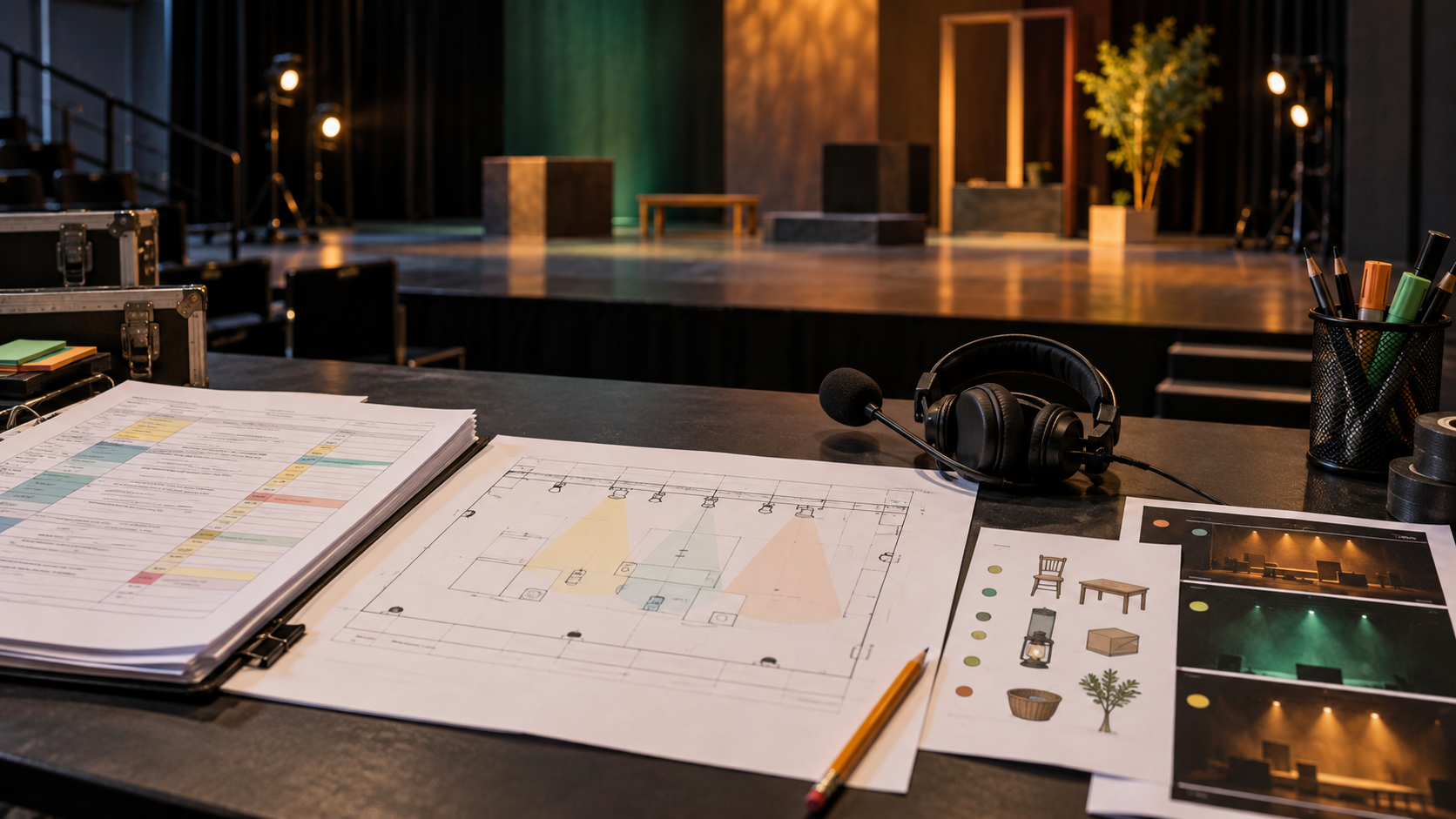
Quick answer: A cultural-creative and media-production civilisation connects writers, visual artists, theatre and film teams, designers, publishers, musicians, broadcasters, cultural enterprises and audiences through institutions that protect creative freedom, fair work, meaningful access and trustworthy public information. It does not measure cultural health simply by views, exports, ticket receipts or famous landmarks. Responsible cultural systems make room for people to create, produce, distribute, critique, earn livelihoods and pass their craft to future generations.
Did you know? A town can have the most-watched digital programme in its history while many working artists cannot reach audiences, receive fair contractual terms or afford to create new work. Economic growth and cultural plurality can reinforce each other, but an impressive audience count cannot prove either. A creative civilisation needs a full view from first idea through production, distribution, remuneration, access and the right to disagree.
Welcome to Culturehaven, our entirely invented learning community. All people, budgets, events, contracts and audience data are teaching examples. The Types of a Civilisation foundation explains why cultural, industrial, digital and political arrangements are overlapping types rather than rankings of human worth. This guide extends the prior Artisan Guilds and Skilled-Making Communities discussion.
Our recurring classroom characters have limited roles. Wintour asks about freedom, dignity, access and the people whose work is invisible. Rainbolt changes an assumption after the first answer. Their fictional debates are not statements by UNESCO, UNCTAD or any actual artist, and classroom descriptions do not grant permission to use copyrighted works.
Five reading routes for families and tutors
- Five-minute route: the opening, Missions 01, 08, 09 and 15, then the final question.
- Primary route: use paper credits, source captions and distinctions among art, journalism and advertising.
- Secondary route: calculate production budgets, percentages and the difference between views and income.
- Tutor route: pair two missions weekly and rotate the evidence, numerical and access-review roles.
- Policy route: read the 2005 UNESCO Convention, UNESCO 2026 policy report and UNCTAD 2024 historical indicators in context.
Six foundations of a cultural-creative civilisation
- Creative freedom and human dignity: people may express, interpret and challenge culture.
- Skilled production: creators and technical collaborators need viable training and fair work.
- Diverse media: audiences need accessible routes to varied cultural expressions and reliable information.
- Economic realism: costs, contracts, distribution and licensing affect livelihoods.
- Trustworthy provenance: journalism, heritage documents, artistic reconstruction and promotion must be labelled accurately.
- Intergenerational continuity: archives, institutions and successors must be able to improve inherited work.
These foundations do not imply every art form must become commercial or every public subsidy is effective. A publicly supported theatre, commercial game studio, literary journal, community music circle and independent documentary can have different legitimate purposes. Cultural value also cannot be inferred from a single consumer-spending measure.
Eight original-source reading files
Evidence file 1 — UNESCO 2005 Convention on the Diversity of Cultural Expressions
The Convention concerns cultural expression, creation, production, distribution, access and the link between cultural diversity and human rights; it is not a copyright licence or proof a specific industry is inclusive.
Read the originating source. When the figure concerns creative-service exports in 2022, label it as a 2022 figure published in 2024. A 2026 policy monitoring result concerns the particular set of reports and respondents. A convention’s principles are not the same thing as an empirical assessment of Culturehaven’s invented studio.
Classroom source audit: identify the publisher, date and kind of claim, then ask which part of a cultural production chain it describes. The student should also identify a person who may be missing from the measurement. This guards against using an authoritative institution as decoration for an unsupported claim.
Evidence file 2 — UNESCO Re|Shaping Policies for Creativity 2026
This latest report examines policy, AI, digital platforms, trade, artistic freedom and gender. Its surveyed-country percentages are defined research indicators, not a universal measurement of every artist’s livelihood.
Read the originating source. When the figure concerns creative-service exports in 2022, label it as a 2022 figure published in 2024. A 2026 policy monitoring result concerns the particular set of reports and respondents. A convention’s principles are not the same thing as an empirical assessment of Culturehaven’s invented studio.
Classroom source audit: identify the publisher, date and kind of claim, then ask which part of a cultural production chain it describes. The student should also identify a person who may be missing from the measurement. This guards against using an authoritative institution as decoration for an unsupported claim.
Evidence file 3 — UNCTAD Creative Economy Outlook 2024
UNCTAD covers trade in creative services and goods, economic contribution, digitalisation and market concentration. Its 2022 trade figures are historical observations rather than 2026 totals.
Read the originating source. When the figure concerns creative-service exports in 2022, label it as a 2022 figure published in 2024. A 2026 policy monitoring result concerns the particular set of reports and respondents. A convention’s principles are not the same thing as an empirical assessment of Culturehaven’s invented studio.
Classroom source audit: identify the publisher, date and kind of claim, then ask which part of a cultural production chain it describes. The student should also identify a person who may be missing from the measurement. This guards against using an authoritative institution as decoration for an unsupported claim.
Evidence file 4 — UNESCO 1980 Recommendation concerning the Status of the Artist
The Recommendation addresses artists’ conditions, rights, social protection, training and professional organisations; it is not identical to domestic employment law.
Read the originating source. When the figure concerns creative-service exports in 2022, label it as a 2022 figure published in 2024. A 2026 policy monitoring result concerns the particular set of reports and respondents. A convention’s principles are not the same thing as an empirical assessment of Culturehaven’s invented studio.
Classroom source audit: identify the publisher, date and kind of claim, then ask which part of a cultural production chain it describes. The student should also identify a person who may be missing from the measurement. This guards against using an authoritative institution as decoration for an unsupported claim.
Evidence file 5 — UNESCO Creative Cities Network
The network encourages cities to integrate culture and creativity into urban development. A city’s membership is not evidence that every artist has equitable opportunity.
Read the originating source. When the figure concerns creative-service exports in 2022, label it as a 2022 figure published in 2024. A 2026 policy monitoring result concerns the particular set of reports and respondents. A convention’s principles are not the same thing as an empirical assessment of Culturehaven’s invented studio.
Classroom source audit: identify the publisher, date and kind of claim, then ask which part of a cultural production chain it describes. The student should also identify a person who may be missing from the measurement. This guards against using an authoritative institution as decoration for an unsupported claim.
Evidence file 6 — UNESCO 2005 Convention: Basic Texts 2026
UNESCO publishes current reference texts and monitoring work; the legal and policy character of each publication needs to be identified.
Read the originating source. When the figure concerns creative-service exports in 2022, label it as a 2022 figure published in 2024. A 2026 policy monitoring result concerns the particular set of reports and respondents. A convention’s principles are not the same thing as an empirical assessment of Culturehaven’s invented studio.
Classroom source audit: identify the publisher, date and kind of claim, then ask which part of a cultural production chain it describes. The student should also identify a person who may be missing from the measurement. This guards against using an authoritative institution as decoration for an unsupported claim.
Evidence file 7 — eduKateSG Living Heritage and Cultural Memory Communities
The adjacent type concerns safeguarding community memory; this guide follows active contemporary production, distribution, media work and creative livelihoods.
Read the originating source. When the figure concerns creative-service exports in 2022, label it as a 2022 figure published in 2024. A 2026 policy monitoring result concerns the particular set of reports and respondents. A convention’s principles are not the same thing as an empirical assessment of Culturehaven’s invented studio.
Classroom source audit: identify the publisher, date and kind of claim, then ask which part of a cultural production chain it describes. The student should also identify a person who may be missing from the measurement. This guards against using an authoritative institution as decoration for an unsupported claim.
Evidence file 8 — eduKateSG Artisan Guilds and Skilled-Making Communities
The adjacent type examines apprenticeship and making. Creative production also includes editorial work, performances, digital distribution and audiences.
Read the originating source. When the figure concerns creative-service exports in 2022, label it as a 2022 figure published in 2024. A 2026 policy monitoring result concerns the particular set of reports and respondents. A convention’s principles are not the same thing as an empirical assessment of Culturehaven’s invented studio.
Classroom source audit: identify the publisher, date and kind of claim, then ask which part of a cultural production chain it describes. The student should also identify a person who may be missing from the measurement. This guards against using an authoritative institution as decoration for an unsupported claim.
Sixteen Culturehaven missions
- 01 — Creativity, culture and an industry are different concepts
- 02 — The path from a first idea to a public work
- 03 — Writers, editors, translators and publishers
- 04 — Theatre and live-production skills
- 05 — Film and audiovisual production networks
- 06 — Music, performance rights and income distribution
- 07 — Visual arts, design and public meaning
- 08 — Journalism, public information and editorial independence
- 09 — Streaming distribution, recommendation and discoverability
- 10 — Copyright, licensing and provenance
- 11 — Artist work, training and fair professional conditions
- 12 — Creative spaces, rehearsal venues and accessible audiences
- 13 — Creative enterprises, budgets and the meaning of success
- 14 — International exchange and cultural mobility
- 15 — Generative AI, attribution and cultural truthfulness
- 16 — Cultural continuity when founders and platforms disappear
Mission 01 — Creativity, culture and an industry are different concepts
The Culturehaven episode: Culturehaven labels a library poetry club, a commercial streaming company and a traditional craft demonstration as identical kinds of ‘media industry’.
What is actually being made or exchanged?
Cultural expressions carry meaning and identity, while creative industries involve defined production and distribution. A non-commercial community activity can matter deeply without belonging to the same economic category as a commercial studio.
Start with the cultural purpose. Who is creating, what is the expression, where does it travel and how would an intended audience encounter it? A picture or audience total cannot explain every relationship. Give the learner a plain-English question before using a technical term such as cultural industries or digital distribution.
The distinctive issue is this: Culturehaven labels a library poetry club, a commercial streaming company and a traditional craft demonstration as identical kinds of ‘media industry’. A reader should classify the work by purpose and people, rather than assume every expression belongs to one business model. Cultural expressions carry meaning and identity, while creative industries involve defined production and distribution. A non-commercial community activity can matter deeply without belonging to the same economic category as a commercial studio. That second point changes which institutions or sources can reasonably be used.
Build the work and rights pathway
Draw a production chain with stages for creative work, review, resources, technical work, distribution, audiences and the record of permission or credit. The stages need not be linear; revision can occur late, and a live performance has demands that differ from digital publishing. Ask which person maintains each critical handoff.
Separate copyright or licensing questions from artistic merit. A work may be excellent and still require permission for a particular use; a public-domain work may be freely usable in one respect while its reproduction or other associated material raises different rights. Real answers depend on applicable law and specific facts.
A complete paper diagram links the originator of the expression, contributors, any appropriate permissions, editorial or technical review, distribution and the audience. Each arrow needs a meaning. The learner should identify which claim is a factual description of a work, which is a contract issue and which represents a preference rather than an observation.
The source and its evidential boundary
Read official reports without exaggeration. UNESCO’s 2005 Convention provides a policy and rights framework; UNCTAD analyses trade categories; the 1980 Status of the Artist recommendation addresses labour and social conditions. Their evidential functions differ and they do not certify a hypothetical cultural enterprise.
Contrast a locally specific claim with a worldwide cultural-policy claim. A successful fictional theatre cannot demonstrate that all countries enjoy artistic freedom, and a global trade figure cannot show one musician’s income. The student who identifies the mismatch has learned an essential research skill.
A UNESCO cultural-policy document could illuminate a general principle while not verifying the imagined Culturehaven arrangement. In the case of creativity, culture and an industry are different concepts, distinguish a monitoring indicator, a general convention principle, historical evidence and the results that would need direct evaluation.
Mathematics: calculate precisely, conclude cautiously
Of 20 fictional activity cards, eight involve sales, seven community exchange and five mixed arrangements. This is a distribution of cards, not a value ranking.
An empirical record has a date, unit, source and limit. A number of streams does not automatically establish royalties; tickets issued do not equal unique attendees; works commissioned are not the same as works completed. Give the definition before the calculation and test a second denominator.
Change one quantity in the supplied example. Record the second calculation and explain whether the outcome would change if the work’s budget, unit of exposure, access needs or licence conditions changed. The correct mathematical answer is not proof of fair treatment, creative quality, copyright compliance or social meaning.
A changed condition and a transparent repair
Rainbolt changes a free school performance into a paid professional event with contracts, access requirements and professional standards.
Rainbolt introduces one case-specific change: an invalid licence, a broken venue, missing translation, changed algorithm or inaccurate caption. The first answer stays visible. The second should state the observed problem and the strongest defensible correction, not promise that every risk has been eliminated.
The group now marks its first conclusion as provisional. It should specify the earliest affected handoff, the available source and what remains unknown. A correction might require clearer attribution, updated permission, a change in scheduling or withdrawing a misleading public claim. Do not invent a legal licence or production safety procedure.
People and access at the centre of culture
Wintour asks how cultural meaning survives when a ledger only counts revenue, and why economic benefits also deserve fair recognition.
Creators, audiences, production crews, distributors and communities can benefit differently. Wintour asks who receives credit and income, who could participate meaningfully and whose culture may have been presented without consultation. These questions must influence the analysis rather than appear in an unrelated moral afterword.
A sustainable creative institution needs people who can keep working through changing technology, venues and economic conditions. Scripts, credits, source records, access plans, fair contracts and accessible archives can matter more to long-term cultural transmission than the initial launch spectacle.
Culture creates different benefits across ages, languages, abilities and kinds of participation. A good analysis allows an artist to disagree with commissioners, a small production crew to receive accurate credit and an audience member to question misleading publicity. A model that cannot represent those relationships is incomplete.
Safe family task and a three-learner tutorial
Classify activity cards by purpose, people, distribution, revenue and cultural meaning.
Children can practise with invented scripts, paper posters, anonymised budgets and source labels. They should not publish another person’s creative work, imitate restricted community practices, sign real contracts, access private royalties or operate hazardous stage equipment as part of this lesson.
One pupil checks sources, one explains maths, and one represents a creator or audience member not served by the original plan. Rotate roles before writing the correction. It should be possible for a new pupil to see what was observed, what was assumed and whose needs were considered.
End with succession: would another team know who created the work, how it can lawfully be used, the original intended audience, what data support the published conclusion and how to correct it? If not, the culture system is overdependent on its founders.
Four applied reading and thinking cards
A misleading launch description
In this episode, Culturehaven labels a library poetry club, a commercial streaming company and a traditional craft demonstration as identical kinds of ‘media industry’. Rewrite an overly enthusiastic announcement to distinguish verified work, imagined outcomes and the source needed for a stronger claim.
A useful response returns to the actual mechanism: Cultural expressions carry meaning and identity, while creative industries involve defined production and distribution. A non-commercial community activity can matter deeply without belonging to the same economic category as a commercial studio. It states what the classroom knows from the fictional facts, what the referenced institution establishes as general context, and what depends on professional agreements, rights or real observation.
To extend this case of creativity, culture and an industry are different concepts, make a five-column paper record: purpose, source, numerical fact, affected contributor and revision. In a small group, rotate a source checker, mathematics interpreter and inclusion advocate. Every pupil must restate a colleague’s concern accurately before agreeing on the revised public text.
Numbers are not artistic worth
Recalculate the fictional example: Of 20 fictional activity cards, eight involve sales, seven community exchange and five mixed arrangements. This is a distribution of cards, not a value ranking. Identify its numerator, denominator and limits; show a second version with one changed assumption. Explain why neither number alone demonstrates fair creative opportunity.
A useful response returns to the actual mechanism: Cultural expressions carry meaning and identity, while creative industries involve defined production and distribution. A non-commercial community activity can matter deeply without belonging to the same economic category as a commercial studio. It states what the classroom knows from the fictional facts, what the referenced institution establishes as general context, and what depends on professional agreements, rights or real observation.
To extend this case of creativity, culture and an industry are different concepts, make a five-column paper record: purpose, source, numerical fact, affected contributor and revision. In a small group, rotate a source checker, mathematics interpreter and inclusion advocate. Every pupil must restate a colleague’s concern accurately before agreeing on the revised public text.
A production handoff fails
Rainbolt changes the conditions: Rainbolt changes a free school performance into a paid professional event with contracts, access requirements and professional standards. Mark which creator, venue, licence or distribution relationship requires new evidence and prepare an accurate correction notice.
A useful response returns to the actual mechanism: Cultural expressions carry meaning and identity, while creative industries involve defined production and distribution. A non-commercial community activity can matter deeply without belonging to the same economic category as a commercial studio. It states what the classroom knows from the fictional facts, what the referenced institution establishes as general context, and what depends on professional agreements, rights or real observation.
To extend this case of creativity, culture and an industry are different concepts, make a five-column paper record: purpose, source, numerical fact, affected contributor and revision. In a small group, rotate a source checker, mathematics interpreter and inclusion advocate. Every pupil must restate a colleague’s concern accurately before agreeing on the revised public text.
The omitted creator or audience member
Wintour raises this issue: Wintour asks how cultural meaning survives when a ledger only counts revenue, and why economic benefits also deserve fair recognition. Explain two possible perspectives fairly and identify the institution or person whose legitimate input the next step would require.
A useful response returns to the actual mechanism: Cultural expressions carry meaning and identity, while creative industries involve defined production and distribution. A non-commercial community activity can matter deeply without belonging to the same economic category as a commercial studio. It states what the classroom knows from the fictional facts, what the referenced institution establishes as general context, and what depends on professional agreements, rights or real observation.
To extend this case of creativity, culture and an industry are different concepts, make a five-column paper record: purpose, source, numerical fact, affected contributor and revision. In a small group, rotate a source checker, mathematics interpreter and inclusion advocate. Every pupil must restate a colleague’s concern accurately before agreeing on the revised public text.
Transfer to successors: The most reliable cultural record includes the work’s purpose, creators, permissions or uncertainties, source dates, measured audience or resource information and the reason for any correction. That is how creativity, culture and an industry are different concepts becomes part of a durable civilisation rather than a disposable publicity campaign.
Mission 02 — The path from a first idea to a public work
The Culturehaven episode: A playwright’s draft is celebrated as a finished theatrical production although nobody has assessed rehearsal, performers’ contributions, venue or audience needs.
What is actually being made or exchanged?
Creation, editing, production, financing, rehearsal, distribution and reception are distinct stages. The chain changes by medium, and works may travel back and forth between revision and release.
Start with the cultural purpose. Who is creating, what is the expression, where does it travel and how would an intended audience encounter it? A picture or audience total cannot explain every relationship. Give the learner a plain-English question before using a technical term such as cultural industries or digital distribution.
The distinctive issue is this: A playwright’s draft is celebrated as a finished theatrical production although nobody has assessed rehearsal, performers’ contributions, venue or audience needs. A reader should classify the work by purpose and people, rather than assume every expression belongs to one business model. Creation, editing, production, financing, rehearsal, distribution and reception are distinct stages. The chain changes by medium, and works may travel back and forth between revision and release. That second point changes which institutions or sources can reasonably be used.
Build the work and rights pathway
Draw a production chain with stages for creative work, review, resources, technical work, distribution, audiences and the record of permission or credit. The stages need not be linear; revision can occur late, and a live performance has demands that differ from digital publishing. Ask which person maintains each critical handoff.
Separate copyright or licensing questions from artistic merit. A work may be excellent and still require permission for a particular use; a public-domain work may be freely usable in one respect while its reproduction or other associated material raises different rights. Real answers depend on applicable law and specific facts.
A complete paper diagram links the originator of the expression, contributors, any appropriate permissions, editorial or technical review, distribution and the audience. Each arrow needs a meaning. The learner should identify which claim is a factual description of a work, which is a contract issue and which represents a preference rather than an observation.
The source and its evidential boundary
Read official reports without exaggeration. UNESCO’s 2005 Convention provides a policy and rights framework; UNCTAD analyses trade categories; the 1980 Status of the Artist recommendation addresses labour and social conditions. Their evidential functions differ and they do not certify a hypothetical cultural enterprise.
Contrast a locally specific claim with a worldwide cultural-policy claim. A successful fictional theatre cannot demonstrate that all countries enjoy artistic freedom, and a global trade figure cannot show one musician’s income. The student who identifies the mismatch has learned an essential research skill.
A UNESCO cultural-policy document could illuminate a general principle while not verifying the imagined Culturehaven arrangement. In the case of the path from a first idea to a public work, distinguish a monitoring indicator, a general convention principle, historical evidence and the results that would need direct evaluation.
Mathematics: calculate precisely, conclude cautiously
Six of ten fictional scripts advance to a supervised reading, or 60% of submissions; this does not prove artistic quality or financial viability.
An empirical record has a date, unit, source and limit. A number of streams does not automatically establish royalties; tickets issued do not equal unique attendees; works commissioned are not the same as works completed. Give the definition before the calculation and test a second denominator.
Change one quantity in the supplied example. Record the second calculation and explain whether the outcome would change if the work’s budget, unit of exposure, access needs or licence conditions changed. The correct mathematical answer is not proof of fair treatment, creative quality, copyright compliance or social meaning.
A changed condition and a transparent repair
Rainbolt removes the venue and the company discovers that an artistic draft cannot automatically become a public event.
Rainbolt introduces one case-specific change: an invalid licence, a broken venue, missing translation, changed algorithm or inaccurate caption. The first answer stays visible. The second should state the observed problem and the strongest defensible correction, not promise that every risk has been eliminated.
The group now marks its first conclusion as provisional. It should specify the earliest affected handoff, the available source and what remains unknown. A correction might require clearer attribution, updated permission, a change in scheduling or withdrawing a misleading public claim. Do not invent a legal licence or production safety procedure.
People and access at the centre of culture
Wintour asks whether collaborators receive credit and whether a production can welcome participants with different needs.
Creators, audiences, production crews, distributors and communities can benefit differently. Wintour asks who receives credit and income, who could participate meaningfully and whose culture may have been presented without consultation. These questions must influence the analysis rather than appear in an unrelated moral afterword.
A sustainable creative institution needs people who can keep working through changing technology, venues and economic conditions. Scripts, credits, source records, access plans, fair contracts and accessible archives can matter more to long-term cultural transmission than the initial launch spectacle.
Culture creates different benefits across ages, languages, abilities and kinds of participation. A good analysis allows an artist to disagree with commissioners, a small production crew to receive accurate credit and an audience member to question misleading publicity. A model that cannot represent those relationships is incomplete.
Safe family task and a three-learner tutorial
Map stages from idea through revision to reception using paper arrows, with rights and access at each handoff.
Children can practise with invented scripts, paper posters, anonymised budgets and source labels. They should not publish another person’s creative work, imitate restricted community practices, sign real contracts, access private royalties or operate hazardous stage equipment as part of this lesson.
One pupil checks sources, one explains maths, and one represents a creator or audience member not served by the original plan. Rotate roles before writing the correction. It should be possible for a new pupil to see what was observed, what was assumed and whose needs were considered.
End with succession: would another team know who created the work, how it can lawfully be used, the original intended audience, what data support the published conclusion and how to correct it? If not, the culture system is overdependent on its founders.
Four applied reading and thinking cards
A misleading launch description
In this episode, A playwright’s draft is celebrated as a finished theatrical production although nobody has assessed rehearsal, performers’ contributions, venue or audience needs. Rewrite an overly enthusiastic announcement to distinguish verified work, imagined outcomes and the source needed for a stronger claim.
A useful response returns to the actual mechanism: Creation, editing, production, financing, rehearsal, distribution and reception are distinct stages. The chain changes by medium, and works may travel back and forth between revision and release. It states what the classroom knows from the fictional facts, what the referenced institution establishes as general context, and what depends on professional agreements, rights or real observation.
To extend this case of the path from a first idea to a public work, make a five-column paper record: purpose, source, numerical fact, affected contributor and revision. In a small group, rotate a source checker, mathematics interpreter and inclusion advocate. Every pupil must restate a colleague’s concern accurately before agreeing on the revised public text.
Numbers are not artistic worth
Recalculate the fictional example: Six of ten fictional scripts advance to a supervised reading, or 60% of submissions; this does not prove artistic quality or financial viability. Identify its numerator, denominator and limits; show a second version with one changed assumption. Explain why neither number alone demonstrates fair creative opportunity.
A useful response returns to the actual mechanism: Creation, editing, production, financing, rehearsal, distribution and reception are distinct stages. The chain changes by medium, and works may travel back and forth between revision and release. It states what the classroom knows from the fictional facts, what the referenced institution establishes as general context, and what depends on professional agreements, rights or real observation.
To extend this case of the path from a first idea to a public work, make a five-column paper record: purpose, source, numerical fact, affected contributor and revision. In a small group, rotate a source checker, mathematics interpreter and inclusion advocate. Every pupil must restate a colleague’s concern accurately before agreeing on the revised public text.
A production handoff fails
Rainbolt changes the conditions: Rainbolt removes the venue and the company discovers that an artistic draft cannot automatically become a public event. Mark which creator, venue, licence or distribution relationship requires new evidence and prepare an accurate correction notice.
A useful response returns to the actual mechanism: Creation, editing, production, financing, rehearsal, distribution and reception are distinct stages. The chain changes by medium, and works may travel back and forth between revision and release. It states what the classroom knows from the fictional facts, what the referenced institution establishes as general context, and what depends on professional agreements, rights or real observation.
To extend this case of the path from a first idea to a public work, make a five-column paper record: purpose, source, numerical fact, affected contributor and revision. In a small group, rotate a source checker, mathematics interpreter and inclusion advocate. Every pupil must restate a colleague’s concern accurately before agreeing on the revised public text.
The omitted creator or audience member
Wintour raises this issue: Wintour asks whether collaborators receive credit and whether a production can welcome participants with different needs. Explain two possible perspectives fairly and identify the institution or person whose legitimate input the next step would require.
A useful response returns to the actual mechanism: Creation, editing, production, financing, rehearsal, distribution and reception are distinct stages. The chain changes by medium, and works may travel back and forth between revision and release. It states what the classroom knows from the fictional facts, what the referenced institution establishes as general context, and what depends on professional agreements, rights or real observation.
To extend this case of the path from a first idea to a public work, make a five-column paper record: purpose, source, numerical fact, affected contributor and revision. In a small group, rotate a source checker, mathematics interpreter and inclusion advocate. Every pupil must restate a colleague’s concern accurately before agreeing on the revised public text.
Transfer to successors: The most reliable cultural record includes the work’s purpose, creators, permissions or uncertainties, source dates, measured audience or resource information and the reason for any correction. That is how the path from a first idea to a public work becomes part of a durable civilisation rather than a disposable publicity campaign.
Mission 03 — Writers, editors, translators and publishers
The Culturehaven episode: Culturehaven publishes a translated story without recording the translator, editor or source text, then calls the result an original work by the platform.
What is actually being made or exchanged?
Written culture involves creators, editorial judgement, language, publishing and legitimate rights. Translation transforms expression but is not a substitute for source attribution and quality control.
Start with the cultural purpose. Who is creating, what is the expression, where does it travel and how would an intended audience encounter it? A picture or audience total cannot explain every relationship. Give the learner a plain-English question before using a technical term such as cultural industries or digital distribution.
The distinctive issue is this: Culturehaven publishes a translated story without recording the translator, editor or source text, then calls the result an original work by the platform. A reader should classify the work by purpose and people, rather than assume every expression belongs to one business model. Written culture involves creators, editorial judgement, language, publishing and legitimate rights. Translation transforms expression but is not a substitute for source attribution and quality control. That second point changes which institutions or sources can reasonably be used.
Build the work and rights pathway
Draw a production chain with stages for creative work, review, resources, technical work, distribution, audiences and the record of permission or credit. The stages need not be linear; revision can occur late, and a live performance has demands that differ from digital publishing. Ask which person maintains each critical handoff.
Separate copyright or licensing questions from artistic merit. A work may be excellent and still require permission for a particular use; a public-domain work may be freely usable in one respect while its reproduction or other associated material raises different rights. Real answers depend on applicable law and specific facts.
A complete paper diagram links the originator of the expression, contributors, any appropriate permissions, editorial or technical review, distribution and the audience. Each arrow needs a meaning. The learner should identify which claim is a factual description of a work, which is a contract issue and which represents a preference rather than an observation.
The source and its evidential boundary
Read official reports without exaggeration. UNESCO’s 2005 Convention provides a policy and rights framework; UNCTAD analyses trade categories; the 1980 Status of the Artist recommendation addresses labour and social conditions. Their evidential functions differ and they do not certify a hypothetical cultural enterprise.
Contrast a locally specific claim with a worldwide cultural-policy claim. A successful fictional theatre cannot demonstrate that all countries enjoy artistic freedom, and a global trade figure cannot show one musician’s income. The student who identifies the mismatch has learned an essential research skill.
A UNESCO cultural-policy document could illuminate a general principle while not verifying the imagined Culturehaven arrangement. In the case of writers, editors, translators and publishers, distinguish a monitoring indicator, a general convention principle, historical evidence and the results that would need direct evaluation.
Mathematics: calculate precisely, conclude cautiously
A fictional magazine prints 40 stories; 30 have complete author and rights records, a 75% documentation rate, not proof of legal compliance.
An empirical record has a date, unit, source and limit. A number of streams does not automatically establish royalties; tickets issued do not equal unique attendees; works commissioned are not the same as works completed. Give the definition before the calculation and test a second denominator.
Change one quantity in the supplied example. Record the second calculation and explain whether the outcome would change if the work’s budget, unit of exposure, access needs or licence conditions changed. The correct mathematical answer is not proof of fair treatment, creative quality, copyright compliance or social meaning.
A changed condition and a transparent repair
Rainbolt finds that an attractive translated title reverses an important idea from the original.
Rainbolt introduces one case-specific change: an invalid licence, a broken venue, missing translation, changed algorithm or inaccurate caption. The first answer stays visible. The second should state the observed problem and the strongest defensible correction, not promise that every risk has been eliminated.
The group now marks its first conclusion as provisional. It should specify the earliest affected handoff, the available source and what remains unknown. A correction might require clearer attribution, updated permission, a change in scheduling or withdrawing a misleading public claim. Do not invent a legal licence or production safety procedure.
People and access at the centre of culture
Wintour asks whether authors, translators and readers have understandable credit and correction routes.
Creators, audiences, production crews, distributors and communities can benefit differently. Wintour asks who receives credit and income, who could participate meaningfully and whose culture may have been presented without consultation. These questions must influence the analysis rather than appear in an unrelated moral afterword.
A sustainable creative institution needs people who can keep working through changing technology, venues and economic conditions. Scripts, credits, source records, access plans, fair contracts and accessible archives can matter more to long-term cultural transmission than the initial launch spectacle.
Culture creates different benefits across ages, languages, abilities and kinds of participation. A good analysis allows an artist to disagree with commissioners, a small production crew to receive accurate credit and an audience member to question misleading publicity. A model that cannot represent those relationships is incomplete.
Safe family task and a three-learner tutorial
Compare two invented book credits and write a properly limited, source-aware editorial note.
Children can practise with invented scripts, paper posters, anonymised budgets and source labels. They should not publish another person’s creative work, imitate restricted community practices, sign real contracts, access private royalties or operate hazardous stage equipment as part of this lesson.
One pupil checks sources, one explains maths, and one represents a creator or audience member not served by the original plan. Rotate roles before writing the correction. It should be possible for a new pupil to see what was observed, what was assumed and whose needs were considered.
End with succession: would another team know who created the work, how it can lawfully be used, the original intended audience, what data support the published conclusion and how to correct it? If not, the culture system is overdependent on its founders.
Four applied reading and thinking cards
A misleading launch description
In this episode, Culturehaven publishes a translated story without recording the translator, editor or source text, then calls the result an original work by the platform. Rewrite an overly enthusiastic announcement to distinguish verified work, imagined outcomes and the source needed for a stronger claim.
A useful response returns to the actual mechanism: Written culture involves creators, editorial judgement, language, publishing and legitimate rights. Translation transforms expression but is not a substitute for source attribution and quality control. It states what the classroom knows from the fictional facts, what the referenced institution establishes as general context, and what depends on professional agreements, rights or real observation.
To extend this case of writers, editors, translators and publishers, make a five-column paper record: purpose, source, numerical fact, affected contributor and revision. In a small group, rotate a source checker, mathematics interpreter and inclusion advocate. Every pupil must restate a colleague’s concern accurately before agreeing on the revised public text.
Numbers are not artistic worth
Recalculate the fictional example: A fictional magazine prints 40 stories; 30 have complete author and rights records, a 75% documentation rate, not proof of legal compliance. Identify its numerator, denominator and limits; show a second version with one changed assumption. Explain why neither number alone demonstrates fair creative opportunity.
A useful response returns to the actual mechanism: Written culture involves creators, editorial judgement, language, publishing and legitimate rights. Translation transforms expression but is not a substitute for source attribution and quality control. It states what the classroom knows from the fictional facts, what the referenced institution establishes as general context, and what depends on professional agreements, rights or real observation.
To extend this case of writers, editors, translators and publishers, make a five-column paper record: purpose, source, numerical fact, affected contributor and revision. In a small group, rotate a source checker, mathematics interpreter and inclusion advocate. Every pupil must restate a colleague’s concern accurately before agreeing on the revised public text.
A production handoff fails
Rainbolt changes the conditions: Rainbolt finds that an attractive translated title reverses an important idea from the original. Mark which creator, venue, licence or distribution relationship requires new evidence and prepare an accurate correction notice.
A useful response returns to the actual mechanism: Written culture involves creators, editorial judgement, language, publishing and legitimate rights. Translation transforms expression but is not a substitute for source attribution and quality control. It states what the classroom knows from the fictional facts, what the referenced institution establishes as general context, and what depends on professional agreements, rights or real observation.
To extend this case of writers, editors, translators and publishers, make a five-column paper record: purpose, source, numerical fact, affected contributor and revision. In a small group, rotate a source checker, mathematics interpreter and inclusion advocate. Every pupil must restate a colleague’s concern accurately before agreeing on the revised public text.
The omitted creator or audience member
Wintour raises this issue: Wintour asks whether authors, translators and readers have understandable credit and correction routes. Explain two possible perspectives fairly and identify the institution or person whose legitimate input the next step would require.
A useful response returns to the actual mechanism: Written culture involves creators, editorial judgement, language, publishing and legitimate rights. Translation transforms expression but is not a substitute for source attribution and quality control. It states what the classroom knows from the fictional facts, what the referenced institution establishes as general context, and what depends on professional agreements, rights or real observation.
To extend this case of writers, editors, translators and publishers, make a five-column paper record: purpose, source, numerical fact, affected contributor and revision. In a small group, rotate a source checker, mathematics interpreter and inclusion advocate. Every pupil must restate a colleague’s concern accurately before agreeing on the revised public text.
Transfer to successors: The most reliable cultural record includes the work’s purpose, creators, permissions or uncertainties, source dates, measured audience or resource information and the reason for any correction. That is how writers, editors, translators and publishers becomes part of a durable civilisation rather than a disposable publicity campaign.
Mission 04 — Theatre and live-production skills
The Culturehaven episode: An event poster lists a lead actor but omits stage managers, lighting professionals, venue staff and accessibility plans.
What is actually being made or exchanged?
Live performance relies on performers and technical teams coordinating timing, space, public safety, rights and audience experience. A cue sheet marks when; a stage plot describes where; neither replaces competent operation.
Start with the cultural purpose. Who is creating, what is the expression, where does it travel and how would an intended audience encounter it? A picture or audience total cannot explain every relationship. Give the learner a plain-English question before using a technical term such as cultural industries or digital distribution.
The distinctive issue is this: An event poster lists a lead actor but omits stage managers, lighting professionals, venue staff and accessibility plans. A reader should classify the work by purpose and people, rather than assume every expression belongs to one business model. Live performance relies on performers and technical teams coordinating timing, space, public safety, rights and audience experience. A cue sheet marks when; a stage plot describes where; neither replaces competent operation. That second point changes which institutions or sources can reasonably be used.
Build the work and rights pathway
Draw a production chain with stages for creative work, review, resources, technical work, distribution, audiences and the record of permission or credit. The stages need not be linear; revision can occur late, and a live performance has demands that differ from digital publishing. Ask which person maintains each critical handoff.
Separate copyright or licensing questions from artistic merit. A work may be excellent and still require permission for a particular use; a public-domain work may be freely usable in one respect while its reproduction or other associated material raises different rights. Real answers depend on applicable law and specific facts.
A complete paper diagram links the originator of the expression, contributors, any appropriate permissions, editorial or technical review, distribution and the audience. Each arrow needs a meaning. The learner should identify which claim is a factual description of a work, which is a contract issue and which represents a preference rather than an observation.
The source and its evidential boundary
Read official reports without exaggeration. UNESCO’s 2005 Convention provides a policy and rights framework; UNCTAD analyses trade categories; the 1980 Status of the Artist recommendation addresses labour and social conditions. Their evidential functions differ and they do not certify a hypothetical cultural enterprise.
Contrast a locally specific claim with a worldwide cultural-policy claim. A successful fictional theatre cannot demonstrate that all countries enjoy artistic freedom, and a global trade figure cannot show one musician’s income. The student who identifies the mismatch has learned an essential research skill.
A UNESCO cultural-policy document could illuminate a general principle while not verifying the imagined Culturehaven arrangement. In the case of theatre and live-production skills, distinguish a monitoring indicator, a general convention principle, historical evidence and the results that would need direct evaluation.
Mathematics: calculate precisely, conclude cautiously
A fictional production has 24 planned cues and 18 documented checks, giving 75% paperwork coverage, not a safety approval.
An empirical record has a date, unit, source and limit. A number of streams does not automatically establish royalties; tickets issued do not equal unique attendees; works commissioned are not the same as works completed. Give the definition before the calculation and test a second denominator.
Change one quantity in the supplied example. Record the second calculation and explain whether the outcome would change if the work’s budget, unit of exposure, access needs or licence conditions changed. The correct mathematical answer is not proof of fair treatment, creative quality, copyright compliance or social meaning.
A changed condition and a transparent repair
Rainbolt changes the venue dimensions, making the old diagram unreliable.
Rainbolt introduces one case-specific change: an invalid licence, a broken venue, missing translation, changed algorithm or inaccurate caption. The first answer stays visible. The second should state the observed problem and the strongest defensible correction, not promise that every risk has been eliminated.
The group now marks its first conclusion as provisional. It should specify the earliest affected handoff, the available source and what remains unknown. A correction might require clearer attribution, updated permission, a change in scheduling or withdrawing a misleading public claim. Do not invent a legal licence or production safety procedure.
People and access at the centre of culture
Wintour asks about crew pay, audience access, performer dignity and proper professional safety review.
Creators, audiences, production crews, distributors and communities can benefit differently. Wintour asks who receives credit and income, who could participate meaningfully and whose culture may have been presented without consultation. These questions must influence the analysis rather than appear in an unrelated moral afterword.
A sustainable creative institution needs people who can keep working through changing technology, venues and economic conditions. Scripts, credits, source records, access plans, fair contracts and accessible archives can matter more to long-term cultural transmission than the initial launch spectacle.
Culture creates different benefits across ages, languages, abilities and kinds of participation. A good analysis allows an artist to disagree with commissioners, a small production crew to receive accurate credit and an audience member to question misleading publicity. A model that cannot represent those relationships is incomplete.
Safe family task and a three-learner tutorial
Read a conceptual cue sheet and stage plot on paper; do not handle stage electrics or equipment.
Children can practise with invented scripts, paper posters, anonymised budgets and source labels. They should not publish another person’s creative work, imitate restricted community practices, sign real contracts, access private royalties or operate hazardous stage equipment as part of this lesson.
One pupil checks sources, one explains maths, and one represents a creator or audience member not served by the original plan. Rotate roles before writing the correction. It should be possible for a new pupil to see what was observed, what was assumed and whose needs were considered.
End with succession: would another team know who created the work, how it can lawfully be used, the original intended audience, what data support the published conclusion and how to correct it? If not, the culture system is overdependent on its founders.
Four applied reading and thinking cards
A misleading launch description
In this episode, An event poster lists a lead actor but omits stage managers, lighting professionals, venue staff and accessibility plans. Rewrite an overly enthusiastic announcement to distinguish verified work, imagined outcomes and the source needed for a stronger claim.
A useful response returns to the actual mechanism: Live performance relies on performers and technical teams coordinating timing, space, public safety, rights and audience experience. A cue sheet marks when; a stage plot describes where; neither replaces competent operation. It states what the classroom knows from the fictional facts, what the referenced institution establishes as general context, and what depends on professional agreements, rights or real observation.
To extend this case of theatre and live-production skills, make a five-column paper record: purpose, source, numerical fact, affected contributor and revision. In a small group, rotate a source checker, mathematics interpreter and inclusion advocate. Every pupil must restate a colleague’s concern accurately before agreeing on the revised public text.
Numbers are not artistic worth
Recalculate the fictional example: A fictional production has 24 planned cues and 18 documented checks, giving 75% paperwork coverage, not a safety approval. Identify its numerator, denominator and limits; show a second version with one changed assumption. Explain why neither number alone demonstrates fair creative opportunity.
A useful response returns to the actual mechanism: Live performance relies on performers and technical teams coordinating timing, space, public safety, rights and audience experience. A cue sheet marks when; a stage plot describes where; neither replaces competent operation. It states what the classroom knows from the fictional facts, what the referenced institution establishes as general context, and what depends on professional agreements, rights or real observation.
To extend this case of theatre and live-production skills, make a five-column paper record: purpose, source, numerical fact, affected contributor and revision. In a small group, rotate a source checker, mathematics interpreter and inclusion advocate. Every pupil must restate a colleague’s concern accurately before agreeing on the revised public text.
A production handoff fails
Rainbolt changes the conditions: Rainbolt changes the venue dimensions, making the old diagram unreliable. Mark which creator, venue, licence or distribution relationship requires new evidence and prepare an accurate correction notice.
A useful response returns to the actual mechanism: Live performance relies on performers and technical teams coordinating timing, space, public safety, rights and audience experience. A cue sheet marks when; a stage plot describes where; neither replaces competent operation. It states what the classroom knows from the fictional facts, what the referenced institution establishes as general context, and what depends on professional agreements, rights or real observation.
To extend this case of theatre and live-production skills, make a five-column paper record: purpose, source, numerical fact, affected contributor and revision. In a small group, rotate a source checker, mathematics interpreter and inclusion advocate. Every pupil must restate a colleague’s concern accurately before agreeing on the revised public text.
The omitted creator or audience member
Wintour raises this issue: Wintour asks about crew pay, audience access, performer dignity and proper professional safety review. Explain two possible perspectives fairly and identify the institution or person whose legitimate input the next step would require.
A useful response returns to the actual mechanism: Live performance relies on performers and technical teams coordinating timing, space, public safety, rights and audience experience. A cue sheet marks when; a stage plot describes where; neither replaces competent operation. It states what the classroom knows from the fictional facts, what the referenced institution establishes as general context, and what depends on professional agreements, rights or real observation.
To extend this case of theatre and live-production skills, make a five-column paper record: purpose, source, numerical fact, affected contributor and revision. In a small group, rotate a source checker, mathematics interpreter and inclusion advocate. Every pupil must restate a colleague’s concern accurately before agreeing on the revised public text.
Transfer to successors: The most reliable cultural record includes the work’s purpose, creators, permissions or uncertainties, source dates, measured audience or resource information and the reason for any correction. That is how theatre and live-production skills becomes part of a durable civilisation rather than a disposable publicity campaign.
Mission 05 — Film and audiovisual production networks
The Culturehaven episode: A fictional short film shows impressive camera work but the director’s public summary claims that one person made every creative and technical decision.
What is actually being made or exchanged?
Film combines story, performance, cinematography, sound, design, editing, production and distribution. Production ownership and rights do not automatically follow from who appears most visibly on screen.
Start with the cultural purpose. Who is creating, what is the expression, where does it travel and how would an intended audience encounter it? A picture or audience total cannot explain every relationship. Give the learner a plain-English question before using a technical term such as cultural industries or digital distribution.
The distinctive issue is this: A fictional short film shows impressive camera work but the director’s public summary claims that one person made every creative and technical decision. A reader should classify the work by purpose and people, rather than assume every expression belongs to one business model. Film combines story, performance, cinematography, sound, design, editing, production and distribution. Production ownership and rights do not automatically follow from who appears most visibly on screen. That second point changes which institutions or sources can reasonably be used.
Build the work and rights pathway
Draw a production chain with stages for creative work, review, resources, technical work, distribution, audiences and the record of permission or credit. The stages need not be linear; revision can occur late, and a live performance has demands that differ from digital publishing. Ask which person maintains each critical handoff.
Separate copyright or licensing questions from artistic merit. A work may be excellent and still require permission for a particular use; a public-domain work may be freely usable in one respect while its reproduction or other associated material raises different rights. Real answers depend on applicable law and specific facts.
A complete paper diagram links the originator of the expression, contributors, any appropriate permissions, editorial or technical review, distribution and the audience. Each arrow needs a meaning. The learner should identify which claim is a factual description of a work, which is a contract issue and which represents a preference rather than an observation.
The source and its evidential boundary
Read official reports without exaggeration. UNESCO’s 2005 Convention provides a policy and rights framework; UNCTAD analyses trade categories; the 1980 Status of the Artist recommendation addresses labour and social conditions. Their evidential functions differ and they do not certify a hypothetical cultural enterprise.
Contrast a locally specific claim with a worldwide cultural-policy claim. A successful fictional theatre cannot demonstrate that all countries enjoy artistic freedom, and a global trade figure cannot show one musician’s income. The student who identifies the mismatch has learned an essential research skill.
A UNESCO cultural-policy document could illuminate a general principle while not verifying the imagined Culturehaven arrangement. In the case of film and audiovisual production networks, distinguish a monitoring indicator, a general convention principle, historical evidence and the results that would need direct evaluation.
Mathematics: calculate precisely, conclude cautiously
A mock team budgets 100 production units: 25 preproduction, 50 production and 25 postproduction. The shares describe a toy budget, not industry norms.
An empirical record has a date, unit, source and limit. A number of streams does not automatically establish royalties; tickets issued do not equal unique attendees; works commissioned are not the same as works completed. Give the definition before the calculation and test a second denominator.
Change one quantity in the supplied example. Record the second calculation and explain whether the outcome would change if the work’s budget, unit of exposure, access needs or licence conditions changed. The correct mathematical answer is not proof of fair treatment, creative quality, copyright compliance or social meaning.
A changed condition and a transparent repair
Rainbolt discovers an unlicensed piece of source material in the edit.
Rainbolt introduces one case-specific change: an invalid licence, a broken venue, missing translation, changed algorithm or inaccurate caption. The first answer stays visible. The second should state the observed problem and the strongest defensible correction, not promise that every risk has been eliminated.
The group now marks its first conclusion as provisional. It should specify the earliest affected handoff, the available source and what remains unknown. A correction might require clearer attribution, updated permission, a change in scheduling or withdrawing a misleading public claim. Do not invent a legal licence or production safety procedure.
People and access at the centre of culture
Wintour asks about performers’ consent, workers’ conditions, accessibility and fair credit.
Creators, audiences, production crews, distributors and communities can benefit differently. Wintour asks who receives credit and income, who could participate meaningfully and whose culture may have been presented without consultation. These questions must influence the analysis rather than appear in an unrelated moral afterword.
A sustainable creative institution needs people who can keep working through changing technology, venues and economic conditions. Scripts, credits, source records, access plans, fair contracts and accessible archives can matter more to long-term cultural transmission than the initial launch spectacle.
Culture creates different benefits across ages, languages, abilities and kinds of participation. A good analysis allows an artist to disagree with commissioners, a small production crew to receive accurate credit and an audience member to question misleading publicity. A model that cannot represent those relationships is incomplete.
Safe family task and a three-learner tutorial
Create a paper credits-and-permissions sheet without reproducing existing film material.
Children can practise with invented scripts, paper posters, anonymised budgets and source labels. They should not publish another person’s creative work, imitate restricted community practices, sign real contracts, access private royalties or operate hazardous stage equipment as part of this lesson.
One pupil checks sources, one explains maths, and one represents a creator or audience member not served by the original plan. Rotate roles before writing the correction. It should be possible for a new pupil to see what was observed, what was assumed and whose needs were considered.
End with succession: would another team know who created the work, how it can lawfully be used, the original intended audience, what data support the published conclusion and how to correct it? If not, the culture system is overdependent on its founders.
Four applied reading and thinking cards
A misleading launch description
In this episode, A fictional short film shows impressive camera work but the director’s public summary claims that one person made every creative and technical decision. Rewrite an overly enthusiastic announcement to distinguish verified work, imagined outcomes and the source needed for a stronger claim.
A useful response returns to the actual mechanism: Film combines story, performance, cinematography, sound, design, editing, production and distribution. Production ownership and rights do not automatically follow from who appears most visibly on screen. It states what the classroom knows from the fictional facts, what the referenced institution establishes as general context, and what depends on professional agreements, rights or real observation.
To extend this case of film and audiovisual production networks, make a five-column paper record: purpose, source, numerical fact, affected contributor and revision. In a small group, rotate a source checker, mathematics interpreter and inclusion advocate. Every pupil must restate a colleague’s concern accurately before agreeing on the revised public text.
Numbers are not artistic worth
Recalculate the fictional example: A mock team budgets 100 production units: 25 preproduction, 50 production and 25 postproduction. The shares describe a toy budget, not industry norms. Identify its numerator, denominator and limits; show a second version with one changed assumption. Explain why neither number alone demonstrates fair creative opportunity.
A useful response returns to the actual mechanism: Film combines story, performance, cinematography, sound, design, editing, production and distribution. Production ownership and rights do not automatically follow from who appears most visibly on screen. It states what the classroom knows from the fictional facts, what the referenced institution establishes as general context, and what depends on professional agreements, rights or real observation.
To extend this case of film and audiovisual production networks, make a five-column paper record: purpose, source, numerical fact, affected contributor and revision. In a small group, rotate a source checker, mathematics interpreter and inclusion advocate. Every pupil must restate a colleague’s concern accurately before agreeing on the revised public text.
A production handoff fails
Rainbolt changes the conditions: Rainbolt discovers an unlicensed piece of source material in the edit. Mark which creator, venue, licence or distribution relationship requires new evidence and prepare an accurate correction notice.
A useful response returns to the actual mechanism: Film combines story, performance, cinematography, sound, design, editing, production and distribution. Production ownership and rights do not automatically follow from who appears most visibly on screen. It states what the classroom knows from the fictional facts, what the referenced institution establishes as general context, and what depends on professional agreements, rights or real observation.
To extend this case of film and audiovisual production networks, make a five-column paper record: purpose, source, numerical fact, affected contributor and revision. In a small group, rotate a source checker, mathematics interpreter and inclusion advocate. Every pupil must restate a colleague’s concern accurately before agreeing on the revised public text.
The omitted creator or audience member
Wintour raises this issue: Wintour asks about performers’ consent, workers’ conditions, accessibility and fair credit. Explain two possible perspectives fairly and identify the institution or person whose legitimate input the next step would require.
A useful response returns to the actual mechanism: Film combines story, performance, cinematography, sound, design, editing, production and distribution. Production ownership and rights do not automatically follow from who appears most visibly on screen. It states what the classroom knows from the fictional facts, what the referenced institution establishes as general context, and what depends on professional agreements, rights or real observation.
To extend this case of film and audiovisual production networks, make a five-column paper record: purpose, source, numerical fact, affected contributor and revision. In a small group, rotate a source checker, mathematics interpreter and inclusion advocate. Every pupil must restate a colleague’s concern accurately before agreeing on the revised public text.
Transfer to successors: The most reliable cultural record includes the work’s purpose, creators, permissions or uncertainties, source dates, measured audience or resource information and the reason for any correction. That is how film and audiovisual production networks becomes part of a durable civilisation rather than a disposable publicity campaign.
Mission 06 — Music, performance rights and income distribution
The Culturehaven episode: Culturehaven assumes that every track played on a digital service pays all its contributors an identical amount per listen.
What is actually being made or exchanged?
Music rights can involve composition, recordings, performers, publishers and contractual arrangements that vary. A play count is not necessarily an artist’s income, and a classroom exercise is not a royalty statement.
Start with the cultural purpose. Who is creating, what is the expression, where does it travel and how would an intended audience encounter it? A picture or audience total cannot explain every relationship. Give the learner a plain-English question before using a technical term such as cultural industries or digital distribution.
The distinctive issue is this: Culturehaven assumes that every track played on a digital service pays all its contributors an identical amount per listen. A reader should classify the work by purpose and people, rather than assume every expression belongs to one business model. Music rights can involve composition, recordings, performers, publishers and contractual arrangements that vary. A play count is not necessarily an artist’s income, and a classroom exercise is not a royalty statement. That second point changes which institutions or sources can reasonably be used.
Build the work and rights pathway
Draw a production chain with stages for creative work, review, resources, technical work, distribution, audiences and the record of permission or credit. The stages need not be linear; revision can occur late, and a live performance has demands that differ from digital publishing. Ask which person maintains each critical handoff.
Separate copyright or licensing questions from artistic merit. A work may be excellent and still require permission for a particular use; a public-domain work may be freely usable in one respect while its reproduction or other associated material raises different rights. Real answers depend on applicable law and specific facts.
A complete paper diagram links the originator of the expression, contributors, any appropriate permissions, editorial or technical review, distribution and the audience. Each arrow needs a meaning. The learner should identify which claim is a factual description of a work, which is a contract issue and which represents a preference rather than an observation.
The source and its evidential boundary
Read official reports without exaggeration. UNESCO’s 2005 Convention provides a policy and rights framework; UNCTAD analyses trade categories; the 1980 Status of the Artist recommendation addresses labour and social conditions. Their evidential functions differ and they do not certify a hypothetical cultural enterprise.
Contrast a locally specific claim with a worldwide cultural-policy claim. A successful fictional theatre cannot demonstrate that all countries enjoy artistic freedom, and a global trade figure cannot show one musician’s income. The student who identifies the mismatch has learned an essential research skill.
A UNESCO cultural-policy document could illuminate a general principle while not verifying the imagined Culturehaven arrangement. In the case of music, performance rights and income distribution, distinguish a monitoring indicator, a general convention principle, historical evidence and the results that would need direct evaluation.
Mathematics: calculate precisely, conclude cautiously
A fictional platform records 1,000 plays split 600 and 400 among two works; 60% of plays belong to the first work, not 60% of revenue or remuneration.
An empirical record has a date, unit, source and limit. A number of streams does not automatically establish royalties; tickets issued do not equal unique attendees; works commissioned are not the same as works completed. Give the definition before the calculation and test a second denominator.
Change one quantity in the supplied example. Record the second calculation and explain whether the outcome would change if the work’s budget, unit of exposure, access needs or licence conditions changed. The correct mathematical answer is not proof of fair treatment, creative quality, copyright compliance or social meaning.
A changed condition and a transparent repair
Rainbolt reveals different contracts, rights holders and deductions.
Rainbolt introduces one case-specific change: an invalid licence, a broken venue, missing translation, changed algorithm or inaccurate caption. The first answer stays visible. The second should state the observed problem and the strongest defensible correction, not promise that every risk has been eliminated.
The group now marks its first conclusion as provisional. It should specify the earliest affected handoff, the available source and what remains unknown. A correction might require clearer attribution, updated permission, a change in scheduling or withdrawing a misleading public claim. Do not invent a legal licence or production safety procedure.
People and access at the centre of culture
Wintour asks how contributors understand terms and how smaller artists can be heard.
Creators, audiences, production crews, distributors and communities can benefit differently. Wintour asks who receives credit and income, who could participate meaningfully and whose culture may have been presented without consultation. These questions must influence the analysis rather than appear in an unrelated moral afterword.
A sustainable creative institution needs people who can keep working through changing technology, venues and economic conditions. Scripts, credits, source records, access plans, fair contracts and accessible archives can matter more to long-term cultural transmission than the initial launch spectacle.
Culture creates different benefits across ages, languages, abilities and kinds of participation. A good analysis allows an artist to disagree with commissioners, a small production crew to receive accurate credit and an audience member to question misleading publicity. A model that cannot represent those relationships is incomplete.
Safe family task and a three-learner tutorial
Use wholly invented song titles and rights cards; do not copy or play copyright-protected recordings.
Children can practise with invented scripts, paper posters, anonymised budgets and source labels. They should not publish another person’s creative work, imitate restricted community practices, sign real contracts, access private royalties or operate hazardous stage equipment as part of this lesson.
One pupil checks sources, one explains maths, and one represents a creator or audience member not served by the original plan. Rotate roles before writing the correction. It should be possible for a new pupil to see what was observed, what was assumed and whose needs were considered.
End with succession: would another team know who created the work, how it can lawfully be used, the original intended audience, what data support the published conclusion and how to correct it? If not, the culture system is overdependent on its founders.
Four applied reading and thinking cards
A misleading launch description
In this episode, Culturehaven assumes that every track played on a digital service pays all its contributors an identical amount per listen. Rewrite an overly enthusiastic announcement to distinguish verified work, imagined outcomes and the source needed for a stronger claim.
A useful response returns to the actual mechanism: Music rights can involve composition, recordings, performers, publishers and contractual arrangements that vary. A play count is not necessarily an artist’s income, and a classroom exercise is not a royalty statement. It states what the classroom knows from the fictional facts, what the referenced institution establishes as general context, and what depends on professional agreements, rights or real observation.
To extend this case of music, performance rights and income distribution, make a five-column paper record: purpose, source, numerical fact, affected contributor and revision. In a small group, rotate a source checker, mathematics interpreter and inclusion advocate. Every pupil must restate a colleague’s concern accurately before agreeing on the revised public text.
Numbers are not artistic worth
Recalculate the fictional example: A fictional platform records 1,000 plays split 600 and 400 among two works; 60% of plays belong to the first work, not 60% of revenue or remuneration. Identify its numerator, denominator and limits; show a second version with one changed assumption. Explain why neither number alone demonstrates fair creative opportunity.
A useful response returns to the actual mechanism: Music rights can involve composition, recordings, performers, publishers and contractual arrangements that vary. A play count is not necessarily an artist’s income, and a classroom exercise is not a royalty statement. It states what the classroom knows from the fictional facts, what the referenced institution establishes as general context, and what depends on professional agreements, rights or real observation.
To extend this case of music, performance rights and income distribution, make a five-column paper record: purpose, source, numerical fact, affected contributor and revision. In a small group, rotate a source checker, mathematics interpreter and inclusion advocate. Every pupil must restate a colleague’s concern accurately before agreeing on the revised public text.
A production handoff fails
Rainbolt changes the conditions: Rainbolt reveals different contracts, rights holders and deductions. Mark which creator, venue, licence or distribution relationship requires new evidence and prepare an accurate correction notice.
A useful response returns to the actual mechanism: Music rights can involve composition, recordings, performers, publishers and contractual arrangements that vary. A play count is not necessarily an artist’s income, and a classroom exercise is not a royalty statement. It states what the classroom knows from the fictional facts, what the referenced institution establishes as general context, and what depends on professional agreements, rights or real observation.
To extend this case of music, performance rights and income distribution, make a five-column paper record: purpose, source, numerical fact, affected contributor and revision. In a small group, rotate a source checker, mathematics interpreter and inclusion advocate. Every pupil must restate a colleague’s concern accurately before agreeing on the revised public text.
The omitted creator or audience member
Wintour raises this issue: Wintour asks how contributors understand terms and how smaller artists can be heard. Explain two possible perspectives fairly and identify the institution or person whose legitimate input the next step would require.
A useful response returns to the actual mechanism: Music rights can involve composition, recordings, performers, publishers and contractual arrangements that vary. A play count is not necessarily an artist’s income, and a classroom exercise is not a royalty statement. It states what the classroom knows from the fictional facts, what the referenced institution establishes as general context, and what depends on professional agreements, rights or real observation.
To extend this case of music, performance rights and income distribution, make a five-column paper record: purpose, source, numerical fact, affected contributor and revision. In a small group, rotate a source checker, mathematics interpreter and inclusion advocate. Every pupil must restate a colleague’s concern accurately before agreeing on the revised public text.
Transfer to successors: The most reliable cultural record includes the work’s purpose, creators, permissions or uncertainties, source dates, measured audience or resource information and the reason for any correction. That is how music, performance rights and income distribution becomes part of a durable civilisation rather than a disposable publicity campaign.
Mission 07 — Visual arts, design and public meaning
The Culturehaven episode: A city chooses a single colourful sculpture to represent a culturally diverse neighbourhood without consulting residents or the artist.
What is actually being made or exchanged?
Art and design may serve expression, communication, criticism, identity or public use. Public art involves creators, commissioners, audiences and maintenance responsibilities.
Start with the cultural purpose. Who is creating, what is the expression, where does it travel and how would an intended audience encounter it? A picture or audience total cannot explain every relationship. Give the learner a plain-English question before using a technical term such as cultural industries or digital distribution.
The distinctive issue is this: A city chooses a single colourful sculpture to represent a culturally diverse neighbourhood without consulting residents or the artist. A reader should classify the work by purpose and people, rather than assume every expression belongs to one business model. Art and design may serve expression, communication, criticism, identity or public use. Public art involves creators, commissioners, audiences and maintenance responsibilities. That second point changes which institutions or sources can reasonably be used.
Build the work and rights pathway
Draw a production chain with stages for creative work, review, resources, technical work, distribution, audiences and the record of permission or credit. The stages need not be linear; revision can occur late, and a live performance has demands that differ from digital publishing. Ask which person maintains each critical handoff.
Separate copyright or licensing questions from artistic merit. A work may be excellent and still require permission for a particular use; a public-domain work may be freely usable in one respect while its reproduction or other associated material raises different rights. Real answers depend on applicable law and specific facts.
A complete paper diagram links the originator of the expression, contributors, any appropriate permissions, editorial or technical review, distribution and the audience. Each arrow needs a meaning. The learner should identify which claim is a factual description of a work, which is a contract issue and which represents a preference rather than an observation.
The source and its evidential boundary
Read official reports without exaggeration. UNESCO’s 2005 Convention provides a policy and rights framework; UNCTAD analyses trade categories; the 1980 Status of the Artist recommendation addresses labour and social conditions. Their evidential functions differ and they do not certify a hypothetical cultural enterprise.
Contrast a locally specific claim with a worldwide cultural-policy claim. A successful fictional theatre cannot demonstrate that all countries enjoy artistic freedom, and a global trade figure cannot show one musician’s income. The student who identifies the mismatch has learned an essential research skill.
A UNESCO cultural-policy document could illuminate a general principle while not verifying the imagined Culturehaven arrangement. In the case of visual arts, design and public meaning, distinguish a monitoring indicator, a general convention principle, historical evidence and the results that would need direct evaluation.
Mathematics: calculate precisely, conclude cautiously
Of ten fictional proposed artworks, four receive documented accessibility feedback. The 40% response coverage is not a measure of artistic merit.
An empirical record has a date, unit, source and limit. A number of streams does not automatically establish royalties; tickets issued do not equal unique attendees; works commissioned are not the same as works completed. Give the definition before the calculation and test a second denominator.
Change one quantity in the supplied example. Record the second calculation and explain whether the outcome would change if the work’s budget, unit of exposure, access needs or licence conditions changed. The correct mathematical answer is not proof of fair treatment, creative quality, copyright compliance or social meaning.
A changed condition and a transparent repair
Rainbolt discovers the chosen location is inaccessible and needs professional redesign.
Rainbolt introduces one case-specific change: an invalid licence, a broken venue, missing translation, changed algorithm or inaccurate caption. The first answer stays visible. The second should state the observed problem and the strongest defensible correction, not promise that every risk has been eliminated.
The group now marks its first conclusion as provisional. It should specify the earliest affected handoff, the available source and what remains unknown. A correction might require clearer attribution, updated permission, a change in scheduling or withdrawing a misleading public claim. Do not invent a legal licence or production safety procedure.
People and access at the centre of culture
Wintour asks who may participate in decisions about public space and whose cultural identity is being represented.
Creators, audiences, production crews, distributors and communities can benefit differently. Wintour asks who receives credit and income, who could participate meaningfully and whose culture may have been presented without consultation. These questions must influence the analysis rather than appear in an unrelated moral afterword.
A sustainable creative institution needs people who can keep working through changing technology, venues and economic conditions. Scripts, credits, source records, access plans, fair contracts and accessible archives can matter more to long-term cultural transmission than the initial launch spectacle.
Culture creates different benefits across ages, languages, abilities and kinds of participation. A good analysis allows an artist to disagree with commissioners, a small production crew to receive accurate credit and an audience member to question misleading publicity. A model that cannot represent those relationships is incomplete.
Safe family task and a three-learner tutorial
Make a paper public-art proposal with purpose, consent, access, source and criticism questions.
Children can practise with invented scripts, paper posters, anonymised budgets and source labels. They should not publish another person’s creative work, imitate restricted community practices, sign real contracts, access private royalties or operate hazardous stage equipment as part of this lesson.
One pupil checks sources, one explains maths, and one represents a creator or audience member not served by the original plan. Rotate roles before writing the correction. It should be possible for a new pupil to see what was observed, what was assumed and whose needs were considered.
End with succession: would another team know who created the work, how it can lawfully be used, the original intended audience, what data support the published conclusion and how to correct it? If not, the culture system is overdependent on its founders.
Four applied reading and thinking cards
A misleading launch description
In this episode, A city chooses a single colourful sculpture to represent a culturally diverse neighbourhood without consulting residents or the artist. Rewrite an overly enthusiastic announcement to distinguish verified work, imagined outcomes and the source needed for a stronger claim.
A useful response returns to the actual mechanism: Art and design may serve expression, communication, criticism, identity or public use. Public art involves creators, commissioners, audiences and maintenance responsibilities. It states what the classroom knows from the fictional facts, what the referenced institution establishes as general context, and what depends on professional agreements, rights or real observation.
To extend this case of visual arts, design and public meaning, make a five-column paper record: purpose, source, numerical fact, affected contributor and revision. In a small group, rotate a source checker, mathematics interpreter and inclusion advocate. Every pupil must restate a colleague’s concern accurately before agreeing on the revised public text.
Numbers are not artistic worth
Recalculate the fictional example: Of ten fictional proposed artworks, four receive documented accessibility feedback. The 40% response coverage is not a measure of artistic merit. Identify its numerator, denominator and limits; show a second version with one changed assumption. Explain why neither number alone demonstrates fair creative opportunity.
A useful response returns to the actual mechanism: Art and design may serve expression, communication, criticism, identity or public use. Public art involves creators, commissioners, audiences and maintenance responsibilities. It states what the classroom knows from the fictional facts, what the referenced institution establishes as general context, and what depends on professional agreements, rights or real observation.
To extend this case of visual arts, design and public meaning, make a five-column paper record: purpose, source, numerical fact, affected contributor and revision. In a small group, rotate a source checker, mathematics interpreter and inclusion advocate. Every pupil must restate a colleague’s concern accurately before agreeing on the revised public text.
A production handoff fails
Rainbolt changes the conditions: Rainbolt discovers the chosen location is inaccessible and needs professional redesign. Mark which creator, venue, licence or distribution relationship requires new evidence and prepare an accurate correction notice.
A useful response returns to the actual mechanism: Art and design may serve expression, communication, criticism, identity or public use. Public art involves creators, commissioners, audiences and maintenance responsibilities. It states what the classroom knows from the fictional facts, what the referenced institution establishes as general context, and what depends on professional agreements, rights or real observation.
To extend this case of visual arts, design and public meaning, make a five-column paper record: purpose, source, numerical fact, affected contributor and revision. In a small group, rotate a source checker, mathematics interpreter and inclusion advocate. Every pupil must restate a colleague’s concern accurately before agreeing on the revised public text.
The omitted creator or audience member
Wintour raises this issue: Wintour asks who may participate in decisions about public space and whose cultural identity is being represented. Explain two possible perspectives fairly and identify the institution or person whose legitimate input the next step would require.
A useful response returns to the actual mechanism: Art and design may serve expression, communication, criticism, identity or public use. Public art involves creators, commissioners, audiences and maintenance responsibilities. It states what the classroom knows from the fictional facts, what the referenced institution establishes as general context, and what depends on professional agreements, rights or real observation.
To extend this case of visual arts, design and public meaning, make a five-column paper record: purpose, source, numerical fact, affected contributor and revision. In a small group, rotate a source checker, mathematics interpreter and inclusion advocate. Every pupil must restate a colleague’s concern accurately before agreeing on the revised public text.
Transfer to successors: The most reliable cultural record includes the work’s purpose, creators, permissions or uncertainties, source dates, measured audience or resource information and the reason for any correction. That is how visual arts, design and public meaning becomes part of a durable civilisation rather than a disposable publicity campaign.
Mission 08 — Journalism, public information and editorial independence
The Culturehaven episode: Culturehaven’s media office labels a paid promotional notice as independent investigative reporting and hides the sponsor.
What is actually being made or exchanged?
Journalism and advertising have different ethical purposes, evidential standards and commercial arrangements. Editorial independence requires credible procedures, source checking, corrections and distinctions between fact and opinion.
Start with the cultural purpose. Who is creating, what is the expression, where does it travel and how would an intended audience encounter it? A picture or audience total cannot explain every relationship. Give the learner a plain-English question before using a technical term such as cultural industries or digital distribution.
The distinctive issue is this: Culturehaven’s media office labels a paid promotional notice as independent investigative reporting and hides the sponsor. A reader should classify the work by purpose and people, rather than assume every expression belongs to one business model. Journalism and advertising have different ethical purposes, evidential standards and commercial arrangements. Editorial independence requires credible procedures, source checking, corrections and distinctions between fact and opinion. That second point changes which institutions or sources can reasonably be used.
Build the work and rights pathway
Draw a production chain with stages for creative work, review, resources, technical work, distribution, audiences and the record of permission or credit. The stages need not be linear; revision can occur late, and a live performance has demands that differ from digital publishing. Ask which person maintains each critical handoff.
Separate copyright or licensing questions from artistic merit. A work may be excellent and still require permission for a particular use; a public-domain work may be freely usable in one respect while its reproduction or other associated material raises different rights. Real answers depend on applicable law and specific facts.
A complete paper diagram links the originator of the expression, contributors, any appropriate permissions, editorial or technical review, distribution and the audience. Each arrow needs a meaning. The learner should identify which claim is a factual description of a work, which is a contract issue and which represents a preference rather than an observation.
The source and its evidential boundary
Read official reports without exaggeration. UNESCO’s 2005 Convention provides a policy and rights framework; UNCTAD analyses trade categories; the 1980 Status of the Artist recommendation addresses labour and social conditions. Their evidential functions differ and they do not certify a hypothetical cultural enterprise.
Contrast a locally specific claim with a worldwide cultural-policy claim. A successful fictional theatre cannot demonstrate that all countries enjoy artistic freedom, and a global trade figure cannot show one musician’s income. The student who identifies the mismatch has learned an essential research skill.
A UNESCO cultural-policy document could illuminate a general principle while not verifying the imagined Culturehaven arrangement. In the case of journalism, public information and editorial independence, distinguish a monitoring indicator, a general convention principle, historical evidence and the results that would need direct evaluation.
Mathematics: calculate precisely, conclude cautiously
A classroom news packet contains twelve claims, nine linked to an originating record: 75% claim-level source coverage, not accuracy or editorial independence.
An empirical record has a date, unit, source and limit. A number of streams does not automatically establish royalties; tickets issued do not equal unique attendees; works commissioned are not the same as works completed. Give the definition before the calculation and test a second denominator.
Change one quantity in the supplied example. Record the second calculation and explain whether the outcome would change if the work’s budget, unit of exposure, access needs or licence conditions changed. The correct mathematical answer is not proof of fair treatment, creative quality, copyright compliance or social meaning.
A changed condition and a transparent repair
Rainbolt finds the only source is a press release produced by an interested party.
Rainbolt introduces one case-specific change: an invalid licence, a broken venue, missing translation, changed algorithm or inaccurate caption. The first answer stays visible. The second should state the observed problem and the strongest defensible correction, not promise that every risk has been eliminated.
The group now marks its first conclusion as provisional. It should specify the earliest affected handoff, the available source and what remains unknown. A correction might require clearer attribution, updated permission, a change in scheduling or withdrawing a misleading public claim. Do not invent a legal licence or production safety procedure.
People and access at the centre of culture
Wintour asks how people can identify advertising, challenge errors and access varied trustworthy viewpoints.
Creators, audiences, production crews, distributors and communities can benefit differently. Wintour asks who receives credit and income, who could participate meaningfully and whose culture may have been presented without consultation. These questions must influence the analysis rather than appear in an unrelated moral afterword.
A sustainable creative institution needs people who can keep working through changing technology, venues and economic conditions. Scripts, credits, source records, access plans, fair contracts and accessible archives can matter more to long-term cultural transmission than the initial launch spectacle.
Culture creates different benefits across ages, languages, abilities and kinds of participation. A good analysis allows an artist to disagree with commissioners, a small production crew to receive accurate credit and an audience member to question misleading publicity. A model that cannot represent those relationships is incomplete.
Safe family task and a three-learner tutorial
Compare invented article types and write a correction notice with date and evidence.
Children can practise with invented scripts, paper posters, anonymised budgets and source labels. They should not publish another person’s creative work, imitate restricted community practices, sign real contracts, access private royalties or operate hazardous stage equipment as part of this lesson.
One pupil checks sources, one explains maths, and one represents a creator or audience member not served by the original plan. Rotate roles before writing the correction. It should be possible for a new pupil to see what was observed, what was assumed and whose needs were considered.
End with succession: would another team know who created the work, how it can lawfully be used, the original intended audience, what data support the published conclusion and how to correct it? If not, the culture system is overdependent on its founders.
Four applied reading and thinking cards
A misleading launch description
In this episode, Culturehaven’s media office labels a paid promotional notice as independent investigative reporting and hides the sponsor. Rewrite an overly enthusiastic announcement to distinguish verified work, imagined outcomes and the source needed for a stronger claim.
A useful response returns to the actual mechanism: Journalism and advertising have different ethical purposes, evidential standards and commercial arrangements. Editorial independence requires credible procedures, source checking, corrections and distinctions between fact and opinion. It states what the classroom knows from the fictional facts, what the referenced institution establishes as general context, and what depends on professional agreements, rights or real observation.
To extend this case of journalism, public information and editorial independence, make a five-column paper record: purpose, source, numerical fact, affected contributor and revision. In a small group, rotate a source checker, mathematics interpreter and inclusion advocate. Every pupil must restate a colleague’s concern accurately before agreeing on the revised public text.
Numbers are not artistic worth
Recalculate the fictional example: A classroom news packet contains twelve claims, nine linked to an originating record: 75% claim-level source coverage, not accuracy or editorial independence. Identify its numerator, denominator and limits; show a second version with one changed assumption. Explain why neither number alone demonstrates fair creative opportunity.
A useful response returns to the actual mechanism: Journalism and advertising have different ethical purposes, evidential standards and commercial arrangements. Editorial independence requires credible procedures, source checking, corrections and distinctions between fact and opinion. It states what the classroom knows from the fictional facts, what the referenced institution establishes as general context, and what depends on professional agreements, rights or real observation.
To extend this case of journalism, public information and editorial independence, make a five-column paper record: purpose, source, numerical fact, affected contributor and revision. In a small group, rotate a source checker, mathematics interpreter and inclusion advocate. Every pupil must restate a colleague’s concern accurately before agreeing on the revised public text.
A production handoff fails
Rainbolt changes the conditions: Rainbolt finds the only source is a press release produced by an interested party. Mark which creator, venue, licence or distribution relationship requires new evidence and prepare an accurate correction notice.
A useful response returns to the actual mechanism: Journalism and advertising have different ethical purposes, evidential standards and commercial arrangements. Editorial independence requires credible procedures, source checking, corrections and distinctions between fact and opinion. It states what the classroom knows from the fictional facts, what the referenced institution establishes as general context, and what depends on professional agreements, rights or real observation.
To extend this case of journalism, public information and editorial independence, make a five-column paper record: purpose, source, numerical fact, affected contributor and revision. In a small group, rotate a source checker, mathematics interpreter and inclusion advocate. Every pupil must restate a colleague’s concern accurately before agreeing on the revised public text.
The omitted creator or audience member
Wintour raises this issue: Wintour asks how people can identify advertising, challenge errors and access varied trustworthy viewpoints. Explain two possible perspectives fairly and identify the institution or person whose legitimate input the next step would require.
A useful response returns to the actual mechanism: Journalism and advertising have different ethical purposes, evidential standards and commercial arrangements. Editorial independence requires credible procedures, source checking, corrections and distinctions between fact and opinion. It states what the classroom knows from the fictional facts, what the referenced institution establishes as general context, and what depends on professional agreements, rights or real observation.
To extend this case of journalism, public information and editorial independence, make a five-column paper record: purpose, source, numerical fact, affected contributor and revision. In a small group, rotate a source checker, mathematics interpreter and inclusion advocate. Every pupil must restate a colleague’s concern accurately before agreeing on the revised public text.
Transfer to successors: The most reliable cultural record includes the work’s purpose, creators, permissions or uncertainties, source dates, measured audience or resource information and the reason for any correction. That is how journalism, public information and editorial independence becomes part of a durable civilisation rather than a disposable publicity campaign.
Mission 09 — Streaming distribution, recommendation and discoverability
The Culturehaven episode: A platform reports rising viewing time and declares that all local creators are now equally visible to audiences.
What is actually being made or exchanged?
Digital distribution can expand reach while recommendations, platform concentration, language and opaque curation affect discoverability. A large audience total does not establish diversity of exposure.
Start with the cultural purpose. Who is creating, what is the expression, where does it travel and how would an intended audience encounter it? A picture or audience total cannot explain every relationship. Give the learner a plain-English question before using a technical term such as cultural industries or digital distribution.
The distinctive issue is this: A platform reports rising viewing time and declares that all local creators are now equally visible to audiences. A reader should classify the work by purpose and people, rather than assume every expression belongs to one business model. Digital distribution can expand reach while recommendations, platform concentration, language and opaque curation affect discoverability. A large audience total does not establish diversity of exposure. That second point changes which institutions or sources can reasonably be used.
Build the work and rights pathway
Draw a production chain with stages for creative work, review, resources, technical work, distribution, audiences and the record of permission or credit. The stages need not be linear; revision can occur late, and a live performance has demands that differ from digital publishing. Ask which person maintains each critical handoff.
Separate copyright or licensing questions from artistic merit. A work may be excellent and still require permission for a particular use; a public-domain work may be freely usable in one respect while its reproduction or other associated material raises different rights. Real answers depend on applicable law and specific facts.
A complete paper diagram links the originator of the expression, contributors, any appropriate permissions, editorial or technical review, distribution and the audience. Each arrow needs a meaning. The learner should identify which claim is a factual description of a work, which is a contract issue and which represents a preference rather than an observation.
The source and its evidential boundary
Read official reports without exaggeration. UNESCO’s 2005 Convention provides a policy and rights framework; UNCTAD analyses trade categories; the 1980 Status of the Artist recommendation addresses labour and social conditions. Their evidential functions differ and they do not certify a hypothetical cultural enterprise.
Contrast a locally specific claim with a worldwide cultural-policy claim. A successful fictional theatre cannot demonstrate that all countries enjoy artistic freedom, and a global trade figure cannot show one musician’s income. The student who identifies the mismatch has learned an essential research skill.
A UNESCO cultural-policy document could illuminate a general principle while not verifying the imagined Culturehaven arrangement. In the case of streaming distribution, recommendation and discoverability, distinguish a monitoring indicator, a general convention principle, historical evidence and the results that would need direct evaluation.
Mathematics: calculate precisely, conclude cautiously
A pretend catalogue has 100 works while the top ten receive 80 of 100 viewing units. Eighty per cent of these views are concentrated in ten titles, not a market-wide statistic.
An empirical record has a date, unit, source and limit. A number of streams does not automatically establish royalties; tickets issued do not equal unique attendees; works commissioned are not the same as works completed. Give the definition before the calculation and test a second denominator.
Change one quantity in the supplied example. Record the second calculation and explain whether the outcome would change if the work’s budget, unit of exposure, access needs or licence conditions changed. The correct mathematical answer is not proof of fair treatment, creative quality, copyright compliance or social meaning.
A changed condition and a transparent repair
Rainbolt changes the ranking system and lesser-known works virtually disappear.
Rainbolt introduces one case-specific change: an invalid licence, a broken venue, missing translation, changed algorithm or inaccurate caption. The first answer stays visible. The second should state the observed problem and the strongest defensible correction, not promise that every risk has been eliminated.
The group now marks its first conclusion as provisional. It should specify the earliest affected handoff, the available source and what remains unknown. A correction might require clearer attribution, updated permission, a change in scheduling or withdrawing a misleading public claim. Do not invent a legal licence or production safety procedure.
People and access at the centre of culture
Wintour asks how audience choice, creators’ livelihood and platform accountability interact.
Creators, audiences, production crews, distributors and communities can benefit differently. Wintour asks who receives credit and income, who could participate meaningfully and whose culture may have been presented without consultation. These questions must influence the analysis rather than appear in an unrelated moral afterword.
A sustainable creative institution needs people who can keep working through changing technology, venues and economic conditions. Scripts, credits, source records, access plans, fair contracts and accessible archives can matter more to long-term cultural transmission than the initial launch spectacle.
Culture creates different benefits across ages, languages, abilities and kinds of participation. A good analysis allows an artist to disagree with commissioners, a small production crew to receive accurate credit and an audience member to question misleading publicity. A model that cannot represent those relationships is incomplete.
Safe family task and a three-learner tutorial
Build a paper recommendation exercise and compare diversity of exposure with total clicks.
Children can practise with invented scripts, paper posters, anonymised budgets and source labels. They should not publish another person’s creative work, imitate restricted community practices, sign real contracts, access private royalties or operate hazardous stage equipment as part of this lesson.
One pupil checks sources, one explains maths, and one represents a creator or audience member not served by the original plan. Rotate roles before writing the correction. It should be possible for a new pupil to see what was observed, what was assumed and whose needs were considered.
End with succession: would another team know who created the work, how it can lawfully be used, the original intended audience, what data support the published conclusion and how to correct it? If not, the culture system is overdependent on its founders.
Four applied reading and thinking cards
A misleading launch description
In this episode, A platform reports rising viewing time and declares that all local creators are now equally visible to audiences. Rewrite an overly enthusiastic announcement to distinguish verified work, imagined outcomes and the source needed for a stronger claim.
A useful response returns to the actual mechanism: Digital distribution can expand reach while recommendations, platform concentration, language and opaque curation affect discoverability. A large audience total does not establish diversity of exposure. It states what the classroom knows from the fictional facts, what the referenced institution establishes as general context, and what depends on professional agreements, rights or real observation.
To extend this case of streaming distribution, recommendation and discoverability, make a five-column paper record: purpose, source, numerical fact, affected contributor and revision. In a small group, rotate a source checker, mathematics interpreter and inclusion advocate. Every pupil must restate a colleague’s concern accurately before agreeing on the revised public text.
Numbers are not artistic worth
Recalculate the fictional example: A pretend catalogue has 100 works while the top ten receive 80 of 100 viewing units. Eighty per cent of these views are concentrated in ten titles, not a market-wide statistic. Identify its numerator, denominator and limits; show a second version with one changed assumption. Explain why neither number alone demonstrates fair creative opportunity.
A useful response returns to the actual mechanism: Digital distribution can expand reach while recommendations, platform concentration, language and opaque curation affect discoverability. A large audience total does not establish diversity of exposure. It states what the classroom knows from the fictional facts, what the referenced institution establishes as general context, and what depends on professional agreements, rights or real observation.
To extend this case of streaming distribution, recommendation and discoverability, make a five-column paper record: purpose, source, numerical fact, affected contributor and revision. In a small group, rotate a source checker, mathematics interpreter and inclusion advocate. Every pupil must restate a colleague’s concern accurately before agreeing on the revised public text.
A production handoff fails
Rainbolt changes the conditions: Rainbolt changes the ranking system and lesser-known works virtually disappear. Mark which creator, venue, licence or distribution relationship requires new evidence and prepare an accurate correction notice.
A useful response returns to the actual mechanism: Digital distribution can expand reach while recommendations, platform concentration, language and opaque curation affect discoverability. A large audience total does not establish diversity of exposure. It states what the classroom knows from the fictional facts, what the referenced institution establishes as general context, and what depends on professional agreements, rights or real observation.
To extend this case of streaming distribution, recommendation and discoverability, make a five-column paper record: purpose, source, numerical fact, affected contributor and revision. In a small group, rotate a source checker, mathematics interpreter and inclusion advocate. Every pupil must restate a colleague’s concern accurately before agreeing on the revised public text.
The omitted creator or audience member
Wintour raises this issue: Wintour asks how audience choice, creators’ livelihood and platform accountability interact. Explain two possible perspectives fairly and identify the institution or person whose legitimate input the next step would require.
A useful response returns to the actual mechanism: Digital distribution can expand reach while recommendations, platform concentration, language and opaque curation affect discoverability. A large audience total does not establish diversity of exposure. It states what the classroom knows from the fictional facts, what the referenced institution establishes as general context, and what depends on professional agreements, rights or real observation.
To extend this case of streaming distribution, recommendation and discoverability, make a five-column paper record: purpose, source, numerical fact, affected contributor and revision. In a small group, rotate a source checker, mathematics interpreter and inclusion advocate. Every pupil must restate a colleague’s concern accurately before agreeing on the revised public text.
Transfer to successors: The most reliable cultural record includes the work’s purpose, creators, permissions or uncertainties, source dates, measured audience or resource information and the reason for any correction. That is how streaming distribution, recommendation and discoverability becomes part of a durable civilisation rather than a disposable publicity campaign.
Mission 10 — Copyright, licensing and provenance
The Culturehaven episode: A creative-school poster displays a downloaded artwork with the incorrect label ‘public domain because the file was easy to find’.
What is actually being made or exchanged?
Copyright, licences, permissions, public-domain status and exceptions are distinct legal questions varying by jurisdiction and type of use. Ease of access does not itself confer reproduction rights.
Start with the cultural purpose. Who is creating, what is the expression, where does it travel and how would an intended audience encounter it? A picture or audience total cannot explain every relationship. Give the learner a plain-English question before using a technical term such as cultural industries or digital distribution.
The distinctive issue is this: A creative-school poster displays a downloaded artwork with the incorrect label ‘public domain because the file was easy to find’. A reader should classify the work by purpose and people, rather than assume every expression belongs to one business model. Copyright, licences, permissions, public-domain status and exceptions are distinct legal questions varying by jurisdiction and type of use. Ease of access does not itself confer reproduction rights. That second point changes which institutions or sources can reasonably be used.
Build the work and rights pathway
Draw a production chain with stages for creative work, review, resources, technical work, distribution, audiences and the record of permission or credit. The stages need not be linear; revision can occur late, and a live performance has demands that differ from digital publishing. Ask which person maintains each critical handoff.
Separate copyright or licensing questions from artistic merit. A work may be excellent and still require permission for a particular use; a public-domain work may be freely usable in one respect while its reproduction or other associated material raises different rights. Real answers depend on applicable law and specific facts.
A complete paper diagram links the originator of the expression, contributors, any appropriate permissions, editorial or technical review, distribution and the audience. Each arrow needs a meaning. The learner should identify which claim is a factual description of a work, which is a contract issue and which represents a preference rather than an observation.
The source and its evidential boundary
Read official reports without exaggeration. UNESCO’s 2005 Convention provides a policy and rights framework; UNCTAD analyses trade categories; the 1980 Status of the Artist recommendation addresses labour and social conditions. Their evidential functions differ and they do not certify a hypothetical cultural enterprise.
Contrast a locally specific claim with a worldwide cultural-policy claim. A successful fictional theatre cannot demonstrate that all countries enjoy artistic freedom, and a global trade figure cannot show one musician’s income. The student who identifies the mismatch has learned an essential research skill.
A UNESCO cultural-policy document could illuminate a general principle while not verifying the imagined Culturehaven arrangement. In the case of copyright, licensing and provenance, distinguish a monitoring indicator, a general convention principle, historical evidence and the results that would need direct evaluation.
Mathematics: calculate precisely, conclude cautiously
Seven of ten fictional image files contain origin and licence fields, a 70% metadata rate; the remaining fields require checking, and the figure does not prove lawful use.
An empirical record has a date, unit, source and limit. A number of streams does not automatically establish royalties; tickets issued do not equal unique attendees; works commissioned are not the same as works completed. Give the definition before the calculation and test a second denominator.
Change one quantity in the supplied example. Record the second calculation and explain whether the outcome would change if the work’s budget, unit of exposure, access needs or licence conditions changed. The correct mathematical answer is not proof of fair treatment, creative quality, copyright compliance or social meaning.
A changed condition and a transparent repair
Rainbolt finds a Creative Commons licence that requires attribution not provided.
Rainbolt introduces one case-specific change: an invalid licence, a broken venue, missing translation, changed algorithm or inaccurate caption. The first answer stays visible. The second should state the observed problem and the strongest defensible correction, not promise that every risk has been eliminated.
The group now marks its first conclusion as provisional. It should specify the earliest affected handoff, the available source and what remains unknown. A correction might require clearer attribution, updated permission, a change in scheduling or withdrawing a misleading public claim. Do not invent a legal licence or production safety procedure.
People and access at the centre of culture
Wintour asks about creators’ rights, educational access and lawful cultural sharing.
Creators, audiences, production crews, distributors and communities can benefit differently. Wintour asks who receives credit and income, who could participate meaningfully and whose culture may have been presented without consultation. These questions must influence the analysis rather than appear in an unrelated moral afterword.
A sustainable creative institution needs people who can keep working through changing technology, venues and economic conditions. Scripts, credits, source records, access plans, fair contracts and accessible archives can matter more to long-term cultural transmission than the initial launch spectacle.
Culture creates different benefits across ages, languages, abilities and kinds of participation. A good analysis allows an artist to disagree with commissioners, a small production crew to receive accurate credit and an audience member to question misleading publicity. A model that cannot represent those relationships is incomplete.
Safe family task and a three-learner tutorial
Compare invented licence cards using public information without taking other artists’ work.
Children can practise with invented scripts, paper posters, anonymised budgets and source labels. They should not publish another person’s creative work, imitate restricted community practices, sign real contracts, access private royalties or operate hazardous stage equipment as part of this lesson.
One pupil checks sources, one explains maths, and one represents a creator or audience member not served by the original plan. Rotate roles before writing the correction. It should be possible for a new pupil to see what was observed, what was assumed and whose needs were considered.
End with succession: would another team know who created the work, how it can lawfully be used, the original intended audience, what data support the published conclusion and how to correct it? If not, the culture system is overdependent on its founders.
Four applied reading and thinking cards
A misleading launch description
In this episode, A creative-school poster displays a downloaded artwork with the incorrect label ‘public domain because the file was easy to find’. Rewrite an overly enthusiastic announcement to distinguish verified work, imagined outcomes and the source needed for a stronger claim.
A useful response returns to the actual mechanism: Copyright, licences, permissions, public-domain status and exceptions are distinct legal questions varying by jurisdiction and type of use. Ease of access does not itself confer reproduction rights. It states what the classroom knows from the fictional facts, what the referenced institution establishes as general context, and what depends on professional agreements, rights or real observation.
To extend this case of copyright, licensing and provenance, make a five-column paper record: purpose, source, numerical fact, affected contributor and revision. In a small group, rotate a source checker, mathematics interpreter and inclusion advocate. Every pupil must restate a colleague’s concern accurately before agreeing on the revised public text.
Numbers are not artistic worth
Recalculate the fictional example: Seven of ten fictional image files contain origin and licence fields, a 70% metadata rate; the remaining fields require checking, and the figure does not prove lawful use. Identify its numerator, denominator and limits; show a second version with one changed assumption. Explain why neither number alone demonstrates fair creative opportunity.
A useful response returns to the actual mechanism: Copyright, licences, permissions, public-domain status and exceptions are distinct legal questions varying by jurisdiction and type of use. Ease of access does not itself confer reproduction rights. It states what the classroom knows from the fictional facts, what the referenced institution establishes as general context, and what depends on professional agreements, rights or real observation.
To extend this case of copyright, licensing and provenance, make a five-column paper record: purpose, source, numerical fact, affected contributor and revision. In a small group, rotate a source checker, mathematics interpreter and inclusion advocate. Every pupil must restate a colleague’s concern accurately before agreeing on the revised public text.
A production handoff fails
Rainbolt changes the conditions: Rainbolt finds a Creative Commons licence that requires attribution not provided. Mark which creator, venue, licence or distribution relationship requires new evidence and prepare an accurate correction notice.
A useful response returns to the actual mechanism: Copyright, licences, permissions, public-domain status and exceptions are distinct legal questions varying by jurisdiction and type of use. Ease of access does not itself confer reproduction rights. It states what the classroom knows from the fictional facts, what the referenced institution establishes as general context, and what depends on professional agreements, rights or real observation.
To extend this case of copyright, licensing and provenance, make a five-column paper record: purpose, source, numerical fact, affected contributor and revision. In a small group, rotate a source checker, mathematics interpreter and inclusion advocate. Every pupil must restate a colleague’s concern accurately before agreeing on the revised public text.
The omitted creator or audience member
Wintour raises this issue: Wintour asks about creators’ rights, educational access and lawful cultural sharing. Explain two possible perspectives fairly and identify the institution or person whose legitimate input the next step would require.
A useful response returns to the actual mechanism: Copyright, licences, permissions, public-domain status and exceptions are distinct legal questions varying by jurisdiction and type of use. Ease of access does not itself confer reproduction rights. It states what the classroom knows from the fictional facts, what the referenced institution establishes as general context, and what depends on professional agreements, rights or real observation.
To extend this case of copyright, licensing and provenance, make a five-column paper record: purpose, source, numerical fact, affected contributor and revision. In a small group, rotate a source checker, mathematics interpreter and inclusion advocate. Every pupil must restate a colleague’s concern accurately before agreeing on the revised public text.
Transfer to successors: The most reliable cultural record includes the work’s purpose, creators, permissions or uncertainties, source dates, measured audience or resource information and the reason for any correction. That is how copyright, licensing and provenance becomes part of a durable civilisation rather than a disposable publicity campaign.
Mission 11 — Artist work, training and fair professional conditions
The Culturehaven episode: Culturehaven advertises a cultural programme as a chance for exposure while expecting skilled contributors to work indefinitely without agreed conditions.
What is actually being made or exchanged?
Creative workers require training, transparent agreements, appropriate remuneration and social protection under context-specific law. The UNESCO Status of the Artist recommendation addresses these concerns.
Start with the cultural purpose. Who is creating, what is the expression, where does it travel and how would an intended audience encounter it? A picture or audience total cannot explain every relationship. Give the learner a plain-English question before using a technical term such as cultural industries or digital distribution.
The distinctive issue is this: Culturehaven advertises a cultural programme as a chance for exposure while expecting skilled contributors to work indefinitely without agreed conditions. A reader should classify the work by purpose and people, rather than assume every expression belongs to one business model. Creative workers require training, transparent agreements, appropriate remuneration and social protection under context-specific law. The UNESCO Status of the Artist recommendation addresses these concerns. That second point changes which institutions or sources can reasonably be used.
Build the work and rights pathway
Draw a production chain with stages for creative work, review, resources, technical work, distribution, audiences and the record of permission or credit. The stages need not be linear; revision can occur late, and a live performance has demands that differ from digital publishing. Ask which person maintains each critical handoff.
Separate copyright or licensing questions from artistic merit. A work may be excellent and still require permission for a particular use; a public-domain work may be freely usable in one respect while its reproduction or other associated material raises different rights. Real answers depend on applicable law and specific facts.
A complete paper diagram links the originator of the expression, contributors, any appropriate permissions, editorial or technical review, distribution and the audience. Each arrow needs a meaning. The learner should identify which claim is a factual description of a work, which is a contract issue and which represents a preference rather than an observation.
The source and its evidential boundary
Read official reports without exaggeration. UNESCO’s 2005 Convention provides a policy and rights framework; UNCTAD analyses trade categories; the 1980 Status of the Artist recommendation addresses labour and social conditions. Their evidential functions differ and they do not certify a hypothetical cultural enterprise.
Contrast a locally specific claim with a worldwide cultural-policy claim. A successful fictional theatre cannot demonstrate that all countries enjoy artistic freedom, and a global trade figure cannot show one musician’s income. The student who identifies the mismatch has learned an essential research skill.
A UNESCO cultural-policy document could illuminate a general principle while not verifying the imagined Culturehaven arrangement. In the case of artist work, training and fair professional conditions, distinguish a monitoring indicator, a general convention principle, historical evidence and the results that would need direct evaluation.
Mathematics: calculate precisely, conclude cautiously
A toy performance budget assigns 40 of 100 units to creative labour, 35 to facilities and 25 to access and other costs; the split is fictional and does not establish fair pay.
An empirical record has a date, unit, source and limit. A number of streams does not automatically establish royalties; tickets issued do not equal unique attendees; works commissioned are not the same as works completed. Give the definition before the calculation and test a second denominator.
Change one quantity in the supplied example. Record the second calculation and explain whether the outcome would change if the work’s budget, unit of exposure, access needs or licence conditions changed. The correct mathematical answer is not proof of fair treatment, creative quality, copyright compliance or social meaning.
A changed condition and a transparent repair
Rainbolt reveals unpaid preparation time outside the stated budget.
Rainbolt introduces one case-specific change: an invalid licence, a broken venue, missing translation, changed algorithm or inaccurate caption. The first answer stays visible. The second should state the observed problem and the strongest defensible correction, not promise that every risk has been eliminated.
The group now marks its first conclusion as provisional. It should specify the earliest affected handoff, the available source and what remains unknown. A correction might require clearer attribution, updated permission, a change in scheduling or withdrawing a misleading public claim. Do not invent a legal licence or production safety procedure.
People and access at the centre of culture
Wintour considers workers, students, caregivers, freelancers and those entering creative professions.
Creators, audiences, production crews, distributors and communities can benefit differently. Wintour asks who receives credit and income, who could participate meaningfully and whose culture may have been presented without consultation. These questions must influence the analysis rather than appear in an unrelated moral afterword.
A sustainable creative institution needs people who can keep working through changing technology, venues and economic conditions. Scripts, credits, source records, access plans, fair contracts and accessible archives can matter more to long-term cultural transmission than the initial launch spectacle.
Culture creates different benefits across ages, languages, abilities and kinds of participation. A good analysis allows an artist to disagree with commissioners, a small production crew to receive accurate credit and an audience member to question misleading publicity. A model that cannot represent those relationships is incomplete.
Safe family task and a three-learner tutorial
Use a hypothetical cost sheet and identify omitted labour; do not give real contract advice.
Children can practise with invented scripts, paper posters, anonymised budgets and source labels. They should not publish another person’s creative work, imitate restricted community practices, sign real contracts, access private royalties or operate hazardous stage equipment as part of this lesson.
One pupil checks sources, one explains maths, and one represents a creator or audience member not served by the original plan. Rotate roles before writing the correction. It should be possible for a new pupil to see what was observed, what was assumed and whose needs were considered.
End with succession: would another team know who created the work, how it can lawfully be used, the original intended audience, what data support the published conclusion and how to correct it? If not, the culture system is overdependent on its founders.
Four applied reading and thinking cards
A misleading launch description
In this episode, Culturehaven advertises a cultural programme as a chance for exposure while expecting skilled contributors to work indefinitely without agreed conditions. Rewrite an overly enthusiastic announcement to distinguish verified work, imagined outcomes and the source needed for a stronger claim.
A useful response returns to the actual mechanism: Creative workers require training, transparent agreements, appropriate remuneration and social protection under context-specific law. The UNESCO Status of the Artist recommendation addresses these concerns. It states what the classroom knows from the fictional facts, what the referenced institution establishes as general context, and what depends on professional agreements, rights or real observation.
To extend this case of artist work, training and fair professional conditions, make a five-column paper record: purpose, source, numerical fact, affected contributor and revision. In a small group, rotate a source checker, mathematics interpreter and inclusion advocate. Every pupil must restate a colleague’s concern accurately before agreeing on the revised public text.
Numbers are not artistic worth
Recalculate the fictional example: A toy performance budget assigns 40 of 100 units to creative labour, 35 to facilities and 25 to access and other costs; the split is fictional and does not establish fair pay. Identify its numerator, denominator and limits; show a second version with one changed assumption. Explain why neither number alone demonstrates fair creative opportunity.
A useful response returns to the actual mechanism: Creative workers require training, transparent agreements, appropriate remuneration and social protection under context-specific law. The UNESCO Status of the Artist recommendation addresses these concerns. It states what the classroom knows from the fictional facts, what the referenced institution establishes as general context, and what depends on professional agreements, rights or real observation.
To extend this case of artist work, training and fair professional conditions, make a five-column paper record: purpose, source, numerical fact, affected contributor and revision. In a small group, rotate a source checker, mathematics interpreter and inclusion advocate. Every pupil must restate a colleague’s concern accurately before agreeing on the revised public text.
A production handoff fails
Rainbolt changes the conditions: Rainbolt reveals unpaid preparation time outside the stated budget. Mark which creator, venue, licence or distribution relationship requires new evidence and prepare an accurate correction notice.
A useful response returns to the actual mechanism: Creative workers require training, transparent agreements, appropriate remuneration and social protection under context-specific law. The UNESCO Status of the Artist recommendation addresses these concerns. It states what the classroom knows from the fictional facts, what the referenced institution establishes as general context, and what depends on professional agreements, rights or real observation.
To extend this case of artist work, training and fair professional conditions, make a five-column paper record: purpose, source, numerical fact, affected contributor and revision. In a small group, rotate a source checker, mathematics interpreter and inclusion advocate. Every pupil must restate a colleague’s concern accurately before agreeing on the revised public text.
The omitted creator or audience member
Wintour raises this issue: Wintour considers workers, students, caregivers, freelancers and those entering creative professions. Explain two possible perspectives fairly and identify the institution or person whose legitimate input the next step would require.
A useful response returns to the actual mechanism: Creative workers require training, transparent agreements, appropriate remuneration and social protection under context-specific law. The UNESCO Status of the Artist recommendation addresses these concerns. It states what the classroom knows from the fictional facts, what the referenced institution establishes as general context, and what depends on professional agreements, rights or real observation.
To extend this case of artist work, training and fair professional conditions, make a five-column paper record: purpose, source, numerical fact, affected contributor and revision. In a small group, rotate a source checker, mathematics interpreter and inclusion advocate. Every pupil must restate a colleague’s concern accurately before agreeing on the revised public text.
Transfer to successors: The most reliable cultural record includes the work’s purpose, creators, permissions or uncertainties, source dates, measured audience or resource information and the reason for any correction. That is how artist work, training and fair professional conditions becomes part of a durable civilisation rather than a disposable publicity campaign.
Mission 12 — Creative spaces, rehearsal venues and accessible audiences
The Culturehaven episode: A town builds a modern arts centre but schedules every event at times and prices some residents cannot use.
What is actually being made or exchanged?
Cultural participation depends on physical space, ticketing, information, disability access, affordability, public transport and belonging. A spectacular venue can remain socially inaccessible.
Start with the cultural purpose. Who is creating, what is the expression, where does it travel and how would an intended audience encounter it? A picture or audience total cannot explain every relationship. Give the learner a plain-English question before using a technical term such as cultural industries or digital distribution.
The distinctive issue is this: A town builds a modern arts centre but schedules every event at times and prices some residents cannot use. A reader should classify the work by purpose and people, rather than assume every expression belongs to one business model. Cultural participation depends on physical space, ticketing, information, disability access, affordability, public transport and belonging. A spectacular venue can remain socially inaccessible. That second point changes which institutions or sources can reasonably be used.
Build the work and rights pathway
Draw a production chain with stages for creative work, review, resources, technical work, distribution, audiences and the record of permission or credit. The stages need not be linear; revision can occur late, and a live performance has demands that differ from digital publishing. Ask which person maintains each critical handoff.
Separate copyright or licensing questions from artistic merit. A work may be excellent and still require permission for a particular use; a public-domain work may be freely usable in one respect while its reproduction or other associated material raises different rights. Real answers depend on applicable law and specific facts.
A complete paper diagram links the originator of the expression, contributors, any appropriate permissions, editorial or technical review, distribution and the audience. Each arrow needs a meaning. The learner should identify which claim is a factual description of a work, which is a contract issue and which represents a preference rather than an observation.
The source and its evidential boundary
Read official reports without exaggeration. UNESCO’s 2005 Convention provides a policy and rights framework; UNCTAD analyses trade categories; the 1980 Status of the Artist recommendation addresses labour and social conditions. Their evidential functions differ and they do not certify a hypothetical cultural enterprise.
Contrast a locally specific claim with a worldwide cultural-policy claim. A successful fictional theatre cannot demonstrate that all countries enjoy artistic freedom, and a global trade figure cannot show one musician’s income. The student who identifies the mismatch has learned an essential research skill.
A UNESCO cultural-policy document could illuminate a general principle while not verifying the imagined Culturehaven arrangement. In the case of creative spaces, rehearsal venues and accessible audiences, distinguish a monitoring indicator, a general convention principle, historical evidence and the results that would need direct evaluation.
Mathematics: calculate precisely, conclude cautiously
Forty of 100 fictional residents can attend the single scheduled event under their stated constraints; 40% is model accessibility, not a real survey.
An empirical record has a date, unit, source and limit. A number of streams does not automatically establish royalties; tickets issued do not equal unique attendees; works commissioned are not the same as works completed. Give the definition before the calculation and test a second denominator.
Change one quantity in the supplied example. Record the second calculation and explain whether the outcome would change if the work’s budget, unit of exposure, access needs or licence conditions changed. The correct mathematical answer is not proof of fair treatment, creative quality, copyright compliance or social meaning.
A changed condition and a transparent repair
Rainbolt changes transport hours and the number falls.
Rainbolt introduces one case-specific change: an invalid licence, a broken venue, missing translation, changed algorithm or inaccurate caption. The first answer stays visible. The second should state the observed problem and the strongest defensible correction, not promise that every risk has been eliminated.
The group now marks its first conclusion as provisional. It should specify the earliest affected handoff, the available source and what remains unknown. A correction might require clearer attribution, updated permission, a change in scheduling or withdrawing a misleading public claim. Do not invent a legal licence or production safety procedure.
People and access at the centre of culture
Wintour asks whether public funding reaches diverse communities and whether artists and audiences have practical choices.
Creators, audiences, production crews, distributors and communities can benefit differently. Wintour asks who receives credit and income, who could participate meaningfully and whose culture may have been presented without consultation. These questions must influence the analysis rather than appear in an unrelated moral afterword.
A sustainable creative institution needs people who can keep working through changing technology, venues and economic conditions. Scripts, credits, source records, access plans, fair contracts and accessible archives can matter more to long-term cultural transmission than the initial launch spectacle.
Culture creates different benefits across ages, languages, abilities and kinds of participation. A good analysis allows an artist to disagree with commissioners, a small production crew to receive accurate credit and an audience member to question misleading publicity. A model that cannot represent those relationships is incomplete.
Safe family task and a three-learner tutorial
Construct a paper route through a fictional cultural venue and check access at every step.
Children can practise with invented scripts, paper posters, anonymised budgets and source labels. They should not publish another person’s creative work, imitate restricted community practices, sign real contracts, access private royalties or operate hazardous stage equipment as part of this lesson.
One pupil checks sources, one explains maths, and one represents a creator or audience member not served by the original plan. Rotate roles before writing the correction. It should be possible for a new pupil to see what was observed, what was assumed and whose needs were considered.
End with succession: would another team know who created the work, how it can lawfully be used, the original intended audience, what data support the published conclusion and how to correct it? If not, the culture system is overdependent on its founders.
Four applied reading and thinking cards
A misleading launch description
In this episode, A town builds a modern arts centre but schedules every event at times and prices some residents cannot use. Rewrite an overly enthusiastic announcement to distinguish verified work, imagined outcomes and the source needed for a stronger claim.
A useful response returns to the actual mechanism: Cultural participation depends on physical space, ticketing, information, disability access, affordability, public transport and belonging. A spectacular venue can remain socially inaccessible. It states what the classroom knows from the fictional facts, what the referenced institution establishes as general context, and what depends on professional agreements, rights or real observation.
To extend this case of creative spaces, rehearsal venues and accessible audiences, make a five-column paper record: purpose, source, numerical fact, affected contributor and revision. In a small group, rotate a source checker, mathematics interpreter and inclusion advocate. Every pupil must restate a colleague’s concern accurately before agreeing on the revised public text.
Numbers are not artistic worth
Recalculate the fictional example: Forty of 100 fictional residents can attend the single scheduled event under their stated constraints; 40% is model accessibility, not a real survey. Identify its numerator, denominator and limits; show a second version with one changed assumption. Explain why neither number alone demonstrates fair creative opportunity.
A useful response returns to the actual mechanism: Cultural participation depends on physical space, ticketing, information, disability access, affordability, public transport and belonging. A spectacular venue can remain socially inaccessible. It states what the classroom knows from the fictional facts, what the referenced institution establishes as general context, and what depends on professional agreements, rights or real observation.
To extend this case of creative spaces, rehearsal venues and accessible audiences, make a five-column paper record: purpose, source, numerical fact, affected contributor and revision. In a small group, rotate a source checker, mathematics interpreter and inclusion advocate. Every pupil must restate a colleague’s concern accurately before agreeing on the revised public text.
A production handoff fails
Rainbolt changes the conditions: Rainbolt changes transport hours and the number falls. Mark which creator, venue, licence or distribution relationship requires new evidence and prepare an accurate correction notice.
A useful response returns to the actual mechanism: Cultural participation depends on physical space, ticketing, information, disability access, affordability, public transport and belonging. A spectacular venue can remain socially inaccessible. It states what the classroom knows from the fictional facts, what the referenced institution establishes as general context, and what depends on professional agreements, rights or real observation.
To extend this case of creative spaces, rehearsal venues and accessible audiences, make a five-column paper record: purpose, source, numerical fact, affected contributor and revision. In a small group, rotate a source checker, mathematics interpreter and inclusion advocate. Every pupil must restate a colleague’s concern accurately before agreeing on the revised public text.
The omitted creator or audience member
Wintour raises this issue: Wintour asks whether public funding reaches diverse communities and whether artists and audiences have practical choices. Explain two possible perspectives fairly and identify the institution or person whose legitimate input the next step would require.
A useful response returns to the actual mechanism: Cultural participation depends on physical space, ticketing, information, disability access, affordability, public transport and belonging. A spectacular venue can remain socially inaccessible. It states what the classroom knows from the fictional facts, what the referenced institution establishes as general context, and what depends on professional agreements, rights or real observation.
To extend this case of creative spaces, rehearsal venues and accessible audiences, make a five-column paper record: purpose, source, numerical fact, affected contributor and revision. In a small group, rotate a source checker, mathematics interpreter and inclusion advocate. Every pupil must restate a colleague’s concern accurately before agreeing on the revised public text.
Transfer to successors: The most reliable cultural record includes the work’s purpose, creators, permissions or uncertainties, source dates, measured audience or resource information and the reason for any correction. That is how creative spaces, rehearsal venues and accessible audiences becomes part of a durable civilisation rather than a disposable publicity campaign.
Mission 13 — Creative enterprises, budgets and the meaning of success
The Culturehaven episode: A studio declares its success because revenue rises despite falling access, rising worker turnover and unresolved licensing obligations.
What is actually being made or exchanged?
Cultural enterprises can be assessed through financial sustainability and meaningful non-financial outcomes. The UNESCO and UNCTAD reports distinguish policy and economic indicators, but no single metric captures artistic freedom or wellbeing.
Start with the cultural purpose. Who is creating, what is the expression, where does it travel and how would an intended audience encounter it? A picture or audience total cannot explain every relationship. Give the learner a plain-English question before using a technical term such as cultural industries or digital distribution.
The distinctive issue is this: A studio declares its success because revenue rises despite falling access, rising worker turnover and unresolved licensing obligations. A reader should classify the work by purpose and people, rather than assume every expression belongs to one business model. Cultural enterprises can be assessed through financial sustainability and meaningful non-financial outcomes. The UNESCO and UNCTAD reports distinguish policy and economic indicators, but no single metric captures artistic freedom or wellbeing. That second point changes which institutions or sources can reasonably be used.
Build the work and rights pathway
Draw a production chain with stages for creative work, review, resources, technical work, distribution, audiences and the record of permission or credit. The stages need not be linear; revision can occur late, and a live performance has demands that differ from digital publishing. Ask which person maintains each critical handoff.
Separate copyright or licensing questions from artistic merit. A work may be excellent and still require permission for a particular use; a public-domain work may be freely usable in one respect while its reproduction or other associated material raises different rights. Real answers depend on applicable law and specific facts.
A complete paper diagram links the originator of the expression, contributors, any appropriate permissions, editorial or technical review, distribution and the audience. Each arrow needs a meaning. The learner should identify which claim is a factual description of a work, which is a contract issue and which represents a preference rather than an observation.
The source and its evidential boundary
Read official reports without exaggeration. UNESCO’s 2005 Convention provides a policy and rights framework; UNCTAD analyses trade categories; the 1980 Status of the Artist recommendation addresses labour and social conditions. Their evidential functions differ and they do not certify a hypothetical cultural enterprise.
Contrast a locally specific claim with a worldwide cultural-policy claim. A successful fictional theatre cannot demonstrate that all countries enjoy artistic freedom, and a global trade figure cannot show one musician’s income. The student who identifies the mismatch has learned an essential research skill.
A UNESCO cultural-policy document could illuminate a general principle while not verifying the imagined Culturehaven arrangement. In the case of creative enterprises, budgets and the meaning of success, distinguish a monitoring indicator, a general convention principle, historical evidence and the results that would need direct evaluation.
Mathematics: calculate precisely, conclude cautiously
An imaginary studio earns 120 units and spends 100, leaving 20 before uncounted liabilities and taxes; the number is neither social value nor a current profit quote.
An empirical record has a date, unit, source and limit. A number of streams does not automatically establish royalties; tickets issued do not equal unique attendees; works commissioned are not the same as works completed. Give the definition before the calculation and test a second denominator.
Change one quantity in the supplied example. Record the second calculation and explain whether the outcome would change if the work’s budget, unit of exposure, access needs or licence conditions changed. The correct mathematical answer is not proof of fair treatment, creative quality, copyright compliance or social meaning.
A changed condition and a transparent repair
Rainbolt adds an essential but previously omitted licence fee.
Rainbolt introduces one case-specific change: an invalid licence, a broken venue, missing translation, changed algorithm or inaccurate caption. The first answer stays visible. The second should state the observed problem and the strongest defensible correction, not promise that every risk has been eliminated.
The group now marks its first conclusion as provisional. It should specify the earliest affected handoff, the available source and what remains unknown. A correction might require clearer attribution, updated permission, a change in scheduling or withdrawing a misleading public claim. Do not invent a legal licence or production safety procedure.
People and access at the centre of culture
Wintour asks who bears costs, who receives public benefit and how creators are treated.
Creators, audiences, production crews, distributors and communities can benefit differently. Wintour asks who receives credit and income, who could participate meaningfully and whose culture may have been presented without consultation. These questions must influence the analysis rather than appear in an unrelated moral afterword.
A sustainable creative institution needs people who can keep working through changing technology, venues and economic conditions. Scripts, credits, source records, access plans, fair contracts and accessible archives can matter more to long-term cultural transmission than the initial launch spectacle.
Culture creates different benefits across ages, languages, abilities and kinds of participation. A good analysis allows an artist to disagree with commissioners, a small production crew to receive accurate credit and an audience member to question misleading publicity. A model that cannot represent those relationships is incomplete.
Safe family task and a three-learner tutorial
Build a fictional financial ledger next to a cultural-participation scorecard.
Children can practise with invented scripts, paper posters, anonymised budgets and source labels. They should not publish another person’s creative work, imitate restricted community practices, sign real contracts, access private royalties or operate hazardous stage equipment as part of this lesson.
One pupil checks sources, one explains maths, and one represents a creator or audience member not served by the original plan. Rotate roles before writing the correction. It should be possible for a new pupil to see what was observed, what was assumed and whose needs were considered.
End with succession: would another team know who created the work, how it can lawfully be used, the original intended audience, what data support the published conclusion and how to correct it? If not, the culture system is overdependent on its founders.
Four applied reading and thinking cards
A misleading launch description
In this episode, A studio declares its success because revenue rises despite falling access, rising worker turnover and unresolved licensing obligations. Rewrite an overly enthusiastic announcement to distinguish verified work, imagined outcomes and the source needed for a stronger claim.
A useful response returns to the actual mechanism: Cultural enterprises can be assessed through financial sustainability and meaningful non-financial outcomes. The UNESCO and UNCTAD reports distinguish policy and economic indicators, but no single metric captures artistic freedom or wellbeing. It states what the classroom knows from the fictional facts, what the referenced institution establishes as general context, and what depends on professional agreements, rights or real observation.
To extend this case of creative enterprises, budgets and the meaning of success, make a five-column paper record: purpose, source, numerical fact, affected contributor and revision. In a small group, rotate a source checker, mathematics interpreter and inclusion advocate. Every pupil must restate a colleague’s concern accurately before agreeing on the revised public text.
Numbers are not artistic worth
Recalculate the fictional example: An imaginary studio earns 120 units and spends 100, leaving 20 before uncounted liabilities and taxes; the number is neither social value nor a current profit quote. Identify its numerator, denominator and limits; show a second version with one changed assumption. Explain why neither number alone demonstrates fair creative opportunity.
A useful response returns to the actual mechanism: Cultural enterprises can be assessed through financial sustainability and meaningful non-financial outcomes. The UNESCO and UNCTAD reports distinguish policy and economic indicators, but no single metric captures artistic freedom or wellbeing. It states what the classroom knows from the fictional facts, what the referenced institution establishes as general context, and what depends on professional agreements, rights or real observation.
To extend this case of creative enterprises, budgets and the meaning of success, make a five-column paper record: purpose, source, numerical fact, affected contributor and revision. In a small group, rotate a source checker, mathematics interpreter and inclusion advocate. Every pupil must restate a colleague’s concern accurately before agreeing on the revised public text.
A production handoff fails
Rainbolt changes the conditions: Rainbolt adds an essential but previously omitted licence fee. Mark which creator, venue, licence or distribution relationship requires new evidence and prepare an accurate correction notice.
A useful response returns to the actual mechanism: Cultural enterprises can be assessed through financial sustainability and meaningful non-financial outcomes. The UNESCO and UNCTAD reports distinguish policy and economic indicators, but no single metric captures artistic freedom or wellbeing. It states what the classroom knows from the fictional facts, what the referenced institution establishes as general context, and what depends on professional agreements, rights or real observation.
To extend this case of creative enterprises, budgets and the meaning of success, make a five-column paper record: purpose, source, numerical fact, affected contributor and revision. In a small group, rotate a source checker, mathematics interpreter and inclusion advocate. Every pupil must restate a colleague’s concern accurately before agreeing on the revised public text.
The omitted creator or audience member
Wintour raises this issue: Wintour asks who bears costs, who receives public benefit and how creators are treated. Explain two possible perspectives fairly and identify the institution or person whose legitimate input the next step would require.
A useful response returns to the actual mechanism: Cultural enterprises can be assessed through financial sustainability and meaningful non-financial outcomes. The UNESCO and UNCTAD reports distinguish policy and economic indicators, but no single metric captures artistic freedom or wellbeing. It states what the classroom knows from the fictional facts, what the referenced institution establishes as general context, and what depends on professional agreements, rights or real observation.
To extend this case of creative enterprises, budgets and the meaning of success, make a five-column paper record: purpose, source, numerical fact, affected contributor and revision. In a small group, rotate a source checker, mathematics interpreter and inclusion advocate. Every pupil must restate a colleague’s concern accurately before agreeing on the revised public text.
Transfer to successors: The most reliable cultural record includes the work’s purpose, creators, permissions or uncertainties, source dates, measured audience or resource information and the reason for any correction. That is how creative enterprises, budgets and the meaning of success becomes part of a durable civilisation rather than a disposable publicity campaign.
Mission 14 — International exchange and cultural mobility
The Culturehaven episode: Culturehaven assumes that exporting one successful film establishes that its creators, cultures and language groups enjoy equal international access.
What is actually being made or exchanged?
Cross-border cultural exchange involves distribution networks, rights, translation, travel rules, financing and local audiences. UNCTAD’s creative-trade data concern specific categories and reference years.
Start with the cultural purpose. Who is creating, what is the expression, where does it travel and how would an intended audience encounter it? A picture or audience total cannot explain every relationship. Give the learner a plain-English question before using a technical term such as cultural industries or digital distribution.
The distinctive issue is this: Culturehaven assumes that exporting one successful film establishes that its creators, cultures and language groups enjoy equal international access. A reader should classify the work by purpose and people, rather than assume every expression belongs to one business model. Cross-border cultural exchange involves distribution networks, rights, translation, travel rules, financing and local audiences. UNCTAD’s creative-trade data concern specific categories and reference years. That second point changes which institutions or sources can reasonably be used.
Build the work and rights pathway
Draw a production chain with stages for creative work, review, resources, technical work, distribution, audiences and the record of permission or credit. The stages need not be linear; revision can occur late, and a live performance has demands that differ from digital publishing. Ask which person maintains each critical handoff.
Separate copyright or licensing questions from artistic merit. A work may be excellent and still require permission for a particular use; a public-domain work may be freely usable in one respect while its reproduction or other associated material raises different rights. Real answers depend on applicable law and specific facts.
A complete paper diagram links the originator of the expression, contributors, any appropriate permissions, editorial or technical review, distribution and the audience. Each arrow needs a meaning. The learner should identify which claim is a factual description of a work, which is a contract issue and which represents a preference rather than an observation.
The source and its evidential boundary
Read official reports without exaggeration. UNESCO’s 2005 Convention provides a policy and rights framework; UNCTAD analyses trade categories; the 1980 Status of the Artist recommendation addresses labour and social conditions. Their evidential functions differ and they do not certify a hypothetical cultural enterprise.
Contrast a locally specific claim with a worldwide cultural-policy claim. A successful fictional theatre cannot demonstrate that all countries enjoy artistic freedom, and a global trade figure cannot show one musician’s income. The student who identifies the mismatch has learned an essential research skill.
A UNESCO cultural-policy document could illuminate a general principle while not verifying the imagined Culturehaven arrangement. In the case of international exchange and cultural mobility, distinguish a monitoring indicator, a general convention principle, historical evidence and the results that would need direct evaluation.
Mathematics: calculate precisely, conclude cautiously
A toy exchange has eight works moving between two regions, five translated. The translation share is 62.5% of those works, not a measure of intercultural understanding.
An empirical record has a date, unit, source and limit. A number of streams does not automatically establish royalties; tickets issued do not equal unique attendees; works commissioned are not the same as works completed. Give the definition before the calculation and test a second denominator.
Change one quantity in the supplied example. Record the second calculation and explain whether the outcome would change if the work’s budget, unit of exposure, access needs or licence conditions changed. The correct mathematical answer is not proof of fair treatment, creative quality, copyright compliance or social meaning.
A changed condition and a transparent repair
Rainbolt finds an author whose work was distributed without permission.
Rainbolt introduces one case-specific change: an invalid licence, a broken venue, missing translation, changed algorithm or inaccurate caption. The first answer stays visible. The second should state the observed problem and the strongest defensible correction, not promise that every risk has been eliminated.
The group now marks its first conclusion as provisional. It should specify the earliest affected handoff, the available source and what remains unknown. A correction might require clearer attribution, updated permission, a change in scheduling or withdrawing a misleading public claim. Do not invent a legal licence or production safety procedure.
People and access at the centre of culture
Wintour asks about cultural respect, unequal bargaining power, diverse languages and ethical collaboration.
Creators, audiences, production crews, distributors and communities can benefit differently. Wintour asks who receives credit and income, who could participate meaningfully and whose culture may have been presented without consultation. These questions must influence the analysis rather than appear in an unrelated moral afterword.
A sustainable creative institution needs people who can keep working through changing technology, venues and economic conditions. Scripts, credits, source records, access plans, fair contracts and accessible archives can matter more to long-term cultural transmission than the initial launch spectacle.
Culture creates different benefits across ages, languages, abilities and kinds of participation. A good analysis allows an artist to disagree with commissioners, a small production crew to receive accurate credit and an audience member to question misleading publicity. A model that cannot represent those relationships is incomplete.
Safe family task and a three-learner tutorial
Create a paper international exhibition plan with origin, permissions and clear source status.
Children can practise with invented scripts, paper posters, anonymised budgets and source labels. They should not publish another person’s creative work, imitate restricted community practices, sign real contracts, access private royalties or operate hazardous stage equipment as part of this lesson.
One pupil checks sources, one explains maths, and one represents a creator or audience member not served by the original plan. Rotate roles before writing the correction. It should be possible for a new pupil to see what was observed, what was assumed and whose needs were considered.
End with succession: would another team know who created the work, how it can lawfully be used, the original intended audience, what data support the published conclusion and how to correct it? If not, the culture system is overdependent on its founders.
Four applied reading and thinking cards
A misleading launch description
In this episode, Culturehaven assumes that exporting one successful film establishes that its creators, cultures and language groups enjoy equal international access. Rewrite an overly enthusiastic announcement to distinguish verified work, imagined outcomes and the source needed for a stronger claim.
A useful response returns to the actual mechanism: Cross-border cultural exchange involves distribution networks, rights, translation, travel rules, financing and local audiences. UNCTAD’s creative-trade data concern specific categories and reference years. It states what the classroom knows from the fictional facts, what the referenced institution establishes as general context, and what depends on professional agreements, rights or real observation.
To extend this case of international exchange and cultural mobility, make a five-column paper record: purpose, source, numerical fact, affected contributor and revision. In a small group, rotate a source checker, mathematics interpreter and inclusion advocate. Every pupil must restate a colleague’s concern accurately before agreeing on the revised public text.
Numbers are not artistic worth
Recalculate the fictional example: A toy exchange has eight works moving between two regions, five translated. The translation share is 62.5% of those works, not a measure of intercultural understanding. Identify its numerator, denominator and limits; show a second version with one changed assumption. Explain why neither number alone demonstrates fair creative opportunity.
A useful response returns to the actual mechanism: Cross-border cultural exchange involves distribution networks, rights, translation, travel rules, financing and local audiences. UNCTAD’s creative-trade data concern specific categories and reference years. It states what the classroom knows from the fictional facts, what the referenced institution establishes as general context, and what depends on professional agreements, rights or real observation.
To extend this case of international exchange and cultural mobility, make a five-column paper record: purpose, source, numerical fact, affected contributor and revision. In a small group, rotate a source checker, mathematics interpreter and inclusion advocate. Every pupil must restate a colleague’s concern accurately before agreeing on the revised public text.
A production handoff fails
Rainbolt changes the conditions: Rainbolt finds an author whose work was distributed without permission. Mark which creator, venue, licence or distribution relationship requires new evidence and prepare an accurate correction notice.
A useful response returns to the actual mechanism: Cross-border cultural exchange involves distribution networks, rights, translation, travel rules, financing and local audiences. UNCTAD’s creative-trade data concern specific categories and reference years. It states what the classroom knows from the fictional facts, what the referenced institution establishes as general context, and what depends on professional agreements, rights or real observation.
To extend this case of international exchange and cultural mobility, make a five-column paper record: purpose, source, numerical fact, affected contributor and revision. In a small group, rotate a source checker, mathematics interpreter and inclusion advocate. Every pupil must restate a colleague’s concern accurately before agreeing on the revised public text.
The omitted creator or audience member
Wintour raises this issue: Wintour asks about cultural respect, unequal bargaining power, diverse languages and ethical collaboration. Explain two possible perspectives fairly and identify the institution or person whose legitimate input the next step would require.
A useful response returns to the actual mechanism: Cross-border cultural exchange involves distribution networks, rights, translation, travel rules, financing and local audiences. UNCTAD’s creative-trade data concern specific categories and reference years. It states what the classroom knows from the fictional facts, what the referenced institution establishes as general context, and what depends on professional agreements, rights or real observation.
To extend this case of international exchange and cultural mobility, make a five-column paper record: purpose, source, numerical fact, affected contributor and revision. In a small group, rotate a source checker, mathematics interpreter and inclusion advocate. Every pupil must restate a colleague’s concern accurately before agreeing on the revised public text.
Transfer to successors: The most reliable cultural record includes the work’s purpose, creators, permissions or uncertainties, source dates, measured audience or resource information and the reason for any correction. That is how international exchange and cultural mobility becomes part of a durable civilisation rather than a disposable publicity campaign.
Mission 15 — Generative AI, attribution and cultural truthfulness
The Culturehaven episode: A generated illustration is used in a local-history documentary with a caption claiming it is a photograph of an actual historical event.
What is actually being made or exchanged?
Generative tools can assist creative workflows but require honesty about the material’s status, appropriate permissions, audience expectations and attention to professional conditions. Artistic appearance is not documentary evidence.
Start with the cultural purpose. Who is creating, what is the expression, where does it travel and how would an intended audience encounter it? A picture or audience total cannot explain every relationship. Give the learner a plain-English question before using a technical term such as cultural industries or digital distribution.
The distinctive issue is this: A generated illustration is used in a local-history documentary with a caption claiming it is a photograph of an actual historical event. A reader should classify the work by purpose and people, rather than assume every expression belongs to one business model. Generative tools can assist creative workflows but require honesty about the material’s status, appropriate permissions, audience expectations and attention to professional conditions. Artistic appearance is not documentary evidence. That second point changes which institutions or sources can reasonably be used.
Build the work and rights pathway
Draw a production chain with stages for creative work, review, resources, technical work, distribution, audiences and the record of permission or credit. The stages need not be linear; revision can occur late, and a live performance has demands that differ from digital publishing. Ask which person maintains each critical handoff.
Separate copyright or licensing questions from artistic merit. A work may be excellent and still require permission for a particular use; a public-domain work may be freely usable in one respect while its reproduction or other associated material raises different rights. Real answers depend on applicable law and specific facts.
A complete paper diagram links the originator of the expression, contributors, any appropriate permissions, editorial or technical review, distribution and the audience. Each arrow needs a meaning. The learner should identify which claim is a factual description of a work, which is a contract issue and which represents a preference rather than an observation.
The source and its evidential boundary
Read official reports without exaggeration. UNESCO’s 2005 Convention provides a policy and rights framework; UNCTAD analyses trade categories; the 1980 Status of the Artist recommendation addresses labour and social conditions. Their evidential functions differ and they do not certify a hypothetical cultural enterprise.
Contrast a locally specific claim with a worldwide cultural-policy claim. A successful fictional theatre cannot demonstrate that all countries enjoy artistic freedom, and a global trade figure cannot show one musician’s income. The student who identifies the mismatch has learned an essential research skill.
A UNESCO cultural-policy document could illuminate a general principle while not verifying the imagined Culturehaven arrangement. In the case of generative ai, attribution and cultural truthfulness, distinguish a monitoring indicator, a general convention principle, historical evidence and the results that would need direct evaluation.
Mathematics: calculate precisely, conclude cautiously
Six of ten fictional visual assets are marked ‘conceptual’, two ‘sourced photographs’ and two ‘uncertain’; twenty per cent have unresolved provenance in the model.
An empirical record has a date, unit, source and limit. A number of streams does not automatically establish royalties; tickets issued do not equal unique attendees; works commissioned are not the same as works completed. Give the definition before the calculation and test a second denominator.
Change one quantity in the supplied example. Record the second calculation and explain whether the outcome would change if the work’s budget, unit of exposure, access needs or licence conditions changed. The correct mathematical answer is not proof of fair treatment, creative quality, copyright compliance or social meaning.
A changed condition and a transparent repair
Rainbolt discovers that the image invented clothing and a building attributed to a real community.
Rainbolt introduces one case-specific change: an invalid licence, a broken venue, missing translation, changed algorithm or inaccurate caption. The first answer stays visible. The second should state the observed problem and the strongest defensible correction, not promise that every risk has been eliminated.
The group now marks its first conclusion as provisional. It should specify the earliest affected handoff, the available source and what remains unknown. A correction might require clearer attribution, updated permission, a change in scheduling or withdrawing a misleading public claim. Do not invent a legal licence or production safety procedure.
People and access at the centre of culture
Wintour asks how living people, performers and creators can challenge fabricated portrayals.
Creators, audiences, production crews, distributors and communities can benefit differently. Wintour asks who receives credit and income, who could participate meaningfully and whose culture may have been presented without consultation. These questions must influence the analysis rather than appear in an unrelated moral afterword.
A sustainable creative institution needs people who can keep working through changing technology, venues and economic conditions. Scripts, credits, source records, access plans, fair contracts and accessible archives can matter more to long-term cultural transmission than the initial launch spectacle.
Culture creates different benefits across ages, languages, abilities and kinds of participation. A good analysis allows an artist to disagree with commissioners, a small production crew to receive accurate credit and an audience member to question misleading publicity. A model that cannot represent those relationships is incomplete.
Safe family task and a three-learner tutorial
Rewrite fictional image captions, marking generated, reconstructed, sourced and uncertain material.
Children can practise with invented scripts, paper posters, anonymised budgets and source labels. They should not publish another person’s creative work, imitate restricted community practices, sign real contracts, access private royalties or operate hazardous stage equipment as part of this lesson.
One pupil checks sources, one explains maths, and one represents a creator or audience member not served by the original plan. Rotate roles before writing the correction. It should be possible for a new pupil to see what was observed, what was assumed and whose needs were considered.
End with succession: would another team know who created the work, how it can lawfully be used, the original intended audience, what data support the published conclusion and how to correct it? If not, the culture system is overdependent on its founders.
Four applied reading and thinking cards
A misleading launch description
In this episode, A generated illustration is used in a local-history documentary with a caption claiming it is a photograph of an actual historical event. Rewrite an overly enthusiastic announcement to distinguish verified work, imagined outcomes and the source needed for a stronger claim.
A useful response returns to the actual mechanism: Generative tools can assist creative workflows but require honesty about the material’s status, appropriate permissions, audience expectations and attention to professional conditions. Artistic appearance is not documentary evidence. It states what the classroom knows from the fictional facts, what the referenced institution establishes as general context, and what depends on professional agreements, rights or real observation.
To extend this case of generative ai, attribution and cultural truthfulness, make a five-column paper record: purpose, source, numerical fact, affected contributor and revision. In a small group, rotate a source checker, mathematics interpreter and inclusion advocate. Every pupil must restate a colleague’s concern accurately before agreeing on the revised public text.
Numbers are not artistic worth
Recalculate the fictional example: Six of ten fictional visual assets are marked ‘conceptual’, two ‘sourced photographs’ and two ‘uncertain’; twenty per cent have unresolved provenance in the model. Identify its numerator, denominator and limits; show a second version with one changed assumption. Explain why neither number alone demonstrates fair creative opportunity.
A useful response returns to the actual mechanism: Generative tools can assist creative workflows but require honesty about the material’s status, appropriate permissions, audience expectations and attention to professional conditions. Artistic appearance is not documentary evidence. It states what the classroom knows from the fictional facts, what the referenced institution establishes as general context, and what depends on professional agreements, rights or real observation.
To extend this case of generative ai, attribution and cultural truthfulness, make a five-column paper record: purpose, source, numerical fact, affected contributor and revision. In a small group, rotate a source checker, mathematics interpreter and inclusion advocate. Every pupil must restate a colleague’s concern accurately before agreeing on the revised public text.
A production handoff fails
Rainbolt changes the conditions: Rainbolt discovers that the image invented clothing and a building attributed to a real community. Mark which creator, venue, licence or distribution relationship requires new evidence and prepare an accurate correction notice.
A useful response returns to the actual mechanism: Generative tools can assist creative workflows but require honesty about the material’s status, appropriate permissions, audience expectations and attention to professional conditions. Artistic appearance is not documentary evidence. It states what the classroom knows from the fictional facts, what the referenced institution establishes as general context, and what depends on professional agreements, rights or real observation.
To extend this case of generative ai, attribution and cultural truthfulness, make a five-column paper record: purpose, source, numerical fact, affected contributor and revision. In a small group, rotate a source checker, mathematics interpreter and inclusion advocate. Every pupil must restate a colleague’s concern accurately before agreeing on the revised public text.
The omitted creator or audience member
Wintour raises this issue: Wintour asks how living people, performers and creators can challenge fabricated portrayals. Explain two possible perspectives fairly and identify the institution or person whose legitimate input the next step would require.
A useful response returns to the actual mechanism: Generative tools can assist creative workflows but require honesty about the material’s status, appropriate permissions, audience expectations and attention to professional conditions. Artistic appearance is not documentary evidence. It states what the classroom knows from the fictional facts, what the referenced institution establishes as general context, and what depends on professional agreements, rights or real observation.
To extend this case of generative ai, attribution and cultural truthfulness, make a five-column paper record: purpose, source, numerical fact, affected contributor and revision. In a small group, rotate a source checker, mathematics interpreter and inclusion advocate. Every pupil must restate a colleague’s concern accurately before agreeing on the revised public text.
Transfer to successors: The most reliable cultural record includes the work’s purpose, creators, permissions or uncertainties, source dates, measured audience or resource information and the reason for any correction. That is how generative ai, attribution and cultural truthfulness becomes part of a durable civilisation rather than a disposable publicity campaign.
Mission 16 — Cultural continuity when founders and platforms disappear
The Culturehaven episode: The original Culturehaven festival team retires, leaving a polished website but no scripts, source records, licensing notes or instructions for future organisers.
What is actually being made or exchanged?
A durable creative society passes on legitimate records, skilled people, artist networks, venues, lawful permissions and the freedom to improve inherited work. The past should be documented without becoming a prison for the present.
Start with the cultural purpose. Who is creating, what is the expression, where does it travel and how would an intended audience encounter it? A picture or audience total cannot explain every relationship. Give the learner a plain-English question before using a technical term such as cultural industries or digital distribution.
The distinctive issue is this: The original Culturehaven festival team retires, leaving a polished website but no scripts, source records, licensing notes or instructions for future organisers. A reader should classify the work by purpose and people, rather than assume every expression belongs to one business model. A durable creative society passes on legitimate records, skilled people, artist networks, venues, lawful permissions and the freedom to improve inherited work. The past should be documented without becoming a prison for the present. That second point changes which institutions or sources can reasonably be used.
Build the work and rights pathway
Draw a production chain with stages for creative work, review, resources, technical work, distribution, audiences and the record of permission or credit. The stages need not be linear; revision can occur late, and a live performance has demands that differ from digital publishing. Ask which person maintains each critical handoff.
Separate copyright or licensing questions from artistic merit. A work may be excellent and still require permission for a particular use; a public-domain work may be freely usable in one respect while its reproduction or other associated material raises different rights. Real answers depend on applicable law and specific facts.
A complete paper diagram links the originator of the expression, contributors, any appropriate permissions, editorial or technical review, distribution and the audience. Each arrow needs a meaning. The learner should identify which claim is a factual description of a work, which is a contract issue and which represents a preference rather than an observation.
The source and its evidential boundary
Read official reports without exaggeration. UNESCO’s 2005 Convention provides a policy and rights framework; UNCTAD analyses trade categories; the 1980 Status of the Artist recommendation addresses labour and social conditions. Their evidential functions differ and they do not certify a hypothetical cultural enterprise.
Contrast a locally specific claim with a worldwide cultural-policy claim. A successful fictional theatre cannot demonstrate that all countries enjoy artistic freedom, and a global trade figure cannot show one musician’s income. The student who identifies the mismatch has learned an essential research skill.
A UNESCO cultural-policy document could illuminate a general principle while not verifying the imagined Culturehaven arrangement. In the case of cultural continuity when founders and platforms disappear, distinguish a monitoring indicator, a general convention principle, historical evidence and the results that would need direct evaluation.
Mathematics: calculate precisely, conclude cautiously
Twelve of sixteen fictional production dossiers contain creator, source, licence and review date, a 75% documentation rate, not a cultural vitality score.
An empirical record has a date, unit, source and limit. A number of streams does not automatically establish royalties; tickets issued do not equal unique attendees; works commissioned are not the same as works completed. Give the definition before the calculation and test a second denominator.
Change one quantity in the supplied example. Record the second calculation and explain whether the outcome would change if the work’s budget, unit of exposure, access needs or licence conditions changed. The correct mathematical answer is not proof of fair treatment, creative quality, copyright compliance or social meaning.
A changed condition and a transparent repair
Rainbolt retires the original software, making an archive unreadable.
Rainbolt introduces one case-specific change: an invalid licence, a broken venue, missing translation, changed algorithm or inaccurate caption. The first answer stays visible. The second should state the observed problem and the strongest defensible correction, not promise that every risk has been eliminated.
The group now marks its first conclusion as provisional. It should specify the earliest affected handoff, the available source and what remains unknown. A correction might require clearer attribution, updated permission, a change in scheduling or withdrawing a misleading public claim. Do not invent a legal licence or production safety procedure.
People and access at the centre of culture
Wintour asks how future creators receive credit, access, creative freedom and meaningful correction processes.
Creators, audiences, production crews, distributors and communities can benefit differently. Wintour asks who receives credit and income, who could participate meaningfully and whose culture may have been presented without consultation. These questions must influence the analysis rather than appear in an unrelated moral afterword.
A sustainable creative institution needs people who can keep working through changing technology, venues and economic conditions. Scripts, credits, source records, access plans, fair contracts and accessible archives can matter more to long-term cultural transmission than the initial launch spectacle.
Culture creates different benefits across ages, languages, abilities and kinds of participation. A good analysis allows an artist to disagree with commissioners, a small production crew to receive accurate credit and an audience member to question misleading publicity. A model that cannot represent those relationships is incomplete.
Safe family task and a three-learner tutorial
Ask a new student to reconstruct a fictional event from paper records and note every uncertainty.
Children can practise with invented scripts, paper posters, anonymised budgets and source labels. They should not publish another person’s creative work, imitate restricted community practices, sign real contracts, access private royalties or operate hazardous stage equipment as part of this lesson.
One pupil checks sources, one explains maths, and one represents a creator or audience member not served by the original plan. Rotate roles before writing the correction. It should be possible for a new pupil to see what was observed, what was assumed and whose needs were considered.
End with succession: would another team know who created the work, how it can lawfully be used, the original intended audience, what data support the published conclusion and how to correct it? If not, the culture system is overdependent on its founders.
Four applied reading and thinking cards
A misleading launch description
In this episode, The original Culturehaven festival team retires, leaving a polished website but no scripts, source records, licensing notes or instructions for future organisers. Rewrite an overly enthusiastic announcement to distinguish verified work, imagined outcomes and the source needed for a stronger claim.
A useful response returns to the actual mechanism: A durable creative society passes on legitimate records, skilled people, artist networks, venues, lawful permissions and the freedom to improve inherited work. The past should be documented without becoming a prison for the present. It states what the classroom knows from the fictional facts, what the referenced institution establishes as general context, and what depends on professional agreements, rights or real observation.
To extend this case of cultural continuity when founders and platforms disappear, make a five-column paper record: purpose, source, numerical fact, affected contributor and revision. In a small group, rotate a source checker, mathematics interpreter and inclusion advocate. Every pupil must restate a colleague’s concern accurately before agreeing on the revised public text.
Numbers are not artistic worth
Recalculate the fictional example: Twelve of sixteen fictional production dossiers contain creator, source, licence and review date, a 75% documentation rate, not a cultural vitality score. Identify its numerator, denominator and limits; show a second version with one changed assumption. Explain why neither number alone demonstrates fair creative opportunity.
A useful response returns to the actual mechanism: A durable creative society passes on legitimate records, skilled people, artist networks, venues, lawful permissions and the freedom to improve inherited work. The past should be documented without becoming a prison for the present. It states what the classroom knows from the fictional facts, what the referenced institution establishes as general context, and what depends on professional agreements, rights or real observation.
To extend this case of cultural continuity when founders and platforms disappear, make a five-column paper record: purpose, source, numerical fact, affected contributor and revision. In a small group, rotate a source checker, mathematics interpreter and inclusion advocate. Every pupil must restate a colleague’s concern accurately before agreeing on the revised public text.
A production handoff fails
Rainbolt changes the conditions: Rainbolt retires the original software, making an archive unreadable. Mark which creator, venue, licence or distribution relationship requires new evidence and prepare an accurate correction notice.
A useful response returns to the actual mechanism: A durable creative society passes on legitimate records, skilled people, artist networks, venues, lawful permissions and the freedom to improve inherited work. The past should be documented without becoming a prison for the present. It states what the classroom knows from the fictional facts, what the referenced institution establishes as general context, and what depends on professional agreements, rights or real observation.
To extend this case of cultural continuity when founders and platforms disappear, make a five-column paper record: purpose, source, numerical fact, affected contributor and revision. In a small group, rotate a source checker, mathematics interpreter and inclusion advocate. Every pupil must restate a colleague’s concern accurately before agreeing on the revised public text.
The omitted creator or audience member
Wintour raises this issue: Wintour asks how future creators receive credit, access, creative freedom and meaningful correction processes. Explain two possible perspectives fairly and identify the institution or person whose legitimate input the next step would require.
A useful response returns to the actual mechanism: A durable creative society passes on legitimate records, skilled people, artist networks, venues, lawful permissions and the freedom to improve inherited work. The past should be documented without becoming a prison for the present. It states what the classroom knows from the fictional facts, what the referenced institution establishes as general context, and what depends on professional agreements, rights or real observation.
To extend this case of cultural continuity when founders and platforms disappear, make a five-column paper record: purpose, source, numerical fact, affected contributor and revision. In a small group, rotate a source checker, mathematics interpreter and inclusion advocate. Every pupil must restate a colleague’s concern accurately before agreeing on the revised public text.
Transfer to successors: The most reliable cultural record includes the work’s purpose, creators, permissions or uncertainties, source dates, measured audience or resource information and the reason for any correction. That is how cultural continuity when founders and platforms disappear becomes part of a durable civilisation rather than a disposable publicity campaign.
Eight-week reading, making and cultural-systems programme
The course deliberately uses paper production records and invented works. It does not ask children to reproduce commercially protected music or film, perform hazardous technical work, sign contracts or act as a real newsroom. Each pair of missions teaches one cultural system and then a different kind of oversight question.
Week 1: Creativity, culture and an industry are different concepts and The path from a first idea to a public work
The first session studies creativity, culture and an industry are different concepts, and the second compares it with the path from a first idea to a public work. Ask how the work moves from the person who creates it to the audience, and which obligations appear when it is revised or shared. Do not assume the same institution governs every creative medium.
The tutor uses ten minutes for a conceptual map, ten for a source-checking exercise, ten for a fictional calculation and ten for an honest revision. Primary pupils may sort roles and captions; secondary pupils should give source dates and denominators. Artists and non-commercial cultural activities must not be treated as less valuable simply because revenue is absent.
Wintour asks who can participate, who receives credit and who may be harmed by an inaccurate public portrayal. Rainbolt changes one fact and asks the group to update its claim. The three learners take turns leading the correction, with a different person responsible for maths, source and access each week.
Week 2: Writers, editors, translators and publishers and Theatre and live-production skills
The first session studies writers, editors, translators and publishers, and the second compares it with theatre and live-production skills. Ask how the work moves from the person who creates it to the audience, and which obligations appear when it is revised or shared. Do not assume the same institution governs every creative medium.
The tutor uses ten minutes for a conceptual map, ten for a source-checking exercise, ten for a fictional calculation and ten for an honest revision. Primary pupils may sort roles and captions; secondary pupils should give source dates and denominators. Artists and non-commercial cultural activities must not be treated as less valuable simply because revenue is absent.
Wintour asks who can participate, who receives credit and who may be harmed by an inaccurate public portrayal. Rainbolt changes one fact and asks the group to update its claim. The three learners take turns leading the correction, with a different person responsible for maths, source and access each week.
Week 3: Film and audiovisual production networks and Music, performance rights and income distribution
The first session studies film and audiovisual production networks, and the second compares it with music, performance rights and income distribution. Ask how the work moves from the person who creates it to the audience, and which obligations appear when it is revised or shared. Do not assume the same institution governs every creative medium.
The tutor uses ten minutes for a conceptual map, ten for a source-checking exercise, ten for a fictional calculation and ten for an honest revision. Primary pupils may sort roles and captions; secondary pupils should give source dates and denominators. Artists and non-commercial cultural activities must not be treated as less valuable simply because revenue is absent.
Wintour asks who can participate, who receives credit and who may be harmed by an inaccurate public portrayal. Rainbolt changes one fact and asks the group to update its claim. The three learners take turns leading the correction, with a different person responsible for maths, source and access each week.
Week 4: Visual arts, design and public meaning and Journalism, public information and editorial independence
The first session studies visual arts, design and public meaning, and the second compares it with journalism, public information and editorial independence. Ask how the work moves from the person who creates it to the audience, and which obligations appear when it is revised or shared. Do not assume the same institution governs every creative medium.
The tutor uses ten minutes for a conceptual map, ten for a source-checking exercise, ten for a fictional calculation and ten for an honest revision. Primary pupils may sort roles and captions; secondary pupils should give source dates and denominators. Artists and non-commercial cultural activities must not be treated as less valuable simply because revenue is absent.
Wintour asks who can participate, who receives credit and who may be harmed by an inaccurate public portrayal. Rainbolt changes one fact and asks the group to update its claim. The three learners take turns leading the correction, with a different person responsible for maths, source and access each week.
Week 5: Streaming distribution, recommendation and discoverability and Copyright, licensing and provenance
The first session studies streaming distribution, recommendation and discoverability, and the second compares it with copyright, licensing and provenance. Ask how the work moves from the person who creates it to the audience, and which obligations appear when it is revised or shared. Do not assume the same institution governs every creative medium.
The tutor uses ten minutes for a conceptual map, ten for a source-checking exercise, ten for a fictional calculation and ten for an honest revision. Primary pupils may sort roles and captions; secondary pupils should give source dates and denominators. Artists and non-commercial cultural activities must not be treated as less valuable simply because revenue is absent.
Wintour asks who can participate, who receives credit and who may be harmed by an inaccurate public portrayal. Rainbolt changes one fact and asks the group to update its claim. The three learners take turns leading the correction, with a different person responsible for maths, source and access each week.
Week 6: Artist work, training and fair professional conditions and Creative spaces, rehearsal venues and accessible audiences
The first session studies artist work, training and fair professional conditions, and the second compares it with creative spaces, rehearsal venues and accessible audiences. Ask how the work moves from the person who creates it to the audience, and which obligations appear when it is revised or shared. Do not assume the same institution governs every creative medium.
The tutor uses ten minutes for a conceptual map, ten for a source-checking exercise, ten for a fictional calculation and ten for an honest revision. Primary pupils may sort roles and captions; secondary pupils should give source dates and denominators. Artists and non-commercial cultural activities must not be treated as less valuable simply because revenue is absent.
Wintour asks who can participate, who receives credit and who may be harmed by an inaccurate public portrayal. Rainbolt changes one fact and asks the group to update its claim. The three learners take turns leading the correction, with a different person responsible for maths, source and access each week.
Week 7: Creative enterprises, budgets and the meaning of success and International exchange and cultural mobility
The first session studies creative enterprises, budgets and the meaning of success, and the second compares it with international exchange and cultural mobility. Ask how the work moves from the person who creates it to the audience, and which obligations appear when it is revised or shared. Do not assume the same institution governs every creative medium.
The tutor uses ten minutes for a conceptual map, ten for a source-checking exercise, ten for a fictional calculation and ten for an honest revision. Primary pupils may sort roles and captions; secondary pupils should give source dates and denominators. Artists and non-commercial cultural activities must not be treated as less valuable simply because revenue is absent.
Wintour asks who can participate, who receives credit and who may be harmed by an inaccurate public portrayal. Rainbolt changes one fact and asks the group to update its claim. The three learners take turns leading the correction, with a different person responsible for maths, source and access each week.
Week 8: Generative AI, attribution and cultural truthfulness and Cultural continuity when founders and platforms disappear
The first session studies generative ai, attribution and cultural truthfulness, and the second compares it with cultural continuity when founders and platforms disappear. Ask how the work moves from the person who creates it to the audience, and which obligations appear when it is revised or shared. Do not assume the same institution governs every creative medium.
The tutor uses ten minutes for a conceptual map, ten for a source-checking exercise, ten for a fictional calculation and ten for an honest revision. Primary pupils may sort roles and captions; secondary pupils should give source dates and denominators. Artists and non-commercial cultural activities must not be treated as less valuable simply because revenue is absent.
Wintour asks who can participate, who receives credit and who may be harmed by an inaccurate public portrayal. Rainbolt changes one fact and asks the group to update its claim. The three learners take turns leading the correction, with a different person responsible for maths, source and access each week.
Twenty questions for parents and tutors
Does cultural creativity require commercial success?
No. Commercial production is one part of cultural life; non-commercial expression may also be important.
Reading practice: write one source-grounded sentence and one limitation. A Primary pupil can identify what is real and what is imagined; a Secondary pupil can add a correctly defined count or ratio. In each case, ask how a creator or audience member might experience the system differently.
Is the creative economy only painting and music?
No. Definitions may also include design, publishing, games, audiovisual work, software-related services and other cultural activities.
Reading practice: write one source-grounded sentence and one limitation. A Primary pupil can identify what is real and what is imagined; a Secondary pupil can add a correctly defined count or ratio. In each case, ask how a creator or audience member might experience the system differently.
Do views tell us what creators earn?
Not by themselves. Income depends on contracts, rights, shares, deductions and other arrangements.
Reading practice: write one source-grounded sentence and one limitation. A Primary pupil can identify what is real and what is imagined; a Secondary pupil can add a correctly defined count or ratio. In each case, ask how a creator or audience member might experience the system differently.
What does the UNESCO 2005 Convention protect and promote?
It addresses the diversity of cultural expressions, conditions for their creation and access, and relevant human rights and policy principles.
Reading practice: write one source-grounded sentence and one limitation. A Primary pupil can identify what is real and what is imagined; a Secondary pupil can add a correctly defined count or ratio. In each case, ask how a creator or audience member might experience the system differently.
Does the convention automatically authorise use of copyrighted media?
No. Licensing and applicable copyright law require separate attention.
Reading practice: write one source-grounded sentence and one limitation. A Primary pupil can identify what is real and what is imagined; a Secondary pupil can add a correctly defined count or ratio. In each case, ask how a creator or audience member might experience the system differently.
How can a school avoid misrepresenting an artist?
Use accurate attribution, permission when appropriate, source context and a visible correction process.
Reading practice: write one source-grounded sentence and one limitation. A Primary pupil can identify what is real and what is imagined; a Secondary pupil can add a correctly defined count or ratio. In each case, ask how a creator or audience member might experience the system differently.
Why does a theatre employ technical staff?
Live production needs coordinated people handling timing, space, sound, access, maintenance and safety.
Reading practice: write one source-grounded sentence and one limitation. A Primary pupil can identify what is real and what is imagined; a Secondary pupil can add a correctly defined count or ratio. In each case, ask how a creator or audience member might experience the system differently.
Is a theatre cue sheet a stage plan?
No. A cue sheet focuses on when activities occur, while a stage plot focuses on where elements belong.
Reading practice: write one source-grounded sentence and one limitation. A Primary pupil can identify what is real and what is imagined; a Secondary pupil can add a correctly defined count or ratio. In each case, ask how a creator or audience member might experience the system differently.
Does a translation have a single obvious copyright owner?
Legal arrangements depend on original and translated works, contracts, jurisdiction and the specific use; do not assume.
Reading practice: write one source-grounded sentence and one limitation. A Primary pupil can identify what is real and what is imagined; a Secondary pupil can add a correctly defined count or ratio. In each case, ask how a creator or audience member might experience the system differently.
Is journalism the same as paid promotion?
No. Reporting and advertising have distinct purposes, financing arrangements and evidential obligations.
Reading practice: write one source-grounded sentence and one limitation. A Primary pupil can identify what is real and what is imagined; a Secondary pupil can add a correctly defined count or ratio. In each case, ask how a creator or audience member might experience the system differently.
What makes a correction trustworthy?
Clear identification of what was wrong, its source, the amended information and a date.
Reading practice: write one source-grounded sentence and one limitation. A Primary pupil can identify what is real and what is imagined; a Secondary pupil can add a correctly defined count or ratio. In each case, ask how a creator or audience member might experience the system differently.
Is more streaming always better for creative diversity?
Not necessarily. Concentration, discoverability and representation matter in addition to total use.
Reading practice: write one source-grounded sentence and one limitation. A Primary pupil can identify what is real and what is imagined; a Secondary pupil can add a correctly defined count or ratio. In each case, ask how a creator or audience member might experience the system differently.
How does AI affect cultural production?
AI can change creative processes while raising provenance, attribution, labour and artistic-freedom questions.
Reading practice: write one source-grounded sentence and one limitation. A Primary pupil can identify what is real and what is imagined; a Secondary pupil can add a correctly defined count or ratio. In each case, ask how a creator or audience member might experience the system differently.
Does a generated historical image prove the scene existed?
No. Conceptual illustrations require truthful labelling and independent historical evidence.
Reading practice: write one source-grounded sentence and one limitation. A Primary pupil can identify what is real and what is imagined; a Secondary pupil can add a correctly defined count or ratio. In each case, ask how a creator or audience member might experience the system differently.
Why does an artist’s working condition matter?
Without viable livelihoods, professional rights and appropriate training, cultural expression can be difficult to sustain.
Reading practice: write one source-grounded sentence and one limitation. A Primary pupil can identify what is real and what is imagined; a Secondary pupil can add a correctly defined count or ratio. In each case, ask how a creator or audience member might experience the system differently.
Can a cultural city score be reduced to ticket sales?
No. Access, artistic expression, workforce, participation and other outcomes need separate measures.
Reading practice: write one source-grounded sentence and one limitation. A Primary pupil can identify what is real and what is imagined; a Secondary pupil can add a correctly defined count or ratio. In each case, ask how a creator or audience member might experience the system differently.
Why include audiences with disabilities?
Meaningful cultural access may require varied formats, venues and clear communication.
Reading practice: write one source-grounded sentence and one limitation. A Primary pupil can identify what is real and what is imagined; a Secondary pupil can add a correctly defined count or ratio. In each case, ask how a creator or audience member might experience the system differently.
Are all cultural traditions fixed?
No. Living expressions may adapt, subject to their communities’ choices and context.
Reading practice: write one source-grounded sentence and one limitation. A Primary pupil can identify what is real and what is imagined; a Secondary pupil can add a correctly defined count or ratio. In each case, ask how a creator or audience member might experience the system differently.
What can UNCTAD’s Creative Economy Outlook tell us?
It provides economic and trade evidence under defined historical categories and source years, not earnings of every individual creator.
Reading practice: write one source-grounded sentence and one limitation. A Primary pupil can identify what is real and what is imagined; a Secondary pupil can add a correctly defined count or ratio. In each case, ask how a creator or audience member might experience the system differently.
What should future makers inherit?
Source-aware archives, creative freedoms, fair processes, skills and a culture of honest correction.
Reading practice: write one source-grounded sentence and one limitation. A Primary pupil can identify what is real and what is imagined; a Secondary pupil can add a correctly defined count or ratio. In each case, ask how a creator or audience member might experience the system differently.
Cultural-production glossary with retrieval prompts
Cultural expression
Creation with cultural content or symbolic meaning under an appropriate definition.
Ask the learner to use ‘Cultural expression’ in a realistic source-labelled example, then revise a misleading public statement involving the same term. This exercise connects vocabulary to the actual people and responsibilities of cultural production.
Creative industry
Organised creation or distribution of cultural or creative goods or services.
Ask the learner to use ‘Creative industry’ in a realistic source-labelled example, then revise a misleading public statement involving the same term. This exercise connects vocabulary to the actual people and responsibilities of cultural production.
Production
Making a work accessible through relevant creative and technical processes.
Ask the learner to use ‘Production’ in a realistic source-labelled example, then revise a misleading public statement involving the same term. This exercise connects vocabulary to the actual people and responsibilities of cultural production.
Editorial independence
Professional separation of editorial judgement from inappropriate pressure.
Ask the learner to use ‘Editorial independence’ in a realistic source-labelled example, then revise a misleading public statement involving the same term. This exercise connects vocabulary to the actual people and responsibilities of cultural production.
Creative worker
Person contributing skilled labour to an artistic or cultural activity.
Ask the learner to use ‘Creative worker’ in a realistic source-labelled example, then revise a misleading public statement involving the same term. This exercise connects vocabulary to the actual people and responsibilities of cultural production.
Attribution
Correct identification or acknowledgement of contributors under context and applicable rights.
Ask the learner to use ‘Attribution’ in a realistic source-labelled example, then revise a misleading public statement involving the same term. This exercise connects vocabulary to the actual people and responsibilities of cultural production.
Licence
Permission to use material within stated terms and legal conditions.
Ask the learner to use ‘Licence’ in a realistic source-labelled example, then revise a misleading public statement involving the same term. This exercise connects vocabulary to the actual people and responsibilities of cultural production.
Copyright
Legal protections for certain original works and associated rights, varying by jurisdiction.
Ask the learner to use ‘Copyright’ in a realistic source-labelled example, then revise a misleading public statement involving the same term. This exercise connects vocabulary to the actual people and responsibilities of cultural production.
Public domain
Status of material not protected by applicable exclusive copyright rights for a given use.
Ask the learner to use ‘Public domain’ in a realistic source-labelled example, then revise a misleading public statement involving the same term. This exercise connects vocabulary to the actual people and responsibilities of cultural production.
Rights holder
Person or organisation holding particular legal rights under context.
Ask the learner to use ‘Rights holder’ in a realistic source-labelled example, then revise a misleading public statement involving the same term. This exercise connects vocabulary to the actual people and responsibilities of cultural production.
Distribution
Means by which works reach audiences or other users.
Ask the learner to use ‘Distribution’ in a realistic source-labelled example, then revise a misleading public statement involving the same term. This exercise connects vocabulary to the actual people and responsibilities of cultural production.
Discoverability
Ability of an audience to find relevant content within a catalogue or environment.
Ask the learner to use ‘Discoverability’ in a realistic source-labelled example, then revise a misleading public statement involving the same term. This exercise connects vocabulary to the actual people and responsibilities of cultural production.
Recommendation system
Method of ranking or presenting material based on defined inputs and objectives.
Ask the learner to use ‘Recommendation system’ in a realistic source-labelled example, then revise a misleading public statement involving the same term. This exercise connects vocabulary to the actual people and responsibilities of cultural production.
Royalty
Payment due under specified rights and contractual arrangements.
Ask the learner to use ‘Royalty’ in a realistic source-labelled example, then revise a misleading public statement involving the same term. This exercise connects vocabulary to the actual people and responsibilities of cultural production.
Cultural mobility
Movement and exchange of creative professionals, works or cultural opportunities.
Ask the learner to use ‘Cultural mobility’ in a realistic source-labelled example, then revise a misleading public statement involving the same term. This exercise connects vocabulary to the actual people and responsibilities of cultural production.
Artistic freedom
Ability to create and express within applicable human-rights and legal contexts.
Ask the learner to use ‘Artistic freedom’ in a realistic source-labelled example, then revise a misleading public statement involving the same term. This exercise connects vocabulary to the actual people and responsibilities of cultural production.
Audience access
Practical ability to reach and experience relevant cultural offerings.
Ask the learner to use ‘Audience access’ in a realistic source-labelled example, then revise a misleading public statement involving the same term. This exercise connects vocabulary to the actual people and responsibilities of cultural production.
Provenance
Origin and traceable history of a work, object, record or image.
Ask the learner to use ‘Provenance’ in a realistic source-labelled example, then revise a misleading public statement involving the same term. This exercise connects vocabulary to the actual people and responsibilities of cultural production.
Image provenance and final civilisation challenge
The featured image is an existing eduKateSG educational illustration of a theatre production desk, cue sheets, stage plot and an empty school stage. It is not a documentary photograph of a particular professional production or proof that its real-world safety requirements have been met. The illustration accurately introduces coordination while the sources address institutional facts.
Every Culturehaven story, audience count, artistic work, cost and contract is invented. The UNESCO and UNCTAD sources are included in their actual policy and research contexts, and no classroom simulation gives legal permission to publish copyrighted media or perform professionally regulated tasks.
Final Culturehaven question: When the original artists, editors, distributors and festival organisers are gone, can the next generation still find the source of a work, honour contributors, support creative freedom, access cultural experiences and correct a fabricated claim? That is one of the most revealing tests of a creative civilisation.