
Did you know? Science works not because researchers never make mistakes, but because observations, methods and explanations can be challenged and improved. When institutions reward persuasive results while neglecting replication, data quality, ethics and careful correction, a civilisation can accumulate more publications yet become less able to distinguish strong findings from weak ones. This parent-and-tutor guide begins with the useful explanation, then develops the historical, scientific, practical and ethical questions chapter by chapter.
How a Civilisation Might End | When Scientific Research Can No Longer Correct Its Own Errors is Part 25 of eduKate’s longform civilisational continuity series. This guide explains how research institutions create and verify new claims. It differs from the education and knowledge-transmission guides, which examine how existing knowledge is taught or preserved. Reliable scientific discovery also depends on the ability to admit when earlier conclusions should change. The fictitious community of Evidence Harbour gives students a safe way to explore causes and corrections using stationery. It is not a real town and none of its statistics or events is documentary evidence.
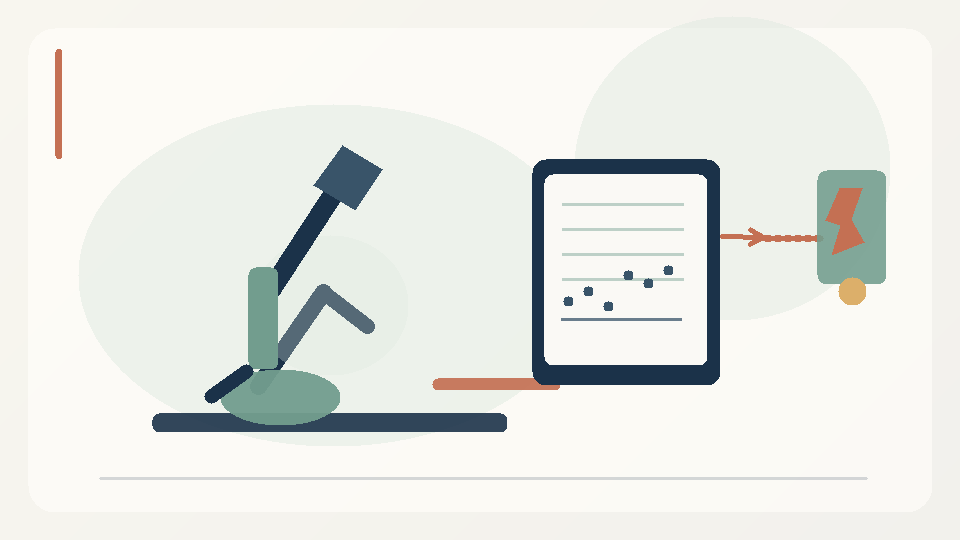
Featured image disclosure: The featured original 2026 eduKate editorial illustration depicts a microscope, study notes and an interrupted replication pathway. It is symbolic, not evidence of wrongdoing at an actual university or laboratory. It is conceptual editorial artwork, not a verifiable photograph of a crisis.
Scope and safety: Do not accuse real individuals or research groups of misconduct without established findings. No human-subject experiments or hazardous laboratory activities are taught. Classroom simulations use fictional tables and clean paper cards only; actual research ethics require qualified review.
The clear answer: how could this harm a civilisation?
Science works not because researchers never make mistakes, but because observations, methods and explanations can be challenged and improved. When institutions reward persuasive results while neglecting replication, data quality, ethics and careful correction, a civilisation can accumulate more publications yet become less able to distinguish strong findings from weak ones. A serious weakness becomes important when it prevents people or institutions from performing essential functions for long enough that maintaining normal life becomes difficult. The precise nature and degree of disruption matter. A small service interruption is not a total collapse, and the transformation of an institution is not automatically the end of the people, practices or knowledge associated with it. Understanding what failed, what continued and what could be restored is more useful than making dramatic predictions.
- Function: identify the service, form of evidence or resource that matters.
- Dependency: name the people, authorised procedures, data and equipment needed.
- Observation: distinguish real measurements from conditional forecasts.
- Access: ask whether the intended users can make practical use of the service.
- Correction: propose a legitimate response and a measurable follow-up.
- Limit: acknowledge uncertainty and evidence that does not support a wider claim.
Verified background and scope of the research
UNESCO’s Recommendation on Open Science was adopted on 23 November 2021 and promotes access, infrastructure and equitable participation while respecting relevant rights and restrictions. ALLEA issued its revised European Code of Conduct for Research Integrity in 2023. CoARA’s Agreement on Reforming Research Assessment emphasises qualitative review supported by responsible quantitative indicators. None of these frameworks alone can establish the truth of a particular research finding. A global report, published guideline or professional standard should always be interpreted within its intended boundaries. A suggested future trend is not an observed outcome and a stated target is not proof that all institutions have reached it. This guide provides the original links and distinguishes classroom invention from sourced facts.
Complete 32-chapter index
- 1. A scientific error is not automatically misconduct
- 2. The question must exist before the answer
- 3. Observation versus explanation
- 4. Sampling and who is missing
- 5. Calibration units and measurement integrity
- 6. Controls and confounding
- 7. Randomness and uncertainty
- 8. Statistical significance versus importance
- 9. Multiple testing and selective stories
- 10. Preregistration and exploratory analysis
- 11. Raw data and reliable provenance
- 12. Data cleaning and exclusions
- 13. Reproducibility of calculations
- 14. Replication with new evidence
- 15. Negative findings deserve publication
- 16. Why peer review has limits
- 17. Open research and protected information
- 18. Ethics and informed consent
- 19. Fabrication falsification and plagiarism
- 20. Research retractions and updated records
- 21. Citation verification and invented references
- 22. AI-written research and human responsibility
- 23. The cost of predatory publishing
- 24. Research metrics and perverse incentives
- 25. Research technicians and maintainers
- 26. Funding replication and long-term observations
- 27. Explaining uncertainty to the public
- 28. Science and policy have distinct roles
- 29. Citizen science and verified contributions
- 30. Respect for different knowledge holders
- 31. Scientific consensus and continuing revision
- 32. A system that learns from correction
1. A scientific error is not automatically misconduct
In one sentence. Honest mistakes and deliberate fabrication require very different responses The key question is whether the system can still perform a useful function for people, not merely whether something looks impressive, clean, scientific or modern. This distinction matters when examining this guide explains how research institutions create and verify new claims. it differs from the education and knowledge-transmission guides, which examine how existing knowledge is taught or preserved. reliable scientific discovery also depends on the ability to admit when earlier conclusions should change. A civilisational claim should name the scale of failure, time period, people affected and evidence of enduring changes. It should also ask whether the same community has meaningful ways to preserve knowledge, maintain essential services and correct problems.
How the problem develops
Start with the smallest plausible problem and resist making it represent an entire civilisation. In the entirely fictional Evidence Harbour classroom scenario, an ordinary service depends on several arrangements. Somebody needs a result; another person is legitimately responsible; a resource, record or tool enables an action; and a way of checking the result is necessary. If one arrangement becomes unreliable, an outward symptom may appear in a different part of the system. The observer notices a delay or mismatch, yet the cause may have begun earlier and elsewhere. Tracing the actual dependency is more informative than assuming every subsequent problem was caused by the first one.
Return to the specific mechanism: Honest mistakes and deliberate fabrication require very different responses Imagine a sequence of five cards labelled need, input, responsible worker, process and checked outcome. Put them in order and explain each connection. Then turn over one card to signify a hypothetical interruption. Which connections require that card? Which connections have possible alternatives? Does the problem concern a single service, a whole neighbourhood, a professional field or several institutions? The correct scope must be established rather than expanded for dramatic effect. A small process change may produce no user harm if an alternative is available, but a repeated uncorrected fault may matter greatly.
A second distinction concerns temporary interruption, persistent underperformance and permanent loss. A service that is unavailable for an afternoon is not equivalent to an organisation losing qualified staff, reliable records and the ability to repair the process for years. Conversely, substantial disruption does not erase the people who previously relied on that service or guarantee that their culture and learning have disappeared. Some adapt by moving, changing methods or working together in different arrangements. Treating change as possible continuity is not optimism without evidence; it is a reminder to investigate what survives.
Evidence and alternative explanations
Check whether a correction concerns method, reporting, interpretation or a substantiated ethics violation An adequate record names the author or institution, observation date, location, population or item measured, units, method and relevant limitations. If the result is a forecast, preserve the assumptions instead of presenting it as an event that has already occurred. If it is an official rule, confirm the applicable jurisdiction, effective version and whether real-world implementation has been evaluated. If it is a research interpretation, ask how it differs from the original observation. These checks prevent the article from claiming far more than its sources establish.
Consider three possible accounts. First, a genuine service failure may have occurred. Second, the method of counting or reporting may have changed, making a previously hidden problem newly visible. Third, the function may have moved to a different lawful or technically appropriate channel, leaving an outdated public notice behind. These accounts lead to different responses. A serious investigation asks which additional observation would discriminate among them. It may be a dated completion record, a professionally reviewed measurement, a revised data definition or confirmation that a user can now complete the intended task.
A careful reader should also look for the boundary of any source used. An international assessment might explain general trends without describing a specific estate or household. A concept illustration can support understanding without proving that an incident occurred. A chart can be mathematically correct but use the wrong denominator for the proposed claim. An independent reviewer might reach a narrower conclusion from the same data. It is more responsible to preserve those limitations than to fill them with plausible-sounding details. Good evidence allows a claim to be tested, not merely repeated.
Who is affected, and whose experience is missing?
Imagine a learner trying to understand a report using the relevant service. A government dashboard may show a good aggregate result while the person encounters a language barrier, an inaccessible route, unclear instructions or a delayed response. A professional operator may know of a constraint that the dashboard does not show, and another user may experience a perfectly functioning service. These accounts can coexist. The role of analysis is to locate the actual condition and compare experiences ethically, not to decide in advance that one story represents everyone.
In teaching, never use real pupils’ family hardships or sensitive identities as evidence. The invented town has no real citizens, addresses or private records. Students should discuss barriers without diagnosing a person’s health, assigning blame based on age or income, or assuming a group’s intelligence or motivation. Do not accuse real individuals or research groups of misconduct without established findings. No human-subject experiments or hazardous laboratory activities are taught. Classroom simulations use fictional tables and clean paper cards only; actual research ethics require qualified review. An ethical improvement is one that protects users, workers and the rights of people who may disagree with the first proposed solution.
How responsible repair would be checked
Preserve impartial investigations and accessible correction Begin with an exact description of what needs improvement and identify a legitimate responsible institution or qualified specialist. A policy announcement, a newly purchased tool or a large published budget may be useful input, but it is not proof of an outcome. The test is whether the person who needs a service can actually use it at the relevant time, with appropriate safety, fairness and reliability. If a new process helps only the easiest cases, the remaining barriers must be identified rather than omitted from the report.
Use four checkpoints: observe, verify, improve and recheck. Observation defines the current condition, including time and boundary. Verification establishes the strongest available explanation and important alternatives. Improvement should be proportional, lawful and undertaken by authorised people. Rechecking requires meaningful evidence that the intended capability has been restored or strengthened. A correction should not simply close a file; it should leave a reproducible record of what changed, why and with what results. This makes the lesson about institutional learning rather than a one-time fix.
Finally consider continuity. Could a different qualified person understand the proposed repair next year? Would the next class be able to reconstruct the analysis from the stored evidence? If the answer depends on a single expert’s undocumented knowledge or an inaccessible file, the community remains vulnerable. Preserve the date, assumptions, affected users, method, reason for the decision and next review. These are ordinary habits that help a complex society manage change without requiring perfection or constant certainty.
Safe practice for parents and tutors
Sort anonymous fictional incidents by the type of error Use only paper cards and pencils at an imaginary school library. One learner is the observer, another the source checker, a third the fairness reviewer, and a fourth the recorder. The observer states the fictional fact and avoids guessing why it occurred. The checker asks what source would establish the real-world claim. The fairness reviewer asks whether another user may encounter a different barrier. The recorder writes a short, understandable handover. Nothing in this exercise authorises an environmental test, a scientific study with human subjects or any professional intervention.
A young pupil can use three cards marked problem, evidence and next step. An upper-primary pupil can compare two possible causes. A secondary learner can add a clear unit, a denominator, a competing hypothesis and a critique of the source. An advanced learner can propose a before-and-after evaluation with limitations and an appropriate professional role. Reward the ability to revise an answer in light of evidence. A confident learner who explains why the model cannot prove a sweeping claim has understood the topic better than one who merely repeats a prediction of societal collapse.
Worked mathematics: counts are not outcomes
Everything in this example is invented classroom stationery. Suppose the school library receives 45 request cards and 4 require a second review. The rate is 4 ÷ 45 × 100 = 8.9% to one decimal place. If a fictional qualified reviewer resolves 2 of the flagged cards, 2 are still open. This does not estimate actual pollution, scientific misconduct, risk, health, law or the future of any civilisation. The exercise teaches the difference between numerator, denominator and a later verified outcome.
Now suppose the total number of recorded requests doubles. A larger number of flagged records need not indicate a worsening process if the share remains similar. Alternatively, an apparently good completion rate may be misleading if people who cannot access the reporting channel are missing from the denominator. A further question is what “resolved” means: was a file marked closed, was the professional check completed, or did the intended person actually receive a safe, reliable service? Those are distinct concepts. Ask the learner to write the unit and period beside every calculated value.
Deep-learning check
- Mechanism: Honest mistakes and deliberate fabrication require very different responses
- Evidence: Check whether a correction concerns method, reporting, interpretation or a substantiated ethics violation
- Practical model: Sort anonymous fictional incidents by the type of error
- Repair: Preserve impartial investigations and accessible correction
- Limit: Give one reason the fictional exercise cannot certify the condition of a real public or research system.
Finish by asking students to complete this record without looking at the chapter: “The specific function is … . The risk is … . An observation that supports the concern would be … . A competing explanation is … . A person the model may overlook is … . A fair action would be … . I would know it helped if … . What remains uncertain is … .” This short written handover makes complex knowledge transferable. The final achievement is not dramatic certainty but the ability to inquire, communicate responsibly and help the next learner reason from evidence.
2. The question must exist before the answer
In one sentence. A research question guides measurement, relevant data and appropriate comparison The key question is whether the system can still perform a useful function for people, not merely whether something looks impressive, clean, scientific or modern. This distinction matters when examining this guide explains how research institutions create and verify new claims. it differs from the education and knowledge-transmission guides, which examine how existing knowledge is taught or preserved. reliable scientific discovery also depends on the ability to admit when earlier conclusions should change. A civilisational claim should name the scale of failure, time period, people affected and evidence of enduring changes. It should also ask whether the same community has meaningful ways to preserve knowledge, maintain essential services and correct problems.
How the problem develops
An appealing headline is not the same thing as an identified causal process. In the entirely fictional Evidence Harbour classroom scenario, an ordinary service depends on several arrangements. Somebody needs a result; another person is legitimately responsible; a resource, record or tool enables an action; and a way of checking the result is necessary. If one arrangement becomes unreliable, an outward symptom may appear in a different part of the system. The observer notices a delay or mismatch, yet the cause may have begun earlier and elsewhere. Tracing the actual dependency is more informative than assuming every subsequent problem was caused by the first one.
Return to the specific mechanism: A research question guides measurement, relevant data and appropriate comparison Imagine a sequence of five cards labelled need, input, responsible worker, process and checked outcome. Put them in order and explain each connection. Then turn over one card to signify a hypothetical interruption. Which connections require that card? Which connections have possible alternatives? Does the problem concern a single service, a whole neighbourhood, a professional field or several institutions? The correct scope must be established rather than expanded for dramatic effect. A small process change may produce no user harm if an alternative is available, but a repeated uncorrected fault may matter greatly.
A second distinction concerns temporary interruption, persistent underperformance and permanent loss. A service that is unavailable for an afternoon is not equivalent to an organisation losing qualified staff, reliable records and the ability to repair the process for years. Conversely, substantial disruption does not erase the people who previously relied on that service or guarantee that their culture and learning have disappeared. Some adapt by moving, changing methods or working together in different arrangements. Treating change as possible continuity is not optimism without evidence; it is a reminder to investigate what survives.
Evidence and alternative explanations
A dramatic conclusion may be weak when the study never asked a clear question An adequate record names the author or institution, observation date, location, population or item measured, units, method and relevant limitations. If the result is a forecast, preserve the assumptions instead of presenting it as an event that has already occurred. If it is an official rule, confirm the applicable jurisdiction, effective version and whether real-world implementation has been evaluated. If it is a research interpretation, ask how it differs from the original observation. These checks prevent the article from claiming far more than its sources establish.
Consider three possible accounts. First, a genuine service failure may have occurred. Second, the method of counting or reporting may have changed, making a previously hidden problem newly visible. Third, the function may have moved to a different lawful or technically appropriate channel, leaving an outdated public notice behind. These accounts lead to different responses. A serious investigation asks which additional observation would discriminate among them. It may be a dated completion record, a professionally reviewed measurement, a revised data definition or confirmation that a user can now complete the intended task.
A careful reader should also look for the boundary of any source used. An international assessment might explain general trends without describing a specific estate or household. A concept illustration can support understanding without proving that an incident occurred. A chart can be mathematically correct but use the wrong denominator for the proposed claim. An independent reviewer might reach a narrower conclusion from the same data. It is more responsible to preserve those limitations than to fill them with plausible-sounding details. Good evidence allows a claim to be tested, not merely repeated.
Who is affected, and whose experience is missing?
Imagine a worker responsible for safe service using the relevant service. A government dashboard may show a good aggregate result while the person encounters a language barrier, an inaccessible route, unclear instructions or a delayed response. A professional operator may know of a constraint that the dashboard does not show, and another user may experience a perfectly functioning service. These accounts can coexist. The role of analysis is to locate the actual condition and compare experiences ethically, not to decide in advance that one story represents everyone.
In teaching, never use real pupils’ family hardships or sensitive identities as evidence. The invented town has no real citizens, addresses or private records. Students should discuss barriers without diagnosing a person’s health, assigning blame based on age or income, or assuming a group’s intelligence or motivation. Do not accuse real individuals or research groups of misconduct without established findings. No human-subject experiments or hazardous laboratory activities are taught. Classroom simulations use fictional tables and clean paper cards only; actual research ethics require qualified review. An ethical improvement is one that protects users, workers and the rights of people who may disagree with the first proposed solution.
How responsible repair would be checked
Support specific transparent research designs Begin with an exact description of what needs improvement and identify a legitimate responsible institution or qualified specialist. A policy announcement, a newly purchased tool or a large published budget may be useful input, but it is not proof of an outcome. The test is whether the person who needs a service can actually use it at the relevant time, with appropriate safety, fairness and reliability. If a new process helps only the easiest cases, the remaining barriers must be identified rather than omitted from the report.
Use four checkpoints: observe, verify, improve and recheck. Observation defines the current condition, including time and boundary. Verification establishes the strongest available explanation and important alternatives. Improvement should be proportional, lawful and undertaken by authorised people. Rechecking requires meaningful evidence that the intended capability has been restored or strengthened. A correction should not simply close a file; it should leave a reproducible record of what changed, why and with what results. This makes the lesson about institutional learning rather than a one-time fix.
Finally consider continuity. Could a different qualified person understand the proposed repair next year? Would the next class be able to reconstruct the analysis from the stored evidence? If the answer depends on a single expert’s undocumented knowledge or an inaccessible file, the community remains vulnerable. Preserve the date, assumptions, affected users, method, reason for the decision and next review. These are ordinary habits that help a complex society manage change without requiring perfection or constant certainty.
Safe practice for parents and tutors
Write a paper research question before viewing invented data Use only paper cards and pencils at an imaginary paper model village. One learner is the observer, another the source checker, a third the fairness reviewer, and a fourth the recorder. The observer states the fictional fact and avoids guessing why it occurred. The checker asks what source would establish the real-world claim. The fairness reviewer asks whether another user may encounter a different barrier. The recorder writes a short, understandable handover. Nothing in this exercise authorises an environmental test, a scientific study with human subjects or any professional intervention.
A young pupil can use three cards marked problem, evidence and next step. An upper-primary pupil can compare two possible causes. A secondary learner can add a clear unit, a denominator, a competing hypothesis and a critique of the source. An advanced learner can propose a before-and-after evaluation with limitations and an appropriate professional role. Reward the ability to revise an answer in light of evidence. A confident learner who explains why the model cannot prove a sweeping claim has understood the topic better than one who merely repeats a prediction of societal collapse.
Worked mathematics: counts are not outcomes
Everything in this example is invented classroom stationery. Suppose the paper model village receives 52 request cards and 9 require a second review. The rate is 9 ÷ 52 × 100 = 17.3% to one decimal place. If a fictional qualified reviewer resolves 5 of the flagged cards, 4 are still open. This does not estimate actual pollution, scientific misconduct, risk, health, law or the future of any civilisation. The exercise teaches the difference between numerator, denominator and a later verified outcome.
Now suppose the total number of recorded requests doubles. A larger number of flagged records need not indicate a worsening process if the share remains similar. Alternatively, an apparently good completion rate may be misleading if people who cannot access the reporting channel are missing from the denominator. A further question is what “resolved” means: was a file marked closed, was the professional check completed, or did the intended person actually receive a safe, reliable service? Those are distinct concepts. Ask the learner to write the unit and period beside every calculated value.
Deep-learning check
- Mechanism: A research question guides measurement, relevant data and appropriate comparison
- Evidence: A dramatic conclusion may be weak when the study never asked a clear question
- Practical model: Write a paper research question before viewing invented data
- Repair: Support specific transparent research designs
- Limit: Give one reason the fictional exercise cannot certify the condition of a real public or research system.
Finish by asking students to complete this record without looking at the chapter: “The specific function is … . The risk is … . An observation that supports the concern would be … . A competing explanation is … . A person the model may overlook is … . A fair action would be … . I would know it helped if … . What remains uncertain is … .” This short written handover makes complex knowledge transferable. The final achievement is not dramatic certainty but the ability to inquire, communicate responsibly and help the next learner reason from evidence.
3. Observation versus explanation
In one sentence. A measurement and the causal story used to interpret it are separate layers of a claim The key question is whether the system can still perform a useful function for people, not merely whether something looks impressive, clean, scientific or modern. This distinction matters when examining this guide explains how research institutions create and verify new claims. it differs from the education and knowledge-transmission guides, which examine how existing knowledge is taught or preserved. reliable scientific discovery also depends on the ability to admit when earlier conclusions should change. A civilisational claim should name the scale of failure, time period, people affected and evidence of enduring changes. It should also ask whether the same community has meaningful ways to preserve knowledge, maintain essential services and correct problems.
How the problem develops
Work backwards from the outcome someone needed, not the dramatic event that first attracted attention. In the entirely fictional Evidence Harbour classroom scenario, an ordinary service depends on several arrangements. Somebody needs a result; another person is legitimately responsible; a resource, record or tool enables an action; and a way of checking the result is necessary. If one arrangement becomes unreliable, an outward symptom may appear in a different part of the system. The observer notices a delay or mismatch, yet the cause may have begun earlier and elsewhere. Tracing the actual dependency is more informative than assuming every subsequent problem was caused by the first one.
Return to the specific mechanism: A measurement and the causal story used to interpret it are separate layers of a claim Imagine a sequence of five cards labelled need, input, responsible worker, process and checked outcome. Put them in order and explain each connection. Then turn over one card to signify a hypothetical interruption. Which connections require that card? Which connections have possible alternatives? Does the problem concern a single service, a whole neighbourhood, a professional field or several institutions? The correct scope must be established rather than expanded for dramatic effect. A small process change may produce no user harm if an alternative is available, but a repeated uncorrected fault may matter greatly.
A second distinction concerns temporary interruption, persistent underperformance and permanent loss. A service that is unavailable for an afternoon is not equivalent to an organisation losing qualified staff, reliable records and the ability to repair the process for years. Conversely, substantial disruption does not erase the people who previously relied on that service or guarantee that their culture and learning have disappeared. Some adapt by moving, changing methods or working together in different arrangements. Treating change as possible continuity is not optimism without evidence; it is a reminder to investigate what survives.
Evidence and alternative explanations
Two explanations can sometimes fit the same observed trend An adequate record names the author or institution, observation date, location, population or item measured, units, method and relevant limitations. If the result is a forecast, preserve the assumptions instead of presenting it as an event that has already occurred. If it is an official rule, confirm the applicable jurisdiction, effective version and whether real-world implementation has been evaluated. If it is a research interpretation, ask how it differs from the original observation. These checks prevent the article from claiming far more than its sources establish.
Consider three possible accounts. First, a genuine service failure may have occurred. Second, the method of counting or reporting may have changed, making a previously hidden problem newly visible. Third, the function may have moved to a different lawful or technically appropriate channel, leaving an outdated public notice behind. These accounts lead to different responses. A serious investigation asks which additional observation would discriminate among them. It may be a dated completion record, a professionally reviewed measurement, a revised data definition or confirmation that a user can now complete the intended task.
A careful reader should also look for the boundary of any source used. An international assessment might explain general trends without describing a specific estate or household. A concept illustration can support understanding without proving that an incident occurred. A chart can be mathematically correct but use the wrong denominator for the proposed claim. An independent reviewer might reach a narrower conclusion from the same data. It is more responsible to preserve those limitations than to fill them with plausible-sounding details. Good evidence allows a claim to be tested, not merely repeated.
Who is affected, and whose experience is missing?
Imagine a parent needing accessible information using the relevant service. A government dashboard may show a good aggregate result while the person encounters a language barrier, an inaccessible route, unclear instructions or a delayed response. A professional operator may know of a constraint that the dashboard does not show, and another user may experience a perfectly functioning service. These accounts can coexist. The role of analysis is to locate the actual condition and compare experiences ethically, not to decide in advance that one story represents everyone.
In teaching, never use real pupils’ family hardships or sensitive identities as evidence. The invented town has no real citizens, addresses or private records. Students should discuss barriers without diagnosing a person’s health, assigning blame based on age or income, or assuming a group’s intelligence or motivation. Do not accuse real individuals or research groups of misconduct without established findings. No human-subject experiments or hazardous laboratory activities are taught. Classroom simulations use fictional tables and clean paper cards only; actual research ethics require qualified review. An ethical improvement is one that protects users, workers and the rights of people who may disagree with the first proposed solution.
How responsible repair would be checked
Encourage credible tests of alternative explanations Begin with an exact description of what needs improvement and identify a legitimate responsible institution or qualified specialist. A policy announcement, a newly purchased tool or a large published budget may be useful input, but it is not proof of an outcome. The test is whether the person who needs a service can actually use it at the relevant time, with appropriate safety, fairness and reliability. If a new process helps only the easiest cases, the remaining barriers must be identified rather than omitted from the report.
Use four checkpoints: observe, verify, improve and recheck. Observation defines the current condition, including time and boundary. Verification establishes the strongest available explanation and important alternatives. Improvement should be proportional, lawful and undertaken by authorised people. Rechecking requires meaningful evidence that the intended capability has been restored or strengthened. A correction should not simply close a file; it should leave a reproducible record of what changed, why and with what results. This makes the lesson about institutional learning rather than a one-time fix.
Finally consider continuity. Could a different qualified person understand the proposed repair next year? Would the next class be able to reconstruct the analysis from the stored evidence? If the answer depends on a single expert’s undocumented knowledge or an inaccessible file, the community remains vulnerable. Preserve the date, assumptions, affected users, method, reason for the decision and next review. These are ordinary habits that help a complex society manage change without requiring perfection or constant certainty.
Safe practice for parents and tutors
Group toy cards into observation, inference and speculation Use only paper cards and pencils at an imaginary imaginary community service desk. One learner is the observer, another the source checker, a third the fairness reviewer, and a fourth the recorder. The observer states the fictional fact and avoids guessing why it occurred. The checker asks what source would establish the real-world claim. The fairness reviewer asks whether another user may encounter a different barrier. The recorder writes a short, understandable handover. Nothing in this exercise authorises an environmental test, a scientific study with human subjects or any professional intervention.
A young pupil can use three cards marked problem, evidence and next step. An upper-primary pupil can compare two possible causes. A secondary learner can add a clear unit, a denominator, a competing hypothesis and a critique of the source. An advanced learner can propose a before-and-after evaluation with limitations and an appropriate professional role. Reward the ability to revise an answer in light of evidence. A confident learner who explains why the model cannot prove a sweeping claim has understood the topic better than one who merely repeats a prediction of societal collapse.
Worked mathematics: counts are not outcomes
Everything in this example is invented classroom stationery. Suppose the imaginary community service desk receives 59 request cards and 14 require a second review. The rate is 14 ÷ 59 × 100 = 23.7% to one decimal place. If a fictional qualified reviewer resolves 8 of the flagged cards, 6 are still open. This does not estimate actual pollution, scientific misconduct, risk, health, law or the future of any civilisation. The exercise teaches the difference between numerator, denominator and a later verified outcome.
Now suppose the total number of recorded requests doubles. A larger number of flagged records need not indicate a worsening process if the share remains similar. Alternatively, an apparently good completion rate may be misleading if people who cannot access the reporting channel are missing from the denominator. A further question is what “resolved” means: was a file marked closed, was the professional check completed, or did the intended person actually receive a safe, reliable service? Those are distinct concepts. Ask the learner to write the unit and period beside every calculated value.
Deep-learning check
- Mechanism: A measurement and the causal story used to interpret it are separate layers of a claim
- Evidence: Two explanations can sometimes fit the same observed trend
- Practical model: Group toy cards into observation, inference and speculation
- Repair: Encourage credible tests of alternative explanations
- Limit: Give one reason the fictional exercise cannot certify the condition of a real public or research system.
Finish by asking students to complete this record without looking at the chapter: “The specific function is … . The risk is … . An observation that supports the concern would be … . A competing explanation is … . A person the model may overlook is … . A fair action would be … . I would know it helped if … . What remains uncertain is … .” This short written handover makes complex knowledge transferable. The final achievement is not dramatic certainty but the ability to inquire, communicate responsibly and help the next learner reason from evidence.
4. Sampling and who is missing
In one sentence. Evidence from selected respondents cannot automatically describe every relevant population The key question is whether the system can still perform a useful function for people, not merely whether something looks impressive, clean, scientific or modern. This distinction matters when examining this guide explains how research institutions create and verify new claims. it differs from the education and knowledge-transmission guides, which examine how existing knowledge is taught or preserved. reliable scientific discovery also depends on the ability to admit when earlier conclusions should change. A civilisational claim should name the scale of failure, time period, people affected and evidence of enduring changes. It should also ask whether the same community has meaningful ways to preserve knowledge, maintain essential services and correct problems.
How the problem develops
Compare a limited breakdown with a situation in which the community retains several effective alternatives. In the entirely fictional Evidence Harbour classroom scenario, an ordinary service depends on several arrangements. Somebody needs a result; another person is legitimately responsible; a resource, record or tool enables an action; and a way of checking the result is necessary. If one arrangement becomes unreliable, an outward symptom may appear in a different part of the system. The observer notices a delay or mismatch, yet the cause may have begun earlier and elsewhere. Tracing the actual dependency is more informative than assuming every subsequent problem was caused by the first one.
Return to the specific mechanism: Evidence from selected respondents cannot automatically describe every relevant population Imagine a sequence of five cards labelled need, input, responsible worker, process and checked outcome. Put them in order and explain each connection. Then turn over one card to signify a hypothetical interruption. Which connections require that card? Which connections have possible alternatives? Does the problem concern a single service, a whole neighbourhood, a professional field or several institutions? The correct scope must be established rather than expanded for dramatic effect. A small process change may produce no user harm if an alternative is available, but a repeated uncorrected fault may matter greatly.
A second distinction concerns temporary interruption, persistent underperformance and permanent loss. A service that is unavailable for an afternoon is not equivalent to an organisation losing qualified staff, reliable records and the ability to repair the process for years. Conversely, substantial disruption does not erase the people who previously relied on that service or guarantee that their culture and learning have disappeared. Some adapt by moving, changing methods or working together in different arrangements. Treating change as possible continuity is not optimism without evidence; it is a reminder to investigate what survives.
Evidence and alternative explanations
A very large convenience sample can still be biased An adequate record names the author or institution, observation date, location, population or item measured, units, method and relevant limitations. If the result is a forecast, preserve the assumptions instead of presenting it as an event that has already occurred. If it is an official rule, confirm the applicable jurisdiction, effective version and whether real-world implementation has been evaluated. If it is a research interpretation, ask how it differs from the original observation. These checks prevent the article from claiming far more than its sources establish.
Consider three possible accounts. First, a genuine service failure may have occurred. Second, the method of counting or reporting may have changed, making a previously hidden problem newly visible. Third, the function may have moved to a different lawful or technically appropriate channel, leaving an outdated public notice behind. These accounts lead to different responses. A serious investigation asks which additional observation would discriminate among them. It may be a dated completion record, a professionally reviewed measurement, a revised data definition or confirmation that a user can now complete the intended task.
A careful reader should also look for the boundary of any source used. An international assessment might explain general trends without describing a specific estate or household. A concept illustration can support understanding without proving that an incident occurred. A chart can be mathematically correct but use the wrong denominator for the proposed claim. An independent reviewer might reach a narrower conclusion from the same data. It is more responsible to preserve those limitations than to fill them with plausible-sounding details. Good evidence allows a claim to be tested, not merely repeated.
Who is affected, and whose experience is missing?
Imagine an older resident using the relevant service. A government dashboard may show a good aggregate result while the person encounters a language barrier, an inaccessible route, unclear instructions or a delayed response. A professional operator may know of a constraint that the dashboard does not show, and another user may experience a perfectly functioning service. These accounts can coexist. The role of analysis is to locate the actual condition and compare experiences ethically, not to decide in advance that one story represents everyone.
In teaching, never use real pupils’ family hardships or sensitive identities as evidence. The invented town has no real citizens, addresses or private records. Students should discuss barriers without diagnosing a person’s health, assigning blame based on age or income, or assuming a group’s intelligence or motivation. Do not accuse real individuals or research groups of misconduct without established findings. No human-subject experiments or hazardous laboratory activities are taught. Classroom simulations use fictional tables and clean paper cards only; actual research ethics require qualified review. An ethical improvement is one that protects users, workers and the rights of people who may disagree with the first proposed solution.
How responsible repair would be checked
Report selection limits and fair sampling where feasible Begin with an exact description of what needs improvement and identify a legitimate responsible institution or qualified specialist. A policy announcement, a newly purchased tool or a large published budget may be useful input, but it is not proof of an outcome. The test is whether the person who needs a service can actually use it at the relevant time, with appropriate safety, fairness and reliability. If a new process helps only the easiest cases, the remaining barriers must be identified rather than omitted from the report.
Use four checkpoints: observe, verify, improve and recheck. Observation defines the current condition, including time and boundary. Verification establishes the strongest available explanation and important alternatives. Improvement should be proportional, lawful and undertaken by authorised people. Rechecking requires meaningful evidence that the intended capability has been restored or strengthened. A correction should not simply close a file; it should leave a reproducible record of what changed, why and with what results. This makes the lesson about institutional learning rather than a one-time fix.
Finally consider continuity. Could a different qualified person understand the proposed repair next year? Would the next class be able to reconstruct the analysis from the stored evidence? If the answer depends on a single expert’s undocumented knowledge or an inaccessible file, the community remains vulnerable. Preserve the date, assumptions, affected users, method, reason for the decision and next review. These are ordinary habits that help a complex society manage change without requiring perfection or constant certainty.
Safe practice for parents and tutors
Draw pretend survey cards from differently composed boxes Use only paper cards and pencils at an imaginary pretend council office. One learner is the observer, another the source checker, a third the fairness reviewer, and a fourth the recorder. The observer states the fictional fact and avoids guessing why it occurred. The checker asks what source would establish the real-world claim. The fairness reviewer asks whether another user may encounter a different barrier. The recorder writes a short, understandable handover. Nothing in this exercise authorises an environmental test, a scientific study with human subjects or any professional intervention.
A young pupil can use three cards marked problem, evidence and next step. An upper-primary pupil can compare two possible causes. A secondary learner can add a clear unit, a denominator, a competing hypothesis and a critique of the source. An advanced learner can propose a before-and-after evaluation with limitations and an appropriate professional role. Reward the ability to revise an answer in light of evidence. A confident learner who explains why the model cannot prove a sweeping claim has understood the topic better than one who merely repeats a prediction of societal collapse.
Worked mathematics: counts are not outcomes
Everything in this example is invented classroom stationery. Suppose the pretend council office receives 66 request cards and 4 require a second review. The rate is 4 ÷ 66 × 100 = 6.1% to one decimal place. If a fictional qualified reviewer resolves 3 of the flagged cards, 1 are still open. This does not estimate actual pollution, scientific misconduct, risk, health, law or the future of any civilisation. The exercise teaches the difference between numerator, denominator and a later verified outcome.
Now suppose the total number of recorded requests doubles. A larger number of flagged records need not indicate a worsening process if the share remains similar. Alternatively, an apparently good completion rate may be misleading if people who cannot access the reporting channel are missing from the denominator. A further question is what “resolved” means: was a file marked closed, was the professional check completed, or did the intended person actually receive a safe, reliable service? Those are distinct concepts. Ask the learner to write the unit and period beside every calculated value.
Deep-learning check
- Mechanism: Evidence from selected respondents cannot automatically describe every relevant population
- Evidence: A very large convenience sample can still be biased
- Practical model: Draw pretend survey cards from differently composed boxes
- Repair: Report selection limits and fair sampling where feasible
- Limit: Give one reason the fictional exercise cannot certify the condition of a real public or research system.
Finish by asking students to complete this record without looking at the chapter: “The specific function is … . The risk is … . An observation that supports the concern would be … . A competing explanation is … . A person the model may overlook is … . A fair action would be … . I would know it helped if … . What remains uncertain is … .” This short written handover makes complex knowledge transferable. The final achievement is not dramatic certainty but the ability to inquire, communicate responsibly and help the next learner reason from evidence.
5. Calibration units and measurement integrity
In one sentence. Instruments and protocols must produce interpretable results in defined units The key question is whether the system can still perform a useful function for people, not merely whether something looks impressive, clean, scientific or modern. This distinction matters when examining this guide explains how research institutions create and verify new claims. it differs from the education and knowledge-transmission guides, which examine how existing knowledge is taught or preserved. reliable scientific discovery also depends on the ability to admit when earlier conclusions should change. A civilisational claim should name the scale of failure, time period, people affected and evidence of enduring changes. It should also ask whether the same community has meaningful ways to preserve knowledge, maintain essential services and correct problems.
How the problem develops
A useful way to test understanding is to change one condition and observe whether the original explanation still holds. In the entirely fictional Evidence Harbour classroom scenario, an ordinary service depends on several arrangements. Somebody needs a result; another person is legitimately responsible; a resource, record or tool enables an action; and a way of checking the result is necessary. If one arrangement becomes unreliable, an outward symptom may appear in a different part of the system. The observer notices a delay or mismatch, yet the cause may have begun earlier and elsewhere. Tracing the actual dependency is more informative than assuming every subsequent problem was caused by the first one.
Return to the specific mechanism: Instruments and protocols must produce interpretable results in defined units Imagine a sequence of five cards labelled need, input, responsible worker, process and checked outcome. Put them in order and explain each connection. Then turn over one card to signify a hypothetical interruption. Which connections require that card? Which connections have possible alternatives? Does the problem concern a single service, a whole neighbourhood, a professional field or several institutions? The correct scope must be established rather than expanded for dramatic effect. A small process change may produce no user harm if an alternative is available, but a repeated uncorrected fault may matter greatly.
A second distinction concerns temporary interruption, persistent underperformance and permanent loss. A service that is unavailable for an afternoon is not equivalent to an organisation losing qualified staff, reliable records and the ability to repair the process for years. Conversely, substantial disruption does not erase the people who previously relied on that service or guarantee that their culture and learning have disappeared. Some adapt by moving, changing methods or working together in different arrangements. Treating change as possible continuity is not optimism without evidence; it is a reminder to investigate what survives.
Evidence and alternative explanations
Exact-looking digits do not demonstrate the absence of systematic error An adequate record names the author or institution, observation date, location, population or item measured, units, method and relevant limitations. If the result is a forecast, preserve the assumptions instead of presenting it as an event that has already occurred. If it is an official rule, confirm the applicable jurisdiction, effective version and whether real-world implementation has been evaluated. If it is a research interpretation, ask how it differs from the original observation. These checks prevent the article from claiming far more than its sources establish.
Consider three possible accounts. First, a genuine service failure may have occurred. Second, the method of counting or reporting may have changed, making a previously hidden problem newly visible. Third, the function may have moved to a different lawful or technically appropriate channel, leaving an outdated public notice behind. These accounts lead to different responses. A serious investigation asks which additional observation would discriminate among them. It may be a dated completion record, a professionally reviewed measurement, a revised data definition or confirmation that a user can now complete the intended task.
A careful reader should also look for the boundary of any source used. An international assessment might explain general trends without describing a specific estate or household. A concept illustration can support understanding without proving that an incident occurred. A chart can be mathematically correct but use the wrong denominator for the proposed claim. An independent reviewer might reach a narrower conclusion from the same data. It is more responsible to preserve those limitations than to fill them with plausible-sounding details. Good evidence allows a claim to be tested, not merely repeated.
Who is affected, and whose experience is missing?
Imagine a resident who uses an alternative format using the relevant service. A government dashboard may show a good aggregate result while the person encounters a language barrier, an inaccessible route, unclear instructions or a delayed response. A professional operator may know of a constraint that the dashboard does not show, and another user may experience a perfectly functioning service. These accounts can coexist. The role of analysis is to locate the actual condition and compare experiences ethically, not to decide in advance that one story represents everyone.
In teaching, never use real pupils’ family hardships or sensitive identities as evidence. The invented town has no real citizens, addresses or private records. Students should discuss barriers without diagnosing a person’s health, assigning blame based on age or income, or assuming a group’s intelligence or motivation. Do not accuse real individuals or research groups of misconduct without established findings. No human-subject experiments or hazardous laboratory activities are taught. Classroom simulations use fictional tables and clean paper cards only; actual research ethics require qualified review. An ethical improvement is one that protects users, workers and the rights of people who may disagree with the first proposed solution.
How responsible repair would be checked
Maintain competent quality controls Begin with an exact description of what needs improvement and identify a legitimate responsible institution or qualified specialist. A policy announcement, a newly purchased tool or a large published budget may be useful input, but it is not proof of an outcome. The test is whether the person who needs a service can actually use it at the relevant time, with appropriate safety, fairness and reliability. If a new process helps only the easiest cases, the remaining barriers must be identified rather than omitted from the report.
Use four checkpoints: observe, verify, improve and recheck. Observation defines the current condition, including time and boundary. Verification establishes the strongest available explanation and important alternatives. Improvement should be proportional, lawful and undertaken by authorised people. Rechecking requires meaningful evidence that the intended capability has been restored or strengthened. A correction should not simply close a file; it should leave a reproducible record of what changed, why and with what results. This makes the lesson about institutional learning rather than a one-time fix.
Finally consider continuity. Could a different qualified person understand the proposed repair next year? Would the next class be able to reconstruct the analysis from the stored evidence? If the answer depends on a single expert’s undocumented knowledge or an inaccessible file, the community remains vulnerable. Preserve the date, assumptions, affected users, method, reason for the decision and next review. These are ordinary habits that help a complex society manage change without requiring perfection or constant certainty.
Safe practice for parents and tutors
Correct an invented laboratory table with mixed units Use only paper cards and pencils at an imaginary classroom information board. One learner is the observer, another the source checker, a third the fairness reviewer, and a fourth the recorder. The observer states the fictional fact and avoids guessing why it occurred. The checker asks what source would establish the real-world claim. The fairness reviewer asks whether another user may encounter a different barrier. The recorder writes a short, understandable handover. Nothing in this exercise authorises an environmental test, a scientific study with human subjects or any professional intervention.
A young pupil can use three cards marked problem, evidence and next step. An upper-primary pupil can compare two possible causes. A secondary learner can add a clear unit, a denominator, a competing hypothesis and a critique of the source. An advanced learner can propose a before-and-after evaluation with limitations and an appropriate professional role. Reward the ability to revise an answer in light of evidence. A confident learner who explains why the model cannot prove a sweeping claim has understood the topic better than one who merely repeats a prediction of societal collapse.
Worked mathematics: counts are not outcomes
Everything in this example is invented classroom stationery. Suppose the classroom information board receives 73 request cards and 9 require a second review. The rate is 9 ÷ 73 × 100 = 12.3% to one decimal place. If a fictional qualified reviewer resolves 3 of the flagged cards, 6 are still open. This does not estimate actual pollution, scientific misconduct, risk, health, law or the future of any civilisation. The exercise teaches the difference between numerator, denominator and a later verified outcome.
Now suppose the total number of recorded requests doubles. A larger number of flagged records need not indicate a worsening process if the share remains similar. Alternatively, an apparently good completion rate may be misleading if people who cannot access the reporting channel are missing from the denominator. A further question is what “resolved” means: was a file marked closed, was the professional check completed, or did the intended person actually receive a safe, reliable service? Those are distinct concepts. Ask the learner to write the unit and period beside every calculated value.
Deep-learning check
- Mechanism: Instruments and protocols must produce interpretable results in defined units
- Evidence: Exact-looking digits do not demonstrate the absence of systematic error
- Practical model: Correct an invented laboratory table with mixed units
- Repair: Maintain competent quality controls
- Limit: Give one reason the fictional exercise cannot certify the condition of a real public or research system.
Finish by asking students to complete this record without looking at the chapter: “The specific function is … . The risk is … . An observation that supports the concern would be … . A competing explanation is … . A person the model may overlook is … . A fair action would be … . I would know it helped if … . What remains uncertain is … .” This short written handover makes complex knowledge transferable. The final achievement is not dramatic certainty but the ability to inquire, communicate responsibly and help the next learner reason from evidence.
6. Controls and confounding
In one sentence. Changes can have causes other than the variable the researcher wishes to study The key question is whether the system can still perform a useful function for people, not merely whether something looks impressive, clean, scientific or modern. This distinction matters when examining this guide explains how research institutions create and verify new claims. it differs from the education and knowledge-transmission guides, which examine how existing knowledge is taught or preserved. reliable scientific discovery also depends on the ability to admit when earlier conclusions should change. A civilisational claim should name the scale of failure, time period, people affected and evidence of enduring changes. It should also ask whether the same community has meaningful ways to preserve knowledge, maintain essential services and correct problems.
How the problem develops
Start with the smallest plausible problem and resist making it represent an entire civilisation. In the entirely fictional Evidence Harbour classroom scenario, an ordinary service depends on several arrangements. Somebody needs a result; another person is legitimately responsible; a resource, record or tool enables an action; and a way of checking the result is necessary. If one arrangement becomes unreliable, an outward symptom may appear in a different part of the system. The observer notices a delay or mismatch, yet the cause may have begun earlier and elsewhere. Tracing the actual dependency is more informative than assuming every subsequent problem was caused by the first one.
Return to the specific mechanism: Changes can have causes other than the variable the researcher wishes to study Imagine a sequence of five cards labelled need, input, responsible worker, process and checked outcome. Put them in order and explain each connection. Then turn over one card to signify a hypothetical interruption. Which connections require that card? Which connections have possible alternatives? Does the problem concern a single service, a whole neighbourhood, a professional field or several institutions? The correct scope must be established rather than expanded for dramatic effect. A small process change may produce no user harm if an alternative is available, but a repeated uncorrected fault may matter greatly.
A second distinction concerns temporary interruption, persistent underperformance and permanent loss. A service that is unavailable for an afternoon is not equivalent to an organisation losing qualified staff, reliable records and the ability to repair the process for years. Conversely, substantial disruption does not erase the people who previously relied on that service or guarantee that their culture and learning have disappeared. Some adapt by moving, changing methods or working together in different arrangements. Treating change as possible continuity is not optimism without evidence; it is a reminder to investigate what survives.
Evidence and alternative explanations
Comparing groups that differ in many ways may mislead about causation An adequate record names the author or institution, observation date, location, population or item measured, units, method and relevant limitations. If the result is a forecast, preserve the assumptions instead of presenting it as an event that has already occurred. If it is an official rule, confirm the applicable jurisdiction, effective version and whether real-world implementation has been evaluated. If it is a research interpretation, ask how it differs from the original observation. These checks prevent the article from claiming far more than its sources establish.
Consider three possible accounts. First, a genuine service failure may have occurred. Second, the method of counting or reporting may have changed, making a previously hidden problem newly visible. Third, the function may have moved to a different lawful or technically appropriate channel, leaving an outdated public notice behind. These accounts lead to different responses. A serious investigation asks which additional observation would discriminate among them. It may be a dated completion record, a professionally reviewed measurement, a revised data definition or confirmation that a user can now complete the intended task.
A careful reader should also look for the boundary of any source used. An international assessment might explain general trends without describing a specific estate or household. A concept illustration can support understanding without proving that an incident occurred. A chart can be mathematically correct but use the wrong denominator for the proposed claim. An independent reviewer might reach a narrower conclusion from the same data. It is more responsible to preserve those limitations than to fill them with plausible-sounding details. Good evidence allows a claim to be tested, not merely repeated.
Who is affected, and whose experience is missing?
Imagine a newcomer asking an unfamiliar question using the relevant service. A government dashboard may show a good aggregate result while the person encounters a language barrier, an inaccessible route, unclear instructions or a delayed response. A professional operator may know of a constraint that the dashboard does not show, and another user may experience a perfectly functioning service. These accounts can coexist. The role of analysis is to locate the actual condition and compare experiences ethically, not to decide in advance that one story represents everyone.
In teaching, never use real pupils’ family hardships or sensitive identities as evidence. The invented town has no real citizens, addresses or private records. Students should discuss barriers without diagnosing a person’s health, assigning blame based on age or income, or assuming a group’s intelligence or motivation. Do not accuse real individuals or research groups of misconduct without established findings. No human-subject experiments or hazardous laboratory activities are taught. Classroom simulations use fictional tables and clean paper cards only; actual research ethics require qualified review. An ethical improvement is one that protects users, workers and the rights of people who may disagree with the first proposed solution.
How responsible repair would be checked
Use well-matched research designs and qualified inference Begin with an exact description of what needs improvement and identify a legitimate responsible institution or qualified specialist. A policy announcement, a newly purchased tool or a large published budget may be useful input, but it is not proof of an outcome. The test is whether the person who needs a service can actually use it at the relevant time, with appropriate safety, fairness and reliability. If a new process helps only the easiest cases, the remaining barriers must be identified rather than omitted from the report.
Use four checkpoints: observe, verify, improve and recheck. Observation defines the current condition, including time and boundary. Verification establishes the strongest available explanation and important alternatives. Improvement should be proportional, lawful and undertaken by authorised people. Rechecking requires meaningful evidence that the intended capability has been restored or strengthened. A correction should not simply close a file; it should leave a reproducible record of what changed, why and with what results. This makes the lesson about institutional learning rather than a one-time fix.
Finally consider continuity. Could a different qualified person understand the proposed repair next year? Would the next class be able to reconstruct the analysis from the stored evidence? If the answer depends on a single expert’s undocumented knowledge or an inaccessible file, the community remains vulnerable. Preserve the date, assumptions, affected users, method, reason for the decision and next review. These are ordinary habits that help a complex society manage change without requiring perfection or constant certainty.
Safe practice for parents and tutors
Compare fictional classrooms with different starting abilities Use only paper cards and pencils at an imaginary model neighbourhood workshop. One learner is the observer, another the source checker, a third the fairness reviewer, and a fourth the recorder. The observer states the fictional fact and avoids guessing why it occurred. The checker asks what source would establish the real-world claim. The fairness reviewer asks whether another user may encounter a different barrier. The recorder writes a short, understandable handover. Nothing in this exercise authorises an environmental test, a scientific study with human subjects or any professional intervention.
A young pupil can use three cards marked problem, evidence and next step. An upper-primary pupil can compare two possible causes. A secondary learner can add a clear unit, a denominator, a competing hypothesis and a critique of the source. An advanced learner can propose a before-and-after evaluation with limitations and an appropriate professional role. Reward the ability to revise an answer in light of evidence. A confident learner who explains why the model cannot prove a sweeping claim has understood the topic better than one who merely repeats a prediction of societal collapse.
Worked mathematics: counts are not outcomes
Everything in this example is invented classroom stationery. Suppose the model neighbourhood workshop receives 80 request cards and 14 require a second review. The rate is 14 ÷ 80 × 100 = 17.5% to one decimal place. If a fictional qualified reviewer resolves 6 of the flagged cards, 8 are still open. This does not estimate actual pollution, scientific misconduct, risk, health, law or the future of any civilisation. The exercise teaches the difference between numerator, denominator and a later verified outcome.
Now suppose the total number of recorded requests doubles. A larger number of flagged records need not indicate a worsening process if the share remains similar. Alternatively, an apparently good completion rate may be misleading if people who cannot access the reporting channel are missing from the denominator. A further question is what “resolved” means: was a file marked closed, was the professional check completed, or did the intended person actually receive a safe, reliable service? Those are distinct concepts. Ask the learner to write the unit and period beside every calculated value.
Deep-learning check
- Mechanism: Changes can have causes other than the variable the researcher wishes to study
- Evidence: Comparing groups that differ in many ways may mislead about causation
- Practical model: Compare fictional classrooms with different starting abilities
- Repair: Use well-matched research designs and qualified inference
- Limit: Give one reason the fictional exercise cannot certify the condition of a real public or research system.
Finish by asking students to complete this record without looking at the chapter: “The specific function is … . The risk is … . An observation that supports the concern would be … . A competing explanation is … . A person the model may overlook is … . A fair action would be … . I would know it helped if … . What remains uncertain is … .” This short written handover makes complex knowledge transferable. The final achievement is not dramatic certainty but the ability to inquire, communicate responsibly and help the next learner reason from evidence.
7. Randomness and uncertainty
In one sentence. Natural variation can create striking results even in a correctly conducted study The key question is whether the system can still perform a useful function for people, not merely whether something looks impressive, clean, scientific or modern. This distinction matters when examining this guide explains how research institutions create and verify new claims. it differs from the education and knowledge-transmission guides, which examine how existing knowledge is taught or preserved. reliable scientific discovery also depends on the ability to admit when earlier conclusions should change. A civilisational claim should name the scale of failure, time period, people affected and evidence of enduring changes. It should also ask whether the same community has meaningful ways to preserve knowledge, maintain essential services and correct problems.
How the problem develops
An appealing headline is not the same thing as an identified causal process. In the entirely fictional Evidence Harbour classroom scenario, an ordinary service depends on several arrangements. Somebody needs a result; another person is legitimately responsible; a resource, record or tool enables an action; and a way of checking the result is necessary. If one arrangement becomes unreliable, an outward symptom may appear in a different part of the system. The observer notices a delay or mismatch, yet the cause may have begun earlier and elsewhere. Tracing the actual dependency is more informative than assuming every subsequent problem was caused by the first one.
Return to the specific mechanism: Natural variation can create striking results even in a correctly conducted study Imagine a sequence of five cards labelled need, input, responsible worker, process and checked outcome. Put them in order and explain each connection. Then turn over one card to signify a hypothetical interruption. Which connections require that card? Which connections have possible alternatives? Does the problem concern a single service, a whole neighbourhood, a professional field or several institutions? The correct scope must be established rather than expanded for dramatic effect. A small process change may produce no user harm if an alternative is available, but a repeated uncorrected fault may matter greatly.
A second distinction concerns temporary interruption, persistent underperformance and permanent loss. A service that is unavailable for an afternoon is not equivalent to an organisation losing qualified staff, reliable records and the ability to repair the process for years. Conversely, substantial disruption does not erase the people who previously relied on that service or guarantee that their culture and learning have disappeared. Some adapt by moving, changing methods or working together in different arrangements. Treating change as possible continuity is not optimism without evidence; it is a reminder to investigate what survives.
Evidence and alternative explanations
One unusual outcome may be exaggerated into a universal law An adequate record names the author or institution, observation date, location, population or item measured, units, method and relevant limitations. If the result is a forecast, preserve the assumptions instead of presenting it as an event that has already occurred. If it is an official rule, confirm the applicable jurisdiction, effective version and whether real-world implementation has been evaluated. If it is a research interpretation, ask how it differs from the original observation. These checks prevent the article from claiming far more than its sources establish.
Consider three possible accounts. First, a genuine service failure may have occurred. Second, the method of counting or reporting may have changed, making a previously hidden problem newly visible. Third, the function may have moved to a different lawful or technically appropriate channel, leaving an outdated public notice behind. These accounts lead to different responses. A serious investigation asks which additional observation would discriminate among them. It may be a dated completion record, a professionally reviewed measurement, a revised data definition or confirmation that a user can now complete the intended task.
A careful reader should also look for the boundary of any source used. An international assessment might explain general trends without describing a specific estate or household. A concept illustration can support understanding without proving that an incident occurred. A chart can be mathematically correct but use the wrong denominator for the proposed claim. An independent reviewer might reach a narrower conclusion from the same data. It is more responsible to preserve those limitations than to fill them with plausible-sounding details. Good evidence allows a claim to be tested, not merely repeated.
Who is affected, and whose experience is missing?
Imagine a learner trying to understand a report using the relevant service. A government dashboard may show a good aggregate result while the person encounters a language barrier, an inaccessible route, unclear instructions or a delayed response. A professional operator may know of a constraint that the dashboard does not show, and another user may experience a perfectly functioning service. These accounts can coexist. The role of analysis is to locate the actual condition and compare experiences ethically, not to decide in advance that one story represents everyone.
In teaching, never use real pupils’ family hardships or sensitive identities as evidence. The invented town has no real citizens, addresses or private records. Students should discuss barriers without diagnosing a person’s health, assigning blame based on age or income, or assuming a group’s intelligence or motivation. Do not accuse real individuals or research groups of misconduct without established findings. No human-subject experiments or hazardous laboratory activities are taught. Classroom simulations use fictional tables and clean paper cards only; actual research ethics require qualified review. An ethical improvement is one that protects users, workers and the rights of people who may disagree with the first proposed solution.
How responsible repair would be checked
Report appropriate uncertainty and context Begin with an exact description of what needs improvement and identify a legitimate responsible institution or qualified specialist. A policy announcement, a newly purchased tool or a large published budget may be useful input, but it is not proof of an outcome. The test is whether the person who needs a service can actually use it at the relevant time, with appropriate safety, fairness and reliability. If a new process helps only the easiest cases, the remaining barriers must be identified rather than omitted from the report.
Use four checkpoints: observe, verify, improve and recheck. Observation defines the current condition, including time and boundary. Verification establishes the strongest available explanation and important alternatives. Improvement should be proportional, lawful and undertaken by authorised people. Rechecking requires meaningful evidence that the intended capability has been restored or strengthened. A correction should not simply close a file; it should leave a reproducible record of what changed, why and with what results. This makes the lesson about institutional learning rather than a one-time fix.
Finally consider continuity. Could a different qualified person understand the proposed repair next year? Would the next class be able to reconstruct the analysis from the stored evidence? If the answer depends on a single expert’s undocumented knowledge or an inaccessible file, the community remains vulnerable. Preserve the date, assumptions, affected users, method, reason for the decision and next review. These are ordinary habits that help a complex society manage change without requiring perfection or constant certainty.
Safe practice for parents and tutors
Sort pretend measurements into an empirical distribution Use only paper cards and pencils at an imaginary school library. One learner is the observer, another the source checker, a third the fairness reviewer, and a fourth the recorder. The observer states the fictional fact and avoids guessing why it occurred. The checker asks what source would establish the real-world claim. The fairness reviewer asks whether another user may encounter a different barrier. The recorder writes a short, understandable handover. Nothing in this exercise authorises an environmental test, a scientific study with human subjects or any professional intervention.
A young pupil can use three cards marked problem, evidence and next step. An upper-primary pupil can compare two possible causes. A secondary learner can add a clear unit, a denominator, a competing hypothesis and a critique of the source. An advanced learner can propose a before-and-after evaluation with limitations and an appropriate professional role. Reward the ability to revise an answer in light of evidence. A confident learner who explains why the model cannot prove a sweeping claim has understood the topic better than one who merely repeats a prediction of societal collapse.
Worked mathematics: counts are not outcomes
Everything in this example is invented classroom stationery. Suppose the school library receives 87 request cards and 4 require a second review. The rate is 4 ÷ 87 × 100 = 4.6% to one decimal place. If a fictional qualified reviewer resolves 3 of the flagged cards, 1 are still open. This does not estimate actual pollution, scientific misconduct, risk, health, law or the future of any civilisation. The exercise teaches the difference between numerator, denominator and a later verified outcome.
Now suppose the total number of recorded requests doubles. A larger number of flagged records need not indicate a worsening process if the share remains similar. Alternatively, an apparently good completion rate may be misleading if people who cannot access the reporting channel are missing from the denominator. A further question is what “resolved” means: was a file marked closed, was the professional check completed, or did the intended person actually receive a safe, reliable service? Those are distinct concepts. Ask the learner to write the unit and period beside every calculated value.
Deep-learning check
- Mechanism: Natural variation can create striking results even in a correctly conducted study
- Evidence: One unusual outcome may be exaggerated into a universal law
- Practical model: Sort pretend measurements into an empirical distribution
- Repair: Report appropriate uncertainty and context
- Limit: Give one reason the fictional exercise cannot certify the condition of a real public or research system.
Finish by asking students to complete this record without looking at the chapter: “The specific function is … . The risk is … . An observation that supports the concern would be … . A competing explanation is … . A person the model may overlook is … . A fair action would be … . I would know it helped if … . What remains uncertain is … .” This short written handover makes complex knowledge transferable. The final achievement is not dramatic certainty but the ability to inquire, communicate responsibly and help the next learner reason from evidence.
8. Statistical significance versus importance
In one sentence. A threshold can differ from the size or usefulness of an observed effect The key question is whether the system can still perform a useful function for people, not merely whether something looks impressive, clean, scientific or modern. This distinction matters when examining this guide explains how research institutions create and verify new claims. it differs from the education and knowledge-transmission guides, which examine how existing knowledge is taught or preserved. reliable scientific discovery also depends on the ability to admit when earlier conclusions should change. A civilisational claim should name the scale of failure, time period, people affected and evidence of enduring changes. It should also ask whether the same community has meaningful ways to preserve knowledge, maintain essential services and correct problems.
How the problem develops
Work backwards from the outcome someone needed, not the dramatic event that first attracted attention. In the entirely fictional Evidence Harbour classroom scenario, an ordinary service depends on several arrangements. Somebody needs a result; another person is legitimately responsible; a resource, record or tool enables an action; and a way of checking the result is necessary. If one arrangement becomes unreliable, an outward symptom may appear in a different part of the system. The observer notices a delay or mismatch, yet the cause may have begun earlier and elsewhere. Tracing the actual dependency is more informative than assuming every subsequent problem was caused by the first one.
Return to the specific mechanism: A threshold can differ from the size or usefulness of an observed effect Imagine a sequence of five cards labelled need, input, responsible worker, process and checked outcome. Put them in order and explain each connection. Then turn over one card to signify a hypothetical interruption. Which connections require that card? Which connections have possible alternatives? Does the problem concern a single service, a whole neighbourhood, a professional field or several institutions? The correct scope must be established rather than expanded for dramatic effect. A small process change may produce no user harm if an alternative is available, but a repeated uncorrected fault may matter greatly.
A second distinction concerns temporary interruption, persistent underperformance and permanent loss. A service that is unavailable for an afternoon is not equivalent to an organisation losing qualified staff, reliable records and the ability to repair the process for years. Conversely, substantial disruption does not erase the people who previously relied on that service or guarantee that their culture and learning have disappeared. Some adapt by moving, changing methods or working together in different arrangements. Treating change as possible continuity is not optimism without evidence; it is a reminder to investigate what survives.
Evidence and alternative explanations
Very small effects can appear statistically persuasive in large datasets An adequate record names the author or institution, observation date, location, population or item measured, units, method and relevant limitations. If the result is a forecast, preserve the assumptions instead of presenting it as an event that has already occurred. If it is an official rule, confirm the applicable jurisdiction, effective version and whether real-world implementation has been evaluated. If it is a research interpretation, ask how it differs from the original observation. These checks prevent the article from claiming far more than its sources establish.
Consider three possible accounts. First, a genuine service failure may have occurred. Second, the method of counting or reporting may have changed, making a previously hidden problem newly visible. Third, the function may have moved to a different lawful or technically appropriate channel, leaving an outdated public notice behind. These accounts lead to different responses. A serious investigation asks which additional observation would discriminate among them. It may be a dated completion record, a professionally reviewed measurement, a revised data definition or confirmation that a user can now complete the intended task.
A careful reader should also look for the boundary of any source used. An international assessment might explain general trends without describing a specific estate or household. A concept illustration can support understanding without proving that an incident occurred. A chart can be mathematically correct but use the wrong denominator for the proposed claim. An independent reviewer might reach a narrower conclusion from the same data. It is more responsible to preserve those limitations than to fill them with plausible-sounding details. Good evidence allows a claim to be tested, not merely repeated.
Who is affected, and whose experience is missing?
Imagine a worker responsible for safe service using the relevant service. A government dashboard may show a good aggregate result while the person encounters a language barrier, an inaccessible route, unclear instructions or a delayed response. A professional operator may know of a constraint that the dashboard does not show, and another user may experience a perfectly functioning service. These accounts can coexist. The role of analysis is to locate the actual condition and compare experiences ethically, not to decide in advance that one story represents everyone.
In teaching, never use real pupils’ family hardships or sensitive identities as evidence. The invented town has no real citizens, addresses or private records. Students should discuss barriers without diagnosing a person’s health, assigning blame based on age or income, or assuming a group’s intelligence or motivation. Do not accuse real individuals or research groups of misconduct without established findings. No human-subject experiments or hazardous laboratory activities are taught. Classroom simulations use fictional tables and clean paper cards only; actual research ethics require qualified review. An ethical improvement is one that protects users, workers and the rights of people who may disagree with the first proposed solution.
How responsible repair would be checked
Report magnitude, confidence intervals and practical relevance Begin with an exact description of what needs improvement and identify a legitimate responsible institution or qualified specialist. A policy announcement, a newly purchased tool or a large published budget may be useful input, but it is not proof of an outcome. The test is whether the person who needs a service can actually use it at the relevant time, with appropriate safety, fairness and reliability. If a new process helps only the easiest cases, the remaining barriers must be identified rather than omitted from the report.
Use four checkpoints: observe, verify, improve and recheck. Observation defines the current condition, including time and boundary. Verification establishes the strongest available explanation and important alternatives. Improvement should be proportional, lawful and undertaken by authorised people. Rechecking requires meaningful evidence that the intended capability has been restored or strengthened. A correction should not simply close a file; it should leave a reproducible record of what changed, why and with what results. This makes the lesson about institutional learning rather than a one-time fix.
Finally consider continuity. Could a different qualified person understand the proposed repair next year? Would the next class be able to reconstruct the analysis from the stored evidence? If the answer depends on a single expert’s undocumented knowledge or an inaccessible file, the community remains vulnerable. Preserve the date, assumptions, affected users, method, reason for the decision and next review. These are ordinary habits that help a complex society manage change without requiring perfection or constant certainty.
Safe practice for parents and tutors
Compare two toy results with different effect sizes Use only paper cards and pencils at an imaginary paper model village. One learner is the observer, another the source checker, a third the fairness reviewer, and a fourth the recorder. The observer states the fictional fact and avoids guessing why it occurred. The checker asks what source would establish the real-world claim. The fairness reviewer asks whether another user may encounter a different barrier. The recorder writes a short, understandable handover. Nothing in this exercise authorises an environmental test, a scientific study with human subjects or any professional intervention.
A young pupil can use three cards marked problem, evidence and next step. An upper-primary pupil can compare two possible causes. A secondary learner can add a clear unit, a denominator, a competing hypothesis and a critique of the source. An advanced learner can propose a before-and-after evaluation with limitations and an appropriate professional role. Reward the ability to revise an answer in light of evidence. A confident learner who explains why the model cannot prove a sweeping claim has understood the topic better than one who merely repeats a prediction of societal collapse.
Worked mathematics: counts are not outcomes
Everything in this example is invented classroom stationery. Suppose the paper model village receives 48 request cards and 9 require a second review. The rate is 9 ÷ 48 × 100 = 18.8% to one decimal place. If a fictional qualified reviewer resolves 8 of the flagged cards, 1 are still open. This does not estimate actual pollution, scientific misconduct, risk, health, law or the future of any civilisation. The exercise teaches the difference between numerator, denominator and a later verified outcome.
Now suppose the total number of recorded requests doubles. A larger number of flagged records need not indicate a worsening process if the share remains similar. Alternatively, an apparently good completion rate may be misleading if people who cannot access the reporting channel are missing from the denominator. A further question is what “resolved” means: was a file marked closed, was the professional check completed, or did the intended person actually receive a safe, reliable service? Those are distinct concepts. Ask the learner to write the unit and period beside every calculated value.
Deep-learning check
- Mechanism: A threshold can differ from the size or usefulness of an observed effect
- Evidence: Very small effects can appear statistically persuasive in large datasets
- Practical model: Compare two toy results with different effect sizes
- Repair: Report magnitude, confidence intervals and practical relevance
- Limit: Give one reason the fictional exercise cannot certify the condition of a real public or research system.
Finish by asking students to complete this record without looking at the chapter: “The specific function is … . The risk is … . An observation that supports the concern would be … . A competing explanation is … . A person the model may overlook is … . A fair action would be … . I would know it helped if … . What remains uncertain is … .” This short written handover makes complex knowledge transferable. The final achievement is not dramatic certainty but the ability to inquire, communicate responsibly and help the next learner reason from evidence.
9. Multiple testing and selective stories
In one sentence. Testing many comparisons can yield chance extremes The key question is whether the system can still perform a useful function for people, not merely whether something looks impressive, clean, scientific or modern. This distinction matters when examining this guide explains how research institutions create and verify new claims. it differs from the education and knowledge-transmission guides, which examine how existing knowledge is taught or preserved. reliable scientific discovery also depends on the ability to admit when earlier conclusions should change. A civilisational claim should name the scale of failure, time period, people affected and evidence of enduring changes. It should also ask whether the same community has meaningful ways to preserve knowledge, maintain essential services and correct problems.
How the problem develops
Compare a limited breakdown with a situation in which the community retains several effective alternatives. In the entirely fictional Evidence Harbour classroom scenario, an ordinary service depends on several arrangements. Somebody needs a result; another person is legitimately responsible; a resource, record or tool enables an action; and a way of checking the result is necessary. If one arrangement becomes unreliable, an outward symptom may appear in a different part of the system. The observer notices a delay or mismatch, yet the cause may have begun earlier and elsewhere. Tracing the actual dependency is more informative than assuming every subsequent problem was caused by the first one.
Return to the specific mechanism: Testing many comparisons can yield chance extremes Imagine a sequence of five cards labelled need, input, responsible worker, process and checked outcome. Put them in order and explain each connection. Then turn over one card to signify a hypothetical interruption. Which connections require that card? Which connections have possible alternatives? Does the problem concern a single service, a whole neighbourhood, a professional field or several institutions? The correct scope must be established rather than expanded for dramatic effect. A small process change may produce no user harm if an alternative is available, but a repeated uncorrected fault may matter greatly.
A second distinction concerns temporary interruption, persistent underperformance and permanent loss. A service that is unavailable for an afternoon is not equivalent to an organisation losing qualified staff, reliable records and the ability to repair the process for years. Conversely, substantial disruption does not erase the people who previously relied on that service or guarantee that their culture and learning have disappeared. Some adapt by moving, changing methods or working together in different arrangements. Treating change as possible continuity is not optimism without evidence; it is a reminder to investigate what survives.
Evidence and alternative explanations
Reporting only the most impressive result conceals the search process An adequate record names the author or institution, observation date, location, population or item measured, units, method and relevant limitations. If the result is a forecast, preserve the assumptions instead of presenting it as an event that has already occurred. If it is an official rule, confirm the applicable jurisdiction, effective version and whether real-world implementation has been evaluated. If it is a research interpretation, ask how it differs from the original observation. These checks prevent the article from claiming far more than its sources establish.
Consider three possible accounts. First, a genuine service failure may have occurred. Second, the method of counting or reporting may have changed, making a previously hidden problem newly visible. Third, the function may have moved to a different lawful or technically appropriate channel, leaving an outdated public notice behind. These accounts lead to different responses. A serious investigation asks which additional observation would discriminate among them. It may be a dated completion record, a professionally reviewed measurement, a revised data definition or confirmation that a user can now complete the intended task.
A careful reader should also look for the boundary of any source used. An international assessment might explain general trends without describing a specific estate or household. A concept illustration can support understanding without proving that an incident occurred. A chart can be mathematically correct but use the wrong denominator for the proposed claim. An independent reviewer might reach a narrower conclusion from the same data. It is more responsible to preserve those limitations than to fill them with plausible-sounding details. Good evidence allows a claim to be tested, not merely repeated.
Who is affected, and whose experience is missing?
Imagine a parent needing accessible information using the relevant service. A government dashboard may show a good aggregate result while the person encounters a language barrier, an inaccessible route, unclear instructions or a delayed response. A professional operator may know of a constraint that the dashboard does not show, and another user may experience a perfectly functioning service. These accounts can coexist. The role of analysis is to locate the actual condition and compare experiences ethically, not to decide in advance that one story represents everyone.
In teaching, never use real pupils’ family hardships or sensitive identities as evidence. The invented town has no real citizens, addresses or private records. Students should discuss barriers without diagnosing a person’s health, assigning blame based on age or income, or assuming a group’s intelligence or motivation. Do not accuse real individuals or research groups of misconduct without established findings. No human-subject experiments or hazardous laboratory activities are taught. Classroom simulations use fictional tables and clean paper cards only; actual research ethics require qualified review. An ethical improvement is one that protects users, workers and the rights of people who may disagree with the first proposed solution.
How responsible repair would be checked
Disclose testing and use appropriate statistical review Begin with an exact description of what needs improvement and identify a legitimate responsible institution or qualified specialist. A policy announcement, a newly purchased tool or a large published budget may be useful input, but it is not proof of an outcome. The test is whether the person who needs a service can actually use it at the relevant time, with appropriate safety, fairness and reliability. If a new process helps only the easiest cases, the remaining barriers must be identified rather than omitted from the report.
Use four checkpoints: observe, verify, improve and recheck. Observation defines the current condition, including time and boundary. Verification establishes the strongest available explanation and important alternatives. Improvement should be proportional, lawful and undertaken by authorised people. Rechecking requires meaningful evidence that the intended capability has been restored or strengthened. A correction should not simply close a file; it should leave a reproducible record of what changed, why and with what results. This makes the lesson about institutional learning rather than a one-time fix.
Finally consider continuity. Could a different qualified person understand the proposed repair next year? Would the next class be able to reconstruct the analysis from the stored evidence? If the answer depends on a single expert’s undocumented knowledge or an inaccessible file, the community remains vulnerable. Preserve the date, assumptions, affected users, method, reason for the decision and next review. These are ordinary habits that help a complex society manage change without requiring perfection or constant certainty.
Safe practice for parents and tutors
Highlight the largest outcome among thirty imaginary comparisons Use only paper cards and pencils at an imaginary imaginary community service desk. One learner is the observer, another the source checker, a third the fairness reviewer, and a fourth the recorder. The observer states the fictional fact and avoids guessing why it occurred. The checker asks what source would establish the real-world claim. The fairness reviewer asks whether another user may encounter a different barrier. The recorder writes a short, understandable handover. Nothing in this exercise authorises an environmental test, a scientific study with human subjects or any professional intervention.
A young pupil can use three cards marked problem, evidence and next step. An upper-primary pupil can compare two possible causes. A secondary learner can add a clear unit, a denominator, a competing hypothesis and a critique of the source. An advanced learner can propose a before-and-after evaluation with limitations and an appropriate professional role. Reward the ability to revise an answer in light of evidence. A confident learner who explains why the model cannot prove a sweeping claim has understood the topic better than one who merely repeats a prediction of societal collapse.
Worked mathematics: counts are not outcomes
Everything in this example is invented classroom stationery. Suppose the imaginary community service desk receives 55 request cards and 14 require a second review. The rate is 14 ÷ 55 × 100 = 25.5% to one decimal place. If a fictional qualified reviewer resolves 4 of the flagged cards, 10 are still open. This does not estimate actual pollution, scientific misconduct, risk, health, law or the future of any civilisation. The exercise teaches the difference between numerator, denominator and a later verified outcome.
Now suppose the total number of recorded requests doubles. A larger number of flagged records need not indicate a worsening process if the share remains similar. Alternatively, an apparently good completion rate may be misleading if people who cannot access the reporting channel are missing from the denominator. A further question is what “resolved” means: was a file marked closed, was the professional check completed, or did the intended person actually receive a safe, reliable service? Those are distinct concepts. Ask the learner to write the unit and period beside every calculated value.
Deep-learning check
- Mechanism: Testing many comparisons can yield chance extremes
- Evidence: Reporting only the most impressive result conceals the search process
- Practical model: Highlight the largest outcome among thirty imaginary comparisons
- Repair: Disclose testing and use appropriate statistical review
- Limit: Give one reason the fictional exercise cannot certify the condition of a real public or research system.
Finish by asking students to complete this record without looking at the chapter: “The specific function is … . The risk is … . An observation that supports the concern would be … . A competing explanation is … . A person the model may overlook is … . A fair action would be … . I would know it helped if … . What remains uncertain is … .” This short written handover makes complex knowledge transferable. The final achievement is not dramatic certainty but the ability to inquire, communicate responsibly and help the next learner reason from evidence.
10. Preregistration and exploratory analysis
In one sentence. A dated analysis plan helps distinguish planned tests from later discoveries The key question is whether the system can still perform a useful function for people, not merely whether something looks impressive, clean, scientific or modern. This distinction matters when examining this guide explains how research institutions create and verify new claims. it differs from the education and knowledge-transmission guides, which examine how existing knowledge is taught or preserved. reliable scientific discovery also depends on the ability to admit when earlier conclusions should change. A civilisational claim should name the scale of failure, time period, people affected and evidence of enduring changes. It should also ask whether the same community has meaningful ways to preserve knowledge, maintain essential services and correct problems.
How the problem develops
A useful way to test understanding is to change one condition and observe whether the original explanation still holds. In the entirely fictional Evidence Harbour classroom scenario, an ordinary service depends on several arrangements. Somebody needs a result; another person is legitimately responsible; a resource, record or tool enables an action; and a way of checking the result is necessary. If one arrangement becomes unreliable, an outward symptom may appear in a different part of the system. The observer notices a delay or mismatch, yet the cause may have begun earlier and elsewhere. Tracing the actual dependency is more informative than assuming every subsequent problem was caused by the first one.
Return to the specific mechanism: A dated analysis plan helps distinguish planned tests from later discoveries Imagine a sequence of five cards labelled need, input, responsible worker, process and checked outcome. Put them in order and explain each connection. Then turn over one card to signify a hypothetical interruption. Which connections require that card? Which connections have possible alternatives? Does the problem concern a single service, a whole neighbourhood, a professional field or several institutions? The correct scope must be established rather than expanded for dramatic effect. A small process change may produce no user harm if an alternative is available, but a repeated uncorrected fault may matter greatly.
A second distinction concerns temporary interruption, persistent underperformance and permanent loss. A service that is unavailable for an afternoon is not equivalent to an organisation losing qualified staff, reliable records and the ability to repair the process for years. Conversely, substantial disruption does not erase the people who previously relied on that service or guarantee that their culture and learning have disappeared. Some adapt by moving, changing methods or working together in different arrangements. Treating change as possible continuity is not optimism without evidence; it is a reminder to investigate what survives.
Evidence and alternative explanations
Researchers may accidentally present exploratory findings as predictions made in advance An adequate record names the author or institution, observation date, location, population or item measured, units, method and relevant limitations. If the result is a forecast, preserve the assumptions instead of presenting it as an event that has already occurred. If it is an official rule, confirm the applicable jurisdiction, effective version and whether real-world implementation has been evaluated. If it is a research interpretation, ask how it differs from the original observation. These checks prevent the article from claiming far more than its sources establish.
Consider three possible accounts. First, a genuine service failure may have occurred. Second, the method of counting or reporting may have changed, making a previously hidden problem newly visible. Third, the function may have moved to a different lawful or technically appropriate channel, leaving an outdated public notice behind. These accounts lead to different responses. A serious investigation asks which additional observation would discriminate among them. It may be a dated completion record, a professionally reviewed measurement, a revised data definition or confirmation that a user can now complete the intended task.
A careful reader should also look for the boundary of any source used. An international assessment might explain general trends without describing a specific estate or household. A concept illustration can support understanding without proving that an incident occurred. A chart can be mathematically correct but use the wrong denominator for the proposed claim. An independent reviewer might reach a narrower conclusion from the same data. It is more responsible to preserve those limitations than to fill them with plausible-sounding details. Good evidence allows a claim to be tested, not merely repeated.
Who is affected, and whose experience is missing?
Imagine an older resident using the relevant service. A government dashboard may show a good aggregate result while the person encounters a language barrier, an inaccessible route, unclear instructions or a delayed response. A professional operator may know of a constraint that the dashboard does not show, and another user may experience a perfectly functioning service. These accounts can coexist. The role of analysis is to locate the actual condition and compare experiences ethically, not to decide in advance that one story represents everyone.
In teaching, never use real pupils’ family hardships or sensitive identities as evidence. The invented town has no real citizens, addresses or private records. Students should discuss barriers without diagnosing a person’s health, assigning blame based on age or income, or assuming a group’s intelligence or motivation. Do not accuse real individuals or research groups of misconduct without established findings. No human-subject experiments or hazardous laboratory activities are taught. Classroom simulations use fictional tables and clean paper cards only; actual research ethics require qualified review. An ethical improvement is one that protects users, workers and the rights of people who may disagree with the first proposed solution.
How responsible repair would be checked
Label exploratory work honestly and test it again Begin with an exact description of what needs improvement and identify a legitimate responsible institution or qualified specialist. A policy announcement, a newly purchased tool or a large published budget may be useful input, but it is not proof of an outcome. The test is whether the person who needs a service can actually use it at the relevant time, with appropriate safety, fairness and reliability. If a new process helps only the easiest cases, the remaining barriers must be identified rather than omitted from the report.
Use four checkpoints: observe, verify, improve and recheck. Observation defines the current condition, including time and boundary. Verification establishes the strongest available explanation and important alternatives. Improvement should be proportional, lawful and undertaken by authorised people. Rechecking requires meaningful evidence that the intended capability has been restored or strengthened. A correction should not simply close a file; it should leave a reproducible record of what changed, why and with what results. This makes the lesson about institutional learning rather than a one-time fix.
Finally consider continuity. Could a different qualified person understand the proposed repair next year? Would the next class be able to reconstruct the analysis from the stored evidence? If the answer depends on a single expert’s undocumented knowledge or an inaccessible file, the community remains vulnerable. Preserve the date, assumptions, affected users, method, reason for the decision and next review. These are ordinary habits that help a complex society manage change without requiring perfection or constant certainty.
Safe practice for parents and tutors
Seal a fictional prediction before revealing paper data Use only paper cards and pencils at an imaginary pretend council office. One learner is the observer, another the source checker, a third the fairness reviewer, and a fourth the recorder. The observer states the fictional fact and avoids guessing why it occurred. The checker asks what source would establish the real-world claim. The fairness reviewer asks whether another user may encounter a different barrier. The recorder writes a short, understandable handover. Nothing in this exercise authorises an environmental test, a scientific study with human subjects or any professional intervention.
A young pupil can use three cards marked problem, evidence and next step. An upper-primary pupil can compare two possible causes. A secondary learner can add a clear unit, a denominator, a competing hypothesis and a critique of the source. An advanced learner can propose a before-and-after evaluation with limitations and an appropriate professional role. Reward the ability to revise an answer in light of evidence. A confident learner who explains why the model cannot prove a sweeping claim has understood the topic better than one who merely repeats a prediction of societal collapse.
Worked mathematics: counts are not outcomes
Everything in this example is invented classroom stationery. Suppose the pretend council office receives 62 request cards and 4 require a second review. The rate is 4 ÷ 62 × 100 = 6.5% to one decimal place. If a fictional qualified reviewer resolves 3 of the flagged cards, 1 are still open. This does not estimate actual pollution, scientific misconduct, risk, health, law or the future of any civilisation. The exercise teaches the difference between numerator, denominator and a later verified outcome.
Now suppose the total number of recorded requests doubles. A larger number of flagged records need not indicate a worsening process if the share remains similar. Alternatively, an apparently good completion rate may be misleading if people who cannot access the reporting channel are missing from the denominator. A further question is what “resolved” means: was a file marked closed, was the professional check completed, or did the intended person actually receive a safe, reliable service? Those are distinct concepts. Ask the learner to write the unit and period beside every calculated value.
Deep-learning check
- Mechanism: A dated analysis plan helps distinguish planned tests from later discoveries
- Evidence: Researchers may accidentally present exploratory findings as predictions made in advance
- Practical model: Seal a fictional prediction before revealing paper data
- Repair: Label exploratory work honestly and test it again
- Limit: Give one reason the fictional exercise cannot certify the condition of a real public or research system.
Finish by asking students to complete this record without looking at the chapter: “The specific function is … . The risk is … . An observation that supports the concern would be … . A competing explanation is … . A person the model may overlook is … . A fair action would be … . I would know it helped if … . What remains uncertain is … .” This short written handover makes complex knowledge transferable. The final achievement is not dramatic certainty but the ability to inquire, communicate responsibly and help the next learner reason from evidence.
11. Raw data and reliable provenance
In one sentence. Readers may need to understand how records were originally collected and transformed The key question is whether the system can still perform a useful function for people, not merely whether something looks impressive, clean, scientific or modern. This distinction matters when examining this guide explains how research institutions create and verify new claims. it differs from the education and knowledge-transmission guides, which examine how existing knowledge is taught or preserved. reliable scientific discovery also depends on the ability to admit when earlier conclusions should change. A civilisational claim should name the scale of failure, time period, people affected and evidence of enduring changes. It should also ask whether the same community has meaningful ways to preserve knowledge, maintain essential services and correct problems.
How the problem develops
Start with the smallest plausible problem and resist making it represent an entire civilisation. In the entirely fictional Evidence Harbour classroom scenario, an ordinary service depends on several arrangements. Somebody needs a result; another person is legitimately responsible; a resource, record or tool enables an action; and a way of checking the result is necessary. If one arrangement becomes unreliable, an outward symptom may appear in a different part of the system. The observer notices a delay or mismatch, yet the cause may have begun earlier and elsewhere. Tracing the actual dependency is more informative than assuming every subsequent problem was caused by the first one.
Return to the specific mechanism: Readers may need to understand how records were originally collected and transformed Imagine a sequence of five cards labelled need, input, responsible worker, process and checked outcome. Put them in order and explain each connection. Then turn over one card to signify a hypothetical interruption. Which connections require that card? Which connections have possible alternatives? Does the problem concern a single service, a whole neighbourhood, a professional field or several institutions? The correct scope must be established rather than expanded for dramatic effect. A small process change may produce no user harm if an alternative is available, but a repeated uncorrected fault may matter greatly.
A second distinction concerns temporary interruption, persistent underperformance and permanent loss. A service that is unavailable for an afternoon is not equivalent to an organisation losing qualified staff, reliable records and the ability to repair the process for years. Conversely, substantial disruption does not erase the people who previously relied on that service or guarantee that their culture and learning have disappeared. Some adapt by moving, changing methods or working together in different arrangements. Treating change as possible continuity is not optimism without evidence; it is a reminder to investigate what survives.
Evidence and alternative explanations
Missing source history makes auditing a result difficult An adequate record names the author or institution, observation date, location, population or item measured, units, method and relevant limitations. If the result is a forecast, preserve the assumptions instead of presenting it as an event that has already occurred. If it is an official rule, confirm the applicable jurisdiction, effective version and whether real-world implementation has been evaluated. If it is a research interpretation, ask how it differs from the original observation. These checks prevent the article from claiming far more than its sources establish.
Consider three possible accounts. First, a genuine service failure may have occurred. Second, the method of counting or reporting may have changed, making a previously hidden problem newly visible. Third, the function may have moved to a different lawful or technically appropriate channel, leaving an outdated public notice behind. These accounts lead to different responses. A serious investigation asks which additional observation would discriminate among them. It may be a dated completion record, a professionally reviewed measurement, a revised data definition or confirmation that a user can now complete the intended task.
A careful reader should also look for the boundary of any source used. An international assessment might explain general trends without describing a specific estate or household. A concept illustration can support understanding without proving that an incident occurred. A chart can be mathematically correct but use the wrong denominator for the proposed claim. An independent reviewer might reach a narrower conclusion from the same data. It is more responsible to preserve those limitations than to fill them with plausible-sounding details. Good evidence allows a claim to be tested, not merely repeated.
Who is affected, and whose experience is missing?
Imagine a resident who uses an alternative format using the relevant service. A government dashboard may show a good aggregate result while the person encounters a language barrier, an inaccessible route, unclear instructions or a delayed response. A professional operator may know of a constraint that the dashboard does not show, and another user may experience a perfectly functioning service. These accounts can coexist. The role of analysis is to locate the actual condition and compare experiences ethically, not to decide in advance that one story represents everyone.
In teaching, never use real pupils’ family hardships or sensitive identities as evidence. The invented town has no real citizens, addresses or private records. Students should discuss barriers without diagnosing a person’s health, assigning blame based on age or income, or assuming a group’s intelligence or motivation. Do not accuse real individuals or research groups of misconduct without established findings. No human-subject experiments or hazardous laboratory activities are taught. Classroom simulations use fictional tables and clean paper cards only; actual research ethics require qualified review. An ethical improvement is one that protects users, workers and the rights of people who may disagree with the first proposed solution.
How responsible repair would be checked
Preserve lawful provenance and clear processing notes Begin with an exact description of what needs improvement and identify a legitimate responsible institution or qualified specialist. A policy announcement, a newly purchased tool or a large published budget may be useful input, but it is not proof of an outcome. The test is whether the person who needs a service can actually use it at the relevant time, with appropriate safety, fairness and reliability. If a new process helps only the easiest cases, the remaining barriers must be identified rather than omitted from the report.
Use four checkpoints: observe, verify, improve and recheck. Observation defines the current condition, including time and boundary. Verification establishes the strongest available explanation and important alternatives. Improvement should be proportional, lawful and undertaken by authorised people. Rechecking requires meaningful evidence that the intended capability has been restored or strengthened. A correction should not simply close a file; it should leave a reproducible record of what changed, why and with what results. This makes the lesson about institutional learning rather than a one-time fix.
Finally consider continuity. Could a different qualified person understand the proposed repair next year? Would the next class be able to reconstruct the analysis from the stored evidence? If the answer depends on a single expert’s undocumented knowledge or an inaccessible file, the community remains vulnerable. Preserve the date, assumptions, affected users, method, reason for the decision and next review. These are ordinary habits that help a complex society manage change without requiring perfection or constant certainty.
Safe practice for parents and tutors
Track an invented dataset through several versions Use only paper cards and pencils at an imaginary classroom information board. One learner is the observer, another the source checker, a third the fairness reviewer, and a fourth the recorder. The observer states the fictional fact and avoids guessing why it occurred. The checker asks what source would establish the real-world claim. The fairness reviewer asks whether another user may encounter a different barrier. The recorder writes a short, understandable handover. Nothing in this exercise authorises an environmental test, a scientific study with human subjects or any professional intervention.
A young pupil can use three cards marked problem, evidence and next step. An upper-primary pupil can compare two possible causes. A secondary learner can add a clear unit, a denominator, a competing hypothesis and a critique of the source. An advanced learner can propose a before-and-after evaluation with limitations and an appropriate professional role. Reward the ability to revise an answer in light of evidence. A confident learner who explains why the model cannot prove a sweeping claim has understood the topic better than one who merely repeats a prediction of societal collapse.
Worked mathematics: counts are not outcomes
Everything in this example is invented classroom stationery. Suppose the classroom information board receives 69 request cards and 9 require a second review. The rate is 9 ÷ 69 × 100 = 13.0% to one decimal place. If a fictional qualified reviewer resolves 8 of the flagged cards, 1 are still open. This does not estimate actual pollution, scientific misconduct, risk, health, law or the future of any civilisation. The exercise teaches the difference between numerator, denominator and a later verified outcome.
Now suppose the total number of recorded requests doubles. A larger number of flagged records need not indicate a worsening process if the share remains similar. Alternatively, an apparently good completion rate may be misleading if people who cannot access the reporting channel are missing from the denominator. A further question is what “resolved” means: was a file marked closed, was the professional check completed, or did the intended person actually receive a safe, reliable service? Those are distinct concepts. Ask the learner to write the unit and period beside every calculated value.
Deep-learning check
- Mechanism: Readers may need to understand how records were originally collected and transformed
- Evidence: Missing source history makes auditing a result difficult
- Practical model: Track an invented dataset through several versions
- Repair: Preserve lawful provenance and clear processing notes
- Limit: Give one reason the fictional exercise cannot certify the condition of a real public or research system.
Finish by asking students to complete this record without looking at the chapter: “The specific function is … . The risk is … . An observation that supports the concern would be … . A competing explanation is … . A person the model may overlook is … . A fair action would be … . I would know it helped if … . What remains uncertain is … .” This short written handover makes complex knowledge transferable. The final achievement is not dramatic certainty but the ability to inquire, communicate responsibly and help the next learner reason from evidence.
12. Data cleaning and exclusions
In one sentence. Correcting mistakes and removing unsuitable records can be legitimate when justified The key question is whether the system can still perform a useful function for people, not merely whether something looks impressive, clean, scientific or modern. This distinction matters when examining this guide explains how research institutions create and verify new claims. it differs from the education and knowledge-transmission guides, which examine how existing knowledge is taught or preserved. reliable scientific discovery also depends on the ability to admit when earlier conclusions should change. A civilisational claim should name the scale of failure, time period, people affected and evidence of enduring changes. It should also ask whether the same community has meaningful ways to preserve knowledge, maintain essential services and correct problems.
How the problem develops
An appealing headline is not the same thing as an identified causal process. In the entirely fictional Evidence Harbour classroom scenario, an ordinary service depends on several arrangements. Somebody needs a result; another person is legitimately responsible; a resource, record or tool enables an action; and a way of checking the result is necessary. If one arrangement becomes unreliable, an outward symptom may appear in a different part of the system. The observer notices a delay or mismatch, yet the cause may have begun earlier and elsewhere. Tracing the actual dependency is more informative than assuming every subsequent problem was caused by the first one.
Return to the specific mechanism: Correcting mistakes and removing unsuitable records can be legitimate when justified Imagine a sequence of five cards labelled need, input, responsible worker, process and checked outcome. Put them in order and explain each connection. Then turn over one card to signify a hypothetical interruption. Which connections require that card? Which connections have possible alternatives? Does the problem concern a single service, a whole neighbourhood, a professional field or several institutions? The correct scope must be established rather than expanded for dramatic effect. A small process change may produce no user harm if an alternative is available, but a repeated uncorrected fault may matter greatly.
A second distinction concerns temporary interruption, persistent underperformance and permanent loss. A service that is unavailable for an afternoon is not equivalent to an organisation losing qualified staff, reliable records and the ability to repair the process for years. Conversely, substantial disruption does not erase the people who previously relied on that service or guarantee that their culture and learning have disappeared. Some adapt by moving, changing methods or working together in different arrangements. Treating change as possible continuity is not optimism without evidence; it is a reminder to investigate what survives.
Evidence and alternative explanations
Removing inconvenient valid observations can distort conclusions An adequate record names the author or institution, observation date, location, population or item measured, units, method and relevant limitations. If the result is a forecast, preserve the assumptions instead of presenting it as an event that has already occurred. If it is an official rule, confirm the applicable jurisdiction, effective version and whether real-world implementation has been evaluated. If it is a research interpretation, ask how it differs from the original observation. These checks prevent the article from claiming far more than its sources establish.
Consider three possible accounts. First, a genuine service failure may have occurred. Second, the method of counting or reporting may have changed, making a previously hidden problem newly visible. Third, the function may have moved to a different lawful or technically appropriate channel, leaving an outdated public notice behind. These accounts lead to different responses. A serious investigation asks which additional observation would discriminate among them. It may be a dated completion record, a professionally reviewed measurement, a revised data definition or confirmation that a user can now complete the intended task.
A careful reader should also look for the boundary of any source used. An international assessment might explain general trends without describing a specific estate or household. A concept illustration can support understanding without proving that an incident occurred. A chart can be mathematically correct but use the wrong denominator for the proposed claim. An independent reviewer might reach a narrower conclusion from the same data. It is more responsible to preserve those limitations than to fill them with plausible-sounding details. Good evidence allows a claim to be tested, not merely repeated.
Who is affected, and whose experience is missing?
Imagine a newcomer asking an unfamiliar question using the relevant service. A government dashboard may show a good aggregate result while the person encounters a language barrier, an inaccessible route, unclear instructions or a delayed response. A professional operator may know of a constraint that the dashboard does not show, and another user may experience a perfectly functioning service. These accounts can coexist. The role of analysis is to locate the actual condition and compare experiences ethically, not to decide in advance that one story represents everyone.
In teaching, never use real pupils’ family hardships or sensitive identities as evidence. The invented town has no real citizens, addresses or private records. Students should discuss barriers without diagnosing a person’s health, assigning blame based on age or income, or assuming a group’s intelligence or motivation. Do not accuse real individuals or research groups of misconduct without established findings. No human-subject experiments or hazardous laboratory activities are taught. Classroom simulations use fictional tables and clean paper cards only; actual research ethics require qualified review. An ethical improvement is one that protects users, workers and the rights of people who may disagree with the first proposed solution.
How responsible repair would be checked
Report transparent rules and sensitivity checks Begin with an exact description of what needs improvement and identify a legitimate responsible institution or qualified specialist. A policy announcement, a newly purchased tool or a large published budget may be useful input, but it is not proof of an outcome. The test is whether the person who needs a service can actually use it at the relevant time, with appropriate safety, fairness and reliability. If a new process helps only the easiest cases, the remaining barriers must be identified rather than omitted from the report.
Use four checkpoints: observe, verify, improve and recheck. Observation defines the current condition, including time and boundary. Verification establishes the strongest available explanation and important alternatives. Improvement should be proportional, lawful and undertaken by authorised people. Rechecking requires meaningful evidence that the intended capability has been restored or strengthened. A correction should not simply close a file; it should leave a reproducible record of what changed, why and with what results. This makes the lesson about institutional learning rather than a one-time fix.
Finally consider continuity. Could a different qualified person understand the proposed repair next year? Would the next class be able to reconstruct the analysis from the stored evidence? If the answer depends on a single expert’s undocumented knowledge or an inaccessible file, the community remains vulnerable. Preserve the date, assumptions, affected users, method, reason for the decision and next review. These are ordinary habits that help a complex society manage change without requiring perfection or constant certainty.
Safe practice for parents and tutors
Note the effect of excluding a duplicated pretend measurement Use only paper cards and pencils at an imaginary model neighbourhood workshop. One learner is the observer, another the source checker, a third the fairness reviewer, and a fourth the recorder. The observer states the fictional fact and avoids guessing why it occurred. The checker asks what source would establish the real-world claim. The fairness reviewer asks whether another user may encounter a different barrier. The recorder writes a short, understandable handover. Nothing in this exercise authorises an environmental test, a scientific study with human subjects or any professional intervention.
A young pupil can use three cards marked problem, evidence and next step. An upper-primary pupil can compare two possible causes. A secondary learner can add a clear unit, a denominator, a competing hypothesis and a critique of the source. An advanced learner can propose a before-and-after evaluation with limitations and an appropriate professional role. Reward the ability to revise an answer in light of evidence. A confident learner who explains why the model cannot prove a sweeping claim has understood the topic better than one who merely repeats a prediction of societal collapse.
Worked mathematics: counts are not outcomes
Everything in this example is invented classroom stationery. Suppose the model neighbourhood workshop receives 76 request cards and 14 require a second review. The rate is 14 ÷ 76 × 100 = 18.4% to one decimal place. If a fictional qualified reviewer resolves 2 of the flagged cards, 12 are still open. This does not estimate actual pollution, scientific misconduct, risk, health, law or the future of any civilisation. The exercise teaches the difference between numerator, denominator and a later verified outcome.
Now suppose the total number of recorded requests doubles. A larger number of flagged records need not indicate a worsening process if the share remains similar. Alternatively, an apparently good completion rate may be misleading if people who cannot access the reporting channel are missing from the denominator. A further question is what “resolved” means: was a file marked closed, was the professional check completed, or did the intended person actually receive a safe, reliable service? Those are distinct concepts. Ask the learner to write the unit and period beside every calculated value.
Deep-learning check
- Mechanism: Correcting mistakes and removing unsuitable records can be legitimate when justified
- Evidence: Removing inconvenient valid observations can distort conclusions
- Practical model: Note the effect of excluding a duplicated pretend measurement
- Repair: Report transparent rules and sensitivity checks
- Limit: Give one reason the fictional exercise cannot certify the condition of a real public or research system.
Finish by asking students to complete this record without looking at the chapter: “The specific function is … . The risk is … . An observation that supports the concern would be … . A competing explanation is … . A person the model may overlook is … . A fair action would be … . I would know it helped if … . What remains uncertain is … .” This short written handover makes complex knowledge transferable. The final achievement is not dramatic certainty but the ability to inquire, communicate responsibly and help the next learner reason from evidence.
13. Reproducibility of calculations
In one sentence. Others may need to repeat an analysis using the stated inputs and methods The key question is whether the system can still perform a useful function for people, not merely whether something looks impressive, clean, scientific or modern. This distinction matters when examining this guide explains how research institutions create and verify new claims. it differs from the education and knowledge-transmission guides, which examine how existing knowledge is taught or preserved. reliable scientific discovery also depends on the ability to admit when earlier conclusions should change. A civilisational claim should name the scale of failure, time period, people affected and evidence of enduring changes. It should also ask whether the same community has meaningful ways to preserve knowledge, maintain essential services and correct problems.
How the problem develops
Work backwards from the outcome someone needed, not the dramatic event that first attracted attention. In the entirely fictional Evidence Harbour classroom scenario, an ordinary service depends on several arrangements. Somebody needs a result; another person is legitimately responsible; a resource, record or tool enables an action; and a way of checking the result is necessary. If one arrangement becomes unreliable, an outward symptom may appear in a different part of the system. The observer notices a delay or mismatch, yet the cause may have begun earlier and elsewhere. Tracing the actual dependency is more informative than assuming every subsequent problem was caused by the first one.
Return to the specific mechanism: Others may need to repeat an analysis using the stated inputs and methods Imagine a sequence of five cards labelled need, input, responsible worker, process and checked outcome. Put them in order and explain each connection. Then turn over one card to signify a hypothetical interruption. Which connections require that card? Which connections have possible alternatives? Does the problem concern a single service, a whole neighbourhood, a professional field or several institutions? The correct scope must be established rather than expanded for dramatic effect. A small process change may produce no user harm if an alternative is available, but a repeated uncorrected fault may matter greatly.
A second distinction concerns temporary interruption, persistent underperformance and permanent loss. A service that is unavailable for an afternoon is not equivalent to an organisation losing qualified staff, reliable records and the ability to repair the process for years. Conversely, substantial disruption does not erase the people who previously relied on that service or guarantee that their culture and learning have disappeared. Some adapt by moving, changing methods or working together in different arrangements. Treating change as possible continuity is not optimism without evidence; it is a reminder to investigate what survives.
Evidence and alternative explanations
A paper can provide a correct headline but insufficient information to check it An adequate record names the author or institution, observation date, location, population or item measured, units, method and relevant limitations. If the result is a forecast, preserve the assumptions instead of presenting it as an event that has already occurred. If it is an official rule, confirm the applicable jurisdiction, effective version and whether real-world implementation has been evaluated. If it is a research interpretation, ask how it differs from the original observation. These checks prevent the article from claiming far more than its sources establish.
Consider three possible accounts. First, a genuine service failure may have occurred. Second, the method of counting or reporting may have changed, making a previously hidden problem newly visible. Third, the function may have moved to a different lawful or technically appropriate channel, leaving an outdated public notice behind. These accounts lead to different responses. A serious investigation asks which additional observation would discriminate among them. It may be a dated completion record, a professionally reviewed measurement, a revised data definition or confirmation that a user can now complete the intended task.
A careful reader should also look for the boundary of any source used. An international assessment might explain general trends without describing a specific estate or household. A concept illustration can support understanding without proving that an incident occurred. A chart can be mathematically correct but use the wrong denominator for the proposed claim. An independent reviewer might reach a narrower conclusion from the same data. It is more responsible to preserve those limitations than to fill them with plausible-sounding details. Good evidence allows a claim to be tested, not merely repeated.
Who is affected, and whose experience is missing?
Imagine a learner trying to understand a report using the relevant service. A government dashboard may show a good aggregate result while the person encounters a language barrier, an inaccessible route, unclear instructions or a delayed response. A professional operator may know of a constraint that the dashboard does not show, and another user may experience a perfectly functioning service. These accounts can coexist. The role of analysis is to locate the actual condition and compare experiences ethically, not to decide in advance that one story represents everyone.
In teaching, never use real pupils’ family hardships or sensitive identities as evidence. The invented town has no real citizens, addresses or private records. Students should discuss barriers without diagnosing a person’s health, assigning blame based on age or income, or assuming a group’s intelligence or motivation. Do not accuse real individuals or research groups of misconduct without established findings. No human-subject experiments or hazardous laboratory activities are taught. Classroom simulations use fictional tables and clean paper cards only; actual research ethics require qualified review. An ethical improvement is one that protects users, workers and the rights of people who may disagree with the first proposed solution.
How responsible repair would be checked
Keep accessible methods and appropriately documented code Begin with an exact description of what needs improvement and identify a legitimate responsible institution or qualified specialist. A policy announcement, a newly purchased tool or a large published budget may be useful input, but it is not proof of an outcome. The test is whether the person who needs a service can actually use it at the relevant time, with appropriate safety, fairness and reliability. If a new process helps only the easiest cases, the remaining barriers must be identified rather than omitted from the report.
Use four checkpoints: observe, verify, improve and recheck. Observation defines the current condition, including time and boundary. Verification establishes the strongest available explanation and important alternatives. Improvement should be proportional, lawful and undertaken by authorised people. Rechecking requires meaningful evidence that the intended capability has been restored or strengthened. A correction should not simply close a file; it should leave a reproducible record of what changed, why and with what results. This makes the lesson about institutional learning rather than a one-time fix.
Finally consider continuity. Could a different qualified person understand the proposed repair next year? Would the next class be able to reconstruct the analysis from the stored evidence? If the answer depends on a single expert’s undocumented knowledge or an inaccessible file, the community remains vulnerable. Preserve the date, assumptions, affected users, method, reason for the decision and next review. These are ordinary habits that help a complex society manage change without requiring perfection or constant certainty.
Safe practice for parents and tutors
Recalculate an imaginary result from its original table Use only paper cards and pencils at an imaginary school library. One learner is the observer, another the source checker, a third the fairness reviewer, and a fourth the recorder. The observer states the fictional fact and avoids guessing why it occurred. The checker asks what source would establish the real-world claim. The fairness reviewer asks whether another user may encounter a different barrier. The recorder writes a short, understandable handover. Nothing in this exercise authorises an environmental test, a scientific study with human subjects or any professional intervention.
A young pupil can use three cards marked problem, evidence and next step. An upper-primary pupil can compare two possible causes. A secondary learner can add a clear unit, a denominator, a competing hypothesis and a critique of the source. An advanced learner can propose a before-and-after evaluation with limitations and an appropriate professional role. Reward the ability to revise an answer in light of evidence. A confident learner who explains why the model cannot prove a sweeping claim has understood the topic better than one who merely repeats a prediction of societal collapse.
Worked mathematics: counts are not outcomes
Everything in this example is invented classroom stationery. Suppose the school library receives 83 request cards and 4 require a second review. The rate is 4 ÷ 83 × 100 = 4.8% to one decimal place. If a fictional qualified reviewer resolves 3 of the flagged cards, 1 are still open. This does not estimate actual pollution, scientific misconduct, risk, health, law or the future of any civilisation. The exercise teaches the difference between numerator, denominator and a later verified outcome.
Now suppose the total number of recorded requests doubles. A larger number of flagged records need not indicate a worsening process if the share remains similar. Alternatively, an apparently good completion rate may be misleading if people who cannot access the reporting channel are missing from the denominator. A further question is what “resolved” means: was a file marked closed, was the professional check completed, or did the intended person actually receive a safe, reliable service? Those are distinct concepts. Ask the learner to write the unit and period beside every calculated value.
Deep-learning check
- Mechanism: Others may need to repeat an analysis using the stated inputs and methods
- Evidence: A paper can provide a correct headline but insufficient information to check it
- Practical model: Recalculate an imaginary result from its original table
- Repair: Keep accessible methods and appropriately documented code
- Limit: Give one reason the fictional exercise cannot certify the condition of a real public or research system.
Finish by asking students to complete this record without looking at the chapter: “The specific function is … . The risk is … . An observation that supports the concern would be … . A competing explanation is … . A person the model may overlook is … . A fair action would be … . I would know it helped if … . What remains uncertain is … .” This short written handover makes complex knowledge transferable. The final achievement is not dramatic certainty but the ability to inquire, communicate responsibly and help the next learner reason from evidence.
14. Replication with new evidence
In one sentence. Repeating a claim using new observations can reveal whether it extends beyond one dataset The key question is whether the system can still perform a useful function for people, not merely whether something looks impressive, clean, scientific or modern. This distinction matters when examining this guide explains how research institutions create and verify new claims. it differs from the education and knowledge-transmission guides, which examine how existing knowledge is taught or preserved. reliable scientific discovery also depends on the ability to admit when earlier conclusions should change. A civilisational claim should name the scale of failure, time period, people affected and evidence of enduring changes. It should also ask whether the same community has meaningful ways to preserve knowledge, maintain essential services and correct problems.
How the problem develops
Compare a limited breakdown with a situation in which the community retains several effective alternatives. In the entirely fictional Evidence Harbour classroom scenario, an ordinary service depends on several arrangements. Somebody needs a result; another person is legitimately responsible; a resource, record or tool enables an action; and a way of checking the result is necessary. If one arrangement becomes unreliable, an outward symptom may appear in a different part of the system. The observer notices a delay or mismatch, yet the cause may have begun earlier and elsewhere. Tracing the actual dependency is more informative than assuming every subsequent problem was caused by the first one.
Return to the specific mechanism: Repeating a claim using new observations can reveal whether it extends beyond one dataset Imagine a sequence of five cards labelled need, input, responsible worker, process and checked outcome. Put them in order and explain each connection. Then turn over one card to signify a hypothetical interruption. Which connections require that card? Which connections have possible alternatives? Does the problem concern a single service, a whole neighbourhood, a professional field or several institutions? The correct scope must be established rather than expanded for dramatic effect. A small process change may produce no user harm if an alternative is available, but a repeated uncorrected fault may matter greatly.
A second distinction concerns temporary interruption, persistent underperformance and permanent loss. A service that is unavailable for an afternoon is not equivalent to an organisation losing qualified staff, reliable records and the ability to repair the process for years. Conversely, substantial disruption does not erase the people who previously relied on that service or guarantee that their culture and learning have disappeared. Some adapt by moving, changing methods or working together in different arrangements. Treating change as possible continuity is not optimism without evidence; it is a reminder to investigate what survives.
Evidence and alternative explanations
A single successful calculation is not independent confirmation An adequate record names the author or institution, observation date, location, population or item measured, units, method and relevant limitations. If the result is a forecast, preserve the assumptions instead of presenting it as an event that has already occurred. If it is an official rule, confirm the applicable jurisdiction, effective version and whether real-world implementation has been evaluated. If it is a research interpretation, ask how it differs from the original observation. These checks prevent the article from claiming far more than its sources establish.
Consider three possible accounts. First, a genuine service failure may have occurred. Second, the method of counting or reporting may have changed, making a previously hidden problem newly visible. Third, the function may have moved to a different lawful or technically appropriate channel, leaving an outdated public notice behind. These accounts lead to different responses. A serious investigation asks which additional observation would discriminate among them. It may be a dated completion record, a professionally reviewed measurement, a revised data definition or confirmation that a user can now complete the intended task.
A careful reader should also look for the boundary of any source used. An international assessment might explain general trends without describing a specific estate or household. A concept illustration can support understanding without proving that an incident occurred. A chart can be mathematically correct but use the wrong denominator for the proposed claim. An independent reviewer might reach a narrower conclusion from the same data. It is more responsible to preserve those limitations than to fill them with plausible-sounding details. Good evidence allows a claim to be tested, not merely repeated.
Who is affected, and whose experience is missing?
Imagine a worker responsible for safe service using the relevant service. A government dashboard may show a good aggregate result while the person encounters a language barrier, an inaccessible route, unclear instructions or a delayed response. A professional operator may know of a constraint that the dashboard does not show, and another user may experience a perfectly functioning service. These accounts can coexist. The role of analysis is to locate the actual condition and compare experiences ethically, not to decide in advance that one story represents everyone.
In teaching, never use real pupils’ family hardships or sensitive identities as evidence. The invented town has no real citizens, addresses or private records. Students should discuss barriers without diagnosing a person’s health, assigning blame based on age or income, or assuming a group’s intelligence or motivation. Do not accuse real individuals or research groups of misconduct without established findings. No human-subject experiments or hazardous laboratory activities are taught. Classroom simulations use fictional tables and clean paper cards only; actual research ethics require qualified review. An ethical improvement is one that protects users, workers and the rights of people who may disagree with the first proposed solution.
How responsible repair would be checked
Encourage relevant independent tests Begin with an exact description of what needs improvement and identify a legitimate responsible institution or qualified specialist. A policy announcement, a newly purchased tool or a large published budget may be useful input, but it is not proof of an outcome. The test is whether the person who needs a service can actually use it at the relevant time, with appropriate safety, fairness and reliability. If a new process helps only the easiest cases, the remaining barriers must be identified rather than omitted from the report.
Use four checkpoints: observe, verify, improve and recheck. Observation defines the current condition, including time and boundary. Verification establishes the strongest available explanation and important alternatives. Improvement should be proportional, lawful and undertaken by authorised people. Rechecking requires meaningful evidence that the intended capability has been restored or strengthened. A correction should not simply close a file; it should leave a reproducible record of what changed, why and with what results. This makes the lesson about institutional learning rather than a one-time fix.
Finally consider continuity. Could a different qualified person understand the proposed repair next year? Would the next class be able to reconstruct the analysis from the stored evidence? If the answer depends on a single expert’s undocumented knowledge or an inaccessible file, the community remains vulnerable. Preserve the date, assumptions, affected users, method, reason for the decision and next review. These are ordinary habits that help a complex society manage change without requiring perfection or constant certainty.
Safe practice for parents and tutors
Generate a second fictional observation table Use only paper cards and pencils at an imaginary paper model village. One learner is the observer, another the source checker, a third the fairness reviewer, and a fourth the recorder. The observer states the fictional fact and avoids guessing why it occurred. The checker asks what source would establish the real-world claim. The fairness reviewer asks whether another user may encounter a different barrier. The recorder writes a short, understandable handover. Nothing in this exercise authorises an environmental test, a scientific study with human subjects or any professional intervention.
A young pupil can use three cards marked problem, evidence and next step. An upper-primary pupil can compare two possible causes. A secondary learner can add a clear unit, a denominator, a competing hypothesis and a critique of the source. An advanced learner can propose a before-and-after evaluation with limitations and an appropriate professional role. Reward the ability to revise an answer in light of evidence. A confident learner who explains why the model cannot prove a sweeping claim has understood the topic better than one who merely repeats a prediction of societal collapse.
Worked mathematics: counts are not outcomes
Everything in this example is invented classroom stationery. Suppose the paper model village receives 90 request cards and 9 require a second review. The rate is 9 ÷ 90 × 100 = 10.0% to one decimal place. If a fictional qualified reviewer resolves 8 of the flagged cards, 1 are still open. This does not estimate actual pollution, scientific misconduct, risk, health, law or the future of any civilisation. The exercise teaches the difference between numerator, denominator and a later verified outcome.
Now suppose the total number of recorded requests doubles. A larger number of flagged records need not indicate a worsening process if the share remains similar. Alternatively, an apparently good completion rate may be misleading if people who cannot access the reporting channel are missing from the denominator. A further question is what “resolved” means: was a file marked closed, was the professional check completed, or did the intended person actually receive a safe, reliable service? Those are distinct concepts. Ask the learner to write the unit and period beside every calculated value.
Deep-learning check
- Mechanism: Repeating a claim using new observations can reveal whether it extends beyond one dataset
- Evidence: A single successful calculation is not independent confirmation
- Practical model: Generate a second fictional observation table
- Repair: Encourage relevant independent tests
- Limit: Give one reason the fictional exercise cannot certify the condition of a real public or research system.
Finish by asking students to complete this record without looking at the chapter: “The specific function is … . The risk is … . An observation that supports the concern would be … . A competing explanation is … . A person the model may overlook is … . A fair action would be … . I would know it helped if … . What remains uncertain is … .” This short written handover makes complex knowledge transferable. The final achievement is not dramatic certainty but the ability to inquire, communicate responsibly and help the next learner reason from evidence.
15. Negative findings deserve publication
In one sentence. Unsuccessful tests can prevent wasteful repeated inquiry and refine the boundaries of a claim The key question is whether the system can still perform a useful function for people, not merely whether something looks impressive, clean, scientific or modern. This distinction matters when examining this guide explains how research institutions create and verify new claims. it differs from the education and knowledge-transmission guides, which examine how existing knowledge is taught or preserved. reliable scientific discovery also depends on the ability to admit when earlier conclusions should change. A civilisational claim should name the scale of failure, time period, people affected and evidence of enduring changes. It should also ask whether the same community has meaningful ways to preserve knowledge, maintain essential services and correct problems.
How the problem develops
A useful way to test understanding is to change one condition and observe whether the original explanation still holds. In the entirely fictional Evidence Harbour classroom scenario, an ordinary service depends on several arrangements. Somebody needs a result; another person is legitimately responsible; a resource, record or tool enables an action; and a way of checking the result is necessary. If one arrangement becomes unreliable, an outward symptom may appear in a different part of the system. The observer notices a delay or mismatch, yet the cause may have begun earlier and elsewhere. Tracing the actual dependency is more informative than assuming every subsequent problem was caused by the first one.
Return to the specific mechanism: Unsuccessful tests can prevent wasteful repeated inquiry and refine the boundaries of a claim Imagine a sequence of five cards labelled need, input, responsible worker, process and checked outcome. Put them in order and explain each connection. Then turn over one card to signify a hypothetical interruption. Which connections require that card? Which connections have possible alternatives? Does the problem concern a single service, a whole neighbourhood, a professional field or several institutions? The correct scope must be established rather than expanded for dramatic effect. A small process change may produce no user harm if an alternative is available, but a repeated uncorrected fault may matter greatly.
A second distinction concerns temporary interruption, persistent underperformance and permanent loss. A service that is unavailable for an afternoon is not equivalent to an organisation losing qualified staff, reliable records and the ability to repair the process for years. Conversely, substantial disruption does not erase the people who previously relied on that service or guarantee that their culture and learning have disappeared. Some adapt by moving, changing methods or working together in different arrangements. Treating change as possible continuity is not optimism without evidence; it is a reminder to investigate what survives.
Evidence and alternative explanations
Publishing only positive results creates a distorted evidence base An adequate record names the author or institution, observation date, location, population or item measured, units, method and relevant limitations. If the result is a forecast, preserve the assumptions instead of presenting it as an event that has already occurred. If it is an official rule, confirm the applicable jurisdiction, effective version and whether real-world implementation has been evaluated. If it is a research interpretation, ask how it differs from the original observation. These checks prevent the article from claiming far more than its sources establish.
Consider three possible accounts. First, a genuine service failure may have occurred. Second, the method of counting or reporting may have changed, making a previously hidden problem newly visible. Third, the function may have moved to a different lawful or technically appropriate channel, leaving an outdated public notice behind. These accounts lead to different responses. A serious investigation asks which additional observation would discriminate among them. It may be a dated completion record, a professionally reviewed measurement, a revised data definition or confirmation that a user can now complete the intended task.
A careful reader should also look for the boundary of any source used. An international assessment might explain general trends without describing a specific estate or household. A concept illustration can support understanding without proving that an incident occurred. A chart can be mathematically correct but use the wrong denominator for the proposed claim. An independent reviewer might reach a narrower conclusion from the same data. It is more responsible to preserve those limitations than to fill them with plausible-sounding details. Good evidence allows a claim to be tested, not merely repeated.
Who is affected, and whose experience is missing?
Imagine a parent needing accessible information using the relevant service. A government dashboard may show a good aggregate result while the person encounters a language barrier, an inaccessible route, unclear instructions or a delayed response. A professional operator may know of a constraint that the dashboard does not show, and another user may experience a perfectly functioning service. These accounts can coexist. The role of analysis is to locate the actual condition and compare experiences ethically, not to decide in advance that one story represents everyone.
In teaching, never use real pupils’ family hardships or sensitive identities as evidence. The invented town has no real citizens, addresses or private records. Students should discuss barriers without diagnosing a person’s health, assigning blame based on age or income, or assuming a group’s intelligence or motivation. Do not accuse real individuals or research groups of misconduct without established findings. No human-subject experiments or hazardous laboratory activities are taught. Classroom simulations use fictional tables and clean paper cards only; actual research ethics require qualified review. An ethical improvement is one that protects users, workers and the rights of people who may disagree with the first proposed solution.
How responsible repair would be checked
Recognise careful null results and transparent reporting Begin with an exact description of what needs improvement and identify a legitimate responsible institution or qualified specialist. A policy announcement, a newly purchased tool or a large published budget may be useful input, but it is not proof of an outcome. The test is whether the person who needs a service can actually use it at the relevant time, with appropriate safety, fairness and reliability. If a new process helps only the easiest cases, the remaining barriers must be identified rather than omitted from the report.
Use four checkpoints: observe, verify, improve and recheck. Observation defines the current condition, including time and boundary. Verification establishes the strongest available explanation and important alternatives. Improvement should be proportional, lawful and undertaken by authorised people. Rechecking requires meaningful evidence that the intended capability has been restored or strengthened. A correction should not simply close a file; it should leave a reproducible record of what changed, why and with what results. This makes the lesson about institutional learning rather than a one-time fix.
Finally consider continuity. Could a different qualified person understand the proposed repair next year? Would the next class be able to reconstruct the analysis from the stored evidence? If the answer depends on a single expert’s undocumented knowledge or an inaccessible file, the community remains vulnerable. Preserve the date, assumptions, affected users, method, reason for the decision and next review. These are ordinary habits that help a complex society manage change without requiring perfection or constant certainty.
Safe practice for parents and tutors
Record the full outcomes of an invented class experiment Use only paper cards and pencils at an imaginary imaginary community service desk. One learner is the observer, another the source checker, a third the fairness reviewer, and a fourth the recorder. The observer states the fictional fact and avoids guessing why it occurred. The checker asks what source would establish the real-world claim. The fairness reviewer asks whether another user may encounter a different barrier. The recorder writes a short, understandable handover. Nothing in this exercise authorises an environmental test, a scientific study with human subjects or any professional intervention.
A young pupil can use three cards marked problem, evidence and next step. An upper-primary pupil can compare two possible causes. A secondary learner can add a clear unit, a denominator, a competing hypothesis and a critique of the source. An advanced learner can propose a before-and-after evaluation with limitations and an appropriate professional role. Reward the ability to revise an answer in light of evidence. A confident learner who explains why the model cannot prove a sweeping claim has understood the topic better than one who merely repeats a prediction of societal collapse.
Worked mathematics: counts are not outcomes
Everything in this example is invented classroom stationery. Suppose the imaginary community service desk receives 51 request cards and 14 require a second review. The rate is 14 ÷ 51 × 100 = 27.5% to one decimal place. If a fictional qualified reviewer resolves 11 of the flagged cards, 3 are still open. This does not estimate actual pollution, scientific misconduct, risk, health, law or the future of any civilisation. The exercise teaches the difference between numerator, denominator and a later verified outcome.
Now suppose the total number of recorded requests doubles. A larger number of flagged records need not indicate a worsening process if the share remains similar. Alternatively, an apparently good completion rate may be misleading if people who cannot access the reporting channel are missing from the denominator. A further question is what “resolved” means: was a file marked closed, was the professional check completed, or did the intended person actually receive a safe, reliable service? Those are distinct concepts. Ask the learner to write the unit and period beside every calculated value.
Deep-learning check
- Mechanism: Unsuccessful tests can prevent wasteful repeated inquiry and refine the boundaries of a claim
- Evidence: Publishing only positive results creates a distorted evidence base
- Practical model: Record the full outcomes of an invented class experiment
- Repair: Recognise careful null results and transparent reporting
- Limit: Give one reason the fictional exercise cannot certify the condition of a real public or research system.
Finish by asking students to complete this record without looking at the chapter: “The specific function is … . The risk is … . An observation that supports the concern would be … . A competing explanation is … . A person the model may overlook is … . A fair action would be … . I would know it helped if … . What remains uncertain is … .” This short written handover makes complex knowledge transferable. The final achievement is not dramatic certainty but the ability to inquire, communicate responsibly and help the next learner reason from evidence.
16. Why peer review has limits
In one sentence. Expert review can improve manuscripts but does not guarantee every claim is correct The key question is whether the system can still perform a useful function for people, not merely whether something looks impressive, clean, scientific or modern. This distinction matters when examining this guide explains how research institutions create and verify new claims. it differs from the education and knowledge-transmission guides, which examine how existing knowledge is taught or preserved. reliable scientific discovery also depends on the ability to admit when earlier conclusions should change. A civilisational claim should name the scale of failure, time period, people affected and evidence of enduring changes. It should also ask whether the same community has meaningful ways to preserve knowledge, maintain essential services and correct problems.
How the problem develops
Start with the smallest plausible problem and resist making it represent an entire civilisation. In the entirely fictional Evidence Harbour classroom scenario, an ordinary service depends on several arrangements. Somebody needs a result; another person is legitimately responsible; a resource, record or tool enables an action; and a way of checking the result is necessary. If one arrangement becomes unreliable, an outward symptom may appear in a different part of the system. The observer notices a delay or mismatch, yet the cause may have begun earlier and elsewhere. Tracing the actual dependency is more informative than assuming every subsequent problem was caused by the first one.
Return to the specific mechanism: Expert review can improve manuscripts but does not guarantee every claim is correct Imagine a sequence of five cards labelled need, input, responsible worker, process and checked outcome. Put them in order and explain each connection. Then turn over one card to signify a hypothetical interruption. Which connections require that card? Which connections have possible alternatives? Does the problem concern a single service, a whole neighbourhood, a professional field or several institutions? The correct scope must be established rather than expanded for dramatic effect. A small process change may produce no user harm if an alternative is available, but a repeated uncorrected fault may matter greatly.
A second distinction concerns temporary interruption, persistent underperformance and permanent loss. A service that is unavailable for an afternoon is not equivalent to an organisation losing qualified staff, reliable records and the ability to repair the process for years. Conversely, substantial disruption does not erase the people who previously relied on that service or guarantee that their culture and learning have disappeared. Some adapt by moving, changing methods or working together in different arrangements. Treating change as possible continuity is not optimism without evidence; it is a reminder to investigate what survives.
Evidence and alternative explanations
A reviewed paper may still contain errors discovered later An adequate record names the author or institution, observation date, location, population or item measured, units, method and relevant limitations. If the result is a forecast, preserve the assumptions instead of presenting it as an event that has already occurred. If it is an official rule, confirm the applicable jurisdiction, effective version and whether real-world implementation has been evaluated. If it is a research interpretation, ask how it differs from the original observation. These checks prevent the article from claiming far more than its sources establish.
Consider three possible accounts. First, a genuine service failure may have occurred. Second, the method of counting or reporting may have changed, making a previously hidden problem newly visible. Third, the function may have moved to a different lawful or technically appropriate channel, leaving an outdated public notice behind. These accounts lead to different responses. A serious investigation asks which additional observation would discriminate among them. It may be a dated completion record, a professionally reviewed measurement, a revised data definition or confirmation that a user can now complete the intended task.
A careful reader should also look for the boundary of any source used. An international assessment might explain general trends without describing a specific estate or household. A concept illustration can support understanding without proving that an incident occurred. A chart can be mathematically correct but use the wrong denominator for the proposed claim. An independent reviewer might reach a narrower conclusion from the same data. It is more responsible to preserve those limitations than to fill them with plausible-sounding details. Good evidence allows a claim to be tested, not merely repeated.
Who is affected, and whose experience is missing?
Imagine an older resident using the relevant service. A government dashboard may show a good aggregate result while the person encounters a language barrier, an inaccessible route, unclear instructions or a delayed response. A professional operator may know of a constraint that the dashboard does not show, and another user may experience a perfectly functioning service. These accounts can coexist. The role of analysis is to locate the actual condition and compare experiences ethically, not to decide in advance that one story represents everyone.
In teaching, never use real pupils’ family hardships or sensitive identities as evidence. The invented town has no real citizens, addresses or private records. Students should discuss barriers without diagnosing a person’s health, assigning blame based on age or income, or assuming a group’s intelligence or motivation. Do not accuse real individuals or research groups of misconduct without established findings. No human-subject experiments or hazardous laboratory activities are taught. Classroom simulations use fictional tables and clean paper cards only; actual research ethics require qualified review. An ethical improvement is one that protects users, workers and the rights of people who may disagree with the first proposed solution.
How responsible repair would be checked
Sustain fair review and post-publication scrutiny Begin with an exact description of what needs improvement and identify a legitimate responsible institution or qualified specialist. A policy announcement, a newly purchased tool or a large published budget may be useful input, but it is not proof of an outcome. The test is whether the person who needs a service can actually use it at the relevant time, with appropriate safety, fairness and reliability. If a new process helps only the easiest cases, the remaining barriers must be identified rather than omitted from the report.
Use four checkpoints: observe, verify, improve and recheck. Observation defines the current condition, including time and boundary. Verification establishes the strongest available explanation and important alternatives. Improvement should be proportional, lawful and undertaken by authorised people. Rechecking requires meaningful evidence that the intended capability has been restored or strengthened. A correction should not simply close a file; it should leave a reproducible record of what changed, why and with what results. This makes the lesson about institutional learning rather than a one-time fix.
Finally consider continuity. Could a different qualified person understand the proposed repair next year? Would the next class be able to reconstruct the analysis from the stored evidence? If the answer depends on a single expert’s undocumented knowledge or an inaccessible file, the community remains vulnerable. Preserve the date, assumptions, affected users, method, reason for the decision and next review. These are ordinary habits that help a complex society manage change without requiring perfection or constant certainty.
Safe practice for parents and tutors
Exchange fictional study summaries using an explicit rubric Use only paper cards and pencils at an imaginary pretend council office. One learner is the observer, another the source checker, a third the fairness reviewer, and a fourth the recorder. The observer states the fictional fact and avoids guessing why it occurred. The checker asks what source would establish the real-world claim. The fairness reviewer asks whether another user may encounter a different barrier. The recorder writes a short, understandable handover. Nothing in this exercise authorises an environmental test, a scientific study with human subjects or any professional intervention.
A young pupil can use three cards marked problem, evidence and next step. An upper-primary pupil can compare two possible causes. A secondary learner can add a clear unit, a denominator, a competing hypothesis and a critique of the source. An advanced learner can propose a before-and-after evaluation with limitations and an appropriate professional role. Reward the ability to revise an answer in light of evidence. A confident learner who explains why the model cannot prove a sweeping claim has understood the topic better than one who merely repeats a prediction of societal collapse.
Worked mathematics: counts are not outcomes
Everything in this example is invented classroom stationery. Suppose the pretend council office receives 58 request cards and 4 require a second review. The rate is 4 ÷ 58 × 100 = 6.9% to one decimal place. If a fictional qualified reviewer resolves 3 of the flagged cards, 1 are still open. This does not estimate actual pollution, scientific misconduct, risk, health, law or the future of any civilisation. The exercise teaches the difference between numerator, denominator and a later verified outcome.
Now suppose the total number of recorded requests doubles. A larger number of flagged records need not indicate a worsening process if the share remains similar. Alternatively, an apparently good completion rate may be misleading if people who cannot access the reporting channel are missing from the denominator. A further question is what “resolved” means: was a file marked closed, was the professional check completed, or did the intended person actually receive a safe, reliable service? Those are distinct concepts. Ask the learner to write the unit and period beside every calculated value.
Deep-learning check
- Mechanism: Expert review can improve manuscripts but does not guarantee every claim is correct
- Evidence: A reviewed paper may still contain errors discovered later
- Practical model: Exchange fictional study summaries using an explicit rubric
- Repair: Sustain fair review and post-publication scrutiny
- Limit: Give one reason the fictional exercise cannot certify the condition of a real public or research system.
Finish by asking students to complete this record without looking at the chapter: “The specific function is … . The risk is … . An observation that supports the concern would be … . A competing explanation is … . A person the model may overlook is … . A fair action would be … . I would know it helped if … . What remains uncertain is … .” This short written handover makes complex knowledge transferable. The final achievement is not dramatic certainty but the ability to inquire, communicate responsibly and help the next learner reason from evidence.
17. Open research and protected information
In one sentence. Appropriate openness helps checking while privacy and cultural rights constrain release of some material The key question is whether the system can still perform a useful function for people, not merely whether something looks impressive, clean, scientific or modern. This distinction matters when examining this guide explains how research institutions create and verify new claims. it differs from the education and knowledge-transmission guides, which examine how existing knowledge is taught or preserved. reliable scientific discovery also depends on the ability to admit when earlier conclusions should change. A civilisational claim should name the scale of failure, time period, people affected and evidence of enduring changes. It should also ask whether the same community has meaningful ways to preserve knowledge, maintain essential services and correct problems.
How the problem develops
An appealing headline is not the same thing as an identified causal process. In the entirely fictional Evidence Harbour classroom scenario, an ordinary service depends on several arrangements. Somebody needs a result; another person is legitimately responsible; a resource, record or tool enables an action; and a way of checking the result is necessary. If one arrangement becomes unreliable, an outward symptom may appear in a different part of the system. The observer notices a delay or mismatch, yet the cause may have begun earlier and elsewhere. Tracing the actual dependency is more informative than assuming every subsequent problem was caused by the first one.
Return to the specific mechanism: Appropriate openness helps checking while privacy and cultural rights constrain release of some material Imagine a sequence of five cards labelled need, input, responsible worker, process and checked outcome. Put them in order and explain each connection. Then turn over one card to signify a hypothetical interruption. Which connections require that card? Which connections have possible alternatives? Does the problem concern a single service, a whole neighbourhood, a professional field or several institutions? The correct scope must be established rather than expanded for dramatic effect. A small process change may produce no user harm if an alternative is available, but a repeated uncorrected fault may matter greatly.
A second distinction concerns temporary interruption, persistent underperformance and permanent loss. A service that is unavailable for an afternoon is not equivalent to an organisation losing qualified staff, reliable records and the ability to repair the process for years. Conversely, substantial disruption does not erase the people who previously relied on that service or guarantee that their culture and learning have disappeared. Some adapt by moving, changing methods or working together in different arrangements. Treating change as possible continuity is not optimism without evidence; it is a reminder to investigate what survives.
Evidence and alternative explanations
Publishing sensitive records as proof of transparency can create harm An adequate record names the author or institution, observation date, location, population or item measured, units, method and relevant limitations. If the result is a forecast, preserve the assumptions instead of presenting it as an event that has already occurred. If it is an official rule, confirm the applicable jurisdiction, effective version and whether real-world implementation has been evaluated. If it is a research interpretation, ask how it differs from the original observation. These checks prevent the article from claiming far more than its sources establish.
Consider three possible accounts. First, a genuine service failure may have occurred. Second, the method of counting or reporting may have changed, making a previously hidden problem newly visible. Third, the function may have moved to a different lawful or technically appropriate channel, leaving an outdated public notice behind. These accounts lead to different responses. A serious investigation asks which additional observation would discriminate among them. It may be a dated completion record, a professionally reviewed measurement, a revised data definition or confirmation that a user can now complete the intended task.
A careful reader should also look for the boundary of any source used. An international assessment might explain general trends without describing a specific estate or household. A concept illustration can support understanding without proving that an incident occurred. A chart can be mathematically correct but use the wrong denominator for the proposed claim. An independent reviewer might reach a narrower conclusion from the same data. It is more responsible to preserve those limitations than to fill them with plausible-sounding details. Good evidence allows a claim to be tested, not merely repeated.
Who is affected, and whose experience is missing?
Imagine a resident who uses an alternative format using the relevant service. A government dashboard may show a good aggregate result while the person encounters a language barrier, an inaccessible route, unclear instructions or a delayed response. A professional operator may know of a constraint that the dashboard does not show, and another user may experience a perfectly functioning service. These accounts can coexist. The role of analysis is to locate the actual condition and compare experiences ethically, not to decide in advance that one story represents everyone.
In teaching, never use real pupils’ family hardships or sensitive identities as evidence. The invented town has no real citizens, addresses or private records. Students should discuss barriers without diagnosing a person’s health, assigning blame based on age or income, or assuming a group’s intelligence or motivation. Do not accuse real individuals or research groups of misconduct without established findings. No human-subject experiments or hazardous laboratory activities are taught. Classroom simulations use fictional tables and clean paper cards only; actual research ethics require qualified review. An ethical improvement is one that protects users, workers and the rights of people who may disagree with the first proposed solution.
How responsible repair would be checked
Apply responsible open-science principles Begin with an exact description of what needs improvement and identify a legitimate responsible institution or qualified specialist. A policy announcement, a newly purchased tool or a large published budget may be useful input, but it is not proof of an outcome. The test is whether the person who needs a service can actually use it at the relevant time, with appropriate safety, fairness and reliability. If a new process helps only the easiest cases, the remaining barriers must be identified rather than omitted from the report.
Use four checkpoints: observe, verify, improve and recheck. Observation defines the current condition, including time and boundary. Verification establishes the strongest available explanation and important alternatives. Improvement should be proportional, lawful and undertaken by authorised people. Rechecking requires meaningful evidence that the intended capability has been restored or strengthened. A correction should not simply close a file; it should leave a reproducible record of what changed, why and with what results. This makes the lesson about institutional learning rather than a one-time fix.
Finally consider continuity. Could a different qualified person understand the proposed repair next year? Would the next class be able to reconstruct the analysis from the stored evidence? If the answer depends on a single expert’s undocumented knowledge or an inaccessible file, the community remains vulnerable. Preserve the date, assumptions, affected users, method, reason for the decision and next review. These are ordinary habits that help a complex society manage change without requiring perfection or constant certainty.
Safe practice for parents and tutors
Redact an imaginary dataset while keeping a usable summary Use only paper cards and pencils at an imaginary classroom information board. One learner is the observer, another the source checker, a third the fairness reviewer, and a fourth the recorder. The observer states the fictional fact and avoids guessing why it occurred. The checker asks what source would establish the real-world claim. The fairness reviewer asks whether another user may encounter a different barrier. The recorder writes a short, understandable handover. Nothing in this exercise authorises an environmental test, a scientific study with human subjects or any professional intervention.
A young pupil can use three cards marked problem, evidence and next step. An upper-primary pupil can compare two possible causes. A secondary learner can add a clear unit, a denominator, a competing hypothesis and a critique of the source. An advanced learner can propose a before-and-after evaluation with limitations and an appropriate professional role. Reward the ability to revise an answer in light of evidence. A confident learner who explains why the model cannot prove a sweeping claim has understood the topic better than one who merely repeats a prediction of societal collapse.
Worked mathematics: counts are not outcomes
Everything in this example is invented classroom stationery. Suppose the classroom information board receives 65 request cards and 9 require a second review. The rate is 9 ÷ 65 × 100 = 13.8% to one decimal place. If a fictional qualified reviewer resolves 6 of the flagged cards, 3 are still open. This does not estimate actual pollution, scientific misconduct, risk, health, law or the future of any civilisation. The exercise teaches the difference between numerator, denominator and a later verified outcome.
Now suppose the total number of recorded requests doubles. A larger number of flagged records need not indicate a worsening process if the share remains similar. Alternatively, an apparently good completion rate may be misleading if people who cannot access the reporting channel are missing from the denominator. A further question is what “resolved” means: was a file marked closed, was the professional check completed, or did the intended person actually receive a safe, reliable service? Those are distinct concepts. Ask the learner to write the unit and period beside every calculated value.
Deep-learning check
- Mechanism: Appropriate openness helps checking while privacy and cultural rights constrain release of some material
- Evidence: Publishing sensitive records as proof of transparency can create harm
- Practical model: Redact an imaginary dataset while keeping a usable summary
- Repair: Apply responsible open-science principles
- Limit: Give one reason the fictional exercise cannot certify the condition of a real public or research system.
Finish by asking students to complete this record without looking at the chapter: “The specific function is … . The risk is … . An observation that supports the concern would be … . A competing explanation is … . A person the model may overlook is … . A fair action would be … . I would know it helped if … . What remains uncertain is … .” This short written handover makes complex knowledge transferable. The final achievement is not dramatic certainty but the ability to inquire, communicate responsibly and help the next learner reason from evidence.
18. Ethics and informed consent
In one sentence. Research participants deserve meaningful protection, information and oversight The key question is whether the system can still perform a useful function for people, not merely whether something looks impressive, clean, scientific or modern. This distinction matters when examining this guide explains how research institutions create and verify new claims. it differs from the education and knowledge-transmission guides, which examine how existing knowledge is taught or preserved. reliable scientific discovery also depends on the ability to admit when earlier conclusions should change. A civilisational claim should name the scale of failure, time period, people affected and evidence of enduring changes. It should also ask whether the same community has meaningful ways to preserve knowledge, maintain essential services and correct problems.
How the problem develops
Work backwards from the outcome someone needed, not the dramatic event that first attracted attention. In the entirely fictional Evidence Harbour classroom scenario, an ordinary service depends on several arrangements. Somebody needs a result; another person is legitimately responsible; a resource, record or tool enables an action; and a way of checking the result is necessary. If one arrangement becomes unreliable, an outward symptom may appear in a different part of the system. The observer notices a delay or mismatch, yet the cause may have begun earlier and elsewhere. Tracing the actual dependency is more informative than assuming every subsequent problem was caused by the first one.
Return to the specific mechanism: Research participants deserve meaningful protection, information and oversight Imagine a sequence of five cards labelled need, input, responsible worker, process and checked outcome. Put them in order and explain each connection. Then turn over one card to signify a hypothetical interruption. Which connections require that card? Which connections have possible alternatives? Does the problem concern a single service, a whole neighbourhood, a professional field or several institutions? The correct scope must be established rather than expanded for dramatic effect. A small process change may produce no user harm if an alternative is available, but a repeated uncorrected fault may matter greatly.
A second distinction concerns temporary interruption, persistent underperformance and permanent loss. A service that is unavailable for an afternoon is not equivalent to an organisation losing qualified staff, reliable records and the ability to repair the process for years. Conversely, substantial disruption does not erase the people who previously relied on that service or guarantee that their culture and learning have disappeared. Some adapt by moving, changing methods or working together in different arrangements. Treating change as possible continuity is not optimism without evidence; it is a reminder to investigate what survives.
Evidence and alternative explanations
Useful-looking data can be collected in ways that violate legitimate rights An adequate record names the author or institution, observation date, location, population or item measured, units, method and relevant limitations. If the result is a forecast, preserve the assumptions instead of presenting it as an event that has already occurred. If it is an official rule, confirm the applicable jurisdiction, effective version and whether real-world implementation has been evaluated. If it is a research interpretation, ask how it differs from the original observation. These checks prevent the article from claiming far more than its sources establish.
Consider three possible accounts. First, a genuine service failure may have occurred. Second, the method of counting or reporting may have changed, making a previously hidden problem newly visible. Third, the function may have moved to a different lawful or technically appropriate channel, leaving an outdated public notice behind. These accounts lead to different responses. A serious investigation asks which additional observation would discriminate among them. It may be a dated completion record, a professionally reviewed measurement, a revised data definition or confirmation that a user can now complete the intended task.
A careful reader should also look for the boundary of any source used. An international assessment might explain general trends without describing a specific estate or household. A concept illustration can support understanding without proving that an incident occurred. A chart can be mathematically correct but use the wrong denominator for the proposed claim. An independent reviewer might reach a narrower conclusion from the same data. It is more responsible to preserve those limitations than to fill them with plausible-sounding details. Good evidence allows a claim to be tested, not merely repeated.
Who is affected, and whose experience is missing?
Imagine a newcomer asking an unfamiliar question using the relevant service. A government dashboard may show a good aggregate result while the person encounters a language barrier, an inaccessible route, unclear instructions or a delayed response. A professional operator may know of a constraint that the dashboard does not show, and another user may experience a perfectly functioning service. These accounts can coexist. The role of analysis is to locate the actual condition and compare experiences ethically, not to decide in advance that one story represents everyone.
In teaching, never use real pupils’ family hardships or sensitive identities as evidence. The invented town has no real citizens, addresses or private records. Students should discuss barriers without diagnosing a person’s health, assigning blame based on age or income, or assuming a group’s intelligence or motivation. Do not accuse real individuals or research groups of misconduct without established findings. No human-subject experiments or hazardous laboratory activities are taught. Classroom simulations use fictional tables and clean paper cards only; actual research ethics require qualified review. An ethical improvement is one that protects users, workers and the rights of people who may disagree with the first proposed solution.
How responsible repair would be checked
Use qualified ethical review Begin with an exact description of what needs improvement and identify a legitimate responsible institution or qualified specialist. A policy announcement, a newly purchased tool or a large published budget may be useful input, but it is not proof of an outcome. The test is whether the person who needs a service can actually use it at the relevant time, with appropriate safety, fairness and reliability. If a new process helps only the easiest cases, the remaining barriers must be identified rather than omitted from the report.
Use four checkpoints: observe, verify, improve and recheck. Observation defines the current condition, including time and boundary. Verification establishes the strongest available explanation and important alternatives. Improvement should be proportional, lawful and undertaken by authorised people. Rechecking requires meaningful evidence that the intended capability has been restored or strengthened. A correction should not simply close a file; it should leave a reproducible record of what changed, why and with what results. This makes the lesson about institutional learning rather than a one-time fix.
Finally consider continuity. Could a different qualified person understand the proposed repair next year? Would the next class be able to reconstruct the analysis from the stored evidence? If the answer depends on a single expert’s undocumented knowledge or an inaccessible file, the community remains vulnerable. Preserve the date, assumptions, affected users, method, reason for the decision and next review. These are ordinary habits that help a complex society manage change without requiring perfection or constant certainty.
Safe practice for parents and tutors
Evaluate a fake research proposal for missing consent fields Use only paper cards and pencils at an imaginary model neighbourhood workshop. One learner is the observer, another the source checker, a third the fairness reviewer, and a fourth the recorder. The observer states the fictional fact and avoids guessing why it occurred. The checker asks what source would establish the real-world claim. The fairness reviewer asks whether another user may encounter a different barrier. The recorder writes a short, understandable handover. Nothing in this exercise authorises an environmental test, a scientific study with human subjects or any professional intervention.
A young pupil can use three cards marked problem, evidence and next step. An upper-primary pupil can compare two possible causes. A secondary learner can add a clear unit, a denominator, a competing hypothesis and a critique of the source. An advanced learner can propose a before-and-after evaluation with limitations and an appropriate professional role. Reward the ability to revise an answer in light of evidence. A confident learner who explains why the model cannot prove a sweeping claim has understood the topic better than one who merely repeats a prediction of societal collapse.
Worked mathematics: counts are not outcomes
Everything in this example is invented classroom stationery. Suppose the model neighbourhood workshop receives 72 request cards and 14 require a second review. The rate is 14 ÷ 72 × 100 = 19.4% to one decimal place. If a fictional qualified reviewer resolves 9 of the flagged cards, 5 are still open. This does not estimate actual pollution, scientific misconduct, risk, health, law or the future of any civilisation. The exercise teaches the difference between numerator, denominator and a later verified outcome.
Now suppose the total number of recorded requests doubles. A larger number of flagged records need not indicate a worsening process if the share remains similar. Alternatively, an apparently good completion rate may be misleading if people who cannot access the reporting channel are missing from the denominator. A further question is what “resolved” means: was a file marked closed, was the professional check completed, or did the intended person actually receive a safe, reliable service? Those are distinct concepts. Ask the learner to write the unit and period beside every calculated value.
Deep-learning check
- Mechanism: Research participants deserve meaningful protection, information and oversight
- Evidence: Useful-looking data can be collected in ways that violate legitimate rights
- Practical model: Evaluate a fake research proposal for missing consent fields
- Repair: Use qualified ethical review
- Limit: Give one reason the fictional exercise cannot certify the condition of a real public or research system.
Finish by asking students to complete this record without looking at the chapter: “The specific function is … . The risk is … . An observation that supports the concern would be … . A competing explanation is … . A person the model may overlook is … . A fair action would be … . I would know it helped if … . What remains uncertain is … .” This short written handover makes complex knowledge transferable. The final achievement is not dramatic certainty but the ability to inquire, communicate responsibly and help the next learner reason from evidence.
19. Fabrication falsification and plagiarism
In one sentence. Misrepresentation of research materials differs from an honest disagreement or mistaken method The key question is whether the system can still perform a useful function for people, not merely whether something looks impressive, clean, scientific or modern. This distinction matters when examining this guide explains how research institutions create and verify new claims. it differs from the education and knowledge-transmission guides, which examine how existing knowledge is taught or preserved. reliable scientific discovery also depends on the ability to admit when earlier conclusions should change. A civilisational claim should name the scale of failure, time period, people affected and evidence of enduring changes. It should also ask whether the same community has meaningful ways to preserve knowledge, maintain essential services and correct problems.
How the problem develops
Compare a limited breakdown with a situation in which the community retains several effective alternatives. In the entirely fictional Evidence Harbour classroom scenario, an ordinary service depends on several arrangements. Somebody needs a result; another person is legitimately responsible; a resource, record or tool enables an action; and a way of checking the result is necessary. If one arrangement becomes unreliable, an outward symptom may appear in a different part of the system. The observer notices a delay or mismatch, yet the cause may have begun earlier and elsewhere. Tracing the actual dependency is more informative than assuming every subsequent problem was caused by the first one.
Return to the specific mechanism: Misrepresentation of research materials differs from an honest disagreement or mistaken method Imagine a sequence of five cards labelled need, input, responsible worker, process and checked outcome. Put them in order and explain each connection. Then turn over one card to signify a hypothetical interruption. Which connections require that card? Which connections have possible alternatives? Does the problem concern a single service, a whole neighbourhood, a professional field or several institutions? The correct scope must be established rather than expanded for dramatic effect. A small process change may produce no user harm if an alternative is available, but a repeated uncorrected fault may matter greatly.
A second distinction concerns temporary interruption, persistent underperformance and permanent loss. A service that is unavailable for an afternoon is not equivalent to an organisation losing qualified staff, reliable records and the ability to repair the process for years. Conversely, substantial disruption does not erase the people who previously relied on that service or guarantee that their culture and learning have disappeared. Some adapt by moving, changing methods or working together in different arrangements. Treating change as possible continuity is not optimism without evidence; it is a reminder to investigate what survives.
Evidence and alternative explanations
Repeating allegations without competent findings can damage trust unjustly An adequate record names the author or institution, observation date, location, population or item measured, units, method and relevant limitations. If the result is a forecast, preserve the assumptions instead of presenting it as an event that has already occurred. If it is an official rule, confirm the applicable jurisdiction, effective version and whether real-world implementation has been evaluated. If it is a research interpretation, ask how it differs from the original observation. These checks prevent the article from claiming far more than its sources establish.
Consider three possible accounts. First, a genuine service failure may have occurred. Second, the method of counting or reporting may have changed, making a previously hidden problem newly visible. Third, the function may have moved to a different lawful or technically appropriate channel, leaving an outdated public notice behind. These accounts lead to different responses. A serious investigation asks which additional observation would discriminate among them. It may be a dated completion record, a professionally reviewed measurement, a revised data definition or confirmation that a user can now complete the intended task.
A careful reader should also look for the boundary of any source used. An international assessment might explain general trends without describing a specific estate or household. A concept illustration can support understanding without proving that an incident occurred. A chart can be mathematically correct but use the wrong denominator for the proposed claim. An independent reviewer might reach a narrower conclusion from the same data. It is more responsible to preserve those limitations than to fill them with plausible-sounding details. Good evidence allows a claim to be tested, not merely repeated.
Who is affected, and whose experience is missing?
Imagine a learner trying to understand a report using the relevant service. A government dashboard may show a good aggregate result while the person encounters a language barrier, an inaccessible route, unclear instructions or a delayed response. A professional operator may know of a constraint that the dashboard does not show, and another user may experience a perfectly functioning service. These accounts can coexist. The role of analysis is to locate the actual condition and compare experiences ethically, not to decide in advance that one story represents everyone.
In teaching, never use real pupils’ family hardships or sensitive identities as evidence. The invented town has no real citizens, addresses or private records. Students should discuss barriers without diagnosing a person’s health, assigning blame based on age or income, or assuming a group’s intelligence or motivation. Do not accuse real individuals or research groups of misconduct without established findings. No human-subject experiments or hazardous laboratory activities are taught. Classroom simulations use fictional tables and clean paper cards only; actual research ethics require qualified review. An ethical improvement is one that protects users, workers and the rights of people who may disagree with the first proposed solution.
How responsible repair would be checked
Maintain fair investigation and accountable correction Begin with an exact description of what needs improvement and identify a legitimate responsible institution or qualified specialist. A policy announcement, a newly purchased tool or a large published budget may be useful input, but it is not proof of an outcome. The test is whether the person who needs a service can actually use it at the relevant time, with appropriate safety, fairness and reliability. If a new process helps only the easiest cases, the remaining barriers must be identified rather than omitted from the report.
Use four checkpoints: observe, verify, improve and recheck. Observation defines the current condition, including time and boundary. Verification establishes the strongest available explanation and important alternatives. Improvement should be proportional, lawful and undertaken by authorised people. Rechecking requires meaningful evidence that the intended capability has been restored or strengthened. A correction should not simply close a file; it should leave a reproducible record of what changed, why and with what results. This makes the lesson about institutional learning rather than a one-time fix.
Finally consider continuity. Could a different qualified person understand the proposed repair next year? Would the next class be able to reconstruct the analysis from the stored evidence? If the answer depends on a single expert’s undocumented knowledge or an inaccessible file, the community remains vulnerable. Preserve the date, assumptions, affected users, method, reason for the decision and next review. These are ordinary habits that help a complex society manage change without requiring perfection or constant certainty.
Safe practice for parents and tutors
Classify imaginary examples with clear evidential limits Use only paper cards and pencils at an imaginary school library. One learner is the observer, another the source checker, a third the fairness reviewer, and a fourth the recorder. The observer states the fictional fact and avoids guessing why it occurred. The checker asks what source would establish the real-world claim. The fairness reviewer asks whether another user may encounter a different barrier. The recorder writes a short, understandable handover. Nothing in this exercise authorises an environmental test, a scientific study with human subjects or any professional intervention.
A young pupil can use three cards marked problem, evidence and next step. An upper-primary pupil can compare two possible causes. A secondary learner can add a clear unit, a denominator, a competing hypothesis and a critique of the source. An advanced learner can propose a before-and-after evaluation with limitations and an appropriate professional role. Reward the ability to revise an answer in light of evidence. A confident learner who explains why the model cannot prove a sweeping claim has understood the topic better than one who merely repeats a prediction of societal collapse.
Worked mathematics: counts are not outcomes
Everything in this example is invented classroom stationery. Suppose the school library receives 79 request cards and 4 require a second review. The rate is 4 ÷ 79 × 100 = 5.1% to one decimal place. If a fictional qualified reviewer resolves 3 of the flagged cards, 1 are still open. This does not estimate actual pollution, scientific misconduct, risk, health, law or the future of any civilisation. The exercise teaches the difference between numerator, denominator and a later verified outcome.
Now suppose the total number of recorded requests doubles. A larger number of flagged records need not indicate a worsening process if the share remains similar. Alternatively, an apparently good completion rate may be misleading if people who cannot access the reporting channel are missing from the denominator. A further question is what “resolved” means: was a file marked closed, was the professional check completed, or did the intended person actually receive a safe, reliable service? Those are distinct concepts. Ask the learner to write the unit and period beside every calculated value.
Deep-learning check
- Mechanism: Misrepresentation of research materials differs from an honest disagreement or mistaken method
- Evidence: Repeating allegations without competent findings can damage trust unjustly
- Practical model: Classify imaginary examples with clear evidential limits
- Repair: Maintain fair investigation and accountable correction
- Limit: Give one reason the fictional exercise cannot certify the condition of a real public or research system.
Finish by asking students to complete this record without looking at the chapter: “The specific function is … . The risk is … . An observation that supports the concern would be … . A competing explanation is … . A person the model may overlook is … . A fair action would be … . I would know it helped if … . What remains uncertain is … .” This short written handover makes complex knowledge transferable. The final achievement is not dramatic certainty but the ability to inquire, communicate responsibly and help the next learner reason from evidence.
20. Research retractions and updated records
In one sentence. Scholarly publications may be corrected or withdrawn for several different reasons The key question is whether the system can still perform a useful function for people, not merely whether something looks impressive, clean, scientific or modern. This distinction matters when examining this guide explains how research institutions create and verify new claims. it differs from the education and knowledge-transmission guides, which examine how existing knowledge is taught or preserved. reliable scientific discovery also depends on the ability to admit when earlier conclusions should change. A civilisational claim should name the scale of failure, time period, people affected and evidence of enduring changes. It should also ask whether the same community has meaningful ways to preserve knowledge, maintain essential services and correct problems.
How the problem develops
A useful way to test understanding is to change one condition and observe whether the original explanation still holds. In the entirely fictional Evidence Harbour classroom scenario, an ordinary service depends on several arrangements. Somebody needs a result; another person is legitimately responsible; a resource, record or tool enables an action; and a way of checking the result is necessary. If one arrangement becomes unreliable, an outward symptom may appear in a different part of the system. The observer notices a delay or mismatch, yet the cause may have begun earlier and elsewhere. Tracing the actual dependency is more informative than assuming every subsequent problem was caused by the first one.
Return to the specific mechanism: Scholarly publications may be corrected or withdrawn for several different reasons Imagine a sequence of five cards labelled need, input, responsible worker, process and checked outcome. Put them in order and explain each connection. Then turn over one card to signify a hypothetical interruption. Which connections require that card? Which connections have possible alternatives? Does the problem concern a single service, a whole neighbourhood, a professional field or several institutions? The correct scope must be established rather than expanded for dramatic effect. A small process change may produce no user harm if an alternative is available, but a repeated uncorrected fault may matter greatly.
A second distinction concerns temporary interruption, persistent underperformance and permanent loss. A service that is unavailable for an afternoon is not equivalent to an organisation losing qualified staff, reliable records and the ability to repair the process for years. Conversely, substantial disruption does not erase the people who previously relied on that service or guarantee that their culture and learning have disappeared. Some adapt by moving, changing methods or working together in different arrangements. Treating change as possible continuity is not optimism without evidence; it is a reminder to investigate what survives.
Evidence and alternative explanations
Treating every retraction as evidence that all science is false obscures nuance An adequate record names the author or institution, observation date, location, population or item measured, units, method and relevant limitations. If the result is a forecast, preserve the assumptions instead of presenting it as an event that has already occurred. If it is an official rule, confirm the applicable jurisdiction, effective version and whether real-world implementation has been evaluated. If it is a research interpretation, ask how it differs from the original observation. These checks prevent the article from claiming far more than its sources establish.
Consider three possible accounts. First, a genuine service failure may have occurred. Second, the method of counting or reporting may have changed, making a previously hidden problem newly visible. Third, the function may have moved to a different lawful or technically appropriate channel, leaving an outdated public notice behind. These accounts lead to different responses. A serious investigation asks which additional observation would discriminate among them. It may be a dated completion record, a professionally reviewed measurement, a revised data definition or confirmation that a user can now complete the intended task.
A careful reader should also look for the boundary of any source used. An international assessment might explain general trends without describing a specific estate or household. A concept illustration can support understanding without proving that an incident occurred. A chart can be mathematically correct but use the wrong denominator for the proposed claim. An independent reviewer might reach a narrower conclusion from the same data. It is more responsible to preserve those limitations than to fill them with plausible-sounding details. Good evidence allows a claim to be tested, not merely repeated.
Who is affected, and whose experience is missing?
Imagine a worker responsible for safe service using the relevant service. A government dashboard may show a good aggregate result while the person encounters a language barrier, an inaccessible route, unclear instructions or a delayed response. A professional operator may know of a constraint that the dashboard does not show, and another user may experience a perfectly functioning service. These accounts can coexist. The role of analysis is to locate the actual condition and compare experiences ethically, not to decide in advance that one story represents everyone.
In teaching, never use real pupils’ family hardships or sensitive identities as evidence. The invented town has no real citizens, addresses or private records. Students should discuss barriers without diagnosing a person’s health, assigning blame based on age or income, or assuming a group’s intelligence or motivation. Do not accuse real individuals or research groups of misconduct without established findings. No human-subject experiments or hazardous laboratory activities are taught. Classroom simulations use fictional tables and clean paper cards only; actual research ethics require qualified review. An ethical improvement is one that protects users, workers and the rights of people who may disagree with the first proposed solution.
How responsible repair would be checked
Keep corrections findable and properly linked Begin with an exact description of what needs improvement and identify a legitimate responsible institution or qualified specialist. A policy announcement, a newly purchased tool or a large published budget may be useful input, but it is not proof of an outcome. The test is whether the person who needs a service can actually use it at the relevant time, with appropriate safety, fairness and reliability. If a new process helps only the easiest cases, the remaining barriers must be identified rather than omitted from the report.
Use four checkpoints: observe, verify, improve and recheck. Observation defines the current condition, including time and boundary. Verification establishes the strongest available explanation and important alternatives. Improvement should be proportional, lawful and undertaken by authorised people. Rechecking requires meaningful evidence that the intended capability has been restored or strengthened. A correction should not simply close a file; it should leave a reproducible record of what changed, why and with what results. This makes the lesson about institutional learning rather than a one-time fix.
Finally consider continuity. Could a different qualified person understand the proposed repair next year? Would the next class be able to reconstruct the analysis from the stored evidence? If the answer depends on a single expert’s undocumented knowledge or an inaccessible file, the community remains vulnerable. Preserve the date, assumptions, affected users, method, reason for the decision and next review. These are ordinary habits that help a complex society manage change without requiring perfection or constant certainty.
Safe practice for parents and tutors
Make a paper version history for one invented figure Use only paper cards and pencils at an imaginary paper model village. One learner is the observer, another the source checker, a third the fairness reviewer, and a fourth the recorder. The observer states the fictional fact and avoids guessing why it occurred. The checker asks what source would establish the real-world claim. The fairness reviewer asks whether another user may encounter a different barrier. The recorder writes a short, understandable handover. Nothing in this exercise authorises an environmental test, a scientific study with human subjects or any professional intervention.
A young pupil can use three cards marked problem, evidence and next step. An upper-primary pupil can compare two possible causes. A secondary learner can add a clear unit, a denominator, a competing hypothesis and a critique of the source. An advanced learner can propose a before-and-after evaluation with limitations and an appropriate professional role. Reward the ability to revise an answer in light of evidence. A confident learner who explains why the model cannot prove a sweeping claim has understood the topic better than one who merely repeats a prediction of societal collapse.
Worked mathematics: counts are not outcomes
Everything in this example is invented classroom stationery. Suppose the paper model village receives 86 request cards and 9 require a second review. The rate is 9 ÷ 86 × 100 = 10.5% to one decimal place. If a fictional qualified reviewer resolves 4 of the flagged cards, 5 are still open. This does not estimate actual pollution, scientific misconduct, risk, health, law or the future of any civilisation. The exercise teaches the difference between numerator, denominator and a later verified outcome.
Now suppose the total number of recorded requests doubles. A larger number of flagged records need not indicate a worsening process if the share remains similar. Alternatively, an apparently good completion rate may be misleading if people who cannot access the reporting channel are missing from the denominator. A further question is what “resolved” means: was a file marked closed, was the professional check completed, or did the intended person actually receive a safe, reliable service? Those are distinct concepts. Ask the learner to write the unit and period beside every calculated value.
Deep-learning check
- Mechanism: Scholarly publications may be corrected or withdrawn for several different reasons
- Evidence: Treating every retraction as evidence that all science is false obscures nuance
- Practical model: Make a paper version history for one invented figure
- Repair: Keep corrections findable and properly linked
- Limit: Give one reason the fictional exercise cannot certify the condition of a real public or research system.
Finish by asking students to complete this record without looking at the chapter: “The specific function is … . The risk is … . An observation that supports the concern would be … . A competing explanation is … . A person the model may overlook is … . A fair action would be … . I would know it helped if … . What remains uncertain is … .” This short written handover makes complex knowledge transferable. The final achievement is not dramatic certainty but the ability to inquire, communicate responsibly and help the next learner reason from evidence.
21. Citation verification and invented references
In one sentence. A real citation should lead to a document that supports the attributed proposition The key question is whether the system can still perform a useful function for people, not merely whether something looks impressive, clean, scientific or modern. This distinction matters when examining this guide explains how research institutions create and verify new claims. it differs from the education and knowledge-transmission guides, which examine how existing knowledge is taught or preserved. reliable scientific discovery also depends on the ability to admit when earlier conclusions should change. A civilisational claim should name the scale of failure, time period, people affected and evidence of enduring changes. It should also ask whether the same community has meaningful ways to preserve knowledge, maintain essential services and correct problems.
How the problem develops
Start with the smallest plausible problem and resist making it represent an entire civilisation. In the entirely fictional Evidence Harbour classroom scenario, an ordinary service depends on several arrangements. Somebody needs a result; another person is legitimately responsible; a resource, record or tool enables an action; and a way of checking the result is necessary. If one arrangement becomes unreliable, an outward symptom may appear in a different part of the system. The observer notices a delay or mismatch, yet the cause may have begun earlier and elsewhere. Tracing the actual dependency is more informative than assuming every subsequent problem was caused by the first one.
Return to the specific mechanism: A real citation should lead to a document that supports the attributed proposition Imagine a sequence of five cards labelled need, input, responsible worker, process and checked outcome. Put them in order and explain each connection. Then turn over one card to signify a hypothetical interruption. Which connections require that card? Which connections have possible alternatives? Does the problem concern a single service, a whole neighbourhood, a professional field or several institutions? The correct scope must be established rather than expanded for dramatic effect. A small process change may produce no user harm if an alternative is available, but a repeated uncorrected fault may matter greatly.
A second distinction concerns temporary interruption, persistent underperformance and permanent loss. A service that is unavailable for an afternoon is not equivalent to an organisation losing qualified staff, reliable records and the ability to repair the process for years. Conversely, substantial disruption does not erase the people who previously relied on that service or guarantee that their culture and learning have disappeared. Some adapt by moving, changing methods or working together in different arrangements. Treating change as possible continuity is not optimism without evidence; it is a reminder to investigate what survives.
Evidence and alternative explanations
Plausible but nonexistent titles can falsely lend authority An adequate record names the author or institution, observation date, location, population or item measured, units, method and relevant limitations. If the result is a forecast, preserve the assumptions instead of presenting it as an event that has already occurred. If it is an official rule, confirm the applicable jurisdiction, effective version and whether real-world implementation has been evaluated. If it is a research interpretation, ask how it differs from the original observation. These checks prevent the article from claiming far more than its sources establish.
Consider three possible accounts. First, a genuine service failure may have occurred. Second, the method of counting or reporting may have changed, making a previously hidden problem newly visible. Third, the function may have moved to a different lawful or technically appropriate channel, leaving an outdated public notice behind. These accounts lead to different responses. A serious investigation asks which additional observation would discriminate among them. It may be a dated completion record, a professionally reviewed measurement, a revised data definition or confirmation that a user can now complete the intended task.
A careful reader should also look for the boundary of any source used. An international assessment might explain general trends without describing a specific estate or household. A concept illustration can support understanding without proving that an incident occurred. A chart can be mathematically correct but use the wrong denominator for the proposed claim. An independent reviewer might reach a narrower conclusion from the same data. It is more responsible to preserve those limitations than to fill them with plausible-sounding details. Good evidence allows a claim to be tested, not merely repeated.
Who is affected, and whose experience is missing?
Imagine a parent needing accessible information using the relevant service. A government dashboard may show a good aggregate result while the person encounters a language barrier, an inaccessible route, unclear instructions or a delayed response. A professional operator may know of a constraint that the dashboard does not show, and another user may experience a perfectly functioning service. These accounts can coexist. The role of analysis is to locate the actual condition and compare experiences ethically, not to decide in advance that one story represents everyone.
In teaching, never use real pupils’ family hardships or sensitive identities as evidence. The invented town has no real citizens, addresses or private records. Students should discuss barriers without diagnosing a person’s health, assigning blame based on age or income, or assuming a group’s intelligence or motivation. Do not accuse real individuals or research groups of misconduct without established findings. No human-subject experiments or hazardous laboratory activities are taught. Classroom simulations use fictional tables and clean paper cards only; actual research ethics require qualified review. An ethical improvement is one that protects users, workers and the rights of people who may disagree with the first proposed solution.
How responsible repair would be checked
Verify primary documents and never invent sources Begin with an exact description of what needs improvement and identify a legitimate responsible institution or qualified specialist. A policy announcement, a newly purchased tool or a large published budget may be useful input, but it is not proof of an outcome. The test is whether the person who needs a service can actually use it at the relevant time, with appropriate safety, fairness and reliability. If a new process helps only the easiest cases, the remaining barriers must be identified rather than omitted from the report.
Use four checkpoints: observe, verify, improve and recheck. Observation defines the current condition, including time and boundary. Verification establishes the strongest available explanation and important alternatives. Improvement should be proportional, lawful and undertaken by authorised people. Rechecking requires meaningful evidence that the intended capability has been restored or strengthened. A correction should not simply close a file; it should leave a reproducible record of what changed, why and with what results. This makes the lesson about institutional learning rather than a one-time fix.
Finally consider continuity. Could a different qualified person understand the proposed repair next year? Would the next class be able to reconstruct the analysis from the stored evidence? If the answer depends on a single expert’s undocumented knowledge or an inaccessible file, the community remains vulnerable. Preserve the date, assumptions, affected users, method, reason for the decision and next review. These are ordinary habits that help a complex society manage change without requiring perfection or constant certainty.
Safe practice for parents and tutors
Check deliberately inconsistent mock bibliography entries Use only paper cards and pencils at an imaginary imaginary community service desk. One learner is the observer, another the source checker, a third the fairness reviewer, and a fourth the recorder. The observer states the fictional fact and avoids guessing why it occurred. The checker asks what source would establish the real-world claim. The fairness reviewer asks whether another user may encounter a different barrier. The recorder writes a short, understandable handover. Nothing in this exercise authorises an environmental test, a scientific study with human subjects or any professional intervention.
A young pupil can use three cards marked problem, evidence and next step. An upper-primary pupil can compare two possible causes. A secondary learner can add a clear unit, a denominator, a competing hypothesis and a critique of the source. An advanced learner can propose a before-and-after evaluation with limitations and an appropriate professional role. Reward the ability to revise an answer in light of evidence. A confident learner who explains why the model cannot prove a sweeping claim has understood the topic better than one who merely repeats a prediction of societal collapse.
Worked mathematics: counts are not outcomes
Everything in this example is invented classroom stationery. Suppose the imaginary community service desk receives 47 request cards and 14 require a second review. The rate is 14 ÷ 47 × 100 = 29.8% to one decimal place. If a fictional qualified reviewer resolves 7 of the flagged cards, 7 are still open. This does not estimate actual pollution, scientific misconduct, risk, health, law or the future of any civilisation. The exercise teaches the difference between numerator, denominator and a later verified outcome.
Now suppose the total number of recorded requests doubles. A larger number of flagged records need not indicate a worsening process if the share remains similar. Alternatively, an apparently good completion rate may be misleading if people who cannot access the reporting channel are missing from the denominator. A further question is what “resolved” means: was a file marked closed, was the professional check completed, or did the intended person actually receive a safe, reliable service? Those are distinct concepts. Ask the learner to write the unit and period beside every calculated value.
Deep-learning check
- Mechanism: A real citation should lead to a document that supports the attributed proposition
- Evidence: Plausible but nonexistent titles can falsely lend authority
- Practical model: Check deliberately inconsistent mock bibliography entries
- Repair: Verify primary documents and never invent sources
- Limit: Give one reason the fictional exercise cannot certify the condition of a real public or research system.
Finish by asking students to complete this record without looking at the chapter: “The specific function is … . The risk is … . An observation that supports the concern would be … . A competing explanation is … . A person the model may overlook is … . A fair action would be … . I would know it helped if … . What remains uncertain is … .” This short written handover makes complex knowledge transferable. The final achievement is not dramatic certainty but the ability to inquire, communicate responsibly and help the next learner reason from evidence.
22. AI-written research and human responsibility
In one sentence. Generative tools can produce fluent language without guaranteeing evidence or correct references The key question is whether the system can still perform a useful function for people, not merely whether something looks impressive, clean, scientific or modern. This distinction matters when examining this guide explains how research institutions create and verify new claims. it differs from the education and knowledge-transmission guides, which examine how existing knowledge is taught or preserved. reliable scientific discovery also depends on the ability to admit when earlier conclusions should change. A civilisational claim should name the scale of failure, time period, people affected and evidence of enduring changes. It should also ask whether the same community has meaningful ways to preserve knowledge, maintain essential services and correct problems.
How the problem develops
An appealing headline is not the same thing as an identified causal process. In the entirely fictional Evidence Harbour classroom scenario, an ordinary service depends on several arrangements. Somebody needs a result; another person is legitimately responsible; a resource, record or tool enables an action; and a way of checking the result is necessary. If one arrangement becomes unreliable, an outward symptom may appear in a different part of the system. The observer notices a delay or mismatch, yet the cause may have begun earlier and elsewhere. Tracing the actual dependency is more informative than assuming every subsequent problem was caused by the first one.
Return to the specific mechanism: Generative tools can produce fluent language without guaranteeing evidence or correct references Imagine a sequence of five cards labelled need, input, responsible worker, process and checked outcome. Put them in order and explain each connection. Then turn over one card to signify a hypothetical interruption. Which connections require that card? Which connections have possible alternatives? Does the problem concern a single service, a whole neighbourhood, a professional field or several institutions? The correct scope must be established rather than expanded for dramatic effect. A small process change may produce no user harm if an alternative is available, but a repeated uncorrected fault may matter greatly.
A second distinction concerns temporary interruption, persistent underperformance and permanent loss. A service that is unavailable for an afternoon is not equivalent to an organisation losing qualified staff, reliable records and the ability to repair the process for years. Conversely, substantial disruption does not erase the people who previously relied on that service or guarantee that their culture and learning have disappeared. Some adapt by moving, changing methods or working together in different arrangements. Treating change as possible continuity is not optimism without evidence; it is a reminder to investigate what survives.
Evidence and alternative explanations
Automatic copying can multiply unverified errors An adequate record names the author or institution, observation date, location, population or item measured, units, method and relevant limitations. If the result is a forecast, preserve the assumptions instead of presenting it as an event that has already occurred. If it is an official rule, confirm the applicable jurisdiction, effective version and whether real-world implementation has been evaluated. If it is a research interpretation, ask how it differs from the original observation. These checks prevent the article from claiming far more than its sources establish.
Consider three possible accounts. First, a genuine service failure may have occurred. Second, the method of counting or reporting may have changed, making a previously hidden problem newly visible. Third, the function may have moved to a different lawful or technically appropriate channel, leaving an outdated public notice behind. These accounts lead to different responses. A serious investigation asks which additional observation would discriminate among them. It may be a dated completion record, a professionally reviewed measurement, a revised data definition or confirmation that a user can now complete the intended task.
A careful reader should also look for the boundary of any source used. An international assessment might explain general trends without describing a specific estate or household. A concept illustration can support understanding without proving that an incident occurred. A chart can be mathematically correct but use the wrong denominator for the proposed claim. An independent reviewer might reach a narrower conclusion from the same data. It is more responsible to preserve those limitations than to fill them with plausible-sounding details. Good evidence allows a claim to be tested, not merely repeated.
Who is affected, and whose experience is missing?
Imagine an older resident using the relevant service. A government dashboard may show a good aggregate result while the person encounters a language barrier, an inaccessible route, unclear instructions or a delayed response. A professional operator may know of a constraint that the dashboard does not show, and another user may experience a perfectly functioning service. These accounts can coexist. The role of analysis is to locate the actual condition and compare experiences ethically, not to decide in advance that one story represents everyone.
In teaching, never use real pupils’ family hardships or sensitive identities as evidence. The invented town has no real citizens, addresses or private records. Students should discuss barriers without diagnosing a person’s health, assigning blame based on age or income, or assuming a group’s intelligence or motivation. Do not accuse real individuals or research groups of misconduct without established findings. No human-subject experiments or hazardous laboratory activities are taught. Classroom simulations use fictional tables and clean paper cards only; actual research ethics require qualified review. An ethical improvement is one that protects users, workers and the rights of people who may disagree with the first proposed solution.
How responsible repair would be checked
Keep traceable human checking Begin with an exact description of what needs improvement and identify a legitimate responsible institution or qualified specialist. A policy announcement, a newly purchased tool or a large published budget may be useful input, but it is not proof of an outcome. The test is whether the person who needs a service can actually use it at the relevant time, with appropriate safety, fairness and reliability. If a new process helps only the easiest cases, the remaining barriers must be identified rather than omitted from the report.
Use four checkpoints: observe, verify, improve and recheck. Observation defines the current condition, including time and boundary. Verification establishes the strongest available explanation and important alternatives. Improvement should be proportional, lawful and undertaken by authorised people. Rechecking requires meaningful evidence that the intended capability has been restored or strengthened. A correction should not simply close a file; it should leave a reproducible record of what changed, why and with what results. This makes the lesson about institutional learning rather than a one-time fix.
Finally consider continuity. Could a different qualified person understand the proposed repair next year? Would the next class be able to reconstruct the analysis from the stored evidence? If the answer depends on a single expert’s undocumented knowledge or an inaccessible file, the community remains vulnerable. Preserve the date, assumptions, affected users, method, reason for the decision and next review. These are ordinary habits that help a complex society manage change without requiring perfection or constant certainty.
Safe practice for parents and tutors
Compare a fabricated sample paragraph with its provided source card Use only paper cards and pencils at an imaginary pretend council office. One learner is the observer, another the source checker, a third the fairness reviewer, and a fourth the recorder. The observer states the fictional fact and avoids guessing why it occurred. The checker asks what source would establish the real-world claim. The fairness reviewer asks whether another user may encounter a different barrier. The recorder writes a short, understandable handover. Nothing in this exercise authorises an environmental test, a scientific study with human subjects or any professional intervention.
A young pupil can use three cards marked problem, evidence and next step. An upper-primary pupil can compare two possible causes. A secondary learner can add a clear unit, a denominator, a competing hypothesis and a critique of the source. An advanced learner can propose a before-and-after evaluation with limitations and an appropriate professional role. Reward the ability to revise an answer in light of evidence. A confident learner who explains why the model cannot prove a sweeping claim has understood the topic better than one who merely repeats a prediction of societal collapse.
Worked mathematics: counts are not outcomes
Everything in this example is invented classroom stationery. Suppose the pretend council office receives 54 request cards and 4 require a second review. The rate is 4 ÷ 54 × 100 = 7.4% to one decimal place. If a fictional qualified reviewer resolves 3 of the flagged cards, 1 are still open. This does not estimate actual pollution, scientific misconduct, risk, health, law or the future of any civilisation. The exercise teaches the difference between numerator, denominator and a later verified outcome.
Now suppose the total number of recorded requests doubles. A larger number of flagged records need not indicate a worsening process if the share remains similar. Alternatively, an apparently good completion rate may be misleading if people who cannot access the reporting channel are missing from the denominator. A further question is what “resolved” means: was a file marked closed, was the professional check completed, or did the intended person actually receive a safe, reliable service? Those are distinct concepts. Ask the learner to write the unit and period beside every calculated value.
Deep-learning check
- Mechanism: Generative tools can produce fluent language without guaranteeing evidence or correct references
- Evidence: Automatic copying can multiply unverified errors
- Practical model: Compare a fabricated sample paragraph with its provided source card
- Repair: Keep traceable human checking
- Limit: Give one reason the fictional exercise cannot certify the condition of a real public or research system.
Finish by asking students to complete this record without looking at the chapter: “The specific function is … . The risk is … . An observation that supports the concern would be … . A competing explanation is … . A person the model may overlook is … . A fair action would be … . I would know it helped if … . What remains uncertain is … .” This short written handover makes complex knowledge transferable. The final achievement is not dramatic certainty but the ability to inquire, communicate responsibly and help the next learner reason from evidence.
23. The cost of predatory publishing
In one sentence. Outlets with unclear review and publication standards may create misleading signals of quality The key question is whether the system can still perform a useful function for people, not merely whether something looks impressive, clean, scientific or modern. This distinction matters when examining this guide explains how research institutions create and verify new claims. it differs from the education and knowledge-transmission guides, which examine how existing knowledge is taught or preserved. reliable scientific discovery also depends on the ability to admit when earlier conclusions should change. A civilisational claim should name the scale of failure, time period, people affected and evidence of enduring changes. It should also ask whether the same community has meaningful ways to preserve knowledge, maintain essential services and correct problems.
How the problem develops
Work backwards from the outcome someone needed, not the dramatic event that first attracted attention. In the entirely fictional Evidence Harbour classroom scenario, an ordinary service depends on several arrangements. Somebody needs a result; another person is legitimately responsible; a resource, record or tool enables an action; and a way of checking the result is necessary. If one arrangement becomes unreliable, an outward symptom may appear in a different part of the system. The observer notices a delay or mismatch, yet the cause may have begun earlier and elsewhere. Tracing the actual dependency is more informative than assuming every subsequent problem was caused by the first one.
Return to the specific mechanism: Outlets with unclear review and publication standards may create misleading signals of quality Imagine a sequence of five cards labelled need, input, responsible worker, process and checked outcome. Put them in order and explain each connection. Then turn over one card to signify a hypothetical interruption. Which connections require that card? Which connections have possible alternatives? Does the problem concern a single service, a whole neighbourhood, a professional field or several institutions? The correct scope must be established rather than expanded for dramatic effect. A small process change may produce no user harm if an alternative is available, but a repeated uncorrected fault may matter greatly.
A second distinction concerns temporary interruption, persistent underperformance and permanent loss. A service that is unavailable for an afternoon is not equivalent to an organisation losing qualified staff, reliable records and the ability to repair the process for years. Conversely, substantial disruption does not erase the people who previously relied on that service or guarantee that their culture and learning have disappeared. Some adapt by moving, changing methods or working together in different arrangements. Treating change as possible continuity is not optimism without evidence; it is a reminder to investigate what survives.
Evidence and alternative explanations
Counting publications without examining process rewards superficial volume An adequate record names the author or institution, observation date, location, population or item measured, units, method and relevant limitations. If the result is a forecast, preserve the assumptions instead of presenting it as an event that has already occurred. If it is an official rule, confirm the applicable jurisdiction, effective version and whether real-world implementation has been evaluated. If it is a research interpretation, ask how it differs from the original observation. These checks prevent the article from claiming far more than its sources establish.
Consider three possible accounts. First, a genuine service failure may have occurred. Second, the method of counting or reporting may have changed, making a previously hidden problem newly visible. Third, the function may have moved to a different lawful or technically appropriate channel, leaving an outdated public notice behind. These accounts lead to different responses. A serious investigation asks which additional observation would discriminate among them. It may be a dated completion record, a professionally reviewed measurement, a revised data definition or confirmation that a user can now complete the intended task.
A careful reader should also look for the boundary of any source used. An international assessment might explain general trends without describing a specific estate or household. A concept illustration can support understanding without proving that an incident occurred. A chart can be mathematically correct but use the wrong denominator for the proposed claim. An independent reviewer might reach a narrower conclusion from the same data. It is more responsible to preserve those limitations than to fill them with plausible-sounding details. Good evidence allows a claim to be tested, not merely repeated.
Who is affected, and whose experience is missing?
Imagine a resident who uses an alternative format using the relevant service. A government dashboard may show a good aggregate result while the person encounters a language barrier, an inaccessible route, unclear instructions or a delayed response. A professional operator may know of a constraint that the dashboard does not show, and another user may experience a perfectly functioning service. These accounts can coexist. The role of analysis is to locate the actual condition and compare experiences ethically, not to decide in advance that one story represents everyone.
In teaching, never use real pupils’ family hardships or sensitive identities as evidence. The invented town has no real citizens, addresses or private records. Students should discuss barriers without diagnosing a person’s health, assigning blame based on age or income, or assuming a group’s intelligence or motivation. Do not accuse real individuals or research groups of misconduct without established findings. No human-subject experiments or hazardous laboratory activities are taught. Classroom simulations use fictional tables and clean paper cards only; actual research ethics require qualified review. An ethical improvement is one that protects users, workers and the rights of people who may disagree with the first proposed solution.
How responsible repair would be checked
Teach credible venue assessment Begin with an exact description of what needs improvement and identify a legitimate responsible institution or qualified specialist. A policy announcement, a newly purchased tool or a large published budget may be useful input, but it is not proof of an outcome. The test is whether the person who needs a service can actually use it at the relevant time, with appropriate safety, fairness and reliability. If a new process helps only the easiest cases, the remaining barriers must be identified rather than omitted from the report.
Use four checkpoints: observe, verify, improve and recheck. Observation defines the current condition, including time and boundary. Verification establishes the strongest available explanation and important alternatives. Improvement should be proportional, lawful and undertaken by authorised people. Rechecking requires meaningful evidence that the intended capability has been restored or strengthened. A correction should not simply close a file; it should leave a reproducible record of what changed, why and with what results. This makes the lesson about institutional learning rather than a one-time fix.
Finally consider continuity. Could a different qualified person understand the proposed repair next year? Would the next class be able to reconstruct the analysis from the stored evidence? If the answer depends on a single expert’s undocumented knowledge or an inaccessible file, the community remains vulnerable. Preserve the date, assumptions, affected users, method, reason for the decision and next review. These are ordinary habits that help a complex society manage change without requiring perfection or constant certainty.
Safe practice for parents and tutors
Review fictional publisher invitations for missing policy details Use only paper cards and pencils at an imaginary classroom information board. One learner is the observer, another the source checker, a third the fairness reviewer, and a fourth the recorder. The observer states the fictional fact and avoids guessing why it occurred. The checker asks what source would establish the real-world claim. The fairness reviewer asks whether another user may encounter a different barrier. The recorder writes a short, understandable handover. Nothing in this exercise authorises an environmental test, a scientific study with human subjects or any professional intervention.
A young pupil can use three cards marked problem, evidence and next step. An upper-primary pupil can compare two possible causes. A secondary learner can add a clear unit, a denominator, a competing hypothesis and a critique of the source. An advanced learner can propose a before-and-after evaluation with limitations and an appropriate professional role. Reward the ability to revise an answer in light of evidence. A confident learner who explains why the model cannot prove a sweeping claim has understood the topic better than one who merely repeats a prediction of societal collapse.
Worked mathematics: counts are not outcomes
Everything in this example is invented classroom stationery. Suppose the classroom information board receives 61 request cards and 9 require a second review. The rate is 9 ÷ 61 × 100 = 14.8% to one decimal place. If a fictional qualified reviewer resolves 2 of the flagged cards, 7 are still open. This does not estimate actual pollution, scientific misconduct, risk, health, law or the future of any civilisation. The exercise teaches the difference between numerator, denominator and a later verified outcome.
Now suppose the total number of recorded requests doubles. A larger number of flagged records need not indicate a worsening process if the share remains similar. Alternatively, an apparently good completion rate may be misleading if people who cannot access the reporting channel are missing from the denominator. A further question is what “resolved” means: was a file marked closed, was the professional check completed, or did the intended person actually receive a safe, reliable service? Those are distinct concepts. Ask the learner to write the unit and period beside every calculated value.
Deep-learning check
- Mechanism: Outlets with unclear review and publication standards may create misleading signals of quality
- Evidence: Counting publications without examining process rewards superficial volume
- Practical model: Review fictional publisher invitations for missing policy details
- Repair: Teach credible venue assessment
- Limit: Give one reason the fictional exercise cannot certify the condition of a real public or research system.
Finish by asking students to complete this record without looking at the chapter: “The specific function is … . The risk is … . An observation that supports the concern would be … . A competing explanation is … . A person the model may overlook is … . A fair action would be … . I would know it helped if … . What remains uncertain is … .” This short written handover makes complex knowledge transferable. The final achievement is not dramatic certainty but the ability to inquire, communicate responsibly and help the next learner reason from evidence.
24. Research metrics and perverse incentives
In one sentence. Citation totals and rankings are partial indicators of academic contribution The key question is whether the system can still perform a useful function for people, not merely whether something looks impressive, clean, scientific or modern. This distinction matters when examining this guide explains how research institutions create and verify new claims. it differs from the education and knowledge-transmission guides, which examine how existing knowledge is taught or preserved. reliable scientific discovery also depends on the ability to admit when earlier conclusions should change. A civilisational claim should name the scale of failure, time period, people affected and evidence of enduring changes. It should also ask whether the same community has meaningful ways to preserve knowledge, maintain essential services and correct problems.
How the problem develops
Compare a limited breakdown with a situation in which the community retains several effective alternatives. In the entirely fictional Evidence Harbour classroom scenario, an ordinary service depends on several arrangements. Somebody needs a result; another person is legitimately responsible; a resource, record or tool enables an action; and a way of checking the result is necessary. If one arrangement becomes unreliable, an outward symptom may appear in a different part of the system. The observer notices a delay or mismatch, yet the cause may have begun earlier and elsewhere. Tracing the actual dependency is more informative than assuming every subsequent problem was caused by the first one.
Return to the specific mechanism: Citation totals and rankings are partial indicators of academic contribution Imagine a sequence of five cards labelled need, input, responsible worker, process and checked outcome. Put them in order and explain each connection. Then turn over one card to signify a hypothetical interruption. Which connections require that card? Which connections have possible alternatives? Does the problem concern a single service, a whole neighbourhood, a professional field or several institutions? The correct scope must be established rather than expanded for dramatic effect. A small process change may produce no user harm if an alternative is available, but a repeated uncorrected fault may matter greatly.
A second distinction concerns temporary interruption, persistent underperformance and permanent loss. A service that is unavailable for an afternoon is not equivalent to an organisation losing qualified staff, reliable records and the ability to repair the process for years. Conversely, substantial disruption does not erase the people who previously relied on that service or guarantee that their culture and learning have disappeared. Some adapt by moving, changing methods or working together in different arrangements. Treating change as possible continuity is not optimism without evidence; it is a reminder to investigate what survives.
Evidence and alternative explanations
Narrow rewards may discourage replication mentoring and transparent methods An adequate record names the author or institution, observation date, location, population or item measured, units, method and relevant limitations. If the result is a forecast, preserve the assumptions instead of presenting it as an event that has already occurred. If it is an official rule, confirm the applicable jurisdiction, effective version and whether real-world implementation has been evaluated. If it is a research interpretation, ask how it differs from the original observation. These checks prevent the article from claiming far more than its sources establish.
Consider three possible accounts. First, a genuine service failure may have occurred. Second, the method of counting or reporting may have changed, making a previously hidden problem newly visible. Third, the function may have moved to a different lawful or technically appropriate channel, leaving an outdated public notice behind. These accounts lead to different responses. A serious investigation asks which additional observation would discriminate among them. It may be a dated completion record, a professionally reviewed measurement, a revised data definition or confirmation that a user can now complete the intended task.
A careful reader should also look for the boundary of any source used. An international assessment might explain general trends without describing a specific estate or household. A concept illustration can support understanding without proving that an incident occurred. A chart can be mathematically correct but use the wrong denominator for the proposed claim. An independent reviewer might reach a narrower conclusion from the same data. It is more responsible to preserve those limitations than to fill them with plausible-sounding details. Good evidence allows a claim to be tested, not merely repeated.
Who is affected, and whose experience is missing?
Imagine a newcomer asking an unfamiliar question using the relevant service. A government dashboard may show a good aggregate result while the person encounters a language barrier, an inaccessible route, unclear instructions or a delayed response. A professional operator may know of a constraint that the dashboard does not show, and another user may experience a perfectly functioning service. These accounts can coexist. The role of analysis is to locate the actual condition and compare experiences ethically, not to decide in advance that one story represents everyone.
In teaching, never use real pupils’ family hardships or sensitive identities as evidence. The invented town has no real citizens, addresses or private records. Students should discuss barriers without diagnosing a person’s health, assigning blame based on age or income, or assuming a group’s intelligence or motivation. Do not accuse real individuals or research groups of misconduct without established findings. No human-subject experiments or hazardous laboratory activities are taught. Classroom simulations use fictional tables and clean paper cards only; actual research ethics require qualified review. An ethical improvement is one that protects users, workers and the rights of people who may disagree with the first proposed solution.
How responsible repair would be checked
Apply CoARA-style responsible qualitative assessment Begin with an exact description of what needs improvement and identify a legitimate responsible institution or qualified specialist. A policy announcement, a newly purchased tool or a large published budget may be useful input, but it is not proof of an outcome. The test is whether the person who needs a service can actually use it at the relevant time, with appropriate safety, fairness and reliability. If a new process helps only the easiest cases, the remaining barriers must be identified rather than omitted from the report.
Use four checkpoints: observe, verify, improve and recheck. Observation defines the current condition, including time and boundary. Verification establishes the strongest available explanation and important alternatives. Improvement should be proportional, lawful and undertaken by authorised people. Rechecking requires meaningful evidence that the intended capability has been restored or strengthened. A correction should not simply close a file; it should leave a reproducible record of what changed, why and with what results. This makes the lesson about institutional learning rather than a one-time fix.
Finally consider continuity. Could a different qualified person understand the proposed repair next year? Would the next class be able to reconstruct the analysis from the stored evidence? If the answer depends on a single expert’s undocumented knowledge or an inaccessible file, the community remains vulnerable. Preserve the date, assumptions, affected users, method, reason for the decision and next review. These are ordinary habits that help a complex society manage change without requiring perfection or constant certainty.
Safe practice for parents and tutors
Compare fictional researchers with diverse valuable outputs Use only paper cards and pencils at an imaginary model neighbourhood workshop. One learner is the observer, another the source checker, a third the fairness reviewer, and a fourth the recorder. The observer states the fictional fact and avoids guessing why it occurred. The checker asks what source would establish the real-world claim. The fairness reviewer asks whether another user may encounter a different barrier. The recorder writes a short, understandable handover. Nothing in this exercise authorises an environmental test, a scientific study with human subjects or any professional intervention.
A young pupil can use three cards marked problem, evidence and next step. An upper-primary pupil can compare two possible causes. A secondary learner can add a clear unit, a denominator, a competing hypothesis and a critique of the source. An advanced learner can propose a before-and-after evaluation with limitations and an appropriate professional role. Reward the ability to revise an answer in light of evidence. A confident learner who explains why the model cannot prove a sweeping claim has understood the topic better than one who merely repeats a prediction of societal collapse.
Worked mathematics: counts are not outcomes
Everything in this example is invented classroom stationery. Suppose the model neighbourhood workshop receives 68 request cards and 14 require a second review. The rate is 14 ÷ 68 × 100 = 20.6% to one decimal place. If a fictional qualified reviewer resolves 5 of the flagged cards, 9 are still open. This does not estimate actual pollution, scientific misconduct, risk, health, law or the future of any civilisation. The exercise teaches the difference between numerator, denominator and a later verified outcome.
Now suppose the total number of recorded requests doubles. A larger number of flagged records need not indicate a worsening process if the share remains similar. Alternatively, an apparently good completion rate may be misleading if people who cannot access the reporting channel are missing from the denominator. A further question is what “resolved” means: was a file marked closed, was the professional check completed, or did the intended person actually receive a safe, reliable service? Those are distinct concepts. Ask the learner to write the unit and period beside every calculated value.
Deep-learning check
- Mechanism: Citation totals and rankings are partial indicators of academic contribution
- Evidence: Narrow rewards may discourage replication mentoring and transparent methods
- Practical model: Compare fictional researchers with diverse valuable outputs
- Repair: Apply CoARA-style responsible qualitative assessment
- Limit: Give one reason the fictional exercise cannot certify the condition of a real public or research system.
Finish by asking students to complete this record without looking at the chapter: “The specific function is … . The risk is … . An observation that supports the concern would be … . A competing explanation is … . A person the model may overlook is … . A fair action would be … . I would know it helped if … . What remains uncertain is … .” This short written handover makes complex knowledge transferable. The final achievement is not dramatic certainty but the ability to inquire, communicate responsibly and help the next learner reason from evidence.
25. Research technicians and maintainers
In one sentence. Data, equipment and specialist infrastructure depend on people who may not be named in headlines The key question is whether the system can still perform a useful function for people, not merely whether something looks impressive, clean, scientific or modern. This distinction matters when examining this guide explains how research institutions create and verify new claims. it differs from the education and knowledge-transmission guides, which examine how existing knowledge is taught or preserved. reliable scientific discovery also depends on the ability to admit when earlier conclusions should change. A civilisational claim should name the scale of failure, time period, people affected and evidence of enduring changes. It should also ask whether the same community has meaningful ways to preserve knowledge, maintain essential services and correct problems.
How the problem develops
A useful way to test understanding is to change one condition and observe whether the original explanation still holds. In the entirely fictional Evidence Harbour classroom scenario, an ordinary service depends on several arrangements. Somebody needs a result; another person is legitimately responsible; a resource, record or tool enables an action; and a way of checking the result is necessary. If one arrangement becomes unreliable, an outward symptom may appear in a different part of the system. The observer notices a delay or mismatch, yet the cause may have begun earlier and elsewhere. Tracing the actual dependency is more informative than assuming every subsequent problem was caused by the first one.
Return to the specific mechanism: Data, equipment and specialist infrastructure depend on people who may not be named in headlines Imagine a sequence of five cards labelled need, input, responsible worker, process and checked outcome. Put them in order and explain each connection. Then turn over one card to signify a hypothetical interruption. Which connections require that card? Which connections have possible alternatives? Does the problem concern a single service, a whole neighbourhood, a professional field or several institutions? The correct scope must be established rather than expanded for dramatic effect. A small process change may produce no user harm if an alternative is available, but a repeated uncorrected fault may matter greatly.
A second distinction concerns temporary interruption, persistent underperformance and permanent loss. A service that is unavailable for an afternoon is not equivalent to an organisation losing qualified staff, reliable records and the ability to repair the process for years. Conversely, substantial disruption does not erase the people who previously relied on that service or guarantee that their culture and learning have disappeared. Some adapt by moving, changing methods or working together in different arrangements. Treating change as possible continuity is not optimism without evidence; it is a reminder to investigate what survives.
Evidence and alternative explanations
Laboratories lose capability if essential support roles or maintenance vanish An adequate record names the author or institution, observation date, location, population or item measured, units, method and relevant limitations. If the result is a forecast, preserve the assumptions instead of presenting it as an event that has already occurred. If it is an official rule, confirm the applicable jurisdiction, effective version and whether real-world implementation has been evaluated. If it is a research interpretation, ask how it differs from the original observation. These checks prevent the article from claiming far more than its sources establish.
Consider three possible accounts. First, a genuine service failure may have occurred. Second, the method of counting or reporting may have changed, making a previously hidden problem newly visible. Third, the function may have moved to a different lawful or technically appropriate channel, leaving an outdated public notice behind. These accounts lead to different responses. A serious investigation asks which additional observation would discriminate among them. It may be a dated completion record, a professionally reviewed measurement, a revised data definition or confirmation that a user can now complete the intended task.
A careful reader should also look for the boundary of any source used. An international assessment might explain general trends without describing a specific estate or household. A concept illustration can support understanding without proving that an incident occurred. A chart can be mathematically correct but use the wrong denominator for the proposed claim. An independent reviewer might reach a narrower conclusion from the same data. It is more responsible to preserve those limitations than to fill them with plausible-sounding details. Good evidence allows a claim to be tested, not merely repeated.
Who is affected, and whose experience is missing?
Imagine a learner trying to understand a report using the relevant service. A government dashboard may show a good aggregate result while the person encounters a language barrier, an inaccessible route, unclear instructions or a delayed response. A professional operator may know of a constraint that the dashboard does not show, and another user may experience a perfectly functioning service. These accounts can coexist. The role of analysis is to locate the actual condition and compare experiences ethically, not to decide in advance that one story represents everyone.
In teaching, never use real pupils’ family hardships or sensitive identities as evidence. The invented town has no real citizens, addresses or private records. Students should discuss barriers without diagnosing a person’s health, assigning blame based on age or income, or assuming a group’s intelligence or motivation. Do not accuse real individuals or research groups of misconduct without established findings. No human-subject experiments or hazardous laboratory activities are taught. Classroom simulations use fictional tables and clean paper cards only; actual research ethics require qualified review. An ethical improvement is one that protects users, workers and the rights of people who may disagree with the first proposed solution.
How responsible repair would be checked
Value qualified technical expertise Begin with an exact description of what needs improvement and identify a legitimate responsible institution or qualified specialist. A policy announcement, a newly purchased tool or a large published budget may be useful input, but it is not proof of an outcome. The test is whether the person who needs a service can actually use it at the relevant time, with appropriate safety, fairness and reliability. If a new process helps only the easiest cases, the remaining barriers must be identified rather than omitted from the report.
Use four checkpoints: observe, verify, improve and recheck. Observation defines the current condition, including time and boundary. Verification establishes the strongest available explanation and important alternatives. Improvement should be proportional, lawful and undertaken by authorised people. Rechecking requires meaningful evidence that the intended capability has been restored or strengthened. A correction should not simply close a file; it should leave a reproducible record of what changed, why and with what results. This makes the lesson about institutional learning rather than a one-time fix.
Finally consider continuity. Could a different qualified person understand the proposed repair next year? Would the next class be able to reconstruct the analysis from the stored evidence? If the answer depends on a single expert’s undocumented knowledge or an inaccessible file, the community remains vulnerable. Preserve the date, assumptions, affected users, method, reason for the decision and next review. These are ordinary habits that help a complex society manage change without requiring perfection or constant certainty.
Safe practice for parents and tutors
Build a pretend research equipment dependency diagram Use only paper cards and pencils at an imaginary school library. One learner is the observer, another the source checker, a third the fairness reviewer, and a fourth the recorder. The observer states the fictional fact and avoids guessing why it occurred. The checker asks what source would establish the real-world claim. The fairness reviewer asks whether another user may encounter a different barrier. The recorder writes a short, understandable handover. Nothing in this exercise authorises an environmental test, a scientific study with human subjects or any professional intervention.
A young pupil can use three cards marked problem, evidence and next step. An upper-primary pupil can compare two possible causes. A secondary learner can add a clear unit, a denominator, a competing hypothesis and a critique of the source. An advanced learner can propose a before-and-after evaluation with limitations and an appropriate professional role. Reward the ability to revise an answer in light of evidence. A confident learner who explains why the model cannot prove a sweeping claim has understood the topic better than one who merely repeats a prediction of societal collapse.
Worked mathematics: counts are not outcomes
Everything in this example is invented classroom stationery. Suppose the school library receives 75 request cards and 4 require a second review. The rate is 4 ÷ 75 × 100 = 5.3% to one decimal place. If a fictional qualified reviewer resolves 3 of the flagged cards, 1 are still open. This does not estimate actual pollution, scientific misconduct, risk, health, law or the future of any civilisation. The exercise teaches the difference between numerator, denominator and a later verified outcome.
Now suppose the total number of recorded requests doubles. A larger number of flagged records need not indicate a worsening process if the share remains similar. Alternatively, an apparently good completion rate may be misleading if people who cannot access the reporting channel are missing from the denominator. A further question is what “resolved” means: was a file marked closed, was the professional check completed, or did the intended person actually receive a safe, reliable service? Those are distinct concepts. Ask the learner to write the unit and period beside every calculated value.
Deep-learning check
- Mechanism: Data, equipment and specialist infrastructure depend on people who may not be named in headlines
- Evidence: Laboratories lose capability if essential support roles or maintenance vanish
- Practical model: Build a pretend research equipment dependency diagram
- Repair: Value qualified technical expertise
- Limit: Give one reason the fictional exercise cannot certify the condition of a real public or research system.
Finish by asking students to complete this record without looking at the chapter: “The specific function is … . The risk is … . An observation that supports the concern would be … . A competing explanation is … . A person the model may overlook is … . A fair action would be … . I would know it helped if … . What remains uncertain is … .” This short written handover makes complex knowledge transferable. The final achievement is not dramatic certainty but the ability to inquire, communicate responsibly and help the next learner reason from evidence.
26. Funding replication and long-term observations
In one sentence. Careful verification and longitudinal research need resources despite offering fewer dramatic announcements The key question is whether the system can still perform a useful function for people, not merely whether something looks impressive, clean, scientific or modern. This distinction matters when examining this guide explains how research institutions create and verify new claims. it differs from the education and knowledge-transmission guides, which examine how existing knowledge is taught or preserved. reliable scientific discovery also depends on the ability to admit when earlier conclusions should change. A civilisational claim should name the scale of failure, time period, people affected and evidence of enduring changes. It should also ask whether the same community has meaningful ways to preserve knowledge, maintain essential services and correct problems.
How the problem develops
Start with the smallest plausible problem and resist making it represent an entire civilisation. In the entirely fictional Evidence Harbour classroom scenario, an ordinary service depends on several arrangements. Somebody needs a result; another person is legitimately responsible; a resource, record or tool enables an action; and a way of checking the result is necessary. If one arrangement becomes unreliable, an outward symptom may appear in a different part of the system. The observer notices a delay or mismatch, yet the cause may have begun earlier and elsewhere. Tracing the actual dependency is more informative than assuming every subsequent problem was caused by the first one.
Return to the specific mechanism: Careful verification and longitudinal research need resources despite offering fewer dramatic announcements Imagine a sequence of five cards labelled need, input, responsible worker, process and checked outcome. Put them in order and explain each connection. Then turn over one card to signify a hypothetical interruption. Which connections require that card? Which connections have possible alternatives? Does the problem concern a single service, a whole neighbourhood, a professional field or several institutions? The correct scope must be established rather than expanded for dramatic effect. A small process change may produce no user harm if an alternative is available, but a repeated uncorrected fault may matter greatly.
A second distinction concerns temporary interruption, persistent underperformance and permanent loss. A service that is unavailable for an afternoon is not equivalent to an organisation losing qualified staff, reliable records and the ability to repair the process for years. Conversely, substantial disruption does not erase the people who previously relied on that service or guarantee that their culture and learning have disappeared. Some adapt by moving, changing methods or working together in different arrangements. Treating change as possible continuity is not optimism without evidence; it is a reminder to investigate what survives.
Evidence and alternative explanations
Short-term funding may neglect datasets and follow-up An adequate record names the author or institution, observation date, location, population or item measured, units, method and relevant limitations. If the result is a forecast, preserve the assumptions instead of presenting it as an event that has already occurred. If it is an official rule, confirm the applicable jurisdiction, effective version and whether real-world implementation has been evaluated. If it is a research interpretation, ask how it differs from the original observation. These checks prevent the article from claiming far more than its sources establish.
Consider three possible accounts. First, a genuine service failure may have occurred. Second, the method of counting or reporting may have changed, making a previously hidden problem newly visible. Third, the function may have moved to a different lawful or technically appropriate channel, leaving an outdated public notice behind. These accounts lead to different responses. A serious investigation asks which additional observation would discriminate among them. It may be a dated completion record, a professionally reviewed measurement, a revised data definition or confirmation that a user can now complete the intended task.
A careful reader should also look for the boundary of any source used. An international assessment might explain general trends without describing a specific estate or household. A concept illustration can support understanding without proving that an incident occurred. A chart can be mathematically correct but use the wrong denominator for the proposed claim. An independent reviewer might reach a narrower conclusion from the same data. It is more responsible to preserve those limitations than to fill them with plausible-sounding details. Good evidence allows a claim to be tested, not merely repeated.
Who is affected, and whose experience is missing?
Imagine a worker responsible for safe service using the relevant service. A government dashboard may show a good aggregate result while the person encounters a language barrier, an inaccessible route, unclear instructions or a delayed response. A professional operator may know of a constraint that the dashboard does not show, and another user may experience a perfectly functioning service. These accounts can coexist. The role of analysis is to locate the actual condition and compare experiences ethically, not to decide in advance that one story represents everyone.
In teaching, never use real pupils’ family hardships or sensitive identities as evidence. The invented town has no real citizens, addresses or private records. Students should discuss barriers without diagnosing a person’s health, assigning blame based on age or income, or assuming a group’s intelligence or motivation. Do not accuse real individuals or research groups of misconduct without established findings. No human-subject experiments or hazardous laboratory activities are taught. Classroom simulations use fictional tables and clean paper cards only; actual research ethics require qualified review. An ethical improvement is one that protects users, workers and the rights of people who may disagree with the first proposed solution.
How responsible repair would be checked
Support sustainable research portfolios Begin with an exact description of what needs improvement and identify a legitimate responsible institution or qualified specialist. A policy announcement, a newly purchased tool or a large published budget may be useful input, but it is not proof of an outcome. The test is whether the person who needs a service can actually use it at the relevant time, with appropriate safety, fairness and reliability. If a new process helps only the easiest cases, the remaining barriers must be identified rather than omitted from the report.
Use four checkpoints: observe, verify, improve and recheck. Observation defines the current condition, including time and boundary. Verification establishes the strongest available explanation and important alternatives. Improvement should be proportional, lawful and undertaken by authorised people. Rechecking requires meaningful evidence that the intended capability has been restored or strengthened. A correction should not simply close a file; it should leave a reproducible record of what changed, why and with what results. This makes the lesson about institutional learning rather than a one-time fix.
Finally consider continuity. Could a different qualified person understand the proposed repair next year? Would the next class be able to reconstruct the analysis from the stored evidence? If the answer depends on a single expert’s undocumented knowledge or an inaccessible file, the community remains vulnerable. Preserve the date, assumptions, affected users, method, reason for the decision and next review. These are ordinary habits that help a complex society manage change without requiring perfection or constant certainty.
Safe practice for parents and tutors
Allocate toy funds to discovery and follow-up activities Use only paper cards and pencils at an imaginary paper model village. One learner is the observer, another the source checker, a third the fairness reviewer, and a fourth the recorder. The observer states the fictional fact and avoids guessing why it occurred. The checker asks what source would establish the real-world claim. The fairness reviewer asks whether another user may encounter a different barrier. The recorder writes a short, understandable handover. Nothing in this exercise authorises an environmental test, a scientific study with human subjects or any professional intervention.
A young pupil can use three cards marked problem, evidence and next step. An upper-primary pupil can compare two possible causes. A secondary learner can add a clear unit, a denominator, a competing hypothesis and a critique of the source. An advanced learner can propose a before-and-after evaluation with limitations and an appropriate professional role. Reward the ability to revise an answer in light of evidence. A confident learner who explains why the model cannot prove a sweeping claim has understood the topic better than one who merely repeats a prediction of societal collapse.
Worked mathematics: counts are not outcomes
Everything in this example is invented classroom stationery. Suppose the paper model village receives 82 request cards and 9 require a second review. The rate is 9 ÷ 82 × 100 = 11.0% to one decimal place. If a fictional qualified reviewer resolves 8 of the flagged cards, 1 are still open. This does not estimate actual pollution, scientific misconduct, risk, health, law or the future of any civilisation. The exercise teaches the difference between numerator, denominator and a later verified outcome.
Now suppose the total number of recorded requests doubles. A larger number of flagged records need not indicate a worsening process if the share remains similar. Alternatively, an apparently good completion rate may be misleading if people who cannot access the reporting channel are missing from the denominator. A further question is what “resolved” means: was a file marked closed, was the professional check completed, or did the intended person actually receive a safe, reliable service? Those are distinct concepts. Ask the learner to write the unit and period beside every calculated value.
Deep-learning check
- Mechanism: Careful verification and longitudinal research need resources despite offering fewer dramatic announcements
- Evidence: Short-term funding may neglect datasets and follow-up
- Practical model: Allocate toy funds to discovery and follow-up activities
- Repair: Support sustainable research portfolios
- Limit: Give one reason the fictional exercise cannot certify the condition of a real public or research system.
Finish by asking students to complete this record without looking at the chapter: “The specific function is … . The risk is … . An observation that supports the concern would be … . A competing explanation is … . A person the model may overlook is … . A fair action would be … . I would know it helped if … . What remains uncertain is … .” This short written handover makes complex knowledge transferable. The final achievement is not dramatic certainty but the ability to inquire, communicate responsibly and help the next learner reason from evidence.
27. Explaining uncertainty to the public
In one sentence. Readers need understandable boundaries around observed evidence The key question is whether the system can still perform a useful function for people, not merely whether something looks impressive, clean, scientific or modern. This distinction matters when examining this guide explains how research institutions create and verify new claims. it differs from the education and knowledge-transmission guides, which examine how existing knowledge is taught or preserved. reliable scientific discovery also depends on the ability to admit when earlier conclusions should change. A civilisational claim should name the scale of failure, time period, people affected and evidence of enduring changes. It should also ask whether the same community has meaningful ways to preserve knowledge, maintain essential services and correct problems.
How the problem develops
An appealing headline is not the same thing as an identified causal process. In the entirely fictional Evidence Harbour classroom scenario, an ordinary service depends on several arrangements. Somebody needs a result; another person is legitimately responsible; a resource, record or tool enables an action; and a way of checking the result is necessary. If one arrangement becomes unreliable, an outward symptom may appear in a different part of the system. The observer notices a delay or mismatch, yet the cause may have begun earlier and elsewhere. Tracing the actual dependency is more informative than assuming every subsequent problem was caused by the first one.
Return to the specific mechanism: Readers need understandable boundaries around observed evidence Imagine a sequence of five cards labelled need, input, responsible worker, process and checked outcome. Put them in order and explain each connection. Then turn over one card to signify a hypothetical interruption. Which connections require that card? Which connections have possible alternatives? Does the problem concern a single service, a whole neighbourhood, a professional field or several institutions? The correct scope must be established rather than expanded for dramatic effect. A small process change may produce no user harm if an alternative is available, but a repeated uncorrected fault may matter greatly.
A second distinction concerns temporary interruption, persistent underperformance and permanent loss. A service that is unavailable for an afternoon is not equivalent to an organisation losing qualified staff, reliable records and the ability to repair the process for years. Conversely, substantial disruption does not erase the people who previously relied on that service or guarantee that their culture and learning have disappeared. Some adapt by moving, changing methods or working together in different arrangements. Treating change as possible continuity is not optimism without evidence; it is a reminder to investigate what survives.
Evidence and alternative explanations
Headlines that remove caveats can create false certainty An adequate record names the author or institution, observation date, location, population or item measured, units, method and relevant limitations. If the result is a forecast, preserve the assumptions instead of presenting it as an event that has already occurred. If it is an official rule, confirm the applicable jurisdiction, effective version and whether real-world implementation has been evaluated. If it is a research interpretation, ask how it differs from the original observation. These checks prevent the article from claiming far more than its sources establish.
Consider three possible accounts. First, a genuine service failure may have occurred. Second, the method of counting or reporting may have changed, making a previously hidden problem newly visible. Third, the function may have moved to a different lawful or technically appropriate channel, leaving an outdated public notice behind. These accounts lead to different responses. A serious investigation asks which additional observation would discriminate among them. It may be a dated completion record, a professionally reviewed measurement, a revised data definition or confirmation that a user can now complete the intended task.
A careful reader should also look for the boundary of any source used. An international assessment might explain general trends without describing a specific estate or household. A concept illustration can support understanding without proving that an incident occurred. A chart can be mathematically correct but use the wrong denominator for the proposed claim. An independent reviewer might reach a narrower conclusion from the same data. It is more responsible to preserve those limitations than to fill them with plausible-sounding details. Good evidence allows a claim to be tested, not merely repeated.
Who is affected, and whose experience is missing?
Imagine a parent needing accessible information using the relevant service. A government dashboard may show a good aggregate result while the person encounters a language barrier, an inaccessible route, unclear instructions or a delayed response. A professional operator may know of a constraint that the dashboard does not show, and another user may experience a perfectly functioning service. These accounts can coexist. The role of analysis is to locate the actual condition and compare experiences ethically, not to decide in advance that one story represents everyone.
In teaching, never use real pupils’ family hardships or sensitive identities as evidence. The invented town has no real citizens, addresses or private records. Students should discuss barriers without diagnosing a person’s health, assigning blame based on age or income, or assuming a group’s intelligence or motivation. Do not accuse real individuals or research groups of misconduct without established findings. No human-subject experiments or hazardous laboratory activities are taught. Classroom simulations use fictional tables and clean paper cards only; actual research ethics require qualified review. An ethical improvement is one that protects users, workers and the rights of people who may disagree with the first proposed solution.
How responsible repair would be checked
Use clear accessible risk and uncertainty communication Begin with an exact description of what needs improvement and identify a legitimate responsible institution or qualified specialist. A policy announcement, a newly purchased tool or a large published budget may be useful input, but it is not proof of an outcome. The test is whether the person who needs a service can actually use it at the relevant time, with appropriate safety, fairness and reliability. If a new process helps only the easiest cases, the remaining barriers must be identified rather than omitted from the report.
Use four checkpoints: observe, verify, improve and recheck. Observation defines the current condition, including time and boundary. Verification establishes the strongest available explanation and important alternatives. Improvement should be proportional, lawful and undertaken by authorised people. Rechecking requires meaningful evidence that the intended capability has been restored or strengthened. A correction should not simply close a file; it should leave a reproducible record of what changed, why and with what results. This makes the lesson about institutional learning rather than a one-time fix.
Finally consider continuity. Could a different qualified person understand the proposed repair next year? Would the next class be able to reconstruct the analysis from the stored evidence? If the answer depends on a single expert’s undocumented knowledge or an inaccessible file, the community remains vulnerable. Preserve the date, assumptions, affected users, method, reason for the decision and next review. These are ordinary habits that help a complex society manage change without requiring perfection or constant certainty.
Safe practice for parents and tutors
Rewrite an exaggerated invented science headline Use only paper cards and pencils at an imaginary imaginary community service desk. One learner is the observer, another the source checker, a third the fairness reviewer, and a fourth the recorder. The observer states the fictional fact and avoids guessing why it occurred. The checker asks what source would establish the real-world claim. The fairness reviewer asks whether another user may encounter a different barrier. The recorder writes a short, understandable handover. Nothing in this exercise authorises an environmental test, a scientific study with human subjects or any professional intervention.
A young pupil can use three cards marked problem, evidence and next step. An upper-primary pupil can compare two possible causes. A secondary learner can add a clear unit, a denominator, a competing hypothesis and a critique of the source. An advanced learner can propose a before-and-after evaluation with limitations and an appropriate professional role. Reward the ability to revise an answer in light of evidence. A confident learner who explains why the model cannot prove a sweeping claim has understood the topic better than one who merely repeats a prediction of societal collapse.
Worked mathematics: counts are not outcomes
Everything in this example is invented classroom stationery. Suppose the imaginary community service desk receives 89 request cards and 14 require a second review. The rate is 14 ÷ 89 × 100 = 15.7% to one decimal place. If a fictional qualified reviewer resolves 3 of the flagged cards, 11 are still open. This does not estimate actual pollution, scientific misconduct, risk, health, law or the future of any civilisation. The exercise teaches the difference between numerator, denominator and a later verified outcome.
Now suppose the total number of recorded requests doubles. A larger number of flagged records need not indicate a worsening process if the share remains similar. Alternatively, an apparently good completion rate may be misleading if people who cannot access the reporting channel are missing from the denominator. A further question is what “resolved” means: was a file marked closed, was the professional check completed, or did the intended person actually receive a safe, reliable service? Those are distinct concepts. Ask the learner to write the unit and period beside every calculated value.
Deep-learning check
- Mechanism: Readers need understandable boundaries around observed evidence
- Evidence: Headlines that remove caveats can create false certainty
- Practical model: Rewrite an exaggerated invented science headline
- Repair: Use clear accessible risk and uncertainty communication
- Limit: Give one reason the fictional exercise cannot certify the condition of a real public or research system.
Finish by asking students to complete this record without looking at the chapter: “The specific function is … . The risk is … . An observation that supports the concern would be … . A competing explanation is … . A person the model may overlook is … . A fair action would be … . I would know it helped if … . What remains uncertain is … .” This short written handover makes complex knowledge transferable. The final achievement is not dramatic certainty but the ability to inquire, communicate responsibly and help the next learner reason from evidence.
28. Science and policy have distinct roles
In one sentence. Evidence informs public decisions while legal authority and values determine policy choices The key question is whether the system can still perform a useful function for people, not merely whether something looks impressive, clean, scientific or modern. This distinction matters when examining this guide explains how research institutions create and verify new claims. it differs from the education and knowledge-transmission guides, which examine how existing knowledge is taught or preserved. reliable scientific discovery also depends on the ability to admit when earlier conclusions should change. A civilisational claim should name the scale of failure, time period, people affected and evidence of enduring changes. It should also ask whether the same community has meaningful ways to preserve knowledge, maintain essential services and correct problems.
How the problem develops
Work backwards from the outcome someone needed, not the dramatic event that first attracted attention. In the entirely fictional Evidence Harbour classroom scenario, an ordinary service depends on several arrangements. Somebody needs a result; another person is legitimately responsible; a resource, record or tool enables an action; and a way of checking the result is necessary. If one arrangement becomes unreliable, an outward symptom may appear in a different part of the system. The observer notices a delay or mismatch, yet the cause may have begun earlier and elsewhere. Tracing the actual dependency is more informative than assuming every subsequent problem was caused by the first one.
Return to the specific mechanism: Evidence informs public decisions while legal authority and values determine policy choices Imagine a sequence of five cards labelled need, input, responsible worker, process and checked outcome. Put them in order and explain each connection. Then turn over one card to signify a hypothetical interruption. Which connections require that card? Which connections have possible alternatives? Does the problem concern a single service, a whole neighbourhood, a professional field or several institutions? The correct scope must be established rather than expanded for dramatic effect. A small process change may produce no user harm if an alternative is available, but a repeated uncorrected fault may matter greatly.
A second distinction concerns temporary interruption, persistent underperformance and permanent loss. A service that is unavailable for an afternoon is not equivalent to an organisation losing qualified staff, reliable records and the ability to repair the process for years. Conversely, substantial disruption does not erase the people who previously relied on that service or guarantee that their culture and learning have disappeared. Some adapt by moving, changing methods or working together in different arrangements. Treating change as possible continuity is not optimism without evidence; it is a reminder to investigate what survives.
Evidence and alternative explanations
Claiming a scientific number settles every social disagreement confuses roles An adequate record names the author or institution, observation date, location, population or item measured, units, method and relevant limitations. If the result is a forecast, preserve the assumptions instead of presenting it as an event that has already occurred. If it is an official rule, confirm the applicable jurisdiction, effective version and whether real-world implementation has been evaluated. If it is a research interpretation, ask how it differs from the original observation. These checks prevent the article from claiming far more than its sources establish.
Consider three possible accounts. First, a genuine service failure may have occurred. Second, the method of counting or reporting may have changed, making a previously hidden problem newly visible. Third, the function may have moved to a different lawful or technically appropriate channel, leaving an outdated public notice behind. These accounts lead to different responses. A serious investigation asks which additional observation would discriminate among them. It may be a dated completion record, a professionally reviewed measurement, a revised data definition or confirmation that a user can now complete the intended task.
A careful reader should also look for the boundary of any source used. An international assessment might explain general trends without describing a specific estate or household. A concept illustration can support understanding without proving that an incident occurred. A chart can be mathematically correct but use the wrong denominator for the proposed claim. An independent reviewer might reach a narrower conclusion from the same data. It is more responsible to preserve those limitations than to fill them with plausible-sounding details. Good evidence allows a claim to be tested, not merely repeated.
Who is affected, and whose experience is missing?
Imagine an older resident using the relevant service. A government dashboard may show a good aggregate result while the person encounters a language barrier, an inaccessible route, unclear instructions or a delayed response. A professional operator may know of a constraint that the dashboard does not show, and another user may experience a perfectly functioning service. These accounts can coexist. The role of analysis is to locate the actual condition and compare experiences ethically, not to decide in advance that one story represents everyone.
In teaching, never use real pupils’ family hardships or sensitive identities as evidence. The invented town has no real citizens, addresses or private records. Students should discuss barriers without diagnosing a person’s health, assigning blame based on age or income, or assuming a group’s intelligence or motivation. Do not accuse real individuals or research groups of misconduct without established findings. No human-subject experiments or hazardous laboratory activities are taught. Classroom simulations use fictional tables and clean paper cards only; actual research ethics require qualified review. An ethical improvement is one that protects users, workers and the rights of people who may disagree with the first proposed solution.
How responsible repair would be checked
Keep transparent advice and accountable decisions Begin with an exact description of what needs improvement and identify a legitimate responsible institution or qualified specialist. A policy announcement, a newly purchased tool or a large published budget may be useful input, but it is not proof of an outcome. The test is whether the person who needs a service can actually use it at the relevant time, with appropriate safety, fairness and reliability. If a new process helps only the easiest cases, the remaining barriers must be identified rather than omitted from the report.
Use four checkpoints: observe, verify, improve and recheck. Observation defines the current condition, including time and boundary. Verification establishes the strongest available explanation and important alternatives. Improvement should be proportional, lawful and undertaken by authorised people. Rechecking requires meaningful evidence that the intended capability has been restored or strengthened. A correction should not simply close a file; it should leave a reproducible record of what changed, why and with what results. This makes the lesson about institutional learning rather than a one-time fix.
Finally consider continuity. Could a different qualified person understand the proposed repair next year? Would the next class be able to reconstruct the analysis from the stored evidence? If the answer depends on a single expert’s undocumented knowledge or an inaccessible file, the community remains vulnerable. Preserve the date, assumptions, affected users, method, reason for the decision and next review. These are ordinary habits that help a complex society manage change without requiring perfection or constant certainty.
Safe practice for parents and tutors
Separate data, ethical judgment and policy in a toy scenario Use only paper cards and pencils at an imaginary pretend council office. One learner is the observer, another the source checker, a third the fairness reviewer, and a fourth the recorder. The observer states the fictional fact and avoids guessing why it occurred. The checker asks what source would establish the real-world claim. The fairness reviewer asks whether another user may encounter a different barrier. The recorder writes a short, understandable handover. Nothing in this exercise authorises an environmental test, a scientific study with human subjects or any professional intervention.
A young pupil can use three cards marked problem, evidence and next step. An upper-primary pupil can compare two possible causes. A secondary learner can add a clear unit, a denominator, a competing hypothesis and a critique of the source. An advanced learner can propose a before-and-after evaluation with limitations and an appropriate professional role. Reward the ability to revise an answer in light of evidence. A confident learner who explains why the model cannot prove a sweeping claim has understood the topic better than one who merely repeats a prediction of societal collapse.
Worked mathematics: counts are not outcomes
Everything in this example is invented classroom stationery. Suppose the pretend council office receives 50 request cards and 4 require a second review. The rate is 4 ÷ 50 × 100 = 8.0% to one decimal place. If a fictional qualified reviewer resolves 3 of the flagged cards, 1 are still open. This does not estimate actual pollution, scientific misconduct, risk, health, law or the future of any civilisation. The exercise teaches the difference between numerator, denominator and a later verified outcome.
Now suppose the total number of recorded requests doubles. A larger number of flagged records need not indicate a worsening process if the share remains similar. Alternatively, an apparently good completion rate may be misleading if people who cannot access the reporting channel are missing from the denominator. A further question is what “resolved” means: was a file marked closed, was the professional check completed, or did the intended person actually receive a safe, reliable service? Those are distinct concepts. Ask the learner to write the unit and period beside every calculated value.
Deep-learning check
- Mechanism: Evidence informs public decisions while legal authority and values determine policy choices
- Evidence: Claiming a scientific number settles every social disagreement confuses roles
- Practical model: Separate data, ethical judgment and policy in a toy scenario
- Repair: Keep transparent advice and accountable decisions
- Limit: Give one reason the fictional exercise cannot certify the condition of a real public or research system.
Finish by asking students to complete this record without looking at the chapter: “The specific function is … . The risk is … . An observation that supports the concern would be … . A competing explanation is … . A person the model may overlook is … . A fair action would be … . I would know it helped if … . What remains uncertain is … .” This short written handover makes complex knowledge transferable. The final achievement is not dramatic certainty but the ability to inquire, communicate responsibly and help the next learner reason from evidence.
29. Citizen science and verified contributions
In one sentence. Public participation can expand observations when methods and quality checks are suitable The key question is whether the system can still perform a useful function for people, not merely whether something looks impressive, clean, scientific or modern. This distinction matters when examining this guide explains how research institutions create and verify new claims. it differs from the education and knowledge-transmission guides, which examine how existing knowledge is taught or preserved. reliable scientific discovery also depends on the ability to admit when earlier conclusions should change. A civilisational claim should name the scale of failure, time period, people affected and evidence of enduring changes. It should also ask whether the same community has meaningful ways to preserve knowledge, maintain essential services and correct problems.
How the problem develops
Compare a limited breakdown with a situation in which the community retains several effective alternatives. In the entirely fictional Evidence Harbour classroom scenario, an ordinary service depends on several arrangements. Somebody needs a result; another person is legitimately responsible; a resource, record or tool enables an action; and a way of checking the result is necessary. If one arrangement becomes unreliable, an outward symptom may appear in a different part of the system. The observer notices a delay or mismatch, yet the cause may have begun earlier and elsewhere. Tracing the actual dependency is more informative than assuming every subsequent problem was caused by the first one.
Return to the specific mechanism: Public participation can expand observations when methods and quality checks are suitable Imagine a sequence of five cards labelled need, input, responsible worker, process and checked outcome. Put them in order and explain each connection. Then turn over one card to signify a hypothetical interruption. Which connections require that card? Which connections have possible alternatives? Does the problem concern a single service, a whole neighbourhood, a professional field or several institutions? The correct scope must be established rather than expanded for dramatic effect. A small process change may produce no user harm if an alternative is available, but a repeated uncorrected fault may matter greatly.
A second distinction concerns temporary interruption, persistent underperformance and permanent loss. A service that is unavailable for an afternoon is not equivalent to an organisation losing qualified staff, reliable records and the ability to repair the process for years. Conversely, substantial disruption does not erase the people who previously relied on that service or guarantee that their culture and learning have disappeared. Some adapt by moving, changing methods or working together in different arrangements. Treating change as possible continuity is not optimism without evidence; it is a reminder to investigate what survives.
Evidence and alternative explanations
A large uncontrolled dataset may conceal inconsistent units and locations An adequate record names the author or institution, observation date, location, population or item measured, units, method and relevant limitations. If the result is a forecast, preserve the assumptions instead of presenting it as an event that has already occurred. If it is an official rule, confirm the applicable jurisdiction, effective version and whether real-world implementation has been evaluated. If it is a research interpretation, ask how it differs from the original observation. These checks prevent the article from claiming far more than its sources establish.
Consider three possible accounts. First, a genuine service failure may have occurred. Second, the method of counting or reporting may have changed, making a previously hidden problem newly visible. Third, the function may have moved to a different lawful or technically appropriate channel, leaving an outdated public notice behind. These accounts lead to different responses. A serious investigation asks which additional observation would discriminate among them. It may be a dated completion record, a professionally reviewed measurement, a revised data definition or confirmation that a user can now complete the intended task.
A careful reader should also look for the boundary of any source used. An international assessment might explain general trends without describing a specific estate or household. A concept illustration can support understanding without proving that an incident occurred. A chart can be mathematically correct but use the wrong denominator for the proposed claim. An independent reviewer might reach a narrower conclusion from the same data. It is more responsible to preserve those limitations than to fill them with plausible-sounding details. Good evidence allows a claim to be tested, not merely repeated.
Who is affected, and whose experience is missing?
Imagine a resident who uses an alternative format using the relevant service. A government dashboard may show a good aggregate result while the person encounters a language barrier, an inaccessible route, unclear instructions or a delayed response. A professional operator may know of a constraint that the dashboard does not show, and another user may experience a perfectly functioning service. These accounts can coexist. The role of analysis is to locate the actual condition and compare experiences ethically, not to decide in advance that one story represents everyone.
In teaching, never use real pupils’ family hardships or sensitive identities as evidence. The invented town has no real citizens, addresses or private records. Students should discuss barriers without diagnosing a person’s health, assigning blame based on age or income, or assuming a group’s intelligence or motivation. Do not accuse real individuals or research groups of misconduct without established findings. No human-subject experiments or hazardous laboratory activities are taught. Classroom simulations use fictional tables and clean paper cards only; actual research ethics require qualified review. An ethical improvement is one that protects users, workers and the rights of people who may disagree with the first proposed solution.
How responsible repair would be checked
Respect contributors and maintain quality assurance Begin with an exact description of what needs improvement and identify a legitimate responsible institution or qualified specialist. A policy announcement, a newly purchased tool or a large published budget may be useful input, but it is not proof of an outcome. The test is whether the person who needs a service can actually use it at the relevant time, with appropriate safety, fairness and reliability. If a new process helps only the easiest cases, the remaining barriers must be identified rather than omitted from the report.
Use four checkpoints: observe, verify, improve and recheck. Observation defines the current condition, including time and boundary. Verification establishes the strongest available explanation and important alternatives. Improvement should be proportional, lawful and undertaken by authorised people. Rechecking requires meaningful evidence that the intended capability has been restored or strengthened. A correction should not simply close a file; it should leave a reproducible record of what changed, why and with what results. This makes the lesson about institutional learning rather than a one-time fix.
Finally consider continuity. Could a different qualified person understand the proposed repair next year? Would the next class be able to reconstruct the analysis from the stored evidence? If the answer depends on a single expert’s undocumented knowledge or an inaccessible file, the community remains vulnerable. Preserve the date, assumptions, affected users, method, reason for the decision and next review. These are ordinary habits that help a complex society manage change without requiring perfection or constant certainty.
Safe practice for parents and tutors
Make an imaginary nature log with standard fields Use only paper cards and pencils at an imaginary classroom information board. One learner is the observer, another the source checker, a third the fairness reviewer, and a fourth the recorder. The observer states the fictional fact and avoids guessing why it occurred. The checker asks what source would establish the real-world claim. The fairness reviewer asks whether another user may encounter a different barrier. The recorder writes a short, understandable handover. Nothing in this exercise authorises an environmental test, a scientific study with human subjects or any professional intervention.
A young pupil can use three cards marked problem, evidence and next step. An upper-primary pupil can compare two possible causes. A secondary learner can add a clear unit, a denominator, a competing hypothesis and a critique of the source. An advanced learner can propose a before-and-after evaluation with limitations and an appropriate professional role. Reward the ability to revise an answer in light of evidence. A confident learner who explains why the model cannot prove a sweeping claim has understood the topic better than one who merely repeats a prediction of societal collapse.
Worked mathematics: counts are not outcomes
Everything in this example is invented classroom stationery. Suppose the classroom information board receives 57 request cards and 9 require a second review. The rate is 9 ÷ 57 × 100 = 15.8% to one decimal place. If a fictional qualified reviewer resolves 8 of the flagged cards, 1 are still open. This does not estimate actual pollution, scientific misconduct, risk, health, law or the future of any civilisation. The exercise teaches the difference between numerator, denominator and a later verified outcome.
Now suppose the total number of recorded requests doubles. A larger number of flagged records need not indicate a worsening process if the share remains similar. Alternatively, an apparently good completion rate may be misleading if people who cannot access the reporting channel are missing from the denominator. A further question is what “resolved” means: was a file marked closed, was the professional check completed, or did the intended person actually receive a safe, reliable service? Those are distinct concepts. Ask the learner to write the unit and period beside every calculated value.
Deep-learning check
- Mechanism: Public participation can expand observations when methods and quality checks are suitable
- Evidence: A large uncontrolled dataset may conceal inconsistent units and locations
- Practical model: Make an imaginary nature log with standard fields
- Repair: Respect contributors and maintain quality assurance
- Limit: Give one reason the fictional exercise cannot certify the condition of a real public or research system.
Finish by asking students to complete this record without looking at the chapter: “The specific function is … . The risk is … . An observation that supports the concern would be … . A competing explanation is … . A person the model may overlook is … . A fair action would be … . I would know it helped if … . What remains uncertain is … .” This short written handover makes complex knowledge transferable. The final achievement is not dramatic certainty but the ability to inquire, communicate responsibly and help the next learner reason from evidence.
30. Respect for different knowledge holders
In one sentence. Local and Indigenous knowledge may inform relevant questions when shared with consent The key question is whether the system can still perform a useful function for people, not merely whether something looks impressive, clean, scientific or modern. This distinction matters when examining this guide explains how research institutions create and verify new claims. it differs from the education and knowledge-transmission guides, which examine how existing knowledge is taught or preserved. reliable scientific discovery also depends on the ability to admit when earlier conclusions should change. A civilisational claim should name the scale of failure, time period, people affected and evidence of enduring changes. It should also ask whether the same community has meaningful ways to preserve knowledge, maintain essential services and correct problems.
How the problem develops
A useful way to test understanding is to change one condition and observe whether the original explanation still holds. In the entirely fictional Evidence Harbour classroom scenario, an ordinary service depends on several arrangements. Somebody needs a result; another person is legitimately responsible; a resource, record or tool enables an action; and a way of checking the result is necessary. If one arrangement becomes unreliable, an outward symptom may appear in a different part of the system. The observer notices a delay or mismatch, yet the cause may have begun earlier and elsewhere. Tracing the actual dependency is more informative than assuming every subsequent problem was caused by the first one.
Return to the specific mechanism: Local and Indigenous knowledge may inform relevant questions when shared with consent Imagine a sequence of five cards labelled need, input, responsible worker, process and checked outcome. Put them in order and explain each connection. Then turn over one card to signify a hypothetical interruption. Which connections require that card? Which connections have possible alternatives? Does the problem concern a single service, a whole neighbourhood, a professional field or several institutions? The correct scope must be established rather than expanded for dramatic effect. A small process change may produce no user harm if an alternative is available, but a repeated uncorrected fault may matter greatly.
A second distinction concerns temporary interruption, persistent underperformance and permanent loss. A service that is unavailable for an afternoon is not equivalent to an organisation losing qualified staff, reliable records and the ability to repair the process for years. Conversely, substantial disruption does not erase the people who previously relied on that service or guarantee that their culture and learning have disappeared. Some adapt by moving, changing methods or working together in different arrangements. Treating change as possible continuity is not optimism without evidence; it is a reminder to investigate what survives.
Evidence and alternative explanations
Extracting cultural information without permission can undermine trust An adequate record names the author or institution, observation date, location, population or item measured, units, method and relevant limitations. If the result is a forecast, preserve the assumptions instead of presenting it as an event that has already occurred. If it is an official rule, confirm the applicable jurisdiction, effective version and whether real-world implementation has been evaluated. If it is a research interpretation, ask how it differs from the original observation. These checks prevent the article from claiming far more than its sources establish.
Consider three possible accounts. First, a genuine service failure may have occurred. Second, the method of counting or reporting may have changed, making a previously hidden problem newly visible. Third, the function may have moved to a different lawful or technically appropriate channel, leaving an outdated public notice behind. These accounts lead to different responses. A serious investigation asks which additional observation would discriminate among them. It may be a dated completion record, a professionally reviewed measurement, a revised data definition or confirmation that a user can now complete the intended task.
A careful reader should also look for the boundary of any source used. An international assessment might explain general trends without describing a specific estate or household. A concept illustration can support understanding without proving that an incident occurred. A chart can be mathematically correct but use the wrong denominator for the proposed claim. An independent reviewer might reach a narrower conclusion from the same data. It is more responsible to preserve those limitations than to fill them with plausible-sounding details. Good evidence allows a claim to be tested, not merely repeated.
Who is affected, and whose experience is missing?
Imagine a newcomer asking an unfamiliar question using the relevant service. A government dashboard may show a good aggregate result while the person encounters a language barrier, an inaccessible route, unclear instructions or a delayed response. A professional operator may know of a constraint that the dashboard does not show, and another user may experience a perfectly functioning service. These accounts can coexist. The role of analysis is to locate the actual condition and compare experiences ethically, not to decide in advance that one story represents everyone.
In teaching, never use real pupils’ family hardships or sensitive identities as evidence. The invented town has no real citizens, addresses or private records. Students should discuss barriers without diagnosing a person’s health, assigning blame based on age or income, or assuming a group’s intelligence or motivation. Do not accuse real individuals or research groups of misconduct without established findings. No human-subject experiments or hazardous laboratory activities are taught. Classroom simulations use fictional tables and clean paper cards only; actual research ethics require qualified review. An ethical improvement is one that protects users, workers and the rights of people who may disagree with the first proposed solution.
How responsible repair would be checked
Encourage respectful dialogue without abandoning evidential standards Begin with an exact description of what needs improvement and identify a legitimate responsible institution or qualified specialist. A policy announcement, a newly purchased tool or a large published budget may be useful input, but it is not proof of an outcome. The test is whether the person who needs a service can actually use it at the relevant time, with appropriate safety, fairness and reliability. If a new process helps only the easiest cases, the remaining barriers must be identified rather than omitted from the report.
Use four checkpoints: observe, verify, improve and recheck. Observation defines the current condition, including time and boundary. Verification establishes the strongest available explanation and important alternatives. Improvement should be proportional, lawful and undertaken by authorised people. Rechecking requires meaningful evidence that the intended capability has been restored or strengthened. A correction should not simply close a file; it should leave a reproducible record of what changed, why and with what results. This makes the lesson about institutional learning rather than a one-time fix.
Finally consider continuity. Could a different qualified person understand the proposed repair next year? Would the next class be able to reconstruct the analysis from the stored evidence? If the answer depends on a single expert’s undocumented knowledge or an inaccessible file, the community remains vulnerable. Preserve the date, assumptions, affected users, method, reason for the decision and next review. These are ordinary habits that help a complex society manage change without requiring perfection or constant certainty.
Safe practice for parents and tutors
Draft a fictional permission-aware research request Use only paper cards and pencils at an imaginary model neighbourhood workshop. One learner is the observer, another the source checker, a third the fairness reviewer, and a fourth the recorder. The observer states the fictional fact and avoids guessing why it occurred. The checker asks what source would establish the real-world claim. The fairness reviewer asks whether another user may encounter a different barrier. The recorder writes a short, understandable handover. Nothing in this exercise authorises an environmental test, a scientific study with human subjects or any professional intervention.
A young pupil can use three cards marked problem, evidence and next step. An upper-primary pupil can compare two possible causes. A secondary learner can add a clear unit, a denominator, a competing hypothesis and a critique of the source. An advanced learner can propose a before-and-after evaluation with limitations and an appropriate professional role. Reward the ability to revise an answer in light of evidence. A confident learner who explains why the model cannot prove a sweeping claim has understood the topic better than one who merely repeats a prediction of societal collapse.
Worked mathematics: counts are not outcomes
Everything in this example is invented classroom stationery. Suppose the model neighbourhood workshop receives 64 request cards and 14 require a second review. The rate is 14 ÷ 64 × 100 = 21.9% to one decimal place. If a fictional qualified reviewer resolves 12 of the flagged cards, 2 are still open. This does not estimate actual pollution, scientific misconduct, risk, health, law or the future of any civilisation. The exercise teaches the difference between numerator, denominator and a later verified outcome.
Now suppose the total number of recorded requests doubles. A larger number of flagged records need not indicate a worsening process if the share remains similar. Alternatively, an apparently good completion rate may be misleading if people who cannot access the reporting channel are missing from the denominator. A further question is what “resolved” means: was a file marked closed, was the professional check completed, or did the intended person actually receive a safe, reliable service? Those are distinct concepts. Ask the learner to write the unit and period beside every calculated value.
Deep-learning check
- Mechanism: Local and Indigenous knowledge may inform relevant questions when shared with consent
- Evidence: Extracting cultural information without permission can undermine trust
- Practical model: Draft a fictional permission-aware research request
- Repair: Encourage respectful dialogue without abandoning evidential standards
- Limit: Give one reason the fictional exercise cannot certify the condition of a real public or research system.
Finish by asking students to complete this record without looking at the chapter: “The specific function is … . The risk is … . An observation that supports the concern would be … . A competing explanation is … . A person the model may overlook is … . A fair action would be … . I would know it helped if … . What remains uncertain is … .” This short written handover makes complex knowledge transferable. The final achievement is not dramatic certainty but the ability to inquire, communicate responsibly and help the next learner reason from evidence.
31. Scientific consensus and continuing revision
In one sentence. Broad expert agreement can coexist with legitimate uncertainty and minority objections The key question is whether the system can still perform a useful function for people, not merely whether something looks impressive, clean, scientific or modern. This distinction matters when examining this guide explains how research institutions create and verify new claims. it differs from the education and knowledge-transmission guides, which examine how existing knowledge is taught or preserved. reliable scientific discovery also depends on the ability to admit when earlier conclusions should change. A civilisational claim should name the scale of failure, time period, people affected and evidence of enduring changes. It should also ask whether the same community has meaningful ways to preserve knowledge, maintain essential services and correct problems.
How the problem develops
Start with the smallest plausible problem and resist making it represent an entire civilisation. In the entirely fictional Evidence Harbour classroom scenario, an ordinary service depends on several arrangements. Somebody needs a result; another person is legitimately responsible; a resource, record or tool enables an action; and a way of checking the result is necessary. If one arrangement becomes unreliable, an outward symptom may appear in a different part of the system. The observer notices a delay or mismatch, yet the cause may have begun earlier and elsewhere. Tracing the actual dependency is more informative than assuming every subsequent problem was caused by the first one.
Return to the specific mechanism: Broad expert agreement can coexist with legitimate uncertainty and minority objections Imagine a sequence of five cards labelled need, input, responsible worker, process and checked outcome. Put them in order and explain each connection. Then turn over one card to signify a hypothetical interruption. Which connections require that card? Which connections have possible alternatives? Does the problem concern a single service, a whole neighbourhood, a professional field or several institutions? The correct scope must be established rather than expanded for dramatic effect. A small process change may produce no user harm if an alternative is available, but a repeated uncorrected fault may matter greatly.
A second distinction concerns temporary interruption, persistent underperformance and permanent loss. A service that is unavailable for an afternoon is not equivalent to an organisation losing qualified staff, reliable records and the ability to repair the process for years. Conversely, substantial disruption does not erase the people who previously relied on that service or guarantee that their culture and learning have disappeared. Some adapt by moving, changing methods or working together in different arrangements. Treating change as possible continuity is not optimism without evidence; it is a reminder to investigate what survives.
Evidence and alternative explanations
Treating any dissent as proof of equal support for every alternative can mislead An adequate record names the author or institution, observation date, location, population or item measured, units, method and relevant limitations. If the result is a forecast, preserve the assumptions instead of presenting it as an event that has already occurred. If it is an official rule, confirm the applicable jurisdiction, effective version and whether real-world implementation has been evaluated. If it is a research interpretation, ask how it differs from the original observation. These checks prevent the article from claiming far more than its sources establish.
Consider three possible accounts. First, a genuine service failure may have occurred. Second, the method of counting or reporting may have changed, making a previously hidden problem newly visible. Third, the function may have moved to a different lawful or technically appropriate channel, leaving an outdated public notice behind. These accounts lead to different responses. A serious investigation asks which additional observation would discriminate among them. It may be a dated completion record, a professionally reviewed measurement, a revised data definition or confirmation that a user can now complete the intended task.
A careful reader should also look for the boundary of any source used. An international assessment might explain general trends without describing a specific estate or household. A concept illustration can support understanding without proving that an incident occurred. A chart can be mathematically correct but use the wrong denominator for the proposed claim. An independent reviewer might reach a narrower conclusion from the same data. It is more responsible to preserve those limitations than to fill them with plausible-sounding details. Good evidence allows a claim to be tested, not merely repeated.
Who is affected, and whose experience is missing?
Imagine a learner trying to understand a report using the relevant service. A government dashboard may show a good aggregate result while the person encounters a language barrier, an inaccessible route, unclear instructions or a delayed response. A professional operator may know of a constraint that the dashboard does not show, and another user may experience a perfectly functioning service. These accounts can coexist. The role of analysis is to locate the actual condition and compare experiences ethically, not to decide in advance that one story represents everyone.
In teaching, never use real pupils’ family hardships or sensitive identities as evidence. The invented town has no real citizens, addresses or private records. Students should discuss barriers without diagnosing a person’s health, assigning blame based on age or income, or assuming a group’s intelligence or motivation. Do not accuse real individuals or research groups of misconduct without established findings. No human-subject experiments or hazardous laboratory activities are taught. Classroom simulations use fictional tables and clean paper cards only; actual research ethics require qualified review. An ethical improvement is one that protects users, workers and the rights of people who may disagree with the first proposed solution.
How responsible repair would be checked
Preserve scrutiny while communicating the weight of evidence Begin with an exact description of what needs improvement and identify a legitimate responsible institution or qualified specialist. A policy announcement, a newly purchased tool or a large published budget may be useful input, but it is not proof of an outcome. The test is whether the person who needs a service can actually use it at the relevant time, with appropriate safety, fairness and reliability. If a new process helps only the easiest cases, the remaining barriers must be identified rather than omitted from the report.
Use four checkpoints: observe, verify, improve and recheck. Observation defines the current condition, including time and boundary. Verification establishes the strongest available explanation and important alternatives. Improvement should be proportional, lawful and undertaken by authorised people. Rechecking requires meaningful evidence that the intended capability has been restored or strengthened. A correction should not simply close a file; it should leave a reproducible record of what changed, why and with what results. This makes the lesson about institutional learning rather than a one-time fix.
Finally consider continuity. Could a different qualified person understand the proposed repair next year? Would the next class be able to reconstruct the analysis from the stored evidence? If the answer depends on a single expert’s undocumented knowledge or an inaccessible file, the community remains vulnerable. Preserve the date, assumptions, affected users, method, reason for the decision and next review. These are ordinary habits that help a complex society manage change without requiring perfection or constant certainty.
Safe practice for parents and tutors
Rank fictional claims by their cumulative quality of evidence Use only paper cards and pencils at an imaginary school library. One learner is the observer, another the source checker, a third the fairness reviewer, and a fourth the recorder. The observer states the fictional fact and avoids guessing why it occurred. The checker asks what source would establish the real-world claim. The fairness reviewer asks whether another user may encounter a different barrier. The recorder writes a short, understandable handover. Nothing in this exercise authorises an environmental test, a scientific study with human subjects or any professional intervention.
A young pupil can use three cards marked problem, evidence and next step. An upper-primary pupil can compare two possible causes. A secondary learner can add a clear unit, a denominator, a competing hypothesis and a critique of the source. An advanced learner can propose a before-and-after evaluation with limitations and an appropriate professional role. Reward the ability to revise an answer in light of evidence. A confident learner who explains why the model cannot prove a sweeping claim has understood the topic better than one who merely repeats a prediction of societal collapse.
Worked mathematics: counts are not outcomes
Everything in this example is invented classroom stationery. Suppose the school library receives 71 request cards and 4 require a second review. The rate is 4 ÷ 71 × 100 = 5.6% to one decimal place. If a fictional qualified reviewer resolves 3 of the flagged cards, 1 are still open. This does not estimate actual pollution, scientific misconduct, risk, health, law or the future of any civilisation. The exercise teaches the difference between numerator, denominator and a later verified outcome.
Now suppose the total number of recorded requests doubles. A larger number of flagged records need not indicate a worsening process if the share remains similar. Alternatively, an apparently good completion rate may be misleading if people who cannot access the reporting channel are missing from the denominator. A further question is what “resolved” means: was a file marked closed, was the professional check completed, or did the intended person actually receive a safe, reliable service? Those are distinct concepts. Ask the learner to write the unit and period beside every calculated value.
Deep-learning check
- Mechanism: Broad expert agreement can coexist with legitimate uncertainty and minority objections
- Evidence: Treating any dissent as proof of equal support for every alternative can mislead
- Practical model: Rank fictional claims by their cumulative quality of evidence
- Repair: Preserve scrutiny while communicating the weight of evidence
- Limit: Give one reason the fictional exercise cannot certify the condition of a real public or research system.
Finish by asking students to complete this record without looking at the chapter: “The specific function is … . The risk is … . An observation that supports the concern would be … . A competing explanation is … . A person the model may overlook is … . A fair action would be … . I would know it helped if … . What remains uncertain is … .” This short written handover makes complex knowledge transferable. The final achievement is not dramatic certainty but the ability to inquire, communicate responsibly and help the next learner reason from evidence.
32. A system that learns from correction
In one sentence. Scientific resilience requires the habit and infrastructure to detect and revise errors over years The key question is whether the system can still perform a useful function for people, not merely whether something looks impressive, clean, scientific or modern. This distinction matters when examining this guide explains how research institutions create and verify new claims. it differs from the education and knowledge-transmission guides, which examine how existing knowledge is taught or preserved. reliable scientific discovery also depends on the ability to admit when earlier conclusions should change. A civilisational claim should name the scale of failure, time period, people affected and evidence of enduring changes. It should also ask whether the same community has meaningful ways to preserve knowledge, maintain essential services and correct problems.
How the problem develops
An appealing headline is not the same thing as an identified causal process. In the entirely fictional Evidence Harbour classroom scenario, an ordinary service depends on several arrangements. Somebody needs a result; another person is legitimately responsible; a resource, record or tool enables an action; and a way of checking the result is necessary. If one arrangement becomes unreliable, an outward symptom may appear in a different part of the system. The observer notices a delay or mismatch, yet the cause may have begun earlier and elsewhere. Tracing the actual dependency is more informative than assuming every subsequent problem was caused by the first one.
Return to the specific mechanism: Scientific resilience requires the habit and infrastructure to detect and revise errors over years Imagine a sequence of five cards labelled need, input, responsible worker, process and checked outcome. Put them in order and explain each connection. Then turn over one card to signify a hypothetical interruption. Which connections require that card? Which connections have possible alternatives? Does the problem concern a single service, a whole neighbourhood, a professional field or several institutions? The correct scope must be established rather than expanded for dramatic effect. A small process change may produce no user harm if an alternative is available, but a repeated uncorrected fault may matter greatly.
A second distinction concerns temporary interruption, persistent underperformance and permanent loss. A service that is unavailable for an afternoon is not equivalent to an organisation losing qualified staff, reliable records and the ability to repair the process for years. Conversely, substantial disruption does not erase the people who previously relied on that service or guarantee that their culture and learning have disappeared. Some adapt by moving, changing methods or working together in different arrangements. Treating change as possible continuity is not optimism without evidence; it is a reminder to investigate what survives.
Evidence and alternative explanations
Institutions become fragile when correction is punished or suppressed An adequate record names the author or institution, observation date, location, population or item measured, units, method and relevant limitations. If the result is a forecast, preserve the assumptions instead of presenting it as an event that has already occurred. If it is an official rule, confirm the applicable jurisdiction, effective version and whether real-world implementation has been evaluated. If it is a research interpretation, ask how it differs from the original observation. These checks prevent the article from claiming far more than its sources establish.
Consider three possible accounts. First, a genuine service failure may have occurred. Second, the method of counting or reporting may have changed, making a previously hidden problem newly visible. Third, the function may have moved to a different lawful or technically appropriate channel, leaving an outdated public notice behind. These accounts lead to different responses. A serious investigation asks which additional observation would discriminate among them. It may be a dated completion record, a professionally reviewed measurement, a revised data definition or confirmation that a user can now complete the intended task.
A careful reader should also look for the boundary of any source used. An international assessment might explain general trends without describing a specific estate or household. A concept illustration can support understanding without proving that an incident occurred. A chart can be mathematically correct but use the wrong denominator for the proposed claim. An independent reviewer might reach a narrower conclusion from the same data. It is more responsible to preserve those limitations than to fill them with plausible-sounding details. Good evidence allows a claim to be tested, not merely repeated.
Who is affected, and whose experience is missing?
Imagine a worker responsible for safe service using the relevant service. A government dashboard may show a good aggregate result while the person encounters a language barrier, an inaccessible route, unclear instructions or a delayed response. A professional operator may know of a constraint that the dashboard does not show, and another user may experience a perfectly functioning service. These accounts can coexist. The role of analysis is to locate the actual condition and compare experiences ethically, not to decide in advance that one story represents everyone.
In teaching, never use real pupils’ family hardships or sensitive identities as evidence. The invented town has no real citizens, addresses or private records. Students should discuss barriers without diagnosing a person’s health, assigning blame based on age or income, or assuming a group’s intelligence or motivation. Do not accuse real individuals or research groups of misconduct without established findings. No human-subject experiments or hazardous laboratory activities are taught. Classroom simulations use fictional tables and clean paper cards only; actual research ethics require qualified review. An ethical improvement is one that protects users, workers and the rights of people who may disagree with the first proposed solution.
How responsible repair would be checked
Protect research integrity and continuing independent review Begin with an exact description of what needs improvement and identify a legitimate responsible institution or qualified specialist. A policy announcement, a newly purchased tool or a large published budget may be useful input, but it is not proof of an outcome. The test is whether the person who needs a service can actually use it at the relevant time, with appropriate safety, fairness and reliability. If a new process helps only the easiest cases, the remaining barriers must be identified rather than omitted from the report.
Use four checkpoints: observe, verify, improve and recheck. Observation defines the current condition, including time and boundary. Verification establishes the strongest available explanation and important alternatives. Improvement should be proportional, lawful and undertaken by authorised people. Rechecking requires meaningful evidence that the intended capability has been restored or strengthened. A correction should not simply close a file; it should leave a reproducible record of what changed, why and with what results. This makes the lesson about institutional learning rather than a one-time fix.
Finally consider continuity. Could a different qualified person understand the proposed repair next year? Would the next class be able to reconstruct the analysis from the stored evidence? If the answer depends on a single expert’s undocumented knowledge or an inaccessible file, the community remains vulnerable. Preserve the date, assumptions, affected users, method, reason for the decision and next review. These are ordinary habits that help a complex society manage change without requiring perfection or constant certainty.
Safe practice for parents and tutors
Write a fictional lab handover with errors and follow-up plans Use only paper cards and pencils at an imaginary paper model village. One learner is the observer, another the source checker, a third the fairness reviewer, and a fourth the recorder. The observer states the fictional fact and avoids guessing why it occurred. The checker asks what source would establish the real-world claim. The fairness reviewer asks whether another user may encounter a different barrier. The recorder writes a short, understandable handover. Nothing in this exercise authorises an environmental test, a scientific study with human subjects or any professional intervention.
A young pupil can use three cards marked problem, evidence and next step. An upper-primary pupil can compare two possible causes. A secondary learner can add a clear unit, a denominator, a competing hypothesis and a critique of the source. An advanced learner can propose a before-and-after evaluation with limitations and an appropriate professional role. Reward the ability to revise an answer in light of evidence. A confident learner who explains why the model cannot prove a sweeping claim has understood the topic better than one who merely repeats a prediction of societal collapse.
Worked mathematics: counts are not outcomes
Everything in this example is invented classroom stationery. Suppose the paper model village receives 78 request cards and 9 require a second review. The rate is 9 ÷ 78 × 100 = 11.5% to one decimal place. If a fictional qualified reviewer resolves 7 of the flagged cards, 2 are still open. This does not estimate actual pollution, scientific misconduct, risk, health, law or the future of any civilisation. The exercise teaches the difference between numerator, denominator and a later verified outcome.
Now suppose the total number of recorded requests doubles. A larger number of flagged records need not indicate a worsening process if the share remains similar. Alternatively, an apparently good completion rate may be misleading if people who cannot access the reporting channel are missing from the denominator. A further question is what “resolved” means: was a file marked closed, was the professional check completed, or did the intended person actually receive a safe, reliable service? Those are distinct concepts. Ask the learner to write the unit and period beside every calculated value.
Deep-learning check
- Mechanism: Scientific resilience requires the habit and infrastructure to detect and revise errors over years
- Evidence: Institutions become fragile when correction is punished or suppressed
- Practical model: Write a fictional lab handover with errors and follow-up plans
- Repair: Protect research integrity and continuing independent review
- Limit: Give one reason the fictional exercise cannot certify the condition of a real public or research system.
Finish by asking students to complete this record without looking at the chapter: “The specific function is … . The risk is … . An observation that supports the concern would be … . A competing explanation is … . A person the model may overlook is … . A fair action would be … . I would know it helped if … . What remains uncertain is … .” This short written handover makes complex knowledge transferable. The final achievement is not dramatic certainty but the ability to inquire, communicate responsibly and help the next learner reason from evidence.
Parent and tutor teaching sequence
First 15 minutes: Introduce This guide explains how research institutions create and verify new claims. It differs from the education and knowledge-transmission guides, which examine how existing knowledge is taught or preserved. Reliable scientific discovery also depends on the ability to admit when earlier conclusions should change. Ask learners to separate a local service problem from a claim about a whole civilisation. Give examples of social practices, knowledge and essential services that might continue even when a particular institution is interrupted. Avoid fear-based framing and unsupported assumptions about individuals.
Next 20 minutes: Use a paper-card dependency chain from one chapter. Have one pupil define the task, another the resources and people needed, and a third the actual result. Ask a fourth to challenge one causal arrow. Mark uncertain links explicitly and invite an alternate explanation. An effective model teaches children to distinguish actual dependencies from dramatic storytelling.
Next 20 minutes: Open an authoritative source and note its author, date, purpose, population or jurisdiction and main definition. Ask pupils to identify one claim the source supports and one conclusion that would go beyond its scope. Where appropriate, compare the source with a newer statement and preserve the difference between reporting years and publication years.
Next 20 minutes: Carry out the invented percentage example. Require a clear denominator, unit and rounding rule. Test whether higher raw counts always mean greater risk. Then discuss the difference between a report being received and an outcome being independently verified. No actual human, laboratory, environmental or financial information is involved.
Final 15 minutes: Pupils write a one-page handover naming the issue, the strongest available evidence, an alternative hypothesis, the users potentially affected, the appropriate professional responsibility and what later observation would show improvement. This is a useful transfer exercise in English, Mathematics, Science, History and Social Studies because it requires clear reasoning rather than memorised certainty.
Reference glossary for careful readers
- Civilisation: a broad, debated term for interlocking societies, institutions, cultures, knowledge and material systems.
- Disruption: an interruption whose location, extent and duration should be specified.
- Decline: a sustained deterioration that requires appropriate comparative evidence.
- Continuity: functions and practices that people keep available despite changes.
- Transformation: a change of arrangement that need not be total disappearance.
- Dependency: a needed input, person, record, process or connection.
- Buffer: a resource or alternative that reduces the harm caused by disruption.
- Evidence: observations and records checked for relevance, method and source.
- Inference: a conclusion drawn from evidence and subject to revision.
- Forecast: a possible future under stated assumptions, not a confirmed future event.
- Indicator: a defined measure of one aspect of a wider situation.
- Access: a person’s real ability to use something that exists.
- Accountability: identified responsibilities and fair mechanisms for correction.
- Recovery: verifiable restoration or improvement of a useful function.
- Research integrity: responsible evidence practices, transparency and appropriate ethical conduct.
- Stewardship: long-term care for shared resources and institutions.
- Handover: transferring clear reasons, records and responsibility to successors.
Questions parents and tutors ask
Does the article forecast the end of any real country or civilisation?
No. It explains specific mechanisms, evidence requirements and possible forms of adaptation or repair.
Can the imaginary town be used as a real safety assessment?
No. Its tasks and quantities are invented and cannot establish the condition of any actual place or professional system.
Why are dates and units important?
Different periods and definitions can produce misleading comparisons, even when arithmetic is correct.
What if two sources disagree?
Check original reports, methods, observation periods, geographic coverage and later corrections rather than inventing certainty.
Why include ethical and accessibility questions?
A system can appear successful on average while failing people who cannot reach or use it.
Can Primary-school children do the exercises?
Yes. Choose an age-appropriate paper model and focus on one claim, one source and one responsible improvement.
Should tutors use real students’ personal stories?
No. Use fictional, consent-safe examples; avoid exposing private family or medical information.
What is the main educational outcome?
A learner can explain a mechanism, challenge assumptions, check figures and propose a fair verifiable correction.
Primary sources and further reading
The sources below support selected dated background claims and definitions. They do not evaluate the fictional Evidence Harbour scenario or endorse the invented teaching calculations. Read their dates, legal status and methods before reusing them. The feature illustration is original editorial art with the disclosure at the start.
- UNESCO, Recommendation on Open Science (2021)
- UNESCO, open science implementation guidance
- ALLEA, European Code of Conduct for Research Integrity (2023)
- CoARA, Agreement on Reforming Research Assessment
- CoARA, detailed commitments
- UNESCO, open science overview
- UNDRR, Sendai Framework for Disaster Risk Reduction
- Google Search Central, people-first content guidance
- Google Search Central, AI content transparency guidance
Related civilisation reading
- Civilisation Foundations
- When Communication, Records and Shared Knowledge Fail
- When Institutions Cannot Detect, Correct and Learn from Failure
- When Resource Extraction Outpaces Repair and Restoration
A civilisation’s ability to endure is visible not merely in its monuments, publications, technologies or public promises. It also depends on ordinary services that work, people who retain valuable knowledge, institutions able to correct mistakes and fair access for the next generation. Understanding the actual mechanism of a failure gives us a better chance of protecting what matters.