
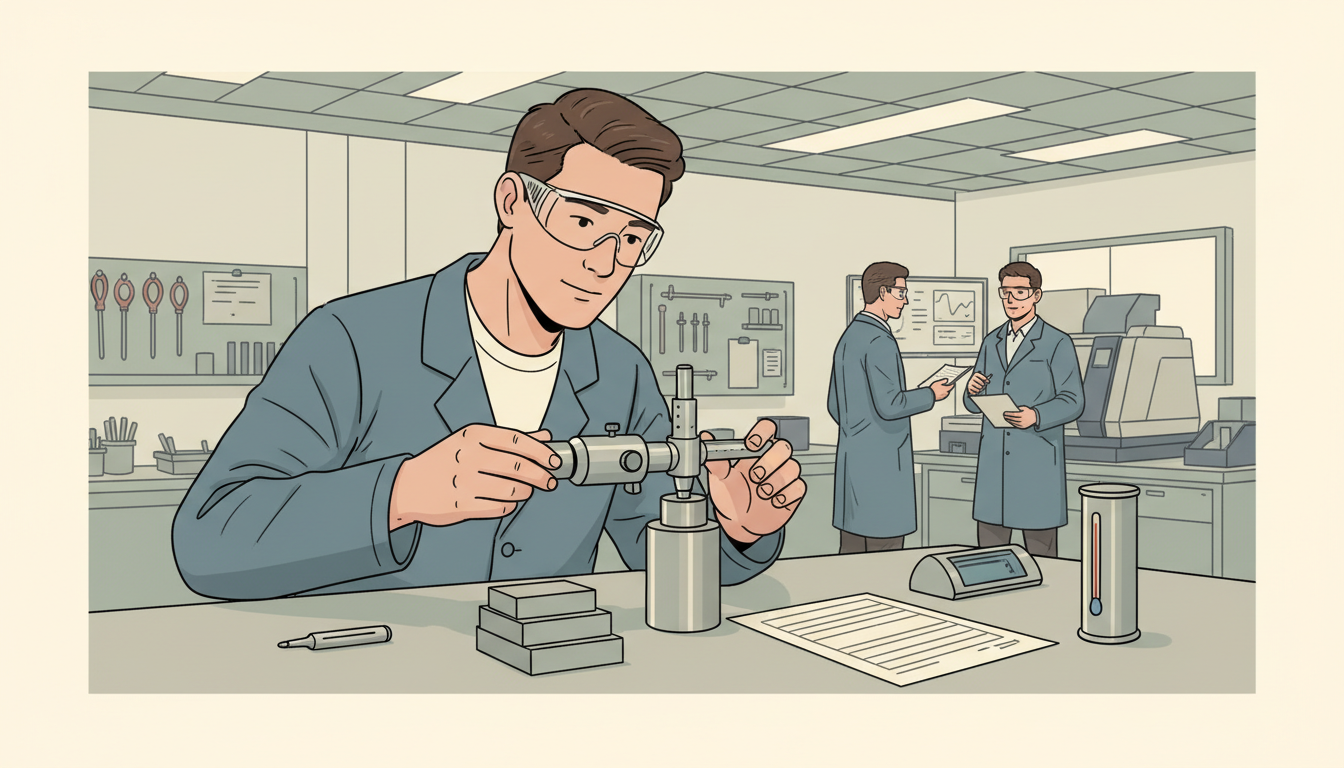
Did you know two teams can report exactly the same number and still disagree completely about what was measured? A society becomes more coordinated when people can compare quantities, share units, test instruments, exchange records and discover errors. But standards do not become useful simply because they are written down. They must work for real users, be interpreted consistently and allow responsible corrections. This guide follows measurement and interoperability through the civilisation stages without using technical sophistication to rank the human worth of communities.
This article uses the eduKate Civilisation Atlas, an educational model with Foundation 0 and eight numbered capability stages. The stages describe different questions about what a community can sustain, not a universally accepted sequence or a test of moral worth. Stages 1–4 examine combinations of settlement, administration, industry and planetary networks. Stage 5 proposes regenerative and self-correcting capability, while Stages 6–8 are hypothetical future human scenarios. They do not describe inhabited civilisations that have already been demonstrated outside Earth.
For parents and tutors, every example begins with a defined need, a fictional operating failure, a defensible way to check it and a fair question about whose experience is absent. A dramatic object is not the same as a working public service; a numerical answer is not the same as a source-supported explanation. Students will find ideas they can apply to English comprehension, historical inquiry, mathematics, science and social studies without pretending that the invented towns or distant habitats are documented historical places.

What does this subject tell us about civilisation capability?
First define what the system actually delivers, and to whom. Then ask whether its results can be checked, whether it continues during ordinary variation, who maintains it, how it responds to an error and what outside conditions it still requires. A community may possess remarkable expertise but have weak public access to one service; another may operate a global network but still be exposed to local resource shortages. A stage label should therefore follow the evidence, not precede it.
Primary-source guide: what these institutions actually say
BIPM, The International System of Units, 9th edition, June 2026 update
The BIPM maintains the SI and documents its definitions and revisions, including the June 2026 update. Modern SI units are a global measurement framework, not timeless standards used by every historical culture. The source is available from BIPM, The International System of Units, 9th edition, June 2026 update. It is necessary to preserve the document’s date, purpose and scope. A definition from a technical institution or an adopted international policy does not amount to official approval of this article’s pedagogical stage framework.
BIPM, Joint Committee for Guides in Metrology
The JCGM maintains the Guide to the Expression of Uncertainty in Measurement and the International Vocabulary of Metrology, distinguishing measurement results and methods from casual estimates. The source is available from BIPM, Joint Committee for Guides in Metrology. It is necessary to preserve the document’s date, purpose and scope. A definition from a technical institution or an adopted international policy does not amount to official approval of this article’s pedagogical stage framework.
BIPM, JCGM publications
The measurement uncertainty publications explain how reported values should be evaluated and qualified under specified assumptions. The source is available from BIPM, JCGM publications. It is necessary to preserve the document’s date, purpose and scope. A definition from a technical institution or an adopted international policy does not amount to official approval of this article’s pedagogical stage framework.
International Telecommunication Union, Consensus-based Technical Standards
The ITU explains how agreed technical specifications help systems operate consistently and interoperate, while noting security, access, inclusion and implementation. The source is available from International Telecommunication Union, Consensus-based Technical Standards. It is necessary to preserve the document’s date, purpose and scope. A definition from a technical institution or an adopted international policy does not amount to official approval of this article’s pedagogical stage framework.
NIST, SI Units
The US National Institute of Standards and Technology explains the seven SI base units and their role in science, research and international commerce. The source is available from NIST, SI Units. It is necessary to preserve the document’s date, purpose and scope. A definition from a technical institution or an adopted international policy does not amount to official approval of this article’s pedagogical stage framework.
The nine teaching coordinates in one view
Foundation 0: Adaptive Human Worlds. Imagine an adaptable community that teaches important practical knowledge through observation and participation. A functioning system would demonstrate learning from context before a permanent urban institution exists. A useful investigation asks what happens when a skilled participant is absent during a critical handover. Researchers should observe the limit that evidence may be sparse or oral; don’t confuse a missing written record with a missing human capability. This position is historically investigable human skill, not a lower rank, and different real communities can possess overlapping kinds of capability without fitting a one-way ladder.
Stage 1: Settlement and Surplus. Imagine an imagined settlement managing common resources over successive seasons. A functioning system would demonstrate reliable local provision rather than one exceptional harvest. A useful investigation asks what happens when an ordinary seasonal change challenges an apparently secure store. Researchers should observe the limit that a structure or container cannot alone prove fair access or continuous supply. This position is a historically investigable settlement function, and different real communities can possess overlapping kinds of capability without fitting a one-way ladder.
Stage 2: Administrative and Recorded Systems. Imagine a town where records, procedures and responsibilities survive a change of personnel. A functioning system would demonstrate traceable decisions and records checked against actual outcomes. A useful investigation asks what happens when two records disagree and someone must repair the decision without hiding evidence. Researchers should observe the limit that an archive can preserve a partial institutional viewpoint and omit important people. This position is a historically investigable administrative function, and different real communities can possess overlapping kinds of capability without fitting a one-way ladder.
Stage 3: Industrial and Mass Institutions. Imagine a district with specialist workers, maintained equipment, large-scale output and public services. A functioning system would demonstrate repeatable safe production supported by training, quality control and repair. A useful investigation asks what happens when an impressive new facility conceals safety, compatibility or access problems. Researchers should observe the limit that machines and institutional size do not by themselves prove people’s wellbeing. This position is a historically investigable industrial capacity, and different real communities can possess overlapping kinds of capability without fitting a one-way ladder.
Stage 4: Planetary Network Civilisation. Imagine a world of connected regions exchanging goods, technical information and operational obligations. A functioning system would demonstrate interoperable, consequential networks with worldwide dependencies. A useful investigation asks what happens when a distant failure causes a breakdown in a local service not considered in the initial plan. Researchers should observe the limit that connection does not imply universal affordability, security or equal participation. This position is a historically investigable network capacity, and different real communities can possess overlapping kinds of capability without fitting a one-way ladder.
Stage 5: Regenerative and Self-Correcting Civilisation. Imagine a fictional network trying to find harm, address its cause, and confirm later outcomes. A functioning system would demonstrate proposed systemic capacity for verified repair rather than a public relations pledge. A useful investigation asks what happens when a project improves one visible number but transfers costs to a more vulnerable group. Researchers should observe the limit that a restoration experiment or policy pledge cannot demonstrate an attained global stage. This position is an educational proposed threshold, not globally demonstrated, and different real communities can possess overlapping kinds of capability without fitting a one-way ladder.
Stage 6: Multi-World Extension. Imagine a hypothetical inhabited research outpost dependent on Earth for critical equipment and expertise. A functioning system would demonstrate continuing human activity away from Earth with external dependencies stated. A useful investigation asks what happens when a replacement shipment or specialist response cannot arrive on schedule. Researchers should observe the limit that a space experiment or plan is not an inhabited second-world civilisation. This position is hypothetical future human activity, and different real communities can possess overlapping kinds of capability without fitting a one-way ladder.
Stage 7: Autonomous Multi-World Civilisation. Imagine a hypothetical off-Earth community seeking to keep essential functions going without routine Earth support. A functioning system would demonstrate substantial local maintenance, supplies, skilled practice and accountable decisions. A useful investigation asks what happens when one irreplaceable imported component reveals a crucial outside dependence. Researchers should observe the limit that a successful single-resource experiment cannot establish an independent human society. This position is hypothetical local human autonomy, and different real communities can possess overlapping kinds of capability without fitting a one-way ladder.
Stage 8: Distributed Interplanetary Civilisation. Imagine several imagined inhabited worlds cooperating despite significant communication and transport delays. A functioning system would demonstrate resilient local capabilities and accountable cooperation across centres. A useful investigation asks what happens when a message arrives too late to guide a distant local decision. Researchers should observe the limit that a robotic network does not amount to a distributed population of humans. This position is speculative interplanetary human civilisation, and different real communities can possess overlapping kinds of capability without fitting a one-way ladder.
Seventeen mechanisms: practical explanations, evidence and applications
The following chapters examine complementary parts of the topic rather than assume that any historical society can be assigned a single stage from one surviving artefact or account. Each mechanism is grounded in a distinct kind of evidence, a possible alternative explanation, an accessibility question and a harmless paper activity. Six stage comparisons per chapter make the relevant transfer visible, while the complete nine-stage model has already been explained above and is applied in the final connected workshops.
1. What exactly is being counted?: the real operating question
Did you know what exactly is being counted? can look reassuring even when the important mechanism is not working? The educational purpose is to give a quantity a clear definition before comparing reports. To investigate it, imagine this bounded fictional case: one team records 50 deliveries while another reports 50 households even though some households received several deliveries. A student who begins by blaming one person may overlook the structure of the problem. Instead, follow the flow from the first observation through an institutional decision, its practical delivery and the person who must live with the result. The most useful next question is which particular capacity failed and which decision could reasonably be revised.
Reliable evidence would include definitions, original count records and independent reconciliation. One measure might be verified unique recipients rather than raw transactions, but the figure must come with a defined unit, time and eligible population. The excluded group to check is households absent from the list. A misleading shortcut is a clear-looking number always has one meaning, whereas the disagreement may disappear once both teams use the same unit of analysis may offer a different explanation. A careful tutor asks pupils not to choose a theory by confidence alone. They must identify a second observation that would separate the explanations and a reasonable correction if the original account is contradicted.
A suitable classroom task is to sort fictional delivery cards by person, event and package before producing three different totals. The learning outcome is to a count is a relationship between an event and a declared rule for including it. Children can work with invented cards and diagrams, while secondary students can annotate source differences, work through simple proportions and explain the danger of incomplete evidence. Do not reenact real emergencies, enter hazardous environments or make decisions that properly require engineering, medical or other professional qualifications. The paper model is a thinking tool, and every number in its registers is hypothetical.
Six contrasting civilisation contexts: What exactly is being counted?
Foundation 0: Adaptive Human Worlds — operating comparison. Picture an adaptable community that teaches important practical knowledge through observation and participation. The question is how people would give a quantity a clear definition before comparing reports while also demonstrating learning from context before a permanent urban institution exists. Here, suppose one team records 50 deliveries while another reports 50 households even though some households received several deliveries. The disruption must be analysed at the level of a function: who needs it, what input is missing, who has the responsibility to act and what can be checked afterwards? The stage-specific stress test is that a skilled participant is absent during a critical handover. Do not turn the scenario into a claim about a real historical community. This context is historically investigable human skill, not a lower rank, and the lesson asks only what the model would demand of a system under those conditions.
Evidence and the independent challenge. Begin with definitions, original count records and independent reconciliation and a possible measure of verified unique recipients rather than raw transactions. But evidence may be sparse or oral; don’t confuse a missing written record with a missing human capability. The first team argues that the planned improvement meets the need; the second asks whether the disagreement may disappear once both teams use the same unit of analysis. A third team considers households absent from the list and how the original report might have missed them. If pupils are using a hypothetical habitat example, the question is one of engineering and ethical possibility, not an announcement that humanity possesses such settlements. The tutor should insist on an explicit limit of confidence and ask the learners to a count is a relationship between an event and a declared rule for including it.
Transfer and correction. Have learners sort fictional delivery cards by person, event and package before producing three different totals with an additional invented constraint. After the first attempt, hide one resource card, change the delivery date or appoint a different responsible person. Can the arrangement still work? Which part of the record would an independent reader need to reconstruct the outcome? Explain how a clear-looking number always has one meaning would distort a tempting headline. Then offer a revised, defensible conclusion that states the population, the condition tested and one outstanding question. A strong answer need not be flattering: a careful ‘not demonstrated’ is preferable to a confident leap from an object or intention to society-wide capability.
Stage 2: Administrative and Recorded Systems — operating comparison. Picture a town where records, procedures and responsibilities survive a change of personnel. The question is how people would give a quantity a clear definition before comparing reports while also demonstrating traceable decisions and records checked against actual outcomes. Here, suppose one team records 50 deliveries while another reports 50 households even though some households received several deliveries. The disruption must be analysed at the level of a function: who needs it, what input is missing, who has the responsibility to act and what can be checked afterwards? The stage-specific stress test is that two records disagree and someone must repair the decision without hiding evidence. Do not turn the scenario into a claim about a real historical community. This context is a historically investigable administrative function, and the lesson asks only what the model would demand of a system under those conditions.
Evidence and the independent challenge. Begin with definitions, original count records and independent reconciliation and a possible measure of verified unique recipients rather than raw transactions. But an archive can preserve a partial institutional viewpoint and omit important people. The first team argues that the planned improvement meets the need; the second asks whether the disagreement may disappear once both teams use the same unit of analysis. A third team considers households absent from the list and how the original report might have missed them. If pupils are using a hypothetical habitat example, the question is one of engineering and ethical possibility, not an announcement that humanity possesses such settlements. The tutor should insist on an explicit limit of confidence and ask the learners to a count is a relationship between an event and a declared rule for including it.
Transfer and correction. Have learners sort fictional delivery cards by person, event and package before producing three different totals with an additional invented constraint. After the first attempt, hide one resource card, change the delivery date or appoint a different responsible person. Can the arrangement still work? Which part of the record would an independent reader need to reconstruct the outcome? Explain how a clear-looking number always has one meaning would distort a tempting headline. Then offer a revised, defensible conclusion that states the population, the condition tested and one outstanding question. A strong answer need not be flattering: a careful ‘not demonstrated’ is preferable to a confident leap from an object or intention to society-wide capability.
Stage 4: Planetary Network Civilisation — operating comparison. Picture a world of connected regions exchanging goods, technical information and operational obligations. The question is how people would give a quantity a clear definition before comparing reports while also demonstrating interoperable, consequential networks with worldwide dependencies. Here, suppose one team records 50 deliveries while another reports 50 households even though some households received several deliveries. The disruption must be analysed at the level of a function: who needs it, what input is missing, who has the responsibility to act and what can be checked afterwards? The stage-specific stress test is that a distant failure causes a breakdown in a local service not considered in the initial plan. Do not turn the scenario into a claim about a real historical community. This context is a historically investigable network capacity, and the lesson asks only what the model would demand of a system under those conditions.
Evidence and the independent challenge. Begin with definitions, original count records and independent reconciliation and a possible measure of verified unique recipients rather than raw transactions. But connection does not imply universal affordability, security or equal participation. The first team argues that the planned improvement meets the need; the second asks whether the disagreement may disappear once both teams use the same unit of analysis. A third team considers households absent from the list and how the original report might have missed them. If pupils are using a hypothetical habitat example, the question is one of engineering and ethical possibility, not an announcement that humanity possesses such settlements. The tutor should insist on an explicit limit of confidence and ask the learners to a count is a relationship between an event and a declared rule for including it.
Transfer and correction. Have learners sort fictional delivery cards by person, event and package before producing three different totals with an additional invented constraint. After the first attempt, hide one resource card, change the delivery date or appoint a different responsible person. Can the arrangement still work? Which part of the record would an independent reader need to reconstruct the outcome? Explain how a clear-looking number always has one meaning would distort a tempting headline. Then offer a revised, defensible conclusion that states the population, the condition tested and one outstanding question. A strong answer need not be flattering: a careful ‘not demonstrated’ is preferable to a confident leap from an object or intention to society-wide capability.
Stage 6: Multi-World Extension — operating comparison. Picture a hypothetical inhabited research outpost dependent on Earth for critical equipment and expertise. The question is how people would give a quantity a clear definition before comparing reports while also demonstrating continuing human activity away from Earth with external dependencies stated. Here, suppose one team records 50 deliveries while another reports 50 households even though some households received several deliveries. The disruption must be analysed at the level of a function: who needs it, what input is missing, who has the responsibility to act and what can be checked afterwards? The stage-specific stress test is that a replacement shipment or specialist response cannot arrive on schedule. Do not turn the scenario into a claim about a real historical community. This context is hypothetical future human activity, and the lesson asks only what the model would demand of a system under those conditions.
Evidence and the independent challenge. Begin with definitions, original count records and independent reconciliation and a possible measure of verified unique recipients rather than raw transactions. But a space experiment or plan is not an inhabited second-world civilisation. The first team argues that the planned improvement meets the need; the second asks whether the disagreement may disappear once both teams use the same unit of analysis. A third team considers households absent from the list and how the original report might have missed them. If pupils are using a hypothetical habitat example, the question is one of engineering and ethical possibility, not an announcement that humanity possesses such settlements. The tutor should insist on an explicit limit of confidence and ask the learners to a count is a relationship between an event and a declared rule for including it.
Transfer and correction. Have learners sort fictional delivery cards by person, event and package before producing three different totals with an additional invented constraint. After the first attempt, hide one resource card, change the delivery date or appoint a different responsible person. Can the arrangement still work? Which part of the record would an independent reader need to reconstruct the outcome? Explain how a clear-looking number always has one meaning would distort a tempting headline. Then offer a revised, defensible conclusion that states the population, the condition tested and one outstanding question. A strong answer need not be flattering: a careful ‘not demonstrated’ is preferable to a confident leap from an object or intention to society-wide capability.
Stage 8: Distributed Interplanetary Civilisation — operating comparison. Picture several imagined inhabited worlds cooperating despite significant communication and transport delays. The question is how people would give a quantity a clear definition before comparing reports while also demonstrating resilient local capabilities and accountable cooperation across centres. Here, suppose one team records 50 deliveries while another reports 50 households even though some households received several deliveries. The disruption must be analysed at the level of a function: who needs it, what input is missing, who has the responsibility to act and what can be checked afterwards? The stage-specific stress test is that a message arrives too late to guide a distant local decision. Do not turn the scenario into a claim about a real historical community. This context is speculative interplanetary human civilisation, and the lesson asks only what the model would demand of a system under those conditions.
Evidence and the independent challenge. Begin with definitions, original count records and independent reconciliation and a possible measure of verified unique recipients rather than raw transactions. But a robotic network does not amount to a distributed population of humans. The first team argues that the planned improvement meets the need; the second asks whether the disagreement may disappear once both teams use the same unit of analysis. A third team considers households absent from the list and how the original report might have missed them. If pupils are using a hypothetical habitat example, the question is one of engineering and ethical possibility, not an announcement that humanity possesses such settlements. The tutor should insist on an explicit limit of confidence and ask the learners to a count is a relationship between an event and a declared rule for including it.
Transfer and correction. Have learners sort fictional delivery cards by person, event and package before producing three different totals with an additional invented constraint. After the first attempt, hide one resource card, change the delivery date or appoint a different responsible person. Can the arrangement still work? Which part of the record would an independent reader need to reconstruct the outcome? Explain how a clear-looking number always has one meaning would distort a tempting headline. Then offer a revised, defensible conclusion that states the population, the condition tested and one outstanding question. A strong answer need not be flattering: a careful ‘not demonstrated’ is preferable to a confident leap from an object or intention to society-wide capability.
Stage 1: Settlement and Surplus — operating comparison. Picture an imagined settlement managing common resources over successive seasons. The question is how people would give a quantity a clear definition before comparing reports while also demonstrating reliable local provision rather than one exceptional harvest. Here, suppose one team records 50 deliveries while another reports 50 households even though some households received several deliveries. The disruption must be analysed at the level of a function: who needs it, what input is missing, who has the responsibility to act and what can be checked afterwards? The stage-specific stress test is that an ordinary seasonal change challenges an apparently secure store. Do not turn the scenario into a claim about a real historical community. This context is a historically investigable settlement function, and the lesson asks only what the model would demand of a system under those conditions.
Evidence and the independent challenge. Begin with definitions, original count records and independent reconciliation and a possible measure of verified unique recipients rather than raw transactions. But a structure or container cannot alone prove fair access or continuous supply. The first team argues that the planned improvement meets the need; the second asks whether the disagreement may disappear once both teams use the same unit of analysis. A third team considers households absent from the list and how the original report might have missed them. If pupils are using a hypothetical habitat example, the question is one of engineering and ethical possibility, not an announcement that humanity possesses such settlements. The tutor should insist on an explicit limit of confidence and ask the learners to a count is a relationship between an event and a declared rule for including it.
Transfer and correction. Have learners sort fictional delivery cards by person, event and package before producing three different totals with an additional invented constraint. After the first attempt, hide one resource card, change the delivery date or appoint a different responsible person. Can the arrangement still work? Which part of the record would an independent reader need to reconstruct the outcome? Explain how a clear-looking number always has one meaning would distort a tempting headline. Then offer a revised, defensible conclusion that states the population, the condition tested and one outstanding question. A strong answer need not be flattering: a careful ‘not demonstrated’ is preferable to a confident leap from an object or intention to society-wide capability.
Worked classroom calculation: evidence versus apparent success
The following numbers are fictional. Imagine 70 expected instances of verified unique recipients rather than raw transactions during a specified period. 64 are confirmed and 1 additional entries remain unverified. The confirmed proportion is 64/70, or 91.4% to one decimal place; the unconfirmed portion cannot automatically be counted as success. The difference between the expected count and confirmed count is 6. Ask whether households absent from the list are part of the denominator. If not, explain why a very high percentage may fail to represent the people whose circumstances most urgently require attention.
Now change one assumption at a time. Could the disagreement may disappear once both teams use the same unit of analysis explain the apparent difference? Is the original denominator compatible with an earlier record? What would an independent observer have to see before calling the intervention effective? The student writes an answer with four short sentences: what was measured, what remains uncertain, which person or function might be left out, and what observation could reverse the conclusion. This prevents the mathematical precision of the fraction from being mistaken for proof that the historical or institutional story is true.
2. Length, area and distance in early planning: the real operating question
Did you know length, area and distance in early planning can look reassuring even when the important mechanism is not working? The educational purpose is to learn why spatial measurements require consistent reference points and routes. To investigate it, imagine this bounded fictional case: two teams measure a path using different starting points and report incompatible distances. A student who begins by blaming one person may overlook the structure of the problem. Instead, follow the flow from the first observation through an institutional decision, its practical delivery and the person who must live with the result. The most useful next question is which particular capacity failed and which decision could reasonably be revised.
Reliable evidence would include maps, measuring procedures and specified endpoints. One measure might be distance between named points, with method and unit, but the figure must come with a defined unit, time and eligible population. The excluded group to check is people using an alternative accessible route. A misleading shortcut is the shortest line always measures a usable journey, whereas a difference in endpoints rather than instrument precision may explain the disagreement may offer a different explanation. A careful tutor asks pupils not to choose a theory by confidence alone. They must identify a second observation that would separate the explanations and a reasonable correction if the original account is contradicted.
A suitable classroom task is to measure two imaginary footpaths on paper and state whether steps or metres are used. The learning outcome is to layout decisions should be verified against human access and terrain. Children can work with invented cards and diagrams, while secondary students can annotate source differences, work through simple proportions and explain the danger of incomplete evidence. Do not reenact real emergencies, enter hazardous environments or make decisions that properly require engineering, medical or other professional qualifications. The paper model is a thinking tool, and every number in its registers is hypothetical.
Six contrasting civilisation contexts: Length, area and distance in early planning
Stage 1: Settlement and Surplus — operating comparison. Picture an imagined settlement managing common resources over successive seasons. The question is how people would learn why spatial measurements require consistent reference points and routes while also demonstrating reliable local provision rather than one exceptional harvest. Here, suppose two teams measure a path using different starting points and report incompatible distances. The disruption must be analysed at the level of a function: who needs it, what input is missing, who has the responsibility to act and what can be checked afterwards? The stage-specific stress test is that an ordinary seasonal change challenges an apparently secure store. Do not turn the scenario into a claim about a real historical community. This context is a historically investigable settlement function, and the lesson asks only what the model would demand of a system under those conditions.
Evidence and the independent challenge. Begin with maps, measuring procedures and specified endpoints and a possible measure of distance between named points, with method and unit. But a structure or container cannot alone prove fair access or continuous supply. The first team argues that the planned improvement meets the need; the second asks whether a difference in endpoints rather than instrument precision may explain the disagreement. A third team considers people using an alternative accessible route and how the original report might have missed them. If pupils are using a hypothetical habitat example, the question is one of engineering and ethical possibility, not an announcement that humanity possesses such settlements. The tutor should insist on an explicit limit of confidence and ask the learners to layout decisions should be verified against human access and terrain.
Transfer and correction. Have learners measure two imaginary footpaths on paper and state whether steps or metres are used with an additional invented constraint. After the first attempt, hide one resource card, change the delivery date or appoint a different responsible person. Can the arrangement still work? Which part of the record would an independent reader need to reconstruct the outcome? Explain how the shortest line always measures a usable journey would distort a tempting headline. Then offer a revised, defensible conclusion that states the population, the condition tested and one outstanding question. A strong answer need not be flattering: a careful ‘not demonstrated’ is preferable to a confident leap from an object or intention to society-wide capability.
Stage 3: Industrial and Mass Institutions — operating comparison. Picture a district with specialist workers, maintained equipment, large-scale output and public services. The question is how people would learn why spatial measurements require consistent reference points and routes while also demonstrating repeatable safe production supported by training, quality control and repair. Here, suppose two teams measure a path using different starting points and report incompatible distances. The disruption must be analysed at the level of a function: who needs it, what input is missing, who has the responsibility to act and what can be checked afterwards? The stage-specific stress test is that an impressive new facility conceals safety, compatibility or access problems. Do not turn the scenario into a claim about a real historical community. This context is a historically investigable industrial capacity, and the lesson asks only what the model would demand of a system under those conditions.
Evidence and the independent challenge. Begin with maps, measuring procedures and specified endpoints and a possible measure of distance between named points, with method and unit. But machines and institutional size do not by themselves prove people’s wellbeing. The first team argues that the planned improvement meets the need; the second asks whether a difference in endpoints rather than instrument precision may explain the disagreement. A third team considers people using an alternative accessible route and how the original report might have missed them. If pupils are using a hypothetical habitat example, the question is one of engineering and ethical possibility, not an announcement that humanity possesses such settlements. The tutor should insist on an explicit limit of confidence and ask the learners to layout decisions should be verified against human access and terrain.
Transfer and correction. Have learners measure two imaginary footpaths on paper and state whether steps or metres are used with an additional invented constraint. After the first attempt, hide one resource card, change the delivery date or appoint a different responsible person. Can the arrangement still work? Which part of the record would an independent reader need to reconstruct the outcome? Explain how the shortest line always measures a usable journey would distort a tempting headline. Then offer a revised, defensible conclusion that states the population, the condition tested and one outstanding question. A strong answer need not be flattering: a careful ‘not demonstrated’ is preferable to a confident leap from an object or intention to society-wide capability.
Stage 5: Regenerative and Self-Correcting Civilisation — operating comparison. Picture a fictional network trying to find harm, address its cause, and confirm later outcomes. The question is how people would learn why spatial measurements require consistent reference points and routes while also demonstrating proposed systemic capacity for verified repair rather than a public relations pledge. Here, suppose two teams measure a path using different starting points and report incompatible distances. The disruption must be analysed at the level of a function: who needs it, what input is missing, who has the responsibility to act and what can be checked afterwards? The stage-specific stress test is that a project improves one visible number but transfers costs to a more vulnerable group. Do not turn the scenario into a claim about a real historical community. This context is an educational proposed threshold, not globally demonstrated, and the lesson asks only what the model would demand of a system under those conditions.
Evidence and the independent challenge. Begin with maps, measuring procedures and specified endpoints and a possible measure of distance between named points, with method and unit. But a restoration experiment or policy pledge cannot demonstrate an attained global stage. The first team argues that the planned improvement meets the need; the second asks whether a difference in endpoints rather than instrument precision may explain the disagreement. A third team considers people using an alternative accessible route and how the original report might have missed them. If pupils are using a hypothetical habitat example, the question is one of engineering and ethical possibility, not an announcement that humanity possesses such settlements. The tutor should insist on an explicit limit of confidence and ask the learners to layout decisions should be verified against human access and terrain.
Transfer and correction. Have learners measure two imaginary footpaths on paper and state whether steps or metres are used with an additional invented constraint. After the first attempt, hide one resource card, change the delivery date or appoint a different responsible person. Can the arrangement still work? Which part of the record would an independent reader need to reconstruct the outcome? Explain how the shortest line always measures a usable journey would distort a tempting headline. Then offer a revised, defensible conclusion that states the population, the condition tested and one outstanding question. A strong answer need not be flattering: a careful ‘not demonstrated’ is preferable to a confident leap from an object or intention to society-wide capability.
Stage 7: Autonomous Multi-World Civilisation — operating comparison. Picture a hypothetical off-Earth community seeking to keep essential functions going without routine Earth support. The question is how people would learn why spatial measurements require consistent reference points and routes while also demonstrating substantial local maintenance, supplies, skilled practice and accountable decisions. Here, suppose two teams measure a path using different starting points and report incompatible distances. The disruption must be analysed at the level of a function: who needs it, what input is missing, who has the responsibility to act and what can be checked afterwards? The stage-specific stress test is that one irreplaceable imported component reveals a crucial outside dependence. Do not turn the scenario into a claim about a real historical community. This context is hypothetical local human autonomy, and the lesson asks only what the model would demand of a system under those conditions.
Evidence and the independent challenge. Begin with maps, measuring procedures and specified endpoints and a possible measure of distance between named points, with method and unit. But a successful single-resource experiment cannot establish an independent human society. The first team argues that the planned improvement meets the need; the second asks whether a difference in endpoints rather than instrument precision may explain the disagreement. A third team considers people using an alternative accessible route and how the original report might have missed them. If pupils are using a hypothetical habitat example, the question is one of engineering and ethical possibility, not an announcement that humanity possesses such settlements. The tutor should insist on an explicit limit of confidence and ask the learners to layout decisions should be verified against human access and terrain.
Transfer and correction. Have learners measure two imaginary footpaths on paper and state whether steps or metres are used with an additional invented constraint. After the first attempt, hide one resource card, change the delivery date or appoint a different responsible person. Can the arrangement still work? Which part of the record would an independent reader need to reconstruct the outcome? Explain how the shortest line always measures a usable journey would distort a tempting headline. Then offer a revised, defensible conclusion that states the population, the condition tested and one outstanding question. A strong answer need not be flattering: a careful ‘not demonstrated’ is preferable to a confident leap from an object or intention to society-wide capability.
Foundation 0: Adaptive Human Worlds — operating comparison. Picture an adaptable community that teaches important practical knowledge through observation and participation. The question is how people would learn why spatial measurements require consistent reference points and routes while also demonstrating learning from context before a permanent urban institution exists. Here, suppose two teams measure a path using different starting points and report incompatible distances. The disruption must be analysed at the level of a function: who needs it, what input is missing, who has the responsibility to act and what can be checked afterwards? The stage-specific stress test is that a skilled participant is absent during a critical handover. Do not turn the scenario into a claim about a real historical community. This context is historically investigable human skill, not a lower rank, and the lesson asks only what the model would demand of a system under those conditions.
Evidence and the independent challenge. Begin with maps, measuring procedures and specified endpoints and a possible measure of distance between named points, with method and unit. But evidence may be sparse or oral; don’t confuse a missing written record with a missing human capability. The first team argues that the planned improvement meets the need; the second asks whether a difference in endpoints rather than instrument precision may explain the disagreement. A third team considers people using an alternative accessible route and how the original report might have missed them. If pupils are using a hypothetical habitat example, the question is one of engineering and ethical possibility, not an announcement that humanity possesses such settlements. The tutor should insist on an explicit limit of confidence and ask the learners to layout decisions should be verified against human access and terrain.
Transfer and correction. Have learners measure two imaginary footpaths on paper and state whether steps or metres are used with an additional invented constraint. After the first attempt, hide one resource card, change the delivery date or appoint a different responsible person. Can the arrangement still work? Which part of the record would an independent reader need to reconstruct the outcome? Explain how the shortest line always measures a usable journey would distort a tempting headline. Then offer a revised, defensible conclusion that states the population, the condition tested and one outstanding question. A strong answer need not be flattering: a careful ‘not demonstrated’ is preferable to a confident leap from an object or intention to society-wide capability.
Stage 2: Administrative and Recorded Systems — operating comparison. Picture a town where records, procedures and responsibilities survive a change of personnel. The question is how people would learn why spatial measurements require consistent reference points and routes while also demonstrating traceable decisions and records checked against actual outcomes. Here, suppose two teams measure a path using different starting points and report incompatible distances. The disruption must be analysed at the level of a function: who needs it, what input is missing, who has the responsibility to act and what can be checked afterwards? The stage-specific stress test is that two records disagree and someone must repair the decision without hiding evidence. Do not turn the scenario into a claim about a real historical community. This context is a historically investigable administrative function, and the lesson asks only what the model would demand of a system under those conditions.
Evidence and the independent challenge. Begin with maps, measuring procedures and specified endpoints and a possible measure of distance between named points, with method and unit. But an archive can preserve a partial institutional viewpoint and omit important people. The first team argues that the planned improvement meets the need; the second asks whether a difference in endpoints rather than instrument precision may explain the disagreement. A third team considers people using an alternative accessible route and how the original report might have missed them. If pupils are using a hypothetical habitat example, the question is one of engineering and ethical possibility, not an announcement that humanity possesses such settlements. The tutor should insist on an explicit limit of confidence and ask the learners to layout decisions should be verified against human access and terrain.
Transfer and correction. Have learners measure two imaginary footpaths on paper and state whether steps or metres are used with an additional invented constraint. After the first attempt, hide one resource card, change the delivery date or appoint a different responsible person. Can the arrangement still work? Which part of the record would an independent reader need to reconstruct the outcome? Explain how the shortest line always measures a usable journey would distort a tempting headline. Then offer a revised, defensible conclusion that states the population, the condition tested and one outstanding question. A strong answer need not be flattering: a careful ‘not demonstrated’ is preferable to a confident leap from an object or intention to society-wide capability.
Worked classroom calculation: evidence versus apparent success
The following numbers are fictional. Imagine 78 expected instances of distance between named points, with method and unit during a specified period. 69 are confirmed and 2 additional entries remain unverified. The confirmed proportion is 69/78, or 88.5% to one decimal place; the unconfirmed portion cannot automatically be counted as success. The difference between the expected count and confirmed count is 9. Ask whether people using an alternative accessible route are part of the denominator. If not, explain why a very high percentage may fail to represent the people whose circumstances most urgently require attention.
Now change one assumption at a time. Could a difference in endpoints rather than instrument precision may explain the disagreement explain the apparent difference? Is the original denominator compatible with an earlier record? What would an independent observer have to see before calling the intervention effective? The student writes an answer with four short sentences: what was measured, what remains uncertain, which person or function might be left out, and what observation could reverse the conclusion. This prevents the mathematical precision of the fraction from being mistaken for proof that the historical or institutional story is true.
3. Weight, mass and the evidence of trade: the real operating question
Did you know weight, mass and the evidence of trade can look reassuring even when the important mechanism is not working? The educational purpose is to distinguish physically measured quantities from labels used for exchange. To investigate it, imagine this bounded fictional case: an attractive counterweight is photographed but its original local denomination is uncertain. A student who begins by blaming one person may overlook the structure of the problem. Instead, follow the flow from the first observation through an institutional decision, its practical delivery and the person who must live with the result. The most useful next question is which particular capacity failed and which decision could reasonably be revised.
Reliable evidence would include artefact provenance, credible historical scholarship and replicable comparison. One measure might be mass or trade measure under a documented convention, but the figure must come with a defined unit, time and eligible population. The excluded group to check is small traders with no access to trusted equipment. A misleading shortcut is one historical artefact defines an entire civilisation’s economy, whereas the object may have had a ceremonial or other use may offer a different explanation. A careful tutor asks pupils not to choose a theory by confidence alone. They must identify a second observation that would separate the explanations and a reasonable correction if the original account is contradicted.
A suitable classroom task is to compare invented balance weights of 100 and 120 units and label assumptions about their significance. The learning outcome is to a surviving weight gives evidence for a specific material practice, not an entire social ranking. Children can work with invented cards and diagrams, while secondary students can annotate source differences, work through simple proportions and explain the danger of incomplete evidence. Do not reenact real emergencies, enter hazardous environments or make decisions that properly require engineering, medical or other professional qualifications. The paper model is a thinking tool, and every number in its registers is hypothetical.
Six contrasting civilisation contexts: Weight, mass and the evidence of trade
Stage 2: Administrative and Recorded Systems — operating comparison. Picture a town where records, procedures and responsibilities survive a change of personnel. The question is how people would distinguish physically measured quantities from labels used for exchange while also demonstrating traceable decisions and records checked against actual outcomes. Here, suppose an attractive counterweight is photographed but its original local denomination is uncertain. The disruption must be analysed at the level of a function: who needs it, what input is missing, who has the responsibility to act and what can be checked afterwards? The stage-specific stress test is that two records disagree and someone must repair the decision without hiding evidence. Do not turn the scenario into a claim about a real historical community. This context is a historically investigable administrative function, and the lesson asks only what the model would demand of a system under those conditions.
Evidence and the independent challenge. Begin with artefact provenance, credible historical scholarship and replicable comparison and a possible measure of mass or trade measure under a documented convention. But an archive can preserve a partial institutional viewpoint and omit important people. The first team argues that the planned improvement meets the need; the second asks whether the object may have had a ceremonial or other use. A third team considers small traders with no access to trusted equipment and how the original report might have missed them. If pupils are using a hypothetical habitat example, the question is one of engineering and ethical possibility, not an announcement that humanity possesses such settlements. The tutor should insist on an explicit limit of confidence and ask the learners to a surviving weight gives evidence for a specific material practice, not an entire social ranking.
Transfer and correction. Have learners compare invented balance weights of 100 and 120 units and label assumptions about their significance with an additional invented constraint. After the first attempt, hide one resource card, change the delivery date or appoint a different responsible person. Can the arrangement still work? Which part of the record would an independent reader need to reconstruct the outcome? Explain how one historical artefact defines an entire civilisation’s economy would distort a tempting headline. Then offer a revised, defensible conclusion that states the population, the condition tested and one outstanding question. A strong answer need not be flattering: a careful ‘not demonstrated’ is preferable to a confident leap from an object or intention to society-wide capability.
Stage 4: Planetary Network Civilisation — operating comparison. Picture a world of connected regions exchanging goods, technical information and operational obligations. The question is how people would distinguish physically measured quantities from labels used for exchange while also demonstrating interoperable, consequential networks with worldwide dependencies. Here, suppose an attractive counterweight is photographed but its original local denomination is uncertain. The disruption must be analysed at the level of a function: who needs it, what input is missing, who has the responsibility to act and what can be checked afterwards? The stage-specific stress test is that a distant failure causes a breakdown in a local service not considered in the initial plan. Do not turn the scenario into a claim about a real historical community. This context is a historically investigable network capacity, and the lesson asks only what the model would demand of a system under those conditions.
Evidence and the independent challenge. Begin with artefact provenance, credible historical scholarship and replicable comparison and a possible measure of mass or trade measure under a documented convention. But connection does not imply universal affordability, security or equal participation. The first team argues that the planned improvement meets the need; the second asks whether the object may have had a ceremonial or other use. A third team considers small traders with no access to trusted equipment and how the original report might have missed them. If pupils are using a hypothetical habitat example, the question is one of engineering and ethical possibility, not an announcement that humanity possesses such settlements. The tutor should insist on an explicit limit of confidence and ask the learners to a surviving weight gives evidence for a specific material practice, not an entire social ranking.
Transfer and correction. Have learners compare invented balance weights of 100 and 120 units and label assumptions about their significance with an additional invented constraint. After the first attempt, hide one resource card, change the delivery date or appoint a different responsible person. Can the arrangement still work? Which part of the record would an independent reader need to reconstruct the outcome? Explain how one historical artefact defines an entire civilisation’s economy would distort a tempting headline. Then offer a revised, defensible conclusion that states the population, the condition tested and one outstanding question. A strong answer need not be flattering: a careful ‘not demonstrated’ is preferable to a confident leap from an object or intention to society-wide capability.
Stage 6: Multi-World Extension — operating comparison. Picture a hypothetical inhabited research outpost dependent on Earth for critical equipment and expertise. The question is how people would distinguish physically measured quantities from labels used for exchange while also demonstrating continuing human activity away from Earth with external dependencies stated. Here, suppose an attractive counterweight is photographed but its original local denomination is uncertain. The disruption must be analysed at the level of a function: who needs it, what input is missing, who has the responsibility to act and what can be checked afterwards? The stage-specific stress test is that a replacement shipment or specialist response cannot arrive on schedule. Do not turn the scenario into a claim about a real historical community. This context is hypothetical future human activity, and the lesson asks only what the model would demand of a system under those conditions.
Evidence and the independent challenge. Begin with artefact provenance, credible historical scholarship and replicable comparison and a possible measure of mass or trade measure under a documented convention. But a space experiment or plan is not an inhabited second-world civilisation. The first team argues that the planned improvement meets the need; the second asks whether the object may have had a ceremonial or other use. A third team considers small traders with no access to trusted equipment and how the original report might have missed them. If pupils are using a hypothetical habitat example, the question is one of engineering and ethical possibility, not an announcement that humanity possesses such settlements. The tutor should insist on an explicit limit of confidence and ask the learners to a surviving weight gives evidence for a specific material practice, not an entire social ranking.
Transfer and correction. Have learners compare invented balance weights of 100 and 120 units and label assumptions about their significance with an additional invented constraint. After the first attempt, hide one resource card, change the delivery date or appoint a different responsible person. Can the arrangement still work? Which part of the record would an independent reader need to reconstruct the outcome? Explain how one historical artefact defines an entire civilisation’s economy would distort a tempting headline. Then offer a revised, defensible conclusion that states the population, the condition tested and one outstanding question. A strong answer need not be flattering: a careful ‘not demonstrated’ is preferable to a confident leap from an object or intention to society-wide capability.
Stage 8: Distributed Interplanetary Civilisation — operating comparison. Picture several imagined inhabited worlds cooperating despite significant communication and transport delays. The question is how people would distinguish physically measured quantities from labels used for exchange while also demonstrating resilient local capabilities and accountable cooperation across centres. Here, suppose an attractive counterweight is photographed but its original local denomination is uncertain. The disruption must be analysed at the level of a function: who needs it, what input is missing, who has the responsibility to act and what can be checked afterwards? The stage-specific stress test is that a message arrives too late to guide a distant local decision. Do not turn the scenario into a claim about a real historical community. This context is speculative interplanetary human civilisation, and the lesson asks only what the model would demand of a system under those conditions.
Evidence and the independent challenge. Begin with artefact provenance, credible historical scholarship and replicable comparison and a possible measure of mass or trade measure under a documented convention. But a robotic network does not amount to a distributed population of humans. The first team argues that the planned improvement meets the need; the second asks whether the object may have had a ceremonial or other use. A third team considers small traders with no access to trusted equipment and how the original report might have missed them. If pupils are using a hypothetical habitat example, the question is one of engineering and ethical possibility, not an announcement that humanity possesses such settlements. The tutor should insist on an explicit limit of confidence and ask the learners to a surviving weight gives evidence for a specific material practice, not an entire social ranking.
Transfer and correction. Have learners compare invented balance weights of 100 and 120 units and label assumptions about their significance with an additional invented constraint. After the first attempt, hide one resource card, change the delivery date or appoint a different responsible person. Can the arrangement still work? Which part of the record would an independent reader need to reconstruct the outcome? Explain how one historical artefact defines an entire civilisation’s economy would distort a tempting headline. Then offer a revised, defensible conclusion that states the population, the condition tested and one outstanding question. A strong answer need not be flattering: a careful ‘not demonstrated’ is preferable to a confident leap from an object or intention to society-wide capability.
Stage 1: Settlement and Surplus — operating comparison. Picture an imagined settlement managing common resources over successive seasons. The question is how people would distinguish physically measured quantities from labels used for exchange while also demonstrating reliable local provision rather than one exceptional harvest. Here, suppose an attractive counterweight is photographed but its original local denomination is uncertain. The disruption must be analysed at the level of a function: who needs it, what input is missing, who has the responsibility to act and what can be checked afterwards? The stage-specific stress test is that an ordinary seasonal change challenges an apparently secure store. Do not turn the scenario into a claim about a real historical community. This context is a historically investigable settlement function, and the lesson asks only what the model would demand of a system under those conditions.
Evidence and the independent challenge. Begin with artefact provenance, credible historical scholarship and replicable comparison and a possible measure of mass or trade measure under a documented convention. But a structure or container cannot alone prove fair access or continuous supply. The first team argues that the planned improvement meets the need; the second asks whether the object may have had a ceremonial or other use. A third team considers small traders with no access to trusted equipment and how the original report might have missed them. If pupils are using a hypothetical habitat example, the question is one of engineering and ethical possibility, not an announcement that humanity possesses such settlements. The tutor should insist on an explicit limit of confidence and ask the learners to a surviving weight gives evidence for a specific material practice, not an entire social ranking.
Transfer and correction. Have learners compare invented balance weights of 100 and 120 units and label assumptions about their significance with an additional invented constraint. After the first attempt, hide one resource card, change the delivery date or appoint a different responsible person. Can the arrangement still work? Which part of the record would an independent reader need to reconstruct the outcome? Explain how one historical artefact defines an entire civilisation’s economy would distort a tempting headline. Then offer a revised, defensible conclusion that states the population, the condition tested and one outstanding question. A strong answer need not be flattering: a careful ‘not demonstrated’ is preferable to a confident leap from an object or intention to society-wide capability.
Stage 3: Industrial and Mass Institutions — operating comparison. Picture a district with specialist workers, maintained equipment, large-scale output and public services. The question is how people would distinguish physically measured quantities from labels used for exchange while also demonstrating repeatable safe production supported by training, quality control and repair. Here, suppose an attractive counterweight is photographed but its original local denomination is uncertain. The disruption must be analysed at the level of a function: who needs it, what input is missing, who has the responsibility to act and what can be checked afterwards? The stage-specific stress test is that an impressive new facility conceals safety, compatibility or access problems. Do not turn the scenario into a claim about a real historical community. This context is a historically investigable industrial capacity, and the lesson asks only what the model would demand of a system under those conditions.
Evidence and the independent challenge. Begin with artefact provenance, credible historical scholarship and replicable comparison and a possible measure of mass or trade measure under a documented convention. But machines and institutional size do not by themselves prove people’s wellbeing. The first team argues that the planned improvement meets the need; the second asks whether the object may have had a ceremonial or other use. A third team considers small traders with no access to trusted equipment and how the original report might have missed them. If pupils are using a hypothetical habitat example, the question is one of engineering and ethical possibility, not an announcement that humanity possesses such settlements. The tutor should insist on an explicit limit of confidence and ask the learners to a surviving weight gives evidence for a specific material practice, not an entire social ranking.
Transfer and correction. Have learners compare invented balance weights of 100 and 120 units and label assumptions about their significance with an additional invented constraint. After the first attempt, hide one resource card, change the delivery date or appoint a different responsible person. Can the arrangement still work? Which part of the record would an independent reader need to reconstruct the outcome? Explain how one historical artefact defines an entire civilisation’s economy would distort a tempting headline. Then offer a revised, defensible conclusion that states the population, the condition tested and one outstanding question. A strong answer need not be flattering: a careful ‘not demonstrated’ is preferable to a confident leap from an object or intention to society-wide capability.
Worked classroom calculation: evidence versus apparent success
The following numbers are fictional. Imagine 86 expected instances of mass or trade measure under a documented convention during a specified period. 74 are confirmed and 3 additional entries remain unverified. The confirmed proportion is 74/86, or 86.0% to one decimal place; the unconfirmed portion cannot automatically be counted as success. The difference between the expected count and confirmed count is 12. Ask whether small traders with no access to trusted equipment are part of the denominator. If not, explain why a very high percentage may fail to represent the people whose circumstances most urgently require attention.
Now change one assumption at a time. Could the object may have had a ceremonial or other use explain the apparent difference? Is the original denominator compatible with an earlier record? What would an independent observer have to see before calling the intervention effective? The student writes an answer with four short sentences: what was measured, what remains uncertain, which person or function might be left out, and what observation could reverse the conclusion. This prevents the mathematical precision of the fraction from being mistaken for proof that the historical or institutional story is true.
4. Volume, capacity and shared water accounting: the real operating question
Did you know volume, capacity and shared water accounting can look reassuring even when the important mechanism is not working? The educational purpose is to describe how containers, flow and time produce different measures of water supply. To investigate it, imagine this bounded fictional case: a reservoir is measured by its capacity but the distribution team reports a daily delivery rate. A student who begins by blaming one person may overlook the structure of the problem. Instead, follow the flow from the first observation through an institutional decision, its practical delivery and the person who must live with the result. The most useful next question is which particular capacity failed and which decision could reasonably be revised.
Reliable evidence would include container geometry, calibrated readings and dated delivery logs. One measure might be volume delivered per day, not only total capacity, but the figure must come with a defined unit, time and eligible population. The excluded group to check is residents without reliable distribution. A misleading shortcut is stored volume proves safe water reaches everyone, whereas storage losses and uneven access may dominate the outcome may offer a different explanation. A careful tutor asks pupils not to choose a theory by confidence alone. They must identify a second observation that would separate the explanations and a reasonable correction if the original account is contradicted.
A suitable classroom task is to calculate a fictitious 1,200-litre tank supplying 150 litres a day and discuss losses. The learning outcome is to separate quantity, quality, flow rate and accessible delivery. Children can work with invented cards and diagrams, while secondary students can annotate source differences, work through simple proportions and explain the danger of incomplete evidence. Do not reenact real emergencies, enter hazardous environments or make decisions that properly require engineering, medical or other professional qualifications. The paper model is a thinking tool, and every number in its registers is hypothetical.
Six contrasting civilisation contexts: Volume, capacity and shared water accounting
Stage 3: Industrial and Mass Institutions — operating comparison. Picture a district with specialist workers, maintained equipment, large-scale output and public services. The question is how people would describe how containers, flow and time produce different measures of water supply while also demonstrating repeatable safe production supported by training, quality control and repair. Here, suppose a reservoir is measured by its capacity but the distribution team reports a daily delivery rate. The disruption must be analysed at the level of a function: who needs it, what input is missing, who has the responsibility to act and what can be checked afterwards? The stage-specific stress test is that an impressive new facility conceals safety, compatibility or access problems. Do not turn the scenario into a claim about a real historical community. This context is a historically investigable industrial capacity, and the lesson asks only what the model would demand of a system under those conditions.
Evidence and the independent challenge. Begin with container geometry, calibrated readings and dated delivery logs and a possible measure of volume delivered per day, not only total capacity. But machines and institutional size do not by themselves prove people’s wellbeing. The first team argues that the planned improvement meets the need; the second asks whether storage losses and uneven access may dominate the outcome. A third team considers residents without reliable distribution and how the original report might have missed them. If pupils are using a hypothetical habitat example, the question is one of engineering and ethical possibility, not an announcement that humanity possesses such settlements. The tutor should insist on an explicit limit of confidence and ask the learners to separate quantity, quality, flow rate and accessible delivery.
Transfer and correction. Have learners calculate a fictitious 1,200-litre tank supplying 150 litres a day and discuss losses with an additional invented constraint. After the first attempt, hide one resource card, change the delivery date or appoint a different responsible person. Can the arrangement still work? Which part of the record would an independent reader need to reconstruct the outcome? Explain how stored volume proves safe water reaches everyone would distort a tempting headline. Then offer a revised, defensible conclusion that states the population, the condition tested and one outstanding question. A strong answer need not be flattering: a careful ‘not demonstrated’ is preferable to a confident leap from an object or intention to society-wide capability.
Stage 5: Regenerative and Self-Correcting Civilisation — operating comparison. Picture a fictional network trying to find harm, address its cause, and confirm later outcomes. The question is how people would describe how containers, flow and time produce different measures of water supply while also demonstrating proposed systemic capacity for verified repair rather than a public relations pledge. Here, suppose a reservoir is measured by its capacity but the distribution team reports a daily delivery rate. The disruption must be analysed at the level of a function: who needs it, what input is missing, who has the responsibility to act and what can be checked afterwards? The stage-specific stress test is that a project improves one visible number but transfers costs to a more vulnerable group. Do not turn the scenario into a claim about a real historical community. This context is an educational proposed threshold, not globally demonstrated, and the lesson asks only what the model would demand of a system under those conditions.
Evidence and the independent challenge. Begin with container geometry, calibrated readings and dated delivery logs and a possible measure of volume delivered per day, not only total capacity. But a restoration experiment or policy pledge cannot demonstrate an attained global stage. The first team argues that the planned improvement meets the need; the second asks whether storage losses and uneven access may dominate the outcome. A third team considers residents without reliable distribution and how the original report might have missed them. If pupils are using a hypothetical habitat example, the question is one of engineering and ethical possibility, not an announcement that humanity possesses such settlements. The tutor should insist on an explicit limit of confidence and ask the learners to separate quantity, quality, flow rate and accessible delivery.
Transfer and correction. Have learners calculate a fictitious 1,200-litre tank supplying 150 litres a day and discuss losses with an additional invented constraint. After the first attempt, hide one resource card, change the delivery date or appoint a different responsible person. Can the arrangement still work? Which part of the record would an independent reader need to reconstruct the outcome? Explain how stored volume proves safe water reaches everyone would distort a tempting headline. Then offer a revised, defensible conclusion that states the population, the condition tested and one outstanding question. A strong answer need not be flattering: a careful ‘not demonstrated’ is preferable to a confident leap from an object or intention to society-wide capability.
Stage 7: Autonomous Multi-World Civilisation — operating comparison. Picture a hypothetical off-Earth community seeking to keep essential functions going without routine Earth support. The question is how people would describe how containers, flow and time produce different measures of water supply while also demonstrating substantial local maintenance, supplies, skilled practice and accountable decisions. Here, suppose a reservoir is measured by its capacity but the distribution team reports a daily delivery rate. The disruption must be analysed at the level of a function: who needs it, what input is missing, who has the responsibility to act and what can be checked afterwards? The stage-specific stress test is that one irreplaceable imported component reveals a crucial outside dependence. Do not turn the scenario into a claim about a real historical community. This context is hypothetical local human autonomy, and the lesson asks only what the model would demand of a system under those conditions.
Evidence and the independent challenge. Begin with container geometry, calibrated readings and dated delivery logs and a possible measure of volume delivered per day, not only total capacity. But a successful single-resource experiment cannot establish an independent human society. The first team argues that the planned improvement meets the need; the second asks whether storage losses and uneven access may dominate the outcome. A third team considers residents without reliable distribution and how the original report might have missed them. If pupils are using a hypothetical habitat example, the question is one of engineering and ethical possibility, not an announcement that humanity possesses such settlements. The tutor should insist on an explicit limit of confidence and ask the learners to separate quantity, quality, flow rate and accessible delivery.
Transfer and correction. Have learners calculate a fictitious 1,200-litre tank supplying 150 litres a day and discuss losses with an additional invented constraint. After the first attempt, hide one resource card, change the delivery date or appoint a different responsible person. Can the arrangement still work? Which part of the record would an independent reader need to reconstruct the outcome? Explain how stored volume proves safe water reaches everyone would distort a tempting headline. Then offer a revised, defensible conclusion that states the population, the condition tested and one outstanding question. A strong answer need not be flattering: a careful ‘not demonstrated’ is preferable to a confident leap from an object or intention to society-wide capability.
Foundation 0: Adaptive Human Worlds — operating comparison. Picture an adaptable community that teaches important practical knowledge through observation and participation. The question is how people would describe how containers, flow and time produce different measures of water supply while also demonstrating learning from context before a permanent urban institution exists. Here, suppose a reservoir is measured by its capacity but the distribution team reports a daily delivery rate. The disruption must be analysed at the level of a function: who needs it, what input is missing, who has the responsibility to act and what can be checked afterwards? The stage-specific stress test is that a skilled participant is absent during a critical handover. Do not turn the scenario into a claim about a real historical community. This context is historically investigable human skill, not a lower rank, and the lesson asks only what the model would demand of a system under those conditions.
Evidence and the independent challenge. Begin with container geometry, calibrated readings and dated delivery logs and a possible measure of volume delivered per day, not only total capacity. But evidence may be sparse or oral; don’t confuse a missing written record with a missing human capability. The first team argues that the planned improvement meets the need; the second asks whether storage losses and uneven access may dominate the outcome. A third team considers residents without reliable distribution and how the original report might have missed them. If pupils are using a hypothetical habitat example, the question is one of engineering and ethical possibility, not an announcement that humanity possesses such settlements. The tutor should insist on an explicit limit of confidence and ask the learners to separate quantity, quality, flow rate and accessible delivery.
Transfer and correction. Have learners calculate a fictitious 1,200-litre tank supplying 150 litres a day and discuss losses with an additional invented constraint. After the first attempt, hide one resource card, change the delivery date or appoint a different responsible person. Can the arrangement still work? Which part of the record would an independent reader need to reconstruct the outcome? Explain how stored volume proves safe water reaches everyone would distort a tempting headline. Then offer a revised, defensible conclusion that states the population, the condition tested and one outstanding question. A strong answer need not be flattering: a careful ‘not demonstrated’ is preferable to a confident leap from an object or intention to society-wide capability.
Stage 2: Administrative and Recorded Systems — operating comparison. Picture a town where records, procedures and responsibilities survive a change of personnel. The question is how people would describe how containers, flow and time produce different measures of water supply while also demonstrating traceable decisions and records checked against actual outcomes. Here, suppose a reservoir is measured by its capacity but the distribution team reports a daily delivery rate. The disruption must be analysed at the level of a function: who needs it, what input is missing, who has the responsibility to act and what can be checked afterwards? The stage-specific stress test is that two records disagree and someone must repair the decision without hiding evidence. Do not turn the scenario into a claim about a real historical community. This context is a historically investigable administrative function, and the lesson asks only what the model would demand of a system under those conditions.
Evidence and the independent challenge. Begin with container geometry, calibrated readings and dated delivery logs and a possible measure of volume delivered per day, not only total capacity. But an archive can preserve a partial institutional viewpoint and omit important people. The first team argues that the planned improvement meets the need; the second asks whether storage losses and uneven access may dominate the outcome. A third team considers residents without reliable distribution and how the original report might have missed them. If pupils are using a hypothetical habitat example, the question is one of engineering and ethical possibility, not an announcement that humanity possesses such settlements. The tutor should insist on an explicit limit of confidence and ask the learners to separate quantity, quality, flow rate and accessible delivery.
Transfer and correction. Have learners calculate a fictitious 1,200-litre tank supplying 150 litres a day and discuss losses with an additional invented constraint. After the first attempt, hide one resource card, change the delivery date or appoint a different responsible person. Can the arrangement still work? Which part of the record would an independent reader need to reconstruct the outcome? Explain how stored volume proves safe water reaches everyone would distort a tempting headline. Then offer a revised, defensible conclusion that states the population, the condition tested and one outstanding question. A strong answer need not be flattering: a careful ‘not demonstrated’ is preferable to a confident leap from an object or intention to society-wide capability.
Stage 4: Planetary Network Civilisation — operating comparison. Picture a world of connected regions exchanging goods, technical information and operational obligations. The question is how people would describe how containers, flow and time produce different measures of water supply while also demonstrating interoperable, consequential networks with worldwide dependencies. Here, suppose a reservoir is measured by its capacity but the distribution team reports a daily delivery rate. The disruption must be analysed at the level of a function: who needs it, what input is missing, who has the responsibility to act and what can be checked afterwards? The stage-specific stress test is that a distant failure causes a breakdown in a local service not considered in the initial plan. Do not turn the scenario into a claim about a real historical community. This context is a historically investigable network capacity, and the lesson asks only what the model would demand of a system under those conditions.
Evidence and the independent challenge. Begin with container geometry, calibrated readings and dated delivery logs and a possible measure of volume delivered per day, not only total capacity. But connection does not imply universal affordability, security or equal participation. The first team argues that the planned improvement meets the need; the second asks whether storage losses and uneven access may dominate the outcome. A third team considers residents without reliable distribution and how the original report might have missed them. If pupils are using a hypothetical habitat example, the question is one of engineering and ethical possibility, not an announcement that humanity possesses such settlements. The tutor should insist on an explicit limit of confidence and ask the learners to separate quantity, quality, flow rate and accessible delivery.
Transfer and correction. Have learners calculate a fictitious 1,200-litre tank supplying 150 litres a day and discuss losses with an additional invented constraint. After the first attempt, hide one resource card, change the delivery date or appoint a different responsible person. Can the arrangement still work? Which part of the record would an independent reader need to reconstruct the outcome? Explain how stored volume proves safe water reaches everyone would distort a tempting headline. Then offer a revised, defensible conclusion that states the population, the condition tested and one outstanding question. A strong answer need not be flattering: a careful ‘not demonstrated’ is preferable to a confident leap from an object or intention to society-wide capability.
Worked classroom calculation: evidence versus apparent success
The following numbers are fictional. Imagine 94 expected instances of volume delivered per day, not only total capacity during a specified period. 79 are confirmed and 1 additional entries remain unverified. The confirmed proportion is 79/94, or 84.0% to one decimal place; the unconfirmed portion cannot automatically be counted as success. The difference between the expected count and confirmed count is 15. Ask whether residents without reliable distribution are part of the denominator. If not, explain why a very high percentage may fail to represent the people whose circumstances most urgently require attention.
Now change one assumption at a time. Could storage losses and uneven access may dominate the outcome explain the apparent difference? Is the original denominator compatible with an earlier record? What would an independent observer have to see before calling the intervention effective? The student writes an answer with four short sentences: what was measured, what remains uncertain, which person or function might be left out, and what observation could reverse the conclusion. This prevents the mathematical precision of the fraction from being mistaken for proof that the historical or institutional story is true.
5. Timekeeping, synchronisation and deadlines: the real operating question
Did you know timekeeping, synchronisation and deadlines can look reassuring even when the important mechanism is not working? The educational purpose is to make event order and duration explicit across different schedules. To investigate it, imagine this bounded fictional case: a message shows 09:00 without a date or time zone and is delivered to the wrong team. A student who begins by blaming one person may overlook the structure of the problem. Instead, follow the flow from the first observation through an institutional decision, its practical delivery and the person who must live with the result. The most useful next question is which particular capacity failed and which decision could reasonably be revised.
Reliable evidence would include timestamp conventions, calibration and event logs. One measure might be correctly sequenced events with time reference, but the figure must come with a defined unit, time and eligible population. The excluded group to check is people who cannot interpret an unfamiliar notation. A misleading shortcut is all clocks that show the same digits represent the same instant, whereas the error could be format conversion rather than clock accuracy may offer a different explanation. A careful tutor asks pupils not to choose a theory by confidence alone. They must identify a second observation that would separate the explanations and a reasonable correction if the original account is contradicted.
A suitable classroom task is to compare Singapore time with a fictional UTC record using declared offsets. The learning outcome is to an operating network needs both shared reference and clear local meaning. Children can work with invented cards and diagrams, while secondary students can annotate source differences, work through simple proportions and explain the danger of incomplete evidence. Do not reenact real emergencies, enter hazardous environments or make decisions that properly require engineering, medical or other professional qualifications. The paper model is a thinking tool, and every number in its registers is hypothetical.
Six contrasting civilisation contexts: Timekeeping, synchronisation and deadlines
Stage 4: Planetary Network Civilisation — operating comparison. Picture a world of connected regions exchanging goods, technical information and operational obligations. The question is how people would make event order and duration explicit across different schedules while also demonstrating interoperable, consequential networks with worldwide dependencies. Here, suppose a message shows 09:00 without a date or time zone and is delivered to the wrong team. The disruption must be analysed at the level of a function: who needs it, what input is missing, who has the responsibility to act and what can be checked afterwards? The stage-specific stress test is that a distant failure causes a breakdown in a local service not considered in the initial plan. Do not turn the scenario into a claim about a real historical community. This context is a historically investigable network capacity, and the lesson asks only what the model would demand of a system under those conditions.
Evidence and the independent challenge. Begin with timestamp conventions, calibration and event logs and a possible measure of correctly sequenced events with time reference. But connection does not imply universal affordability, security or equal participation. The first team argues that the planned improvement meets the need; the second asks whether the error could be format conversion rather than clock accuracy. A third team considers people who cannot interpret an unfamiliar notation and how the original report might have missed them. If pupils are using a hypothetical habitat example, the question is one of engineering and ethical possibility, not an announcement that humanity possesses such settlements. The tutor should insist on an explicit limit of confidence and ask the learners to an operating network needs both shared reference and clear local meaning.
Transfer and correction. Have learners compare Singapore time with a fictional UTC record using declared offsets with an additional invented constraint. After the first attempt, hide one resource card, change the delivery date or appoint a different responsible person. Can the arrangement still work? Which part of the record would an independent reader need to reconstruct the outcome? Explain how all clocks that show the same digits represent the same instant would distort a tempting headline. Then offer a revised, defensible conclusion that states the population, the condition tested and one outstanding question. A strong answer need not be flattering: a careful ‘not demonstrated’ is preferable to a confident leap from an object or intention to society-wide capability.
Stage 6: Multi-World Extension — operating comparison. Picture a hypothetical inhabited research outpost dependent on Earth for critical equipment and expertise. The question is how people would make event order and duration explicit across different schedules while also demonstrating continuing human activity away from Earth with external dependencies stated. Here, suppose a message shows 09:00 without a date or time zone and is delivered to the wrong team. The disruption must be analysed at the level of a function: who needs it, what input is missing, who has the responsibility to act and what can be checked afterwards? The stage-specific stress test is that a replacement shipment or specialist response cannot arrive on schedule. Do not turn the scenario into a claim about a real historical community. This context is hypothetical future human activity, and the lesson asks only what the model would demand of a system under those conditions.
Evidence and the independent challenge. Begin with timestamp conventions, calibration and event logs and a possible measure of correctly sequenced events with time reference. But a space experiment or plan is not an inhabited second-world civilisation. The first team argues that the planned improvement meets the need; the second asks whether the error could be format conversion rather than clock accuracy. A third team considers people who cannot interpret an unfamiliar notation and how the original report might have missed them. If pupils are using a hypothetical habitat example, the question is one of engineering and ethical possibility, not an announcement that humanity possesses such settlements. The tutor should insist on an explicit limit of confidence and ask the learners to an operating network needs both shared reference and clear local meaning.
Transfer and correction. Have learners compare Singapore time with a fictional UTC record using declared offsets with an additional invented constraint. After the first attempt, hide one resource card, change the delivery date or appoint a different responsible person. Can the arrangement still work? Which part of the record would an independent reader need to reconstruct the outcome? Explain how all clocks that show the same digits represent the same instant would distort a tempting headline. Then offer a revised, defensible conclusion that states the population, the condition tested and one outstanding question. A strong answer need not be flattering: a careful ‘not demonstrated’ is preferable to a confident leap from an object or intention to society-wide capability.
Stage 8: Distributed Interplanetary Civilisation — operating comparison. Picture several imagined inhabited worlds cooperating despite significant communication and transport delays. The question is how people would make event order and duration explicit across different schedules while also demonstrating resilient local capabilities and accountable cooperation across centres. Here, suppose a message shows 09:00 without a date or time zone and is delivered to the wrong team. The disruption must be analysed at the level of a function: who needs it, what input is missing, who has the responsibility to act and what can be checked afterwards? The stage-specific stress test is that a message arrives too late to guide a distant local decision. Do not turn the scenario into a claim about a real historical community. This context is speculative interplanetary human civilisation, and the lesson asks only what the model would demand of a system under those conditions.
Evidence and the independent challenge. Begin with timestamp conventions, calibration and event logs and a possible measure of correctly sequenced events with time reference. But a robotic network does not amount to a distributed population of humans. The first team argues that the planned improvement meets the need; the second asks whether the error could be format conversion rather than clock accuracy. A third team considers people who cannot interpret an unfamiliar notation and how the original report might have missed them. If pupils are using a hypothetical habitat example, the question is one of engineering and ethical possibility, not an announcement that humanity possesses such settlements. The tutor should insist on an explicit limit of confidence and ask the learners to an operating network needs both shared reference and clear local meaning.
Transfer and correction. Have learners compare Singapore time with a fictional UTC record using declared offsets with an additional invented constraint. After the first attempt, hide one resource card, change the delivery date or appoint a different responsible person. Can the arrangement still work? Which part of the record would an independent reader need to reconstruct the outcome? Explain how all clocks that show the same digits represent the same instant would distort a tempting headline. Then offer a revised, defensible conclusion that states the population, the condition tested and one outstanding question. A strong answer need not be flattering: a careful ‘not demonstrated’ is preferable to a confident leap from an object or intention to society-wide capability.
Stage 1: Settlement and Surplus — operating comparison. Picture an imagined settlement managing common resources over successive seasons. The question is how people would make event order and duration explicit across different schedules while also demonstrating reliable local provision rather than one exceptional harvest. Here, suppose a message shows 09:00 without a date or time zone and is delivered to the wrong team. The disruption must be analysed at the level of a function: who needs it, what input is missing, who has the responsibility to act and what can be checked afterwards? The stage-specific stress test is that an ordinary seasonal change challenges an apparently secure store. Do not turn the scenario into a claim about a real historical community. This context is a historically investigable settlement function, and the lesson asks only what the model would demand of a system under those conditions.
Evidence and the independent challenge. Begin with timestamp conventions, calibration and event logs and a possible measure of correctly sequenced events with time reference. But a structure or container cannot alone prove fair access or continuous supply. The first team argues that the planned improvement meets the need; the second asks whether the error could be format conversion rather than clock accuracy. A third team considers people who cannot interpret an unfamiliar notation and how the original report might have missed them. If pupils are using a hypothetical habitat example, the question is one of engineering and ethical possibility, not an announcement that humanity possesses such settlements. The tutor should insist on an explicit limit of confidence and ask the learners to an operating network needs both shared reference and clear local meaning.
Transfer and correction. Have learners compare Singapore time with a fictional UTC record using declared offsets with an additional invented constraint. After the first attempt, hide one resource card, change the delivery date or appoint a different responsible person. Can the arrangement still work? Which part of the record would an independent reader need to reconstruct the outcome? Explain how all clocks that show the same digits represent the same instant would distort a tempting headline. Then offer a revised, defensible conclusion that states the population, the condition tested and one outstanding question. A strong answer need not be flattering: a careful ‘not demonstrated’ is preferable to a confident leap from an object or intention to society-wide capability.
Stage 3: Industrial and Mass Institutions — operating comparison. Picture a district with specialist workers, maintained equipment, large-scale output and public services. The question is how people would make event order and duration explicit across different schedules while also demonstrating repeatable safe production supported by training, quality control and repair. Here, suppose a message shows 09:00 without a date or time zone and is delivered to the wrong team. The disruption must be analysed at the level of a function: who needs it, what input is missing, who has the responsibility to act and what can be checked afterwards? The stage-specific stress test is that an impressive new facility conceals safety, compatibility or access problems. Do not turn the scenario into a claim about a real historical community. This context is a historically investigable industrial capacity, and the lesson asks only what the model would demand of a system under those conditions.
Evidence and the independent challenge. Begin with timestamp conventions, calibration and event logs and a possible measure of correctly sequenced events with time reference. But machines and institutional size do not by themselves prove people’s wellbeing. The first team argues that the planned improvement meets the need; the second asks whether the error could be format conversion rather than clock accuracy. A third team considers people who cannot interpret an unfamiliar notation and how the original report might have missed them. If pupils are using a hypothetical habitat example, the question is one of engineering and ethical possibility, not an announcement that humanity possesses such settlements. The tutor should insist on an explicit limit of confidence and ask the learners to an operating network needs both shared reference and clear local meaning.
Transfer and correction. Have learners compare Singapore time with a fictional UTC record using declared offsets with an additional invented constraint. After the first attempt, hide one resource card, change the delivery date or appoint a different responsible person. Can the arrangement still work? Which part of the record would an independent reader need to reconstruct the outcome? Explain how all clocks that show the same digits represent the same instant would distort a tempting headline. Then offer a revised, defensible conclusion that states the population, the condition tested and one outstanding question. A strong answer need not be flattering: a careful ‘not demonstrated’ is preferable to a confident leap from an object or intention to society-wide capability.
Stage 5: Regenerative and Self-Correcting Civilisation — operating comparison. Picture a fictional network trying to find harm, address its cause, and confirm later outcomes. The question is how people would make event order and duration explicit across different schedules while also demonstrating proposed systemic capacity for verified repair rather than a public relations pledge. Here, suppose a message shows 09:00 without a date or time zone and is delivered to the wrong team. The disruption must be analysed at the level of a function: who needs it, what input is missing, who has the responsibility to act and what can be checked afterwards? The stage-specific stress test is that a project improves one visible number but transfers costs to a more vulnerable group. Do not turn the scenario into a claim about a real historical community. This context is an educational proposed threshold, not globally demonstrated, and the lesson asks only what the model would demand of a system under those conditions.
Evidence and the independent challenge. Begin with timestamp conventions, calibration and event logs and a possible measure of correctly sequenced events with time reference. But a restoration experiment or policy pledge cannot demonstrate an attained global stage. The first team argues that the planned improvement meets the need; the second asks whether the error could be format conversion rather than clock accuracy. A third team considers people who cannot interpret an unfamiliar notation and how the original report might have missed them. If pupils are using a hypothetical habitat example, the question is one of engineering and ethical possibility, not an announcement that humanity possesses such settlements. The tutor should insist on an explicit limit of confidence and ask the learners to an operating network needs both shared reference and clear local meaning.
Transfer and correction. Have learners compare Singapore time with a fictional UTC record using declared offsets with an additional invented constraint. After the first attempt, hide one resource card, change the delivery date or appoint a different responsible person. Can the arrangement still work? Which part of the record would an independent reader need to reconstruct the outcome? Explain how all clocks that show the same digits represent the same instant would distort a tempting headline. Then offer a revised, defensible conclusion that states the population, the condition tested and one outstanding question. A strong answer need not be flattering: a careful ‘not demonstrated’ is preferable to a confident leap from an object or intention to society-wide capability.
Worked classroom calculation: evidence versus apparent success
The following numbers are fictional. Imagine 102 expected instances of correctly sequenced events with time reference during a specified period. 96 are confirmed and 2 additional entries remain unverified. The confirmed proportion is 96/102, or 94.1% to one decimal place; the unconfirmed portion cannot automatically be counted as success. The difference between the expected count and confirmed count is 6. Ask whether people who cannot interpret an unfamiliar notation are part of the denominator. If not, explain why a very high percentage may fail to represent the people whose circumstances most urgently require attention.
Now change one assumption at a time. Could the error could be format conversion rather than clock accuracy explain the apparent difference? Is the original denominator compatible with an earlier record? What would an independent observer have to see before calling the intervention effective? The student writes an answer with four short sentences: what was measured, what remains uncertain, which person or function might be left out, and what observation could reverse the conclusion. This prevents the mathematical precision of the fraction from being mistaken for proof that the historical or institutional story is true.
6. Precision, accuracy and systematic bias: the real operating question
Did you know precision, accuracy and systematic bias can look reassuring even when the important mechanism is not working? The educational purpose is to explain how repeated readings can agree while consistently missing the true value. To investigate it, imagine this bounded fictional case: a faulty ruler produces almost identical readings every time but starts at the wrong zero. A student who begins by blaming one person may overlook the structure of the problem. Instead, follow the flow from the first observation through an institutional decision, its practical delivery and the person who must live with the result. The most useful next question is which particular capacity failed and which decision could reasonably be revised.
Reliable evidence would include calibration comparisons and carefully defined reference standards. One measure might be agreement and closeness to reference under specified conditions, but the figure must come with a defined unit, time and eligible population. The excluded group to check is users who never receive instrument checks. A misleading shortcut is more decimal places necessarily mean better knowledge, whereas the instrument may have an offset even if the operator is careful may offer a different explanation. A careful tutor asks pupils not to choose a theory by confidence alone. They must identify a second observation that would separate the explanations and a reasonable correction if the original account is contradicted.
A suitable classroom task is to draw two invented dartboards contrasting repeatability with correctness. The learning outcome is to distinguish repeatability, reference error and the purpose of the measurement. Children can work with invented cards and diagrams, while secondary students can annotate source differences, work through simple proportions and explain the danger of incomplete evidence. Do not reenact real emergencies, enter hazardous environments or make decisions that properly require engineering, medical or other professional qualifications. The paper model is a thinking tool, and every number in its registers is hypothetical.
Six contrasting civilisation contexts: Precision, accuracy and systematic bias
Stage 5: Regenerative and Self-Correcting Civilisation — operating comparison. Picture a fictional network trying to find harm, address its cause, and confirm later outcomes. The question is how people would explain how repeated readings can agree while consistently missing the true value while also demonstrating proposed systemic capacity for verified repair rather than a public relations pledge. Here, suppose a faulty ruler produces almost identical readings every time but starts at the wrong zero. The disruption must be analysed at the level of a function: who needs it, what input is missing, who has the responsibility to act and what can be checked afterwards? The stage-specific stress test is that a project improves one visible number but transfers costs to a more vulnerable group. Do not turn the scenario into a claim about a real historical community. This context is an educational proposed threshold, not globally demonstrated, and the lesson asks only what the model would demand of a system under those conditions.
Evidence and the independent challenge. Begin with calibration comparisons and carefully defined reference standards and a possible measure of agreement and closeness to reference under specified conditions. But a restoration experiment or policy pledge cannot demonstrate an attained global stage. The first team argues that the planned improvement meets the need; the second asks whether the instrument may have an offset even if the operator is careful. A third team considers users who never receive instrument checks and how the original report might have missed them. If pupils are using a hypothetical habitat example, the question is one of engineering and ethical possibility, not an announcement that humanity possesses such settlements. The tutor should insist on an explicit limit of confidence and ask the learners to distinguish repeatability, reference error and the purpose of the measurement.
Transfer and correction. Have learners draw two invented dartboards contrasting repeatability with correctness with an additional invented constraint. After the first attempt, hide one resource card, change the delivery date or appoint a different responsible person. Can the arrangement still work? Which part of the record would an independent reader need to reconstruct the outcome? Explain how more decimal places necessarily mean better knowledge would distort a tempting headline. Then offer a revised, defensible conclusion that states the population, the condition tested and one outstanding question. A strong answer need not be flattering: a careful ‘not demonstrated’ is preferable to a confident leap from an object or intention to society-wide capability.
Stage 7: Autonomous Multi-World Civilisation — operating comparison. Picture a hypothetical off-Earth community seeking to keep essential functions going without routine Earth support. The question is how people would explain how repeated readings can agree while consistently missing the true value while also demonstrating substantial local maintenance, supplies, skilled practice and accountable decisions. Here, suppose a faulty ruler produces almost identical readings every time but starts at the wrong zero. The disruption must be analysed at the level of a function: who needs it, what input is missing, who has the responsibility to act and what can be checked afterwards? The stage-specific stress test is that one irreplaceable imported component reveals a crucial outside dependence. Do not turn the scenario into a claim about a real historical community. This context is hypothetical local human autonomy, and the lesson asks only what the model would demand of a system under those conditions.
Evidence and the independent challenge. Begin with calibration comparisons and carefully defined reference standards and a possible measure of agreement and closeness to reference under specified conditions. But a successful single-resource experiment cannot establish an independent human society. The first team argues that the planned improvement meets the need; the second asks whether the instrument may have an offset even if the operator is careful. A third team considers users who never receive instrument checks and how the original report might have missed them. If pupils are using a hypothetical habitat example, the question is one of engineering and ethical possibility, not an announcement that humanity possesses such settlements. The tutor should insist on an explicit limit of confidence and ask the learners to distinguish repeatability, reference error and the purpose of the measurement.
Transfer and correction. Have learners draw two invented dartboards contrasting repeatability with correctness with an additional invented constraint. After the first attempt, hide one resource card, change the delivery date or appoint a different responsible person. Can the arrangement still work? Which part of the record would an independent reader need to reconstruct the outcome? Explain how more decimal places necessarily mean better knowledge would distort a tempting headline. Then offer a revised, defensible conclusion that states the population, the condition tested and one outstanding question. A strong answer need not be flattering: a careful ‘not demonstrated’ is preferable to a confident leap from an object or intention to society-wide capability.
Foundation 0: Adaptive Human Worlds — operating comparison. Picture an adaptable community that teaches important practical knowledge through observation and participation. The question is how people would explain how repeated readings can agree while consistently missing the true value while also demonstrating learning from context before a permanent urban institution exists. Here, suppose a faulty ruler produces almost identical readings every time but starts at the wrong zero. The disruption must be analysed at the level of a function: who needs it, what input is missing, who has the responsibility to act and what can be checked afterwards? The stage-specific stress test is that a skilled participant is absent during a critical handover. Do not turn the scenario into a claim about a real historical community. This context is historically investigable human skill, not a lower rank, and the lesson asks only what the model would demand of a system under those conditions.
Evidence and the independent challenge. Begin with calibration comparisons and carefully defined reference standards and a possible measure of agreement and closeness to reference under specified conditions. But evidence may be sparse or oral; don’t confuse a missing written record with a missing human capability. The first team argues that the planned improvement meets the need; the second asks whether the instrument may have an offset even if the operator is careful. A third team considers users who never receive instrument checks and how the original report might have missed them. If pupils are using a hypothetical habitat example, the question is one of engineering and ethical possibility, not an announcement that humanity possesses such settlements. The tutor should insist on an explicit limit of confidence and ask the learners to distinguish repeatability, reference error and the purpose of the measurement.
Transfer and correction. Have learners draw two invented dartboards contrasting repeatability with correctness with an additional invented constraint. After the first attempt, hide one resource card, change the delivery date or appoint a different responsible person. Can the arrangement still work? Which part of the record would an independent reader need to reconstruct the outcome? Explain how more decimal places necessarily mean better knowledge would distort a tempting headline. Then offer a revised, defensible conclusion that states the population, the condition tested and one outstanding question. A strong answer need not be flattering: a careful ‘not demonstrated’ is preferable to a confident leap from an object or intention to society-wide capability.
Stage 2: Administrative and Recorded Systems — operating comparison. Picture a town where records, procedures and responsibilities survive a change of personnel. The question is how people would explain how repeated readings can agree while consistently missing the true value while also demonstrating traceable decisions and records checked against actual outcomes. Here, suppose a faulty ruler produces almost identical readings every time but starts at the wrong zero. The disruption must be analysed at the level of a function: who needs it, what input is missing, who has the responsibility to act and what can be checked afterwards? The stage-specific stress test is that two records disagree and someone must repair the decision without hiding evidence. Do not turn the scenario into a claim about a real historical community. This context is a historically investigable administrative function, and the lesson asks only what the model would demand of a system under those conditions.
Evidence and the independent challenge. Begin with calibration comparisons and carefully defined reference standards and a possible measure of agreement and closeness to reference under specified conditions. But an archive can preserve a partial institutional viewpoint and omit important people. The first team argues that the planned improvement meets the need; the second asks whether the instrument may have an offset even if the operator is careful. A third team considers users who never receive instrument checks and how the original report might have missed them. If pupils are using a hypothetical habitat example, the question is one of engineering and ethical possibility, not an announcement that humanity possesses such settlements. The tutor should insist on an explicit limit of confidence and ask the learners to distinguish repeatability, reference error and the purpose of the measurement.
Transfer and correction. Have learners draw two invented dartboards contrasting repeatability with correctness with an additional invented constraint. After the first attempt, hide one resource card, change the delivery date or appoint a different responsible person. Can the arrangement still work? Which part of the record would an independent reader need to reconstruct the outcome? Explain how more decimal places necessarily mean better knowledge would distort a tempting headline. Then offer a revised, defensible conclusion that states the population, the condition tested and one outstanding question. A strong answer need not be flattering: a careful ‘not demonstrated’ is preferable to a confident leap from an object or intention to society-wide capability.
Stage 4: Planetary Network Civilisation — operating comparison. Picture a world of connected regions exchanging goods, technical information and operational obligations. The question is how people would explain how repeated readings can agree while consistently missing the true value while also demonstrating interoperable, consequential networks with worldwide dependencies. Here, suppose a faulty ruler produces almost identical readings every time but starts at the wrong zero. The disruption must be analysed at the level of a function: who needs it, what input is missing, who has the responsibility to act and what can be checked afterwards? The stage-specific stress test is that a distant failure causes a breakdown in a local service not considered in the initial plan. Do not turn the scenario into a claim about a real historical community. This context is a historically investigable network capacity, and the lesson asks only what the model would demand of a system under those conditions.
Evidence and the independent challenge. Begin with calibration comparisons and carefully defined reference standards and a possible measure of agreement and closeness to reference under specified conditions. But connection does not imply universal affordability, security or equal participation. The first team argues that the planned improvement meets the need; the second asks whether the instrument may have an offset even if the operator is careful. A third team considers users who never receive instrument checks and how the original report might have missed them. If pupils are using a hypothetical habitat example, the question is one of engineering and ethical possibility, not an announcement that humanity possesses such settlements. The tutor should insist on an explicit limit of confidence and ask the learners to distinguish repeatability, reference error and the purpose of the measurement.
Transfer and correction. Have learners draw two invented dartboards contrasting repeatability with correctness with an additional invented constraint. After the first attempt, hide one resource card, change the delivery date or appoint a different responsible person. Can the arrangement still work? Which part of the record would an independent reader need to reconstruct the outcome? Explain how more decimal places necessarily mean better knowledge would distort a tempting headline. Then offer a revised, defensible conclusion that states the population, the condition tested and one outstanding question. A strong answer need not be flattering: a careful ‘not demonstrated’ is preferable to a confident leap from an object or intention to society-wide capability.
Stage 6: Multi-World Extension — operating comparison. Picture a hypothetical inhabited research outpost dependent on Earth for critical equipment and expertise. The question is how people would explain how repeated readings can agree while consistently missing the true value while also demonstrating continuing human activity away from Earth with external dependencies stated. Here, suppose a faulty ruler produces almost identical readings every time but starts at the wrong zero. The disruption must be analysed at the level of a function: who needs it, what input is missing, who has the responsibility to act and what can be checked afterwards? The stage-specific stress test is that a replacement shipment or specialist response cannot arrive on schedule. Do not turn the scenario into a claim about a real historical community. This context is hypothetical future human activity, and the lesson asks only what the model would demand of a system under those conditions.
Evidence and the independent challenge. Begin with calibration comparisons and carefully defined reference standards and a possible measure of agreement and closeness to reference under specified conditions. But a space experiment or plan is not an inhabited second-world civilisation. The first team argues that the planned improvement meets the need; the second asks whether the instrument may have an offset even if the operator is careful. A third team considers users who never receive instrument checks and how the original report might have missed them. If pupils are using a hypothetical habitat example, the question is one of engineering and ethical possibility, not an announcement that humanity possesses such settlements. The tutor should insist on an explicit limit of confidence and ask the learners to distinguish repeatability, reference error and the purpose of the measurement.
Transfer and correction. Have learners draw two invented dartboards contrasting repeatability with correctness with an additional invented constraint. After the first attempt, hide one resource card, change the delivery date or appoint a different responsible person. Can the arrangement still work? Which part of the record would an independent reader need to reconstruct the outcome? Explain how more decimal places necessarily mean better knowledge would distort a tempting headline. Then offer a revised, defensible conclusion that states the population, the condition tested and one outstanding question. A strong answer need not be flattering: a careful ‘not demonstrated’ is preferable to a confident leap from an object or intention to society-wide capability.
Worked classroom calculation: evidence versus apparent success
The following numbers are fictional. Imagine 110 expected instances of agreement and closeness to reference under specified conditions during a specified period. 101 are confirmed and 3 additional entries remain unverified. The confirmed proportion is 101/110, or 91.8% to one decimal place; the unconfirmed portion cannot automatically be counted as success. The difference between the expected count and confirmed count is 9. Ask whether users who never receive instrument checks are part of the denominator. If not, explain why a very high percentage may fail to represent the people whose circumstances most urgently require attention.
Now change one assumption at a time. Could the instrument may have an offset even if the operator is careful explain the apparent difference? Is the original denominator compatible with an earlier record? What would an independent observer have to see before calling the intervention effective? The student writes an answer with four short sentences: what was measured, what remains uncertain, which person or function might be left out, and what observation could reverse the conclusion. This prevents the mathematical precision of the fraction from being mistaken for proof that the historical or institutional story is true.
7. Uncertainty and evidence honesty: the real operating question
Did you know uncertainty and evidence honesty can look reassuring even when the important mechanism is not working? The educational purpose is to explain why finite measurements require a credible account of limitations. To investigate it, imagine this bounded fictional case: two instruments both display 25.0 while one has much wider measurement uncertainty. A student who begins by blaming one person may overlook the structure of the problem. Instead, follow the flow from the first observation through an institutional decision, its practical delivery and the person who must live with the result. The most useful next question is which particular capacity failed and which decision could reasonably be revised.
Reliable evidence would include JCGM guidance, calibration documentation and repeat observations. One measure might be value plus an appropriately reported uncertainty, but the figure must come with a defined unit, time and eligible population. The excluded group to check is readers treating a point estimate as a guarantee. A misleading shortcut is identical central numbers imply identical evidence quality, whereas different procedures may produce different reliability despite equal readouts may offer a different explanation. A careful tutor asks pupils not to choose a theory by confidence alone. They must identify a second observation that would separate the explanations and a reasonable correction if the original account is contradicted.
A suitable classroom task is to plot two imaginary temperature readings with different uncertainty intervals. The learning outcome is to uncertainty is a property to communicate, not a failure to hide. Children can work with invented cards and diagrams, while secondary students can annotate source differences, work through simple proportions and explain the danger of incomplete evidence. Do not reenact real emergencies, enter hazardous environments or make decisions that properly require engineering, medical or other professional qualifications. The paper model is a thinking tool, and every number in its registers is hypothetical.
Six contrasting civilisation contexts: Uncertainty and evidence honesty
Stage 6: Multi-World Extension — operating comparison. Picture a hypothetical inhabited research outpost dependent on Earth for critical equipment and expertise. The question is how people would explain why finite measurements require a credible account of limitations while also demonstrating continuing human activity away from Earth with external dependencies stated. Here, suppose two instruments both display 25.0 while one has much wider measurement uncertainty. The disruption must be analysed at the level of a function: who needs it, what input is missing, who has the responsibility to act and what can be checked afterwards? The stage-specific stress test is that a replacement shipment or specialist response cannot arrive on schedule. Do not turn the scenario into a claim about a real historical community. This context is hypothetical future human activity, and the lesson asks only what the model would demand of a system under those conditions.
Evidence and the independent challenge. Begin with JCGM guidance, calibration documentation and repeat observations and a possible measure of value plus an appropriately reported uncertainty. But a space experiment or plan is not an inhabited second-world civilisation. The first team argues that the planned improvement meets the need; the second asks whether different procedures may produce different reliability despite equal readouts. A third team considers readers treating a point estimate as a guarantee and how the original report might have missed them. If pupils are using a hypothetical habitat example, the question is one of engineering and ethical possibility, not an announcement that humanity possesses such settlements. The tutor should insist on an explicit limit of confidence and ask the learners to uncertainty is a property to communicate, not a failure to hide.
Transfer and correction. Have learners plot two imaginary temperature readings with different uncertainty intervals with an additional invented constraint. After the first attempt, hide one resource card, change the delivery date or appoint a different responsible person. Can the arrangement still work? Which part of the record would an independent reader need to reconstruct the outcome? Explain how identical central numbers imply identical evidence quality would distort a tempting headline. Then offer a revised, defensible conclusion that states the population, the condition tested and one outstanding question. A strong answer need not be flattering: a careful ‘not demonstrated’ is preferable to a confident leap from an object or intention to society-wide capability.
Stage 8: Distributed Interplanetary Civilisation — operating comparison. Picture several imagined inhabited worlds cooperating despite significant communication and transport delays. The question is how people would explain why finite measurements require a credible account of limitations while also demonstrating resilient local capabilities and accountable cooperation across centres. Here, suppose two instruments both display 25.0 while one has much wider measurement uncertainty. The disruption must be analysed at the level of a function: who needs it, what input is missing, who has the responsibility to act and what can be checked afterwards? The stage-specific stress test is that a message arrives too late to guide a distant local decision. Do not turn the scenario into a claim about a real historical community. This context is speculative interplanetary human civilisation, and the lesson asks only what the model would demand of a system under those conditions.
Evidence and the independent challenge. Begin with JCGM guidance, calibration documentation and repeat observations and a possible measure of value plus an appropriately reported uncertainty. But a robotic network does not amount to a distributed population of humans. The first team argues that the planned improvement meets the need; the second asks whether different procedures may produce different reliability despite equal readouts. A third team considers readers treating a point estimate as a guarantee and how the original report might have missed them. If pupils are using a hypothetical habitat example, the question is one of engineering and ethical possibility, not an announcement that humanity possesses such settlements. The tutor should insist on an explicit limit of confidence and ask the learners to uncertainty is a property to communicate, not a failure to hide.
Transfer and correction. Have learners plot two imaginary temperature readings with different uncertainty intervals with an additional invented constraint. After the first attempt, hide one resource card, change the delivery date or appoint a different responsible person. Can the arrangement still work? Which part of the record would an independent reader need to reconstruct the outcome? Explain how identical central numbers imply identical evidence quality would distort a tempting headline. Then offer a revised, defensible conclusion that states the population, the condition tested and one outstanding question. A strong answer need not be flattering: a careful ‘not demonstrated’ is preferable to a confident leap from an object or intention to society-wide capability.
Stage 1: Settlement and Surplus — operating comparison. Picture an imagined settlement managing common resources over successive seasons. The question is how people would explain why finite measurements require a credible account of limitations while also demonstrating reliable local provision rather than one exceptional harvest. Here, suppose two instruments both display 25.0 while one has much wider measurement uncertainty. The disruption must be analysed at the level of a function: who needs it, what input is missing, who has the responsibility to act and what can be checked afterwards? The stage-specific stress test is that an ordinary seasonal change challenges an apparently secure store. Do not turn the scenario into a claim about a real historical community. This context is a historically investigable settlement function, and the lesson asks only what the model would demand of a system under those conditions.
Evidence and the independent challenge. Begin with JCGM guidance, calibration documentation and repeat observations and a possible measure of value plus an appropriately reported uncertainty. But a structure or container cannot alone prove fair access or continuous supply. The first team argues that the planned improvement meets the need; the second asks whether different procedures may produce different reliability despite equal readouts. A third team considers readers treating a point estimate as a guarantee and how the original report might have missed them. If pupils are using a hypothetical habitat example, the question is one of engineering and ethical possibility, not an announcement that humanity possesses such settlements. The tutor should insist on an explicit limit of confidence and ask the learners to uncertainty is a property to communicate, not a failure to hide.
Transfer and correction. Have learners plot two imaginary temperature readings with different uncertainty intervals with an additional invented constraint. After the first attempt, hide one resource card, change the delivery date or appoint a different responsible person. Can the arrangement still work? Which part of the record would an independent reader need to reconstruct the outcome? Explain how identical central numbers imply identical evidence quality would distort a tempting headline. Then offer a revised, defensible conclusion that states the population, the condition tested and one outstanding question. A strong answer need not be flattering: a careful ‘not demonstrated’ is preferable to a confident leap from an object or intention to society-wide capability.
Stage 3: Industrial and Mass Institutions — operating comparison. Picture a district with specialist workers, maintained equipment, large-scale output and public services. The question is how people would explain why finite measurements require a credible account of limitations while also demonstrating repeatable safe production supported by training, quality control and repair. Here, suppose two instruments both display 25.0 while one has much wider measurement uncertainty. The disruption must be analysed at the level of a function: who needs it, what input is missing, who has the responsibility to act and what can be checked afterwards? The stage-specific stress test is that an impressive new facility conceals safety, compatibility or access problems. Do not turn the scenario into a claim about a real historical community. This context is a historically investigable industrial capacity, and the lesson asks only what the model would demand of a system under those conditions.
Evidence and the independent challenge. Begin with JCGM guidance, calibration documentation and repeat observations and a possible measure of value plus an appropriately reported uncertainty. But machines and institutional size do not by themselves prove people’s wellbeing. The first team argues that the planned improvement meets the need; the second asks whether different procedures may produce different reliability despite equal readouts. A third team considers readers treating a point estimate as a guarantee and how the original report might have missed them. If pupils are using a hypothetical habitat example, the question is one of engineering and ethical possibility, not an announcement that humanity possesses such settlements. The tutor should insist on an explicit limit of confidence and ask the learners to uncertainty is a property to communicate, not a failure to hide.
Transfer and correction. Have learners plot two imaginary temperature readings with different uncertainty intervals with an additional invented constraint. After the first attempt, hide one resource card, change the delivery date or appoint a different responsible person. Can the arrangement still work? Which part of the record would an independent reader need to reconstruct the outcome? Explain how identical central numbers imply identical evidence quality would distort a tempting headline. Then offer a revised, defensible conclusion that states the population, the condition tested and one outstanding question. A strong answer need not be flattering: a careful ‘not demonstrated’ is preferable to a confident leap from an object or intention to society-wide capability.
Stage 5: Regenerative and Self-Correcting Civilisation — operating comparison. Picture a fictional network trying to find harm, address its cause, and confirm later outcomes. The question is how people would explain why finite measurements require a credible account of limitations while also demonstrating proposed systemic capacity for verified repair rather than a public relations pledge. Here, suppose two instruments both display 25.0 while one has much wider measurement uncertainty. The disruption must be analysed at the level of a function: who needs it, what input is missing, who has the responsibility to act and what can be checked afterwards? The stage-specific stress test is that a project improves one visible number but transfers costs to a more vulnerable group. Do not turn the scenario into a claim about a real historical community. This context is an educational proposed threshold, not globally demonstrated, and the lesson asks only what the model would demand of a system under those conditions.
Evidence and the independent challenge. Begin with JCGM guidance, calibration documentation and repeat observations and a possible measure of value plus an appropriately reported uncertainty. But a restoration experiment or policy pledge cannot demonstrate an attained global stage. The first team argues that the planned improvement meets the need; the second asks whether different procedures may produce different reliability despite equal readouts. A third team considers readers treating a point estimate as a guarantee and how the original report might have missed them. If pupils are using a hypothetical habitat example, the question is one of engineering and ethical possibility, not an announcement that humanity possesses such settlements. The tutor should insist on an explicit limit of confidence and ask the learners to uncertainty is a property to communicate, not a failure to hide.
Transfer and correction. Have learners plot two imaginary temperature readings with different uncertainty intervals with an additional invented constraint. After the first attempt, hide one resource card, change the delivery date or appoint a different responsible person. Can the arrangement still work? Which part of the record would an independent reader need to reconstruct the outcome? Explain how identical central numbers imply identical evidence quality would distort a tempting headline. Then offer a revised, defensible conclusion that states the population, the condition tested and one outstanding question. A strong answer need not be flattering: a careful ‘not demonstrated’ is preferable to a confident leap from an object or intention to society-wide capability.
Stage 7: Autonomous Multi-World Civilisation — operating comparison. Picture a hypothetical off-Earth community seeking to keep essential functions going without routine Earth support. The question is how people would explain why finite measurements require a credible account of limitations while also demonstrating substantial local maintenance, supplies, skilled practice and accountable decisions. Here, suppose two instruments both display 25.0 while one has much wider measurement uncertainty. The disruption must be analysed at the level of a function: who needs it, what input is missing, who has the responsibility to act and what can be checked afterwards? The stage-specific stress test is that one irreplaceable imported component reveals a crucial outside dependence. Do not turn the scenario into a claim about a real historical community. This context is hypothetical local human autonomy, and the lesson asks only what the model would demand of a system under those conditions.
Evidence and the independent challenge. Begin with JCGM guidance, calibration documentation and repeat observations and a possible measure of value plus an appropriately reported uncertainty. But a successful single-resource experiment cannot establish an independent human society. The first team argues that the planned improvement meets the need; the second asks whether different procedures may produce different reliability despite equal readouts. A third team considers readers treating a point estimate as a guarantee and how the original report might have missed them. If pupils are using a hypothetical habitat example, the question is one of engineering and ethical possibility, not an announcement that humanity possesses such settlements. The tutor should insist on an explicit limit of confidence and ask the learners to uncertainty is a property to communicate, not a failure to hide.
Transfer and correction. Have learners plot two imaginary temperature readings with different uncertainty intervals with an additional invented constraint. After the first attempt, hide one resource card, change the delivery date or appoint a different responsible person. Can the arrangement still work? Which part of the record would an independent reader need to reconstruct the outcome? Explain how identical central numbers imply identical evidence quality would distort a tempting headline. Then offer a revised, defensible conclusion that states the population, the condition tested and one outstanding question. A strong answer need not be flattering: a careful ‘not demonstrated’ is preferable to a confident leap from an object or intention to society-wide capability.
Worked classroom calculation: evidence versus apparent success
The following numbers are fictional. Imagine 118 expected instances of value plus an appropriately reported uncertainty during a specified period. 106 are confirmed and 1 additional entries remain unverified. The confirmed proportion is 106/118, or 89.8% to one decimal place; the unconfirmed portion cannot automatically be counted as success. The difference between the expected count and confirmed count is 12. Ask whether readers treating a point estimate as a guarantee are part of the denominator. If not, explain why a very high percentage may fail to represent the people whose circumstances most urgently require attention.
Now change one assumption at a time. Could different procedures may produce different reliability despite equal readouts explain the apparent difference? Is the original denominator compatible with an earlier record? What would an independent observer have to see before calling the intervention effective? The student writes an answer with four short sentences: what was measured, what remains uncertain, which person or function might be left out, and what observation could reverse the conclusion. This prevents the mathematical precision of the fraction from being mistaken for proof that the historical or institutional story is true.
8. Calibration and traceable reference chains: the real operating question
Did you know calibration and traceable reference chains can look reassuring even when the important mechanism is not working? The educational purpose is to make it possible to relate a local instrument to accepted measurement references. To investigate it, imagine this bounded fictional case: a workshop’s gauges drift after years without comparison to a known standard. A student who begins by blaming one person may overlook the structure of the problem. Instead, follow the flow from the first observation through an institutional decision, its practical delivery and the person who must live with the result. The most useful next question is which particular capacity failed and which decision could reasonably be revised.
Reliable evidence would include calibration records, traceability documentation and defined tolerances. One measure might be measurements linked to a credible reference with stated uncertainty, but the figure must come with a defined unit, time and eligible population. The excluded group to check is small workshops unable to afford specialist checks. A misleading shortcut is ownership of an expensive instrument guarantees valid measurements, whereas a low-cost tool might suffice if it is properly checked for its intended task may offer a different explanation. A careful tutor asks pupils not to choose a theory by confidence alone. They must identify a second observation that would separate the explanations and a reasonable correction if the original account is contradicted.
A suitable classroom task is to draw a fictional measurement traceability chain and identify a missing link. The learning outcome is to traceability is an accountable relationship, not a decorative certificate. Children can work with invented cards and diagrams, while secondary students can annotate source differences, work through simple proportions and explain the danger of incomplete evidence. Do not reenact real emergencies, enter hazardous environments or make decisions that properly require engineering, medical or other professional qualifications. The paper model is a thinking tool, and every number in its registers is hypothetical.
Six contrasting civilisation contexts: Calibration and traceable reference chains
Stage 7: Autonomous Multi-World Civilisation — operating comparison. Picture a hypothetical off-Earth community seeking to keep essential functions going without routine Earth support. The question is how people would make it possible to relate a local instrument to accepted measurement references while also demonstrating substantial local maintenance, supplies, skilled practice and accountable decisions. Here, suppose a workshop’s gauges drift after years without comparison to a known standard. The disruption must be analysed at the level of a function: who needs it, what input is missing, who has the responsibility to act and what can be checked afterwards? The stage-specific stress test is that one irreplaceable imported component reveals a crucial outside dependence. Do not turn the scenario into a claim about a real historical community. This context is hypothetical local human autonomy, and the lesson asks only what the model would demand of a system under those conditions.
Evidence and the independent challenge. Begin with calibration records, traceability documentation and defined tolerances and a possible measure of measurements linked to a credible reference with stated uncertainty. But a successful single-resource experiment cannot establish an independent human society. The first team argues that the planned improvement meets the need; the second asks whether a low-cost tool might suffice if it is properly checked for its intended task. A third team considers small workshops unable to afford specialist checks and how the original report might have missed them. If pupils are using a hypothetical habitat example, the question is one of engineering and ethical possibility, not an announcement that humanity possesses such settlements. The tutor should insist on an explicit limit of confidence and ask the learners to traceability is an accountable relationship, not a decorative certificate.
Transfer and correction. Have learners draw a fictional measurement traceability chain and identify a missing link with an additional invented constraint. After the first attempt, hide one resource card, change the delivery date or appoint a different responsible person. Can the arrangement still work? Which part of the record would an independent reader need to reconstruct the outcome? Explain how ownership of an expensive instrument guarantees valid measurements would distort a tempting headline. Then offer a revised, defensible conclusion that states the population, the condition tested and one outstanding question. A strong answer need not be flattering: a careful ‘not demonstrated’ is preferable to a confident leap from an object or intention to society-wide capability.
Foundation 0: Adaptive Human Worlds — operating comparison. Picture an adaptable community that teaches important practical knowledge through observation and participation. The question is how people would make it possible to relate a local instrument to accepted measurement references while also demonstrating learning from context before a permanent urban institution exists. Here, suppose a workshop’s gauges drift after years without comparison to a known standard. The disruption must be analysed at the level of a function: who needs it, what input is missing, who has the responsibility to act and what can be checked afterwards? The stage-specific stress test is that a skilled participant is absent during a critical handover. Do not turn the scenario into a claim about a real historical community. This context is historically investigable human skill, not a lower rank, and the lesson asks only what the model would demand of a system under those conditions.
Evidence and the independent challenge. Begin with calibration records, traceability documentation and defined tolerances and a possible measure of measurements linked to a credible reference with stated uncertainty. But evidence may be sparse or oral; don’t confuse a missing written record with a missing human capability. The first team argues that the planned improvement meets the need; the second asks whether a low-cost tool might suffice if it is properly checked for its intended task. A third team considers small workshops unable to afford specialist checks and how the original report might have missed them. If pupils are using a hypothetical habitat example, the question is one of engineering and ethical possibility, not an announcement that humanity possesses such settlements. The tutor should insist on an explicit limit of confidence and ask the learners to traceability is an accountable relationship, not a decorative certificate.
Transfer and correction. Have learners draw a fictional measurement traceability chain and identify a missing link with an additional invented constraint. After the first attempt, hide one resource card, change the delivery date or appoint a different responsible person. Can the arrangement still work? Which part of the record would an independent reader need to reconstruct the outcome? Explain how ownership of an expensive instrument guarantees valid measurements would distort a tempting headline. Then offer a revised, defensible conclusion that states the population, the condition tested and one outstanding question. A strong answer need not be flattering: a careful ‘not demonstrated’ is preferable to a confident leap from an object or intention to society-wide capability.
Stage 2: Administrative and Recorded Systems — operating comparison. Picture a town where records, procedures and responsibilities survive a change of personnel. The question is how people would make it possible to relate a local instrument to accepted measurement references while also demonstrating traceable decisions and records checked against actual outcomes. Here, suppose a workshop’s gauges drift after years without comparison to a known standard. The disruption must be analysed at the level of a function: who needs it, what input is missing, who has the responsibility to act and what can be checked afterwards? The stage-specific stress test is that two records disagree and someone must repair the decision without hiding evidence. Do not turn the scenario into a claim about a real historical community. This context is a historically investigable administrative function, and the lesson asks only what the model would demand of a system under those conditions.
Evidence and the independent challenge. Begin with calibration records, traceability documentation and defined tolerances and a possible measure of measurements linked to a credible reference with stated uncertainty. But an archive can preserve a partial institutional viewpoint and omit important people. The first team argues that the planned improvement meets the need; the second asks whether a low-cost tool might suffice if it is properly checked for its intended task. A third team considers small workshops unable to afford specialist checks and how the original report might have missed them. If pupils are using a hypothetical habitat example, the question is one of engineering and ethical possibility, not an announcement that humanity possesses such settlements. The tutor should insist on an explicit limit of confidence and ask the learners to traceability is an accountable relationship, not a decorative certificate.
Transfer and correction. Have learners draw a fictional measurement traceability chain and identify a missing link with an additional invented constraint. After the first attempt, hide one resource card, change the delivery date or appoint a different responsible person. Can the arrangement still work? Which part of the record would an independent reader need to reconstruct the outcome? Explain how ownership of an expensive instrument guarantees valid measurements would distort a tempting headline. Then offer a revised, defensible conclusion that states the population, the condition tested and one outstanding question. A strong answer need not be flattering: a careful ‘not demonstrated’ is preferable to a confident leap from an object or intention to society-wide capability.
Stage 4: Planetary Network Civilisation — operating comparison. Picture a world of connected regions exchanging goods, technical information and operational obligations. The question is how people would make it possible to relate a local instrument to accepted measurement references while also demonstrating interoperable, consequential networks with worldwide dependencies. Here, suppose a workshop’s gauges drift after years without comparison to a known standard. The disruption must be analysed at the level of a function: who needs it, what input is missing, who has the responsibility to act and what can be checked afterwards? The stage-specific stress test is that a distant failure causes a breakdown in a local service not considered in the initial plan. Do not turn the scenario into a claim about a real historical community. This context is a historically investigable network capacity, and the lesson asks only what the model would demand of a system under those conditions.
Evidence and the independent challenge. Begin with calibration records, traceability documentation and defined tolerances and a possible measure of measurements linked to a credible reference with stated uncertainty. But connection does not imply universal affordability, security or equal participation. The first team argues that the planned improvement meets the need; the second asks whether a low-cost tool might suffice if it is properly checked for its intended task. A third team considers small workshops unable to afford specialist checks and how the original report might have missed them. If pupils are using a hypothetical habitat example, the question is one of engineering and ethical possibility, not an announcement that humanity possesses such settlements. The tutor should insist on an explicit limit of confidence and ask the learners to traceability is an accountable relationship, not a decorative certificate.
Transfer and correction. Have learners draw a fictional measurement traceability chain and identify a missing link with an additional invented constraint. After the first attempt, hide one resource card, change the delivery date or appoint a different responsible person. Can the arrangement still work? Which part of the record would an independent reader need to reconstruct the outcome? Explain how ownership of an expensive instrument guarantees valid measurements would distort a tempting headline. Then offer a revised, defensible conclusion that states the population, the condition tested and one outstanding question. A strong answer need not be flattering: a careful ‘not demonstrated’ is preferable to a confident leap from an object or intention to society-wide capability.
Stage 6: Multi-World Extension — operating comparison. Picture a hypothetical inhabited research outpost dependent on Earth for critical equipment and expertise. The question is how people would make it possible to relate a local instrument to accepted measurement references while also demonstrating continuing human activity away from Earth with external dependencies stated. Here, suppose a workshop’s gauges drift after years without comparison to a known standard. The disruption must be analysed at the level of a function: who needs it, what input is missing, who has the responsibility to act and what can be checked afterwards? The stage-specific stress test is that a replacement shipment or specialist response cannot arrive on schedule. Do not turn the scenario into a claim about a real historical community. This context is hypothetical future human activity, and the lesson asks only what the model would demand of a system under those conditions.
Evidence and the independent challenge. Begin with calibration records, traceability documentation and defined tolerances and a possible measure of measurements linked to a credible reference with stated uncertainty. But a space experiment or plan is not an inhabited second-world civilisation. The first team argues that the planned improvement meets the need; the second asks whether a low-cost tool might suffice if it is properly checked for its intended task. A third team considers small workshops unable to afford specialist checks and how the original report might have missed them. If pupils are using a hypothetical habitat example, the question is one of engineering and ethical possibility, not an announcement that humanity possesses such settlements. The tutor should insist on an explicit limit of confidence and ask the learners to traceability is an accountable relationship, not a decorative certificate.
Transfer and correction. Have learners draw a fictional measurement traceability chain and identify a missing link with an additional invented constraint. After the first attempt, hide one resource card, change the delivery date or appoint a different responsible person. Can the arrangement still work? Which part of the record would an independent reader need to reconstruct the outcome? Explain how ownership of an expensive instrument guarantees valid measurements would distort a tempting headline. Then offer a revised, defensible conclusion that states the population, the condition tested and one outstanding question. A strong answer need not be flattering: a careful ‘not demonstrated’ is preferable to a confident leap from an object or intention to society-wide capability.
Stage 8: Distributed Interplanetary Civilisation — operating comparison. Picture several imagined inhabited worlds cooperating despite significant communication and transport delays. The question is how people would make it possible to relate a local instrument to accepted measurement references while also demonstrating resilient local capabilities and accountable cooperation across centres. Here, suppose a workshop’s gauges drift after years without comparison to a known standard. The disruption must be analysed at the level of a function: who needs it, what input is missing, who has the responsibility to act and what can be checked afterwards? The stage-specific stress test is that a message arrives too late to guide a distant local decision. Do not turn the scenario into a claim about a real historical community. This context is speculative interplanetary human civilisation, and the lesson asks only what the model would demand of a system under those conditions.
Evidence and the independent challenge. Begin with calibration records, traceability documentation and defined tolerances and a possible measure of measurements linked to a credible reference with stated uncertainty. But a robotic network does not amount to a distributed population of humans. The first team argues that the planned improvement meets the need; the second asks whether a low-cost tool might suffice if it is properly checked for its intended task. A third team considers small workshops unable to afford specialist checks and how the original report might have missed them. If pupils are using a hypothetical habitat example, the question is one of engineering and ethical possibility, not an announcement that humanity possesses such settlements. The tutor should insist on an explicit limit of confidence and ask the learners to traceability is an accountable relationship, not a decorative certificate.
Transfer and correction. Have learners draw a fictional measurement traceability chain and identify a missing link with an additional invented constraint. After the first attempt, hide one resource card, change the delivery date or appoint a different responsible person. Can the arrangement still work? Which part of the record would an independent reader need to reconstruct the outcome? Explain how ownership of an expensive instrument guarantees valid measurements would distort a tempting headline. Then offer a revised, defensible conclusion that states the population, the condition tested and one outstanding question. A strong answer need not be flattering: a careful ‘not demonstrated’ is preferable to a confident leap from an object or intention to society-wide capability.
Worked classroom calculation: evidence versus apparent success
The following numbers are fictional. Imagine 126 expected instances of measurements linked to a credible reference with stated uncertainty during a specified period. 111 are confirmed and 2 additional entries remain unverified. The confirmed proportion is 111/126, or 88.1% to one decimal place; the unconfirmed portion cannot automatically be counted as success. The difference between the expected count and confirmed count is 15. Ask whether small workshops unable to afford specialist checks are part of the denominator. If not, explain why a very high percentage may fail to represent the people whose circumstances most urgently require attention.
Now change one assumption at a time. Could a low-cost tool might suffice if it is properly checked for its intended task explain the apparent difference? Is the original denominator compatible with an earlier record? What would an independent observer have to see before calling the intervention effective? The student writes an answer with four short sentences: what was measured, what remains uncertain, which person or function might be left out, and what observation could reverse the conclusion. This prevents the mathematical precision of the fraction from being mistaken for proof that the historical or institutional story is true.
9. Compatibility and industrial tolerances: the real operating question
Did you know compatibility and industrial tolerances can look reassuring even when the important mechanism is not working? The educational purpose is to understand why interchangeable parts need shared limits as well as nominal dimensions. To investigate it, imagine this bounded fictional case: two components are each marked 20 mm but fail when assembled because their acceptable variation differs. A student who begins by blaming one person may overlook the structure of the problem. Instead, follow the flow from the first observation through an institutional decision, its practical delivery and the person who must live with the result. The most useful next question is which particular capacity failed and which decision could reasonably be revised.
Reliable evidence would include technical drawings, inspection records and functional assembly tests. One measure might be parts fitting and operating under declared conditions, but the figure must come with a defined unit, time and eligible population. The excluded group to check is repair teams depending on one vendor. A misleading shortcut is matching labels alone establish compatibility, whereas temperature, surface and material properties may matter beyond the dimension may offer a different explanation. A careful tutor asks pupils not to choose a theory by confidence alone. They must identify a second observation that would separate the explanations and a reasonable correction if the original account is contradicted.
A suitable classroom task is to set invented tolerances for two paper parts and identify combinations that cannot fit. The learning outcome is to test the interface as used rather than merely reading a label. Children can work with invented cards and diagrams, while secondary students can annotate source differences, work through simple proportions and explain the danger of incomplete evidence. Do not reenact real emergencies, enter hazardous environments or make decisions that properly require engineering, medical or other professional qualifications. The paper model is a thinking tool, and every number in its registers is hypothetical.
Six contrasting civilisation contexts: Compatibility and industrial tolerances
Stage 8: Distributed Interplanetary Civilisation — operating comparison. Picture several imagined inhabited worlds cooperating despite significant communication and transport delays. The question is how people would understand why interchangeable parts need shared limits as well as nominal dimensions while also demonstrating resilient local capabilities and accountable cooperation across centres. Here, suppose two components are each marked 20 mm but fail when assembled because their acceptable variation differs. The disruption must be analysed at the level of a function: who needs it, what input is missing, who has the responsibility to act and what can be checked afterwards? The stage-specific stress test is that a message arrives too late to guide a distant local decision. Do not turn the scenario into a claim about a real historical community. This context is speculative interplanetary human civilisation, and the lesson asks only what the model would demand of a system under those conditions.
Evidence and the independent challenge. Begin with technical drawings, inspection records and functional assembly tests and a possible measure of parts fitting and operating under declared conditions. But a robotic network does not amount to a distributed population of humans. The first team argues that the planned improvement meets the need; the second asks whether temperature, surface and material properties may matter beyond the dimension. A third team considers repair teams depending on one vendor and how the original report might have missed them. If pupils are using a hypothetical habitat example, the question is one of engineering and ethical possibility, not an announcement that humanity possesses such settlements. The tutor should insist on an explicit limit of confidence and ask the learners to test the interface as used rather than merely reading a label.
Transfer and correction. Have learners set invented tolerances for two paper parts and identify combinations that cannot fit with an additional invented constraint. After the first attempt, hide one resource card, change the delivery date or appoint a different responsible person. Can the arrangement still work? Which part of the record would an independent reader need to reconstruct the outcome? Explain how matching labels alone establish compatibility would distort a tempting headline. Then offer a revised, defensible conclusion that states the population, the condition tested and one outstanding question. A strong answer need not be flattering: a careful ‘not demonstrated’ is preferable to a confident leap from an object or intention to society-wide capability.
Stage 1: Settlement and Surplus — operating comparison. Picture an imagined settlement managing common resources over successive seasons. The question is how people would understand why interchangeable parts need shared limits as well as nominal dimensions while also demonstrating reliable local provision rather than one exceptional harvest. Here, suppose two components are each marked 20 mm but fail when assembled because their acceptable variation differs. The disruption must be analysed at the level of a function: who needs it, what input is missing, who has the responsibility to act and what can be checked afterwards? The stage-specific stress test is that an ordinary seasonal change challenges an apparently secure store. Do not turn the scenario into a claim about a real historical community. This context is a historically investigable settlement function, and the lesson asks only what the model would demand of a system under those conditions.
Evidence and the independent challenge. Begin with technical drawings, inspection records and functional assembly tests and a possible measure of parts fitting and operating under declared conditions. But a structure or container cannot alone prove fair access or continuous supply. The first team argues that the planned improvement meets the need; the second asks whether temperature, surface and material properties may matter beyond the dimension. A third team considers repair teams depending on one vendor and how the original report might have missed them. If pupils are using a hypothetical habitat example, the question is one of engineering and ethical possibility, not an announcement that humanity possesses such settlements. The tutor should insist on an explicit limit of confidence and ask the learners to test the interface as used rather than merely reading a label.
Transfer and correction. Have learners set invented tolerances for two paper parts and identify combinations that cannot fit with an additional invented constraint. After the first attempt, hide one resource card, change the delivery date or appoint a different responsible person. Can the arrangement still work? Which part of the record would an independent reader need to reconstruct the outcome? Explain how matching labels alone establish compatibility would distort a tempting headline. Then offer a revised, defensible conclusion that states the population, the condition tested and one outstanding question. A strong answer need not be flattering: a careful ‘not demonstrated’ is preferable to a confident leap from an object or intention to society-wide capability.
Stage 3: Industrial and Mass Institutions — operating comparison. Picture a district with specialist workers, maintained equipment, large-scale output and public services. The question is how people would understand why interchangeable parts need shared limits as well as nominal dimensions while also demonstrating repeatable safe production supported by training, quality control and repair. Here, suppose two components are each marked 20 mm but fail when assembled because their acceptable variation differs. The disruption must be analysed at the level of a function: who needs it, what input is missing, who has the responsibility to act and what can be checked afterwards? The stage-specific stress test is that an impressive new facility conceals safety, compatibility or access problems. Do not turn the scenario into a claim about a real historical community. This context is a historically investigable industrial capacity, and the lesson asks only what the model would demand of a system under those conditions.
Evidence and the independent challenge. Begin with technical drawings, inspection records and functional assembly tests and a possible measure of parts fitting and operating under declared conditions. But machines and institutional size do not by themselves prove people’s wellbeing. The first team argues that the planned improvement meets the need; the second asks whether temperature, surface and material properties may matter beyond the dimension. A third team considers repair teams depending on one vendor and how the original report might have missed them. If pupils are using a hypothetical habitat example, the question is one of engineering and ethical possibility, not an announcement that humanity possesses such settlements. The tutor should insist on an explicit limit of confidence and ask the learners to test the interface as used rather than merely reading a label.
Transfer and correction. Have learners set invented tolerances for two paper parts and identify combinations that cannot fit with an additional invented constraint. After the first attempt, hide one resource card, change the delivery date or appoint a different responsible person. Can the arrangement still work? Which part of the record would an independent reader need to reconstruct the outcome? Explain how matching labels alone establish compatibility would distort a tempting headline. Then offer a revised, defensible conclusion that states the population, the condition tested and one outstanding question. A strong answer need not be flattering: a careful ‘not demonstrated’ is preferable to a confident leap from an object or intention to society-wide capability.
Stage 5: Regenerative and Self-Correcting Civilisation — operating comparison. Picture a fictional network trying to find harm, address its cause, and confirm later outcomes. The question is how people would understand why interchangeable parts need shared limits as well as nominal dimensions while also demonstrating proposed systemic capacity for verified repair rather than a public relations pledge. Here, suppose two components are each marked 20 mm but fail when assembled because their acceptable variation differs. The disruption must be analysed at the level of a function: who needs it, what input is missing, who has the responsibility to act and what can be checked afterwards? The stage-specific stress test is that a project improves one visible number but transfers costs to a more vulnerable group. Do not turn the scenario into a claim about a real historical community. This context is an educational proposed threshold, not globally demonstrated, and the lesson asks only what the model would demand of a system under those conditions.
Evidence and the independent challenge. Begin with technical drawings, inspection records and functional assembly tests and a possible measure of parts fitting and operating under declared conditions. But a restoration experiment or policy pledge cannot demonstrate an attained global stage. The first team argues that the planned improvement meets the need; the second asks whether temperature, surface and material properties may matter beyond the dimension. A third team considers repair teams depending on one vendor and how the original report might have missed them. If pupils are using a hypothetical habitat example, the question is one of engineering and ethical possibility, not an announcement that humanity possesses such settlements. The tutor should insist on an explicit limit of confidence and ask the learners to test the interface as used rather than merely reading a label.
Transfer and correction. Have learners set invented tolerances for two paper parts and identify combinations that cannot fit with an additional invented constraint. After the first attempt, hide one resource card, change the delivery date or appoint a different responsible person. Can the arrangement still work? Which part of the record would an independent reader need to reconstruct the outcome? Explain how matching labels alone establish compatibility would distort a tempting headline. Then offer a revised, defensible conclusion that states the population, the condition tested and one outstanding question. A strong answer need not be flattering: a careful ‘not demonstrated’ is preferable to a confident leap from an object or intention to society-wide capability.
Stage 7: Autonomous Multi-World Civilisation — operating comparison. Picture a hypothetical off-Earth community seeking to keep essential functions going without routine Earth support. The question is how people would understand why interchangeable parts need shared limits as well as nominal dimensions while also demonstrating substantial local maintenance, supplies, skilled practice and accountable decisions. Here, suppose two components are each marked 20 mm but fail when assembled because their acceptable variation differs. The disruption must be analysed at the level of a function: who needs it, what input is missing, who has the responsibility to act and what can be checked afterwards? The stage-specific stress test is that one irreplaceable imported component reveals a crucial outside dependence. Do not turn the scenario into a claim about a real historical community. This context is hypothetical local human autonomy, and the lesson asks only what the model would demand of a system under those conditions.
Evidence and the independent challenge. Begin with technical drawings, inspection records and functional assembly tests and a possible measure of parts fitting and operating under declared conditions. But a successful single-resource experiment cannot establish an independent human society. The first team argues that the planned improvement meets the need; the second asks whether temperature, surface and material properties may matter beyond the dimension. A third team considers repair teams depending on one vendor and how the original report might have missed them. If pupils are using a hypothetical habitat example, the question is one of engineering and ethical possibility, not an announcement that humanity possesses such settlements. The tutor should insist on an explicit limit of confidence and ask the learners to test the interface as used rather than merely reading a label.
Transfer and correction. Have learners set invented tolerances for two paper parts and identify combinations that cannot fit with an additional invented constraint. After the first attempt, hide one resource card, change the delivery date or appoint a different responsible person. Can the arrangement still work? Which part of the record would an independent reader need to reconstruct the outcome? Explain how matching labels alone establish compatibility would distort a tempting headline. Then offer a revised, defensible conclusion that states the population, the condition tested and one outstanding question. A strong answer need not be flattering: a careful ‘not demonstrated’ is preferable to a confident leap from an object or intention to society-wide capability.
Foundation 0: Adaptive Human Worlds — operating comparison. Picture an adaptable community that teaches important practical knowledge through observation and participation. The question is how people would understand why interchangeable parts need shared limits as well as nominal dimensions while also demonstrating learning from context before a permanent urban institution exists. Here, suppose two components are each marked 20 mm but fail when assembled because their acceptable variation differs. The disruption must be analysed at the level of a function: who needs it, what input is missing, who has the responsibility to act and what can be checked afterwards? The stage-specific stress test is that a skilled participant is absent during a critical handover. Do not turn the scenario into a claim about a real historical community. This context is historically investigable human skill, not a lower rank, and the lesson asks only what the model would demand of a system under those conditions.
Evidence and the independent challenge. Begin with technical drawings, inspection records and functional assembly tests and a possible measure of parts fitting and operating under declared conditions. But evidence may be sparse or oral; don’t confuse a missing written record with a missing human capability. The first team argues that the planned improvement meets the need; the second asks whether temperature, surface and material properties may matter beyond the dimension. A third team considers repair teams depending on one vendor and how the original report might have missed them. If pupils are using a hypothetical habitat example, the question is one of engineering and ethical possibility, not an announcement that humanity possesses such settlements. The tutor should insist on an explicit limit of confidence and ask the learners to test the interface as used rather than merely reading a label.
Transfer and correction. Have learners set invented tolerances for two paper parts and identify combinations that cannot fit with an additional invented constraint. After the first attempt, hide one resource card, change the delivery date or appoint a different responsible person. Can the arrangement still work? Which part of the record would an independent reader need to reconstruct the outcome? Explain how matching labels alone establish compatibility would distort a tempting headline. Then offer a revised, defensible conclusion that states the population, the condition tested and one outstanding question. A strong answer need not be flattering: a careful ‘not demonstrated’ is preferable to a confident leap from an object or intention to society-wide capability.
Worked classroom calculation: evidence versus apparent success
The following numbers are fictional. Imagine 134 expected instances of parts fitting and operating under declared conditions during a specified period. 128 are confirmed and 3 additional entries remain unverified. The confirmed proportion is 128/134, or 95.5% to one decimal place; the unconfirmed portion cannot automatically be counted as success. The difference between the expected count and confirmed count is 6. Ask whether repair teams depending on one vendor are part of the denominator. If not, explain why a very high percentage may fail to represent the people whose circumstances most urgently require attention.
Now change one assumption at a time. Could temperature, surface and material properties may matter beyond the dimension explain the apparent difference? Is the original denominator compatible with an earlier record? What would an independent observer have to see before calling the intervention effective? The student writes an answer with four short sentences: what was measured, what remains uncertain, which person or function might be left out, and what observation could reverse the conclusion. This prevents the mathematical precision of the fraction from being mistaken for proof that the historical or institutional story is true.
10. Unit conversion and orders of magnitude: the real operating question
Did you know unit conversion and orders of magnitude can look reassuring even when the important mechanism is not working? The educational purpose is to detect mistakes caused by converting between scales or unit systems. To investigate it, imagine this bounded fictional case: a cargo manifest confuses kilograms with grams and produces an implausible order. A student who begins by blaming one person may overlook the structure of the problem. Instead, follow the flow from the first observation through an institutional decision, its practical delivery and the person who must live with the result. The most useful next question is which particular capacity failed and which decision could reasonably be revised.
Reliable evidence would include source values, correct conversion factors and dimensional checks. One measure might be quantities consistent across units, but the figure must come with a defined unit, time and eligible population. The excluded group to check is students unfamiliar with scientific notation. A misleading shortcut is a converted result with many digits is automatically precise, whereas rounding can obscure the original measurement’s uncertainty may offer a different explanation. A careful tutor asks pupils not to choose a theory by confidence alone. They must identify a second observation that would separate the explanations and a reasonable correction if the original account is contradicted.
A suitable classroom task is to convert 2.5 kg to 2500 g and reverse the calculation without a calculator. The learning outcome is to a unit conversion changes expression, not the underlying physical quantity. Children can work with invented cards and diagrams, while secondary students can annotate source differences, work through simple proportions and explain the danger of incomplete evidence. Do not reenact real emergencies, enter hazardous environments or make decisions that properly require engineering, medical or other professional qualifications. The paper model is a thinking tool, and every number in its registers is hypothetical.
Six contrasting civilisation contexts: Unit conversion and orders of magnitude
Foundation 0: Adaptive Human Worlds — operating comparison. Picture an adaptable community that teaches important practical knowledge through observation and participation. The question is how people would detect mistakes caused by converting between scales or unit systems while also demonstrating learning from context before a permanent urban institution exists. Here, suppose a cargo manifest confuses kilograms with grams and produces an implausible order. The disruption must be analysed at the level of a function: who needs it, what input is missing, who has the responsibility to act and what can be checked afterwards? The stage-specific stress test is that a skilled participant is absent during a critical handover. Do not turn the scenario into a claim about a real historical community. This context is historically investigable human skill, not a lower rank, and the lesson asks only what the model would demand of a system under those conditions.
Evidence and the independent challenge. Begin with source values, correct conversion factors and dimensional checks and a possible measure of quantities consistent across units. But evidence may be sparse or oral; don’t confuse a missing written record with a missing human capability. The first team argues that the planned improvement meets the need; the second asks whether rounding can obscure the original measurement’s uncertainty. A third team considers students unfamiliar with scientific notation and how the original report might have missed them. If pupils are using a hypothetical habitat example, the question is one of engineering and ethical possibility, not an announcement that humanity possesses such settlements. The tutor should insist on an explicit limit of confidence and ask the learners to a unit conversion changes expression, not the underlying physical quantity.
Transfer and correction. Have learners convert 2.5 kg to 2500 g and reverse the calculation without a calculator with an additional invented constraint. After the first attempt, hide one resource card, change the delivery date or appoint a different responsible person. Can the arrangement still work? Which part of the record would an independent reader need to reconstruct the outcome? Explain how a converted result with many digits is automatically precise would distort a tempting headline. Then offer a revised, defensible conclusion that states the population, the condition tested and one outstanding question. A strong answer need not be flattering: a careful ‘not demonstrated’ is preferable to a confident leap from an object or intention to society-wide capability.
Stage 2: Administrative and Recorded Systems — operating comparison. Picture a town where records, procedures and responsibilities survive a change of personnel. The question is how people would detect mistakes caused by converting between scales or unit systems while also demonstrating traceable decisions and records checked against actual outcomes. Here, suppose a cargo manifest confuses kilograms with grams and produces an implausible order. The disruption must be analysed at the level of a function: who needs it, what input is missing, who has the responsibility to act and what can be checked afterwards? The stage-specific stress test is that two records disagree and someone must repair the decision without hiding evidence. Do not turn the scenario into a claim about a real historical community. This context is a historically investigable administrative function, and the lesson asks only what the model would demand of a system under those conditions.
Evidence and the independent challenge. Begin with source values, correct conversion factors and dimensional checks and a possible measure of quantities consistent across units. But an archive can preserve a partial institutional viewpoint and omit important people. The first team argues that the planned improvement meets the need; the second asks whether rounding can obscure the original measurement’s uncertainty. A third team considers students unfamiliar with scientific notation and how the original report might have missed them. If pupils are using a hypothetical habitat example, the question is one of engineering and ethical possibility, not an announcement that humanity possesses such settlements. The tutor should insist on an explicit limit of confidence and ask the learners to a unit conversion changes expression, not the underlying physical quantity.
Transfer and correction. Have learners convert 2.5 kg to 2500 g and reverse the calculation without a calculator with an additional invented constraint. After the first attempt, hide one resource card, change the delivery date or appoint a different responsible person. Can the arrangement still work? Which part of the record would an independent reader need to reconstruct the outcome? Explain how a converted result with many digits is automatically precise would distort a tempting headline. Then offer a revised, defensible conclusion that states the population, the condition tested and one outstanding question. A strong answer need not be flattering: a careful ‘not demonstrated’ is preferable to a confident leap from an object or intention to society-wide capability.
Stage 4: Planetary Network Civilisation — operating comparison. Picture a world of connected regions exchanging goods, technical information and operational obligations. The question is how people would detect mistakes caused by converting between scales or unit systems while also demonstrating interoperable, consequential networks with worldwide dependencies. Here, suppose a cargo manifest confuses kilograms with grams and produces an implausible order. The disruption must be analysed at the level of a function: who needs it, what input is missing, who has the responsibility to act and what can be checked afterwards? The stage-specific stress test is that a distant failure causes a breakdown in a local service not considered in the initial plan. Do not turn the scenario into a claim about a real historical community. This context is a historically investigable network capacity, and the lesson asks only what the model would demand of a system under those conditions.
Evidence and the independent challenge. Begin with source values, correct conversion factors and dimensional checks and a possible measure of quantities consistent across units. But connection does not imply universal affordability, security or equal participation. The first team argues that the planned improvement meets the need; the second asks whether rounding can obscure the original measurement’s uncertainty. A third team considers students unfamiliar with scientific notation and how the original report might have missed them. If pupils are using a hypothetical habitat example, the question is one of engineering and ethical possibility, not an announcement that humanity possesses such settlements. The tutor should insist on an explicit limit of confidence and ask the learners to a unit conversion changes expression, not the underlying physical quantity.
Transfer and correction. Have learners convert 2.5 kg to 2500 g and reverse the calculation without a calculator with an additional invented constraint. After the first attempt, hide one resource card, change the delivery date or appoint a different responsible person. Can the arrangement still work? Which part of the record would an independent reader need to reconstruct the outcome? Explain how a converted result with many digits is automatically precise would distort a tempting headline. Then offer a revised, defensible conclusion that states the population, the condition tested and one outstanding question. A strong answer need not be flattering: a careful ‘not demonstrated’ is preferable to a confident leap from an object or intention to society-wide capability.
Stage 6: Multi-World Extension — operating comparison. Picture a hypothetical inhabited research outpost dependent on Earth for critical equipment and expertise. The question is how people would detect mistakes caused by converting between scales or unit systems while also demonstrating continuing human activity away from Earth with external dependencies stated. Here, suppose a cargo manifest confuses kilograms with grams and produces an implausible order. The disruption must be analysed at the level of a function: who needs it, what input is missing, who has the responsibility to act and what can be checked afterwards? The stage-specific stress test is that a replacement shipment or specialist response cannot arrive on schedule. Do not turn the scenario into a claim about a real historical community. This context is hypothetical future human activity, and the lesson asks only what the model would demand of a system under those conditions.
Evidence and the independent challenge. Begin with source values, correct conversion factors and dimensional checks and a possible measure of quantities consistent across units. But a space experiment or plan is not an inhabited second-world civilisation. The first team argues that the planned improvement meets the need; the second asks whether rounding can obscure the original measurement’s uncertainty. A third team considers students unfamiliar with scientific notation and how the original report might have missed them. If pupils are using a hypothetical habitat example, the question is one of engineering and ethical possibility, not an announcement that humanity possesses such settlements. The tutor should insist on an explicit limit of confidence and ask the learners to a unit conversion changes expression, not the underlying physical quantity.
Transfer and correction. Have learners convert 2.5 kg to 2500 g and reverse the calculation without a calculator with an additional invented constraint. After the first attempt, hide one resource card, change the delivery date or appoint a different responsible person. Can the arrangement still work? Which part of the record would an independent reader need to reconstruct the outcome? Explain how a converted result with many digits is automatically precise would distort a tempting headline. Then offer a revised, defensible conclusion that states the population, the condition tested and one outstanding question. A strong answer need not be flattering: a careful ‘not demonstrated’ is preferable to a confident leap from an object or intention to society-wide capability.
Stage 8: Distributed Interplanetary Civilisation — operating comparison. Picture several imagined inhabited worlds cooperating despite significant communication and transport delays. The question is how people would detect mistakes caused by converting between scales or unit systems while also demonstrating resilient local capabilities and accountable cooperation across centres. Here, suppose a cargo manifest confuses kilograms with grams and produces an implausible order. The disruption must be analysed at the level of a function: who needs it, what input is missing, who has the responsibility to act and what can be checked afterwards? The stage-specific stress test is that a message arrives too late to guide a distant local decision. Do not turn the scenario into a claim about a real historical community. This context is speculative interplanetary human civilisation, and the lesson asks only what the model would demand of a system under those conditions.
Evidence and the independent challenge. Begin with source values, correct conversion factors and dimensional checks and a possible measure of quantities consistent across units. But a robotic network does not amount to a distributed population of humans. The first team argues that the planned improvement meets the need; the second asks whether rounding can obscure the original measurement’s uncertainty. A third team considers students unfamiliar with scientific notation and how the original report might have missed them. If pupils are using a hypothetical habitat example, the question is one of engineering and ethical possibility, not an announcement that humanity possesses such settlements. The tutor should insist on an explicit limit of confidence and ask the learners to a unit conversion changes expression, not the underlying physical quantity.
Transfer and correction. Have learners convert 2.5 kg to 2500 g and reverse the calculation without a calculator with an additional invented constraint. After the first attempt, hide one resource card, change the delivery date or appoint a different responsible person. Can the arrangement still work? Which part of the record would an independent reader need to reconstruct the outcome? Explain how a converted result with many digits is automatically precise would distort a tempting headline. Then offer a revised, defensible conclusion that states the population, the condition tested and one outstanding question. A strong answer need not be flattering: a careful ‘not demonstrated’ is preferable to a confident leap from an object or intention to society-wide capability.
Stage 1: Settlement and Surplus — operating comparison. Picture an imagined settlement managing common resources over successive seasons. The question is how people would detect mistakes caused by converting between scales or unit systems while also demonstrating reliable local provision rather than one exceptional harvest. Here, suppose a cargo manifest confuses kilograms with grams and produces an implausible order. The disruption must be analysed at the level of a function: who needs it, what input is missing, who has the responsibility to act and what can be checked afterwards? The stage-specific stress test is that an ordinary seasonal change challenges an apparently secure store. Do not turn the scenario into a claim about a real historical community. This context is a historically investigable settlement function, and the lesson asks only what the model would demand of a system under those conditions.
Evidence and the independent challenge. Begin with source values, correct conversion factors and dimensional checks and a possible measure of quantities consistent across units. But a structure or container cannot alone prove fair access or continuous supply. The first team argues that the planned improvement meets the need; the second asks whether rounding can obscure the original measurement’s uncertainty. A third team considers students unfamiliar with scientific notation and how the original report might have missed them. If pupils are using a hypothetical habitat example, the question is one of engineering and ethical possibility, not an announcement that humanity possesses such settlements. The tutor should insist on an explicit limit of confidence and ask the learners to a unit conversion changes expression, not the underlying physical quantity.
Transfer and correction. Have learners convert 2.5 kg to 2500 g and reverse the calculation without a calculator with an additional invented constraint. After the first attempt, hide one resource card, change the delivery date or appoint a different responsible person. Can the arrangement still work? Which part of the record would an independent reader need to reconstruct the outcome? Explain how a converted result with many digits is automatically precise would distort a tempting headline. Then offer a revised, defensible conclusion that states the population, the condition tested and one outstanding question. A strong answer need not be flattering: a careful ‘not demonstrated’ is preferable to a confident leap from an object or intention to society-wide capability.
Worked classroom calculation: evidence versus apparent success
The following numbers are fictional. Imagine 142 expected instances of quantities consistent across units during a specified period. 133 are confirmed and 1 additional entries remain unverified. The confirmed proportion is 133/142, or 93.7% to one decimal place; the unconfirmed portion cannot automatically be counted as success. The difference between the expected count and confirmed count is 9. Ask whether students unfamiliar with scientific notation are part of the denominator. If not, explain why a very high percentage may fail to represent the people whose circumstances most urgently require attention.
Now change one assumption at a time. Could rounding can obscure the original measurement’s uncertainty explain the apparent difference? Is the original denominator compatible with an earlier record? What would an independent observer have to see before calling the intervention effective? The student writes an answer with four short sentences: what was measured, what remains uncertain, which person or function might be left out, and what observation could reverse the conclusion. This prevents the mathematical precision of the fraction from being mistaken for proof that the historical or institutional story is true.
11. Records, identifiers and version control: the real operating question
Did you know records, identifiers and version control can look reassuring even when the important mechanism is not working? The educational purpose is to keep decisions traceable when multiple institutions exchange data. To investigate it, imagine this bounded fictional case: two agencies use the same identifier for unrelated households and merge records accidentally. A student who begins by blaming one person may overlook the structure of the problem. Instead, follow the flow from the first observation through an institutional decision, its practical delivery and the person who must live with the result. The most useful next question is which particular capacity failed and which decision could reasonably be revised.
Reliable evidence would include identity schemas, change logs and legitimate privacy procedures. One measure might be records transferred without mistaken merging, but the figure must come with a defined unit, time and eligible population. The excluded group to check is people with similar names or incomplete documents. A misleading shortcut is storing more identifying information always makes a system more reliable, whereas the design may require better keys rather than more personal data may offer a different explanation. A careful tutor asks pupils not to choose a theory by confidence alone. They must identify a second observation that would separate the explanations and a reasonable correction if the original account is contradicted.
A suitable classroom task is to design anonymous fictional IDs and test collisions in a small dataset. The learning outcome is to accurate information and appropriate privacy must be planned together. Children can work with invented cards and diagrams, while secondary students can annotate source differences, work through simple proportions and explain the danger of incomplete evidence. Do not reenact real emergencies, enter hazardous environments or make decisions that properly require engineering, medical or other professional qualifications. The paper model is a thinking tool, and every number in its registers is hypothetical.
Six contrasting civilisation contexts: Records, identifiers and version control
Stage 1: Settlement and Surplus — operating comparison. Picture an imagined settlement managing common resources over successive seasons. The question is how people would keep decisions traceable when multiple institutions exchange data while also demonstrating reliable local provision rather than one exceptional harvest. Here, suppose two agencies use the same identifier for unrelated households and merge records accidentally. The disruption must be analysed at the level of a function: who needs it, what input is missing, who has the responsibility to act and what can be checked afterwards? The stage-specific stress test is that an ordinary seasonal change challenges an apparently secure store. Do not turn the scenario into a claim about a real historical community. This context is a historically investigable settlement function, and the lesson asks only what the model would demand of a system under those conditions.
Evidence and the independent challenge. Begin with identity schemas, change logs and legitimate privacy procedures and a possible measure of records transferred without mistaken merging. But a structure or container cannot alone prove fair access or continuous supply. The first team argues that the planned improvement meets the need; the second asks whether the design may require better keys rather than more personal data. A third team considers people with similar names or incomplete documents and how the original report might have missed them. If pupils are using a hypothetical habitat example, the question is one of engineering and ethical possibility, not an announcement that humanity possesses such settlements. The tutor should insist on an explicit limit of confidence and ask the learners to accurate information and appropriate privacy must be planned together.
Transfer and correction. Have learners design anonymous fictional IDs and test collisions in a small dataset with an additional invented constraint. After the first attempt, hide one resource card, change the delivery date or appoint a different responsible person. Can the arrangement still work? Which part of the record would an independent reader need to reconstruct the outcome? Explain how storing more identifying information always makes a system more reliable would distort a tempting headline. Then offer a revised, defensible conclusion that states the population, the condition tested and one outstanding question. A strong answer need not be flattering: a careful ‘not demonstrated’ is preferable to a confident leap from an object or intention to society-wide capability.
Stage 3: Industrial and Mass Institutions — operating comparison. Picture a district with specialist workers, maintained equipment, large-scale output and public services. The question is how people would keep decisions traceable when multiple institutions exchange data while also demonstrating repeatable safe production supported by training, quality control and repair. Here, suppose two agencies use the same identifier for unrelated households and merge records accidentally. The disruption must be analysed at the level of a function: who needs it, what input is missing, who has the responsibility to act and what can be checked afterwards? The stage-specific stress test is that an impressive new facility conceals safety, compatibility or access problems. Do not turn the scenario into a claim about a real historical community. This context is a historically investigable industrial capacity, and the lesson asks only what the model would demand of a system under those conditions.
Evidence and the independent challenge. Begin with identity schemas, change logs and legitimate privacy procedures and a possible measure of records transferred without mistaken merging. But machines and institutional size do not by themselves prove people’s wellbeing. The first team argues that the planned improvement meets the need; the second asks whether the design may require better keys rather than more personal data. A third team considers people with similar names or incomplete documents and how the original report might have missed them. If pupils are using a hypothetical habitat example, the question is one of engineering and ethical possibility, not an announcement that humanity possesses such settlements. The tutor should insist on an explicit limit of confidence and ask the learners to accurate information and appropriate privacy must be planned together.
Transfer and correction. Have learners design anonymous fictional IDs and test collisions in a small dataset with an additional invented constraint. After the first attempt, hide one resource card, change the delivery date or appoint a different responsible person. Can the arrangement still work? Which part of the record would an independent reader need to reconstruct the outcome? Explain how storing more identifying information always makes a system more reliable would distort a tempting headline. Then offer a revised, defensible conclusion that states the population, the condition tested and one outstanding question. A strong answer need not be flattering: a careful ‘not demonstrated’ is preferable to a confident leap from an object or intention to society-wide capability.
Stage 5: Regenerative and Self-Correcting Civilisation — operating comparison. Picture a fictional network trying to find harm, address its cause, and confirm later outcomes. The question is how people would keep decisions traceable when multiple institutions exchange data while also demonstrating proposed systemic capacity for verified repair rather than a public relations pledge. Here, suppose two agencies use the same identifier for unrelated households and merge records accidentally. The disruption must be analysed at the level of a function: who needs it, what input is missing, who has the responsibility to act and what can be checked afterwards? The stage-specific stress test is that a project improves one visible number but transfers costs to a more vulnerable group. Do not turn the scenario into a claim about a real historical community. This context is an educational proposed threshold, not globally demonstrated, and the lesson asks only what the model would demand of a system under those conditions.
Evidence and the independent challenge. Begin with identity schemas, change logs and legitimate privacy procedures and a possible measure of records transferred without mistaken merging. But a restoration experiment or policy pledge cannot demonstrate an attained global stage. The first team argues that the planned improvement meets the need; the second asks whether the design may require better keys rather than more personal data. A third team considers people with similar names or incomplete documents and how the original report might have missed them. If pupils are using a hypothetical habitat example, the question is one of engineering and ethical possibility, not an announcement that humanity possesses such settlements. The tutor should insist on an explicit limit of confidence and ask the learners to accurate information and appropriate privacy must be planned together.
Transfer and correction. Have learners design anonymous fictional IDs and test collisions in a small dataset with an additional invented constraint. After the first attempt, hide one resource card, change the delivery date or appoint a different responsible person. Can the arrangement still work? Which part of the record would an independent reader need to reconstruct the outcome? Explain how storing more identifying information always makes a system more reliable would distort a tempting headline. Then offer a revised, defensible conclusion that states the population, the condition tested and one outstanding question. A strong answer need not be flattering: a careful ‘not demonstrated’ is preferable to a confident leap from an object or intention to society-wide capability.
Stage 7: Autonomous Multi-World Civilisation — operating comparison. Picture a hypothetical off-Earth community seeking to keep essential functions going without routine Earth support. The question is how people would keep decisions traceable when multiple institutions exchange data while also demonstrating substantial local maintenance, supplies, skilled practice and accountable decisions. Here, suppose two agencies use the same identifier for unrelated households and merge records accidentally. The disruption must be analysed at the level of a function: who needs it, what input is missing, who has the responsibility to act and what can be checked afterwards? The stage-specific stress test is that one irreplaceable imported component reveals a crucial outside dependence. Do not turn the scenario into a claim about a real historical community. This context is hypothetical local human autonomy, and the lesson asks only what the model would demand of a system under those conditions.
Evidence and the independent challenge. Begin with identity schemas, change logs and legitimate privacy procedures and a possible measure of records transferred without mistaken merging. But a successful single-resource experiment cannot establish an independent human society. The first team argues that the planned improvement meets the need; the second asks whether the design may require better keys rather than more personal data. A third team considers people with similar names or incomplete documents and how the original report might have missed them. If pupils are using a hypothetical habitat example, the question is one of engineering and ethical possibility, not an announcement that humanity possesses such settlements. The tutor should insist on an explicit limit of confidence and ask the learners to accurate information and appropriate privacy must be planned together.
Transfer and correction. Have learners design anonymous fictional IDs and test collisions in a small dataset with an additional invented constraint. After the first attempt, hide one resource card, change the delivery date or appoint a different responsible person. Can the arrangement still work? Which part of the record would an independent reader need to reconstruct the outcome? Explain how storing more identifying information always makes a system more reliable would distort a tempting headline. Then offer a revised, defensible conclusion that states the population, the condition tested and one outstanding question. A strong answer need not be flattering: a careful ‘not demonstrated’ is preferable to a confident leap from an object or intention to society-wide capability.
Foundation 0: Adaptive Human Worlds — operating comparison. Picture an adaptable community that teaches important practical knowledge through observation and participation. The question is how people would keep decisions traceable when multiple institutions exchange data while also demonstrating learning from context before a permanent urban institution exists. Here, suppose two agencies use the same identifier for unrelated households and merge records accidentally. The disruption must be analysed at the level of a function: who needs it, what input is missing, who has the responsibility to act and what can be checked afterwards? The stage-specific stress test is that a skilled participant is absent during a critical handover. Do not turn the scenario into a claim about a real historical community. This context is historically investigable human skill, not a lower rank, and the lesson asks only what the model would demand of a system under those conditions.
Evidence and the independent challenge. Begin with identity schemas, change logs and legitimate privacy procedures and a possible measure of records transferred without mistaken merging. But evidence may be sparse or oral; don’t confuse a missing written record with a missing human capability. The first team argues that the planned improvement meets the need; the second asks whether the design may require better keys rather than more personal data. A third team considers people with similar names or incomplete documents and how the original report might have missed them. If pupils are using a hypothetical habitat example, the question is one of engineering and ethical possibility, not an announcement that humanity possesses such settlements. The tutor should insist on an explicit limit of confidence and ask the learners to accurate information and appropriate privacy must be planned together.
Transfer and correction. Have learners design anonymous fictional IDs and test collisions in a small dataset with an additional invented constraint. After the first attempt, hide one resource card, change the delivery date or appoint a different responsible person. Can the arrangement still work? Which part of the record would an independent reader need to reconstruct the outcome? Explain how storing more identifying information always makes a system more reliable would distort a tempting headline. Then offer a revised, defensible conclusion that states the population, the condition tested and one outstanding question. A strong answer need not be flattering: a careful ‘not demonstrated’ is preferable to a confident leap from an object or intention to society-wide capability.
Stage 2: Administrative and Recorded Systems — operating comparison. Picture a town where records, procedures and responsibilities survive a change of personnel. The question is how people would keep decisions traceable when multiple institutions exchange data while also demonstrating traceable decisions and records checked against actual outcomes. Here, suppose two agencies use the same identifier for unrelated households and merge records accidentally. The disruption must be analysed at the level of a function: who needs it, what input is missing, who has the responsibility to act and what can be checked afterwards? The stage-specific stress test is that two records disagree and someone must repair the decision without hiding evidence. Do not turn the scenario into a claim about a real historical community. This context is a historically investigable administrative function, and the lesson asks only what the model would demand of a system under those conditions.
Evidence and the independent challenge. Begin with identity schemas, change logs and legitimate privacy procedures and a possible measure of records transferred without mistaken merging. But an archive can preserve a partial institutional viewpoint and omit important people. The first team argues that the planned improvement meets the need; the second asks whether the design may require better keys rather than more personal data. A third team considers people with similar names or incomplete documents and how the original report might have missed them. If pupils are using a hypothetical habitat example, the question is one of engineering and ethical possibility, not an announcement that humanity possesses such settlements. The tutor should insist on an explicit limit of confidence and ask the learners to accurate information and appropriate privacy must be planned together.
Transfer and correction. Have learners design anonymous fictional IDs and test collisions in a small dataset with an additional invented constraint. After the first attempt, hide one resource card, change the delivery date or appoint a different responsible person. Can the arrangement still work? Which part of the record would an independent reader need to reconstruct the outcome? Explain how storing more identifying information always makes a system more reliable would distort a tempting headline. Then offer a revised, defensible conclusion that states the population, the condition tested and one outstanding question. A strong answer need not be flattering: a careful ‘not demonstrated’ is preferable to a confident leap from an object or intention to society-wide capability.
Worked classroom calculation: evidence versus apparent success
The following numbers are fictional. Imagine 150 expected instances of records transferred without mistaken merging during a specified period. 138 are confirmed and 2 additional entries remain unverified. The confirmed proportion is 138/150, or 92.0% to one decimal place; the unconfirmed portion cannot automatically be counted as success. The difference between the expected count and confirmed count is 12. Ask whether people with similar names or incomplete documents are part of the denominator. If not, explain why a very high percentage may fail to represent the people whose circumstances most urgently require attention.
Now change one assumption at a time. Could the design may require better keys rather than more personal data explain the apparent difference? Is the original denominator compatible with an earlier record? What would an independent observer have to see before calling the intervention effective? The student writes an answer with four short sentences: what was measured, what remains uncertain, which person or function might be left out, and what observation could reverse the conclusion. This prevents the mathematical precision of the fraction from being mistaken for proof that the historical or institutional story is true.
12. Digital interoperability and data formats: the real operating question
Did you know digital interoperability and data formats can look reassuring even when the important mechanism is not working? The educational purpose is to allow systems to exchange usable meaning, not just files. To investigate it, imagine this bounded fictional case: a clinic and a supply office export compatible-looking spreadsheets with different field definitions. A student who begins by blaming one person may overlook the structure of the problem. Instead, follow the flow from the first observation through an institutional decision, its practical delivery and the person who must live with the result. The most useful next question is which particular capacity failed and which decision could reasonably be revised.
Reliable evidence would include ITU technical standard descriptions, interface tests and agreed data dictionaries. One measure might be records interpreted consistently after transfer, but the figure must come with a defined unit, time and eligible population. The excluded group to check is teams using older formats or limited connectivity. A misleading shortcut is a file that opens correctly must contain semantically compatible data, whereas one system may treat a blank as zero while another treats it as unknown may offer a different explanation. A careful tutor asks pupils not to choose a theory by confidence alone. They must identify a second observation that would separate the explanations and a reasonable correction if the original account is contradicted.
A suitable classroom task is to exchange invented CSV-style field descriptions and discover a definition mismatch. The learning outcome is to technical compatibility requires agreement about meaning as well as syntax. Children can work with invented cards and diagrams, while secondary students can annotate source differences, work through simple proportions and explain the danger of incomplete evidence. Do not reenact real emergencies, enter hazardous environments or make decisions that properly require engineering, medical or other professional qualifications. The paper model is a thinking tool, and every number in its registers is hypothetical.
Six contrasting civilisation contexts: Digital interoperability and data formats
Stage 2: Administrative and Recorded Systems — operating comparison. Picture a town where records, procedures and responsibilities survive a change of personnel. The question is how people would allow systems to exchange usable meaning, not just files while also demonstrating traceable decisions and records checked against actual outcomes. Here, suppose a clinic and a supply office export compatible-looking spreadsheets with different field definitions. The disruption must be analysed at the level of a function: who needs it, what input is missing, who has the responsibility to act and what can be checked afterwards? The stage-specific stress test is that two records disagree and someone must repair the decision without hiding evidence. Do not turn the scenario into a claim about a real historical community. This context is a historically investigable administrative function, and the lesson asks only what the model would demand of a system under those conditions.
Evidence and the independent challenge. Begin with ITU technical standard descriptions, interface tests and agreed data dictionaries and a possible measure of records interpreted consistently after transfer. But an archive can preserve a partial institutional viewpoint and omit important people. The first team argues that the planned improvement meets the need; the second asks whether one system may treat a blank as zero while another treats it as unknown. A third team considers teams using older formats or limited connectivity and how the original report might have missed them. If pupils are using a hypothetical habitat example, the question is one of engineering and ethical possibility, not an announcement that humanity possesses such settlements. The tutor should insist on an explicit limit of confidence and ask the learners to technical compatibility requires agreement about meaning as well as syntax.
Transfer and correction. Have learners exchange invented CSV-style field descriptions and discover a definition mismatch with an additional invented constraint. After the first attempt, hide one resource card, change the delivery date or appoint a different responsible person. Can the arrangement still work? Which part of the record would an independent reader need to reconstruct the outcome? Explain how a file that opens correctly must contain semantically compatible data would distort a tempting headline. Then offer a revised, defensible conclusion that states the population, the condition tested and one outstanding question. A strong answer need not be flattering: a careful ‘not demonstrated’ is preferable to a confident leap from an object or intention to society-wide capability.
Stage 4: Planetary Network Civilisation — operating comparison. Picture a world of connected regions exchanging goods, technical information and operational obligations. The question is how people would allow systems to exchange usable meaning, not just files while also demonstrating interoperable, consequential networks with worldwide dependencies. Here, suppose a clinic and a supply office export compatible-looking spreadsheets with different field definitions. The disruption must be analysed at the level of a function: who needs it, what input is missing, who has the responsibility to act and what can be checked afterwards? The stage-specific stress test is that a distant failure causes a breakdown in a local service not considered in the initial plan. Do not turn the scenario into a claim about a real historical community. This context is a historically investigable network capacity, and the lesson asks only what the model would demand of a system under those conditions.
Evidence and the independent challenge. Begin with ITU technical standard descriptions, interface tests and agreed data dictionaries and a possible measure of records interpreted consistently after transfer. But connection does not imply universal affordability, security or equal participation. The first team argues that the planned improvement meets the need; the second asks whether one system may treat a blank as zero while another treats it as unknown. A third team considers teams using older formats or limited connectivity and how the original report might have missed them. If pupils are using a hypothetical habitat example, the question is one of engineering and ethical possibility, not an announcement that humanity possesses such settlements. The tutor should insist on an explicit limit of confidence and ask the learners to technical compatibility requires agreement about meaning as well as syntax.
Transfer and correction. Have learners exchange invented CSV-style field descriptions and discover a definition mismatch with an additional invented constraint. After the first attempt, hide one resource card, change the delivery date or appoint a different responsible person. Can the arrangement still work? Which part of the record would an independent reader need to reconstruct the outcome? Explain how a file that opens correctly must contain semantically compatible data would distort a tempting headline. Then offer a revised, defensible conclusion that states the population, the condition tested and one outstanding question. A strong answer need not be flattering: a careful ‘not demonstrated’ is preferable to a confident leap from an object or intention to society-wide capability.
Stage 6: Multi-World Extension — operating comparison. Picture a hypothetical inhabited research outpost dependent on Earth for critical equipment and expertise. The question is how people would allow systems to exchange usable meaning, not just files while also demonstrating continuing human activity away from Earth with external dependencies stated. Here, suppose a clinic and a supply office export compatible-looking spreadsheets with different field definitions. The disruption must be analysed at the level of a function: who needs it, what input is missing, who has the responsibility to act and what can be checked afterwards? The stage-specific stress test is that a replacement shipment or specialist response cannot arrive on schedule. Do not turn the scenario into a claim about a real historical community. This context is hypothetical future human activity, and the lesson asks only what the model would demand of a system under those conditions.
Evidence and the independent challenge. Begin with ITU technical standard descriptions, interface tests and agreed data dictionaries and a possible measure of records interpreted consistently after transfer. But a space experiment or plan is not an inhabited second-world civilisation. The first team argues that the planned improvement meets the need; the second asks whether one system may treat a blank as zero while another treats it as unknown. A third team considers teams using older formats or limited connectivity and how the original report might have missed them. If pupils are using a hypothetical habitat example, the question is one of engineering and ethical possibility, not an announcement that humanity possesses such settlements. The tutor should insist on an explicit limit of confidence and ask the learners to technical compatibility requires agreement about meaning as well as syntax.
Transfer and correction. Have learners exchange invented CSV-style field descriptions and discover a definition mismatch with an additional invented constraint. After the first attempt, hide one resource card, change the delivery date or appoint a different responsible person. Can the arrangement still work? Which part of the record would an independent reader need to reconstruct the outcome? Explain how a file that opens correctly must contain semantically compatible data would distort a tempting headline. Then offer a revised, defensible conclusion that states the population, the condition tested and one outstanding question. A strong answer need not be flattering: a careful ‘not demonstrated’ is preferable to a confident leap from an object or intention to society-wide capability.
Stage 8: Distributed Interplanetary Civilisation — operating comparison. Picture several imagined inhabited worlds cooperating despite significant communication and transport delays. The question is how people would allow systems to exchange usable meaning, not just files while also demonstrating resilient local capabilities and accountable cooperation across centres. Here, suppose a clinic and a supply office export compatible-looking spreadsheets with different field definitions. The disruption must be analysed at the level of a function: who needs it, what input is missing, who has the responsibility to act and what can be checked afterwards? The stage-specific stress test is that a message arrives too late to guide a distant local decision. Do not turn the scenario into a claim about a real historical community. This context is speculative interplanetary human civilisation, and the lesson asks only what the model would demand of a system under those conditions.
Evidence and the independent challenge. Begin with ITU technical standard descriptions, interface tests and agreed data dictionaries and a possible measure of records interpreted consistently after transfer. But a robotic network does not amount to a distributed population of humans. The first team argues that the planned improvement meets the need; the second asks whether one system may treat a blank as zero while another treats it as unknown. A third team considers teams using older formats or limited connectivity and how the original report might have missed them. If pupils are using a hypothetical habitat example, the question is one of engineering and ethical possibility, not an announcement that humanity possesses such settlements. The tutor should insist on an explicit limit of confidence and ask the learners to technical compatibility requires agreement about meaning as well as syntax.
Transfer and correction. Have learners exchange invented CSV-style field descriptions and discover a definition mismatch with an additional invented constraint. After the first attempt, hide one resource card, change the delivery date or appoint a different responsible person. Can the arrangement still work? Which part of the record would an independent reader need to reconstruct the outcome? Explain how a file that opens correctly must contain semantically compatible data would distort a tempting headline. Then offer a revised, defensible conclusion that states the population, the condition tested and one outstanding question. A strong answer need not be flattering: a careful ‘not demonstrated’ is preferable to a confident leap from an object or intention to society-wide capability.
Stage 1: Settlement and Surplus — operating comparison. Picture an imagined settlement managing common resources over successive seasons. The question is how people would allow systems to exchange usable meaning, not just files while also demonstrating reliable local provision rather than one exceptional harvest. Here, suppose a clinic and a supply office export compatible-looking spreadsheets with different field definitions. The disruption must be analysed at the level of a function: who needs it, what input is missing, who has the responsibility to act and what can be checked afterwards? The stage-specific stress test is that an ordinary seasonal change challenges an apparently secure store. Do not turn the scenario into a claim about a real historical community. This context is a historically investigable settlement function, and the lesson asks only what the model would demand of a system under those conditions.
Evidence and the independent challenge. Begin with ITU technical standard descriptions, interface tests and agreed data dictionaries and a possible measure of records interpreted consistently after transfer. But a structure or container cannot alone prove fair access or continuous supply. The first team argues that the planned improvement meets the need; the second asks whether one system may treat a blank as zero while another treats it as unknown. A third team considers teams using older formats or limited connectivity and how the original report might have missed them. If pupils are using a hypothetical habitat example, the question is one of engineering and ethical possibility, not an announcement that humanity possesses such settlements. The tutor should insist on an explicit limit of confidence and ask the learners to technical compatibility requires agreement about meaning as well as syntax.
Transfer and correction. Have learners exchange invented CSV-style field descriptions and discover a definition mismatch with an additional invented constraint. After the first attempt, hide one resource card, change the delivery date or appoint a different responsible person. Can the arrangement still work? Which part of the record would an independent reader need to reconstruct the outcome? Explain how a file that opens correctly must contain semantically compatible data would distort a tempting headline. Then offer a revised, defensible conclusion that states the population, the condition tested and one outstanding question. A strong answer need not be flattering: a careful ‘not demonstrated’ is preferable to a confident leap from an object or intention to society-wide capability.
Stage 3: Industrial and Mass Institutions — operating comparison. Picture a district with specialist workers, maintained equipment, large-scale output and public services. The question is how people would allow systems to exchange usable meaning, not just files while also demonstrating repeatable safe production supported by training, quality control and repair. Here, suppose a clinic and a supply office export compatible-looking spreadsheets with different field definitions. The disruption must be analysed at the level of a function: who needs it, what input is missing, who has the responsibility to act and what can be checked afterwards? The stage-specific stress test is that an impressive new facility conceals safety, compatibility or access problems. Do not turn the scenario into a claim about a real historical community. This context is a historically investigable industrial capacity, and the lesson asks only what the model would demand of a system under those conditions.
Evidence and the independent challenge. Begin with ITU technical standard descriptions, interface tests and agreed data dictionaries and a possible measure of records interpreted consistently after transfer. But machines and institutional size do not by themselves prove people’s wellbeing. The first team argues that the planned improvement meets the need; the second asks whether one system may treat a blank as zero while another treats it as unknown. A third team considers teams using older formats or limited connectivity and how the original report might have missed them. If pupils are using a hypothetical habitat example, the question is one of engineering and ethical possibility, not an announcement that humanity possesses such settlements. The tutor should insist on an explicit limit of confidence and ask the learners to technical compatibility requires agreement about meaning as well as syntax.
Transfer and correction. Have learners exchange invented CSV-style field descriptions and discover a definition mismatch with an additional invented constraint. After the first attempt, hide one resource card, change the delivery date or appoint a different responsible person. Can the arrangement still work? Which part of the record would an independent reader need to reconstruct the outcome? Explain how a file that opens correctly must contain semantically compatible data would distort a tempting headline. Then offer a revised, defensible conclusion that states the population, the condition tested and one outstanding question. A strong answer need not be flattering: a careful ‘not demonstrated’ is preferable to a confident leap from an object or intention to society-wide capability.
Worked classroom calculation: evidence versus apparent success
The following numbers are fictional. Imagine 158 expected instances of records interpreted consistently after transfer during a specified period. 143 are confirmed and 3 additional entries remain unverified. The confirmed proportion is 143/158, or 90.5% to one decimal place; the unconfirmed portion cannot automatically be counted as success. The difference between the expected count and confirmed count is 15. Ask whether teams using older formats or limited connectivity are part of the denominator. If not, explain why a very high percentage may fail to represent the people whose circumstances most urgently require attention.
Now change one assumption at a time. Could one system may treat a blank as zero while another treats it as unknown explain the apparent difference? Is the original denominator compatible with an earlier record? What would an independent observer have to see before calling the intervention effective? The student writes an answer with four short sentences: what was measured, what remains uncertain, which person or function might be left out, and what observation could reverse the conclusion. This prevents the mathematical precision of the fraction from being mistaken for proof that the historical or institutional story is true.
13. Error detection, correction and audit: the real operating question
Did you know error detection, correction and audit can look reassuring even when the important mechanism is not working? The educational purpose is to make visible mistakes discoverable before they spread across a linked service. To investigate it, imagine this bounded fictional case: a single incorrect conversion is copied into five later monthly reports. A student who begins by blaming one person may overlook the structure of the problem. Instead, follow the flow from the first observation through an institutional decision, its practical delivery and the person who must live with the result. The most useful next question is which particular capacity failed and which decision could reasonably be revised.
Reliable evidence would include independent recalculation, provenance and transparent corrections. One measure might be important errors discovered and responsibly fixed, but the figure must come with a defined unit, time and eligible population. The excluded group to check is people harmed by uncorrected administrative data. A misleading shortcut is changing the headline total is the same as repairing the cause, whereas the underlying data entry method may keep generating the error may offer a different explanation. A careful tutor asks pupils not to choose a theory by confidence alone. They must identify a second observation that would separate the explanations and a reasonable correction if the original account is contradicted.
A suitable classroom task is to create fictional ledgers with one duplicated entry and require an audit trail. The learning outcome is to verify the process after correction rather than announcing success once. Children can work with invented cards and diagrams, while secondary students can annotate source differences, work through simple proportions and explain the danger of incomplete evidence. Do not reenact real emergencies, enter hazardous environments or make decisions that properly require engineering, medical or other professional qualifications. The paper model is a thinking tool, and every number in its registers is hypothetical.
Six contrasting civilisation contexts: Error detection, correction and audit
Stage 3: Industrial and Mass Institutions — operating comparison. Picture a district with specialist workers, maintained equipment, large-scale output and public services. The question is how people would make visible mistakes discoverable before they spread across a linked service while also demonstrating repeatable safe production supported by training, quality control and repair. Here, suppose a single incorrect conversion is copied into five later monthly reports. The disruption must be analysed at the level of a function: who needs it, what input is missing, who has the responsibility to act and what can be checked afterwards? The stage-specific stress test is that an impressive new facility conceals safety, compatibility or access problems. Do not turn the scenario into a claim about a real historical community. This context is a historically investigable industrial capacity, and the lesson asks only what the model would demand of a system under those conditions.
Evidence and the independent challenge. Begin with independent recalculation, provenance and transparent corrections and a possible measure of important errors discovered and responsibly fixed. But machines and institutional size do not by themselves prove people’s wellbeing. The first team argues that the planned improvement meets the need; the second asks whether the underlying data entry method may keep generating the error. A third team considers people harmed by uncorrected administrative data and how the original report might have missed them. If pupils are using a hypothetical habitat example, the question is one of engineering and ethical possibility, not an announcement that humanity possesses such settlements. The tutor should insist on an explicit limit of confidence and ask the learners to verify the process after correction rather than announcing success once.
Transfer and correction. Have learners create fictional ledgers with one duplicated entry and require an audit trail with an additional invented constraint. After the first attempt, hide one resource card, change the delivery date or appoint a different responsible person. Can the arrangement still work? Which part of the record would an independent reader need to reconstruct the outcome? Explain how changing the headline total is the same as repairing the cause would distort a tempting headline. Then offer a revised, defensible conclusion that states the population, the condition tested and one outstanding question. A strong answer need not be flattering: a careful ‘not demonstrated’ is preferable to a confident leap from an object or intention to society-wide capability.
Stage 5: Regenerative and Self-Correcting Civilisation — operating comparison. Picture a fictional network trying to find harm, address its cause, and confirm later outcomes. The question is how people would make visible mistakes discoverable before they spread across a linked service while also demonstrating proposed systemic capacity for verified repair rather than a public relations pledge. Here, suppose a single incorrect conversion is copied into five later monthly reports. The disruption must be analysed at the level of a function: who needs it, what input is missing, who has the responsibility to act and what can be checked afterwards? The stage-specific stress test is that a project improves one visible number but transfers costs to a more vulnerable group. Do not turn the scenario into a claim about a real historical community. This context is an educational proposed threshold, not globally demonstrated, and the lesson asks only what the model would demand of a system under those conditions.
Evidence and the independent challenge. Begin with independent recalculation, provenance and transparent corrections and a possible measure of important errors discovered and responsibly fixed. But a restoration experiment or policy pledge cannot demonstrate an attained global stage. The first team argues that the planned improvement meets the need; the second asks whether the underlying data entry method may keep generating the error. A third team considers people harmed by uncorrected administrative data and how the original report might have missed them. If pupils are using a hypothetical habitat example, the question is one of engineering and ethical possibility, not an announcement that humanity possesses such settlements. The tutor should insist on an explicit limit of confidence and ask the learners to verify the process after correction rather than announcing success once.
Transfer and correction. Have learners create fictional ledgers with one duplicated entry and require an audit trail with an additional invented constraint. After the first attempt, hide one resource card, change the delivery date or appoint a different responsible person. Can the arrangement still work? Which part of the record would an independent reader need to reconstruct the outcome? Explain how changing the headline total is the same as repairing the cause would distort a tempting headline. Then offer a revised, defensible conclusion that states the population, the condition tested and one outstanding question. A strong answer need not be flattering: a careful ‘not demonstrated’ is preferable to a confident leap from an object or intention to society-wide capability.
Stage 7: Autonomous Multi-World Civilisation — operating comparison. Picture a hypothetical off-Earth community seeking to keep essential functions going without routine Earth support. The question is how people would make visible mistakes discoverable before they spread across a linked service while also demonstrating substantial local maintenance, supplies, skilled practice and accountable decisions. Here, suppose a single incorrect conversion is copied into five later monthly reports. The disruption must be analysed at the level of a function: who needs it, what input is missing, who has the responsibility to act and what can be checked afterwards? The stage-specific stress test is that one irreplaceable imported component reveals a crucial outside dependence. Do not turn the scenario into a claim about a real historical community. This context is hypothetical local human autonomy, and the lesson asks only what the model would demand of a system under those conditions.
Evidence and the independent challenge. Begin with independent recalculation, provenance and transparent corrections and a possible measure of important errors discovered and responsibly fixed. But a successful single-resource experiment cannot establish an independent human society. The first team argues that the planned improvement meets the need; the second asks whether the underlying data entry method may keep generating the error. A third team considers people harmed by uncorrected administrative data and how the original report might have missed them. If pupils are using a hypothetical habitat example, the question is one of engineering and ethical possibility, not an announcement that humanity possesses such settlements. The tutor should insist on an explicit limit of confidence and ask the learners to verify the process after correction rather than announcing success once.
Transfer and correction. Have learners create fictional ledgers with one duplicated entry and require an audit trail with an additional invented constraint. After the first attempt, hide one resource card, change the delivery date or appoint a different responsible person. Can the arrangement still work? Which part of the record would an independent reader need to reconstruct the outcome? Explain how changing the headline total is the same as repairing the cause would distort a tempting headline. Then offer a revised, defensible conclusion that states the population, the condition tested and one outstanding question. A strong answer need not be flattering: a careful ‘not demonstrated’ is preferable to a confident leap from an object or intention to society-wide capability.
Foundation 0: Adaptive Human Worlds — operating comparison. Picture an adaptable community that teaches important practical knowledge through observation and participation. The question is how people would make visible mistakes discoverable before they spread across a linked service while also demonstrating learning from context before a permanent urban institution exists. Here, suppose a single incorrect conversion is copied into five later monthly reports. The disruption must be analysed at the level of a function: who needs it, what input is missing, who has the responsibility to act and what can be checked afterwards? The stage-specific stress test is that a skilled participant is absent during a critical handover. Do not turn the scenario into a claim about a real historical community. This context is historically investigable human skill, not a lower rank, and the lesson asks only what the model would demand of a system under those conditions.
Evidence and the independent challenge. Begin with independent recalculation, provenance and transparent corrections and a possible measure of important errors discovered and responsibly fixed. But evidence may be sparse or oral; don’t confuse a missing written record with a missing human capability. The first team argues that the planned improvement meets the need; the second asks whether the underlying data entry method may keep generating the error. A third team considers people harmed by uncorrected administrative data and how the original report might have missed them. If pupils are using a hypothetical habitat example, the question is one of engineering and ethical possibility, not an announcement that humanity possesses such settlements. The tutor should insist on an explicit limit of confidence and ask the learners to verify the process after correction rather than announcing success once.
Transfer and correction. Have learners create fictional ledgers with one duplicated entry and require an audit trail with an additional invented constraint. After the first attempt, hide one resource card, change the delivery date or appoint a different responsible person. Can the arrangement still work? Which part of the record would an independent reader need to reconstruct the outcome? Explain how changing the headline total is the same as repairing the cause would distort a tempting headline. Then offer a revised, defensible conclusion that states the population, the condition tested and one outstanding question. A strong answer need not be flattering: a careful ‘not demonstrated’ is preferable to a confident leap from an object or intention to society-wide capability.
Stage 2: Administrative and Recorded Systems — operating comparison. Picture a town where records, procedures and responsibilities survive a change of personnel. The question is how people would make visible mistakes discoverable before they spread across a linked service while also demonstrating traceable decisions and records checked against actual outcomes. Here, suppose a single incorrect conversion is copied into five later monthly reports. The disruption must be analysed at the level of a function: who needs it, what input is missing, who has the responsibility to act and what can be checked afterwards? The stage-specific stress test is that two records disagree and someone must repair the decision without hiding evidence. Do not turn the scenario into a claim about a real historical community. This context is a historically investigable administrative function, and the lesson asks only what the model would demand of a system under those conditions.
Evidence and the independent challenge. Begin with independent recalculation, provenance and transparent corrections and a possible measure of important errors discovered and responsibly fixed. But an archive can preserve a partial institutional viewpoint and omit important people. The first team argues that the planned improvement meets the need; the second asks whether the underlying data entry method may keep generating the error. A third team considers people harmed by uncorrected administrative data and how the original report might have missed them. If pupils are using a hypothetical habitat example, the question is one of engineering and ethical possibility, not an announcement that humanity possesses such settlements. The tutor should insist on an explicit limit of confidence and ask the learners to verify the process after correction rather than announcing success once.
Transfer and correction. Have learners create fictional ledgers with one duplicated entry and require an audit trail with an additional invented constraint. After the first attempt, hide one resource card, change the delivery date or appoint a different responsible person. Can the arrangement still work? Which part of the record would an independent reader need to reconstruct the outcome? Explain how changing the headline total is the same as repairing the cause would distort a tempting headline. Then offer a revised, defensible conclusion that states the population, the condition tested and one outstanding question. A strong answer need not be flattering: a careful ‘not demonstrated’ is preferable to a confident leap from an object or intention to society-wide capability.
Stage 4: Planetary Network Civilisation — operating comparison. Picture a world of connected regions exchanging goods, technical information and operational obligations. The question is how people would make visible mistakes discoverable before they spread across a linked service while also demonstrating interoperable, consequential networks with worldwide dependencies. Here, suppose a single incorrect conversion is copied into five later monthly reports. The disruption must be analysed at the level of a function: who needs it, what input is missing, who has the responsibility to act and what can be checked afterwards? The stage-specific stress test is that a distant failure causes a breakdown in a local service not considered in the initial plan. Do not turn the scenario into a claim about a real historical community. This context is a historically investigable network capacity, and the lesson asks only what the model would demand of a system under those conditions.
Evidence and the independent challenge. Begin with independent recalculation, provenance and transparent corrections and a possible measure of important errors discovered and responsibly fixed. But connection does not imply universal affordability, security or equal participation. The first team argues that the planned improvement meets the need; the second asks whether the underlying data entry method may keep generating the error. A third team considers people harmed by uncorrected administrative data and how the original report might have missed them. If pupils are using a hypothetical habitat example, the question is one of engineering and ethical possibility, not an announcement that humanity possesses such settlements. The tutor should insist on an explicit limit of confidence and ask the learners to verify the process after correction rather than announcing success once.
Transfer and correction. Have learners create fictional ledgers with one duplicated entry and require an audit trail with an additional invented constraint. After the first attempt, hide one resource card, change the delivery date or appoint a different responsible person. Can the arrangement still work? Which part of the record would an independent reader need to reconstruct the outcome? Explain how changing the headline total is the same as repairing the cause would distort a tempting headline. Then offer a revised, defensible conclusion that states the population, the condition tested and one outstanding question. A strong answer need not be flattering: a careful ‘not demonstrated’ is preferable to a confident leap from an object or intention to society-wide capability.
Worked classroom calculation: evidence versus apparent success
The following numbers are fictional. Imagine 166 expected instances of important errors discovered and responsibly fixed during a specified period. 160 are confirmed and 1 additional entries remain unverified. The confirmed proportion is 160/166, or 96.4% to one decimal place; the unconfirmed portion cannot automatically be counted as success. The difference between the expected count and confirmed count is 6. Ask whether people harmed by uncorrected administrative data are part of the denominator. If not, explain why a very high percentage may fail to represent the people whose circumstances most urgently require attention.
Now change one assumption at a time. Could the underlying data entry method may keep generating the error explain the apparent difference? Is the original denominator compatible with an earlier record? What would an independent observer have to see before calling the intervention effective? The student writes an answer with four short sentences: what was measured, what remains uncertain, which person or function might be left out, and what observation could reverse the conclusion. This prevents the mathematical precision of the fraction from being mistaken for proof that the historical or institutional story is true.
14. Population statistics and denominator traps: the real operating question
Did you know population statistics and denominator traps can look reassuring even when the important mechanism is not working? The educational purpose is to protect demographic reports from misleading shares and changing categories. To investigate it, imagine this bounded fictional case: the percentage of people served rises because the denominator excludes an inconvenient district. A student who begins by blaming one person may overlook the structure of the problem. Instead, follow the flow from the first observation through an institutional decision, its practical delivery and the person who must live with the result. The most useful next question is which particular capacity failed and which decision could reasonably be revised.
Reliable evidence would include data dictionaries, collection coverage and credible population estimates. One measure might be service access among all eligible people in a defined area, but the figure must come with a defined unit, time and eligible population. The excluded group to check is unregistered people and residents of temporary accommodation. A misleading shortcut is a higher percentage always reflects better delivery, whereas the rate changed because the counted population changed may offer a different explanation. A careful tutor asks pupils not to choose a theory by confidence alone. They must identify a second observation that would separate the explanations and a reasonable correction if the original account is contradicted.
A suitable classroom task is to compare 80/100 with 80/120 and explain the effect of an omitted group. The learning outcome is to state the complete population behind every share. Children can work with invented cards and diagrams, while secondary students can annotate source differences, work through simple proportions and explain the danger of incomplete evidence. Do not reenact real emergencies, enter hazardous environments or make decisions that properly require engineering, medical or other professional qualifications. The paper model is a thinking tool, and every number in its registers is hypothetical.
Six contrasting civilisation contexts: Population statistics and denominator traps
Stage 4: Planetary Network Civilisation — operating comparison. Picture a world of connected regions exchanging goods, technical information and operational obligations. The question is how people would protect demographic reports from misleading shares and changing categories while also demonstrating interoperable, consequential networks with worldwide dependencies. Here, suppose the percentage of people served rises because the denominator excludes an inconvenient district. The disruption must be analysed at the level of a function: who needs it, what input is missing, who has the responsibility to act and what can be checked afterwards? The stage-specific stress test is that a distant failure causes a breakdown in a local service not considered in the initial plan. Do not turn the scenario into a claim about a real historical community. This context is a historically investigable network capacity, and the lesson asks only what the model would demand of a system under those conditions.
Evidence and the independent challenge. Begin with data dictionaries, collection coverage and credible population estimates and a possible measure of service access among all eligible people in a defined area. But connection does not imply universal affordability, security or equal participation. The first team argues that the planned improvement meets the need; the second asks whether the rate changed because the counted population changed. A third team considers unregistered people and residents of temporary accommodation and how the original report might have missed them. If pupils are using a hypothetical habitat example, the question is one of engineering and ethical possibility, not an announcement that humanity possesses such settlements. The tutor should insist on an explicit limit of confidence and ask the learners to state the complete population behind every share.
Transfer and correction. Have learners compare 80/100 with 80/120 and explain the effect of an omitted group with an additional invented constraint. After the first attempt, hide one resource card, change the delivery date or appoint a different responsible person. Can the arrangement still work? Which part of the record would an independent reader need to reconstruct the outcome? Explain how a higher percentage always reflects better delivery would distort a tempting headline. Then offer a revised, defensible conclusion that states the population, the condition tested and one outstanding question. A strong answer need not be flattering: a careful ‘not demonstrated’ is preferable to a confident leap from an object or intention to society-wide capability.
Stage 6: Multi-World Extension — operating comparison. Picture a hypothetical inhabited research outpost dependent on Earth for critical equipment and expertise. The question is how people would protect demographic reports from misleading shares and changing categories while also demonstrating continuing human activity away from Earth with external dependencies stated. Here, suppose the percentage of people served rises because the denominator excludes an inconvenient district. The disruption must be analysed at the level of a function: who needs it, what input is missing, who has the responsibility to act and what can be checked afterwards? The stage-specific stress test is that a replacement shipment or specialist response cannot arrive on schedule. Do not turn the scenario into a claim about a real historical community. This context is hypothetical future human activity, and the lesson asks only what the model would demand of a system under those conditions.
Evidence and the independent challenge. Begin with data dictionaries, collection coverage and credible population estimates and a possible measure of service access among all eligible people in a defined area. But a space experiment or plan is not an inhabited second-world civilisation. The first team argues that the planned improvement meets the need; the second asks whether the rate changed because the counted population changed. A third team considers unregistered people and residents of temporary accommodation and how the original report might have missed them. If pupils are using a hypothetical habitat example, the question is one of engineering and ethical possibility, not an announcement that humanity possesses such settlements. The tutor should insist on an explicit limit of confidence and ask the learners to state the complete population behind every share.
Transfer and correction. Have learners compare 80/100 with 80/120 and explain the effect of an omitted group with an additional invented constraint. After the first attempt, hide one resource card, change the delivery date or appoint a different responsible person. Can the arrangement still work? Which part of the record would an independent reader need to reconstruct the outcome? Explain how a higher percentage always reflects better delivery would distort a tempting headline. Then offer a revised, defensible conclusion that states the population, the condition tested and one outstanding question. A strong answer need not be flattering: a careful ‘not demonstrated’ is preferable to a confident leap from an object or intention to society-wide capability.
Stage 8: Distributed Interplanetary Civilisation — operating comparison. Picture several imagined inhabited worlds cooperating despite significant communication and transport delays. The question is how people would protect demographic reports from misleading shares and changing categories while also demonstrating resilient local capabilities and accountable cooperation across centres. Here, suppose the percentage of people served rises because the denominator excludes an inconvenient district. The disruption must be analysed at the level of a function: who needs it, what input is missing, who has the responsibility to act and what can be checked afterwards? The stage-specific stress test is that a message arrives too late to guide a distant local decision. Do not turn the scenario into a claim about a real historical community. This context is speculative interplanetary human civilisation, and the lesson asks only what the model would demand of a system under those conditions.
Evidence and the independent challenge. Begin with data dictionaries, collection coverage and credible population estimates and a possible measure of service access among all eligible people in a defined area. But a robotic network does not amount to a distributed population of humans. The first team argues that the planned improvement meets the need; the second asks whether the rate changed because the counted population changed. A third team considers unregistered people and residents of temporary accommodation and how the original report might have missed them. If pupils are using a hypothetical habitat example, the question is one of engineering and ethical possibility, not an announcement that humanity possesses such settlements. The tutor should insist on an explicit limit of confidence and ask the learners to state the complete population behind every share.
Transfer and correction. Have learners compare 80/100 with 80/120 and explain the effect of an omitted group with an additional invented constraint. After the first attempt, hide one resource card, change the delivery date or appoint a different responsible person. Can the arrangement still work? Which part of the record would an independent reader need to reconstruct the outcome? Explain how a higher percentage always reflects better delivery would distort a tempting headline. Then offer a revised, defensible conclusion that states the population, the condition tested and one outstanding question. A strong answer need not be flattering: a careful ‘not demonstrated’ is preferable to a confident leap from an object or intention to society-wide capability.
Stage 1: Settlement and Surplus — operating comparison. Picture an imagined settlement managing common resources over successive seasons. The question is how people would protect demographic reports from misleading shares and changing categories while also demonstrating reliable local provision rather than one exceptional harvest. Here, suppose the percentage of people served rises because the denominator excludes an inconvenient district. The disruption must be analysed at the level of a function: who needs it, what input is missing, who has the responsibility to act and what can be checked afterwards? The stage-specific stress test is that an ordinary seasonal change challenges an apparently secure store. Do not turn the scenario into a claim about a real historical community. This context is a historically investigable settlement function, and the lesson asks only what the model would demand of a system under those conditions.
Evidence and the independent challenge. Begin with data dictionaries, collection coverage and credible population estimates and a possible measure of service access among all eligible people in a defined area. But a structure or container cannot alone prove fair access or continuous supply. The first team argues that the planned improvement meets the need; the second asks whether the rate changed because the counted population changed. A third team considers unregistered people and residents of temporary accommodation and how the original report might have missed them. If pupils are using a hypothetical habitat example, the question is one of engineering and ethical possibility, not an announcement that humanity possesses such settlements. The tutor should insist on an explicit limit of confidence and ask the learners to state the complete population behind every share.
Transfer and correction. Have learners compare 80/100 with 80/120 and explain the effect of an omitted group with an additional invented constraint. After the first attempt, hide one resource card, change the delivery date or appoint a different responsible person. Can the arrangement still work? Which part of the record would an independent reader need to reconstruct the outcome? Explain how a higher percentage always reflects better delivery would distort a tempting headline. Then offer a revised, defensible conclusion that states the population, the condition tested and one outstanding question. A strong answer need not be flattering: a careful ‘not demonstrated’ is preferable to a confident leap from an object or intention to society-wide capability.
Stage 3: Industrial and Mass Institutions — operating comparison. Picture a district with specialist workers, maintained equipment, large-scale output and public services. The question is how people would protect demographic reports from misleading shares and changing categories while also demonstrating repeatable safe production supported by training, quality control and repair. Here, suppose the percentage of people served rises because the denominator excludes an inconvenient district. The disruption must be analysed at the level of a function: who needs it, what input is missing, who has the responsibility to act and what can be checked afterwards? The stage-specific stress test is that an impressive new facility conceals safety, compatibility or access problems. Do not turn the scenario into a claim about a real historical community. This context is a historically investigable industrial capacity, and the lesson asks only what the model would demand of a system under those conditions.
Evidence and the independent challenge. Begin with data dictionaries, collection coverage and credible population estimates and a possible measure of service access among all eligible people in a defined area. But machines and institutional size do not by themselves prove people’s wellbeing. The first team argues that the planned improvement meets the need; the second asks whether the rate changed because the counted population changed. A third team considers unregistered people and residents of temporary accommodation and how the original report might have missed them. If pupils are using a hypothetical habitat example, the question is one of engineering and ethical possibility, not an announcement that humanity possesses such settlements. The tutor should insist on an explicit limit of confidence and ask the learners to state the complete population behind every share.
Transfer and correction. Have learners compare 80/100 with 80/120 and explain the effect of an omitted group with an additional invented constraint. After the first attempt, hide one resource card, change the delivery date or appoint a different responsible person. Can the arrangement still work? Which part of the record would an independent reader need to reconstruct the outcome? Explain how a higher percentage always reflects better delivery would distort a tempting headline. Then offer a revised, defensible conclusion that states the population, the condition tested and one outstanding question. A strong answer need not be flattering: a careful ‘not demonstrated’ is preferable to a confident leap from an object or intention to society-wide capability.
Stage 5: Regenerative and Self-Correcting Civilisation — operating comparison. Picture a fictional network trying to find harm, address its cause, and confirm later outcomes. The question is how people would protect demographic reports from misleading shares and changing categories while also demonstrating proposed systemic capacity for verified repair rather than a public relations pledge. Here, suppose the percentage of people served rises because the denominator excludes an inconvenient district. The disruption must be analysed at the level of a function: who needs it, what input is missing, who has the responsibility to act and what can be checked afterwards? The stage-specific stress test is that a project improves one visible number but transfers costs to a more vulnerable group. Do not turn the scenario into a claim about a real historical community. This context is an educational proposed threshold, not globally demonstrated, and the lesson asks only what the model would demand of a system under those conditions.
Evidence and the independent challenge. Begin with data dictionaries, collection coverage and credible population estimates and a possible measure of service access among all eligible people in a defined area. But a restoration experiment or policy pledge cannot demonstrate an attained global stage. The first team argues that the planned improvement meets the need; the second asks whether the rate changed because the counted population changed. A third team considers unregistered people and residents of temporary accommodation and how the original report might have missed them. If pupils are using a hypothetical habitat example, the question is one of engineering and ethical possibility, not an announcement that humanity possesses such settlements. The tutor should insist on an explicit limit of confidence and ask the learners to state the complete population behind every share.
Transfer and correction. Have learners compare 80/100 with 80/120 and explain the effect of an omitted group with an additional invented constraint. After the first attempt, hide one resource card, change the delivery date or appoint a different responsible person. Can the arrangement still work? Which part of the record would an independent reader need to reconstruct the outcome? Explain how a higher percentage always reflects better delivery would distort a tempting headline. Then offer a revised, defensible conclusion that states the population, the condition tested and one outstanding question. A strong answer need not be flattering: a careful ‘not demonstrated’ is preferable to a confident leap from an object or intention to society-wide capability.
Worked classroom calculation: evidence versus apparent success
The following numbers are fictional. Imagine 174 expected instances of service access among all eligible people in a defined area during a specified period. 165 are confirmed and 2 additional entries remain unverified. The confirmed proportion is 165/174, or 94.8% to one decimal place; the unconfirmed portion cannot automatically be counted as success. The difference between the expected count and confirmed count is 9. Ask whether unregistered people and residents of temporary accommodation are part of the denominator. If not, explain why a very high percentage may fail to represent the people whose circumstances most urgently require attention.
Now change one assumption at a time. Could the rate changed because the counted population changed explain the apparent difference? Is the original denominator compatible with an earlier record? What would an independent observer have to see before calling the intervention effective? The student writes an answer with four short sentences: what was measured, what remains uncertain, which person or function might be left out, and what observation could reverse the conclusion. This prevents the mathematical precision of the fraction from being mistaken for proof that the historical or institutional story is true.
15. Environmental indicators and baseline selection: the real operating question
Did you know environmental indicators and baseline selection can look reassuring even when the important mechanism is not working? The educational purpose is to compare ecological outcomes over time without selecting only favourable starting points. To investigate it, imagine this bounded fictional case: a restoration project shows improvement from its worst month while the longer trend remains poor. A student who begins by blaming one person may overlook the structure of the problem. Instead, follow the flow from the first observation through an institutional decision, its practical delivery and the person who must live with the result. The most useful next question is which particular capacity failed and which decision could reasonably be revised.
Reliable evidence would include consistent measurements, suitable baselines and independent ecological observations. One measure might be durable environmental improvement over agreed periods, but the figure must come with a defined unit, time and eligible population. The excluded group to check is communities experiencing harm outside the monitored site. A misleading shortcut is two selected photographs prove recovery, whereas seasonal variation may explain some apparent change may offer a different explanation. A careful tutor asks pupils not to choose a theory by confidence alone. They must identify a second observation that would separate the explanations and a reasonable correction if the original account is contradicted.
A suitable classroom task is to draw invented before-and-after graphs with two different baseline dates. The learning outcome is to publish the full relevant sequence and the monitoring limitations. Children can work with invented cards and diagrams, while secondary students can annotate source differences, work through simple proportions and explain the danger of incomplete evidence. Do not reenact real emergencies, enter hazardous environments or make decisions that properly require engineering, medical or other professional qualifications. The paper model is a thinking tool, and every number in its registers is hypothetical.
Six contrasting civilisation contexts: Environmental indicators and baseline selection
Stage 5: Regenerative and Self-Correcting Civilisation — operating comparison. Picture a fictional network trying to find harm, address its cause, and confirm later outcomes. The question is how people would compare ecological outcomes over time without selecting only favourable starting points while also demonstrating proposed systemic capacity for verified repair rather than a public relations pledge. Here, suppose a restoration project shows improvement from its worst month while the longer trend remains poor. The disruption must be analysed at the level of a function: who needs it, what input is missing, who has the responsibility to act and what can be checked afterwards? The stage-specific stress test is that a project improves one visible number but transfers costs to a more vulnerable group. Do not turn the scenario into a claim about a real historical community. This context is an educational proposed threshold, not globally demonstrated, and the lesson asks only what the model would demand of a system under those conditions.
Evidence and the independent challenge. Begin with consistent measurements, suitable baselines and independent ecological observations and a possible measure of durable environmental improvement over agreed periods. But a restoration experiment or policy pledge cannot demonstrate an attained global stage. The first team argues that the planned improvement meets the need; the second asks whether seasonal variation may explain some apparent change. A third team considers communities experiencing harm outside the monitored site and how the original report might have missed them. If pupils are using a hypothetical habitat example, the question is one of engineering and ethical possibility, not an announcement that humanity possesses such settlements. The tutor should insist on an explicit limit of confidence and ask the learners to publish the full relevant sequence and the monitoring limitations.
Transfer and correction. Have learners draw invented before-and-after graphs with two different baseline dates with an additional invented constraint. After the first attempt, hide one resource card, change the delivery date or appoint a different responsible person. Can the arrangement still work? Which part of the record would an independent reader need to reconstruct the outcome? Explain how two selected photographs prove recovery would distort a tempting headline. Then offer a revised, defensible conclusion that states the population, the condition tested and one outstanding question. A strong answer need not be flattering: a careful ‘not demonstrated’ is preferable to a confident leap from an object or intention to society-wide capability.
Stage 7: Autonomous Multi-World Civilisation — operating comparison. Picture a hypothetical off-Earth community seeking to keep essential functions going without routine Earth support. The question is how people would compare ecological outcomes over time without selecting only favourable starting points while also demonstrating substantial local maintenance, supplies, skilled practice and accountable decisions. Here, suppose a restoration project shows improvement from its worst month while the longer trend remains poor. The disruption must be analysed at the level of a function: who needs it, what input is missing, who has the responsibility to act and what can be checked afterwards? The stage-specific stress test is that one irreplaceable imported component reveals a crucial outside dependence. Do not turn the scenario into a claim about a real historical community. This context is hypothetical local human autonomy, and the lesson asks only what the model would demand of a system under those conditions.
Evidence and the independent challenge. Begin with consistent measurements, suitable baselines and independent ecological observations and a possible measure of durable environmental improvement over agreed periods. But a successful single-resource experiment cannot establish an independent human society. The first team argues that the planned improvement meets the need; the second asks whether seasonal variation may explain some apparent change. A third team considers communities experiencing harm outside the monitored site and how the original report might have missed them. If pupils are using a hypothetical habitat example, the question is one of engineering and ethical possibility, not an announcement that humanity possesses such settlements. The tutor should insist on an explicit limit of confidence and ask the learners to publish the full relevant sequence and the monitoring limitations.
Transfer and correction. Have learners draw invented before-and-after graphs with two different baseline dates with an additional invented constraint. After the first attempt, hide one resource card, change the delivery date or appoint a different responsible person. Can the arrangement still work? Which part of the record would an independent reader need to reconstruct the outcome? Explain how two selected photographs prove recovery would distort a tempting headline. Then offer a revised, defensible conclusion that states the population, the condition tested and one outstanding question. A strong answer need not be flattering: a careful ‘not demonstrated’ is preferable to a confident leap from an object or intention to society-wide capability.
Foundation 0: Adaptive Human Worlds — operating comparison. Picture an adaptable community that teaches important practical knowledge through observation and participation. The question is how people would compare ecological outcomes over time without selecting only favourable starting points while also demonstrating learning from context before a permanent urban institution exists. Here, suppose a restoration project shows improvement from its worst month while the longer trend remains poor. The disruption must be analysed at the level of a function: who needs it, what input is missing, who has the responsibility to act and what can be checked afterwards? The stage-specific stress test is that a skilled participant is absent during a critical handover. Do not turn the scenario into a claim about a real historical community. This context is historically investigable human skill, not a lower rank, and the lesson asks only what the model would demand of a system under those conditions.
Evidence and the independent challenge. Begin with consistent measurements, suitable baselines and independent ecological observations and a possible measure of durable environmental improvement over agreed periods. But evidence may be sparse or oral; don’t confuse a missing written record with a missing human capability. The first team argues that the planned improvement meets the need; the second asks whether seasonal variation may explain some apparent change. A third team considers communities experiencing harm outside the monitored site and how the original report might have missed them. If pupils are using a hypothetical habitat example, the question is one of engineering and ethical possibility, not an announcement that humanity possesses such settlements. The tutor should insist on an explicit limit of confidence and ask the learners to publish the full relevant sequence and the monitoring limitations.
Transfer and correction. Have learners draw invented before-and-after graphs with two different baseline dates with an additional invented constraint. After the first attempt, hide one resource card, change the delivery date or appoint a different responsible person. Can the arrangement still work? Which part of the record would an independent reader need to reconstruct the outcome? Explain how two selected photographs prove recovery would distort a tempting headline. Then offer a revised, defensible conclusion that states the population, the condition tested and one outstanding question. A strong answer need not be flattering: a careful ‘not demonstrated’ is preferable to a confident leap from an object or intention to society-wide capability.
Stage 2: Administrative and Recorded Systems — operating comparison. Picture a town where records, procedures and responsibilities survive a change of personnel. The question is how people would compare ecological outcomes over time without selecting only favourable starting points while also demonstrating traceable decisions and records checked against actual outcomes. Here, suppose a restoration project shows improvement from its worst month while the longer trend remains poor. The disruption must be analysed at the level of a function: who needs it, what input is missing, who has the responsibility to act and what can be checked afterwards? The stage-specific stress test is that two records disagree and someone must repair the decision without hiding evidence. Do not turn the scenario into a claim about a real historical community. This context is a historically investigable administrative function, and the lesson asks only what the model would demand of a system under those conditions.
Evidence and the independent challenge. Begin with consistent measurements, suitable baselines and independent ecological observations and a possible measure of durable environmental improvement over agreed periods. But an archive can preserve a partial institutional viewpoint and omit important people. The first team argues that the planned improvement meets the need; the second asks whether seasonal variation may explain some apparent change. A third team considers communities experiencing harm outside the monitored site and how the original report might have missed them. If pupils are using a hypothetical habitat example, the question is one of engineering and ethical possibility, not an announcement that humanity possesses such settlements. The tutor should insist on an explicit limit of confidence and ask the learners to publish the full relevant sequence and the monitoring limitations.
Transfer and correction. Have learners draw invented before-and-after graphs with two different baseline dates with an additional invented constraint. After the first attempt, hide one resource card, change the delivery date or appoint a different responsible person. Can the arrangement still work? Which part of the record would an independent reader need to reconstruct the outcome? Explain how two selected photographs prove recovery would distort a tempting headline. Then offer a revised, defensible conclusion that states the population, the condition tested and one outstanding question. A strong answer need not be flattering: a careful ‘not demonstrated’ is preferable to a confident leap from an object or intention to society-wide capability.
Stage 4: Planetary Network Civilisation — operating comparison. Picture a world of connected regions exchanging goods, technical information and operational obligations. The question is how people would compare ecological outcomes over time without selecting only favourable starting points while also demonstrating interoperable, consequential networks with worldwide dependencies. Here, suppose a restoration project shows improvement from its worst month while the longer trend remains poor. The disruption must be analysed at the level of a function: who needs it, what input is missing, who has the responsibility to act and what can be checked afterwards? The stage-specific stress test is that a distant failure causes a breakdown in a local service not considered in the initial plan. Do not turn the scenario into a claim about a real historical community. This context is a historically investigable network capacity, and the lesson asks only what the model would demand of a system under those conditions.
Evidence and the independent challenge. Begin with consistent measurements, suitable baselines and independent ecological observations and a possible measure of durable environmental improvement over agreed periods. But connection does not imply universal affordability, security or equal participation. The first team argues that the planned improvement meets the need; the second asks whether seasonal variation may explain some apparent change. A third team considers communities experiencing harm outside the monitored site and how the original report might have missed them. If pupils are using a hypothetical habitat example, the question is one of engineering and ethical possibility, not an announcement that humanity possesses such settlements. The tutor should insist on an explicit limit of confidence and ask the learners to publish the full relevant sequence and the monitoring limitations.
Transfer and correction. Have learners draw invented before-and-after graphs with two different baseline dates with an additional invented constraint. After the first attempt, hide one resource card, change the delivery date or appoint a different responsible person. Can the arrangement still work? Which part of the record would an independent reader need to reconstruct the outcome? Explain how two selected photographs prove recovery would distort a tempting headline. Then offer a revised, defensible conclusion that states the population, the condition tested and one outstanding question. A strong answer need not be flattering: a careful ‘not demonstrated’ is preferable to a confident leap from an object or intention to society-wide capability.
Stage 6: Multi-World Extension — operating comparison. Picture a hypothetical inhabited research outpost dependent on Earth for critical equipment and expertise. The question is how people would compare ecological outcomes over time without selecting only favourable starting points while also demonstrating continuing human activity away from Earth with external dependencies stated. Here, suppose a restoration project shows improvement from its worst month while the longer trend remains poor. The disruption must be analysed at the level of a function: who needs it, what input is missing, who has the responsibility to act and what can be checked afterwards? The stage-specific stress test is that a replacement shipment or specialist response cannot arrive on schedule. Do not turn the scenario into a claim about a real historical community. This context is hypothetical future human activity, and the lesson asks only what the model would demand of a system under those conditions.
Evidence and the independent challenge. Begin with consistent measurements, suitable baselines and independent ecological observations and a possible measure of durable environmental improvement over agreed periods. But a space experiment or plan is not an inhabited second-world civilisation. The first team argues that the planned improvement meets the need; the second asks whether seasonal variation may explain some apparent change. A third team considers communities experiencing harm outside the monitored site and how the original report might have missed them. If pupils are using a hypothetical habitat example, the question is one of engineering and ethical possibility, not an announcement that humanity possesses such settlements. The tutor should insist on an explicit limit of confidence and ask the learners to publish the full relevant sequence and the monitoring limitations.
Transfer and correction. Have learners draw invented before-and-after graphs with two different baseline dates with an additional invented constraint. After the first attempt, hide one resource card, change the delivery date or appoint a different responsible person. Can the arrangement still work? Which part of the record would an independent reader need to reconstruct the outcome? Explain how two selected photographs prove recovery would distort a tempting headline. Then offer a revised, defensible conclusion that states the population, the condition tested and one outstanding question. A strong answer need not be flattering: a careful ‘not demonstrated’ is preferable to a confident leap from an object or intention to society-wide capability.
Worked classroom calculation: evidence versus apparent success
The following numbers are fictional. Imagine 182 expected instances of durable environmental improvement over agreed periods during a specified period. 170 are confirmed and 3 additional entries remain unverified. The confirmed proportion is 170/182, or 93.4% to one decimal place; the unconfirmed portion cannot automatically be counted as success. The difference between the expected count and confirmed count is 12. Ask whether communities experiencing harm outside the monitored site are part of the denominator. If not, explain why a very high percentage may fail to represent the people whose circumstances most urgently require attention.
Now change one assumption at a time. Could seasonal variation may explain some apparent change explain the apparent difference? Is the original denominator compatible with an earlier record? What would an independent observer have to see before calling the intervention effective? The student writes an answer with four short sentences: what was measured, what remains uncertain, which person or function might be left out, and what observation could reverse the conclusion. This prevents the mathematical precision of the fraction from being mistaken for proof that the historical or institutional story is true.
16. Health, safety and justified measurement: the real operating question
Did you know health, safety and justified measurement can look reassuring even when the important mechanism is not working? The educational purpose is to show how high-stakes quantities demand careful methods and qualified interpretation. To investigate it, imagine this bounded fictional case: an unvalidated classroom device is mistaken for an authorised medical instrument. A student who begins by blaming one person may overlook the structure of the problem. Instead, follow the flow from the first observation through an institutional decision, its practical delivery and the person who must live with the result. The most useful next question is which particular capacity failed and which decision could reasonably be revised.
Reliable evidence would include proper technical standards, professional evaluation and transparent limits. One measure might be appropriate verified outcomes under qualified supervision, but the figure must come with a defined unit, time and eligible population. The excluded group to check is people exposed to unsafe devices or incorrect conclusions. A misleading shortcut is precision in a displayed number proves its clinical significance, whereas the measurement may be irrelevant to the required decision may offer a different explanation. A careful tutor asks pupils not to choose a theory by confidence alone. They must identify a second observation that would separate the explanations and a reasonable correction if the original account is contradicted.
A suitable classroom task is to sort paper examples of measurement versus diagnosis and name the professional boundaries. The learning outcome is to never substitute a classroom model for clinical advice or certified testing. Children can work with invented cards and diagrams, while secondary students can annotate source differences, work through simple proportions and explain the danger of incomplete evidence. Do not reenact real emergencies, enter hazardous environments or make decisions that properly require engineering, medical or other professional qualifications. The paper model is a thinking tool, and every number in its registers is hypothetical.
Six contrasting civilisation contexts: Health, safety and justified measurement
Stage 6: Multi-World Extension — operating comparison. Picture a hypothetical inhabited research outpost dependent on Earth for critical equipment and expertise. The question is how people would show how high-stakes quantities demand careful methods and qualified interpretation while also demonstrating continuing human activity away from Earth with external dependencies stated. Here, suppose an unvalidated classroom device is mistaken for an authorised medical instrument. The disruption must be analysed at the level of a function: who needs it, what input is missing, who has the responsibility to act and what can be checked afterwards? The stage-specific stress test is that a replacement shipment or specialist response cannot arrive on schedule. Do not turn the scenario into a claim about a real historical community. This context is hypothetical future human activity, and the lesson asks only what the model would demand of a system under those conditions.
Evidence and the independent challenge. Begin with proper technical standards, professional evaluation and transparent limits and a possible measure of appropriate verified outcomes under qualified supervision. But a space experiment or plan is not an inhabited second-world civilisation. The first team argues that the planned improvement meets the need; the second asks whether the measurement may be irrelevant to the required decision. A third team considers people exposed to unsafe devices or incorrect conclusions and how the original report might have missed them. If pupils are using a hypothetical habitat example, the question is one of engineering and ethical possibility, not an announcement that humanity possesses such settlements. The tutor should insist on an explicit limit of confidence and ask the learners to never substitute a classroom model for clinical advice or certified testing.
Transfer and correction. Have learners sort paper examples of measurement versus diagnosis and name the professional boundaries with an additional invented constraint. After the first attempt, hide one resource card, change the delivery date or appoint a different responsible person. Can the arrangement still work? Which part of the record would an independent reader need to reconstruct the outcome? Explain how precision in a displayed number proves its clinical significance would distort a tempting headline. Then offer a revised, defensible conclusion that states the population, the condition tested and one outstanding question. A strong answer need not be flattering: a careful ‘not demonstrated’ is preferable to a confident leap from an object or intention to society-wide capability.
Stage 8: Distributed Interplanetary Civilisation — operating comparison. Picture several imagined inhabited worlds cooperating despite significant communication and transport delays. The question is how people would show how high-stakes quantities demand careful methods and qualified interpretation while also demonstrating resilient local capabilities and accountable cooperation across centres. Here, suppose an unvalidated classroom device is mistaken for an authorised medical instrument. The disruption must be analysed at the level of a function: who needs it, what input is missing, who has the responsibility to act and what can be checked afterwards? The stage-specific stress test is that a message arrives too late to guide a distant local decision. Do not turn the scenario into a claim about a real historical community. This context is speculative interplanetary human civilisation, and the lesson asks only what the model would demand of a system under those conditions.
Evidence and the independent challenge. Begin with proper technical standards, professional evaluation and transparent limits and a possible measure of appropriate verified outcomes under qualified supervision. But a robotic network does not amount to a distributed population of humans. The first team argues that the planned improvement meets the need; the second asks whether the measurement may be irrelevant to the required decision. A third team considers people exposed to unsafe devices or incorrect conclusions and how the original report might have missed them. If pupils are using a hypothetical habitat example, the question is one of engineering and ethical possibility, not an announcement that humanity possesses such settlements. The tutor should insist on an explicit limit of confidence and ask the learners to never substitute a classroom model for clinical advice or certified testing.
Transfer and correction. Have learners sort paper examples of measurement versus diagnosis and name the professional boundaries with an additional invented constraint. After the first attempt, hide one resource card, change the delivery date or appoint a different responsible person. Can the arrangement still work? Which part of the record would an independent reader need to reconstruct the outcome? Explain how precision in a displayed number proves its clinical significance would distort a tempting headline. Then offer a revised, defensible conclusion that states the population, the condition tested and one outstanding question. A strong answer need not be flattering: a careful ‘not demonstrated’ is preferable to a confident leap from an object or intention to society-wide capability.
Stage 1: Settlement and Surplus — operating comparison. Picture an imagined settlement managing common resources over successive seasons. The question is how people would show how high-stakes quantities demand careful methods and qualified interpretation while also demonstrating reliable local provision rather than one exceptional harvest. Here, suppose an unvalidated classroom device is mistaken for an authorised medical instrument. The disruption must be analysed at the level of a function: who needs it, what input is missing, who has the responsibility to act and what can be checked afterwards? The stage-specific stress test is that an ordinary seasonal change challenges an apparently secure store. Do not turn the scenario into a claim about a real historical community. This context is a historically investigable settlement function, and the lesson asks only what the model would demand of a system under those conditions.
Evidence and the independent challenge. Begin with proper technical standards, professional evaluation and transparent limits and a possible measure of appropriate verified outcomes under qualified supervision. But a structure or container cannot alone prove fair access or continuous supply. The first team argues that the planned improvement meets the need; the second asks whether the measurement may be irrelevant to the required decision. A third team considers people exposed to unsafe devices or incorrect conclusions and how the original report might have missed them. If pupils are using a hypothetical habitat example, the question is one of engineering and ethical possibility, not an announcement that humanity possesses such settlements. The tutor should insist on an explicit limit of confidence and ask the learners to never substitute a classroom model for clinical advice or certified testing.
Transfer and correction. Have learners sort paper examples of measurement versus diagnosis and name the professional boundaries with an additional invented constraint. After the first attempt, hide one resource card, change the delivery date or appoint a different responsible person. Can the arrangement still work? Which part of the record would an independent reader need to reconstruct the outcome? Explain how precision in a displayed number proves its clinical significance would distort a tempting headline. Then offer a revised, defensible conclusion that states the population, the condition tested and one outstanding question. A strong answer need not be flattering: a careful ‘not demonstrated’ is preferable to a confident leap from an object or intention to society-wide capability.
Stage 3: Industrial and Mass Institutions — operating comparison. Picture a district with specialist workers, maintained equipment, large-scale output and public services. The question is how people would show how high-stakes quantities demand careful methods and qualified interpretation while also demonstrating repeatable safe production supported by training, quality control and repair. Here, suppose an unvalidated classroom device is mistaken for an authorised medical instrument. The disruption must be analysed at the level of a function: who needs it, what input is missing, who has the responsibility to act and what can be checked afterwards? The stage-specific stress test is that an impressive new facility conceals safety, compatibility or access problems. Do not turn the scenario into a claim about a real historical community. This context is a historically investigable industrial capacity, and the lesson asks only what the model would demand of a system under those conditions.
Evidence and the independent challenge. Begin with proper technical standards, professional evaluation and transparent limits and a possible measure of appropriate verified outcomes under qualified supervision. But machines and institutional size do not by themselves prove people’s wellbeing. The first team argues that the planned improvement meets the need; the second asks whether the measurement may be irrelevant to the required decision. A third team considers people exposed to unsafe devices or incorrect conclusions and how the original report might have missed them. If pupils are using a hypothetical habitat example, the question is one of engineering and ethical possibility, not an announcement that humanity possesses such settlements. The tutor should insist on an explicit limit of confidence and ask the learners to never substitute a classroom model for clinical advice or certified testing.
Transfer and correction. Have learners sort paper examples of measurement versus diagnosis and name the professional boundaries with an additional invented constraint. After the first attempt, hide one resource card, change the delivery date or appoint a different responsible person. Can the arrangement still work? Which part of the record would an independent reader need to reconstruct the outcome? Explain how precision in a displayed number proves its clinical significance would distort a tempting headline. Then offer a revised, defensible conclusion that states the population, the condition tested and one outstanding question. A strong answer need not be flattering: a careful ‘not demonstrated’ is preferable to a confident leap from an object or intention to society-wide capability.
Stage 5: Regenerative and Self-Correcting Civilisation — operating comparison. Picture a fictional network trying to find harm, address its cause, and confirm later outcomes. The question is how people would show how high-stakes quantities demand careful methods and qualified interpretation while also demonstrating proposed systemic capacity for verified repair rather than a public relations pledge. Here, suppose an unvalidated classroom device is mistaken for an authorised medical instrument. The disruption must be analysed at the level of a function: who needs it, what input is missing, who has the responsibility to act and what can be checked afterwards? The stage-specific stress test is that a project improves one visible number but transfers costs to a more vulnerable group. Do not turn the scenario into a claim about a real historical community. This context is an educational proposed threshold, not globally demonstrated, and the lesson asks only what the model would demand of a system under those conditions.
Evidence and the independent challenge. Begin with proper technical standards, professional evaluation and transparent limits and a possible measure of appropriate verified outcomes under qualified supervision. But a restoration experiment or policy pledge cannot demonstrate an attained global stage. The first team argues that the planned improvement meets the need; the second asks whether the measurement may be irrelevant to the required decision. A third team considers people exposed to unsafe devices or incorrect conclusions and how the original report might have missed them. If pupils are using a hypothetical habitat example, the question is one of engineering and ethical possibility, not an announcement that humanity possesses such settlements. The tutor should insist on an explicit limit of confidence and ask the learners to never substitute a classroom model for clinical advice or certified testing.
Transfer and correction. Have learners sort paper examples of measurement versus diagnosis and name the professional boundaries with an additional invented constraint. After the first attempt, hide one resource card, change the delivery date or appoint a different responsible person. Can the arrangement still work? Which part of the record would an independent reader need to reconstruct the outcome? Explain how precision in a displayed number proves its clinical significance would distort a tempting headline. Then offer a revised, defensible conclusion that states the population, the condition tested and one outstanding question. A strong answer need not be flattering: a careful ‘not demonstrated’ is preferable to a confident leap from an object or intention to society-wide capability.
Stage 7: Autonomous Multi-World Civilisation — operating comparison. Picture a hypothetical off-Earth community seeking to keep essential functions going without routine Earth support. The question is how people would show how high-stakes quantities demand careful methods and qualified interpretation while also demonstrating substantial local maintenance, supplies, skilled practice and accountable decisions. Here, suppose an unvalidated classroom device is mistaken for an authorised medical instrument. The disruption must be analysed at the level of a function: who needs it, what input is missing, who has the responsibility to act and what can be checked afterwards? The stage-specific stress test is that one irreplaceable imported component reveals a crucial outside dependence. Do not turn the scenario into a claim about a real historical community. This context is hypothetical local human autonomy, and the lesson asks only what the model would demand of a system under those conditions.
Evidence and the independent challenge. Begin with proper technical standards, professional evaluation and transparent limits and a possible measure of appropriate verified outcomes under qualified supervision. But a successful single-resource experiment cannot establish an independent human society. The first team argues that the planned improvement meets the need; the second asks whether the measurement may be irrelevant to the required decision. A third team considers people exposed to unsafe devices or incorrect conclusions and how the original report might have missed them. If pupils are using a hypothetical habitat example, the question is one of engineering and ethical possibility, not an announcement that humanity possesses such settlements. The tutor should insist on an explicit limit of confidence and ask the learners to never substitute a classroom model for clinical advice or certified testing.
Transfer and correction. Have learners sort paper examples of measurement versus diagnosis and name the professional boundaries with an additional invented constraint. After the first attempt, hide one resource card, change the delivery date or appoint a different responsible person. Can the arrangement still work? Which part of the record would an independent reader need to reconstruct the outcome? Explain how precision in a displayed number proves its clinical significance would distort a tempting headline. Then offer a revised, defensible conclusion that states the population, the condition tested and one outstanding question. A strong answer need not be flattering: a careful ‘not demonstrated’ is preferable to a confident leap from an object or intention to society-wide capability.
Worked classroom calculation: evidence versus apparent success
The following numbers are fictional. Imagine 190 expected instances of appropriate verified outcomes under qualified supervision during a specified period. 175 are confirmed and 1 additional entries remain unverified. The confirmed proportion is 175/190, or 92.1% to one decimal place; the unconfirmed portion cannot automatically be counted as success. The difference between the expected count and confirmed count is 15. Ask whether people exposed to unsafe devices or incorrect conclusions are part of the denominator. If not, explain why a very high percentage may fail to represent the people whose circumstances most urgently require attention.
Now change one assumption at a time. Could the measurement may be irrelevant to the required decision explain the apparent difference? Is the original denominator compatible with an earlier record? What would an independent observer have to see before calling the intervention effective? The student writes an answer with four short sentences: what was measured, what remains uncertain, which person or function might be left out, and what observation could reverse the conclusion. This prevents the mathematical precision of the fraction from being mistaken for proof that the historical or institutional story is true.
17. Off-Earth measurements and shared standards: the real operating question
Did you know off-earth measurements and shared standards can look reassuring even when the important mechanism is not working? The educational purpose is to explore how future remote habitats would need local references and delayed data reconciliation. To investigate it, imagine this bounded fictional case: two imaginary worlds have different local day lengths and cannot use one ambiguous schedule. A student who begins by blaming one person may overlook the structure of the problem. Instead, follow the flow from the first observation through an institutional decision, its practical delivery and the person who must live with the result. The most useful next question is which particular capacity failed and which decision could reasonably be revised.
Reliable evidence would include real scientific measurement standards distinguished from fictional habitat conventions. One measure might be reconciled measurements with context, units and delay, but the figure must come with a defined unit, time and eligible population. The excluded group to check is hypothetical residents whose local needs are not represented. A misleading shortcut is spacecraft telemetry demonstrates inhabited human interplanetary autonomy, whereas a well-defined technical message is only one of many requirements for a settlement may offer a different explanation. A careful tutor asks pupils not to choose a theory by confidence alone. They must identify a second observation that would separate the explanations and a reasonable correction if the original account is contradicted.
A suitable classroom task is to draw a paper network with local time and a shared reference date. The learning outcome is to the limits of communication can be studied without claiming the future is already here. Children can work with invented cards and diagrams, while secondary students can annotate source differences, work through simple proportions and explain the danger of incomplete evidence. Do not reenact real emergencies, enter hazardous environments or make decisions that properly require engineering, medical or other professional qualifications. The paper model is a thinking tool, and every number in its registers is hypothetical.
Six contrasting civilisation contexts: Off-Earth measurements and shared standards
Stage 7: Autonomous Multi-World Civilisation — operating comparison. Picture a hypothetical off-Earth community seeking to keep essential functions going without routine Earth support. The question is how people would explore how future remote habitats would need local references and delayed data reconciliation while also demonstrating substantial local maintenance, supplies, skilled practice and accountable decisions. Here, suppose two imaginary worlds have different local day lengths and cannot use one ambiguous schedule. The disruption must be analysed at the level of a function: who needs it, what input is missing, who has the responsibility to act and what can be checked afterwards? The stage-specific stress test is that one irreplaceable imported component reveals a crucial outside dependence. Do not turn the scenario into a claim about a real historical community. This context is hypothetical local human autonomy, and the lesson asks only what the model would demand of a system under those conditions.
Evidence and the independent challenge. Begin with real scientific measurement standards distinguished from fictional habitat conventions and a possible measure of reconciled measurements with context, units and delay. But a successful single-resource experiment cannot establish an independent human society. The first team argues that the planned improvement meets the need; the second asks whether a well-defined technical message is only one of many requirements for a settlement. A third team considers hypothetical residents whose local needs are not represented and how the original report might have missed them. If pupils are using a hypothetical habitat example, the question is one of engineering and ethical possibility, not an announcement that humanity possesses such settlements. The tutor should insist on an explicit limit of confidence and ask the learners to the limits of communication can be studied without claiming the future is already here.
Transfer and correction. Have learners draw a paper network with local time and a shared reference date with an additional invented constraint. After the first attempt, hide one resource card, change the delivery date or appoint a different responsible person. Can the arrangement still work? Which part of the record would an independent reader need to reconstruct the outcome? Explain how spacecraft telemetry demonstrates inhabited human interplanetary autonomy would distort a tempting headline. Then offer a revised, defensible conclusion that states the population, the condition tested and one outstanding question. A strong answer need not be flattering: a careful ‘not demonstrated’ is preferable to a confident leap from an object or intention to society-wide capability.
Foundation 0: Adaptive Human Worlds — operating comparison. Picture an adaptable community that teaches important practical knowledge through observation and participation. The question is how people would explore how future remote habitats would need local references and delayed data reconciliation while also demonstrating learning from context before a permanent urban institution exists. Here, suppose two imaginary worlds have different local day lengths and cannot use one ambiguous schedule. The disruption must be analysed at the level of a function: who needs it, what input is missing, who has the responsibility to act and what can be checked afterwards? The stage-specific stress test is that a skilled participant is absent during a critical handover. Do not turn the scenario into a claim about a real historical community. This context is historically investigable human skill, not a lower rank, and the lesson asks only what the model would demand of a system under those conditions.
Evidence and the independent challenge. Begin with real scientific measurement standards distinguished from fictional habitat conventions and a possible measure of reconciled measurements with context, units and delay. But evidence may be sparse or oral; don’t confuse a missing written record with a missing human capability. The first team argues that the planned improvement meets the need; the second asks whether a well-defined technical message is only one of many requirements for a settlement. A third team considers hypothetical residents whose local needs are not represented and how the original report might have missed them. If pupils are using a hypothetical habitat example, the question is one of engineering and ethical possibility, not an announcement that humanity possesses such settlements. The tutor should insist on an explicit limit of confidence and ask the learners to the limits of communication can be studied without claiming the future is already here.
Transfer and correction. Have learners draw a paper network with local time and a shared reference date with an additional invented constraint. After the first attempt, hide one resource card, change the delivery date or appoint a different responsible person. Can the arrangement still work? Which part of the record would an independent reader need to reconstruct the outcome? Explain how spacecraft telemetry demonstrates inhabited human interplanetary autonomy would distort a tempting headline. Then offer a revised, defensible conclusion that states the population, the condition tested and one outstanding question. A strong answer need not be flattering: a careful ‘not demonstrated’ is preferable to a confident leap from an object or intention to society-wide capability.
Stage 2: Administrative and Recorded Systems — operating comparison. Picture a town where records, procedures and responsibilities survive a change of personnel. The question is how people would explore how future remote habitats would need local references and delayed data reconciliation while also demonstrating traceable decisions and records checked against actual outcomes. Here, suppose two imaginary worlds have different local day lengths and cannot use one ambiguous schedule. The disruption must be analysed at the level of a function: who needs it, what input is missing, who has the responsibility to act and what can be checked afterwards? The stage-specific stress test is that two records disagree and someone must repair the decision without hiding evidence. Do not turn the scenario into a claim about a real historical community. This context is a historically investigable administrative function, and the lesson asks only what the model would demand of a system under those conditions.
Evidence and the independent challenge. Begin with real scientific measurement standards distinguished from fictional habitat conventions and a possible measure of reconciled measurements with context, units and delay. But an archive can preserve a partial institutional viewpoint and omit important people. The first team argues that the planned improvement meets the need; the second asks whether a well-defined technical message is only one of many requirements for a settlement. A third team considers hypothetical residents whose local needs are not represented and how the original report might have missed them. If pupils are using a hypothetical habitat example, the question is one of engineering and ethical possibility, not an announcement that humanity possesses such settlements. The tutor should insist on an explicit limit of confidence and ask the learners to the limits of communication can be studied without claiming the future is already here.
Transfer and correction. Have learners draw a paper network with local time and a shared reference date with an additional invented constraint. After the first attempt, hide one resource card, change the delivery date or appoint a different responsible person. Can the arrangement still work? Which part of the record would an independent reader need to reconstruct the outcome? Explain how spacecraft telemetry demonstrates inhabited human interplanetary autonomy would distort a tempting headline. Then offer a revised, defensible conclusion that states the population, the condition tested and one outstanding question. A strong answer need not be flattering: a careful ‘not demonstrated’ is preferable to a confident leap from an object or intention to society-wide capability.
Stage 4: Planetary Network Civilisation — operating comparison. Picture a world of connected regions exchanging goods, technical information and operational obligations. The question is how people would explore how future remote habitats would need local references and delayed data reconciliation while also demonstrating interoperable, consequential networks with worldwide dependencies. Here, suppose two imaginary worlds have different local day lengths and cannot use one ambiguous schedule. The disruption must be analysed at the level of a function: who needs it, what input is missing, who has the responsibility to act and what can be checked afterwards? The stage-specific stress test is that a distant failure causes a breakdown in a local service not considered in the initial plan. Do not turn the scenario into a claim about a real historical community. This context is a historically investigable network capacity, and the lesson asks only what the model would demand of a system under those conditions.
Evidence and the independent challenge. Begin with real scientific measurement standards distinguished from fictional habitat conventions and a possible measure of reconciled measurements with context, units and delay. But connection does not imply universal affordability, security or equal participation. The first team argues that the planned improvement meets the need; the second asks whether a well-defined technical message is only one of many requirements for a settlement. A third team considers hypothetical residents whose local needs are not represented and how the original report might have missed them. If pupils are using a hypothetical habitat example, the question is one of engineering and ethical possibility, not an announcement that humanity possesses such settlements. The tutor should insist on an explicit limit of confidence and ask the learners to the limits of communication can be studied without claiming the future is already here.
Transfer and correction. Have learners draw a paper network with local time and a shared reference date with an additional invented constraint. After the first attempt, hide one resource card, change the delivery date or appoint a different responsible person. Can the arrangement still work? Which part of the record would an independent reader need to reconstruct the outcome? Explain how spacecraft telemetry demonstrates inhabited human interplanetary autonomy would distort a tempting headline. Then offer a revised, defensible conclusion that states the population, the condition tested and one outstanding question. A strong answer need not be flattering: a careful ‘not demonstrated’ is preferable to a confident leap from an object or intention to society-wide capability.
Stage 6: Multi-World Extension — operating comparison. Picture a hypothetical inhabited research outpost dependent on Earth for critical equipment and expertise. The question is how people would explore how future remote habitats would need local references and delayed data reconciliation while also demonstrating continuing human activity away from Earth with external dependencies stated. Here, suppose two imaginary worlds have different local day lengths and cannot use one ambiguous schedule. The disruption must be analysed at the level of a function: who needs it, what input is missing, who has the responsibility to act and what can be checked afterwards? The stage-specific stress test is that a replacement shipment or specialist response cannot arrive on schedule. Do not turn the scenario into a claim about a real historical community. This context is hypothetical future human activity, and the lesson asks only what the model would demand of a system under those conditions.
Evidence and the independent challenge. Begin with real scientific measurement standards distinguished from fictional habitat conventions and a possible measure of reconciled measurements with context, units and delay. But a space experiment or plan is not an inhabited second-world civilisation. The first team argues that the planned improvement meets the need; the second asks whether a well-defined technical message is only one of many requirements for a settlement. A third team considers hypothetical residents whose local needs are not represented and how the original report might have missed them. If pupils are using a hypothetical habitat example, the question is one of engineering and ethical possibility, not an announcement that humanity possesses such settlements. The tutor should insist on an explicit limit of confidence and ask the learners to the limits of communication can be studied without claiming the future is already here.
Transfer and correction. Have learners draw a paper network with local time and a shared reference date with an additional invented constraint. After the first attempt, hide one resource card, change the delivery date or appoint a different responsible person. Can the arrangement still work? Which part of the record would an independent reader need to reconstruct the outcome? Explain how spacecraft telemetry demonstrates inhabited human interplanetary autonomy would distort a tempting headline. Then offer a revised, defensible conclusion that states the population, the condition tested and one outstanding question. A strong answer need not be flattering: a careful ‘not demonstrated’ is preferable to a confident leap from an object or intention to society-wide capability.
Stage 8: Distributed Interplanetary Civilisation — operating comparison. Picture several imagined inhabited worlds cooperating despite significant communication and transport delays. The question is how people would explore how future remote habitats would need local references and delayed data reconciliation while also demonstrating resilient local capabilities and accountable cooperation across centres. Here, suppose two imaginary worlds have different local day lengths and cannot use one ambiguous schedule. The disruption must be analysed at the level of a function: who needs it, what input is missing, who has the responsibility to act and what can be checked afterwards? The stage-specific stress test is that a message arrives too late to guide a distant local decision. Do not turn the scenario into a claim about a real historical community. This context is speculative interplanetary human civilisation, and the lesson asks only what the model would demand of a system under those conditions.
Evidence and the independent challenge. Begin with real scientific measurement standards distinguished from fictional habitat conventions and a possible measure of reconciled measurements with context, units and delay. But a robotic network does not amount to a distributed population of humans. The first team argues that the planned improvement meets the need; the second asks whether a well-defined technical message is only one of many requirements for a settlement. A third team considers hypothetical residents whose local needs are not represented and how the original report might have missed them. If pupils are using a hypothetical habitat example, the question is one of engineering and ethical possibility, not an announcement that humanity possesses such settlements. The tutor should insist on an explicit limit of confidence and ask the learners to the limits of communication can be studied without claiming the future is already here.
Transfer and correction. Have learners draw a paper network with local time and a shared reference date with an additional invented constraint. After the first attempt, hide one resource card, change the delivery date or appoint a different responsible person. Can the arrangement still work? Which part of the record would an independent reader need to reconstruct the outcome? Explain how spacecraft telemetry demonstrates inhabited human interplanetary autonomy would distort a tempting headline. Then offer a revised, defensible conclusion that states the population, the condition tested and one outstanding question. A strong answer need not be flattering: a careful ‘not demonstrated’ is preferable to a confident leap from an object or intention to society-wide capability.
Worked classroom calculation: evidence versus apparent success
The following numbers are fictional. Imagine 198 expected instances of reconciled measurements with context, units and delay during a specified period. 192 are confirmed and 2 additional entries remain unverified. The confirmed proportion is 192/198, or 97.0% to one decimal place; the unconfirmed portion cannot automatically be counted as success. The difference between the expected count and confirmed count is 6. Ask whether hypothetical residents whose local needs are not represented are part of the denominator. If not, explain why a very high percentage may fail to represent the people whose circumstances most urgently require attention.
Now change one assumption at a time. Could a well-defined technical message is only one of many requirements for a settlement explain the apparent difference? Is the original denominator compatible with an earlier record? What would an independent observer have to see before calling the intervention effective? The student writes an answer with four short sentences: what was measured, what remains uncertain, which person or function might be left out, and what observation could reverse the conclusion. This prevents the mathematical precision of the fraction from being mistaken for proof that the historical or institutional story is true.
Nine integrative studios: teach the system, not a slogan
Studio 1: Foundation 0: Adaptive Human Worlds
Set up a paper-only fictional project in an adaptable community that teaches important practical knowledge through observation and participation. The project combines what exactly is being counted? with length, area and distance in early planning. Ask the first group to draw the operating chain and assign legitimate responsibilities. The second audits the sources and evidence, while the third checks the experience of households absent from the list. Introduce one change: a skilled participant is absent during a critical handover. Explain why evidence may be sparse or oral; don’t confuse a missing written record with a missing human capability, and keep the framework’s status clear: historically investigable human skill, not a lower rank. The lesson should distinguish an actual documented capability from the classroom’s imagined scenario.
The final student output must include a diagram, an indicator with units, a counterexample and a justified plan for checking whether a correction worked. Ask whether a difference in endpoints rather than instrument precision may explain the disagreement, and record what would disprove the first explanation. The class is not rewarded for proposing the most complex machinery or the highest civilisational stage. It succeeds when someone who was not present at the start can understand the evidence, identify a limitation and propose a fair test without needing secret assumptions.
Studio 2: Stage 1: Settlement and Surplus
Set up a paper-only fictional project in an imagined settlement managing common resources over successive seasons. The project combines weight, mass and the evidence of trade with volume, capacity and shared water accounting. Ask the first group to draw the operating chain and assign legitimate responsibilities. The second audits the sources and evidence, while the third checks the experience of small traders with no access to trusted equipment. Introduce one change: an ordinary seasonal change challenges an apparently secure store. Explain why a structure or container cannot alone prove fair access or continuous supply, and keep the framework’s status clear: a historically investigable settlement function. The lesson should distinguish an actual documented capability from the classroom’s imagined scenario.
The final student output must include a diagram, an indicator with units, a counterexample and a justified plan for checking whether a correction worked. Ask whether storage losses and uneven access may dominate the outcome, and record what would disprove the first explanation. The class is not rewarded for proposing the most complex machinery or the highest civilisational stage. It succeeds when someone who was not present at the start can understand the evidence, identify a limitation and propose a fair test without needing secret assumptions.
Studio 3: Stage 2: Administrative and Recorded Systems
Set up a paper-only fictional project in a town where records, procedures and responsibilities survive a change of personnel. The project combines timekeeping, synchronisation and deadlines with precision, accuracy and systematic bias. Ask the first group to draw the operating chain and assign legitimate responsibilities. The second audits the sources and evidence, while the third checks the experience of people who cannot interpret an unfamiliar notation. Introduce one change: two records disagree and someone must repair the decision without hiding evidence. Explain why an archive can preserve a partial institutional viewpoint and omit important people, and keep the framework’s status clear: a historically investigable administrative function. The lesson should distinguish an actual documented capability from the classroom’s imagined scenario.
The final student output must include a diagram, an indicator with units, a counterexample and a justified plan for checking whether a correction worked. Ask whether the instrument may have an offset even if the operator is careful, and record what would disprove the first explanation. The class is not rewarded for proposing the most complex machinery or the highest civilisational stage. It succeeds when someone who was not present at the start can understand the evidence, identify a limitation and propose a fair test without needing secret assumptions.
Studio 4: Stage 3: Industrial and Mass Institutions
Set up a paper-only fictional project in a district with specialist workers, maintained equipment, large-scale output and public services. The project combines uncertainty and evidence honesty with calibration and traceable reference chains. Ask the first group to draw the operating chain and assign legitimate responsibilities. The second audits the sources and evidence, while the third checks the experience of readers treating a point estimate as a guarantee. Introduce one change: an impressive new facility conceals safety, compatibility or access problems. Explain why machines and institutional size do not by themselves prove people’s wellbeing, and keep the framework’s status clear: a historically investigable industrial capacity. The lesson should distinguish an actual documented capability from the classroom’s imagined scenario.
The final student output must include a diagram, an indicator with units, a counterexample and a justified plan for checking whether a correction worked. Ask whether a low-cost tool might suffice if it is properly checked for its intended task, and record what would disprove the first explanation. The class is not rewarded for proposing the most complex machinery or the highest civilisational stage. It succeeds when someone who was not present at the start can understand the evidence, identify a limitation and propose a fair test without needing secret assumptions.
Studio 5: Stage 4: Planetary Network Civilisation
Set up a paper-only fictional project in a world of connected regions exchanging goods, technical information and operational obligations. The project combines compatibility and industrial tolerances with unit conversion and orders of magnitude. Ask the first group to draw the operating chain and assign legitimate responsibilities. The second audits the sources and evidence, while the third checks the experience of repair teams depending on one vendor. Introduce one change: a distant failure causes a breakdown in a local service not considered in the initial plan. Explain why connection does not imply universal affordability, security or equal participation, and keep the framework’s status clear: a historically investigable network capacity. The lesson should distinguish an actual documented capability from the classroom’s imagined scenario.
The final student output must include a diagram, an indicator with units, a counterexample and a justified plan for checking whether a correction worked. Ask whether rounding can obscure the original measurement’s uncertainty, and record what would disprove the first explanation. The class is not rewarded for proposing the most complex machinery or the highest civilisational stage. It succeeds when someone who was not present at the start can understand the evidence, identify a limitation and propose a fair test without needing secret assumptions.
Studio 6: Stage 5: Regenerative and Self-Correcting Civilisation
Set up a paper-only fictional project in a fictional network trying to find harm, address its cause, and confirm later outcomes. The project combines records, identifiers and version control with digital interoperability and data formats. Ask the first group to draw the operating chain and assign legitimate responsibilities. The second audits the sources and evidence, while the third checks the experience of people with similar names or incomplete documents. Introduce one change: a project improves one visible number but transfers costs to a more vulnerable group. Explain why a restoration experiment or policy pledge cannot demonstrate an attained global stage, and keep the framework’s status clear: an educational proposed threshold, not globally demonstrated. The lesson should distinguish an actual documented capability from the classroom’s imagined scenario.
The final student output must include a diagram, an indicator with units, a counterexample and a justified plan for checking whether a correction worked. Ask whether one system may treat a blank as zero while another treats it as unknown, and record what would disprove the first explanation. The class is not rewarded for proposing the most complex machinery or the highest civilisational stage. It succeeds when someone who was not present at the start can understand the evidence, identify a limitation and propose a fair test without needing secret assumptions.
Studio 7: Stage 6: Multi-World Extension
Set up a paper-only fictional project in a hypothetical inhabited research outpost dependent on Earth for critical equipment and expertise. The project combines error detection, correction and audit with population statistics and denominator traps. Ask the first group to draw the operating chain and assign legitimate responsibilities. The second audits the sources and evidence, while the third checks the experience of people harmed by uncorrected administrative data. Introduce one change: a replacement shipment or specialist response cannot arrive on schedule. Explain why a space experiment or plan is not an inhabited second-world civilisation, and keep the framework’s status clear: hypothetical future human activity. The lesson should distinguish an actual documented capability from the classroom’s imagined scenario.
The final student output must include a diagram, an indicator with units, a counterexample and a justified plan for checking whether a correction worked. Ask whether the rate changed because the counted population changed, and record what would disprove the first explanation. The class is not rewarded for proposing the most complex machinery or the highest civilisational stage. It succeeds when someone who was not present at the start can understand the evidence, identify a limitation and propose a fair test without needing secret assumptions.
Studio 8: Stage 7: Autonomous Multi-World Civilisation
Set up a paper-only fictional project in a hypothetical off-Earth community seeking to keep essential functions going without routine Earth support. The project combines environmental indicators and baseline selection with health, safety and justified measurement. Ask the first group to draw the operating chain and assign legitimate responsibilities. The second audits the sources and evidence, while the third checks the experience of communities experiencing harm outside the monitored site. Introduce one change: one irreplaceable imported component reveals a crucial outside dependence. Explain why a successful single-resource experiment cannot establish an independent human society, and keep the framework’s status clear: hypothetical local human autonomy. The lesson should distinguish an actual documented capability from the classroom’s imagined scenario.
The final student output must include a diagram, an indicator with units, a counterexample and a justified plan for checking whether a correction worked. Ask whether the measurement may be irrelevant to the required decision, and record what would disprove the first explanation. The class is not rewarded for proposing the most complex machinery or the highest civilisational stage. It succeeds when someone who was not present at the start can understand the evidence, identify a limitation and propose a fair test without needing secret assumptions.
Studio 9: Stage 8: Distributed Interplanetary Civilisation
Set up a paper-only fictional project in several imagined inhabited worlds cooperating despite significant communication and transport delays. The project combines off-earth measurements and shared standards with what exactly is being counted?. Ask the first group to draw the operating chain and assign legitimate responsibilities. The second audits the sources and evidence, while the third checks the experience of hypothetical residents whose local needs are not represented. Introduce one change: a message arrives too late to guide a distant local decision. Explain why a robotic network does not amount to a distributed population of humans, and keep the framework’s status clear: speculative interplanetary human civilisation. The lesson should distinguish an actual documented capability from the classroom’s imagined scenario.
The final student output must include a diagram, an indicator with units, a counterexample and a justified plan for checking whether a correction worked. Ask whether the disagreement may disappear once both teams use the same unit of analysis, and record what would disprove the first explanation. The class is not rewarded for proposing the most complex machinery or the highest civilisational stage. It succeeds when someone who was not present at the start can understand the evidence, identify a limitation and propose a fair test without needing secret assumptions.
A diagnostic rubric for independent learners
Emerging: identifies an object, event or number but cannot explain its real service. Developing: can describe the operating problem and one supporting observation yet may confuse a goal, proxy or prototype with an achieved outcome. Secure: defines a measurement, tests a realistic interruption, names affected people and specifies an evidence limit. Advanced: compares competing causal accounts, checks access and potential unintended harm, identifies how an independent review would work and changes the conclusion in response to better evidence. Students need not produce identical diagrams or support the same speculative future model to demonstrate high-quality thought.
Frequently asked questions
Does every society need to follow these stages in numerical order?
No. The stages are an explicit learning map rather than a universal law of archaeology or a scale of human merit. People solve important problems through varied traditions and institutions.
Can a place be globally connected but locally fragile?
Yes. Global networks may create benefits while exposing communities to imported failures. Scope the claim to the actual capability and the population served.
Is a numerical percentage automatically reliable?
No. Its meaning depends on the definition of the numerator, denominator, time, coverage and relevant uncertainty.
Does a proposed Stage 5 mean humanity is already regenerative?
No. The proposed teaching threshold requires demonstrated, sustained and responsibly assessed correction. Isolated projects are not society-wide proof.
Do robots in space show that humanity has reached Stage 6?
No. Real space science and robotic missions are impressive but do not establish an enduring inhabited human settlement in a second environment.
What should a tutor do when evidence is missing?
Teach learners to state ‘not established’, explain the missing evidence and design a safe, proportionate method to investigate further.
How is the method relevant to Singapore schoolchildren?
It strengthens comprehension of statistics, source quality, social studies, environmental science and the logic of multi-step mathematical questions, with age-appropriate fictional activities.
Where to continue reading in the Civilisation Atlas
- The Stages of a Civilisation — Master Atlas
- Capability, Lifecycle and Habitat Independence
- Evidence Atlas and Confidence
- Innovation, Invention and Technology Diffusion
- Population, Demography and Generational Change
- Time, Calendars and Long-Term Planning
- Governance, Rights and Recovery
- Climate, Ecology and Adaptation
Official source links
- BIPM, The International System of Units, 9th edition, June 2026 update
- BIPM, Joint Committee for Guides in Metrology
- BIPM, JCGM publications
- International Telecommunication Union, Consensus-based Technical Standards
- NIST, SI Units
The institutional sources are cited for their own scientific definitions, technical standards and dated guidance. They do not authorise a universal ranking of peoples, cultures or civilisations. The hypothetical examples and calculations are explicitly invented, including every future off-Earth settlement. If an organisation updates its standards, figures or advice after October 2026, use its current official publication when making a factual claim or practical decision.
The final test: what survives when circumstances change?
The point of studying measurement, standards and interoperability is to see beyond the first impressive picture. Ask who receives a useful service, how reliably it is delivered, how the system behaves when a part fails, who bears its costs and how errors are independently corrected. Those questions are meaningful whether the evidence comes from an archaeological object, a contemporary institution, a scientific reference or a carefully labelled speculation about the distant future.
Our nine teaching positions are explanatory coordinates, not an official chronology or a judgement of human worth. Stage 5 is a proposed regenerative capability; Stages 6–8 are hypothetical futures and should be described honestly as such. It is intellectually sound to conclude that a capability is unverified, limited or mixed. The purpose of education is to improve the question, follow the evidence and keep the conclusion open to correction.