
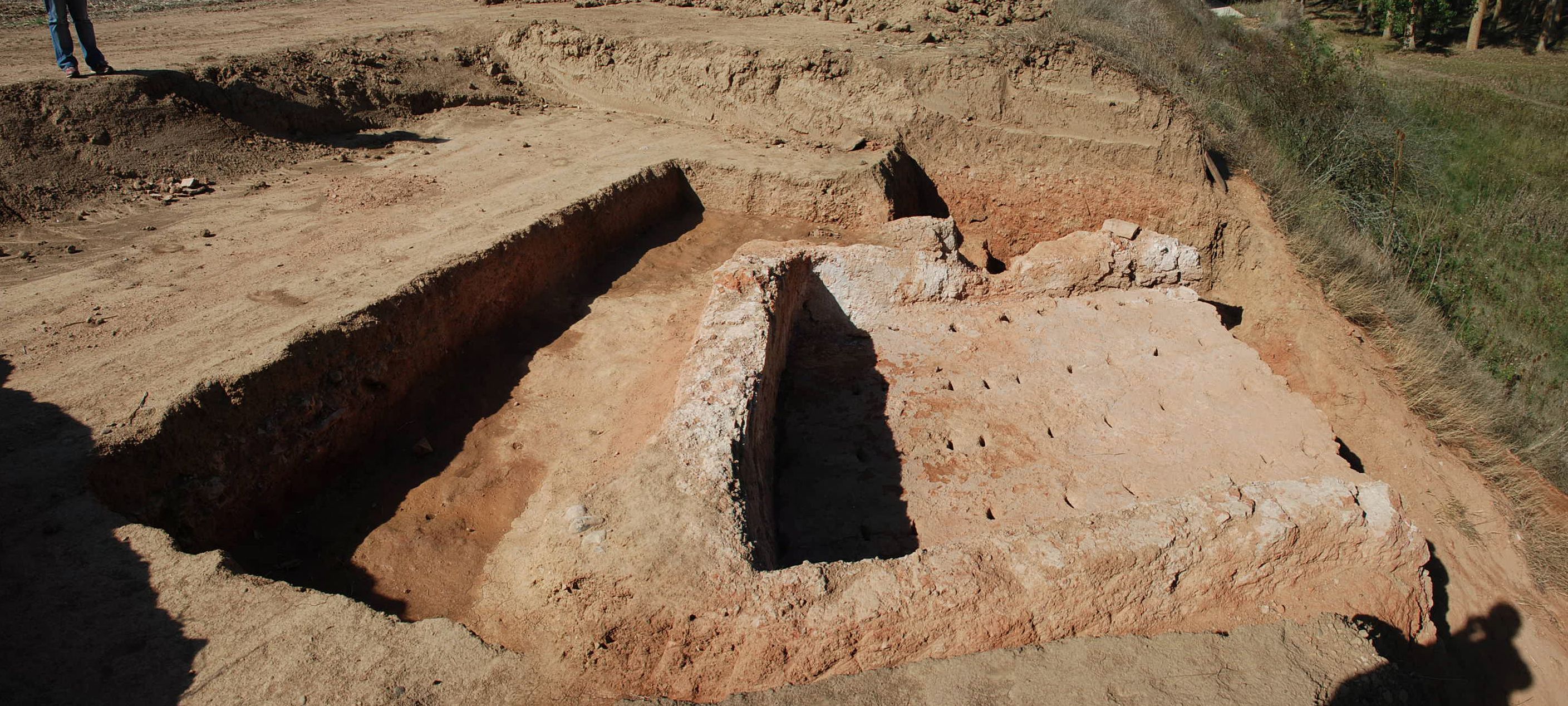
What changed when human communities learned to maintain controlled fire? Fire could provide warmth and light, change the properties of food and materials, and support activities at shared hearths. But the history is not one simple invention by one civilisation. Archaeologists look for burn patterns, heated stones, ash concentrations and the context of repeated use, while scientists ask how fuel, oxygen, heat and airflow interact. This guide follows cooking, kilns, ceramics, industrial heat and fire safety across the educational stages of civilisation without pretending that bigger flames always mean better societies.
The Smithsonian Human Origins Program documents hearth evidence at Gesher Benot-Ya’aqov at around 790,000 years ago and notes uncertainty about the earliest cooking. The Metropolitan Museum of Art explains how ancient Greek potters could control oxidising and reducing conditions during firing to produce black- and red-figure surfaces. Today, the United States Fire Administration identifies cooking as the leading cause of residential building fires in its own national figures, while NASA studies carefully controlled flames in microgravity to improve spacecraft safety. These observations come from different eras and measurements; they are not one ladder of civilisational merit.
The short answer is that a stage describes the repeatable capability of a defined system, not the cultural worth of a population. In this Atlas, Foundation 0 honours adaptable human worlds, Stages 1–4 investigate settlement, recorded administration, industry and planetary networks, Stage 5 is a proposed regenerative threshold, and Stages 6–8 are hypothetical future human settlements beyond Earth. Real communities combine functions from different eras and contexts; a single artefact never proves an entire society’s position.

Quick guide: how to learn this subject correctly
Define the function before drawing a grand timeline. Examine what people made, taught, maintained and repaired. Distinguish a museum object, a reconstruction and an experiment. Include the person who used the product, the worker who supplied it and the person who paid a hidden environmental or social cost. In a lesson, use a four-column notebook: observed evidence, interpretation, alternative explanation and what remains unverified. This method works better than memorising a single inevitable story of civilisational progress.
Source-led historical and contemporary foundations
Smithsonian — Hearths and Shelters
Provides context for early hearths, cooking, human social life and uncertainty about when control of fire emerged. Consult Smithsonian — Hearths and Shelters. Its material must be interpreted with the document’s date, geographic scope, collection provenance or scientific method. The museum or institution has not endorsed eduKate’s educational nine-position civilisation map. A dated estimate about current production or waste cannot by itself describe a historical community.
Smithsonian — How Do We Know These Were Hearths?
Describes spatial patterns of fire-altered lithics, burned seeds and wood at the Gesher Benot-Ya’aqov site and a date around 790,000 years ago. Consult Smithsonian — How Do We Know These Were Hearths?. Its material must be interpreted with the document’s date, geographic scope, collection provenance or scientific method. The museum or institution has not endorsed eduKate’s educational nine-position civilisation map. A dated estimate about current production or waste cannot by itself describe a historical community.
Smithsonian — Fire-Altered Stone Tools
Identifies a specific archaeological assemblage rather than claiming universal early fire use at every site. Consult Smithsonian — Fire-Altered Stone Tools. Its material must be interpreted with the document’s date, geographic scope, collection provenance or scientific method. The museum or institution has not endorsed eduKate’s educational nine-position civilisation map. A dated estimate about current production or waste cannot by itself describe a historical community.
The Met — Greek Art: From Prehistoric to Classical
Describes historical Greek vase firing with changing oxygen availability producing distinct surface colour outcomes. Consult The Met — Greek Art: From Prehistoric to Classical. Its material must be interpreted with the document’s date, geographic scope, collection provenance or scientific method. The museum or institution has not endorsed eduKate’s educational nine-position civilisation map. A dated estimate about current production or waste cannot by itself describe a historical community.
US Fire Administration — Residential Building Fire Causes, 2015–2024
Reports US national estimates in which cooking is a leading cause; the geography and years must be retained. Consult US Fire Administration — Residential Building Fire Causes, 2015–2024. Its material must be interpreted with the document’s date, geographic scope, collection provenance or scientific method. The museum or institution has not endorsed eduKate’s educational nine-position civilisation map. A dated estimate about current production or waste cannot by itself describe a historical community.
US Fire Administration — Cooking Fire Safety
Provides approved practical prevention messaging; classroom activities in this article must not involve lighting or extinguishing fires. Consult US Fire Administration — Cooking Fire Safety. Its material must be interpreted with the document’s date, geographic scope, collection provenance or scientific method. The museum or institution has not endorsed eduKate’s educational nine-position civilisation map. A dated estimate about current production or waste cannot by itself describe a historical community.
NASA — Studying Combustion and Fire Safety, 26 December 2023
NASA reviews controlled orbital experiments, spacecraft fire hazards and why microgravity changes flame behaviour. Consult NASA — Studying Combustion and Fire Safety, 26 December 2023. Its material must be interpreted with the document’s date, geographic scope, collection provenance or scientific method. The museum or institution has not endorsed eduKate’s educational nine-position civilisation map. A dated estimate about current production or waste cannot by itself describe a historical community.
NASA — NASA Studies Fire in Microgravity, 6 May 2026
NASA explains spherical flames under reduced buoyancy and why controlled research contributes to space and Earth combustion science. Consult NASA — NASA Studies Fire in Microgravity, 6 May 2026. Its material must be interpreted with the document’s date, geographic scope, collection provenance or scientific method. The museum or institution has not endorsed eduKate’s educational nine-position civilisation map. A dated estimate about current production or waste cannot by itself describe a historical community.
Nine positions of civilisation: how to use the framework without ranking people
Foundation 0 — Adaptive Human Worlds. The relevant operating environment is an adaptive community carrying material knowledge through skilled observation, oral instruction, testing and relationships across a changing environment. The first capability to inspect is material evidence where it survives, carefully interpreted toolmarks and practitioner knowledge with due attribution. Stress-test it when a competent maker or caregiver must teach a second person before moving to another place. The mistake to avoid is assuming that the lack of a surviving large loom, formal register or monumental factory means a lack of technical intelligence. This is neither a period of cultural inferiority nor a claim that mobile societies lacked specialised skill.
Stage 1 — Settlement and Surplus. The relevant operating environment is an imagined permanent settlement whose households, crafts and stores have to function over several seasons. The first capability to inspect is context-rich archaeological sites, evidence of repeated production and actual access rather than one impressive artifact. Stress-test it when an unusually wet or dry season changes the available materials and the original workshop schedule. The mistake to avoid is assuming that a single storehouse, kiln or garment proves that production and provision were equally available to everyone. Permanent settlement is not an inevitable improvement over mobility, and evidence must stay site specific.
Stage 2 — Administrative and Recorded Systems. The relevant operating environment is a fictional town recording supplies, quantities, responsibilities and deliveries across many practitioners. The first capability to inspect is dated, contextual records tested against surviving physical objects, household use and a transparent correction procedure. Stress-test it when a recorded batch, receipt or order conflicts with the condition of the goods delivered. The mistake to avoid is assuming that an official ledger completely represents every maker, apprentice, user and community. Surviving archives often privilege institutional power and omit informal work and people without records.
Stage 3 — Industrial and Mass Institutions. The relevant operating environment is an industrial district with mechanised processes, specialist staff, safety obligations and large-scale distribution. The first capability to inspect is verified quality, worker protection, maintenance records and outcomes for the people who use the products. Stress-test it when a new efficiency target raises output while also increasing defects, worker harm or material waste. The mistake to avoid is assuming that gross output is identical to social progress, product quality and fair employment. Industrial systems may be technically sophisticated yet create serious exclusion, pollution and health costs.
Stage 4 — Planetary Network Civilisation. The relevant operating environment is regions linked by long-distance supply, specialist research, financial records and technical standards. The first capability to inspect is provenance across suppliers, end-to-end delivery, interoperability and responsible access for affected communities. Stress-test it when a distant material or component supplier becomes unavailable and the whole chain must be explained. The mistake to avoid is assuming that a globally traded object proves every place has the same skills or benefits. Worldwide connection can coexist with unequal purchasing power, political influence and environmental burdens.
Stage 5 — Proposed Regenerative and Self-Correcting Civilisation. The relevant operating environment is an imagined region seeking to identify systematic harm, change production and measure whether conditions recover over time. The first capability to inspect is transparent baselines, measurable outcomes, independent review, lifecycle limits and legitimate participation. Stress-test it when a celebrated repair or circularity programme moves costs outside the reported geographic boundary. The mistake to avoid is assuming that a public pledge, one recycling logo or an attractive restoration photograph establishes the proposed threshold. Stage 5 is a teaching proposal, not a presently certified global state or a moral ranking.
Stage 6 — Hypothetical Multi-World Extension. The relevant operating environment is a fictional inhabited outpost beyond Earth that relies on transported essential supplies, specialised repairs and distant information. The first capability to inspect is a documented hypothetical dependency ledger alongside actual mission research, clearly labelled as separate things. Stress-test it when an Earth delivery fails and the crew cannot replace an indispensable part from local resources. The mistake to avoid is assuming that robotic exploration or a mission concept means humans have built an enduring second-world civilisation. Actual space experiments do not show that this hypothetical inhabited threshold has been achieved.
Stage 7 — Hypothetical Autonomous Multi-World Community. The relevant operating environment is a fictional off-Earth settlement attempting to maintain most life-supporting functions without routine Earth assistance. The first capability to inspect is long-period whole-system continuity with local competence, multiple contingencies and realistic institutional roles. Stress-test it when a locally functioning system cannot be repaired without a rare imported tool or trained specialist. The mistake to avoid is assuming that one locally manufactured object establishes complete economic and ecological independence. No off-Earth human settlement has demonstrated the broad autonomy proposed in this model.
Stage 8 — Hypothetical Distributed Interplanetary Civilisation. The relevant operating environment is several imagined inhabited worlds sharing technical knowledge despite substantial message and cargo delays. The first capability to inspect is hypothetical local-operating records, decision rights, tested communication constraints and explicit social assumptions. Stress-test it when a distant institution receives a stale instruction and must decide locally how to act fairly. The mistake to avoid is assuming that a deep-space communication network is equivalent to a real, populated and self-governing interplanetary society. This remains speculative systems reasoning, not an announcement of actual distant human populations.
Eighteen independently useful mechanisms
1. Fire as an archaeological inference
The quick answer. Explain how archaeologists distinguish repeated controlled burning from other ways heat can change objects. Here is a fictional example: A burnt stone lies near food remains, and a pupil announces that it proves a whole settlement used ovens.. The natural question is what a skilled practitioner or institution would need to know in order to make the relevant service dependable. A student should distinguish the material, the working procedure, the person affected and the condition under which the procedure is expected to succeed. The task is not completed by naming an invention or by assuming that more elaborate equipment is automatically a better decision.
What the evidence can establish. The spatial pattern, deposition, dating and alternative causes matter more than a lone darkened fragment. A critical qualification is that Natural wildfire or later heating can create traces that need differentiation.. The teacher can ask what additional source would be needed to move from a plausible story to a demonstrated conclusion. Students may discover several legitimate techniques capable of solving related problems; they should not assume that every society followed one identical path. Use dated, contextual material where history is involved, and keep contemporary scientific claims separate from interpretations of older artefacts.
Practical learning. Sort fictional excavation cards into controlled-fire evidence, possible evidence and unclear context. The most important insight is that A single burn mark cannot identify every social purpose for which fire was used.. A useful assessment asks whether a second student can explain the method without repeating the original phrasing, whether the explanation survives one changed assumption and whether it treats the knowledge holders with respect. All exercises use paper, observation of safe ordinary objects and hypothetical figures rather than hazardous activities, live chemicals or personal data.
Fire as an archaeological inference at Foundation 0 — Adaptive Human Worlds
Service and conditions. Imagine an adaptive community carrying material knowledge through skilled observation, oral instruction, testing and relationships across a changing environment. The group wants to apply a particular skill: Explain how archaeologists distinguish repeated controlled burning from other ways heat can change objects. Suppose A burnt stone lies near food remains, and a pupil announces that it proves a whole settlement used ovens.. Under the conditions of Foundation 0 — Adaptive Human Worlds, the inquiry is whether someone can still explain and deliver the useful result. The first action is to name what counts as success, how many people depend on it and which resources are available. Now let a competent maker or caregiver must teach a second person before moving to another place. A workshop or service that appears successful on a calm day may reveal important knowledge gaps when its people, materials or operating assumptions change. Only an actually documented case can support a historical claim; this scene is invented to develop reasoning.
How to assess the claim. An investigator would look for The spatial pattern, deposition, dating and alternative causes matter more than a lone darkened fragment.. But Natural wildfire or later heating can create traces that need differentiation.. A fuller assessment also asks for a suitable period, correct attribution, the working quality of the outcome and the experience of people not represented by the first source. The error to avoid is the assumption that the lack of a surviving large loom, formal register or monumental factory means a lack of technical intelligence. This is neither a period of cultural inferiority nor a claim that mobile societies lacked specialised skill.. The right description can be mixed or uncertain. In speculative off-Earth stages, even a carefully designed technical component cannot establish that an inhabited community and its institutions already exist.
Safe classroom transfer. Ask students to Sort fictional excavation cards into controlled-fire evidence, possible evidence and unclear context.. Then create a paper disruption in which a competent maker or caregiver must teach a second person before moving to another place. One team revises the original process; another tries to find an overlooked material, skill or user; and a third explains how evidence would have to change for the new plan to be judged more reliable. At the end, students should express the insight that A single burn mark cannot identify every social purpose for which fire was used.. Their explanation should make sense without copying a famous historical example or assuming that a high stage number proves superior human worth.
Fire as an archaeological inference at Stage 1 — Settlement and Surplus
Service and conditions. Imagine an imagined permanent settlement whose households, crafts and stores have to function over several seasons. The group wants to apply a particular skill: Explain how archaeologists distinguish repeated controlled burning from other ways heat can change objects. Suppose A burnt stone lies near food remains, and a pupil announces that it proves a whole settlement used ovens.. Under the conditions of Stage 1 — Settlement and Surplus, the inquiry is whether someone can still explain and deliver the useful result. The first action is to name what counts as success, how many people depend on it and which resources are available. Now let an unusually wet or dry season changes the available materials and the original workshop schedule. A workshop or service that appears successful on a calm day may reveal important knowledge gaps when its people, materials or operating assumptions change. Only an actually documented case can support a historical claim; this scene is invented to develop reasoning.
How to assess the claim. An investigator would look for The spatial pattern, deposition, dating and alternative causes matter more than a lone darkened fragment.. But Natural wildfire or later heating can create traces that need differentiation.. A fuller assessment also asks for a suitable period, correct attribution, the working quality of the outcome and the experience of people not represented by the first source. The error to avoid is the assumption that a single storehouse, kiln or garment proves that production and provision were equally available to everyone. Permanent settlement is not an inevitable improvement over mobility, and evidence must stay site specific.. The right description can be mixed or uncertain. In speculative off-Earth stages, even a carefully designed technical component cannot establish that an inhabited community and its institutions already exist.
Safe classroom transfer. Ask students to Sort fictional excavation cards into controlled-fire evidence, possible evidence and unclear context.. Then create a paper disruption in which an unusually wet or dry season changes the available materials and the original workshop schedule. One team revises the original process; another tries to find an overlooked material, skill or user; and a third explains how evidence would have to change for the new plan to be judged more reliable. At the end, students should express the insight that A single burn mark cannot identify every social purpose for which fire was used.. Their explanation should make sense without copying a famous historical example or assuming that a high stage number proves superior human worth.
Fire as an archaeological inference at Stage 2 — Administrative and Recorded Systems
Service and conditions. Imagine a fictional town recording supplies, quantities, responsibilities and deliveries across many practitioners. The group wants to apply a particular skill: Explain how archaeologists distinguish repeated controlled burning from other ways heat can change objects. Suppose A burnt stone lies near food remains, and a pupil announces that it proves a whole settlement used ovens.. Under the conditions of Stage 2 — Administrative and Recorded Systems, the inquiry is whether someone can still explain and deliver the useful result. The first action is to name what counts as success, how many people depend on it and which resources are available. Now let a recorded batch, receipt or order conflicts with the condition of the goods delivered. A workshop or service that appears successful on a calm day may reveal important knowledge gaps when its people, materials or operating assumptions change. Only an actually documented case can support a historical claim; this scene is invented to develop reasoning.
How to assess the claim. An investigator would look for The spatial pattern, deposition, dating and alternative causes matter more than a lone darkened fragment.. But Natural wildfire or later heating can create traces that need differentiation.. A fuller assessment also asks for a suitable period, correct attribution, the working quality of the outcome and the experience of people not represented by the first source. The error to avoid is the assumption that an official ledger completely represents every maker, apprentice, user and community. Surviving archives often privilege institutional power and omit informal work and people without records.. The right description can be mixed or uncertain. In speculative off-Earth stages, even a carefully designed technical component cannot establish that an inhabited community and its institutions already exist.
Safe classroom transfer. Ask students to Sort fictional excavation cards into controlled-fire evidence, possible evidence and unclear context.. Then create a paper disruption in which a recorded batch, receipt or order conflicts with the condition of the goods delivered. One team revises the original process; another tries to find an overlooked material, skill or user; and a third explains how evidence would have to change for the new plan to be judged more reliable. At the end, students should express the insight that A single burn mark cannot identify every social purpose for which fire was used.. Their explanation should make sense without copying a famous historical example or assuming that a high stage number proves superior human worth.
Fire as an archaeological inference at Stage 3 — Industrial and Mass Institutions
Service and conditions. Imagine an industrial district with mechanised processes, specialist staff, safety obligations and large-scale distribution. The group wants to apply a particular skill: Explain how archaeologists distinguish repeated controlled burning from other ways heat can change objects. Suppose A burnt stone lies near food remains, and a pupil announces that it proves a whole settlement used ovens.. Under the conditions of Stage 3 — Industrial and Mass Institutions, the inquiry is whether someone can still explain and deliver the useful result. The first action is to name what counts as success, how many people depend on it and which resources are available. Now let a new efficiency target raises output while also increasing defects, worker harm or material waste. A workshop or service that appears successful on a calm day may reveal important knowledge gaps when its people, materials or operating assumptions change. Only an actually documented case can support a historical claim; this scene is invented to develop reasoning.
How to assess the claim. An investigator would look for The spatial pattern, deposition, dating and alternative causes matter more than a lone darkened fragment.. But Natural wildfire or later heating can create traces that need differentiation.. A fuller assessment also asks for a suitable period, correct attribution, the working quality of the outcome and the experience of people not represented by the first source. The error to avoid is the assumption that gross output is identical to social progress, product quality and fair employment. Industrial systems may be technically sophisticated yet create serious exclusion, pollution and health costs.. The right description can be mixed or uncertain. In speculative off-Earth stages, even a carefully designed technical component cannot establish that an inhabited community and its institutions already exist.
Safe classroom transfer. Ask students to Sort fictional excavation cards into controlled-fire evidence, possible evidence and unclear context.. Then create a paper disruption in which a new efficiency target raises output while also increasing defects, worker harm or material waste. One team revises the original process; another tries to find an overlooked material, skill or user; and a third explains how evidence would have to change for the new plan to be judged more reliable. At the end, students should express the insight that A single burn mark cannot identify every social purpose for which fire was used.. Their explanation should make sense without copying a famous historical example or assuming that a high stage number proves superior human worth.
Fire as an archaeological inference at Stage 4 — Planetary Network Civilisation
Service and conditions. Imagine regions linked by long-distance supply, specialist research, financial records and technical standards. The group wants to apply a particular skill: Explain how archaeologists distinguish repeated controlled burning from other ways heat can change objects. Suppose A burnt stone lies near food remains, and a pupil announces that it proves a whole settlement used ovens.. Under the conditions of Stage 4 — Planetary Network Civilisation, the inquiry is whether someone can still explain and deliver the useful result. The first action is to name what counts as success, how many people depend on it and which resources are available. Now let a distant material or component supplier becomes unavailable and the whole chain must be explained. A workshop or service that appears successful on a calm day may reveal important knowledge gaps when its people, materials or operating assumptions change. Only an actually documented case can support a historical claim; this scene is invented to develop reasoning.
How to assess the claim. An investigator would look for The spatial pattern, deposition, dating and alternative causes matter more than a lone darkened fragment.. But Natural wildfire or later heating can create traces that need differentiation.. A fuller assessment also asks for a suitable period, correct attribution, the working quality of the outcome and the experience of people not represented by the first source. The error to avoid is the assumption that a globally traded object proves every place has the same skills or benefits. Worldwide connection can coexist with unequal purchasing power, political influence and environmental burdens.. The right description can be mixed or uncertain. In speculative off-Earth stages, even a carefully designed technical component cannot establish that an inhabited community and its institutions already exist.
Safe classroom transfer. Ask students to Sort fictional excavation cards into controlled-fire evidence, possible evidence and unclear context.. Then create a paper disruption in which a distant material or component supplier becomes unavailable and the whole chain must be explained. One team revises the original process; another tries to find an overlooked material, skill or user; and a third explains how evidence would have to change for the new plan to be judged more reliable. At the end, students should express the insight that A single burn mark cannot identify every social purpose for which fire was used.. Their explanation should make sense without copying a famous historical example or assuming that a high stage number proves superior human worth.
Fire as an archaeological inference at Stage 5 — Proposed Regenerative and Self-Correcting Civilisation
Service and conditions. Imagine an imagined region seeking to identify systematic harm, change production and measure whether conditions recover over time. The group wants to apply a particular skill: Explain how archaeologists distinguish repeated controlled burning from other ways heat can change objects. Suppose A burnt stone lies near food remains, and a pupil announces that it proves a whole settlement used ovens.. Under the conditions of Stage 5 — Proposed Regenerative and Self-Correcting Civilisation, the inquiry is whether someone can still explain and deliver the useful result. The first action is to name what counts as success, how many people depend on it and which resources are available. Now let a celebrated repair or circularity programme moves costs outside the reported geographic boundary. A workshop or service that appears successful on a calm day may reveal important knowledge gaps when its people, materials or operating assumptions change. Only an actually documented case can support a historical claim; this scene is invented to develop reasoning.
How to assess the claim. An investigator would look for The spatial pattern, deposition, dating and alternative causes matter more than a lone darkened fragment.. But Natural wildfire or later heating can create traces that need differentiation.. A fuller assessment also asks for a suitable period, correct attribution, the working quality of the outcome and the experience of people not represented by the first source. The error to avoid is the assumption that a public pledge, one recycling logo or an attractive restoration photograph establishes the proposed threshold. Stage 5 is a teaching proposal, not a presently certified global state or a moral ranking.. The right description can be mixed or uncertain. In speculative off-Earth stages, even a carefully designed technical component cannot establish that an inhabited community and its institutions already exist.
Safe classroom transfer. Ask students to Sort fictional excavation cards into controlled-fire evidence, possible evidence and unclear context.. Then create a paper disruption in which a celebrated repair or circularity programme moves costs outside the reported geographic boundary. One team revises the original process; another tries to find an overlooked material, skill or user; and a third explains how evidence would have to change for the new plan to be judged more reliable. At the end, students should express the insight that A single burn mark cannot identify every social purpose for which fire was used.. Their explanation should make sense without copying a famous historical example or assuming that a high stage number proves superior human worth.
Fire as an archaeological inference at Stage 6 — Hypothetical Multi-World Extension
Service and conditions. Imagine a fictional inhabited outpost beyond Earth that relies on transported essential supplies, specialised repairs and distant information. The group wants to apply a particular skill: Explain how archaeologists distinguish repeated controlled burning from other ways heat can change objects. Suppose A burnt stone lies near food remains, and a pupil announces that it proves a whole settlement used ovens.. Under the conditions of Stage 6 — Hypothetical Multi-World Extension, the inquiry is whether someone can still explain and deliver the useful result. The first action is to name what counts as success, how many people depend on it and which resources are available. Now let an Earth delivery fails and the crew cannot replace an indispensable part from local resources. A workshop or service that appears successful on a calm day may reveal important knowledge gaps when its people, materials or operating assumptions change. Only an actually documented case can support a historical claim; this scene is invented to develop reasoning.
How to assess the claim. An investigator would look for The spatial pattern, deposition, dating and alternative causes matter more than a lone darkened fragment.. But Natural wildfire or later heating can create traces that need differentiation.. A fuller assessment also asks for a suitable period, correct attribution, the working quality of the outcome and the experience of people not represented by the first source. The error to avoid is the assumption that robotic exploration or a mission concept means humans have built an enduring second-world civilisation. Actual space experiments do not show that this hypothetical inhabited threshold has been achieved.. The right description can be mixed or uncertain. In speculative off-Earth stages, even a carefully designed technical component cannot establish that an inhabited community and its institutions already exist.
Safe classroom transfer. Ask students to Sort fictional excavation cards into controlled-fire evidence, possible evidence and unclear context.. Then create a paper disruption in which an Earth delivery fails and the crew cannot replace an indispensable part from local resources. One team revises the original process; another tries to find an overlooked material, skill or user; and a third explains how evidence would have to change for the new plan to be judged more reliable. At the end, students should express the insight that A single burn mark cannot identify every social purpose for which fire was used.. Their explanation should make sense without copying a famous historical example or assuming that a high stage number proves superior human worth.
Fire as an archaeological inference at Stage 7 — Hypothetical Autonomous Multi-World Community
Service and conditions. Imagine a fictional off-Earth settlement attempting to maintain most life-supporting functions without routine Earth assistance. The group wants to apply a particular skill: Explain how archaeologists distinguish repeated controlled burning from other ways heat can change objects. Suppose A burnt stone lies near food remains, and a pupil announces that it proves a whole settlement used ovens.. Under the conditions of Stage 7 — Hypothetical Autonomous Multi-World Community, the inquiry is whether someone can still explain and deliver the useful result. The first action is to name what counts as success, how many people depend on it and which resources are available. Now let a locally functioning system cannot be repaired without a rare imported tool or trained specialist. A workshop or service that appears successful on a calm day may reveal important knowledge gaps when its people, materials or operating assumptions change. Only an actually documented case can support a historical claim; this scene is invented to develop reasoning.
How to assess the claim. An investigator would look for The spatial pattern, deposition, dating and alternative causes matter more than a lone darkened fragment.. But Natural wildfire or later heating can create traces that need differentiation.. A fuller assessment also asks for a suitable period, correct attribution, the working quality of the outcome and the experience of people not represented by the first source. The error to avoid is the assumption that one locally manufactured object establishes complete economic and ecological independence. No off-Earth human settlement has demonstrated the broad autonomy proposed in this model.. The right description can be mixed or uncertain. In speculative off-Earth stages, even a carefully designed technical component cannot establish that an inhabited community and its institutions already exist.
Safe classroom transfer. Ask students to Sort fictional excavation cards into controlled-fire evidence, possible evidence and unclear context.. Then create a paper disruption in which a locally functioning system cannot be repaired without a rare imported tool or trained specialist. One team revises the original process; another tries to find an overlooked material, skill or user; and a third explains how evidence would have to change for the new plan to be judged more reliable. At the end, students should express the insight that A single burn mark cannot identify every social purpose for which fire was used.. Their explanation should make sense without copying a famous historical example or assuming that a high stage number proves superior human worth.
Fire as an archaeological inference at Stage 8 — Hypothetical Distributed Interplanetary Civilisation
Service and conditions. Imagine several imagined inhabited worlds sharing technical knowledge despite substantial message and cargo delays. The group wants to apply a particular skill: Explain how archaeologists distinguish repeated controlled burning from other ways heat can change objects. Suppose A burnt stone lies near food remains, and a pupil announces that it proves a whole settlement used ovens.. Under the conditions of Stage 8 — Hypothetical Distributed Interplanetary Civilisation, the inquiry is whether someone can still explain and deliver the useful result. The first action is to name what counts as success, how many people depend on it and which resources are available. Now let a distant institution receives a stale instruction and must decide locally how to act fairly. A workshop or service that appears successful on a calm day may reveal important knowledge gaps when its people, materials or operating assumptions change. Only an actually documented case can support a historical claim; this scene is invented to develop reasoning.
How to assess the claim. An investigator would look for The spatial pattern, deposition, dating and alternative causes matter more than a lone darkened fragment.. But Natural wildfire or later heating can create traces that need differentiation.. A fuller assessment also asks for a suitable period, correct attribution, the working quality of the outcome and the experience of people not represented by the first source. The error to avoid is the assumption that a deep-space communication network is equivalent to a real, populated and self-governing interplanetary society. This remains speculative systems reasoning, not an announcement of actual distant human populations.. The right description can be mixed or uncertain. In speculative off-Earth stages, even a carefully designed technical component cannot establish that an inhabited community and its institutions already exist.
Safe classroom transfer. Ask students to Sort fictional excavation cards into controlled-fire evidence, possible evidence and unclear context.. Then create a paper disruption in which a distant institution receives a stale instruction and must decide locally how to act fairly. One team revises the original process; another tries to find an overlooked material, skill or user; and a third explains how evidence would have to change for the new plan to be judged more reliable. At the end, students should express the insight that A single burn mark cannot identify every social purpose for which fire was used.. Their explanation should make sense without copying a famous historical example or assuming that a high stage number proves superior human worth.
Worked evidence arithmetic: Fire as an archaeological inference
In an explicitly imaginary classroom register, 72 service events, products or observations were expected, and exactly 65 were independently verified. The shortfall in verified outcomes is 7; the confirmed fraction is 65/72, approximately 90.3%. Another 1 reports lack enough evidence to classify. If those reports were already included in the expected number, they must not be subtracted a second time. The arithmetic is correct for the invented set, but it cannot prove that a historical society used a particular technique or that the people who needed the service received it fairly.
Ask students to identify the numerator and denominator and challenge whether Natural wildfire or later heating can create traces that need differentiation.. Suppose the expected population or material classification changes; does the rate still refer to the same thing? A valid conclusion explains exactly what was measured, what remains unknown and which alternative hypothesis could fit the record. A teacher should reward a clear uncertainty statement and a plan for better evidence rather than a dramatic but unsupported interpretation.
2. The Gesher Benot-Ya’aqov case
The quick answer. Use the Smithsonian’s 790,000-year hearth evidence as one well-documented site, not the origin date of cooking everywhere. Here is a fictional example: A timeline labels one site the world’s first-ever cooking village with certainty.. The natural question is what a skilled practitioner or institution would need to know in order to make the relevant service dependable. A student should distinguish the material, the working procedure, the person affected and the condition under which the procedure is expected to succeed. The task is not completed by naming an invention or by assuming that more elaborate equipment is automatically a better decision.
What the evidence can establish. The Smithsonian describes repeated burned material concentrations that researchers interpret within excavation context. A critical qualification is that Scientific dating has scope and earlier uses of fire remain topics of inquiry.. The teacher can ask what additional source would be needed to move from a plausible story to a demonstrated conclusion. Students may discover several legitimate techniques capable of solving related problems; they should not assume that every society followed one identical path. Use dated, contextual material where history is involved, and keep contemporary scientific claims separate from interpretations of older artefacts.
Practical learning. Draw a site map with several fictional ash concentrations and ask what repeated spatial pattern adds. The most important insight is that A dated archaeological hearth does not define the intelligence or diet of every contemporary population.. A useful assessment asks whether a second student can explain the method without repeating the original phrasing, whether the explanation survives one changed assumption and whether it treats the knowledge holders with respect. All exercises use paper, observation of safe ordinary objects and hypothetical figures rather than hazardous activities, live chemicals or personal data.
The Gesher Benot-Ya’aqov case at Foundation 0 — Adaptive Human Worlds
Service and conditions. Imagine an adaptive community carrying material knowledge through skilled observation, oral instruction, testing and relationships across a changing environment. The group wants to apply a particular skill: Use the Smithsonian’s 790,000-year hearth evidence as one well-documented site, not the origin date of cooking everywhere. Suppose A timeline labels one site the world’s first-ever cooking village with certainty.. Under the conditions of Foundation 0 — Adaptive Human Worlds, the inquiry is whether someone can still explain and deliver the useful result. The first action is to name what counts as success, how many people depend on it and which resources are available. Now let a competent maker or caregiver must teach a second person before moving to another place. A workshop or service that appears successful on a calm day may reveal important knowledge gaps when its people, materials or operating assumptions change. Only an actually documented case can support a historical claim; this scene is invented to develop reasoning.
How to assess the claim. An investigator would look for The Smithsonian describes repeated burned material concentrations that researchers interpret within excavation context.. But Scientific dating has scope and earlier uses of fire remain topics of inquiry.. A fuller assessment also asks for a suitable period, correct attribution, the working quality of the outcome and the experience of people not represented by the first source. The error to avoid is the assumption that the lack of a surviving large loom, formal register or monumental factory means a lack of technical intelligence. This is neither a period of cultural inferiority nor a claim that mobile societies lacked specialised skill.. The right description can be mixed or uncertain. In speculative off-Earth stages, even a carefully designed technical component cannot establish that an inhabited community and its institutions already exist.
Safe classroom transfer. Ask students to Draw a site map with several fictional ash concentrations and ask what repeated spatial pattern adds.. Then create a paper disruption in which a competent maker or caregiver must teach a second person before moving to another place. One team revises the original process; another tries to find an overlooked material, skill or user; and a third explains how evidence would have to change for the new plan to be judged more reliable. At the end, students should express the insight that A dated archaeological hearth does not define the intelligence or diet of every contemporary population.. Their explanation should make sense without copying a famous historical example or assuming that a high stage number proves superior human worth.
The Gesher Benot-Ya’aqov case at Stage 1 — Settlement and Surplus
Service and conditions. Imagine an imagined permanent settlement whose households, crafts and stores have to function over several seasons. The group wants to apply a particular skill: Use the Smithsonian’s 790,000-year hearth evidence as one well-documented site, not the origin date of cooking everywhere. Suppose A timeline labels one site the world’s first-ever cooking village with certainty.. Under the conditions of Stage 1 — Settlement and Surplus, the inquiry is whether someone can still explain and deliver the useful result. The first action is to name what counts as success, how many people depend on it and which resources are available. Now let an unusually wet or dry season changes the available materials and the original workshop schedule. A workshop or service that appears successful on a calm day may reveal important knowledge gaps when its people, materials or operating assumptions change. Only an actually documented case can support a historical claim; this scene is invented to develop reasoning.
How to assess the claim. An investigator would look for The Smithsonian describes repeated burned material concentrations that researchers interpret within excavation context.. But Scientific dating has scope and earlier uses of fire remain topics of inquiry.. A fuller assessment also asks for a suitable period, correct attribution, the working quality of the outcome and the experience of people not represented by the first source. The error to avoid is the assumption that a single storehouse, kiln or garment proves that production and provision were equally available to everyone. Permanent settlement is not an inevitable improvement over mobility, and evidence must stay site specific.. The right description can be mixed or uncertain. In speculative off-Earth stages, even a carefully designed technical component cannot establish that an inhabited community and its institutions already exist.
Safe classroom transfer. Ask students to Draw a site map with several fictional ash concentrations and ask what repeated spatial pattern adds.. Then create a paper disruption in which an unusually wet or dry season changes the available materials and the original workshop schedule. One team revises the original process; another tries to find an overlooked material, skill or user; and a third explains how evidence would have to change for the new plan to be judged more reliable. At the end, students should express the insight that A dated archaeological hearth does not define the intelligence or diet of every contemporary population.. Their explanation should make sense without copying a famous historical example or assuming that a high stage number proves superior human worth.
The Gesher Benot-Ya’aqov case at Stage 2 — Administrative and Recorded Systems
Service and conditions. Imagine a fictional town recording supplies, quantities, responsibilities and deliveries across many practitioners. The group wants to apply a particular skill: Use the Smithsonian’s 790,000-year hearth evidence as one well-documented site, not the origin date of cooking everywhere. Suppose A timeline labels one site the world’s first-ever cooking village with certainty.. Under the conditions of Stage 2 — Administrative and Recorded Systems, the inquiry is whether someone can still explain and deliver the useful result. The first action is to name what counts as success, how many people depend on it and which resources are available. Now let a recorded batch, receipt or order conflicts with the condition of the goods delivered. A workshop or service that appears successful on a calm day may reveal important knowledge gaps when its people, materials or operating assumptions change. Only an actually documented case can support a historical claim; this scene is invented to develop reasoning.
How to assess the claim. An investigator would look for The Smithsonian describes repeated burned material concentrations that researchers interpret within excavation context.. But Scientific dating has scope and earlier uses of fire remain topics of inquiry.. A fuller assessment also asks for a suitable period, correct attribution, the working quality of the outcome and the experience of people not represented by the first source. The error to avoid is the assumption that an official ledger completely represents every maker, apprentice, user and community. Surviving archives often privilege institutional power and omit informal work and people without records.. The right description can be mixed or uncertain. In speculative off-Earth stages, even a carefully designed technical component cannot establish that an inhabited community and its institutions already exist.
Safe classroom transfer. Ask students to Draw a site map with several fictional ash concentrations and ask what repeated spatial pattern adds.. Then create a paper disruption in which a recorded batch, receipt or order conflicts with the condition of the goods delivered. One team revises the original process; another tries to find an overlooked material, skill or user; and a third explains how evidence would have to change for the new plan to be judged more reliable. At the end, students should express the insight that A dated archaeological hearth does not define the intelligence or diet of every contemporary population.. Their explanation should make sense without copying a famous historical example or assuming that a high stage number proves superior human worth.
The Gesher Benot-Ya’aqov case at Stage 3 — Industrial and Mass Institutions
Service and conditions. Imagine an industrial district with mechanised processes, specialist staff, safety obligations and large-scale distribution. The group wants to apply a particular skill: Use the Smithsonian’s 790,000-year hearth evidence as one well-documented site, not the origin date of cooking everywhere. Suppose A timeline labels one site the world’s first-ever cooking village with certainty.. Under the conditions of Stage 3 — Industrial and Mass Institutions, the inquiry is whether someone can still explain and deliver the useful result. The first action is to name what counts as success, how many people depend on it and which resources are available. Now let a new efficiency target raises output while also increasing defects, worker harm or material waste. A workshop or service that appears successful on a calm day may reveal important knowledge gaps when its people, materials or operating assumptions change. Only an actually documented case can support a historical claim; this scene is invented to develop reasoning.
How to assess the claim. An investigator would look for The Smithsonian describes repeated burned material concentrations that researchers interpret within excavation context.. But Scientific dating has scope and earlier uses of fire remain topics of inquiry.. A fuller assessment also asks for a suitable period, correct attribution, the working quality of the outcome and the experience of people not represented by the first source. The error to avoid is the assumption that gross output is identical to social progress, product quality and fair employment. Industrial systems may be technically sophisticated yet create serious exclusion, pollution and health costs.. The right description can be mixed or uncertain. In speculative off-Earth stages, even a carefully designed technical component cannot establish that an inhabited community and its institutions already exist.
Safe classroom transfer. Ask students to Draw a site map with several fictional ash concentrations and ask what repeated spatial pattern adds.. Then create a paper disruption in which a new efficiency target raises output while also increasing defects, worker harm or material waste. One team revises the original process; another tries to find an overlooked material, skill or user; and a third explains how evidence would have to change for the new plan to be judged more reliable. At the end, students should express the insight that A dated archaeological hearth does not define the intelligence or diet of every contemporary population.. Their explanation should make sense without copying a famous historical example or assuming that a high stage number proves superior human worth.
The Gesher Benot-Ya’aqov case at Stage 4 — Planetary Network Civilisation
Service and conditions. Imagine regions linked by long-distance supply, specialist research, financial records and technical standards. The group wants to apply a particular skill: Use the Smithsonian’s 790,000-year hearth evidence as one well-documented site, not the origin date of cooking everywhere. Suppose A timeline labels one site the world’s first-ever cooking village with certainty.. Under the conditions of Stage 4 — Planetary Network Civilisation, the inquiry is whether someone can still explain and deliver the useful result. The first action is to name what counts as success, how many people depend on it and which resources are available. Now let a distant material or component supplier becomes unavailable and the whole chain must be explained. A workshop or service that appears successful on a calm day may reveal important knowledge gaps when its people, materials or operating assumptions change. Only an actually documented case can support a historical claim; this scene is invented to develop reasoning.
How to assess the claim. An investigator would look for The Smithsonian describes repeated burned material concentrations that researchers interpret within excavation context.. But Scientific dating has scope and earlier uses of fire remain topics of inquiry.. A fuller assessment also asks for a suitable period, correct attribution, the working quality of the outcome and the experience of people not represented by the first source. The error to avoid is the assumption that a globally traded object proves every place has the same skills or benefits. Worldwide connection can coexist with unequal purchasing power, political influence and environmental burdens.. The right description can be mixed or uncertain. In speculative off-Earth stages, even a carefully designed technical component cannot establish that an inhabited community and its institutions already exist.
Safe classroom transfer. Ask students to Draw a site map with several fictional ash concentrations and ask what repeated spatial pattern adds.. Then create a paper disruption in which a distant material or component supplier becomes unavailable and the whole chain must be explained. One team revises the original process; another tries to find an overlooked material, skill or user; and a third explains how evidence would have to change for the new plan to be judged more reliable. At the end, students should express the insight that A dated archaeological hearth does not define the intelligence or diet of every contemporary population.. Their explanation should make sense without copying a famous historical example or assuming that a high stage number proves superior human worth.
The Gesher Benot-Ya’aqov case at Stage 5 — Proposed Regenerative and Self-Correcting Civilisation
Service and conditions. Imagine an imagined region seeking to identify systematic harm, change production and measure whether conditions recover over time. The group wants to apply a particular skill: Use the Smithsonian’s 790,000-year hearth evidence as one well-documented site, not the origin date of cooking everywhere. Suppose A timeline labels one site the world’s first-ever cooking village with certainty.. Under the conditions of Stage 5 — Proposed Regenerative and Self-Correcting Civilisation, the inquiry is whether someone can still explain and deliver the useful result. The first action is to name what counts as success, how many people depend on it and which resources are available. Now let a celebrated repair or circularity programme moves costs outside the reported geographic boundary. A workshop or service that appears successful on a calm day may reveal important knowledge gaps when its people, materials or operating assumptions change. Only an actually documented case can support a historical claim; this scene is invented to develop reasoning.
How to assess the claim. An investigator would look for The Smithsonian describes repeated burned material concentrations that researchers interpret within excavation context.. But Scientific dating has scope and earlier uses of fire remain topics of inquiry.. A fuller assessment also asks for a suitable period, correct attribution, the working quality of the outcome and the experience of people not represented by the first source. The error to avoid is the assumption that a public pledge, one recycling logo or an attractive restoration photograph establishes the proposed threshold. Stage 5 is a teaching proposal, not a presently certified global state or a moral ranking.. The right description can be mixed or uncertain. In speculative off-Earth stages, even a carefully designed technical component cannot establish that an inhabited community and its institutions already exist.
Safe classroom transfer. Ask students to Draw a site map with several fictional ash concentrations and ask what repeated spatial pattern adds.. Then create a paper disruption in which a celebrated repair or circularity programme moves costs outside the reported geographic boundary. One team revises the original process; another tries to find an overlooked material, skill or user; and a third explains how evidence would have to change for the new plan to be judged more reliable. At the end, students should express the insight that A dated archaeological hearth does not define the intelligence or diet of every contemporary population.. Their explanation should make sense without copying a famous historical example or assuming that a high stage number proves superior human worth.
The Gesher Benot-Ya’aqov case at Stage 6 — Hypothetical Multi-World Extension
Service and conditions. Imagine a fictional inhabited outpost beyond Earth that relies on transported essential supplies, specialised repairs and distant information. The group wants to apply a particular skill: Use the Smithsonian’s 790,000-year hearth evidence as one well-documented site, not the origin date of cooking everywhere. Suppose A timeline labels one site the world’s first-ever cooking village with certainty.. Under the conditions of Stage 6 — Hypothetical Multi-World Extension, the inquiry is whether someone can still explain and deliver the useful result. The first action is to name what counts as success, how many people depend on it and which resources are available. Now let an Earth delivery fails and the crew cannot replace an indispensable part from local resources. A workshop or service that appears successful on a calm day may reveal important knowledge gaps when its people, materials or operating assumptions change. Only an actually documented case can support a historical claim; this scene is invented to develop reasoning.
How to assess the claim. An investigator would look for The Smithsonian describes repeated burned material concentrations that researchers interpret within excavation context.. But Scientific dating has scope and earlier uses of fire remain topics of inquiry.. A fuller assessment also asks for a suitable period, correct attribution, the working quality of the outcome and the experience of people not represented by the first source. The error to avoid is the assumption that robotic exploration or a mission concept means humans have built an enduring second-world civilisation. Actual space experiments do not show that this hypothetical inhabited threshold has been achieved.. The right description can be mixed or uncertain. In speculative off-Earth stages, even a carefully designed technical component cannot establish that an inhabited community and its institutions already exist.
Safe classroom transfer. Ask students to Draw a site map with several fictional ash concentrations and ask what repeated spatial pattern adds.. Then create a paper disruption in which an Earth delivery fails and the crew cannot replace an indispensable part from local resources. One team revises the original process; another tries to find an overlooked material, skill or user; and a third explains how evidence would have to change for the new plan to be judged more reliable. At the end, students should express the insight that A dated archaeological hearth does not define the intelligence or diet of every contemporary population.. Their explanation should make sense without copying a famous historical example or assuming that a high stage number proves superior human worth.
The Gesher Benot-Ya’aqov case at Stage 7 — Hypothetical Autonomous Multi-World Community
Service and conditions. Imagine a fictional off-Earth settlement attempting to maintain most life-supporting functions without routine Earth assistance. The group wants to apply a particular skill: Use the Smithsonian’s 790,000-year hearth evidence as one well-documented site, not the origin date of cooking everywhere. Suppose A timeline labels one site the world’s first-ever cooking village with certainty.. Under the conditions of Stage 7 — Hypothetical Autonomous Multi-World Community, the inquiry is whether someone can still explain and deliver the useful result. The first action is to name what counts as success, how many people depend on it and which resources are available. Now let a locally functioning system cannot be repaired without a rare imported tool or trained specialist. A workshop or service that appears successful on a calm day may reveal important knowledge gaps when its people, materials or operating assumptions change. Only an actually documented case can support a historical claim; this scene is invented to develop reasoning.
How to assess the claim. An investigator would look for The Smithsonian describes repeated burned material concentrations that researchers interpret within excavation context.. But Scientific dating has scope and earlier uses of fire remain topics of inquiry.. A fuller assessment also asks for a suitable period, correct attribution, the working quality of the outcome and the experience of people not represented by the first source. The error to avoid is the assumption that one locally manufactured object establishes complete economic and ecological independence. No off-Earth human settlement has demonstrated the broad autonomy proposed in this model.. The right description can be mixed or uncertain. In speculative off-Earth stages, even a carefully designed technical component cannot establish that an inhabited community and its institutions already exist.
Safe classroom transfer. Ask students to Draw a site map with several fictional ash concentrations and ask what repeated spatial pattern adds.. Then create a paper disruption in which a locally functioning system cannot be repaired without a rare imported tool or trained specialist. One team revises the original process; another tries to find an overlooked material, skill or user; and a third explains how evidence would have to change for the new plan to be judged more reliable. At the end, students should express the insight that A dated archaeological hearth does not define the intelligence or diet of every contemporary population.. Their explanation should make sense without copying a famous historical example or assuming that a high stage number proves superior human worth.
The Gesher Benot-Ya’aqov case at Stage 8 — Hypothetical Distributed Interplanetary Civilisation
Service and conditions. Imagine several imagined inhabited worlds sharing technical knowledge despite substantial message and cargo delays. The group wants to apply a particular skill: Use the Smithsonian’s 790,000-year hearth evidence as one well-documented site, not the origin date of cooking everywhere. Suppose A timeline labels one site the world’s first-ever cooking village with certainty.. Under the conditions of Stage 8 — Hypothetical Distributed Interplanetary Civilisation, the inquiry is whether someone can still explain and deliver the useful result. The first action is to name what counts as success, how many people depend on it and which resources are available. Now let a distant institution receives a stale instruction and must decide locally how to act fairly. A workshop or service that appears successful on a calm day may reveal important knowledge gaps when its people, materials or operating assumptions change. Only an actually documented case can support a historical claim; this scene is invented to develop reasoning.
How to assess the claim. An investigator would look for The Smithsonian describes repeated burned material concentrations that researchers interpret within excavation context.. But Scientific dating has scope and earlier uses of fire remain topics of inquiry.. A fuller assessment also asks for a suitable period, correct attribution, the working quality of the outcome and the experience of people not represented by the first source. The error to avoid is the assumption that a deep-space communication network is equivalent to a real, populated and self-governing interplanetary society. This remains speculative systems reasoning, not an announcement of actual distant human populations.. The right description can be mixed or uncertain. In speculative off-Earth stages, even a carefully designed technical component cannot establish that an inhabited community and its institutions already exist.
Safe classroom transfer. Ask students to Draw a site map with several fictional ash concentrations and ask what repeated spatial pattern adds.. Then create a paper disruption in which a distant institution receives a stale instruction and must decide locally how to act fairly. One team revises the original process; another tries to find an overlooked material, skill or user; and a third explains how evidence would have to change for the new plan to be judged more reliable. At the end, students should express the insight that A dated archaeological hearth does not define the intelligence or diet of every contemporary population.. Their explanation should make sense without copying a famous historical example or assuming that a high stage number proves superior human worth.
Worked evidence arithmetic: The Gesher Benot-Ya’aqov case
In an explicitly imaginary classroom register, 79 service events, products or observations were expected, and exactly 69 were independently verified. The shortfall in verified outcomes is 10; the confirmed fraction is 69/79, approximately 87.3%. Another 2 reports lack enough evidence to classify. If those reports were already included in the expected number, they must not be subtracted a second time. The arithmetic is correct for the invented set, but it cannot prove that a historical society used a particular technique or that the people who needed the service received it fairly.
Ask students to identify the numerator and denominator and challenge whether Scientific dating has scope and earlier uses of fire remain topics of inquiry.. Suppose the expected population or material classification changes; does the rate still refer to the same thing? A valid conclusion explains exactly what was measured, what remains unknown and which alternative hypothesis could fit the record. A teacher should reward a clear uncertainty statement and a plan for better evidence rather than a dramatic but unsupported interpretation.
3. Ignition, fuel and the role of oxygen
The quick answer. Understand that combustion requires conditions and can fail when the supply or heat balance changes. Here is a fictional example: A drawing shows a flame continuing indefinitely without fuel or oxygen.. The natural question is what a skilled practitioner or institution would need to know in order to make the relevant service dependable. A student should distinguish the material, the working procedure, the person affected and the condition under which the procedure is expected to succeed. The task is not completed by naming an invention or by assuming that more elaborate equipment is automatically a better decision.
What the evidence can establish. Basic chemistry and energy conservation establish the need for reactants and suitable conditions. A critical qualification is that Actual ignition and suppression require expert safety rules, not classroom experimentation.. The teacher can ask what additional source would be needed to move from a plausible story to a demonstrated conclusion. Students may discover several legitimate techniques capable of solving related problems; they should not assume that every society followed one identical path. Use dated, contextual material where history is involved, and keep contemporary scientific claims separate from interpretations of older artefacts.
Practical learning. Label a paper combustion triangle and separate its three functions. The most important insight is that A theoretical model is not a safe instruction for starting or manipulating a real fire.. A useful assessment asks whether a second student can explain the method without repeating the original phrasing, whether the explanation survives one changed assumption and whether it treats the knowledge holders with respect. All exercises use paper, observation of safe ordinary objects and hypothetical figures rather than hazardous activities, live chemicals or personal data.
Ignition, fuel and the role of oxygen at Foundation 0 — Adaptive Human Worlds
Service and conditions. Imagine an adaptive community carrying material knowledge through skilled observation, oral instruction, testing and relationships across a changing environment. The group wants to apply a particular skill: Understand that combustion requires conditions and can fail when the supply or heat balance changes. Suppose A drawing shows a flame continuing indefinitely without fuel or oxygen.. Under the conditions of Foundation 0 — Adaptive Human Worlds, the inquiry is whether someone can still explain and deliver the useful result. The first action is to name what counts as success, how many people depend on it and which resources are available. Now let a competent maker or caregiver must teach a second person before moving to another place. A workshop or service that appears successful on a calm day may reveal important knowledge gaps when its people, materials or operating assumptions change. Only an actually documented case can support a historical claim; this scene is invented to develop reasoning.
How to assess the claim. An investigator would look for Basic chemistry and energy conservation establish the need for reactants and suitable conditions.. But Actual ignition and suppression require expert safety rules, not classroom experimentation.. A fuller assessment also asks for a suitable period, correct attribution, the working quality of the outcome and the experience of people not represented by the first source. The error to avoid is the assumption that the lack of a surviving large loom, formal register or monumental factory means a lack of technical intelligence. This is neither a period of cultural inferiority nor a claim that mobile societies lacked specialised skill.. The right description can be mixed or uncertain. In speculative off-Earth stages, even a carefully designed technical component cannot establish that an inhabited community and its institutions already exist.
Safe classroom transfer. Ask students to Label a paper combustion triangle and separate its three functions.. Then create a paper disruption in which a competent maker or caregiver must teach a second person before moving to another place. One team revises the original process; another tries to find an overlooked material, skill or user; and a third explains how evidence would have to change for the new plan to be judged more reliable. At the end, students should express the insight that A theoretical model is not a safe instruction for starting or manipulating a real fire.. Their explanation should make sense without copying a famous historical example or assuming that a high stage number proves superior human worth.
Ignition, fuel and the role of oxygen at Stage 1 — Settlement and Surplus
Service and conditions. Imagine an imagined permanent settlement whose households, crafts and stores have to function over several seasons. The group wants to apply a particular skill: Understand that combustion requires conditions and can fail when the supply or heat balance changes. Suppose A drawing shows a flame continuing indefinitely without fuel or oxygen.. Under the conditions of Stage 1 — Settlement and Surplus, the inquiry is whether someone can still explain and deliver the useful result. The first action is to name what counts as success, how many people depend on it and which resources are available. Now let an unusually wet or dry season changes the available materials and the original workshop schedule. A workshop or service that appears successful on a calm day may reveal important knowledge gaps when its people, materials or operating assumptions change. Only an actually documented case can support a historical claim; this scene is invented to develop reasoning.
How to assess the claim. An investigator would look for Basic chemistry and energy conservation establish the need for reactants and suitable conditions.. But Actual ignition and suppression require expert safety rules, not classroom experimentation.. A fuller assessment also asks for a suitable period, correct attribution, the working quality of the outcome and the experience of people not represented by the first source. The error to avoid is the assumption that a single storehouse, kiln or garment proves that production and provision were equally available to everyone. Permanent settlement is not an inevitable improvement over mobility, and evidence must stay site specific.. The right description can be mixed or uncertain. In speculative off-Earth stages, even a carefully designed technical component cannot establish that an inhabited community and its institutions already exist.
Safe classroom transfer. Ask students to Label a paper combustion triangle and separate its three functions.. Then create a paper disruption in which an unusually wet or dry season changes the available materials and the original workshop schedule. One team revises the original process; another tries to find an overlooked material, skill or user; and a third explains how evidence would have to change for the new plan to be judged more reliable. At the end, students should express the insight that A theoretical model is not a safe instruction for starting or manipulating a real fire.. Their explanation should make sense without copying a famous historical example or assuming that a high stage number proves superior human worth.
Ignition, fuel and the role of oxygen at Stage 2 — Administrative and Recorded Systems
Service and conditions. Imagine a fictional town recording supplies, quantities, responsibilities and deliveries across many practitioners. The group wants to apply a particular skill: Understand that combustion requires conditions and can fail when the supply or heat balance changes. Suppose A drawing shows a flame continuing indefinitely without fuel or oxygen.. Under the conditions of Stage 2 — Administrative and Recorded Systems, the inquiry is whether someone can still explain and deliver the useful result. The first action is to name what counts as success, how many people depend on it and which resources are available. Now let a recorded batch, receipt or order conflicts with the condition of the goods delivered. A workshop or service that appears successful on a calm day may reveal important knowledge gaps when its people, materials or operating assumptions change. Only an actually documented case can support a historical claim; this scene is invented to develop reasoning.
How to assess the claim. An investigator would look for Basic chemistry and energy conservation establish the need for reactants and suitable conditions.. But Actual ignition and suppression require expert safety rules, not classroom experimentation.. A fuller assessment also asks for a suitable period, correct attribution, the working quality of the outcome and the experience of people not represented by the first source. The error to avoid is the assumption that an official ledger completely represents every maker, apprentice, user and community. Surviving archives often privilege institutional power and omit informal work and people without records.. The right description can be mixed or uncertain. In speculative off-Earth stages, even a carefully designed technical component cannot establish that an inhabited community and its institutions already exist.
Safe classroom transfer. Ask students to Label a paper combustion triangle and separate its three functions.. Then create a paper disruption in which a recorded batch, receipt or order conflicts with the condition of the goods delivered. One team revises the original process; another tries to find an overlooked material, skill or user; and a third explains how evidence would have to change for the new plan to be judged more reliable. At the end, students should express the insight that A theoretical model is not a safe instruction for starting or manipulating a real fire.. Their explanation should make sense without copying a famous historical example or assuming that a high stage number proves superior human worth.
Ignition, fuel and the role of oxygen at Stage 3 — Industrial and Mass Institutions
Service and conditions. Imagine an industrial district with mechanised processes, specialist staff, safety obligations and large-scale distribution. The group wants to apply a particular skill: Understand that combustion requires conditions and can fail when the supply or heat balance changes. Suppose A drawing shows a flame continuing indefinitely without fuel or oxygen.. Under the conditions of Stage 3 — Industrial and Mass Institutions, the inquiry is whether someone can still explain and deliver the useful result. The first action is to name what counts as success, how many people depend on it and which resources are available. Now let a new efficiency target raises output while also increasing defects, worker harm or material waste. A workshop or service that appears successful on a calm day may reveal important knowledge gaps when its people, materials or operating assumptions change. Only an actually documented case can support a historical claim; this scene is invented to develop reasoning.
How to assess the claim. An investigator would look for Basic chemistry and energy conservation establish the need for reactants and suitable conditions.. But Actual ignition and suppression require expert safety rules, not classroom experimentation.. A fuller assessment also asks for a suitable period, correct attribution, the working quality of the outcome and the experience of people not represented by the first source. The error to avoid is the assumption that gross output is identical to social progress, product quality and fair employment. Industrial systems may be technically sophisticated yet create serious exclusion, pollution and health costs.. The right description can be mixed or uncertain. In speculative off-Earth stages, even a carefully designed technical component cannot establish that an inhabited community and its institutions already exist.
Safe classroom transfer. Ask students to Label a paper combustion triangle and separate its three functions.. Then create a paper disruption in which a new efficiency target raises output while also increasing defects, worker harm or material waste. One team revises the original process; another tries to find an overlooked material, skill or user; and a third explains how evidence would have to change for the new plan to be judged more reliable. At the end, students should express the insight that A theoretical model is not a safe instruction for starting or manipulating a real fire.. Their explanation should make sense without copying a famous historical example or assuming that a high stage number proves superior human worth.
Ignition, fuel and the role of oxygen at Stage 4 — Planetary Network Civilisation
Service and conditions. Imagine regions linked by long-distance supply, specialist research, financial records and technical standards. The group wants to apply a particular skill: Understand that combustion requires conditions and can fail when the supply or heat balance changes. Suppose A drawing shows a flame continuing indefinitely without fuel or oxygen.. Under the conditions of Stage 4 — Planetary Network Civilisation, the inquiry is whether someone can still explain and deliver the useful result. The first action is to name what counts as success, how many people depend on it and which resources are available. Now let a distant material or component supplier becomes unavailable and the whole chain must be explained. A workshop or service that appears successful on a calm day may reveal important knowledge gaps when its people, materials or operating assumptions change. Only an actually documented case can support a historical claim; this scene is invented to develop reasoning.
How to assess the claim. An investigator would look for Basic chemistry and energy conservation establish the need for reactants and suitable conditions.. But Actual ignition and suppression require expert safety rules, not classroom experimentation.. A fuller assessment also asks for a suitable period, correct attribution, the working quality of the outcome and the experience of people not represented by the first source. The error to avoid is the assumption that a globally traded object proves every place has the same skills or benefits. Worldwide connection can coexist with unequal purchasing power, political influence and environmental burdens.. The right description can be mixed or uncertain. In speculative off-Earth stages, even a carefully designed technical component cannot establish that an inhabited community and its institutions already exist.
Safe classroom transfer. Ask students to Label a paper combustion triangle and separate its three functions.. Then create a paper disruption in which a distant material or component supplier becomes unavailable and the whole chain must be explained. One team revises the original process; another tries to find an overlooked material, skill or user; and a third explains how evidence would have to change for the new plan to be judged more reliable. At the end, students should express the insight that A theoretical model is not a safe instruction for starting or manipulating a real fire.. Their explanation should make sense without copying a famous historical example or assuming that a high stage number proves superior human worth.
Ignition, fuel and the role of oxygen at Stage 5 — Proposed Regenerative and Self-Correcting Civilisation
Service and conditions. Imagine an imagined region seeking to identify systematic harm, change production and measure whether conditions recover over time. The group wants to apply a particular skill: Understand that combustion requires conditions and can fail when the supply or heat balance changes. Suppose A drawing shows a flame continuing indefinitely without fuel or oxygen.. Under the conditions of Stage 5 — Proposed Regenerative and Self-Correcting Civilisation, the inquiry is whether someone can still explain and deliver the useful result. The first action is to name what counts as success, how many people depend on it and which resources are available. Now let a celebrated repair or circularity programme moves costs outside the reported geographic boundary. A workshop or service that appears successful on a calm day may reveal important knowledge gaps when its people, materials or operating assumptions change. Only an actually documented case can support a historical claim; this scene is invented to develop reasoning.
How to assess the claim. An investigator would look for Basic chemistry and energy conservation establish the need for reactants and suitable conditions.. But Actual ignition and suppression require expert safety rules, not classroom experimentation.. A fuller assessment also asks for a suitable period, correct attribution, the working quality of the outcome and the experience of people not represented by the first source. The error to avoid is the assumption that a public pledge, one recycling logo or an attractive restoration photograph establishes the proposed threshold. Stage 5 is a teaching proposal, not a presently certified global state or a moral ranking.. The right description can be mixed or uncertain. In speculative off-Earth stages, even a carefully designed technical component cannot establish that an inhabited community and its institutions already exist.
Safe classroom transfer. Ask students to Label a paper combustion triangle and separate its three functions.. Then create a paper disruption in which a celebrated repair or circularity programme moves costs outside the reported geographic boundary. One team revises the original process; another tries to find an overlooked material, skill or user; and a third explains how evidence would have to change for the new plan to be judged more reliable. At the end, students should express the insight that A theoretical model is not a safe instruction for starting or manipulating a real fire.. Their explanation should make sense without copying a famous historical example or assuming that a high stage number proves superior human worth.
Ignition, fuel and the role of oxygen at Stage 6 — Hypothetical Multi-World Extension
Service and conditions. Imagine a fictional inhabited outpost beyond Earth that relies on transported essential supplies, specialised repairs and distant information. The group wants to apply a particular skill: Understand that combustion requires conditions and can fail when the supply or heat balance changes. Suppose A drawing shows a flame continuing indefinitely without fuel or oxygen.. Under the conditions of Stage 6 — Hypothetical Multi-World Extension, the inquiry is whether someone can still explain and deliver the useful result. The first action is to name what counts as success, how many people depend on it and which resources are available. Now let an Earth delivery fails and the crew cannot replace an indispensable part from local resources. A workshop or service that appears successful on a calm day may reveal important knowledge gaps when its people, materials or operating assumptions change. Only an actually documented case can support a historical claim; this scene is invented to develop reasoning.
How to assess the claim. An investigator would look for Basic chemistry and energy conservation establish the need for reactants and suitable conditions.. But Actual ignition and suppression require expert safety rules, not classroom experimentation.. A fuller assessment also asks for a suitable period, correct attribution, the working quality of the outcome and the experience of people not represented by the first source. The error to avoid is the assumption that robotic exploration or a mission concept means humans have built an enduring second-world civilisation. Actual space experiments do not show that this hypothetical inhabited threshold has been achieved.. The right description can be mixed or uncertain. In speculative off-Earth stages, even a carefully designed technical component cannot establish that an inhabited community and its institutions already exist.
Safe classroom transfer. Ask students to Label a paper combustion triangle and separate its three functions.. Then create a paper disruption in which an Earth delivery fails and the crew cannot replace an indispensable part from local resources. One team revises the original process; another tries to find an overlooked material, skill or user; and a third explains how evidence would have to change for the new plan to be judged more reliable. At the end, students should express the insight that A theoretical model is not a safe instruction for starting or manipulating a real fire.. Their explanation should make sense without copying a famous historical example or assuming that a high stage number proves superior human worth.
Ignition, fuel and the role of oxygen at Stage 7 — Hypothetical Autonomous Multi-World Community
Service and conditions. Imagine a fictional off-Earth settlement attempting to maintain most life-supporting functions without routine Earth assistance. The group wants to apply a particular skill: Understand that combustion requires conditions and can fail when the supply or heat balance changes. Suppose A drawing shows a flame continuing indefinitely without fuel or oxygen.. Under the conditions of Stage 7 — Hypothetical Autonomous Multi-World Community, the inquiry is whether someone can still explain and deliver the useful result. The first action is to name what counts as success, how many people depend on it and which resources are available. Now let a locally functioning system cannot be repaired without a rare imported tool or trained specialist. A workshop or service that appears successful on a calm day may reveal important knowledge gaps when its people, materials or operating assumptions change. Only an actually documented case can support a historical claim; this scene is invented to develop reasoning.
How to assess the claim. An investigator would look for Basic chemistry and energy conservation establish the need for reactants and suitable conditions.. But Actual ignition and suppression require expert safety rules, not classroom experimentation.. A fuller assessment also asks for a suitable period, correct attribution, the working quality of the outcome and the experience of people not represented by the first source. The error to avoid is the assumption that one locally manufactured object establishes complete economic and ecological independence. No off-Earth human settlement has demonstrated the broad autonomy proposed in this model.. The right description can be mixed or uncertain. In speculative off-Earth stages, even a carefully designed technical component cannot establish that an inhabited community and its institutions already exist.
Safe classroom transfer. Ask students to Label a paper combustion triangle and separate its three functions.. Then create a paper disruption in which a locally functioning system cannot be repaired without a rare imported tool or trained specialist. One team revises the original process; another tries to find an overlooked material, skill or user; and a third explains how evidence would have to change for the new plan to be judged more reliable. At the end, students should express the insight that A theoretical model is not a safe instruction for starting or manipulating a real fire.. Their explanation should make sense without copying a famous historical example or assuming that a high stage number proves superior human worth.
Ignition, fuel and the role of oxygen at Stage 8 — Hypothetical Distributed Interplanetary Civilisation
Service and conditions. Imagine several imagined inhabited worlds sharing technical knowledge despite substantial message and cargo delays. The group wants to apply a particular skill: Understand that combustion requires conditions and can fail when the supply or heat balance changes. Suppose A drawing shows a flame continuing indefinitely without fuel or oxygen.. Under the conditions of Stage 8 — Hypothetical Distributed Interplanetary Civilisation, the inquiry is whether someone can still explain and deliver the useful result. The first action is to name what counts as success, how many people depend on it and which resources are available. Now let a distant institution receives a stale instruction and must decide locally how to act fairly. A workshop or service that appears successful on a calm day may reveal important knowledge gaps when its people, materials or operating assumptions change. Only an actually documented case can support a historical claim; this scene is invented to develop reasoning.
How to assess the claim. An investigator would look for Basic chemistry and energy conservation establish the need for reactants and suitable conditions.. But Actual ignition and suppression require expert safety rules, not classroom experimentation.. A fuller assessment also asks for a suitable period, correct attribution, the working quality of the outcome and the experience of people not represented by the first source. The error to avoid is the assumption that a deep-space communication network is equivalent to a real, populated and self-governing interplanetary society. This remains speculative systems reasoning, not an announcement of actual distant human populations.. The right description can be mixed or uncertain. In speculative off-Earth stages, even a carefully designed technical component cannot establish that an inhabited community and its institutions already exist.
Safe classroom transfer. Ask students to Label a paper combustion triangle and separate its three functions.. Then create a paper disruption in which a distant institution receives a stale instruction and must decide locally how to act fairly. One team revises the original process; another tries to find an overlooked material, skill or user; and a third explains how evidence would have to change for the new plan to be judged more reliable. At the end, students should express the insight that A theoretical model is not a safe instruction for starting or manipulating a real fire.. Their explanation should make sense without copying a famous historical example or assuming that a high stage number proves superior human worth.
Worked evidence arithmetic: Ignition, fuel and the role of oxygen
In an explicitly imaginary classroom register, 86 service events, products or observations were expected, and exactly 73 were independently verified. The shortfall in verified outcomes is 13; the confirmed fraction is 73/86, approximately 84.9%. Another 3 reports lack enough evidence to classify. If those reports were already included in the expected number, they must not be subtracted a second time. The arithmetic is correct for the invented set, but it cannot prove that a historical society used a particular technique or that the people who needed the service received it fairly.
Ask students to identify the numerator and denominator and challenge whether Actual ignition and suppression require expert safety rules, not classroom experimentation.. Suppose the expected population or material classification changes; does the rate still refer to the same thing? A valid conclusion explains exactly what was measured, what remains unknown and which alternative hypothesis could fit the record. A teacher should reward a clear uncertainty statement and a plan for better evidence rather than a dramatic but unsupported interpretation.
4. Heat transfer: conduction, convection and radiation
The quick answer. Describe different ways heat reaches an object, and why a barrier affects each differently. Here is a fictional example: A student assumes all parts of a kitchen appliance have the same temperature as its dial.. The natural question is what a skilled practitioner or institution would need to know in order to make the relevant service dependable. A student should distinguish the material, the working procedure, the person affected and the condition under which the procedure is expected to succeed. The task is not completed by naming an invention or by assuming that more elaborate equipment is automatically a better decision.
What the evidence can establish. Thermal physics distinguishes contact transfer, moving fluids and emitted radiation. A critical qualification is that Heat transfer rates depend on materials, temperature differences and geometry.. The teacher can ask what additional source would be needed to move from a plausible story to a demonstrated conclusion. Students may discover several legitimate techniques capable of solving related problems; they should not assume that every society followed one identical path. Use dated, contextual material where history is involved, and keep contemporary scientific claims separate from interpretations of older artefacts.
Practical learning. Sort invented examples such as a metal spoon, warm moving air and sunlight into transfer types. The most important insight is that A technically correct description cannot replace certified safety information.. A useful assessment asks whether a second student can explain the method without repeating the original phrasing, whether the explanation survives one changed assumption and whether it treats the knowledge holders with respect. All exercises use paper, observation of safe ordinary objects and hypothetical figures rather than hazardous activities, live chemicals or personal data.
Heat transfer: conduction, convection and radiation at Foundation 0 — Adaptive Human Worlds
Service and conditions. Imagine an adaptive community carrying material knowledge through skilled observation, oral instruction, testing and relationships across a changing environment. The group wants to apply a particular skill: Describe different ways heat reaches an object, and why a barrier affects each differently. Suppose A student assumes all parts of a kitchen appliance have the same temperature as its dial.. Under the conditions of Foundation 0 — Adaptive Human Worlds, the inquiry is whether someone can still explain and deliver the useful result. The first action is to name what counts as success, how many people depend on it and which resources are available. Now let a competent maker or caregiver must teach a second person before moving to another place. A workshop or service that appears successful on a calm day may reveal important knowledge gaps when its people, materials or operating assumptions change. Only an actually documented case can support a historical claim; this scene is invented to develop reasoning.
How to assess the claim. An investigator would look for Thermal physics distinguishes contact transfer, moving fluids and emitted radiation.. But Heat transfer rates depend on materials, temperature differences and geometry.. A fuller assessment also asks for a suitable period, correct attribution, the working quality of the outcome and the experience of people not represented by the first source. The error to avoid is the assumption that the lack of a surviving large loom, formal register or monumental factory means a lack of technical intelligence. This is neither a period of cultural inferiority nor a claim that mobile societies lacked specialised skill.. The right description can be mixed or uncertain. In speculative off-Earth stages, even a carefully designed technical component cannot establish that an inhabited community and its institutions already exist.
Safe classroom transfer. Ask students to Sort invented examples such as a metal spoon, warm moving air and sunlight into transfer types.. Then create a paper disruption in which a competent maker or caregiver must teach a second person before moving to another place. One team revises the original process; another tries to find an overlooked material, skill or user; and a third explains how evidence would have to change for the new plan to be judged more reliable. At the end, students should express the insight that A technically correct description cannot replace certified safety information.. Their explanation should make sense without copying a famous historical example or assuming that a high stage number proves superior human worth.
Heat transfer: conduction, convection and radiation at Stage 1 — Settlement and Surplus
Service and conditions. Imagine an imagined permanent settlement whose households, crafts and stores have to function over several seasons. The group wants to apply a particular skill: Describe different ways heat reaches an object, and why a barrier affects each differently. Suppose A student assumes all parts of a kitchen appliance have the same temperature as its dial.. Under the conditions of Stage 1 — Settlement and Surplus, the inquiry is whether someone can still explain and deliver the useful result. The first action is to name what counts as success, how many people depend on it and which resources are available. Now let an unusually wet or dry season changes the available materials and the original workshop schedule. A workshop or service that appears successful on a calm day may reveal important knowledge gaps when its people, materials or operating assumptions change. Only an actually documented case can support a historical claim; this scene is invented to develop reasoning.
How to assess the claim. An investigator would look for Thermal physics distinguishes contact transfer, moving fluids and emitted radiation.. But Heat transfer rates depend on materials, temperature differences and geometry.. A fuller assessment also asks for a suitable period, correct attribution, the working quality of the outcome and the experience of people not represented by the first source. The error to avoid is the assumption that a single storehouse, kiln or garment proves that production and provision were equally available to everyone. Permanent settlement is not an inevitable improvement over mobility, and evidence must stay site specific.. The right description can be mixed or uncertain. In speculative off-Earth stages, even a carefully designed technical component cannot establish that an inhabited community and its institutions already exist.
Safe classroom transfer. Ask students to Sort invented examples such as a metal spoon, warm moving air and sunlight into transfer types.. Then create a paper disruption in which an unusually wet or dry season changes the available materials and the original workshop schedule. One team revises the original process; another tries to find an overlooked material, skill or user; and a third explains how evidence would have to change for the new plan to be judged more reliable. At the end, students should express the insight that A technically correct description cannot replace certified safety information.. Their explanation should make sense without copying a famous historical example or assuming that a high stage number proves superior human worth.
Heat transfer: conduction, convection and radiation at Stage 2 — Administrative and Recorded Systems
Service and conditions. Imagine a fictional town recording supplies, quantities, responsibilities and deliveries across many practitioners. The group wants to apply a particular skill: Describe different ways heat reaches an object, and why a barrier affects each differently. Suppose A student assumes all parts of a kitchen appliance have the same temperature as its dial.. Under the conditions of Stage 2 — Administrative and Recorded Systems, the inquiry is whether someone can still explain and deliver the useful result. The first action is to name what counts as success, how many people depend on it and which resources are available. Now let a recorded batch, receipt or order conflicts with the condition of the goods delivered. A workshop or service that appears successful on a calm day may reveal important knowledge gaps when its people, materials or operating assumptions change. Only an actually documented case can support a historical claim; this scene is invented to develop reasoning.
How to assess the claim. An investigator would look for Thermal physics distinguishes contact transfer, moving fluids and emitted radiation.. But Heat transfer rates depend on materials, temperature differences and geometry.. A fuller assessment also asks for a suitable period, correct attribution, the working quality of the outcome and the experience of people not represented by the first source. The error to avoid is the assumption that an official ledger completely represents every maker, apprentice, user and community. Surviving archives often privilege institutional power and omit informal work and people without records.. The right description can be mixed or uncertain. In speculative off-Earth stages, even a carefully designed technical component cannot establish that an inhabited community and its institutions already exist.
Safe classroom transfer. Ask students to Sort invented examples such as a metal spoon, warm moving air and sunlight into transfer types.. Then create a paper disruption in which a recorded batch, receipt or order conflicts with the condition of the goods delivered. One team revises the original process; another tries to find an overlooked material, skill or user; and a third explains how evidence would have to change for the new plan to be judged more reliable. At the end, students should express the insight that A technically correct description cannot replace certified safety information.. Their explanation should make sense without copying a famous historical example or assuming that a high stage number proves superior human worth.
Heat transfer: conduction, convection and radiation at Stage 3 — Industrial and Mass Institutions
Service and conditions. Imagine an industrial district with mechanised processes, specialist staff, safety obligations and large-scale distribution. The group wants to apply a particular skill: Describe different ways heat reaches an object, and why a barrier affects each differently. Suppose A student assumes all parts of a kitchen appliance have the same temperature as its dial.. Under the conditions of Stage 3 — Industrial and Mass Institutions, the inquiry is whether someone can still explain and deliver the useful result. The first action is to name what counts as success, how many people depend on it and which resources are available. Now let a new efficiency target raises output while also increasing defects, worker harm or material waste. A workshop or service that appears successful on a calm day may reveal important knowledge gaps when its people, materials or operating assumptions change. Only an actually documented case can support a historical claim; this scene is invented to develop reasoning.
How to assess the claim. An investigator would look for Thermal physics distinguishes contact transfer, moving fluids and emitted radiation.. But Heat transfer rates depend on materials, temperature differences and geometry.. A fuller assessment also asks for a suitable period, correct attribution, the working quality of the outcome and the experience of people not represented by the first source. The error to avoid is the assumption that gross output is identical to social progress, product quality and fair employment. Industrial systems may be technically sophisticated yet create serious exclusion, pollution and health costs.. The right description can be mixed or uncertain. In speculative off-Earth stages, even a carefully designed technical component cannot establish that an inhabited community and its institutions already exist.
Safe classroom transfer. Ask students to Sort invented examples such as a metal spoon, warm moving air and sunlight into transfer types.. Then create a paper disruption in which a new efficiency target raises output while also increasing defects, worker harm or material waste. One team revises the original process; another tries to find an overlooked material, skill or user; and a third explains how evidence would have to change for the new plan to be judged more reliable. At the end, students should express the insight that A technically correct description cannot replace certified safety information.. Their explanation should make sense without copying a famous historical example or assuming that a high stage number proves superior human worth.
Heat transfer: conduction, convection and radiation at Stage 4 — Planetary Network Civilisation
Service and conditions. Imagine regions linked by long-distance supply, specialist research, financial records and technical standards. The group wants to apply a particular skill: Describe different ways heat reaches an object, and why a barrier affects each differently. Suppose A student assumes all parts of a kitchen appliance have the same temperature as its dial.. Under the conditions of Stage 4 — Planetary Network Civilisation, the inquiry is whether someone can still explain and deliver the useful result. The first action is to name what counts as success, how many people depend on it and which resources are available. Now let a distant material or component supplier becomes unavailable and the whole chain must be explained. A workshop or service that appears successful on a calm day may reveal important knowledge gaps when its people, materials or operating assumptions change. Only an actually documented case can support a historical claim; this scene is invented to develop reasoning.
How to assess the claim. An investigator would look for Thermal physics distinguishes contact transfer, moving fluids and emitted radiation.. But Heat transfer rates depend on materials, temperature differences and geometry.. A fuller assessment also asks for a suitable period, correct attribution, the working quality of the outcome and the experience of people not represented by the first source. The error to avoid is the assumption that a globally traded object proves every place has the same skills or benefits. Worldwide connection can coexist with unequal purchasing power, political influence and environmental burdens.. The right description can be mixed or uncertain. In speculative off-Earth stages, even a carefully designed technical component cannot establish that an inhabited community and its institutions already exist.
Safe classroom transfer. Ask students to Sort invented examples such as a metal spoon, warm moving air and sunlight into transfer types.. Then create a paper disruption in which a distant material or component supplier becomes unavailable and the whole chain must be explained. One team revises the original process; another tries to find an overlooked material, skill or user; and a third explains how evidence would have to change for the new plan to be judged more reliable. At the end, students should express the insight that A technically correct description cannot replace certified safety information.. Their explanation should make sense without copying a famous historical example or assuming that a high stage number proves superior human worth.
Heat transfer: conduction, convection and radiation at Stage 5 — Proposed Regenerative and Self-Correcting Civilisation
Service and conditions. Imagine an imagined region seeking to identify systematic harm, change production and measure whether conditions recover over time. The group wants to apply a particular skill: Describe different ways heat reaches an object, and why a barrier affects each differently. Suppose A student assumes all parts of a kitchen appliance have the same temperature as its dial.. Under the conditions of Stage 5 — Proposed Regenerative and Self-Correcting Civilisation, the inquiry is whether someone can still explain and deliver the useful result. The first action is to name what counts as success, how many people depend on it and which resources are available. Now let a celebrated repair or circularity programme moves costs outside the reported geographic boundary. A workshop or service that appears successful on a calm day may reveal important knowledge gaps when its people, materials or operating assumptions change. Only an actually documented case can support a historical claim; this scene is invented to develop reasoning.
How to assess the claim. An investigator would look for Thermal physics distinguishes contact transfer, moving fluids and emitted radiation.. But Heat transfer rates depend on materials, temperature differences and geometry.. A fuller assessment also asks for a suitable period, correct attribution, the working quality of the outcome and the experience of people not represented by the first source. The error to avoid is the assumption that a public pledge, one recycling logo or an attractive restoration photograph establishes the proposed threshold. Stage 5 is a teaching proposal, not a presently certified global state or a moral ranking.. The right description can be mixed or uncertain. In speculative off-Earth stages, even a carefully designed technical component cannot establish that an inhabited community and its institutions already exist.
Safe classroom transfer. Ask students to Sort invented examples such as a metal spoon, warm moving air and sunlight into transfer types.. Then create a paper disruption in which a celebrated repair or circularity programme moves costs outside the reported geographic boundary. One team revises the original process; another tries to find an overlooked material, skill or user; and a third explains how evidence would have to change for the new plan to be judged more reliable. At the end, students should express the insight that A technically correct description cannot replace certified safety information.. Their explanation should make sense without copying a famous historical example or assuming that a high stage number proves superior human worth.
Heat transfer: conduction, convection and radiation at Stage 6 — Hypothetical Multi-World Extension
Service and conditions. Imagine a fictional inhabited outpost beyond Earth that relies on transported essential supplies, specialised repairs and distant information. The group wants to apply a particular skill: Describe different ways heat reaches an object, and why a barrier affects each differently. Suppose A student assumes all parts of a kitchen appliance have the same temperature as its dial.. Under the conditions of Stage 6 — Hypothetical Multi-World Extension, the inquiry is whether someone can still explain and deliver the useful result. The first action is to name what counts as success, how many people depend on it and which resources are available. Now let an Earth delivery fails and the crew cannot replace an indispensable part from local resources. A workshop or service that appears successful on a calm day may reveal important knowledge gaps when its people, materials or operating assumptions change. Only an actually documented case can support a historical claim; this scene is invented to develop reasoning.
How to assess the claim. An investigator would look for Thermal physics distinguishes contact transfer, moving fluids and emitted radiation.. But Heat transfer rates depend on materials, temperature differences and geometry.. A fuller assessment also asks for a suitable period, correct attribution, the working quality of the outcome and the experience of people not represented by the first source. The error to avoid is the assumption that robotic exploration or a mission concept means humans have built an enduring second-world civilisation. Actual space experiments do not show that this hypothetical inhabited threshold has been achieved.. The right description can be mixed or uncertain. In speculative off-Earth stages, even a carefully designed technical component cannot establish that an inhabited community and its institutions already exist.
Safe classroom transfer. Ask students to Sort invented examples such as a metal spoon, warm moving air and sunlight into transfer types.. Then create a paper disruption in which an Earth delivery fails and the crew cannot replace an indispensable part from local resources. One team revises the original process; another tries to find an overlooked material, skill or user; and a third explains how evidence would have to change for the new plan to be judged more reliable. At the end, students should express the insight that A technically correct description cannot replace certified safety information.. Their explanation should make sense without copying a famous historical example or assuming that a high stage number proves superior human worth.
Heat transfer: conduction, convection and radiation at Stage 7 — Hypothetical Autonomous Multi-World Community
Service and conditions. Imagine a fictional off-Earth settlement attempting to maintain most life-supporting functions without routine Earth assistance. The group wants to apply a particular skill: Describe different ways heat reaches an object, and why a barrier affects each differently. Suppose A student assumes all parts of a kitchen appliance have the same temperature as its dial.. Under the conditions of Stage 7 — Hypothetical Autonomous Multi-World Community, the inquiry is whether someone can still explain and deliver the useful result. The first action is to name what counts as success, how many people depend on it and which resources are available. Now let a locally functioning system cannot be repaired without a rare imported tool or trained specialist. A workshop or service that appears successful on a calm day may reveal important knowledge gaps when its people, materials or operating assumptions change. Only an actually documented case can support a historical claim; this scene is invented to develop reasoning.
How to assess the claim. An investigator would look for Thermal physics distinguishes contact transfer, moving fluids and emitted radiation.. But Heat transfer rates depend on materials, temperature differences and geometry.. A fuller assessment also asks for a suitable period, correct attribution, the working quality of the outcome and the experience of people not represented by the first source. The error to avoid is the assumption that one locally manufactured object establishes complete economic and ecological independence. No off-Earth human settlement has demonstrated the broad autonomy proposed in this model.. The right description can be mixed or uncertain. In speculative off-Earth stages, even a carefully designed technical component cannot establish that an inhabited community and its institutions already exist.
Safe classroom transfer. Ask students to Sort invented examples such as a metal spoon, warm moving air and sunlight into transfer types.. Then create a paper disruption in which a locally functioning system cannot be repaired without a rare imported tool or trained specialist. One team revises the original process; another tries to find an overlooked material, skill or user; and a third explains how evidence would have to change for the new plan to be judged more reliable. At the end, students should express the insight that A technically correct description cannot replace certified safety information.. Their explanation should make sense without copying a famous historical example or assuming that a high stage number proves superior human worth.
Heat transfer: conduction, convection and radiation at Stage 8 — Hypothetical Distributed Interplanetary Civilisation
Service and conditions. Imagine several imagined inhabited worlds sharing technical knowledge despite substantial message and cargo delays. The group wants to apply a particular skill: Describe different ways heat reaches an object, and why a barrier affects each differently. Suppose A student assumes all parts of a kitchen appliance have the same temperature as its dial.. Under the conditions of Stage 8 — Hypothetical Distributed Interplanetary Civilisation, the inquiry is whether someone can still explain and deliver the useful result. The first action is to name what counts as success, how many people depend on it and which resources are available. Now let a distant institution receives a stale instruction and must decide locally how to act fairly. A workshop or service that appears successful on a calm day may reveal important knowledge gaps when its people, materials or operating assumptions change. Only an actually documented case can support a historical claim; this scene is invented to develop reasoning.
How to assess the claim. An investigator would look for Thermal physics distinguishes contact transfer, moving fluids and emitted radiation.. But Heat transfer rates depend on materials, temperature differences and geometry.. A fuller assessment also asks for a suitable period, correct attribution, the working quality of the outcome and the experience of people not represented by the first source. The error to avoid is the assumption that a deep-space communication network is equivalent to a real, populated and self-governing interplanetary society. This remains speculative systems reasoning, not an announcement of actual distant human populations.. The right description can be mixed or uncertain. In speculative off-Earth stages, even a carefully designed technical component cannot establish that an inhabited community and its institutions already exist.
Safe classroom transfer. Ask students to Sort invented examples such as a metal spoon, warm moving air and sunlight into transfer types.. Then create a paper disruption in which a distant institution receives a stale instruction and must decide locally how to act fairly. One team revises the original process; another tries to find an overlooked material, skill or user; and a third explains how evidence would have to change for the new plan to be judged more reliable. At the end, students should express the insight that A technically correct description cannot replace certified safety information.. Their explanation should make sense without copying a famous historical example or assuming that a high stage number proves superior human worth.
Worked evidence arithmetic: Heat transfer: conduction, convection and radiation
In an explicitly imaginary classroom register, 93 service events, products or observations were expected, and exactly 77 were independently verified. The shortfall in verified outcomes is 16; the confirmed fraction is 77/93, approximately 82.8%. Another 4 reports lack enough evidence to classify. If those reports were already included in the expected number, they must not be subtracted a second time. The arithmetic is correct for the invented set, but it cannot prove that a historical society used a particular technique or that the people who needed the service received it fairly.
Ask students to identify the numerator and denominator and challenge whether Heat transfer rates depend on materials, temperature differences and geometry.. Suppose the expected population or material classification changes; does the rate still refer to the same thing? A valid conclusion explains exactly what was measured, what remains unknown and which alternative hypothesis could fit the record. A teacher should reward a clear uncertainty statement and a plan for better evidence rather than a dramatic but unsupported interpretation.
5. Cooking, digestibility and food culture
The quick answer. Explain that heat changes some foods, while nutrition, safety and culture vary between dishes and populations. Here is a fictional example: An article claims early cooking immediately created every modern human biological trait.. The natural question is what a skilled practitioner or institution would need to know in order to make the relevant service dependable. A student should distinguish the material, the working procedure, the person affected and the condition under which the procedure is expected to succeed. The task is not completed by naming an invention or by assuming that more elaborate equipment is automatically a better decision.
What the evidence can establish. Smithsonian material supports important effects of cooking with a complex, long historical context. A critical qualification is that A diet narrative cannot be deduced from one hearth or a single biological hypothesis.. The teacher can ask what additional source would be needed to move from a plausible story to a demonstrated conclusion. Students may discover several legitimate techniques capable of solving related problems; they should not assume that every society followed one identical path. Use dated, contextual material where history is involved, and keep contemporary scientific claims separate from interpretations of older artefacts.
Practical learning. Compare fictional preparation sequences with clear distinctions among heat, storage and ingredients. The most important insight is that We can describe general processes without inventing universal diets for prehistoric humans.. A useful assessment asks whether a second student can explain the method without repeating the original phrasing, whether the explanation survives one changed assumption and whether it treats the knowledge holders with respect. All exercises use paper, observation of safe ordinary objects and hypothetical figures rather than hazardous activities, live chemicals or personal data.
Cooking, digestibility and food culture at Foundation 0 — Adaptive Human Worlds
Service and conditions. Imagine an adaptive community carrying material knowledge through skilled observation, oral instruction, testing and relationships across a changing environment. The group wants to apply a particular skill: Explain that heat changes some foods, while nutrition, safety and culture vary between dishes and populations. Suppose An article claims early cooking immediately created every modern human biological trait.. Under the conditions of Foundation 0 — Adaptive Human Worlds, the inquiry is whether someone can still explain and deliver the useful result. The first action is to name what counts as success, how many people depend on it and which resources are available. Now let a competent maker or caregiver must teach a second person before moving to another place. A workshop or service that appears successful on a calm day may reveal important knowledge gaps when its people, materials or operating assumptions change. Only an actually documented case can support a historical claim; this scene is invented to develop reasoning.
How to assess the claim. An investigator would look for Smithsonian material supports important effects of cooking with a complex, long historical context.. But A diet narrative cannot be deduced from one hearth or a single biological hypothesis.. A fuller assessment also asks for a suitable period, correct attribution, the working quality of the outcome and the experience of people not represented by the first source. The error to avoid is the assumption that the lack of a surviving large loom, formal register or monumental factory means a lack of technical intelligence. This is neither a period of cultural inferiority nor a claim that mobile societies lacked specialised skill.. The right description can be mixed or uncertain. In speculative off-Earth stages, even a carefully designed technical component cannot establish that an inhabited community and its institutions already exist.
Safe classroom transfer. Ask students to Compare fictional preparation sequences with clear distinctions among heat, storage and ingredients.. Then create a paper disruption in which a competent maker or caregiver must teach a second person before moving to another place. One team revises the original process; another tries to find an overlooked material, skill or user; and a third explains how evidence would have to change for the new plan to be judged more reliable. At the end, students should express the insight that We can describe general processes without inventing universal diets for prehistoric humans.. Their explanation should make sense without copying a famous historical example or assuming that a high stage number proves superior human worth.
Cooking, digestibility and food culture at Stage 1 — Settlement and Surplus
Service and conditions. Imagine an imagined permanent settlement whose households, crafts and stores have to function over several seasons. The group wants to apply a particular skill: Explain that heat changes some foods, while nutrition, safety and culture vary between dishes and populations. Suppose An article claims early cooking immediately created every modern human biological trait.. Under the conditions of Stage 1 — Settlement and Surplus, the inquiry is whether someone can still explain and deliver the useful result. The first action is to name what counts as success, how many people depend on it and which resources are available. Now let an unusually wet or dry season changes the available materials and the original workshop schedule. A workshop or service that appears successful on a calm day may reveal important knowledge gaps when its people, materials or operating assumptions change. Only an actually documented case can support a historical claim; this scene is invented to develop reasoning.
How to assess the claim. An investigator would look for Smithsonian material supports important effects of cooking with a complex, long historical context.. But A diet narrative cannot be deduced from one hearth or a single biological hypothesis.. A fuller assessment also asks for a suitable period, correct attribution, the working quality of the outcome and the experience of people not represented by the first source. The error to avoid is the assumption that a single storehouse, kiln or garment proves that production and provision were equally available to everyone. Permanent settlement is not an inevitable improvement over mobility, and evidence must stay site specific.. The right description can be mixed or uncertain. In speculative off-Earth stages, even a carefully designed technical component cannot establish that an inhabited community and its institutions already exist.
Safe classroom transfer. Ask students to Compare fictional preparation sequences with clear distinctions among heat, storage and ingredients.. Then create a paper disruption in which an unusually wet or dry season changes the available materials and the original workshop schedule. One team revises the original process; another tries to find an overlooked material, skill or user; and a third explains how evidence would have to change for the new plan to be judged more reliable. At the end, students should express the insight that We can describe general processes without inventing universal diets for prehistoric humans.. Their explanation should make sense without copying a famous historical example or assuming that a high stage number proves superior human worth.
Cooking, digestibility and food culture at Stage 2 — Administrative and Recorded Systems
Service and conditions. Imagine a fictional town recording supplies, quantities, responsibilities and deliveries across many practitioners. The group wants to apply a particular skill: Explain that heat changes some foods, while nutrition, safety and culture vary between dishes and populations. Suppose An article claims early cooking immediately created every modern human biological trait.. Under the conditions of Stage 2 — Administrative and Recorded Systems, the inquiry is whether someone can still explain and deliver the useful result. The first action is to name what counts as success, how many people depend on it and which resources are available. Now let a recorded batch, receipt or order conflicts with the condition of the goods delivered. A workshop or service that appears successful on a calm day may reveal important knowledge gaps when its people, materials or operating assumptions change. Only an actually documented case can support a historical claim; this scene is invented to develop reasoning.
How to assess the claim. An investigator would look for Smithsonian material supports important effects of cooking with a complex, long historical context.. But A diet narrative cannot be deduced from one hearth or a single biological hypothesis.. A fuller assessment also asks for a suitable period, correct attribution, the working quality of the outcome and the experience of people not represented by the first source. The error to avoid is the assumption that an official ledger completely represents every maker, apprentice, user and community. Surviving archives often privilege institutional power and omit informal work and people without records.. The right description can be mixed or uncertain. In speculative off-Earth stages, even a carefully designed technical component cannot establish that an inhabited community and its institutions already exist.
Safe classroom transfer. Ask students to Compare fictional preparation sequences with clear distinctions among heat, storage and ingredients.. Then create a paper disruption in which a recorded batch, receipt or order conflicts with the condition of the goods delivered. One team revises the original process; another tries to find an overlooked material, skill or user; and a third explains how evidence would have to change for the new plan to be judged more reliable. At the end, students should express the insight that We can describe general processes without inventing universal diets for prehistoric humans.. Their explanation should make sense without copying a famous historical example or assuming that a high stage number proves superior human worth.
Cooking, digestibility and food culture at Stage 3 — Industrial and Mass Institutions
Service and conditions. Imagine an industrial district with mechanised processes, specialist staff, safety obligations and large-scale distribution. The group wants to apply a particular skill: Explain that heat changes some foods, while nutrition, safety and culture vary between dishes and populations. Suppose An article claims early cooking immediately created every modern human biological trait.. Under the conditions of Stage 3 — Industrial and Mass Institutions, the inquiry is whether someone can still explain and deliver the useful result. The first action is to name what counts as success, how many people depend on it and which resources are available. Now let a new efficiency target raises output while also increasing defects, worker harm or material waste. A workshop or service that appears successful on a calm day may reveal important knowledge gaps when its people, materials or operating assumptions change. Only an actually documented case can support a historical claim; this scene is invented to develop reasoning.
How to assess the claim. An investigator would look for Smithsonian material supports important effects of cooking with a complex, long historical context.. But A diet narrative cannot be deduced from one hearth or a single biological hypothesis.. A fuller assessment also asks for a suitable period, correct attribution, the working quality of the outcome and the experience of people not represented by the first source. The error to avoid is the assumption that gross output is identical to social progress, product quality and fair employment. Industrial systems may be technically sophisticated yet create serious exclusion, pollution and health costs.. The right description can be mixed or uncertain. In speculative off-Earth stages, even a carefully designed technical component cannot establish that an inhabited community and its institutions already exist.
Safe classroom transfer. Ask students to Compare fictional preparation sequences with clear distinctions among heat, storage and ingredients.. Then create a paper disruption in which a new efficiency target raises output while also increasing defects, worker harm or material waste. One team revises the original process; another tries to find an overlooked material, skill or user; and a third explains how evidence would have to change for the new plan to be judged more reliable. At the end, students should express the insight that We can describe general processes without inventing universal diets for prehistoric humans.. Their explanation should make sense without copying a famous historical example or assuming that a high stage number proves superior human worth.
Cooking, digestibility and food culture at Stage 4 — Planetary Network Civilisation
Service and conditions. Imagine regions linked by long-distance supply, specialist research, financial records and technical standards. The group wants to apply a particular skill: Explain that heat changes some foods, while nutrition, safety and culture vary between dishes and populations. Suppose An article claims early cooking immediately created every modern human biological trait.. Under the conditions of Stage 4 — Planetary Network Civilisation, the inquiry is whether someone can still explain and deliver the useful result. The first action is to name what counts as success, how many people depend on it and which resources are available. Now let a distant material or component supplier becomes unavailable and the whole chain must be explained. A workshop or service that appears successful on a calm day may reveal important knowledge gaps when its people, materials or operating assumptions change. Only an actually documented case can support a historical claim; this scene is invented to develop reasoning.
How to assess the claim. An investigator would look for Smithsonian material supports important effects of cooking with a complex, long historical context.. But A diet narrative cannot be deduced from one hearth or a single biological hypothesis.. A fuller assessment also asks for a suitable period, correct attribution, the working quality of the outcome and the experience of people not represented by the first source. The error to avoid is the assumption that a globally traded object proves every place has the same skills or benefits. Worldwide connection can coexist with unequal purchasing power, political influence and environmental burdens.. The right description can be mixed or uncertain. In speculative off-Earth stages, even a carefully designed technical component cannot establish that an inhabited community and its institutions already exist.
Safe classroom transfer. Ask students to Compare fictional preparation sequences with clear distinctions among heat, storage and ingredients.. Then create a paper disruption in which a distant material or component supplier becomes unavailable and the whole chain must be explained. One team revises the original process; another tries to find an overlooked material, skill or user; and a third explains how evidence would have to change for the new plan to be judged more reliable. At the end, students should express the insight that We can describe general processes without inventing universal diets for prehistoric humans.. Their explanation should make sense without copying a famous historical example or assuming that a high stage number proves superior human worth.
Cooking, digestibility and food culture at Stage 5 — Proposed Regenerative and Self-Correcting Civilisation
Service and conditions. Imagine an imagined region seeking to identify systematic harm, change production and measure whether conditions recover over time. The group wants to apply a particular skill: Explain that heat changes some foods, while nutrition, safety and culture vary between dishes and populations. Suppose An article claims early cooking immediately created every modern human biological trait.. Under the conditions of Stage 5 — Proposed Regenerative and Self-Correcting Civilisation, the inquiry is whether someone can still explain and deliver the useful result. The first action is to name what counts as success, how many people depend on it and which resources are available. Now let a celebrated repair or circularity programme moves costs outside the reported geographic boundary. A workshop or service that appears successful on a calm day may reveal important knowledge gaps when its people, materials or operating assumptions change. Only an actually documented case can support a historical claim; this scene is invented to develop reasoning.
How to assess the claim. An investigator would look for Smithsonian material supports important effects of cooking with a complex, long historical context.. But A diet narrative cannot be deduced from one hearth or a single biological hypothesis.. A fuller assessment also asks for a suitable period, correct attribution, the working quality of the outcome and the experience of people not represented by the first source. The error to avoid is the assumption that a public pledge, one recycling logo or an attractive restoration photograph establishes the proposed threshold. Stage 5 is a teaching proposal, not a presently certified global state or a moral ranking.. The right description can be mixed or uncertain. In speculative off-Earth stages, even a carefully designed technical component cannot establish that an inhabited community and its institutions already exist.
Safe classroom transfer. Ask students to Compare fictional preparation sequences with clear distinctions among heat, storage and ingredients.. Then create a paper disruption in which a celebrated repair or circularity programme moves costs outside the reported geographic boundary. One team revises the original process; another tries to find an overlooked material, skill or user; and a third explains how evidence would have to change for the new plan to be judged more reliable. At the end, students should express the insight that We can describe general processes without inventing universal diets for prehistoric humans.. Their explanation should make sense without copying a famous historical example or assuming that a high stage number proves superior human worth.
Cooking, digestibility and food culture at Stage 6 — Hypothetical Multi-World Extension
Service and conditions. Imagine a fictional inhabited outpost beyond Earth that relies on transported essential supplies, specialised repairs and distant information. The group wants to apply a particular skill: Explain that heat changes some foods, while nutrition, safety and culture vary between dishes and populations. Suppose An article claims early cooking immediately created every modern human biological trait.. Under the conditions of Stage 6 — Hypothetical Multi-World Extension, the inquiry is whether someone can still explain and deliver the useful result. The first action is to name what counts as success, how many people depend on it and which resources are available. Now let an Earth delivery fails and the crew cannot replace an indispensable part from local resources. A workshop or service that appears successful on a calm day may reveal important knowledge gaps when its people, materials or operating assumptions change. Only an actually documented case can support a historical claim; this scene is invented to develop reasoning.
How to assess the claim. An investigator would look for Smithsonian material supports important effects of cooking with a complex, long historical context.. But A diet narrative cannot be deduced from one hearth or a single biological hypothesis.. A fuller assessment also asks for a suitable period, correct attribution, the working quality of the outcome and the experience of people not represented by the first source. The error to avoid is the assumption that robotic exploration or a mission concept means humans have built an enduring second-world civilisation. Actual space experiments do not show that this hypothetical inhabited threshold has been achieved.. The right description can be mixed or uncertain. In speculative off-Earth stages, even a carefully designed technical component cannot establish that an inhabited community and its institutions already exist.
Safe classroom transfer. Ask students to Compare fictional preparation sequences with clear distinctions among heat, storage and ingredients.. Then create a paper disruption in which an Earth delivery fails and the crew cannot replace an indispensable part from local resources. One team revises the original process; another tries to find an overlooked material, skill or user; and a third explains how evidence would have to change for the new plan to be judged more reliable. At the end, students should express the insight that We can describe general processes without inventing universal diets for prehistoric humans.. Their explanation should make sense without copying a famous historical example or assuming that a high stage number proves superior human worth.
Cooking, digestibility and food culture at Stage 7 — Hypothetical Autonomous Multi-World Community
Service and conditions. Imagine a fictional off-Earth settlement attempting to maintain most life-supporting functions without routine Earth assistance. The group wants to apply a particular skill: Explain that heat changes some foods, while nutrition, safety and culture vary between dishes and populations. Suppose An article claims early cooking immediately created every modern human biological trait.. Under the conditions of Stage 7 — Hypothetical Autonomous Multi-World Community, the inquiry is whether someone can still explain and deliver the useful result. The first action is to name what counts as success, how many people depend on it and which resources are available. Now let a locally functioning system cannot be repaired without a rare imported tool or trained specialist. A workshop or service that appears successful on a calm day may reveal important knowledge gaps when its people, materials or operating assumptions change. Only an actually documented case can support a historical claim; this scene is invented to develop reasoning.
How to assess the claim. An investigator would look for Smithsonian material supports important effects of cooking with a complex, long historical context.. But A diet narrative cannot be deduced from one hearth or a single biological hypothesis.. A fuller assessment also asks for a suitable period, correct attribution, the working quality of the outcome and the experience of people not represented by the first source. The error to avoid is the assumption that one locally manufactured object establishes complete economic and ecological independence. No off-Earth human settlement has demonstrated the broad autonomy proposed in this model.. The right description can be mixed or uncertain. In speculative off-Earth stages, even a carefully designed technical component cannot establish that an inhabited community and its institutions already exist.
Safe classroom transfer. Ask students to Compare fictional preparation sequences with clear distinctions among heat, storage and ingredients.. Then create a paper disruption in which a locally functioning system cannot be repaired without a rare imported tool or trained specialist. One team revises the original process; another tries to find an overlooked material, skill or user; and a third explains how evidence would have to change for the new plan to be judged more reliable. At the end, students should express the insight that We can describe general processes without inventing universal diets for prehistoric humans.. Their explanation should make sense without copying a famous historical example or assuming that a high stage number proves superior human worth.
Cooking, digestibility and food culture at Stage 8 — Hypothetical Distributed Interplanetary Civilisation
Service and conditions. Imagine several imagined inhabited worlds sharing technical knowledge despite substantial message and cargo delays. The group wants to apply a particular skill: Explain that heat changes some foods, while nutrition, safety and culture vary between dishes and populations. Suppose An article claims early cooking immediately created every modern human biological trait.. Under the conditions of Stage 8 — Hypothetical Distributed Interplanetary Civilisation, the inquiry is whether someone can still explain and deliver the useful result. The first action is to name what counts as success, how many people depend on it and which resources are available. Now let a distant institution receives a stale instruction and must decide locally how to act fairly. A workshop or service that appears successful on a calm day may reveal important knowledge gaps when its people, materials or operating assumptions change. Only an actually documented case can support a historical claim; this scene is invented to develop reasoning.
How to assess the claim. An investigator would look for Smithsonian material supports important effects of cooking with a complex, long historical context.. But A diet narrative cannot be deduced from one hearth or a single biological hypothesis.. A fuller assessment also asks for a suitable period, correct attribution, the working quality of the outcome and the experience of people not represented by the first source. The error to avoid is the assumption that a deep-space communication network is equivalent to a real, populated and self-governing interplanetary society. This remains speculative systems reasoning, not an announcement of actual distant human populations.. The right description can be mixed or uncertain. In speculative off-Earth stages, even a carefully designed technical component cannot establish that an inhabited community and its institutions already exist.
Safe classroom transfer. Ask students to Compare fictional preparation sequences with clear distinctions among heat, storage and ingredients.. Then create a paper disruption in which a distant institution receives a stale instruction and must decide locally how to act fairly. One team revises the original process; another tries to find an overlooked material, skill or user; and a third explains how evidence would have to change for the new plan to be judged more reliable. At the end, students should express the insight that We can describe general processes without inventing universal diets for prehistoric humans.. Their explanation should make sense without copying a famous historical example or assuming that a high stage number proves superior human worth.
Worked evidence arithmetic: Cooking, digestibility and food culture
In an explicitly imaginary classroom register, 100 service events, products or observations were expected, and exactly 93 were independently verified. The shortfall in verified outcomes is 7; the confirmed fraction is 93/100, approximately 93.0%. Another 5 reports lack enough evidence to classify. If those reports were already included in the expected number, they must not be subtracted a second time. The arithmetic is correct for the invented set, but it cannot prove that a historical society used a particular technique or that the people who needed the service received it fairly.
Ask students to identify the numerator and denominator and challenge whether A diet narrative cannot be deduced from one hearth or a single biological hypothesis.. Suppose the expected population or material classification changes; does the rate still refer to the same thing? A valid conclusion explains exactly what was measured, what remains unknown and which alternative hypothesis could fit the record. A teacher should reward a clear uncertainty statement and a plan for better evidence rather than a dramatic but unsupported interpretation.
6. Hearths as meeting places
The quick answer. Explore the possibility that a shared heat source affected social interaction while not treating it as a complete reconstruction. Here is a fictional example: A picture depicts a family gathering around a fire and labels it an authentic scene from 800,000 years ago.. The natural question is what a skilled practitioner or institution would need to know in order to make the relevant service dependable. A student should distinguish the material, the working procedure, the person affected and the condition under which the procedure is expected to succeed. The task is not completed by naming an invention or by assuming that more elaborate equipment is automatically a better decision.
What the evidence can establish. Archaeologists can examine hearth locations and material traces, but emotions and conversations rarely survive. A critical qualification is that A convincing painting is not evidence of actual words or social roles.. The teacher can ask what additional source would be needed to move from a plausible story to a demonstrated conclusion. Students may discover several legitimate techniques capable of solving related problems; they should not assume that every society followed one identical path. Use dated, contextual material where history is involved, and keep contemporary scientific claims separate from interpretations of older artefacts.
Practical learning. Write a cautious museum label that separates an excavated hearth from imagined interactions. The most important insight is that An illustrator’s scene should never become a fabricated historic source.. A useful assessment asks whether a second student can explain the method without repeating the original phrasing, whether the explanation survives one changed assumption and whether it treats the knowledge holders with respect. All exercises use paper, observation of safe ordinary objects and hypothetical figures rather than hazardous activities, live chemicals or personal data.
Hearths as meeting places at Foundation 0 — Adaptive Human Worlds
Service and conditions. Imagine an adaptive community carrying material knowledge through skilled observation, oral instruction, testing and relationships across a changing environment. The group wants to apply a particular skill: Explore the possibility that a shared heat source affected social interaction while not treating it as a complete reconstruction. Suppose A picture depicts a family gathering around a fire and labels it an authentic scene from 800,000 years ago.. Under the conditions of Foundation 0 — Adaptive Human Worlds, the inquiry is whether someone can still explain and deliver the useful result. The first action is to name what counts as success, how many people depend on it and which resources are available. Now let a competent maker or caregiver must teach a second person before moving to another place. A workshop or service that appears successful on a calm day may reveal important knowledge gaps when its people, materials or operating assumptions change. Only an actually documented case can support a historical claim; this scene is invented to develop reasoning.
How to assess the claim. An investigator would look for Archaeologists can examine hearth locations and material traces, but emotions and conversations rarely survive.. But A convincing painting is not evidence of actual words or social roles.. A fuller assessment also asks for a suitable period, correct attribution, the working quality of the outcome and the experience of people not represented by the first source. The error to avoid is the assumption that the lack of a surviving large loom, formal register or monumental factory means a lack of technical intelligence. This is neither a period of cultural inferiority nor a claim that mobile societies lacked specialised skill.. The right description can be mixed or uncertain. In speculative off-Earth stages, even a carefully designed technical component cannot establish that an inhabited community and its institutions already exist.
Safe classroom transfer. Ask students to Write a cautious museum label that separates an excavated hearth from imagined interactions.. Then create a paper disruption in which a competent maker or caregiver must teach a second person before moving to another place. One team revises the original process; another tries to find an overlooked material, skill or user; and a third explains how evidence would have to change for the new plan to be judged more reliable. At the end, students should express the insight that An illustrator’s scene should never become a fabricated historic source.. Their explanation should make sense without copying a famous historical example or assuming that a high stage number proves superior human worth.
Hearths as meeting places at Stage 1 — Settlement and Surplus
Service and conditions. Imagine an imagined permanent settlement whose households, crafts and stores have to function over several seasons. The group wants to apply a particular skill: Explore the possibility that a shared heat source affected social interaction while not treating it as a complete reconstruction. Suppose A picture depicts a family gathering around a fire and labels it an authentic scene from 800,000 years ago.. Under the conditions of Stage 1 — Settlement and Surplus, the inquiry is whether someone can still explain and deliver the useful result. The first action is to name what counts as success, how many people depend on it and which resources are available. Now let an unusually wet or dry season changes the available materials and the original workshop schedule. A workshop or service that appears successful on a calm day may reveal important knowledge gaps when its people, materials or operating assumptions change. Only an actually documented case can support a historical claim; this scene is invented to develop reasoning.
How to assess the claim. An investigator would look for Archaeologists can examine hearth locations and material traces, but emotions and conversations rarely survive.. But A convincing painting is not evidence of actual words or social roles.. A fuller assessment also asks for a suitable period, correct attribution, the working quality of the outcome and the experience of people not represented by the first source. The error to avoid is the assumption that a single storehouse, kiln or garment proves that production and provision were equally available to everyone. Permanent settlement is not an inevitable improvement over mobility, and evidence must stay site specific.. The right description can be mixed or uncertain. In speculative off-Earth stages, even a carefully designed technical component cannot establish that an inhabited community and its institutions already exist.
Safe classroom transfer. Ask students to Write a cautious museum label that separates an excavated hearth from imagined interactions.. Then create a paper disruption in which an unusually wet or dry season changes the available materials and the original workshop schedule. One team revises the original process; another tries to find an overlooked material, skill or user; and a third explains how evidence would have to change for the new plan to be judged more reliable. At the end, students should express the insight that An illustrator’s scene should never become a fabricated historic source.. Their explanation should make sense without copying a famous historical example or assuming that a high stage number proves superior human worth.
Hearths as meeting places at Stage 2 — Administrative and Recorded Systems
Service and conditions. Imagine a fictional town recording supplies, quantities, responsibilities and deliveries across many practitioners. The group wants to apply a particular skill: Explore the possibility that a shared heat source affected social interaction while not treating it as a complete reconstruction. Suppose A picture depicts a family gathering around a fire and labels it an authentic scene from 800,000 years ago.. Under the conditions of Stage 2 — Administrative and Recorded Systems, the inquiry is whether someone can still explain and deliver the useful result. The first action is to name what counts as success, how many people depend on it and which resources are available. Now let a recorded batch, receipt or order conflicts with the condition of the goods delivered. A workshop or service that appears successful on a calm day may reveal important knowledge gaps when its people, materials or operating assumptions change. Only an actually documented case can support a historical claim; this scene is invented to develop reasoning.
How to assess the claim. An investigator would look for Archaeologists can examine hearth locations and material traces, but emotions and conversations rarely survive.. But A convincing painting is not evidence of actual words or social roles.. A fuller assessment also asks for a suitable period, correct attribution, the working quality of the outcome and the experience of people not represented by the first source. The error to avoid is the assumption that an official ledger completely represents every maker, apprentice, user and community. Surviving archives often privilege institutional power and omit informal work and people without records.. The right description can be mixed or uncertain. In speculative off-Earth stages, even a carefully designed technical component cannot establish that an inhabited community and its institutions already exist.
Safe classroom transfer. Ask students to Write a cautious museum label that separates an excavated hearth from imagined interactions.. Then create a paper disruption in which a recorded batch, receipt or order conflicts with the condition of the goods delivered. One team revises the original process; another tries to find an overlooked material, skill or user; and a third explains how evidence would have to change for the new plan to be judged more reliable. At the end, students should express the insight that An illustrator’s scene should never become a fabricated historic source.. Their explanation should make sense without copying a famous historical example or assuming that a high stage number proves superior human worth.
Hearths as meeting places at Stage 3 — Industrial and Mass Institutions
Service and conditions. Imagine an industrial district with mechanised processes, specialist staff, safety obligations and large-scale distribution. The group wants to apply a particular skill: Explore the possibility that a shared heat source affected social interaction while not treating it as a complete reconstruction. Suppose A picture depicts a family gathering around a fire and labels it an authentic scene from 800,000 years ago.. Under the conditions of Stage 3 — Industrial and Mass Institutions, the inquiry is whether someone can still explain and deliver the useful result. The first action is to name what counts as success, how many people depend on it and which resources are available. Now let a new efficiency target raises output while also increasing defects, worker harm or material waste. A workshop or service that appears successful on a calm day may reveal important knowledge gaps when its people, materials or operating assumptions change. Only an actually documented case can support a historical claim; this scene is invented to develop reasoning.
How to assess the claim. An investigator would look for Archaeologists can examine hearth locations and material traces, but emotions and conversations rarely survive.. But A convincing painting is not evidence of actual words or social roles.. A fuller assessment also asks for a suitable period, correct attribution, the working quality of the outcome and the experience of people not represented by the first source. The error to avoid is the assumption that gross output is identical to social progress, product quality and fair employment. Industrial systems may be technically sophisticated yet create serious exclusion, pollution and health costs.. The right description can be mixed or uncertain. In speculative off-Earth stages, even a carefully designed technical component cannot establish that an inhabited community and its institutions already exist.
Safe classroom transfer. Ask students to Write a cautious museum label that separates an excavated hearth from imagined interactions.. Then create a paper disruption in which a new efficiency target raises output while also increasing defects, worker harm or material waste. One team revises the original process; another tries to find an overlooked material, skill or user; and a third explains how evidence would have to change for the new plan to be judged more reliable. At the end, students should express the insight that An illustrator’s scene should never become a fabricated historic source.. Their explanation should make sense without copying a famous historical example or assuming that a high stage number proves superior human worth.
Hearths as meeting places at Stage 4 — Planetary Network Civilisation
Service and conditions. Imagine regions linked by long-distance supply, specialist research, financial records and technical standards. The group wants to apply a particular skill: Explore the possibility that a shared heat source affected social interaction while not treating it as a complete reconstruction. Suppose A picture depicts a family gathering around a fire and labels it an authentic scene from 800,000 years ago.. Under the conditions of Stage 4 — Planetary Network Civilisation, the inquiry is whether someone can still explain and deliver the useful result. The first action is to name what counts as success, how many people depend on it and which resources are available. Now let a distant material or component supplier becomes unavailable and the whole chain must be explained. A workshop or service that appears successful on a calm day may reveal important knowledge gaps when its people, materials or operating assumptions change. Only an actually documented case can support a historical claim; this scene is invented to develop reasoning.
How to assess the claim. An investigator would look for Archaeologists can examine hearth locations and material traces, but emotions and conversations rarely survive.. But A convincing painting is not evidence of actual words or social roles.. A fuller assessment also asks for a suitable period, correct attribution, the working quality of the outcome and the experience of people not represented by the first source. The error to avoid is the assumption that a globally traded object proves every place has the same skills or benefits. Worldwide connection can coexist with unequal purchasing power, political influence and environmental burdens.. The right description can be mixed or uncertain. In speculative off-Earth stages, even a carefully designed technical component cannot establish that an inhabited community and its institutions already exist.
Safe classroom transfer. Ask students to Write a cautious museum label that separates an excavated hearth from imagined interactions.. Then create a paper disruption in which a distant material or component supplier becomes unavailable and the whole chain must be explained. One team revises the original process; another tries to find an overlooked material, skill or user; and a third explains how evidence would have to change for the new plan to be judged more reliable. At the end, students should express the insight that An illustrator’s scene should never become a fabricated historic source.. Their explanation should make sense without copying a famous historical example or assuming that a high stage number proves superior human worth.
Hearths as meeting places at Stage 5 — Proposed Regenerative and Self-Correcting Civilisation
Service and conditions. Imagine an imagined region seeking to identify systematic harm, change production and measure whether conditions recover over time. The group wants to apply a particular skill: Explore the possibility that a shared heat source affected social interaction while not treating it as a complete reconstruction. Suppose A picture depicts a family gathering around a fire and labels it an authentic scene from 800,000 years ago.. Under the conditions of Stage 5 — Proposed Regenerative and Self-Correcting Civilisation, the inquiry is whether someone can still explain and deliver the useful result. The first action is to name what counts as success, how many people depend on it and which resources are available. Now let a celebrated repair or circularity programme moves costs outside the reported geographic boundary. A workshop or service that appears successful on a calm day may reveal important knowledge gaps when its people, materials or operating assumptions change. Only an actually documented case can support a historical claim; this scene is invented to develop reasoning.
How to assess the claim. An investigator would look for Archaeologists can examine hearth locations and material traces, but emotions and conversations rarely survive.. But A convincing painting is not evidence of actual words or social roles.. A fuller assessment also asks for a suitable period, correct attribution, the working quality of the outcome and the experience of people not represented by the first source. The error to avoid is the assumption that a public pledge, one recycling logo or an attractive restoration photograph establishes the proposed threshold. Stage 5 is a teaching proposal, not a presently certified global state or a moral ranking.. The right description can be mixed or uncertain. In speculative off-Earth stages, even a carefully designed technical component cannot establish that an inhabited community and its institutions already exist.
Safe classroom transfer. Ask students to Write a cautious museum label that separates an excavated hearth from imagined interactions.. Then create a paper disruption in which a celebrated repair or circularity programme moves costs outside the reported geographic boundary. One team revises the original process; another tries to find an overlooked material, skill or user; and a third explains how evidence would have to change for the new plan to be judged more reliable. At the end, students should express the insight that An illustrator’s scene should never become a fabricated historic source.. Their explanation should make sense without copying a famous historical example or assuming that a high stage number proves superior human worth.
Hearths as meeting places at Stage 6 — Hypothetical Multi-World Extension
Service and conditions. Imagine a fictional inhabited outpost beyond Earth that relies on transported essential supplies, specialised repairs and distant information. The group wants to apply a particular skill: Explore the possibility that a shared heat source affected social interaction while not treating it as a complete reconstruction. Suppose A picture depicts a family gathering around a fire and labels it an authentic scene from 800,000 years ago.. Under the conditions of Stage 6 — Hypothetical Multi-World Extension, the inquiry is whether someone can still explain and deliver the useful result. The first action is to name what counts as success, how many people depend on it and which resources are available. Now let an Earth delivery fails and the crew cannot replace an indispensable part from local resources. A workshop or service that appears successful on a calm day may reveal important knowledge gaps when its people, materials or operating assumptions change. Only an actually documented case can support a historical claim; this scene is invented to develop reasoning.
How to assess the claim. An investigator would look for Archaeologists can examine hearth locations and material traces, but emotions and conversations rarely survive.. But A convincing painting is not evidence of actual words or social roles.. A fuller assessment also asks for a suitable period, correct attribution, the working quality of the outcome and the experience of people not represented by the first source. The error to avoid is the assumption that robotic exploration or a mission concept means humans have built an enduring second-world civilisation. Actual space experiments do not show that this hypothetical inhabited threshold has been achieved.. The right description can be mixed or uncertain. In speculative off-Earth stages, even a carefully designed technical component cannot establish that an inhabited community and its institutions already exist.
Safe classroom transfer. Ask students to Write a cautious museum label that separates an excavated hearth from imagined interactions.. Then create a paper disruption in which an Earth delivery fails and the crew cannot replace an indispensable part from local resources. One team revises the original process; another tries to find an overlooked material, skill or user; and a third explains how evidence would have to change for the new plan to be judged more reliable. At the end, students should express the insight that An illustrator’s scene should never become a fabricated historic source.. Their explanation should make sense without copying a famous historical example or assuming that a high stage number proves superior human worth.
Hearths as meeting places at Stage 7 — Hypothetical Autonomous Multi-World Community
Service and conditions. Imagine a fictional off-Earth settlement attempting to maintain most life-supporting functions without routine Earth assistance. The group wants to apply a particular skill: Explore the possibility that a shared heat source affected social interaction while not treating it as a complete reconstruction. Suppose A picture depicts a family gathering around a fire and labels it an authentic scene from 800,000 years ago.. Under the conditions of Stage 7 — Hypothetical Autonomous Multi-World Community, the inquiry is whether someone can still explain and deliver the useful result. The first action is to name what counts as success, how many people depend on it and which resources are available. Now let a locally functioning system cannot be repaired without a rare imported tool or trained specialist. A workshop or service that appears successful on a calm day may reveal important knowledge gaps when its people, materials or operating assumptions change. Only an actually documented case can support a historical claim; this scene is invented to develop reasoning.
How to assess the claim. An investigator would look for Archaeologists can examine hearth locations and material traces, but emotions and conversations rarely survive.. But A convincing painting is not evidence of actual words or social roles.. A fuller assessment also asks for a suitable period, correct attribution, the working quality of the outcome and the experience of people not represented by the first source. The error to avoid is the assumption that one locally manufactured object establishes complete economic and ecological independence. No off-Earth human settlement has demonstrated the broad autonomy proposed in this model.. The right description can be mixed or uncertain. In speculative off-Earth stages, even a carefully designed technical component cannot establish that an inhabited community and its institutions already exist.
Safe classroom transfer. Ask students to Write a cautious museum label that separates an excavated hearth from imagined interactions.. Then create a paper disruption in which a locally functioning system cannot be repaired without a rare imported tool or trained specialist. One team revises the original process; another tries to find an overlooked material, skill or user; and a third explains how evidence would have to change for the new plan to be judged more reliable. At the end, students should express the insight that An illustrator’s scene should never become a fabricated historic source.. Their explanation should make sense without copying a famous historical example or assuming that a high stage number proves superior human worth.
Hearths as meeting places at Stage 8 — Hypothetical Distributed Interplanetary Civilisation
Service and conditions. Imagine several imagined inhabited worlds sharing technical knowledge despite substantial message and cargo delays. The group wants to apply a particular skill: Explore the possibility that a shared heat source affected social interaction while not treating it as a complete reconstruction. Suppose A picture depicts a family gathering around a fire and labels it an authentic scene from 800,000 years ago.. Under the conditions of Stage 8 — Hypothetical Distributed Interplanetary Civilisation, the inquiry is whether someone can still explain and deliver the useful result. The first action is to name what counts as success, how many people depend on it and which resources are available. Now let a distant institution receives a stale instruction and must decide locally how to act fairly. A workshop or service that appears successful on a calm day may reveal important knowledge gaps when its people, materials or operating assumptions change. Only an actually documented case can support a historical claim; this scene is invented to develop reasoning.
How to assess the claim. An investigator would look for Archaeologists can examine hearth locations and material traces, but emotions and conversations rarely survive.. But A convincing painting is not evidence of actual words or social roles.. A fuller assessment also asks for a suitable period, correct attribution, the working quality of the outcome and the experience of people not represented by the first source. The error to avoid is the assumption that a deep-space communication network is equivalent to a real, populated and self-governing interplanetary society. This remains speculative systems reasoning, not an announcement of actual distant human populations.. The right description can be mixed or uncertain. In speculative off-Earth stages, even a carefully designed technical component cannot establish that an inhabited community and its institutions already exist.
Safe classroom transfer. Ask students to Write a cautious museum label that separates an excavated hearth from imagined interactions.. Then create a paper disruption in which a distant institution receives a stale instruction and must decide locally how to act fairly. One team revises the original process; another tries to find an overlooked material, skill or user; and a third explains how evidence would have to change for the new plan to be judged more reliable. At the end, students should express the insight that An illustrator’s scene should never become a fabricated historic source.. Their explanation should make sense without copying a famous historical example or assuming that a high stage number proves superior human worth.
Worked evidence arithmetic: Hearths as meeting places
In an explicitly imaginary classroom register, 107 service events, products or observations were expected, and exactly 97 were independently verified. The shortfall in verified outcomes is 10; the confirmed fraction is 97/107, approximately 90.7%. Another 1 reports lack enough evidence to classify. If those reports were already included in the expected number, they must not be subtracted a second time. The arithmetic is correct for the invented set, but it cannot prove that a historical society used a particular technique or that the people who needed the service received it fairly.
Ask students to identify the numerator and denominator and challenge whether A convincing painting is not evidence of actual words or social roles.. Suppose the expected population or material classification changes; does the rate still refer to the same thing? A valid conclusion explains exactly what was measured, what remains unknown and which alternative hypothesis could fit the record. A teacher should reward a clear uncertainty statement and a plan for better evidence rather than a dramatic but unsupported interpretation.
7. Temperature, time and changing materials
The quick answer. Relate process time and heating to material change rather than assuming any high temperature is automatically useful. Here is a fictional example: A pottery vessel cracks after inconsistent heating, and its maker blames the decoration alone.. The natural question is what a skilled practitioner or institution would need to know in order to make the relevant service dependable. A student should distinguish the material, the working procedure, the person affected and the condition under which the procedure is expected to succeed. The task is not completed by naming an invention or by assuming that more elaborate equipment is automatically a better decision.
What the evidence can establish. Different materials respond to rates of heating, cooling and moisture content. A critical qualification is that Real firing requires specialists and controlled conditions.. The teacher can ask what additional source would be needed to move from a plausible story to a demonstrated conclusion. Students may discover several legitimate techniques capable of solving related problems; they should not assume that every society followed one identical path. Use dated, contextual material where history is involved, and keep contemporary scientific claims separate from interpretations of older artefacts.
Practical learning. Graph an entirely fictional temperature history on paper and identify its changing slopes. The most important insight is that The sequence of temperature matters in addition to a maximum reading.. A useful assessment asks whether a second student can explain the method without repeating the original phrasing, whether the explanation survives one changed assumption and whether it treats the knowledge holders with respect. All exercises use paper, observation of safe ordinary objects and hypothetical figures rather than hazardous activities, live chemicals or personal data.
Temperature, time and changing materials at Foundation 0 — Adaptive Human Worlds
Service and conditions. Imagine an adaptive community carrying material knowledge through skilled observation, oral instruction, testing and relationships across a changing environment. The group wants to apply a particular skill: Relate process time and heating to material change rather than assuming any high temperature is automatically useful. Suppose A pottery vessel cracks after inconsistent heating, and its maker blames the decoration alone.. Under the conditions of Foundation 0 — Adaptive Human Worlds, the inquiry is whether someone can still explain and deliver the useful result. The first action is to name what counts as success, how many people depend on it and which resources are available. Now let a competent maker or caregiver must teach a second person before moving to another place. A workshop or service that appears successful on a calm day may reveal important knowledge gaps when its people, materials or operating assumptions change. Only an actually documented case can support a historical claim; this scene is invented to develop reasoning.
How to assess the claim. An investigator would look for Different materials respond to rates of heating, cooling and moisture content.. But Real firing requires specialists and controlled conditions.. A fuller assessment also asks for a suitable period, correct attribution, the working quality of the outcome and the experience of people not represented by the first source. The error to avoid is the assumption that the lack of a surviving large loom, formal register or monumental factory means a lack of technical intelligence. This is neither a period of cultural inferiority nor a claim that mobile societies lacked specialised skill.. The right description can be mixed or uncertain. In speculative off-Earth stages, even a carefully designed technical component cannot establish that an inhabited community and its institutions already exist.
Safe classroom transfer. Ask students to Graph an entirely fictional temperature history on paper and identify its changing slopes.. Then create a paper disruption in which a competent maker or caregiver must teach a second person before moving to another place. One team revises the original process; another tries to find an overlooked material, skill or user; and a third explains how evidence would have to change for the new plan to be judged more reliable. At the end, students should express the insight that The sequence of temperature matters in addition to a maximum reading.. Their explanation should make sense without copying a famous historical example or assuming that a high stage number proves superior human worth.
Temperature, time and changing materials at Stage 1 — Settlement and Surplus
Service and conditions. Imagine an imagined permanent settlement whose households, crafts and stores have to function over several seasons. The group wants to apply a particular skill: Relate process time and heating to material change rather than assuming any high temperature is automatically useful. Suppose A pottery vessel cracks after inconsistent heating, and its maker blames the decoration alone.. Under the conditions of Stage 1 — Settlement and Surplus, the inquiry is whether someone can still explain and deliver the useful result. The first action is to name what counts as success, how many people depend on it and which resources are available. Now let an unusually wet or dry season changes the available materials and the original workshop schedule. A workshop or service that appears successful on a calm day may reveal important knowledge gaps when its people, materials or operating assumptions change. Only an actually documented case can support a historical claim; this scene is invented to develop reasoning.
How to assess the claim. An investigator would look for Different materials respond to rates of heating, cooling and moisture content.. But Real firing requires specialists and controlled conditions.. A fuller assessment also asks for a suitable period, correct attribution, the working quality of the outcome and the experience of people not represented by the first source. The error to avoid is the assumption that a single storehouse, kiln or garment proves that production and provision were equally available to everyone. Permanent settlement is not an inevitable improvement over mobility, and evidence must stay site specific.. The right description can be mixed or uncertain. In speculative off-Earth stages, even a carefully designed technical component cannot establish that an inhabited community and its institutions already exist.
Safe classroom transfer. Ask students to Graph an entirely fictional temperature history on paper and identify its changing slopes.. Then create a paper disruption in which an unusually wet or dry season changes the available materials and the original workshop schedule. One team revises the original process; another tries to find an overlooked material, skill or user; and a third explains how evidence would have to change for the new plan to be judged more reliable. At the end, students should express the insight that The sequence of temperature matters in addition to a maximum reading.. Their explanation should make sense without copying a famous historical example or assuming that a high stage number proves superior human worth.
Temperature, time and changing materials at Stage 2 — Administrative and Recorded Systems
Service and conditions. Imagine a fictional town recording supplies, quantities, responsibilities and deliveries across many practitioners. The group wants to apply a particular skill: Relate process time and heating to material change rather than assuming any high temperature is automatically useful. Suppose A pottery vessel cracks after inconsistent heating, and its maker blames the decoration alone.. Under the conditions of Stage 2 — Administrative and Recorded Systems, the inquiry is whether someone can still explain and deliver the useful result. The first action is to name what counts as success, how many people depend on it and which resources are available. Now let a recorded batch, receipt or order conflicts with the condition of the goods delivered. A workshop or service that appears successful on a calm day may reveal important knowledge gaps when its people, materials or operating assumptions change. Only an actually documented case can support a historical claim; this scene is invented to develop reasoning.
How to assess the claim. An investigator would look for Different materials respond to rates of heating, cooling and moisture content.. But Real firing requires specialists and controlled conditions.. A fuller assessment also asks for a suitable period, correct attribution, the working quality of the outcome and the experience of people not represented by the first source. The error to avoid is the assumption that an official ledger completely represents every maker, apprentice, user and community. Surviving archives often privilege institutional power and omit informal work and people without records.. The right description can be mixed or uncertain. In speculative off-Earth stages, even a carefully designed technical component cannot establish that an inhabited community and its institutions already exist.
Safe classroom transfer. Ask students to Graph an entirely fictional temperature history on paper and identify its changing slopes.. Then create a paper disruption in which a recorded batch, receipt or order conflicts with the condition of the goods delivered. One team revises the original process; another tries to find an overlooked material, skill or user; and a third explains how evidence would have to change for the new plan to be judged more reliable. At the end, students should express the insight that The sequence of temperature matters in addition to a maximum reading.. Their explanation should make sense without copying a famous historical example or assuming that a high stage number proves superior human worth.
Temperature, time and changing materials at Stage 3 — Industrial and Mass Institutions
Service and conditions. Imagine an industrial district with mechanised processes, specialist staff, safety obligations and large-scale distribution. The group wants to apply a particular skill: Relate process time and heating to material change rather than assuming any high temperature is automatically useful. Suppose A pottery vessel cracks after inconsistent heating, and its maker blames the decoration alone.. Under the conditions of Stage 3 — Industrial and Mass Institutions, the inquiry is whether someone can still explain and deliver the useful result. The first action is to name what counts as success, how many people depend on it and which resources are available. Now let a new efficiency target raises output while also increasing defects, worker harm or material waste. A workshop or service that appears successful on a calm day may reveal important knowledge gaps when its people, materials or operating assumptions change. Only an actually documented case can support a historical claim; this scene is invented to develop reasoning.
How to assess the claim. An investigator would look for Different materials respond to rates of heating, cooling and moisture content.. But Real firing requires specialists and controlled conditions.. A fuller assessment also asks for a suitable period, correct attribution, the working quality of the outcome and the experience of people not represented by the first source. The error to avoid is the assumption that gross output is identical to social progress, product quality and fair employment. Industrial systems may be technically sophisticated yet create serious exclusion, pollution and health costs.. The right description can be mixed or uncertain. In speculative off-Earth stages, even a carefully designed technical component cannot establish that an inhabited community and its institutions already exist.
Safe classroom transfer. Ask students to Graph an entirely fictional temperature history on paper and identify its changing slopes.. Then create a paper disruption in which a new efficiency target raises output while also increasing defects, worker harm or material waste. One team revises the original process; another tries to find an overlooked material, skill or user; and a third explains how evidence would have to change for the new plan to be judged more reliable. At the end, students should express the insight that The sequence of temperature matters in addition to a maximum reading.. Their explanation should make sense without copying a famous historical example or assuming that a high stage number proves superior human worth.
Temperature, time and changing materials at Stage 4 — Planetary Network Civilisation
Service and conditions. Imagine regions linked by long-distance supply, specialist research, financial records and technical standards. The group wants to apply a particular skill: Relate process time and heating to material change rather than assuming any high temperature is automatically useful. Suppose A pottery vessel cracks after inconsistent heating, and its maker blames the decoration alone.. Under the conditions of Stage 4 — Planetary Network Civilisation, the inquiry is whether someone can still explain and deliver the useful result. The first action is to name what counts as success, how many people depend on it and which resources are available. Now let a distant material or component supplier becomes unavailable and the whole chain must be explained. A workshop or service that appears successful on a calm day may reveal important knowledge gaps when its people, materials or operating assumptions change. Only an actually documented case can support a historical claim; this scene is invented to develop reasoning.
How to assess the claim. An investigator would look for Different materials respond to rates of heating, cooling and moisture content.. But Real firing requires specialists and controlled conditions.. A fuller assessment also asks for a suitable period, correct attribution, the working quality of the outcome and the experience of people not represented by the first source. The error to avoid is the assumption that a globally traded object proves every place has the same skills or benefits. Worldwide connection can coexist with unequal purchasing power, political influence and environmental burdens.. The right description can be mixed or uncertain. In speculative off-Earth stages, even a carefully designed technical component cannot establish that an inhabited community and its institutions already exist.
Safe classroom transfer. Ask students to Graph an entirely fictional temperature history on paper and identify its changing slopes.. Then create a paper disruption in which a distant material or component supplier becomes unavailable and the whole chain must be explained. One team revises the original process; another tries to find an overlooked material, skill or user; and a third explains how evidence would have to change for the new plan to be judged more reliable. At the end, students should express the insight that The sequence of temperature matters in addition to a maximum reading.. Their explanation should make sense without copying a famous historical example or assuming that a high stage number proves superior human worth.
Temperature, time and changing materials at Stage 5 — Proposed Regenerative and Self-Correcting Civilisation
Service and conditions. Imagine an imagined region seeking to identify systematic harm, change production and measure whether conditions recover over time. The group wants to apply a particular skill: Relate process time and heating to material change rather than assuming any high temperature is automatically useful. Suppose A pottery vessel cracks after inconsistent heating, and its maker blames the decoration alone.. Under the conditions of Stage 5 — Proposed Regenerative and Self-Correcting Civilisation, the inquiry is whether someone can still explain and deliver the useful result. The first action is to name what counts as success, how many people depend on it and which resources are available. Now let a celebrated repair or circularity programme moves costs outside the reported geographic boundary. A workshop or service that appears successful on a calm day may reveal important knowledge gaps when its people, materials or operating assumptions change. Only an actually documented case can support a historical claim; this scene is invented to develop reasoning.
How to assess the claim. An investigator would look for Different materials respond to rates of heating, cooling and moisture content.. But Real firing requires specialists and controlled conditions.. A fuller assessment also asks for a suitable period, correct attribution, the working quality of the outcome and the experience of people not represented by the first source. The error to avoid is the assumption that a public pledge, one recycling logo or an attractive restoration photograph establishes the proposed threshold. Stage 5 is a teaching proposal, not a presently certified global state or a moral ranking.. The right description can be mixed or uncertain. In speculative off-Earth stages, even a carefully designed technical component cannot establish that an inhabited community and its institutions already exist.
Safe classroom transfer. Ask students to Graph an entirely fictional temperature history on paper and identify its changing slopes.. Then create a paper disruption in which a celebrated repair or circularity programme moves costs outside the reported geographic boundary. One team revises the original process; another tries to find an overlooked material, skill or user; and a third explains how evidence would have to change for the new plan to be judged more reliable. At the end, students should express the insight that The sequence of temperature matters in addition to a maximum reading.. Their explanation should make sense without copying a famous historical example or assuming that a high stage number proves superior human worth.
Temperature, time and changing materials at Stage 6 — Hypothetical Multi-World Extension
Service and conditions. Imagine a fictional inhabited outpost beyond Earth that relies on transported essential supplies, specialised repairs and distant information. The group wants to apply a particular skill: Relate process time and heating to material change rather than assuming any high temperature is automatically useful. Suppose A pottery vessel cracks after inconsistent heating, and its maker blames the decoration alone.. Under the conditions of Stage 6 — Hypothetical Multi-World Extension, the inquiry is whether someone can still explain and deliver the useful result. The first action is to name what counts as success, how many people depend on it and which resources are available. Now let an Earth delivery fails and the crew cannot replace an indispensable part from local resources. A workshop or service that appears successful on a calm day may reveal important knowledge gaps when its people, materials or operating assumptions change. Only an actually documented case can support a historical claim; this scene is invented to develop reasoning.
How to assess the claim. An investigator would look for Different materials respond to rates of heating, cooling and moisture content.. But Real firing requires specialists and controlled conditions.. A fuller assessment also asks for a suitable period, correct attribution, the working quality of the outcome and the experience of people not represented by the first source. The error to avoid is the assumption that robotic exploration or a mission concept means humans have built an enduring second-world civilisation. Actual space experiments do not show that this hypothetical inhabited threshold has been achieved.. The right description can be mixed or uncertain. In speculative off-Earth stages, even a carefully designed technical component cannot establish that an inhabited community and its institutions already exist.
Safe classroom transfer. Ask students to Graph an entirely fictional temperature history on paper and identify its changing slopes.. Then create a paper disruption in which an Earth delivery fails and the crew cannot replace an indispensable part from local resources. One team revises the original process; another tries to find an overlooked material, skill or user; and a third explains how evidence would have to change for the new plan to be judged more reliable. At the end, students should express the insight that The sequence of temperature matters in addition to a maximum reading.. Their explanation should make sense without copying a famous historical example or assuming that a high stage number proves superior human worth.
Temperature, time and changing materials at Stage 7 — Hypothetical Autonomous Multi-World Community
Service and conditions. Imagine a fictional off-Earth settlement attempting to maintain most life-supporting functions without routine Earth assistance. The group wants to apply a particular skill: Relate process time and heating to material change rather than assuming any high temperature is automatically useful. Suppose A pottery vessel cracks after inconsistent heating, and its maker blames the decoration alone.. Under the conditions of Stage 7 — Hypothetical Autonomous Multi-World Community, the inquiry is whether someone can still explain and deliver the useful result. The first action is to name what counts as success, how many people depend on it and which resources are available. Now let a locally functioning system cannot be repaired without a rare imported tool or trained specialist. A workshop or service that appears successful on a calm day may reveal important knowledge gaps when its people, materials or operating assumptions change. Only an actually documented case can support a historical claim; this scene is invented to develop reasoning.
How to assess the claim. An investigator would look for Different materials respond to rates of heating, cooling and moisture content.. But Real firing requires specialists and controlled conditions.. A fuller assessment also asks for a suitable period, correct attribution, the working quality of the outcome and the experience of people not represented by the first source. The error to avoid is the assumption that one locally manufactured object establishes complete economic and ecological independence. No off-Earth human settlement has demonstrated the broad autonomy proposed in this model.. The right description can be mixed or uncertain. In speculative off-Earth stages, even a carefully designed technical component cannot establish that an inhabited community and its institutions already exist.
Safe classroom transfer. Ask students to Graph an entirely fictional temperature history on paper and identify its changing slopes.. Then create a paper disruption in which a locally functioning system cannot be repaired without a rare imported tool or trained specialist. One team revises the original process; another tries to find an overlooked material, skill or user; and a third explains how evidence would have to change for the new plan to be judged more reliable. At the end, students should express the insight that The sequence of temperature matters in addition to a maximum reading.. Their explanation should make sense without copying a famous historical example or assuming that a high stage number proves superior human worth.
Temperature, time and changing materials at Stage 8 — Hypothetical Distributed Interplanetary Civilisation
Service and conditions. Imagine several imagined inhabited worlds sharing technical knowledge despite substantial message and cargo delays. The group wants to apply a particular skill: Relate process time and heating to material change rather than assuming any high temperature is automatically useful. Suppose A pottery vessel cracks after inconsistent heating, and its maker blames the decoration alone.. Under the conditions of Stage 8 — Hypothetical Distributed Interplanetary Civilisation, the inquiry is whether someone can still explain and deliver the useful result. The first action is to name what counts as success, how many people depend on it and which resources are available. Now let a distant institution receives a stale instruction and must decide locally how to act fairly. A workshop or service that appears successful on a calm day may reveal important knowledge gaps when its people, materials or operating assumptions change. Only an actually documented case can support a historical claim; this scene is invented to develop reasoning.
How to assess the claim. An investigator would look for Different materials respond to rates of heating, cooling and moisture content.. But Real firing requires specialists and controlled conditions.. A fuller assessment also asks for a suitable period, correct attribution, the working quality of the outcome and the experience of people not represented by the first source. The error to avoid is the assumption that a deep-space communication network is equivalent to a real, populated and self-governing interplanetary society. This remains speculative systems reasoning, not an announcement of actual distant human populations.. The right description can be mixed or uncertain. In speculative off-Earth stages, even a carefully designed technical component cannot establish that an inhabited community and its institutions already exist.
Safe classroom transfer. Ask students to Graph an entirely fictional temperature history on paper and identify its changing slopes.. Then create a paper disruption in which a distant institution receives a stale instruction and must decide locally how to act fairly. One team revises the original process; another tries to find an overlooked material, skill or user; and a third explains how evidence would have to change for the new plan to be judged more reliable. At the end, students should express the insight that The sequence of temperature matters in addition to a maximum reading.. Their explanation should make sense without copying a famous historical example or assuming that a high stage number proves superior human worth.
Worked evidence arithmetic: Temperature, time and changing materials
In an explicitly imaginary classroom register, 114 service events, products or observations were expected, and exactly 101 were independently verified. The shortfall in verified outcomes is 13; the confirmed fraction is 101/114, approximately 88.6%. Another 2 reports lack enough evidence to classify. If those reports were already included in the expected number, they must not be subtracted a second time. The arithmetic is correct for the invented set, but it cannot prove that a historical society used a particular technique or that the people who needed the service received it fairly.
Ask students to identify the numerator and denominator and challenge whether Real firing requires specialists and controlled conditions.. Suppose the expected population or material classification changes; does the rate still refer to the same thing? A valid conclusion explains exactly what was measured, what remains unknown and which alternative hypothesis could fit the record. A teacher should reward a clear uncertainty statement and a plan for better evidence rather than a dramatic but unsupported interpretation.
8. Drying, fired clay and ceramic strength
The quick answer. Explain how ceramic production involves shaping, drying, firing and cooling with potential shrinkage. Here is a fictional example: Two identical-looking clay objects survive different conditions and emerge in unequal condition.. The natural question is what a skilled practitioner or institution would need to know in order to make the relevant service dependable. A student should distinguish the material, the working procedure, the person affected and the condition under which the procedure is expected to succeed. The task is not completed by naming an invention or by assuming that more elaborate equipment is automatically a better decision.
What the evidence can establish. Material composition, preparation, heating schedule and appropriate analysis matter. A critical qualification is that A broken sherd need not indicate the maker lacked expertise.. The teacher can ask what additional source would be needed to move from a plausible story to a demonstrated conclusion. Students may discover several legitimate techniques capable of solving related problems; they should not assume that every society followed one identical path. Use dated, contextual material where history is involved, and keep contemporary scientific claims separate from interpretations of older artefacts.
Practical learning. Match fictional production-stage cards to risks, without using an actual kiln. The most important insight is that Fired objects are evidence for particular choices, not for an entire civilisational grade.. A useful assessment asks whether a second student can explain the method without repeating the original phrasing, whether the explanation survives one changed assumption and whether it treats the knowledge holders with respect. All exercises use paper, observation of safe ordinary objects and hypothetical figures rather than hazardous activities, live chemicals or personal data.
Drying, fired clay and ceramic strength at Foundation 0 — Adaptive Human Worlds
Service and conditions. Imagine an adaptive community carrying material knowledge through skilled observation, oral instruction, testing and relationships across a changing environment. The group wants to apply a particular skill: Explain how ceramic production involves shaping, drying, firing and cooling with potential shrinkage. Suppose Two identical-looking clay objects survive different conditions and emerge in unequal condition.. Under the conditions of Foundation 0 — Adaptive Human Worlds, the inquiry is whether someone can still explain and deliver the useful result. The first action is to name what counts as success, how many people depend on it and which resources are available. Now let a competent maker or caregiver must teach a second person before moving to another place. A workshop or service that appears successful on a calm day may reveal important knowledge gaps when its people, materials or operating assumptions change. Only an actually documented case can support a historical claim; this scene is invented to develop reasoning.
How to assess the claim. An investigator would look for Material composition, preparation, heating schedule and appropriate analysis matter.. But A broken sherd need not indicate the maker lacked expertise.. A fuller assessment also asks for a suitable period, correct attribution, the working quality of the outcome and the experience of people not represented by the first source. The error to avoid is the assumption that the lack of a surviving large loom, formal register or monumental factory means a lack of technical intelligence. This is neither a period of cultural inferiority nor a claim that mobile societies lacked specialised skill.. The right description can be mixed or uncertain. In speculative off-Earth stages, even a carefully designed technical component cannot establish that an inhabited community and its institutions already exist.
Safe classroom transfer. Ask students to Match fictional production-stage cards to risks, without using an actual kiln.. Then create a paper disruption in which a competent maker or caregiver must teach a second person before moving to another place. One team revises the original process; another tries to find an overlooked material, skill or user; and a third explains how evidence would have to change for the new plan to be judged more reliable. At the end, students should express the insight that Fired objects are evidence for particular choices, not for an entire civilisational grade.. Their explanation should make sense without copying a famous historical example or assuming that a high stage number proves superior human worth.
Drying, fired clay and ceramic strength at Stage 1 — Settlement and Surplus
Service and conditions. Imagine an imagined permanent settlement whose households, crafts and stores have to function over several seasons. The group wants to apply a particular skill: Explain how ceramic production involves shaping, drying, firing and cooling with potential shrinkage. Suppose Two identical-looking clay objects survive different conditions and emerge in unequal condition.. Under the conditions of Stage 1 — Settlement and Surplus, the inquiry is whether someone can still explain and deliver the useful result. The first action is to name what counts as success, how many people depend on it and which resources are available. Now let an unusually wet or dry season changes the available materials and the original workshop schedule. A workshop or service that appears successful on a calm day may reveal important knowledge gaps when its people, materials or operating assumptions change. Only an actually documented case can support a historical claim; this scene is invented to develop reasoning.
How to assess the claim. An investigator would look for Material composition, preparation, heating schedule and appropriate analysis matter.. But A broken sherd need not indicate the maker lacked expertise.. A fuller assessment also asks for a suitable period, correct attribution, the working quality of the outcome and the experience of people not represented by the first source. The error to avoid is the assumption that a single storehouse, kiln or garment proves that production and provision were equally available to everyone. Permanent settlement is not an inevitable improvement over mobility, and evidence must stay site specific.. The right description can be mixed or uncertain. In speculative off-Earth stages, even a carefully designed technical component cannot establish that an inhabited community and its institutions already exist.
Safe classroom transfer. Ask students to Match fictional production-stage cards to risks, without using an actual kiln.. Then create a paper disruption in which an unusually wet or dry season changes the available materials and the original workshop schedule. One team revises the original process; another tries to find an overlooked material, skill or user; and a third explains how evidence would have to change for the new plan to be judged more reliable. At the end, students should express the insight that Fired objects are evidence for particular choices, not for an entire civilisational grade.. Their explanation should make sense without copying a famous historical example or assuming that a high stage number proves superior human worth.
Drying, fired clay and ceramic strength at Stage 2 — Administrative and Recorded Systems
Service and conditions. Imagine a fictional town recording supplies, quantities, responsibilities and deliveries across many practitioners. The group wants to apply a particular skill: Explain how ceramic production involves shaping, drying, firing and cooling with potential shrinkage. Suppose Two identical-looking clay objects survive different conditions and emerge in unequal condition.. Under the conditions of Stage 2 — Administrative and Recorded Systems, the inquiry is whether someone can still explain and deliver the useful result. The first action is to name what counts as success, how many people depend on it and which resources are available. Now let a recorded batch, receipt or order conflicts with the condition of the goods delivered. A workshop or service that appears successful on a calm day may reveal important knowledge gaps when its people, materials or operating assumptions change. Only an actually documented case can support a historical claim; this scene is invented to develop reasoning.
How to assess the claim. An investigator would look for Material composition, preparation, heating schedule and appropriate analysis matter.. But A broken sherd need not indicate the maker lacked expertise.. A fuller assessment also asks for a suitable period, correct attribution, the working quality of the outcome and the experience of people not represented by the first source. The error to avoid is the assumption that an official ledger completely represents every maker, apprentice, user and community. Surviving archives often privilege institutional power and omit informal work and people without records.. The right description can be mixed or uncertain. In speculative off-Earth stages, even a carefully designed technical component cannot establish that an inhabited community and its institutions already exist.
Safe classroom transfer. Ask students to Match fictional production-stage cards to risks, without using an actual kiln.. Then create a paper disruption in which a recorded batch, receipt or order conflicts with the condition of the goods delivered. One team revises the original process; another tries to find an overlooked material, skill or user; and a third explains how evidence would have to change for the new plan to be judged more reliable. At the end, students should express the insight that Fired objects are evidence for particular choices, not for an entire civilisational grade.. Their explanation should make sense without copying a famous historical example or assuming that a high stage number proves superior human worth.
Drying, fired clay and ceramic strength at Stage 3 — Industrial and Mass Institutions
Service and conditions. Imagine an industrial district with mechanised processes, specialist staff, safety obligations and large-scale distribution. The group wants to apply a particular skill: Explain how ceramic production involves shaping, drying, firing and cooling with potential shrinkage. Suppose Two identical-looking clay objects survive different conditions and emerge in unequal condition.. Under the conditions of Stage 3 — Industrial and Mass Institutions, the inquiry is whether someone can still explain and deliver the useful result. The first action is to name what counts as success, how many people depend on it and which resources are available. Now let a new efficiency target raises output while also increasing defects, worker harm or material waste. A workshop or service that appears successful on a calm day may reveal important knowledge gaps when its people, materials or operating assumptions change. Only an actually documented case can support a historical claim; this scene is invented to develop reasoning.
How to assess the claim. An investigator would look for Material composition, preparation, heating schedule and appropriate analysis matter.. But A broken sherd need not indicate the maker lacked expertise.. A fuller assessment also asks for a suitable period, correct attribution, the working quality of the outcome and the experience of people not represented by the first source. The error to avoid is the assumption that gross output is identical to social progress, product quality and fair employment. Industrial systems may be technically sophisticated yet create serious exclusion, pollution and health costs.. The right description can be mixed or uncertain. In speculative off-Earth stages, even a carefully designed technical component cannot establish that an inhabited community and its institutions already exist.
Safe classroom transfer. Ask students to Match fictional production-stage cards to risks, without using an actual kiln.. Then create a paper disruption in which a new efficiency target raises output while also increasing defects, worker harm or material waste. One team revises the original process; another tries to find an overlooked material, skill or user; and a third explains how evidence would have to change for the new plan to be judged more reliable. At the end, students should express the insight that Fired objects are evidence for particular choices, not for an entire civilisational grade.. Their explanation should make sense without copying a famous historical example or assuming that a high stage number proves superior human worth.
Drying, fired clay and ceramic strength at Stage 4 — Planetary Network Civilisation
Service and conditions. Imagine regions linked by long-distance supply, specialist research, financial records and technical standards. The group wants to apply a particular skill: Explain how ceramic production involves shaping, drying, firing and cooling with potential shrinkage. Suppose Two identical-looking clay objects survive different conditions and emerge in unequal condition.. Under the conditions of Stage 4 — Planetary Network Civilisation, the inquiry is whether someone can still explain and deliver the useful result. The first action is to name what counts as success, how many people depend on it and which resources are available. Now let a distant material or component supplier becomes unavailable and the whole chain must be explained. A workshop or service that appears successful on a calm day may reveal important knowledge gaps when its people, materials or operating assumptions change. Only an actually documented case can support a historical claim; this scene is invented to develop reasoning.
How to assess the claim. An investigator would look for Material composition, preparation, heating schedule and appropriate analysis matter.. But A broken sherd need not indicate the maker lacked expertise.. A fuller assessment also asks for a suitable period, correct attribution, the working quality of the outcome and the experience of people not represented by the first source. The error to avoid is the assumption that a globally traded object proves every place has the same skills or benefits. Worldwide connection can coexist with unequal purchasing power, political influence and environmental burdens.. The right description can be mixed or uncertain. In speculative off-Earth stages, even a carefully designed technical component cannot establish that an inhabited community and its institutions already exist.
Safe classroom transfer. Ask students to Match fictional production-stage cards to risks, without using an actual kiln.. Then create a paper disruption in which a distant material or component supplier becomes unavailable and the whole chain must be explained. One team revises the original process; another tries to find an overlooked material, skill or user; and a third explains how evidence would have to change for the new plan to be judged more reliable. At the end, students should express the insight that Fired objects are evidence for particular choices, not for an entire civilisational grade.. Their explanation should make sense without copying a famous historical example or assuming that a high stage number proves superior human worth.
Drying, fired clay and ceramic strength at Stage 5 — Proposed Regenerative and Self-Correcting Civilisation
Service and conditions. Imagine an imagined region seeking to identify systematic harm, change production and measure whether conditions recover over time. The group wants to apply a particular skill: Explain how ceramic production involves shaping, drying, firing and cooling with potential shrinkage. Suppose Two identical-looking clay objects survive different conditions and emerge in unequal condition.. Under the conditions of Stage 5 — Proposed Regenerative and Self-Correcting Civilisation, the inquiry is whether someone can still explain and deliver the useful result. The first action is to name what counts as success, how many people depend on it and which resources are available. Now let a celebrated repair or circularity programme moves costs outside the reported geographic boundary. A workshop or service that appears successful on a calm day may reveal important knowledge gaps when its people, materials or operating assumptions change. Only an actually documented case can support a historical claim; this scene is invented to develop reasoning.
How to assess the claim. An investigator would look for Material composition, preparation, heating schedule and appropriate analysis matter.. But A broken sherd need not indicate the maker lacked expertise.. A fuller assessment also asks for a suitable period, correct attribution, the working quality of the outcome and the experience of people not represented by the first source. The error to avoid is the assumption that a public pledge, one recycling logo or an attractive restoration photograph establishes the proposed threshold. Stage 5 is a teaching proposal, not a presently certified global state or a moral ranking.. The right description can be mixed or uncertain. In speculative off-Earth stages, even a carefully designed technical component cannot establish that an inhabited community and its institutions already exist.
Safe classroom transfer. Ask students to Match fictional production-stage cards to risks, without using an actual kiln.. Then create a paper disruption in which a celebrated repair or circularity programme moves costs outside the reported geographic boundary. One team revises the original process; another tries to find an overlooked material, skill or user; and a third explains how evidence would have to change for the new plan to be judged more reliable. At the end, students should express the insight that Fired objects are evidence for particular choices, not for an entire civilisational grade.. Their explanation should make sense without copying a famous historical example or assuming that a high stage number proves superior human worth.
Drying, fired clay and ceramic strength at Stage 6 — Hypothetical Multi-World Extension
Service and conditions. Imagine a fictional inhabited outpost beyond Earth that relies on transported essential supplies, specialised repairs and distant information. The group wants to apply a particular skill: Explain how ceramic production involves shaping, drying, firing and cooling with potential shrinkage. Suppose Two identical-looking clay objects survive different conditions and emerge in unequal condition.. Under the conditions of Stage 6 — Hypothetical Multi-World Extension, the inquiry is whether someone can still explain and deliver the useful result. The first action is to name what counts as success, how many people depend on it and which resources are available. Now let an Earth delivery fails and the crew cannot replace an indispensable part from local resources. A workshop or service that appears successful on a calm day may reveal important knowledge gaps when its people, materials or operating assumptions change. Only an actually documented case can support a historical claim; this scene is invented to develop reasoning.
How to assess the claim. An investigator would look for Material composition, preparation, heating schedule and appropriate analysis matter.. But A broken sherd need not indicate the maker lacked expertise.. A fuller assessment also asks for a suitable period, correct attribution, the working quality of the outcome and the experience of people not represented by the first source. The error to avoid is the assumption that robotic exploration or a mission concept means humans have built an enduring second-world civilisation. Actual space experiments do not show that this hypothetical inhabited threshold has been achieved.. The right description can be mixed or uncertain. In speculative off-Earth stages, even a carefully designed technical component cannot establish that an inhabited community and its institutions already exist.
Safe classroom transfer. Ask students to Match fictional production-stage cards to risks, without using an actual kiln.. Then create a paper disruption in which an Earth delivery fails and the crew cannot replace an indispensable part from local resources. One team revises the original process; another tries to find an overlooked material, skill or user; and a third explains how evidence would have to change for the new plan to be judged more reliable. At the end, students should express the insight that Fired objects are evidence for particular choices, not for an entire civilisational grade.. Their explanation should make sense without copying a famous historical example or assuming that a high stage number proves superior human worth.
Drying, fired clay and ceramic strength at Stage 7 — Hypothetical Autonomous Multi-World Community
Service and conditions. Imagine a fictional off-Earth settlement attempting to maintain most life-supporting functions without routine Earth assistance. The group wants to apply a particular skill: Explain how ceramic production involves shaping, drying, firing and cooling with potential shrinkage. Suppose Two identical-looking clay objects survive different conditions and emerge in unequal condition.. Under the conditions of Stage 7 — Hypothetical Autonomous Multi-World Community, the inquiry is whether someone can still explain and deliver the useful result. The first action is to name what counts as success, how many people depend on it and which resources are available. Now let a locally functioning system cannot be repaired without a rare imported tool or trained specialist. A workshop or service that appears successful on a calm day may reveal important knowledge gaps when its people, materials or operating assumptions change. Only an actually documented case can support a historical claim; this scene is invented to develop reasoning.
How to assess the claim. An investigator would look for Material composition, preparation, heating schedule and appropriate analysis matter.. But A broken sherd need not indicate the maker lacked expertise.. A fuller assessment also asks for a suitable period, correct attribution, the working quality of the outcome and the experience of people not represented by the first source. The error to avoid is the assumption that one locally manufactured object establishes complete economic and ecological independence. No off-Earth human settlement has demonstrated the broad autonomy proposed in this model.. The right description can be mixed or uncertain. In speculative off-Earth stages, even a carefully designed technical component cannot establish that an inhabited community and its institutions already exist.
Safe classroom transfer. Ask students to Match fictional production-stage cards to risks, without using an actual kiln.. Then create a paper disruption in which a locally functioning system cannot be repaired without a rare imported tool or trained specialist. One team revises the original process; another tries to find an overlooked material, skill or user; and a third explains how evidence would have to change for the new plan to be judged more reliable. At the end, students should express the insight that Fired objects are evidence for particular choices, not for an entire civilisational grade.. Their explanation should make sense without copying a famous historical example or assuming that a high stage number proves superior human worth.
Drying, fired clay and ceramic strength at Stage 8 — Hypothetical Distributed Interplanetary Civilisation
Service and conditions. Imagine several imagined inhabited worlds sharing technical knowledge despite substantial message and cargo delays. The group wants to apply a particular skill: Explain how ceramic production involves shaping, drying, firing and cooling with potential shrinkage. Suppose Two identical-looking clay objects survive different conditions and emerge in unequal condition.. Under the conditions of Stage 8 — Hypothetical Distributed Interplanetary Civilisation, the inquiry is whether someone can still explain and deliver the useful result. The first action is to name what counts as success, how many people depend on it and which resources are available. Now let a distant institution receives a stale instruction and must decide locally how to act fairly. A workshop or service that appears successful on a calm day may reveal important knowledge gaps when its people, materials or operating assumptions change. Only an actually documented case can support a historical claim; this scene is invented to develop reasoning.
How to assess the claim. An investigator would look for Material composition, preparation, heating schedule and appropriate analysis matter.. But A broken sherd need not indicate the maker lacked expertise.. A fuller assessment also asks for a suitable period, correct attribution, the working quality of the outcome and the experience of people not represented by the first source. The error to avoid is the assumption that a deep-space communication network is equivalent to a real, populated and self-governing interplanetary society. This remains speculative systems reasoning, not an announcement of actual distant human populations.. The right description can be mixed or uncertain. In speculative off-Earth stages, even a carefully designed technical component cannot establish that an inhabited community and its institutions already exist.
Safe classroom transfer. Ask students to Match fictional production-stage cards to risks, without using an actual kiln.. Then create a paper disruption in which a distant institution receives a stale instruction and must decide locally how to act fairly. One team revises the original process; another tries to find an overlooked material, skill or user; and a third explains how evidence would have to change for the new plan to be judged more reliable. At the end, students should express the insight that Fired objects are evidence for particular choices, not for an entire civilisational grade.. Their explanation should make sense without copying a famous historical example or assuming that a high stage number proves superior human worth.
Worked evidence arithmetic: Drying, fired clay and ceramic strength
In an explicitly imaginary classroom register, 121 service events, products or observations were expected, and exactly 105 were independently verified. The shortfall in verified outcomes is 16; the confirmed fraction is 105/121, approximately 86.8%. Another 3 reports lack enough evidence to classify. If those reports were already included in the expected number, they must not be subtracted a second time. The arithmetic is correct for the invented set, but it cannot prove that a historical society used a particular technique or that the people who needed the service received it fairly.
Ask students to identify the numerator and denominator and challenge whether A broken sherd need not indicate the maker lacked expertise.. Suppose the expected population or material classification changes; does the rate still refer to the same thing? A valid conclusion explains exactly what was measured, what remains unknown and which alternative hypothesis could fit the record. A teacher should reward a clear uncertainty statement and a plan for better evidence rather than a dramatic but unsupported interpretation.
9. Greek vase firing and controlled atmosphere
The quick answer. Connect the Met’s explanation of changing oxygen availability to the distinctive surface appearance of historical pottery. Here is a fictional example: A pupil says black-figure decoration was created only by brushing black paint onto finished pots.. The natural question is what a skilled practitioner or institution would need to know in order to make the relevant service dependable. A student should distinguish the material, the working procedure, the person affected and the condition under which the procedure is expected to succeed. The task is not completed by naming an invention or by assuming that more elaborate equipment is automatically a better decision.
What the evidence can establish. The Met describes oxidising, reducing and renewed oxidising phases in the firing process. A critical qualification is that The historical procedure requires specialised research and should not be re-created as a risky home project.. The teacher can ask what additional source would be needed to move from a plausible story to a demonstrated conclusion. Students may discover several legitimate techniques capable of solving related problems; they should not assume that every society followed one identical path. Use dated, contextual material where history is involved, and keep contemporary scientific claims separate from interpretations of older artefacts.
Practical learning. Write the three historical kiln atmosphere phases on paper and explain the intended visual outcome. The most important insight is that Distinctive ceramics preserve evidence of knowledge of materials and firing conditions.. A useful assessment asks whether a second student can explain the method without repeating the original phrasing, whether the explanation survives one changed assumption and whether it treats the knowledge holders with respect. All exercises use paper, observation of safe ordinary objects and hypothetical figures rather than hazardous activities, live chemicals or personal data.
Greek vase firing and controlled atmosphere at Foundation 0 — Adaptive Human Worlds
Service and conditions. Imagine an adaptive community carrying material knowledge through skilled observation, oral instruction, testing and relationships across a changing environment. The group wants to apply a particular skill: Connect the Met’s explanation of changing oxygen availability to the distinctive surface appearance of historical pottery. Suppose A pupil says black-figure decoration was created only by brushing black paint onto finished pots.. Under the conditions of Foundation 0 — Adaptive Human Worlds, the inquiry is whether someone can still explain and deliver the useful result. The first action is to name what counts as success, how many people depend on it and which resources are available. Now let a competent maker or caregiver must teach a second person before moving to another place. A workshop or service that appears successful on a calm day may reveal important knowledge gaps when its people, materials or operating assumptions change. Only an actually documented case can support a historical claim; this scene is invented to develop reasoning.
How to assess the claim. An investigator would look for The Met describes oxidising, reducing and renewed oxidising phases in the firing process.. But The historical procedure requires specialised research and should not be re-created as a risky home project.. A fuller assessment also asks for a suitable period, correct attribution, the working quality of the outcome and the experience of people not represented by the first source. The error to avoid is the assumption that the lack of a surviving large loom, formal register or monumental factory means a lack of technical intelligence. This is neither a period of cultural inferiority nor a claim that mobile societies lacked specialised skill.. The right description can be mixed or uncertain. In speculative off-Earth stages, even a carefully designed technical component cannot establish that an inhabited community and its institutions already exist.
Safe classroom transfer. Ask students to Write the three historical kiln atmosphere phases on paper and explain the intended visual outcome.. Then create a paper disruption in which a competent maker or caregiver must teach a second person before moving to another place. One team revises the original process; another tries to find an overlooked material, skill or user; and a third explains how evidence would have to change for the new plan to be judged more reliable. At the end, students should express the insight that Distinctive ceramics preserve evidence of knowledge of materials and firing conditions.. Their explanation should make sense without copying a famous historical example or assuming that a high stage number proves superior human worth.
Greek vase firing and controlled atmosphere at Stage 1 — Settlement and Surplus
Service and conditions. Imagine an imagined permanent settlement whose households, crafts and stores have to function over several seasons. The group wants to apply a particular skill: Connect the Met’s explanation of changing oxygen availability to the distinctive surface appearance of historical pottery. Suppose A pupil says black-figure decoration was created only by brushing black paint onto finished pots.. Under the conditions of Stage 1 — Settlement and Surplus, the inquiry is whether someone can still explain and deliver the useful result. The first action is to name what counts as success, how many people depend on it and which resources are available. Now let an unusually wet or dry season changes the available materials and the original workshop schedule. A workshop or service that appears successful on a calm day may reveal important knowledge gaps when its people, materials or operating assumptions change. Only an actually documented case can support a historical claim; this scene is invented to develop reasoning.
How to assess the claim. An investigator would look for The Met describes oxidising, reducing and renewed oxidising phases in the firing process.. But The historical procedure requires specialised research and should not be re-created as a risky home project.. A fuller assessment also asks for a suitable period, correct attribution, the working quality of the outcome and the experience of people not represented by the first source. The error to avoid is the assumption that a single storehouse, kiln or garment proves that production and provision were equally available to everyone. Permanent settlement is not an inevitable improvement over mobility, and evidence must stay site specific.. The right description can be mixed or uncertain. In speculative off-Earth stages, even a carefully designed technical component cannot establish that an inhabited community and its institutions already exist.
Safe classroom transfer. Ask students to Write the three historical kiln atmosphere phases on paper and explain the intended visual outcome.. Then create a paper disruption in which an unusually wet or dry season changes the available materials and the original workshop schedule. One team revises the original process; another tries to find an overlooked material, skill or user; and a third explains how evidence would have to change for the new plan to be judged more reliable. At the end, students should express the insight that Distinctive ceramics preserve evidence of knowledge of materials and firing conditions.. Their explanation should make sense without copying a famous historical example or assuming that a high stage number proves superior human worth.
Greek vase firing and controlled atmosphere at Stage 2 — Administrative and Recorded Systems
Service and conditions. Imagine a fictional town recording supplies, quantities, responsibilities and deliveries across many practitioners. The group wants to apply a particular skill: Connect the Met’s explanation of changing oxygen availability to the distinctive surface appearance of historical pottery. Suppose A pupil says black-figure decoration was created only by brushing black paint onto finished pots.. Under the conditions of Stage 2 — Administrative and Recorded Systems, the inquiry is whether someone can still explain and deliver the useful result. The first action is to name what counts as success, how many people depend on it and which resources are available. Now let a recorded batch, receipt or order conflicts with the condition of the goods delivered. A workshop or service that appears successful on a calm day may reveal important knowledge gaps when its people, materials or operating assumptions change. Only an actually documented case can support a historical claim; this scene is invented to develop reasoning.
How to assess the claim. An investigator would look for The Met describes oxidising, reducing and renewed oxidising phases in the firing process.. But The historical procedure requires specialised research and should not be re-created as a risky home project.. A fuller assessment also asks for a suitable period, correct attribution, the working quality of the outcome and the experience of people not represented by the first source. The error to avoid is the assumption that an official ledger completely represents every maker, apprentice, user and community. Surviving archives often privilege institutional power and omit informal work and people without records.. The right description can be mixed or uncertain. In speculative off-Earth stages, even a carefully designed technical component cannot establish that an inhabited community and its institutions already exist.
Safe classroom transfer. Ask students to Write the three historical kiln atmosphere phases on paper and explain the intended visual outcome.. Then create a paper disruption in which a recorded batch, receipt or order conflicts with the condition of the goods delivered. One team revises the original process; another tries to find an overlooked material, skill or user; and a third explains how evidence would have to change for the new plan to be judged more reliable. At the end, students should express the insight that Distinctive ceramics preserve evidence of knowledge of materials and firing conditions.. Their explanation should make sense without copying a famous historical example or assuming that a high stage number proves superior human worth.
Greek vase firing and controlled atmosphere at Stage 3 — Industrial and Mass Institutions
Service and conditions. Imagine an industrial district with mechanised processes, specialist staff, safety obligations and large-scale distribution. The group wants to apply a particular skill: Connect the Met’s explanation of changing oxygen availability to the distinctive surface appearance of historical pottery. Suppose A pupil says black-figure decoration was created only by brushing black paint onto finished pots.. Under the conditions of Stage 3 — Industrial and Mass Institutions, the inquiry is whether someone can still explain and deliver the useful result. The first action is to name what counts as success, how many people depend on it and which resources are available. Now let a new efficiency target raises output while also increasing defects, worker harm or material waste. A workshop or service that appears successful on a calm day may reveal important knowledge gaps when its people, materials or operating assumptions change. Only an actually documented case can support a historical claim; this scene is invented to develop reasoning.
How to assess the claim. An investigator would look for The Met describes oxidising, reducing and renewed oxidising phases in the firing process.. But The historical procedure requires specialised research and should not be re-created as a risky home project.. A fuller assessment also asks for a suitable period, correct attribution, the working quality of the outcome and the experience of people not represented by the first source. The error to avoid is the assumption that gross output is identical to social progress, product quality and fair employment. Industrial systems may be technically sophisticated yet create serious exclusion, pollution and health costs.. The right description can be mixed or uncertain. In speculative off-Earth stages, even a carefully designed technical component cannot establish that an inhabited community and its institutions already exist.
Safe classroom transfer. Ask students to Write the three historical kiln atmosphere phases on paper and explain the intended visual outcome.. Then create a paper disruption in which a new efficiency target raises output while also increasing defects, worker harm or material waste. One team revises the original process; another tries to find an overlooked material, skill or user; and a third explains how evidence would have to change for the new plan to be judged more reliable. At the end, students should express the insight that Distinctive ceramics preserve evidence of knowledge of materials and firing conditions.. Their explanation should make sense without copying a famous historical example or assuming that a high stage number proves superior human worth.
Greek vase firing and controlled atmosphere at Stage 4 — Planetary Network Civilisation
Service and conditions. Imagine regions linked by long-distance supply, specialist research, financial records and technical standards. The group wants to apply a particular skill: Connect the Met’s explanation of changing oxygen availability to the distinctive surface appearance of historical pottery. Suppose A pupil says black-figure decoration was created only by brushing black paint onto finished pots.. Under the conditions of Stage 4 — Planetary Network Civilisation, the inquiry is whether someone can still explain and deliver the useful result. The first action is to name what counts as success, how many people depend on it and which resources are available. Now let a distant material or component supplier becomes unavailable and the whole chain must be explained. A workshop or service that appears successful on a calm day may reveal important knowledge gaps when its people, materials or operating assumptions change. Only an actually documented case can support a historical claim; this scene is invented to develop reasoning.
How to assess the claim. An investigator would look for The Met describes oxidising, reducing and renewed oxidising phases in the firing process.. But The historical procedure requires specialised research and should not be re-created as a risky home project.. A fuller assessment also asks for a suitable period, correct attribution, the working quality of the outcome and the experience of people not represented by the first source. The error to avoid is the assumption that a globally traded object proves every place has the same skills or benefits. Worldwide connection can coexist with unequal purchasing power, political influence and environmental burdens.. The right description can be mixed or uncertain. In speculative off-Earth stages, even a carefully designed technical component cannot establish that an inhabited community and its institutions already exist.
Safe classroom transfer. Ask students to Write the three historical kiln atmosphere phases on paper and explain the intended visual outcome.. Then create a paper disruption in which a distant material or component supplier becomes unavailable and the whole chain must be explained. One team revises the original process; another tries to find an overlooked material, skill or user; and a third explains how evidence would have to change for the new plan to be judged more reliable. At the end, students should express the insight that Distinctive ceramics preserve evidence of knowledge of materials and firing conditions.. Their explanation should make sense without copying a famous historical example or assuming that a high stage number proves superior human worth.
Greek vase firing and controlled atmosphere at Stage 5 — Proposed Regenerative and Self-Correcting Civilisation
Service and conditions. Imagine an imagined region seeking to identify systematic harm, change production and measure whether conditions recover over time. The group wants to apply a particular skill: Connect the Met’s explanation of changing oxygen availability to the distinctive surface appearance of historical pottery. Suppose A pupil says black-figure decoration was created only by brushing black paint onto finished pots.. Under the conditions of Stage 5 — Proposed Regenerative and Self-Correcting Civilisation, the inquiry is whether someone can still explain and deliver the useful result. The first action is to name what counts as success, how many people depend on it and which resources are available. Now let a celebrated repair or circularity programme moves costs outside the reported geographic boundary. A workshop or service that appears successful on a calm day may reveal important knowledge gaps when its people, materials or operating assumptions change. Only an actually documented case can support a historical claim; this scene is invented to develop reasoning.
How to assess the claim. An investigator would look for The Met describes oxidising, reducing and renewed oxidising phases in the firing process.. But The historical procedure requires specialised research and should not be re-created as a risky home project.. A fuller assessment also asks for a suitable period, correct attribution, the working quality of the outcome and the experience of people not represented by the first source. The error to avoid is the assumption that a public pledge, one recycling logo or an attractive restoration photograph establishes the proposed threshold. Stage 5 is a teaching proposal, not a presently certified global state or a moral ranking.. The right description can be mixed or uncertain. In speculative off-Earth stages, even a carefully designed technical component cannot establish that an inhabited community and its institutions already exist.
Safe classroom transfer. Ask students to Write the three historical kiln atmosphere phases on paper and explain the intended visual outcome.. Then create a paper disruption in which a celebrated repair or circularity programme moves costs outside the reported geographic boundary. One team revises the original process; another tries to find an overlooked material, skill or user; and a third explains how evidence would have to change for the new plan to be judged more reliable. At the end, students should express the insight that Distinctive ceramics preserve evidence of knowledge of materials and firing conditions.. Their explanation should make sense without copying a famous historical example or assuming that a high stage number proves superior human worth.
Greek vase firing and controlled atmosphere at Stage 6 — Hypothetical Multi-World Extension
Service and conditions. Imagine a fictional inhabited outpost beyond Earth that relies on transported essential supplies, specialised repairs and distant information. The group wants to apply a particular skill: Connect the Met’s explanation of changing oxygen availability to the distinctive surface appearance of historical pottery. Suppose A pupil says black-figure decoration was created only by brushing black paint onto finished pots.. Under the conditions of Stage 6 — Hypothetical Multi-World Extension, the inquiry is whether someone can still explain and deliver the useful result. The first action is to name what counts as success, how many people depend on it and which resources are available. Now let an Earth delivery fails and the crew cannot replace an indispensable part from local resources. A workshop or service that appears successful on a calm day may reveal important knowledge gaps when its people, materials or operating assumptions change. Only an actually documented case can support a historical claim; this scene is invented to develop reasoning.
How to assess the claim. An investigator would look for The Met describes oxidising, reducing and renewed oxidising phases in the firing process.. But The historical procedure requires specialised research and should not be re-created as a risky home project.. A fuller assessment also asks for a suitable period, correct attribution, the working quality of the outcome and the experience of people not represented by the first source. The error to avoid is the assumption that robotic exploration or a mission concept means humans have built an enduring second-world civilisation. Actual space experiments do not show that this hypothetical inhabited threshold has been achieved.. The right description can be mixed or uncertain. In speculative off-Earth stages, even a carefully designed technical component cannot establish that an inhabited community and its institutions already exist.
Safe classroom transfer. Ask students to Write the three historical kiln atmosphere phases on paper and explain the intended visual outcome.. Then create a paper disruption in which an Earth delivery fails and the crew cannot replace an indispensable part from local resources. One team revises the original process; another tries to find an overlooked material, skill or user; and a third explains how evidence would have to change for the new plan to be judged more reliable. At the end, students should express the insight that Distinctive ceramics preserve evidence of knowledge of materials and firing conditions.. Their explanation should make sense without copying a famous historical example or assuming that a high stage number proves superior human worth.
Greek vase firing and controlled atmosphere at Stage 7 — Hypothetical Autonomous Multi-World Community
Service and conditions. Imagine a fictional off-Earth settlement attempting to maintain most life-supporting functions without routine Earth assistance. The group wants to apply a particular skill: Connect the Met’s explanation of changing oxygen availability to the distinctive surface appearance of historical pottery. Suppose A pupil says black-figure decoration was created only by brushing black paint onto finished pots.. Under the conditions of Stage 7 — Hypothetical Autonomous Multi-World Community, the inquiry is whether someone can still explain and deliver the useful result. The first action is to name what counts as success, how many people depend on it and which resources are available. Now let a locally functioning system cannot be repaired without a rare imported tool or trained specialist. A workshop or service that appears successful on a calm day may reveal important knowledge gaps when its people, materials or operating assumptions change. Only an actually documented case can support a historical claim; this scene is invented to develop reasoning.
How to assess the claim. An investigator would look for The Met describes oxidising, reducing and renewed oxidising phases in the firing process.. But The historical procedure requires specialised research and should not be re-created as a risky home project.. A fuller assessment also asks for a suitable period, correct attribution, the working quality of the outcome and the experience of people not represented by the first source. The error to avoid is the assumption that one locally manufactured object establishes complete economic and ecological independence. No off-Earth human settlement has demonstrated the broad autonomy proposed in this model.. The right description can be mixed or uncertain. In speculative off-Earth stages, even a carefully designed technical component cannot establish that an inhabited community and its institutions already exist.
Safe classroom transfer. Ask students to Write the three historical kiln atmosphere phases on paper and explain the intended visual outcome.. Then create a paper disruption in which a locally functioning system cannot be repaired without a rare imported tool or trained specialist. One team revises the original process; another tries to find an overlooked material, skill or user; and a third explains how evidence would have to change for the new plan to be judged more reliable. At the end, students should express the insight that Distinctive ceramics preserve evidence of knowledge of materials and firing conditions.. Their explanation should make sense without copying a famous historical example or assuming that a high stage number proves superior human worth.
Greek vase firing and controlled atmosphere at Stage 8 — Hypothetical Distributed Interplanetary Civilisation
Service and conditions. Imagine several imagined inhabited worlds sharing technical knowledge despite substantial message and cargo delays. The group wants to apply a particular skill: Connect the Met’s explanation of changing oxygen availability to the distinctive surface appearance of historical pottery. Suppose A pupil says black-figure decoration was created only by brushing black paint onto finished pots.. Under the conditions of Stage 8 — Hypothetical Distributed Interplanetary Civilisation, the inquiry is whether someone can still explain and deliver the useful result. The first action is to name what counts as success, how many people depend on it and which resources are available. Now let a distant institution receives a stale instruction and must decide locally how to act fairly. A workshop or service that appears successful on a calm day may reveal important knowledge gaps when its people, materials or operating assumptions change. Only an actually documented case can support a historical claim; this scene is invented to develop reasoning.
How to assess the claim. An investigator would look for The Met describes oxidising, reducing and renewed oxidising phases in the firing process.. But The historical procedure requires specialised research and should not be re-created as a risky home project.. A fuller assessment also asks for a suitable period, correct attribution, the working quality of the outcome and the experience of people not represented by the first source. The error to avoid is the assumption that a deep-space communication network is equivalent to a real, populated and self-governing interplanetary society. This remains speculative systems reasoning, not an announcement of actual distant human populations.. The right description can be mixed or uncertain. In speculative off-Earth stages, even a carefully designed technical component cannot establish that an inhabited community and its institutions already exist.
Safe classroom transfer. Ask students to Write the three historical kiln atmosphere phases on paper and explain the intended visual outcome.. Then create a paper disruption in which a distant institution receives a stale instruction and must decide locally how to act fairly. One team revises the original process; another tries to find an overlooked material, skill or user; and a third explains how evidence would have to change for the new plan to be judged more reliable. At the end, students should express the insight that Distinctive ceramics preserve evidence of knowledge of materials and firing conditions.. Their explanation should make sense without copying a famous historical example or assuming that a high stage number proves superior human worth.
Worked evidence arithmetic: Greek vase firing and controlled atmosphere
In an explicitly imaginary classroom register, 128 service events, products or observations were expected, and exactly 121 were independently verified. The shortfall in verified outcomes is 7; the confirmed fraction is 121/128, approximately 94.5%. Another 4 reports lack enough evidence to classify. If those reports were already included in the expected number, they must not be subtracted a second time. The arithmetic is correct for the invented set, but it cannot prove that a historical society used a particular technique or that the people who needed the service received it fairly.
Ask students to identify the numerator and denominator and challenge whether The historical procedure requires specialised research and should not be re-created as a risky home project.. Suppose the expected population or material classification changes; does the rate still refer to the same thing? A valid conclusion explains exactly what was measured, what remains unknown and which alternative hypothesis could fit the record. A teacher should reward a clear uncertainty statement and a plan for better evidence rather than a dramatic but unsupported interpretation.
10. Kilns, fuel and coordinated work
The quick answer. Show how a firing operation depends on fuel, ventilation, scheduling, trained observation and maintenance. Here is a fictional example: A workshop produces enough pots on one firing day but lacks resources to repeat the process next month.. The natural question is what a skilled practitioner or institution would need to know in order to make the relevant service dependable. A student should distinguish the material, the working procedure, the person affected and the condition under which the procedure is expected to succeed. The task is not completed by naming an invention or by assuming that more elaborate equipment is automatically a better decision.
What the evidence can establish. An excavated kiln provides site-specific structural evidence, while operational reconstructions need caution. A critical qualification is that Not every ancient kiln had the same shape, fuel or institutional ownership.. The teacher can ask what additional source would be needed to move from a plausible story to a demonstrated conclusion. Students may discover several legitimate techniques capable of solving related problems; they should not assume that every society followed one identical path. Use dated, contextual material where history is involved, and keep contemporary scientific claims separate from interpretations of older artefacts.
Practical learning. Draw a fictional kiln-service map with roles, fuel and supply chains; no real ignition. The most important insight is that A complete workshop is an ecosystem of materials, people and safe working routines.. A useful assessment asks whether a second student can explain the method without repeating the original phrasing, whether the explanation survives one changed assumption and whether it treats the knowledge holders with respect. All exercises use paper, observation of safe ordinary objects and hypothetical figures rather than hazardous activities, live chemicals or personal data.
Kilns, fuel and coordinated work at Foundation 0 — Adaptive Human Worlds
Service and conditions. Imagine an adaptive community carrying material knowledge through skilled observation, oral instruction, testing and relationships across a changing environment. The group wants to apply a particular skill: Show how a firing operation depends on fuel, ventilation, scheduling, trained observation and maintenance. Suppose A workshop produces enough pots on one firing day but lacks resources to repeat the process next month.. Under the conditions of Foundation 0 — Adaptive Human Worlds, the inquiry is whether someone can still explain and deliver the useful result. The first action is to name what counts as success, how many people depend on it and which resources are available. Now let a competent maker or caregiver must teach a second person before moving to another place. A workshop or service that appears successful on a calm day may reveal important knowledge gaps when its people, materials or operating assumptions change. Only an actually documented case can support a historical claim; this scene is invented to develop reasoning.
How to assess the claim. An investigator would look for An excavated kiln provides site-specific structural evidence, while operational reconstructions need caution.. But Not every ancient kiln had the same shape, fuel or institutional ownership.. A fuller assessment also asks for a suitable period, correct attribution, the working quality of the outcome and the experience of people not represented by the first source. The error to avoid is the assumption that the lack of a surviving large loom, formal register or monumental factory means a lack of technical intelligence. This is neither a period of cultural inferiority nor a claim that mobile societies lacked specialised skill.. The right description can be mixed or uncertain. In speculative off-Earth stages, even a carefully designed technical component cannot establish that an inhabited community and its institutions already exist.
Safe classroom transfer. Ask students to Draw a fictional kiln-service map with roles, fuel and supply chains; no real ignition.. Then create a paper disruption in which a competent maker or caregiver must teach a second person before moving to another place. One team revises the original process; another tries to find an overlooked material, skill or user; and a third explains how evidence would have to change for the new plan to be judged more reliable. At the end, students should express the insight that A complete workshop is an ecosystem of materials, people and safe working routines.. Their explanation should make sense without copying a famous historical example or assuming that a high stage number proves superior human worth.
Kilns, fuel and coordinated work at Stage 1 — Settlement and Surplus
Service and conditions. Imagine an imagined permanent settlement whose households, crafts and stores have to function over several seasons. The group wants to apply a particular skill: Show how a firing operation depends on fuel, ventilation, scheduling, trained observation and maintenance. Suppose A workshop produces enough pots on one firing day but lacks resources to repeat the process next month.. Under the conditions of Stage 1 — Settlement and Surplus, the inquiry is whether someone can still explain and deliver the useful result. The first action is to name what counts as success, how many people depend on it and which resources are available. Now let an unusually wet or dry season changes the available materials and the original workshop schedule. A workshop or service that appears successful on a calm day may reveal important knowledge gaps when its people, materials or operating assumptions change. Only an actually documented case can support a historical claim; this scene is invented to develop reasoning.
How to assess the claim. An investigator would look for An excavated kiln provides site-specific structural evidence, while operational reconstructions need caution.. But Not every ancient kiln had the same shape, fuel or institutional ownership.. A fuller assessment also asks for a suitable period, correct attribution, the working quality of the outcome and the experience of people not represented by the first source. The error to avoid is the assumption that a single storehouse, kiln or garment proves that production and provision were equally available to everyone. Permanent settlement is not an inevitable improvement over mobility, and evidence must stay site specific.. The right description can be mixed or uncertain. In speculative off-Earth stages, even a carefully designed technical component cannot establish that an inhabited community and its institutions already exist.
Safe classroom transfer. Ask students to Draw a fictional kiln-service map with roles, fuel and supply chains; no real ignition.. Then create a paper disruption in which an unusually wet or dry season changes the available materials and the original workshop schedule. One team revises the original process; another tries to find an overlooked material, skill or user; and a third explains how evidence would have to change for the new plan to be judged more reliable. At the end, students should express the insight that A complete workshop is an ecosystem of materials, people and safe working routines.. Their explanation should make sense without copying a famous historical example or assuming that a high stage number proves superior human worth.
Kilns, fuel and coordinated work at Stage 2 — Administrative and Recorded Systems
Service and conditions. Imagine a fictional town recording supplies, quantities, responsibilities and deliveries across many practitioners. The group wants to apply a particular skill: Show how a firing operation depends on fuel, ventilation, scheduling, trained observation and maintenance. Suppose A workshop produces enough pots on one firing day but lacks resources to repeat the process next month.. Under the conditions of Stage 2 — Administrative and Recorded Systems, the inquiry is whether someone can still explain and deliver the useful result. The first action is to name what counts as success, how many people depend on it and which resources are available. Now let a recorded batch, receipt or order conflicts with the condition of the goods delivered. A workshop or service that appears successful on a calm day may reveal important knowledge gaps when its people, materials or operating assumptions change. Only an actually documented case can support a historical claim; this scene is invented to develop reasoning.
How to assess the claim. An investigator would look for An excavated kiln provides site-specific structural evidence, while operational reconstructions need caution.. But Not every ancient kiln had the same shape, fuel or institutional ownership.. A fuller assessment also asks for a suitable period, correct attribution, the working quality of the outcome and the experience of people not represented by the first source. The error to avoid is the assumption that an official ledger completely represents every maker, apprentice, user and community. Surviving archives often privilege institutional power and omit informal work and people without records.. The right description can be mixed or uncertain. In speculative off-Earth stages, even a carefully designed technical component cannot establish that an inhabited community and its institutions already exist.
Safe classroom transfer. Ask students to Draw a fictional kiln-service map with roles, fuel and supply chains; no real ignition.. Then create a paper disruption in which a recorded batch, receipt or order conflicts with the condition of the goods delivered. One team revises the original process; another tries to find an overlooked material, skill or user; and a third explains how evidence would have to change for the new plan to be judged more reliable. At the end, students should express the insight that A complete workshop is an ecosystem of materials, people and safe working routines.. Their explanation should make sense without copying a famous historical example or assuming that a high stage number proves superior human worth.
Kilns, fuel and coordinated work at Stage 3 — Industrial and Mass Institutions
Service and conditions. Imagine an industrial district with mechanised processes, specialist staff, safety obligations and large-scale distribution. The group wants to apply a particular skill: Show how a firing operation depends on fuel, ventilation, scheduling, trained observation and maintenance. Suppose A workshop produces enough pots on one firing day but lacks resources to repeat the process next month.. Under the conditions of Stage 3 — Industrial and Mass Institutions, the inquiry is whether someone can still explain and deliver the useful result. The first action is to name what counts as success, how many people depend on it and which resources are available. Now let a new efficiency target raises output while also increasing defects, worker harm or material waste. A workshop or service that appears successful on a calm day may reveal important knowledge gaps when its people, materials or operating assumptions change. Only an actually documented case can support a historical claim; this scene is invented to develop reasoning.
How to assess the claim. An investigator would look for An excavated kiln provides site-specific structural evidence, while operational reconstructions need caution.. But Not every ancient kiln had the same shape, fuel or institutional ownership.. A fuller assessment also asks for a suitable period, correct attribution, the working quality of the outcome and the experience of people not represented by the first source. The error to avoid is the assumption that gross output is identical to social progress, product quality and fair employment. Industrial systems may be technically sophisticated yet create serious exclusion, pollution and health costs.. The right description can be mixed or uncertain. In speculative off-Earth stages, even a carefully designed technical component cannot establish that an inhabited community and its institutions already exist.
Safe classroom transfer. Ask students to Draw a fictional kiln-service map with roles, fuel and supply chains; no real ignition.. Then create a paper disruption in which a new efficiency target raises output while also increasing defects, worker harm or material waste. One team revises the original process; another tries to find an overlooked material, skill or user; and a third explains how evidence would have to change for the new plan to be judged more reliable. At the end, students should express the insight that A complete workshop is an ecosystem of materials, people and safe working routines.. Their explanation should make sense without copying a famous historical example or assuming that a high stage number proves superior human worth.
Kilns, fuel and coordinated work at Stage 4 — Planetary Network Civilisation
Service and conditions. Imagine regions linked by long-distance supply, specialist research, financial records and technical standards. The group wants to apply a particular skill: Show how a firing operation depends on fuel, ventilation, scheduling, trained observation and maintenance. Suppose A workshop produces enough pots on one firing day but lacks resources to repeat the process next month.. Under the conditions of Stage 4 — Planetary Network Civilisation, the inquiry is whether someone can still explain and deliver the useful result. The first action is to name what counts as success, how many people depend on it and which resources are available. Now let a distant material or component supplier becomes unavailable and the whole chain must be explained. A workshop or service that appears successful on a calm day may reveal important knowledge gaps when its people, materials or operating assumptions change. Only an actually documented case can support a historical claim; this scene is invented to develop reasoning.
How to assess the claim. An investigator would look for An excavated kiln provides site-specific structural evidence, while operational reconstructions need caution.. But Not every ancient kiln had the same shape, fuel or institutional ownership.. A fuller assessment also asks for a suitable period, correct attribution, the working quality of the outcome and the experience of people not represented by the first source. The error to avoid is the assumption that a globally traded object proves every place has the same skills or benefits. Worldwide connection can coexist with unequal purchasing power, political influence and environmental burdens.. The right description can be mixed or uncertain. In speculative off-Earth stages, even a carefully designed technical component cannot establish that an inhabited community and its institutions already exist.
Safe classroom transfer. Ask students to Draw a fictional kiln-service map with roles, fuel and supply chains; no real ignition.. Then create a paper disruption in which a distant material or component supplier becomes unavailable and the whole chain must be explained. One team revises the original process; another tries to find an overlooked material, skill or user; and a third explains how evidence would have to change for the new plan to be judged more reliable. At the end, students should express the insight that A complete workshop is an ecosystem of materials, people and safe working routines.. Their explanation should make sense without copying a famous historical example or assuming that a high stage number proves superior human worth.
Kilns, fuel and coordinated work at Stage 5 — Proposed Regenerative and Self-Correcting Civilisation
Service and conditions. Imagine an imagined region seeking to identify systematic harm, change production and measure whether conditions recover over time. The group wants to apply a particular skill: Show how a firing operation depends on fuel, ventilation, scheduling, trained observation and maintenance. Suppose A workshop produces enough pots on one firing day but lacks resources to repeat the process next month.. Under the conditions of Stage 5 — Proposed Regenerative and Self-Correcting Civilisation, the inquiry is whether someone can still explain and deliver the useful result. The first action is to name what counts as success, how many people depend on it and which resources are available. Now let a celebrated repair or circularity programme moves costs outside the reported geographic boundary. A workshop or service that appears successful on a calm day may reveal important knowledge gaps when its people, materials or operating assumptions change. Only an actually documented case can support a historical claim; this scene is invented to develop reasoning.
How to assess the claim. An investigator would look for An excavated kiln provides site-specific structural evidence, while operational reconstructions need caution.. But Not every ancient kiln had the same shape, fuel or institutional ownership.. A fuller assessment also asks for a suitable period, correct attribution, the working quality of the outcome and the experience of people not represented by the first source. The error to avoid is the assumption that a public pledge, one recycling logo or an attractive restoration photograph establishes the proposed threshold. Stage 5 is a teaching proposal, not a presently certified global state or a moral ranking.. The right description can be mixed or uncertain. In speculative off-Earth stages, even a carefully designed technical component cannot establish that an inhabited community and its institutions already exist.
Safe classroom transfer. Ask students to Draw a fictional kiln-service map with roles, fuel and supply chains; no real ignition.. Then create a paper disruption in which a celebrated repair or circularity programme moves costs outside the reported geographic boundary. One team revises the original process; another tries to find an overlooked material, skill or user; and a third explains how evidence would have to change for the new plan to be judged more reliable. At the end, students should express the insight that A complete workshop is an ecosystem of materials, people and safe working routines.. Their explanation should make sense without copying a famous historical example or assuming that a high stage number proves superior human worth.
Kilns, fuel and coordinated work at Stage 6 — Hypothetical Multi-World Extension
Service and conditions. Imagine a fictional inhabited outpost beyond Earth that relies on transported essential supplies, specialised repairs and distant information. The group wants to apply a particular skill: Show how a firing operation depends on fuel, ventilation, scheduling, trained observation and maintenance. Suppose A workshop produces enough pots on one firing day but lacks resources to repeat the process next month.. Under the conditions of Stage 6 — Hypothetical Multi-World Extension, the inquiry is whether someone can still explain and deliver the useful result. The first action is to name what counts as success, how many people depend on it and which resources are available. Now let an Earth delivery fails and the crew cannot replace an indispensable part from local resources. A workshop or service that appears successful on a calm day may reveal important knowledge gaps when its people, materials or operating assumptions change. Only an actually documented case can support a historical claim; this scene is invented to develop reasoning.
How to assess the claim. An investigator would look for An excavated kiln provides site-specific structural evidence, while operational reconstructions need caution.. But Not every ancient kiln had the same shape, fuel or institutional ownership.. A fuller assessment also asks for a suitable period, correct attribution, the working quality of the outcome and the experience of people not represented by the first source. The error to avoid is the assumption that robotic exploration or a mission concept means humans have built an enduring second-world civilisation. Actual space experiments do not show that this hypothetical inhabited threshold has been achieved.. The right description can be mixed or uncertain. In speculative off-Earth stages, even a carefully designed technical component cannot establish that an inhabited community and its institutions already exist.
Safe classroom transfer. Ask students to Draw a fictional kiln-service map with roles, fuel and supply chains; no real ignition.. Then create a paper disruption in which an Earth delivery fails and the crew cannot replace an indispensable part from local resources. One team revises the original process; another tries to find an overlooked material, skill or user; and a third explains how evidence would have to change for the new plan to be judged more reliable. At the end, students should express the insight that A complete workshop is an ecosystem of materials, people and safe working routines.. Their explanation should make sense without copying a famous historical example or assuming that a high stage number proves superior human worth.
Kilns, fuel and coordinated work at Stage 7 — Hypothetical Autonomous Multi-World Community
Service and conditions. Imagine a fictional off-Earth settlement attempting to maintain most life-supporting functions without routine Earth assistance. The group wants to apply a particular skill: Show how a firing operation depends on fuel, ventilation, scheduling, trained observation and maintenance. Suppose A workshop produces enough pots on one firing day but lacks resources to repeat the process next month.. Under the conditions of Stage 7 — Hypothetical Autonomous Multi-World Community, the inquiry is whether someone can still explain and deliver the useful result. The first action is to name what counts as success, how many people depend on it and which resources are available. Now let a locally functioning system cannot be repaired without a rare imported tool or trained specialist. A workshop or service that appears successful on a calm day may reveal important knowledge gaps when its people, materials or operating assumptions change. Only an actually documented case can support a historical claim; this scene is invented to develop reasoning.
How to assess the claim. An investigator would look for An excavated kiln provides site-specific structural evidence, while operational reconstructions need caution.. But Not every ancient kiln had the same shape, fuel or institutional ownership.. A fuller assessment also asks for a suitable period, correct attribution, the working quality of the outcome and the experience of people not represented by the first source. The error to avoid is the assumption that one locally manufactured object establishes complete economic and ecological independence. No off-Earth human settlement has demonstrated the broad autonomy proposed in this model.. The right description can be mixed or uncertain. In speculative off-Earth stages, even a carefully designed technical component cannot establish that an inhabited community and its institutions already exist.
Safe classroom transfer. Ask students to Draw a fictional kiln-service map with roles, fuel and supply chains; no real ignition.. Then create a paper disruption in which a locally functioning system cannot be repaired without a rare imported tool or trained specialist. One team revises the original process; another tries to find an overlooked material, skill or user; and a third explains how evidence would have to change for the new plan to be judged more reliable. At the end, students should express the insight that A complete workshop is an ecosystem of materials, people and safe working routines.. Their explanation should make sense without copying a famous historical example or assuming that a high stage number proves superior human worth.
Kilns, fuel and coordinated work at Stage 8 — Hypothetical Distributed Interplanetary Civilisation
Service and conditions. Imagine several imagined inhabited worlds sharing technical knowledge despite substantial message and cargo delays. The group wants to apply a particular skill: Show how a firing operation depends on fuel, ventilation, scheduling, trained observation and maintenance. Suppose A workshop produces enough pots on one firing day but lacks resources to repeat the process next month.. Under the conditions of Stage 8 — Hypothetical Distributed Interplanetary Civilisation, the inquiry is whether someone can still explain and deliver the useful result. The first action is to name what counts as success, how many people depend on it and which resources are available. Now let a distant institution receives a stale instruction and must decide locally how to act fairly. A workshop or service that appears successful on a calm day may reveal important knowledge gaps when its people, materials or operating assumptions change. Only an actually documented case can support a historical claim; this scene is invented to develop reasoning.
How to assess the claim. An investigator would look for An excavated kiln provides site-specific structural evidence, while operational reconstructions need caution.. But Not every ancient kiln had the same shape, fuel or institutional ownership.. A fuller assessment also asks for a suitable period, correct attribution, the working quality of the outcome and the experience of people not represented by the first source. The error to avoid is the assumption that a deep-space communication network is equivalent to a real, populated and self-governing interplanetary society. This remains speculative systems reasoning, not an announcement of actual distant human populations.. The right description can be mixed or uncertain. In speculative off-Earth stages, even a carefully designed technical component cannot establish that an inhabited community and its institutions already exist.
Safe classroom transfer. Ask students to Draw a fictional kiln-service map with roles, fuel and supply chains; no real ignition.. Then create a paper disruption in which a distant institution receives a stale instruction and must decide locally how to act fairly. One team revises the original process; another tries to find an overlooked material, skill or user; and a third explains how evidence would have to change for the new plan to be judged more reliable. At the end, students should express the insight that A complete workshop is an ecosystem of materials, people and safe working routines.. Their explanation should make sense without copying a famous historical example or assuming that a high stage number proves superior human worth.
Worked evidence arithmetic: Kilns, fuel and coordinated work
In an explicitly imaginary classroom register, 135 service events, products or observations were expected, and exactly 125 were independently verified. The shortfall in verified outcomes is 10; the confirmed fraction is 125/135, approximately 92.6%. Another 5 reports lack enough evidence to classify. If those reports were already included in the expected number, they must not be subtracted a second time. The arithmetic is correct for the invented set, but it cannot prove that a historical society used a particular technique or that the people who needed the service received it fairly.
Ask students to identify the numerator and denominator and challenge whether Not every ancient kiln had the same shape, fuel or institutional ownership.. Suppose the expected population or material classification changes; does the rate still refer to the same thing? A valid conclusion explains exactly what was measured, what remains unknown and which alternative hypothesis could fit the record. A teacher should reward a clear uncertainty statement and a plan for better evidence rather than a dramatic but unsupported interpretation.
11. Heating buildings and ventilation
The quick answer. Separate adequate warmth from smoke exposure, airflow and household safety. Here is a fictional example: An invented heater raises temperature while worsening air quality in a crowded room.. The natural question is what a skilled practitioner or institution would need to know in order to make the relevant service dependable. A student should distinguish the material, the working procedure, the person affected and the condition under which the procedure is expected to succeed. The task is not completed by naming an invention or by assuming that more elaborate equipment is automatically a better decision.
What the evidence can establish. Modern building-safety guidance and ventilation principles define distinct issues. A critical qualification is that Historical sources may not provide the same measurements used by modern air-quality studies.. The teacher can ask what additional source would be needed to move from a plausible story to a demonstrated conclusion. Students may discover several legitimate techniques capable of solving related problems; they should not assume that every society followed one identical path. Use dated, contextual material where history is involved, and keep contemporary scientific claims separate from interpretations of older artefacts.
Practical learning. Compare fictional building plans by thermal comfort and access to fresh air. The most important insight is that Heat supply does not automatically imply a healthy home.. A useful assessment asks whether a second student can explain the method without repeating the original phrasing, whether the explanation survives one changed assumption and whether it treats the knowledge holders with respect. All exercises use paper, observation of safe ordinary objects and hypothetical figures rather than hazardous activities, live chemicals or personal data.
Heating buildings and ventilation at Foundation 0 — Adaptive Human Worlds
Service and conditions. Imagine an adaptive community carrying material knowledge through skilled observation, oral instruction, testing and relationships across a changing environment. The group wants to apply a particular skill: Separate adequate warmth from smoke exposure, airflow and household safety. Suppose An invented heater raises temperature while worsening air quality in a crowded room.. Under the conditions of Foundation 0 — Adaptive Human Worlds, the inquiry is whether someone can still explain and deliver the useful result. The first action is to name what counts as success, how many people depend on it and which resources are available. Now let a competent maker or caregiver must teach a second person before moving to another place. A workshop or service that appears successful on a calm day may reveal important knowledge gaps when its people, materials or operating assumptions change. Only an actually documented case can support a historical claim; this scene is invented to develop reasoning.
How to assess the claim. An investigator would look for Modern building-safety guidance and ventilation principles define distinct issues.. But Historical sources may not provide the same measurements used by modern air-quality studies.. A fuller assessment also asks for a suitable period, correct attribution, the working quality of the outcome and the experience of people not represented by the first source. The error to avoid is the assumption that the lack of a surviving large loom, formal register or monumental factory means a lack of technical intelligence. This is neither a period of cultural inferiority nor a claim that mobile societies lacked specialised skill.. The right description can be mixed or uncertain. In speculative off-Earth stages, even a carefully designed technical component cannot establish that an inhabited community and its institutions already exist.
Safe classroom transfer. Ask students to Compare fictional building plans by thermal comfort and access to fresh air.. Then create a paper disruption in which a competent maker or caregiver must teach a second person before moving to another place. One team revises the original process; another tries to find an overlooked material, skill or user; and a third explains how evidence would have to change for the new plan to be judged more reliable. At the end, students should express the insight that Heat supply does not automatically imply a healthy home.. Their explanation should make sense without copying a famous historical example or assuming that a high stage number proves superior human worth.
Heating buildings and ventilation at Stage 1 — Settlement and Surplus
Service and conditions. Imagine an imagined permanent settlement whose households, crafts and stores have to function over several seasons. The group wants to apply a particular skill: Separate adequate warmth from smoke exposure, airflow and household safety. Suppose An invented heater raises temperature while worsening air quality in a crowded room.. Under the conditions of Stage 1 — Settlement and Surplus, the inquiry is whether someone can still explain and deliver the useful result. The first action is to name what counts as success, how many people depend on it and which resources are available. Now let an unusually wet or dry season changes the available materials and the original workshop schedule. A workshop or service that appears successful on a calm day may reveal important knowledge gaps when its people, materials or operating assumptions change. Only an actually documented case can support a historical claim; this scene is invented to develop reasoning.
How to assess the claim. An investigator would look for Modern building-safety guidance and ventilation principles define distinct issues.. But Historical sources may not provide the same measurements used by modern air-quality studies.. A fuller assessment also asks for a suitable period, correct attribution, the working quality of the outcome and the experience of people not represented by the first source. The error to avoid is the assumption that a single storehouse, kiln or garment proves that production and provision were equally available to everyone. Permanent settlement is not an inevitable improvement over mobility, and evidence must stay site specific.. The right description can be mixed or uncertain. In speculative off-Earth stages, even a carefully designed technical component cannot establish that an inhabited community and its institutions already exist.
Safe classroom transfer. Ask students to Compare fictional building plans by thermal comfort and access to fresh air.. Then create a paper disruption in which an unusually wet or dry season changes the available materials and the original workshop schedule. One team revises the original process; another tries to find an overlooked material, skill or user; and a third explains how evidence would have to change for the new plan to be judged more reliable. At the end, students should express the insight that Heat supply does not automatically imply a healthy home.. Their explanation should make sense without copying a famous historical example or assuming that a high stage number proves superior human worth.
Heating buildings and ventilation at Stage 2 — Administrative and Recorded Systems
Service and conditions. Imagine a fictional town recording supplies, quantities, responsibilities and deliveries across many practitioners. The group wants to apply a particular skill: Separate adequate warmth from smoke exposure, airflow and household safety. Suppose An invented heater raises temperature while worsening air quality in a crowded room.. Under the conditions of Stage 2 — Administrative and Recorded Systems, the inquiry is whether someone can still explain and deliver the useful result. The first action is to name what counts as success, how many people depend on it and which resources are available. Now let a recorded batch, receipt or order conflicts with the condition of the goods delivered. A workshop or service that appears successful on a calm day may reveal important knowledge gaps when its people, materials or operating assumptions change. Only an actually documented case can support a historical claim; this scene is invented to develop reasoning.
How to assess the claim. An investigator would look for Modern building-safety guidance and ventilation principles define distinct issues.. But Historical sources may not provide the same measurements used by modern air-quality studies.. A fuller assessment also asks for a suitable period, correct attribution, the working quality of the outcome and the experience of people not represented by the first source. The error to avoid is the assumption that an official ledger completely represents every maker, apprentice, user and community. Surviving archives often privilege institutional power and omit informal work and people without records.. The right description can be mixed or uncertain. In speculative off-Earth stages, even a carefully designed technical component cannot establish that an inhabited community and its institutions already exist.
Safe classroom transfer. Ask students to Compare fictional building plans by thermal comfort and access to fresh air.. Then create a paper disruption in which a recorded batch, receipt or order conflicts with the condition of the goods delivered. One team revises the original process; another tries to find an overlooked material, skill or user; and a third explains how evidence would have to change for the new plan to be judged more reliable. At the end, students should express the insight that Heat supply does not automatically imply a healthy home.. Their explanation should make sense without copying a famous historical example or assuming that a high stage number proves superior human worth.
Heating buildings and ventilation at Stage 3 — Industrial and Mass Institutions
Service and conditions. Imagine an industrial district with mechanised processes, specialist staff, safety obligations and large-scale distribution. The group wants to apply a particular skill: Separate adequate warmth from smoke exposure, airflow and household safety. Suppose An invented heater raises temperature while worsening air quality in a crowded room.. Under the conditions of Stage 3 — Industrial and Mass Institutions, the inquiry is whether someone can still explain and deliver the useful result. The first action is to name what counts as success, how many people depend on it and which resources are available. Now let a new efficiency target raises output while also increasing defects, worker harm or material waste. A workshop or service that appears successful on a calm day may reveal important knowledge gaps when its people, materials or operating assumptions change. Only an actually documented case can support a historical claim; this scene is invented to develop reasoning.
How to assess the claim. An investigator would look for Modern building-safety guidance and ventilation principles define distinct issues.. But Historical sources may not provide the same measurements used by modern air-quality studies.. A fuller assessment also asks for a suitable period, correct attribution, the working quality of the outcome and the experience of people not represented by the first source. The error to avoid is the assumption that gross output is identical to social progress, product quality and fair employment. Industrial systems may be technically sophisticated yet create serious exclusion, pollution and health costs.. The right description can be mixed or uncertain. In speculative off-Earth stages, even a carefully designed technical component cannot establish that an inhabited community and its institutions already exist.
Safe classroom transfer. Ask students to Compare fictional building plans by thermal comfort and access to fresh air.. Then create a paper disruption in which a new efficiency target raises output while also increasing defects, worker harm or material waste. One team revises the original process; another tries to find an overlooked material, skill or user; and a third explains how evidence would have to change for the new plan to be judged more reliable. At the end, students should express the insight that Heat supply does not automatically imply a healthy home.. Their explanation should make sense without copying a famous historical example or assuming that a high stage number proves superior human worth.
Heating buildings and ventilation at Stage 4 — Planetary Network Civilisation
Service and conditions. Imagine regions linked by long-distance supply, specialist research, financial records and technical standards. The group wants to apply a particular skill: Separate adequate warmth from smoke exposure, airflow and household safety. Suppose An invented heater raises temperature while worsening air quality in a crowded room.. Under the conditions of Stage 4 — Planetary Network Civilisation, the inquiry is whether someone can still explain and deliver the useful result. The first action is to name what counts as success, how many people depend on it and which resources are available. Now let a distant material or component supplier becomes unavailable and the whole chain must be explained. A workshop or service that appears successful on a calm day may reveal important knowledge gaps when its people, materials or operating assumptions change. Only an actually documented case can support a historical claim; this scene is invented to develop reasoning.
How to assess the claim. An investigator would look for Modern building-safety guidance and ventilation principles define distinct issues.. But Historical sources may not provide the same measurements used by modern air-quality studies.. A fuller assessment also asks for a suitable period, correct attribution, the working quality of the outcome and the experience of people not represented by the first source. The error to avoid is the assumption that a globally traded object proves every place has the same skills or benefits. Worldwide connection can coexist with unequal purchasing power, political influence and environmental burdens.. The right description can be mixed or uncertain. In speculative off-Earth stages, even a carefully designed technical component cannot establish that an inhabited community and its institutions already exist.
Safe classroom transfer. Ask students to Compare fictional building plans by thermal comfort and access to fresh air.. Then create a paper disruption in which a distant material or component supplier becomes unavailable and the whole chain must be explained. One team revises the original process; another tries to find an overlooked material, skill or user; and a third explains how evidence would have to change for the new plan to be judged more reliable. At the end, students should express the insight that Heat supply does not automatically imply a healthy home.. Their explanation should make sense without copying a famous historical example or assuming that a high stage number proves superior human worth.
Heating buildings and ventilation at Stage 5 — Proposed Regenerative and Self-Correcting Civilisation
Service and conditions. Imagine an imagined region seeking to identify systematic harm, change production and measure whether conditions recover over time. The group wants to apply a particular skill: Separate adequate warmth from smoke exposure, airflow and household safety. Suppose An invented heater raises temperature while worsening air quality in a crowded room.. Under the conditions of Stage 5 — Proposed Regenerative and Self-Correcting Civilisation, the inquiry is whether someone can still explain and deliver the useful result. The first action is to name what counts as success, how many people depend on it and which resources are available. Now let a celebrated repair or circularity programme moves costs outside the reported geographic boundary. A workshop or service that appears successful on a calm day may reveal important knowledge gaps when its people, materials or operating assumptions change. Only an actually documented case can support a historical claim; this scene is invented to develop reasoning.
How to assess the claim. An investigator would look for Modern building-safety guidance and ventilation principles define distinct issues.. But Historical sources may not provide the same measurements used by modern air-quality studies.. A fuller assessment also asks for a suitable period, correct attribution, the working quality of the outcome and the experience of people not represented by the first source. The error to avoid is the assumption that a public pledge, one recycling logo or an attractive restoration photograph establishes the proposed threshold. Stage 5 is a teaching proposal, not a presently certified global state or a moral ranking.. The right description can be mixed or uncertain. In speculative off-Earth stages, even a carefully designed technical component cannot establish that an inhabited community and its institutions already exist.
Safe classroom transfer. Ask students to Compare fictional building plans by thermal comfort and access to fresh air.. Then create a paper disruption in which a celebrated repair or circularity programme moves costs outside the reported geographic boundary. One team revises the original process; another tries to find an overlooked material, skill or user; and a third explains how evidence would have to change for the new plan to be judged more reliable. At the end, students should express the insight that Heat supply does not automatically imply a healthy home.. Their explanation should make sense without copying a famous historical example or assuming that a high stage number proves superior human worth.
Heating buildings and ventilation at Stage 6 — Hypothetical Multi-World Extension
Service and conditions. Imagine a fictional inhabited outpost beyond Earth that relies on transported essential supplies, specialised repairs and distant information. The group wants to apply a particular skill: Separate adequate warmth from smoke exposure, airflow and household safety. Suppose An invented heater raises temperature while worsening air quality in a crowded room.. Under the conditions of Stage 6 — Hypothetical Multi-World Extension, the inquiry is whether someone can still explain and deliver the useful result. The first action is to name what counts as success, how many people depend on it and which resources are available. Now let an Earth delivery fails and the crew cannot replace an indispensable part from local resources. A workshop or service that appears successful on a calm day may reveal important knowledge gaps when its people, materials or operating assumptions change. Only an actually documented case can support a historical claim; this scene is invented to develop reasoning.
How to assess the claim. An investigator would look for Modern building-safety guidance and ventilation principles define distinct issues.. But Historical sources may not provide the same measurements used by modern air-quality studies.. A fuller assessment also asks for a suitable period, correct attribution, the working quality of the outcome and the experience of people not represented by the first source. The error to avoid is the assumption that robotic exploration or a mission concept means humans have built an enduring second-world civilisation. Actual space experiments do not show that this hypothetical inhabited threshold has been achieved.. The right description can be mixed or uncertain. In speculative off-Earth stages, even a carefully designed technical component cannot establish that an inhabited community and its institutions already exist.
Safe classroom transfer. Ask students to Compare fictional building plans by thermal comfort and access to fresh air.. Then create a paper disruption in which an Earth delivery fails and the crew cannot replace an indispensable part from local resources. One team revises the original process; another tries to find an overlooked material, skill or user; and a third explains how evidence would have to change for the new plan to be judged more reliable. At the end, students should express the insight that Heat supply does not automatically imply a healthy home.. Their explanation should make sense without copying a famous historical example or assuming that a high stage number proves superior human worth.
Heating buildings and ventilation at Stage 7 — Hypothetical Autonomous Multi-World Community
Service and conditions. Imagine a fictional off-Earth settlement attempting to maintain most life-supporting functions without routine Earth assistance. The group wants to apply a particular skill: Separate adequate warmth from smoke exposure, airflow and household safety. Suppose An invented heater raises temperature while worsening air quality in a crowded room.. Under the conditions of Stage 7 — Hypothetical Autonomous Multi-World Community, the inquiry is whether someone can still explain and deliver the useful result. The first action is to name what counts as success, how many people depend on it and which resources are available. Now let a locally functioning system cannot be repaired without a rare imported tool or trained specialist. A workshop or service that appears successful on a calm day may reveal important knowledge gaps when its people, materials or operating assumptions change. Only an actually documented case can support a historical claim; this scene is invented to develop reasoning.
How to assess the claim. An investigator would look for Modern building-safety guidance and ventilation principles define distinct issues.. But Historical sources may not provide the same measurements used by modern air-quality studies.. A fuller assessment also asks for a suitable period, correct attribution, the working quality of the outcome and the experience of people not represented by the first source. The error to avoid is the assumption that one locally manufactured object establishes complete economic and ecological independence. No off-Earth human settlement has demonstrated the broad autonomy proposed in this model.. The right description can be mixed or uncertain. In speculative off-Earth stages, even a carefully designed technical component cannot establish that an inhabited community and its institutions already exist.
Safe classroom transfer. Ask students to Compare fictional building plans by thermal comfort and access to fresh air.. Then create a paper disruption in which a locally functioning system cannot be repaired without a rare imported tool or trained specialist. One team revises the original process; another tries to find an overlooked material, skill or user; and a third explains how evidence would have to change for the new plan to be judged more reliable. At the end, students should express the insight that Heat supply does not automatically imply a healthy home.. Their explanation should make sense without copying a famous historical example or assuming that a high stage number proves superior human worth.
Heating buildings and ventilation at Stage 8 — Hypothetical Distributed Interplanetary Civilisation
Service and conditions. Imagine several imagined inhabited worlds sharing technical knowledge despite substantial message and cargo delays. The group wants to apply a particular skill: Separate adequate warmth from smoke exposure, airflow and household safety. Suppose An invented heater raises temperature while worsening air quality in a crowded room.. Under the conditions of Stage 8 — Hypothetical Distributed Interplanetary Civilisation, the inquiry is whether someone can still explain and deliver the useful result. The first action is to name what counts as success, how many people depend on it and which resources are available. Now let a distant institution receives a stale instruction and must decide locally how to act fairly. A workshop or service that appears successful on a calm day may reveal important knowledge gaps when its people, materials or operating assumptions change. Only an actually documented case can support a historical claim; this scene is invented to develop reasoning.
How to assess the claim. An investigator would look for Modern building-safety guidance and ventilation principles define distinct issues.. But Historical sources may not provide the same measurements used by modern air-quality studies.. A fuller assessment also asks for a suitable period, correct attribution, the working quality of the outcome and the experience of people not represented by the first source. The error to avoid is the assumption that a deep-space communication network is equivalent to a real, populated and self-governing interplanetary society. This remains speculative systems reasoning, not an announcement of actual distant human populations.. The right description can be mixed or uncertain. In speculative off-Earth stages, even a carefully designed technical component cannot establish that an inhabited community and its institutions already exist.
Safe classroom transfer. Ask students to Compare fictional building plans by thermal comfort and access to fresh air.. Then create a paper disruption in which a distant institution receives a stale instruction and must decide locally how to act fairly. One team revises the original process; another tries to find an overlooked material, skill or user; and a third explains how evidence would have to change for the new plan to be judged more reliable. At the end, students should express the insight that Heat supply does not automatically imply a healthy home.. Their explanation should make sense without copying a famous historical example or assuming that a high stage number proves superior human worth.
Worked evidence arithmetic: Heating buildings and ventilation
In an explicitly imaginary classroom register, 142 service events, products or observations were expected, and exactly 129 were independently verified. The shortfall in verified outcomes is 13; the confirmed fraction is 129/142, approximately 90.8%. Another 1 reports lack enough evidence to classify. If those reports were already included in the expected number, they must not be subtracted a second time. The arithmetic is correct for the invented set, but it cannot prove that a historical society used a particular technique or that the people who needed the service received it fairly.
Ask students to identify the numerator and denominator and challenge whether Historical sources may not provide the same measurements used by modern air-quality studies.. Suppose the expected population or material classification changes; does the rate still refer to the same thing? A valid conclusion explains exactly what was measured, what remains unknown and which alternative hypothesis could fit the record. A teacher should reward a clear uncertainty statement and a plan for better evidence rather than a dramatic but unsupported interpretation.
12. Heat for metallurgy and material processing
The quick answer. Recognise that different metals, alloys and processes require different temperature histories. Here is a fictional example: A classroom chart assumes reaching one single high temperature is sufficient to make all useful metal tools.. The natural question is what a skilled practitioner or institution would need to know in order to make the relevant service dependable. A student should distinguish the material, the working procedure, the person affected and the condition under which the procedure is expected to succeed. The task is not completed by naming an invention or by assuming that more elaborate equipment is automatically a better decision.
What the evidence can establish. Materials science requires the composition, processing method and relevant outcome. A critical qualification is that The shape of a recovered tool does not reveal every furnace setting used.. The teacher can ask what additional source would be needed to move from a plausible story to a demonstrated conclusion. Students may discover several legitimate techniques capable of solving related problems; they should not assume that every society followed one identical path. Use dated, contextual material where history is involved, and keep contemporary scientific claims separate from interpretations of older artefacts.
Practical learning. Sort imagined metal-making processes by whether shaping, melting or heat treatment is being discussed. The most important insight is that A tool’s practical success depends on material properties and skilled judgment.. A useful assessment asks whether a second student can explain the method without repeating the original phrasing, whether the explanation survives one changed assumption and whether it treats the knowledge holders with respect. All exercises use paper, observation of safe ordinary objects and hypothetical figures rather than hazardous activities, live chemicals or personal data.
Heat for metallurgy and material processing at Foundation 0 — Adaptive Human Worlds
Service and conditions. Imagine an adaptive community carrying material knowledge through skilled observation, oral instruction, testing and relationships across a changing environment. The group wants to apply a particular skill: Recognise that different metals, alloys and processes require different temperature histories. Suppose A classroom chart assumes reaching one single high temperature is sufficient to make all useful metal tools.. Under the conditions of Foundation 0 — Adaptive Human Worlds, the inquiry is whether someone can still explain and deliver the useful result. The first action is to name what counts as success, how many people depend on it and which resources are available. Now let a competent maker or caregiver must teach a second person before moving to another place. A workshop or service that appears successful on a calm day may reveal important knowledge gaps when its people, materials or operating assumptions change. Only an actually documented case can support a historical claim; this scene is invented to develop reasoning.
How to assess the claim. An investigator would look for Materials science requires the composition, processing method and relevant outcome.. But The shape of a recovered tool does not reveal every furnace setting used.. A fuller assessment also asks for a suitable period, correct attribution, the working quality of the outcome and the experience of people not represented by the first source. The error to avoid is the assumption that the lack of a surviving large loom, formal register or monumental factory means a lack of technical intelligence. This is neither a period of cultural inferiority nor a claim that mobile societies lacked specialised skill.. The right description can be mixed or uncertain. In speculative off-Earth stages, even a carefully designed technical component cannot establish that an inhabited community and its institutions already exist.
Safe classroom transfer. Ask students to Sort imagined metal-making processes by whether shaping, melting or heat treatment is being discussed.. Then create a paper disruption in which a competent maker or caregiver must teach a second person before moving to another place. One team revises the original process; another tries to find an overlooked material, skill or user; and a third explains how evidence would have to change for the new plan to be judged more reliable. At the end, students should express the insight that A tool’s practical success depends on material properties and skilled judgment.. Their explanation should make sense without copying a famous historical example or assuming that a high stage number proves superior human worth.
Heat for metallurgy and material processing at Stage 1 — Settlement and Surplus
Service and conditions. Imagine an imagined permanent settlement whose households, crafts and stores have to function over several seasons. The group wants to apply a particular skill: Recognise that different metals, alloys and processes require different temperature histories. Suppose A classroom chart assumes reaching one single high temperature is sufficient to make all useful metal tools.. Under the conditions of Stage 1 — Settlement and Surplus, the inquiry is whether someone can still explain and deliver the useful result. The first action is to name what counts as success, how many people depend on it and which resources are available. Now let an unusually wet or dry season changes the available materials and the original workshop schedule. A workshop or service that appears successful on a calm day may reveal important knowledge gaps when its people, materials or operating assumptions change. Only an actually documented case can support a historical claim; this scene is invented to develop reasoning.
How to assess the claim. An investigator would look for Materials science requires the composition, processing method and relevant outcome.. But The shape of a recovered tool does not reveal every furnace setting used.. A fuller assessment also asks for a suitable period, correct attribution, the working quality of the outcome and the experience of people not represented by the first source. The error to avoid is the assumption that a single storehouse, kiln or garment proves that production and provision were equally available to everyone. Permanent settlement is not an inevitable improvement over mobility, and evidence must stay site specific.. The right description can be mixed or uncertain. In speculative off-Earth stages, even a carefully designed technical component cannot establish that an inhabited community and its institutions already exist.
Safe classroom transfer. Ask students to Sort imagined metal-making processes by whether shaping, melting or heat treatment is being discussed.. Then create a paper disruption in which an unusually wet or dry season changes the available materials and the original workshop schedule. One team revises the original process; another tries to find an overlooked material, skill or user; and a third explains how evidence would have to change for the new plan to be judged more reliable. At the end, students should express the insight that A tool’s practical success depends on material properties and skilled judgment.. Their explanation should make sense without copying a famous historical example or assuming that a high stage number proves superior human worth.
Heat for metallurgy and material processing at Stage 2 — Administrative and Recorded Systems
Service and conditions. Imagine a fictional town recording supplies, quantities, responsibilities and deliveries across many practitioners. The group wants to apply a particular skill: Recognise that different metals, alloys and processes require different temperature histories. Suppose A classroom chart assumes reaching one single high temperature is sufficient to make all useful metal tools.. Under the conditions of Stage 2 — Administrative and Recorded Systems, the inquiry is whether someone can still explain and deliver the useful result. The first action is to name what counts as success, how many people depend on it and which resources are available. Now let a recorded batch, receipt or order conflicts with the condition of the goods delivered. A workshop or service that appears successful on a calm day may reveal important knowledge gaps when its people, materials or operating assumptions change. Only an actually documented case can support a historical claim; this scene is invented to develop reasoning.
How to assess the claim. An investigator would look for Materials science requires the composition, processing method and relevant outcome.. But The shape of a recovered tool does not reveal every furnace setting used.. A fuller assessment also asks for a suitable period, correct attribution, the working quality of the outcome and the experience of people not represented by the first source. The error to avoid is the assumption that an official ledger completely represents every maker, apprentice, user and community. Surviving archives often privilege institutional power and omit informal work and people without records.. The right description can be mixed or uncertain. In speculative off-Earth stages, even a carefully designed technical component cannot establish that an inhabited community and its institutions already exist.
Safe classroom transfer. Ask students to Sort imagined metal-making processes by whether shaping, melting or heat treatment is being discussed.. Then create a paper disruption in which a recorded batch, receipt or order conflicts with the condition of the goods delivered. One team revises the original process; another tries to find an overlooked material, skill or user; and a third explains how evidence would have to change for the new plan to be judged more reliable. At the end, students should express the insight that A tool’s practical success depends on material properties and skilled judgment.. Their explanation should make sense without copying a famous historical example or assuming that a high stage number proves superior human worth.
Heat for metallurgy and material processing at Stage 3 — Industrial and Mass Institutions
Service and conditions. Imagine an industrial district with mechanised processes, specialist staff, safety obligations and large-scale distribution. The group wants to apply a particular skill: Recognise that different metals, alloys and processes require different temperature histories. Suppose A classroom chart assumes reaching one single high temperature is sufficient to make all useful metal tools.. Under the conditions of Stage 3 — Industrial and Mass Institutions, the inquiry is whether someone can still explain and deliver the useful result. The first action is to name what counts as success, how many people depend on it and which resources are available. Now let a new efficiency target raises output while also increasing defects, worker harm or material waste. A workshop or service that appears successful on a calm day may reveal important knowledge gaps when its people, materials or operating assumptions change. Only an actually documented case can support a historical claim; this scene is invented to develop reasoning.
How to assess the claim. An investigator would look for Materials science requires the composition, processing method and relevant outcome.. But The shape of a recovered tool does not reveal every furnace setting used.. A fuller assessment also asks for a suitable period, correct attribution, the working quality of the outcome and the experience of people not represented by the first source. The error to avoid is the assumption that gross output is identical to social progress, product quality and fair employment. Industrial systems may be technically sophisticated yet create serious exclusion, pollution and health costs.. The right description can be mixed or uncertain. In speculative off-Earth stages, even a carefully designed technical component cannot establish that an inhabited community and its institutions already exist.
Safe classroom transfer. Ask students to Sort imagined metal-making processes by whether shaping, melting or heat treatment is being discussed.. Then create a paper disruption in which a new efficiency target raises output while also increasing defects, worker harm or material waste. One team revises the original process; another tries to find an overlooked material, skill or user; and a third explains how evidence would have to change for the new plan to be judged more reliable. At the end, students should express the insight that A tool’s practical success depends on material properties and skilled judgment.. Their explanation should make sense without copying a famous historical example or assuming that a high stage number proves superior human worth.
Heat for metallurgy and material processing at Stage 4 — Planetary Network Civilisation
Service and conditions. Imagine regions linked by long-distance supply, specialist research, financial records and technical standards. The group wants to apply a particular skill: Recognise that different metals, alloys and processes require different temperature histories. Suppose A classroom chart assumes reaching one single high temperature is sufficient to make all useful metal tools.. Under the conditions of Stage 4 — Planetary Network Civilisation, the inquiry is whether someone can still explain and deliver the useful result. The first action is to name what counts as success, how many people depend on it and which resources are available. Now let a distant material or component supplier becomes unavailable and the whole chain must be explained. A workshop or service that appears successful on a calm day may reveal important knowledge gaps when its people, materials or operating assumptions change. Only an actually documented case can support a historical claim; this scene is invented to develop reasoning.
How to assess the claim. An investigator would look for Materials science requires the composition, processing method and relevant outcome.. But The shape of a recovered tool does not reveal every furnace setting used.. A fuller assessment also asks for a suitable period, correct attribution, the working quality of the outcome and the experience of people not represented by the first source. The error to avoid is the assumption that a globally traded object proves every place has the same skills or benefits. Worldwide connection can coexist with unequal purchasing power, political influence and environmental burdens.. The right description can be mixed or uncertain. In speculative off-Earth stages, even a carefully designed technical component cannot establish that an inhabited community and its institutions already exist.
Safe classroom transfer. Ask students to Sort imagined metal-making processes by whether shaping, melting or heat treatment is being discussed.. Then create a paper disruption in which a distant material or component supplier becomes unavailable and the whole chain must be explained. One team revises the original process; another tries to find an overlooked material, skill or user; and a third explains how evidence would have to change for the new plan to be judged more reliable. At the end, students should express the insight that A tool’s practical success depends on material properties and skilled judgment.. Their explanation should make sense without copying a famous historical example or assuming that a high stage number proves superior human worth.
Heat for metallurgy and material processing at Stage 5 — Proposed Regenerative and Self-Correcting Civilisation
Service and conditions. Imagine an imagined region seeking to identify systematic harm, change production and measure whether conditions recover over time. The group wants to apply a particular skill: Recognise that different metals, alloys and processes require different temperature histories. Suppose A classroom chart assumes reaching one single high temperature is sufficient to make all useful metal tools.. Under the conditions of Stage 5 — Proposed Regenerative and Self-Correcting Civilisation, the inquiry is whether someone can still explain and deliver the useful result. The first action is to name what counts as success, how many people depend on it and which resources are available. Now let a celebrated repair or circularity programme moves costs outside the reported geographic boundary. A workshop or service that appears successful on a calm day may reveal important knowledge gaps when its people, materials or operating assumptions change. Only an actually documented case can support a historical claim; this scene is invented to develop reasoning.
How to assess the claim. An investigator would look for Materials science requires the composition, processing method and relevant outcome.. But The shape of a recovered tool does not reveal every furnace setting used.. A fuller assessment also asks for a suitable period, correct attribution, the working quality of the outcome and the experience of people not represented by the first source. The error to avoid is the assumption that a public pledge, one recycling logo or an attractive restoration photograph establishes the proposed threshold. Stage 5 is a teaching proposal, not a presently certified global state or a moral ranking.. The right description can be mixed or uncertain. In speculative off-Earth stages, even a carefully designed technical component cannot establish that an inhabited community and its institutions already exist.
Safe classroom transfer. Ask students to Sort imagined metal-making processes by whether shaping, melting or heat treatment is being discussed.. Then create a paper disruption in which a celebrated repair or circularity programme moves costs outside the reported geographic boundary. One team revises the original process; another tries to find an overlooked material, skill or user; and a third explains how evidence would have to change for the new plan to be judged more reliable. At the end, students should express the insight that A tool’s practical success depends on material properties and skilled judgment.. Their explanation should make sense without copying a famous historical example or assuming that a high stage number proves superior human worth.
Heat for metallurgy and material processing at Stage 6 — Hypothetical Multi-World Extension
Service and conditions. Imagine a fictional inhabited outpost beyond Earth that relies on transported essential supplies, specialised repairs and distant information. The group wants to apply a particular skill: Recognise that different metals, alloys and processes require different temperature histories. Suppose A classroom chart assumes reaching one single high temperature is sufficient to make all useful metal tools.. Under the conditions of Stage 6 — Hypothetical Multi-World Extension, the inquiry is whether someone can still explain and deliver the useful result. The first action is to name what counts as success, how many people depend on it and which resources are available. Now let an Earth delivery fails and the crew cannot replace an indispensable part from local resources. A workshop or service that appears successful on a calm day may reveal important knowledge gaps when its people, materials or operating assumptions change. Only an actually documented case can support a historical claim; this scene is invented to develop reasoning.
How to assess the claim. An investigator would look for Materials science requires the composition, processing method and relevant outcome.. But The shape of a recovered tool does not reveal every furnace setting used.. A fuller assessment also asks for a suitable period, correct attribution, the working quality of the outcome and the experience of people not represented by the first source. The error to avoid is the assumption that robotic exploration or a mission concept means humans have built an enduring second-world civilisation. Actual space experiments do not show that this hypothetical inhabited threshold has been achieved.. The right description can be mixed or uncertain. In speculative off-Earth stages, even a carefully designed technical component cannot establish that an inhabited community and its institutions already exist.
Safe classroom transfer. Ask students to Sort imagined metal-making processes by whether shaping, melting or heat treatment is being discussed.. Then create a paper disruption in which an Earth delivery fails and the crew cannot replace an indispensable part from local resources. One team revises the original process; another tries to find an overlooked material, skill or user; and a third explains how evidence would have to change for the new plan to be judged more reliable. At the end, students should express the insight that A tool’s practical success depends on material properties and skilled judgment.. Their explanation should make sense without copying a famous historical example or assuming that a high stage number proves superior human worth.
Heat for metallurgy and material processing at Stage 7 — Hypothetical Autonomous Multi-World Community
Service and conditions. Imagine a fictional off-Earth settlement attempting to maintain most life-supporting functions without routine Earth assistance. The group wants to apply a particular skill: Recognise that different metals, alloys and processes require different temperature histories. Suppose A classroom chart assumes reaching one single high temperature is sufficient to make all useful metal tools.. Under the conditions of Stage 7 — Hypothetical Autonomous Multi-World Community, the inquiry is whether someone can still explain and deliver the useful result. The first action is to name what counts as success, how many people depend on it and which resources are available. Now let a locally functioning system cannot be repaired without a rare imported tool or trained specialist. A workshop or service that appears successful on a calm day may reveal important knowledge gaps when its people, materials or operating assumptions change. Only an actually documented case can support a historical claim; this scene is invented to develop reasoning.
How to assess the claim. An investigator would look for Materials science requires the composition, processing method and relevant outcome.. But The shape of a recovered tool does not reveal every furnace setting used.. A fuller assessment also asks for a suitable period, correct attribution, the working quality of the outcome and the experience of people not represented by the first source. The error to avoid is the assumption that one locally manufactured object establishes complete economic and ecological independence. No off-Earth human settlement has demonstrated the broad autonomy proposed in this model.. The right description can be mixed or uncertain. In speculative off-Earth stages, even a carefully designed technical component cannot establish that an inhabited community and its institutions already exist.
Safe classroom transfer. Ask students to Sort imagined metal-making processes by whether shaping, melting or heat treatment is being discussed.. Then create a paper disruption in which a locally functioning system cannot be repaired without a rare imported tool or trained specialist. One team revises the original process; another tries to find an overlooked material, skill or user; and a third explains how evidence would have to change for the new plan to be judged more reliable. At the end, students should express the insight that A tool’s practical success depends on material properties and skilled judgment.. Their explanation should make sense without copying a famous historical example or assuming that a high stage number proves superior human worth.
Heat for metallurgy and material processing at Stage 8 — Hypothetical Distributed Interplanetary Civilisation
Service and conditions. Imagine several imagined inhabited worlds sharing technical knowledge despite substantial message and cargo delays. The group wants to apply a particular skill: Recognise that different metals, alloys and processes require different temperature histories. Suppose A classroom chart assumes reaching one single high temperature is sufficient to make all useful metal tools.. Under the conditions of Stage 8 — Hypothetical Distributed Interplanetary Civilisation, the inquiry is whether someone can still explain and deliver the useful result. The first action is to name what counts as success, how many people depend on it and which resources are available. Now let a distant institution receives a stale instruction and must decide locally how to act fairly. A workshop or service that appears successful on a calm day may reveal important knowledge gaps when its people, materials or operating assumptions change. Only an actually documented case can support a historical claim; this scene is invented to develop reasoning.
How to assess the claim. An investigator would look for Materials science requires the composition, processing method and relevant outcome.. But The shape of a recovered tool does not reveal every furnace setting used.. A fuller assessment also asks for a suitable period, correct attribution, the working quality of the outcome and the experience of people not represented by the first source. The error to avoid is the assumption that a deep-space communication network is equivalent to a real, populated and self-governing interplanetary society. This remains speculative systems reasoning, not an announcement of actual distant human populations.. The right description can be mixed or uncertain. In speculative off-Earth stages, even a carefully designed technical component cannot establish that an inhabited community and its institutions already exist.
Safe classroom transfer. Ask students to Sort imagined metal-making processes by whether shaping, melting or heat treatment is being discussed.. Then create a paper disruption in which a distant institution receives a stale instruction and must decide locally how to act fairly. One team revises the original process; another tries to find an overlooked material, skill or user; and a third explains how evidence would have to change for the new plan to be judged more reliable. At the end, students should express the insight that A tool’s practical success depends on material properties and skilled judgment.. Their explanation should make sense without copying a famous historical example or assuming that a high stage number proves superior human worth.
Worked evidence arithmetic: Heat for metallurgy and material processing
In an explicitly imaginary classroom register, 149 service events, products or observations were expected, and exactly 133 were independently verified. The shortfall in verified outcomes is 16; the confirmed fraction is 133/149, approximately 89.3%. Another 2 reports lack enough evidence to classify. If those reports were already included in the expected number, they must not be subtracted a second time. The arithmetic is correct for the invented set, but it cannot prove that a historical society used a particular technique or that the people who needed the service received it fairly.
Ask students to identify the numerator and denominator and challenge whether The shape of a recovered tool does not reveal every furnace setting used.. Suppose the expected population or material classification changes; does the rate still refer to the same thing? A valid conclusion explains exactly what was measured, what remains unknown and which alternative hypothesis could fit the record. A teacher should reward a clear uncertainty statement and a plan for better evidence rather than a dramatic but unsupported interpretation.
13. Steam, thermal power and industrial energy
The quick answer. Explain energy conversion without treating historical industrialisation as a compulsory moral advancement. Here is a fictional example: A factory’s high fuel use is described as proof that every worker and resident became better off.. The natural question is what a skilled practitioner or institution would need to know in order to make the relevant service dependable. A student should distinguish the material, the working procedure, the person affected and the condition under which the procedure is expected to succeed. The task is not completed by naming an invention or by assuming that more elaborate equipment is automatically a better decision.
What the evidence can establish. Operating efficiency, safety, output, emissions and welfare need independent measures. A critical qualification is that More heat or power can be accompanied by pollution and unsafe working conditions.. The teacher can ask what additional source would be needed to move from a plausible story to a demonstrated conclusion. Students may discover several legitimate techniques capable of solving related problems; they should not assume that every society followed one identical path. Use dated, contextual material where history is involved, and keep contemporary scientific claims separate from interpretations of older artefacts.
Practical learning. Calculate a fictional input of 100 energy units and useful output of 30 units; name the losses. The most important insight is that Useful conversion and good social outcomes are different questions.. A useful assessment asks whether a second student can explain the method without repeating the original phrasing, whether the explanation survives one changed assumption and whether it treats the knowledge holders with respect. All exercises use paper, observation of safe ordinary objects and hypothetical figures rather than hazardous activities, live chemicals or personal data.
Steam, thermal power and industrial energy at Foundation 0 — Adaptive Human Worlds
Service and conditions. Imagine an adaptive community carrying material knowledge through skilled observation, oral instruction, testing and relationships across a changing environment. The group wants to apply a particular skill: Explain energy conversion without treating historical industrialisation as a compulsory moral advancement. Suppose A factory’s high fuel use is described as proof that every worker and resident became better off.. Under the conditions of Foundation 0 — Adaptive Human Worlds, the inquiry is whether someone can still explain and deliver the useful result. The first action is to name what counts as success, how many people depend on it and which resources are available. Now let a competent maker or caregiver must teach a second person before moving to another place. A workshop or service that appears successful on a calm day may reveal important knowledge gaps when its people, materials or operating assumptions change. Only an actually documented case can support a historical claim; this scene is invented to develop reasoning.
How to assess the claim. An investigator would look for Operating efficiency, safety, output, emissions and welfare need independent measures.. But More heat or power can be accompanied by pollution and unsafe working conditions.. A fuller assessment also asks for a suitable period, correct attribution, the working quality of the outcome and the experience of people not represented by the first source. The error to avoid is the assumption that the lack of a surviving large loom, formal register or monumental factory means a lack of technical intelligence. This is neither a period of cultural inferiority nor a claim that mobile societies lacked specialised skill.. The right description can be mixed or uncertain. In speculative off-Earth stages, even a carefully designed technical component cannot establish that an inhabited community and its institutions already exist.
Safe classroom transfer. Ask students to Calculate a fictional input of 100 energy units and useful output of 30 units; name the losses.. Then create a paper disruption in which a competent maker or caregiver must teach a second person before moving to another place. One team revises the original process; another tries to find an overlooked material, skill or user; and a third explains how evidence would have to change for the new plan to be judged more reliable. At the end, students should express the insight that Useful conversion and good social outcomes are different questions.. Their explanation should make sense without copying a famous historical example or assuming that a high stage number proves superior human worth.
Steam, thermal power and industrial energy at Stage 1 — Settlement and Surplus
Service and conditions. Imagine an imagined permanent settlement whose households, crafts and stores have to function over several seasons. The group wants to apply a particular skill: Explain energy conversion without treating historical industrialisation as a compulsory moral advancement. Suppose A factory’s high fuel use is described as proof that every worker and resident became better off.. Under the conditions of Stage 1 — Settlement and Surplus, the inquiry is whether someone can still explain and deliver the useful result. The first action is to name what counts as success, how many people depend on it and which resources are available. Now let an unusually wet or dry season changes the available materials and the original workshop schedule. A workshop or service that appears successful on a calm day may reveal important knowledge gaps when its people, materials or operating assumptions change. Only an actually documented case can support a historical claim; this scene is invented to develop reasoning.
How to assess the claim. An investigator would look for Operating efficiency, safety, output, emissions and welfare need independent measures.. But More heat or power can be accompanied by pollution and unsafe working conditions.. A fuller assessment also asks for a suitable period, correct attribution, the working quality of the outcome and the experience of people not represented by the first source. The error to avoid is the assumption that a single storehouse, kiln or garment proves that production and provision were equally available to everyone. Permanent settlement is not an inevitable improvement over mobility, and evidence must stay site specific.. The right description can be mixed or uncertain. In speculative off-Earth stages, even a carefully designed technical component cannot establish that an inhabited community and its institutions already exist.
Safe classroom transfer. Ask students to Calculate a fictional input of 100 energy units and useful output of 30 units; name the losses.. Then create a paper disruption in which an unusually wet or dry season changes the available materials and the original workshop schedule. One team revises the original process; another tries to find an overlooked material, skill or user; and a third explains how evidence would have to change for the new plan to be judged more reliable. At the end, students should express the insight that Useful conversion and good social outcomes are different questions.. Their explanation should make sense without copying a famous historical example or assuming that a high stage number proves superior human worth.
Steam, thermal power and industrial energy at Stage 2 — Administrative and Recorded Systems
Service and conditions. Imagine a fictional town recording supplies, quantities, responsibilities and deliveries across many practitioners. The group wants to apply a particular skill: Explain energy conversion without treating historical industrialisation as a compulsory moral advancement. Suppose A factory’s high fuel use is described as proof that every worker and resident became better off.. Under the conditions of Stage 2 — Administrative and Recorded Systems, the inquiry is whether someone can still explain and deliver the useful result. The first action is to name what counts as success, how many people depend on it and which resources are available. Now let a recorded batch, receipt or order conflicts with the condition of the goods delivered. A workshop or service that appears successful on a calm day may reveal important knowledge gaps when its people, materials or operating assumptions change. Only an actually documented case can support a historical claim; this scene is invented to develop reasoning.
How to assess the claim. An investigator would look for Operating efficiency, safety, output, emissions and welfare need independent measures.. But More heat or power can be accompanied by pollution and unsafe working conditions.. A fuller assessment also asks for a suitable period, correct attribution, the working quality of the outcome and the experience of people not represented by the first source. The error to avoid is the assumption that an official ledger completely represents every maker, apprentice, user and community. Surviving archives often privilege institutional power and omit informal work and people without records.. The right description can be mixed or uncertain. In speculative off-Earth stages, even a carefully designed technical component cannot establish that an inhabited community and its institutions already exist.
Safe classroom transfer. Ask students to Calculate a fictional input of 100 energy units and useful output of 30 units; name the losses.. Then create a paper disruption in which a recorded batch, receipt or order conflicts with the condition of the goods delivered. One team revises the original process; another tries to find an overlooked material, skill or user; and a third explains how evidence would have to change for the new plan to be judged more reliable. At the end, students should express the insight that Useful conversion and good social outcomes are different questions.. Their explanation should make sense without copying a famous historical example or assuming that a high stage number proves superior human worth.
Steam, thermal power and industrial energy at Stage 3 — Industrial and Mass Institutions
Service and conditions. Imagine an industrial district with mechanised processes, specialist staff, safety obligations and large-scale distribution. The group wants to apply a particular skill: Explain energy conversion without treating historical industrialisation as a compulsory moral advancement. Suppose A factory’s high fuel use is described as proof that every worker and resident became better off.. Under the conditions of Stage 3 — Industrial and Mass Institutions, the inquiry is whether someone can still explain and deliver the useful result. The first action is to name what counts as success, how many people depend on it and which resources are available. Now let a new efficiency target raises output while also increasing defects, worker harm or material waste. A workshop or service that appears successful on a calm day may reveal important knowledge gaps when its people, materials or operating assumptions change. Only an actually documented case can support a historical claim; this scene is invented to develop reasoning.
How to assess the claim. An investigator would look for Operating efficiency, safety, output, emissions and welfare need independent measures.. But More heat or power can be accompanied by pollution and unsafe working conditions.. A fuller assessment also asks for a suitable period, correct attribution, the working quality of the outcome and the experience of people not represented by the first source. The error to avoid is the assumption that gross output is identical to social progress, product quality and fair employment. Industrial systems may be technically sophisticated yet create serious exclusion, pollution and health costs.. The right description can be mixed or uncertain. In speculative off-Earth stages, even a carefully designed technical component cannot establish that an inhabited community and its institutions already exist.
Safe classroom transfer. Ask students to Calculate a fictional input of 100 energy units and useful output of 30 units; name the losses.. Then create a paper disruption in which a new efficiency target raises output while also increasing defects, worker harm or material waste. One team revises the original process; another tries to find an overlooked material, skill or user; and a third explains how evidence would have to change for the new plan to be judged more reliable. At the end, students should express the insight that Useful conversion and good social outcomes are different questions.. Their explanation should make sense without copying a famous historical example or assuming that a high stage number proves superior human worth.
Steam, thermal power and industrial energy at Stage 4 — Planetary Network Civilisation
Service and conditions. Imagine regions linked by long-distance supply, specialist research, financial records and technical standards. The group wants to apply a particular skill: Explain energy conversion without treating historical industrialisation as a compulsory moral advancement. Suppose A factory’s high fuel use is described as proof that every worker and resident became better off.. Under the conditions of Stage 4 — Planetary Network Civilisation, the inquiry is whether someone can still explain and deliver the useful result. The first action is to name what counts as success, how many people depend on it and which resources are available. Now let a distant material or component supplier becomes unavailable and the whole chain must be explained. A workshop or service that appears successful on a calm day may reveal important knowledge gaps when its people, materials or operating assumptions change. Only an actually documented case can support a historical claim; this scene is invented to develop reasoning.
How to assess the claim. An investigator would look for Operating efficiency, safety, output, emissions and welfare need independent measures.. But More heat or power can be accompanied by pollution and unsafe working conditions.. A fuller assessment also asks for a suitable period, correct attribution, the working quality of the outcome and the experience of people not represented by the first source. The error to avoid is the assumption that a globally traded object proves every place has the same skills or benefits. Worldwide connection can coexist with unequal purchasing power, political influence and environmental burdens.. The right description can be mixed or uncertain. In speculative off-Earth stages, even a carefully designed technical component cannot establish that an inhabited community and its institutions already exist.
Safe classroom transfer. Ask students to Calculate a fictional input of 100 energy units and useful output of 30 units; name the losses.. Then create a paper disruption in which a distant material or component supplier becomes unavailable and the whole chain must be explained. One team revises the original process; another tries to find an overlooked material, skill or user; and a third explains how evidence would have to change for the new plan to be judged more reliable. At the end, students should express the insight that Useful conversion and good social outcomes are different questions.. Their explanation should make sense without copying a famous historical example or assuming that a high stage number proves superior human worth.
Steam, thermal power and industrial energy at Stage 5 — Proposed Regenerative and Self-Correcting Civilisation
Service and conditions. Imagine an imagined region seeking to identify systematic harm, change production and measure whether conditions recover over time. The group wants to apply a particular skill: Explain energy conversion without treating historical industrialisation as a compulsory moral advancement. Suppose A factory’s high fuel use is described as proof that every worker and resident became better off.. Under the conditions of Stage 5 — Proposed Regenerative and Self-Correcting Civilisation, the inquiry is whether someone can still explain and deliver the useful result. The first action is to name what counts as success, how many people depend on it and which resources are available. Now let a celebrated repair or circularity programme moves costs outside the reported geographic boundary. A workshop or service that appears successful on a calm day may reveal important knowledge gaps when its people, materials or operating assumptions change. Only an actually documented case can support a historical claim; this scene is invented to develop reasoning.
How to assess the claim. An investigator would look for Operating efficiency, safety, output, emissions and welfare need independent measures.. But More heat or power can be accompanied by pollution and unsafe working conditions.. A fuller assessment also asks for a suitable period, correct attribution, the working quality of the outcome and the experience of people not represented by the first source. The error to avoid is the assumption that a public pledge, one recycling logo or an attractive restoration photograph establishes the proposed threshold. Stage 5 is a teaching proposal, not a presently certified global state or a moral ranking.. The right description can be mixed or uncertain. In speculative off-Earth stages, even a carefully designed technical component cannot establish that an inhabited community and its institutions already exist.
Safe classroom transfer. Ask students to Calculate a fictional input of 100 energy units and useful output of 30 units; name the losses.. Then create a paper disruption in which a celebrated repair or circularity programme moves costs outside the reported geographic boundary. One team revises the original process; another tries to find an overlooked material, skill or user; and a third explains how evidence would have to change for the new plan to be judged more reliable. At the end, students should express the insight that Useful conversion and good social outcomes are different questions.. Their explanation should make sense without copying a famous historical example or assuming that a high stage number proves superior human worth.
Steam, thermal power and industrial energy at Stage 6 — Hypothetical Multi-World Extension
Service and conditions. Imagine a fictional inhabited outpost beyond Earth that relies on transported essential supplies, specialised repairs and distant information. The group wants to apply a particular skill: Explain energy conversion without treating historical industrialisation as a compulsory moral advancement. Suppose A factory’s high fuel use is described as proof that every worker and resident became better off.. Under the conditions of Stage 6 — Hypothetical Multi-World Extension, the inquiry is whether someone can still explain and deliver the useful result. The first action is to name what counts as success, how many people depend on it and which resources are available. Now let an Earth delivery fails and the crew cannot replace an indispensable part from local resources. A workshop or service that appears successful on a calm day may reveal important knowledge gaps when its people, materials or operating assumptions change. Only an actually documented case can support a historical claim; this scene is invented to develop reasoning.
How to assess the claim. An investigator would look for Operating efficiency, safety, output, emissions and welfare need independent measures.. But More heat or power can be accompanied by pollution and unsafe working conditions.. A fuller assessment also asks for a suitable period, correct attribution, the working quality of the outcome and the experience of people not represented by the first source. The error to avoid is the assumption that robotic exploration or a mission concept means humans have built an enduring second-world civilisation. Actual space experiments do not show that this hypothetical inhabited threshold has been achieved.. The right description can be mixed or uncertain. In speculative off-Earth stages, even a carefully designed technical component cannot establish that an inhabited community and its institutions already exist.
Safe classroom transfer. Ask students to Calculate a fictional input of 100 energy units and useful output of 30 units; name the losses.. Then create a paper disruption in which an Earth delivery fails and the crew cannot replace an indispensable part from local resources. One team revises the original process; another tries to find an overlooked material, skill or user; and a third explains how evidence would have to change for the new plan to be judged more reliable. At the end, students should express the insight that Useful conversion and good social outcomes are different questions.. Their explanation should make sense without copying a famous historical example or assuming that a high stage number proves superior human worth.
Steam, thermal power and industrial energy at Stage 7 — Hypothetical Autonomous Multi-World Community
Service and conditions. Imagine a fictional off-Earth settlement attempting to maintain most life-supporting functions without routine Earth assistance. The group wants to apply a particular skill: Explain energy conversion without treating historical industrialisation as a compulsory moral advancement. Suppose A factory’s high fuel use is described as proof that every worker and resident became better off.. Under the conditions of Stage 7 — Hypothetical Autonomous Multi-World Community, the inquiry is whether someone can still explain and deliver the useful result. The first action is to name what counts as success, how many people depend on it and which resources are available. Now let a locally functioning system cannot be repaired without a rare imported tool or trained specialist. A workshop or service that appears successful on a calm day may reveal important knowledge gaps when its people, materials or operating assumptions change. Only an actually documented case can support a historical claim; this scene is invented to develop reasoning.
How to assess the claim. An investigator would look for Operating efficiency, safety, output, emissions and welfare need independent measures.. But More heat or power can be accompanied by pollution and unsafe working conditions.. A fuller assessment also asks for a suitable period, correct attribution, the working quality of the outcome and the experience of people not represented by the first source. The error to avoid is the assumption that one locally manufactured object establishes complete economic and ecological independence. No off-Earth human settlement has demonstrated the broad autonomy proposed in this model.. The right description can be mixed or uncertain. In speculative off-Earth stages, even a carefully designed technical component cannot establish that an inhabited community and its institutions already exist.
Safe classroom transfer. Ask students to Calculate a fictional input of 100 energy units and useful output of 30 units; name the losses.. Then create a paper disruption in which a locally functioning system cannot be repaired without a rare imported tool or trained specialist. One team revises the original process; another tries to find an overlooked material, skill or user; and a third explains how evidence would have to change for the new plan to be judged more reliable. At the end, students should express the insight that Useful conversion and good social outcomes are different questions.. Their explanation should make sense without copying a famous historical example or assuming that a high stage number proves superior human worth.
Steam, thermal power and industrial energy at Stage 8 — Hypothetical Distributed Interplanetary Civilisation
Service and conditions. Imagine several imagined inhabited worlds sharing technical knowledge despite substantial message and cargo delays. The group wants to apply a particular skill: Explain energy conversion without treating historical industrialisation as a compulsory moral advancement. Suppose A factory’s high fuel use is described as proof that every worker and resident became better off.. Under the conditions of Stage 8 — Hypothetical Distributed Interplanetary Civilisation, the inquiry is whether someone can still explain and deliver the useful result. The first action is to name what counts as success, how many people depend on it and which resources are available. Now let a distant institution receives a stale instruction and must decide locally how to act fairly. A workshop or service that appears successful on a calm day may reveal important knowledge gaps when its people, materials or operating assumptions change. Only an actually documented case can support a historical claim; this scene is invented to develop reasoning.
How to assess the claim. An investigator would look for Operating efficiency, safety, output, emissions and welfare need independent measures.. But More heat or power can be accompanied by pollution and unsafe working conditions.. A fuller assessment also asks for a suitable period, correct attribution, the working quality of the outcome and the experience of people not represented by the first source. The error to avoid is the assumption that a deep-space communication network is equivalent to a real, populated and self-governing interplanetary society. This remains speculative systems reasoning, not an announcement of actual distant human populations.. The right description can be mixed or uncertain. In speculative off-Earth stages, even a carefully designed technical component cannot establish that an inhabited community and its institutions already exist.
Safe classroom transfer. Ask students to Calculate a fictional input of 100 energy units and useful output of 30 units; name the losses.. Then create a paper disruption in which a distant institution receives a stale instruction and must decide locally how to act fairly. One team revises the original process; another tries to find an overlooked material, skill or user; and a third explains how evidence would have to change for the new plan to be judged more reliable. At the end, students should express the insight that Useful conversion and good social outcomes are different questions.. Their explanation should make sense without copying a famous historical example or assuming that a high stage number proves superior human worth.
Worked evidence arithmetic: Steam, thermal power and industrial energy
In an explicitly imaginary classroom register, 156 service events, products or observations were expected, and exactly 149 were independently verified. The shortfall in verified outcomes is 7; the confirmed fraction is 149/156, approximately 95.5%. Another 3 reports lack enough evidence to classify. If those reports were already included in the expected number, they must not be subtracted a second time. The arithmetic is correct for the invented set, but it cannot prove that a historical society used a particular technique or that the people who needed the service received it fairly.
Ask students to identify the numerator and denominator and challenge whether More heat or power can be accompanied by pollution and unsafe working conditions.. Suppose the expected population or material classification changes; does the rate still refer to the same thing? A valid conclusion explains exactly what was measured, what remains unknown and which alternative hypothesis could fit the record. A teacher should reward a clear uncertainty statement and a plan for better evidence rather than a dramatic but unsupported interpretation.
14. Industrial thermal safety and prevention
The quick answer. Distinguish evidence of fire protection from claims of zero risk. Here is a fictional example: A facility advertises a new sensor but has no maintenance or trained incident procedures.. The natural question is what a skilled practitioner or institution would need to know in order to make the relevant service dependable. A student should distinguish the material, the working procedure, the person affected and the condition under which the procedure is expected to succeed. The task is not completed by naming an invention or by assuming that more elaborate equipment is automatically a better decision.
What the evidence can establish. Qualified standards, inspection, emergency planning and actual records are needed. A critical qualification is that A single inspection or safety sign does not demonstrate permanent protection.. The teacher can ask what additional source would be needed to move from a plausible story to a demonstrated conclusion. Students may discover several legitimate techniques capable of solving related problems; they should not assume that every society followed one identical path. Use dated, contextual material where history is involved, and keep contemporary scientific claims separate from interpretations of older artefacts.
Practical learning. Audit a hypothetical workplace checklist without using any hot equipment. The most important insight is that Safety depends on education, routine practice, maintenance and responsibility.. A useful assessment asks whether a second student can explain the method without repeating the original phrasing, whether the explanation survives one changed assumption and whether it treats the knowledge holders with respect. All exercises use paper, observation of safe ordinary objects and hypothetical figures rather than hazardous activities, live chemicals or personal data.
Industrial thermal safety and prevention at Foundation 0 — Adaptive Human Worlds
Service and conditions. Imagine an adaptive community carrying material knowledge through skilled observation, oral instruction, testing and relationships across a changing environment. The group wants to apply a particular skill: Distinguish evidence of fire protection from claims of zero risk. Suppose A facility advertises a new sensor but has no maintenance or trained incident procedures.. Under the conditions of Foundation 0 — Adaptive Human Worlds, the inquiry is whether someone can still explain and deliver the useful result. The first action is to name what counts as success, how many people depend on it and which resources are available. Now let a competent maker or caregiver must teach a second person before moving to another place. A workshop or service that appears successful on a calm day may reveal important knowledge gaps when its people, materials or operating assumptions change. Only an actually documented case can support a historical claim; this scene is invented to develop reasoning.
How to assess the claim. An investigator would look for Qualified standards, inspection, emergency planning and actual records are needed.. But A single inspection or safety sign does not demonstrate permanent protection.. A fuller assessment also asks for a suitable period, correct attribution, the working quality of the outcome and the experience of people not represented by the first source. The error to avoid is the assumption that the lack of a surviving large loom, formal register or monumental factory means a lack of technical intelligence. This is neither a period of cultural inferiority nor a claim that mobile societies lacked specialised skill.. The right description can be mixed or uncertain. In speculative off-Earth stages, even a carefully designed technical component cannot establish that an inhabited community and its institutions already exist.
Safe classroom transfer. Ask students to Audit a hypothetical workplace checklist without using any hot equipment.. Then create a paper disruption in which a competent maker or caregiver must teach a second person before moving to another place. One team revises the original process; another tries to find an overlooked material, skill or user; and a third explains how evidence would have to change for the new plan to be judged more reliable. At the end, students should express the insight that Safety depends on education, routine practice, maintenance and responsibility.. Their explanation should make sense without copying a famous historical example or assuming that a high stage number proves superior human worth.
Industrial thermal safety and prevention at Stage 1 — Settlement and Surplus
Service and conditions. Imagine an imagined permanent settlement whose households, crafts and stores have to function over several seasons. The group wants to apply a particular skill: Distinguish evidence of fire protection from claims of zero risk. Suppose A facility advertises a new sensor but has no maintenance or trained incident procedures.. Under the conditions of Stage 1 — Settlement and Surplus, the inquiry is whether someone can still explain and deliver the useful result. The first action is to name what counts as success, how many people depend on it and which resources are available. Now let an unusually wet or dry season changes the available materials and the original workshop schedule. A workshop or service that appears successful on a calm day may reveal important knowledge gaps when its people, materials or operating assumptions change. Only an actually documented case can support a historical claim; this scene is invented to develop reasoning.
How to assess the claim. An investigator would look for Qualified standards, inspection, emergency planning and actual records are needed.. But A single inspection or safety sign does not demonstrate permanent protection.. A fuller assessment also asks for a suitable period, correct attribution, the working quality of the outcome and the experience of people not represented by the first source. The error to avoid is the assumption that a single storehouse, kiln or garment proves that production and provision were equally available to everyone. Permanent settlement is not an inevitable improvement over mobility, and evidence must stay site specific.. The right description can be mixed or uncertain. In speculative off-Earth stages, even a carefully designed technical component cannot establish that an inhabited community and its institutions already exist.
Safe classroom transfer. Ask students to Audit a hypothetical workplace checklist without using any hot equipment.. Then create a paper disruption in which an unusually wet or dry season changes the available materials and the original workshop schedule. One team revises the original process; another tries to find an overlooked material, skill or user; and a third explains how evidence would have to change for the new plan to be judged more reliable. At the end, students should express the insight that Safety depends on education, routine practice, maintenance and responsibility.. Their explanation should make sense without copying a famous historical example or assuming that a high stage number proves superior human worth.
Industrial thermal safety and prevention at Stage 2 — Administrative and Recorded Systems
Service and conditions. Imagine a fictional town recording supplies, quantities, responsibilities and deliveries across many practitioners. The group wants to apply a particular skill: Distinguish evidence of fire protection from claims of zero risk. Suppose A facility advertises a new sensor but has no maintenance or trained incident procedures.. Under the conditions of Stage 2 — Administrative and Recorded Systems, the inquiry is whether someone can still explain and deliver the useful result. The first action is to name what counts as success, how many people depend on it and which resources are available. Now let a recorded batch, receipt or order conflicts with the condition of the goods delivered. A workshop or service that appears successful on a calm day may reveal important knowledge gaps when its people, materials or operating assumptions change. Only an actually documented case can support a historical claim; this scene is invented to develop reasoning.
How to assess the claim. An investigator would look for Qualified standards, inspection, emergency planning and actual records are needed.. But A single inspection or safety sign does not demonstrate permanent protection.. A fuller assessment also asks for a suitable period, correct attribution, the working quality of the outcome and the experience of people not represented by the first source. The error to avoid is the assumption that an official ledger completely represents every maker, apprentice, user and community. Surviving archives often privilege institutional power and omit informal work and people without records.. The right description can be mixed or uncertain. In speculative off-Earth stages, even a carefully designed technical component cannot establish that an inhabited community and its institutions already exist.
Safe classroom transfer. Ask students to Audit a hypothetical workplace checklist without using any hot equipment.. Then create a paper disruption in which a recorded batch, receipt or order conflicts with the condition of the goods delivered. One team revises the original process; another tries to find an overlooked material, skill or user; and a third explains how evidence would have to change for the new plan to be judged more reliable. At the end, students should express the insight that Safety depends on education, routine practice, maintenance and responsibility.. Their explanation should make sense without copying a famous historical example or assuming that a high stage number proves superior human worth.
Industrial thermal safety and prevention at Stage 3 — Industrial and Mass Institutions
Service and conditions. Imagine an industrial district with mechanised processes, specialist staff, safety obligations and large-scale distribution. The group wants to apply a particular skill: Distinguish evidence of fire protection from claims of zero risk. Suppose A facility advertises a new sensor but has no maintenance or trained incident procedures.. Under the conditions of Stage 3 — Industrial and Mass Institutions, the inquiry is whether someone can still explain and deliver the useful result. The first action is to name what counts as success, how many people depend on it and which resources are available. Now let a new efficiency target raises output while also increasing defects, worker harm or material waste. A workshop or service that appears successful on a calm day may reveal important knowledge gaps when its people, materials or operating assumptions change. Only an actually documented case can support a historical claim; this scene is invented to develop reasoning.
How to assess the claim. An investigator would look for Qualified standards, inspection, emergency planning and actual records are needed.. But A single inspection or safety sign does not demonstrate permanent protection.. A fuller assessment also asks for a suitable period, correct attribution, the working quality of the outcome and the experience of people not represented by the first source. The error to avoid is the assumption that gross output is identical to social progress, product quality and fair employment. Industrial systems may be technically sophisticated yet create serious exclusion, pollution and health costs.. The right description can be mixed or uncertain. In speculative off-Earth stages, even a carefully designed technical component cannot establish that an inhabited community and its institutions already exist.
Safe classroom transfer. Ask students to Audit a hypothetical workplace checklist without using any hot equipment.. Then create a paper disruption in which a new efficiency target raises output while also increasing defects, worker harm or material waste. One team revises the original process; another tries to find an overlooked material, skill or user; and a third explains how evidence would have to change for the new plan to be judged more reliable. At the end, students should express the insight that Safety depends on education, routine practice, maintenance and responsibility.. Their explanation should make sense without copying a famous historical example or assuming that a high stage number proves superior human worth.
Industrial thermal safety and prevention at Stage 4 — Planetary Network Civilisation
Service and conditions. Imagine regions linked by long-distance supply, specialist research, financial records and technical standards. The group wants to apply a particular skill: Distinguish evidence of fire protection from claims of zero risk. Suppose A facility advertises a new sensor but has no maintenance or trained incident procedures.. Under the conditions of Stage 4 — Planetary Network Civilisation, the inquiry is whether someone can still explain and deliver the useful result. The first action is to name what counts as success, how many people depend on it and which resources are available. Now let a distant material or component supplier becomes unavailable and the whole chain must be explained. A workshop or service that appears successful on a calm day may reveal important knowledge gaps when its people, materials or operating assumptions change. Only an actually documented case can support a historical claim; this scene is invented to develop reasoning.
How to assess the claim. An investigator would look for Qualified standards, inspection, emergency planning and actual records are needed.. But A single inspection or safety sign does not demonstrate permanent protection.. A fuller assessment also asks for a suitable period, correct attribution, the working quality of the outcome and the experience of people not represented by the first source. The error to avoid is the assumption that a globally traded object proves every place has the same skills or benefits. Worldwide connection can coexist with unequal purchasing power, political influence and environmental burdens.. The right description can be mixed or uncertain. In speculative off-Earth stages, even a carefully designed technical component cannot establish that an inhabited community and its institutions already exist.
Safe classroom transfer. Ask students to Audit a hypothetical workplace checklist without using any hot equipment.. Then create a paper disruption in which a distant material or component supplier becomes unavailable and the whole chain must be explained. One team revises the original process; another tries to find an overlooked material, skill or user; and a third explains how evidence would have to change for the new plan to be judged more reliable. At the end, students should express the insight that Safety depends on education, routine practice, maintenance and responsibility.. Their explanation should make sense without copying a famous historical example or assuming that a high stage number proves superior human worth.
Industrial thermal safety and prevention at Stage 5 — Proposed Regenerative and Self-Correcting Civilisation
Service and conditions. Imagine an imagined region seeking to identify systematic harm, change production and measure whether conditions recover over time. The group wants to apply a particular skill: Distinguish evidence of fire protection from claims of zero risk. Suppose A facility advertises a new sensor but has no maintenance or trained incident procedures.. Under the conditions of Stage 5 — Proposed Regenerative and Self-Correcting Civilisation, the inquiry is whether someone can still explain and deliver the useful result. The first action is to name what counts as success, how many people depend on it and which resources are available. Now let a celebrated repair or circularity programme moves costs outside the reported geographic boundary. A workshop or service that appears successful on a calm day may reveal important knowledge gaps when its people, materials or operating assumptions change. Only an actually documented case can support a historical claim; this scene is invented to develop reasoning.
How to assess the claim. An investigator would look for Qualified standards, inspection, emergency planning and actual records are needed.. But A single inspection or safety sign does not demonstrate permanent protection.. A fuller assessment also asks for a suitable period, correct attribution, the working quality of the outcome and the experience of people not represented by the first source. The error to avoid is the assumption that a public pledge, one recycling logo or an attractive restoration photograph establishes the proposed threshold. Stage 5 is a teaching proposal, not a presently certified global state or a moral ranking.. The right description can be mixed or uncertain. In speculative off-Earth stages, even a carefully designed technical component cannot establish that an inhabited community and its institutions already exist.
Safe classroom transfer. Ask students to Audit a hypothetical workplace checklist without using any hot equipment.. Then create a paper disruption in which a celebrated repair or circularity programme moves costs outside the reported geographic boundary. One team revises the original process; another tries to find an overlooked material, skill or user; and a third explains how evidence would have to change for the new plan to be judged more reliable. At the end, students should express the insight that Safety depends on education, routine practice, maintenance and responsibility.. Their explanation should make sense without copying a famous historical example or assuming that a high stage number proves superior human worth.
Industrial thermal safety and prevention at Stage 6 — Hypothetical Multi-World Extension
Service and conditions. Imagine a fictional inhabited outpost beyond Earth that relies on transported essential supplies, specialised repairs and distant information. The group wants to apply a particular skill: Distinguish evidence of fire protection from claims of zero risk. Suppose A facility advertises a new sensor but has no maintenance or trained incident procedures.. Under the conditions of Stage 6 — Hypothetical Multi-World Extension, the inquiry is whether someone can still explain and deliver the useful result. The first action is to name what counts as success, how many people depend on it and which resources are available. Now let an Earth delivery fails and the crew cannot replace an indispensable part from local resources. A workshop or service that appears successful on a calm day may reveal important knowledge gaps when its people, materials or operating assumptions change. Only an actually documented case can support a historical claim; this scene is invented to develop reasoning.
How to assess the claim. An investigator would look for Qualified standards, inspection, emergency planning and actual records are needed.. But A single inspection or safety sign does not demonstrate permanent protection.. A fuller assessment also asks for a suitable period, correct attribution, the working quality of the outcome and the experience of people not represented by the first source. The error to avoid is the assumption that robotic exploration or a mission concept means humans have built an enduring second-world civilisation. Actual space experiments do not show that this hypothetical inhabited threshold has been achieved.. The right description can be mixed or uncertain. In speculative off-Earth stages, even a carefully designed technical component cannot establish that an inhabited community and its institutions already exist.
Safe classroom transfer. Ask students to Audit a hypothetical workplace checklist without using any hot equipment.. Then create a paper disruption in which an Earth delivery fails and the crew cannot replace an indispensable part from local resources. One team revises the original process; another tries to find an overlooked material, skill or user; and a third explains how evidence would have to change for the new plan to be judged more reliable. At the end, students should express the insight that Safety depends on education, routine practice, maintenance and responsibility.. Their explanation should make sense without copying a famous historical example or assuming that a high stage number proves superior human worth.
Industrial thermal safety and prevention at Stage 7 — Hypothetical Autonomous Multi-World Community
Service and conditions. Imagine a fictional off-Earth settlement attempting to maintain most life-supporting functions without routine Earth assistance. The group wants to apply a particular skill: Distinguish evidence of fire protection from claims of zero risk. Suppose A facility advertises a new sensor but has no maintenance or trained incident procedures.. Under the conditions of Stage 7 — Hypothetical Autonomous Multi-World Community, the inquiry is whether someone can still explain and deliver the useful result. The first action is to name what counts as success, how many people depend on it and which resources are available. Now let a locally functioning system cannot be repaired without a rare imported tool or trained specialist. A workshop or service that appears successful on a calm day may reveal important knowledge gaps when its people, materials or operating assumptions change. Only an actually documented case can support a historical claim; this scene is invented to develop reasoning.
How to assess the claim. An investigator would look for Qualified standards, inspection, emergency planning and actual records are needed.. But A single inspection or safety sign does not demonstrate permanent protection.. A fuller assessment also asks for a suitable period, correct attribution, the working quality of the outcome and the experience of people not represented by the first source. The error to avoid is the assumption that one locally manufactured object establishes complete economic and ecological independence. No off-Earth human settlement has demonstrated the broad autonomy proposed in this model.. The right description can be mixed or uncertain. In speculative off-Earth stages, even a carefully designed technical component cannot establish that an inhabited community and its institutions already exist.
Safe classroom transfer. Ask students to Audit a hypothetical workplace checklist without using any hot equipment.. Then create a paper disruption in which a locally functioning system cannot be repaired without a rare imported tool or trained specialist. One team revises the original process; another tries to find an overlooked material, skill or user; and a third explains how evidence would have to change for the new plan to be judged more reliable. At the end, students should express the insight that Safety depends on education, routine practice, maintenance and responsibility.. Their explanation should make sense without copying a famous historical example or assuming that a high stage number proves superior human worth.
Industrial thermal safety and prevention at Stage 8 — Hypothetical Distributed Interplanetary Civilisation
Service and conditions. Imagine several imagined inhabited worlds sharing technical knowledge despite substantial message and cargo delays. The group wants to apply a particular skill: Distinguish evidence of fire protection from claims of zero risk. Suppose A facility advertises a new sensor but has no maintenance or trained incident procedures.. Under the conditions of Stage 8 — Hypothetical Distributed Interplanetary Civilisation, the inquiry is whether someone can still explain and deliver the useful result. The first action is to name what counts as success, how many people depend on it and which resources are available. Now let a distant institution receives a stale instruction and must decide locally how to act fairly. A workshop or service that appears successful on a calm day may reveal important knowledge gaps when its people, materials or operating assumptions change. Only an actually documented case can support a historical claim; this scene is invented to develop reasoning.
How to assess the claim. An investigator would look for Qualified standards, inspection, emergency planning and actual records are needed.. But A single inspection or safety sign does not demonstrate permanent protection.. A fuller assessment also asks for a suitable period, correct attribution, the working quality of the outcome and the experience of people not represented by the first source. The error to avoid is the assumption that a deep-space communication network is equivalent to a real, populated and self-governing interplanetary society. This remains speculative systems reasoning, not an announcement of actual distant human populations.. The right description can be mixed or uncertain. In speculative off-Earth stages, even a carefully designed technical component cannot establish that an inhabited community and its institutions already exist.
Safe classroom transfer. Ask students to Audit a hypothetical workplace checklist without using any hot equipment.. Then create a paper disruption in which a distant institution receives a stale instruction and must decide locally how to act fairly. One team revises the original process; another tries to find an overlooked material, skill or user; and a third explains how evidence would have to change for the new plan to be judged more reliable. At the end, students should express the insight that Safety depends on education, routine practice, maintenance and responsibility.. Their explanation should make sense without copying a famous historical example or assuming that a high stage number proves superior human worth.
Worked evidence arithmetic: Industrial thermal safety and prevention
In an explicitly imaginary classroom register, 163 service events, products or observations were expected, and exactly 153 were independently verified. The shortfall in verified outcomes is 10; the confirmed fraction is 153/163, approximately 93.9%. Another 4 reports lack enough evidence to classify. If those reports were already included in the expected number, they must not be subtracted a second time. The arithmetic is correct for the invented set, but it cannot prove that a historical society used a particular technique or that the people who needed the service received it fairly.
Ask students to identify the numerator and denominator and challenge whether A single inspection or safety sign does not demonstrate permanent protection.. Suppose the expected population or material classification changes; does the rate still refer to the same thing? A valid conclusion explains exactly what was measured, what remains unknown and which alternative hypothesis could fit the record. A teacher should reward a clear uncertainty statement and a plan for better evidence rather than a dramatic but unsupported interpretation.
15. Household fire incidents and geographic denominators
The quick answer. Use USFA estimates responsibly without presenting US statistics as rates for the entire world. Here is a fictional example: A student quotes the 2024 US cooking-fire count and says every city must have identical fire risks.. The natural question is what a skilled practitioner or institution would need to know in order to make the relevant service dependable. A student should distinguish the material, the working procedure, the person affected and the condition under which the procedure is expected to succeed. The task is not completed by naming an invention or by assuming that more elaborate equipment is automatically a better decision.
What the evidence can establish. The national reporting year and population boundary must appear with any incidence figure. A critical qualification is that Countries can differ in construction, kitchens, reporting systems and public safety practices.. The teacher can ask what additional source would be needed to move from a plausible story to a demonstrated conclusion. Students may discover several legitimate techniques capable of solving related problems; they should not assume that every society followed one identical path. Use dated, contextual material where history is involved, and keep contemporary scientific claims separate from interpretations of older artefacts.
Practical learning. Compare two fictional jurisdictions with different household counts and fire reports. The most important insight is that A raw count without population or reporting context is not an international risk comparison.. A useful assessment asks whether a second student can explain the method without repeating the original phrasing, whether the explanation survives one changed assumption and whether it treats the knowledge holders with respect. All exercises use paper, observation of safe ordinary objects and hypothetical figures rather than hazardous activities, live chemicals or personal data.
Household fire incidents and geographic denominators at Foundation 0 — Adaptive Human Worlds
Service and conditions. Imagine an adaptive community carrying material knowledge through skilled observation, oral instruction, testing and relationships across a changing environment. The group wants to apply a particular skill: Use USFA estimates responsibly without presenting US statistics as rates for the entire world. Suppose A student quotes the 2024 US cooking-fire count and says every city must have identical fire risks.. Under the conditions of Foundation 0 — Adaptive Human Worlds, the inquiry is whether someone can still explain and deliver the useful result. The first action is to name what counts as success, how many people depend on it and which resources are available. Now let a competent maker or caregiver must teach a second person before moving to another place. A workshop or service that appears successful on a calm day may reveal important knowledge gaps when its people, materials or operating assumptions change. Only an actually documented case can support a historical claim; this scene is invented to develop reasoning.
How to assess the claim. An investigator would look for The national reporting year and population boundary must appear with any incidence figure.. But Countries can differ in construction, kitchens, reporting systems and public safety practices.. A fuller assessment also asks for a suitable period, correct attribution, the working quality of the outcome and the experience of people not represented by the first source. The error to avoid is the assumption that the lack of a surviving large loom, formal register or monumental factory means a lack of technical intelligence. This is neither a period of cultural inferiority nor a claim that mobile societies lacked specialised skill.. The right description can be mixed or uncertain. In speculative off-Earth stages, even a carefully designed technical component cannot establish that an inhabited community and its institutions already exist.
Safe classroom transfer. Ask students to Compare two fictional jurisdictions with different household counts and fire reports.. Then create a paper disruption in which a competent maker or caregiver must teach a second person before moving to another place. One team revises the original process; another tries to find an overlooked material, skill or user; and a third explains how evidence would have to change for the new plan to be judged more reliable. At the end, students should express the insight that A raw count without population or reporting context is not an international risk comparison.. Their explanation should make sense without copying a famous historical example or assuming that a high stage number proves superior human worth.
Household fire incidents and geographic denominators at Stage 1 — Settlement and Surplus
Service and conditions. Imagine an imagined permanent settlement whose households, crafts and stores have to function over several seasons. The group wants to apply a particular skill: Use USFA estimates responsibly without presenting US statistics as rates for the entire world. Suppose A student quotes the 2024 US cooking-fire count and says every city must have identical fire risks.. Under the conditions of Stage 1 — Settlement and Surplus, the inquiry is whether someone can still explain and deliver the useful result. The first action is to name what counts as success, how many people depend on it and which resources are available. Now let an unusually wet or dry season changes the available materials and the original workshop schedule. A workshop or service that appears successful on a calm day may reveal important knowledge gaps when its people, materials or operating assumptions change. Only an actually documented case can support a historical claim; this scene is invented to develop reasoning.
How to assess the claim. An investigator would look for The national reporting year and population boundary must appear with any incidence figure.. But Countries can differ in construction, kitchens, reporting systems and public safety practices.. A fuller assessment also asks for a suitable period, correct attribution, the working quality of the outcome and the experience of people not represented by the first source. The error to avoid is the assumption that a single storehouse, kiln or garment proves that production and provision were equally available to everyone. Permanent settlement is not an inevitable improvement over mobility, and evidence must stay site specific.. The right description can be mixed or uncertain. In speculative off-Earth stages, even a carefully designed technical component cannot establish that an inhabited community and its institutions already exist.
Safe classroom transfer. Ask students to Compare two fictional jurisdictions with different household counts and fire reports.. Then create a paper disruption in which an unusually wet or dry season changes the available materials and the original workshop schedule. One team revises the original process; another tries to find an overlooked material, skill or user; and a third explains how evidence would have to change for the new plan to be judged more reliable. At the end, students should express the insight that A raw count without population or reporting context is not an international risk comparison.. Their explanation should make sense without copying a famous historical example or assuming that a high stage number proves superior human worth.
Household fire incidents and geographic denominators at Stage 2 — Administrative and Recorded Systems
Service and conditions. Imagine a fictional town recording supplies, quantities, responsibilities and deliveries across many practitioners. The group wants to apply a particular skill: Use USFA estimates responsibly without presenting US statistics as rates for the entire world. Suppose A student quotes the 2024 US cooking-fire count and says every city must have identical fire risks.. Under the conditions of Stage 2 — Administrative and Recorded Systems, the inquiry is whether someone can still explain and deliver the useful result. The first action is to name what counts as success, how many people depend on it and which resources are available. Now let a recorded batch, receipt or order conflicts with the condition of the goods delivered. A workshop or service that appears successful on a calm day may reveal important knowledge gaps when its people, materials or operating assumptions change. Only an actually documented case can support a historical claim; this scene is invented to develop reasoning.
How to assess the claim. An investigator would look for The national reporting year and population boundary must appear with any incidence figure.. But Countries can differ in construction, kitchens, reporting systems and public safety practices.. A fuller assessment also asks for a suitable period, correct attribution, the working quality of the outcome and the experience of people not represented by the first source. The error to avoid is the assumption that an official ledger completely represents every maker, apprentice, user and community. Surviving archives often privilege institutional power and omit informal work and people without records.. The right description can be mixed or uncertain. In speculative off-Earth stages, even a carefully designed technical component cannot establish that an inhabited community and its institutions already exist.
Safe classroom transfer. Ask students to Compare two fictional jurisdictions with different household counts and fire reports.. Then create a paper disruption in which a recorded batch, receipt or order conflicts with the condition of the goods delivered. One team revises the original process; another tries to find an overlooked material, skill or user; and a third explains how evidence would have to change for the new plan to be judged more reliable. At the end, students should express the insight that A raw count without population or reporting context is not an international risk comparison.. Their explanation should make sense without copying a famous historical example or assuming that a high stage number proves superior human worth.
Household fire incidents and geographic denominators at Stage 3 — Industrial and Mass Institutions
Service and conditions. Imagine an industrial district with mechanised processes, specialist staff, safety obligations and large-scale distribution. The group wants to apply a particular skill: Use USFA estimates responsibly without presenting US statistics as rates for the entire world. Suppose A student quotes the 2024 US cooking-fire count and says every city must have identical fire risks.. Under the conditions of Stage 3 — Industrial and Mass Institutions, the inquiry is whether someone can still explain and deliver the useful result. The first action is to name what counts as success, how many people depend on it and which resources are available. Now let a new efficiency target raises output while also increasing defects, worker harm or material waste. A workshop or service that appears successful on a calm day may reveal important knowledge gaps when its people, materials or operating assumptions change. Only an actually documented case can support a historical claim; this scene is invented to develop reasoning.
How to assess the claim. An investigator would look for The national reporting year and population boundary must appear with any incidence figure.. But Countries can differ in construction, kitchens, reporting systems and public safety practices.. A fuller assessment also asks for a suitable period, correct attribution, the working quality of the outcome and the experience of people not represented by the first source. The error to avoid is the assumption that gross output is identical to social progress, product quality and fair employment. Industrial systems may be technically sophisticated yet create serious exclusion, pollution and health costs.. The right description can be mixed or uncertain. In speculative off-Earth stages, even a carefully designed technical component cannot establish that an inhabited community and its institutions already exist.
Safe classroom transfer. Ask students to Compare two fictional jurisdictions with different household counts and fire reports.. Then create a paper disruption in which a new efficiency target raises output while also increasing defects, worker harm or material waste. One team revises the original process; another tries to find an overlooked material, skill or user; and a third explains how evidence would have to change for the new plan to be judged more reliable. At the end, students should express the insight that A raw count without population or reporting context is not an international risk comparison.. Their explanation should make sense without copying a famous historical example or assuming that a high stage number proves superior human worth.
Household fire incidents and geographic denominators at Stage 4 — Planetary Network Civilisation
Service and conditions. Imagine regions linked by long-distance supply, specialist research, financial records and technical standards. The group wants to apply a particular skill: Use USFA estimates responsibly without presenting US statistics as rates for the entire world. Suppose A student quotes the 2024 US cooking-fire count and says every city must have identical fire risks.. Under the conditions of Stage 4 — Planetary Network Civilisation, the inquiry is whether someone can still explain and deliver the useful result. The first action is to name what counts as success, how many people depend on it and which resources are available. Now let a distant material or component supplier becomes unavailable and the whole chain must be explained. A workshop or service that appears successful on a calm day may reveal important knowledge gaps when its people, materials or operating assumptions change. Only an actually documented case can support a historical claim; this scene is invented to develop reasoning.
How to assess the claim. An investigator would look for The national reporting year and population boundary must appear with any incidence figure.. But Countries can differ in construction, kitchens, reporting systems and public safety practices.. A fuller assessment also asks for a suitable period, correct attribution, the working quality of the outcome and the experience of people not represented by the first source. The error to avoid is the assumption that a globally traded object proves every place has the same skills or benefits. Worldwide connection can coexist with unequal purchasing power, political influence and environmental burdens.. The right description can be mixed or uncertain. In speculative off-Earth stages, even a carefully designed technical component cannot establish that an inhabited community and its institutions already exist.
Safe classroom transfer. Ask students to Compare two fictional jurisdictions with different household counts and fire reports.. Then create a paper disruption in which a distant material or component supplier becomes unavailable and the whole chain must be explained. One team revises the original process; another tries to find an overlooked material, skill or user; and a third explains how evidence would have to change for the new plan to be judged more reliable. At the end, students should express the insight that A raw count without population or reporting context is not an international risk comparison.. Their explanation should make sense without copying a famous historical example or assuming that a high stage number proves superior human worth.
Household fire incidents and geographic denominators at Stage 5 — Proposed Regenerative and Self-Correcting Civilisation
Service and conditions. Imagine an imagined region seeking to identify systematic harm, change production and measure whether conditions recover over time. The group wants to apply a particular skill: Use USFA estimates responsibly without presenting US statistics as rates for the entire world. Suppose A student quotes the 2024 US cooking-fire count and says every city must have identical fire risks.. Under the conditions of Stage 5 — Proposed Regenerative and Self-Correcting Civilisation, the inquiry is whether someone can still explain and deliver the useful result. The first action is to name what counts as success, how many people depend on it and which resources are available. Now let a celebrated repair or circularity programme moves costs outside the reported geographic boundary. A workshop or service that appears successful on a calm day may reveal important knowledge gaps when its people, materials or operating assumptions change. Only an actually documented case can support a historical claim; this scene is invented to develop reasoning.
How to assess the claim. An investigator would look for The national reporting year and population boundary must appear with any incidence figure.. But Countries can differ in construction, kitchens, reporting systems and public safety practices.. A fuller assessment also asks for a suitable period, correct attribution, the working quality of the outcome and the experience of people not represented by the first source. The error to avoid is the assumption that a public pledge, one recycling logo or an attractive restoration photograph establishes the proposed threshold. Stage 5 is a teaching proposal, not a presently certified global state or a moral ranking.. The right description can be mixed or uncertain. In speculative off-Earth stages, even a carefully designed technical component cannot establish that an inhabited community and its institutions already exist.
Safe classroom transfer. Ask students to Compare two fictional jurisdictions with different household counts and fire reports.. Then create a paper disruption in which a celebrated repair or circularity programme moves costs outside the reported geographic boundary. One team revises the original process; another tries to find an overlooked material, skill or user; and a third explains how evidence would have to change for the new plan to be judged more reliable. At the end, students should express the insight that A raw count without population or reporting context is not an international risk comparison.. Their explanation should make sense without copying a famous historical example or assuming that a high stage number proves superior human worth.
Household fire incidents and geographic denominators at Stage 6 — Hypothetical Multi-World Extension
Service and conditions. Imagine a fictional inhabited outpost beyond Earth that relies on transported essential supplies, specialised repairs and distant information. The group wants to apply a particular skill: Use USFA estimates responsibly without presenting US statistics as rates for the entire world. Suppose A student quotes the 2024 US cooking-fire count and says every city must have identical fire risks.. Under the conditions of Stage 6 — Hypothetical Multi-World Extension, the inquiry is whether someone can still explain and deliver the useful result. The first action is to name what counts as success, how many people depend on it and which resources are available. Now let an Earth delivery fails and the crew cannot replace an indispensable part from local resources. A workshop or service that appears successful on a calm day may reveal important knowledge gaps when its people, materials or operating assumptions change. Only an actually documented case can support a historical claim; this scene is invented to develop reasoning.
How to assess the claim. An investigator would look for The national reporting year and population boundary must appear with any incidence figure.. But Countries can differ in construction, kitchens, reporting systems and public safety practices.. A fuller assessment also asks for a suitable period, correct attribution, the working quality of the outcome and the experience of people not represented by the first source. The error to avoid is the assumption that robotic exploration or a mission concept means humans have built an enduring second-world civilisation. Actual space experiments do not show that this hypothetical inhabited threshold has been achieved.. The right description can be mixed or uncertain. In speculative off-Earth stages, even a carefully designed technical component cannot establish that an inhabited community and its institutions already exist.
Safe classroom transfer. Ask students to Compare two fictional jurisdictions with different household counts and fire reports.. Then create a paper disruption in which an Earth delivery fails and the crew cannot replace an indispensable part from local resources. One team revises the original process; another tries to find an overlooked material, skill or user; and a third explains how evidence would have to change for the new plan to be judged more reliable. At the end, students should express the insight that A raw count without population or reporting context is not an international risk comparison.. Their explanation should make sense without copying a famous historical example or assuming that a high stage number proves superior human worth.
Household fire incidents and geographic denominators at Stage 7 — Hypothetical Autonomous Multi-World Community
Service and conditions. Imagine a fictional off-Earth settlement attempting to maintain most life-supporting functions without routine Earth assistance. The group wants to apply a particular skill: Use USFA estimates responsibly without presenting US statistics as rates for the entire world. Suppose A student quotes the 2024 US cooking-fire count and says every city must have identical fire risks.. Under the conditions of Stage 7 — Hypothetical Autonomous Multi-World Community, the inquiry is whether someone can still explain and deliver the useful result. The first action is to name what counts as success, how many people depend on it and which resources are available. Now let a locally functioning system cannot be repaired without a rare imported tool or trained specialist. A workshop or service that appears successful on a calm day may reveal important knowledge gaps when its people, materials or operating assumptions change. Only an actually documented case can support a historical claim; this scene is invented to develop reasoning.
How to assess the claim. An investigator would look for The national reporting year and population boundary must appear with any incidence figure.. But Countries can differ in construction, kitchens, reporting systems and public safety practices.. A fuller assessment also asks for a suitable period, correct attribution, the working quality of the outcome and the experience of people not represented by the first source. The error to avoid is the assumption that one locally manufactured object establishes complete economic and ecological independence. No off-Earth human settlement has demonstrated the broad autonomy proposed in this model.. The right description can be mixed or uncertain. In speculative off-Earth stages, even a carefully designed technical component cannot establish that an inhabited community and its institutions already exist.
Safe classroom transfer. Ask students to Compare two fictional jurisdictions with different household counts and fire reports.. Then create a paper disruption in which a locally functioning system cannot be repaired without a rare imported tool or trained specialist. One team revises the original process; another tries to find an overlooked material, skill or user; and a third explains how evidence would have to change for the new plan to be judged more reliable. At the end, students should express the insight that A raw count without population or reporting context is not an international risk comparison.. Their explanation should make sense without copying a famous historical example or assuming that a high stage number proves superior human worth.
Household fire incidents and geographic denominators at Stage 8 — Hypothetical Distributed Interplanetary Civilisation
Service and conditions. Imagine several imagined inhabited worlds sharing technical knowledge despite substantial message and cargo delays. The group wants to apply a particular skill: Use USFA estimates responsibly without presenting US statistics as rates for the entire world. Suppose A student quotes the 2024 US cooking-fire count and says every city must have identical fire risks.. Under the conditions of Stage 8 — Hypothetical Distributed Interplanetary Civilisation, the inquiry is whether someone can still explain and deliver the useful result. The first action is to name what counts as success, how many people depend on it and which resources are available. Now let a distant institution receives a stale instruction and must decide locally how to act fairly. A workshop or service that appears successful on a calm day may reveal important knowledge gaps when its people, materials or operating assumptions change. Only an actually documented case can support a historical claim; this scene is invented to develop reasoning.
How to assess the claim. An investigator would look for The national reporting year and population boundary must appear with any incidence figure.. But Countries can differ in construction, kitchens, reporting systems and public safety practices.. A fuller assessment also asks for a suitable period, correct attribution, the working quality of the outcome and the experience of people not represented by the first source. The error to avoid is the assumption that a deep-space communication network is equivalent to a real, populated and self-governing interplanetary society. This remains speculative systems reasoning, not an announcement of actual distant human populations.. The right description can be mixed or uncertain. In speculative off-Earth stages, even a carefully designed technical component cannot establish that an inhabited community and its institutions already exist.
Safe classroom transfer. Ask students to Compare two fictional jurisdictions with different household counts and fire reports.. Then create a paper disruption in which a distant institution receives a stale instruction and must decide locally how to act fairly. One team revises the original process; another tries to find an overlooked material, skill or user; and a third explains how evidence would have to change for the new plan to be judged more reliable. At the end, students should express the insight that A raw count without population or reporting context is not an international risk comparison.. Their explanation should make sense without copying a famous historical example or assuming that a high stage number proves superior human worth.
Worked evidence arithmetic: Household fire incidents and geographic denominators
In an explicitly imaginary classroom register, 170 service events, products or observations were expected, and exactly 157 were independently verified. The shortfall in verified outcomes is 13; the confirmed fraction is 157/170, approximately 92.4%. Another 5 reports lack enough evidence to classify. If those reports were already included in the expected number, they must not be subtracted a second time. The arithmetic is correct for the invented set, but it cannot prove that a historical society used a particular technique or that the people who needed the service received it fairly.
Ask students to identify the numerator and denominator and challenge whether Countries can differ in construction, kitchens, reporting systems and public safety practices.. Suppose the expected population or material classification changes; does the rate still refer to the same thing? A valid conclusion explains exactly what was measured, what remains unknown and which alternative hypothesis could fit the record. A teacher should reward a clear uncertainty statement and a plan for better evidence rather than a dramatic but unsupported interpretation.
16. Environmental harm, emissions and total heat service
The quick answer. Study the fuel, pollutants and material demands behind heat rather than only its price. Here is a fictional example: A city replaces one stove with a cleaner-looking appliance but ignores the energy used to generate its power.. The natural question is what a skilled practitioner or institution would need to know in order to make the relevant service dependable. A student should distinguish the material, the working procedure, the person affected and the condition under which the procedure is expected to succeed. The task is not completed by naming an invention or by assuming that more elaborate equipment is automatically a better decision.
What the evidence can establish. System boundaries, source type, lifecycle effects and actual delivered service determine outcomes. A critical qualification is that A low-pollution kitchen picture does not prove an entire supply chain is environmentally harmless.. The teacher can ask what additional source would be needed to move from a plausible story to a demonstrated conclusion. Students may discover several legitimate techniques capable of solving related problems; they should not assume that every society followed one identical path. Use dated, contextual material where history is involved, and keep contemporary scientific claims separate from interpretations of older artefacts.
Practical learning. Make two invented heating-service flow charts from energy source to household and disposal. The most important insight is that An efficiency improvement should be checked against the total service and possible rebound effects.. A useful assessment asks whether a second student can explain the method without repeating the original phrasing, whether the explanation survives one changed assumption and whether it treats the knowledge holders with respect. All exercises use paper, observation of safe ordinary objects and hypothetical figures rather than hazardous activities, live chemicals or personal data.
Environmental harm, emissions and total heat service at Foundation 0 — Adaptive Human Worlds
Service and conditions. Imagine an adaptive community carrying material knowledge through skilled observation, oral instruction, testing and relationships across a changing environment. The group wants to apply a particular skill: Study the fuel, pollutants and material demands behind heat rather than only its price. Suppose A city replaces one stove with a cleaner-looking appliance but ignores the energy used to generate its power.. Under the conditions of Foundation 0 — Adaptive Human Worlds, the inquiry is whether someone can still explain and deliver the useful result. The first action is to name what counts as success, how many people depend on it and which resources are available. Now let a competent maker or caregiver must teach a second person before moving to another place. A workshop or service that appears successful on a calm day may reveal important knowledge gaps when its people, materials or operating assumptions change. Only an actually documented case can support a historical claim; this scene is invented to develop reasoning.
How to assess the claim. An investigator would look for System boundaries, source type, lifecycle effects and actual delivered service determine outcomes.. But A low-pollution kitchen picture does not prove an entire supply chain is environmentally harmless.. A fuller assessment also asks for a suitable period, correct attribution, the working quality of the outcome and the experience of people not represented by the first source. The error to avoid is the assumption that the lack of a surviving large loom, formal register or monumental factory means a lack of technical intelligence. This is neither a period of cultural inferiority nor a claim that mobile societies lacked specialised skill.. The right description can be mixed or uncertain. In speculative off-Earth stages, even a carefully designed technical component cannot establish that an inhabited community and its institutions already exist.
Safe classroom transfer. Ask students to Make two invented heating-service flow charts from energy source to household and disposal.. Then create a paper disruption in which a competent maker or caregiver must teach a second person before moving to another place. One team revises the original process; another tries to find an overlooked material, skill or user; and a third explains how evidence would have to change for the new plan to be judged more reliable. At the end, students should express the insight that An efficiency improvement should be checked against the total service and possible rebound effects.. Their explanation should make sense without copying a famous historical example or assuming that a high stage number proves superior human worth.
Environmental harm, emissions and total heat service at Stage 1 — Settlement and Surplus
Service and conditions. Imagine an imagined permanent settlement whose households, crafts and stores have to function over several seasons. The group wants to apply a particular skill: Study the fuel, pollutants and material demands behind heat rather than only its price. Suppose A city replaces one stove with a cleaner-looking appliance but ignores the energy used to generate its power.. Under the conditions of Stage 1 — Settlement and Surplus, the inquiry is whether someone can still explain and deliver the useful result. The first action is to name what counts as success, how many people depend on it and which resources are available. Now let an unusually wet or dry season changes the available materials and the original workshop schedule. A workshop or service that appears successful on a calm day may reveal important knowledge gaps when its people, materials or operating assumptions change. Only an actually documented case can support a historical claim; this scene is invented to develop reasoning.
How to assess the claim. An investigator would look for System boundaries, source type, lifecycle effects and actual delivered service determine outcomes.. But A low-pollution kitchen picture does not prove an entire supply chain is environmentally harmless.. A fuller assessment also asks for a suitable period, correct attribution, the working quality of the outcome and the experience of people not represented by the first source. The error to avoid is the assumption that a single storehouse, kiln or garment proves that production and provision were equally available to everyone. Permanent settlement is not an inevitable improvement over mobility, and evidence must stay site specific.. The right description can be mixed or uncertain. In speculative off-Earth stages, even a carefully designed technical component cannot establish that an inhabited community and its institutions already exist.
Safe classroom transfer. Ask students to Make two invented heating-service flow charts from energy source to household and disposal.. Then create a paper disruption in which an unusually wet or dry season changes the available materials and the original workshop schedule. One team revises the original process; another tries to find an overlooked material, skill or user; and a third explains how evidence would have to change for the new plan to be judged more reliable. At the end, students should express the insight that An efficiency improvement should be checked against the total service and possible rebound effects.. Their explanation should make sense without copying a famous historical example or assuming that a high stage number proves superior human worth.
Environmental harm, emissions and total heat service at Stage 2 — Administrative and Recorded Systems
Service and conditions. Imagine a fictional town recording supplies, quantities, responsibilities and deliveries across many practitioners. The group wants to apply a particular skill: Study the fuel, pollutants and material demands behind heat rather than only its price. Suppose A city replaces one stove with a cleaner-looking appliance but ignores the energy used to generate its power.. Under the conditions of Stage 2 — Administrative and Recorded Systems, the inquiry is whether someone can still explain and deliver the useful result. The first action is to name what counts as success, how many people depend on it and which resources are available. Now let a recorded batch, receipt or order conflicts with the condition of the goods delivered. A workshop or service that appears successful on a calm day may reveal important knowledge gaps when its people, materials or operating assumptions change. Only an actually documented case can support a historical claim; this scene is invented to develop reasoning.
How to assess the claim. An investigator would look for System boundaries, source type, lifecycle effects and actual delivered service determine outcomes.. But A low-pollution kitchen picture does not prove an entire supply chain is environmentally harmless.. A fuller assessment also asks for a suitable period, correct attribution, the working quality of the outcome and the experience of people not represented by the first source. The error to avoid is the assumption that an official ledger completely represents every maker, apprentice, user and community. Surviving archives often privilege institutional power and omit informal work and people without records.. The right description can be mixed or uncertain. In speculative off-Earth stages, even a carefully designed technical component cannot establish that an inhabited community and its institutions already exist.
Safe classroom transfer. Ask students to Make two invented heating-service flow charts from energy source to household and disposal.. Then create a paper disruption in which a recorded batch, receipt or order conflicts with the condition of the goods delivered. One team revises the original process; another tries to find an overlooked material, skill or user; and a third explains how evidence would have to change for the new plan to be judged more reliable. At the end, students should express the insight that An efficiency improvement should be checked against the total service and possible rebound effects.. Their explanation should make sense without copying a famous historical example or assuming that a high stage number proves superior human worth.
Environmental harm, emissions and total heat service at Stage 3 — Industrial and Mass Institutions
Service and conditions. Imagine an industrial district with mechanised processes, specialist staff, safety obligations and large-scale distribution. The group wants to apply a particular skill: Study the fuel, pollutants and material demands behind heat rather than only its price. Suppose A city replaces one stove with a cleaner-looking appliance but ignores the energy used to generate its power.. Under the conditions of Stage 3 — Industrial and Mass Institutions, the inquiry is whether someone can still explain and deliver the useful result. The first action is to name what counts as success, how many people depend on it and which resources are available. Now let a new efficiency target raises output while also increasing defects, worker harm or material waste. A workshop or service that appears successful on a calm day may reveal important knowledge gaps when its people, materials or operating assumptions change. Only an actually documented case can support a historical claim; this scene is invented to develop reasoning.
How to assess the claim. An investigator would look for System boundaries, source type, lifecycle effects and actual delivered service determine outcomes.. But A low-pollution kitchen picture does not prove an entire supply chain is environmentally harmless.. A fuller assessment also asks for a suitable period, correct attribution, the working quality of the outcome and the experience of people not represented by the first source. The error to avoid is the assumption that gross output is identical to social progress, product quality and fair employment. Industrial systems may be technically sophisticated yet create serious exclusion, pollution and health costs.. The right description can be mixed or uncertain. In speculative off-Earth stages, even a carefully designed technical component cannot establish that an inhabited community and its institutions already exist.
Safe classroom transfer. Ask students to Make two invented heating-service flow charts from energy source to household and disposal.. Then create a paper disruption in which a new efficiency target raises output while also increasing defects, worker harm or material waste. One team revises the original process; another tries to find an overlooked material, skill or user; and a third explains how evidence would have to change for the new plan to be judged more reliable. At the end, students should express the insight that An efficiency improvement should be checked against the total service and possible rebound effects.. Their explanation should make sense without copying a famous historical example or assuming that a high stage number proves superior human worth.
Environmental harm, emissions and total heat service at Stage 4 — Planetary Network Civilisation
Service and conditions. Imagine regions linked by long-distance supply, specialist research, financial records and technical standards. The group wants to apply a particular skill: Study the fuel, pollutants and material demands behind heat rather than only its price. Suppose A city replaces one stove with a cleaner-looking appliance but ignores the energy used to generate its power.. Under the conditions of Stage 4 — Planetary Network Civilisation, the inquiry is whether someone can still explain and deliver the useful result. The first action is to name what counts as success, how many people depend on it and which resources are available. Now let a distant material or component supplier becomes unavailable and the whole chain must be explained. A workshop or service that appears successful on a calm day may reveal important knowledge gaps when its people, materials or operating assumptions change. Only an actually documented case can support a historical claim; this scene is invented to develop reasoning.
How to assess the claim. An investigator would look for System boundaries, source type, lifecycle effects and actual delivered service determine outcomes.. But A low-pollution kitchen picture does not prove an entire supply chain is environmentally harmless.. A fuller assessment also asks for a suitable period, correct attribution, the working quality of the outcome and the experience of people not represented by the first source. The error to avoid is the assumption that a globally traded object proves every place has the same skills or benefits. Worldwide connection can coexist with unequal purchasing power, political influence and environmental burdens.. The right description can be mixed or uncertain. In speculative off-Earth stages, even a carefully designed technical component cannot establish that an inhabited community and its institutions already exist.
Safe classroom transfer. Ask students to Make two invented heating-service flow charts from energy source to household and disposal.. Then create a paper disruption in which a distant material or component supplier becomes unavailable and the whole chain must be explained. One team revises the original process; another tries to find an overlooked material, skill or user; and a third explains how evidence would have to change for the new plan to be judged more reliable. At the end, students should express the insight that An efficiency improvement should be checked against the total service and possible rebound effects.. Their explanation should make sense without copying a famous historical example or assuming that a high stage number proves superior human worth.
Environmental harm, emissions and total heat service at Stage 5 — Proposed Regenerative and Self-Correcting Civilisation
Service and conditions. Imagine an imagined region seeking to identify systematic harm, change production and measure whether conditions recover over time. The group wants to apply a particular skill: Study the fuel, pollutants and material demands behind heat rather than only its price. Suppose A city replaces one stove with a cleaner-looking appliance but ignores the energy used to generate its power.. Under the conditions of Stage 5 — Proposed Regenerative and Self-Correcting Civilisation, the inquiry is whether someone can still explain and deliver the useful result. The first action is to name what counts as success, how many people depend on it and which resources are available. Now let a celebrated repair or circularity programme moves costs outside the reported geographic boundary. A workshop or service that appears successful on a calm day may reveal important knowledge gaps when its people, materials or operating assumptions change. Only an actually documented case can support a historical claim; this scene is invented to develop reasoning.
How to assess the claim. An investigator would look for System boundaries, source type, lifecycle effects and actual delivered service determine outcomes.. But A low-pollution kitchen picture does not prove an entire supply chain is environmentally harmless.. A fuller assessment also asks for a suitable period, correct attribution, the working quality of the outcome and the experience of people not represented by the first source. The error to avoid is the assumption that a public pledge, one recycling logo or an attractive restoration photograph establishes the proposed threshold. Stage 5 is a teaching proposal, not a presently certified global state or a moral ranking.. The right description can be mixed or uncertain. In speculative off-Earth stages, even a carefully designed technical component cannot establish that an inhabited community and its institutions already exist.
Safe classroom transfer. Ask students to Make two invented heating-service flow charts from energy source to household and disposal.. Then create a paper disruption in which a celebrated repair or circularity programme moves costs outside the reported geographic boundary. One team revises the original process; another tries to find an overlooked material, skill or user; and a third explains how evidence would have to change for the new plan to be judged more reliable. At the end, students should express the insight that An efficiency improvement should be checked against the total service and possible rebound effects.. Their explanation should make sense without copying a famous historical example or assuming that a high stage number proves superior human worth.
Environmental harm, emissions and total heat service at Stage 6 — Hypothetical Multi-World Extension
Service and conditions. Imagine a fictional inhabited outpost beyond Earth that relies on transported essential supplies, specialised repairs and distant information. The group wants to apply a particular skill: Study the fuel, pollutants and material demands behind heat rather than only its price. Suppose A city replaces one stove with a cleaner-looking appliance but ignores the energy used to generate its power.. Under the conditions of Stage 6 — Hypothetical Multi-World Extension, the inquiry is whether someone can still explain and deliver the useful result. The first action is to name what counts as success, how many people depend on it and which resources are available. Now let an Earth delivery fails and the crew cannot replace an indispensable part from local resources. A workshop or service that appears successful on a calm day may reveal important knowledge gaps when its people, materials or operating assumptions change. Only an actually documented case can support a historical claim; this scene is invented to develop reasoning.
How to assess the claim. An investigator would look for System boundaries, source type, lifecycle effects and actual delivered service determine outcomes.. But A low-pollution kitchen picture does not prove an entire supply chain is environmentally harmless.. A fuller assessment also asks for a suitable period, correct attribution, the working quality of the outcome and the experience of people not represented by the first source. The error to avoid is the assumption that robotic exploration or a mission concept means humans have built an enduring second-world civilisation. Actual space experiments do not show that this hypothetical inhabited threshold has been achieved.. The right description can be mixed or uncertain. In speculative off-Earth stages, even a carefully designed technical component cannot establish that an inhabited community and its institutions already exist.
Safe classroom transfer. Ask students to Make two invented heating-service flow charts from energy source to household and disposal.. Then create a paper disruption in which an Earth delivery fails and the crew cannot replace an indispensable part from local resources. One team revises the original process; another tries to find an overlooked material, skill or user; and a third explains how evidence would have to change for the new plan to be judged more reliable. At the end, students should express the insight that An efficiency improvement should be checked against the total service and possible rebound effects.. Their explanation should make sense without copying a famous historical example or assuming that a high stage number proves superior human worth.
Environmental harm, emissions and total heat service at Stage 7 — Hypothetical Autonomous Multi-World Community
Service and conditions. Imagine a fictional off-Earth settlement attempting to maintain most life-supporting functions without routine Earth assistance. The group wants to apply a particular skill: Study the fuel, pollutants and material demands behind heat rather than only its price. Suppose A city replaces one stove with a cleaner-looking appliance but ignores the energy used to generate its power.. Under the conditions of Stage 7 — Hypothetical Autonomous Multi-World Community, the inquiry is whether someone can still explain and deliver the useful result. The first action is to name what counts as success, how many people depend on it and which resources are available. Now let a locally functioning system cannot be repaired without a rare imported tool or trained specialist. A workshop or service that appears successful on a calm day may reveal important knowledge gaps when its people, materials or operating assumptions change. Only an actually documented case can support a historical claim; this scene is invented to develop reasoning.
How to assess the claim. An investigator would look for System boundaries, source type, lifecycle effects and actual delivered service determine outcomes.. But A low-pollution kitchen picture does not prove an entire supply chain is environmentally harmless.. A fuller assessment also asks for a suitable period, correct attribution, the working quality of the outcome and the experience of people not represented by the first source. The error to avoid is the assumption that one locally manufactured object establishes complete economic and ecological independence. No off-Earth human settlement has demonstrated the broad autonomy proposed in this model.. The right description can be mixed or uncertain. In speculative off-Earth stages, even a carefully designed technical component cannot establish that an inhabited community and its institutions already exist.
Safe classroom transfer. Ask students to Make two invented heating-service flow charts from energy source to household and disposal.. Then create a paper disruption in which a locally functioning system cannot be repaired without a rare imported tool or trained specialist. One team revises the original process; another tries to find an overlooked material, skill or user; and a third explains how evidence would have to change for the new plan to be judged more reliable. At the end, students should express the insight that An efficiency improvement should be checked against the total service and possible rebound effects.. Their explanation should make sense without copying a famous historical example or assuming that a high stage number proves superior human worth.
Environmental harm, emissions and total heat service at Stage 8 — Hypothetical Distributed Interplanetary Civilisation
Service and conditions. Imagine several imagined inhabited worlds sharing technical knowledge despite substantial message and cargo delays. The group wants to apply a particular skill: Study the fuel, pollutants and material demands behind heat rather than only its price. Suppose A city replaces one stove with a cleaner-looking appliance but ignores the energy used to generate its power.. Under the conditions of Stage 8 — Hypothetical Distributed Interplanetary Civilisation, the inquiry is whether someone can still explain and deliver the useful result. The first action is to name what counts as success, how many people depend on it and which resources are available. Now let a distant institution receives a stale instruction and must decide locally how to act fairly. A workshop or service that appears successful on a calm day may reveal important knowledge gaps when its people, materials or operating assumptions change. Only an actually documented case can support a historical claim; this scene is invented to develop reasoning.
How to assess the claim. An investigator would look for System boundaries, source type, lifecycle effects and actual delivered service determine outcomes.. But A low-pollution kitchen picture does not prove an entire supply chain is environmentally harmless.. A fuller assessment also asks for a suitable period, correct attribution, the working quality of the outcome and the experience of people not represented by the first source. The error to avoid is the assumption that a deep-space communication network is equivalent to a real, populated and self-governing interplanetary society. This remains speculative systems reasoning, not an announcement of actual distant human populations.. The right description can be mixed or uncertain. In speculative off-Earth stages, even a carefully designed technical component cannot establish that an inhabited community and its institutions already exist.
Safe classroom transfer. Ask students to Make two invented heating-service flow charts from energy source to household and disposal.. Then create a paper disruption in which a distant institution receives a stale instruction and must decide locally how to act fairly. One team revises the original process; another tries to find an overlooked material, skill or user; and a third explains how evidence would have to change for the new plan to be judged more reliable. At the end, students should express the insight that An efficiency improvement should be checked against the total service and possible rebound effects.. Their explanation should make sense without copying a famous historical example or assuming that a high stage number proves superior human worth.
Worked evidence arithmetic: Environmental harm, emissions and total heat service
In an explicitly imaginary classroom register, 177 service events, products or observations were expected, and exactly 161 were independently verified. The shortfall in verified outcomes is 16; the confirmed fraction is 161/177, approximately 91.0%. Another 1 reports lack enough evidence to classify. If those reports were already included in the expected number, they must not be subtracted a second time. The arithmetic is correct for the invented set, but it cannot prove that a historical society used a particular technique or that the people who needed the service received it fairly.
Ask students to identify the numerator and denominator and challenge whether A low-pollution kitchen picture does not prove an entire supply chain is environmentally harmless.. Suppose the expected population or material classification changes; does the rate still refer to the same thing? A valid conclusion explains exactly what was measured, what remains unknown and which alternative hypothesis could fit the record. A teacher should reward a clear uncertainty statement and a plan for better evidence rather than a dramatic but unsupported interpretation.
17. Microgravity combustion experiments
The quick answer. Explain why flames behave differently when buoyant flow changes, while avoiding a mistaken conclusion about gravity vanishing. Here is a fictional example: A classroom graphic shows a spherical flame and says oxygen or heat are no longer needed in orbit.. The natural question is what a skilled practitioner or institution would need to know in order to make the relevant service dependable. A student should distinguish the material, the working procedure, the person affected and the condition under which the procedure is expected to succeed. The task is not completed by naming an invention or by assuming that more elaborate equipment is automatically a better decision.
What the evidence can establish. NASA’s controlled microgravity experiments provide qualified results about flame geometry and fire safety. A critical qualification is that Orbital experiments are not a recommendation for children to handle open flames.. The teacher can ask what additional source would be needed to move from a plausible story to a demonstrated conclusion. Students may discover several legitimate techniques capable of solving related problems; they should not assume that every society followed one identical path. Use dated, contextual material where history is involved, and keep contemporary scientific claims separate from interpretations of older artefacts.
Practical learning. Draw a round and a tall flame as conceptual diagrams, and label the missing buoyant convection. The most important insight is that Different flame shapes demonstrate altered fluid dynamics, not new laws of chemistry.. A useful assessment asks whether a second student can explain the method without repeating the original phrasing, whether the explanation survives one changed assumption and whether it treats the knowledge holders with respect. All exercises use paper, observation of safe ordinary objects and hypothetical figures rather than hazardous activities, live chemicals or personal data.
Microgravity combustion experiments at Foundation 0 — Adaptive Human Worlds
Service and conditions. Imagine an adaptive community carrying material knowledge through skilled observation, oral instruction, testing and relationships across a changing environment. The group wants to apply a particular skill: Explain why flames behave differently when buoyant flow changes, while avoiding a mistaken conclusion about gravity vanishing. Suppose A classroom graphic shows a spherical flame and says oxygen or heat are no longer needed in orbit.. Under the conditions of Foundation 0 — Adaptive Human Worlds, the inquiry is whether someone can still explain and deliver the useful result. The first action is to name what counts as success, how many people depend on it and which resources are available. Now let a competent maker or caregiver must teach a second person before moving to another place. A workshop or service that appears successful on a calm day may reveal important knowledge gaps when its people, materials or operating assumptions change. Only an actually documented case can support a historical claim; this scene is invented to develop reasoning.
How to assess the claim. An investigator would look for NASA’s controlled microgravity experiments provide qualified results about flame geometry and fire safety.. But Orbital experiments are not a recommendation for children to handle open flames.. A fuller assessment also asks for a suitable period, correct attribution, the working quality of the outcome and the experience of people not represented by the first source. The error to avoid is the assumption that the lack of a surviving large loom, formal register or monumental factory means a lack of technical intelligence. This is neither a period of cultural inferiority nor a claim that mobile societies lacked specialised skill.. The right description can be mixed or uncertain. In speculative off-Earth stages, even a carefully designed technical component cannot establish that an inhabited community and its institutions already exist.
Safe classroom transfer. Ask students to Draw a round and a tall flame as conceptual diagrams, and label the missing buoyant convection.. Then create a paper disruption in which a competent maker or caregiver must teach a second person before moving to another place. One team revises the original process; another tries to find an overlooked material, skill or user; and a third explains how evidence would have to change for the new plan to be judged more reliable. At the end, students should express the insight that Different flame shapes demonstrate altered fluid dynamics, not new laws of chemistry.. Their explanation should make sense without copying a famous historical example or assuming that a high stage number proves superior human worth.
Microgravity combustion experiments at Stage 1 — Settlement and Surplus
Service and conditions. Imagine an imagined permanent settlement whose households, crafts and stores have to function over several seasons. The group wants to apply a particular skill: Explain why flames behave differently when buoyant flow changes, while avoiding a mistaken conclusion about gravity vanishing. Suppose A classroom graphic shows a spherical flame and says oxygen or heat are no longer needed in orbit.. Under the conditions of Stage 1 — Settlement and Surplus, the inquiry is whether someone can still explain and deliver the useful result. The first action is to name what counts as success, how many people depend on it and which resources are available. Now let an unusually wet or dry season changes the available materials and the original workshop schedule. A workshop or service that appears successful on a calm day may reveal important knowledge gaps when its people, materials or operating assumptions change. Only an actually documented case can support a historical claim; this scene is invented to develop reasoning.
How to assess the claim. An investigator would look for NASA’s controlled microgravity experiments provide qualified results about flame geometry and fire safety.. But Orbital experiments are not a recommendation for children to handle open flames.. A fuller assessment also asks for a suitable period, correct attribution, the working quality of the outcome and the experience of people not represented by the first source. The error to avoid is the assumption that a single storehouse, kiln or garment proves that production and provision were equally available to everyone. Permanent settlement is not an inevitable improvement over mobility, and evidence must stay site specific.. The right description can be mixed or uncertain. In speculative off-Earth stages, even a carefully designed technical component cannot establish that an inhabited community and its institutions already exist.
Safe classroom transfer. Ask students to Draw a round and a tall flame as conceptual diagrams, and label the missing buoyant convection.. Then create a paper disruption in which an unusually wet or dry season changes the available materials and the original workshop schedule. One team revises the original process; another tries to find an overlooked material, skill or user; and a third explains how evidence would have to change for the new plan to be judged more reliable. At the end, students should express the insight that Different flame shapes demonstrate altered fluid dynamics, not new laws of chemistry.. Their explanation should make sense without copying a famous historical example or assuming that a high stage number proves superior human worth.
Microgravity combustion experiments at Stage 2 — Administrative and Recorded Systems
Service and conditions. Imagine a fictional town recording supplies, quantities, responsibilities and deliveries across many practitioners. The group wants to apply a particular skill: Explain why flames behave differently when buoyant flow changes, while avoiding a mistaken conclusion about gravity vanishing. Suppose A classroom graphic shows a spherical flame and says oxygen or heat are no longer needed in orbit.. Under the conditions of Stage 2 — Administrative and Recorded Systems, the inquiry is whether someone can still explain and deliver the useful result. The first action is to name what counts as success, how many people depend on it and which resources are available. Now let a recorded batch, receipt or order conflicts with the condition of the goods delivered. A workshop or service that appears successful on a calm day may reveal important knowledge gaps when its people, materials or operating assumptions change. Only an actually documented case can support a historical claim; this scene is invented to develop reasoning.
How to assess the claim. An investigator would look for NASA’s controlled microgravity experiments provide qualified results about flame geometry and fire safety.. But Orbital experiments are not a recommendation for children to handle open flames.. A fuller assessment also asks for a suitable period, correct attribution, the working quality of the outcome and the experience of people not represented by the first source. The error to avoid is the assumption that an official ledger completely represents every maker, apprentice, user and community. Surviving archives often privilege institutional power and omit informal work and people without records.. The right description can be mixed or uncertain. In speculative off-Earth stages, even a carefully designed technical component cannot establish that an inhabited community and its institutions already exist.
Safe classroom transfer. Ask students to Draw a round and a tall flame as conceptual diagrams, and label the missing buoyant convection.. Then create a paper disruption in which a recorded batch, receipt or order conflicts with the condition of the goods delivered. One team revises the original process; another tries to find an overlooked material, skill or user; and a third explains how evidence would have to change for the new plan to be judged more reliable. At the end, students should express the insight that Different flame shapes demonstrate altered fluid dynamics, not new laws of chemistry.. Their explanation should make sense without copying a famous historical example or assuming that a high stage number proves superior human worth.
Microgravity combustion experiments at Stage 3 — Industrial and Mass Institutions
Service and conditions. Imagine an industrial district with mechanised processes, specialist staff, safety obligations and large-scale distribution. The group wants to apply a particular skill: Explain why flames behave differently when buoyant flow changes, while avoiding a mistaken conclusion about gravity vanishing. Suppose A classroom graphic shows a spherical flame and says oxygen or heat are no longer needed in orbit.. Under the conditions of Stage 3 — Industrial and Mass Institutions, the inquiry is whether someone can still explain and deliver the useful result. The first action is to name what counts as success, how many people depend on it and which resources are available. Now let a new efficiency target raises output while also increasing defects, worker harm or material waste. A workshop or service that appears successful on a calm day may reveal important knowledge gaps when its people, materials or operating assumptions change. Only an actually documented case can support a historical claim; this scene is invented to develop reasoning.
How to assess the claim. An investigator would look for NASA’s controlled microgravity experiments provide qualified results about flame geometry and fire safety.. But Orbital experiments are not a recommendation for children to handle open flames.. A fuller assessment also asks for a suitable period, correct attribution, the working quality of the outcome and the experience of people not represented by the first source. The error to avoid is the assumption that gross output is identical to social progress, product quality and fair employment. Industrial systems may be technically sophisticated yet create serious exclusion, pollution and health costs.. The right description can be mixed or uncertain. In speculative off-Earth stages, even a carefully designed technical component cannot establish that an inhabited community and its institutions already exist.
Safe classroom transfer. Ask students to Draw a round and a tall flame as conceptual diagrams, and label the missing buoyant convection.. Then create a paper disruption in which a new efficiency target raises output while also increasing defects, worker harm or material waste. One team revises the original process; another tries to find an overlooked material, skill or user; and a third explains how evidence would have to change for the new plan to be judged more reliable. At the end, students should express the insight that Different flame shapes demonstrate altered fluid dynamics, not new laws of chemistry.. Their explanation should make sense without copying a famous historical example or assuming that a high stage number proves superior human worth.
Microgravity combustion experiments at Stage 4 — Planetary Network Civilisation
Service and conditions. Imagine regions linked by long-distance supply, specialist research, financial records and technical standards. The group wants to apply a particular skill: Explain why flames behave differently when buoyant flow changes, while avoiding a mistaken conclusion about gravity vanishing. Suppose A classroom graphic shows a spherical flame and says oxygen or heat are no longer needed in orbit.. Under the conditions of Stage 4 — Planetary Network Civilisation, the inquiry is whether someone can still explain and deliver the useful result. The first action is to name what counts as success, how many people depend on it and which resources are available. Now let a distant material or component supplier becomes unavailable and the whole chain must be explained. A workshop or service that appears successful on a calm day may reveal important knowledge gaps when its people, materials or operating assumptions change. Only an actually documented case can support a historical claim; this scene is invented to develop reasoning.
How to assess the claim. An investigator would look for NASA’s controlled microgravity experiments provide qualified results about flame geometry and fire safety.. But Orbital experiments are not a recommendation for children to handle open flames.. A fuller assessment also asks for a suitable period, correct attribution, the working quality of the outcome and the experience of people not represented by the first source. The error to avoid is the assumption that a globally traded object proves every place has the same skills or benefits. Worldwide connection can coexist with unequal purchasing power, political influence and environmental burdens.. The right description can be mixed or uncertain. In speculative off-Earth stages, even a carefully designed technical component cannot establish that an inhabited community and its institutions already exist.
Safe classroom transfer. Ask students to Draw a round and a tall flame as conceptual diagrams, and label the missing buoyant convection.. Then create a paper disruption in which a distant material or component supplier becomes unavailable and the whole chain must be explained. One team revises the original process; another tries to find an overlooked material, skill or user; and a third explains how evidence would have to change for the new plan to be judged more reliable. At the end, students should express the insight that Different flame shapes demonstrate altered fluid dynamics, not new laws of chemistry.. Their explanation should make sense without copying a famous historical example or assuming that a high stage number proves superior human worth.
Microgravity combustion experiments at Stage 5 — Proposed Regenerative and Self-Correcting Civilisation
Service and conditions. Imagine an imagined region seeking to identify systematic harm, change production and measure whether conditions recover over time. The group wants to apply a particular skill: Explain why flames behave differently when buoyant flow changes, while avoiding a mistaken conclusion about gravity vanishing. Suppose A classroom graphic shows a spherical flame and says oxygen or heat are no longer needed in orbit.. Under the conditions of Stage 5 — Proposed Regenerative and Self-Correcting Civilisation, the inquiry is whether someone can still explain and deliver the useful result. The first action is to name what counts as success, how many people depend on it and which resources are available. Now let a celebrated repair or circularity programme moves costs outside the reported geographic boundary. A workshop or service that appears successful on a calm day may reveal important knowledge gaps when its people, materials or operating assumptions change. Only an actually documented case can support a historical claim; this scene is invented to develop reasoning.
How to assess the claim. An investigator would look for NASA’s controlled microgravity experiments provide qualified results about flame geometry and fire safety.. But Orbital experiments are not a recommendation for children to handle open flames.. A fuller assessment also asks for a suitable period, correct attribution, the working quality of the outcome and the experience of people not represented by the first source. The error to avoid is the assumption that a public pledge, one recycling logo or an attractive restoration photograph establishes the proposed threshold. Stage 5 is a teaching proposal, not a presently certified global state or a moral ranking.. The right description can be mixed or uncertain. In speculative off-Earth stages, even a carefully designed technical component cannot establish that an inhabited community and its institutions already exist.
Safe classroom transfer. Ask students to Draw a round and a tall flame as conceptual diagrams, and label the missing buoyant convection.. Then create a paper disruption in which a celebrated repair or circularity programme moves costs outside the reported geographic boundary. One team revises the original process; another tries to find an overlooked material, skill or user; and a third explains how evidence would have to change for the new plan to be judged more reliable. At the end, students should express the insight that Different flame shapes demonstrate altered fluid dynamics, not new laws of chemistry.. Their explanation should make sense without copying a famous historical example or assuming that a high stage number proves superior human worth.
Microgravity combustion experiments at Stage 6 — Hypothetical Multi-World Extension
Service and conditions. Imagine a fictional inhabited outpost beyond Earth that relies on transported essential supplies, specialised repairs and distant information. The group wants to apply a particular skill: Explain why flames behave differently when buoyant flow changes, while avoiding a mistaken conclusion about gravity vanishing. Suppose A classroom graphic shows a spherical flame and says oxygen or heat are no longer needed in orbit.. Under the conditions of Stage 6 — Hypothetical Multi-World Extension, the inquiry is whether someone can still explain and deliver the useful result. The first action is to name what counts as success, how many people depend on it and which resources are available. Now let an Earth delivery fails and the crew cannot replace an indispensable part from local resources. A workshop or service that appears successful on a calm day may reveal important knowledge gaps when its people, materials or operating assumptions change. Only an actually documented case can support a historical claim; this scene is invented to develop reasoning.
How to assess the claim. An investigator would look for NASA’s controlled microgravity experiments provide qualified results about flame geometry and fire safety.. But Orbital experiments are not a recommendation for children to handle open flames.. A fuller assessment also asks for a suitable period, correct attribution, the working quality of the outcome and the experience of people not represented by the first source. The error to avoid is the assumption that robotic exploration or a mission concept means humans have built an enduring second-world civilisation. Actual space experiments do not show that this hypothetical inhabited threshold has been achieved.. The right description can be mixed or uncertain. In speculative off-Earth stages, even a carefully designed technical component cannot establish that an inhabited community and its institutions already exist.
Safe classroom transfer. Ask students to Draw a round and a tall flame as conceptual diagrams, and label the missing buoyant convection.. Then create a paper disruption in which an Earth delivery fails and the crew cannot replace an indispensable part from local resources. One team revises the original process; another tries to find an overlooked material, skill or user; and a third explains how evidence would have to change for the new plan to be judged more reliable. At the end, students should express the insight that Different flame shapes demonstrate altered fluid dynamics, not new laws of chemistry.. Their explanation should make sense without copying a famous historical example or assuming that a high stage number proves superior human worth.
Microgravity combustion experiments at Stage 7 — Hypothetical Autonomous Multi-World Community
Service and conditions. Imagine a fictional off-Earth settlement attempting to maintain most life-supporting functions without routine Earth assistance. The group wants to apply a particular skill: Explain why flames behave differently when buoyant flow changes, while avoiding a mistaken conclusion about gravity vanishing. Suppose A classroom graphic shows a spherical flame and says oxygen or heat are no longer needed in orbit.. Under the conditions of Stage 7 — Hypothetical Autonomous Multi-World Community, the inquiry is whether someone can still explain and deliver the useful result. The first action is to name what counts as success, how many people depend on it and which resources are available. Now let a locally functioning system cannot be repaired without a rare imported tool or trained specialist. A workshop or service that appears successful on a calm day may reveal important knowledge gaps when its people, materials or operating assumptions change. Only an actually documented case can support a historical claim; this scene is invented to develop reasoning.
How to assess the claim. An investigator would look for NASA’s controlled microgravity experiments provide qualified results about flame geometry and fire safety.. But Orbital experiments are not a recommendation for children to handle open flames.. A fuller assessment also asks for a suitable period, correct attribution, the working quality of the outcome and the experience of people not represented by the first source. The error to avoid is the assumption that one locally manufactured object establishes complete economic and ecological independence. No off-Earth human settlement has demonstrated the broad autonomy proposed in this model.. The right description can be mixed or uncertain. In speculative off-Earth stages, even a carefully designed technical component cannot establish that an inhabited community and its institutions already exist.
Safe classroom transfer. Ask students to Draw a round and a tall flame as conceptual diagrams, and label the missing buoyant convection.. Then create a paper disruption in which a locally functioning system cannot be repaired without a rare imported tool or trained specialist. One team revises the original process; another tries to find an overlooked material, skill or user; and a third explains how evidence would have to change for the new plan to be judged more reliable. At the end, students should express the insight that Different flame shapes demonstrate altered fluid dynamics, not new laws of chemistry.. Their explanation should make sense without copying a famous historical example or assuming that a high stage number proves superior human worth.
Microgravity combustion experiments at Stage 8 — Hypothetical Distributed Interplanetary Civilisation
Service and conditions. Imagine several imagined inhabited worlds sharing technical knowledge despite substantial message and cargo delays. The group wants to apply a particular skill: Explain why flames behave differently when buoyant flow changes, while avoiding a mistaken conclusion about gravity vanishing. Suppose A classroom graphic shows a spherical flame and says oxygen or heat are no longer needed in orbit.. Under the conditions of Stage 8 — Hypothetical Distributed Interplanetary Civilisation, the inquiry is whether someone can still explain and deliver the useful result. The first action is to name what counts as success, how many people depend on it and which resources are available. Now let a distant institution receives a stale instruction and must decide locally how to act fairly. A workshop or service that appears successful on a calm day may reveal important knowledge gaps when its people, materials or operating assumptions change. Only an actually documented case can support a historical claim; this scene is invented to develop reasoning.
How to assess the claim. An investigator would look for NASA’s controlled microgravity experiments provide qualified results about flame geometry and fire safety.. But Orbital experiments are not a recommendation for children to handle open flames.. A fuller assessment also asks for a suitable period, correct attribution, the working quality of the outcome and the experience of people not represented by the first source. The error to avoid is the assumption that a deep-space communication network is equivalent to a real, populated and self-governing interplanetary society. This remains speculative systems reasoning, not an announcement of actual distant human populations.. The right description can be mixed or uncertain. In speculative off-Earth stages, even a carefully designed technical component cannot establish that an inhabited community and its institutions already exist.
Safe classroom transfer. Ask students to Draw a round and a tall flame as conceptual diagrams, and label the missing buoyant convection.. Then create a paper disruption in which a distant institution receives a stale instruction and must decide locally how to act fairly. One team revises the original process; another tries to find an overlooked material, skill or user; and a third explains how evidence would have to change for the new plan to be judged more reliable. At the end, students should express the insight that Different flame shapes demonstrate altered fluid dynamics, not new laws of chemistry.. Their explanation should make sense without copying a famous historical example or assuming that a high stage number proves superior human worth.
Worked evidence arithmetic: Microgravity combustion experiments
In an explicitly imaginary classroom register, 184 service events, products or observations were expected, and exactly 177 were independently verified. The shortfall in verified outcomes is 7; the confirmed fraction is 177/184, approximately 96.2%. Another 2 reports lack enough evidence to classify. If those reports were already included in the expected number, they must not be subtracted a second time. The arithmetic is correct for the invented set, but it cannot prove that a historical society used a particular technique or that the people who needed the service received it fairly.
Ask students to identify the numerator and denominator and challenge whether Orbital experiments are not a recommendation for children to handle open flames.. Suppose the expected population or material classification changes; does the rate still refer to the same thing? A valid conclusion explains exactly what was measured, what remains unknown and which alternative hypothesis could fit the record. A teacher should reward a clear uncertainty statement and a plan for better evidence rather than a dramatic but unsupported interpretation.
18. Future habitats, fire risks and human autonomy
The quick answer. Use imagined habitats to uncover why an off-Earth community would need reliable fire prevention, repair and trained people. Here is a fictional example: A fictional lunar colony claims to be self-supporting because its thermal system once passed a ground test.. The natural question is what a skilled practitioner or institution would need to know in order to make the relevant service dependable. A student should distinguish the material, the working procedure, the person affected and the condition under which the procedure is expected to succeed. The task is not completed by naming an invention or by assuming that more elaborate equipment is automatically a better decision.
What the evidence can establish. NASA’s research can inform questions about spacecraft design, but not prove future permanent settlements. A critical qualification is that A prototype component has a different evidentiary status from an inhabited autonomous human city.. The teacher can ask what additional source would be needed to move from a plausible story to a demonstrated conclusion. Students may discover several legitimate techniques capable of solving related problems; they should not assume that every society followed one identical path. Use dated, contextual material where history is involved, and keep contemporary scientific claims separate from interpretations of older artefacts.
Practical learning. Design a paper-only risk-and-responsibility map for an imaginary station. The most important insight is that Stage 6–8 contexts remain hypothetical and should be stated as such.. A useful assessment asks whether a second student can explain the method without repeating the original phrasing, whether the explanation survives one changed assumption and whether it treats the knowledge holders with respect. All exercises use paper, observation of safe ordinary objects and hypothetical figures rather than hazardous activities, live chemicals or personal data.
Future habitats, fire risks and human autonomy at Foundation 0 — Adaptive Human Worlds
Service and conditions. Imagine an adaptive community carrying material knowledge through skilled observation, oral instruction, testing and relationships across a changing environment. The group wants to apply a particular skill: Use imagined habitats to uncover why an off-Earth community would need reliable fire prevention, repair and trained people. Suppose A fictional lunar colony claims to be self-supporting because its thermal system once passed a ground test.. Under the conditions of Foundation 0 — Adaptive Human Worlds, the inquiry is whether someone can still explain and deliver the useful result. The first action is to name what counts as success, how many people depend on it and which resources are available. Now let a competent maker or caregiver must teach a second person before moving to another place. A workshop or service that appears successful on a calm day may reveal important knowledge gaps when its people, materials or operating assumptions change. Only an actually documented case can support a historical claim; this scene is invented to develop reasoning.
How to assess the claim. An investigator would look for NASA’s research can inform questions about spacecraft design, but not prove future permanent settlements.. But A prototype component has a different evidentiary status from an inhabited autonomous human city.. A fuller assessment also asks for a suitable period, correct attribution, the working quality of the outcome and the experience of people not represented by the first source. The error to avoid is the assumption that the lack of a surviving large loom, formal register or monumental factory means a lack of technical intelligence. This is neither a period of cultural inferiority nor a claim that mobile societies lacked specialised skill.. The right description can be mixed or uncertain. In speculative off-Earth stages, even a carefully designed technical component cannot establish that an inhabited community and its institutions already exist.
Safe classroom transfer. Ask students to Design a paper-only risk-and-responsibility map for an imaginary station.. Then create a paper disruption in which a competent maker or caregiver must teach a second person before moving to another place. One team revises the original process; another tries to find an overlooked material, skill or user; and a third explains how evidence would have to change for the new plan to be judged more reliable. At the end, students should express the insight that Stage 6–8 contexts remain hypothetical and should be stated as such.. Their explanation should make sense without copying a famous historical example or assuming that a high stage number proves superior human worth.
Future habitats, fire risks and human autonomy at Stage 1 — Settlement and Surplus
Service and conditions. Imagine an imagined permanent settlement whose households, crafts and stores have to function over several seasons. The group wants to apply a particular skill: Use imagined habitats to uncover why an off-Earth community would need reliable fire prevention, repair and trained people. Suppose A fictional lunar colony claims to be self-supporting because its thermal system once passed a ground test.. Under the conditions of Stage 1 — Settlement and Surplus, the inquiry is whether someone can still explain and deliver the useful result. The first action is to name what counts as success, how many people depend on it and which resources are available. Now let an unusually wet or dry season changes the available materials and the original workshop schedule. A workshop or service that appears successful on a calm day may reveal important knowledge gaps when its people, materials or operating assumptions change. Only an actually documented case can support a historical claim; this scene is invented to develop reasoning.
How to assess the claim. An investigator would look for NASA’s research can inform questions about spacecraft design, but not prove future permanent settlements.. But A prototype component has a different evidentiary status from an inhabited autonomous human city.. A fuller assessment also asks for a suitable period, correct attribution, the working quality of the outcome and the experience of people not represented by the first source. The error to avoid is the assumption that a single storehouse, kiln or garment proves that production and provision were equally available to everyone. Permanent settlement is not an inevitable improvement over mobility, and evidence must stay site specific.. The right description can be mixed or uncertain. In speculative off-Earth stages, even a carefully designed technical component cannot establish that an inhabited community and its institutions already exist.
Safe classroom transfer. Ask students to Design a paper-only risk-and-responsibility map for an imaginary station.. Then create a paper disruption in which an unusually wet or dry season changes the available materials and the original workshop schedule. One team revises the original process; another tries to find an overlooked material, skill or user; and a third explains how evidence would have to change for the new plan to be judged more reliable. At the end, students should express the insight that Stage 6–8 contexts remain hypothetical and should be stated as such.. Their explanation should make sense without copying a famous historical example or assuming that a high stage number proves superior human worth.
Future habitats, fire risks and human autonomy at Stage 2 — Administrative and Recorded Systems
Service and conditions. Imagine a fictional town recording supplies, quantities, responsibilities and deliveries across many practitioners. The group wants to apply a particular skill: Use imagined habitats to uncover why an off-Earth community would need reliable fire prevention, repair and trained people. Suppose A fictional lunar colony claims to be self-supporting because its thermal system once passed a ground test.. Under the conditions of Stage 2 — Administrative and Recorded Systems, the inquiry is whether someone can still explain and deliver the useful result. The first action is to name what counts as success, how many people depend on it and which resources are available. Now let a recorded batch, receipt or order conflicts with the condition of the goods delivered. A workshop or service that appears successful on a calm day may reveal important knowledge gaps when its people, materials or operating assumptions change. Only an actually documented case can support a historical claim; this scene is invented to develop reasoning.
How to assess the claim. An investigator would look for NASA’s research can inform questions about spacecraft design, but not prove future permanent settlements.. But A prototype component has a different evidentiary status from an inhabited autonomous human city.. A fuller assessment also asks for a suitable period, correct attribution, the working quality of the outcome and the experience of people not represented by the first source. The error to avoid is the assumption that an official ledger completely represents every maker, apprentice, user and community. Surviving archives often privilege institutional power and omit informal work and people without records.. The right description can be mixed or uncertain. In speculative off-Earth stages, even a carefully designed technical component cannot establish that an inhabited community and its institutions already exist.
Safe classroom transfer. Ask students to Design a paper-only risk-and-responsibility map for an imaginary station.. Then create a paper disruption in which a recorded batch, receipt or order conflicts with the condition of the goods delivered. One team revises the original process; another tries to find an overlooked material, skill or user; and a third explains how evidence would have to change for the new plan to be judged more reliable. At the end, students should express the insight that Stage 6–8 contexts remain hypothetical and should be stated as such.. Their explanation should make sense without copying a famous historical example or assuming that a high stage number proves superior human worth.
Future habitats, fire risks and human autonomy at Stage 3 — Industrial and Mass Institutions
Service and conditions. Imagine an industrial district with mechanised processes, specialist staff, safety obligations and large-scale distribution. The group wants to apply a particular skill: Use imagined habitats to uncover why an off-Earth community would need reliable fire prevention, repair and trained people. Suppose A fictional lunar colony claims to be self-supporting because its thermal system once passed a ground test.. Under the conditions of Stage 3 — Industrial and Mass Institutions, the inquiry is whether someone can still explain and deliver the useful result. The first action is to name what counts as success, how many people depend on it and which resources are available. Now let a new efficiency target raises output while also increasing defects, worker harm or material waste. A workshop or service that appears successful on a calm day may reveal important knowledge gaps when its people, materials or operating assumptions change. Only an actually documented case can support a historical claim; this scene is invented to develop reasoning.
How to assess the claim. An investigator would look for NASA’s research can inform questions about spacecraft design, but not prove future permanent settlements.. But A prototype component has a different evidentiary status from an inhabited autonomous human city.. A fuller assessment also asks for a suitable period, correct attribution, the working quality of the outcome and the experience of people not represented by the first source. The error to avoid is the assumption that gross output is identical to social progress, product quality and fair employment. Industrial systems may be technically sophisticated yet create serious exclusion, pollution and health costs.. The right description can be mixed or uncertain. In speculative off-Earth stages, even a carefully designed technical component cannot establish that an inhabited community and its institutions already exist.
Safe classroom transfer. Ask students to Design a paper-only risk-and-responsibility map for an imaginary station.. Then create a paper disruption in which a new efficiency target raises output while also increasing defects, worker harm or material waste. One team revises the original process; another tries to find an overlooked material, skill or user; and a third explains how evidence would have to change for the new plan to be judged more reliable. At the end, students should express the insight that Stage 6–8 contexts remain hypothetical and should be stated as such.. Their explanation should make sense without copying a famous historical example or assuming that a high stage number proves superior human worth.
Future habitats, fire risks and human autonomy at Stage 4 — Planetary Network Civilisation
Service and conditions. Imagine regions linked by long-distance supply, specialist research, financial records and technical standards. The group wants to apply a particular skill: Use imagined habitats to uncover why an off-Earth community would need reliable fire prevention, repair and trained people. Suppose A fictional lunar colony claims to be self-supporting because its thermal system once passed a ground test.. Under the conditions of Stage 4 — Planetary Network Civilisation, the inquiry is whether someone can still explain and deliver the useful result. The first action is to name what counts as success, how many people depend on it and which resources are available. Now let a distant material or component supplier becomes unavailable and the whole chain must be explained. A workshop or service that appears successful on a calm day may reveal important knowledge gaps when its people, materials or operating assumptions change. Only an actually documented case can support a historical claim; this scene is invented to develop reasoning.
How to assess the claim. An investigator would look for NASA’s research can inform questions about spacecraft design, but not prove future permanent settlements.. But A prototype component has a different evidentiary status from an inhabited autonomous human city.. A fuller assessment also asks for a suitable period, correct attribution, the working quality of the outcome and the experience of people not represented by the first source. The error to avoid is the assumption that a globally traded object proves every place has the same skills or benefits. Worldwide connection can coexist with unequal purchasing power, political influence and environmental burdens.. The right description can be mixed or uncertain. In speculative off-Earth stages, even a carefully designed technical component cannot establish that an inhabited community and its institutions already exist.
Safe classroom transfer. Ask students to Design a paper-only risk-and-responsibility map for an imaginary station.. Then create a paper disruption in which a distant material or component supplier becomes unavailable and the whole chain must be explained. One team revises the original process; another tries to find an overlooked material, skill or user; and a third explains how evidence would have to change for the new plan to be judged more reliable. At the end, students should express the insight that Stage 6–8 contexts remain hypothetical and should be stated as such.. Their explanation should make sense without copying a famous historical example or assuming that a high stage number proves superior human worth.
Future habitats, fire risks and human autonomy at Stage 5 — Proposed Regenerative and Self-Correcting Civilisation
Service and conditions. Imagine an imagined region seeking to identify systematic harm, change production and measure whether conditions recover over time. The group wants to apply a particular skill: Use imagined habitats to uncover why an off-Earth community would need reliable fire prevention, repair and trained people. Suppose A fictional lunar colony claims to be self-supporting because its thermal system once passed a ground test.. Under the conditions of Stage 5 — Proposed Regenerative and Self-Correcting Civilisation, the inquiry is whether someone can still explain and deliver the useful result. The first action is to name what counts as success, how many people depend on it and which resources are available. Now let a celebrated repair or circularity programme moves costs outside the reported geographic boundary. A workshop or service that appears successful on a calm day may reveal important knowledge gaps when its people, materials or operating assumptions change. Only an actually documented case can support a historical claim; this scene is invented to develop reasoning.
How to assess the claim. An investigator would look for NASA’s research can inform questions about spacecraft design, but not prove future permanent settlements.. But A prototype component has a different evidentiary status from an inhabited autonomous human city.. A fuller assessment also asks for a suitable period, correct attribution, the working quality of the outcome and the experience of people not represented by the first source. The error to avoid is the assumption that a public pledge, one recycling logo or an attractive restoration photograph establishes the proposed threshold. Stage 5 is a teaching proposal, not a presently certified global state or a moral ranking.. The right description can be mixed or uncertain. In speculative off-Earth stages, even a carefully designed technical component cannot establish that an inhabited community and its institutions already exist.
Safe classroom transfer. Ask students to Design a paper-only risk-and-responsibility map for an imaginary station.. Then create a paper disruption in which a celebrated repair or circularity programme moves costs outside the reported geographic boundary. One team revises the original process; another tries to find an overlooked material, skill or user; and a third explains how evidence would have to change for the new plan to be judged more reliable. At the end, students should express the insight that Stage 6–8 contexts remain hypothetical and should be stated as such.. Their explanation should make sense without copying a famous historical example or assuming that a high stage number proves superior human worth.
Future habitats, fire risks and human autonomy at Stage 6 — Hypothetical Multi-World Extension
Service and conditions. Imagine a fictional inhabited outpost beyond Earth that relies on transported essential supplies, specialised repairs and distant information. The group wants to apply a particular skill: Use imagined habitats to uncover why an off-Earth community would need reliable fire prevention, repair and trained people. Suppose A fictional lunar colony claims to be self-supporting because its thermal system once passed a ground test.. Under the conditions of Stage 6 — Hypothetical Multi-World Extension, the inquiry is whether someone can still explain and deliver the useful result. The first action is to name what counts as success, how many people depend on it and which resources are available. Now let an Earth delivery fails and the crew cannot replace an indispensable part from local resources. A workshop or service that appears successful on a calm day may reveal important knowledge gaps when its people, materials or operating assumptions change. Only an actually documented case can support a historical claim; this scene is invented to develop reasoning.
How to assess the claim. An investigator would look for NASA’s research can inform questions about spacecraft design, but not prove future permanent settlements.. But A prototype component has a different evidentiary status from an inhabited autonomous human city.. A fuller assessment also asks for a suitable period, correct attribution, the working quality of the outcome and the experience of people not represented by the first source. The error to avoid is the assumption that robotic exploration or a mission concept means humans have built an enduring second-world civilisation. Actual space experiments do not show that this hypothetical inhabited threshold has been achieved.. The right description can be mixed or uncertain. In speculative off-Earth stages, even a carefully designed technical component cannot establish that an inhabited community and its institutions already exist.
Safe classroom transfer. Ask students to Design a paper-only risk-and-responsibility map for an imaginary station.. Then create a paper disruption in which an Earth delivery fails and the crew cannot replace an indispensable part from local resources. One team revises the original process; another tries to find an overlooked material, skill or user; and a third explains how evidence would have to change for the new plan to be judged more reliable. At the end, students should express the insight that Stage 6–8 contexts remain hypothetical and should be stated as such.. Their explanation should make sense without copying a famous historical example or assuming that a high stage number proves superior human worth.
Future habitats, fire risks and human autonomy at Stage 7 — Hypothetical Autonomous Multi-World Community
Service and conditions. Imagine a fictional off-Earth settlement attempting to maintain most life-supporting functions without routine Earth assistance. The group wants to apply a particular skill: Use imagined habitats to uncover why an off-Earth community would need reliable fire prevention, repair and trained people. Suppose A fictional lunar colony claims to be self-supporting because its thermal system once passed a ground test.. Under the conditions of Stage 7 — Hypothetical Autonomous Multi-World Community, the inquiry is whether someone can still explain and deliver the useful result. The first action is to name what counts as success, how many people depend on it and which resources are available. Now let a locally functioning system cannot be repaired without a rare imported tool or trained specialist. A workshop or service that appears successful on a calm day may reveal important knowledge gaps when its people, materials or operating assumptions change. Only an actually documented case can support a historical claim; this scene is invented to develop reasoning.
How to assess the claim. An investigator would look for NASA’s research can inform questions about spacecraft design, but not prove future permanent settlements.. But A prototype component has a different evidentiary status from an inhabited autonomous human city.. A fuller assessment also asks for a suitable period, correct attribution, the working quality of the outcome and the experience of people not represented by the first source. The error to avoid is the assumption that one locally manufactured object establishes complete economic and ecological independence. No off-Earth human settlement has demonstrated the broad autonomy proposed in this model.. The right description can be mixed or uncertain. In speculative off-Earth stages, even a carefully designed technical component cannot establish that an inhabited community and its institutions already exist.
Safe classroom transfer. Ask students to Design a paper-only risk-and-responsibility map for an imaginary station.. Then create a paper disruption in which a locally functioning system cannot be repaired without a rare imported tool or trained specialist. One team revises the original process; another tries to find an overlooked material, skill or user; and a third explains how evidence would have to change for the new plan to be judged more reliable. At the end, students should express the insight that Stage 6–8 contexts remain hypothetical and should be stated as such.. Their explanation should make sense without copying a famous historical example or assuming that a high stage number proves superior human worth.
Future habitats, fire risks and human autonomy at Stage 8 — Hypothetical Distributed Interplanetary Civilisation
Service and conditions. Imagine several imagined inhabited worlds sharing technical knowledge despite substantial message and cargo delays. The group wants to apply a particular skill: Use imagined habitats to uncover why an off-Earth community would need reliable fire prevention, repair and trained people. Suppose A fictional lunar colony claims to be self-supporting because its thermal system once passed a ground test.. Under the conditions of Stage 8 — Hypothetical Distributed Interplanetary Civilisation, the inquiry is whether someone can still explain and deliver the useful result. The first action is to name what counts as success, how many people depend on it and which resources are available. Now let a distant institution receives a stale instruction and must decide locally how to act fairly. A workshop or service that appears successful on a calm day may reveal important knowledge gaps when its people, materials or operating assumptions change. Only an actually documented case can support a historical claim; this scene is invented to develop reasoning.
How to assess the claim. An investigator would look for NASA’s research can inform questions about spacecraft design, but not prove future permanent settlements.. But A prototype component has a different evidentiary status from an inhabited autonomous human city.. A fuller assessment also asks for a suitable period, correct attribution, the working quality of the outcome and the experience of people not represented by the first source. The error to avoid is the assumption that a deep-space communication network is equivalent to a real, populated and self-governing interplanetary society. This remains speculative systems reasoning, not an announcement of actual distant human populations.. The right description can be mixed or uncertain. In speculative off-Earth stages, even a carefully designed technical component cannot establish that an inhabited community and its institutions already exist.
Safe classroom transfer. Ask students to Design a paper-only risk-and-responsibility map for an imaginary station.. Then create a paper disruption in which a distant institution receives a stale instruction and must decide locally how to act fairly. One team revises the original process; another tries to find an overlooked material, skill or user; and a third explains how evidence would have to change for the new plan to be judged more reliable. At the end, students should express the insight that Stage 6–8 contexts remain hypothetical and should be stated as such.. Their explanation should make sense without copying a famous historical example or assuming that a high stage number proves superior human worth.
Worked evidence arithmetic: Future habitats, fire risks and human autonomy
In an explicitly imaginary classroom register, 191 service events, products or observations were expected, and exactly 181 were independently verified. The shortfall in verified outcomes is 10; the confirmed fraction is 181/191, approximately 94.8%. Another 3 reports lack enough evidence to classify. If those reports were already included in the expected number, they must not be subtracted a second time. The arithmetic is correct for the invented set, but it cannot prove that a historical society used a particular technique or that the people who needed the service received it fairly.
Ask students to identify the numerator and denominator and challenge whether A prototype component has a different evidentiary status from an inhabited autonomous human city.. Suppose the expected population or material classification changes; does the rate still refer to the same thing? A valid conclusion explains exactly what was measured, what remains unknown and which alternative hypothesis could fit the record. A teacher should reward a clear uncertainty statement and a plan for better evidence rather than a dramatic but unsupported interpretation.
Nine cross-stage workshops: connect knowledge, people and practical service
Workshop 1 — Foundation 0 — Adaptive Human Worlds
Use the fictional setting an adaptive community carrying material knowledge through skilled observation, oral instruction, testing and relationships across a changing environment. Link fire as an archaeological inference with the gesher benot-ya’aqov case. The first team draws a process and labels input material, responsible practitioners and usable output. The second team asks what changes when a competent maker or caregiver must teach a second person before moving to another place. The third team checks people who may have been excluded from the original plan. Their report must distinguish source-backed observation from invented story. This is neither a period of cultural inferiority nor a claim that mobile societies lacked specialised skill.
A strong workshop answer includes a repair or correction, a measurable outcome, a credible alternative explanation and an honest boundary statement. Ask whether A dated archaeological hearth does not define the intelligence or diet of every contemporary population., and how the group would know. An elaborate process has no educational advantage if students cannot explain its actual function. This is especially important when discussing hypothetical future humans on other worlds: an engineering possibility is not a demonstrated settlement.
Workshop 2 — Stage 1 — Settlement and Surplus
Use the fictional setting an imagined permanent settlement whose households, crafts and stores have to function over several seasons. Link ignition, fuel and the role of oxygen with heat transfer: conduction, convection and radiation. The first team draws a process and labels input material, responsible practitioners and usable output. The second team asks what changes when an unusually wet or dry season changes the available materials and the original workshop schedule. The third team checks people who may have been excluded from the original plan. Their report must distinguish source-backed observation from invented story. Permanent settlement is not an inevitable improvement over mobility, and evidence must stay site specific.
A strong workshop answer includes a repair or correction, a measurable outcome, a credible alternative explanation and an honest boundary statement. Ask whether A technically correct description cannot replace certified safety information., and how the group would know. An elaborate process has no educational advantage if students cannot explain its actual function. This is especially important when discussing hypothetical future humans on other worlds: an engineering possibility is not a demonstrated settlement.
Workshop 3 — Stage 2 — Administrative and Recorded Systems
Use the fictional setting a fictional town recording supplies, quantities, responsibilities and deliveries across many practitioners. Link cooking, digestibility and food culture with hearths as meeting places. The first team draws a process and labels input material, responsible practitioners and usable output. The second team asks what changes when a recorded batch, receipt or order conflicts with the condition of the goods delivered. The third team checks people who may have been excluded from the original plan. Their report must distinguish source-backed observation from invented story. Surviving archives often privilege institutional power and omit informal work and people without records.
A strong workshop answer includes a repair or correction, a measurable outcome, a credible alternative explanation and an honest boundary statement. Ask whether An illustrator’s scene should never become a fabricated historic source., and how the group would know. An elaborate process has no educational advantage if students cannot explain its actual function. This is especially important when discussing hypothetical future humans on other worlds: an engineering possibility is not a demonstrated settlement.
Workshop 4 — Stage 3 — Industrial and Mass Institutions
Use the fictional setting an industrial district with mechanised processes, specialist staff, safety obligations and large-scale distribution. Link temperature, time and changing materials with drying, fired clay and ceramic strength. The first team draws a process and labels input material, responsible practitioners and usable output. The second team asks what changes when a new efficiency target raises output while also increasing defects, worker harm or material waste. The third team checks people who may have been excluded from the original plan. Their report must distinguish source-backed observation from invented story. Industrial systems may be technically sophisticated yet create serious exclusion, pollution and health costs.
A strong workshop answer includes a repair or correction, a measurable outcome, a credible alternative explanation and an honest boundary statement. Ask whether Fired objects are evidence for particular choices, not for an entire civilisational grade., and how the group would know. An elaborate process has no educational advantage if students cannot explain its actual function. This is especially important when discussing hypothetical future humans on other worlds: an engineering possibility is not a demonstrated settlement.
Workshop 5 — Stage 4 — Planetary Network Civilisation
Use the fictional setting regions linked by long-distance supply, specialist research, financial records and technical standards. Link greek vase firing and controlled atmosphere with kilns, fuel and coordinated work. The first team draws a process and labels input material, responsible practitioners and usable output. The second team asks what changes when a distant material or component supplier becomes unavailable and the whole chain must be explained. The third team checks people who may have been excluded from the original plan. Their report must distinguish source-backed observation from invented story. Worldwide connection can coexist with unequal purchasing power, political influence and environmental burdens.
A strong workshop answer includes a repair or correction, a measurable outcome, a credible alternative explanation and an honest boundary statement. Ask whether A complete workshop is an ecosystem of materials, people and safe working routines., and how the group would know. An elaborate process has no educational advantage if students cannot explain its actual function. This is especially important when discussing hypothetical future humans on other worlds: an engineering possibility is not a demonstrated settlement.
Workshop 6 — Stage 5 — Proposed Regenerative and Self-Correcting Civilisation
Use the fictional setting an imagined region seeking to identify systematic harm, change production and measure whether conditions recover over time. Link heating buildings and ventilation with heat for metallurgy and material processing. The first team draws a process and labels input material, responsible practitioners and usable output. The second team asks what changes when a celebrated repair or circularity programme moves costs outside the reported geographic boundary. The third team checks people who may have been excluded from the original plan. Their report must distinguish source-backed observation from invented story. Stage 5 is a teaching proposal, not a presently certified global state or a moral ranking.
A strong workshop answer includes a repair or correction, a measurable outcome, a credible alternative explanation and an honest boundary statement. Ask whether A tool’s practical success depends on material properties and skilled judgment., and how the group would know. An elaborate process has no educational advantage if students cannot explain its actual function. This is especially important when discussing hypothetical future humans on other worlds: an engineering possibility is not a demonstrated settlement.
Workshop 7 — Stage 6 — Hypothetical Multi-World Extension
Use the fictional setting a fictional inhabited outpost beyond Earth that relies on transported essential supplies, specialised repairs and distant information. Link steam, thermal power and industrial energy with industrial thermal safety and prevention. The first team draws a process and labels input material, responsible practitioners and usable output. The second team asks what changes when an Earth delivery fails and the crew cannot replace an indispensable part from local resources. The third team checks people who may have been excluded from the original plan. Their report must distinguish source-backed observation from invented story. Actual space experiments do not show that this hypothetical inhabited threshold has been achieved.
A strong workshop answer includes a repair or correction, a measurable outcome, a credible alternative explanation and an honest boundary statement. Ask whether Safety depends on education, routine practice, maintenance and responsibility., and how the group would know. An elaborate process has no educational advantage if students cannot explain its actual function. This is especially important when discussing hypothetical future humans on other worlds: an engineering possibility is not a demonstrated settlement.
Workshop 8 — Stage 7 — Hypothetical Autonomous Multi-World Community
Use the fictional setting a fictional off-Earth settlement attempting to maintain most life-supporting functions without routine Earth assistance. Link household fire incidents and geographic denominators with environmental harm, emissions and total heat service. The first team draws a process and labels input material, responsible practitioners and usable output. The second team asks what changes when a locally functioning system cannot be repaired without a rare imported tool or trained specialist. The third team checks people who may have been excluded from the original plan. Their report must distinguish source-backed observation from invented story. No off-Earth human settlement has demonstrated the broad autonomy proposed in this model.
A strong workshop answer includes a repair or correction, a measurable outcome, a credible alternative explanation and an honest boundary statement. Ask whether An efficiency improvement should be checked against the total service and possible rebound effects., and how the group would know. An elaborate process has no educational advantage if students cannot explain its actual function. This is especially important when discussing hypothetical future humans on other worlds: an engineering possibility is not a demonstrated settlement.
Workshop 9 — Stage 8 — Hypothetical Distributed Interplanetary Civilisation
Use the fictional setting several imagined inhabited worlds sharing technical knowledge despite substantial message and cargo delays. Link microgravity combustion experiments with future habitats, fire risks and human autonomy. The first team draws a process and labels input material, responsible practitioners and usable output. The second team asks what changes when a distant institution receives a stale instruction and must decide locally how to act fairly. The third team checks people who may have been excluded from the original plan. Their report must distinguish source-backed observation from invented story. This remains speculative systems reasoning, not an announcement of actual distant human populations.
A strong workshop answer includes a repair or correction, a measurable outcome, a credible alternative explanation and an honest boundary statement. Ask whether Stage 6–8 contexts remain hypothetical and should be stated as such., and how the group would know. An elaborate process has no educational advantage if students cannot explain its actual function. This is especially important when discussing hypothetical future humans on other worlds: an engineering possibility is not a demonstrated settlement.
Assessment rubric for parents and tutors
Starting: the learner can identify a material, object or technique but not its function. Developing: the learner explains a procedure and one benefit yet confuses an illustrative example with independent evidence. Secure: the learner explains inputs, processes, users, a realistic failure and what a suitable source can show. Advanced: the learner compares alternative explanations, checks unintended costs and excluded people, and can revise the original interpretation with an evidence-based correction. Clarity and honest uncertainty are more valuable than confident ranking.
Common questions
Does every society pass through the same numbered stages?
No. The stage system is an explicitly defined teaching map, not an official or inevitable historical ladder. Societies have diverse and overlapping capabilities.
Does the survival of one object prove how everyone lived?
No. Preservation is selective, provenance can be incomplete and museum collections cannot represent every individual or institution.
Are technical complexity and human wellbeing the same thing?
No. Industrial output, energy use or craftsmanship should be evaluated separately from rights, health, fairness and environmental effects.
Is a modern policy target proof of actual delivery?
No. A pledge, report, plan or research prototype should be distinguished from independently documented outcomes.
Can learners use practical activities safely?
Yes, by using paper models, conventional study materials and source comparisons; hazardous heat, chemical or industrial tasks require qualified specialists.
Have Stages 6–8 already occurred for human settlements?
No. They are hypothetical human futures beyond Earth. Spacecraft and robotic research demonstrate particular components, not inhabited self-sustaining civilisations.
What should the best answer include?
A defined function, evidence for that function, a checkable limitation and one responsible revision or alternative explanation.
Further learning across the Civilisation Atlas
- Civilisation Atlas — How to Build and Recognise Its Stage
- Civilisation Atlas — Evidence and Confidence
- Capability, Lifecycle and Habitat Independence
- Materials, Mining and Circular Production
- Trade, Markets and Working Life
- Culture, Art and Shared Meaning
- Fire, Water, Settlements and Daily Provision
Primary-source reading list
- Smithsonian — Hearths and Shelters
- Smithsonian — How Do We Know These Were Hearths?
- Smithsonian — Fire-Altered Stone Tools
- The Met — Greek Art: From Prehistoric to Classical
- US Fire Administration — Residential Building Fire Causes, 2015–2024
- US Fire Administration — Cooking Fire Safety
- NASA — Studying Combustion and Fire Safety, 26 December 2023
- NASA — NASA Studies Fire in Microgravity, 6 May 2026
Sources refer to named museum objects, archaeological interpretations or dated contemporary reports and should be consulted directly before quotation. The eduKate stage system is an educational crosswalk rather than a classification adopted by the museums, research organisations, the ILO or UNEP. All numerical classroom registers and imagined past or future communities are fictional unless a specific historic context is directly sourced.
Conclusion: describe the service before assigning a stage
The lesson of fire, cooking and thermal technologies is to move beyond a famous object and examine the entire chain of work, knowledge, responsibility and consequence. A society can create a remarkable artefact while some users remain excluded; it can possess advanced industrial methods while leaving repair and waste unaddressed. A careful learner describes the capability actually evidenced, listens to people whose work may be hidden, and states honestly what remains uncertain. Stages are questions to investigate, not judgements about the worth of human lives.