
A clean-looking toilet is only the beginning of safe sanitation. The waste must be contained, removed or treated as appropriate, and managed in a way that protects people and water sources. A house may have a modern toilet while its downstream waste system is unsafe; a community may use a properly maintained on-site arrangement without a citywide sewer. This guide explains sanitation as a complete chain, using WHO and UNICEF definitions, the urban remains of Moenjodaro and John Snow’s 1854 cholera investigation.
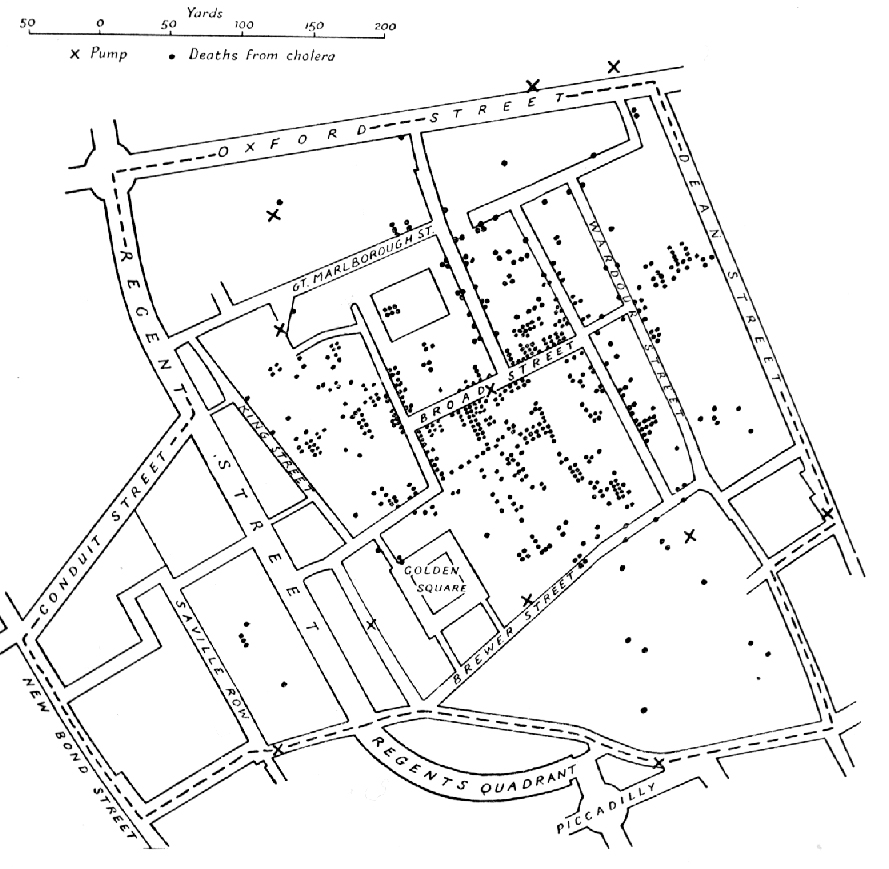
The WHO/UNICEF Joint Monitoring Programme’s 2025 report estimates that, in 2024, 58% of the global population used safely managed sanitation, leaving about 3.4 billion without it. That is not the same as saying 3.4 billion people had no toilet: many used basic, limited or other services. UNESCO documents drainage, wells and sewage soak pits in the ancient Indus city of Moenjodaro, but that site cannot represent all early cities. John Snow’s London outbreak map shows how investigating the actual pathway of water contamination matters more than merely admiring an urban structure.
The essential distinction is the toilet, the service chain and the final public-health outcome. Safely managed sanitation generally means people use an improved facility not shared with other households and the excreta are safely managed on-site or transported for appropriate off-site treatment. Washing hands and ensuring safe drinking water are connected but separate services. Sanitation services must account for privacy, women and girls, children, disability access, maintenance, treatment quality and changing environmental conditions.
The eduKate Civilisation Atlas is an educational map, not a mandatory historical chronology. Foundation 0 respects adaptable human worlds; Stages 1–4 investigate settlement, recorded administration, industrial institutions and worldwide connections. Stage 5 is a proposed regenerative and self-correcting threshold; Stages 6–8 are hypothetical future human settlements outside Earth, not accomplished facts. Use the stages to examine what a particular function can sustain, for whom and with what evidence—not to assign intelligence or moral worth to a culture.

Quick definitions: the terms readers must distinguish
Sanitation. Management of human excreta and related public-health risk, distinct from drinking-water treatment.
Improved sanitation. A category of facility designed to hygienically separate human excreta from contact under proper use.
Safely managed sanitation. An improved facility not shared with other households, with excreta safely managed on-site or transported for appropriate off-site treatment.
Basic sanitation. An improved facility not shared with other households, without confirmed safely managed excreta disposal.
Limited sanitation. An improved facility shared among two or more households.
Service chain. Containment or capture, emptying, transport if necessary, treatment and safe disposal or appropriate reuse.
Primary sources and the limits of their findings
WHO — Guidelines on Sanitation and Health (2018)
The WHO guidelines examine the full public-health benefits of sanitation and evidence-based responsibilities across policies, operations and monitoring. The source is WHO — Guidelines on Sanitation and Health (2018). Its documented facts must be read within the date, jurisdiction and measured population specified by the issuing institution. A technical standard does not claim that every culture followed one sequence, nor does a policy target establish a completed outcome.
WHO/UNICEF — Joint Monitoring Programme 2025 Report
Provides 2000–2024 household WASH estimates and highlights inequalities; the 58% and 3.4-billion sanitation figures refer to 2024. The source is WHO/UNICEF — Joint Monitoring Programme 2025 Report. Its documented facts must be read within the date, jurisdiction and measured population specified by the issuing institution. A technical standard does not claim that every culture followed one sequence, nor does a policy target establish a completed outcome.
WHO — Monitoring Water, Sanitation and Hygiene
Defines improved facilities, safely managed excreta and distinctions among basic, limited and safely managed services. The source is WHO — Monitoring Water, Sanitation and Hygiene. Its documented facts must be read within the date, jurisdiction and measured population specified by the issuing institution. A technical standard does not claim that every culture followed one sequence, nor does a policy target establish a completed outcome.
UN — SDG 6, Clean Water and Sanitation
Target 6.2 concerns equitable sanitation and hygiene, ending open defecation and protecting vulnerable populations. A policy target is not evidence of achieved universal service. The source is UN — SDG 6, Clean Water and Sanitation. Its documented facts must be read within the date, jurisdiction and measured population specified by the issuing institution. A technical standard does not claim that every culture followed one sequence, nor does a policy target establish a completed outcome.
UNESCO — Archaeological Ruins at Moenjodaro
The Indus city contains documented wells, sewage soak pits, baths and drainage in a planned urban context; UNESCO also describes modern conservation threats. The source is UNESCO — Archaeological Ruins at Moenjodaro. Its documented facts must be read within the date, jurisdiction and measured population specified by the issuing institution. A technical standard does not claim that every culture followed one sequence, nor does a policy target establish a completed outcome.
CDC — 150th Anniversary of John Snow and the Pump Handle
The CDC recounts the 1854 Broad Street cholera investigation, evidence of contaminated water and the 8 September pump-handle removal. The source is CDC — 150th Anniversary of John Snow and the Pump Handle. Its documented facts must be read within the date, jurisdiction and measured population specified by the issuing institution. A technical standard does not claim that every culture followed one sequence, nor does a policy target establish a completed outcome.
UNICEF — Sanitation Statistics
Explains how safely managed, basic, limited, unimproved and open-defecation categories differ and identifies global coverage and inequalities. The source is UNICEF — Sanitation Statistics. Its documented facts must be read within the date, jurisdiction and measured population specified by the issuing institution. A technical standard does not claim that every culture followed one sequence, nor does a policy target establish a completed outcome.
United Nations Statistics Division — SDG 6, 2026 Report
Presents 2024 water, sanitation and hygiene figures in a 2026 progress context, with attention to unequal service provision. The source is United Nations Statistics Division — SDG 6, 2026 Report. Its documented facts must be read within the date, jurisdiction and measured population specified by the issuing institution. A technical standard does not claim that every culture followed one sequence, nor does a policy target establish a completed outcome.
Nine civilisation capability stages: a concise crosswalk
Foundation 0 — Adaptive Human Worlds
Human communities have used skilled route-finding, shared practical knowledge and environmental observation without needing large roads or sewer networks. The question is whether an arrangement meets real needs and can be taught, maintained and corrected—not whether a group looks like a modern city. In this article the useful question is whether a service actually reaches the relevant people when A landmark changes or the person with local knowledge is absent; another person needs to make a responsible decision.. This is a diagnostic thought experiment, not a claim that every historic population followed this exact practice.
Reader’s evidence test. Ask what material conditions and human knowledge are needed, which measurements make sense, how a new practitioner can take over and whose experience is missing. Knowledge may survive through language, memory and practice even where built remains are scarce. The last three stages remain hypothetical and must be labelled as such.
Stage 1 — Settlement and Surplus
In an imagined settled village, recurring paths, shared facilities, storage and domestic routines need upkeep across seasons. A successful project is one that remains usable to the people it is meant to serve. In this article the useful question is whether a service actually reaches the relevant people when A wet season makes a vital route or facility inaccessible and the original plan has no practical alternative.. This is a diagnostic thought experiment, not a claim that every historic population followed this exact practice.
Reader’s evidence test. Ask what material conditions and human knowledge are needed, which measurements make sense, how a new practitioner can take over and whose experience is missing. A permanent object does not prove fair access or universally better ways of living. The last three stages remain hypothetical and must be labelled as such.
Stage 2 — Recorded Administration
An imaginary town documents routes, repairs, budgets and service responsibilities. The value of the record is whether another person can verify what actually occurred and correct an error. In this article the useful question is whether a service actually reaches the relevant people when A written schedule says a repair happened, but the intended user has evidence it did not.. This is a diagnostic thought experiment, not a claim that every historic population followed this exact practice.
Reader’s evidence test. Ask what material conditions and human knowledge are needed, which measurements make sense, how a new practitioner can take over and whose experience is missing. Surviving official records can reflect institutional power and omit informal users. The last three stages remain hypothetical and must be labelled as such.
Stage 3 — Industrial and Mass Institutions
A large district can provide specialised public works, trained personnel, inspection, technical standards and sustained maintenance; it also introduces more dependencies and possible large-scale harm. In this article the useful question is whether a service actually reaches the relevant people when A new system increases throughput while worker safety, accessibility or repair quality deteriorates.. This is a diagnostic thought experiment, not a claim that every historic population followed this exact practice.
Reader’s evidence test. Ask what material conditions and human knowledge are needed, which measurements make sense, how a new practitioner can take over and whose experience is missing. Machinery, output and professional institutions are not automatic measures of dignity or wellbeing. The last three stages remain hypothetical and must be labelled as such.
Stage 4 — Planetary Network Civilisation
Different regions become materially connected through engineering standards, expertise, supply chains and information exchange. This helps coordination but can concentrate vulnerability and distribute costs unequally. In this article the useful question is whether a service actually reaches the relevant people when An upstream disruption breaks a local service whose managers did not recognise its dependency.. This is a diagnostic thought experiment, not a claim that every historic population followed this exact practice.
Reader’s evidence test. Ask what material conditions and human knowledge are needed, which measurements make sense, how a new practitioner can take over and whose experience is missing. Global connection is compatible with severe inequalities in access and risk. The last three stages remain hypothetical and must be labelled as such.
Stage 5 — Proposed Regenerative and Self-Correcting Capacity
The Atlas proposes a society capable of measuring harm, modifying causes, including affected people, and independently verifying that benefits persist instead of shifting costs elsewhere. In this article the useful question is whether a service actually reaches the relevant people when One celebrated local improvement worsens conditions outside the reported population or river basin.. This is a diagnostic thought experiment, not a claim that every historic population followed this exact practice.
Reader’s evidence test. Ask what material conditions and human knowledge are needed, which measurements make sense, how a new practitioner can take over and whose experience is missing. This is a pedagogical threshold, not an officially recognised global state currently achieved. The last three stages remain hypothetical and must be labelled as such.
Stage 6 — Hypothetical Multi-World Extension
An imaginary human outpost beyond Earth operates services while still relying on materials, skills, standards and emergency support from Earth. In this article the useful question is whether a service actually reaches the relevant people when A crucial imported replacement does not arrive and the local group cannot continue the operation.. This is a diagnostic thought experiment, not a claim that every historic population followed this exact practice.
Reader’s evidence test. Ask what material conditions and human knowledge are needed, which measurements make sense, how a new practitioner can take over and whose experience is missing. Robotic missions and experimental systems do not establish inhabited off-Earth civilisation. The last three stages remain hypothetical and must be labelled as such.
Stage 7 — Hypothetical Autonomous Multi-World Settlement
A speculative human settlement attempts substantial local repair, resource processing, health and governance, even without routine Earth resupply. In this article the useful question is whether a service actually reaches the relevant people when One specialised part or expert is irreplaceable, exposing a limit on local autonomy.. This is a diagnostic thought experiment, not a claim that every historic population followed this exact practice.
Reader’s evidence test. Ask what material conditions and human knowledge are needed, which measurements make sense, how a new practitioner can take over and whose experience is missing. A successful local subsystem cannot prove a self-sustaining human society. The last three stages remain hypothetical and must be labelled as such.
Stage 8 — Hypothetical Distributed Interplanetary Society
Several fictional inhabited worlds must combine local authority with cross-world cooperation despite delayed messages and cargo. In this article the useful question is whether a service actually reaches the relevant people when A distant instruction arrives after the situation has already changed and the receiving centre must decide with its own evidence.. This is a diagnostic thought experiment, not a claim that every historic population followed this exact practice.
Reader’s evidence test. Ask what material conditions and human knowledge are needed, which measurements make sense, how a new practitioner can take over and whose experience is missing. No such human interplanetary civilisation is demonstrated; this is an explanatory thought experiment. The last three stages remain hypothetical and must be labelled as such.
Twenty-two mechanisms explained for parents, students and careful readers
1. Sanitation versus drinking water
Sanitation manages human excreta and related health risks; drinking-water safety concerns the quality and accessibility of water used. The two services interact but are different measures. The key is to define the service or claim clearly before asking how impressive the technology looks. What makes it work, who uses it, how is it supported, and what would count as failure under ordinary changing circumstances? Historical objects, modern policy and fictional classroom designs are different categories of evidence.
Common mistake. A neighbourhood installs water filters and concludes that its sanitation problem has been solved. A helpful correction separates the source observation from the inference about the whole system. If the issue concerns a real building, bridge, hazardous material, wastewater or public facility, conclusions about safety must be left to relevant qualified authorities and official guidance. Children should not try to resolve a real-life hazard through this reading exercise.
Quick activity. Sort fictional interventions into sanitation, drinking water and hygiene, then identify their connections. Provide an invented timetable, map or explanatory diagram with a deliberately missing detail. Ask the learner to decide which fact must be established before the plan can be judged successful, and to keep the scope of the conclusion narrow. The class should consider an alternative hypothesis and whether the same procedure would still work with a different user or setting.
Why it matters. One clean service cannot automatically compensate for a failing service elsewhere in the chain. A strong educational account can describe improvement while also recognising a cost, a limitation or a group that was excluded. The evidence may be convincing for one place and inadequate for another; an honest reader should state the difference rather than turn a useful example into a universal law of civilisation.
2. Improved versus unimproved facilities
The JMP defines particular types of facilities as improved because they can hygienically separate excreta from human contact when used properly. Appearance alone is not the classification. The key is to define the service or claim clearly before asking how impressive the technology looks. What makes it work, who uses it, how is it supported, and what would count as failure under ordinary changing circumstances? Historical objects, modern policy and fictional classroom designs are different categories of evidence.
Common mistake. A shiny public washroom is labelled safely managed without checking how its waste is handled. A helpful correction separates the source observation from the inference about the whole system. If the issue concerns a real building, bridge, hazardous material, wastewater or public facility, conclusions about safety must be left to relevant qualified authorities and official guidance. Children should not try to resolve a real-life hazard through this reading exercise.
Quick activity. Compare hypothetical facilities using legitimate JMP criteria rather than visual attractiveness. Provide an invented timetable, map or explanatory diagram with a deliberately missing detail. Ask the learner to decide which fact must be established before the plan can be judged successful, and to keep the scope of the conclusion narrow. The class should consider an alternative hypothesis and whether the same procedure would still work with a different user or setting.
Why it matters. The facility type matters but does not by itself establish complete safe management. A strong educational account can describe improvement while also recognising a cost, a limitation or a group that was excluded. The evidence may be convincing for one place and inadequate for another; an honest reader should state the difference rather than turn a useful example into a universal law of civilisation.
3. Basic, limited and safely managed
An improved facility not shared by other households generally meets basic service. When facilities are shared it is usually limited, while safely managed requires safe excreta handling. The key is to define the service or claim clearly before asking how impressive the technology looks. What makes it work, who uses it, how is it supported, and what would count as failure under ordinary changing circumstances? Historical objects, modern policy and fictional classroom designs are different categories of evidence.
Common mistake. A family has a toilet at home and the district automatically reports every household as safely managed. A helpful correction separates the source observation from the inference about the whole system. If the issue concerns a real building, bridge, hazardous material, wastewater or public facility, conclusions about safety must be left to relevant qualified authorities and official guidance. Children should not try to resolve a real-life hazard through this reading exercise.
Quick activity. Label fictional household cards as basic, limited, safely managed or unknown under precise definitions. Provide an invented timetable, map or explanatory diagram with a deliberately missing detail. Ask the learner to decide which fact must be established before the plan can be judged successful, and to keep the scope of the conclusion narrow. The class should consider an alternative hypothesis and whether the same procedure would still work with a different user or setting.
Why it matters. A service ladder is a monitoring tool for households, not a ranking of people’s worth. A strong educational account can describe improvement while also recognising a cost, a limitation or a group that was excluded. The evidence may be convincing for one place and inadequate for another; an honest reader should state the difference rather than turn a useful example into a universal law of civilisation.
4. On-site sanitation can be legitimate
Some well-designed and appropriately managed on-site systems can meet safely managed criteria without a conventional city sewer. They require proper containment, maintenance and disposal arrangements. The key is to define the service or claim clearly before asking how impressive the technology looks. What makes it work, who uses it, how is it supported, and what would count as failure under ordinary changing circumstances? Historical objects, modern policy and fictional classroom designs are different categories of evidence.
Common mistake. A school declares that every household lacking a sewer connection is counted as having no sanitation. A helpful correction separates the source observation from the inference about the whole system. If the issue concerns a real building, bridge, hazardous material, wastewater or public facility, conclusions about safety must be left to relevant qualified authorities and official guidance. Children should not try to resolve a real-life hazard through this reading exercise.
Quick activity. Draw separate fictional in-situ and off-site management chains without recommending a particular engineering design. Provide an invented timetable, map or explanatory diagram with a deliberately missing detail. Ask the learner to decide which fact must be established before the plan can be judged successful, and to keep the scope of the conclusion narrow. The class should consider an alternative hypothesis and whether the same procedure would still work with a different user or setting.
Why it matters. The true question is safe management, not the presence of one preferred infrastructure. A strong educational account can describe improvement while also recognising a cost, a limitation or a group that was excluded. The evidence may be convincing for one place and inadequate for another; an honest reader should state the difference rather than turn a useful example into a universal law of civilisation.
5. Containing waste at the source
An appropriate facility needs to limit exposure to human waste, including during ordinary use and maintenance. The setting, space and relevant technology matter. The key is to define the service or claim clearly before asking how impressive the technology looks. What makes it work, who uses it, how is it supported, and what would count as failure under ordinary changing circumstances? Historical objects, modern policy and fictional classroom designs are different categories of evidence.
Common mistake. An invented toilet drains into an unprotected pit beside a drinking-water source and is described as safe. A helpful correction separates the source observation from the inference about the whole system. If the issue concerns a real building, bridge, hazardous material, wastewater or public facility, conclusions about safety must be left to relevant qualified authorities and official guidance. Children should not try to resolve a real-life hazard through this reading exercise.
Quick activity. Mark possible exposure routes on a paper plan, referring actual decisions to qualified experts. Provide an invented timetable, map or explanatory diagram with a deliberately missing detail. Ask the learner to decide which fact must be established before the plan can be judged successful, and to keep the scope of the conclusion narrow. The class should consider an alternative hypothesis and whether the same procedure would still work with a different user or setting.
Why it matters. Containment must be judged through environmental and health evidence rather than labels. A strong educational account can describe improvement while also recognising a cost, a limitation or a group that was excluded. The evidence may be convincing for one place and inadequate for another; an honest reader should state the difference rather than turn a useful example into a universal law of civilisation.
6. Emptying, transport and occupational safety
Where waste is collected for off-site treatment, safe emptying and transport are crucial parts of the service. Workers’ health and their tools matter as much as the household facility. The key is to define the service or claim clearly before asking how impressive the technology looks. What makes it work, who uses it, how is it supported, and what would count as failure under ordinary changing circumstances? Historical objects, modern policy and fictional classroom designs are different categories of evidence.
Common mistake. A neighbourhood counts toilets installed but ignores the staff and routes required to remove waste. A helpful correction separates the source observation from the inference about the whole system. If the issue concerns a real building, bridge, hazardous material, wastewater or public facility, conclusions about safety must be left to relevant qualified authorities and official guidance. Children should not try to resolve a real-life hazard through this reading exercise.
Quick activity. Create an imaginary responsibilities checklist from the household to trained service providers. Provide an invented timetable, map or explanatory diagram with a deliberately missing detail. Ask the learner to decide which fact must be established before the plan can be judged successful, and to keep the scope of the conclusion narrow. The class should consider an alternative hypothesis and whether the same procedure would still work with a different user or setting.
Why it matters. A sanitary outcome is partly maintained by workers who should not be invisible. A strong educational account can describe improvement while also recognising a cost, a limitation or a group that was excluded. The evidence may be convincing for one place and inadequate for another; an honest reader should state the difference rather than turn a useful example into a universal law of civilisation.
7. Sewers are a network, not a destination
Sewers convey wastewater, but transporting material away from a home is different from treating it. Receiving waters and treatment plants remain part of the outcome. The key is to define the service or claim clearly before asking how impressive the technology looks. What makes it work, who uses it, how is it supported, and what would count as failure under ordinary changing circumstances? Historical objects, modern policy and fictional classroom designs are different categories of evidence.
Common mistake. A town celebrates 100% sewer connections but cannot account for the discharge point. A helpful correction separates the source observation from the inference about the whole system. If the issue concerns a real building, bridge, hazardous material, wastewater or public facility, conclusions about safety must be left to relevant qualified authorities and official guidance. Children should not try to resolve a real-life hazard through this reading exercise.
Quick activity. Trace a fictional household pipe through conveyance, treatment and verified disposal. Provide an invented timetable, map or explanatory diagram with a deliberately missing detail. Ask the learner to decide which fact must be established before the plan can be judged successful, and to keep the scope of the conclusion narrow. The class should consider an alternative hypothesis and whether the same procedure would still work with a different user or setting.
Why it matters. A pipe that removes waste locally can still transfer a risk downstream. A strong educational account can describe improvement while also recognising a cost, a limitation or a group that was excluded. The evidence may be convincing for one place and inadequate for another; an honest reader should state the difference rather than turn a useful example into a universal law of civilisation.
8. Wastewater treatment is a process
Treatment may involve physical, biological and other managed steps under appropriate standards, followed by safe effluent and residual handling. Success is not simply a clear-looking liquid. The key is to define the service or claim clearly before asking how impressive the technology looks. What makes it work, who uses it, how is it supported, and what would count as failure under ordinary changing circumstances? Historical objects, modern policy and fictional classroom designs are different categories of evidence.
Common mistake. A classroom observes transparent water and declares it pathogen-free without testing. A helpful correction separates the source observation from the inference about the whole system. If the issue concerns a real building, bridge, hazardous material, wastewater or public facility, conclusions about safety must be left to relevant qualified authorities and official guidance. Children should not try to resolve a real-life hazard through this reading exercise.
Quick activity. Draw a paper flowchart with qualified monitoring checkpoints instead of attempting home treatment. Provide an invented timetable, map or explanatory diagram with a deliberately missing detail. Ask the learner to decide which fact must be established before the plan can be judged successful, and to keep the scope of the conclusion narrow. The class should consider an alternative hypothesis and whether the same procedure would still work with a different user or setting.
Why it matters. Appearance is not reliable evidence of microbial or chemical safety. A strong educational account can describe improvement while also recognising a cost, a limitation or a group that was excluded. The evidence may be convincing for one place and inadequate for another; an honest reader should state the difference rather than turn a useful example into a universal law of civilisation.
9. What the global 58% actually measures
JMP estimates for 2024 show 58% of people using safely managed sanitation worldwide. The remaining 42% span different service levels, not one uniform condition. The key is to define the service or claim clearly before asking how impressive the technology looks. What makes it work, who uses it, how is it supported, and what would count as failure under ordinary changing circumstances? Historical objects, modern policy and fictional classroom designs are different categories of evidence.
Common mistake. A blog claims 3.4 billion people have never seen a toilet because they lack safely managed sanitation. A helpful correction separates the source observation from the inference about the whole system. If the issue concerns a real building, bridge, hazardous material, wastewater or public facility, conclusions about safety must be left to relevant qualified authorities and official guidance. Children should not try to resolve a real-life hazard through this reading exercise.
Quick activity. Create fictional population cards for safely managed, basic, limited and other categories. Provide an invented timetable, map or explanatory diagram with a deliberately missing detail. Ask the learner to decide which fact must be established before the plan can be judged successful, and to keep the scope of the conclusion narrow. The class should consider an alternative hypothesis and whether the same procedure would still work with a different user or setting.
Why it matters. Dated global percentages must retain their precise definitions and denominators. A strong educational account can describe improvement while also recognising a cost, a limitation or a group that was excluded. The evidence may be convincing for one place and inadequate for another; an honest reader should state the difference rather than turn a useful example into a universal law of civilisation.
10. Urban and rural differences
The JMP describes inequalities by place, income and other attributes. A national average can hide large differences among settlements and population groups. The key is to define the service or claim clearly before asking how impressive the technology looks. What makes it work, who uses it, how is it supported, and what would count as failure under ordinary changing circumstances? Historical objects, modern policy and fictional classroom designs are different categories of evidence.
Common mistake. A country with strong urban sanitation coverage is said to have solved access for remote households. A helpful correction separates the source observation from the inference about the whole system. If the issue concerns a real building, bridge, hazardous material, wastewater or public facility, conclusions about safety must be left to relevant qualified authorities and official guidance. Children should not try to resolve a real-life hazard through this reading exercise.
Quick activity. Compare fictional rural and urban access and calculate their weighted national mean. Provide an invented timetable, map or explanatory diagram with a deliberately missing detail. Ask the learner to decide which fact must be established before the plan can be judged successful, and to keep the scope of the conclusion narrow. The class should consider an alternative hypothesis and whether the same procedure would still work with a different user or setting.
Why it matters. Use disaggregated data to identify people still underserved. A strong educational account can describe improvement while also recognising a cost, a limitation or a group that was excluded. The evidence may be convincing for one place and inadequate for another; an honest reader should state the difference rather than turn a useful example into a universal law of civilisation.
11. Open defecation is a specific indicator
The monitoring category describes defecation in open places, not every case without safely managed sanitation. The global share fell substantially, but 2024 totals remained significant. The key is to define the service or claim clearly before asking how impressive the technology looks. What makes it work, who uses it, how is it supported, and what would count as failure under ordinary changing circumstances? Historical objects, modern policy and fictional classroom designs are different categories of evidence.
Common mistake. A public notice treats all households with shared facilities as engaging in open defecation. A helpful correction separates the source observation from the inference about the whole system. If the issue concerns a real building, bridge, hazardous material, wastewater or public facility, conclusions about safety must be left to relevant qualified authorities and official guidance. Children should not try to resolve a real-life hazard through this reading exercise.
Quick activity. Classify hypothetical conditions carefully and avoid stigmatizing people facing infrastructure barriers. Provide an invented timetable, map or explanatory diagram with a deliberately missing detail. Ask the learner to decide which fact must be established before the plan can be judged successful, and to keep the scope of the conclusion narrow. The class should consider an alternative hypothesis and whether the same procedure would still work with a different user or setting.
Why it matters. The indicator identifies an urgent service gap, not a moral failure by households. A strong educational account can describe improvement while also recognising a cost, a limitation or a group that was excluded. The evidence may be convincing for one place and inadequate for another; an honest reader should state the difference rather than turn a useful example into a universal law of civilisation.
12. Privacy, disability and dignity
Safe facilities also need practical access, privacy, usability and respectful maintenance. Women, girls, children and people with disabilities can face specific obstacles not captured by construction counts. The key is to define the service or claim clearly before asking how impressive the technology looks. What makes it work, who uses it, how is it supported, and what would count as failure under ordinary changing circumstances? Historical objects, modern policy and fictional classroom designs are different categories of evidence.
Common mistake. A school reports adequate toilets by number but has no accessible cubicle and poor privacy. A helpful correction separates the source observation from the inference about the whole system. If the issue concerns a real building, bridge, hazardous material, wastewater or public facility, conclusions about safety must be left to relevant qualified authorities and official guidance. Children should not try to resolve a real-life hazard through this reading exercise.
Quick activity. Audit an imaginary school floor plan for access, handwashing, privacy and maintenance. Provide an invented timetable, map or explanatory diagram with a deliberately missing detail. Ask the learner to decide which fact must be established before the plan can be judged successful, and to keep the scope of the conclusion narrow. The class should consider an alternative hypothesis and whether the same procedure would still work with a different user or setting.
Why it matters. Fair outcomes must be experienced by the actual people using a service. A strong educational account can describe improvement while also recognising a cost, a limitation or a group that was excluded. The evidence may be convincing for one place and inadequate for another; an honest reader should state the difference rather than turn a useful example into a universal law of civilisation.
13. Hand hygiene is a separate service
Basic hygiene monitoring includes an available handwashing facility with soap and water at home. A toilet’s presence does not prove that hygiene supplies are present. The key is to define the service or claim clearly before asking how impressive the technology looks. What makes it work, who uses it, how is it supported, and what would count as failure under ordinary changing circumstances? Historical objects, modern policy and fictional classroom designs are different categories of evidence.
Common mistake. A school assumes installing cubicles automatically provides students with soap and water. A helpful correction separates the source observation from the inference about the whole system. If the issue concerns a real building, bridge, hazardous material, wastewater or public facility, conclusions about safety must be left to relevant qualified authorities and official guidance. Children should not try to resolve a real-life hazard through this reading exercise.
Quick activity. Build a paper checklist separating toilet access, water availability, soap and clean maintenance. Provide an invented timetable, map or explanatory diagram with a deliberately missing detail. Ask the learner to decide which fact must be established before the plan can be judged successful, and to keep the scope of the conclusion narrow. The class should consider an alternative hypothesis and whether the same procedure would still work with a different user or setting.
Why it matters. Integrated planning preserves the distinct functions rather than blending indicators. A strong educational account can describe improvement while also recognising a cost, a limitation or a group that was excluded. The evidence may be convincing for one place and inadequate for another; an honest reader should state the difference rather than turn a useful example into a universal law of civilisation.
14. Moenjodaro as a particular historic case
UNESCO documents wells, drainage and soak pits in an ancient planned Indus city. It supports a claim about this place, not that everyone in the third millennium BCE had the same network. The key is to define the service or claim clearly before asking how impressive the technology looks. What makes it work, who uses it, how is it supported, and what would count as failure under ordinary changing circumstances? Historical objects, modern policy and fictional classroom designs are different categories of evidence.
Common mistake. A visitor labels all ancient communities as without sanitary systems until modern London sewers. A helpful correction separates the source observation from the inference about the whole system. If the issue concerns a real building, bridge, hazardous material, wastewater or public facility, conclusions about safety must be left to relevant qualified authorities and official guidance. Children should not try to resolve a real-life hazard through this reading exercise.
Quick activity. Write a museum caption for Moenjodaro with an explicit site and date. Provide an invented timetable, map or explanatory diagram with a deliberately missing detail. Ask the learner to decide which fact must be established before the plan can be judged successful, and to keep the scope of the conclusion narrow. The class should consider an alternative hypothesis and whether the same procedure would still work with a different user or setting.
Why it matters. A careful historical comparison can recognise multiple independent technical traditions. A strong educational account can describe improvement while also recognising a cost, a limitation or a group that was excluded. The evidence may be convincing for one place and inadequate for another; an honest reader should state the difference rather than turn a useful example into a universal law of civilisation.
15. John Snow and the 1854 cholera map
Snow traced observed cholera deaths and investigated pump water use, testing a waterborne explanation against prevailing assumptions. His map is a major example of source-led public health reasoning. The key is to define the service or claim clearly before asking how impressive the technology looks. What makes it work, who uses it, how is it supported, and what would count as failure under ordinary changing circumstances? Historical objects, modern policy and fictional classroom designs are different categories of evidence.
Common mistake. A video calls the map proof that every nineteenth-century disease came from water. A helpful correction separates the source observation from the inference about the whole system. If the issue concerns a real building, bridge, hazardous material, wastewater or public facility, conclusions about safety must be left to relevant qualified authorities and official guidance. Children should not try to resolve a real-life hazard through this reading exercise.
Quick activity. Compare the mapped distribution of cases with a fictional competing explanation about exposure. Provide an invented timetable, map or explanatory diagram with a deliberately missing detail. Ask the learner to decide which fact must be established before the plan can be judged successful, and to keep the scope of the conclusion narrow. The class should consider an alternative hypothesis and whether the same procedure would still work with a different user or setting.
Why it matters. A historic map can support a causal investigation without proving all modern epidemiology. A strong educational account can describe improvement while also recognising a cost, a limitation or a group that was excluded. The evidence may be convincing for one place and inadequate for another; an honest reader should state the difference rather than turn a useful example into a universal law of civilisation.
16. Pump-handle removal and chronology
The CDC records the removal of the Broad Street pump handle on 8 September 1854. Readers should not claim that the action alone instantaneously ended all cases; historical outbreak dynamics matter. The key is to define the service or claim clearly before asking how impressive the technology looks. What makes it work, who uses it, how is it supported, and what would count as failure under ordinary changing circumstances? Historical objects, modern policy and fictional classroom designs are different categories of evidence.
Common mistake. A dramatic retelling says that the moment the handle was removed, nobody else became sick. A helpful correction separates the source observation from the inference about the whole system. If the issue concerns a real building, bridge, hazardous material, wastewater or public facility, conclusions about safety must be left to relevant qualified authorities and official guidance. Children should not try to resolve a real-life hazard through this reading exercise.
Quick activity. Write a short chronology distinguishing investigation, proposed action and changing case counts. Provide an invented timetable, map or explanatory diagram with a deliberately missing detail. Ask the learner to decide which fact must be established before the plan can be judged successful, and to keep the scope of the conclusion narrow. The class should consider an alternative hypothesis and whether the same procedure would still work with a different user or setting.
Why it matters. Correct dates and causal caution make history more useful. A strong educational account can describe improvement while also recognising a cost, a limitation or a group that was excluded. The evidence may be convincing for one place and inadequate for another; an honest reader should state the difference rather than turn a useful example into a universal law of civilisation.
17. Waterborne disease and qualified response
Unsafe waste management can contaminate environments and contribute to disease transmission. Public-health decisions require specialised assessment rather than children’s experiments with dirty water. The key is to define the service or claim clearly before asking how impressive the technology looks. What makes it work, who uses it, how is it supported, and what would count as failure under ordinary changing circumstances? Historical objects, modern policy and fictional classroom designs are different categories of evidence.
Common mistake. A class proposes testing unknown wastewater by smelling or touching it. A helpful correction separates the source observation from the inference about the whole system. If the issue concerns a real building, bridge, hazardous material, wastewater or public facility, conclusions about safety must be left to relevant qualified authorities and official guidance. Children should not try to resolve a real-life hazard through this reading exercise.
Quick activity. Use only paper contamination-path diagrams and official WHO guidance. Provide an invented timetable, map or explanatory diagram with a deliberately missing detail. Ask the learner to decide which fact must be established before the plan can be judged successful, and to keep the scope of the conclusion narrow. The class should consider an alternative hypothesis and whether the same procedure would still work with a different user or setting.
Why it matters. Education about risk should not expose learners to the risk itself. A strong educational account can describe improvement while also recognising a cost, a limitation or a group that was excluded. The evidence may be convincing for one place and inadequate for another; an honest reader should state the difference rather than turn a useful example into a universal law of civilisation.
18. Operations, maintenance and financing
Sanitation systems need qualified operators, repairs, spare parts, clear records and sustainable funding. One completed facility is not the same as a continuing service. The key is to define the service or claim clearly before asking how impressive the technology looks. What makes it work, who uses it, how is it supported, and what would count as failure under ordinary changing circumstances? Historical objects, modern policy and fictional classroom designs are different categories of evidence.
Common mistake. A newly built treatment plant fails after routine consumables become unavailable. A helpful correction separates the source observation from the inference about the whole system. If the issue concerns a real building, bridge, hazardous material, wastewater or public facility, conclusions about safety must be left to relevant qualified authorities and official guidance. Children should not try to resolve a real-life hazard through this reading exercise.
Quick activity. Prepare an imaginary 10-year operating budget, separating capital from maintenance. Provide an invented timetable, map or explanatory diagram with a deliberately missing detail. Ask the learner to decide which fact must be established before the plan can be judged successful, and to keep the scope of the conclusion narrow. The class should consider an alternative hypothesis and whether the same procedure would still work with a different user or setting.
Why it matters. Public health depends on institutions that keep essential functions working. A strong educational account can describe improvement while also recognising a cost, a limitation or a group that was excluded. The evidence may be convincing for one place and inadequate for another; an honest reader should state the difference rather than turn a useful example into a universal law of civilisation.
19. Wastewater and ecosystem impacts
Unsafe discharge can harm rivers, coastal waters and communities beyond the source area. Conversely, treatment interventions need monitoring to prove downstream improvement. The key is to define the service or claim clearly before asking how impressive the technology looks. What makes it work, who uses it, how is it supported, and what would count as failure under ordinary changing circumstances? Historical objects, modern policy and fictional classroom designs are different categories of evidence.
Common mistake. A city reports household benefits but ignores water quality where waste is released. A helpful correction separates the source observation from the inference about the whole system. If the issue concerns a real building, bridge, hazardous material, wastewater or public facility, conclusions about safety must be left to relevant qualified authorities and official guidance. Children should not try to resolve a real-life hazard through this reading exercise.
Quick activity. Map upstream and downstream users with a fictional effluent-monitoring register. Provide an invented timetable, map or explanatory diagram with a deliberately missing detail. Ask the learner to decide which fact must be established before the plan can be judged successful, and to keep the scope of the conclusion narrow. The class should consider an alternative hypothesis and whether the same procedure would still work with a different user or setting.
Why it matters. A local sanitation gain must not hide transferred environmental damage. A strong educational account can describe improvement while also recognising a cost, a limitation or a group that was excluded. The evidence may be convincing for one place and inadequate for another; an honest reader should state the difference rather than turn a useful example into a universal law of civilisation.
20. Emergencies and sanitation continuity
Disruptions can cause overflow, block transport routes or make facilities inaccessible. Safe continuity planning needs competent people and accessible information. The key is to define the service or claim clearly before asking how impressive the technology looks. What makes it work, who uses it, how is it supported, and what would count as failure under ordinary changing circumstances? Historical objects, modern policy and fictional classroom designs are different categories of evidence.
Common mistake. An imagined emergency plan shows an alternative toilet but no accessible route for residents. A helpful correction separates the source observation from the inference about the whole system. If the issue concerns a real building, bridge, hazardous material, wastewater or public facility, conclusions about safety must be left to relevant qualified authorities and official guidance. Children should not try to resolve a real-life hazard through this reading exercise.
Quick activity. Design a harmless fictional continuity notice with defined professional responsibilities. Provide an invented timetable, map or explanatory diagram with a deliberately missing detail. Ask the learner to decide which fact must be established before the plan can be judged successful, and to keep the scope of the conclusion narrow. The class should consider an alternative hypothesis and whether the same procedure would still work with a different user or setting.
Why it matters. Resilience is about maintained service and fair access, not an empty promise of zero failure. A strong educational account can describe improvement while also recognising a cost, a limitation or a group that was excluded. The evidence may be convincing for one place and inadequate for another; an honest reader should state the difference rather than turn a useful example into a universal law of civilisation.
21. Monitoring data and missing populations
Service counts need accurate coverage: undocumented residents, people in temporary housing and rural households may be absent from official registers. Missing data is not confirmation of access. The key is to define the service or claim clearly before asking how impressive the technology looks. What makes it work, who uses it, how is it supported, and what would count as failure under ordinary changing circumstances? Historical objects, modern policy and fictional classroom designs are different categories of evidence.
Common mistake. A high national service rate is calculated only among registered urban buildings. A helpful correction separates the source observation from the inference about the whole system. If the issue concerns a real building, bridge, hazardous material, wastewater or public facility, conclusions about safety must be left to relevant qualified authorities and official guidance. Children should not try to resolve a real-life hazard through this reading exercise.
Quick activity. Construct a fictional sample with omitted households and recalculate transparently. Provide an invented timetable, map or explanatory diagram with a deliberately missing detail. Ask the learner to decide which fact must be established before the plan can be judged successful, and to keep the scope of the conclusion narrow. The class should consider an alternative hypothesis and whether the same procedure would still work with a different user or setting.
Why it matters. Human dignity requires recognising who was excluded from the denominator. A strong educational account can describe improvement while also recognising a cost, a limitation or a group that was excluded. The evidence may be convincing for one place and inadequate for another; an honest reader should state the difference rather than turn a useful example into a universal law of civilisation.
22. Hypothetical space habitat sanitation
A fictional lunar habitat would need waste containment, processing, hygiene and repair without harming the enclosed life-support system. A real spacecraft subsystem does not establish a self-sufficient civilisation. The key is to define the service or claim clearly before asking how impressive the technology looks. What makes it work, who uses it, how is it supported, and what would count as failure under ordinary changing circumstances? Historical objects, modern policy and fictional classroom designs are different categories of evidence.
Common mistake. A children’s drawing of a future Moon town treats wastewater as disappearing at the end of a pipe. A helpful correction separates the source observation from the inference about the whole system. If the issue concerns a real building, bridge, hazardous material, wastewater or public facility, conclusions about safety must be left to relevant qualified authorities and official guidance. Children should not try to resolve a real-life hazard through this reading exercise.
Quick activity. Draw a fully labelled imaginary material-flow and make all imported supplies visible. Provide an invented timetable, map or explanatory diagram with a deliberately missing detail. Ask the learner to decide which fact must be established before the plan can be judged successful, and to keep the scope of the conclusion narrow. The class should consider an alternative hypothesis and whether the same procedure would still work with a different user or setting.
Why it matters. Future systems should be discussed as hypotheses, not existing human settlements. A strong educational account can describe improvement while also recognising a cost, a limitation or a group that was excluded. The evidence may be convincing for one place and inadequate for another; an honest reader should state the difference rather than turn a useful example into a universal law of civilisation.
Five case studies: from source to practical conclusion
Case study: the sanitation ladder
Take 1,000 imaginary households and classify them only after defining improved facility, sharing and excreta management. The class should reject the claim that all households lacking ‘safely managed’ sanitation have no toilets.
In this case study, compare the relevant mechanism with the question of sanitation versus drinking water. Sanitation manages human excreta and related health risks; drinking-water safety concerns the quality and accessibility of water used. The two services interact but are different measures. An accurate explanation uses the appropriate source and conditions rather than deciding the whole civilisation’s capability from one achievement.
The learner’s short report should have four parts: a fact with a clear source; an interpretation tied to that fact; a counterexample or limitation; and one decision or observation that would improve the evidence. That format can be completed independently and reused for unfamiliar questions in history, science, geography or social studies.
Case study: Moenjodaro and historical respect
Read UNESCO’s site description of drainage and soak pits. Explain why it supports specific claims about that planned city without claiming its systems were identical to modern treatment plants.
In this case study, compare the relevant mechanism with the question of containing waste at the source. An appropriate facility needs to limit exposure to human waste, including during ordinary use and maintenance. The setting, space and relevant technology matter. An accurate explanation uses the appropriate source and conditions rather than deciding the whole civilisation’s capability from one achievement.
The learner’s short report should have four parts: a fact with a clear source; an interpretation tied to that fact; a counterexample or limitation; and one decision or observation that would improve the evidence. That format can be completed independently and reused for unfamiliar questions in history, science, geography or social studies.
Case study: John Snow and contradictory evidence
Use the historic map to ask where cases clustered and how a water-source hypothesis could be investigated. Include contrary examples and remember that association and causes need evidence.
In this case study, compare the relevant mechanism with the question of what the global 58% actually measures. JMP estimates for 2024 show 58% of people using safely managed sanitation worldwide. The remaining 42% span different service levels, not one uniform condition. An accurate explanation uses the appropriate source and conditions rather than deciding the whole civilisation’s capability from one achievement.
The learner’s short report should have four parts: a fact with a clear source; an interpretation tied to that fact; a counterexample or limitation; and one decision or observation that would improve the evidence. That format can be completed independently and reused for unfamiliar questions in history, science, geography or social studies.
Case study: a treatment service beyond the gate
A fictional neighbourhood connects every home to sewers, but the only plant frequently bypasses treatment. Students should explain why connected homes and safely managed sanitation are not synonymous.
In this case study, compare the relevant mechanism with the question of hand hygiene is a separate service. Basic hygiene monitoring includes an available handwashing facility with soap and water at home. A toilet’s presence does not prove that hygiene supplies are present. An accurate explanation uses the appropriate source and conditions rather than deciding the whole civilisation’s capability from one achievement.
The learner’s short report should have four parts: a fact with a clear source; an interpretation tied to that fact; a counterexample or limitation; and one decision or observation that would improve the evidence. That format can be completed independently and reused for unfamiliar questions in history, science, geography or social studies.
Case study: inclusive school toilets
A fictional school has an apparently adequate count of toilets but lacks practical disability access and a supply of soap. Learners compare engineering completion with the students’ actual service.
In this case study, compare the relevant mechanism with the question of waterborne disease and qualified response. Unsafe waste management can contaminate environments and contribute to disease transmission. Public-health decisions require specialised assessment rather than children’s experiments with dirty water. An accurate explanation uses the appropriate source and conditions rather than deciding the whole civilisation’s capability from one achievement.
The learner’s short report should have four parts: a fact with a clear source; an interpretation tied to that fact; a counterexample or limitation; and one decision or observation that would improve the evidence. That format can be completed independently and reused for unfamiliar questions in history, science, geography or social studies.
Four worked calculations: a number must answer the right question
What 58% means
In 2024 the WHO/UNICEF JMP estimated 58% worldwide safely managed sanitation coverage. The remaining 42% should not be described as all practicing open defecation, because this includes several lower service categories.
A student should write the numerator, denominator, reference period, people represented and the fact the result does not prove. This prevents a perfectly calculated ratio from becoming a misleading public claim.
A fictional school register
A school has 100 pupils and only 80 can use its available toilets; of those, 10 must use an inaccessible staircase. A school reporting 80% ‘facilities available’ has not measured access correctly for everyone.
A student should write the numerator, denominator, reference period, people represented and the fact the result does not prove. This prevents a perfectly calculated ratio from becoming a misleading public claim.
Service reliability
In an invented district, a collection team completes 90 of 100 scheduled legitimate pickups. The observed completion is 90%, but the result does not tell us whether the waste ultimately received safe treatment.
A student should write the numerator, denominator, reference period, people represented and the fact the result does not prove. This prevents a perfectly calculated ratio from becoming a misleading public claim.
Shared access
Among a fictional group of 50 households, 30 have private improved facilities and 20 share one improved facility. It is wrong to label all 50 as having a basic household service. Use the monitoring category definitions precisely.
A student should write the numerator, denominator, reference period, people represented and the fact the result does not prove. This prevents a perfectly calculated ratio from becoming a misleading public claim.
Frequently asked questions
Do households need a sewer connection to have safely managed sanitation?
Not always. Properly designed and managed on-site systems can qualify under WHO/UNICEF definitions; what happens to excreta is essential.
Does ‘3.4 billion lacking safely managed sanitation’ mean no toilets?
No. That number includes different lower service levels, including people who have basic and limited facilities.
Did Moenjodaro have sewage or drainage?
UNESCO reports urban drainage, soak pits and associated planning in this specific ancient city.
Did removing a pump handle instantly end London’s 1854 cholera outbreak?
No simplistic instantaneous causal claim is justified. Snow’s investigation and the 8 September action are documented, while case trends require historical context.
Are sanitation and handwashing the same indicator?
No. They are connected WASH services but have distinct criteria and different reported coverage.
How should an actual wastewater problem be handled?
Follow relevant local authorities and qualified public-health or utility professionals, rather than do-it-yourself testing of potentially hazardous waste.
A practical assessment rubric
Starting: the learner can name the object or indicator but cannot explain its function. Developing: the learner explains one mechanism, but confuses a planned or visible facility with a verified, continuing service. Secure: the learner identifies the source, definition, users, maintenance responsibility and a plausible risk. Advanced: the learner compares rival explanations, identifies overlooked people, interprets numerical denominators correctly and changes the conclusion when counterevidence appears. Honest uncertainty is evidence of good reasoning.
Connected reading in the Civilisation Atlas
- Civilisation Atlas | How to Build and Recognise Its Stage
- Evidence Atlas and Confidence
- Capability, Lifecycle and Habitat Independence
- Shelter, Architecture and Public Space
- Health, Medicine and Care
- Risk, Reserves and the Design of Resilience
- Rivers, Canals, Irrigation and Hydraulic Engineering
- Energy, Production and Transport
Primary-source reading
- WHO — Guidelines on Sanitation and Health (2018)
- WHO/UNICEF — Joint Monitoring Programme 2025 Report
- WHO — Monitoring Water, Sanitation and Hygiene
- UN — SDG 6, Clean Water and Sanitation
- UNESCO — Archaeological Ruins at Moenjodaro
- CDC — 150th Anniversary of John Snow and the Pump Handle
- UNICEF — Sanitation Statistics
- United Nations Statistics Division — SDG 6, 2026 Report
All case-study households, roads, service records and numerical classroom datasets not attributed to an external primary source are invented teaching examples. The eduKate stage framework is not an archaeological or engineering standard endorsed by the organisations cited. Refer to qualified authorities and current local rules for safety-critical decisions. The hypothetical later stages do not describe existing off-Earth human populations.
Conclusion: what can people actually sustain?
Understanding toilets, sewers and safe sanitation means examining a complete working service rather than admiring its most visible object. The evidence should show who receives the intended benefit, what keeps the system safe and functioning, which harms may be hidden outside the reported area and how people can correct an error. A civilisation stage is at most a teaching coordinate for those questions; it is not a measure of human worth.