
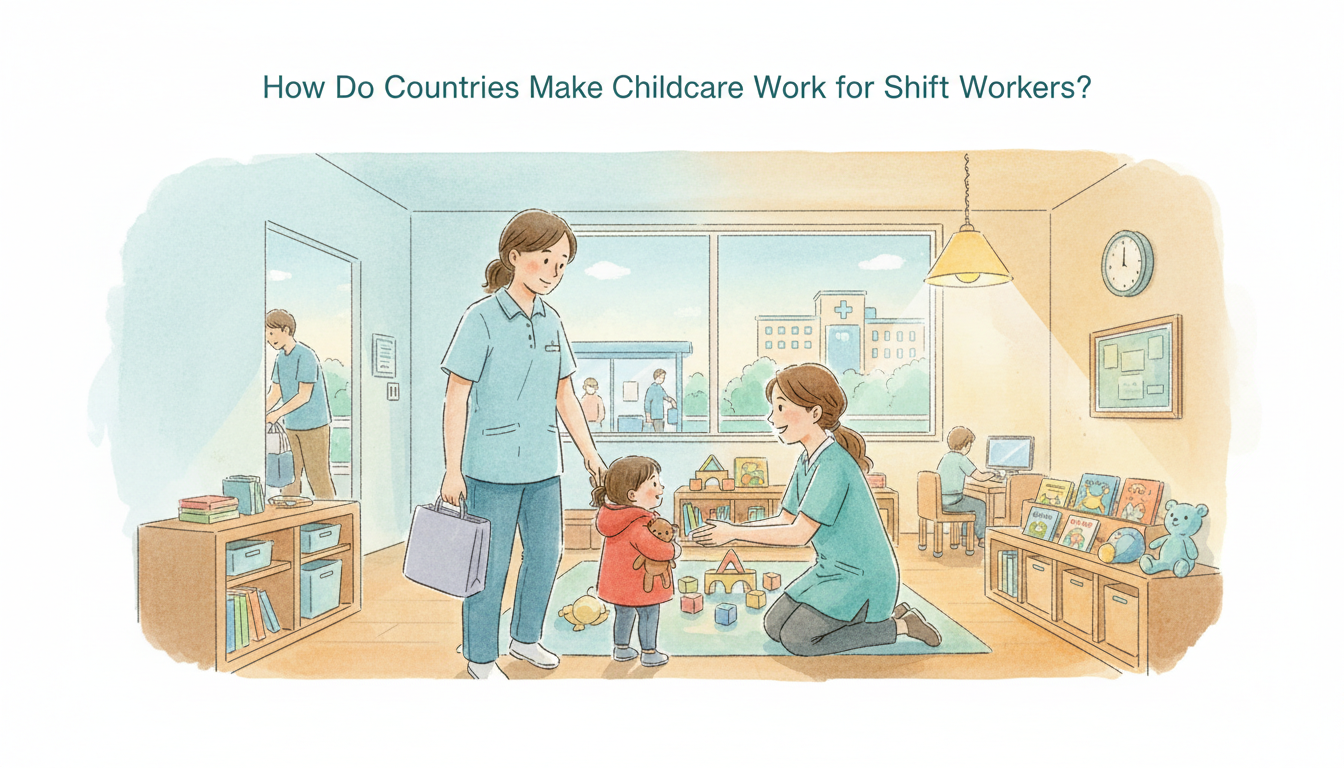
A civilisation can provide primary schools yet leave families without reliable early-childhood care, age-appropriate learning and support for children before formal schooling. Infants and young children need responsive relationships, safety, opportunities to play and explore, appropriate health and nutrition, and services families can actually reach. Early childhood systems connect educators, caregivers, public institutions, standards and neighbourhood resources.
The early-childhood component of civilisation supports development from the first years through the transition to primary education. It connects nurturing care, qualified educators, play-based experiences, accessible childcare and preschool programmes, family participation, child protection and responsible public oversight. A childcare place is not automatically a high-quality programme; enrolment counts need to be understood alongside children’s wellbeing and practical family access.
This eduKate learning reference uses wholly fictional children and families in Tidal Reach. It is not a diagnosis, childcare centre certification or an assertion of entitlement to a specific subsidy. UNESCO, UNICEF, WHO and Singapore ECDA provide distinct evidence and national examples.
The five components of nurturing care and why a single test cannot explain a child
WHO describes nurturing care through five connected components: good health, adequate nutrition, security and safety, responsive caregiving, and opportunities for early learning. These needs begin from the earliest years and continue as children develop. This is a framework for families, services and public institutions, not a checklist that pupils can use to diagnose a child.
The joint UNESCO–UNICEF 2024 Global Report on Early Childhood Care and Education, updated on its website in February 2026, explains persistent gaps in access and policy support. Its planned second edition will not be released until 20 November 2026, so this article treats the 2024 report as the currently available edition as of 3 November 2026.
Singapore’s ECDA Early Years Development Framework (EYDF) 2023 guides centre-based educators working with children from birth to age three. The Ministry of Education’s Nurturing Early Learners (NEL) Framework 2022 concerns ages four to six. Both support appropriate early learning but should not be confused or treated as examinations for individual children.
Six questions for a parent or educator
- Is the child’s physical and emotional wellbeing supported through appropriate qualified care?
- Does the programme provide responsive, respectful relationships and opportunities to explore?
- Are activities suitable for the actual age, interests and developmental context?
- Can families understand the programme and communicate meaningfully with educators?
- Are safeguarding, professional staffing, access and lawful oversight clear?
- What can be improved when the experience does not meet a child’s practical needs?
An invented ratio cannot measure a child’s entire development
Imagine a fictional neighbourhood with eighty children of a stated preschool-age range and sixty of those children enrolled in a particular programme. Sixty divided by eighty is 75% of that defined group under the toy assumptions. It does not measure learning quality or whether the remaining children have other suitable care. A real participation rate needs consistent definitions and appropriate source data.
A second toy centre opens twenty places but twelve are already occupied. Eight places are unoccupied under the simple count, yet this does not mean eight eligible families can use them: suitable hours, age requirements, transport, professional supports and applicable policies still matter. The arithmetic is useful only when its limits are acknowledged.
Part 1: Children’s wellbeing and nurturing care
The six stations below explore one group of care and development responsibilities. They are educational investigations, not professional diagnoses or mandatory preschool programmes. Select one topic for a short parent discussion or connect several to understand how services, families and trained educators support young children.
Component 01: Children’s early development and wellbeing
Child-centred purpose. Development includes connected physical, social-emotional, cognitive and communication experiences Young children learn through interaction with people, environments and experiences, not through one isolated academic score. A meaningful early-childhood system should consider what the child needs to feel safe, explore, communicate and participate. Families and trained educators provide different forms of knowledge and care. Ask what the current programme intends to support and how a child’s actual opportunities might reveal whether that purpose is being achieved. Relate this particularly to children’s early development and wellbeing without equating it with a test score.
Fictional Tidal Reach case. The toy town focuses only on early reading worksheets and ignores children’s relationships and play Draw the child’s practical journey through arriving at the centre, meeting a responsible caregiver, participating in an experience and returning to family life. Each stage may involve different adults, information and needs. A service could appear complete in its registration records while important communication or access barriers remain. Ask what could be observed respectfully and which private details should not appear in a public report. Ask what the scenario provides and what a qualified educator would still need to understand.
Possible weakness and competing needs. One academic indicator cannot represent holistic wellbeing A well-intended service can place burdens on families through fees, travel or schedule mismatch. A centre near home may not be reachable during a shift worker’s actual hours, and an inexpensive programme may lack appropriate supports. Ask for the relevant family task and a legitimate alternative rather than declare one centre universally superior. A toy financial calculation is not an actual subsidy entitlement. Name a sensible alternative and an important professional limitation.
Evidence and responsible interpretation. Ask what observations and professional roles support a broader approach Country and age scope matter when citing standards. WHO’s nurturing care guidance covers a broad set of needs, UNESCO and UNICEF offer global system evidence, and ECDA’s EYDF 2023 addresses centre-based care for birth to age three. Singapore’s NEL 2022 addresses ages four to six. A student should not merge these frameworks into one universal examination or legal rule. Avoid turning one observation or aggregate participation figure into a judgement about a child.
Safe lesson with parent and tutor. Draw a four-domain development map with no child ranking Hold a respectful discussion between learners representing a family member, educator, child-services planner and qualified inclusion specialist. Each restates another’s legitimate concern before proposing a support. The group identifies what can be understood from the fictional case and what requires real professional judgement. The case should be age appropriate, invented and respectful.
Continuity and institutional handover. A strong recommendation responds to a good-faith concern about hours, quality, affordability, inclusion or staff wellbeing. Restate it accurately and identify evidence that could make a bounded improvement meaningful. Where the details remain incomplete, a qualified conclusion is more responsible than promising one programme suits every child. Draw a meaningful link to toddler learning environments and explain the shared support for the child.
Challenge the first explanation: Suppose one academic indicator cannot represent holistic wellbeing. What might the child or caregiver actually experience, what alternative interpretation is possible and what qualified evidence could clarify the question? A mature response respects individual development without claiming to predict a child’s future.
Component 02: Nurturing care across five areas
Child-centred purpose. WHO describes health, nutrition, safety, responsive caregiving and early learning as interrelated supports Care and education are interconnected rather than competing services. Routines such as welcome, meals, rest, shared stories and play can create occasions for responsive communication and learning when appropriately planned. The relevant standard depends on age, individual needs and national regulation. A child-centred explanation should identify the role of responsible adults and why a full timetable does not automatically mean every experience is high quality. Relate this particularly to nurturing care across five areas without equating it with a test score.
Fictional Tidal Reach case. A fictional programme advertises rich play resources but has no safeguarding or family support plan Tell the same case from the parent’s and educator’s viewpoints. One may know the child’s home interests and daily responsibilities while the other understands the group learning environment. Their information can be complementary rather than contradictory. Ask what appropriate communication would enable both to support the child without broadcasting personal information. This turns family partnership into an operational service, not a slogan. Ask what the scenario provides and what a qualified educator would still need to understand.
Possible weakness and competing needs. One nurturing-care component cannot replace the others Future generations inherit early-childhood institutions and professional responsibilities. Staff turnover, changing family needs and new evidence can make earlier plans insufficient. A durable programme preserves curriculum purposes, safeguarding arrangements, qualified staff knowledge and appropriate review. Ask what would allow a successor to understand a child’s experience without relying on a founder’s personal memory. Name a sensible alternative and an important professional limitation.
Evidence and responsible interpretation. Identify needs across the five areas and their supporting institutions Family observations and professional educator records can illuminate different contexts. Neither one account nor one numerical score should be treated as a complete judgement about a child. A responsible review uses suitable developmental approaches and protects the child’s dignity. The class can practise this with anonymised fictional narratives rather than real child records. Avoid turning one observation or aggregate participation figure into a judgement about a child.
Safe lesson with parent and tutor. Create a fictional child-care ecosystem diagram Write a five-sentence account: the child’s need, supportive service mechanism, fictional example, credible alternative and conditional conclusion. Older pupils can include a labelled toy participation ratio. Tutors should assess plain language, developmental appropriateness and respect for professional boundaries. The case should be age appropriate, invented and respectful.
Continuity and institutional handover. Return to the fictional child who motivated the question. A centre may have complied with an administrative step while the practical learning or care experience remains incomplete. Ask what relevant outcome the family and qualified staff would observe and how feedback could help responsibly. The service story should not end with a licence or registration total. Draw a meaningful link to preschool and kindergarten programmes and explain the shared support for the child.
Challenge the first explanation: Suppose one nurturing-care component cannot replace the others. What might the child or caregiver actually experience, what alternative interpretation is possible and what qualified evidence could clarify the question? A mature response respects individual development without claiming to predict a child’s future.
Component 03: Responsive relationships and care
Child-centred purpose. Young children benefit from caregivers who notice, interpret and respond appropriately to their cues Early development is multidimensional. Cognitive, communication, physical and social-emotional changes interact as children build confidence and skills. An appropriate learning activity may combine more than one dimension without treating young children as miniature examination candidates. A public-service account should describe the intended benefit in understandable words and recognise that children progress differently, with professional guidance and family context when needed. Relate this particularly to responsive relationships and care without equating it with a test score.
Fictional Tidal Reach case. An imagined nursery staff timetable leaves no time for responsive interaction End at a meaningful child and family experience rather than the number of registered places. Did the imaginary child have suitable care, safe opportunities and supportive relationships? Which of those outcomes does the scenario actually describe? The class cannot evaluate a real child’s developmental status; it can identify appropriate indicators and the professional source needed to answer an actual concern. Ask what the scenario provides and what a qualified educator would still need to understand.
Possible weakness and competing needs. Full attendance is not proof of nurturing individual relationships Privacy and safeguarding are essential even when the main public goal is education. A centre may gather sensitive information about health, family life and development. Public transparency does not mean posting named child records, and an attractive classroom cannot replace appropriate protection arrangements. Ask which institutional roles can lawfully handle information and how concerns can be reviewed. Name a sensible alternative and an important professional limitation.
Evidence and responsible interpretation. Ask how trained staff and families create predictable, responsive care A trustworthy evaluation must be able to reveal that the first plan is inadequate. Ask what observation would show an inaccessible route, unclear family communication or insufficient age-appropriate support. Define that question before inventing success. A programme that treats every signed registration form as proof of excellent quality cannot learn from practical problems. Avoid turning one observation or aggregate participation figure into a judgement about a child.
Safe lesson with parent and tutor. Make paper interaction-observation questions Give pupils a confusing fictional preschool notice that states only places available without defining ages, hours or programme support. Ask them to rewrite it in clear English with current source and a question for the provider. Another pupil should be able to understand the service without oral explanation. No real centre is endorsed or criticised. The case should be age appropriate, invented and respectful.
Continuity and institutional handover. An accessible and nurturing programme recognises the experiences of children and the people responsible for them. A family’s account may describe an important issue without representing everyone; an aggregate attendance chart may be accurate while missing the individual concern. A responsible institution makes room for both forms of evidence while safeguarding confidentiality. Draw a meaningful link to childcare for working families and explain the shared support for the child.
Challenge the first explanation: Suppose full attendance is not proof of nurturing individual relationships. What might the child or caregiver actually experience, what alternative interpretation is possible and what qualified evidence could clarify the question? A mature response respects individual development without claiming to predict a child’s future.
Component 04: Safety and emotional security
Child-centred purpose. Safe environments and supportive relationships enable children to explore and learn Families, educators, healthcare professionals and public authorities have related but distinct responsibilities. A caregiver may know the child’s familiar routines while an educator observes participation in a group, and a qualified clinician may evaluate a particular health or developmental concern. These roles should support one another without substituting untrained judgement for professional assessment. A diagram with clear arrows is more accurate than assigning everything to the classroom. Relate this particularly to safety and emotional security without equating it with a test score.
Fictional Tidal Reach case. A child in Tidal Reach has a confusing arrival routine and no consistent responsible adult Imagine a child with a new interest or an unfamiliar group experience. A rigid timetable may ignore that interest, while an educator can create a suitable opportunity to explore it safely. The story does not justify a universal curriculum change. Ask how trained staff would interpret the context, communicate with family and consider the relevant programme goals. The pupil should learn to state this professional question instead of prescribing a standard activity. Ask what the scenario provides and what a qualified educator would still need to understand.
Possible weakness and competing needs. Physical facilities alone do not ensure emotional safety Early-childhood institutions may face pressure to demonstrate rapid academic results, but young children’s development is broader than test scores. A focus on worksheets can omit communication, physical play or social experiences, while a programme with no thoughtful learning goals may also disappoint. Ask what a qualified framework actually seeks and how evidence would reflect developmentally appropriate opportunities. A careful argument avoids false choices between learning and care. Name a sensible alternative and an important professional limitation.
Evidence and responsible interpretation. Identify professional safeguarding and supportive transition roles Before evaluating quality, define the measure. A childcare centre licence, an available place, an enrolled child, attendance and a meaningful learning experience are distinct events. A numerically correct ratio can still answer the wrong question. Write the age range, denominator, period and context beside the figure. Do not infer a real child’s developmental outcome from a building count. Avoid turning one observation or aggregate participation figure into a judgement about a child.
Safe lesson with parent and tutor. Design a fictional welcoming-arrival map Create three columns: observed fact, assumption and professional evidence needed. Students may discover they treated one activity as a diagnosis or a centre’s timetable as proof of quality. Marking the gap is progress. The final explanation should be cautious, child-centred and free of unsupported developmental labels. The case should be age appropriate, invented and respectful.
Continuity and institutional handover. Care needs change as children grow and families encounter different circumstances. A programme designed for infants cannot be copied unchanged to kindergarten, and a centre serving one neighbourhood may need different access arrangements elsewhere. Ask what principle should endure and which methods deserve review. Appropriate adaptation is a sign of professional quality. Draw a meaningful link to home, community and centre care and explain the shared support for the child.
Challenge the first explanation: Suppose physical facilities alone do not ensure emotional safety. What might the child or caregiver actually experience, what alternative interpretation is possible and what qualified evidence could clarify the question? A mature response respects individual development without claiming to predict a child’s future.
Component 05: Play and curiosity
Child-centred purpose. Developmentally appropriate play supports exploration, language, social engagement and understanding Accessible early-childhood services matter to both children and caregivers. A centre may offer a nominal place while its fees, schedule, route or learning environment remain impractical for some families. The institution should recognise whose task is being supported and which observation could demonstrate genuine access. A simple count of buildings or licences cannot answer whether the intended family can actually use suitable care. Relate this particularly to play and curiosity without equating it with a test score.
Fictional Tidal Reach case. The town’s preschool replaces all exploration with repetitive test-like drills Invite a child who communicates differently or requires another way to participate in the fictional activity. The first plan may need adaptation, but it would be wrong to assume one disability or language label describes the individual’s full needs. Ask how trained staff and relevant professionals could support meaningful participation. An inclusive classroom exercise should focus on the actual task and respectful consultation. Ask what the scenario provides and what a qualified educator would still need to understand.
Possible weakness and competing needs. More worksheets do not automatically mean better early learning Families may differ in culture, languages, employment, income and caregiving arrangements. The institution should respond to specific needs without turning group categories into stereotypes. A programme designed for one imagined family may not suit everyone. Ask what meaningful consultation or access support could improve the situation and how a responsible provider would know it worked. Name a sensible alternative and an important professional limitation.
Evidence and responsible interpretation. Ask how educators observe interests and guide safe play Any measure should be understood in relation to actual experiences and reasonable expectations. The number of art activities does not show whether children enjoyed meaningful exploration, while the number of books does not measure relationships. Ask what the teacher intended and what a suitable observation could support. A modest, accurately defined conclusion is better than a broad claim about a child’s future success. Avoid turning one observation or aggregate participation figure into a judgement about a child.
Safe lesson with parent and tutor. Create a pretend block-and-story inquiry Draw a child-centred service map with the child, family, qualified educator, health or inclusion support where appropriate, and relevant public authority. Label each connection with a meaningful role. Remove one link and ask what experience becomes uncertain. The activity uses fictional people and does not invite personal diagnoses or sensitive disclosures. The case should be age appropriate, invented and respectful.
Continuity and institutional handover. Connect the current topic to healthcare, housing, transport, family work and primary education. A child-care place may depend on a parent’s actual journey, an educator’s skills and suitable public services. Every supporting arrow should describe a real function rather than simply list important institutions. This is how a civilisation’s early-childhood system becomes visible. Draw a meaningful link to licensing and public oversight and explain the shared support for the child.
Challenge the first explanation: Suppose more worksheets do not automatically mean better early learning. What might the child or caregiver actually experience, what alternative interpretation is possible and what qualified evidence could clarify the question? A mature response respects individual development without claiming to predict a child’s future.
Component 06: Health and nutrition partnerships
Child-centred purpose. Childcare services depend on appropriate health, nutrition and public safety systems Quality preschool work relies on educators’ ongoing professional learning and responsible institutions. An attractive room full of toys does not guarantee nurturing relationships, good pedagogy or appropriate safeguards. Staff need relevant skills, planning time and lawful oversight. Ask what would enable the service to remain dependable when a particular teacher is absent or a new cohort arrives. The answer is wider than visible equipment. Relate this particularly to health and nutrition partnerships without equating it with a test score.
Fictional Tidal Reach case. A fictional centre promises healthy children without any relationship to qualified services The story of Tidal Reach is fictional and cannot describe any real child or licensed centre. Start by identifying what the child is trying to do, what support is actually described and which details the learner has assumed. A toy case with a happy ending does not prove the same arrangement will work for every child. A careful conclusion recognises individual differences without assigning a diagnosis or permanent ability label. Ask what the scenario provides and what a qualified educator would still need to understand.
Possible weakness and competing needs. A centre cannot substitute for healthcare or professional nutritional guidance Qualified developmental support should not be confused with labelling children after one observation. Individual differences are normal, and some concerns may require proper professional evaluation. A child-centred institution can listen to caregivers, document what was actually seen and seek appropriate expertise when needed. Students should not diagnose children or prescribe therapy from the fictional case. Name a sensible alternative and an important professional limitation.
Evidence and responsible interpretation. Identify relevant health, meal and care responsibilities A classroom exercise cannot certify a centre, diagnose development or determine any family’s funding eligibility. Those are questions for current local rules and appropriately qualified professionals. Pupils can still learn to name the evidence needed and identify which public institution should respond. Respect for these boundaries improves practical literacy. Avoid turning one observation or aggregate participation figure into a judgement about a child.
Safe lesson with parent and tutor. Draw a paper child-health partnership chain Compare two imaginary care programmes with different opening hours and transport connections. Ask what stays constant about the child’s nurturing needs and which household circumstances affect access. A simple distance calculation is not a real travel-time estimate. The task encourages respect for shift-working and other families without assuming identical needs. The case should be age appropriate, invented and respectful.
Continuity and institutional handover. Long-term public support involves trained people, suitable facilities, legitimate rules and review processes. A new preschool building may create additional obligations for educator recruitment and care quality. Ask whether the programme can sustain its goals beyond the ribbon cutting. Future generations inherit institutions as well as classrooms. Draw a meaningful link to language-rich early interactions and explain the shared support for the child.
Challenge the first explanation: Suppose a centre cannot substitute for healthcare or professional nutritional guidance. What might the child or caregiver actually experience, what alternative interpretation is possible and what qualified evidence could clarify the question? A mature response respects individual development without claiming to predict a child’s future.
Connected early-years case 1
Combine Children’s early development and wellbeing; Nurturing care across five areas; Responsive relationships and care; Safety and emotional security; Play and curiosity; Health and nutrition partnerships in one child-and-family service map. Every arrow should show a relevant relationship, environment, professional skill or opportunity for participation. The fictional child remains at the centre of the diagram rather than the administrative timetable.
Assign learners as child advocate, family member, trained educator and public-service reviewer. Each proposes one question, a good-faith objection and a suitable way to seek evidence. Primary pupils can draw labelled pictures, while Secondary students can write a structured five-paragraph account distinguishing developmental opportunity from administrative output.
Part 2: Different early-care services and family arrangements
The six stations below explore one group of care and development responsibilities. They are educational investigations, not professional diagnoses or mandatory preschool programmes. Select one topic for a short parent discussion or connect several to understand how services, families and trained educators support young children.
Component 07: Infant care programmes
Child-centred purpose. Care from birth requires age-appropriate relationships, professional staffing and safe routines International principles help explain why early-childhood care matters, but programmes are not identical across jurisdictions or age groups. WHO nurturing care concerns broad health and developmental support, while Singapore’s ECDA EYDF and MOE NEL frameworks address specified education settings and ages. A student’s comparison should name what the original source says and avoid treating any framework as a universal diagnostic checklist. Relate this particularly to infant care programmes without equating it with a test score.
Fictional Tidal Reach case. A centre designs its infant room using only preschool-age assumptions Change one fictional condition after the first plan is drawn. The caregiver’s shift hours might change, a learning space might become inaccessible or a transition might require additional professional support. Which part of the plan fails? Students should revise the causal link rather than conclude that one centre or family is at fault. The exercise should be respectful of different household circumstances. Ask what the scenario provides and what a qualified educator would still need to understand.
Possible weakness and competing needs. A younger child cannot automatically use an older cohort’s activities One appealing measure can conceal another important quality question. A programme may increase the number of places while educator capacity or inclusion support remains limited. Ask who benefits and which children or caregivers might face a practical barrier. This is not proof that expanded access is bad; it is a reason to evaluate quality and accessibility alongside capacity rather than celebrate a single number. Name a sensible alternative and an important professional limitation.
Evidence and responsible interpretation. Check relevant qualified standards and individual developmental needs Records and feedback should lead to meaningful professional action. A concern raised by a family may require a centre review, qualified staff consultation or the competent authority depending on its nature. An internal ticket marked closed does not prove a child’s needs were addressed. A good system can explain what it learned without disclosing sensitive details. Avoid turning one observation or aggregate participation figure into a judgement about a child.
Safe lesson with parent and tutor. Make a conceptual infant-care priorities chart Give an imaginary hundred resource tokens to qualified staffing, safe learning spaces, family communication, inclusion and professional development. The numbers are not real budgets. Ask what continuing duty becomes weak if every resource funds new buildings. This introduces opportunity cost and long-term institutional quality. The case should be age appropriate, invented and respectful.
Continuity and institutional handover. Sometimes the appropriate response is current official guidance or a qualified early-childhood professional rather than a generic school exercise. A health concern, developmental assessment or protection issue has professional implications. The pupil can identify the correct institution and formulate a respectful question without assigning a diagnosis or legal entitlement. Draw a meaningful link to early literacy as meaningful practice and explain the shared support for the child.
Challenge the first explanation: Suppose a younger child cannot automatically use an older cohort’s activities. What might the child or caregiver actually experience, what alternative interpretation is possible and what qualified evidence could clarify the question? A mature response respects individual development without claiming to predict a child’s future.
Component 08: Toddler learning environments
Child-centred purpose. Toddlers need suitable opportunities to move, communicate, explore and establish social relationships Early years education should be understood through meaningful opportunities for play, inquiry, language, movement and relationships. More structured activities are not automatically better, and an unplanned environment may also fail to support children. Professional pedagogy involves thoughtful observation and suitable adaptation. Ask what the educator intends the child to experience and how a respectful family partnership could inform that planning. Relate this particularly to toddler learning environments without equating it with a test score.
Fictional Tidal Reach case. A toy programme confines all toddlers to desk activities for long periods Move the imagined programme to a second neighbourhood with different childcare schedules, transport and public support. The aim of nurturing care remains, but the way families obtain it may differ. A good comparison identifies the underlying need and the local conditions. It should not rank parents by their work arrangements or claim that one country’s policies apply everywhere. Ask what the scenario provides and what a qualified educator would still need to understand.
Possible weakness and competing needs. A tidy timetable can hide limited meaningful exploration New technology can offer learning resources or administrative convenience while reducing face-to-face engagement if used without a clear purpose. An interactive screen is not inherently evidence of deep learning, and a paper activity is not automatically effective either. Ask whether the experience is age-appropriate, appropriately facilitated and meaningful to the child. The best choice follows the actual developmental goal and available evidence. Name a sensible alternative and an important professional limitation.
Evidence and responsible interpretation. Ask how educators plan safe, varied interaction and observation An apparent increase in preschool participation can reflect more places, improved enrolment processes, changed eligibility or shifts in the number of children of the relevant age. A public indicator needs a suitable population denominator and time frame. Ask for another observation before attributing the change to one policy. More data are useful when their definitions support the public purpose. Avoid turning one observation or aggregate participation figure into a judgement about a child.
Safe lesson with parent and tutor. Draw an imaginary toddler room with functional zones Prepare paper cards for a child’s interest, suitable materials, adult support and a possible barrier. Ask the learner to arrange a developmentally appropriate experience, then change one condition. The revised design should explain how play, language or participation might be supported. It must remain a conceptual activity rather than treatment or safety certification. The case should be age appropriate, invented and respectful.
Continuity and institutional handover. An early-childhood system remains useful when the next educator knows the programme’s purpose and how to maintain relationships with families. Appropriate handovers preserve relevant records with confidentiality, staff responsibilities and reasons for pedagogical choices. Ask what a successor could learn without receiving unnecessary personal details about a child. The institution should value continuity, not only a leader’s reputation. Draw a meaningful link to mathematical thinking in play and explain the shared support for the child.
Challenge the first explanation: Suppose a tidy timetable can hide limited meaningful exploration. What might the child or caregiver actually experience, what alternative interpretation is possible and what qualified evidence could clarify the question? A mature response respects individual development without claiming to predict a child’s future.
Component 09: Preschool and kindergarten programmes
Child-centred purpose. Pre-primary services connect learning, development and preparation for later schooling under local frameworks Young children learn through interaction with people, environments and experiences, not through one isolated academic score. A meaningful early-childhood system should consider what the child needs to feel safe, explore, communicate and participate. Families and trained educators provide different forms of knowledge and care. Ask what the current programme intends to support and how a child’s actual opportunities might reveal whether that purpose is being achieved. Relate this particularly to preschool and kindergarten programmes without equating it with a test score.
Fictional Tidal Reach case. An imagined kindergarten treats school readiness as memorising primary examinations Draw the child’s practical journey through arriving at the centre, meeting a responsible caregiver, participating in an experience and returning to family life. Each stage may involve different adults, information and needs. A service could appear complete in its registration records while important communication or access barriers remain. Ask what could be observed respectfully and which private details should not appear in a public report. Ask what the scenario provides and what a qualified educator would still need to understand.
Possible weakness and competing needs. Test imitation is not the same as holistic preparedness A well-intended service can place burdens on families through fees, travel or schedule mismatch. A centre near home may not be reachable during a shift worker’s actual hours, and an inexpensive programme may lack appropriate supports. Ask for the relevant family task and a legitimate alternative rather than declare one centre universally superior. A toy financial calculation is not an actual subsidy entitlement. Name a sensible alternative and an important professional limitation.
Evidence and responsible interpretation. Compare age-appropriate goals and legitimate early years standards Country and age scope matter when citing standards. WHO’s nurturing care guidance covers a broad set of needs, UNESCO and UNICEF offer global system evidence, and ECDA’s EYDF 2023 addresses centre-based care for birth to age three. Singapore’s NEL 2022 addresses ages four to six. A student should not merge these frameworks into one universal examination or legal rule. Avoid turning one observation or aggregate participation figure into a judgement about a child.
Safe lesson with parent and tutor. Create a child-centred kindergarten day map Hold a respectful discussion between learners representing a family member, educator, child-services planner and qualified inclusion specialist. Each restates another’s legitimate concern before proposing a support. The group identifies what can be understood from the fictional case and what requires real professional judgement. The case should be age appropriate, invented and respectful.
Continuity and institutional handover. A strong recommendation responds to a good-faith concern about hours, quality, affordability, inclusion or staff wellbeing. Restate it accurately and identify evidence that could make a bounded improvement meaningful. Where the details remain incomplete, a qualified conclusion is more responsible than promising one programme suits every child. Draw a meaningful link to sensory exploration and inquiry and explain the shared support for the child.
Challenge the first explanation: Suppose test imitation is not the same as holistic preparedness. What might the child or caregiver actually experience, what alternative interpretation is possible and what qualified evidence could clarify the question? A mature response respects individual development without claiming to predict a child’s future.
Component 10: Childcare for working families
Child-centred purpose. Care arrangements may need to fit parents’ work while protecting children’s quality experiences Care and education are interconnected rather than competing services. Routines such as welcome, meals, rest, shared stories and play can create occasions for responsive communication and learning when appropriately planned. The relevant standard depends on age, individual needs and national regulation. A child-centred explanation should identify the role of responsible adults and why a full timetable does not automatically mean every experience is high quality. Relate this particularly to childcare for working families without equating it with a test score.
Fictional Tidal Reach case. A shift-working parent cannot access any programme during relevant hours Tell the same case from the parent’s and educator’s viewpoints. One may know the child’s home interests and daily responsibilities while the other understands the group learning environment. Their information can be complementary rather than contradictory. Ask what appropriate communication would enable both to support the child without broadcasting personal information. This turns family partnership into an operational service, not a slogan. Ask what the scenario provides and what a qualified educator would still need to understand.
Possible weakness and competing needs. A place offered at unsuitable times may not provide usable care Future generations inherit early-childhood institutions and professional responsibilities. Staff turnover, changing family needs and new evidence can make earlier plans insufficient. A durable programme preserves curriculum purposes, safeguarding arrangements, qualified staff knowledge and appropriate review. Ask what would allow a successor to understand a child’s experience without relying on a founder’s personal memory. Name a sensible alternative and an important professional limitation.
Evidence and responsible interpretation. Ask which service schedules, support and professional safeguards apply Family observations and professional educator records can illuminate different contexts. Neither one account nor one numerical score should be treated as a complete judgement about a child. A responsible review uses suitable developmental approaches and protects the child’s dignity. The class can practise this with anonymised fictional narratives rather than real child records. Avoid turning one observation or aggregate participation figure into a judgement about a child.
Safe lesson with parent and tutor. Draw two hypothetical parent-to-centre journeys Write a five-sentence account: the child’s need, supportive service mechanism, fictional example, credible alternative and conditional conclusion. Older pupils can include a labelled toy participation ratio. Tutors should assess plain language, developmental appropriateness and respect for professional boundaries. The case should be age appropriate, invented and respectful.
Continuity and institutional handover. Return to the fictional child who motivated the question. A centre may have complied with an administrative step while the practical learning or care experience remains incomplete. Ask what relevant outcome the family and qualified staff would observe and how feedback could help responsibly. The service story should not end with a licence or registration total. Draw a meaningful link to physical development and movement and explain the shared support for the child.
Challenge the first explanation: Suppose a place offered at unsuitable times may not provide usable care. What might the child or caregiver actually experience, what alternative interpretation is possible and what qualified evidence could clarify the question? A mature response respects individual development without claiming to predict a child’s future.
Component 11: Home, community and centre care
Child-centred purpose. Children may receive nurturing care across families, services and community institutions Early development is multidimensional. Cognitive, communication, physical and social-emotional changes interact as children build confidence and skills. An appropriate learning activity may combine more than one dimension without treating young children as miniature examination candidates. A public-service account should describe the intended benefit in understandable words and recognise that children progress differently, with professional guidance and family context when needed. Relate this particularly to home, community and centre care without equating it with a test score.
Fictional Tidal Reach case. The town claims development happens only inside a licensed centre End at a meaningful child and family experience rather than the number of registered places. Did the imaginary child have suitable care, safe opportunities and supportive relationships? Which of those outcomes does the scenario actually describe? The class cannot evaluate a real child’s developmental status; it can identify appropriate indicators and the professional source needed to answer an actual concern. Ask what the scenario provides and what a qualified educator would still need to understand.
Possible weakness and competing needs. Formal enrolment is not the only context for early learning Privacy and safeguarding are essential even when the main public goal is education. A centre may gather sensitive information about health, family life and development. Public transparency does not mean posting named child records, and an attractive classroom cannot replace appropriate protection arrangements. Ask which institutional roles can lawfully handle information and how concerns can be reviewed. Name a sensible alternative and an important professional limitation.
Evidence and responsible interpretation. Identify complementary family, community and professional roles A trustworthy evaluation must be able to reveal that the first plan is inadequate. Ask what observation would show an inaccessible route, unclear family communication or insufficient age-appropriate support. Define that question before inventing success. A programme that treats every signed registration form as proof of excellent quality cannot learn from practical problems. Avoid turning one observation or aggregate participation figure into a judgement about a child.
Safe lesson with parent and tutor. Make a home-centre-community connection chart Give pupils a confusing fictional preschool notice that states only places available without defining ages, hours or programme support. Ask them to rewrite it in clear English with current source and a question for the provider. Another pupil should be able to understand the service without oral explanation. No real centre is endorsed or criticised. The case should be age appropriate, invented and respectful.
Continuity and institutional handover. An accessible and nurturing programme recognises the experiences of children and the people responsible for them. A family’s account may describe an important issue without representing everyone; an aggregate attendance chart may be accurate while missing the individual concern. A responsible institution makes room for both forms of evidence while safeguarding confidentiality. Draw a meaningful link to social and emotional learning and explain the shared support for the child.
Challenge the first explanation: Suppose formal enrolment is not the only context for early learning. What might the child or caregiver actually experience, what alternative interpretation is possible and what qualified evidence could clarify the question? A mature response respects individual development without claiming to predict a child’s future.
Component 12: Licensing and public oversight
Child-centred purpose. Early childhood services may need national licensing, qualified staff and appropriate inspection Families, educators, healthcare professionals and public authorities have related but distinct responsibilities. A caregiver may know the child’s familiar routines while an educator observes participation in a group, and a qualified clinician may evaluate a particular health or developmental concern. These roles should support one another without substituting untrained judgement for professional assessment. A diagram with clear arrows is more accurate than assigning everything to the classroom. Relate this particularly to licensing and public oversight without equating it with a test score.
Fictional Tidal Reach case. A fictional nursery opens with attractive rooms but no legitimate operating approval Imagine a child with a new interest or an unfamiliar group experience. A rigid timetable may ignore that interest, while an educator can create a suitable opportunity to explore it safely. The story does not justify a universal curriculum change. Ask how trained staff would interpret the context, communicate with family and consider the relevant programme goals. The pupil should learn to state this professional question instead of prescribing a standard activity. Ask what the scenario provides and what a qualified educator would still need to understand.
Possible weakness and competing needs. A pleasant photograph does not certify compliance or quality Early-childhood institutions may face pressure to demonstrate rapid academic results, but young children’s development is broader than test scores. A focus on worksheets can omit communication, physical play or social experiences, while a programme with no thoughtful learning goals may also disappoint. Ask what a qualified framework actually seeks and how evidence would reflect developmentally appropriate opportunities. A careful argument avoids false choices between learning and care. Name a sensible alternative and an important professional limitation.
Evidence and responsible interpretation. Check applicable local regulator and programme scope Before evaluating quality, define the measure. A childcare centre licence, an available place, an enrolled child, attendance and a meaningful learning experience are distinct events. A numerically correct ratio can still answer the wrong question. Write the age range, denominator, period and context beside the figure. Do not infer a real child’s developmental outcome from a building count. Avoid turning one observation or aggregate participation figure into a judgement about a child.
Safe lesson with parent and tutor. Write a neutral centre standards question list Create three columns: observed fact, assumption and professional evidence needed. Students may discover they treated one activity as a diagnosis or a centre’s timetable as proof of quality. Marking the gap is progress. The final explanation should be cautious, child-centred and free of unsupported developmental labels. The case should be age appropriate, invented and respectful.
Continuity and institutional handover. Care needs change as children grow and families encounter different circumstances. A programme designed for infants cannot be copied unchanged to kindergarten, and a centre serving one neighbourhood may need different access arrangements elsewhere. Ask what principle should endure and which methods deserve review. Appropriate adaptation is a sign of professional quality. Draw a meaningful link to educator qualifications and professional roles and explain the shared support for the child.
Challenge the first explanation: Suppose a pleasant photograph does not certify compliance or quality. What might the child or caregiver actually experience, what alternative interpretation is possible and what qualified evidence could clarify the question? A mature response respects individual development without claiming to predict a child’s future.
Connected early-years case 2
Combine Infant care programmes; Toddler learning environments; Preschool and kindergarten programmes; Childcare for working families; Home, community and centre care; Licensing and public oversight in one child-and-family service map. Every arrow should show a relevant relationship, environment, professional skill or opportunity for participation. The fictional child remains at the centre of the diagram rather than the administrative timetable.
Assign learners as child advocate, family member, trained educator and public-service reviewer. Each proposes one question, a good-faith objection and a suitable way to seek evidence. Primary pupils can draw labelled pictures, while Secondary students can write a structured five-paragraph account distinguishing developmental opportunity from administrative output.
Part 3: Language, play, mathematical discovery and relationships
The six stations below explore one group of care and development responsibilities. They are educational investigations, not professional diagnoses or mandatory preschool programmes. Select one topic for a short parent discussion or connect several to understand how services, families and trained educators support young children.
Component 13: Language-rich early interactions
Child-centred purpose. Talking, listening, stories and responsive exchange support communication development Accessible early-childhood services matter to both children and caregivers. A centre may offer a nominal place while its fees, schedule, route or learning environment remain impractical for some families. The institution should recognise whose task is being supported and which observation could demonstrate genuine access. A simple count of buildings or licences cannot answer whether the intended family can actually use suitable care. Relate this particularly to language-rich early interactions without equating it with a test score.
Fictional Tidal Reach case. Children hear only scripted commands in an imaginary classroom Invite a child who communicates differently or requires another way to participate in the fictional activity. The first plan may need adaptation, but it would be wrong to assume one disability or language label describes the individual’s full needs. Ask how trained staff and relevant professionals could support meaningful participation. An inclusive classroom exercise should focus on the actual task and respectful consultation. Ask what the scenario provides and what a qualified educator would still need to understand.
Possible weakness and competing needs. An adult speaking frequently does not guarantee a meaningful conversation Families may differ in culture, languages, employment, income and caregiving arrangements. The institution should respond to specific needs without turning group categories into stereotypes. A programme designed for one imagined family may not suit everyone. Ask what meaningful consultation or access support could improve the situation and how a responsible provider would know it worked. Name a sensible alternative and an important professional limitation.
Evidence and responsible interpretation. Ask how educators respond to children’s communication and questions Any measure should be understood in relation to actual experiences and reasonable expectations. The number of art activities does not show whether children enjoyed meaningful exploration, while the number of books does not measure relationships. Ask what the teacher intended and what a suitable observation could support. A modest, accurately defined conclusion is better than a broad claim about a child’s future success. Avoid turning one observation or aggregate participation figure into a judgement about a child.
Safe lesson with parent and tutor. Design an invented storytelling exchange Draw a child-centred service map with the child, family, qualified educator, health or inclusion support where appropriate, and relevant public authority. Label each connection with a meaningful role. Remove one link and ask what experience becomes uncertain. The activity uses fictional people and does not invite personal diagnoses or sensitive disclosures. The case should be age appropriate, invented and respectful.
Continuity and institutional handover. Connect the current topic to healthcare, housing, transport, family work and primary education. A child-care place may depend on a parent’s actual journey, an educator’s skills and suitable public services. Every supporting arrow should describe a real function rather than simply list important institutions. This is how a civilisation’s early-childhood system becomes visible. Draw a meaningful link to observation and pedagogical documentation and explain the shared support for the child.
Challenge the first explanation: Suppose an adult speaking frequently does not guarantee a meaningful conversation. What might the child or caregiver actually experience, what alternative interpretation is possible and what qualified evidence could clarify the question? A mature response respects individual development without claiming to predict a child’s future.
Component 14: Early literacy as meaningful practice
Child-centred purpose. Stories, print awareness and playful language exploration differ from premature rote testing Quality preschool work relies on educators’ ongoing professional learning and responsible institutions. An attractive room full of toys does not guarantee nurturing relationships, good pedagogy or appropriate safeguards. Staff need relevant skills, planning time and lawful oversight. Ask what would enable the service to remain dependable when a particular teacher is absent or a new cohort arrives. The answer is wider than visible equipment. Relate this particularly to early literacy as meaningful practice without equating it with a test score.
Fictional Tidal Reach case. A preschool counts copied letters while ignoring children’s understanding of stories The story of Tidal Reach is fictional and cannot describe any real child or licensed centre. Start by identifying what the child is trying to do, what support is actually described and which details the learner has assumed. A toy case with a happy ending does not prove the same arrangement will work for every child. A careful conclusion recognises individual differences without assigning a diagnosis or permanent ability label. Ask what the scenario provides and what a qualified educator would still need to understand.
Possible weakness and competing needs. Written output alone is not an accurate measure of literacy development Qualified developmental support should not be confused with labelling children after one observation. Individual differences are normal, and some concerns may require proper professional evaluation. A child-centred institution can listen to caregivers, document what was actually seen and seek appropriate expertise when needed. Students should not diagnose children or prescribe therapy from the fictional case. Name a sensible alternative and an important professional limitation.
Evidence and responsible interpretation. Compare comprehension, communication and appropriate activity evidence A classroom exercise cannot certify a centre, diagnose development or determine any family’s funding eligibility. Those are questions for current local rules and appropriately qualified professionals. Pupils can still learn to name the evidence needed and identify which public institution should respond. Respect for these boundaries improves practical literacy. Avoid turning one observation or aggregate participation figure into a judgement about a child.
Safe lesson with parent and tutor. Make a fictional picture-book conversation prompt Compare two imaginary care programmes with different opening hours and transport connections. Ask what stays constant about the child’s nurturing needs and which household circumstances affect access. A simple distance calculation is not a real travel-time estimate. The task encourages respect for shift-working and other families without assuming identical needs. The case should be age appropriate, invented and respectful.
Continuity and institutional handover. Long-term public support involves trained people, suitable facilities, legitimate rules and review processes. A new preschool building may create additional obligations for educator recruitment and care quality. Ask whether the programme can sustain its goals beyond the ribbon cutting. Future generations inherit institutions as well as classrooms. Draw a meaningful link to developmentally appropriate curriculum design and explain the shared support for the child.
Challenge the first explanation: Suppose written output alone is not an accurate measure of literacy development. What might the child or caregiver actually experience, what alternative interpretation is possible and what qualified evidence could clarify the question? A mature response respects individual development without claiming to predict a child’s future.
Component 15: Mathematical thinking in play
Child-centred purpose. Sorting, noticing patterns and comparing quantities can arise through guided play International principles help explain why early-childhood care matters, but programmes are not identical across jurisdictions or age groups. WHO nurturing care concerns broad health and developmental support, while Singapore’s ECDA EYDF and MOE NEL frameworks address specified education settings and ages. A student’s comparison should name what the original source says and avoid treating any framework as a universal diagnostic checklist. Relate this particularly to mathematical thinking in play without equating it with a test score.
Fictional Tidal Reach case. An imaginary classroom equates numeracy with timed written arithmetic sheets Change one fictional condition after the first plan is drawn. The caregiver’s shift hours might change, a learning space might become inaccessible or a transition might require additional professional support. Which part of the plan fails? Students should revise the causal link rather than conclude that one centre or family is at fault. The exercise should be respectful of different household circumstances. Ask what the scenario provides and what a qualified educator would still need to understand.
Possible weakness and competing needs. School-type tests may miss children’s exploratory number understanding One appealing measure can conceal another important quality question. A programme may increase the number of places while educator capacity or inclusion support remains limited. Ask who benefits and which children or caregivers might face a practical barrier. This is not proof that expanded access is bad; it is a reason to evaluate quality and accessibility alongside capacity rather than celebrate a single number. Name a sensible alternative and an important professional limitation.
Evidence and responsible interpretation. Ask what concrete experiences and thoughtful educator observation reveal Records and feedback should lead to meaningful professional action. A concern raised by a family may require a centre review, qualified staff consultation or the competent authority depending on its nature. An internal ticket marked closed does not prove a child’s needs were addressed. A good system can explain what it learned without disclosing sensitive details. Avoid turning one observation or aggregate participation figure into a judgement about a child.
Safe lesson with parent and tutor. Make a block-sorting and pattern paper game Give an imaginary hundred resource tokens to qualified staffing, safe learning spaces, family communication, inclusion and professional development. The numbers are not real budgets. Ask what continuing duty becomes weak if every resource funds new buildings. This introduces opportunity cost and long-term institutional quality. The case should be age appropriate, invented and respectful.
Continuity and institutional handover. Sometimes the appropriate response is current official guidance or a qualified early-childhood professional rather than a generic school exercise. A health concern, developmental assessment or protection issue has professional implications. The pupil can identify the correct institution and formulate a respectful question without assigning a diagnosis or legal entitlement. Draw a meaningful link to singapore eydf 2023 birth to age three and explain the shared support for the child.
Challenge the first explanation: Suppose school-type tests may miss children’s exploratory number understanding. What might the child or caregiver actually experience, what alternative interpretation is possible and what qualified evidence could clarify the question? A mature response respects individual development without claiming to predict a child’s future.
Component 16: Sensory exploration and inquiry
Child-centred purpose. Children can investigate textures, light, sound and ordinary materials through safe guided experiences Early years education should be understood through meaningful opportunities for play, inquiry, language, movement and relationships. More structured activities are not automatically better, and an unplanned environment may also fail to support children. Professional pedagogy involves thoughtful observation and suitable adaptation. Ask what the educator intends the child to experience and how a respectful family partnership could inform that planning. Relate this particularly to sensory exploration and inquiry without equating it with a test score.
Fictional Tidal Reach case. A toy preschool offers no hands-on activities because it wants a perfectly tidy room Move the imagined programme to a second neighbourhood with different childcare schedules, transport and public support. The aim of nurturing care remains, but the way families obtain it may differ. A good comparison identifies the underlying need and the local conditions. It should not rank parents by their work arrangements or claim that one country’s policies apply everywhere. Ask what the scenario provides and what a qualified educator would still need to understand.
Possible weakness and competing needs. An absence of mess is not proof of better learning New technology can offer learning resources or administrative convenience while reducing face-to-face engagement if used without a clear purpose. An interactive screen is not inherently evidence of deep learning, and a paper activity is not automatically effective either. Ask whether the experience is age-appropriate, appropriately facilitated and meaningful to the child. The best choice follows the actual developmental goal and available evidence. Name a sensible alternative and an important professional limitation.
Evidence and responsible interpretation. Identify developmentally suitable, supervised exploration and safety limits An apparent increase in preschool participation can reflect more places, improved enrolment processes, changed eligibility or shifts in the number of children of the relevant age. A public indicator needs a suitable population denominator and time frame. Ask for another observation before attributing the change to one policy. More data are useful when their definitions support the public purpose. Avoid turning one observation or aggregate participation figure into a judgement about a child.
Safe lesson with parent and tutor. Draw a safe pretend sensory station Prepare paper cards for a child’s interest, suitable materials, adult support and a possible barrier. Ask the learner to arrange a developmentally appropriate experience, then change one condition. The revised design should explain how play, language or participation might be supported. It must remain a conceptual activity rather than treatment or safety certification. The case should be age appropriate, invented and respectful.
Continuity and institutional handover. An early-childhood system remains useful when the next educator knows the programme’s purpose and how to maintain relationships with families. Appropriate handovers preserve relevant records with confidentiality, staff responsibilities and reasons for pedagogical choices. Ask what a successor could learn without receiving unnecessary personal details about a child. The institution should value continuity, not only a leader’s reputation. Draw a meaningful link to singapore nel 2022 ages four to six and explain the shared support for the child.
Challenge the first explanation: Suppose an absence of mess is not proof of better learning. What might the child or caregiver actually experience, what alternative interpretation is possible and what qualified evidence could clarify the question? A mature response respects individual development without claiming to predict a child’s future.
Component 17: Physical development and movement
Child-centred purpose. Movement, balance and varied motor experiences can contribute to overall early development Young children learn through interaction with people, environments and experiences, not through one isolated academic score. A meaningful early-childhood system should consider what the child needs to feel safe, explore, communicate and participate. Families and trained educators provide different forms of knowledge and care. Ask what the current programme intends to support and how a child’s actual opportunities might reveal whether that purpose is being achieved. Relate this particularly to physical development and movement without equating it with a test score.
Fictional Tidal Reach case. The town’s preschool reports only classroom seatwork time as achievement Draw the child’s practical journey through arriving at the centre, meeting a responsible caregiver, participating in an experience and returning to family life. Each stage may involve different adults, information and needs. A service could appear complete in its registration records while important communication or access barriers remain. Ask what could be observed respectfully and which private details should not appear in a public report. Ask what the scenario provides and what a qualified educator would still need to understand.
Possible weakness and competing needs. Stationary participation is not a complete physical development indicator A well-intended service can place burdens on families through fees, travel or schedule mismatch. A centre near home may not be reachable during a shift worker’s actual hours, and an inexpensive programme may lack appropriate supports. Ask for the relevant family task and a legitimate alternative rather than declare one centre universally superior. A toy financial calculation is not an actual subsidy entitlement. Name a sensible alternative and an important professional limitation.
Evidence and responsible interpretation. Ask how qualified staff plan safe age-appropriate movement and access Country and age scope matter when citing standards. WHO’s nurturing care guidance covers a broad set of needs, UNESCO and UNICEF offer global system evidence, and ECDA’s EYDF 2023 addresses centre-based care for birth to age three. Singapore’s NEL 2022 addresses ages four to six. A student should not merge these frameworks into one universal examination or legal rule. Avoid turning one observation or aggregate participation figure into a judgement about a child.
Safe lesson with parent and tutor. Create an imaginary movement-rich classroom plan Hold a respectful discussion between learners representing a family member, educator, child-services planner and qualified inclusion specialist. Each restates another’s legitimate concern before proposing a support. The group identifies what can be understood from the fictional case and what requires real professional judgement. The case should be age appropriate, invented and respectful.
Continuity and institutional handover. A strong recommendation responds to a good-faith concern about hours, quality, affordability, inclusion or staff wellbeing. Restate it accurately and identify evidence that could make a bounded improvement meaningful. Where the details remain incomplete, a qualified conclusion is more responsible than promising one programme suits every child. Draw a meaningful link to inclusive early learning and disability support and explain the shared support for the child.
Challenge the first explanation: Suppose stationary participation is not a complete physical development indicator. What might the child or caregiver actually experience, what alternative interpretation is possible and what qualified evidence could clarify the question? A mature response respects individual development without claiming to predict a child’s future.
Component 18: Social and emotional learning
Child-centred purpose. Children can practise relationships, noticing feelings and cooperating with appropriate adult support Care and education are interconnected rather than competing services. Routines such as welcome, meals, rest, shared stories and play can create occasions for responsive communication and learning when appropriately planned. The relevant standard depends on age, individual needs and national regulation. A child-centred explanation should identify the role of responsible adults and why a full timetable does not automatically mean every experience is high quality. Relate this particularly to social and emotional learning without equating it with a test score.
Fictional Tidal Reach case. A toy programme records only academic outputs and no peer interaction Tell the same case from the parent’s and educator’s viewpoints. One may know the child’s home interests and daily responsibilities while the other understands the group learning environment. Their information can be complementary rather than contradictory. Ask what appropriate communication would enable both to support the child without broadcasting personal information. This turns family partnership into an operational service, not a slogan. Ask what the scenario provides and what a qualified educator would still need to understand.
Possible weakness and competing needs. Early learning is wider than individual worksheet completion Future generations inherit early-childhood institutions and professional responsibilities. Staff turnover, changing family needs and new evidence can make earlier plans insufficient. A durable programme preserves curriculum purposes, safeguarding arrangements, qualified staff knowledge and appropriate review. Ask what would allow a successor to understand a child’s experience without relying on a founder’s personal memory. Name a sensible alternative and an important professional limitation.
Evidence and responsible interpretation. Identify supportive relationships and educator observation roles Family observations and professional educator records can illuminate different contexts. Neither one account nor one numerical score should be treated as a complete judgement about a child. A responsible review uses suitable developmental approaches and protects the child’s dignity. The class can practise this with anonymised fictional narratives rather than real child records. Avoid turning one observation or aggregate participation figure into a judgement about a child.
Safe lesson with parent and tutor. Write a fictional cooperative play reflection Write a five-sentence account: the child’s need, supportive service mechanism, fictional example, credible alternative and conditional conclusion. Older pupils can include a labelled toy participation ratio. Tutors should assess plain language, developmental appropriateness and respect for professional boundaries. The case should be age appropriate, invented and respectful.
Continuity and institutional handover. Return to the fictional child who motivated the question. A centre may have complied with an administrative step while the practical learning or care experience remains incomplete. Ask what relevant outcome the family and qualified staff would observe and how feedback could help responsibly. The service story should not end with a licence or registration total. Draw a meaningful link to partnership with families and explain the shared support for the child.
Challenge the first explanation: Suppose early learning is wider than individual worksheet completion. What might the child or caregiver actually experience, what alternative interpretation is possible and what qualified evidence could clarify the question? A mature response respects individual development without claiming to predict a child’s future.
Connected early-years case 3
Combine Language-rich early interactions; Early literacy as meaningful practice; Mathematical thinking in play; Sensory exploration and inquiry; Physical development and movement; Social and emotional learning in one child-and-family service map. Every arrow should show a relevant relationship, environment, professional skill or opportunity for participation. The fictional child remains at the centre of the diagram rather than the administrative timetable.
Assign learners as child advocate, family member, trained educator and public-service reviewer. Each proposes one question, a good-faith objection and a suitable way to seek evidence. Primary pupils can draw labelled pictures, while Secondary students can write a structured five-paragraph account distinguishing developmental opportunity from administrative output.
Part 4: Professional educators, curricula and inclusion
The six stations below explore one group of care and development responsibilities. They are educational investigations, not professional diagnoses or mandatory preschool programmes. Select one topic for a short parent discussion or connect several to understand how services, families and trained educators support young children.
Component 19: Educator qualifications and professional roles
Child-centred purpose. Early childhood educators require appropriate preparation and responsibilities under applicable standards Early development is multidimensional. Cognitive, communication, physical and social-emotional changes interact as children build confidence and skills. An appropriate learning activity may combine more than one dimension without treating young children as miniature examination candidates. A public-service account should describe the intended benefit in understandable words and recognise that children progress differently, with professional guidance and family context when needed. Relate this particularly to educator qualifications and professional roles without equating it with a test score.
Fictional Tidal Reach case. A new centre buys toys but does not plan professional staffing End at a meaningful child and family experience rather than the number of registered places. Did the imaginary child have suitable care, safe opportunities and supportive relationships? Which of those outcomes does the scenario actually describe? The class cannot evaluate a real child’s developmental status; it can identify appropriate indicators and the professional source needed to answer an actual concern. Ask what the scenario provides and what a qualified educator would still need to understand.
Possible weakness and competing needs. Equipment purchasing cannot substitute for trained people Privacy and safeguarding are essential even when the main public goal is education. A centre may gather sensitive information about health, family life and development. Public transparency does not mean posting named child records, and an attractive classroom cannot replace appropriate protection arrangements. Ask which institutional roles can lawfully handle information and how concerns can be reviewed. Name a sensible alternative and an important professional limitation.
Evidence and responsible interpretation. Ask which qualified staffing and supervision roles are necessary A trustworthy evaluation must be able to reveal that the first plan is inadequate. Ask what observation would show an inaccessible route, unclear family communication or insufficient age-appropriate support. Define that question before inventing success. A programme that treats every signed registration form as proof of excellent quality cannot learn from practical problems. Avoid turning one observation or aggregate participation figure into a judgement about a child.
Safe lesson with parent and tutor. Draw an educator responsibility map Give pupils a confusing fictional preschool notice that states only places available without defining ages, hours or programme support. Ask them to rewrite it in clear English with current source and a question for the provider. Another pupil should be able to understand the service without oral explanation. No real centre is endorsed or criticised. The case should be age appropriate, invented and respectful.
Continuity and institutional handover. An accessible and nurturing programme recognises the experiences of children and the people responsible for them. A family’s account may describe an important issue without representing everyone; an aggregate attendance chart may be accurate while missing the individual concern. A responsible institution makes room for both forms of evidence while safeguarding confidentiality. Draw a meaningful link to continuity between care settings and explain the shared support for the child.
Challenge the first explanation: Suppose equipment purchasing cannot substitute for trained people. What might the child or caregiver actually experience, what alternative interpretation is possible and what qualified evidence could clarify the question? A mature response respects individual development without claiming to predict a child’s future.
Component 20: Observation and pedagogical documentation
Child-centred purpose. Educators can use appropriate observations to plan experiences without ranking children unfairly Families, educators, healthcare professionals and public authorities have related but distinct responsibilities. A caregiver may know the child’s familiar routines while an educator observes participation in a group, and a qualified clinician may evaluate a particular health or developmental concern. These roles should support one another without substituting untrained judgement for professional assessment. A diagram with clear arrows is more accurate than assigning everything to the classroom. Relate this particularly to observation and pedagogical documentation without equating it with a test score.
Fictional Tidal Reach case. The centre uses one afternoon’s behaviour to assign permanent ability labels Imagine a child with a new interest or an unfamiliar group experience. A rigid timetable may ignore that interest, while an educator can create a suitable opportunity to explore it safely. The story does not justify a universal curriculum change. Ask how trained staff would interpret the context, communicate with family and consider the relevant programme goals. The pupil should learn to state this professional question instead of prescribing a standard activity. Ask what the scenario provides and what a qualified educator would still need to understand.
Possible weakness and competing needs. One observation cannot define a child’s development or future Early-childhood institutions may face pressure to demonstrate rapid academic results, but young children’s development is broader than test scores. A focus on worksheets can omit communication, physical play or social experiences, while a programme with no thoughtful learning goals may also disappoint. Ask what a qualified framework actually seeks and how evidence would reflect developmentally appropriate opportunities. A careful argument avoids false choices between learning and care. Name a sensible alternative and an important professional limitation.
Evidence and responsible interpretation. Ask how professional assessment uses context and multiple experiences Before evaluating quality, define the measure. A childcare centre licence, an available place, an enrolled child, attendance and a meaningful learning experience are distinct events. A numerically correct ratio can still answer the wrong question. Write the age range, denominator, period and context beside the figure. Do not infer a real child’s developmental outcome from a building count. Avoid turning one observation or aggregate participation figure into a judgement about a child.
Safe lesson with parent and tutor. Build a fictional observation-versus-judgement worksheet Create three columns: observed fact, assumption and professional evidence needed. Students may discover they treated one activity as a diagnosis or a centre’s timetable as proof of quality. Marking the gap is progress. The final explanation should be cautious, child-centred and free of unsupported developmental labels. The case should be age appropriate, invented and respectful.
Continuity and institutional handover. Care needs change as children grow and families encounter different circumstances. A programme designed for infants cannot be copied unchanged to kindergarten, and a centre serving one neighbourhood may need different access arrangements elsewhere. Ask what principle should endure and which methods deserve review. Appropriate adaptation is a sign of professional quality. Draw a meaningful link to multilingual cultures and language and explain the shared support for the child.
Challenge the first explanation: Suppose one observation cannot define a child’s development or future. What might the child or caregiver actually experience, what alternative interpretation is possible and what qualified evidence could clarify the question? A mature response respects individual development without claiming to predict a child’s future.
Component 21: Developmentally appropriate curriculum design
Child-centred purpose. Learning experiences should align with children’s needs, interests and relevant frameworks Accessible early-childhood services matter to both children and caregivers. A centre may offer a nominal place while its fees, schedule, route or learning environment remain impractical for some families. The institution should recognise whose task is being supported and which observation could demonstrate genuine access. A simple count of buildings or licences cannot answer whether the intended family can actually use suitable care. Relate this particularly to developmentally appropriate curriculum design without equating it with a test score.
Fictional Tidal Reach case. A centre copies a Primary 1 syllabus verbatim into an infant programme Invite a child who communicates differently or requires another way to participate in the fictional activity. The first plan may need adaptation, but it would be wrong to assume one disability or language label describes the individual’s full needs. Ask how trained staff and relevant professionals could support meaningful participation. An inclusive classroom exercise should focus on the actual task and respectful consultation. Ask what the scenario provides and what a qualified educator would still need to understand.
Possible weakness and competing needs. An older curriculum cannot be treated as universally appropriate Families may differ in culture, languages, employment, income and caregiving arrangements. The institution should respond to specific needs without turning group categories into stereotypes. A programme designed for one imagined family may not suit everyone. Ask what meaningful consultation or access support could improve the situation and how a responsible provider would know it worked. Name a sensible alternative and an important professional limitation.
Evidence and responsible interpretation. Compare intended age range, learning goal and professional planning Any measure should be understood in relation to actual experiences and reasonable expectations. The number of art activities does not show whether children enjoyed meaningful exploration, while the number of books does not measure relationships. Ask what the teacher intended and what a suitable observation could support. A modest, accurately defined conclusion is better than a broad claim about a child’s future success. Avoid turning one observation or aggregate participation figure into a judgement about a child.
Safe lesson with parent and tutor. Create a hypothetical age-appropriate experience chart Draw a child-centred service map with the child, family, qualified educator, health or inclusion support where appropriate, and relevant public authority. Label each connection with a meaningful role. Remove one link and ask what experience becomes uncertain. The activity uses fictional people and does not invite personal diagnoses or sensitive disclosures. The case should be age appropriate, invented and respectful.
Continuity and institutional handover. Connect the current topic to healthcare, housing, transport, family work and primary education. A child-care place may depend on a parent’s actual journey, an educator’s skills and suitable public services. Every supporting arrow should describe a real function rather than simply list important institutions. This is how a civilisation’s early-childhood system becomes visible. Draw a meaningful link to affordability and childcare funding and explain the shared support for the child.
Challenge the first explanation: Suppose an older curriculum cannot be treated as universally appropriate. What might the child or caregiver actually experience, what alternative interpretation is possible and what qualified evidence could clarify the question? A mature response respects individual development without claiming to predict a child’s future.
Component 22: Singapore EYDF 2023 birth to age three
Child-centred purpose. ECDA’s Early Years Development Framework supports centre-based educators serving children from birth to three Quality preschool work relies on educators’ ongoing professional learning and responsible institutions. An attractive room full of toys does not guarantee nurturing relationships, good pedagogy or appropriate safeguards. Staff need relevant skills, planning time and lawful oversight. Ask what would enable the service to remain dependable when a particular teacher is absent or a new cohort arrives. The answer is wider than visible equipment. Relate this particularly to singapore eydf 2023 birth to age three without equating it with a test score.
Fictional Tidal Reach case. A nursery describes EYDF as a compulsory test for every toddler The story of Tidal Reach is fictional and cannot describe any real child or licensed centre. Start by identifying what the child is trying to do, what support is actually described and which details the learner has assumed. A toy case with a happy ending does not prove the same arrangement will work for every child. A careful conclusion recognises individual differences without assigning a diagnosis or permanent ability label. Ask what the scenario provides and what a qualified educator would still need to understand.
Possible weakness and competing needs. A guiding pedagogical framework is not a standardised examination Qualified developmental support should not be confused with labelling children after one observation. Individual differences are normal, and some concerns may require proper professional evaluation. A child-centred institution can listen to caregivers, document what was actually seen and seek appropriate expertise when needed. Students should not diagnose children or prescribe therapy from the fictional case. Name a sensible alternative and an important professional limitation.
Evidence and responsible interpretation. Read the framework’s four areas of development and CHlLD principles in context A classroom exercise cannot certify a centre, diagnose development or determine any family’s funding eligibility. Those are questions for current local rules and appropriately qualified professionals. Pupils can still learn to name the evidence needed and identify which public institution should respond. Respect for these boundaries improves practical literacy. Avoid turning one observation or aggregate participation figure into a judgement about a child.
Safe lesson with parent and tutor. Draft a parent-friendly EYDF explanation Compare two imaginary care programmes with different opening hours and transport connections. Ask what stays constant about the child’s nurturing needs and which household circumstances affect access. A simple distance calculation is not a real travel-time estimate. The task encourages respect for shift-working and other families without assuming identical needs. The case should be age appropriate, invented and respectful.
Continuity and institutional handover. Long-term public support involves trained people, suitable facilities, legitimate rules and review processes. A new preschool building may create additional obligations for educator recruitment and care quality. Ask whether the programme can sustain its goals beyond the ribbon cutting. Future generations inherit institutions as well as classrooms. Draw a meaningful link to geographic access and neighbourhood services and explain the shared support for the child.
Challenge the first explanation: Suppose a guiding pedagogical framework is not a standardised examination. What might the child or caregiver actually experience, what alternative interpretation is possible and what qualified evidence could clarify the question? A mature response respects individual development without claiming to predict a child’s future.
Component 23: Singapore NEL 2022 ages four to six
Child-centred purpose. Singapore’s Nurturing Early Learners Framework guides teaching and learning for ages four to six International principles help explain why early-childhood care matters, but programmes are not identical across jurisdictions or age groups. WHO nurturing care concerns broad health and developmental support, while Singapore’s ECDA EYDF and MOE NEL frameworks address specified education settings and ages. A student’s comparison should name what the original source says and avoid treating any framework as a universal diagnostic checklist. Relate this particularly to singapore nel 2022 ages four to six without equating it with a test score.
Fictional Tidal Reach case. An imaginary centre assumes NEL and EYDF describe identical age ranges Change one fictional condition after the first plan is drawn. The caregiver’s shift hours might change, a learning space might become inaccessible or a transition might require additional professional support. Which part of the plan fails? Students should revise the causal link rather than conclude that one centre or family is at fault. The exercise should be respectful of different household circumstances. Ask what the scenario provides and what a qualified educator would still need to understand.
Possible weakness and competing needs. The two frameworks have related but distinct audiences One appealing measure can conceal another important quality question. A programme may increase the number of places while educator capacity or inclusion support remains limited. Ask who benefits and which children or caregivers might face a practical barrier. This is not proof that expanded access is bad; it is a reason to evaluate quality and accessibility alongside capacity rather than celebrate a single number. Name a sensible alternative and an important professional limitation.
Evidence and responsible interpretation. Distinguish age, learning principles and goals Records and feedback should lead to meaningful professional action. A concern raised by a family may require a centre review, qualified staff consultation or the competent authority depending on its nature. An internal ticket marked closed does not prove a child’s needs were addressed. A good system can explain what it learned without disclosing sensitive details. Avoid turning one observation or aggregate participation figure into a judgement about a child.
Safe lesson with parent and tutor. Draw a conceptual EYDF-to-NEL continuity pathway Give an imaginary hundred resource tokens to qualified staffing, safe learning spaces, family communication, inclusion and professional development. The numbers are not real budgets. Ask what continuing duty becomes weak if every resource funds new buildings. This introduces opportunity cost and long-term institutional quality. The case should be age appropriate, invented and respectful.
Continuity and institutional handover. Sometimes the appropriate response is current official guidance or a qualified early-childhood professional rather than a generic school exercise. A health concern, developmental assessment or protection issue has professional implications. The pupil can identify the correct institution and formulate a respectful question without assigning a diagnosis or legal entitlement. Draw a meaningful link to early intervention and professional referrals and explain the shared support for the child.
Challenge the first explanation: Suppose the two frameworks have related but distinct audiences. What might the child or caregiver actually experience, what alternative interpretation is possible and what qualified evidence could clarify the question? A mature response respects individual development without claiming to predict a child’s future.
Component 24: Inclusive early learning and disability support
Child-centred purpose. Children with differing developmental needs may require appropriate support and accessible settings Early years education should be understood through meaningful opportunities for play, inquiry, language, movement and relationships. More structured activities are not automatically better, and an unplanned environment may also fail to support children. Professional pedagogy involves thoughtful observation and suitable adaptation. Ask what the educator intends the child to experience and how a respectful family partnership could inform that planning. Relate this particularly to inclusive early learning and disability support without equating it with a test score.
Fictional Tidal Reach case. A child cannot participate in a fictional activity because every material uses one inaccessible format Move the imagined programme to a second neighbourhood with different childcare schedules, transport and public support. The aim of nurturing care remains, but the way families obtain it may differ. A good comparison identifies the underlying need and the local conditions. It should not rank parents by their work arrangements or claim that one country’s policies apply everywhere. Ask what the scenario provides and what a qualified educator would still need to understand.
Possible weakness and competing needs. Offering the same object does not always provide equitable participation New technology can offer learning resources or administrative convenience while reducing face-to-face engagement if used without a clear purpose. An interactive screen is not inherently evidence of deep learning, and a paper activity is not automatically effective either. Ask whether the experience is age-appropriate, appropriately facilitated and meaningful to the child. The best choice follows the actual developmental goal and available evidence. Name a sensible alternative and an important professional limitation.
Evidence and responsible interpretation. Ask how qualified inclusion services and families contribute An apparent increase in preschool participation can reflect more places, improved enrolment processes, changed eligibility or shifts in the number of children of the relevant age. A public indicator needs a suitable population denominator and time frame. Ask for another observation before attributing the change to one policy. More data are useful when their definitions support the public purpose. Avoid turning one observation or aggregate participation figure into a judgement about a child.
Safe lesson with parent and tutor. Redesign a toy activity for two different functional needs Prepare paper cards for a child’s interest, suitable materials, adult support and a possible barrier. Ask the learner to arrange a developmentally appropriate experience, then change one condition. The revised design should explain how play, language or participation might be supported. It must remain a conceptual activity rather than treatment or safety certification. The case should be age appropriate, invented and respectful.
Continuity and institutional handover. An early-childhood system remains useful when the next educator knows the programme’s purpose and how to maintain relationships with families. Appropriate handovers preserve relevant records with confidentiality, staff responsibilities and reasons for pedagogical choices. Ask what a successor could learn without receiving unnecessary personal details about a child. The institution should value continuity, not only a leader’s reputation. Draw a meaningful link to child protection and safeguarding and explain the shared support for the child.
Challenge the first explanation: Suppose offering the same object does not always provide equitable participation. What might the child or caregiver actually experience, what alternative interpretation is possible and what qualified evidence could clarify the question? A mature response respects individual development without claiming to predict a child’s future.
Connected early-years case 4
Combine Educator qualifications and professional roles; Observation and pedagogical documentation; Developmentally appropriate curriculum design; Singapore EYDF 2023 birth to age three; Singapore NEL 2022 ages four to six; Inclusive early learning and disability support in one child-and-family service map. Every arrow should show a relevant relationship, environment, professional skill or opportunity for participation. The fictional child remains at the centre of the diagram rather than the administrative timetable.
Assign learners as child advocate, family member, trained educator and public-service reviewer. Each proposes one question, a good-faith objection and a suitable way to seek evidence. Primary pupils can draw labelled pictures, while Secondary students can write a structured five-paragraph account distinguishing developmental opportunity from administrative output.
Part 5: Family partnership, access and early support
The six stations below explore one group of care and development responsibilities. They are educational investigations, not professional diagnoses or mandatory preschool programmes. Select one topic for a short parent discussion or connect several to understand how services, families and trained educators support young children.
Component 25: Partnership with families
Child-centred purpose. Families provide knowledge about children’s routines and experiences that educators can use appropriately Young children learn through interaction with people, environments and experiences, not through one isolated academic score. A meaningful early-childhood system should consider what the child needs to feel safe, explore, communicate and participate. Families and trained educators provide different forms of knowledge and care. Ask what the current programme intends to support and how a child’s actual opportunities might reveal whether that purpose is being achieved. Relate this particularly to partnership with families without equating it with a test score.
Fictional Tidal Reach case. A centre publishes one generic message and never discusses a child’s interests with caregivers Draw the child’s practical journey through arriving at the centre, meeting a responsible caregiver, participating in an experience and returning to family life. Each stage may involve different adults, information and needs. A service could appear complete in its registration records while important communication or access barriers remain. Ask what could be observed respectfully and which private details should not appear in a public report. Ask what the scenario provides and what a qualified educator would still need to understand.
Possible weakness and competing needs. Information sent is not necessarily a meaningful partnership A well-intended service can place burdens on families through fees, travel or schedule mismatch. A centre near home may not be reachable during a shift worker’s actual hours, and an inexpensive programme may lack appropriate supports. Ask for the relevant family task and a legitimate alternative rather than declare one centre universally superior. A toy financial calculation is not an actual subsidy entitlement. Name a sensible alternative and an important professional limitation.
Evidence and responsible interpretation. Identify respectful communication and consent expectations Country and age scope matter when citing standards. WHO’s nurturing care guidance covers a broad set of needs, UNESCO and UNICEF offer global system evidence, and ECDA’s EYDF 2023 addresses centre-based care for birth to age three. Singapore’s NEL 2022 addresses ages four to six. A student should not merge these frameworks into one universal examination or legal rule. Avoid turning one observation or aggregate participation figure into a judgement about a child.
Safe lesson with parent and tutor. Design a fictional family-centre conversation Hold a respectful discussion between learners representing a family member, educator, child-services planner and qualified inclusion specialist. Each restates another’s legitimate concern before proposing a support. The group identifies what can be understood from the fictional case and what requires real professional judgement. The case should be age appropriate, invented and respectful.
Continuity and institutional handover. A strong recommendation responds to a good-faith concern about hours, quality, affordability, inclusion or staff wellbeing. Restate it accurately and identify evidence that could make a bounded improvement meaningful. Where the details remain incomplete, a qualified conclusion is more responsible than promising one programme suits every child. Draw a meaningful link to hygiene and health service coordination and explain the shared support for the child.
Challenge the first explanation: Suppose information sent is not necessarily a meaningful partnership. What might the child or caregiver actually experience, what alternative interpretation is possible and what qualified evidence could clarify the question? A mature response respects individual development without claiming to predict a child’s future.
Component 26: Continuity between care settings
Child-centred purpose. Changes of caregiver, room or centre may affect routines and relationships Care and education are interconnected rather than competing services. Routines such as welcome, meals, rest, shared stories and play can create occasions for responsive communication and learning when appropriately planned. The relevant standard depends on age, individual needs and national regulation. A child-centred explanation should identify the role of responsible adults and why a full timetable does not automatically mean every experience is high quality. Relate this particularly to continuity between care settings without equating it with a test score.
Fictional Tidal Reach case. A child transfers classes without any appropriate professional handover Tell the same case from the parent’s and educator’s viewpoints. One may know the child’s home interests and daily responsibilities while the other understands the group learning environment. Their information can be complementary rather than contradictory. Ask what appropriate communication would enable both to support the child without broadcasting personal information. This turns family partnership into an operational service, not a slogan. Ask what the scenario provides and what a qualified educator would still need to understand.
Possible weakness and competing needs. A changed classroom is not automatically a smooth transition Future generations inherit early-childhood institutions and professional responsibilities. Staff turnover, changing family needs and new evidence can make earlier plans insufficient. A durable programme preserves curriculum purposes, safeguarding arrangements, qualified staff knowledge and appropriate review. Ask what would allow a successor to understand a child’s experience without relying on a founder’s personal memory. Name a sensible alternative and an important professional limitation.
Evidence and responsible interpretation. Ask how responsible educators communicate needs and protect private details Family observations and professional educator records can illuminate different contexts. Neither one account nor one numerical score should be treated as a complete judgement about a child. A responsible review uses suitable developmental approaches and protects the child’s dignity. The class can practise this with anonymised fictional narratives rather than real child records. Avoid turning one observation or aggregate participation figure into a judgement about a child.
Safe lesson with parent and tutor. Draw a conceptual transition-and-support map Write a five-sentence account: the child’s need, supportive service mechanism, fictional example, credible alternative and conditional conclusion. Older pupils can include a labelled toy participation ratio. Tutors should assess plain language, developmental appropriateness and respect for professional boundaries. The case should be age appropriate, invented and respectful.
Continuity and institutional handover. Return to the fictional child who motivated the question. A centre may have complied with an administrative step while the practical learning or care experience remains incomplete. Ask what relevant outcome the family and qualified staff would observe and how feedback could help responsibly. The service story should not end with a licence or registration total. Draw a meaningful link to accessible and welcoming physical spaces and explain the shared support for the child.
Challenge the first explanation: Suppose a changed classroom is not automatically a smooth transition. What might the child or caregiver actually experience, what alternative interpretation is possible and what qualified evidence could clarify the question? A mature response respects individual development without claiming to predict a child’s future.
Component 27: Multilingual cultures and language
Child-centred purpose. Young children may use multiple home languages and cultural experiences in development Early development is multidimensional. Cognitive, communication, physical and social-emotional changes interact as children build confidence and skills. An appropriate learning activity may combine more than one dimension without treating young children as miniature examination candidates. A public-service account should describe the intended benefit in understandable words and recognise that children progress differently, with professional guidance and family context when needed. Relate this particularly to multilingual cultures and language without equating it with a test score.
Fictional Tidal Reach case. A centre labels a child’s family language as a learning defect End at a meaningful child and family experience rather than the number of registered places. Did the imaginary child have suitable care, safe opportunities and supportive relationships? Which of those outcomes does the scenario actually describe? The class cannot evaluate a real child’s developmental status; it can identify appropriate indicators and the professional source needed to answer an actual concern. Ask what the scenario provides and what a qualified educator would still need to understand.
Possible weakness and competing needs. Different language experiences must not be stereotyped Privacy and safeguarding are essential even when the main public goal is education. A centre may gather sensitive information about health, family life and development. Public transparency does not mean posting named child records, and an attractive classroom cannot replace appropriate protection arrangements. Ask which institutional roles can lawfully handle information and how concerns can be reviewed. Name a sensible alternative and an important professional limitation.
Evidence and responsible interpretation. Ask which respectful multilingual and professional supports apply A trustworthy evaluation must be able to reveal that the first plan is inadequate. Ask what observation would show an inaccessible route, unclear family communication or insufficient age-appropriate support. Define that question before inventing success. A programme that treats every signed registration form as proof of excellent quality cannot learn from practical problems. Avoid turning one observation or aggregate participation figure into a judgement about a child.
Safe lesson with parent and tutor. Create a culturally inclusive imaginary story corner Give pupils a confusing fictional preschool notice that states only places available without defining ages, hours or programme support. Ask them to rewrite it in clear English with current source and a question for the provider. Another pupil should be able to understand the service without oral explanation. No real centre is endorsed or criticised. The case should be age appropriate, invented and respectful.
Continuity and institutional handover. An accessible and nurturing programme recognises the experiences of children and the people responsible for them. A family’s account may describe an important issue without representing everyone; an aggregate attendance chart may be accurate while missing the individual concern. A responsible institution makes room for both forms of evidence while safeguarding confidentiality. Draw a meaningful link to staff wellbeing and sustainable workforce and explain the shared support for the child.
Challenge the first explanation: Suppose different language experiences must not be stereotyped. What might the child or caregiver actually experience, what alternative interpretation is possible and what qualified evidence could clarify the question? A mature response respects individual development without claiming to predict a child’s future.
Component 28: Affordability and childcare funding
Child-centred purpose. Fees and public support can affect whether families can access programmes without losing other essentials Families, educators, healthcare professionals and public authorities have related but distinct responsibilities. A caregiver may know the child’s familiar routines while an educator observes participation in a group, and a qualified clinician may evaluate a particular health or developmental concern. These roles should support one another without substituting untrained judgement for professional assessment. A diagram with clear arrows is more accurate than assigning everything to the classroom. Relate this particularly to affordability and childcare funding without equating it with a test score.
Fictional Tidal Reach case. A fictional centre has places but all are financially out of reach for some households Imagine a child with a new interest or an unfamiliar group experience. A rigid timetable may ignore that interest, while an educator can create a suitable opportunity to explore it safely. The story does not justify a universal curriculum change. Ask how trained staff would interpret the context, communicate with family and consider the relevant programme goals. The pupil should learn to state this professional question instead of prescribing a standard activity. Ask what the scenario provides and what a qualified educator would still need to understand.
Possible weakness and competing needs. Capacity does not guarantee equitable affordability Early-childhood institutions may face pressure to demonstrate rapid academic results, but young children’s development is broader than test scores. A focus on worksheets can omit communication, physical play or social experiences, while a programme with no thoughtful learning goals may also disappoint. Ask what a qualified framework actually seeks and how evidence would reflect developmentally appropriate opportunities. A careful argument avoids false choices between learning and care. Name a sensible alternative and an important professional limitation.
Evidence and responsible interpretation. Define charges, available support and relevant eligibility sources Before evaluating quality, define the measure. A childcare centre licence, an available place, an enrolled child, attendance and a meaningful learning experience are distinct events. A numerically correct ratio can still answer the wrong question. Write the age range, denominator, period and context beside the figure. Do not infer a real child’s developmental outcome from a building count. Avoid turning one observation or aggregate participation figure into a judgement about a child.
Safe lesson with parent and tutor. Make a toy household-care cost comparison with caveats Create three columns: observed fact, assumption and professional evidence needed. Students may discover they treated one activity as a diagnosis or a centre’s timetable as proof of quality. Marking the gap is progress. The final explanation should be cautious, child-centred and free of unsupported developmental labels. The case should be age appropriate, invented and respectful.
Continuity and institutional handover. Care needs change as children grow and families encounter different circumstances. A programme designed for infants cannot be copied unchanged to kindergarten, and a centre serving one neighbourhood may need different access arrangements elsewhere. Ask what principle should endure and which methods deserve review. Appropriate adaptation is a sign of professional quality. Draw a meaningful link to child information privacy and family consent and explain the shared support for the child.
Challenge the first explanation: Suppose capacity does not guarantee equitable affordability. What might the child or caregiver actually experience, what alternative interpretation is possible and what qualified evidence could clarify the question? A mature response respects individual development without claiming to predict a child’s future.
Component 29: Geographic access and neighbourhood services
Child-centred purpose. Care is practical when families can reach an appropriate centre through actual daily routes Accessible early-childhood services matter to both children and caregivers. A centre may offer a nominal place while its fees, schedule, route or learning environment remain impractical for some families. The institution should recognise whose task is being supported and which observation could demonstrate genuine access. A simple count of buildings or licences cannot answer whether the intended family can actually use suitable care. Relate this particularly to geographic access and neighbourhood services without equating it with a test score.
Fictional Tidal Reach case. A preschool appears near homes on a map but cannot be reached by existing bus routes Invite a child who communicates differently or requires another way to participate in the fictional activity. The first plan may need adaptation, but it would be wrong to assume one disability or language label describes the individual’s full needs. Ask how trained staff and relevant professionals could support meaningful participation. An inclusive classroom exercise should focus on the actual task and respectful consultation. Ask what the scenario provides and what a qualified educator would still need to understand.
Possible weakness and competing needs. Straight-line proximity is not practical family access Families may differ in culture, languages, employment, income and caregiving arrangements. The institution should respond to specific needs without turning group categories into stereotypes. A programme designed for one imagined family may not suit everyone. Ask what meaningful consultation or access support could improve the situation and how a responsible provider would know it worked. Name a sensible alternative and an important professional limitation.
Evidence and responsible interpretation. Ask about journey, hours and neighbourhood services Any measure should be understood in relation to actual experiences and reasonable expectations. The number of art activities does not show whether children enjoyed meaningful exploration, while the number of books does not measure relationships. Ask what the teacher intended and what a suitable observation could support. A modest, accurately defined conclusion is better than a broad claim about a child’s future success. Avoid turning one observation or aggregate participation figure into a judgement about a child.
Safe lesson with parent and tutor. Draw two hypothetical home-to-preschool journeys Draw a child-centred service map with the child, family, qualified educator, health or inclusion support where appropriate, and relevant public authority. Label each connection with a meaningful role. Remove one link and ask what experience becomes uncertain. The activity uses fictional people and does not invite personal diagnoses or sensitive disclosures. The case should be age appropriate, invented and respectful.
Continuity and institutional handover. Connect the current topic to healthcare, housing, transport, family work and primary education. A child-care place may depend on a parent’s actual journey, an educator’s skills and suitable public services. Every supporting arrow should describe a real function rather than simply list important institutions. This is how a civilisation’s early-childhood system becomes visible. Draw a meaningful link to inspection, feedback and accountable centre quality and explain the shared support for the child.
Challenge the first explanation: Suppose straight-line proximity is not practical family access. What might the child or caregiver actually experience, what alternative interpretation is possible and what qualified evidence could clarify the question? A mature response respects individual development without claiming to predict a child’s future.
Component 30: Early intervention and professional referrals
Child-centred purpose. Some children may benefit from qualified additional supports without simplistic labels Quality preschool work relies on educators’ ongoing professional learning and responsible institutions. An attractive room full of toys does not guarantee nurturing relationships, good pedagogy or appropriate safeguards. Staff need relevant skills, planning time and lawful oversight. Ask what would enable the service to remain dependable when a particular teacher is absent or a new cohort arrives. The answer is wider than visible equipment. Relate this particularly to early intervention and professional referrals without equating it with a test score.
Fictional Tidal Reach case. A fictional centre assigns a diagnosis from an educator’s single observation The story of Tidal Reach is fictional and cannot describe any real child or licensed centre. Start by identifying what the child is trying to do, what support is actually described and which details the learner has assumed. A toy case with a happy ending does not prove the same arrangement will work for every child. A careful conclusion recognises individual differences without assigning a diagnosis or permanent ability label. Ask what the scenario provides and what a qualified educator would still need to understand.
Possible weakness and competing needs. A classroom observation is not a medical or developmental diagnosis Qualified developmental support should not be confused with labelling children after one observation. Individual differences are normal, and some concerns may require proper professional evaluation. A child-centred institution can listen to caregivers, document what was actually seen and seek appropriate expertise when needed. Students should not diagnose children or prescribe therapy from the fictional case. Name a sensible alternative and an important professional limitation.
Evidence and responsible interpretation. Identify appropriate family consent and qualified professionals A classroom exercise cannot certify a centre, diagnose development or determine any family’s funding eligibility. Those are questions for current local rules and appropriately qualified professionals. Pupils can still learn to name the evidence needed and identify which public institution should respond. Respect for these boundaries improves practical literacy. Avoid turning one observation or aggregate participation figure into a judgement about a child.
Safe lesson with parent and tutor. Write a neutral fictional support enquiry Compare two imaginary care programmes with different opening hours and transport connections. Ask what stays constant about the child’s nurturing needs and which household circumstances affect access. A simple distance calculation is not a real travel-time estimate. The task encourages respect for shift-working and other families without assuming identical needs. The case should be age appropriate, invented and respectful.
Continuity and institutional handover. Long-term public support involves trained people, suitable facilities, legitimate rules and review processes. A new preschool building may create additional obligations for educator recruitment and care quality. Ask whether the programme can sustain its goals beyond the ribbon cutting. Future generations inherit institutions as well as classrooms. Draw a meaningful link to early childhood public financing and explain the shared support for the child.
Challenge the first explanation: Suppose a classroom observation is not a medical or developmental diagnosis. What might the child or caregiver actually experience, what alternative interpretation is possible and what qualified evidence could clarify the question? A mature response respects individual development without claiming to predict a child’s future.
Connected early-years case 5
Combine Partnership with families; Continuity between care settings; Multilingual cultures and language; Affordability and childcare funding; Geographic access and neighbourhood services; Early intervention and professional referrals in one child-and-family service map. Every arrow should show a relevant relationship, environment, professional skill or opportunity for participation. The fictional child remains at the centre of the diagram rather than the administrative timetable.
Assign learners as child advocate, family member, trained educator and public-service reviewer. Each proposes one question, a good-faith objection and a suitable way to seek evidence. Primary pupils can draw labelled pictures, while Secondary students can write a structured five-paragraph account distinguishing developmental opportunity from administrative output.
Part 6: Safeguarding, quality and accountable public services
The six stations below explore one group of care and development responsibilities. They are educational investigations, not professional diagnoses or mandatory preschool programmes. Select one topic for a short parent discussion or connect several to understand how services, families and trained educators support young children.
Component 31: Child protection and safeguarding
Child-centred purpose. Centre care requires appropriate policies, trained staff and legitimate responses to concerns International principles help explain why early-childhood care matters, but programmes are not identical across jurisdictions or age groups. WHO nurturing care concerns broad health and developmental support, while Singapore’s ECDA EYDF and MOE NEL frameworks address specified education settings and ages. A student’s comparison should name what the original source says and avoid treating any framework as a universal diagnostic checklist. Relate this particularly to child protection and safeguarding without equating it with a test score.
Fictional Tidal Reach case. A programme has no clear route for a child safety concern to be reviewed Change one fictional condition after the first plan is drawn. The caregiver’s shift hours might change, a learning space might become inaccessible or a transition might require additional professional support. Which part of the plan fails? Students should revise the causal link rather than conclude that one centre or family is at fault. The exercise should be respectful of different household circumstances. Ask what the scenario provides and what a qualified educator would still need to understand.
Possible weakness and competing needs. An appealing learning environment does not substitute for safeguarding One appealing measure can conceal another important quality question. A programme may increase the number of places while educator capacity or inclusion support remains limited. Ask who benefits and which children or caregivers might face a practical barrier. This is not proof that expanded access is bad; it is a reason to evaluate quality and accessibility alongside capacity rather than celebrate a single number. Name a sensible alternative and an important professional limitation.
Evidence and responsible interpretation. Identify competent regulator, qualified staff and lawful channels Records and feedback should lead to meaningful professional action. A concern raised by a family may require a centre review, qualified staff consultation or the competent authority depending on its nature. An internal ticket marked closed does not prove a child’s needs were addressed. A good system can explain what it learned without disclosing sensitive details. Avoid turning one observation or aggregate participation figure into a judgement about a child.
Safe lesson with parent and tutor. Make a paper safeguarding roles diagram without real cases Give an imaginary hundred resource tokens to qualified staffing, safe learning spaces, family communication, inclusion and professional development. The numbers are not real budgets. Ask what continuing duty becomes weak if every resource funds new buildings. This introduces opportunity cost and long-term institutional quality. The case should be age appropriate, invented and respectful.
Continuity and institutional handover. Sometimes the appropriate response is current official guidance or a qualified early-childhood professional rather than a generic school exercise. A health concern, developmental assessment or protection issue has professional implications. The pupil can identify the correct institution and formulate a respectful question without assigning a diagnosis or legal entitlement. Draw a meaningful link to recruitment and educator development and explain the shared support for the child.
Challenge the first explanation: Suppose an appealing learning environment does not substitute for safeguarding. What might the child or caregiver actually experience, what alternative interpretation is possible and what qualified evidence could clarify the question? A mature response respects individual development without claiming to predict a child’s future.
Component 32: Hygiene and health service coordination
Child-centred purpose. Centres need suitable health and hygiene arrangements under local regulations Early years education should be understood through meaningful opportunities for play, inquiry, language, movement and relationships. More structured activities are not automatically better, and an unplanned environment may also fail to support children. Professional pedagogy involves thoughtful observation and suitable adaptation. Ask what the educator intends the child to experience and how a respectful family partnership could inform that planning. Relate this particularly to hygiene and health service coordination without equating it with a test score.
Fictional Tidal Reach case. A toy nursery equates clean-looking rooms with complete health assurance Move the imagined programme to a second neighbourhood with different childcare schedules, transport and public support. The aim of nurturing care remains, but the way families obtain it may differ. A good comparison identifies the underlying need and the local conditions. It should not rank parents by their work arrangements or claim that one country’s policies apply everywhere. Ask what the scenario provides and what a qualified educator would still need to understand.
Possible weakness and competing needs. Visual tidiness is not an inspection or medical assessment New technology can offer learning resources or administrative convenience while reducing face-to-face engagement if used without a clear purpose. An interactive screen is not inherently evidence of deep learning, and a paper activity is not automatically effective either. Ask whether the experience is age-appropriate, appropriately facilitated and meaningful to the child. The best choice follows the actual developmental goal and available evidence. Name a sensible alternative and an important professional limitation.
Evidence and responsible interpretation. Ask which professional controls and current rules apply An apparent increase in preschool participation can reflect more places, improved enrolment processes, changed eligibility or shifts in the number of children of the relevant age. A public indicator needs a suitable population denominator and time frame. Ask for another observation before attributing the change to one policy. More data are useful when their definitions support the public purpose. Avoid turning one observation or aggregate participation figure into a judgement about a child.
Safe lesson with parent and tutor. Write a conceptual hygiene responsibility checklist Prepare paper cards for a child’s interest, suitable materials, adult support and a possible barrier. Ask the learner to arrange a developmentally appropriate experience, then change one condition. The revised design should explain how play, language or participation might be supported. It must remain a conceptual activity rather than treatment or safety certification. The case should be age appropriate, invented and respectful.
Continuity and institutional handover. An early-childhood system remains useful when the next educator knows the programme’s purpose and how to maintain relationships with families. Appropriate handovers preserve relevant records with confidentiality, staff responsibilities and reasons for pedagogical choices. Ask what a successor could learn without receiving unnecessary personal details about a child. The institution should value continuity, not only a leader’s reputation. Draw a meaningful link to measuring access and programme quality and explain the shared support for the child.
Challenge the first explanation: Suppose visual tidiness is not an inspection or medical assessment. What might the child or caregiver actually experience, what alternative interpretation is possible and what qualified evidence could clarify the question? A mature response respects individual development without claiming to predict a child’s future.
Component 33: Accessible and welcoming physical spaces
Child-centred purpose. Preschool buildings and materials should support safe participation and varied children’s needs Young children learn through interaction with people, environments and experiences, not through one isolated academic score. A meaningful early-childhood system should consider what the child needs to feel safe, explore, communicate and participate. Families and trained educators provide different forms of knowledge and care. Ask what the current programme intends to support and how a child’s actual opportunities might reveal whether that purpose is being achieved. Relate this particularly to accessible and welcoming physical spaces without equating it with a test score.
Fictional Tidal Reach case. A centre has a ramp outside but inaccessible learning spaces inside Draw the child’s practical journey through arriving at the centre, meeting a responsible caregiver, participating in an experience and returning to family life. Each stage may involve different adults, information and needs. A service could appear complete in its registration records while important communication or access barriers remain. Ask what could be observed respectfully and which private details should not appear in a public report. Ask what the scenario provides and what a qualified educator would still need to understand.
Possible weakness and competing needs. One feature does not establish full access to activities A well-intended service can place burdens on families through fees, travel or schedule mismatch. A centre near home may not be reachable during a shift worker’s actual hours, and an inexpensive programme may lack appropriate supports. Ask for the relevant family task and a legitimate alternative rather than declare one centre universally superior. A toy financial calculation is not an actual subsidy entitlement. Name a sensible alternative and an important professional limitation.
Evidence and responsible interpretation. Trace children and caregivers’ physical journeys Country and age scope matter when citing standards. WHO’s nurturing care guidance covers a broad set of needs, UNESCO and UNICEF offer global system evidence, and ECDA’s EYDF 2023 addresses centre-based care for birth to age three. Singapore’s NEL 2022 addresses ages four to six. A student should not merge these frameworks into one universal examination or legal rule. Avoid turning one observation or aggregate participation figure into a judgement about a child.
Safe lesson with parent and tutor. Draw a conceptual inclusive classroom route Hold a respectful discussion between learners representing a family member, educator, child-services planner and qualified inclusion specialist. Each restates another’s legitimate concern before proposing a support. The group identifies what can be understood from the fictional case and what requires real professional judgement. The case should be age appropriate, invented and respectful.
Continuity and institutional handover. A strong recommendation responds to a good-faith concern about hours, quality, affordability, inclusion or staff wellbeing. Restate it accurately and identify evidence that could make a bounded improvement meaningful. Where the details remain incomplete, a qualified conclusion is more responsible than promising one programme suits every child. Draw a meaningful link to transition into primary education and explain the shared support for the child.
Challenge the first explanation: Suppose one feature does not establish full access to activities. What might the child or caregiver actually experience, what alternative interpretation is possible and what qualified evidence could clarify the question? A mature response respects individual development without claiming to predict a child’s future.
Component 34: Staff wellbeing and sustainable workforce
Child-centred purpose. Educator support, time and professional relationships can affect programme continuity Care and education are interconnected rather than competing services. Routines such as welcome, meals, rest, shared stories and play can create occasions for responsive communication and learning when appropriately planned. The relevant standard depends on age, individual needs and national regulation. A child-centred explanation should identify the role of responsible adults and why a full timetable does not automatically mean every experience is high quality. Relate this particularly to staff wellbeing and sustainable workforce without equating it with a test score.
Fictional Tidal Reach case. A preschool schedules every educator continuously with no practical relief plan Tell the same case from the parent’s and educator’s viewpoints. One may know the child’s home interests and daily responsibilities while the other understands the group learning environment. Their information can be complementary rather than contradictory. Ask what appropriate communication would enable both to support the child without broadcasting personal information. This turns family partnership into an operational service, not a slogan. Ask what the scenario provides and what a qualified educator would still need to understand.
Possible weakness and competing needs. An apparently complete roster may conceal unsustainable working assumptions Future generations inherit early-childhood institutions and professional responsibilities. Staff turnover, changing family needs and new evidence can make earlier plans insufficient. A durable programme preserves curriculum purposes, safeguarding arrangements, qualified staff knowledge and appropriate review. Ask what would allow a successor to understand a child’s experience without relying on a founder’s personal memory. Name a sensible alternative and an important professional limitation.
Evidence and responsible interpretation. Ask which appropriate staffing and wellbeing supports exist Family observations and professional educator records can illuminate different contexts. Neither one account nor one numerical score should be treated as a complete judgement about a child. A responsible review uses suitable developmental approaches and protects the child’s dignity. The class can practise this with anonymised fictional narratives rather than real child records. Avoid turning one observation or aggregate participation figure into a judgement about a child.
Safe lesson with parent and tutor. Create fictional staff-support roles chart Write a five-sentence account: the child’s need, supportive service mechanism, fictional example, credible alternative and conditional conclusion. Older pupils can include a labelled toy participation ratio. Tutors should assess plain language, developmental appropriateness and respect for professional boundaries. The case should be age appropriate, invented and respectful.
Continuity and institutional handover. Return to the fictional child who motivated the question. A centre may have complied with an administrative step while the practical learning or care experience remains incomplete. Ask what relevant outcome the family and qualified staff would observe and how feedback could help responsibly. The service story should not end with a licence or registration total. Draw a meaningful link to digital technology and early play and explain the shared support for the child.
Challenge the first explanation: Suppose an apparently complete roster may conceal unsustainable working assumptions. What might the child or caregiver actually experience, what alternative interpretation is possible and what qualified evidence could clarify the question? A mature response respects individual development without claiming to predict a child’s future.
Component 35: Child information privacy and family consent
Child-centred purpose. Centres may hold sensitive development, health and family records requiring safeguards Early development is multidimensional. Cognitive, communication, physical and social-emotional changes interact as children build confidence and skills. An appropriate learning activity may combine more than one dimension without treating young children as miniature examination candidates. A public-service account should describe the intended benefit in understandable words and recognise that children progress differently, with professional guidance and family context when needed. Relate this particularly to child information privacy and family consent without equating it with a test score.
Fictional Tidal Reach case. A school publishes named observations about each child as marketing content End at a meaningful child and family experience rather than the number of registered places. Did the imaginary child have suitable care, safe opportunities and supportive relationships? Which of those outcomes does the scenario actually describe? The class cannot evaluate a real child’s developmental status; it can identify appropriate indicators and the professional source needed to answer an actual concern. Ask what the scenario provides and what a qualified educator would still need to understand.
Possible weakness and competing needs. A parent’s interest in progress does not justify public disclosure Privacy and safeguarding are essential even when the main public goal is education. A centre may gather sensitive information about health, family life and development. Public transparency does not mean posting named child records, and an attractive classroom cannot replace appropriate protection arrangements. Ask which institutional roles can lawfully handle information and how concerns can be reviewed. Name a sensible alternative and an important professional limitation.
Evidence and responsible interpretation. Distinguish secure communication and public reporting A trustworthy evaluation must be able to reveal that the first plan is inadequate. Ask what observation would show an inaccessible route, unclear family communication or insufficient age-appropriate support. Define that question before inventing success. A programme that treats every signed registration form as proof of excellent quality cannot learn from practical problems. Avoid turning one observation or aggregate participation figure into a judgement about a child.
Safe lesson with parent and tutor. Redact imaginary child observation cards Give pupils a confusing fictional preschool notice that states only places available without defining ages, hours or programme support. Ask them to rewrite it in clear English with current source and a question for the provider. Another pupil should be able to understand the service without oral explanation. No real centre is endorsed or criticised. The case should be age appropriate, invented and respectful.
Continuity and institutional handover. An accessible and nurturing programme recognises the experiences of children and the people responsible for them. A family’s account may describe an important issue without representing everyone; an aggregate attendance chart may be accurate while missing the individual concern. A responsible institution makes room for both forms of evidence while safeguarding confidentiality. Draw a meaningful link to future resilience of early-childhood services and explain the shared support for the child.
Challenge the first explanation: Suppose a parent’s interest in progress does not justify public disclosure. What might the child or caregiver actually experience, what alternative interpretation is possible and what qualified evidence could clarify the question? A mature response respects individual development without claiming to predict a child’s future.
Component 36: Inspection, feedback and accountable centre quality
Child-centred purpose. Programme quality needs legitimate monitoring and meaningful ways to address concerns Families, educators, healthcare professionals and public authorities have related but distinct responsibilities. A caregiver may know the child’s familiar routines while an educator observes participation in a group, and a qualified clinician may evaluate a particular health or developmental concern. These roles should support one another without substituting untrained judgement for professional assessment. A diagram with clear arrows is more accurate than assigning everything to the classroom. Relate this particularly to inspection, feedback and accountable centre quality without equating it with a test score.
Fictional Tidal Reach case. The town ranks centres only by the number of colourful toys they own Imagine a child with a new interest or an unfamiliar group experience. A rigid timetable may ignore that interest, while an educator can create a suitable opportunity to explore it safely. The story does not justify a universal curriculum change. Ask how trained staff would interpret the context, communicate with family and consider the relevant programme goals. The pupil should learn to state this professional question instead of prescribing a standard activity. Ask what the scenario provides and what a qualified educator would still need to understand.
Possible weakness and competing needs. Material counts are not a complete quality assessment Early-childhood institutions may face pressure to demonstrate rapid academic results, but young children’s development is broader than test scores. A focus on worksheets can omit communication, physical play or social experiences, while a programme with no thoughtful learning goals may also disappoint. Ask what a qualified framework actually seeks and how evidence would reflect developmentally appropriate opportunities. A careful argument avoids false choices between learning and care. Name a sensible alternative and an important professional limitation.
Evidence and responsible interpretation. Ask about professional practice, regulation and suitable feedback Before evaluating quality, define the measure. A childcare centre licence, an available place, an enrolled child, attendance and a meaningful learning experience are distinct events. A numerically correct ratio can still answer the wrong question. Write the age range, denominator, period and context beside the figure. Do not infer a real child’s developmental outcome from a building count. Avoid turning one observation or aggregate participation figure into a judgement about a child.
Safe lesson with parent and tutor. Create a toy centre quality scorecard with limitations Create three columns: observed fact, assumption and professional evidence needed. Students may discover they treated one activity as a diagnosis or a centre’s timetable as proof of quality. Marking the gap is progress. The final explanation should be cautious, child-centred and free of unsupported developmental labels. The case should be age appropriate, invented and respectful.
Continuity and institutional handover. Care needs change as children grow and families encounter different circumstances. A programme designed for infants cannot be copied unchanged to kindergarten, and a centre serving one neighbourhood may need different access arrangements elsewhere. Ask what principle should endure and which methods deserve review. Appropriate adaptation is a sign of professional quality. Draw a meaningful link to children’s early development and wellbeing and explain the shared support for the child.
Challenge the first explanation: Suppose material counts are not a complete quality assessment. What might the child or caregiver actually experience, what alternative interpretation is possible and what qualified evidence could clarify the question? A mature response respects individual development without claiming to predict a child’s future.
Connected early-years case 6
Combine Child protection and safeguarding; Hygiene and health service coordination; Accessible and welcoming physical spaces; Staff wellbeing and sustainable workforce; Child information privacy and family consent; Inspection, feedback and accountable centre quality in one child-and-family service map. Every arrow should show a relevant relationship, environment, professional skill or opportunity for participation. The fictional child remains at the centre of the diagram rather than the administrative timetable.
Assign learners as child advocate, family member, trained educator and public-service reviewer. Each proposes one question, a good-faith objection and a suitable way to seek evidence. Primary pupils can draw labelled pictures, while Secondary students can write a structured five-paragraph account distinguishing developmental opportunity from administrative output.
Part 7: Financing, workforce, transitions and future development
The six stations below explore one group of care and development responsibilities. They are educational investigations, not professional diagnoses or mandatory preschool programmes. Select one topic for a short parent discussion or connect several to understand how services, families and trained educators support young children.
Component 37: Early childhood public financing
Child-centred purpose. Governments and communities may invest in workforce, facilities, inclusion and family access Accessible early-childhood services matter to both children and caregivers. A centre may offer a nominal place while its fees, schedule, route or learning environment remain impractical for some families. The institution should recognise whose task is being supported and which observation could demonstrate genuine access. A simple count of buildings or licences cannot answer whether the intended family can actually use suitable care. Relate this particularly to early childhood public financing without equating it with a test score.
Fictional Tidal Reach case. A town funds new preschool buildings without continuing educator development Invite a child who communicates differently or requires another way to participate in the fictional activity. The first plan may need adaptation, but it would be wrong to assume one disability or language label describes the individual’s full needs. Ask how trained staff and relevant professionals could support meaningful participation. An inclusive classroom exercise should focus on the actual task and respectful consultation. Ask what the scenario provides and what a qualified educator would still need to understand.
Possible weakness and competing needs. Capital spending cannot substitute for operating quality Families may differ in culture, languages, employment, income and caregiving arrangements. The institution should respond to specific needs without turning group categories into stereotypes. A programme designed for one imagined family may not suit everyone. Ask what meaningful consultation or access support could improve the situation and how a responsible provider would know it worked. Name a sensible alternative and an important professional limitation.
Evidence and responsible interpretation. Compare different public obligations and long-term costs Any measure should be understood in relation to actual experiences and reasonable expectations. The number of art activities does not show whether children enjoyed meaningful exploration, while the number of books does not measure relationships. Ask what the teacher intended and what a suitable observation could support. A modest, accurately defined conclusion is better than a broad claim about a child’s future success. Avoid turning one observation or aggregate participation figure into a judgement about a child.
Safe lesson with parent and tutor. Allocate paper resource tokens Draw a child-centred service map with the child, family, qualified educator, health or inclusion support where appropriate, and relevant public authority. Label each connection with a meaningful role. Remove one link and ask what experience becomes uncertain. The activity uses fictional people and does not invite personal diagnoses or sensitive disclosures. The case should be age appropriate, invented and respectful.
Continuity and institutional handover. Connect the current topic to healthcare, housing, transport, family work and primary education. A child-care place may depend on a parent’s actual journey, an educator’s skills and suitable public services. Every supporting arrow should describe a real function rather than simply list important institutions. This is how a civilisation’s early-childhood system becomes visible. Draw a meaningful link to nurturing care across five areas and explain the shared support for the child.
Challenge the first explanation: Suppose capital spending cannot substitute for operating quality. What might the child or caregiver actually experience, what alternative interpretation is possible and what qualified evidence could clarify the question? A mature response respects individual development without claiming to predict a child’s future.
Component 38: Recruitment and educator development
Child-centred purpose. Expanding access requires enough prepared professionals and ongoing learning Quality preschool work relies on educators’ ongoing professional learning and responsible institutions. An attractive room full of toys does not guarantee nurturing relationships, good pedagogy or appropriate safeguards. Staff need relevant skills, planning time and lawful oversight. Ask what would enable the service to remain dependable when a particular teacher is absent or a new cohort arrives. The answer is wider than visible equipment. Relate this particularly to recruitment and educator development without equating it with a test score.
Fictional Tidal Reach case. The council increases places rapidly without trained educators to support them The story of Tidal Reach is fictional and cannot describe any real child or licensed centre. Start by identifying what the child is trying to do, what support is actually described and which details the learner has assumed. A toy case with a happy ending does not prove the same arrangement will work for every child. A careful conclusion recognises individual differences without assigning a diagnosis or permanent ability label. Ask what the scenario provides and what a qualified educator would still need to understand.
Possible weakness and competing needs. Enrolment capacity and professional service quality are separate Qualified developmental support should not be confused with labelling children after one observation. Individual differences are normal, and some concerns may require proper professional evaluation. A child-centred institution can listen to caregivers, document what was actually seen and seek appropriate expertise when needed. Students should not diagnose children or prescribe therapy from the fictional case. Name a sensible alternative and an important professional limitation.
Evidence and responsible interpretation. Ask how workforce planning and mentoring can be sustained A classroom exercise cannot certify a centre, diagnose development or determine any family’s funding eligibility. Those are questions for current local rules and appropriately qualified professionals. Pupils can still learn to name the evidence needed and identify which public institution should respond. Respect for these boundaries improves practical literacy. Avoid turning one observation or aggregate participation figure into a judgement about a child.
Safe lesson with parent and tutor. Draw a fictional early-childhood career map Compare two imaginary care programmes with different opening hours and transport connections. Ask what stays constant about the child’s nurturing needs and which household circumstances affect access. A simple distance calculation is not a real travel-time estimate. The task encourages respect for shift-working and other families without assuming identical needs. The case should be age appropriate, invented and respectful.
Continuity and institutional handover. Long-term public support involves trained people, suitable facilities, legitimate rules and review processes. A new preschool building may create additional obligations for educator recruitment and care quality. Ask whether the programme can sustain its goals beyond the ribbon cutting. Future generations inherit institutions as well as classrooms. Draw a meaningful link to responsive relationships and care and explain the shared support for the child.
Challenge the first explanation: Suppose enrolment capacity and professional service quality are separate. What might the child or caregiver actually experience, what alternative interpretation is possible and what qualified evidence could clarify the question? A mature response respects individual development without claiming to predict a child’s future.
Component 39: Measuring access and programme quality
Child-centred purpose. Public statistics can distinguish places offered, children enrolled and learning opportunities experienced International principles help explain why early-childhood care matters, but programmes are not identical across jurisdictions or age groups. WHO nurturing care concerns broad health and developmental support, while Singapore’s ECDA EYDF and MOE NEL frameworks address specified education settings and ages. A student’s comparison should name what the original source says and avoid treating any framework as a universal diagnostic checklist. Relate this particularly to measuring access and programme quality without equating it with a test score.
Fictional Tidal Reach case. An agency counts every licence as proof all eligible children have usable care Change one fictional condition after the first plan is drawn. The caregiver’s shift hours might change, a learning space might become inaccessible or a transition might require additional professional support. Which part of the plan fails? Students should revise the causal link rather than conclude that one centre or family is at fault. The exercise should be respectful of different household circumstances. Ask what the scenario provides and what a qualified educator would still need to understand.
Possible weakness and competing needs. Licences, seats, enrolment and actual access differ One appealing measure can conceal another important quality question. A programme may increase the number of places while educator capacity or inclusion support remains limited. Ask who benefits and which children or caregivers might face a practical barrier. This is not proof that expanded access is bad; it is a reason to evaluate quality and accessibility alongside capacity rather than celebrate a single number. Name a sensible alternative and an important professional limitation.
Evidence and responsible interpretation. State denominator, population and outcome before calculating Records and feedback should lead to meaningful professional action. A concern raised by a family may require a centre review, qualified staff consultation or the competent authority depending on its nature. An internal ticket marked closed does not prove a child’s needs were addressed. A good system can explain what it learned without disclosing sensitive details. Avoid turning one observation or aggregate participation figure into a judgement about a child.
Safe lesson with parent and tutor. Build a toy early-care statistics dictionary Give an imaginary hundred resource tokens to qualified staffing, safe learning spaces, family communication, inclusion and professional development. The numbers are not real budgets. Ask what continuing duty becomes weak if every resource funds new buildings. This introduces opportunity cost and long-term institutional quality. The case should be age appropriate, invented and respectful.
Continuity and institutional handover. Sometimes the appropriate response is current official guidance or a qualified early-childhood professional rather than a generic school exercise. A health concern, developmental assessment or protection issue has professional implications. The pupil can identify the correct institution and formulate a respectful question without assigning a diagnosis or legal entitlement. Draw a meaningful link to safety and emotional security and explain the shared support for the child.
Challenge the first explanation: Suppose licences, seats, enrolment and actual access differ. What might the child or caregiver actually experience, what alternative interpretation is possible and what qualified evidence could clarify the question? A mature response respects individual development without claiming to predict a child’s future.
Component 40: Transition into primary education
Child-centred purpose. School transitions can be supported without turning preschool into examination coaching Early years education should be understood through meaningful opportunities for play, inquiry, language, movement and relationships. More structured activities are not automatically better, and an unplanned environment may also fail to support children. Professional pedagogy involves thoughtful observation and suitable adaptation. Ask what the educator intends the child to experience and how a respectful family partnership could inform that planning. Relate this particularly to transition into primary education without equating it with a test score.
Fictional Tidal Reach case. A centre promises readiness solely through timed Primary 1 worksheets Move the imagined programme to a second neighbourhood with different childcare schedules, transport and public support. The aim of nurturing care remains, but the way families obtain it may differ. A good comparison identifies the underlying need and the local conditions. It should not rank parents by their work arrangements or claim that one country’s policies apply everywhere. Ask what the scenario provides and what a qualified educator would still need to understand.
Possible weakness and competing needs. Academic imitation can ignore social, communication and self-management needs New technology can offer learning resources or administrative convenience while reducing face-to-face engagement if used without a clear purpose. An interactive screen is not inherently evidence of deep learning, and a paper activity is not automatically effective either. Ask whether the experience is age-appropriate, appropriately facilitated and meaningful to the child. The best choice follows the actual developmental goal and available evidence. Name a sensible alternative and an important professional limitation.
Evidence and responsible interpretation. Ask what child-centred transition support is appropriate An apparent increase in preschool participation can reflect more places, improved enrolment processes, changed eligibility or shifts in the number of children of the relevant age. A public indicator needs a suitable population denominator and time frame. Ask for another observation before attributing the change to one policy. More data are useful when their definitions support the public purpose. Avoid turning one observation or aggregate participation figure into a judgement about a child.
Safe lesson with parent and tutor. Make a hypothetical preschool-to-primary transition plan Prepare paper cards for a child’s interest, suitable materials, adult support and a possible barrier. Ask the learner to arrange a developmentally appropriate experience, then change one condition. The revised design should explain how play, language or participation might be supported. It must remain a conceptual activity rather than treatment or safety certification. The case should be age appropriate, invented and respectful.
Continuity and institutional handover. An early-childhood system remains useful when the next educator knows the programme’s purpose and how to maintain relationships with families. Appropriate handovers preserve relevant records with confidentiality, staff responsibilities and reasons for pedagogical choices. Ask what a successor could learn without receiving unnecessary personal details about a child. The institution should value continuity, not only a leader’s reputation. Draw a meaningful link to play and curiosity and explain the shared support for the child.
Challenge the first explanation: Suppose academic imitation can ignore social, communication and self-management needs. What might the child or caregiver actually experience, what alternative interpretation is possible and what qualified evidence could clarify the question? A mature response respects individual development without claiming to predict a child’s future.
Component 41: Digital technology and early play
Child-centred purpose. Digital tools may complement appropriate educator-guided activities but cannot replace all interaction Young children learn through interaction with people, environments and experiences, not through one isolated academic score. A meaningful early-childhood system should consider what the child needs to feel safe, explore, communicate and participate. Families and trained educators provide different forms of knowledge and care. Ask what the current programme intends to support and how a child’s actual opportunities might reveal whether that purpose is being achieved. Relate this particularly to digital technology and early play without equating it with a test score.
Fictional Tidal Reach case. A toy centre substitutes tablets for every conversation, movement and play experience Draw the child’s practical journey through arriving at the centre, meeting a responsible caregiver, participating in an experience and returning to family life. Each stage may involve different adults, information and needs. A service could appear complete in its registration records while important communication or access barriers remain. Ask what could be observed respectfully and which private details should not appear in a public report. Ask what the scenario provides and what a qualified educator would still need to understand.
Possible weakness and competing needs. Technology quantity is not an early learning outcome A well-intended service can place burdens on families through fees, travel or schedule mismatch. A centre near home may not be reachable during a shift worker’s actual hours, and an inexpensive programme may lack appropriate supports. Ask for the relevant family task and a legitimate alternative rather than declare one centre universally superior. A toy financial calculation is not an actual subsidy entitlement. Name a sensible alternative and an important professional limitation.
Evidence and responsible interpretation. Check relevant guidance, child safety and meaningful adult facilitation Country and age scope matter when citing standards. WHO’s nurturing care guidance covers a broad set of needs, UNESCO and UNICEF offer global system evidence, and ECDA’s EYDF 2023 addresses centre-based care for birth to age three. Singapore’s NEL 2022 addresses ages four to six. A student should not merge these frameworks into one universal examination or legal rule. Avoid turning one observation or aggregate participation figure into a judgement about a child.
Safe lesson with parent and tutor. Compare a paper hands-on and a digital experience Hold a respectful discussion between learners representing a family member, educator, child-services planner and qualified inclusion specialist. Each restates another’s legitimate concern before proposing a support. The group identifies what can be understood from the fictional case and what requires real professional judgement. The case should be age appropriate, invented and respectful.
Continuity and institutional handover. A strong recommendation responds to a good-faith concern about hours, quality, affordability, inclusion or staff wellbeing. Restate it accurately and identify evidence that could make a bounded improvement meaningful. Where the details remain incomplete, a qualified conclusion is more responsible than promising one programme suits every child. Draw a meaningful link to health and nutrition partnerships and explain the shared support for the child.
Challenge the first explanation: Suppose technology quantity is not an early learning outcome. What might the child or caregiver actually experience, what alternative interpretation is possible and what qualified evidence could clarify the question? A mature response respects individual development without claiming to predict a child’s future.
Component 42: Future resilience of early-childhood services
Child-centred purpose. Early-childhood programmes need reliable records, professional continuity and adaptable family support Care and education are interconnected rather than competing services. Routines such as welcome, meals, rest, shared stories and play can create occasions for responsive communication and learning when appropriately planned. The relevant standard depends on age, individual needs and national regulation. A child-centred explanation should identify the role of responsible adults and why a full timetable does not automatically mean every experience is high quality. Relate this particularly to future resilience of early-childhood services without equating it with a test score.
Fictional Tidal Reach case. The founding preschool leader retires without explaining programme philosophy or safeguarding roles Tell the same case from the parent’s and educator’s viewpoints. One may know the child’s home interests and daily responsibilities while the other understands the group learning environment. Their information can be complementary rather than contradictory. Ask what appropriate communication would enable both to support the child without broadcasting personal information. This turns family partnership into an operational service, not a slogan. Ask what the scenario provides and what a qualified educator would still need to understand.
Possible weakness and competing needs. Unrecorded reasoning can weaken future care quality Future generations inherit early-childhood institutions and professional responsibilities. Staff turnover, changing family needs and new evidence can make earlier plans insufficient. A durable programme preserves curriculum purposes, safeguarding arrangements, qualified staff knowledge and appropriate review. Ask what would allow a successor to understand a child’s experience without relying on a founder’s personal memory. Name a sensible alternative and an important professional limitation.
Evidence and responsible interpretation. Preserve governance, learning goals, professional knowledge and review Family observations and professional educator records can illuminate different contexts. Neither one account nor one numerical score should be treated as a complete judgement about a child. A responsible review uses suitable developmental approaches and protects the child’s dignity. The class can practise this with anonymised fictional narratives rather than real child records. Avoid turning one observation or aggregate participation figure into a judgement about a child.
Safe lesson with parent and tutor. Write an imaginary ten-year preschool handover Write a five-sentence account: the child’s need, supportive service mechanism, fictional example, credible alternative and conditional conclusion. Older pupils can include a labelled toy participation ratio. Tutors should assess plain language, developmental appropriateness and respect for professional boundaries. The case should be age appropriate, invented and respectful.
Continuity and institutional handover. Return to the fictional child who motivated the question. A centre may have complied with an administrative step while the practical learning or care experience remains incomplete. Ask what relevant outcome the family and qualified staff would observe and how feedback could help responsibly. The service story should not end with a licence or registration total. Draw a meaningful link to infant care programmes and explain the shared support for the child.
Challenge the first explanation: Suppose unrecorded reasoning can weaken future care quality. What might the child or caregiver actually experience, what alternative interpretation is possible and what qualified evidence could clarify the question? A mature response respects individual development without claiming to predict a child’s future.
Connected early-years case 7
Combine Early childhood public financing; Recruitment and educator development; Measuring access and programme quality; Transition into primary education; Digital technology and early play; Future resilience of early-childhood services in one child-and-family service map. Every arrow should show a relevant relationship, environment, professional skill or opportunity for participation. The fictional child remains at the centre of the diagram rather than the administrative timetable.
Assign learners as child advocate, family member, trained educator and public-service reviewer. Each proposes one question, a good-faith objection and a suitable way to seek evidence. Primary pupils can draw labelled pictures, while Secondary students can write a structured five-paragraph account distinguishing developmental opportunity from administrative output.
Six parent-and-tutor mini-lessons
Lesson 1
Explain the five nurturing care areas using familiar fictional family examples. Begin with a child’s ordinary question, plan a harmless conceptual activity and state what the adult can learn without judging the child. Then change one condition and ask for a suitable adjustment. This is an educational conversation, not a clinical assessment or approved curriculum.
Young pupils can draw and explain a picture with short sentences. Secondary learners can make a labelled systems diagram with a fair counterexample and a conditional conclusion. Tutors should reward child-centred communication, accurate sources and respect for differences.
Lesson 2
Compare EYDF 2023 and NEL 2022 by age group and institutional purpose. Begin with a child’s ordinary question, plan a harmless conceptual activity and state what the adult can learn without judging the child. Then change one condition and ask for a suitable adjustment. This is an educational conversation, not a clinical assessment or approved curriculum.
Young pupils can draw and explain a picture with short sentences. Secondary learners can make a labelled systems diagram with a fair counterexample and a conditional conclusion. Tutors should reward child-centred communication, accurate sources and respect for differences.
Lesson 3
Design an age-appropriate play experience without converting it into an exam. Begin with a child’s ordinary question, plan a harmless conceptual activity and state what the adult can learn without judging the child. Then change one condition and ask for a suitable adjustment. This is an educational conversation, not a clinical assessment or approved curriculum.
Young pupils can draw and explain a picture with short sentences. Secondary learners can make a labelled systems diagram with a fair counterexample and a conditional conclusion. Tutors should reward child-centred communication, accurate sources and respect for differences.
Lesson 4
Explain why a childcare place must also be practically accessible to a family. Begin with a child’s ordinary question, plan a harmless conceptual activity and state what the adult can learn without judging the child. Then change one condition and ask for a suitable adjustment. This is an educational conversation, not a clinical assessment or approved curriculum.
Young pupils can draw and explain a picture with short sentences. Secondary learners can make a labelled systems diagram with a fair counterexample and a conditional conclusion. Tutors should reward child-centred communication, accurate sources and respect for differences.
Lesson 5
Distinguish educator observation from medical diagnosis and permanent ability labels. Begin with a child’s ordinary question, plan a harmless conceptual activity and state what the adult can learn without judging the child. Then change one condition and ask for a suitable adjustment. This is an educational conversation, not a clinical assessment or approved curriculum.
Young pupils can draw and explain a picture with short sentences. Secondary learners can make a labelled systems diagram with a fair counterexample and a conditional conclusion. Tutors should reward child-centred communication, accurate sources and respect for differences.
Lesson 6
Teach back how professional care, families and public institutions support children together. Begin with a child’s ordinary question, plan a harmless conceptual activity and state what the adult can learn without judging the child. Then change one condition and ask for a suitable adjustment. This is an educational conversation, not a clinical assessment or approved curriculum.
Young pupils can draw and explain a picture with short sentences. Secondary learners can make a labelled systems diagram with a fair counterexample and a conditional conclusion. Tutors should reward child-centred communication, accurate sources and respect for differences.
Frequently asked questions
FAQ 1: What is early childhood care and education?
A system of nurturing care, professional services and developmentally appropriate learning opportunities in the early years. The imaginary case can help readers ask better questions without determining a real child’s needs or programme eligibility.
FAQ 2: Is preschool the same as infant care?
No. Children of different ages need different arrangements and relevant frameworks. The imaginary case can help readers ask better questions without determining a real child’s needs or programme eligibility.
FAQ 3: What are WHO’s five nurturing-care components?
Good health, adequate nutrition, safety and security, responsive caregiving, and early learning opportunities. The imaginary case can help readers ask better questions without determining a real child’s needs or programme eligibility.
FAQ 4: Does a child need early academic examinations to learn well?
Not inherently; appropriate play, relationships and holistic experiences are important. The imaginary case can help readers ask better questions without determining a real child’s needs or programme eligibility.
FAQ 5: What is Singapore EYDF 2023?
ECDA’s guide for centre-based educators of children from birth to age three. The imaginary case can help readers ask better questions without determining a real child’s needs or programme eligibility.
FAQ 6: What is Singapore NEL 2022?
A Ministry of Education framework guiding quality teaching and learning for children aged four to six. The imaginary case can help readers ask better questions without determining a real child’s needs or programme eligibility.
FAQ 7: Can an educator diagnose a developmental concern through this guide?
No. Appropriate assessment belongs to qualified professionals and family-sensitive procedures. The imaginary case can help readers ask better questions without determining a real child’s needs or programme eligibility.
FAQ 8: Is a centre licence proof every child thrives there?
No. Licensing and individual programme experiences are different considerations. The imaginary case can help readers ask better questions without determining a real child’s needs or programme eligibility.
FAQ 9: Why do educator qualifications matter?
Trained and supported adults are essential for quality care and appropriate learning experiences. The imaginary case can help readers ask better questions without determining a real child’s needs or programme eligibility.
FAQ 10: Is a nearby childcare centre always accessible?
Not necessarily; hours, fees, support and actual journeys matter. The imaginary case can help readers ask better questions without determining a real child’s needs or programme eligibility.
FAQ 11: Why is family communication important?
It connects children’s experiences and helps caregivers and professionals respond appropriately. The imaginary case can help readers ask better questions without determining a real child’s needs or programme eligibility.
FAQ 12: What should future early-childhood services preserve?
Qualified practice, safe environments, inclusive access and capacity to learn from families and evidence. The imaginary case can help readers ask better questions without determining a real child’s needs or programme eligibility.
Institutional sources and dated frameworks
WHO provides nurturing-care guidance, UNESCO and UNICEF provide international evidence on early childhood care and education, and ECDA and MOE publish Singapore-specific educational frameworks. None replaces a qualified developmental evaluation, current childcare licensing requirements or a centre’s actual programme.
- UNESCO and UNICEF, Global ECCE Report 2024.
- UNICEF Global ECCE Report.
- WHO Nurturing Care for Early Childhood Development.
- WHO and UNICEF, Nurturing Care for Every Newborn, 2026.
- ECDA, Early Years Development Framework 2023.
- ECDA, Nurturing Early Learners Framework 2022.
Connected parts of civilisation
- Education, Knowledge and Learning.
- Health, Care, Families and Population.
- Work, Professions and Labour Rights.
- Accessibility and Equal Participation.
- Affordable Housing and Neighbourhoods.
- Social Protection and Income Security.
Final lesson: early years are a shared public responsibility
Children develop through nurturing relationships, opportunities to explore and the coordinated support of families, trained educators, relevant health services and accountable institutions. Draw one final Tidal Reach diagram linking a child, caregiver, educator, professional support and public service. Remove one supporting relationship and ask what would help the child participate. The strength of a civilisation’s early years is found in real wellbeing and meaningful opportunity, not in the number of worksheets completed.