
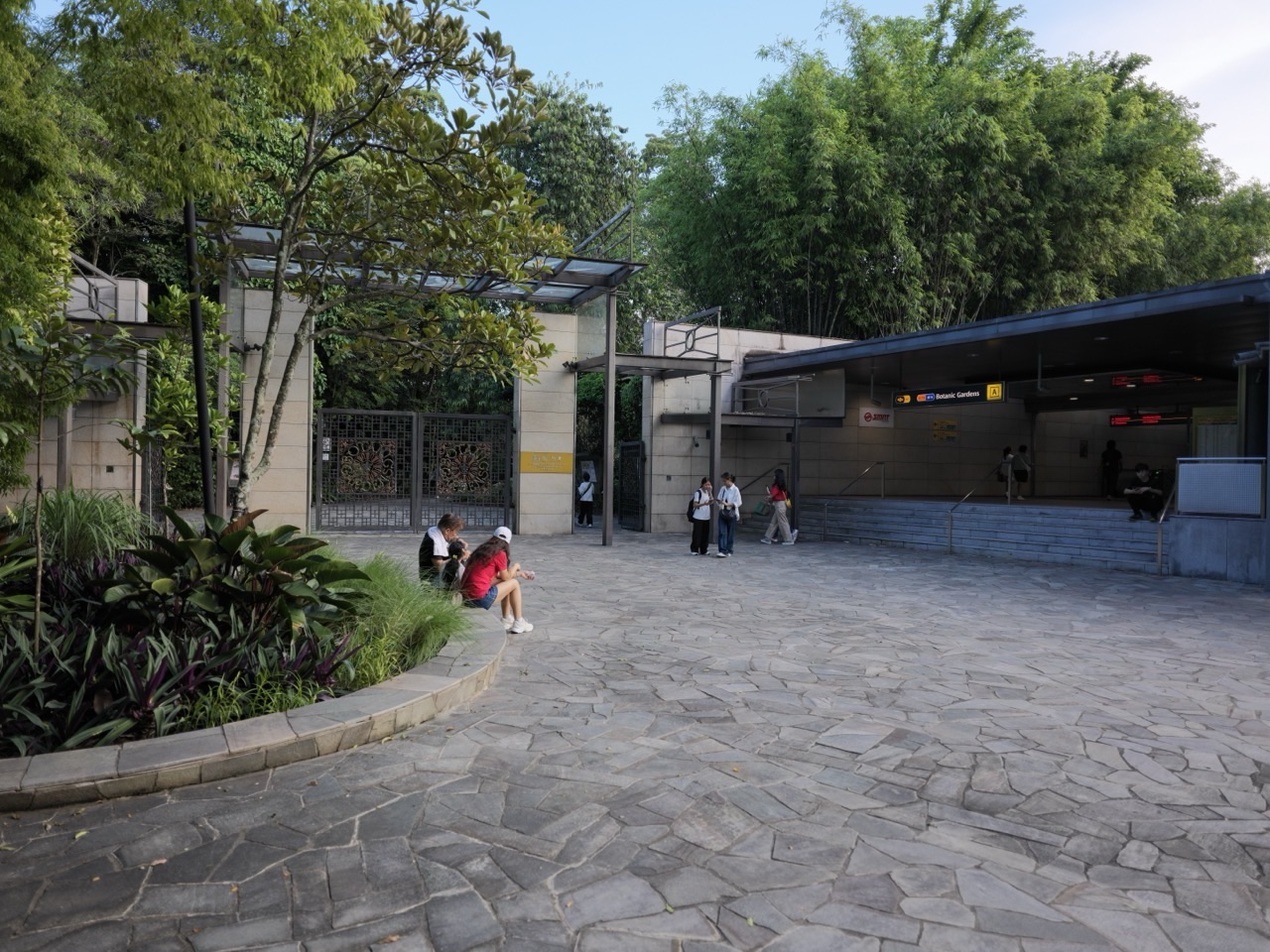
For a short nature walk at Singapore Botanic Gardens, take Botanic Gardens MRT (DT9/CC19) Exit A and start at Bukit Timah Gate. Use the map at the entrance to head towards the Eco Garden and Eco-Lake area. Stop at a place where your family can look closely from the public path, then return through the same gate or add another nearby plant stop.
Give children one question before you start, such as “What changes when we look at the water from two places?” A single question turns a walk into something they can describe afterward. You can do the activity with no equipment, or bring a small notebook to record two observations and a question for next time.
- Start: Botanic Gardens MRT Exit A at Bukit Timah Gate.
- First stop: Eco Garden and Eco-Lake, using the NParks map and on-site signs.
- Bring: Water and, optionally, a small notebook. Observe plants in place.
- Optional extension: Choose a nearby plant collection or the Centre for Ethnobotany after checking access.
Start with one good observation at Eco-Lake
The lake gives children a subject that changes while they watch it. From a clear point on the path, ask them to describe the water’s surface. They may see still patches, ripples or a reflection broken by movement. Wait a little, then compare what they see with their first description.
Move to a second viewing point if it is easy to reach. Ask whether a change comes from the water itself or from where you are standing. For example, a bright reflection can disappear when a person changes position. Ask the child to describe both views before trying to explain the difference.
Keep wildlife sightings as a bonus. A visit without a close sighting can still yield useful observations about plants, shade and water. If animals come into view, watch quietly from the path and give them space. Photograph the scene from where you are standing if the group wants a record.

Back to contents · Next section
Compare two leaves or read one plant label
Find two plants that are easy to see from the path. Look for a shared feature, such as a pointed tip, then find a difference, such as a smoother edge or a larger leaf. Young children can use simple words such as wide, narrow, shiny or rough-looking. Older children can draw one feature and label it.
A good record says what the child observed and where. For example, “This leaf is long and narrow. I saw it on a plant beside the lake path.” If the plant has a label, read it after describing the leaf. This sequence gives children practice in looking closely and using a reference.
At the Eco Garden, NParks highlights collections that include hardwoods, bamboo and spices. The wider Bukit Timah area also has thematic gardens. For a longer visit, choose a collection you can reach comfortably. If you visit the Centre for Ethnobotany, look for an example of how a plant is used in everyday life, then ask the child to connect the use with a feature they can explain.
Keep drawing and photography on the public path and leave plants in place. One well-observed feature makes a better memory than a rush through several labels. If a child wants to keep looking, let them choose the last plant before you turn back.
Back to contents · Next section
Adapt the walk to the time and group
A quick return trip
Take one photo at the gate, make one lake observation and return through Bukit Timah Gate. This works when you have a meal booking or younger children who prefer a familiar way back.
A slower visit with older children
Use the map to add a plant stop after the lake. Have children explain how they chose the second destination and identify one sign that confirmed they were going in the right direction. Before leaving, ask them to describe the route to someone who has never been there.
A visit with a stroller or a mixed-age group
Check path surfaces and slopes before taking a side trail. Keep the turnaround flexible, pick an easy place for a short pause and leave the optional stop for another day if the group wants to head back.
If rain or a closure affects the first stop, check NParks notices and follow signs. A single accessible observation close to the gate can still complete the activity. Check the hours separately if you plan to rely on an indoor attraction.
Back to contents · Next section
Frequently asked questions
Do we need a ticket for this nature walk?
The suggested outdoor walk is within the general Gardens, which have free admission.
Which MRT exit should we use?
Use Exit A from Botanic Gardens MRT for Bukit Timah Gate.
Do we need to know the names of the plants?
Start with visible features. A label or the official collections guide can help you identify a plant afterward.
Can this be combined with Jacob Ballas Children’s Garden?
Yes, if the group has time. Check that attraction’s separate entrance, hours and admission rules before going.