
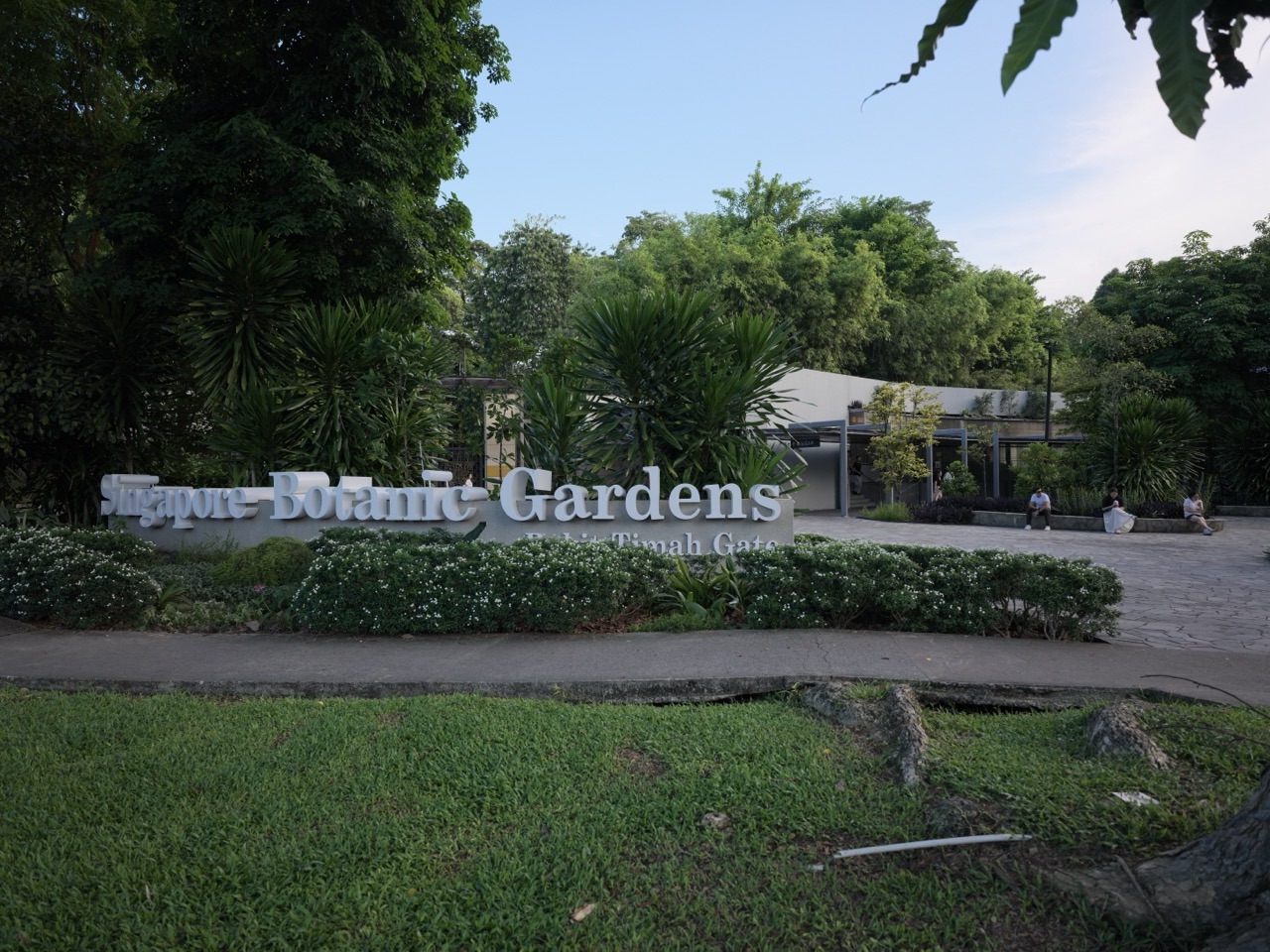
Yip Yew Chong’s Ethnobotany Stone Murals and Aileen Toh’s Hunter-Gatherer sculptures are in the Ethnobotany Garden at Singapore Botanic Gardens. Start at Botanic Gardens MRT (CC19/DT9), use Exit A for Bukit Timah Gate, then follow NParks’ Sculpture Trail Map 2.
This short visit works well if you want to see how two artists use different materials outdoors. The murals are painted on rock. The sculptures are carved from salvaged Shorea wood. Look at the works in their garden setting and use the official descriptions for the people and practices they depict.
- Where · Ethnobotany Garden.
- Start · Botanic Gardens MRT Exit A, then Bukit Timah Gate.
- Map · NParks Sculpture Trail Map 2.
- Look closely · Compare paint on rock with sculpture in wood.
Find the two works from Bukit Timah Gate
Use the MRT exit for Bukit Timah Gate and open NParks’ sculpture map before walking in. The map covers more than one artwork in the north end, so select the two entries in the Ethnobotany Garden. A meeting point at the gate is useful if others are coming later.

If the route changes because of a temporary closure, follow the signs and check the current visitor map. Allow more time if you are combining the artworks with a visit to the Centre for Ethnobotany.
Look at what the paintings show
NParks identifies four painted rocks by Yip Yew Chong. The works show different ways people in the region have used plants in everyday life. Choose one scene and ask what someone appears to be doing and what details suggest that a plant is involved. Then compare it with a second scene.
Notice the surface
Rock has a shape and texture of its own. Look for where a painted line follows an edge or crosses a change in the surface. The murals are outdoors and weather over time. The view on your visit may differ from the photographs in older guides.
Compare the two wooden sculptures
NParks credits Aileen Toh with Hunter-Gatherer, two works carved from salvaged Shorea logs. It identifies the figures as depicting Orang Asli, Indigenous peoples of Peninsular Malaysia. Use the official description or on-site label to start the discussion, and avoid guessing at a figure’s identity from clothing or pose alone.
Look from a second angle if the path allows it. A carved figure has depth and may read differently from the side. Ask a child what they can see in the sculpture that a flat image might leave out, such as the distance between features or the way the grain runs through the wood.
Choose one takeaway before you leave
A family can finish by comparing one painted detail and one carved detail. Ask how the material shapes what the artist can show. Sketch a line or write a short caption afterward if someone wants to remember it.
The nearby outdoor collection can be a second stop. If you plan to go into the centre, check its opening hours separately and make the art walk flexible if the group has a fixed appointment.
Contents · Frequently asked questions
Frequently asked questions
Where are the stone murals?
NParks lists them in the Ethnobotany Garden.
Who made Hunter-Gatherer?
NParks credits Aileen Toh.
Which sculpture map should I use from the MRT?
Use NParks Sculpture Trail Map 2 for the Bukit Timah Gate approach.
Can I combine the artworks with an indoor exhibition?
Check the separate hours of the Centre for Ethnobotany before adding it.