
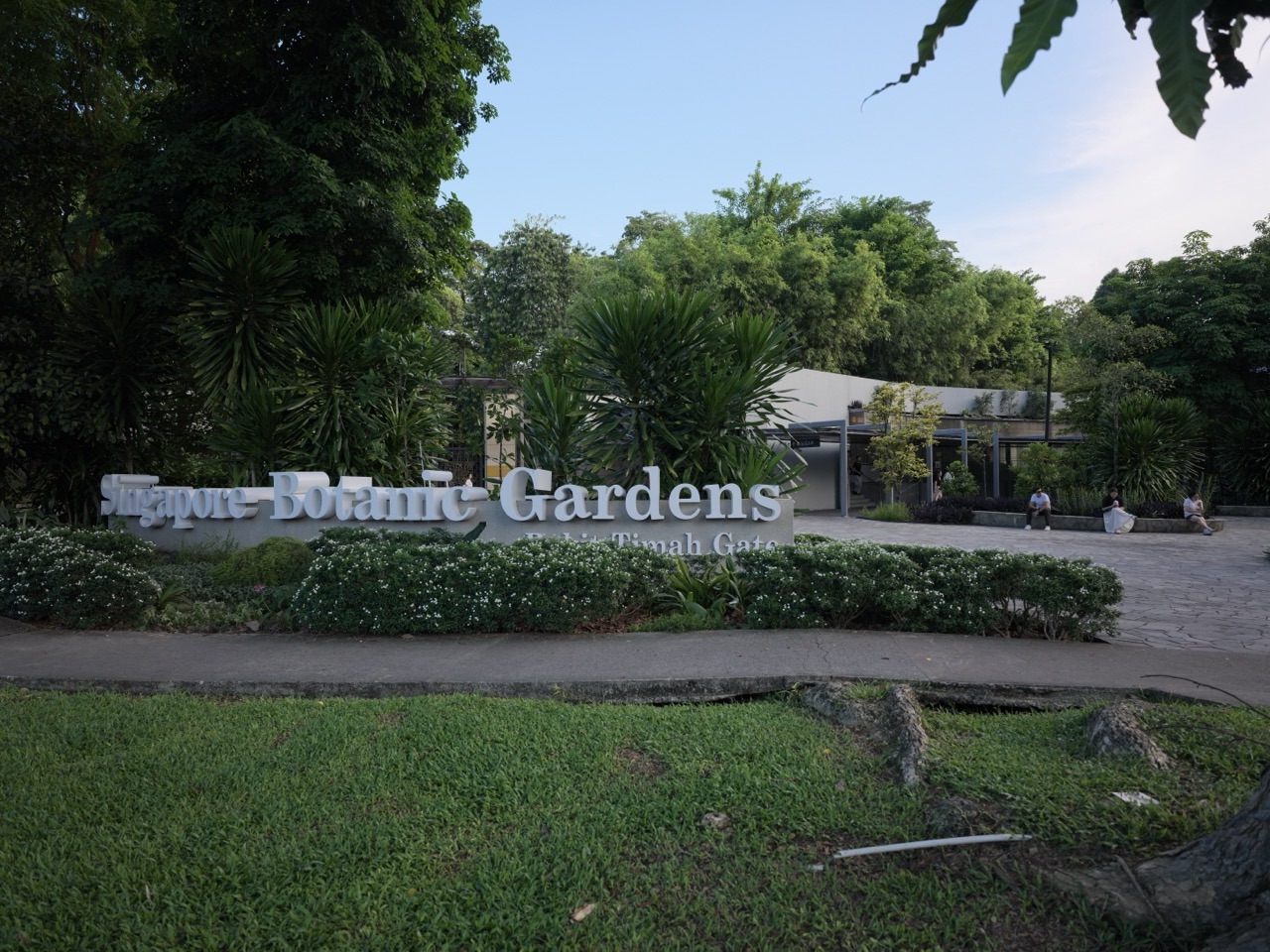
Start at Botanic Gardens MRT (CC19/DT9) Exit A and enter through Bukit Timah Gate for the Ethnobotany Garden. Use the NParks visitor map to find the outdoor collection. For a family visit, pick two or three labelled plants and ask what part people use, what they make from it and how the label supports that answer.
Add the nearby Centre for Ethnobotany if you want to see indoor exhibits. NParks lists the centre from 9am to 6pm, closed on the last Wednesday of each month. The centre has its own schedule. Check notices and download the NParks Ethnobotany Garden activity sheet if you want a ready-made trail.
- Start · Bukit Timah Gate, near Botanic Gardens MRT Exit A.
- First activity · Compare two plants and look for a stated human use.
- Indoor option · Centre for Ethnobotany, 9am to 6pm except the last Wednesday of each month.
- Bring · A phone or notebook for recording labels and sketches.
Find the garden from Bukit Timah Gate
Enter through the Bukit Timah Gate and use the current map to locate the Ethnobotany Garden and centre. The Gardens cover several entrances, so share the name of the gate when meeting someone. If your group begins near Cluny Court, agree which side of the crossing to meet on and then walk to the gate together.

If you have a short window, aim for one outdoor section and return through the same gate. For a longer visit, check the centre’s opening status first if the indoor exhibition is the part you most want to see.
Make sense of a plant label
Ethnobotany is the study of how people and plants relate. On this walk, start with the evidence in front of you. Look at a plant and read its label before deciding what its use might be. Ask whether the label names a leaf, fruit, stem, seed, bark or another part. Then ask what people do with that part.
Give each child a different role
A younger child can sketch one obvious feature while an older child looks for the plant part and stated use. At the next label, swap the roles. If the sign gives no specific use, move on to one that does. Keep plants where they grow and use your notes or photos to compare them later.
Connect an outdoor plant to an indoor object
The Centre for Ethnobotany uses artefacts, plant materials and displays to explain relationships between people and plants. If it is open, choose one object and look for the material it is made from. Ask what makes that material suitable for the job. A plant used for weaving may lead to a different discussion from a plant grown for food.
The current exhibition may differ from one described in an older guide. Look up the centre’s current exhibition if you are coming for a particular subject. When there is no time for the indoor stop, choose one outdoor label and talk through the example instead.
Finish with one sentence from the walk
Before leaving, ask each person to finish a sentence such as “People use this part of the plant to make this object.” An older child can add what they read on the label and one question they still have. Give the group a short break before deciding whether to return to the MRT or extend the outing.
Eco-Lake can be a second stop if everyone still wants to walk. If the garden visit is already complete, returning to Bukit Timah Gate keeps the route easy for children and anyone with a limited walking window.
Contents · Frequently asked questions
Frequently asked questions
Which MRT exit should I use?
Use Botanic Gardens MRT Exit A for Bukit Timah Gate.
Where can I find an activity sheet?
NParks links an Ethnobotany Garden activity sheet on its visitor information page.
When does the centre close?
NParks lists 6pm and a closure on the last Wednesday of each month. Check temporary notices before visiting.
Can I do this as a short outdoor activity?
Yes. Choose a few labelled plants and return through the same gate.