
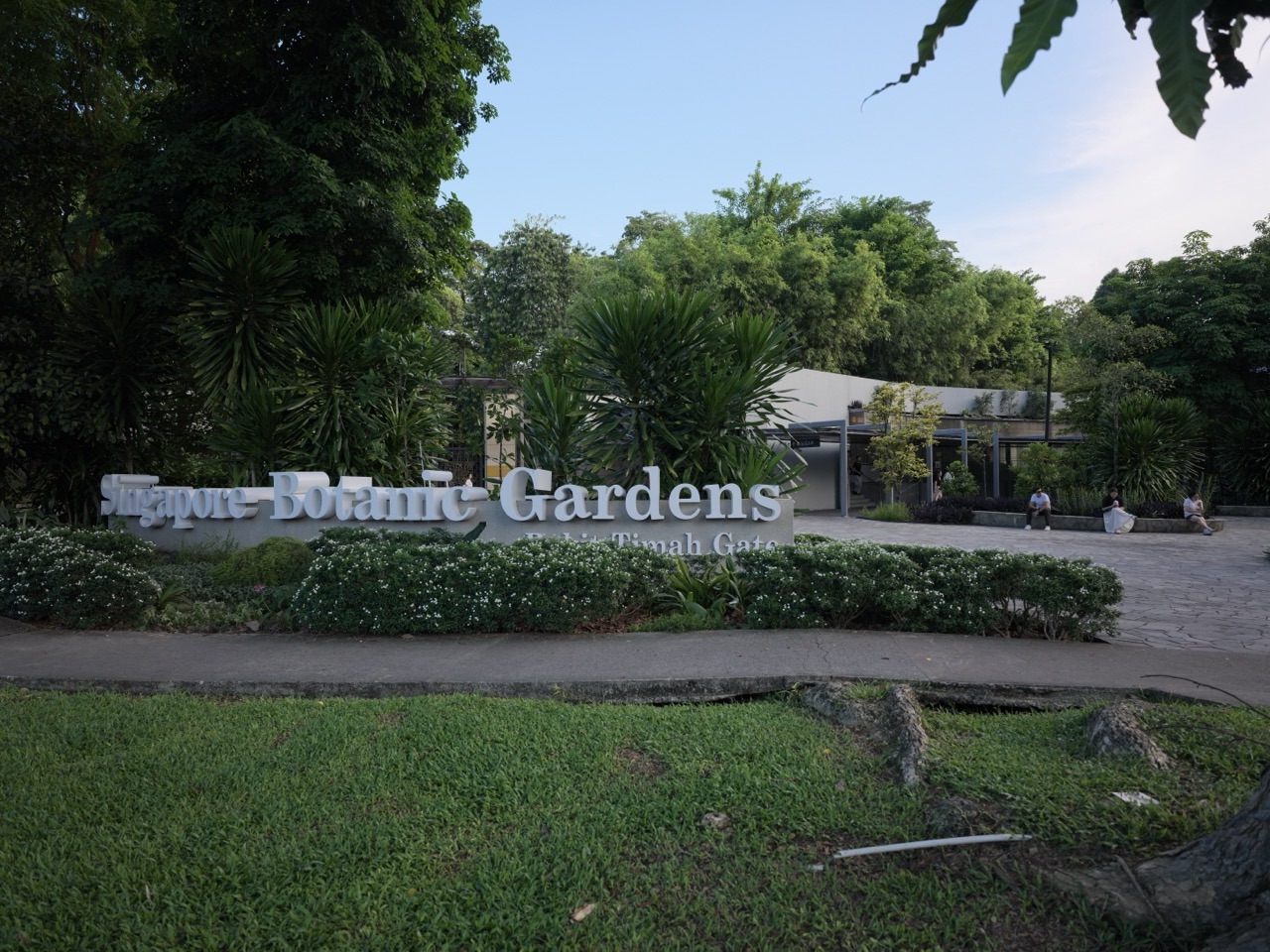
The Seed Dispersal Garden surrounds the Seed Bank at Singapore Botanic Gardens. Use Botanic Gardens MRT (CC19/DT9), Exit A, then enter at Bukit Timah Gate and follow the Gardens map towards the Seed Bank. The outdoor collection shows how wind, water, animals and the plant’s own mechanisms move seeds.
For a short visit with children, choose two examples and compare the features that help them travel. If you also want to see the indoor Seed Bank Interpretive Gallery, NParks lists the Seed Bank from 9am to 6pm daily. Check current notices before making the gallery the main stop.
- Start · Botanic Gardens MRT Exit A and Bukit Timah Gate.
- Destination · The outdoor garden around the Seed Bank.
- Look for · Adaptations for wind, water, animals or mechanical dispersal.
- Indoor option · Seed Bank Interpretive Gallery.
Find the outdoor garden from the MRT
Use the NParks map after entering Bukit Timah Gate and look for the Seed Bank. If meeting someone, send the gate name and the attraction rather than a pin for the entire Gardens. Keep the return through the same entrance if your group has a short visit.

Check whether the indoor gallery is open if it matters to the outing. The outdoor collection and the indoor displays give the group two ways to explore the topic.
Compare wind and water
NParks explains that wind-carried plants can have structures that help them travel through air, while some water-dispersed plants have light, fibrous coverings that help them float. Use the label to identify the example before deciding how it travels. Ask a child to point out the feature that supports the answer.
Ask what part is doing the travelling
The object you see can be a fruit or a seed. Read the label first and ask which structure helps it move. If you cannot see a detail clearly, sketch the visible outline and record one question to check later.
Look for clues about animals or mechanical movement
NParks describes examples with hooks or attractive fleshy parts that can aid dispersal by animals. Other plants can propel seeds over short distances. Compare the label’s explanation with the structure you can observe without pulling it off the plant. If the mechanism is hidden, use the official description as your evidence.
With younger children, use one comparison such as “hooks or floats.” Older children can explain how one feature helps the seed leave the parent plant. Follow the path and keep the specimens in place.
Continue inside or finish with one question
The Seed Bank’s gallery explains stages in collecting, processing and storing seeds. Choose the gallery if the group wants to see what happens after collection. If you only have a short time, finish outside by asking each person which seed feature they remember and why.
A nearby Eco-Lake or Ethnobotany Garden stop can extend the visit. Check the walking route and the group’s energy before adding another attraction.
Contents · Frequently asked questions
Frequently asked questions
Where is the Seed Dispersal Garden?
It surrounds the Seed Bank in Singapore Botanic Gardens.
Which MRT exit should I use?
Botanic Gardens MRT Exit A for Bukit Timah Gate.
What does the outdoor garden show?
Different ways plants disperse seeds, including wind, water, animals and mechanical methods.
When does the Seed Bank open?
NParks lists 9am to 6pm daily, subject to notices.