
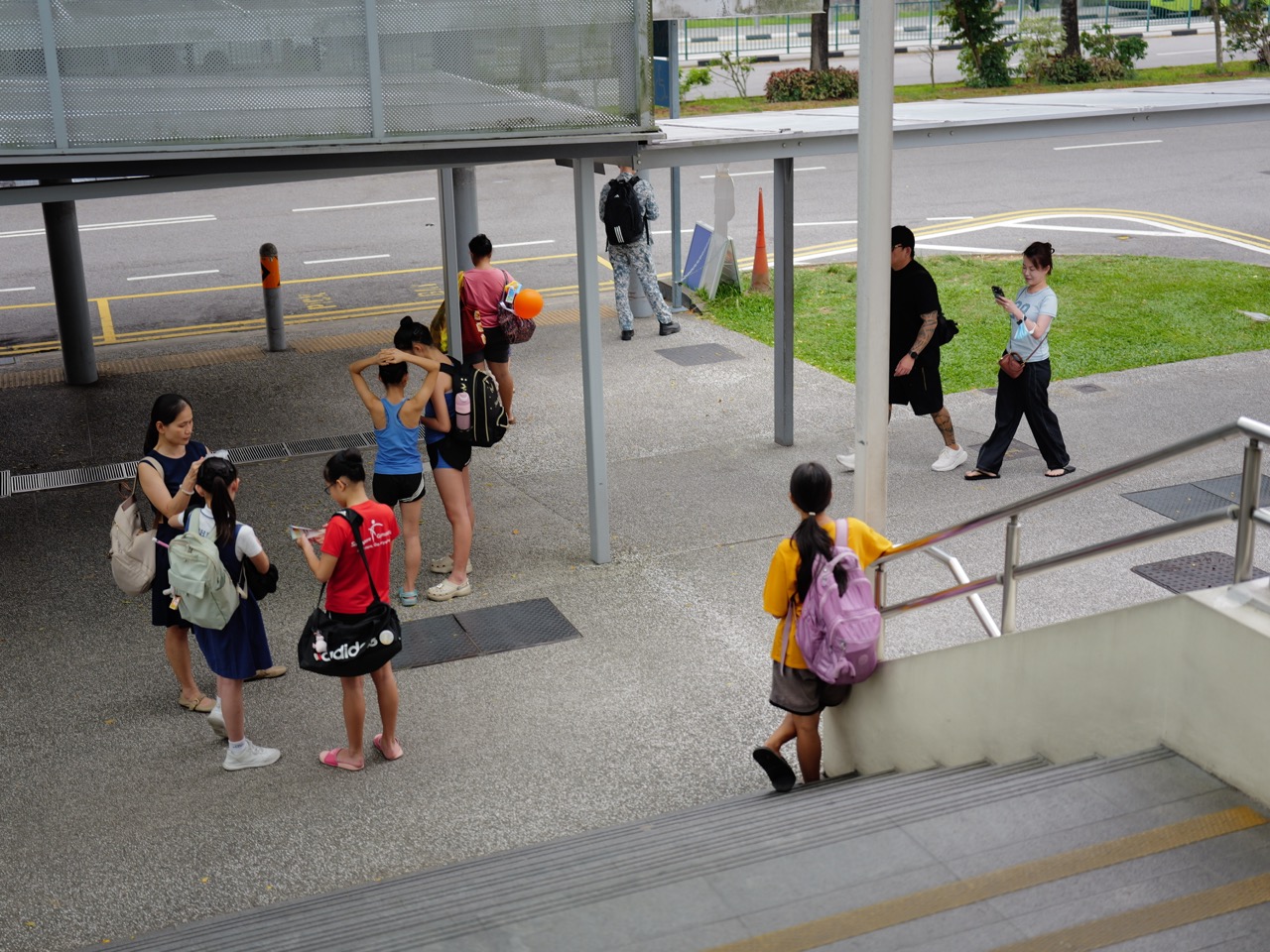
Did you know that some Bukit Timah households can apply for an $80 Public Transport Voucher in early 2027, even if they did not receive a notification letter at the end of 2026? The government increased the Public Transport Voucher (PTV) from $60 to $80 per eligible household, and raised the monthly household income-per-person ceiling from $1,800 to $2,100 following the public transport fare review announced in September 2026.
For residents travelling to Beauty World, King Albert Park, Sixth Avenue, Botanic Gardens, Farrer Road or workplaces elsewhere in Singapore, the change is worth understanding. It affects families managing school journeys, part-time workers, seniors and people who depend on bus and MRT travel—but it is not a universal $80 payout to every commuter.
This guide was prepared from official information available 27 October 2026. The fare adjustments are due to start 26 December 2026, while the second-stage PTV application process is planned for early 2027. Its exact application details should be verified once announced. The article distinguishes these dates carefully and explains what an eligible household can actually do.
In this guide
- Bukit Timah’s 2027 public transport changes in brief
- Why this matters for Bukit Timah families
- Which fare changes take effect on 26 December 2026?
- An example of how travel costs can add up
- What is the Public Transport Voucher?
- Who qualifies for the $80 voucher?
- How to calculate the income ceiling correctly
- What about a senior living with adult children?
- Stage one: who gets an automatic notification?
- Stage two: how to apply in early 2027
- Which community club can Bukit Timah residents approach?
- When can eligible households redeem their vouchers?
- The $10-denomination rule: how can a household share the benefit?
- The redemption deadline is 31 March 2028
- What if the household did not qualify last year?
- What if someone still needs more help?
- Concession cards and schoolchildren: use the correct fare category
Bukit Timah’s 2027 public transport changes in brief
- From 26 December 2026: the Public Transport Council’s 2026 Fare Review Exercise raises standard adult card fares by 12 cents for journeys up to 3.2 km, and 13 cents for longer journeys.
- Student, senior and persons-with-disabilities concession card fares: increase by 5 cents per journey under the announced fare adjustment.
- Workfare Transport Concession Scheme (WTCS) card fares: no change from this fare review; the government absorbs the relevant increase for this group.
- Adult cash fares: increase by 20 cents; cash fares for students, seniors and persons with disabilities increase by 10 cents.
- Monthly pass prices: no change under the 2026 fare review.
- Public Transport Voucher: increased to $80 per eligible resident household for the 2026 PTV Exercise, which continues into 2027.
- Income criterion: monthly household income per person of not more than $2,100, with at least one Singapore Citizen or Permanent Resident in the household.
- First notification phase: qualifying households previously assisted under the 2025 exercise are expected to receive letters or SMS from end-December 2026.
- Second application phase: other qualifying households may apply from early 2027 through official online or local community-club channels.
- Voucher redemption: permitted from 28 December 2026, with the PTV valid for redemption until 31 March 2028.
These are separate dates and rules. An increase that begins in December 2026 can shape household transport expenses throughout 2027, while the assistance exercise still carries the label 2026 PTV Exercise.
Why this matters for Bukit Timah families
Daily travel is often more complicated than a simple MRT map suggests. One household may have a child going to school in the morning, a parent taking a bus to work and an older relative visiting a clinic several times a month. Their journeys can require different concession cards, transfers and travel patterns.
For lower-income families, even a modest increase per journey can add up. The exact amount depends on distance, number of trips, passenger categories and whether a monthly pass is useful. It would be misleading to claim that every household faces the same transport cost increase.
The $80 voucher is intended to help eligible households manage these changes. A household should first check whether it meets the published income and citizenship or permanent-residency conditions, then follow the correct stage of the assistance exercise.
The wider goal is to make familiar journeys sustainable while avoiding the mistake of treating a future project—such as the Cross Island Line—as a service that already exists in 2027.
Which fare changes take effect on 26 December 2026?
The Public Transport Council’s Fare Review Exercise 2026 statement sets out the adjustments. Adult card fares rise 12 or 13 cents according to journey distance. Concession card journeys for students, seniors and people with disabilities rise 5 cents.
By contrast, Workfare Transport Concession Scheme card fares remain unchanged, and prices of monthly passes are not increased by this fare review. Those exceptions matter when a household estimates its likely spending in 2027.
A family member travelling occasionally by cash should know that cash fares have different increases. It is not sensible to estimate all transport costs by multiplying an adult card increase across every age group.
For precise current fares, use the PTC or LTA information applicable to the journey and card type. Do not rely on a decade-old fare table or assume every express service has the same fare as an ordinary trunk route.
An example of how travel costs can add up
Imagine an adult who makes two regular card-fare journeys each weekday. If those journeys each become 13 cents more expensive, the combined increase is 26 cents per commuting day. Over 20 commuting days, that would be S$5.20.
This is only an illustrative calculation, not a statement that an actual Bukit Timah resident has precisely that schedule. It assumes 40 affected card-fare journeys and ignores holidays, fare caps, unusual transfers or changes in travel habits.
The lesson is to use a household’s real number of journeys, not a national average, when planning a monthly budget. Families with multiple daily commuters may have different needs from a single person who travels twice a week.
An $80 voucher may therefore be meaningful, but it should not be advertised as covering exactly a fixed number of months for everyone.
What is the Public Transport Voucher?
The Public Transport Voucher is a government-supported transport assistance measure for qualifying resident households. It helps offset costs for public transport users following fare adjustments.
The September 2026 announcement raised the benefit from $60 to $80 for the current exercise and expanded the eligibility criterion. This is a voucher to support travel, not cash deposited into the applicant’s personal bank account.
A household may use the voucher to top up travel cards or purchase monthly passes through the supported transport ticketing channels. Once redeemed as travel value, it can help the household’s relevant cardholders continue making journeys.
The official Ministry of Transport PTV page is the best starting point for the latest implementation details and eligibility questions.
Who qualifies for the $80 voucher?
MOT says an applicant’s household must have gross monthly household income per person of no more than $2,100, and at least one household member must be a Singapore Citizen or Permanent Resident.
Gross monthly income includes relevant employment income, trade or self-employed income, overtime, allowances, commissions, bonuses and similar income components under MOT’s stated definition.
Household income per person means the gross monthly household income divided by the number of family members living together for the purpose of the scheme. It is not the same as a person’s take-home salary after CPF deductions.
Private property ownership or an address in Bukit Timah does not in itself determine eligibility. Residents of HDB flats, private apartments or other homes need to assess their actual household conditions against the published rules rather than assume a particular estate is included or excluded.
How to calculate the income ceiling correctly
Consider a fictional household of four family members living together. If its gross monthly income for the purposes of the scheme is S$8,000, the household income per person would be S$2,000. That falls within the announced S$2,100 ceiling.
Another four-person household with an assessed gross monthly income of S$9,600 would have S$2,400 per person, above the ordinary announced ceiling.
These are illustrative examples, not eligibility determinations. The responsible agency’s definitions and checks govern the actual assessment, and the published guidance also allows the Citizens’ Consultative Committees to extend assistance to some households needing additional help.
If a household’s income is irregular, do not simply choose the most favourable month and assume eligibility. Follow the current official process and submit accurate information.
What about a senior living with adult children?
This is a common situation in established neighbourhoods: a senior may no longer be working, but adult children in the same household have income. The PTV is assessed at household level, not solely by the senior’s personal income.
That does not necessarily mean every older person living with employed relatives is ineligible. The total gross household income and the number of relevant family members must be assessed according to the scheme.
If the household has a specific caregiving or financial difficulty that a simple calculation fails to reflect, seek guidance through the official application or assistance channel. MOT notes that extra vouchers may be allocated through local assistance mechanisms for households requiring more help.
The aim is to present the real household situation accurately rather than make assumptions based only on someone’s age or housing type.
Stage one: who gets an automatic notification?
MOT and the People’s Association said that in the first stage, households that received PTV assistance under the 2025 exercise and continue to meet the updated eligibility conditions will receive notification letters or SMS from end-December 2026, according to their previously indicated contact preference.
This reduces the need for some households to reapply from scratch. But an automatic notification should not be confused with a guarantee for someone whose eligibility has changed or whose earlier application was unsuccessful.
Households should keep relevant contact information accurate and read a notification carefully. It should explain how to redeem the voucher using official channels.
If a supposed notification demands banking credentials or a payment to activate the voucher, do not comply. Verify independently through the relevant government site or community club.
Stage two: how to apply in early 2027
For other households that meet the updated conditions but did not receive the first-stage notification, applications are planned from early 2027.
MOT says these applications will be available online or through local Community Centres or Clubs. As of October 2026, detailed arrangements for this 2027 application stage were still to be announced. It would therefore be wrong to publish an invented application opening day or a guarantee that a particular booth is operating.
The best action is to check the MOT Public Transport Voucher portal when the year begins and follow any official People’s Association or local CC notice.
Residents should prepare accurate household information but avoid uploading personal documents to an unverified commercial website promising faster approval.
Which community club can Bukit Timah residents approach?
The People’s Association currently lists Bukit Timah Community Club at 20 Toh Yi Drive. It can be a practical local point for general community assistance and for enquiries about government-backed schemes.
However, the existence of a community club does not establish that a named PTV registration counter will definitely operate there on a particular 2027 date. Check the club’s current instructions, whether appointments are necessary and which documents the exercise requests.
Residents elsewhere in the wider Bukit Timah area may have a different local community club or constituency arrangement. The correct service point is the one identified by the official scheme at the time of application.
Use the OnePA Bukit Timah Community Club directory for present contact and location information.
When can eligible households redeem their vouchers?
MOT’s announcement says eligible households can start redeeming the voucher from 28 December 2026 after receiving the relevant notification.
Supported channels include the SimplyGo app, SimplyGo Kiosk, Top-Up Kiosk, Assisted Service Kiosk, SimplyGo Ticket Office or SimplyGo Ticketing Service Centre. Read the current notice to identify which channel fits the household’s travel card or pass.
A household that applies in early 2027 should first wait for confirmation and the applicable redemption instructions. An application is not the same as a successful award.
For older residents, using an official attended service point may be easier than navigating an unfamiliar digital procedure alone.
The $10-denomination rule: how can a household share the benefit?
MOT says the PTV can be redeemed in S$10 denominations to different travel cards, regardless of which eligible household member the voucher is addressed to.
That means one $80 household voucher can support more than one member’s travel card, as appropriate. It does not mean each of four family members receives a separate $80 award.
A family might decide which members have the greatest near-term transport needs and allocate the redemption accordingly. The choice should be practical and transparent among the household members using the assistance.
The correct card types, equipment and any transaction instructions depend on the official ticketing channel. Follow current SimplyGo or MOT guidance rather than assume that every payment method can be processed identically.
The redemption deadline is 31 March 2028
The published 2026 PTV Exercise voucher remains valid for redemption until 31 March 2028. This date extends beyond the end of 2027, which helps explain why the exercise may appear in official information under a 2026 heading throughout 2027.
Do not confuse the PTV expiry with CDC Vouchers’ 31 December 2027 deadline. They are different schemes, with different conditions and timelines.
If a household receives a voucher in 2027, it should follow the official redemption notice and complete the process rather than assume the voucher is permanent.
The published date governs voucher redemption; once value is added to an eligible travel card, the card and transport-payment rules must be understood separately.
What if the household did not qualify last year?
The eligibility ceiling increased from S$1,800 to S$2,100 monthly household income per person, so some households that previously fell outside the limit may now be eligible.
The government estimated that the change would extend the scheme to approximately 60,000 additional households, with around four in ten households benefiting overall.
Those are nationwide estimates and should not be converted into a claim about how many families in Bukit Timah will qualify. Demographic and income conditions vary across streets and housing types.
If you were previously ineligible, check the revised criteria and the second-stage application when it opens. Do not assume an earlier unsuccessful result automatically applies to the new exercise.
What if someone still needs more help?
MOT says additional PTVs may be provided through Citizens’ Consultative Committees for households with greater needs. This means the ordinary income ceiling is an important starting point, but it should not discourage someone facing exceptional difficulties from asking whether additional support is available.
The correct approach is to explain the household’s actual circumstances through the official channels, not to misstate income or residency information.
Families dealing with broader financial pressure can also consult SupportGoWhere for other relevant assistance, including help with living costs, childcare or essential services.
A transport voucher is one part of support; it is not designed to solve every problem affecting a household’s finances.
Concession cards and schoolchildren: use the correct fare category
For secondary students and younger commuters, a student concession card may have different charges and product rules from an adult card. The 2026 fare review announces a 5-cent increase for eligible student card fares, not the 12–13-cent adult card increment.
Parents should check the actual concession entitlement, eligibility and use conditions. A student receiving a household share of a PTV still has to use the correct approved card or pass.
Families can reduce confusion by writing down which person uses which card, what the normal trip costs after the fare adjustment and whether the person benefits from a monthly pass.
Avoid using a future school enrolment or an unopened MRT interchange to estimate what a real 2027 commute will cost.
Monthly passes: why an unchanged price may matter
The PTC stated that monthly pass prices would not rise under the announced 2026 fare review. That does not mean a monthly pass is automatically the best purchase for every commuter.
A person making a large number of eligible bus and rail journeys may benefit from a pass, while someone travelling only occasionally may be better off paying ordinary concession or adult fares.
To compare, estimate the person’s real number and type of trips, consider the applicable pass rules and use current prices. A rough advertisement promising unlimited value without describing the pass conditions can be misleading.
A household may also use its eligible PTV towards certain monthly passes as permitted by the scheme, making the decision worth reviewing rather than assuming the old travel routine is always best.
The Workfare Transport Concession difference
The 2026 Fare Review Exercise explicitly says WTCS card fares do not increase as part of the adjustment. This provides targeted protection for a particular group of lower-wage workers.
It would be incorrect to tell every low-income commuter that they should expect the same 12–13-cent adult card increase. Their actual concession category matters.
A household with someone using a WTCS card may still have other commuters whose fares change. The family should assess each member separately.
For official detail, refer to the Public Transport Council’s fare review announcement rather than a summary that ignores the concession-category exceptions.
Beauty World and King Albert Park: transport now versus future infrastructure
Bukit Timah has existing Downtown Line stations that are useful today, including Beauty World and King Albert Park. But Cross Island Line Phase 2 is a separate future infrastructure programme with a published 2032 target.
A property or school brochure may show the future interchange at King Albert Park and make travel appear easier. For 2027 calculations, the household should use bus and MRT services that actually operate at the time.
Construction itself may sometimes affect pedestrian routes or road conditions; check official works notices rather than assume all access remains unchanged.
See Bukit Timah 2027: Beauty World MRT and transport changes for the underlying project chronology.
Planning an accessible journey for older residents
A transport network’s convenience is not only about rail speed. A senior may need working lifts, sheltered paths, a suitable walking distance and a service counter that can help with a travel card.
If a household receives an $80 PTV, choose a redemption method that the intended users can manage. A relative may help an older person understand the official instructions without taking possession of sensitive login credentials unnecessarily.
For a commute involving multiple transfers, verify the actual routes and alternative exits. An attractive map is not enough if the walking connection is difficult for someone using a mobility aid.
The aim is to help residents maintain access to clinics, shops, community activities and family visits, rather than treat a voucher as a reason to travel more.
PTV versus CDC Vouchers: the difference at a glance
Public Transport Voucher: generally $80 per eligible resident household under the 2026 exercise, with an income criterion and redemption through authorised transport channels.
CDC Vouchers: a separate scheme for eligible Singaporean households without the same low-income test, used with participating hawkers, heartland merchants and supermarkets. An additional $300 tranche is planned for January 2027.
You cannot assume that a supermarket CDC Voucher is accepted by a SimplyGo kiosk or that a transport voucher can be used to pay a hawker stall. Different names signal different legal and practical uses.
See Bukit Timah 2027: January CDC Vouchers and household spending for that programme.
Security: how to recognise false transport voucher messages
A scammer may imitate a government notification and ask for a Singpass code, bank login or payment to “activate” assistance. Be cautious of messages that push you to act immediately through an unfamiliar link.
Use the Ministry of Transport’s official PTV page, the SimplyGo service and authorised People’s Association channels. If you receive a notification, compare its instructions with the published official process.
Do not send photographs of identity cards or personal financial statements into community group chats to prove eligibility. Follow the official application route instead.
If something seems suspicious, seek help from a recognised agency or use Singapore’s official scam-awareness resources before proceeding.
A practical 2027 family transport checklist
- January: check whether the household is in the automatic-notification stage or should follow the second-stage application when it opens.
- When applying: use the published income definition and state the household composition accurately.
- When approved: read the redemption instructions and choose an authorised kiosk, app or service location.
- For school and work routines: review actual fare categories, not one generic adult fare.
- For seniors: check concession cards, accessible routes and whether a service counter would be preferable.
- Before March 2028: do not let the published PTV redemption period pass unnoticed if a voucher remains unused.
This is a family action checklist, not an invented list of Bukit Timah voucher roadshow dates.
Frequently asked questions
How much is the public transport voucher in 2027?
The 2026 PTV Exercise, which includes early-2027 applications, provides $80 per eligible resident household, up from $60 previously.
What is the household income ceiling?
The announced threshold is gross monthly household income per person of no more than S$2,100, with at least one Singapore Citizen or Permanent Resident in the household.
Is the $80 for each member of my family?
No. It is generally one voucher per eligible household, though it can be redeemed in S$10 portions across different eligible household travel cards.
Can residents of private housing in Bukit Timah apply?
The stated PTV eligibility uses household income and a citizen/PR condition; it is not described as an HDB-only scheme. Apply through the authorised process and disclose the actual household situation.
When do applications begin for households not automatically notified?
MOT announced a second stage starting early 2027. Specific dates and procedures should be confirmed from its later notices.
When do the fare increases take effect?
26 December 2026, so they affect journeys during 2027.
Do student concession fares rise by the same amount as adult fares?
No. PTC announced 5 cents for student card fares, compared with 12–13 cents for ordinary adult card journeys.
Did monthly pass prices rise in this fare review?
PTC said monthly pass prices remain unchanged under the 2026 fare adjustment.
When does the public transport voucher expire?
The published redemption deadline is 31 March 2028. Read the notice for the rules applying after the voucher is redeemed as card value.
Can the voucher be used for shopping at Beauty World?
No. It is a transport assistance voucher, not a CDC supermarket or heartland merchant voucher.
Official sources and related Bukit Timah guides
- Public Transport Council: Fare Review Exercise 2026, effective 26 December
- Ministry of Transport: Public Transport Vouchers and eligibility
- MOT and PA: September 2026 announcement of $80 PTVs and early-2027 applications
- People’s Association: Bukit Timah Community Club directory
- SupportGoWhere: Government support scheme directory
- eduKateSG: Bukit Timah MRT and transport changes in 2027
- eduKateSG: January 2027 CDC Vouchers and household spending
- eduKateSG: Binjai bridge, safe walkways and barrier-free access
- eduKateSG: Bukit Timah school transitions and admission planning
The takeaway: Bukit Timah households navigating the 26 December 2026 fare increase should check whether they qualify for the $80 Public Transport Voucher. Some will receive notification automatically at the end of 2026; others can use the early-2027 application stage once officially opened. The most important facts are the S$2,100 per-person household income ceiling, household-level award and 31 March 2028 redemption deadline.