
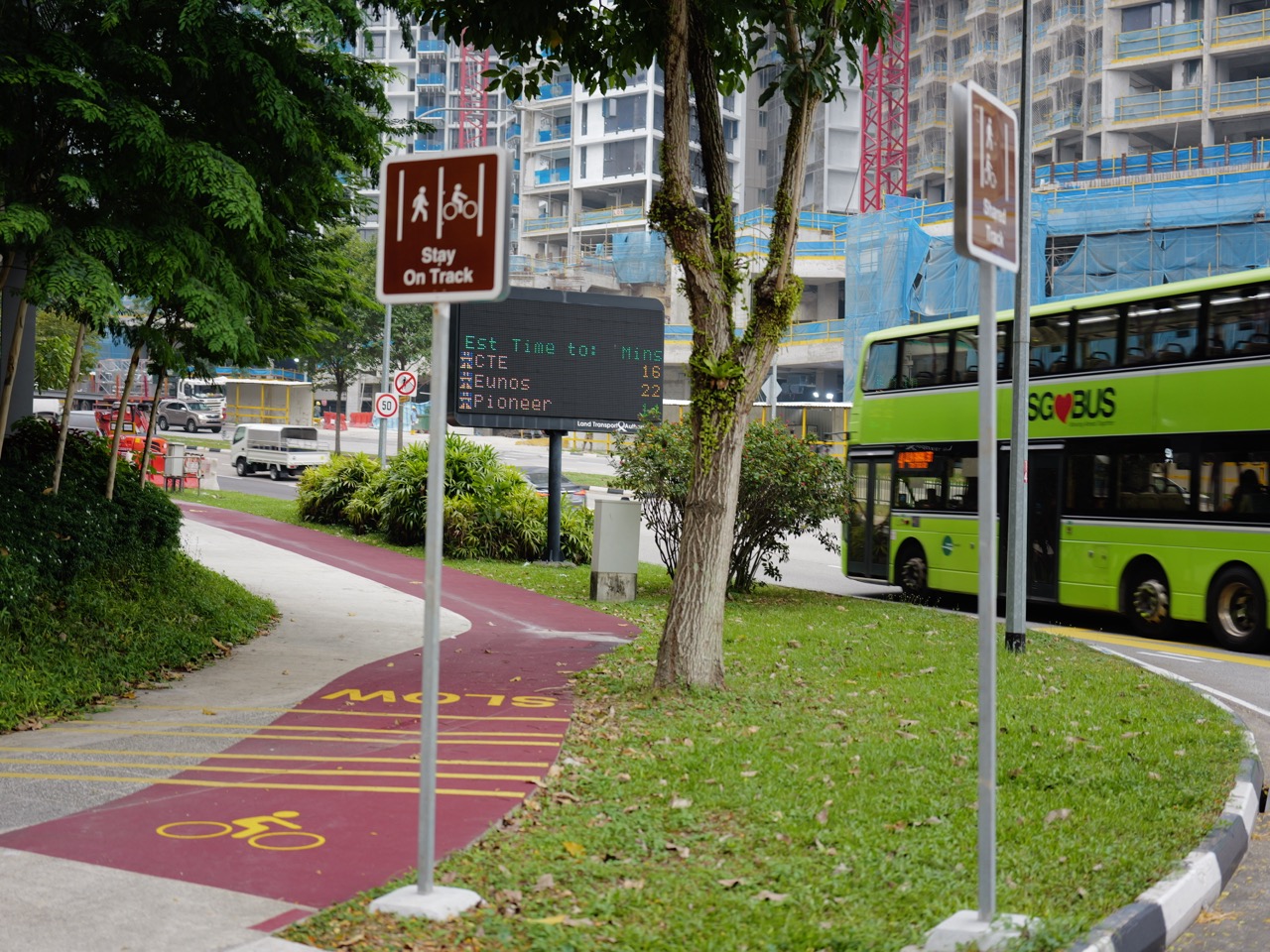
Singapore’s mobility scooter changes matter directly to estate residents. From mid-2027, the Land Transport Authority (LTA) plans roving registration stations at community touchpoints so owners of existing mobility scooters and equivalent motorised devices can register them. This is different from the requirement that new mobility scooters sold by retailers be registered from 1 June 2026, and different again from 1 January 2029, when using an unregistered mobility scooter on public paths becomes an offence.
The rules also address safe speed, device dimensions and the circumstances in which someone may use a mobility scooter. From 1 June 2026, motorised personal mobility aids (PMAs) travelling on public paths have a 6km/h speed limit. Mobility scooter users generally need a Certificate of Medical Need unless they qualify for a stated exemption, including seniors aged 70 and above or defined assistance-scheme groups. These changes protect shared spaces while preserving legitimate mobility access.
This independent Singapore 2027 guide helps older residents, wheelchair users, caregivers, retailers and pedestrians understand the timetable, what qualifies as a mobility scooter, the Assessment for Mobility Scooter (AMS), exemptions, how registration works and what still awaits official details. All timelines are based on LTA announcements publicly available on 27 October 2026.
Published 27 October 2026. This eduKateSG resident explainer is not an official government notice and does not guarantee that a future target will be met. Where regulations, fees, operating locations or applications matter, verify the latest instruction directly with the responsible authority.
What is confirmed for Singapore in 2027
- New mobility scooters offered by retailers have required model approval and device registration from 1 June 2026.
- LTA plans a registration process for existing mobility scooters and equivalents from mid-2027, using roving stations at community touchpoints. Exact sites and booking instructions were still to be announced.
- By 1 January 2029, all mobility scooters used on public paths must be registered. Users of existing devices are expected to register by 31 December 2028.
- Since 1 June 2026, motorised PMAs have had to travel at no more than 6km/h on public paths.
- Mobility scooter users generally need a Certificate of Medical Need, with exemptions including seniors aged 70 and above and specified assistance-scheme beneficiaries.
- Public-path dimension limits are generally 120cm long, 70cm wide, 150cm high and 300kg laden weight, subject to an approved exceptional assessment route.
Claims residents should not assume
- Do not state that every previously owned mobility scooter must already be registered on 1 January 2027.
- Do not confuse the 2026 public-path travel speed limit with the 2029 device design-speed requirement for all existing devices.
- Do not assume a senior’s age exemption from medical certification also exempts the device from safe-speed and registration rules.
- Do not treat a device labelled ‘mobility scooter’ by a seller as automatically compliant or appropriate for a person without qualifying mobility need.
Table of contents: follow the issue that affects you
- 1. Three dates that must not be confused
- 2. What counts as a mobility scooter?
- 3. The 6km/h public-path speed rule already applies
- 4. Why the 2029 device-speed deadline is separate
- 5. Who needs a Certificate of Medical Need?
- 6. Aged 70 or older: exemption has limits
- 7. Other medical-certification exemptions
- 8. Device dimensions protect narrow paths and public transport
- 9. What retailers must do before a new scooter is sold
- 10. What mid-2027 roving registration stations are for
- 11. Where mobility scooters are allowed
- 12. Fire safety and safe charging also matter
- 13. How caregivers can help without taking independence away
- 14. Pedestrians, children and cyclists also have responsibilities
- 15. Avoid confusion with PMDs and power-assisted bicycles
- 16. A useful checklist before the final 2029 deadline
This guide separates three things: what an authority has announced, what remains to be implemented, and what a Singapore household can usefully do. For any future change, ask who is responsible, which people and places are covered, what exact date applies and whether practical access is already available.
1. Three dates that must not be confused
The transition has stages. On 1 June 2026 the stricter usage rules and mandatory retailer registration for new scooters began. From mid-2027 existing users are expected to be able to register through LTA’s planned roving community stations. By 31 December 2028 existing devices should be registered, because from 1 January 2029 using an unregistered mobility scooter on a public path becomes an offence. These dates are designed to give existing users time to meet requirements while retailers stop selling non-compliant new products.
Worked Singapore resident situation
Hypothetical example, not a report about an identifiable person: A family with an older mobility scooter sees ‘mandatory registration 2027’ and fears an immediate January fine. That is not what the published staged plan says.
What residents can do now
Write the three dates separately and check LTA’s latest website for the actual 2027 appointment process.
2. What counts as a mobility scooter?
LTA defines a mobility scooter by features such as a motorised chassis, at least three wheels, handlebars or tiller steering, one seated user and a design intended for someone unable or having difficulty walking. A scooter lookalike used for leisure may instead be classified as a personal mobility device and face different rules. Manual wheelchairs fitted with certain detachable motorised handlebar attachments are included among mobility scooter equivalents for registration and medical-need purposes.
Worked Singapore resident situation
Hypothetical example, not a report about an identifiable person: A healthy adult sees a three-wheeled vehicle sold as a shopping scooter and assumes its label automatically lets the rider use it as a medical mobility aid on paths.
What residents can do now
Read LTA’s actual device definition and approved-model information. Classification should follow the regulatory characteristics and intended use rather than a shop’s advertising title.
3. The 6km/h public-path speed rule already applies
Since 1 June 2026, motorised personal mobility aids must not exceed 6km/h when travelling on public paths. That rule helps pedestrians, seniors, young children and scooter users share finite footpath width safely. It applies to actual use on public paths even while some owners of older models have until 2029 to meet the separate maximum-device-speed requirement. A motorised aid should slow further in crowded situations when necessary.
Worked Singapore resident situation
Hypothetical example, not a report about an identifiable person: A scooter rider travels through an HDB void deck at the machine’s old 10km/h maximum because they think all limits begin in 2029.
What residents can do now
The public-path speed rule is already in effect. Travel at or below 6km/h, slow near pedestrians and follow the applicable local safety restrictions.
4. Why the 2029 device-speed deadline is separate
LTA’s rule requires all PMAs eventually to have a maximum device speed of 6km/h, with the broad existing-device requirement taking effect from 1 January 2029. Device speed is a technical property: a machine that can run faster may need a safe approved adjustment or replacement even if a conscientious rider normally drives slowly. New scooter models sold through retailers have already faced the stricter registration and technical review from 2026.
Worked Singapore resident situation
Hypothetical example, not a report about an identifiable person: An older motorised wheelchair can be used carefully at walking speed but may still have a motor controller allowing higher speeds. Its future technical compliance should be checked before the final date.
What residents can do now
Ask the device retailer or a competent service provider whether a safe compliant adjustment is possible. Do not attempt an improvised modification that threatens braking or stability.
5. Who needs a Certificate of Medical Need?
The 2026 rules generally require users of mobility scooters and equivalent motorised devices to obtain a Certificate of Medical Need through the Assessment for Mobility Scooter. The requirement connects device use with genuine difficulty walking and helps reduce recreational misuse of medical aids. But it is not universally imposed: LTA identifies several exempt groups, including seniors aged 70 or older and eligible users linked to certain established MOH disability-assistance assessments. The evidence and exact eligibility criteria matter.
Worked Singapore resident situation
Hypothetical example, not a report about an identifiable person: A worker in their fifties who has difficulty walking assumes a doctor’s casual remark is enough to meet the official certification requirement.
What residents can do now
Use the AMS process and approved healthcare assessment arrangements. Retain official certification where required rather than a loosely worded private message.
6. Aged 70 or older: exemption has limits
Seniors aged 70 and above are exempt from obtaining a Certificate of Medical Need under the stated LTA scheme. That reduces the administrative burden on older people with mobility challenges. It does not mean a senior can use an unregistered device after the registration deadline, ride at unsafe speeds or ignore dimension and shared-path rules. Age exemption and operational compliance are different questions.
Worked Singapore resident situation
Hypothetical example, not a report about an identifiable person: A 74-year-old assumes the scooter can bypass the future 2029 registration requirement because no medical assessment is needed.
What residents can do now
The certification exemption does not cancel the registration and path-use rules. Family members can help check the device’s registration mark and safe operating condition.
7. Other medical-certification exemptions
LTA also identifies exemptions for beneficiaries of subsidised mobility scooters under specified schemes, including the Seniors’ Mobility and Enabling Fund before 27 February 2026, the Assistive Technology Fund, and people assessed with mobility or transferring needs under particular MOH disability schemes. Exact wording and documentary proof are important; a person who once received any government help does not automatically qualify. Existing assistance records may provide the relevant verification route.
Worked Singapore resident situation
Hypothetical example, not a report about an identifiable person: A caregiver knows their parent has received a disability-related subsidy and assumes all paperwork is therefore waived without checking which scheme was involved.
What residents can do now
Review the precise LTA list and the provider’s assistance documentation. Ask the responsible agency to clarify before missing a required certification step.
8. Device dimensions protect narrow paths and public transport
For public paths, the general maximum dimensions are 120cm length, 70cm width and 150cm height, with a laden weight not exceeding 300kg including the user. These limits reflect physical access constraints such as footpath widths, boarding spaces and lift dimensions. LTA allows a healthcare professional to assess a need for a larger aid through the AMS, rather than treating every oversized device as automatically acceptable. Actual public transport carriage may have other operating requirements.
Worked Singapore resident situation
Hypothetical example, not a report about an identifiable person: A mobility aid with large baskets or modifications exceeds the standard width and becomes difficult to manoeuvre through a narrow estate path.
What residents can do now
Measure the complete device including relevant attachments and seek the appropriate healthcare professional assessment if a larger device is genuinely necessary.
9. What retailers must do before a new scooter is sold
From 1 June 2026 retailers can only advertise, display and sell registered mobility scooters and equivalents under the new framework. Models must be on LTA’s whitelist and registered through authorised inspection centres, with an identification and registration mark. Before transfer to an individual buyer, the retailer must check the buyer’s Certificate of Medical Need or valid exemption. The ownership transfer must be completed in the prescribed registration system.
Worked Singapore resident situation
Hypothetical example, not a report about an identifiable person: A family buys a mobility scooter from an online seller because it looks identical to a local model, but cannot identify a compliant registration mark or authorised dealer.
What residents can do now
Check the official whitelist and seller status; ask how registration and ownership transfer will occur before paying. Reject suggestions to bypass the process.
10. What mid-2027 roving registration stations are for
LTA intends to deploy roving stations at community touchpoints from mid-2027 to help existing device owners register without making a difficult trip to a distant location. The vendor will check the device and owner for compliance with applicable requirements. As of the latest published general guidance, exact station locations and booking instructions were still promised nearer implementation. An older online poster advertising a made-up registration booth should not be treated as official.
Worked Singapore resident situation
Hypothetical example, not a report about an identifiable person: An elderly resident receives a WhatsApp message claiming that a roaming registration team will visit their HDB block tomorrow and demands an upfront fee.
What residents can do now
Verify any station schedule and registration process directly on OneMotoring or LTA’s official channel before travelling or paying.
11. Where mobility scooters are allowed
LTA states that mobility scooters may travel on public paths but not on roads. The phrase ‘public path’ covers regulated shared paths and related permitted routes, not an unrestricted right to ride on carriageways or through all building interiors. Individual buildings, operators and transport services can have access requirements. Riders must also respect pedestrian priority where relevant and behave considerately around people who move slowly or cannot hear approaching devices.
Worked Singapore resident situation
Hypothetical example, not a report about an identifiable person: A rider takes a short road section to avoid a crowded footpath because it looks like the fastest route. That move can create a serious traffic hazard.
What residents can do now
Use the legal public-path route and plan around any narrow, inaccessible sections. Request local authority help when barriers make the safe path impractical.
12. Fire safety and safe charging also matter
Motorised mobility aids include electrical and battery components. Safe charging, certified equipment and appropriate maintenance help prevent fires or device failure. Related LTA and HSA 2026 initiatives address both safe devices and more responsible retail conduct. An electric mobility scooter should not obstruct HDB corridors, fire exits or stair landings while being charged or stored, and unsafe batteries should not be altered by unauthorised persons.
Worked Singapore resident situation
Hypothetical example, not a report about an identifiable person: A family leaves an old scooter charging overnight with an unapproved adapter beside an HDB escape route.
What residents can do now
Use manufacturer-specified charging equipment, keep exits clear and consult qualified professionals about degraded batteries, unusual heat or damaged wiring.
13. How caregivers can help without taking independence away
For someone who relies on a mobility scooter to shop, visit a clinic or meet friends, the device is a means of participating in the community. A new registration process can feel worrying, especially if paperwork or travel is difficult. Caregivers can help gather device details, check eligibility and arrange visits while respecting the person’s preferences and privacy. Mobility supports should be adapted to the actual individual’s needs, rather than replaced simply because a relative finds another option easier.
Worked Singapore resident situation
Hypothetical example, not a report about an identifiable person: A son insists his older mother stop visiting the market until 2029 because he misunderstood the transition and feared enforcement.
What residents can do now
The rules are phased, not a blanket ban on legitimate scooter use. Confirm her current legal compliance and help prepare for the registration process at the correct time.
14. Pedestrians, children and cyclists also have responsibilities
Paths are shared spaces. Pedestrians should avoid sudden movements into other users when possible; riders of scooters need to give way, maintain safe speeds and use a bell or voice appropriately without startling people. Cyclists and users of other devices should follow their respective path rules. Effective regulation supports courtesy and predictable movement, not a conflict between people with disabilities and other residents.
Worked Singapore resident situation
Hypothetical example, not a report about an identifiable person: A crowded route outside a school has children, cyclists and a slow-moving mobility scooter, and each user believes the others should disappear from the path.
What residents can do now
Use clear, calm communication, respect space and prioritise safety. Report persistent obstruction or dangerous use with factual location and timing information.
15. Avoid confusion with PMDs and power-assisted bicycles
Mobility scooters, recreational personal mobility devices, powered wheelchairs and power-assisted bicycles fall into different regulatory categories, even when their motors and batteries look similar. Classification determines where they may travel, whether medical certification applies and which registration or technical rules matter. A parent checking a teenager’s e-scooter cannot simply apply the mobility scooter exemption rules; likewise an older person’s medical aid is not a bicycle.
Worked Singapore resident situation
Hypothetical example, not a report about an identifiable person: A shop advertises an electric three-wheeler as a ‘PMA’ without explaining whether it legally qualifies as a mobility scooter, PMD or another device.
What residents can do now
Verify the official device type from LTA’s definitions, check applicable paths and restrictions, and avoid using marketing names as legal advice.
16. A useful checklist before the final 2029 deadline
For the remainder of 2026, confirm whether the user needs medical certification and whether the device meets public-path speed and dimension rules. During 2027, watch for LTA’s roving registration process and obtain official assistance if the device is an existing model. Before the end of 2028, ensure registration has been completed under the scheme. When January 2029 arrives, registered status and the maximum device-speed requirements will be important for continued public-path use.
Worked Singapore resident situation
Hypothetical example, not a report about an identifiable person: A family checks its scooter only on New Year’s Eve 2028 and discovers a technical modification or replacement may be needed.
What residents can do now
Start early, keep model and ownership details accessible, and follow official registration station and device-compliance instructions as soon as issued.
How to check a future public announcement
An agency’s press release may say ‘will’, ‘targets’, ‘plans’ or ‘expected’. Those terms do not always carry identical certainty. A proposed pilot differs from a public launch; registration beginning differs from enforcement commencing; a lower promotional course fee is not a permanent subsidy. A good resident information habit preserves the original wording and its publication date instead of repeating a simplified claim that changes its meaning.
Write down the date checked, the original authority, the exact policy or programme, which estate or category is affected, the next implementation milestone and the household’s practical decision. Review the source again before spending money, booking travel or changing a caregiving routine. Where a newer official statement revises an older one, update the record rather than treating both forecasts as equally current.
One-page household preparation checklist
- Confirm the source. Save the responsible agency’s original dated page, not only a forwarded image.
- Name the stage. Distinguish plans, announced targets, starting dates, pilots, live services and enforceable rules.
- Confirm scope. Write the exact estate, person, device, course or family need affected.
- Read eligibility. Determine whether there is a medical assessment, registration, payment, booking or age condition.
- Check local access. Use an official locator or operator before travelling to a particular place.
- Protect sensitive data. Do not give private identity, banking, health or child details to unofficial helpers.
- Choose a fallback. Have a working present-day option if a future programme is unavailable or delayed.
- Review after the next milestone. When the responsible authority publishes an update, correct the household plan promptly.
Frequently asked questions
Does every old mobility scooter need registration on 1 January 2027?
No. LTA plans existing-device registration from mid-2027, with a final requirement by 1 January 2029.
When do roving registration stations begin?
LTA targets mid-2027; confirm specific dates and locations from official announcements.
Can I use an unregistered scooter after 1 January 2029?
No, use on public paths will be an offence under the stated timeline.
What is the PMA public-path speed limit?
6km/h since 1 June 2026.
Does a device capable of more than 6km/h need adjustment?
The maximum-device-speed requirement extends to existing PMAs by 1 January 2029; seek safe professional guidance.
Do all scooter users need medical certification?
Generally yes, but defined exemptions apply, including seniors 70 and above.
Are people aged 70 or above exempt from registration?
No. Their exemption concerns the Certificate of Medical Need, not future device registration.
What are the standard dimensions?
Up to 120cm long, 70cm wide, 150cm high and 300kg laden weight for public-path use, subject to assessed exceptions.
May mobility scooters travel on roads?
No. LTA says they are allowed on public paths but not roads.
May retailers sell unregistered mobility scooters?
Not under the rules effective 1 June 2026; check official whitelisting and registration.
Where should buyers check device status?
Use LTA’s mobility scooter guidance and OneMotoring approved-model and registration information.
Can caregivers accompany someone to a registration station?
LTA intends community touchpoints to make registration accessible; check site arrangements and required documentation when announced.
Official sources and verification links
The following primary sources support the policy facts and dates above. The article provides independent explanation; any later official notice takes precedence for bookings, eligibility, enforcement, fees and local opening information.
- LTA: Personal Mobility Aid Regulations (current rules and transition)
- LTA: August 2026 enforcement factsheet and mid-2027 registration plans
- LTA: February 2026 tightened PMA rules and Certificate of Medical Need exemptions
- OneMotoring: Mobility Scooters and registration pathways
- LTA: Rules for mobility scooter retailers and 2027/2029 dates
Related eduKateSG reading
- Bukit Timah 2027 | Cycling Paths, Pedestrian-Only Rules and Scooter Registration
- Singapore 2027 | Age Well Neighbourhoods and Senior Care
- Singapore 2027 | Eight Caregiver Support Touchpoints
Conclusion: prepared residents make better decisions
The useful lesson for 2027 is that public information should improve decisions, not produce needless alarm or ungrounded excitement. The most dependable source is the authority responsible for the actual change. Combine its announcement with the specific needs of the household, identify what is still uncertain, and choose a practical next step that makes sense today.
Whether the subject is community AI, accessibility, transport or care, a clear explanation helps children, seniors and adults understand the world around them. Thoughtful participation, integrity with facts and empathy for the people affected are as important as the technology or infrastructure itself.