
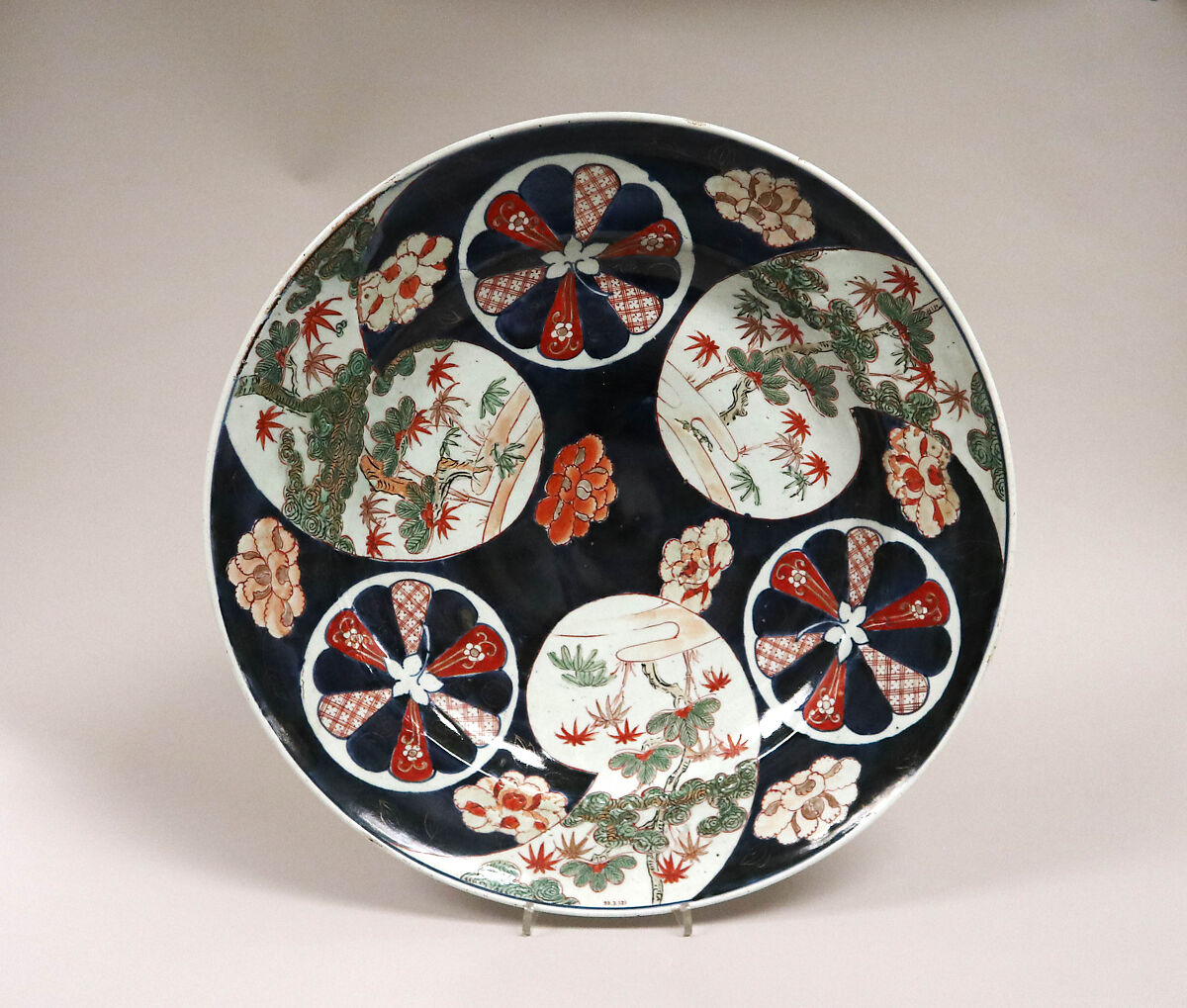
Did you know that a piece of soft clay can become a rigid cup, a bathroom tile or a component inside a high-performance industrial machine? A potter may describe shaping and firing. A chemist asks what changed in the material’s water content, minerals, bonding, microstructure and physical properties.
This Chemistry Hougang guide explains ceramics, clay, porcelain, kiln firing, sintering, glazes, alumina and zirconia, and how materials Chemistry connects traditional craftsmanship with advanced technology. It is for Secondary Science students beginning to distinguish physical and chemical changes, JC learners studying structure and energetics, and young people considering materials science or engineering. Parents seeking a Chemistry tutor in Hougang can use the examples to see how classroom reasoning becomes a tool for understanding real products.
The lesson matters worldwide. Fired pottery preserves parts of human history; tiles and sanitary ware support modern homes; high-performance ceramics appear in electronics, medical devices and industrial equipment. Yet a material useful in one setting can fail in another. Chemistry helps us ask not only what is it made from? but what happened during manufacture, and how do we know it will perform?
First: what is a ceramic material?
Ceramics are a broad class of materials, often containing inorganic, non-metallic compounds, made and used for their characteristic structures and properties. Many traditional ceramics begin with clay and other minerals, while advanced ceramics may be produced from highly refined oxides, carbides, nitrides or other materials.
The American Ceramic Society’s guide to ceramic structure and properties identifies common tendencies such as hardness, chemical durability, high-temperature performance and brittleness. These are typical characteristics, not rules that every ceramic shares equally.
A bathroom tile and a highly engineered electronic substrate are both examples of ceramic technology, but their ingredients, processing and performance requirements can differ enormously.
I want students to avoid the misconception that “ceramic” is the name of a single chemical compound. It is a materials category. Knowing the category helps us ask useful questions, but the actual composition and microstructure determine what a specific object can do.
The same is true of the words metal, polymer and glass. A good scientist moves from general classification to a precise material specification.
Why unfired clay behaves differently from fired pottery
Clay contains fine mineral particles, often including layered aluminosilicate minerals, mixed with water and possibly other substances. Water helps the particles move and allows the mass to be shaped.
Some water is present between particles; other components are associated with mineral structures. That distinction becomes important during heating.
A student can usually reshape suitable wet clay. After drying, it may retain its form but remain comparatively vulnerable. During firing, further chemical and structural transformations take place, and the resulting ceramic body may become much harder and less readily reshaped.
This is why the entire process is not simply drying mud. Removing free water and firing a ceramic are not identical operations.
At Secondary level, I ask the student to distinguish a physical change in moisture content from chemical and microstructural transformations produced by sufficient heating. At university, the analysis becomes much more detailed, involving mineral phases, diffusion, pore structure and mechanical properties.
What happens during firing?
Firing takes a shaped body through a carefully managed thermal process in a kiln. Different ceramic materials and product specifications require different conditions.
Early stages may remove remaining physically held water. At higher temperatures, certain clay minerals can lose chemically bound hydroxyl groups through dehydroxylation, altering their structure. Further reactions and structural transformations can produce new crystalline or glassy phases.
Sintering describes processes through which a powder-based body becomes more consolidated, commonly by movement of material and changes at particle contacts. The pore structure and dimensions may change.
In some porcelain systems, a liquid phase develops during firing and contributes to vitrification—the formation of a dense, glass-containing ceramic microstructure.
A classic review of porcelain raw materials and phase evolution in the Journal of the American Ceramic Society describes porcelain as a material based largely on clay, feldspar and quartz, with heat treatment producing interacting crystalline and glassy phases.
I would rather teach this honest sequence than tell a student that the kiln merely melts everything into a single uniform solid. Many ceramics are not melted completely during manufacture.
The important distinction between drying and sintering
Drying chiefly involves removal of liquid water or other volatile material from a shaped body. It can change mass, dimensions and mechanical behaviour.
Sintering involves changes in the arrangement and bonding of solid particles under an appropriate thermal treatment, potentially reducing porosity and improving consolidation. It can occur without melting the entire object.
Vitrification refers to the development of glassy material in the ceramic body under suitable processing conditions. Not every sintered ceramic is described in exactly the same way, and the amount of liquid or glassy phase can differ greatly.
A student who uses these three words as synonyms is losing information that matters in real materials engineering.
Try asking: if a dried piece of clay and a fired porcelain object are both hard enough to hold, does that prove their internal structure is identical? No. The physical appearance can hide very different microstructures and chemical histories.
This is a foundational materials-science idea: appearance is evidence, but it is not a complete chemical identification.
Why porcelain is not simply white clay
Traditional porcelain is a highly developed ceramic material made using suitable mineral ingredients and controlled firing. A common porcelain body may include kaolin-rich clay, quartz and feldspar, with their proportions and processing adapted to the desired result.
During firing, these ingredients interact and can form crystalline phases within a glassy matrix. The resulting material may have low porosity, characteristic strength and sometimes translucency, depending on composition and geometry.
The American Ceramic Society review of porcelain emphasises how complex these transformations are, despite porcelain’s familiar everyday appearance.
The word “porcelain” also belongs to a long cultural and artistic history. Different regions developed traditions of shaping, decorating, glazing and firing clay-based bodies. Chemistry does not replace the craftsperson’s knowledge; it gives additional tools for understanding why a technique works.
I like to put a porcelain dish beside an image of an industrial alumina component. They may belong to the same wide materials family, yet each object exists because a particular set of material properties was wanted.
What is a glaze?
A ceramic glaze is a coating made from suitable materials that, under the prescribed firing conditions, develops a glassy or otherwise engineered surface layer.
Glazes may influence appearance, colour, smoothness, chemical resistance and water penetration. The glaze’s composition and thermal behaviour must be compatible with the ceramic body.
But a shiny surface is not proof that a vessel is safe for food. Poorly controlled formulations, damage, unsuitable firing or the presence of hazardous constituents can affect product safety.
Students should not test unknown ceramics by tasting material, grinding glazes, applying household acids or heating vessels without approved procedures. Food-contact suitability requires appropriate product standards and evidence, not visual judgment.
A helpful distinction is between a glaze’s appearance, its chemical composition and its performance under specified use conditions. Each is a separate kind of evidence.
This reasoning connects glazes to paints, protective coatings and polymer films, although their manufacturing processes differ.
Why ceramic surfaces sometimes develop cracks
Some ceramic glazes show fine cracks known as crazing, while other materials can fracture or chip. The causes depend on glaze composition, body characteristics, cooling history, thermal expansion differences and service conditions.
If a ceramic body and its glaze expand or contract by different amounts as temperature changes, stresses can develop. The details depend on the entire material system rather than the name of one ingredient.
This is an example of an interface problem: two materials that seem individually useful may perform poorly when bonded together under certain conditions.
It is not scientifically sound to claim that every visible crack has the same cause. Manufacturing defects, mechanical impacts, moisture-related processes and thermal history can produce different damage patterns.
A student should begin with observation: where is the crack, when did it appear, and what information is available? Only then should they propose a cause.
That is the same discipline used in corrosion analysis, structural engineering and the evaluation of broken scientific equipment.
Worked example: percentage linear shrinkage
Imagine a fictional clay specimen measuring 25.0 cm along one marked direction before a controlled drying-and-firing process. After processing, the dimension becomes 22.0 cm.
The change in length is:
25.0 − 22.0 = 3.0 cm.
The percentage linear shrinkage relative to the original length is:
3.0 / 25.0 × 100% = 12.0%.
This is a measurement along one direction. It is not automatically a 12% change in volume or 12% loss of mass.
If shrinkage were perfectly uniform in all directions—an extra assumption—the volume ratio would be approximately:
(22/25)³ ≈ 0.681.
That would correspond to a volume reduction of about 31.9%, not 12%.
I use this example because it exposes a mathematical misconception that matters in both Chemistry and engineering: length, area, volume and mass are different quantities.
Actual ceramic bodies may shrink differently in different directions, and the full process should be measured rather than assumed isotropic.
Worked example: loss on drying versus loss on firing
Suppose a fictional ceramic body weighs 200 g when freshly shaped, 170 g after drying, and 155 g after controlled firing.
The mass lost during drying is:
200 − 170 = 30 g.
The additional loss recorded during firing is:
170 − 155 = 15 g.
The total mass lost relative to the initial wet body is 45 g. Its initial-mass loss fraction is:
45/200 × 100% = 22.5%.
But it would be misleading to report that “22.5% of the clay was water.” A portion of mass may be lost through physically held water, while later changes can involve chemical transformations or volatilised species.
A complete explanation would require knowledge of the starting mineral and mixture composition and the actual processing conditions.
The balance measures a mass difference; interpreting every lost gram requires chemical evidence. This is the central lesson.
Why a ceramic can be strong but brittle
Many ceramics resist compressive loading and wear well, yet can fail abruptly through cracking under tensile or impact stresses.
Their structures often limit the ways atoms and defects can move to accommodate deformation compared with many familiar ductile metals. Small flaws, pores, microcracks and the geometry of the component can influence fracture behaviour.
The American Ceramic Society’s materials-property overview lists hardness, wear resistance, corrosion resistance and brittleness among typical properties, with important differences among materials.
A common student mistake is to treat hard, strong, tough and stiff as synonyms. They are not.
Hardness concerns resistance to particular kinds of surface deformation. Toughness concerns a material’s ability to absorb energy or resist crack propagation under defined conditions. Stiffness concerns deformation under load. Strength concerns the stress a material can sustain before specified failure.
A ceramic may be very hard but still susceptible to brittle fracture. Choosing a material requires the property relevant to the job.
Thermal shock: why a sudden temperature change matters
Ceramics can experience stress when different parts of an object change temperature at different rates. If one region expands or contracts while another remains at a different temperature, damaging thermal stresses can develop.
This is often discussed as thermal shock. The outcome depends on thermal expansion, conductivity, strength, fracture resistance, dimensions and processing history.
That is why a container’s glossy appearance or label “ceramic” does not prove it can tolerate any sudden temperature change.
I teach students to distinguish heat capacity, thermal conductivity, thermal expansion and thermal-shock resistance. Those are different concepts, even though they interact in practice.
At JC level, students may recognise links to energetics and materials properties. At university, models of temperature gradients, stress and fracture can be used.
The household lesson is a boundary: do not expose unidentified or unsuitable ceramic objects to abrupt thermal changes in order to test them. Use manufacturer guidance and appropriate approved demonstrations.
Advanced ceramics: beyond cups and tiles
Advanced ceramics include materials engineered for precise thermal, electrical, chemical, biological or mechanical properties.
Alumina, Al₂O₃, can be used in appropriate electrical insulating components, wear-resistant parts and other applications. Zirconia, ZrO₂, appears in selected structural and biomedical applications, with performance strongly dependent on composition and processing.
Some ceramics are electrical insulators, but the category also includes semiconducting, piezoelectric, magnetic, superconducting and other functional materials under suitable conditions.
The sweeping statement “ceramics never conduct electricity” would therefore be false. It may be a useful expectation for certain familiar insulating ceramics, but advanced materials science offers many exceptions.
The underlying Chemistry involves crystal structures, bonding, defects, phase transformations, dopants and interfaces. The same elements can behave differently when their arrangement changes.
Our semiconductor Chemistry guide shows why electronic properties depend on materials engineering as well as chemical composition.
Worked example: calculate the composition of alumina
Suppose an upper-secondary or JC problem uses approximate atomic masses Al = 27 and O = 16.
For aluminium oxide, Al₂O₃:
Mr = 2(27) + 3(16) = 102.
Aluminium contributes 54 mass units. The percentage mass of aluminium is:
54 / 102 × 100% ≈ 52.9%.
Oxygen contributes 48 units, or approximately 47.1% by mass.
If a fictional specimen consists of 50.0 g of pure Al₂O₃, the mass of aluminium atoms represented is approximately:
50.0 × 54/102 ≈ 26.5 g.
That does not mean 26.5 g of aluminium metal can simply be removed by heating or grinding the ceramic. The mass fraction describes elemental composition, while extraction requires a different chemical process and actual yield evidence.
This distinction also appears in ore processing, rare-earth separation and recycling.
Why zirconia can behave differently from alumina
Although both may be classed as oxide ceramics, their structures and temperature-dependent phase behaviour differ.
Zirconia can be engineered using suitable stabilising additions to influence which crystalline phases are present and how the material responds to stress or temperature. Some zirconia ceramics are designed to make use of phase-related toughening effects.
Alumina has a different set of crystalline, mechanical and thermal properties. There is no universal ranking in which one oxide is “better” for every ceramic application.
A useful comparison asks whether the intended function concerns wear resistance, insulation, thermal conditions, biological compatibility, fracture resistance or manufacturing cost.
Professional materials choice is about a specified requirement, not a competition for the material with the most impressive single adjective.
A student who understands that can transfer the idea to metals, polymers, batteries and electronic devices.
Why ceramic tiles, laboratory components and implants need different evidence
A ceramic tile may be assessed for strength, wear, water absorption and surface performance. A component used in a high-temperature furnace may be chosen for thermal properties and chemical stability.
A medical ceramic implant introduces additional requirements involving suitable biological compatibility, product quality, clinical evaluation and regulatory controls.
A substance that works in an industrial machine does not automatically become suitable for use in a person’s body. Even two ceramics with similar base chemical formulas may differ because of purity, porosity, surface condition and processing.
This is why the phrase “made of ceramic” is not a safety certificate.
I want students to think in terms of material identity + process history + measured performance + intended use. That four-part structure is valuable across many careers.
For medical applications, individual decisions belong to qualified healthcare professionals and authorised product information, not a Chemistry article.
The world’s ceramic heritage is also a science history
Clay-based technologies have existed across many cultures and centuries. Communities have developed distinctive firing, glazing and decoration practices using local minerals, fuels and craftsmanship.
Porcelain traditions in East Asia, earthenware and stoneware traditions across Africa, Europe and Asia, and modern industrial production each represent different combinations of materials and know-how.
Studying a historic vessel reveals more than artistic taste. Petrographic thin sections, phase analysis and chemical composition may offer evidence about raw materials, firing histories or manufacturing techniques, within the limits of the methods.
Our Porcelain and Ceramics cultural guide explores ceramic objects as part of heritage, while this page concentrates on the chemical mechanisms of making and evaluating them.
A good student learns that scientific analysis can contribute to conservation without replacing cultural expertise.
Ceramics and sustainable manufacturing
Ceramic production may require substantial heat, mineral resources and manufacturing inputs. Kiln efficiency, material selection, waste handling, product longevity and reuse affect its environmental performance.
However, the environmental question is not answered by saying “ceramics require heat, therefore they are always worse than plastic.” A long-lived ceramic component performing a demanding function may need a very different comparison from a disposable product.
The appropriate analysis uses a common function and a defined life-cycle boundary. We must consider what is produced, how long it lasts, what it replaces and what happens at end of life.
Some ceramic production can incorporate certain recycled constituents or improve energy use, but changes require testing of the resulting material’s properties.
This connects to green Chemistry, construction materials and corrosion protection. Materials choices often involve competing benefits and costs rather than a single perfect answer.
What a Chemistry tutor should diagnose
I might show a student photographs of wet clay, a dried form and a fired porcelain dish. Then I ask: are all changes only evaporation? What evidence would distinguish composition changes from structure changes?
Another student might understand sintering but mistakenly equate a 10% linear shrinkage with 10% volume loss. That student needs mathematical reasoning rather than another definition sheet.
A third student might memorise “ceramics are brittle” and assume no ceramic could be engineered for impact resistance. That student needs a better distinction between a general trend and a universal rule.
These are three different learning problems. Good Chemistry tuition for Hougang students should identify the actual misconception, work through an example, then test transfer to an unfamiliar material.
Four-week study route
Week 1 — The material family. Distinguish clay, a fired ceramic body, a glaze, porcelain and an advanced oxide ceramic. Use a table to identify composition, manufacturing role and one limitation.
Week 2 — Chemical change. Explain why firing is more than drying. Identify free-water removal, mineral transformations and sintering as different ideas.
Week 3 — Calculate. Reproduce the linear shrinkage and alumina composition examples. Check that your answers use the right denominator and dimensional quantity.
Week 4 — Global comparison. Read the American Ceramic Society’s property guide. Write 300 words explaining why a porcelain teacup and a high-performance industrial component may share a broad materials family but require different tests.
These exercises are paper-based. Students should not operate kilns, fire unidentified clays, manufacture glazes or test unknown food-contact vessels.
The final checkpoint is whether the learner can explain the mechanism without pretending that a ceramic is a single, uniform substance.
Self-check with answers
Is firing clay identical to removing liquid water?
No. Drying removes water, while firing can also cause mineral transformations, dehydroxylation, sintering and glassy-phase formation.
Is porcelain simply pure silica?
No. Traditional porcelain typically involves a designed mixture of clay-related minerals, quartz and feldspar, with fired crystalline and glassy phases.
Does a ceramic that looks shiny necessarily have a suitable food-contact glaze?
No. Appearance cannot establish composition, safety or performance. Appropriate standards and product testing matter.
A length shrinks from 20 cm to 18 cm. What is its linear shrinkage?
(20 − 18)/20 × 100% = 10%. This is not automatically a 10% volume decrease.
Are all ceramics perfect electrical insulators?
No. Many are insulating, but advanced ceramics include functional materials with different electronic behaviour.
Why can alumina and zirconia perform differently?
Their chemical compositions, structures, phase behaviour and manufacturing histories differ; the relevant properties depend on intended use.
Questions from parents and students
Does the Secondary Chemistry syllabus include all these ceramic processes?
Not necessarily. Materials properties, changes of state, bonding and chemical reactions may be relevant, while detailed sintering belongs to enrichment or higher study. Follow the current applicable syllabus.
Is pottery useful as a Chemistry learning example?
Yes. It makes the differences among physical change, chemical change, materials processing and evidence easier to visualise, even without performing a firing experiment.
Can this lead to university careers?
Yes. Materials Chemistry, chemical and mechanical engineering, conservation science, electronics, biomedical materials and industrial quality work are possible routes, with different course requirements.
Which misconception should be repaired first?
Begin with the child’s explanation of what firing changes. If they think all hardening is evaporation, repair the particle and structure models before moving to advanced details.
Sources and further reading
- American Ceramic Society — Structure and Properties of Ceramics
- Journal of the American Ceramic Society — Porcelain Raw Materials, Processing and Phase Evolution
- eduKateSG — The Art of Luxury: Porcelain and Ceramics
Continue the Chemistry Hougang learning library
- DNA Chemistry: Bases, Bonds and Genetic Medicine
- Chemical Sensors: pH, Glucose and Air Quality
- Isotopes: Carbon Dating, Tracers and Nuclear Medicine
- Cement, Concrete and Glass: How Chemistry Builds Cities
- Semiconductor Chemistry: Silicon and Doping
- Rare Earth Elements: Magnets, Mining and Recycling
- Periodic Table Explained: From Stardust to Technology
- Green Chemistry, Batteries and Sustainable Materials
- Chemical Analysis: Spectroscopy and Reliable Evidence
A careful study of ceramics is really a study of how composition and processing create properties. Parents exploring targeted Chemistry learning support can arrange a consultation with eduKate Singapore.