
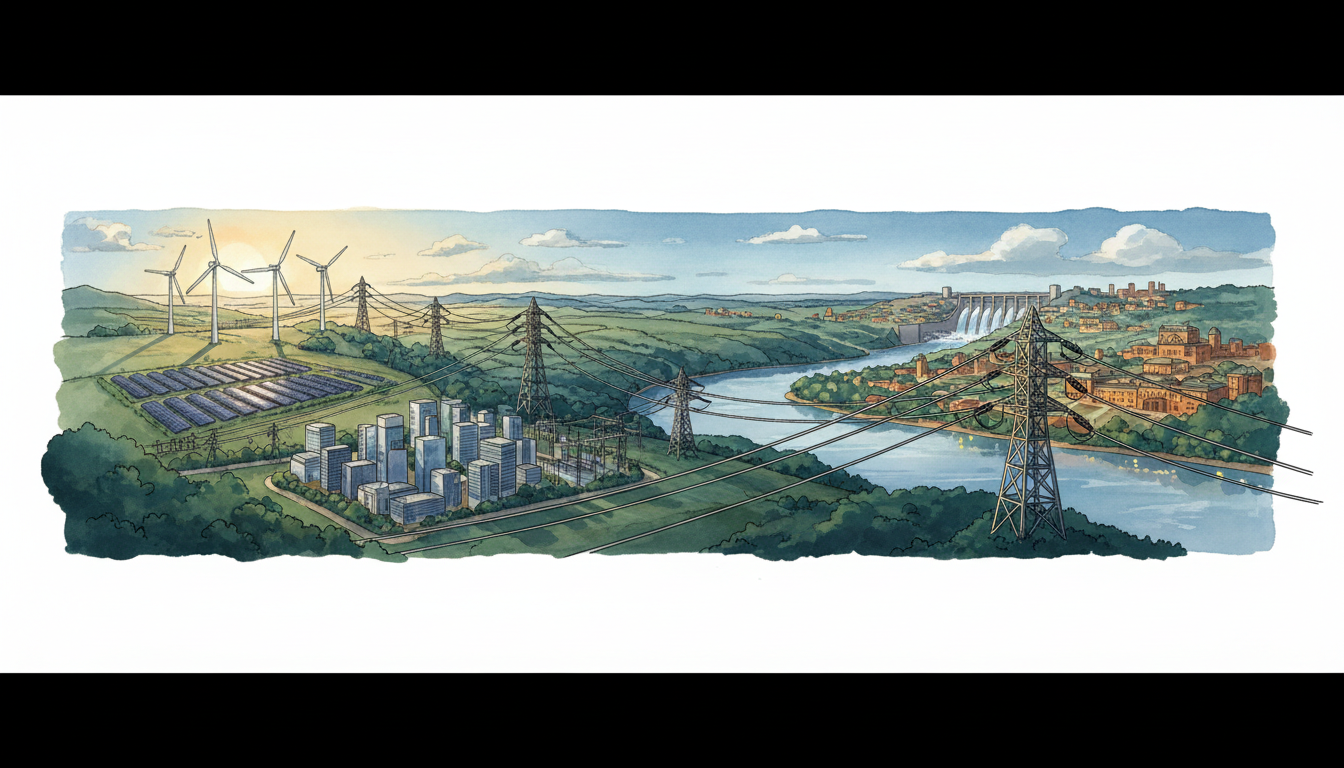
I like asking Chemistry students to look at an ordinary roof with solar panels and describe what they think is happening. Some say the panels “catch heat” and turn it into electricity. Others correctly mention sunlight but imagine that photons are turned directly into new electrons. Neither picture tells us enough. We need to understand semiconductor materials, absorbed light, charge carriers and an electrical circuit.
This Chemistry Hougang guide explains how solar cells work, photovoltaics (PV), silicon, photons, p–n junctions, solar-panel efficiency, and how materials science meets the world’s energy decisions. It is aimed at Secondary Science students, JC Chemistry learners, and parents seeking a Chemistry tutor in Hougang who can connect school concepts to technologies that matter beyond examinations.
What makes solar energy interesting to me is that one physical phenomenon links many disciplines. A solar cell is made from chemical materials. The energy begins as electromagnetic radiation. An engineered junction helps separate mobile charge carriers. Electric circuits extract useful power. And a functioning system must last for years in weather while remaining serviceable, safe and economically worthwhile. No single formula describes all of that.
What is a photovoltaic cell?
A photovoltaic (PV) cell, often called a solar cell, is a device that converts energy from absorbed light into electrical energy. Many PV cells use semiconductor materials in which light can create mobile charge carriers and an internal electrical field helps produce a useful electrical output.
The US Department of Energy’s Solar Photovoltaic Cell Basics explains this conversion and the importance of material properties. The US Energy Information Administration’s PV overview likewise distinguishes incoming photons, semiconductor absorption and usable electrical output.
It is important to distinguish a photovoltaic cell from a solar thermal collector. Solar thermal systems use sunlight as heat, for example to warm water or support thermal processes. PV uses a semiconductor photovoltaic effect to generate electrical output.
Both harness the Sun, but they do not have the same mechanism. A student who makes this distinction has already moved beyond the misleading phrase “the panels make power from heat”.
Why silicon works in so many solar cells
Silicon is widely used because its solid-state electronic properties, crystalline forms and mature manufacturing methods make it suitable for photovoltaic devices. In a crystalline silicon cell, atoms participate in a covalent network, and the electronic structure of the material includes bands relevant to conduction.
The Department of Energy identifies crystalline silicon as the most common solar-cell semiconductor material while also describing alternatives.
A school learner should first distinguish silicon (Si) from silicon dioxide (SiO₂). Ordinary quartz and glass can contain silicon chemically bound with oxygen, but they are not finished solar-cell silicon. Extracting, purifying and processing a semiconductor material requires industrial steps; a piece of sand cannot simply be wired into a working panel.
Our Semiconductor Chemistry article develops the difference between elemental identity, chemical bonding, doping and device function.
The key lesson is that an element name does not fully determine a manufactured material’s properties. Purity, crystal structure, dopants, surfaces and electrical contacts matter.
Sunlight supplies energy, not a bag of spare electrons
Sunlight consists of electromagnetic radiation that can be described in terms of photons. Different photons carry different energies, related to their wavelengths.
When a suitable photon is absorbed by a semiconductor, it can transfer energy to the material’s electronic system. Under appropriate conditions this can generate an electron and a hole as mobile charge carriers. The cell’s structure helps separate and collect charge so a current can flow through an external circuit.
The light does not create a net supply of electric charge from nothing. Electrons and holes arise from changes in the electronic states of the material, and the complete circuit obeys conservation principles.
I ask students to picture an electron being promoted to an available energy state, leaving a hole-like absence behind. The explanation is more precise than saying a photon “becomes an electron”. It also prepares them for university-level band theory.
The DOE’s PV Cells 101 primer provides accessible illustrations of this process.
Photon energy and the semiconductor band gap
The band gap is an energy interval between electronic states that matters for photoexcitation and charge generation. A photon must supply appropriate energy for the relevant electronic transition, while absorption probability and other material properties also matter.
The photon-energy relationship is:
E = hc/λ.
We do not need to calculate Planck’s constant every time to draw a useful conclusion: at shorter wavelength, photon energy is higher, assuming the standard interpretation of wavelength.
A material’s band gap influences which portions of sunlight it can use. Photons with too little energy may pass through without creating the relevant carriers. Photons with more than the needed energy do not automatically convert every excess joule into useful electrical work; some energy can be lost through thermal and other pathways.
This explains why solar conversion efficiency is not 100%, even before accounting for reflected light, recombination and electrical resistance.
At JC level, students can connect this to energetic diagrams. At university, they may calculate absorption coefficients, carrier lifetimes and detailed semiconductor transport.
What is a p–n junction?
A common silicon solar cell includes regions with different doping arrangements. The resulting p–n junction and associated electric field help separate photogenerated charge carriers, making electrical extraction possible.
In an introductory model, n-type regions have electrons as majority carriers, while p-type regions have holes as majority carriers. These words refer to electronic carrier behaviour, not a claim that the entire pieces of semiconductor carry large net positive or negative bulk charges.
This is the same subtlety students meet when studying semiconductors for microchips. Doping deliberately changes electronic properties by introducing suitable atoms in controlled ways.
The Department of Energy’s cell basics explains the working principle without requiring students to manufacture a junction.
I often ask: if one material absorbs light, why does that not automatically make it an effective solar panel? Because generating carriers is only part of the task. They must also be separated, transported and collected while competing losses are controlled.
Solar cells, panels and complete systems are different objects
A single cell is one photovoltaic device. A module or panel contains interconnected cells, protective layers and other components. A complete PV system can include modules, mounting structures, wiring, inverters, safety equipment, monitoring and connection to a building or grid.
The US Department of Energy’s photovoltaic technology overview explains how cells are assembled into modules and larger arrays.
Solar cells commonly supply direct current (DC). In a grid-connected building system, an inverter converts DC to alternating current (AC) suitable for relevant uses. The inverter is not simply decorative equipment; power conversion, safety and grid interaction matter.
Singapore’s Energy Market Authority guide to preparing for solar explains these system components in a local context.
A useful Chemistry student can distinguish the materials that perform light-to-electricity conversion from the engineering system that delivers energy to appliances.
Worked example: power from sunlight and efficiency
Imagine a hypothetical solar panel with a collecting area of 2.0 m² receiving solar irradiance of 1,000 W/m² under stated test-like conditions.
The incident solar power is:
2.0 m² × 1,000 W/m² = 2,000 W.
Suppose the panel has a 20% conversion efficiency under these same assumed conditions. Its electrical output would be:
2,000 W × 0.20 = 400 W.
That is an instantaneous output under the assumptions, not 400 watts guaranteed at every hour or an electrical-energy total. The units demonstrate the distinction: irradiance is power per area; multiplying by area gives power.
Now suppose the panel receives four equivalent hours of that output level in an idealised model. The energy generated becomes:
400 W × 4 h = 1,600 Wh = 1.6 kWh.
Actual energy production depends on sunlight over time, temperature, orientation, shading, inverter losses, module condition and other factors. A rooftop calculation needs site-specific data rather than assuming that every sunny day equals four hours at 1,000 W/m².
Another worked example: power is not energy
Imagine a family sees “4 kW” on a system description and assumes it produces 4 kWh every day. That is a units error.
Kilowatt (kW) measures power, a rate of energy transfer. Kilowatt-hour (kWh) measures energy. A constant 4 kW delivered over one hour would equal 4 kWh; the same output sustained over three hours would equal 12 kWh.
A solar system does not deliver rated peak power continuously through the night. The relation is useful only when the power and duration are specified.
I want students to check the final unit before interpreting an answer. That habit transfers to batteries, heating, electricity bills, energy storage and chemical manufacturing.
A mark scheme may award a number, but the real world demands a quantity with a meaning.
Why solar panels can become less efficient when hot
This is a good surprise for students. More sunlight often increases possible output, but higher panel temperatures can reduce the conversion efficiency of common silicon PV devices.
The DOE’s performance and efficiency guide explains how temperature can affect current and voltage. In many crystalline-silicon modules, the voltage reduction at higher temperature tends to outweigh a smaller current effect.
A learner must avoid a simplistic statement such as “solar cells work because heat energises electrons, so hotter is always better”. Photons and semiconductor electronic properties are the principal factors, with temperature influencing performance.
Engineers consider module ventilation, mounting arrangements and materials to manage temperatures and long-term reliability. Performance is an outcome of the whole device under real conditions.
This is another example of why thermodynamics and reaction or transport rates must be separated carefully. One variable can improve one part of a system while worsening another.
Reflection, shading and imperfect absorption
Not every photon striking a panel is absorbed. Some light reflects; some may pass through; some is absorbed without producing charge collected as useful current.
Antireflection coatings and textured surfaces can reduce reflection losses. Material and device design can influence recombination and electrical resistive losses. Shading also changes how different connected cell regions operate.
The DOE discusses wavelength, temperature and reflection among factors affecting efficiency. These are distinct mechanisms rather than one mysterious percentage loss.
I teach students to make a loss diagram before calculating an efficiency. Identify what energy entered the system and how much of it became the desired output. Then identify the known or possible alternative destinations.
A system diagram prevents the incorrect claim that “the missing electricity disappears”. Energy is conserved; the useful conversion is less than complete.
Is a silicon solar cell the only possible design?
No. Photovoltaic research includes thin-film semiconductors and multi-junction designs. Different materials absorb different portions of the spectrum and have varying manufacturing, cost and performance characteristics.
The DOE explains tandem and multijunction cells in which different absorbers can harvest different parts of the solar spectrum. Researchers also study perovskite solar cells and combinations with silicon.
These promising technologies should not be mistaken for a guarantee of commercial durability or market dominance. Laboratory efficiency records, pilot production, deployment at scale and verified long-term reliability are different kinds of evidence.
A new material can perform exceptionally under a controlled measurement while still facing challenges in moisture stability, process repeatability, manufacturing yield or environmental management.
That is why Chemistry matters even after a photovoltaic effect has been demonstrated. Making a durable industrial material is harder than making one successful small sample.
Solar panels connect to Chemistry at many stages
The manufacturing of a solar cell depends on purification, crystal growth, surface treatment, controlled doping, deposition, coatings and electrical contacts. Some steps use specialised chemicals and equipment that require professional safety and environmental controls.
Other parts of a solar panel can include glass, polymers, metals and protective encapsulating materials. Their properties affect durability, moisture resistance, electrical isolation and performance.
The everyday word “panel” hides a carefully designed multimaterial product. That makes end-of-life management more complicated than melting one single pure substance.
Our Polymer Chemistry guide explains why different polymer layers and additives affect materials performance. Our Silicon Semiconductor guide explains the chemical structure and dopants.
A student who links these topics is beginning to build a connected scientific knowledge library rather than collecting isolated terms.
The Singapore example: solar chemistry at city scale
Solar PV is particularly relevant to Singapore because the country receives considerable tropical sunlight but has limited land and must integrate installations into dense urban environments.
Singapore’s Energy Market Authority stated in March 2026 that the country achieved 2 gigawatt-peak of solar deployment in 2025 and raised its target to 3 GWp by 2030. Those are dated capacity and policy figures, not guarantees about energy generated or eventual achievement.
The EMA’s published Q2 2026 capacity statistics provide a more recent checkpoint at the end of that quarter.
Students should notice the letters GWp, which describe a peak-rated capacity metric. It is not a promise that the grid receives the stated gigawatt output at every moment.
This is a strong lesson in reading official data: a capacity target, installed capacity, actual electricity generated and share of annual consumption are related but distinct quantities.
What happens when the Sun is not shining?
A photovoltaic system’s output changes with irradiance and environmental conditions, including day and night. Electricity systems therefore need appropriate combinations of supply, demand flexibility, storage, network coordination and other technologies.
Batteries can shift energy in time, but batteries also have efficiency losses, capacity limits and materials requirements. Hydrogen pathways may be considered for different energy or industrial functions, but conversion losses and infrastructure matter.
Our Lithium-Ion Batteries guide explains electrical-energy storage, and the Hydrogen Fuel and Electrolysis guide explains energy carriers and round-trip efficiency.
I do not teach a student that a solar panel alone makes a building completely independent of electricity infrastructure. The appropriate system depends on actual loads, seasonal and daily production, grid rules and operating needs.
This is why solar energy requires both physical Chemistry and systems engineering.
What does photovoltaic efficiency really mean?
At its core, conversion efficiency is useful electrical output power divided by incident optical power under stated conditions, expressed as a percentage.
If a device receives 500 W of incident solar power and delivers 125 W of electrical output, the efficiency under those conditions is:
125 / 500 × 100% = 25%.
That statement does not establish what the device will produce all year. It does not tell us the total cost of a system, its lifetime or the environmental footprint of manufacturing.
Nor does the result apply automatically to a different sunlight spectrum or cell temperature. A serious comparison identifies test conditions and system boundaries.
I encourage students to treat every high-efficiency announcement as a question: laboratory cell, commercial module, or complete installed system? Those are not interchangeable measurements.
The environmental question: what happens to a panel at end of life?
Solar PV generates electricity without fuel combustion at the cell during operation, but manufacturing materials, installing modules, maintaining equipment and managing end-of-life products require resources and produce environmental impacts.
In April 2026, the IEA Photovoltaic Power Systems Programme published an update on module recycling. It reported progress in some recovery technologies but noted continuing data gaps around energy use, material quality and comparable system boundaries.
Recycling a module can involve separation and processing of glass, aluminium, silicon, metals and polymers. A system may recover a high percentage of total mass while recovering a smaller fraction of a particular valuable material at suitable purity.
This is the same accounting trap students meet in plastic and battery recycling: total recovered mass is not the same as recovery of each constituent.
The challenge is not to dismiss solar technology because its materials require management. It is to improve the full life cycle while honestly comparing the benefits and costs of alternatives.
Worked example: a mass-recovery statistic can mislead
Imagine a purely hypothetical panel recycling batch of 1,000 kg. Suppose 800 kg is collected as recovered product streams and 200 kg becomes other residues or losses, under a clearly defined mass basis.
The gross material recovery is 800/1,000 × 100% = 80%.
But what if much of that recovered mass is glass and aluminium while a small amount of silver or high-grade silicon remains unrecovered? The 80% total mass result says little about those individual recovery rates.
A separate material-specific mass balance is needed for each target substance, along with data on actual product quality. That reasoning prepares a student to read technical reports without being impressed by a percentage detached from its denominator.
The world view: energy, materials and access
Sunlight reaches countries with vastly different electricity infrastructures, climates, resources and financial conditions. A solar technology that is useful for a remote clinic might be evaluated differently from one on an urban rooftop or integrated into a large industrial energy system.
Access to reliable electricity affects healthcare, education, communication and economic participation. Solar PV can contribute, but suitable equipment, installation expertise, financing, maintenance and end-of-life systems are also necessary.
The chemical materials inside a panel can cross many national borders before installation. Mining, refining, electronics production, shipping and final use belong to a connected global supply chain.
I want students to see Chemistry as one part of a question about civilisation: how can societies transform energy reliably while managing materials responsibly? The answer requires Science and many other fields to work together.
A study pathway from Secondary school to university
Lower Secondary: identify the forms of energy
Learn the difference between light, heat and electricity. Distinguish an element from a compound, and read graphs with correct units.
Upper Secondary: particles, bonding and quantities
Understand covalent networks, semiconductors as material examples, energy conservation and correct electrical or efficiency calculations when relevant to the course.
JC H1/H2: explain the structure–property connection
Use relevant atomic structure, bonding, energetic and data-analysis ideas. Add a correct model of carriers and materials rather than pretending a single atomic diagram is a complete device explanation.
Polytechnic, university and practice: materials and systems
Study semiconductor Physics, photovoltaics, Chemistry, materials processing, spectroscopy, device testing, reliability, life-cycle analysis and electricity engineering according to the chosen pathway.
Every stage asks a similar question at a deeper level: what enters, what transforms, what leaves, and what evidence supports the result?
A four-week project without electrical construction
Do not build or rewire PV installations, access rooftops or modify live electrical systems for a school assignment. Use trusted diagrams, paper calculations and published data.
Week 1 — Mechanism: sketch a cell showing incident photons, electrons, holes, junction and external circuit. Explain why sunlight is not the same as heat.
Week 2 — Numbers: calculate the idealised output for a 1.5 m² panel at 800 W/m² with 20% efficiency. The result is 240 W under the assumptions.
Week 3 — Read Singapore data: examine the EMA’s installed-capacity report and distinguish GWp capacity from kWh of electricity generated.
Week 4 — Materials and end of life: read the IEA PVPS report and write 250 words about why recovering most of a panel’s mass is not automatically the same as recovering its most valuable materials.
A learner who can explain those four questions without notes has gained more than a memorised definition of photovoltaics.
Self-test with model answers
Do solar cells mainly turn heat into electricity?
Photovoltaic cells use the photovoltaic effect to convert absorbed light energy into electrical output. Heat affects their performance but is not the central conversion mechanism.
Is a photon turned into an electron?
No. Photon absorption transfers energy to the semiconductor and can create mobile electron–hole carriers.
If incident power is 1,000 W and output is 200 W, what is efficiency?
200/1,000 × 100% = 20%, under the stated test conditions.
Does a 5 kWp system necessarily produce 5 kW all day?
No. Peak-rated capacity and actual instantaneous or daily output differ.
Why do silicon cell materials need careful manufacturing?
Purity, crystal structure, dopants, contacts and interfaces determine device behaviour and reliability.
Does 80% gross panel recycling guarantee 80% silver recovery?
No. Each material’s recovery requires its own input and output accounting.
Questions families ask
Is photovoltaic chemistry in the O-Level Chemistry syllabus?
Some core topics such as bonding, materials and energy overlap with school learning. Detailed semiconductor photovoltaics may be enrichment; follow the applicable current syllabus.
Is solar technology more Chemistry or Physics?
It combines both, with engineering, environmental Science and Economics. The appropriate emphasis depends on the particular question.
Should a student learn solar-cell band theory before JC?
Usually begin with particles, bonding and energy concepts, then extend if the learner has secure foundations and interest.
Which careers connect to solar Chemistry?
Materials Chemistry, semiconductor research, process engineering, device testing, reliability, environmental assessment and energy systems are among possible fields.
Sources and further reading
- US Department of Energy — Solar Photovoltaic Cell Basics
- DOE — Solar PV Performance and Efficiency
- US Energy Information Administration — Photovoltaics and Electricity
- Singapore Energy Market Authority — Preparing for Solar
- EMA — Singapore Accelerates Solar Deployment, March 2026
- IEA PVPS — Advances in Photovoltaic Module Recycling, April 2026
Keep building your Chemistry understanding
- Soap and Detergents: Surfactants and Micelles
- Sunscreen Chemistry: UV Filters and Photostability
- Rare Earth Elements: Magnets and Recycling
- Semiconductor Chemistry: Silicon, Doping and Microchips
- Lithium-Ion Batteries: Redox and Energy Storage
- Hydrogen Fuel and Electrolysis Explained
- Green Chemistry and Sustainable Materials
- Periodic Table: From Stardust to Technology
A tutor can make this topic more useful by asking the student to explain the difference between light, heat and electricity and then justify one calculation with clear units. Families considering extra educational support can arrange a consultation with eduKate Singapore.