
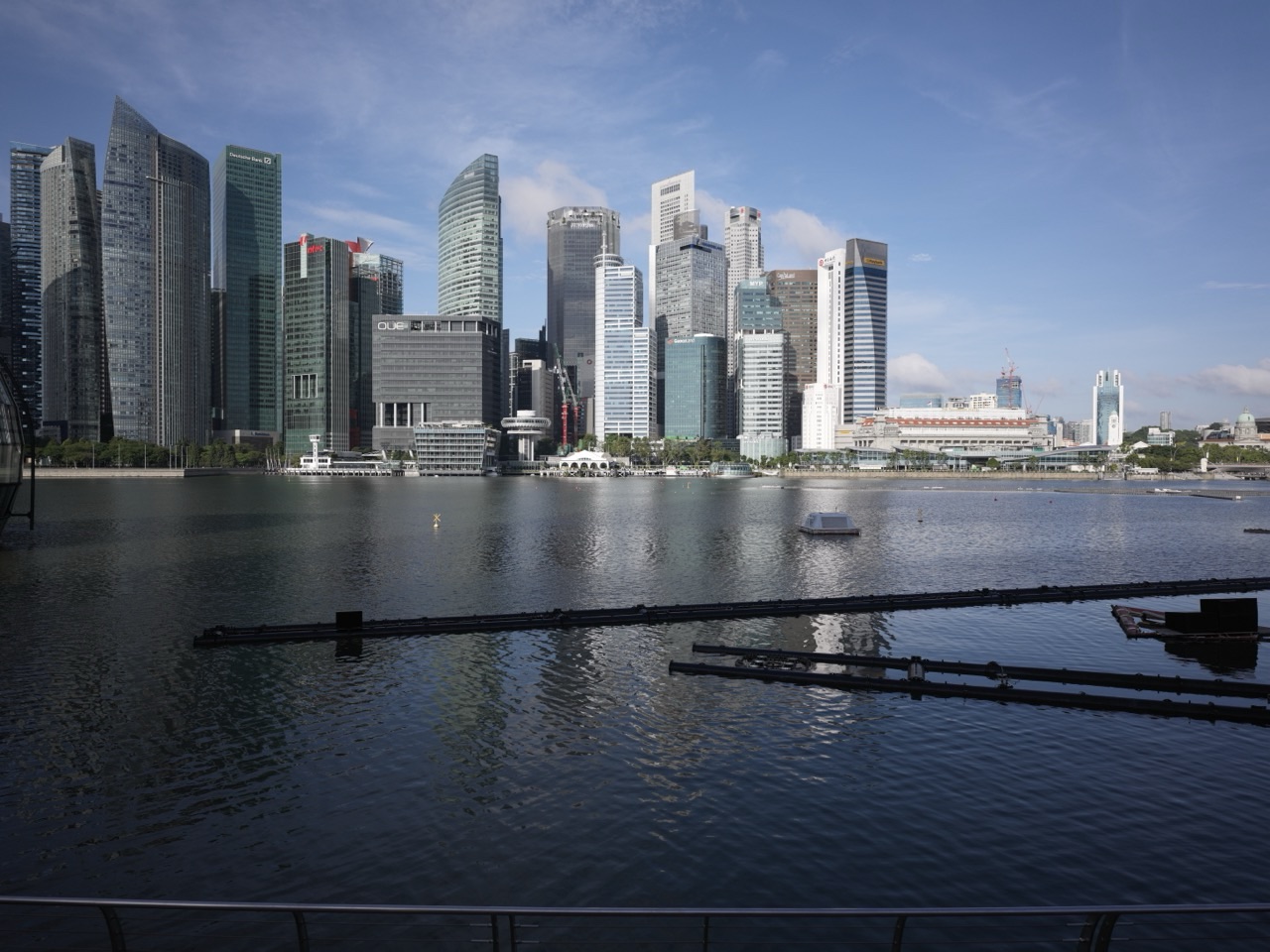
Crazy Rich Singapore | Audit, Accounting and the Business Information Economy begins with one of the least glamorous foundations of wealth: somebody has to decide whether the numbers can be trusted.
Did you know Singapore’s public-accountancy profession is regulated through ACRA, with public accountants required to register before signing statutory audit opinions? In 2026, ACRA also refreshed the national Skills Framework for Accountancy across 44 job roles and 11 career tracks, embedding AI and sustainability-reporting capabilities across the profession.
That makes “accounting Singapore”, “audit Singapore”, “public accountant Singapore”, “accounting firm Singapore” and “sustainability reporting Singapore” powerful search themes. The Crazy Rich story is not simply bookkeeping. It is the infrastructure that turns business activity into information investors, banks, boards, regulators and markets can rely on.
Crazy Rich Singapore can fit inside a set of audited financial statements.
Did You Know? Accounting Is the Language of the Corporate Economy
A company can have brilliant products and still become difficult to understand if nobody can explain its finances clearly.
Accounting translates business activity into structured information.
- revenue;
- expenses;
- assets;
- liabilities;
- cash flows;
- equity; and
- financial performance.
That information is used by people who were not inside the business when the transactions happened.
Accounting therefore turns internal activity into external legibility.
Audit Is Different from Accounting
Accounting prepares and records financial information.
Audit independently evaluates whether financial statements have been prepared in accordance with the relevant framework and whether the audit evidence supports the opinion issued.
That difference matters.
The accountant helps produce the information.
The auditor evaluates it independently.
Why Public Accountants Are Regulated
ACRA requires individuals who perform statutory public-accountancy work to register as Public Accountants.
Public accountants work through registered accounting entities such as public accounting firms, accounting limited liability partnerships and public accounting corporations.
The reason is simple:
an audit opinion can affect investors, lenders, employees and markets far beyond the audit client itself.
The 2,500-Hour Experience Requirement
ACRA’s current registration pathway requires an aspiring Public Accountant to have at least 2,500 hours of qualifying audit experience within the relevant period, together with other professional requirements.
Applicants also need continuing professional education and appropriate professional membership and qualifications.
That is an important signal.
Audit is not treated as a job somebody can learn only from theory.
Judgment has to be developed through supervised practice.
Why Audit Quality Matters to Capital Markets
Imagine buying shares in a company without trusting its financial statements.
Every investor would need to verify the numbers independently.
That would be impossibly expensive.
External audit reduces information friction by creating an independent assurance layer around financial reporting.
That connects directly to Crazy Rich Singapore | Singapore Exchange and the Capital Markets.
Markets need prices.
Prices need information.
Information needs trust.
ACRA’s Practice Monitoring Programme
ACRA inspects the audit work of registered Public Accountants through the Practice Monitoring Programme.
The objective is to assess whether audits comply with prescribed standards and whether audit opinions are supported by sufficient and appropriate evidence.
Accounting entities are also expected to maintain quality-management systems.
This makes audit regulation itself a quality-control system for the quality-control profession.
AI Is Now Inside Audit
On 2 October 2026, ACRA issued dedicated guidance on responsible use of artificial intelligence in audit work.
The guidance focuses on issues including:
- integrity;
- professional judgment;
- accountability;
- transparency;
- data confidentiality; and
- security.
That is significant because AI can analyse large datasets and accelerate audit procedures, but it can also create new risks if professionals trust outputs they do not understand.
Automation changes the tool.
It does not transfer professional responsibility to the tool.
The 44-Role Accountancy Framework
ACRA’s refreshed 2026 Skills Framework for Accountancy maps 44 job roles across 11 functional career tracks.
AI capabilities are embedded across all roles rather than isolated inside a technology team.
The framework also expands skills around sustainability reporting, data analytics, risk management and governance.
That tells us where accounting is going.
Routine processing is becoming less valuable.
Interpretation, analysis and assurance are becoming more valuable.
Why Sustainability Reporting Is Becoming an Accounting Industry
Companies are increasingly expected to report not only financial information but also climate-related information.
Singapore’s sustainability-reporting roadmap began with listed companies from FY2025 and phases in wider requirements over time.
For example, listed companies already face Scope 1 and 2 greenhouse-gas reporting requirements, while large non-listed companies are scheduled to enter the regime later.
That creates demand for accountants who understand carbon data as well as financial data.
The New Assurance Layer
From future compliance dates, certain climate disclosures will require external limited assurance.
ACRA’s current roadmap provides for registered climate assurance providers drawn from audit firms and accredited testing, inspection and certification bodies.
This is an important evolution.
Financial reporting created the audit profession.
Climate reporting is creating another assurance market beside it.
Why Accounting Connects to Green Finance
Investors cannot allocate capital confidently toward climate goals if sustainability data is unreliable.
That connects accounting directly to Crazy Rich Singapore | Carbon Markets, Green Finance and Transition Credits.
Green finance needs measurements.
Measurements need standards.
Standards need assurance.
Why Accounting Connects to Family Offices
Family offices may own companies, funds, trusts and investments across jurisdictions.
That complexity requires consolidated reporting, tax coordination, valuations and governance.
This connects directly to Crazy Rich Singapore | Family Offices and Wealth Management and Trust Companies, Estate Planning and Intergenerational Wealth.
Wealth management without good accounting becomes storytelling.
Why Accounting Connects to Private Equity
Private-equity and venture-capital investors spend enormous effort understanding financial performance, cash flow and valuation.
Due diligence depends on reliable financial information.
Portfolio companies need reporting systems as they grow.
Exit transactions often intensify audit and accounting requirements.
That links naturally to Crazy Rich Singapore | Private Equity, Venture Capital and Growth Capital.
The Big Shift: From Recording History to Explaining the Future
Traditional accounting is backward-looking because financial statements report what already happened.
Modern accountants increasingly add forward-looking capabilities:
- scenario analysis;
- forecasting;
- data visualisation;
- business partnering;
- risk analysis; and
- strategic advisory.
AI accelerates this shift because software can process transactions more cheaply.
The professional becomes more valuable when they explain what the numbers mean.
Why Corporate Governance Depends on Accounting
Boards cannot govern companies well without reliable information.
Management accounts, audited statements, internal controls and risk reporting all shape board decisions.
That is why ACRA and other institutions treat accounting and governance as connected disciplines.
A company with weak information eventually develops weak decision-making.
Why Singapore’s Business Registry Matters Too
ACRA is also Singapore’s national business registry.
The registry gives the economy a common record of companies, partnerships and other entities.
That creates another trust layer.
Before a bank, supplier or investor transacts with a company, they can verify that the entity actually exists and inspect defined public information.
Corporate identity works for businesses much like Singpass works for people.
What Students Can Learn from Accounting
Mathematics
Ratios, percentages, reconciliations and cash-flow analysis are practical numerical tools.
English
Financial statements and audit opinions depend on precise definitions and careful wording.
Economics
Accounting data turns economic activity into information markets can use.
Computing
AI, ERP systems and data analytics increasingly shape financial reporting and audit.
Civics
Corporate reporting shows why modern economies require formal rules around disclosure and accountability.
Ten Vocabulary Words for the Business Information Economy
1. Audit
An independent examination of financial information performed under professional standards.
2. Public Accountant
A person registered to carry out specified public-accountancy services such as statutory audit work.
3. Financial statements
Formal reports describing an organisation’s financial position, performance and cash flows.
4. Materiality
The significance threshold used to judge whether information could influence users’ decisions.
5. Audit evidence
Information used by an auditor to support conclusions and the audit opinion.
6. Assurance
Independent work performed to increase users’ confidence in reported information.
7. Internal control
Policies and processes designed to protect assets, improve reliability and reduce error or fraud.
8. Sustainability reporting
Disclosure of environmental, social or governance information under defined reporting requirements.
9. Professional judgment
Applying training, experience and standards to make decisions where rules alone do not provide a complete answer.
10. Governance
The systems through which organisations are directed, overseen and held accountable.
Frequently Asked Questions
Who can sign statutory audit opinions in Singapore?
Public accountants registered with ACRA and practising through appropriately registered accounting entities perform public-accountancy services such as statutory audits.
How much audit experience is required to become a Public Accountant?
ACRA’s current registration requirements include at least 2,500 hours of qualifying audit experience, together with other professional conditions.
How is audit quality regulated?
ACRA registers public accountants, monitors audit quality through its Practice Monitoring Programme and requires accounting entities to maintain prescribed quality-management systems.
Can auditors use AI?
Yes, but ACRA’s October 2026 guidance emphasises responsible use, professional judgment, accountability, confidentiality and security.
Why are accountants learning sustainability reporting?
Singapore is phasing in climate and sustainability disclosure requirements, creating demand for reporting and assurance skills beyond traditional financial statements.
Helpful Reading Across the Singapore Graph
- Making Singapore Rich | Accounting, Audit and Business Information
- Crazy Rich Singapore | Singapore Exchange and the Capital Markets
- Crazy Rich Singapore | Private Equity, Venture Capital and Growth Capital
- Crazy Rich Singapore | Carbon Markets, Green Finance and Transition Credits
References and Current Sources
- Accounting and Corporate Regulatory Authority, Managing as a Public Accountant or Accounting Entity, updated 22 September 2026.
- Accounting and Corporate Regulatory Authority, Audit Regulation in Singapore, updated 29 January 2026.
- Accounting and Corporate Regulatory Authority, Refreshed Skills Framework for Accountancy, 22 May 2026.
- Accounting and Corporate Regulatory Authority, Using Artificial Intelligence Responsibly in Audit, 2 October 2026.
- Accounting and Corporate Regulatory Authority, Sustainability Reporting and Assurance Requirements, updated 27 July 2026.
Crazy Rich Singapore Trusts the Numbers
Accounting is easy to dismiss because it looks backward.
But every forward-looking investor depends on a credible description of what happened before.
Did you know? One of Singapore’s richest professional services exists to answer a deceptively simple question: can we believe the numbers enough to make the next decision?