
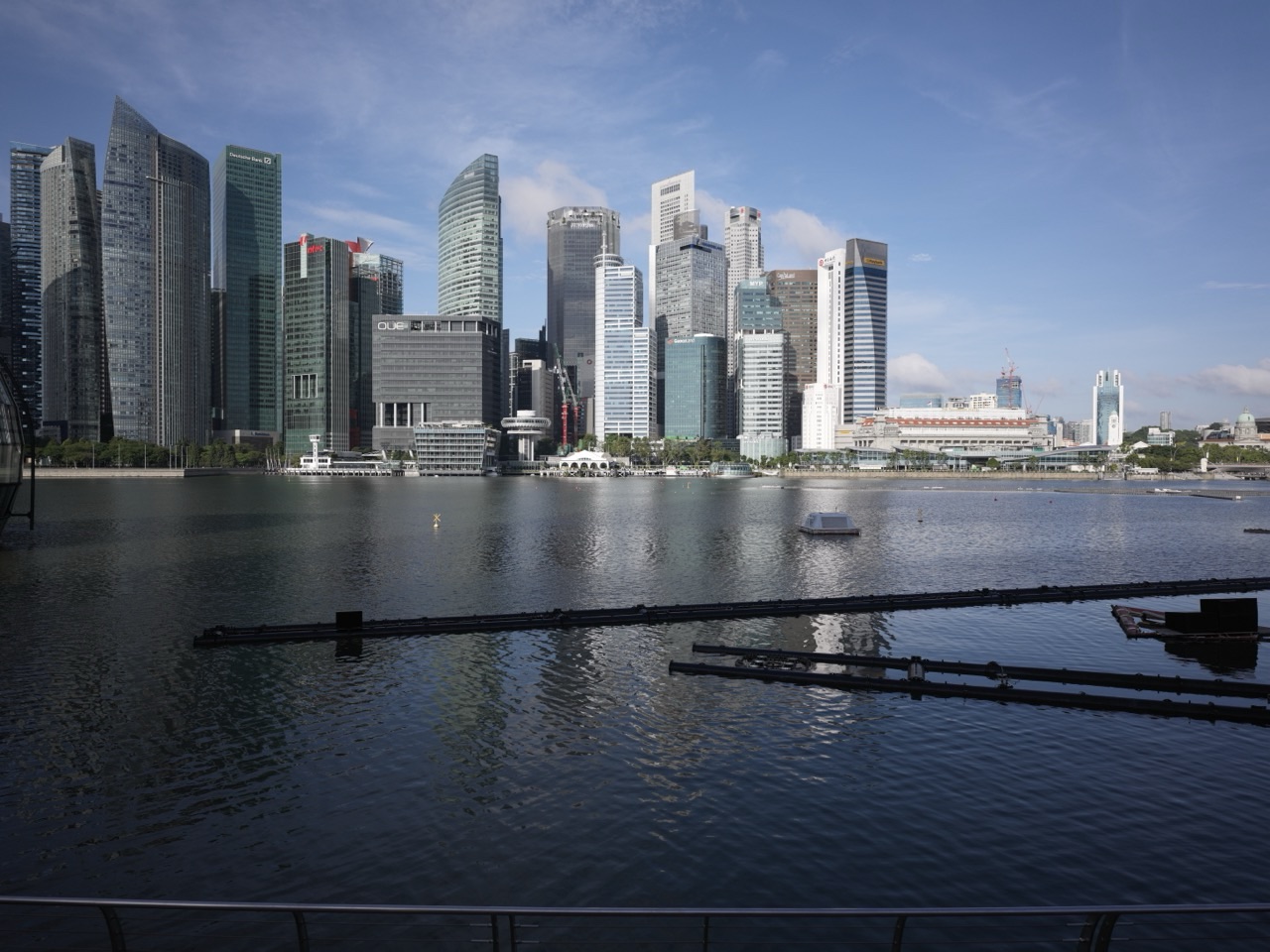
Crazy Rich Singapore | Variable Capital Companies, Fund Domiciliation and the Asset Management Economy begins with a fund-management problem Singapore deliberately redesigned: an investment fund wants a legal structure whose capital can expand and contract as investors enter and leave, without pretending the fund behaves like an ordinary trading company.
Did you know Singapore’s Variable Capital Company, or VCC, has been available since 14 January 2020? A VCC can operate as one standalone fund or as an umbrella containing multiple sub-funds with ring-fenced assets and liabilities. It can issue and redeem shares without ordinary shareholder approval and can pay dividends from capital, giving fund managers flexibility that conventional company structures were not designed to provide.
That makes “VCC Singapore”, “Variable Capital Company”, “Singapore fund structure”, “fund domiciliation Singapore”, “umbrella VCC” and “asset management Singapore” powerful search themes. The Crazy Rich story is not another company type. It is the legal infrastructure that lets more of the fund-management value chain—management, administration, governance, audit, tax and professional services—sit inside Singapore.
Crazy Rich Singapore can turn a legal wrapper into an economic cluster.
Did You Know? A VCC Is Built Mainly for Investment Funds
ACRA describes the VCC as a corporate structure mainly for investment funds rather than ordinary operating businesses.
That distinction matters because funds behave differently from shops, factories or software companies.
- Investors subscribe and redeem capital.
- Portfolio values move constantly.
- Different strategies may need different sub-funds.
- Investment managers may need privacy around member lists.
- Capital distributions can differ from ordinary company dividends.
The VCC was designed around those fund-specific realities.
Standalone or Umbrella
A VCC can be established as a single standalone fund or as an umbrella VCC with multiple sub-funds.
Each sub-fund under an umbrella maintains separate assets and liabilities.
If one sub-fund loses money, its liabilities are not meant to spill into the assets of another sub-fund.
The umbrella therefore creates administrative sharing without erasing economic separation.
Why Umbrella Structures Matter
A fund manager may run several strategies:
- Asian equities;
- private credit;
- venture capital;
- real estate;
- global bonds; or
- multi-asset portfolios.
Without an umbrella, each strategy may need more duplicated governance and administrative infrastructure.
A VCC umbrella can place several segregated strategies under one corporate architecture.
Shared infrastructure creates economies of scale.
Variable Capital Is the Core Innovation
Ordinary companies generally treat share capital as relatively fixed and distributions as constrained by corporate-capital rules.
Investment funds need investors to enter and exit more fluidly.
ACRA says VCCs can issue and redeem shares without shareholder approval and can pay dividends from capital.
The capital structure therefore moves with the fund.
Why Redemption Flexibility Matters
Open-ended funds may need to redeem investors when they exit.
A legal structure that makes every redemption cumbersome would create unnecessary friction.
The VCC aligns corporate mechanics with investment-fund economics.
The law behaves more like the product it governs.
The Fund Manager Requirement
Every VCC must appoint an eligible fund manager under the regulatory framework.
That anchors the structure inside Singapore’s regulated asset-management ecosystem.
The VCC is not designed as a shell that exists independently of fund-management responsibility.
Legal structure and licensed management remain connected.
The ACRA Connection
VCC incorporation and filings are administered through ACRA’s dedicated VCC portal.
That connects directly to Crazy Rich Singapore | ACRA, UEN and the Business Registry Economy.
A VCC receives a UEN and becomes a registered Singapore entity, but its compliance path remains distinct from an ordinary company.
The S$8,000 Incorporation Fee
ACRA’s current 2026 guidance lists a VCC incorporation fee of S$8,000 plus the name-application fee.
Each sub-fund registration currently carries an additional fee.
That cost is far higher than ordinary company incorporation.
The VCC is designed for professional investment-fund use rather than casual experimentation.
Why Member Lists Are Not Public
Unlike ordinary companies, VCCs do not publicly disclose their member lists in the same way.
Public authorities can still require access where legally needed.
That provides investor privacy while preserving regulatory oversight.
Privacy does not mean invisibility to the state.
Annual Returns Still Matter
A VCC must maintain ongoing corporate compliance.
ACRA requires annual returns, and umbrella VCCs must maintain separate reporting for each sub-fund.
The structure is flexible, not informal.
Investment capital still needs auditable records.
The Auditor and Company Secretary
Current ACRA guidance requires a VCC to appoint an auditor and company secretary within the prescribed timelines.
Those roles help create the governance infrastructure around the fund.
The asset manager decides investment strategy.
Governance professionals make sure the legal and accounting system remains intact.
Why Re-Domiciliation Matters
Eligible overseas fund structures can transfer their registration to Singapore as VCCs under the re-domiciliation framework.
The fund does not necessarily need to liquidate everything and rebuild from zero.
Existing rights, obligations and assets can continue subject to the legal requirements.
That makes Singapore more competitive for funds already established elsewhere.
Fund Domiciliation Is Different from Fund Management
A fund can be managed from Singapore but legally domiciled elsewhere.
The VCC gives managers a Singapore domicile option.
That matters because domicile creates demand for local:
- lawyers;
- auditors;
- administrators;
- directors;
- tax advisers;
- corporate service providers; and
- banks.
The more of the fund lifecycle sits locally, the larger the economic spillover.
The Family Office Connection
Singapore’s family-office ecosystem can use fund structures where appropriate.
That connects directly to Crazy Rich Singapore | Family Offices and Wealth Management.
The family office manages wealth.
The VCC can provide a legal fund vehicle.
The professional-service ecosystem supports both.
The Private Equity Connection
VCCs can be used across a range of investment strategies, including closed-ended approaches where suitable.
That connects to Crazy Rich Singapore | Private Equity, Venture Capital and Growth Capital.
The fund vehicle is the container.
Private equity is one possible investment strategy placed inside it.
The Singapore Exchange Connection
Fund managers may invest VCC assets into listed securities and capital-market instruments.
That connects to Crazy Rich Singapore | Singapore Exchange and the Capital Markets.
The VCC lives in the fund-formation layer.
SGX sits in the market-infrastructure layer.
The Bond Market Connection
Funds can also hold fixed-income assets.
That connects to Crazy Rich Singapore | Singapore Government Securities, T-Bills and the Bond Market Economy.
The legal wrapper does not determine the asset class.
It gives the manager a flexible structure in which many asset classes can be managed.
Why Ring-Fencing Is Powerful
An umbrella VCC can contain different sub-funds while maintaining separate assets and liabilities.
That reduces contagion across strategies under the legal framework.
The manager can centralise some governance and administration without merging every investment pool economically.
Shared roof, separate rooms.
Why VCCs Help Singapore Compete with Other Fund Centres
Global asset managers can choose among several established fund domiciles.
Singapore competes not only on tax.
It competes on:
- legal certainty;
- regulation;
- service providers;
- banking;
- talent;
- market access; and
- operational flexibility.
The VCC filled a structural gap in that package.
Why Legal Infrastructure Can Create Jobs
A new fund structure creates work for professionals across the ecosystem.
That includes:
- fund managers;
- compliance teams;
- law firms;
- auditors;
- administrators;
- tax advisers; and
- corporate secretaries.
The law itself becomes an economic input.
What Students Can Learn from VCCs
Economics
Legal structures can influence where financial activity and professional jobs locate.
Finance
Investment funds need flexible capital structures because investors enter and exit.
Law
Ring-fencing and corporate rules determine how liabilities and assets are separated.
Accounting
Each sub-fund still requires disciplined reporting despite shared umbrella infrastructure.
Geography
Financial activity clusters where regulation, talent and service providers reinforce one another.
Ten Vocabulary Words for the Fund Domiciliation Economy
1. VCC
Variable Capital Company, Singapore’s investment-fund corporate structure.
2. Domicile
The jurisdiction in which a fund is legally established.
3. Umbrella fund
A structure containing multiple sub-funds under one legal umbrella.
4. Sub-fund
A segregated investment pool operating within an umbrella VCC.
5. Ring-fencing
Separating assets and liabilities so one pool is protected from another’s obligations.
6. Redemption
Returning an investor’s capital by cancelling or repurchasing fund shares according to fund rules.
7. Fund manager
The regulated entity responsible for managing investments and the fund strategy.
8. Re-domiciliation
Transferring an eligible foreign fund structure’s legal registration into Singapore.
9. Net asset value
The value of a fund’s assets minus liabilities.
10. Asset management
Professional investment of capital on behalf of clients or funds.
Frequently Asked Questions
When did Singapore launch the VCC?
The VCC framework became available on 14 January 2020.
Can a VCC have several funds?
Yes. An umbrella VCC can contain multiple sub-funds with separate assets and liabilities.
Is a VCC an ordinary trading company?
No. ACRA describes VCCs as structures mainly for investment funds.
Can an overseas fund move into Singapore as a VCC?
Eligible foreign entities with suitable structures can re-domicile into Singapore under the applicable rules.
Does every VCC need a fund manager?
Yes. Current registration rules require an eligible fund manager and other key officers.
Helpful Reading Across the Singapore Graph
- Crazy Rich Singapore | Family Offices and Wealth Management
- Crazy Rich Singapore | Private Equity, Venture Capital and Growth Capital
- Crazy Rich Singapore | Singapore Exchange and the Capital Markets
- Crazy Rich Singapore | ACRA, UEN and the Business Registry Economy
References and Current Sources
- ACRA, Setting Up a Variable Capital Company, updated 30 January 2026.
- ACRA, VCC Features, Eligibility and Requirements, updated 29 January 2026.
- ACRA, Managing a VCC, updated 16 March 2026.
- ACRA, Re-Domiciling into Singapore as a VCC, updated 19 March 2026.
Crazy Rich Singapore Turned Fund Law into Financial Infrastructure
The VCC is not spectacular to look at.
It is a legal idea.
Did you know? One of Singapore’s richest financial innovations is powerful precisely because it is invisible—the rules around one investment vehicle pulling more management, administration and professional work into the same financial ecosystem.