
Crazy Rich Singapore | Gardens by the Bay and the Horticultural Attraction Economy begins with one of Singapore’s most recognisable acts of imagination: turning reclaimed downtown land into a garden visited by the world.
Did you know Gardens by the Bay welcomed more than 16 million visitors in 2025, its highest annual visitorship to date? The Gardens now records more than 115 million visitors since opening and contains over 1.5 million plants from every continent except Antarctica.
That makes “Gardens by the Bay”, “Supertree Grove”, “Cloud Forest”, “Flower Dome”, “things to do in Singapore” and “Singapore attractions” powerful search themes. The Crazy Rich story is not simply beautiful landscaping. It is how horticulture, engineering, tourism, climate control, public space and destination branding can combine into one extraordinary urban asset.
Crazy Rich Singapore can grow a forest on reclaimed land.
Did You Know? Gardens by the Bay Is a Tourism Attraction and an Engineering System
Visitors see flowers, trees and dramatic architecture.
Underneath that beauty sits:
- climate-controlled conservatories;
- energy systems;
- water-management systems;
- vertical gardens;
- structural engineering;
- horticultural science; and
- visitor-flow design.
The Gardens works because nature and technology are not treated as opposites.
They are designed together.
Sixteen Million Visitors in One Year
In 2026, Gardens by the Bay said more than 16 million people had visited during the previous year, the highest annual visitorship in its history.
That scale makes the Gardens more than a local park.
It is a global destination anchor.
Visitors who come for the Cloud Forest or Supertree Grove also spend on hotels, food, retail and transport elsewhere in Singapore.
The plant collection therefore creates economic spillovers far beyond the ticket gate.
More Than 115 Million Visits Since Opening
Gardens by the Bay now reports more than 115 million visitors to date.
That is an important achievement because horticultural attractions can become stale if they do not change.
The Gardens continually introduces new displays, festivals, collaborations and themed experiences.
The static garden becomes a changing programme.
That encourages repeat visitation.
The 18 Supertrees: Vertical Gardens as National Icons
Gardens by the Bay has 18 Supertrees ranging from about 25 to 50 metres in height.
Twelve sit within the main Supertree Grove.
These structures combine architecture, vertical planting and environmental systems.
More than half incorporate sustainability features such as photovoltaic cells or integration with the cooled conservatories.
That is what makes the Supertrees economically interesting.
They are sculpture, infrastructure and marketing image at the same time.
Why the Supertrees Are So Valuable to Singapore’s Brand
A successful tourism icon becomes instantly recognisable even without a caption.
The Supertrees have that quality.
They appear in travel campaigns, social media, television, films and visitor photographs.
This creates enormous destination-marketing value.
The physical structure is fixed in Singapore.
Its image travels globally every day.
The Flower Dome: Climate as a Product
The Flower Dome creates a cool-dry climate in tropical Singapore, allowing plants from Mediterranean and semi-arid regions to thrive.
That is unusual because the attraction is not merely displaying plants.
It is manufacturing a climate.
The economic product is access to botanical experiences that Singapore’s natural weather would not normally support.
The Cloud Forest: A Mountain Inside a Building
Cloud Forest recreates cool-moist tropical montane conditions.
The conservatory combines elevation, mist, waterfalls and dense planting to simulate an ecosystem normally found far above sea level.
That turns a greenhouse into an immersive landscape.
The visitor is not simply looking at plants in pots.
The visitor is moving through a constructed climate.
Why the Conservatories Do Not Cool Everything Equally
Gardens by the Bay’s sustainability design focuses cooling where people and plants need it rather than cooling the entire volume uniformly.
The system also dehumidifies air before cooling, reducing the energy required.
Waste heat from biomass combustion is used to regenerate the drying system.
That is classic systems engineering.
The attraction becomes more efficient by connecting one process to another.
Horticultural Waste Becomes Energy
Gardens by the Bay uses horticultural waste from the Gardens and elsewhere in Singapore as biomass fuel.
The energy supports the conservatory cooling system.
That closes a useful loop:
plants create waste; waste helps power the environment that supports more plants.
It is a small but elegant circular-economy example.
The Dragonfly and Kingfisher Lakes Are Working Infrastructure
The lake system is not purely decorative.
Gardens by the Bay describes it as a natural filtration system for runoff within the Gardens.
Aquatic plants help cleanse water before it enters the Marina Reservoir, while some treated water is reused for irrigation.
The lake therefore performs ecological, educational and engineering functions at once.
The Marina Bay Connection
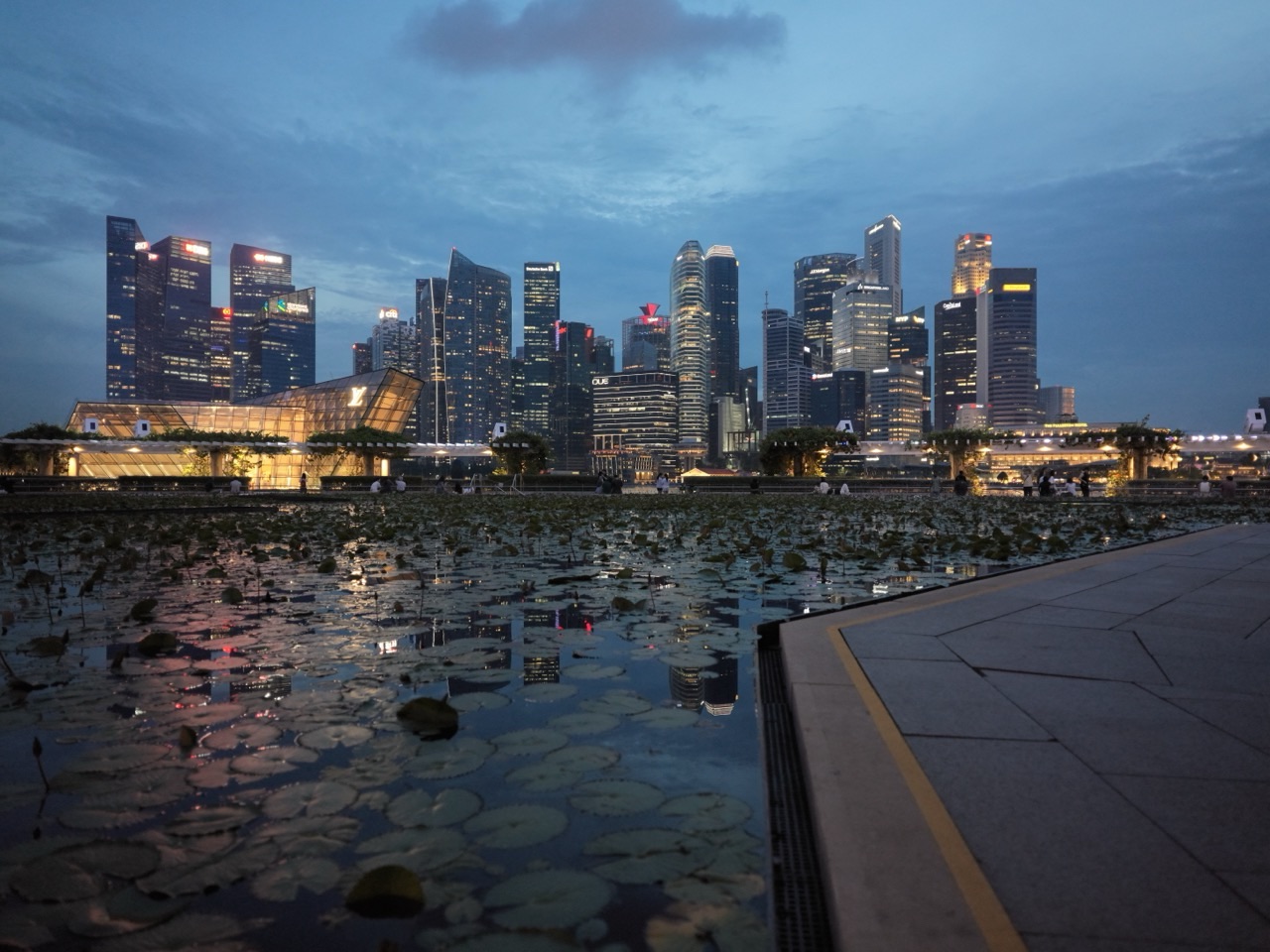
Gardens by the Bay sits beside Marina Bay Sands and the wider downtown waterfront.
That means the Gardens strengthens the value of surrounding hotels, property and public space while those surrounding attractions feed visitors back into the Gardens.
This connects directly to Crazy Rich Singapore | Marina Bay Sands and the MICE Economy and Marina Bay, Luxury Condominiums and Prime City Property.
The garden and the skyline reinforce each other.
The 2026–2028 Expansion Layer
Gardens by the Bay continues to expand.
Its 2026 plans include Wetlands by the Bay, with construction scheduled from the first quarter of 2027 and progressive opening targeted by end-2028.
Bay East Garden is due to open in 2027, while Founders’ Memorial within it is planned for 2028.
A new bridge linking Bay South and Bay East is also under construction.
That means the attraction is still becoming larger more than a decade after opening.
Why Public Gardens Can Create Private Economic Value
Gardens by the Bay is a public destination.
Yet its existence can increase the attractiveness of nearby hotels, offices, residences and retail.
That demonstrates a powerful urban principle.
Public infrastructure can generate private economic value without becoming private property.
This links naturally to Crazy Rich Singapore | Green Buildings, Smart Districts and Sustainable Real Estate.
Why Horticulture Is a Technology Industry
Large-scale gardens depend on plant science, irrigation, climate control, soil management, pest management, propagation and genetics.
That means horticulture is far more technical than ornamental gardening.
The spectacular flower display at the front of house depends on biology and operational discipline backstage.
Beauty is a production system.
Why Events Keep the Garden Economically Alive
Gardens by the Bay hosts rotating festivals, exhibitions, light shows and branded collaborations.
These programmes make the destination seasonal even in an equatorial climate.
A local resident can return because the content changes.
A visitor can plan a trip around a particular event.
The permanent infrastructure supports temporary programming.
What Students Can Learn from Gardens by the Bay
Biology
Plant adaptation, ecosystems and biodiversity are visible throughout the Gardens.
Physics
Cooling, water flow, structural engineering and solar energy shape the attraction.
Geography
The Gardens shows how reclaimed land can be transformed into public space and tourism infrastructure.
Economics
Public attractions create spillovers into tourism, hotels and real estate.
Design
Landscape architecture and engineering work together to create emotional experiences.
Computing
Modern attraction operations increasingly depend on sensors, controls and digital visitor systems.
Ten Vocabulary Words for Horticultural Tourism
1. Horticulture
The science and practice of cultivating plants for food, ornament, landscape or other uses.
2. Conservatory
A glass or enclosed structure designed to grow and display plants under controlled conditions.
3. Vertical garden
A planted surface or structure that grows vegetation vertically.
4. Microclimate
A local climate differing from the surrounding environment.
5. Photovoltaic
Technology that converts sunlight directly into electricity.
6. Biomass
Organic material used as a fuel or energy source.
7. Irrigation
The controlled supply of water to plants.
8. Biodiversity
The variety of living organisms within an area or ecosystem.
9. Dwell time
The period visitors remain within an attraction or destination.
10. Destination icon
A landmark strongly associated with a place and capable of attracting visitors or global recognition.
Frequently Asked Questions
How many people visit Gardens by the Bay?
Gardens by the Bay said more than 16 million people visited in 2025, its highest annual visitorship, and the attraction now reports more than 115 million visitors to date.
How many plants are there?
More than 1.5 million plants from every continent except Antarctica.
How many Supertrees are there?
There are 18 Supertrees, ranging from about 25 to 50 metres in height.
Are the Supertrees only decorative?
No. Several incorporate photovoltaic systems or connect to the conservatories’ environmental systems.
What is opening next?
Bay East Garden is planned for 2027, while Wetlands by the Bay and Founders’ Memorial are targeted for progressive openings later in the decade.
Helpful Reading Across the Singapore Graph
- Crazy Rich Singapore | Marina Bay Sands and the MICE Economy
- Crazy Rich Singapore | Marina Bay, Luxury Condominiums and Prime City Property
- Crazy Rich Singapore | Green Buildings, Smart Districts and Sustainable Real Estate
- Making Singapore Rich | Tourism and the Visitor Economy
References and Current Sources
- Gardens by the Bay, Official website and current visitor statistics, accessed October 2026.
- Gardens by the Bay, 2026 Media Room.
- Gardens by the Bay, Gardens by the Bay Design Trail.
- Gardens by the Bay, Sustainability Efforts.
Crazy Rich Singapore Grows the Skyline
Gardens by the Bay is one of Singapore’s most successful inversions.
A place famous for skyscrapers built a global icon out of plants.
Did you know? One of Singapore’s richest downtown assets is valuable because it gives prime land back to people, trees and imagination.