
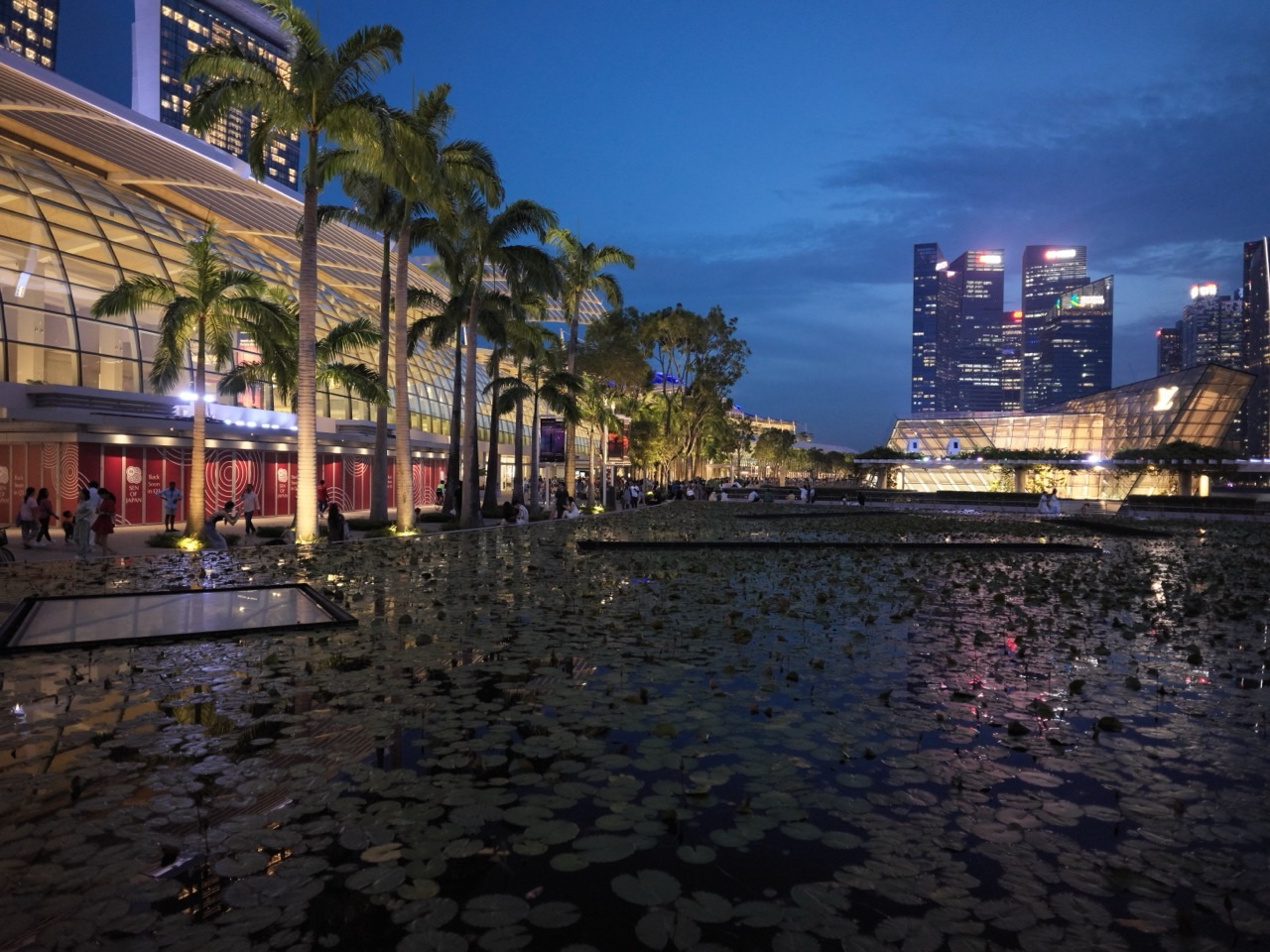
Crazy Rich Singapore | Marina Bay, Luxury Condominiums and Prime City Property begins with land that did not used to exist.
Did you know Singapore began major reclamation around Marina Bay in 1971 and completed the final 38 hectares of Bayfront reclamation in 1994? By the late 1990s, Marina Bay covered about 360 hectares of prime land for development. Today it combines finance, hotels, residences, attractions, public space and transport in one of Asia’s best-known urban skylines.
That makes “Marina Bay property”, “luxury condo Singapore”, “Marina Bay residence”, “Singapore prime property” and “Marina South condo” powerful search themes. The Crazy Rich story is not simply expensive apartments. It is how Singapore manufactures prime location through planning, reclamation, infrastructure and concentration.
Crazy Rich Singapore can have a postcode created by engineering.
Did You Know? Prime Property Can Be Planned Into Existence
Traditional prime property often depends on inherited geography: an old city centre, a historic square, a natural harbour or an established elite neighbourhood.
Marina Bay is different.
Singapore deliberately extended the city centre onto reclaimed land, then layered transport, offices, hotels, parks, attractions and residences onto the new geography.
That means part of the value was created before any luxury apartment existed.
The first product was the district.
The 360-Hectare Urban Platform
URA describes Marina Bay’s transformation as a long-term planning project.
The district now contains:
- the Marina Bay Financial Centre;
- Asia Square;
- Marina One;
- Marina Bay Sands;
- Gardens by the Bay;
- the waterfront promenade;
- arts and civic landmarks;
- hotels;
- residential towers; and
- multiple MRT connections.
A condominium in this context is not merely a vertical stack of homes.
It is a claim on access to the surrounding city platform.
Why Prime City Property Is About Networks
Two apartments can have similar floor area and very different values.
The difference may come from what is reachable outside the front door.
- employment centres;
- MRT stations;
- restaurants and retail;
- parks and waterfronts;
- international hotels;
- schools and services;
- cultural institutions; and
- global business networks.
That is why property economics cannot be reduced to construction cost.
Location is accumulated connectivity.
Marina Bay and the Finance Premium
URA describes Marina Bay as an extension of Singapore’s CBD and a major financial, civic and community hub.
The concentration of banks, asset managers, professional-services firms and regional headquarters creates high-value employment nearby.
Residential demand can therefore be connected to the labour market.
People often pay more to live closer to places where valuable work is concentrated.
That links this article directly to Crazy Rich Singapore | Singapore Exchange and the Capital Markets and Crazy Rich Singapore | Family Offices and Wealth Management.
The Skyline Premium Is Real—but It Is Not the Whole Story
Water views and skyline views can command a premium.
But the stronger long-term urban story is mixed use.
A residential district that empties during office hours or an office district that becomes deserted at night is less alive than a place where work, homes, recreation and culture overlap.
Singapore’s current planning direction is to make the broader Downtown more mixed-use rather than purely commercial.
That increases the number of reasons people have to remain in the area across the full day.
Marina South: The Next Residential Layer
URA is planning Marina South as a new mixed-use residential neighbourhood beside Gardens by the Bay and the Straits of Singapore.
The planning vision emphasises a sustainable “10-minute” district where daily needs are reachable by walking or cycling, with shaded streets, public spaces and strong MRT connectivity.
This is a useful evolution.
The first Marina Bay story was about creating a global downtown.
The next Marina South story is about making the downtown more residential and neighbourhood-like.
The rich city is not merely spectacular.
It also has to be liveable.
The 2026 Marina Gardens Lane Site
In August 2026, URA released a Marina Gardens Lane residential site for sale under the Government Land Sales programme.
The site near Marina South MRT station can potentially yield about 390 residential units.
Its release is important because it converts the planning vision into actual housing supply.
A master plan becomes a neighbourhood one parcel at a time.
Luxury Property Does Not Only Go Up
Prime real estate attracts dramatic headlines, but serious analysis should preserve market nuance.
URA’s flash estimate for the third quarter of 2026 showed overall private residential prices rising 1.4% quarter on quarter.
However, non-landed prices in the Core Central Region slipped 0.1% during that quarter after rising in the previous quarter.
Transaction volumes also fell materially from the second quarter.
That is a useful correction to the idea that “prime property always rises”.
Property markets move through cycles.
Why Singapore Keeps Adding Housing Supply
Scarcity can raise prices, but an entire housing system cannot be managed by simply celebrating scarcity.
For 2026, the Government Land Sales Confirmed List is expected to supply 9,320 private residential units, more than 50% above the annual average of the previous decade.
URA has said this is intended to cater to housing demand and support market stability.
That is a crucial distinction between an individual luxury asset and a functioning city.
The city has to manage both value and supply.
Marina Bay Versus Good Class Bungalows: Two Different Luxuries
A Good Class Bungalow sells private land, low density and separation.
A Marina Bay condominium sells vertical living, centrality and network access.
Both can be extraordinarily valuable, but for opposite reasons.
One monetises distance from the city.
The other monetises compression into the city.
Read them together: Crazy Rich Singapore | Good Class Bungalows and Scarce Land.
Why Public Space Adds Private Value
The Marina Bay waterfront promenade, Gardens by the Bay and surrounding public realm are open to far more people than the residents of nearby condominiums.
Yet those public spaces can enhance the attractiveness of nearby private property.
That creates an important urban-planning lesson.
Public investment can create private value without becoming private space.
A good city can make expensive homes more desirable while still giving ordinary residents access to the waterfront.
Property Is a Bundle of Rights, Rules and Expectations
A condominium buyer is not merely purchasing concrete.
The purchase includes legal title, common-property rights, maintenance obligations, planning context, tenure, taxes, financing costs and expectations about the future neighbourhood.
That is why property decisions are so information-heavy.
The apartment is physical.
The value is partly institutional.
What Students Can Learn from Marina Bay Property
Mathematics
Price per square foot, mortgage interest, area, yield and percentage change.
Geography
Reclamation, land use, accessibility and waterfront development.
Economics
Scarcity, supply, demand, opportunity cost and location premiums.
History
Marina Bay shows how a city can physically change its coastline across generations.
Civics
Government land sales and planning rules shape the pace and form of urban development.
Design
Mixed-use planning, pedestrian networks and public spaces influence how a district feels and functions.
Ten Vocabulary Words for Prime City Property
1. Core Central Region
URA’s central private-housing market region covering many of Singapore’s prime residential locations.
2. Government Land Sales
The programme through which the Government releases state land for private development.
3. Reclamation
Engineering that creates usable land from sea or other water areas.
4. Mixed-use development
A development combining functions such as homes, offices, shops and hotels.
5. Price index
A statistical measure used to track changes in property prices over time.
6. Transaction volume
The number of property sales completed in a defined period.
7. Prime property
High-value real estate associated with desirable locations, quality and scarcity.
8. Tenure
The legal period and form under which property rights are held.
9. Public realm
Streets, parks, promenades and other spaces intended for public use.
10. Connectivity premium
Additional value associated with convenient access to transport, employment and amenities.
Frequently Asked Questions
Was Marina Bay always land?
No. Much of the present district was created through reclamation. Major works began in the 1970s, with the final Bayfront reclamation completed in 1994.
How large is Marina Bay?
URA says the Marina Bay area covered about 360 hectares of prime development land by the late 1990s.
What is planned for Marina South?
A sustainable mixed-use residential neighbourhood with strong walking, cycling and MRT connectivity, public spaces and access to everyday amenities.
Are Core Central Region condo prices always rising?
No. URA’s third-quarter 2026 flash estimate showed CCR non-landed prices down 0.1% quarter on quarter even while the overall private residential index rose.
Why is the Government releasing more private housing land?
URA says the high supply is intended to meet demand and support market stability.
Helpful Reading Across the Singapore Graph
- Fun facts about Singapore | Downtown Core
- Crazy Rich Singapore | Marina Bay Sands and the MICE Economy
- Crazy Rich Singapore | Good Class Bungalows and Scarce Land
- Making Singapore Rich | Real Estate, Property and the Built Environment
- Crazy Rich Singapore | Singapore Exchange and the Capital Markets
References and Current Sources
- Urban Redevelopment Authority, Marina Bay, updated 17 June 2026.
- Urban Redevelopment Authority, Marina South, updated 12 June 2026.
- Urban Redevelopment Authority, URA releases sites at Marina Gardens Lane and Orchard Boulevard, 13 August 2026.
- Urban Redevelopment Authority, Flash estimate for 3Q2026 private residential property price index, 1 October 2026.
Crazy Rich Singapore Built the View
Marina Bay feels inevitable now.
It was not.
The shoreline was changed, infrastructure was laid, transport was connected, institutions clustered and public spaces were built before the present skyline could become normal.
That is the deeper property lesson.
Prime location is sometimes inherited from geography.
Sometimes it is engineered by civilisation.
Did you know? One of Singapore’s most expensive views exists because the country first had to build the land underneath it.