
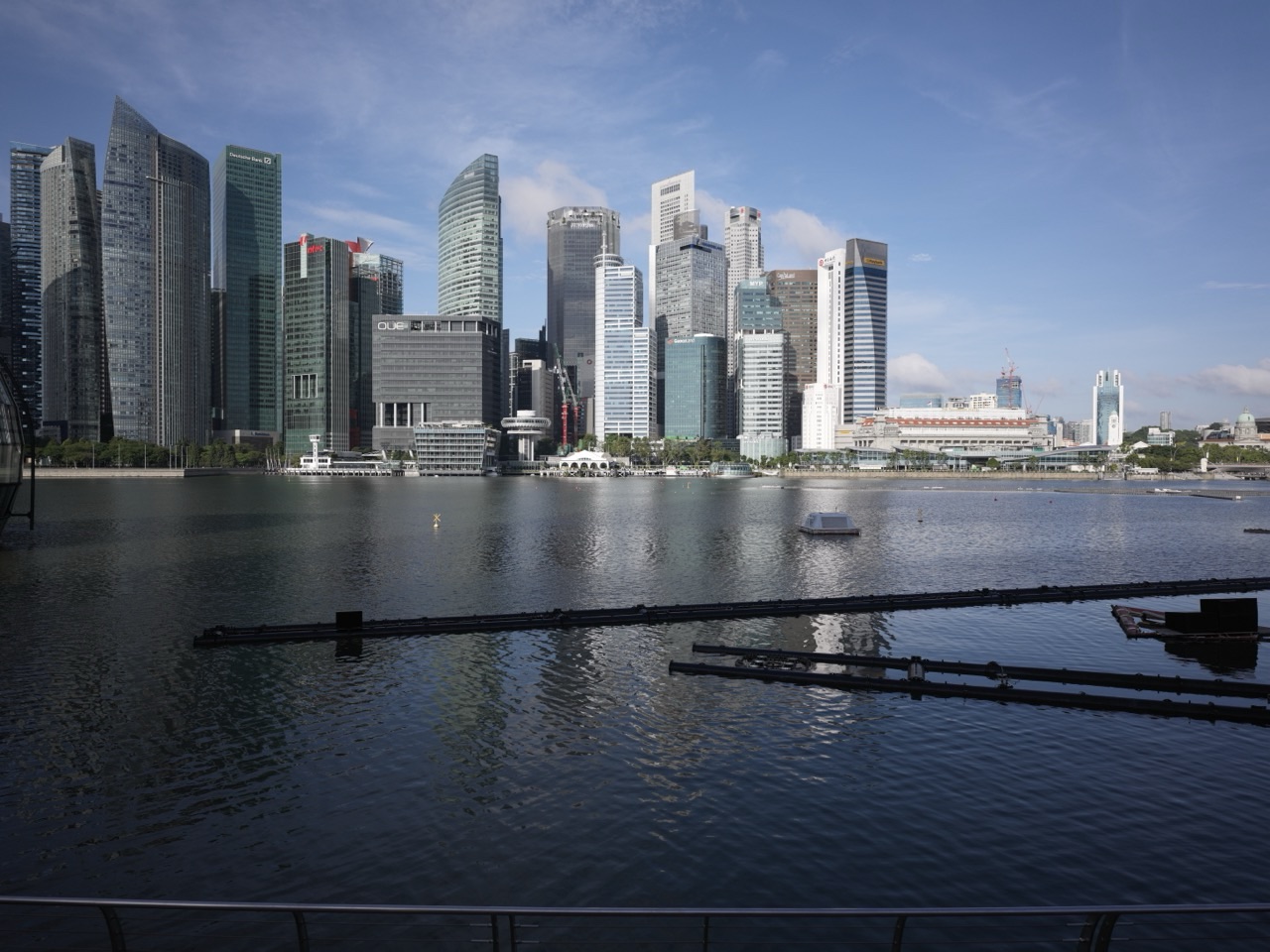
Crazy Rich Singapore | Singapore Government Securities, T-Bills and the Bond Market Economy begins with a strange-looking fact: Singapore can have a large stock of government securities and still not be borrowing in the ordinary sense to pay for day-to-day government spending.
Did you know the Ministry of Finance says proceeds from most Singapore Government Securities, Treasury Bills, Special Singapore Government Securities and Singapore Savings Bonds cannot be used to fund Government expenditure? Instead, these instruments serve purposes such as developing the domestic debt market, providing savings options and meeting institutional investment needs. As of the start of October 2026, MAS’s benchmark curve spans short T-bills through government bonds with maturities extending to 50 years.
That makes “Singapore T-bill”, “Singapore Government Securities”, “SGS bond”, “Singapore Savings Bond”, “T-bill yield Singapore” and “bond market Singapore” powerful search themes. The Crazy Rich story is not simply that the Government issues debt. It is that Singapore deliberately built a deep sovereign yield curve so banks, investors, insurers and companies have a trusted reference for pricing money through time.
Crazy Rich Singapore can issue a bond partly so the rest of the economy knows what a bond should cost.
Did You Know? Singapore Government Borrowing Has Several Different Jobs
The phrase “government debt” hides several different instruments and purposes.
- SGS Market Development bonds and Treasury Bills help develop the domestic debt market;
- Singapore Savings Bonds give individuals a flexible long-term savings instrument;
- Special Singapore Government Securities meet CPF Board investment needs;
- Reserves Management Government Securities support transfers of excess official foreign reserves; and
- SGS Infrastructure can be issued under SINGA for qualifying nationally significant infrastructure.
The label is the same broad family.
The economic purpose can be very different.
Why Most SGS Proceeds Cannot Be Spent
MOF’s current reserves guidance is explicit: proceeds from SGS and SSGS issued under the Government Securities framework cannot be used to fund Government expenditure.
The monies are invested.
That is why Singapore’s gross government debt figure can look large while the Government still has a strong net asset position.
The liability sits beside substantial financial assets.
Looking only at gross debt would miss half the balance sheet.
Why Singapore Issues Debt If It Has Reserves
A country can issue government securities for reasons other than covering a budget deficit.
Singapore uses market-development SGS and T-bills to:
- build a benchmark yield curve;
- provide high-quality liquid assets;
- support money-market development;
- create investable instruments for institutions; and
- help price corporate debt.
The bond market needs a reference asset.
Government securities provide one.
What Is a Treasury Bill?
A Treasury Bill, or T-bill, is a short-term Singapore Government Security.
MAS currently issues 6-month and 1-year T-bills.
T-bills do not pay periodic coupons.
Instead, investors buy them below face value and receive face value at maturity.
The difference between purchase price and maturity value produces the return.
The October 2026 Six-Month T-Bill Auction
MAS announced a 6-month T-bill auction on 1 October 2026 for issue on 13 October 2026.
The amount offered was S$8.3 billion, with a minimum denomination of S$1,000.
The auction was scheduled for 8 October 2026.
That is a useful reminder that Singapore’s short-term government securities are not occasional products.
They are part of an active issuance calendar.
Competitive and Non-Competitive Applications
T-bill investors can submit competitive or non-competitive applications.
A competitive application specifies the yield the investor is willing to accept.
A non-competitive application accepts the cut-off yield determined at auction.
MAS limits non-competitive allotment if demand exceeds the applicable share of the auction.
The auction therefore discovers a market-clearing yield.
Why T-Bills Are Quoted in Yield Rather Than Coupon
A T-bill does not pay a conventional coupon.
Its return is embedded in the discount between purchase price and face value.
That is why market tables usually quote an annualised yield.
The same security can be understood through:
- price today;
- face value at maturity;
- time remaining; and
- annualised yield.
Price and yield move in opposite directions.
Why Bond Prices and Yields Move Opposite Each Other
Suppose an older government bond pays a fixed coupon and new market interest rates rise.
The older bond becomes less attractive unless its market price falls enough to compensate.
If market rates fall, the older fixed coupon can become more attractive, pushing its price up.
That is why bond investors can experience market-price gains or losses before maturity even when the Government itself has not changed the coupon.
SGS Bonds Create the Long-Term Yield Curve
MAS publishes benchmark SGS bonds across original maturities including 2, 5, 10, 15, 20, 30 and even 50 years.
As of early October 2026, the benchmark table included a 50-year bond maturing in 2072.
That long curve helps markets answer:
What is the price of Singapore-dollar money not only next year, but decades from now?
Why the Yield Curve Matters to Companies
A corporate bond investor wants compensation above a low-risk government benchmark.
If the Government’s 10-year yield is known, a company can price its own 10-year bond as that base yield plus a credit spread reflecting company risk.
That means sovereign debt helps private companies raise money.
The Government bond market becomes infrastructure for corporate finance.
The Singapore Exchange Connection
SGS bonds can be traded in secondary markets, including through banks and SGX channels for eligible investors.
That connects directly to Crazy Rich Singapore | Singapore Exchange and the Capital Markets.
The primary auction creates the security.
The secondary market creates liquidity afterwards.
Singapore Savings Bonds Solve a Different Problem
Singapore Savings Bonds, or SSBs, are a special type of SGS designed for individual investors.
MAS describes them as:
- backed by the Singapore Government;
- held for up to 10 years;
- redeemable monthly without capital loss on principal; and
- structured so returns step up over time.
They are not identical to market-traded SGS bonds.
They are designed around retail saving rather than secondary-market price trading.
Why SSBs Can Be Redeemed at Face Value
Conventional bonds can trade above or below face value.
Savings Bonds allow monthly redemption at the amount invested, plus applicable accrued interest, according to programme rules.
That removes market-price risk for an individual who needs the money early.
The trade-off is that SSBs are non-transferable in the ordinary way.
Flexibility is built into redemption rather than trading.
The S$200,000 Individual SSB Limit
MAS’s Savings Bond framework caps an individual’s aggregate SSB holdings at S$200,000.
The minimum denomination is S$500.
New issues are offered monthly and MAS says the programme will continue issuing new Savings Bonds at least through 2030.
The structure deliberately targets individual savers rather than institutional balance sheets.
Why CPF Uses a Different Government Security
CPF Board invests CPF monies in Special Singapore Government Securities.
Those SSGS are non-tradable and issued specifically to CPF Board.
That connects directly to Crazy Rich Singapore | CPF, Retirement Savings and the Long-Term Capital Economy.
The CPF member sees an account balance and credited interest.
Behind it sits a Government-guaranteed security relationship between CPF Board and the Government.
Why Banks Want High-Quality Liquid Assets
Banks need liquid assets they can rely on during stress and for regulatory liquidity requirements.
Government securities are especially useful because they are highly creditworthy and actively traded.
That creates demand beyond ordinary investment return.
The instrument becomes part of financial-system resilience.
The Insurance Connection
Insurers have long-duration liabilities.
They need assets whose maturities can help match future claims and obligations.
Long-dated SGS can play a role in that asset-liability management.
That connects to Crazy Rich Singapore | Insurance, Reinsurance and the Business of Risk.
A 30-year liability becomes easier to manage when 30-year assets exist.
The Interest-Rate Benchmark Connection
Government yields influence pricing throughout the economy.
They can affect:
- corporate bonds;
- bank funding;
- fixed-income portfolios;
- valuation models; and
- long-term investment assumptions.
The SGS curve therefore acts like a ruler for the Singapore-dollar bond market.
You do not buy the ruler to measure everything.
You need the ruler so everything else can be measured consistently.
Why Individual Investors Watch T-Bill Auctions
T-bill yields compete with fixed deposits, savings products and other short-term investments.
The comparison is not only headline yield.
Investors also consider:
- liquidity;
- lock-up;
- application mechanics;
- reinvestment risk;
- tax treatment; and
- what happens if money is needed before maturity.
The best instrument depends on the purpose of the money.
A higher yield is not automatically the best choice.
Why the October 2026 Yield Is Not a Permanent Rate
T-bill yields are determined by market conditions and auction outcomes.
MAS’s end-September 2026 market statistics showed yields around the mid-1% range for many short issues at that point in time.
Those values can change quickly.
A T-bill article should therefore explain the mechanism rather than promise a fixed future return.
Market rates are observations, not laws of nature.
SINGA Creates a Different Borrowing Category
Singapore also allows borrowing for qualifying nationally significant infrastructure under the Significant Infrastructure Government Loan Act.
That includes SGS Infrastructure and Green SGS Infrastructure.
MOF says this is a much smaller portion of Government borrowing and operates under specific legislative safeguards.
This connects directly to Crazy Rich Singapore | Cross Island Line, Interchanges and the East West Connectivity Economy, one example of nationally significant infrastructure.
Why Infrastructure Borrowing Is Different from Recurrent Spending
A long-lived MRT line may serve several generations.
Borrowing under SINGA can spread qualifying capital costs across generations that use the asset.
That is different from borrowing simply to pay this year’s salaries or routine operating costs.
The economic principle is intergenerational matching.
Long-lived assets can justify long-lived financing under strict limits.
Why Singapore’s Gross Debt Number Can Be Misleading
MOF emphasises that Singapore’s financial assets substantially exceed Government liabilities.
That is why the Government can have high gross debt while maintaining no net debt in MOF’s balance-sheet framing.
The key question is not only “How much was borrowed?”
It is also “What assets sit against those liabilities and what were the borrowings used for?”
Balance sheets have two sides.
The Foreign Exchange Connection
Government securities also interact with Singapore-dollar liquidity and monetary operations.
That connects conceptually to Crazy Rich Singapore | Foreign Exchange, Treasury and the Singapore Dollar.
A deep domestic bond market supports the wider financial architecture around the currency.
What Students Can Learn from SGS
Mathematics
Discounts, coupons, compounding and yields turn percentages into time-value-of-money problems.
Economics
Government securities show how a public issuer can support market development without borrowing for ordinary spending.
Finance
The yield curve becomes a benchmark for pricing other debt securities.
Civics
Singapore’s borrowing rules show how legislation can constrain what borrowed funds may be used for.
Critical Thinking
Gross debt figures need context about assets, purposes and legal structures before they can be interpreted properly.
Ten Vocabulary Words for the Bond Market Economy
1. Singapore Government Securities
Debt securities issued by the Singapore Government under the relevant legal frameworks.
2. Treasury Bill
A short-term non-coupon Government security sold at a discount and redeemed at face value.
3. Coupon
The periodic interest payment made by a conventional bond.
4. Yield
A measure of return relative to a security’s price and cash flows.
5. Yield curve
A line showing yields for comparable securities across different maturities.
6. Face value
The principal amount repaid when a bond or T-bill matures.
7. Primary auction
The process through which new Government securities are first issued to investors.
8. Secondary market
The market in which existing securities are traded after issuance.
9. Singapore Savings Bond
A special retail SGS product with monthly redemption flexibility and step-up interest.
10. SINGA
The Significant Infrastructure Government Loan Act, which permits borrowing for qualifying nationally significant infrastructure under safeguards.
Frequently Asked Questions
Does Singapore issue T-bills?
Yes. MAS issues 6-month and 1-year Treasury Bills under the SGS framework.
Can the Government spend ordinary SGS and T-bill proceeds?
MOF states that proceeds raised under the Government Securities (Debt Market and Investment) framework for market-development SGS, T-bills, SSGS and SSBs cannot be used for Government expenditure and are invested instead.
How small can an individual T-bill application be?
Current MAS auctions use a minimum denomination of S$1,000.
What is the difference between an SGS bond and an SSB?
Conventional SGS bonds are tradable market securities whose prices can rise or fall before maturity; SSBs are retail savings products redeemable monthly at principal value under programme rules.
Why does Singapore issue long-dated Government bonds?
They help develop the domestic debt market, create long-term pricing benchmarks and provide instruments for institutional investors such as banks and insurers.
Helpful Reading Across the Singapore Graph
- Crazy Rich Singapore | Singapore Exchange and the Capital Markets
- Crazy Rich Singapore | CPF, Retirement Savings and the Long-Term Capital Economy
- Crazy Rich Singapore | Insurance, Reinsurance and the Business of Risk
- Crazy Rich Singapore | Foreign Exchange, Treasury and the Singapore Dollar
References and Current Sources
- Monetary Authority of Singapore, 6-Month T-Bill Auction BS26120W, announced 1 October 2026.
- Monetary Authority of Singapore, Daily SGS Prices and Benchmark Yield Curve, current market data.
- Monetary Authority of Singapore, SGS Bonds: Information for Individuals.
- Monetary Authority of Singapore, Singapore Savings Bonds FAQs.
- Ministry of Finance, Our Assets and Liabilities, current Government borrowing-purpose framework.
Crazy Rich Singapore Builds a Price for Time
A bond market is ultimately a market for promises across time.
The Government promises future payment.
Investors decide what that promise is worth today.
Did you know? One of Singapore’s richest financial infrastructures is a curve on a screen showing what money costs for six months, ten years or half a century—because once that curve exists, the rest of the bond market knows where to begin.