
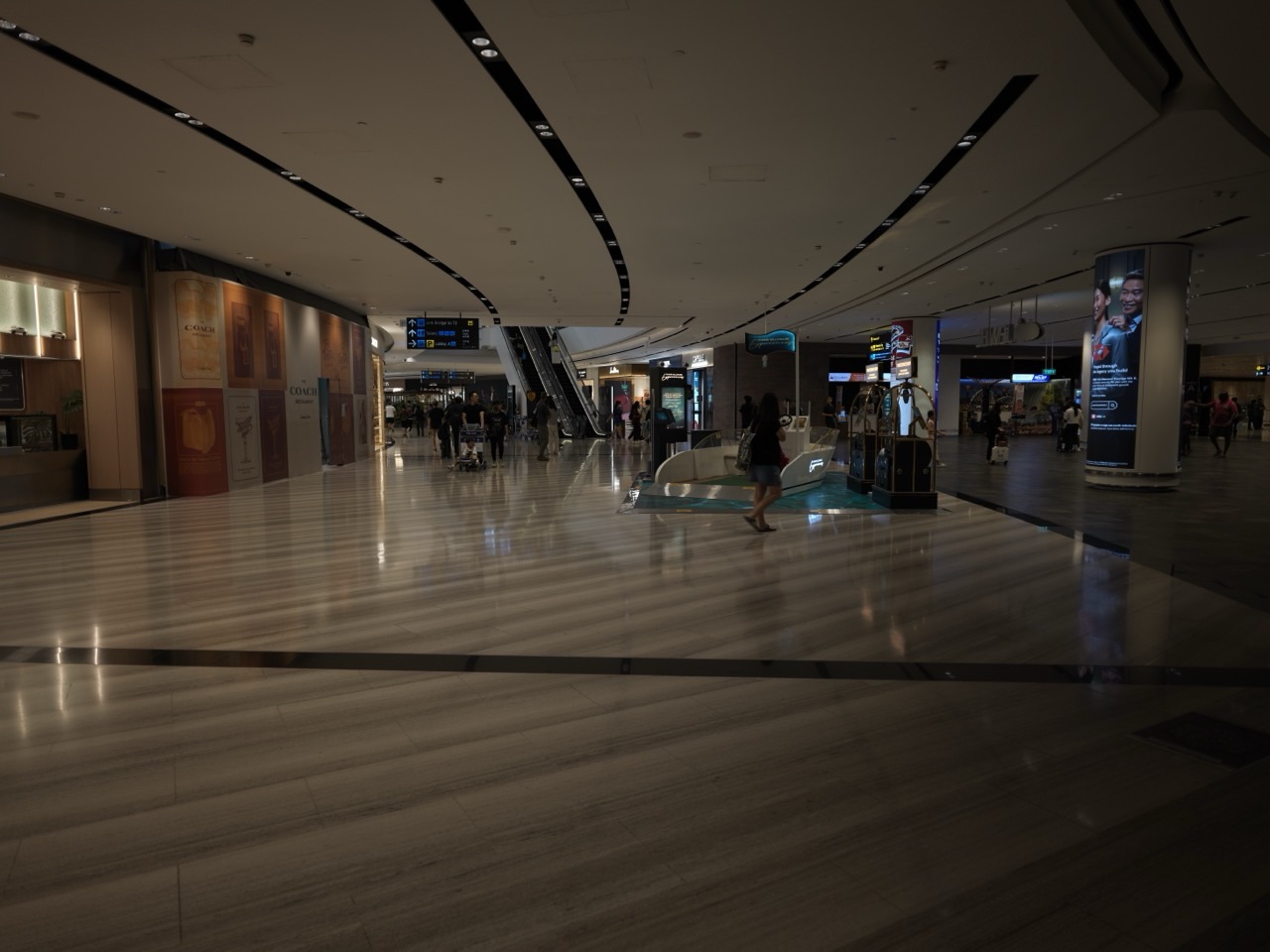
Crazy Rich Singapore | Jewel Changi Airport and the Airport Retail Economy begins with a building that solved an unusual problem: how do you make people visit an airport even when they are not flying?
Did you know Jewel Changi Airport recorded more than 81 million visitors in FY2024/25, a record high, while its revenue grew 7%? Jewel also attracted nine new-to-market tenants during the year and continued to position itself as a place where global brands test their first Singapore stores.
That makes “Jewel Changi Airport”, “shopping at Changi”, “airport shopping Singapore”, “Jewel restaurants” and “things to do at Changi Airport” powerful search themes. The Crazy Rich story is not merely duty-free retail. It is the transformation of an airport interchange into a lifestyle destination with attractions, dining, retail, hotel rooms and one of the world’s most photographed waterfalls.
Crazy Rich Singapore can go to the airport without a boarding pass.
Did You Know? Jewel Is Bigger Than an Airport Mall
Jewel opened in 2019 on the site of Terminal 1’s former open-air car park.
The development covers about 135,700 square metres and combines:
- retail;
- restaurants;
- indoor gardens;
- the Rain Vortex;
- Canopy Park;
- airport facilities;
- hotel rooms; and
- direct connections to Changi’s terminals.
That mix matters because each use attracts a different visitor.
Some people arrive to fly.
Some arrive to eat.
Some arrive to shop.
Some arrive to photograph the waterfall.
The destination becomes stronger because the reasons to visit overlap.
Eighty-One Million Visitors: Why Footfall Is the Currency of Retail
Changi Airport Group reported more than 81 million visitors to Jewel in FY2024/25.
Retail property economics begins with footfall.
A shop can have beautiful merchandise, but without people passing the storefront, the probability of a transaction falls.
Jewel’s location gives it several overlapping sources of traffic:
- air travellers;
- airport workers;
- tourists staying in Singapore;
- local residents;
- families visiting attractions; and
- people meeting arriving or departing passengers.
The building monetises movement.
Why Jewel Can Attract More Visitors Than Changi Has Passenger Movements
Jewel’s footfall is not the same as airport passenger traffic.
A person can visit Jewel multiple times, and many Jewel visitors are not flying at all.
That distinction is useful because it shows Jewel’s strategic success.
The airport has become a destination independent of aviation.
The airport sends traffic to Jewel.
Jewel gives non-travellers a reason to come to the airport.
The Rain Vortex Is Infrastructure, Marketing and Theatre at Once
The 40-metre HSBC Rain Vortex is the world’s tallest indoor waterfall.
It falls seven storeys through the centre of Jewel and turns into a light-and-music attraction after dark.
That one feature performs several economic jobs.
- it creates a unique visual identity;
- it gives visitors a free attraction;
- it increases dwell time;
- it generates global social-media content; and
- it anchors the surrounding retail environment.
Architecture becomes advertising.
The building markets itself.
Why Nature Sits in the Middle of Retail
Jewel’s Forest Valley deliberately combines greenery with commerce.
That changes how shopping feels.
Instead of moving through a conventional enclosed mall, visitors circulate around gardens, bridges, water and large open spaces.
The retail environment becomes an experience rather than merely a row of stores.
This is a useful twenty-first-century mall lesson:
if online shopping makes transactions easy, physical retail has to make presence worthwhile.
More Than 260 Shops and Restaurants
Jewel reported more than 260 retail shops and restaurants in its 2024 performance update.
The tenant mix includes fashion, watches, beauty, sports, lifestyle brands, supermarkets, restaurants, cafés and entertainment.
The variety creates internal network effects.
A visitor coming for lunch may buy shoes.
A traveller shopping for gifts may stay for an attraction.
A family visiting Canopy Park may finish the day at a restaurant.
One trip creates multiple transactions.
Why Global Brands Use Jewel as a Singapore Launchpad
Jewel’s 2024 results highlighted nine international brands that chose the development for their first Singapore location.
That is important because a new market launch needs visibility.
A brand opening in Jewel gains exposure to locals and international visitors at the same time.
The airport environment therefore doubles as a retail test market.
A successful store can become evidence for wider expansion into Singapore or Southeast Asia.
Homegrown Brands Become Global Brands at the Airport
Changi Airport Group’s 2025 review highlighted local brands using airport retail to reach international audiences.
That is the reverse of the previous strategy.
Instead of foreign brands using Jewel to enter Singapore, Singapore brands use Changi to encounter the world.
The airport becomes an export showroom.
This connects naturally to Crazy Rich Singapore | Intellectual Property, Patents and the Intangible Economy.
A local brand can carry Singapore outward without shipping an advertisement overseas first.
The Luxury Retail Connection
Jewel’s current tenant ecosystem includes premium fashion, jewellery and watches alongside mass-market retail.
That creates a bridge to Crazy Rich Singapore | Orchard Road and Luxury Retail and Luxury Watches, Jewellery and the Collector Economy.
Orchard Road captures city-centre shopping.
Jewel captures retail at the edge of arrival and departure.
Different geography.
Same desire economy.
Why Airport Retail Is Economically Different from Ordinary Retail
An airport customer may have a different mindset from an ordinary shopper.
They may be:
- celebrating a trip;
- buying gifts;
- using remaining foreign currency;
- killing time before departure;
- meeting relatives; or
- looking for something distinctively Singaporean.
Time pressure and travel emotion can change spending behaviour.
That makes airports unusual retail environments.
The Tourist Refund Connection
Eligible tourists can use Singapore’s electronic Tourist Refund Scheme for qualifying purchases from participating retailers, subject to IRAS rules.
That matters at a location integrated directly with international departure.
High-value retail, tax refunds and air travel can exist inside one seamless journey.
The border itself becomes part of the shopping experience.
Jewel and the Changi Hub Strategy
Jewel strengthens Changi because it makes the airport more memorable.
A connecting passenger may choose to spend a longer layover exploring the complex.
A tourist may schedule Jewel as the first or last attraction of the trip.
A local resident may visit even without travelling.
That connects directly to Crazy Rich Singapore | Changi Airport and the Global Aviation Hub.
The airport moves people.
Jewel monetises the pause between movements.
Why Dwell Time Matters
Retailers care about how many people enter a place.
They also care how long those people stay.
Attractions, gardens, restaurants and events give visitors reasons to remain longer.
Longer dwell time can create more opportunities for spending.
This is why Jewel’s attractions are economically important even when the attraction itself is free.
A free waterfall can support paid retail around it.
The Changi Millionaire Strategy
Changi’s retail promotions increasingly combine shopping with experiences.
In 2025, the refreshed Changi Millionaire Experiences campaign linked spending at Changi, Jewel and iShopChangi with chances to win luxury travel experiences and a Porsche Taycan.
That is more than a lucky draw.
It turns retail into entertainment and reinforces the airport’s premium brand.
Why F1 Ticket Holders Get Jewel Benefits
Jewel’s 2026 promotions included complimentary shopping and dining vouchers for Formula 1 ticket holders.
That is a smart cross-ecosystem move.
A sporting event creates visitors.
Jewel gives those visitors another spending destination.
This links directly to Crazy Rich Singapore | Formula 1 and the Night-Race Economy.
The richer tourism economy is built when one attraction routes customers into another.
Why Cruise Passengers Matter to Jewel
Changi and Jewel also offer targeted benefits to eligible international cruise passengers.
That connects aviation, cruise tourism and retail into one itinerary.
Read this with Crazy Rich Singapore | Cruise Tourism and Marina Bay Cruise Centre.
The cruise may depart from the sea.
The spending journey can begin at the airport.
What Students Can Learn from Jewel
Economics
Footfall, dwell time, tenant mix and network effects explain retail performance.
Architecture
Building form can become destination branding.
Physics
The Rain Vortex involves water flow, gravity and structural engineering.
Geography
Jewel demonstrates how transport hubs can become commercial centres.
Computing
Loyalty programmes, payments, tenant analytics and digital shopping depend on software.
English
Destination marketing has to speak to local shoppers and international travellers simultaneously.
Ten Vocabulary Words for Airport Retail
1. Footfall
The number of people entering or moving through a commercial location.
2. Dwell time
The amount of time a visitor remains in a place.
3. Flagship store
A prominent brand location designed to showcase a company’s identity or full product range.
4. Tenant mix
The combination of stores, restaurants and services within a commercial property.
5. Catchment
The geographic or customer population from which a retail location draws visitors.
6. Experiential retail
Retail designed around memorable activities and environments rather than transaction alone.
7. Conversion rate
The proportion of visitors who complete a desired action such as making a purchase.
8. Anchor attraction
A major feature that draws visitors and supports surrounding businesses.
9. Tourist refund
A tax-refund mechanism available to eligible visitors for qualifying purchases under defined rules.
10. Airport city
A transport hub that develops substantial retail, hospitality, office and leisure functions beyond aviation itself.
Frequently Asked Questions
How many visitors does Jewel receive?
Changi Airport Group reported more than 81 million visitors in FY2024/25, a record high for Jewel.
How big is Jewel?
The complex covers about 135,700 square metres on the former Terminal 1 open-air car-park site.
How tall is the Rain Vortex?
The HSBC Rain Vortex falls 40 metres through Jewel and is the world’s tallest indoor waterfall.
How many shops and restaurants are there?
Jewel reported more than 260 retail shops and restaurants in its 2024 performance update.
Do you need a boarding pass to visit Jewel?
No. Jewel is landside and is accessible to the public, including people who are not flying.
Why is Jewel important to Changi Airport?
It increases the airport’s appeal as a destination, creates retail and dining revenue, supports tourism, and gives both travellers and residents reasons to spend more time at Changi.
Helpful Reading Across the Singapore Graph
- Crazy Rich Singapore | Changi Airport and the Global Aviation Hub
- Crazy Rich Singapore | Orchard Road and Luxury Retail
- Crazy Rich Singapore | Luxury Watches, Jewellery and the Collector Economy
- Crazy Rich Singapore | Cruise Tourism and Marina Bay Cruise Centre
- Crazy Rich Singapore | Formula 1 and the Night-Race Economy
References and Current Sources
- Changi Airport Group, Annual Report 2024/25.
- Jewel Changi Airport, Jewel reports record high footfall and sales.
- Jewel Changi Airport, Jewel Rain Vortex, accessed October 2026.
- Changi Airport Group, 2025 Year in Review.
Crazy Rich Singapore Turns the Airport into the Attraction
Airports traditionally exist to help you leave.
Jewel became extraordinary by giving people a reason to stay.
Did you know? One of Singapore’s richest retail ideas was to place a rainforest, a waterfall and hundreds of shops exactly where travellers were already passing through—and then make locals want to visit too.