
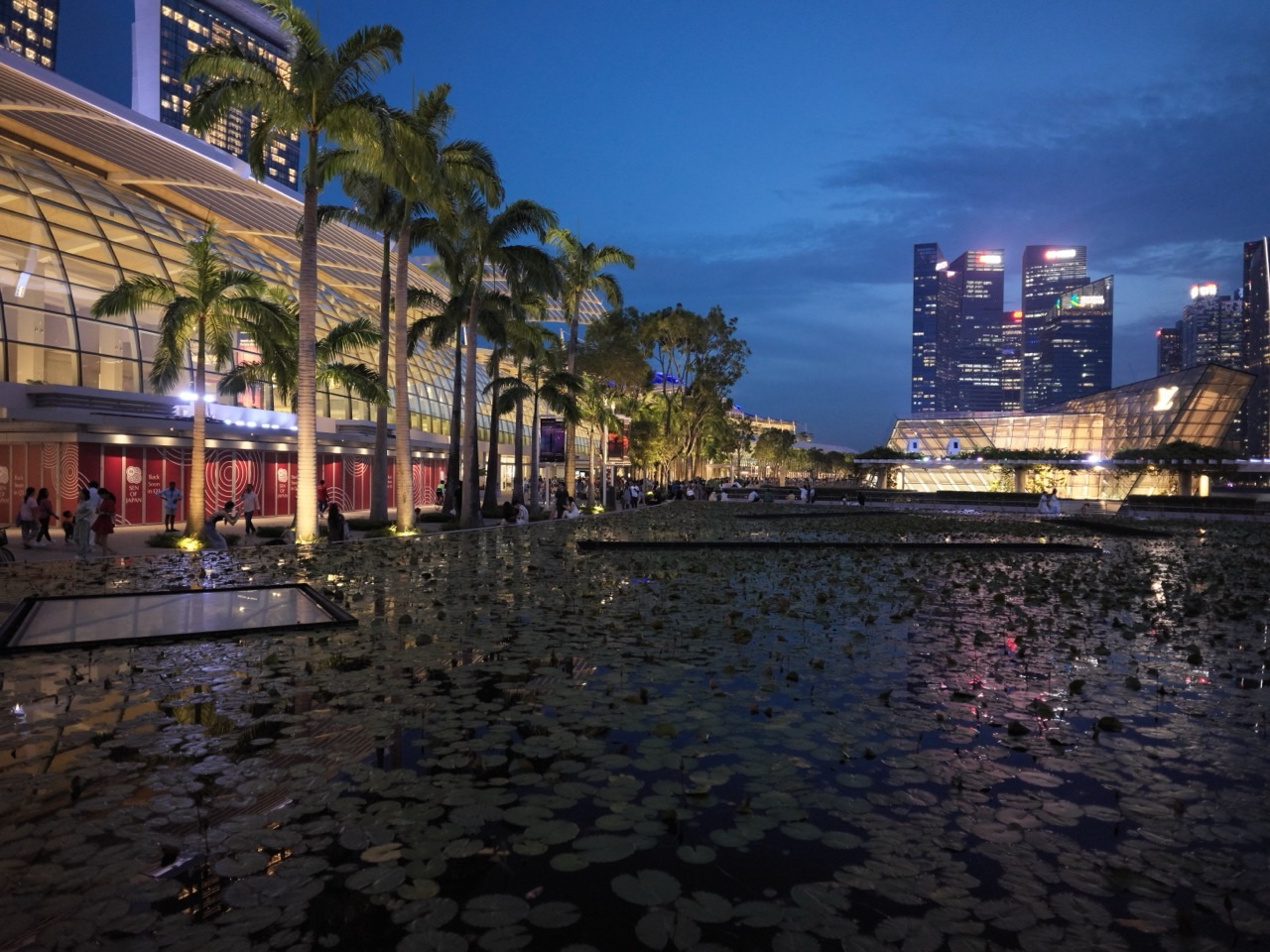
Crazy Rich Singapore | Land Reclamation, Long Island and Engineered Geography begins with one of Singapore’s most extraordinary economic tricks: when land is scarce, the country sometimes builds more of it.
Did you know Singapore’s proposed Long Island project could reclaim about 800 hectares off the East Coast—roughly twice the size of Marina Bay—while also strengthening coastal protection, creating a future reservoir and adding around 20 kilometres of new waterfront parks? Preparatory works are scheduled to begin progressively from end-2026, while the final reclamation profile remains under study.
That makes “Singapore land reclamation”, “Long Island Singapore”, “Singapore land area”, “East Coast reclamation” and “Singapore coastal protection” powerful search themes. The Crazy Rich story is not simply expensive property. It is the national capability to redesign geography so that one piece of engineered land can solve several problems at once.
Crazy Rich Singapore can manufacture the ground beneath its feet.
Did You Know? Large Parts of Modern Singapore Were Not Always Land
Marina Bay, Marine Parade, East Coast Park, Changi Airport, Jurong Island and many other familiar places depend partly on reclamation.
That means Singapore’s map is not a fixed inheritance.
It is also infrastructure.
The coastline has changed because national needs changed.
Why Reclaim Land at All?
Singapore has limited land and many competing demands.
- housing;
- industry;
- airports and ports;
- reservoirs;
- parks;
- transport;
- military uses;
- schools and hospitals; and
- future climate resilience.
When every hectare has opportunity cost, land creation can become economically rational even when reclamation is technically difficult and expensive.
The important question is not, “Can we reclaim?”
It is, “What national problem does the reclaimed land solve?”
Long Island: One Project, Four National Functions
URA describes Long Island as an integrated solution designed to address several needs at once.
1. Coastal protection
The reclaimed land could form part of a long-term defence for Singapore’s low-lying East Coast against sea-level rise and coastal flooding.
2. Water resilience
The project could create a new reservoir by enclosing water between the future reclaimed land and the existing shoreline.
3. Future development land
About 800 hectares of potential new land would provide flexibility for needs that may not yet be known.
4. Recreation
URA says the project could add about 20 kilometres of new waterfront parks as part of a larger continuous southern waterfront network.
That is what makes Long Island economically interesting.
The land is not assigned one job.
It is a platform.
Why 800 Hectares Is Difficult to Imagine
URA has described the potential reclamation area as roughly twice the size of Marina Bay.
That comparison helps because Marina Bay already contains a financial district, integrated resort, gardens, residences, transport and major public spaces.
Long Island is still at the planning and technical-study stage, so nobody should imagine a final city plan already exists.
The value today is optionality.
Future generations would inherit land and infrastructure that can be adapted to needs Singapore may not yet be able to predict.
Preparatory Works Are Not the Same as Final Reclamation
This distinction matters.
URA announced in June 2026 that preparatory works would start progressively from end-2026.
The first phase covers waters west of Bedok Jetty and the second phase covers waters to the east.
The works include removal of seabed obstructions, temporary sand bunds and sand infilling.
URA has explicitly said the preparatory-work footprint does not represent the final Long Island shape.
The main reclamation will come later, after technical and environmental studies and further public engagement.
Why Singapore Studies the Seabed Before Building the Future
Land reclamation is partly geology.
Engineers need to understand:
- soil conditions;
- seabed depth;
- sediment behaviour;
- currents;
- environmental impacts;
- coastal processes; and
- how the future landform will settle over time.
Marine site investigations for Long Island ran from August 2025 to April 2026, followed by additional land-based site investigations from September 2026 into 2027.
The future city starts with soil samples.
The Climate-Resilience Problem
Some parts of the East Coast are low-lying and exposed to coastal flooding.
Seasonal high tides caused temporary coastal flooding in January 2024 and January 2026.
Sea-level rise increases the long-term risk.
Long Island is therefore not a luxury-land project disguised as climate policy.
Its first strategic job is protection.
The additional land value comes from integrating protection with future use.
Why a Future Reservoir Is So Clever
A traditional seawall solves one problem: keep the sea out.
An integrated coastal reservoir can potentially do more.
By reshaping the coastline, Singapore may create protected water space that can support water resilience while the outer landform provides coastal defence.
That connects directly to Crazy Rich Singapore | NEWater, Water Technology and the Value of Scarcity.
One engineering project begins solving land and water constraints together.
The East Coast Is Already a Reclamation Story
Marine Parade, East Coast Park and the East Coast Parkway were developed on land reclaimed from the 1960s through the 1980s.
That historical layer matters because Long Island is not a sudden break from Singapore’s development model.
It is the next generation of a long-running strategy: reshape the coastline when the economic and national case justifies it.
The difference is that climate adaptation is now much more central.
Reclaimed Land Can Create Transport Value
The East Coast Parkway itself was integrated into reclaimed land, providing a direct connection between the city and Changi Airport.
That is a powerful example of land and transport compounding.
The land made the road possible.
The road increased the value of the land around it.
The road also strengthened the airport-city connection.
This connects naturally to Crazy Rich Singapore | Changi Airport and the Global Aviation Hub.
Reclamation Can Create Entire Economic Clusters
Jurong Island is one of Singapore’s clearest examples.
Several smaller islands were joined through reclamation into a large integrated energy and chemicals platform.
The new geography allowed companies to share infrastructure and operate as a dense industrial cluster.
Read it beside Crazy Rich Singapore | Jurong Island, Energy and Chemicals.
Reclamation does not merely create square metres.
It can create new economic topology.
Marina Bay: Reclamation as Prime-City Manufacturing
Marina Bay shows another model.
Reclaimed land became finance, tourism, public space, housing and national iconography.
That is why Crazy Rich Singapore | Marina Bay, Luxury Condominiums and Prime City Property belongs directly beside this article.
The skyline looks like architecture.
The first technology was land creation.
Why Reclamation Is Getting Harder
Singapore’s earliest reclamation relied heavily on imported sand.
Future reclamation has to contend with tighter material availability, environmental constraints, higher engineering complexity and climate risk.
That encourages new approaches such as polder systems, alternative fill materials, more precise engineering and designs that combine nature-based and hard infrastructure.
The cheap version of reclamation is gone.
The next version has to be smarter.
The Environmental Trade-Off Is Real
Reclamation changes marine environments.
Sediment can affect water quality and habitats.
Construction can disrupt recreation and marine activities.
URA’s Long Island process therefore includes environmental studies, monitoring plans, silt controls and public consultation.
That does not make environmental impact disappear.
It means the impact becomes part of the engineering decision rather than an afterthought.
Why Public Engagement Matters on a Project That May Last Decades
More than 14,000 people had contributed ideas to the Long Island engagement process by March 2026.
That is significant because the project spans multiple generations.
People using East Coast Park today may experience construction.
Future residents may experience an entirely different coastline.
Long-duration infrastructure needs legitimacy as well as engineering.
The Urban Land Bank Idea
New land gives a country something valuable beyond immediate development.
It gives future choice.
A government does not have to decide every land use today.
Strategic land reserves can preserve the ability to respond to technologies, demographics and industries that do not yet exist.
That is why engineered geography can function like a national option contract.
The land may be worth more because Singapore does not rush to use all of it immediately.
What Students Can Learn from Land Reclamation
Geography
Coastlines, land use and human modification of physical landscapes become visible.
Physics
Waves, tides, soil consolidation and coastal forces shape reclamation design.
Mathematics
Area, volume, settlement and long-term engineering forecasts require quantitative reasoning.
Biology
Marine ecosystems and environmental monitoring matter when coastlines change.
Economics
Opportunity cost, land scarcity and infrastructure value are central to reclamation decisions.
Civics
Long-term planning requires balancing future national needs with environmental and community concerns today.
Ten Vocabulary Words for Engineered Geography
1. Reclamation
The creation of usable land from sea or other water areas through engineering works.
2. Bund
An embankment or barrier used to contain water, soil or fill material.
3. Infilling
Placing material into an enclosed area to create or raise land.
4. Polder
Low-lying reclaimed land protected from surrounding water by dikes or other barriers and managed with drainage systems.
5. Coastal protection
Infrastructure or nature-based measures designed to reduce damage from waves, tides, flooding and sea-level rise.
6. Site investigation
Engineering and geological study of ground conditions before design or construction.
7. Settlement
The gradual compression and lowering of newly placed soil or fill.
8. Environmental mitigation
Measures used to reduce or manage environmental harm from a project.
9. Land-use planning
The process of deciding how land should be allocated among competing needs.
10. Optionality
The value of preserving multiple possible future choices rather than committing too early to one use.
Frequently Asked Questions
How much land could Long Island create?
URA currently describes the project as potentially reclaiming about 800 hectares off the East Coast.
Has the final shape of Long Island been decided?
No. URA has said the final reclamation profile remains subject to technical studies, environmental assessment and public engagement.
When do works start?
Preparatory works are planned to commence progressively from end-2026. The main reclamation will begin later after further studies and design work.
What problem is Long Island primarily solving?
Coastal protection against sea-level rise and flooding, while also potentially improving water resilience, creating future land and adding recreational waterfront space.
Has Singapore reclaimed land before?
Extensively. Familiar areas including Marina Bay, Marine Parade, East Coast Park, Changi and Jurong Island all involve reclaimed land.
Is reclaimed land automatically valuable?
No. Land value depends on infrastructure, planning, environmental conditions, permitted uses and connection to the wider city.
Helpful Reading Across the Singapore Graph
- Crazy Rich Singapore | Marina Bay, Luxury Condominiums and Prime City Property
- Crazy Rich Singapore | NEWater, Water Technology and the Value of Scarcity
- Crazy Rich Singapore | Jurong Island, Energy and Chemicals
- Crazy Rich Singapore | Changi Airport and the Global Aviation Hub
References and Current Sources
- Urban Redevelopment Authority, Long Island, updated 24 September 2026.
- Urban Redevelopment Authority, Preparatory works for Long Island to commence from end-2026, 30 June 2026.
- Urban Redevelopment Authority, Update on the Long Island project, 30 March 2026.
- Urban Redevelopment Authority, Technical Studies for Long Island, updated 11 September 2026.
Crazy Rich Singapore Builds More Singapore
Land reclamation may be the purest expression of the Singapore development mindset.
A constraint appears.
The country does not assume the constraint can vanish.
It asks whether engineering can change the boundary.
Did you know? Some of Singapore’s most valuable real estate begins as water—and becomes valuable only after decades of planning teach the new land what job it should do.