
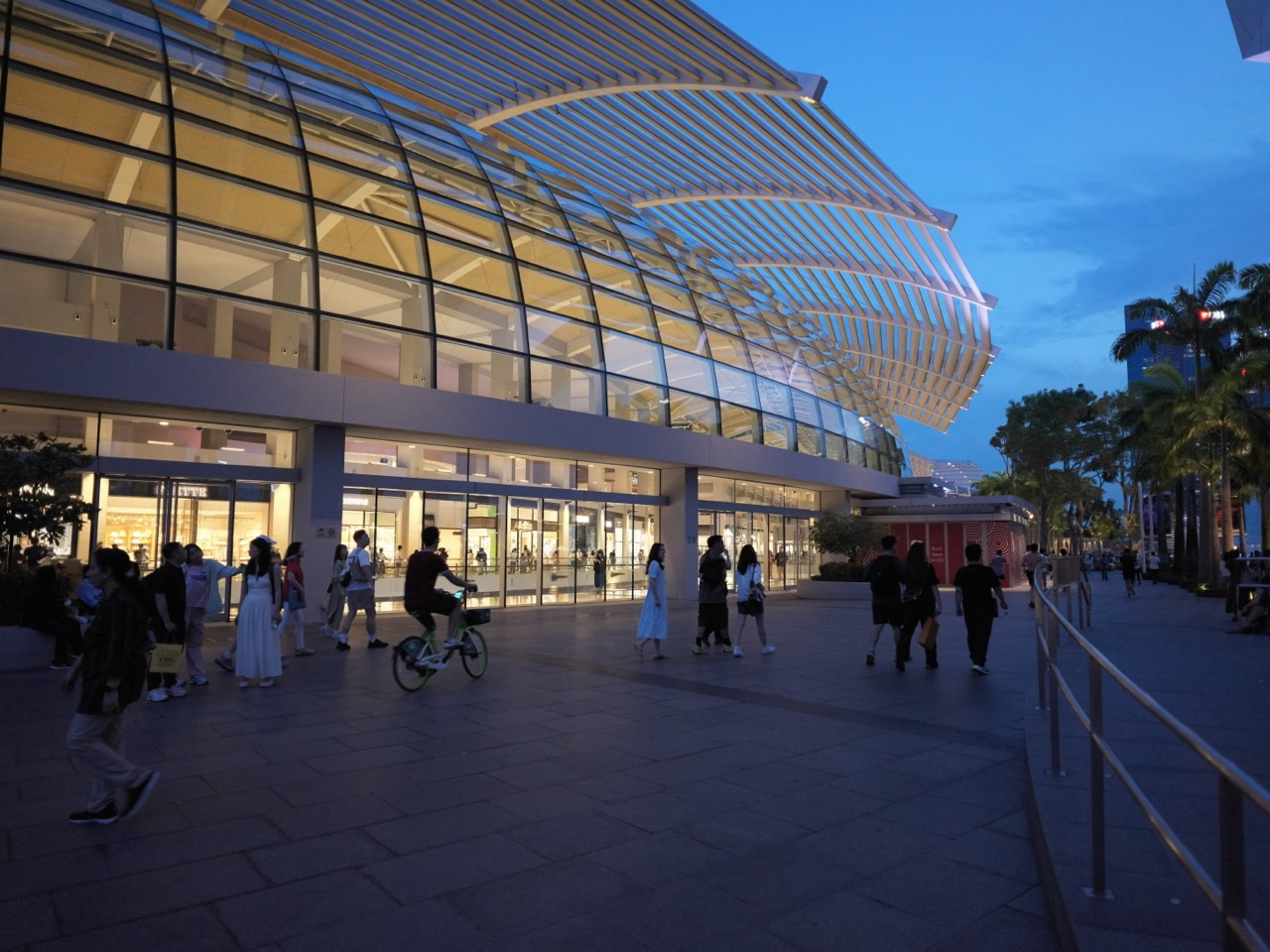
Crazy Rich Singapore | S-REITs and the Commercial Property Machine begins with a Singapore habit that looks almost magical: turning malls, offices, logistics parks, hotels, hospitals and data centres into tradable investment units.
Did you know Singapore has one of Asia’s deepest real-estate investment trust markets outside Japan? By mid-2026, listed S-REITs and property trusts represented roughly S$100 billion in market value, spanning commercial, retail, industrial, logistics, data-centre, hospitality and healthcare assets in Singapore and overseas.
That makes “Singapore REIT”, “S-REIT”, “REIT investing Singapore”, “commercial property Singapore” and “Singapore property trust” powerful search themes. The Crazy Rich story is not simply owning a building. It is turning buildings into financial infrastructure that thousands of investors can own in small pieces.
Crazy Rich Singapore can collect rent one unit at a time.
Did You Know? A REIT Lets You Own a Piece of a Shopping Mall Without Buying the Mall
A real-estate investment trust pools investor capital to own income-producing property.
Instead of one person buying an office tower, many investors can buy listed units in a trust that owns or finances a portfolio of properties.
The trust collects rent, pays operating and financing costs, and distributes income according to the structure and applicable rules.
That transforms property from a giant indivisible asset into something that can trade on a public market.
Why Singapore Became an S-REIT Hub
Singapore has several ingredients that fit the REIT model well:
- a deep commercial-property market;
- large institutional investors;
- a developed stock exchange;
- professional property managers;
- strong banking and debt markets;
- transparent corporate reporting; and
- regional access to real estate across Asia-Pacific and beyond.
Many S-REITs also own overseas properties, which means the Singapore market can act as a capital platform for real estate far beyond the island.
A Singapore investor can therefore buy exposure to logistics facilities in Australia, offices in Europe, data centres in North America or retail property in China through locally listed vehicles.
The Property Types Tell the Singapore Economy Story
The S-REIT market is useful because its sectors resemble a map of modern civilisation.
Commercial REITs
Office buildings reflect the demand for finance, technology and professional services.
Retail REITs
Shopping centres capture household spending, tourism and neighbourhood activity.
Industrial and logistics REITs
Warehouses, business parks and factories sit underneath trade and manufacturing.
Data-centre REITs
Server facilities monetise the digital economy.
Hospitality trusts
Hotels and serviced residences connect directly to tourism and business travel.
Healthcare REITs
Hospitals and care facilities connect property markets to demographic and medical demand.
A REIT market is therefore not only finance.
It is finance wrapped around the buildings that other industries require.
Why Distribution Yield Gets So Much Attention
REIT investors often compare income distributions with bond yields, deposit rates and other income-producing assets.
But yield is not free money.
A high yield can reflect attractive income, a low market price, higher debt, weaker growth expectations or greater risk.
That is why students should learn to ask what sits underneath a percentage.
Income is only one part of total return.
Interest Rates Matter Enormously
Property is capital-intensive.
REITs often borrow to acquire buildings or fund redevelopment.
When interest rates rise, borrowing costs can increase and property valuations can come under pressure.
When rates fall, financing can become easier—but other economic conditions still matter.
This makes REITs excellent examples of how monetary policy passes through financial markets into physical assets.
The Data-Centre REIT Connection
Singapore’s digital-economy story has created a specialised property category: data-centre real estate.
The building looks like property.
The tenant demand comes from technology.
The infrastructure requirement comes from electricity, cooling and connectivity.
The financing can come from public capital markets.
That links directly to Crazy Rich Singapore | Data Centres, Cloud and AI Infrastructure.
The Mall Connection
Retail REITs are another uniquely Singapore-friendly category because the shopping mall is deeply integrated into everyday urban life.
Malls sit beside MRT stations, bus interchanges, housing estates and business districts.
That makes retail property partly a transport asset and partly a social-infrastructure asset.
Read How Singapore Works | Shopping Malls and the REIT suddenly looks like a financial wrapper around a neighbourhood machine.
Why REIT Managers Matter
A building does not manage itself.
REIT managers decide how to allocate capital, which properties to buy or sell, how much debt to use, when to redevelop, how to manage leases and how to balance income with long-term asset value.
That makes management quality economically important.
A REIT is therefore both a property portfolio and a capital-allocation organisation.
The Singapore Exchange Layer
S-REITs trade on SGX alongside equities and other securities.
SGX’s iEdge S-REIT Index serves as a benchmark for the sector, allowing investors to track the market as a group.
That links this article to Crazy Rich Singapore | Singapore Exchange and the Capital Markets.
Property becomes liquid because capital-market infrastructure gives buyers and sellers a common venue.
What Students Can Learn from S-REITs
Mathematics
Yield, leverage, unit prices, distributions and percentage changes.
Economics
Interest rates, property cycles, rental demand and capital allocation.
Geography
Location, transport access and land use determine much of real-estate value.
English
Annual reports and property disclosures require careful reading of definitions and assumptions.
Civics
Planning rules and infrastructure decisions shape the private assets that REITs eventually own.
Ten Vocabulary Words for S-REITs
1. REIT
A real-estate investment trust that owns or finances income-producing property.
2. Distribution per unit
Income distributed to investors for each REIT unit held.
3. Net property income
Property revenue after deducting direct property-operating expenses.
4. Occupancy
The proportion of leasable property space that is rented.
5. Leverage
The use of borrowed money to finance assets.
6. Gearing
A measure of debt relative to the REIT’s asset base or capital structure.
7. Portfolio
The collection of properties owned or controlled by the trust.
8. Asset enhancement initiative
Investment made to improve or reposition an existing property.
9. Capital recycling
Selling mature assets and redeploying the capital into new opportunities.
10. Yield
Income generated relative to the market price of the investment.
Frequently Asked Questions
What makes S-REITs different from owning a condominium?
A REIT provides fractional exposure to income-producing property portfolios and can be traded on SGX. A condominium is a direct property asset with very different financing, liquidity and management characteristics.
Are S-REITs guaranteed income investments?
No. Distributions and unit prices can fall. Property income, interest rates, debt levels, asset values and economic conditions all matter.
Do S-REITs only own Singapore properties?
No. Many Singapore-listed REITs own assets overseas across multiple markets.
Why are data-centre REITs popular?
They give investors exposure to property used by cloud and digital infrastructure, though they still carry property, tenant, financing and technology-related risks.
How large is the S-REIT market?
Mid-2026 market data indicated aggregate market capitalisation of roughly S$100 billion across dozens of Singapore-listed REITs and property trusts.
Helpful Reading Across the Singapore Graph
- Crazy Rich Singapore | Singapore Exchange and the Capital Markets
- Crazy Rich Singapore | Marina Bay, Luxury Condominiums and Prime City Property
- Crazy Rich Singapore | Data Centres, Cloud and AI Infrastructure
- How Singapore Works | Shopping Malls
- Making Singapore Rich | Real Estate, Property and the Built Environment
References and Current Sources
- Singapore Exchange, iEdge S-REIT Index and SGX market information, 2026.
- CapitaLand Ascendas REIT, S-REIT market capitalisation data as at 30 June 2026.
- Singapore Exchange, SGX REIT market background and international REIT products.
Crazy Rich Singapore Owns the Building in Pieces
Property feels physical.
REITs make it financial.
That is why the S-REIT market is such a perfect Singapore system.
A mall, warehouse, hotel or data centre can remain bolted to the ground while ownership claims move electronically every trading day.
Did you know? Some of Singapore’s richest property stories begin with a building—and end with a unit price.