
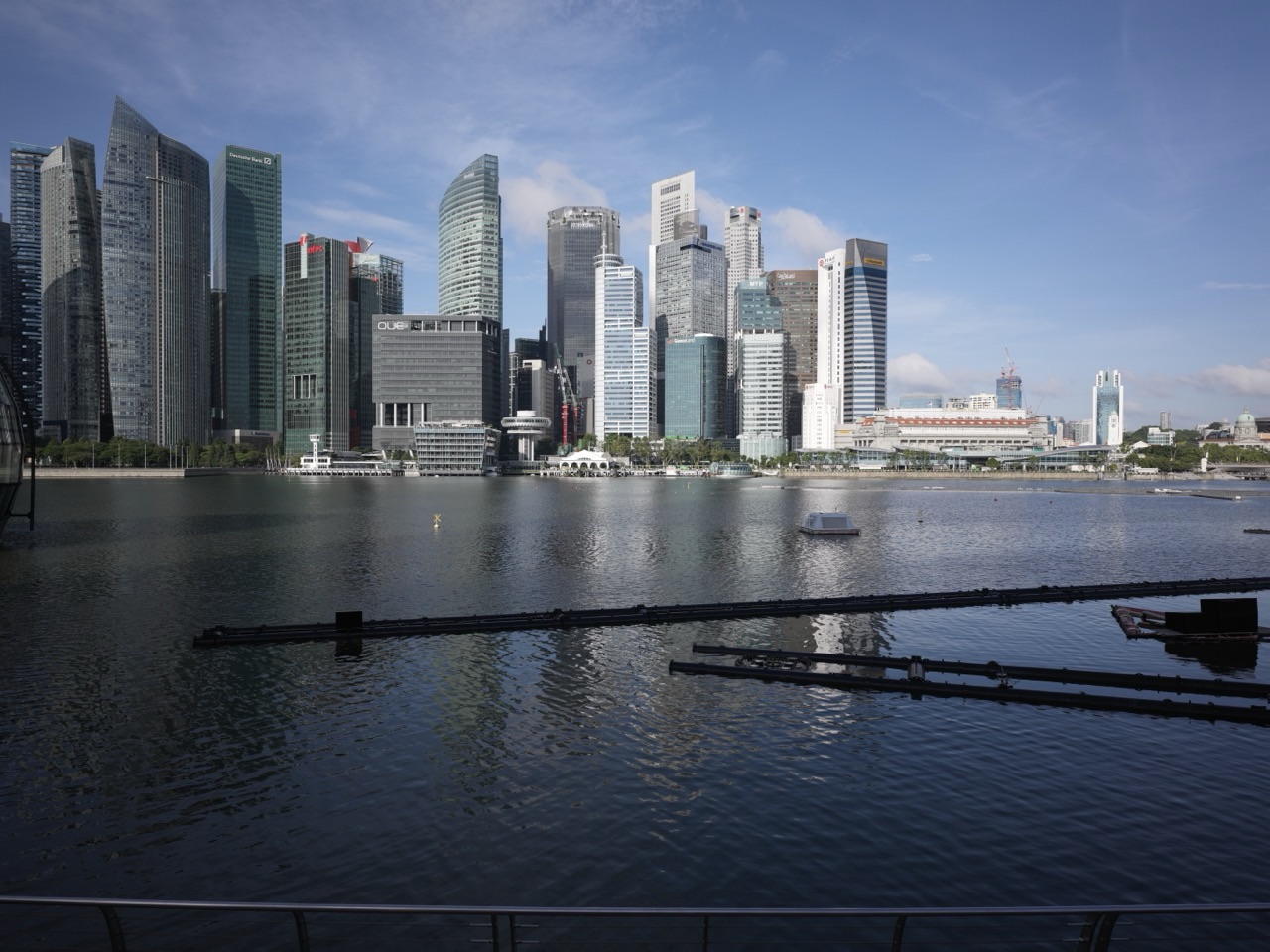
Why Singaporeans love Downtown Core is not explained by tall buildings alone. The more interesting story is what happens between them: a person finding the right station exit, a family stepping into a gallery, an office worker meeting a friend, or someone pausing where the city opens toward the water. The skyline attracts attention. The ground-level experience gives people reasons to return.
URA’s Downtown Core urban design guide describes a planning area containing several different city settings, including the financial district, City Hall, Bugis and Marina Centre. That variety is important. Downtown Core is not one uniformly commercial block, and it is not a synonym for every place in central Singapore.
This guide explores the area’s appeal without assuming that everybody experiences it in the same way. A person who enjoys a busy city centre may love its concentration of choices. Another may prefer one quieter corner or a short, purposeful visit. Both responses are reasonable. The useful question is how a large central district becomes understandable and usable at the scale of a person.
For families and students, that question opens an enjoyable route into English, Mathematics, design and history. Downtown Core can become a place to practise reading a map, recognising a building’s changing purpose, comparing measurements and supporting an interpretation with evidence. We do not need to turn the city into an examination paper to learn something worthwhile from it.
Explore Singapore’s area-learning guides · Arrange a parent–student consultation with eduKate Singapore
First, Use Downtown Core at the Correct Scale
A planning area, a familiar neighbourhood name and a visitor’s idea of “downtown” need not describe exactly the same territory. This article follows the planning-area framework. Use URA’s planning-area boundaries when geographic precision matters, rather than assuming that a place belongs here because it is near a famous skyline.
Singapore River, Museum, Marina South and Marina East have separate planning-area identities. A walking route may cross from one area to another without announcing the boundary to the walker. There is nothing wrong with enjoying that continuous experience. The mistake would be to turn a pleasant route into an inaccurate map.
For a child, begin with two questions: “What name are we using?” and “What does that name include in this conversation?” The same habit helps when reading a school question. Before gathering details, identify the object being discussed. Many confused answers begin with a perfectly sensible observation about the wrong-sized thing.
The First Reason: Different Purposes Can Fit into One City Visit
Imagine a parent and teenager planning an afternoon. One wants to see an exhibition; the other is interested in architecture. They also need a meal and an uncomplicated journey home. Their problem is not to find the most famous building. It is to arrange several ordinary needs into a visit that both can enjoy.
That is a useful way to think about a mixed city centre. Different activities need not belong to separate worlds. A cultural destination, a commercial building and a public route can contribute to the same outing without performing the same function. The enjoyment comes partly from being able to move between experiences.
Do not confuse variety with a requirement to do everything. A district with many choices is most useful when a person can select among them. One gallery and a short walk may be enough. The family who leaves with energy and a good conversation has not failed because another attraction remained unvisited.
The Second Reason: Historic Buildings Remain Part of Present-Day Life
National Gallery Singapore occupies the former Supreme Court and City Hall buildings. Its architecture and history account explains the work that connected and adapted them for their present purpose. This gives Downtown Core a particularly clear example of a building retaining historical significance while supporting a different contemporary use.
The interesting question is not simply whether the building is old. Ask what has continued and what has changed. The façade may be part of the historical identity, while circulation, display spaces and the visitor experience must answer a different set of needs. Preservation and reuse become more understandable when students look for specific decisions instead of using “heritage” as a decorative adjective.
Try a two-column exercise. In the first column, write features whose historical role is explained by an official label or source. In the second, record features that help the building function for visitors now. Leave uncertain items unclassified until they can be checked. This is more useful than confidently assigning a date to every attractive doorway.
There is also a human reason this kind of place can matter. A building is easier to encounter repeatedly when it has a usable present-day role. People may arrive for art and leave curious about architecture, or arrive for architecture and discover a work they want to understand. One form of interest can introduce another.
The Third Reason: Art Gives the Centre More Than a Commercial Identity
National Gallery’s programme information includes exhibitions and self-guided experiences. Nearby city-centre cultural choices also include Esplanade, whose programme spans music, dance, theatre and other arts. Check the relevant venue for the current event, access conditions and admission arrangements; a building’s public presence does not make every programme freely accessible.
For a learner, an arts visit can begin with looking or listening rather than knowing the correct terminology. Ask what the student notices first. Then ask which detail supports that response. The sequence matters: observation gives the discussion something to work with, and explanation helps the student move beyond “nice” or “boring”.
A disagreement can be productive. One person may respond to a colour; another to a figure’s position or a change in rhythm. They do not need identical preferences. They do need to distinguish personal response from a factual claim about the artist, work or historical context.
This makes the city centre useful beyond sightseeing. It can become a setting in which people practise giving reasons without demanding agreement. A family can enjoy a work, remain puzzled by it, or decide it is not to their taste while still paying careful attention.
The Fourth Reason: The Spaces Between Buildings Matter
URA’s current Downtown Core guidance addresses pedestrian connections at street, underground and elevated levels, along with public spaces and links between developments. These are planning and design provisions, not a guarantee that every route will be open or obstruction-free on a particular day. See the connectivity and public-space sections for the intended framework.
Now consider the experience from a walker’s perspective. Two buildings can be close on a map and still feel awkward to move between. The missing element might be a crossing, a clearly marked connection or an entrance that faces a different direction. A small interruption can change whether the journey feels straightforward.
This is why the most useful detail in a city photograph may not be the tallest object. Look at where people enter, where they wait, and whether one public space leads naturally toward another. A doorway, a sheltered edge or a well-placed sign can make a large district easier to understand.
For students, draw the route as a chain rather than a straight line: station exit, crossing, entrance, lift, destination. Ask where a first-time visitor might become uncertain. The exercise reveals that access is a sequence of usable connections, not merely the existence of a place somewhere nearby.
The Fifth Reason: Public Enjoyment Does Not Require Owning the Skyline
A person can enjoy the shape of the city without occupying a high-rise apartment or entering a private office. That distinction is worth making when children encounter expensive-looking surroundings. Looking, learning and appreciating are not the same activity as purchasing.
Plan a visit around the parts that genuinely serve your purpose. A public route, a chosen cultural space and a conversation may matter more than an expensive package. Equally, a ticketed experience may be worthwhile for a particular family. The point is to choose deliberately rather than assume that the district demands a certain level of spending.
Respect the boundary between a public invitation and a private interior. An attractive lobby is not automatically a visitor attraction; an office corridor is not a shortcut merely because it appears on a photograph. Follow signs and staff directions, and use a venue’s own information to establish where visitors are welcome.
The Sixth Reason: The Centre Has More Than One Daily Rhythm
Imagine three people using the same street: someone arriving for work, someone meeting a friend after an exhibition, and someone responsible for servicing a building. They are looking for different things. One needs a predictable route, another a comfortable meeting point, and the third a practical way to complete a task.
This thought experiment helps explain why a city centre cannot be designed or understood from one photograph alone. A place that looks calm in a weekend image may be used differently at another time. A visitor’s pleasant pause and a worker’s daily journey can coexist, but they should not be treated as identical experiences.
For a family visit, choose the timing around the activity and the people attending. Check the actual programme rather than assuming that an evening is automatically quieter or that a public venue follows office hours. The best timing is conditional: it depends on the destination, the event and the visitor’s needs.
The Seventh Reason: The City Makes Different Kinds of Work Thinkable
Downtown Core can prompt a useful career conversation, provided it does not become a lesson in judging people by buildings, clothes or assumed income. Ask what work is required to make a gallery, office, theatre or transport connection function. Keep the question about tasks and capabilities rather than status.
A hypothetical exhibition, for example, needs more than the finished display. Someone must organise information, communicate with visitors, maintain the space and check that the intended experience is usable. A performance similarly invites questions about preparation, coordination and the work that continues outside the spotlight.
These examples can help a student connect school subjects with kinds of activity without promising a particular career outcome. Clear writing helps explain an idea. Mathematics helps compare quantities. Scientific reasoning helps test a claim. The arts offer ways to communicate and interpret. A subject becomes more interesting when the learner can imagine a meaningful use for it.
A Family Visit Built Around One Clear Question
Choose one of the following formats. These are suggested learning approaches, not a promise that every facility, exhibition or connecting route is available on the day. Check official visitor information, allow for weather and access needs, and keep an easy stopping point in the plan.
The Civic District format: how can a building change its job?
Use a visit to National Gallery Singapore as the main focus. Begin with its official building information, then look for one historical feature and one present-day visitor function. Discuss why the two do not need to cancel each other out. A short, well-understood visit is more useful than collecting building names without noticing how the spaces work.
The city-space format: what makes a route understandable?
Choose a short public route between two confirmed destinations. Have the student mark the turns, crossings and changes of level. At the end, ask them to write directions for someone who has never been there. Then identify any instruction that depends on a vague phrase such as “over there” or “the usual exit”.
The arts format: how do we support an interpretation?
Select one current exhibition, artwork or performance appropriate to the student. Agree in advance that the goal is careful attention, not automatic enjoyment. Afterwards, ask each person for one response and one supporting detail. Look up contextual information only after establishing what was actually observed or heard.
Accessibility Is a Route Question, Not a General Compliment
National Gallery’s accessibility guide identifies its Coleman Street entrance and explains an accessible approach from City Hall MRT via the Art Connector. It also describes facilities and practical limitations within the building. This kind of destination-specific information is more useful than a broad statement that the entire downtown area is easy for everyone.
When planning for a wheelchair, stroller or a person who tires easily, follow the whole chain. How do you leave the station? Is there a crossing? Where is the appropriate entrance? Is the lift the one that serves the intended floor? Does the visitor need a rest before the next segment? A single missing step can change the usefulness of an otherwise attractive plan.
Do not treat an access requirement as an inconvenience added after the itinerary is complete. Begin with it. The route is a design problem whose conditions include the people taking part. That is a practical lesson in inclusion, and it makes the resulting plan more honest.
Worked Mathematics: Building Footprint Is Not Total Floor Area
This is a simplified invented example, not the specification of a Downtown Core building or a development proposal. Suppose a site covers 2,000 square metres. A building occupies 60% of that site at ground level. Its footprint is therefore 0.60 × 2,000 = 1,200 square metres, leaving 800 square metres outside the footprint in this simplified diagram.
Now suppose the model contains twenty identical floor plates of 1,200 square metres each. Their combined area is 20 × 1,200 = 24,000 square metres. The site area, footprint and sum of floor-plate areas answer different questions. They should not be swapped simply because they all use square metres.
Introduce one refinement. Suppose only 75% of each model floor plate is assigned to the activity being studied, with the rest reserved for other functions. The relevant activity area becomes 0.75 × 24,000 = 18,000 square metres. State the assumption; do not label it as an actual building’s usable area.
Finally, ask what the calculation does not establish. It tells us nothing by itself about capacity at entrances, lift waiting, fire safety, daylight, cost or how pleasant the space is to use. More area does not automatically answer every design question. The lesson is to use a measurement for the job it can perform, then identify the additional information required.
Worked Data Reading: Visits Are Not the Same as Visitors
Imagine a counter records 300 entries into a public exhibition over an afternoon. A student writes, “Three hundred different people attended.” Is that conclusion justified? Not yet. The counter may include people who left and returned. It may count entries rather than unique individuals.
In a second invented dataset, suppose 240 people each entered once and 30 other people each entered twice. The number of entries is 240 + 2 × 30 = 300. The number of different people is 240 + 30 = 270. Both totals are correct, but their labels must remain attached.
This is a useful city-reading habit. Before reacting to a large number, ask what was counted, over what period and with what exclusions. A photograph of a crowd cannot supply those missing definitions. Neither can an attractive chart whose heading has been ignored.
For schoolwork, the same discipline applies to survey respondents, purchases, passengers and repeated attempts at a task. Begin with the unit of counting. An answer becomes much clearer when the student can finish the sentence: “This number measures…”
Worked English: Explain a Contrast Instead of Listing Adjectives
Consider an invented draft sentence: “Downtown was beautiful, amazing, modern and historic.” It contains several positive words, but the reader cannot yet see the relationship between them. The student has named impressions without developing an explanation.
A stronger exercise would ask for a specific contrast: “In the imagined scene, the low building’s repeated columns drew the eye along the pavement, while the tower behind it pulled the view upward.” This sentence is not a report of a visit. It demonstrates how selected detail can make a contrast visible.
For a factual piece, the student should work from actual notes and verified building information. Then add an explanation of why the contrast matters to the question. Perhaps it concerns human scale, changing use or the relationship between an older structure and a newer surrounding. The explanation must earn its place; it should not simply repeat the description using larger words.
Useful vocabulary includes “façade”, “entrance”, “concourse”, “precinct”, “public space”, “adaptation” and “connection”. Ask the student to use only the terms they can explain. Precision is not achieved by making every sentence sound technical. It comes from choosing the word that identifies the actual feature or relationship.
A Science-and-Design Question: What Makes a Space Comfortable?
Suppose a student prefers one sheltered resting point to another. Rather than immediately announcing that its design is better, list the possible influences: shade, air movement, crowding, noise, seating and the length of time already spent walking. The preference is real, but its cause still needs investigation.
A simple observation sheet can record the conditions at two safe public locations. Keep the visit time and the observer as consistent as possible, and state any differences that could affect the comparison. Without suitable measurements and repeated observations, avoid invented temperature or noise figures.
The value of the exercise is in the question design. “I preferred this spot during our visit” is a personal report. “This feature caused the difference” is a stronger claim that needs stronger evidence. A student who understands that distinction is learning how to move from an impression toward a testable explanation.
Downtown Core’s Learning Theme: Many Parts Need a Clear Structure
The common thread is not simply complexity. It is complexity made understandable. A large building needs usable entrances. A route needs a readable sequence. A historical account needs a timeline. A calculation needs correctly labelled quantities. Having many parts is not the same as arranging them so a person can use them.
That is a helpful model for school learning. A student may have accumulated notes from many chapters but still struggle to decide which idea belongs in a new question. The next step is not necessarily another pile of notes. It may be a clearer map of the relationships among the ideas already learned.
Ask the learner to explain a topic in three layers: the central question, the main relationships and one worked example. If the example does not connect with the central question, inspect that gap. This is a suggested teaching method, not a claim that every topic or learner should be forced into an identical worksheet.
A Small Follow-Up That Makes the Visit Useful
After the outing, choose one task. A younger child might draw the route and label three places. An older student might explain how a building’s purpose changed or correct the entries-versus-visitors calculation. The task should be small enough that it preserves the pleasure of the visit rather than turning the evening into an endurance exercise.
Ask for one revision after feedback. Perhaps the route needs a clearer starting point, the paragraph needs a source, or the calculation needs units. A visible improvement is more useful than an adult replacing the entire response with a polished answer the student cannot explain.
Later, change the setting. Can the student apply the same distinction between footprint and floor area to an invented school building? Can they write directions to a different venue? Transfer is the point: the city provides the example, but the reasoning should remain usable after the visit is over.
Keep Time, Spending and Attention in Proportion
Time: plan the whole visit, including entry, rest and the journey home. A series of short-looking activities can become tiring when the connections between them are ignored. Make the optional stop genuinely optional.
Spending: choose an experience for its relevance, not because the surroundings make it feel compulsory. Check ticket conditions directly. A free public space and a paid exhibition answer different needs; neither automatically guarantees a meaningful visit.
Attention: fewer well-noticed details can produce a better conversation than a long list of hurried stops. Leave the phone aside when practical, but use it when it helps verify a fact or find the correct entrance. The tool should serve the visit rather than replace it.
How eduKate Connects an Outing with More Precise Learning
A place-based activity can reveal useful questions, but it should not be used to diagnose a student from one afternoon. Compare any concern with repeated patterns in schoolwork. Does the learner regularly confuse quantities, omit the condition in a question, or offer opinions without supporting details?
eduKateSG’s small-group tutorials are limited to three students and run for 1.5 hours weekly, with materials and guided corrections. Within that format, the tutor can inspect how a learner interprets a question, not just whether the final answer matches. A reading difficulty and a calculation difficulty require different responses.
The centre described here is at 8 Fourth Avenue, near Sixth Avenue MRT, by appointment. This article does not advertise an eduKate branch inside Downtown Core. Families should consider the actual journey and the learning need. Students who are progressing confidently and independently do not automatically need additional tuition.
Our small-group Mathematics teaching explanation describes how we distinguish foundation repair, stabilisation and extension. The same principle of identifying the exact need is more helpful than treating every student’s uncertainty as a demand for more worksheets.
Continue Through the eduKate Ecosystem
History of Singapore | Downtown Core · Fun Facts About Singapore | Downtown Core · 55-Area Learning & Tuition Hub
Frequently Asked Questions About Downtown Core
Is Downtown Core just another name for the CBD?
Not exactly. Downtown Core is a planning-area name, while CBD describes a central business district. URA’s guide includes cultural and other precincts as well as the commercial core. Use the appropriate definition for the question instead of assuming that familiar city labels have identical boundaries.
Does everything around Marina Bay belong to Downtown Core?
No. The wider bay experience and the planning-area map are different ways of describing the city. Consult URA’s boundary information when classifying a particular location. A view across the water can include several areas without making them one planning area.
Why might a family enjoy the area without shopping?
A visit can focus on a building, a public route, art or an observation exercise. Choose the destination around a question the family finds interesting. Shopping is one possible activity, not a requirement for understanding or enjoying a city centre.
Is National Gallery Singapore the same as the National Museum?
No. This guide refers specifically to National Gallery Singapore in the former Supreme Court and City Hall buildings. Use the venue’s full name and official directions when arranging a visit. Similar-sounding institutional names should not be used interchangeably.
Can we assume all downtown connections are step-free?
No. Check the exact route and destination. National Gallery’s accessibility information is an example of the detail that helps: entrance, approach, lifts and facilities. A general description of an area as connected is not a substitute for checking the sequence a particular visitor needs.
What is a useful first question for younger children?
Ask how they know where to enter a building or which way to turn. Let them point to a sign or a visible feature and explain it in their own words. Start with something concrete before asking for an abstract explanation about the whole city.
What can secondary students learn here?
They can practise comparing different measures, reading the scope of a claim, explaining adaptive reuse and supporting an interpretation. The worked examples in this guide are hypothetical and should remain labelled as such. They demonstrate reasoning, not actual building statistics or visitor counts.
Does every arts visit need to produce a positive reaction?
No. A thoughtful response can include uncertainty or dislike. Ask the learner to explain the response using a detail from the work, and distinguish personal preference from factual claims about the artist. Careful attention is the goal; identical taste is not.
Follow the Question Through the eduKate Reading Network
For the longer city-centre timeline, read History of Singapore | Downtown Core. For shorter discovery points, use Fun Facts About Singapore | Downtown Core. For closer locality portraits, continue to City Hall, Tanjong Pagar or Bugis.
The closer views do not replace the wider map. They let a reader change scale deliberately: from the planning area to a recognisable precinct, then to a particular building or activity. Use the Singapore Area Learning Article Index to continue that exploration without confusing neighbouring places.
Sources and Visitor Checks
Planning and geography: URA Downtown Core urban design guide and planning-area boundaries. Architecture: National Gallery’s architecture and history. Visit planning: Gallery programmes, Gallery accessibility and Esplanade.
References were checked for this October 2026 edition. Current venue notices govern opening, admission and access. All numerical models and imagined scenes in the learning sections are illustrative, not surveyed local data or accounts of visits undertaken by the author.
The Skyline Is the Introduction, Not the Whole Story
Downtown Core becomes more interesting when we ask how people use it. The memorable building matters, but so does the entrance. The exhibition matters, but so does the conversation it starts. The connection matters, but so does whether the person following it understands the next step.
That is the appeal explored here: a centre with many possible experiences, made meaningful through particular visits. For a student, the lasting discovery may be that a complex place becomes easier to understand when its relationships are made clear. It is a useful thought to carry from the city back into the classroom.
Arrange a Parent–Student Consultation
Bring recent marked work and explain what the student finds difficult. A useful consultation starts with the actual question, the student’s reasoning and the point where understanding becomes uncertain.
Contact eduKate Singapore · Chat on WhatsApp
eduKateSG
8 Fourth Avenue, Singapore 268674
Near Sixth Avenue MRT
Maximum three students per group · 1.5-hour weekly tutorials
By appointment