
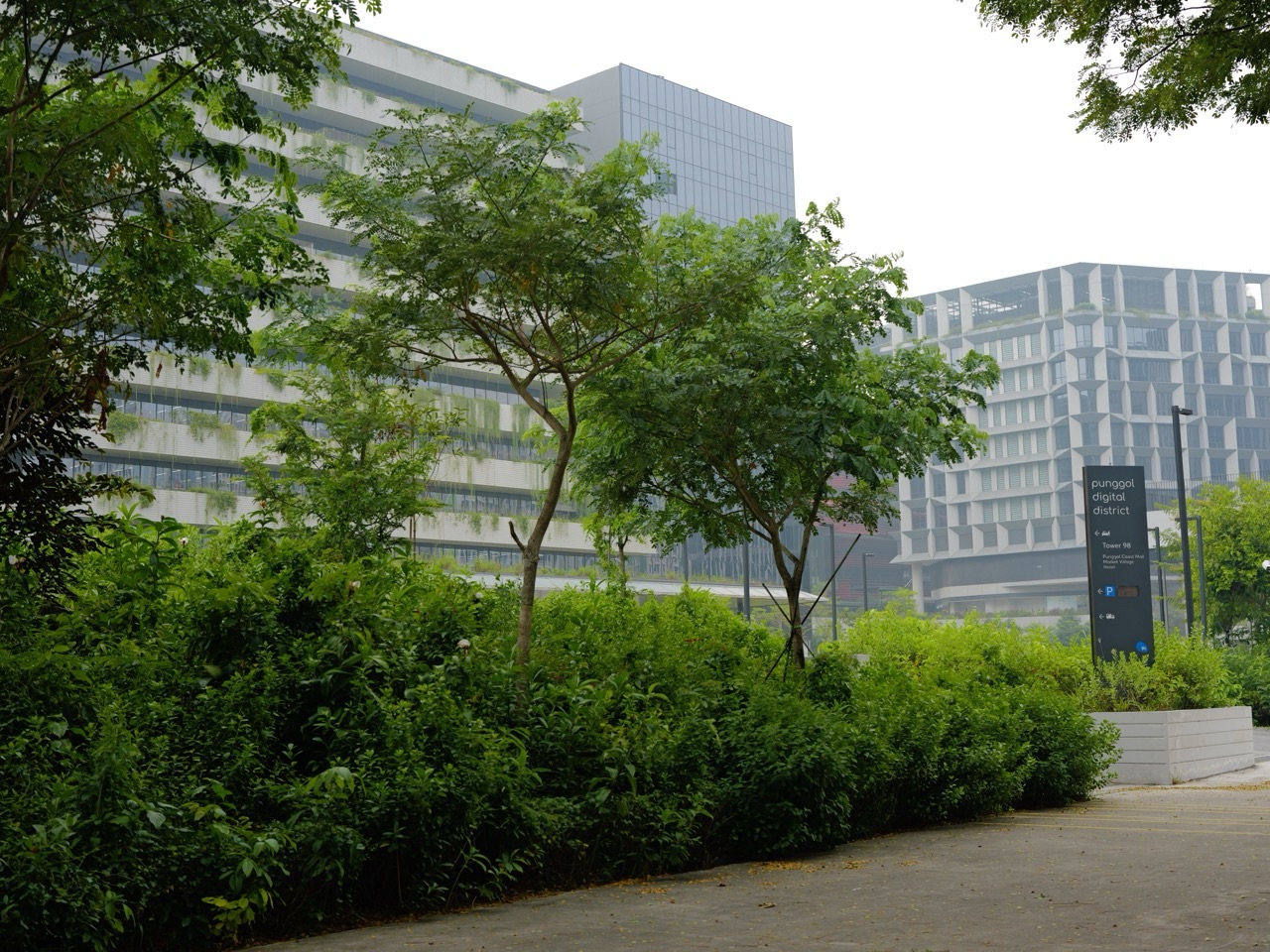
Education for Punggol is entering a rather interesting moment: students are learning about AI at school while a real digital district beside Singapore Institute of Technology is preparing to test robots in everyday spaces. MOE says it is enhancing Code for Fun to strengthen students’ AI skills and that the refreshed programme will be available to all schools in 2027. Separately, JTC, IMDA and SIT announced plans in May 2026 for a real-world robotics testbed at Punggol Digital District.
Did you know that writing a prompt for a chatbot, programming a robot and checking whether an AI-generated answer is true are three different skills? A child who can make a device move is learning control and logic. A child who checks a chatbot’s claim is learning judgment. A child who can explain why a robot must slow down near pedestrians is thinking about safety, design and people. Punggol’s story is interesting because all three ideas now have local examples.
This quick guide explains what already exists in October 2026, what MOE has promised for 2027, how Punggol families can connect learning to their neighbourhood, and which impressive-looking claims still need verification. It does not promise school visits to restricted labs or suggest that every child will learn the same software.
Updated: 24 October 2026. For: Punggol primary and secondary families, teachers and parents planning digital literacy activities from now through the 2027 school year.
Jump to: The essentials · 2027 at school · Punggol Digital District · Ideas to try · FAQs · Sources.
The short answer: what is changing for pupils?
- Now, in 2026: AI literacy is already part of Singapore’s educational technology and cyber wellness efforts, and Code for Fun already introduces many students to computational thinking and emerging technologies.
- 2027: MOE’s announced enhancement of Code for Fun is intended to strengthen AI skills and be made available to all schools. That does not mean all levels at every school receive an identical module at an identical time.
- Primary school example: Punggol View Primary School describes its Primary 6 Code for Fun programme on an official page updated in August 2026, including computational thinking, robot coding, basic AI benefits and risks, and cybersecurity.
- Additional opportunities: IMDA has separately described optional AI for Fun modules that schools may apply to offer. They are not the same as saying every student automatically takes every AI module.
- In the neighbourhood: Punggol Digital District hosts SIT, technology companies and infrastructure for applied research. A robotics testbed was planned for a later-2026 launch, with safety and operational arrangements to be tested.
- Still not automatic: an MOE lesson does not guarantee a visit to a university lab, a commercial robot trial or a student’s entry to SIT.
The difference between available to all schools and compulsory for every child is worth keeping clear. MOE’s 2027 policy is a national programme-availability statement. Your child’s school is responsible for the specific level, timetable and teaching arrangements it communicates to families.
The learning progression: coding, AI and good judgment
1. Computational thinking: tell the machine precisely what to do
A robot cannot sensibly follow ‘go to the right place’ without instructions that identify the goal and how to get there. A learner might instead give a sequence: move three units, turn left, stop before the marked boundary. When the route fails, the learner changes one instruction and tries again. That is the habit behind computational thinking: break a problem into steps, test them and correct errors.
Punggol View Primary’s published description places these ideas within its Primary 6 Code for Fun activities. It is a specific local example, not a claim that every Punggol primary school uses the same level or timetable.
2. AI literacy: ask where the answer came from
Generative AI can produce a confident paragraph containing a false name, an invented date or a convincing but nonexistent source. A student therefore needs more than a cleverly worded prompt. They need the habit of checking claims against reliable evidence. MOE says cyber wellness lessons have been updated to cover checking generative-AI output and identifying deepfakes.
A strong household rule is easy to remember: use AI to raise possibilities; use trustworthy sources to settle important facts. For an exam regulation, a school deadline or a public safety rule, the final check belongs to an official source. For a creative writing exercise, a chatbot can be treated as a brainstorming partner, provided the student still does the real thinking and writing.
3. AI ethics: decide when a tool should not be used
Should a student upload a classmate’s photograph, health information or private conversation to an unfamiliar AI service to ‘see what happens’? No. Curiosity still needs boundaries. Parents can discuss consent, personal information, respectful sharing, fairness and how systems may inherit biases from training data. These are part of being a capable user, not reasons to be frightened of technology.
Did you know that an impressive generated image can be a poor source of evidence? In a neighbourhood where new buildings, robots and future facilities attract public interest, an AI-generated picture of a school or a future campus must not be mistaken for a photograph of something operating today.
What Punggol Digital District adds to the story
JTC describes Punggol Digital District as a 50-hectare area integrating the Singapore Institute of Technology campus with companies working in digital fields such as AI, cybersecurity and robotics. SIT’s Punggol campus is a working university designed around applied learning, industry collaborations and community facilities. For school-aged children, it offers a very visible reminder that education continues beyond PSLE, SEC and secondary school.
In a press release dated 20 May 2026, JTC said IMDA, JTC and SIT would work with eight industry partners on a multi-operator robotics testbed, planned to launch later in 2026. Possible uses include deliveries, security patrols and cleaning. Those are announced test activities, not proof that a child visiting today will see any particular robot on the path. An October 2026 update should still distinguish the published plan from a confirmed live deployment.
This makes a good science question: if a delivery robot meets a pedestrian at a narrow crossing, what must it detect, and what should its safety rule be? A thoughtful student may propose a camera or another sensor, lower speed, a stop condition and a human fallback. That answer is more meaningful than simply declaring robots ‘the future’.
SIT’s own campus information identifies certain publicly accessible areas, including spaces around Campus Boulevard and community amenities, while academic and other university facilities have access rules. Parents should check current visiting arrangements and never assume a robotics laboratory is a public attraction. Public transport access via Punggol Coast MRT provides a starting point for an authorised visit, not a reservation.
Three easy home or neighbourhood activities
Try this in ten minutes: train a ‘human robot’
Use paper arrows to create a safe imaginary route across your living room. One person acts as a robot and may follow only the exact instructions given. If an instruction is ambiguous, they stop. Then switch roles. Ask: ‘Which instruction caused the problem?’ This introduces debugging without a screen or software subscription.
Try this after reading a school announcement: check a claim
Write down one verifiable statement such as ‘MOE is updating Code for Fun for 2027.’ Ask a child to find the original MOE announcement and identify its date. Then compare it with a sentence that goes too far, such as ‘Every student will have a robotics lesson every Friday.’ Which sentence is actually supported? The contrast teaches responsible research and careful reading.
Try this while visiting an authorised public space: observe a system
In a public, accessible part of Punggol Digital District, ask: ‘How does this place help people move, wait, save energy or find information?’ Children may notice walkways, signs, lighting, traffic signals or a facility that uses sensors. They can sketch a design improvement and explain its trade-offs. Do not enter restricted areas, photograph private spaces or interfere with working equipment.
For a deeper local view of the university and career ecosystem, read the site’s existing Punggol Digital District school-subjects and career-pathways guide. This article has a different purpose: the precise 2027 AI-education change and habits primary and secondary pupils can practise.
What should parents ask the school in 2027?
- Which cohort? Ask whether the updated Code for Fun experience is scheduled for your child’s level in 2027.
- Which learning outcomes? Are students expected to explain an algorithm, recognise unreliable AI content, build a simple project or reflect on ethical concerns?
- Which tools? Find out what accounts or devices are provided and the school’s guidance for responsible use. Do not purchase software merely because a news report mentions AI.
- Which assessment? Is success seen in a demonstration, explanation, group project or reflection, rather than in the number of prompts a pupil can type?
- What safety safeguards? Ask about personal data, generated images, fairness and where to report harmful or misleading content.
- Any local visit? Only a school or organiser’s confirmed programme makes a site visit real. A nearby university and a national initiative do not create automatic entry.
Quick questions for Punggol families
Will all Punggol students study AI in 2027?
MOE says the enhanced Code for Fun programme will be available to all schools in 2027, while AI literacy and cyber wellness are being strengthened across education. A child’s specific activities depend on level and school scheduling; the announcement does not promise a uniform course for every pupil.
Is AI for Fun identical to Code for Fun?
They are related but not identical. IMDA’s AI for Fun modules describe additional hands-on AI learning that eligible schools may choose to offer; the 2027 updated Code for Fun is the broader MOE programme announcement.
Is the Punggol robotics testbed already running in October 2026?
The government and industry partners announced plans to launch a testbed later in 2026. Check JTC/IMDA’s current dated updates for the operational status of specific trials; do not assume the May press release proves a robot is running on a particular route today.
Can a family freely tour SIT teaching labs?
No unrestricted access is implied. SIT lists certain public areas, but laboratories, classes and campus facilities have their own access conditions. Follow official event or visitor instructions.
What is the most valuable 2027 AI skill?
There is no single magic app to master. The enduring combination is reasoning, checking evidence, computational thinking, collaboration and responsible use. A young learner who can explain why an answer might be wrong is developing a skill that stays useful even when the technology changes.
Official sources and local references
- MOE Committee of Supply 2026: AI literacy and Code for Fun updates for 2027
- IMDA: Code for Fun and AI for Fun programme descriptions
- Punggol View Primary: Primary 6 Code for Fun programme, updated August 2026
- JTC 20 May 2026: planned Punggol robotics testbed
- JTC: official Punggol Digital District overview
- SIT: Punggol campus public-access information
- eduKateSG: Punggol school subjects and digital careers
Updated 24 October 2026. Proposed trials, school timetables and student opportunities can change. This is an education explainer, not a claim of access to SIT laboratories, a guaranteed AI module, or a current robotics-trial schedule.