
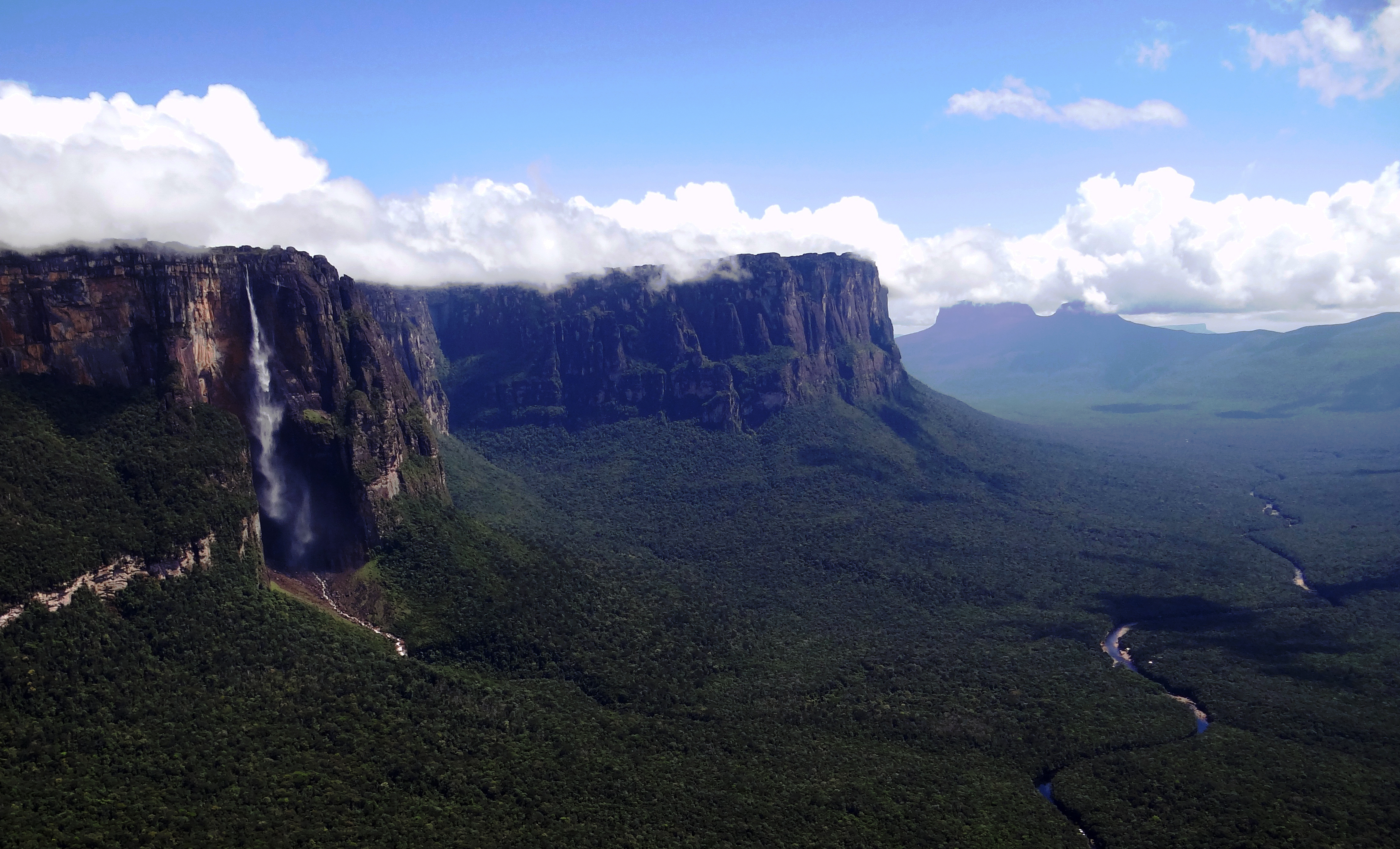
Where is Venezuela, what is Venezuela famous for, and why does a country with enormous oil reserves face economic difficulties? Venezuela is a South American country on the Caribbean Sea and Atlantic Ocean, with Caracas as its capital. It borders Colombia, Brazil and Guyana. Venezuela is known for spectacular Angel Falls (Salto Ángel), flat-topped tepui mountains, the vast Orinoco River basin, the northern Andes, Caribbean coastlines, distinctive music, baseball, arepas and other foods, and some of the world’s largest proven petroleum reserves. Yet the reserves alone cannot explain the fortunes of ordinary Venezuelan families. Oil infrastructure, institutions, public spending, inflation, jobs, trade, healthcare, education and migration all matter.
Everything about Venezuela in one reader-first guide: the country combines extraordinary geographic and cultural diversity with a changing political and economic situation in 2026. Nicolás Maduro was captured in a United States military operation in January 2026, and Delcy Rodríguez is Venezuela’s acting president in October 2026. Negotiations about a future election and institutional reforms are ongoing, without an announced election date as of 20 October. New oil agreements and proposed investment are significant developments, not guarantees that production and household incomes have already recovered. Severe earthquakes on 24 June 2026 created further humanitarian, school and infrastructure needs. This article separates enduring facts from dated developments and provides links to primary sources and eduKateSG’s more detailed Venezuela guides.
Venezuela at a glance: quick answers to common questions
- Official name: Bolivarian Republic of Venezuela (República Bolivariana de Venezuela).
- Continent: South America.
- Where is it? Northern South America, between Colombia, Brazil and Guyana, with Caribbean and Atlantic coasts.
- Capital: Caracas.
- Area: UN Data lists a surface area of about 929,690 square kilometres; other country references may use slightly different land or sovereignty definitions.
- Population: the United Nations’ 2025 estimate is about 28.5 million; not a verified live count for October 2026.
- Language: Spanish is the national official language; indigenous languages are also recognised for their peoples under the constitutional framework.
- Currency: Venezuelan bolívar, alongside widespread use of US-dollar pricing and payments in parts of the economy; payment conditions vary.
- Time zone: UTC−04:00, Venezuela Standard Time.
- Political leadership as of 21 October 2026: Delcy Rodríguez serves as acting president following the January US military capture of Nicolás Maduro. A future electoral timetable remains under discussion.
- Territorial units: 23 states, the Capital District and federal dependencies, with municipalities and other local administrations.
- Independence history: the declaration of independence dates to 5 July 1811; the long war for independence involved further major events.
- Why is it famous? Angel Falls, Canaima, Caribbean landscapes, the Andes, Orinoco, Lake Maracaibo, petroleum, music, food and baseball.
- World Heritage: three UNESCO-inscribed properties: Canaima National Park; Coro and its Port; Ciudad Universitaria de Caracas.
- Major export resource: crude petroleum; reserves and annual output are different measures.
- Major 2026 events: political leadership transition, renewed oil agreements, political talks, and devastating earthquakes in June.
- Most useful way to understand Venezuela: connect oil income, currency, institutions, services, labour, migration and local geography rather than treating one headline as the entire country.
The figures above should be read with sources and dates. UN Data identifies the country and 2025 demographic reference; UNFPA’s population profile provides an independent display of its 2025 estimate; UNESCO records the three World Heritage properties. Reuters’ 14 October 2026 report and 17 October energy report provide dated accounts of current political and industrial developments.
1. Where exactly is Venezuela on a map of South America?
Look toward the northern edge of South America. Venezuela’s Caribbean shoreline faces island countries and maritime routes, while its land boundaries meet Colombia to the west and southwest, Brazil to the south, and Guyana to the east. Its territory encompasses a coastal and mountain north, the great Orinoco river system, grassy plains known as llanos and ancient highland landscapes to the southeast.
The country is much more geographically varied than an image of one waterfall or one Caracas avenue suggests. Families in coastal cities, cattle-farming plains, river towns, highland communities and remote forest areas may experience very different transport, weather, incomes and access to public services. A national average can conceal those differences.
Is Venezuela in Central America or South America?
South America. It has close historic and commercial ties to the Caribbean region, but that relationship does not move it into Central America. Depending on whether a writer is discussing trade, maritime culture or continental geography, both ‘Caribbean’ and ‘South American’ can be useful descriptions of Venezuela. They answer different questions.
Does Venezuela border the Caribbean Sea?
Yes. Venezuela has an extensive Caribbean coastline as well as Atlantic-facing territory, creating relationships involving ports, fishing, tourism, offshore energy and maritime trade. However, being close to Caribbean islands does not mean every island is accessible on the same ferry or under the same visa rules. Verify specific routes and official current conditions.
Where is the capital Caracas?
Caracas lies in a northern mountain valley near the coast. Its metropolitan economy, transport and national institutions make it an important urban centre. A capital is not the whole country: public services, employment and landscapes may differ markedly across states and local communities. For a useful comparison, follow an individual household’s journey to work or school rather than assuming one skyline describes national living conditions.
What is the Essequibo dispute with Guyana?
Venezuela and Guyana have a longstanding territorial dispute over the Essequibo region west of the Essequibo River. Guyana administers most of the territory and relies on the 1899 boundary award, while Venezuela contests the award’s validity. The matter is before the International Court of Justice. In June 2026 Guyana said the parties’ submissions and oral hearings had concluded and that a final judgment was awaited, without a confirmed date at that time. Guyana’s June 2026 statement describes its position and the procedural stage; Venezuela’s claims are disputed and must not be silently presented as settled sovereignty.
A careful atlas keeps the difference clear between territory controlled and administered, territory claimed, and the issue before an international court. Diplomatic tensions or maps used by political actors do not erase the need to describe the dispute explicitly.
2. What are the Andes, the llanos and the Guiana Highlands?
Venezuela’s northwest includes the Venezuelan Andes, a continuation of the great South American mountain system. Much of the central country includes grassland plains and associated river environments. The southeast reaches the ancient Guiana Shield, with extraordinary flat-topped sandstone mountains called tepuis. These regions differ in geology, climate, land use and ecosystems.
Physical geography helps explain the practical map. Mountains can constrain roads and generate cooler climates at elevation. Plains may support livestock and agriculture yet experience seasonal flooding. The Guiana Shield contains remote forests, rivers and ecologically distinctive habitats, but extensive terrain does not mean easy transport or unrestricted extractive use.
What is a tepui?
A tepui is a striking table-top mountain or plateau, often with steep cliffs, associated especially with the Guiana Highlands. Tepuis have isolated summit environments and specialised ecology. Indigenous peoples, including Pemón communities, also have longstanding relationships and knowledge connected with these landscapes. The UNESCO description of Canaima National Park discusses the plateau systems and natural significance.
Why are tepui summits different from the forest below?
Differences in elevation, rock, soil, exposure and isolation create distinct habitats. Some plants and animals have limited geographic ranges and may be highly vulnerable to disturbance. A landscape is therefore not one continuous ecosystem just because it lies within one national park. Conservation must consider upper plateaus, cliffs, river basins and people living in or around the park.
What are the llanos?
The llanos are broad tropical grasslands and floodplain landscapes extending across parts of Venezuela and Colombia. They are associated with cattle-raising, river environments, seasonal changes and distinctive music and cultural traditions. They cannot be described as permanently dry or permanently flooded: the wet and dry seasons can make the same area look very different.
Does Venezuela have deserts, beaches and mountains?
Yes. There are arid areas and dunes in parts of the north, Caribbean beaches and coastal landscapes, and high mountain environments inland. Their climates and visitor demands differ. A single photograph showing a waterfall cannot represent the entire nation’s environment, and a favourable season in one region does not guarantee the same elsewhere.
3. Why is Angel Falls so famous, and is it the world’s tallest waterfall?
Angel Falls, called Salto Ángel and also known through Pemón names including Kerepakupai Vená, is widely recognised as the world’s tallest waterfall, with a total drop of about 979 metres. It falls from the Auyán-tepui highland in the Canaima area, with one major uninterrupted plunge and other portions of its total descent. It is in a region with exceptional geology, forests and river systems. See UNESCO’s Canaima documentary description and Venezuela’s Inparques description.
The statistic should be read carefully: a ‘tallest waterfall’ claim uses a height measure. Other waterfalls may rank differently by width, volume or combined curtain size. The drop can appear very different with seasonal water flow or cloud cover. A scenic photograph from a particular date is not a forecast of what visitors will see.
Is Angel Falls taller than Niagara Falls?
In total height, yes, by a wide margin. But Niagara and Angel Falls are different kinds of waterfalls, and comparisons of width or flow tell different stories. A useful geographic lesson is to define the measurement before saying which natural feature is ‘bigger’.
Who discovered Angel Falls?
Local indigenous communities knew these landscapes long before outside expeditions and aviation became part of their international fame. The English name commemorates aviator Jimmie Angel, but that naming history should not be misrepresented as the first human knowledge of the waterfall. Asking who ‘discovered’ a place can obscure the people who had lived with and understood it for generations.
Why is Canaima National Park important?
Canaima National Park is a UNESCO World Heritage natural property inscribed in 1994. It protects large Guiana Shield highland landscapes with tepuis, waterfalls and ecologically valuable forests and waterways. It covers about three million hectares under UNESCO’s property record. Protecting the area means caring for rivers, habitats, landscape integrity and the rights and knowledge of local communities, not only providing access to a famous viewpoint.
Worked example: reading a photograph of Angel Falls correctly
Imagine two photographs of the same cliff, one taken during high water and another in a drier period. The waterfall can look immensely different. Before accusing a photographer of exaggeration or a guide of misleading visitors, check the season, view angle, date and flow conditions. This is a hypothetical comparison that shows why place photographs should be paired with precise metadata.
4. What are Venezuela’s three UNESCO World Heritage properties?
Venezuela has three inscribed World Heritage properties under UNESCO’s October 2026 register: two cultural and one natural. These represent different dimensions of its national heritage. There are other important historic cities, archaeological remains and national parks, but they should not be counted as additional UNESCO inscriptions unless the official register includes them.
- Coro and its Port (1993, cultural): historic urban architecture and Caribbean colonial-era building traditions, incorporating indigenous and European influences in construction materials and design.
- Canaima National Park (1994, natural): Guiana Highlands tepuis, waterfalls, habitats and major natural processes.
- Ciudad Universitaria de Caracas (2000, cultural): a major modernist university campus and integrated architectural and artistic design.
The complete list comes from UNESCO World Heritage: Venezuela. Coro and its Port has been on the List of World Heritage in Danger due to identified conservation issues. This does not mean it has been removed from the World Heritage List; the categories are distinct.
What makes Coro historically important?
Coro’s streets and structures reflect a long history of Caribbean contact and building traditions. Materials, roof shapes, courtyards and urban form can teach readers about climate, trade and cultural exchange. Conservation requires maintenance and protection of authentic historic fabric. Simply repainting a façade does not resolve structural moisture or land-use problems.
What is Ciudad Universitaria de Caracas?
It is the university complex associated with architect Carlos Raúl Villanueva and the integration of modern architecture with art, landscape and urban space. The UNESCO listing recognises the campus as a significant example of twentieth-century design. It shows that World Heritage is not limited to medieval castles or ancient temples: modern institutions and architectural ideas can also be globally significant.
How should UNESCO status be interpreted?
Inscription recognises a property’s outstanding universal value. It does not establish that every part is accessible, safely maintained or open to tourists on a given date. A Tentative List is not the same as inscription; a conservation report is not necessarily a final removal decision. Read the formal UNESCO state-of-conservation documentation where a maintenance claim matters.
5. What is the history of Venezuela, from indigenous peoples to the 2026 transition?
Venezuela’s history reaches well before Spanish rule. Indigenous societies developed communities, trade, environmental knowledge and cultural systems across coastal, river, plain and highland regions. Spanish imperial conquest and colonisation brought major political, religious, demographic and economic changes, including violence, forced labour and displacement. Wars of independence reshaped sovereignty in the nineteenth century. Petroleum transformed the twentieth-century economy, while democracy, military rule, political competition and economic crisis created distinct chapters.
- Before European colonisation: Indigenous communities had established languages, livelihoods, trade and cultural traditions across the territory.
- Colonial period: Spanish rule created new institutions and commercial networks amid resistance, enslavement, coercion and major social changes.
- 5 July 1811: a declaration of independence from Spain, followed by years of war and changing political control.
- 1810s–1820s: independence campaigns involving figures including Simón Bolívar contributed to wider northern South American transformations.
- 1830: Venezuela emerged as a separate republic after the breakup of Gran Colombia.
- Early twentieth century: large-scale oil development increasingly shaped the economy, government revenues and international relationships.
- 1958: the end of Marcos Pérez Jiménez’s military dictatorship opened a new phase of civilian political government.
- Late twentieth century: oil revenues, social inequality, public-sector politics and economic pressures shaped policy.
- 1998–1999: Hugo Chávez won the presidency and oversaw the adoption of the 1999 constitution and the Bolivarian political project.
- 2013: Nicolás Maduro became president after Chávez’s death.
- 2010s–2020s: severe economic contraction, inflation, migration and disputes over electoral legitimacy and human rights affected society.
- 2024: the presidential election outcome was strongly contested; the opposition pointed to precinct-level tallies while authorities proclaimed Maduro the winner, and international observers raised serious transparency concerns.
- January 2026: a US military operation captured Maduro, resulting in his removal from effective power; the legality and broader consequences of that operation remain matters of significant international debate.
- October 2026: Acting President Delcy Rodríguez is governing amid talks on future elections, institutional reforms and energy-sector agreements; no date for the next presidential election has been confirmed.
A timeline gives structure, but it is not a single verdict about what everyone believes. Venezuelans have different political views and experiences. Historical analysis should distinguish the actions of leaders, constitutional rules, testimony from people affected, human-rights reports and the outcomes of institutions.
Who was Simón Bolívar?
Bolívar was a leading figure in independence struggles across northern South America. His name appears in the official ‘Bolivarian Republic’ and in later political symbolism. He was a historical individual whose actions belong to the complex independence era, not an explanation for every modern Venezuelan government decision. Studying him also involves the broader contributions of other leaders, soldiers, women, communities and political movements.
Why did oil change Venezuela’s history?
Oil exports became an exceptionally important source of government finance and foreign exchange. They supported investment and development but also exposed the economy to commodity price fluctuations and institutional choices about spending. Once a country relies heavily on one source of outside earnings, a decline in that revenue can put pressure on imports, public services and budgets. Oil can help finance prosperity; oil itself is not a complete social system.
Why was the 2024 presidential election disputed?
The election was contested over access, transparency, the publication of verifiable voting data and the treatment of the opposition. Authorities declared Maduro the winner, while opponents presented voting records indicating a different result, and international observers questioned whether the official outcome had been demonstrated transparently. A careful account distinguishes the election authority’s proclamation from independent verification and does not turn the dispute into a casual claim about all voters.
What happened to Maduro in January 2026?
US forces captured Nicolás Maduro in a military operation in Caracas. He was subsequently held in the United States and faced criminal proceedings, with a revised indictment in October 2026 containing allegations he denied. The allegations are not established findings of guilt. The operation’s legality and implications for Venezuelan sovereignty are disputed. The Associated Press October court report describes the current criminal proceedings and legal arguments.
Who is governing Venezuela now?
Delcy Rodríguez is acting president as of October 2026. Her brother Jorge Rodríguez heads the National Assembly and has participated in talks on institutional changes. The government and political opposition have discussed future elections and reforms to the electoral authority and courts, with no confirmed election date. Reuters reported both the continuing dialogue and the removal of US sanctions on Jorge Rodríguez on 14 October 2026. A government promise to hold elections should not be written as if a vote has already been called, contested and certified.
How can elections and institutions be evaluated fairly?
Ask about voter registration, political participation, freedom of campaigning, neutral election administration, access to observers, credible published results and the ability to challenge wrongdoing. Different political actors may disagree on how to reach these conditions. Reporting should identify which changes were actually enacted, which remain proposals and what independent evidence is available.
6. How does Venezuela’s government and territorial administration work?
Venezuela’s constitutional system includes a presidency, a National Assembly, courts, electoral institutions, ministries and state and municipal authorities. It comprises 23 states plus the Capital District and federal dependencies, with municipalities and other local responsibilities. In practice, government services depend on legal authority, budgets, staffing, infrastructure and whether people can obtain reliable information about the appropriate office.
As of October 2026, Delcy Rodríguez serves as acting president following Maduro’s January capture. The National Assembly is headed by Jorge Rodríguez. Talks have included possible electoral-authority and judicial reforms and a future presidential election, but a date has not been set. That difference matters: an election pledge is not the same as an officially called election, a credible voting process or the publication of a certified result. Reuters’ September reporting and October talks coverage document the stage reached.
Do the 23 states have the same economies?
No. Zulia has a major historical petroleum relationship and cities around Lake Maracaibo. Bolívar encompasses huge parts of the Guiana Highlands, extractive activities and major natural landscapes. Mérida contains Andean highlands and university life. Different geography, populations and resources create different public-service demands. The fact that two regions have the same legal status as states does not make their roads, job markets or schools identical.
What do municipalities actually provide?
Local services can involve urban maintenance, permits, neighbourhood infrastructure, records and other defined responsibilities. But legal authority and practical delivery should be checked for the issue at hand. A national infrastructure announcement does not establish which local office repairs a broken water pipe. A useful question follows the chain from responsible agency to available budget, staff, repair and the resident who receives the service.
Worked example: a damaged street after heavy rain
Imagine residents report a collapsed drain and unsafe road surface. Officials must establish which agency owns the road, inspect the hazards, arrange safety notices, finance repair work and verify that travel is safe afterwards. This hypothetical example shows why good public administration means outcomes, not simply memorising the names of institutions. The companion How Venezuela Works | Government, Oil, Inflation and Everyday Life explores the governmental system in greater depth.
7. Why does Venezuela have so much oil?
Venezuela contains some of the world’s largest proven petroleum reserves, particularly in the Orinoco Oil Belt. Large geological resources made oil central to exports, external trade and government finance, but reserves are not the same as current production. Much Orinoco crude is extra-heavy and requires specialised equipment, suitable transport arrangements, diluents, processing and refineries capable of handling its characteristics.
The state petroleum company PDVSA is central to the industry. Other producers, service companies, foreign partners, infrastructure operators and regulators play different roles. Production requires people, equipment, electricity, maintenance, working wells and viable contracts. Exporting requires ports, tankers, buyers, licences where relevant and actual shipments. Resources below the ground cannot be converted into public income by an announcement alone.
What is the difference between reserves and production?
Reserves estimate quantities recoverable under specified technical and economic assumptions; production measures the flow of oil actually extracted over a period. A country may have more barrels in the ground and yet produce fewer barrels each day than another country. Oil prices, quality, recovery technology, finance and maintenance affect how much value can be realised.
Why is Orinoco crude harder to handle than light crude?
Extra-heavy oil is relatively viscous and can require greater processing and transport effort. Production systems need appropriate engineering, energy inputs and treatment. The final economic benefit depends on costs, safety, environmental management and the usable refined products, not only the geological volume in place.
What changed in the oil sector in October 2026?
On 17 October, Reuters reported that acting president Delcy Rodríguez outlined expectations of nearly US$76 billion of oil investment over five years, tied to new commercial arrangements and proposed drilling. This is a forward-looking investment expectation, not evidence that the full amount has already been deployed or that every planned rig is operating. The reported recovery in Zulia’s oil output concerns that particular state and should not be confused with the nationwide production total. Read the 17 October Reuters report.
On 20 October US Secretary of State Marco Rubio discussed encouraging India’s Reliance Industries to refine more Venezuelan crude and potentially produce oil in Venezuela. The word ‘potentially’ matters: political encouragement, investment decisions, licences and actual production are different stages. Reuters documented the visit and discussion.
How could oil revenue affect a school?
An oil producer sells crude, covers business costs and fulfils contractual and fiscal obligations. Some public income may be budgeted for teachers, buildings, materials or support services. The desired outcome is an actual working classroom, not merely an oil sale or announced expenditure. Rules, transparency, purchasing, staffing and maintenance all affect whether national wealth reaches a student. This is a hypothetical simplified revenue chain, not a description of a particular payment.
Why can an oil-rich country still have poverty?
A large resource stock is only one asset. Severe economic disruption, falling production, mismanagement, price changes, inflation, institutional problems, sanctions, uneven income distribution and service failures can all affect households. The causes have changed over time and are debated, so single-factor explanations are unreliable. See Why Venezuela Has So Much Oil but Economic Problems for the dedicated article.
8. What is Venezuela’s currency, and why are US dollars used?
The Venezuelan bolívar is the country’s national currency. US-dollar prices and payments have also been widely used in parts of the economy following years of severe inflation and currency instability. This does not automatically make Venezuela a country that uses the US dollar as its only official national currency. The accepted payment method, exchange rate, fees and legal conditions depend on the transaction and date.
A country’s monetary arrangements influence household budgets but do not alone explain jobs, production or service quality. A shop displaying a price in dollars may offer greater clarity about the requested amount, but a person earning little income may still struggle to afford the product. Likewise, re-denominating banknotes does not by itself increase the number of goods on supermarket shelves.
What does inflation mean?
Inflation measures the increase in the price level over a period. When prices change very quickly, budgeting and saving become difficult. Venezuela’s earlier hyperinflation harmed the purchasing power of incomes and savings, contributing to the appeal of foreign-currency pricing. An improved inflation figure must be linked to a particular month and measurement method. Slower increases do not mean prices have gone back to their old values.
Worked example: why both currency and rate matter
Imagine two sellers offering an identical item, one pricing it in US dollars and the other in bolívares. Comparing them requires an exchange rate actually available to the buyer, plus transaction fees and payment restrictions. A rate shown in an old screenshot might not be usable at a current shop. This example intentionally supplies no invented live exchange rate; the principle is to compare effective amounts at the same moment.
Why is ‘dollarisation’ not a complete solution?
Using dollar prices can reduce some uncertainty, but it does not create electricity, qualified teachers or a safe road. People paid in bolívares may face currency-conversion costs, and people paid in dollars can still struggle if wages are low. A country needs productive businesses, reliable institutions and accessible public services alongside stable monetary practices. Read Why Venezuela Uses US Dollars | Bolívar and Inflation Explained for more detail.
9. What else does Venezuela produce besides petroleum?
Venezuela’s economy also includes farming, fishing, trade, manufacturing, construction, transport, professional services, commerce and other activities. Cacao and coffee production have important histories, while rice, maize, sugarcane, bananas and other crops occur in various regions. Cattle-raising is associated with some llanos landscapes. Agricultural viability depends on rainfall, soil, roads, energy, labour, storage and markets.
It is a mistake to assume every Venezuelan either works in oil or relies directly on a state oil payment. Many families run businesses or work in retail, education, health, construction, transport and other occupations. Their success may depend more immediately on electricity, customers, legal certainty and local roads than on a global oil-price headline.
Why do cocoa and coffee matter?
They can connect regional agriculture to domestic food culture and international value chains. However, harvesting a high-quality crop is only the first stage. Drying, grading, processing, packaging, transport and selling determine how much of the final price returns to a farmer. A famous national ingredient is not necessarily a guarantee of high household income.
How can factories restart after difficult years?
A functioning factory needs skilled workers, reliable machinery, replacement parts, electricity, inputs, financing and paying customers. Signing a new investment agreement can help, but a facility damaged by years of underinvestment may require significant time to reach predictable production. Real progress should be measured in safely delivered products, jobs and sustainable business activity, rather than promises alone.
What role do sanctions play?
Economic and financial sanctions can affect business relationships, banking and particular transactions depending on the terms of the measures. They interact with many domestic factors rather than explaining all problems on their own. The United States lifted sanctions on Jorge Rodríguez in October 2026, but a change affecting one individual does not mean every petroleum or financial restriction has disappeared. A business needs current legal advice for any particular transaction.
10. Why have millions of Venezuelans left the country?
Venezuelan movement abroad has been influenced by economic collapse, limited incomes, difficulties accessing basic services, political pressure, safety concerns and individual family choices. Experiences differ. People have moved across Latin America and the Caribbean and to other parts of the world. Some have been recognised as refugees, others have sought asylum, and many hold other immigration statuses.
A joint UNHCR–IOM regional platform called R4V helps document the situation. UNHCR reported more than 7.9 million Venezuelan refugees and migrants worldwide at the end of 2024, including about 6.7 million in Latin America and the Caribbean. That is a dated estimate of people abroad, not the number who departed in one year or a verified live count for October 2026. UNHCR’s Venezuela situation summary gives definitions and context.
Is a migrant the same as a refugee?
No. International protection, asylum recognition, residency status and work permission are distinct legal matters. Statistics should explain which population is included and how it was counted. A person may also change status over time. The terms should be used carefully rather than treated as interchangeable labels for all Venezuelans abroad.
Will all emigrants return after a change of government?
That is not known, and decisions are personal. Return may depend on safety, housing, work, education, recognition of qualifications, family ties and health needs. The prospect of political change may create hope without making every environment immediately suitable for resettlement. A guide should not presume what any family ought to do.
Why can money sent home be important?
Remittances may help relatives afford groceries, medicines, rent, school fees and transport. But the sender needs a stable income, payment services must work and costs and conversion rates matter. Remittances are valuable for some households without replacing the country’s broader responsibility for working public services.
Worked example: a child transferring between countries
Imagine a pupil moving with family to another country after interrupted schooling. The new school needs grade history, subjects, records and language information, and the child needs a realistic learning assessment. A label such as Grade 6 does not prove the same maths and reading topics have been taught in both systems. Targeting the real gaps is more effective than assigning undifferentiated worksheets. This is an illustrative case rather than a real child’s history.
11. What happened in the June 2026 Venezuela earthquakes?
On 24 June 2026, Venezuela experienced two major earthquakes, reported by UNICEF as magnitudes 7.2 and 7.5 within about a minute. Northern coastal communities, including places in La Guaira state, suffered severe damage. UNICEF’s report dated 27–28 June estimated that 1.8 million people, including 680,000 children, needed humanitarian assistance following the earthquakes. Preliminary satellite assessment found damage to nearly one-third of buildings in an assessed worst-hit part of Catia La Mar. These are early emergency findings, not definitive October national totals. UNICEF’s earthquake response report is the source.
A natural event becomes a humanitarian disaster through the effects on housing, hospitals, schools, roads, water and income. A building may remain standing yet become unsafe. A school can be temporarily unusable even if children are willing to attend. Medical supplies may exist elsewhere but be unable to reach a damaged clinic. Recovering from the shock involves several systems acting together.
Why can an earthquake disrupt drinking water?
Pipelines, pumping stations, storage tanks and power lines may be damaged. Even where a spring or reservoir continues to exist, safe water may not reach a household. Emergency supply needs testing, distribution and maintenance. Health protection also depends on sanitation and hygiene.
Why can early disaster figures change?
Rapid assessments may use incomplete reports, field visits or satellite images. Later inspections can discover previously inaccessible damage or clarify which buildings require repair. Comparing two different assessments requires knowing the dates, boundaries and methods. It is misleading to quote a preliminary percentage for Catia La Mar as if it represented all of Venezuela.
Worked example: restoring a school after a disaster
Imagine an earthquake damages a school building while the teachers and pupils are safe. Recovery may involve structural inspections, a temporary learning site, safe toilets and water, materials, transport and student records. Reopening a wall or a gate is not the same as restoring regular education. This hypothetical example shows why education belongs in disaster planning.
12. How do electricity, water and healthcare affect daily life?
Energy, drinking water and healthcare are different services but depend on one another. An electricity outage can stop a water pump or refrigerating medicine. A water outage can make infection prevention and sanitation much harder at a clinic. A damaged bridge can prevent healthcare workers, food and repair crews from reaching communities. The success of a national infrastructure project is ultimately measured by the services residents receive.
Venezuela has major hydroelectric infrastructure, including facilities associated with the Caroní River, alongside thermal generation and other sources. Energy production, transmission and distribution must be maintained for dependable service. Access problems may vary by location; a national megawatt number cannot tell us whether one home had uninterrupted electricity this week.
How can a reservoir produce electricity?
Hydropower uses flowing water to turn turbines that drive generators. But the plant needs suitable water levels, maintained equipment and functioning transmission lines. Water also has other roles in ecosystems and downstream communities. Good analysis weighs energy benefits, maintenance and environmental consequences together.
Why is safe tap water more than a pipe?
Safe drinking water requires suitable sources, treatment, monitoring, storage, pumps, functioning networks and equitable access. A connection can exist even if delivery is intermittent. Reliability, affordability and quality should be measured separately. The same applies to sewerage: a pipe installed is not evidence that waste is safely treated.
What does a functioning clinic need?
Qualified professionals, supplies, infection prevention, records, electricity, clean water, transport and appropriate referrals. The availability of medicines or specialised services may differ by location. People considering treatment should consult qualified healthcare staff, not assume that a country-wide article can answer an individual medical decision.
What did UNICEF report about Venezuelan education and health access?
UNICEF’s end-2025 humanitarian report, published in January 2026, estimated major education and health-related needs, including children out of school. The report’s figures are tied to that assessment and should not be presented as a current count for an individual city in October 2026. Its findings reinforce the need to measure actual access and learning, not only announced school programmes.
13. How does Venezuela’s education system work?
Venezuela’s education framework connects early childhood learning, primary schooling, general and technical secondary education, occupational training and university degrees. Primary education is ordinarily structured around six grades. Secondary pathways lead to a bachiller qualification or appropriate technical awards, with different requirements for further education and employment. A school certificate has its own awarding authority, subjects and documentary requirements; it should not be treated as interchangeable with every similarly named award from another country.
School access and learning quality are separate questions. A child can be formally enrolled but attend irregularly due to transport, family income, teacher availability or a damaged building. Another can attend regularly yet struggle because earlier concepts were not mastered. The UNESCO and national policy framework describes intentions and rights; measured student experiences show how fully they are realised.
The comprehensive eduKateSG article Understanding the Education System of Venezuela
What did UNICEF report for Venezuelan pupils?
UNICEF’s year-end 2025 humanitarian situation report, published in January 2026, estimated that around 1.5 million children were out of school and that about 2.7 million required educational support. It also described major learning gaps and barriers involving poverty, documentation, disability and rural access. These are findings from a defined reporting period, not proof that all Venezuelan schools have identical conditions in October 2026. UNICEF’s report provides the dated evidence.
What is the bachiller qualification?
A bachiller title is associated with completion of a recognised secondary pathway. Its exact conditions, school records and further-study uses depend on the applicable programme and awarding authority. For university admission, an institution may need a certified transcript, proof of completion, programme-specific assessments and other documents. A claim that a foreign certificate is automatically accepted everywhere should not be made without verifying the receiving institution’s rules.
What can a family do when schooling has been interrupted?
Start by identifying which learning has been completed and which records are available. Check basic literacy and numeracy, the language of instruction and the exact subject sequence before placing a student into a new grade or exam programme. Targeted catch-up learning can restore skills, but official recognition of education is a separate administrative process.
Why is learning a mathematics concept more important than copying a procedure?
A pupil may memorise that an unknown should be ‘moved to the other side’ without understanding why an equation remains balanced. Asking the student to explain an operation, check it by substitution and apply it to a new problem tests whether understanding is durable. This method applies to classroom learning across countries: first locate the actual unstable step, then practise that skill and gradually increase complexity.
How did the June earthquakes affect education?
School buildings, transport routes, water and family circumstances can all be disrupted after a disaster. UNICEF reported damaged schools in its June 2026 response, while the detailed extent of damage required continued assessment. Reopening education involves safe premises, teachers, materials, records and ways for children to attend, not only announcing that lessons should resume.
Worked example: restoring learning after moving cities
Suppose a family moves from a damaged coastal district to another city. A child’s prior school may have incomplete records, and the next school may be teaching a topic sequence at a different pace. Teachers should determine what the pupil knows, identify missing lessons, coordinate records and choose attainable next steps. This fictional example shows how humanitarian response, administration and educational practice intersect.
14. How do Venezuelan cities and ports connect people to the economy?
Caracas is a major political, commercial and cultural centre. Maracaibo is closely associated with the Lake Maracaibo region, including the petroleum industry and its historic urban economy. Valencia, Barquisimeto, Maracay, Puerto La Cruz, Ciudad Guayana and other cities have distinct industrial, port, trading and regional roles. Their circumstances differ; a city with an oil facility may also have schools, shops and thousands of people whose work has no direct connection with extraction.
Ports, road networks, airports and other infrastructure link Venezuela to the Caribbean, Atlantic trade and neighbouring countries. A port is valuable not merely because ships can approach it, but because cargo can be handled, cleared, insured, stored and transported to businesses and households. A road is useful when it remains passable and safe, not only when a line appears on a map.
Why is Lake Maracaibo significant?
Lake Maracaibo is a large water body and historic centre of oil activity in northwestern Venezuela, linked to the Gulf of Venezuela and wider Caribbean waters. Its surroundings include settlements, industrial facilities and ecosystems. The name ‘lake’ can obscure a complex hydrological and maritime setting with environmental and engineering challenges. Oil activity has economic importance, but water quality and fishing livelihoods also matter.
What is Ciudad Guayana?
Ciudad Guayana is associated with industrial and urban development near the meeting of the Orinoco and Caroní Rivers. It illustrates how water, energy, transport and industry can be planned as interconnected systems. But an industrial zone cannot function well without workers, power, materials and markets. The value of a planned city should be evaluated through actual services and livelihoods.
Why are the Andes important for regional towns?
Mountain settlements and Andean cities have different weather, road conditions and economic activities from tropical coastal areas. Steep terrain can increase travel and construction costs while supporting distinctive agriculture and local cultures. A national transport strategy has to reflect that variety rather than apply the same journey-time assumptions everywhere.
Worked example: one shipment through a Caribbean port
Imagine a clinic needs imported medical equipment. A shipment may travel by sea, pass inspection, move through customs and then use trucks or other transport to reach the clinic. Staff need the training, supplies and electricity to use it. A purchase order alone does not mean treatment becomes available. This hypothetical example makes visible the links from trade to healthcare.
15. What is Venezuelan culture famous for?
Venezuela’s cultural life combines many indigenous, European, African, Caribbean and regional traditions. Music, dance, oral histories, food, baseball and public celebrations are significant, but no single tradition describes every Venezuelan. The llanos are associated with joropo and distinctive musical practices. Coastal and urban communities have additional styles and cultural histories. Family celebrations, craftsmanship and contemporary media continually shape these traditions.
Culture is not separate from geography. Instruments can be made with materials linked to particular environments; food reflects farming and trade; musical gatherings express community relationships. A cultural practice is also a form of knowledge transmitted through teaching, participation and change.
What is joropo?
Joropo is a musical and dance tradition associated especially with Venezuela’s plains and wider llanero cultural world. Performances can involve harp, cuatro, maracas, singing and energetic dance, with regional variation. It is not one fixed recording or identical ceremony everywhere. Learning it involves techniques, rhythm and social context as well as the name.
What is a cuatro?
A small four-stringed instrument associated with Venezuelan music, including joropo and other traditions. It is not exactly the same as every four-stringed guitar-like instrument elsewhere. Construction, tuning and performance technique all matter. Musical instruments make a good educational example because cultural knowledge involves material design and practiced skill.
Why is baseball popular in Venezuela?
Baseball has deep connections to Venezuelan sporting life and has produced internationally prominent professional athletes. Its social role includes local clubs, youth training, families, competition and shared entertainment. Not every citizen plays or follows the sport, just as not every resident of another country shares its dominant sporting interest.
What is the significance of indigenous cultures?
Indigenous communities have longstanding relationships with land, language, rivers and ecological knowledge, including groups such as the Pemón, Warao, Wayuu and Yanomami. Their identities and political concerns cannot be compressed into a tourist advertisement. Protecting languages and culture includes access to services, land and community participation. Environmental projects and resource extraction should take indigenous rights and legitimate local concerns seriously.
16. What food is Venezuela known for?
Arepas are among Venezuela’s most widely recognised foods. They are commonly made using maize-based dough and can be served with varied fillings or accompaniments. Other commonly associated dishes include pabellón criollo, hallacas, cachapas and tequeños, with strong local, household and seasonal variation.
Food tells a wider story about a country. Maize cultivation or imports supply ingredients; mills and shops distribute food; energy makes storage and cooking possible; and family budgets determine affordability. Famous foods are culturally meaningful, but the availability of a dish in a restaurant does not demonstrate that every household can afford a diverse diet.
What is an arepa?
An arepa is a round maize-based preparation that may be split or served with fillings. It is associated with both Venezuela and Colombia, and recipes vary across regions. National pride over a shared food history should not erase the interconnected cultures and agricultural systems of neighbouring countries.
What is pabellón criollo?
Often described as a traditional dish involving rice, black beans, shredded meat and plantain, with many home variations. Its significance lies in household and regional traditions rather than a single compulsory menu. A reader can study the supply chain behind the components as well as the recipe.
What are hallacas?
A festive food commonly associated with the Christmas season, typically involving a maize-based dough and savoury filling wrapped in plantain leaves. Ingredients and preparation differ between households and regions. For some families, the social process of preparing hallacas is as important as the finished meal.
Why does food security matter even in a country with fertile landscapes?
Food can be grown domestically or imported, yet families may still be unable to afford it if incomes collapse or distribution systems fail. Access depends on prices, transport, supply, health needs and resources. The right measure is whether people can obtain appropriate food reliably, not just how many fields can grow crops.
17. Why do Venezuela’s natural ecosystems matter?
Venezuela includes Caribbean coastal habitats, mangroves, savannas, freshwater wetlands, mountain environments and forests on the Guiana Shield. Conservation efforts must address species and ecosystems as well as communities. Mining, land-use change, pollution, climate shifts and unmanaged tourism can create different risks in different places.
Canaima’s tepuis are famous, but other landscapes also provide water catchments, biodiversity, agriculture or fishing livelihoods. The Orinoco River has enormous ecological importance, while coastal environments connect fisheries, ports and settlements. Protecting these systems requires monitoring, enforcement, practical alternatives for local livelihoods and scientific knowledge.
What is the Orinoco River?
The Orinoco is a major South American river with an extensive drainage basin. It supports habitats, transport in certain areas and communities whose livelihoods are tied to the water. Its tributaries connect mountain, forest and plains environments. A river is more than a line on a map: rainfall, water quality, flow and the land around it form a linked system.
What is the Orinoco Mining Arc?
The Orinoco Mining Arc refers to a large mining-development zone south of the Orinoco River that has attracted concern about environmental harm, governance, illegal activities and indigenous rights. Resource policy should distinguish licensed operations, unregulated mining and the experiences of affected people rather than assume all activity is identical. Current security risks are also significant; the UK’s October 2026 travel advisory warns against all travel to this region.
How could damaged forests affect a water system?
Forest cover affects runoff, soil and habitats, although the effects depend on local ecology and landscape conditions. Deforestation and poorly managed mining can increase erosion or contamination risks in some catchments, potentially raising water-treatment costs and affecting fisheries. A solution must follow the actual source of the problem and not assume one national planting campaign will repair every ecosystem.
Worked example: protecting a river while supporting livelihoods
Imagine a community that relies on fishing and nearby small-scale economic activity. Pollution could damage water quality and fish, while suddenly removing all livelihoods without alternatives could harm families. A sound conservation plan needs scientifically credible limits, transparent rules, monitoring and community participation. This is a hypothetical scenario, not an accusation about a named community.
18. What should people know about travelling to Venezuela in 2026?
Venezuela contains culturally and naturally important sites, but current travel conditions warrant serious care. On 14 October 2026, the UK Foreign, Commonwealth & Development Office advised against all travel to Amazonas state, the Orinoco Mining Arc and specified border areas with Colombia, Brazil and Guyana, and against all but essential travel to the rest of Venezuela. This is not a single blanket classification for every region; the precise distinctions and subsequent updates should be checked against the advisory. Read the current FCDO Venezuela guidance and your own government’s information.
Recent earthquakes, infrastructure recovery, changing political arrangements and local security conditions may affect transport, accommodation and emergency services. A UNESCO World Heritage listing or old tourism photograph does not establish that a site can be visited safely, that a guide is licensed or that a road is open.
Why do individual travel activities require separate checks?
Visiting an urban museum, crossing a remote border and attempting a wilderness expedition involve very different risks. Passport and visa rules, local security, transport, health preparation, rescue access and insurance exclusions can all matter. A country atlas cannot issue a safety guarantee or replace current official travel advice.
What is the safer way to study famous places?
Research UNESCO’s property descriptions, museums, reliable historical photographs, scientific work and local cultural voices. The eduKateSG Top 10 Places to Visit When Touring Venezuela is best approached as a heritage reading route, with travel conditions checked independently.
19. How do Venezuela’s whole-country systems fit together?
A family’s experience can connect nearly every chapter in this guide. Imagine one adult works for a small business, another helps care for relatives and a child attends school. Their daily life depends on a reliable money-and-payment system, safe housing, road access, water, electricity, healthcare, schools and the confidence that public rules are understandable. Petroleum revenues and new investment agreements may influence national opportunity, but those benefits become real only when institutions and services work.
An earthquake can break several links simultaneously; a currency shock can alter household purchasing power without changing the contents of a shopping basket; a failed water pump can increase the time spent collecting water and make a school or clinic harder to operate. Similarly, improvements in one system can benefit others: dependable power supports businesses and refrigeration, functioning water protects health, and secure educational records create future pathways.
What can studying Venezuela teach us about how countries work?
Natural resources are important but not sufficient. Economic recovery is important but not automatically evenly distributed. A change of government is historically significant but must be distinguished from effective institutional reform. The real test is what people can do: learn, work, access services, protect their rights and sustain a livelihood. This approach is not uniquely Venezuelan; it is useful for studying any country while respecting its specific history and constraints.
Can Venezuela be compared with Singapore?
Yes, by comparing particular systems rather than treating one country as a model to copy. Venezuela is a geographically large South American country with vast hydrocarbons, river basins and contrasting regions. Singapore is a compact, intensely urban island state reliant on trade, infrastructure and imported resources. Their political histories and public institutions differ. Useful comparisons ask how transport, education, housing, energy, water and governance serve residents. Explore How Singapore Works | Civilisation for its separate case study.
Frequently asked questions about Venezuela
Is Venezuela in North or South America?
Venezuela is in South America. It has Caribbean and Atlantic coastlines and borders Colombia, Brazil and Guyana. Its Caribbean cultural and trade relationships are real, but they do not change its continental location.
What is Venezuela’s capital?
Caracas. It is an important political and economic centre, but not an adequate description of all 23 states and their different landscapes and livelihoods.
How many people live in Venezuela?
The United Nations estimated around 28.5 million for 2025. A population total attributed to 2026 should be presented with its own date and methodology rather than treated as a live census.
What language is spoken in Venezuela?
Spanish is the national official language, with indigenous languages also recognised for indigenous peoples. The linguistic experience of a particular family depends on its community and circumstances.
Who is Venezuela’s president in October 2026?
Delcy Rodríguez is acting president. Nicolás Maduro was captured by US forces in January 2026. Political talks on an electoral timetable and institutional change are continuing, with no confirmed date for a future presidential election as of 20 October.
Is Maduro still in power?
He is no longer exercising presidential authority in Venezuela following his January capture. He has faced criminal proceedings in the United States. Charges are allegations, and the legality of the intervention and future political arrangements are subject to serious debate.
Is Venezuela a democracy?
Its constitution includes representative institutions and elections, but the disputed 2024 vote, human-rights concerns and the ongoing 2026 transition raise major questions about political competition, rights and independent institutions. A careful answer examines these specific facts rather than relying only on a political label.
Does Venezuela have the world’s largest oil reserves?
It is commonly reported as holding among the world’s largest proven petroleum reserves. The comparison requires a reference year and definition. Reserves are not the same as actual production or household wealth.
What is the Orinoco Oil Belt?
A major extra-heavy petroleum-producing region. Its crude requires specialised extraction, processing and transport arrangements; a large volume underground does not mean immediate oil revenue.
Why does Venezuela have economic problems with so much oil?
Resource dependence, production difficulties, institutional problems, inflation, economic policy, sanctions and uneven access to opportunities have played roles across different periods. Natural resources alone do not provide stable prices, jobs or reliable public services.
What currency does Venezuela use?
The Venezuelan bolívar. US dollars are also used or quoted in many transactions, but the exact accepted currency, exchange rate and rules require current verification.
What is hyperinflation?
A period of extremely rapid increases in the price level that can damage the value of incomes and savings. Venezuela has experienced severe inflation and hyperinflation, which affected currency trust and household budgeting.
Is Angel Falls really the tallest waterfall in the world?
It is widely recognised as the world’s tallest by total height, approximately 979 metres. It lies in Canaima National Park, where flow and appearance vary with the season.
What are tepuis?
Flat-topped sandstone mountains or plateaus with steep cliffs, especially prominent in Venezuela’s Guiana Highlands. Their summit ecosystems and cultural significance deserve protection.
What is the Orinoco River?
A major South American river and basin that links varied ecological regions, settlements and livelihoods. It is important to freshwater ecosystems and transportation in some areas.
Does Venezuela have mountains?
Yes, including sections of the Andes in its northwest. It also has coastal mountains, plains, forests, wetlands and tepui highlands.
What is the population of Caracas?
A figure requires a date and a definition of the city, municipality or metropolitan area being counted. National profiles and city planning documents may use different boundaries; do not treat one undated online number as exact.
What are Venezuela’s three UNESCO World Heritage properties?
Canaima National Park, Coro and its Port, and Ciudad Universitaria de Caracas. UNESCO lists two cultural sites and one natural site.
What is the Essequibo dispute?
A territorial dispute with Guyana. Guyana administers the territory and relies on an 1899 boundary award, while Venezuela contests its validity. The matter remains before the International Court of Justice at the October 2026 reference point.
Why did so many Venezuelans leave?
Economic hardship, political pressure, access to public services, safety and family needs have contributed to different migration decisions. UNHCR estimated more than 7.9 million Venezuelan refugees and migrants globally at the end of 2024.
What happened in Venezuela in June 2026?
Two powerful earthquakes struck on 24 June, damaging homes and public infrastructure. UNICEF’s late-June assessment estimated that 1.8 million people, including 680,000 children, needed humanitarian assistance.
What is Venezuela’s most famous food?
Arepas are particularly well known. Other foods include hallacas, pabellón criollo, cachapas and many regional meals, with recipes differing among communities and households.
What is joropo?
A musical and dance tradition associated with Venezuela’s llanos, often performed with harp, cuatro and maracas. Regional styles and practices vary.
Is Venezuela safe to visit in October 2026?
The UK FCDO’s 14 October update advises against all travel to specified regions and against all but essential travel to others. Check the latest official guidance before any travel decision, and do not assume famous natural landmarks are safe to access.
What is the biggest lesson from Venezuela?
A country rich in natural resources still depends on reliable institutions, education, services, productive work, rights and ecological protection. The practical question is whether the systems improve life for ordinary people.
Continue reading: Venezuela’s specialist articles and the country atlas
This is the broad country guide. These existing eduKateSG articles address specialised questions in greater depth without colliding with the present overview.
- How Venezuela Works | Government, Oil, Inflation and Everyday Life — institutions and public-service chains.
- How Venezuela Works | Why Does Venezuela Have So Much Oil but Economic Problems? — the energy economy and resource paradox.
- How Venezuela Works | Why Does Venezuela Use US Dollars? — currency, prices and inflation.
- Understanding the Education System of Venezuela — schooling, certificates, vocational and university study.
- Top 10 Places to Visit When Touring Venezuela — heritage and geography for educational research, with separate safety checks.
- Top 10 Things to Learn When Visiting and Touring Venezuela — focused cultural and landscape learning.
- Everything About Countries — the alphabetical global country-reference archive.
- How Countries Work — the linked systems-focused country series.
- How Singapore Works | Civilisation — the separate Singapore country study.
Sources and dated 2026 evidence
This article is current to 21 October 2026 for the specific developments noted. Population and migration totals are older reference-year estimates, and investment plans are not completed production. The following sources allow readers to trace the original evidence.
- UN Data — Venezuela profile. Area, capital and national demographic indicators.
- UNFPA — 2025 Venezuelan population estimate. A dated demographic figure, not a live census.
- UNESCO — Venezuelan World Heritage properties. Three inscriptions and conservation statuses.
- UNESCO — Canaima National Park. Tepui highlands, ecological value and heritage description.
- UNESCO — Angel Falls and Guiana Highlands. Waterfall dimensions and physical geography.
- Reuters — 23 September 2026 presidential election pledge. Acting presidency and the absence of a fixed election date.
- Reuters — 14 October 2026 political and sanctions developments. Jorge Rodríguez and institutional talks.
- Associated Press — Maduro’s criminal proceedings, October 2026. Procedural facts and denials, not a conviction.
- Reuters — 17 October 2026 oil investment expectations. Proposed future spending and partnerships.
- Reuters — 20 October 2026 Venezuela oil and India. Developing rather than completed commercial plans.
- UNHCR — Venezuela displacement summary. End-2024 migration estimates and definitions.
- UNICEF — Venezuela earthquake assessment, June 2026. Initial children’s humanitarian needs.
- UNICEF — end-2025 education and humanitarian situation. Learning and service-access gaps, published in January 2026.
- Government of Guyana — ICJ dispute update, June 2026. Guyana’s stated position and the ongoing proceedings.
- UK FCDO — Venezuela travel warnings, updated 14 October 2026. Area-specific warnings; advice can change.
- Wikimedia Commons — Angel Falls original photograph, Heribert Dezeo, 2013. The featured image is licensed CC BY-SA 3.0, credited and displayed resized.

Editorial maintenance: keep Everything About Venezuela accurate
Separate permanent geography and long-established heritage from rapidly changing facts. Do not silently carry forward an outdated presidential name, claim an election took place because it was promised, describe a future investment target as money already spent, or present an early post-earthquake estimate as an exact current casualty or damage count. Currency and travel claims need updated evidence; official counts and historical statistics need a reference year.
Preserve the purpose of the country guide: answer questions quickly, explain why the facts are connected and direct specialist questions to the existing companion articles. Venezuela’s story encompasses extraordinary natural landscapes, resources, artistic traditions, historical change and people pursuing everyday lives through difficult conditions. Keeping all those dimensions visible makes the guide useful long after a single headline has faded.