
History of Singapore | 2008 is a close-up history of a year when Singapore opened the Singapore Flyer and Marina Barrage, hosted Formula One’s first night race, received an International Court of Justice judgment on Pedra Branca, experienced the escape of Jemaah Islamiyah detainee Mas Selamat Kastari, and entered the global financial crisis.
2008 is a year of contrasts.
Singapore looked spectacular under Formula One floodlights.
It also looked vulnerable after a detainee escaped from a high-security facility.
The Marina Barrage demonstrated long-term infrastructure planning.
The global financial crisis demonstrated how quickly international shocks could reach the island.
The Pedra Branca judgment closed one long-running sovereignty dispute in a formal international court process.
The Singapore Flyer and Formula One reshaped the international image of Marina Bay.
These are very different stories.
Together they show a country becoming more global while discovering the costs of globalisation, complexity and institutional failure.
For the larger chronology, use History of Singapore | 700 Years of Fully Connected History and the Singapore Atlas. For systems, continue through How Singapore Works.
This page owns 2008.
Why 2008 Matters in Singapore History
2008 is important because several kinds of confidence were tested.
Security confidence was tested by Mas Selamat’s escape.
Diplomatic and legal confidence was tested through the Pedra Branca case.
Economic confidence was tested by the global financial crisis.
Engineering confidence was demonstrated by Marina Barrage and the Singapore Flyer.
Event-hosting confidence was demonstrated by the inaugural Singapore Grand Prix.
Confidence matters because Singapore’s operating model depends heavily on trust.
Investors must trust contracts.
Travellers must trust aviation and security.
Citizens must trust public institutions.
Neighbouring states must trust that agreements and court judgments will be respected.
Visitors must trust that a major event can run safely and reliably.
2008 is therefore not simply a year of landmarks.
It is a year about whether complex systems deserve confidence.
27 February 2008: Mas Selamat Escapes
On 27 February 2008, Jemaah Islamiyah detainee Mas Selamat Kastari escaped from the Whitley Road Detention Centre.
He had been detained under the Internal Security Act.
The escape triggered a massive manhunt and intense public scrutiny.
A Committee of Inquiry was appointed to investigate how the escape happened.
The National Archives record of the 21 April 2008 parliamentary statement summarises the inquiry findings.
The inquiry identified critical lapses including an ungrilled ventilation window, failures by guards to follow procedures and a weakness in the perimeter fencing.
This is historically important because security systems often look strongest before a failure.
The detention centre had walls.
It had guards.
It had procedures.
The failure occurred because several smaller weaknesses aligned.
This is a classic systems problem.
One missing grille may not cause an escape if guards follow procedure.
One procedural lapse may not cause an escape if the physical perimeter is strong.
Several weaknesses combined can create a path through the system.
The correct historical lesson is not that every security system will fail.
It is that reliable systems depend on layers rather than one barrier.
The Escape Changed the Meaning of Security Failure
For Singapore, the escape was especially embarrassing because institutional competence is a major part of the country’s public identity.
That made the incident larger than one escaped detainee.
It raised questions about accountability, complacency, command and control, physical design and emergency response.
Corrective measures followed.
The value of an inquiry is not that it erases the failure.
It converts failure into information.
That information can then improve future design.
This is the same principle that applies to engineering accidents, transport failures and medical errors.
A system becomes more resilient when it learns faster than failures repeat.
Mas Selamat would later be recaptured in Malaysia in 2009 and repatriated to Singapore in 2010.
But 2008 owns the failure that began that later story.
15 April 2008: Singapore Flyer Officially Opens
The Singapore Flyer officially opened on 15 April 2008 after earlier corporate flights and a soft launch.
The Singapore Flyer’s own history records the official opening and its development from the 2005 groundbreaking.
At 165 metres, the wheel became one of the most visible new structures around Marina Bay.
An observation wheel is not essential infrastructure in the same sense as a reservoir or MRT line.
It belongs to another city system: tourism and experience.
Global cities compete not only to move people efficiently.
They compete to give visitors reasons to arrive, stay, spend and remember.
The Flyer turned Singapore’s changing skyline into an attraction itself.
That is interesting because the view from the wheel was also a view of a city still under construction.
Marina Bay Sands was not yet open.
Gardens by the Bay was not yet open.
Marina Barrage would open later in the year.
The Flyer therefore became a platform from which visitors could watch the next version of Singapore being assembled.
23 May 2008: The Pedra Branca Judgment
On 23 May 2008, the International Court of Justice delivered its judgment in the sovereignty dispute concerning Pedra Branca/Pulau Batu Puteh, Middle Rocks and South Ledge.
The official ICJ release carried by Singapore’s Ministry of Foreign Affairs recorded the outcome.
The Court found that sovereignty over Pedra Branca belonged to Singapore.
Sovereignty over Middle Rocks belonged to Malaysia.
South Ledge would belong to the state in whose territorial waters it was located.
Both Singapore and Malaysia accepted the judgment.
This is an important example of international law resolving a bilateral territorial dispute.
The history of Pedra Branca reaches back much further than 2008.
The island sits near the eastern entrance of the Singapore Strait.
Horsburgh Lighthouse was constructed there in the nineteenth century.
The sovereignty dispute crystallised in the late twentieth century and was jointly submitted to the ICJ by Malaysia and Singapore in 2003.
2008 therefore owns the judgment, not the whole dispute.
This distinction prevents the annual article from swallowing the longer maritime and diplomatic history.
Pedra Branca Shows Why Maps Are Political Documents
A tiny rock can carry large legal meaning.
Territory determines which state exercises sovereignty.
Sovereignty affects territorial waters and maritime jurisdiction.
Lighthouses, navigation, charts and administrative acts can become evidence in territorial disputes.
Students often see maps as neutral pictures.
They are not always neutral.
A boundary line can represent law, history and competing claims.
The Pedra Branca case is therefore useful for teaching the difference between geography and jurisdiction.
Where a rock sits is geography.
Which state has sovereignty over it is a legal and historical question.
2008 made that difference unusually visible.
28 September 2008: The First Formula One Night Race
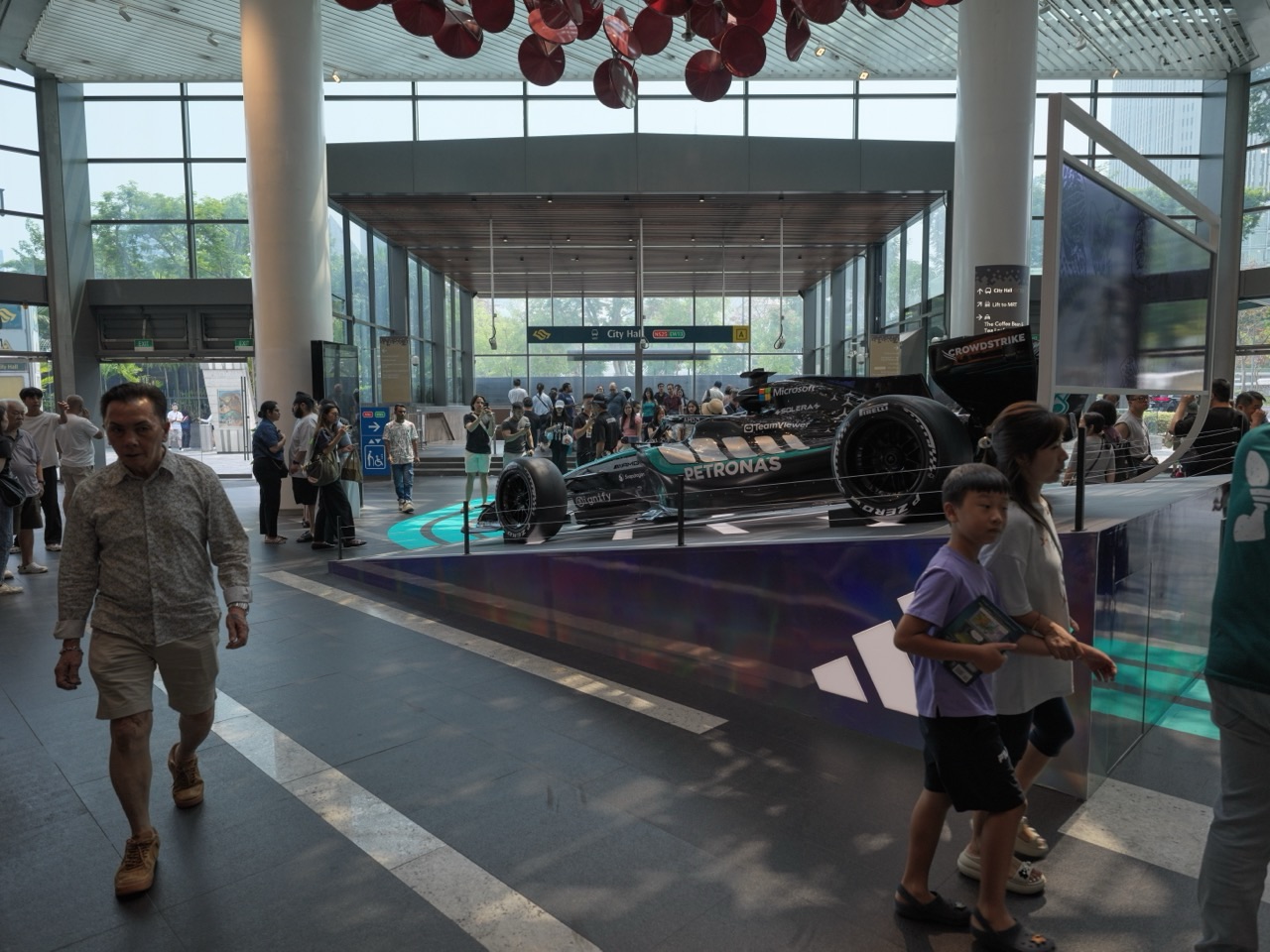
On 28 September 2008, Singapore hosted its inaugural Formula One Grand Prix.
The official Singapore Grand Prix record describes it as the first night race in Formula One history and the first Formula One street race in Asia.
The event took place on public roads around Marina Bay.
That required a temporary transformation of the city.
Roads became a racing circuit.
Barriers and grandstands appeared.
A purpose-built lighting system illuminated the track.
Traffic arrangements changed.
Hotels, restaurants and public transport absorbed visitors.
Television cameras turned Marina Bay into a global night-time image.
The lighting system itself was an engineering project.
Thousands of projectors and extensive power and fibre infrastructure were needed to produce television-quality illumination around a street circuit.
The result connected sport, tourism, engineering and urban branding.
This is why a race can belong in city history.
It temporarily changes what the city is for.
The Race Was Also a Marina Bay Advertisement
Formula One cars move quickly.
Television moves images even faster.
The night race allowed Singapore to broadcast a highly controlled visual story of the city.
Floodlit roads.
The skyline.
The Singapore Flyer.
Marina Bay.
Historic civic buildings around the circuit.
This was tourism marketing embedded inside sport.
The strategy only works if the city can support the event operationally.
Image without reliability becomes embarrassment.
Reliability without image can remain invisible.
Singapore tried to combine both.
31 October 2008: Marina Barrage Opens
Marina Barrage officially opened on 31 October 2008.
PUB describes the barrage as a tidal barrier across Marina Channel that created Singapore’s fifteenth reservoir and the first reservoir in the heart of the city.
The structure was designed to serve three functions.
- Water supply.
- Flood control.
- Recreation.
This multi-use design is very Singaporean.
Scarce land and expensive infrastructure create strong incentives to make one project perform several jobs.
The barrage helps keep seawater out of Marina Reservoir.
Its gates and pumps help manage flood risk in low-lying city areas.
Its roof and waterfront became public recreational space.
Water engineering became a family picnic location.
That is an elegant example of infrastructure becoming civic space.
Read How Rain Becomes Reservoir Water for the mechanism beneath the historical event.
September–October 2008: The Global Financial Crisis Intensifies
The inaugural Formula One race took place just as the global financial system was moving into a severe crisis.
The collapse of Lehman Brothers in September 2008 accelerated panic in global credit markets.
Singapore’s financial sector remained operational, but the country could not avoid the global downturn that followed.
In October 2008, then-President S R Nathan approved a guarantee of all bank deposits in Singapore backed by up to $150 billion of past reserves.
The Ministry of Finance’s reserves history records the measure as part of the response to the global financial crisis.
The logic was confidence.
If depositors fear a bank will fail, they may rush to withdraw money.
If enough people rush at once, even a fundamentally viable institution can face severe stress.
A credible guarantee can interrupt that panic.
This is another example of reserves acting as infrastructure.
The money is invisible in ordinary times.
Its strategic value appears during a crisis.
The full economic contraction would become clearer in 2009.
2008 owns the shock.
2009 owns much of the recession response.
2008 in One Simple Timeline
- 27 February: Mas Selamat Kastari escapes from Whitley Road Detention Centre.
- 15 April: Singapore Flyer officially opens.
- 23 May: the ICJ issues its Pedra Branca judgment.
- 28 September: Singapore hosts Formula One’s first night race.
- October: Singapore backs a guarantee of bank deposits as the global financial crisis intensifies.
- 31 October: Marina Barrage officially opens.
The sequence moves from security failure to landmark openings, legal settlement, global spectacle, financial shock and water infrastructure.
Few years show so many different systems at once.
Education in 2008: Learn to Study Failure and Success Together
2008 is useful because it prevents a simple national story.
A country can host a globally admired night race and still suffer an embarrassing security lapse.
It can open impressive infrastructure and still be vulnerable to a global financial crisis.
It can win an international legal case on one disputed feature while accepting that another feature belongs to the other state.
History becomes more accurate when success and failure are allowed to exist on the same page.
That is also useful for students personally.
A strong learner can make mistakes.
A successful system can fail.
The important question is what happens next.
Ignore the failure?
Hide it?
Or investigate, repair and improve?
2008 gives several answers.
Places Where 2008 Became Visible
Whitley Road
The detention-centre escape made security design, guard procedure and institutional accountability national issues.
Pedra Branca
A small maritime feature became the centre of a major international-law decision between Singapore and Malaysia.
Marina Bay
The Singapore Flyer and first Formula One night race transformed the visual identity of a waterfront still being built.
Marina Barrage
The new barrage combined flood control, water supply and recreation at the mouth of an intensely urban catchment.
The Financial District
The global financial crisis made international market stress visible in Singapore’s banking, employment and economic outlook.
What Changed in 2008 — and What Continued
- Changed: Mas Selamat’s escape exposed serious security lapses.
- Changed: the Singapore Flyer opened as a major new Marina Bay attraction.
- Changed: the ICJ awarded sovereignty over Pedra Branca to Singapore and Middle Rocks to Malaysia.
- Changed: Singapore hosted Formula One’s first night race.
- Changed: Marina Barrage opened.
- Changed: the global financial crisis forced exceptional financial-stability measures.
- Continued: Singapore invested heavily in global-city infrastructure and tourism.
- Continued: relations with Malaysia remained connected to maritime, legal and territorial questions.
- Continued: failures generated inquiries intended to improve institutions.
The year is a reminder that modernity increases capability and exposure at the same time.
How 2008 Fits Into the Longer Singapore Story
Security: the Mas Selamat escape became a major institutional failure followed by inquiry and reform.
International law: Pedra Branca demonstrated the use of a global court to resolve a bilateral sovereignty dispute.
Tourism and image: the Singapore Flyer and night race strengthened Marina Bay as a global-city stage.
Water: Marina Barrage continued Singapore’s long effort to turn rainfall, drainage and urban catchments into water security.
Finance: the global financial crisis tested reserves, regulation and public confidence.
Urban transformation: Marina Bay was becoming simultaneously a financial district, tourism zone, sporting venue, reservoir edge and public waterfront.
That is the deeper 2008 story.
One place and one country were carrying more functions than before.
More capability meant more things to protect.
A Student’s Way to Read 2008
Use two columns.
Capability.
Vulnerability.
The night race showed event capability.
The financial crisis showed economic vulnerability.
Marina Barrage showed engineering capability.
Mas Selamat’s escape showed security vulnerability.
The ICJ judgment showed legal capability through formal dispute resolution.
This method avoids triumphalism and pessimism.
A complex society contains both strength and failure.
Good history learns from both.
Frequently Asked Questions
When did Mas Selamat Kastari escape?
He escaped from Whitley Road Detention Centre on 27 February 2008. A Committee of Inquiry later identified several physical and procedural lapses.
When did Singapore Flyer officially open?
The Singapore Flyer officially opened on 15 April 2008 after a soft launch period.
What did the ICJ decide about Pedra Branca in 2008?
The Court found that sovereignty over Pedra Branca belonged to Singapore, Middle Rocks to Malaysia, and South Ledge to the state in whose territorial waters it is located.
Why was the 2008 Singapore Grand Prix historic?
The race on 28 September 2008 was the first Formula One night race and the first Formula One street race in Asia.
When did Marina Barrage open?
Marina Barrage officially opened on 31 October 2008.
How did the global financial crisis affect Singapore?
The crisis sharply weakened global trade, finance and demand. Singapore entered recession in late 2008 and would experience an overall economic contraction in 2009.
Helpful Reading
- Singapore Knowledge Hub | How Singapore Works, History, Systems & Atlas
- A Student’s Life | Marina Bay
- How Rain Becomes Reservoir Water
- NAS | Committee of Inquiry findings on the Mas Selamat escape
- Singapore Flyer | History
- MFA | Pedra Branca ICJ judgment
- Singapore GP | First Formula One Night Race
- PUB | Marina Barrage
- MOF | Past Reserves and the 2008 bank-deposit guarantee
7 January and 15 December 2008: The ASEAN Charter Moves Into Force
The ASEAN Charter had been signed in Singapore in November 2007.
On 7 January 2008, Singapore became the first ASEAN member state to deposit its instrument of ratification.
After all member states completed ratification, the Charter entered into force on 15 December 2008.
The Ministry of Foreign Affairs record documents Singapore’s ratification.
This gives 2008 another institutional layer.
ASEAN was moving toward a more formal rules-based structure at the same time that Singapore was becoming more globally visible through Formula One and Marina Bay.
The two stories belong together.
Singapore’s global role depends heavily on a stable regional environment.
ASEAN is one of the frameworks through which that regional environment is managed.
Marina Barrage Is a Three-in-One Infrastructure Lesson
Most infrastructure is easier to understand when it has one obvious job.
A bridge crosses water.
A station boards passengers.
Marina Barrage is more interesting because its jobs overlap.
As a tidal barrier, it helps separate Marina Reservoir from the sea.
As part of the drainage system, its gates and pumps help reduce flood risk in low-lying areas.
As public space, it became a recreation destination.
Later, the reservoir would contribute to water supply.
One project therefore works across engineering, environment and public life.
This is exactly the kind of multi-use infrastructure a land-scarce city values.
The Night Race Was an Engineering Project Before It Was a Sporting Event
The first Singapore Grand Prix required far more than fast cars.
The street circuit needed temporary barriers, grandstands, communications, medical access, marshals and traffic diversions.
The lighting system had to be bright and uniform enough for drivers and global television coverage.
Thousands of light projectors and kilometres of power and fibre cabling were installed around the circuit.
Redundancy was built into the power system because losing lighting during a night race would be unacceptable.
This is another Singapore systems lesson.
Reliability is often engineered before the public notices it.
The driver sees a track.
The television viewer sees a glowing skyline.
The operating team sees thousands of failure points that must be controlled.
Pedra Branca and the Value of Peaceful Legal Resolution
Territorial disputes can be emotionally and politically sensitive because sovereignty is involved.
The Pedra Branca case shows another possible path.
Singapore and Malaysia jointly submitted the dispute to the International Court of Justice.
Each side presented historical and legal evidence.
The Court delivered a binding judgment.
Both governments accepted the decision.
This does not make territorial disagreement simple.
It shows how institutions can channel disagreement away from force and toward evidence, law and procedure.
For students, the lesson is powerful.
Disagreement does not automatically require one side to surrender its claim before a process begins.
A trusted procedure can produce an outcome both sides agree to follow.
The Financial Crisis Revealed the Importance of Confidence
Finance is unusual because expectations can change outcomes.
If people believe a bank is unsafe, they may withdraw money.
If everyone withdraws at once, the fear itself can increase stress on the bank.
This is why guarantees, liquidity and credible institutions matter during a crisis.
Singapore’s deposit guarantee in October 2008 was designed in that environment.
It showed how past reserves could be used not only after losses occurred but to prevent panic from worsening the situation.
The measure belongs to financial history and constitutional history because access to past reserves is governed by institutional safeguards.
2008 in One Wider Timeline
- 7 January: Singapore deposits its ASEAN Charter ratification.
- 27 February: Mas Selamat escapes.
- 15 April: Singapore Flyer officially opens.
- 23 May: ICJ delivers the Pedra Branca judgment.
- 28 September: inaugural Singapore Grand Prix becomes Formula One’s first night race.
- October: deposit guarantee backed by past reserves is approved amid global financial turmoil.
- 31 October: Marina Barrage opens.
- 15 December: ASEAN Charter enters into force.
The year begins and ends with regional institutions, while the months between reveal security, law, tourism, water and finance.
2008 and the Cost of Complexity
Every major 2008 story involved a complex system.
A detention centre combined architecture, procedure and human supervision.
A sovereignty case combined historical evidence, maps, diplomatic conduct and international law.
A night race combined roads, power, broadcasting, safety, tourism and logistics.
A barrage combined hydrology, drainage, pumping and public space.
A financial system combined banks, depositors, markets, regulation and confidence.
Complex systems are powerful because they coordinate many parts.
They are also vulnerable because failure can begin in one small part and travel outward.
That is the hidden unity of the year.
Marina Bay Became a Global Stage Before It Was Finished
The Singapore Flyer and Formula One made Marina Bay internationally visible while much of the district was still evolving.
Marina Bay Sands was still under construction.
Gardens by the Bay had not opened.
Marina Reservoir had only just been created behind the barrage.
The city therefore marketed not only what it had completed but the direction in which it was moving.
That is a form of strategic signalling.
Visitors and investors were being shown a future district while construction was still underway.
By the early 2010s, many of those incomplete pieces would be operating together.
Why 2008 Became a Preview of the Next Decade
Many themes that later became central to Singapore were already visible in 2008.
Marina Bay was becoming a tourism and event district.
Water infrastructure was becoming multi-purpose civic space.
International law and regional institutions were becoming more important to managing Singapore’s external relationships.
Security failures were being examined through formal inquiries rather than treated as isolated embarrassment.
Financial resilience was becoming visibly connected to national reserves and public confidence.
These themes would reappear in later years in different forms.
That makes 2008 a useful preview year: the city of the 2010s was already visible, but not yet complete.
A Final 2008 Connection: Failure Does Not Cancel Competence
The temptation after a serious institutional failure is to choose one extreme.
Either deny the failure because the larger system usually works, or treat one failure as proof that the entire system is worthless.
2008 offers a better historical method.
Record the failure accurately.
Identify the mechanisms that produced it.
Record the corrective response.
Then judge later performance separately.
That method is useful whether the subject is security, finance, engineering or learning.
What 2008 Left Behind
The year’s events did not end in December.
The financial crisis shaped the recession response of 2009.
Marina Barrage entered a desalting phase before Marina Reservoir became freshwater in 2010.
The night race became an annual part of Singapore’s international event calendar.
The security inquiry produced changes intended to prevent a repeat of the detention-centre escape.
The Pedra Branca judgment became the legal baseline for later Singapore-Malaysia discussions over the maritime features concerned.
This afterlife is what makes 2008 more than a collection of dramatic headlines.
Seen from the present, 2008 is a reminder that national capability is not a permanent possession. It has to be maintained, tested, corrected and rebuilt whenever new risks expose old assumptions.
History of Singapore | 2008
Singapore in 2008 was bright under the lights and vulnerable behind the scenes.
The Flyer rose over Marina Bay.
Formula One raced through the city at night.
Marina Barrage opened.
The ICJ delivered the Pedra Branca judgment.
A detainee escaped from a secure facility.
Global finance began to unravel.
The year’s deepest lesson is simple.
Success does not remove vulnerability.
It changes the vulnerabilities that matter.
Continue forward: History of Singapore | 2009
Continue backwards: History of Singapore | 2007