
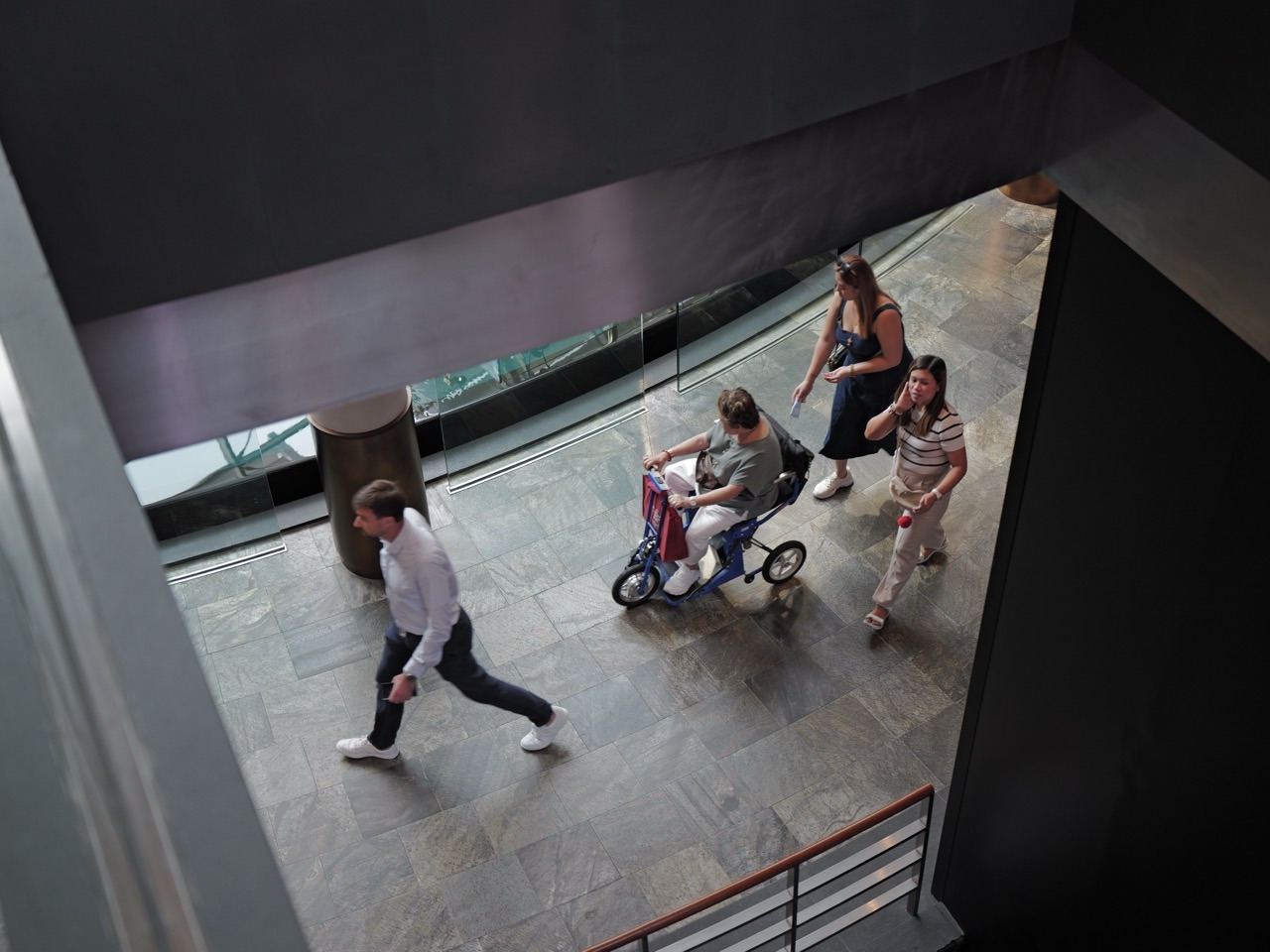
How does a shopping centre work for a parent with a pram, an older visitor who needs a place to rest, a tourist who cannot find the taxi stand, a wheelchair user looking for a step-free route, a child separated from a caregiver, or a shopper whose phone has run out of battery? Mall customer service and inclusive design work by treating these situations as normal parts of public life rather than rare exceptions. The centre becomes easier to use when architecture, wayfinding, amenities, frontline staff and operating procedures all support people with different needs.
This guide explains shopping mall customer service, accessibility, inclusive design, family facilities, nursing rooms, accessible toilets, seating, information counters, wayfinding, lost property, mobility needs and the practical meaning of an end-to-end customer journey. We will look at why accessibility is a route rather than a symbol, why seating is infrastructure, why frontline questions can reveal design problems, how family facilities extend dwell time, and why a mall becomes more commercially useful when more people can navigate it with confidence.
Did you know that the best customer service can be the question nobody needs to ask? A clear sign prevents confusion. A visible lift prevents a long detour. A well-placed bench prevents a visitor from ending the trip early. A directory that uses ordinary words prevents a search for an information counter. Human service remains essential, but strong design removes avoidable problems before a staff member has to solve them.
For the spatial journey, read Foot Traffic, Customer Flow, Mall Design and Wayfinding. For the operating system behind assistance and incidents, continue with Mall Management, Security, Cleaning and Building Operations.
Customer Service as a Human Interface
Customer Service as a Human Interface matters because a shopping centre serves a public that is far more varied than the “average shopper” imagined on a floor plan. People arrive with different bodies, ages, languages, technologies, time pressures and reasons for visiting. Inclusive service begins by accepting that variation as ordinary.
The mechanism is continuity. A useful facility or helpful staff member cannot compensate for a broken route elsewhere. The customer has to move from arrival to destination, use amenities, complete the task and leave. Each transition should remain understandable and practical, including during maintenance, events and busy periods.
Imagine the same journey under mild friction: a lift is out of service, a child is tired, the visitor cannot read a small sign or the phone battery is flat. Good design provides another path. Good customer service knows that path and can explain it without making the person feel like an unusual problem.
For students, this is a powerful way to study systems. Walk through a mall mentally from several perspectives and note where assumptions change. The exercise teaches that equality of access is not achieved by giving everyone identical instructions; people sometimes need different routes to reach the same useful outcome.
The result is hospitality embedded in the building. Customers stay longer, return more confidently and need less emergency problem-solving because ordinary needs have already been considered. Inclusive design is therefore both a human quality and a practical operating advantage.
Accessibility Is an End-to-End Route
Accessibility Is an End-to-End Route matters because a shopping centre serves a public that is far more varied than the “average shopper” imagined on a floor plan. People arrive with different bodies, ages, languages, technologies, time pressures and reasons for visiting. Inclusive service begins by accepting that variation as ordinary.
The mechanism is continuity. A useful facility or helpful staff member cannot compensate for a broken route elsewhere. The customer has to move from arrival to destination, use amenities, complete the task and leave. Each transition should remain understandable and practical, including during maintenance, events and busy periods.
Imagine the same journey under mild friction: a lift is out of service, a child is tired, the visitor cannot read a small sign or the phone battery is flat. Good design provides another path. Good customer service knows that path and can explain it without making the person feel like an unusual problem.
For students, this is a powerful way to study systems. Walk through a mall mentally from several perspectives and note where assumptions change. The exercise teaches that equality of access is not achieved by giving everyone identical instructions; people sometimes need different routes to reach the same useful outcome.
The result is hospitality embedded in the building. Customers stay longer, return more confidently and need less emergency problem-solving because ordinary needs have already been considered. Inclusive design is therefore both a human quality and a practical operating advantage.
Step-Free Arrival
Step-Free Arrival matters because a shopping centre serves a public that is far more varied than the “average shopper” imagined on a floor plan. People arrive with different bodies, ages, languages, technologies, time pressures and reasons for visiting. Inclusive service begins by accepting that variation as ordinary.
The mechanism is continuity. A useful facility or helpful staff member cannot compensate for a broken route elsewhere. The customer has to move from arrival to destination, use amenities, complete the task and leave. Each transition should remain understandable and practical, including during maintenance, events and busy periods.
Imagine the same journey under mild friction: a lift is out of service, a child is tired, the visitor cannot read a small sign or the phone battery is flat. Good design provides another path. Good customer service knows that path and can explain it without making the person feel like an unusual problem.
For students, this is a powerful way to study systems. Walk through a mall mentally from several perspectives and note where assumptions change. The exercise teaches that equality of access is not achieved by giving everyone identical instructions; people sometimes need different routes to reach the same useful outcome.
The result is hospitality embedded in the building. Customers stay longer, return more confidently and need less emergency problem-solving because ordinary needs have already been considered. Inclusive design is therefore both a human quality and a practical operating advantage.
Accessible Parking
Accessible Parking matters because a shopping centre serves a public that is far more varied than the “average shopper” imagined on a floor plan. People arrive with different bodies, ages, languages, technologies, time pressures and reasons for visiting. Inclusive service begins by accepting that variation as ordinary.
The mechanism is continuity. A useful facility or helpful staff member cannot compensate for a broken route elsewhere. The customer has to move from arrival to destination, use amenities, complete the task and leave. Each transition should remain understandable and practical, including during maintenance, events and busy periods.
Imagine the same journey under mild friction: a lift is out of service, a child is tired, the visitor cannot read a small sign or the phone battery is flat. Good design provides another path. Good customer service knows that path and can explain it without making the person feel like an unusual problem.
For students, this is a powerful way to study systems. Walk through a mall mentally from several perspectives and note where assumptions change. The exercise teaches that equality of access is not achieved by giving everyone identical instructions; people sometimes need different routes to reach the same useful outcome.
The result is hospitality embedded in the building. Customers stay longer, return more confidently and need less emergency problem-solving because ordinary needs have already been considered. Inclusive design is therefore both a human quality and a practical operating advantage.
Lift Location
Lift Location matters because a shopping centre serves a public that is far more varied than the “average shopper” imagined on a floor plan. People arrive with different bodies, ages, languages, technologies, time pressures and reasons for visiting. Inclusive service begins by accepting that variation as ordinary.
The mechanism is continuity. A useful facility or helpful staff member cannot compensate for a broken route elsewhere. The customer has to move from arrival to destination, use amenities, complete the task and leave. Each transition should remain understandable and practical, including during maintenance, events and busy periods.
Imagine the same journey under mild friction: a lift is out of service, a child is tired, the visitor cannot read a small sign or the phone battery is flat. Good design provides another path. Good customer service knows that path and can explain it without making the person feel like an unusual problem.
For students, this is a powerful way to study systems. Walk through a mall mentally from several perspectives and note where assumptions change. The exercise teaches that equality of access is not achieved by giving everyone identical instructions; people sometimes need different routes to reach the same useful outcome.
The result is hospitality embedded in the building. Customers stay longer, return more confidently and need less emergency problem-solving because ordinary needs have already been considered. Inclusive design is therefore both a human quality and a practical operating advantage.
Escalators and Alternatives
Escalators and Alternatives matters because a shopping centre serves a public that is far more varied than the “average shopper” imagined on a floor plan. People arrive with different bodies, ages, languages, technologies, time pressures and reasons for visiting. Inclusive service begins by accepting that variation as ordinary.
The mechanism is continuity. A useful facility or helpful staff member cannot compensate for a broken route elsewhere. The customer has to move from arrival to destination, use amenities, complete the task and leave. Each transition should remain understandable and practical, including during maintenance, events and busy periods.
Imagine the same journey under mild friction: a lift is out of service, a child is tired, the visitor cannot read a small sign or the phone battery is flat. Good design provides another path. Good customer service knows that path and can explain it without making the person feel like an unusual problem.
For students, this is a powerful way to study systems. Walk through a mall mentally from several perspectives and note where assumptions change. The exercise teaches that equality of access is not achieved by giving everyone identical instructions; people sometimes need different routes to reach the same useful outcome.
The result is hospitality embedded in the building. Customers stay longer, return more confidently and need less emergency problem-solving because ordinary needs have already been considered. Inclusive design is therefore both a human quality and a practical operating advantage.
Accessible Toilets
Accessible Toilets matters because a shopping centre serves a public that is far more varied than the “average shopper” imagined on a floor plan. People arrive with different bodies, ages, languages, technologies, time pressures and reasons for visiting. Inclusive service begins by accepting that variation as ordinary.
The mechanism is continuity. A useful facility or helpful staff member cannot compensate for a broken route elsewhere. The customer has to move from arrival to destination, use amenities, complete the task and leave. Each transition should remain understandable and practical, including during maintenance, events and busy periods.
Imagine the same journey under mild friction: a lift is out of service, a child is tired, the visitor cannot read a small sign or the phone battery is flat. Good design provides another path. Good customer service knows that path and can explain it without making the person feel like an unusual problem.
For students, this is a powerful way to study systems. Walk through a mall mentally from several perspectives and note where assumptions change. The exercise teaches that equality of access is not achieved by giving everyone identical instructions; people sometimes need different routes to reach the same useful outcome.
The result is hospitality embedded in the building. Customers stay longer, return more confidently and need less emergency problem-solving because ordinary needs have already been considered. Inclusive design is therefore both a human quality and a practical operating advantage.
Family Toilets
Family Toilets matters because a shopping centre serves a public that is far more varied than the “average shopper” imagined on a floor plan. People arrive with different bodies, ages, languages, technologies, time pressures and reasons for visiting. Inclusive service begins by accepting that variation as ordinary.
The mechanism is continuity. A useful facility or helpful staff member cannot compensate for a broken route elsewhere. The customer has to move from arrival to destination, use amenities, complete the task and leave. Each transition should remain understandable and practical, including during maintenance, events and busy periods.
Imagine the same journey under mild friction: a lift is out of service, a child is tired, the visitor cannot read a small sign or the phone battery is flat. Good design provides another path. Good customer service knows that path and can explain it without making the person feel like an unusual problem.
For students, this is a powerful way to study systems. Walk through a mall mentally from several perspectives and note where assumptions change. The exercise teaches that equality of access is not achieved by giving everyone identical instructions; people sometimes need different routes to reach the same useful outcome.
The result is hospitality embedded in the building. Customers stay longer, return more confidently and need less emergency problem-solving because ordinary needs have already been considered. Inclusive design is therefore both a human quality and a practical operating advantage.
Nursing Rooms
Nursing Rooms matters because a shopping centre serves a public that is far more varied than the “average shopper” imagined on a floor plan. People arrive with different bodies, ages, languages, technologies, time pressures and reasons for visiting. Inclusive service begins by accepting that variation as ordinary.
The mechanism is continuity. A useful facility or helpful staff member cannot compensate for a broken route elsewhere. The customer has to move from arrival to destination, use amenities, complete the task and leave. Each transition should remain understandable and practical, including during maintenance, events and busy periods.
Imagine the same journey under mild friction: a lift is out of service, a child is tired, the visitor cannot read a small sign or the phone battery is flat. Good design provides another path. Good customer service knows that path and can explain it without making the person feel like an unusual problem.
For students, this is a powerful way to study systems. Walk through a mall mentally from several perspectives and note where assumptions change. The exercise teaches that equality of access is not achieved by giving everyone identical instructions; people sometimes need different routes to reach the same useful outcome.
The result is hospitality embedded in the building. Customers stay longer, return more confidently and need less emergency problem-solving because ordinary needs have already been considered. Inclusive design is therefore both a human quality and a practical operating advantage.
Baby-Care Facilities
Baby-Care Facilities matters because a shopping centre serves a public that is far more varied than the “average shopper” imagined on a floor plan. People arrive with different bodies, ages, languages, technologies, time pressures and reasons for visiting. Inclusive service begins by accepting that variation as ordinary.
The mechanism is continuity. A useful facility or helpful staff member cannot compensate for a broken route elsewhere. The customer has to move from arrival to destination, use amenities, complete the task and leave. Each transition should remain understandable and practical, including during maintenance, events and busy periods.
Imagine the same journey under mild friction: a lift is out of service, a child is tired, the visitor cannot read a small sign or the phone battery is flat. Good design provides another path. Good customer service knows that path and can explain it without making the person feel like an unusual problem.
For students, this is a powerful way to study systems. Walk through a mall mentally from several perspectives and note where assumptions change. The exercise teaches that equality of access is not achieved by giving everyone identical instructions; people sometimes need different routes to reach the same useful outcome.
The result is hospitality embedded in the building. Customers stay longer, return more confidently and need less emergency problem-solving because ordinary needs have already been considered. Inclusive design is therefore both a human quality and a practical operating advantage.
Pram-Friendly Routes
Pram-Friendly Routes matters because a shopping centre serves a public that is far more varied than the “average shopper” imagined on a floor plan. People arrive with different bodies, ages, languages, technologies, time pressures and reasons for visiting. Inclusive service begins by accepting that variation as ordinary.
The mechanism is continuity. A useful facility or helpful staff member cannot compensate for a broken route elsewhere. The customer has to move from arrival to destination, use amenities, complete the task and leave. Each transition should remain understandable and practical, including during maintenance, events and busy periods.
Imagine the same journey under mild friction: a lift is out of service, a child is tired, the visitor cannot read a small sign or the phone battery is flat. Good design provides another path. Good customer service knows that path and can explain it without making the person feel like an unusual problem.
For students, this is a powerful way to study systems. Walk through a mall mentally from several perspectives and note where assumptions change. The exercise teaches that equality of access is not achieved by giving everyone identical instructions; people sometimes need different routes to reach the same useful outcome.
The result is hospitality embedded in the building. Customers stay longer, return more confidently and need less emergency problem-solving because ordinary needs have already been considered. Inclusive design is therefore both a human quality and a practical operating advantage.
Seating as Infrastructure
Seating as Infrastructure matters because a shopping centre serves a public that is far more varied than the “average shopper” imagined on a floor plan. People arrive with different bodies, ages, languages, technologies, time pressures and reasons for visiting. Inclusive service begins by accepting that variation as ordinary.
The mechanism is continuity. A useful facility or helpful staff member cannot compensate for a broken route elsewhere. The customer has to move from arrival to destination, use amenities, complete the task and leave. Each transition should remain understandable and practical, including during maintenance, events and busy periods.
Imagine the same journey under mild friction: a lift is out of service, a child is tired, the visitor cannot read a small sign or the phone battery is flat. Good design provides another path. Good customer service knows that path and can explain it without making the person feel like an unusual problem.
For students, this is a powerful way to study systems. Walk through a mall mentally from several perspectives and note where assumptions change. The exercise teaches that equality of access is not achieved by giving everyone identical instructions; people sometimes need different routes to reach the same useful outcome.
The result is hospitality embedded in the building. Customers stay longer, return more confidently and need less emergency problem-solving because ordinary needs have already been considered. Inclusive design is therefore both a human quality and a practical operating advantage.
Rest Points for Older Visitors
Rest Points for Older Visitors matters because a shopping centre serves a public that is far more varied than the “average shopper” imagined on a floor plan. People arrive with different bodies, ages, languages, technologies, time pressures and reasons for visiting. Inclusive service begins by accepting that variation as ordinary.
The mechanism is continuity. A useful facility or helpful staff member cannot compensate for a broken route elsewhere. The customer has to move from arrival to destination, use amenities, complete the task and leave. Each transition should remain understandable and practical, including during maintenance, events and busy periods.
Imagine the same journey under mild friction: a lift is out of service, a child is tired, the visitor cannot read a small sign or the phone battery is flat. Good design provides another path. Good customer service knows that path and can explain it without making the person feel like an unusual problem.
For students, this is a powerful way to study systems. Walk through a mall mentally from several perspectives and note where assumptions change. The exercise teaches that equality of access is not achieved by giving everyone identical instructions; people sometimes need different routes to reach the same useful outcome.
The result is hospitality embedded in the building. Customers stay longer, return more confidently and need less emergency problem-solving because ordinary needs have already been considered. Inclusive design is therefore both a human quality and a practical operating advantage.
Clear Wayfinding
Clear Wayfinding matters because a shopping centre serves a public that is far more varied than the “average shopper” imagined on a floor plan. People arrive with different bodies, ages, languages, technologies, time pressures and reasons for visiting. Inclusive service begins by accepting that variation as ordinary.
The mechanism is continuity. A useful facility or helpful staff member cannot compensate for a broken route elsewhere. The customer has to move from arrival to destination, use amenities, complete the task and leave. Each transition should remain understandable and practical, including during maintenance, events and busy periods.
Imagine the same journey under mild friction: a lift is out of service, a child is tired, the visitor cannot read a small sign or the phone battery is flat. Good design provides another path. Good customer service knows that path and can explain it without making the person feel like an unusual problem.
For students, this is a powerful way to study systems. Walk through a mall mentally from several perspectives and note where assumptions change. The exercise teaches that equality of access is not achieved by giving everyone identical instructions; people sometimes need different routes to reach the same useful outcome.
The result is hospitality embedded in the building. Customers stay longer, return more confidently and need less emergency problem-solving because ordinary needs have already been considered. Inclusive design is therefore both a human quality and a practical operating advantage.
Readable Signage
Readable Signage matters because a shopping centre serves a public that is far more varied than the “average shopper” imagined on a floor plan. People arrive with different bodies, ages, languages, technologies, time pressures and reasons for visiting. Inclusive service begins by accepting that variation as ordinary.
The mechanism is continuity. A useful facility or helpful staff member cannot compensate for a broken route elsewhere. The customer has to move from arrival to destination, use amenities, complete the task and leave. Each transition should remain understandable and practical, including during maintenance, events and busy periods.
Imagine the same journey under mild friction: a lift is out of service, a child is tired, the visitor cannot read a small sign or the phone battery is flat. Good design provides another path. Good customer service knows that path and can explain it without making the person feel like an unusual problem.
For students, this is a powerful way to study systems. Walk through a mall mentally from several perspectives and note where assumptions change. The exercise teaches that equality of access is not achieved by giving everyone identical instructions; people sometimes need different routes to reach the same useful outcome.
The result is hospitality embedded in the building. Customers stay longer, return more confidently and need less emergency problem-solving because ordinary needs have already been considered. Inclusive design is therefore both a human quality and a practical operating advantage.
Landmarks and Mental Maps
Landmarks and Mental Maps matters because a shopping centre serves a public that is far more varied than the “average shopper” imagined on a floor plan. People arrive with different bodies, ages, languages, technologies, time pressures and reasons for visiting. Inclusive service begins by accepting that variation as ordinary.
The mechanism is continuity. A useful facility or helpful staff member cannot compensate for a broken route elsewhere. The customer has to move from arrival to destination, use amenities, complete the task and leave. Each transition should remain understandable and practical, including during maintenance, events and busy periods.
Imagine the same journey under mild friction: a lift is out of service, a child is tired, the visitor cannot read a small sign or the phone battery is flat. Good design provides another path. Good customer service knows that path and can explain it without making the person feel like an unusual problem.
For students, this is a powerful way to study systems. Walk through a mall mentally from several perspectives and note where assumptions change. The exercise teaches that equality of access is not achieved by giving everyone identical instructions; people sometimes need different routes to reach the same useful outcome.
The result is hospitality embedded in the building. Customers stay longer, return more confidently and need less emergency problem-solving because ordinary needs have already been considered. Inclusive design is therefore both a human quality and a practical operating advantage.
Information Counters
Information Counters matters because a shopping centre serves a public that is far more varied than the “average shopper” imagined on a floor plan. People arrive with different bodies, ages, languages, technologies, time pressures and reasons for visiting. Inclusive service begins by accepting that variation as ordinary.
The mechanism is continuity. A useful facility or helpful staff member cannot compensate for a broken route elsewhere. The customer has to move from arrival to destination, use amenities, complete the task and leave. Each transition should remain understandable and practical, including during maintenance, events and busy periods.
Imagine the same journey under mild friction: a lift is out of service, a child is tired, the visitor cannot read a small sign or the phone battery is flat. Good design provides another path. Good customer service knows that path and can explain it without making the person feel like an unusual problem.
For students, this is a powerful way to study systems. Walk through a mall mentally from several perspectives and note where assumptions change. The exercise teaches that equality of access is not achieved by giving everyone identical instructions; people sometimes need different routes to reach the same useful outcome.
The result is hospitality embedded in the building. Customers stay longer, return more confidently and need less emergency problem-solving because ordinary needs have already been considered. Inclusive design is therefore both a human quality and a practical operating advantage.
Digital Directories
Digital Directories matters because a shopping centre serves a public that is far more varied than the “average shopper” imagined on a floor plan. People arrive with different bodies, ages, languages, technologies, time pressures and reasons for visiting. Inclusive service begins by accepting that variation as ordinary.
The mechanism is continuity. A useful facility or helpful staff member cannot compensate for a broken route elsewhere. The customer has to move from arrival to destination, use amenities, complete the task and leave. Each transition should remain understandable and practical, including during maintenance, events and busy periods.
Imagine the same journey under mild friction: a lift is out of service, a child is tired, the visitor cannot read a small sign or the phone battery is flat. Good design provides another path. Good customer service knows that path and can explain it without making the person feel like an unusual problem.
For students, this is a powerful way to study systems. Walk through a mall mentally from several perspectives and note where assumptions change. The exercise teaches that equality of access is not achieved by giving everyone identical instructions; people sometimes need different routes to reach the same useful outcome.
The result is hospitality embedded in the building. Customers stay longer, return more confidently and need less emergency problem-solving because ordinary needs have already been considered. Inclusive design is therefore both a human quality and a practical operating advantage.
Human Help When Technology Fails
Human Help When Technology Fails matters because a shopping centre serves a public that is far more varied than the “average shopper” imagined on a floor plan. People arrive with different bodies, ages, languages, technologies, time pressures and reasons for visiting. Inclusive service begins by accepting that variation as ordinary.
The mechanism is continuity. A useful facility or helpful staff member cannot compensate for a broken route elsewhere. The customer has to move from arrival to destination, use amenities, complete the task and leave. Each transition should remain understandable and practical, including during maintenance, events and busy periods.
Imagine the same journey under mild friction: a lift is out of service, a child is tired, the visitor cannot read a small sign or the phone battery is flat. Good design provides another path. Good customer service knows that path and can explain it without making the person feel like an unusual problem.
For students, this is a powerful way to study systems. Walk through a mall mentally from several perspectives and note where assumptions change. The exercise teaches that equality of access is not achieved by giving everyone identical instructions; people sometimes need different routes to reach the same useful outcome.
The result is hospitality embedded in the building. Customers stay longer, return more confidently and need less emergency problem-solving because ordinary needs have already been considered. Inclusive design is therefore both a human quality and a practical operating advantage.
Tourist Assistance
Tourist Assistance matters because a shopping centre serves a public that is far more varied than the “average shopper” imagined on a floor plan. People arrive with different bodies, ages, languages, technologies, time pressures and reasons for visiting. Inclusive service begins by accepting that variation as ordinary.
The mechanism is continuity. A useful facility or helpful staff member cannot compensate for a broken route elsewhere. The customer has to move from arrival to destination, use amenities, complete the task and leave. Each transition should remain understandable and practical, including during maintenance, events and busy periods.
Imagine the same journey under mild friction: a lift is out of service, a child is tired, the visitor cannot read a small sign or the phone battery is flat. Good design provides another path. Good customer service knows that path and can explain it without making the person feel like an unusual problem.
For students, this is a powerful way to study systems. Walk through a mall mentally from several perspectives and note where assumptions change. The exercise teaches that equality of access is not achieved by giving everyone identical instructions; people sometimes need different routes to reach the same useful outcome.
The result is hospitality embedded in the building. Customers stay longer, return more confidently and need less emergency problem-solving because ordinary needs have already been considered. Inclusive design is therefore both a human quality and a practical operating advantage.
Multilingual Needs
Multilingual Needs matters because a shopping centre serves a public that is far more varied than the “average shopper” imagined on a floor plan. People arrive with different bodies, ages, languages, technologies, time pressures and reasons for visiting. Inclusive service begins by accepting that variation as ordinary.
The mechanism is continuity. A useful facility or helpful staff member cannot compensate for a broken route elsewhere. The customer has to move from arrival to destination, use amenities, complete the task and leave. Each transition should remain understandable and practical, including during maintenance, events and busy periods.
Imagine the same journey under mild friction: a lift is out of service, a child is tired, the visitor cannot read a small sign or the phone battery is flat. Good design provides another path. Good customer service knows that path and can explain it without making the person feel like an unusual problem.
For students, this is a powerful way to study systems. Walk through a mall mentally from several perspectives and note where assumptions change. The exercise teaches that equality of access is not achieved by giving everyone identical instructions; people sometimes need different routes to reach the same useful outcome.
The result is hospitality embedded in the building. Customers stay longer, return more confidently and need less emergency problem-solving because ordinary needs have already been considered. Inclusive design is therefore both a human quality and a practical operating advantage.
Lost Property
Lost Property matters because a shopping centre serves a public that is far more varied than the “average shopper” imagined on a floor plan. People arrive with different bodies, ages, languages, technologies, time pressures and reasons for visiting. Inclusive service begins by accepting that variation as ordinary.
The mechanism is continuity. A useful facility or helpful staff member cannot compensate for a broken route elsewhere. The customer has to move from arrival to destination, use amenities, complete the task and leave. Each transition should remain understandable and practical, including during maintenance, events and busy periods.
Imagine the same journey under mild friction: a lift is out of service, a child is tired, the visitor cannot read a small sign or the phone battery is flat. Good design provides another path. Good customer service knows that path and can explain it without making the person feel like an unusual problem.
For students, this is a powerful way to study systems. Walk through a mall mentally from several perspectives and note where assumptions change. The exercise teaches that equality of access is not achieved by giving everyone identical instructions; people sometimes need different routes to reach the same useful outcome.
The result is hospitality embedded in the building. Customers stay longer, return more confidently and need less emergency problem-solving because ordinary needs have already been considered. Inclusive design is therefore both a human quality and a practical operating advantage.
Separated Children
Separated Children matters because a shopping centre serves a public that is far more varied than the “average shopper” imagined on a floor plan. People arrive with different bodies, ages, languages, technologies, time pressures and reasons for visiting. Inclusive service begins by accepting that variation as ordinary.
The mechanism is continuity. A useful facility or helpful staff member cannot compensate for a broken route elsewhere. The customer has to move from arrival to destination, use amenities, complete the task and leave. Each transition should remain understandable and practical, including during maintenance, events and busy periods.
Imagine the same journey under mild friction: a lift is out of service, a child is tired, the visitor cannot read a small sign or the phone battery is flat. Good design provides another path. Good customer service knows that path and can explain it without making the person feel like an unusual problem.
For students, this is a powerful way to study systems. Walk through a mall mentally from several perspectives and note where assumptions change. The exercise teaches that equality of access is not achieved by giving everyone identical instructions; people sometimes need different routes to reach the same useful outcome.
The result is hospitality embedded in the building. Customers stay longer, return more confidently and need less emergency problem-solving because ordinary needs have already been considered. Inclusive design is therefore both a human quality and a practical operating advantage.
Vulnerable Visitors
Vulnerable Visitors matters because a shopping centre serves a public that is far more varied than the “average shopper” imagined on a floor plan. People arrive with different bodies, ages, languages, technologies, time pressures and reasons for visiting. Inclusive service begins by accepting that variation as ordinary.
The mechanism is continuity. A useful facility or helpful staff member cannot compensate for a broken route elsewhere. The customer has to move from arrival to destination, use amenities, complete the task and leave. Each transition should remain understandable and practical, including during maintenance, events and busy periods.
Imagine the same journey under mild friction: a lift is out of service, a child is tired, the visitor cannot read a small sign or the phone battery is flat. Good design provides another path. Good customer service knows that path and can explain it without making the person feel like an unusual problem.
For students, this is a powerful way to study systems. Walk through a mall mentally from several perspectives and note where assumptions change. The exercise teaches that equality of access is not achieved by giving everyone identical instructions; people sometimes need different routes to reach the same useful outcome.
The result is hospitality embedded in the building. Customers stay longer, return more confidently and need less emergency problem-solving because ordinary needs have already been considered. Inclusive design is therefore both a human quality and a practical operating advantage.
Queue Accessibility
Queue Accessibility matters because a shopping centre serves a public that is far more varied than the “average shopper” imagined on a floor plan. People arrive with different bodies, ages, languages, technologies, time pressures and reasons for visiting. Inclusive service begins by accepting that variation as ordinary.
The mechanism is continuity. A useful facility or helpful staff member cannot compensate for a broken route elsewhere. The customer has to move from arrival to destination, use amenities, complete the task and leave. Each transition should remain understandable and practical, including during maintenance, events and busy periods.
Imagine the same journey under mild friction: a lift is out of service, a child is tired, the visitor cannot read a small sign or the phone battery is flat. Good design provides another path. Good customer service knows that path and can explain it without making the person feel like an unusual problem.
For students, this is a powerful way to study systems. Walk through a mall mentally from several perspectives and note where assumptions change. The exercise teaches that equality of access is not achieved by giving everyone identical instructions; people sometimes need different routes to reach the same useful outcome.
The result is hospitality embedded in the building. Customers stay longer, return more confidently and need less emergency problem-solving because ordinary needs have already been considered. Inclusive design is therefore both a human quality and a practical operating advantage.
Restaurant Accessibility
Restaurant Accessibility matters because a shopping centre serves a public that is far more varied than the “average shopper” imagined on a floor plan. People arrive with different bodies, ages, languages, technologies, time pressures and reasons for visiting. Inclusive service begins by accepting that variation as ordinary.
The mechanism is continuity. A useful facility or helpful staff member cannot compensate for a broken route elsewhere. The customer has to move from arrival to destination, use amenities, complete the task and leave. Each transition should remain understandable and practical, including during maintenance, events and busy periods.
Imagine the same journey under mild friction: a lift is out of service, a child is tired, the visitor cannot read a small sign or the phone battery is flat. Good design provides another path. Good customer service knows that path and can explain it without making the person feel like an unusual problem.
For students, this is a powerful way to study systems. Walk through a mall mentally from several perspectives and note where assumptions change. The exercise teaches that equality of access is not achieved by giving everyone identical instructions; people sometimes need different routes to reach the same useful outcome.
The result is hospitality embedded in the building. Customers stay longer, return more confidently and need less emergency problem-solving because ordinary needs have already been considered. Inclusive design is therefore both a human quality and a practical operating advantage.
Food-Court Seating
Food-Court Seating matters because a shopping centre serves a public that is far more varied than the “average shopper” imagined on a floor plan. People arrive with different bodies, ages, languages, technologies, time pressures and reasons for visiting. Inclusive service begins by accepting that variation as ordinary.
The mechanism is continuity. A useful facility or helpful staff member cannot compensate for a broken route elsewhere. The customer has to move from arrival to destination, use amenities, complete the task and leave. Each transition should remain understandable and practical, including during maintenance, events and busy periods.
Imagine the same journey under mild friction: a lift is out of service, a child is tired, the visitor cannot read a small sign or the phone battery is flat. Good design provides another path. Good customer service knows that path and can explain it without making the person feel like an unusual problem.
For students, this is a powerful way to study systems. Walk through a mall mentally from several perspectives and note where assumptions change. The exercise teaches that equality of access is not achieved by giving everyone identical instructions; people sometimes need different routes to reach the same useful outcome.
The result is hospitality embedded in the building. Customers stay longer, return more confidently and need less emergency problem-solving because ordinary needs have already been considered. Inclusive design is therefore both a human quality and a practical operating advantage.
Cinema and Entertainment Access
Cinema and Entertainment Access matters because a shopping centre serves a public that is far more varied than the “average shopper” imagined on a floor plan. People arrive with different bodies, ages, languages, technologies, time pressures and reasons for visiting. Inclusive service begins by accepting that variation as ordinary.
The mechanism is continuity. A useful facility or helpful staff member cannot compensate for a broken route elsewhere. The customer has to move from arrival to destination, use amenities, complete the task and leave. Each transition should remain understandable and practical, including during maintenance, events and busy periods.
Imagine the same journey under mild friction: a lift is out of service, a child is tired, the visitor cannot read a small sign or the phone battery is flat. Good design provides another path. Good customer service knows that path and can explain it without making the person feel like an unusual problem.
For students, this is a powerful way to study systems. Walk through a mall mentally from several perspectives and note where assumptions change. The exercise teaches that equality of access is not achieved by giving everyone identical instructions; people sometimes need different routes to reach the same useful outcome.
The result is hospitality embedded in the building. Customers stay longer, return more confidently and need less emergency problem-solving because ordinary needs have already been considered. Inclusive design is therefore both a human quality and a practical operating advantage.
Event Accessibility
Event Accessibility matters because a shopping centre serves a public that is far more varied than the “average shopper” imagined on a floor plan. People arrive with different bodies, ages, languages, technologies, time pressures and reasons for visiting. Inclusive service begins by accepting that variation as ordinary.
The mechanism is continuity. A useful facility or helpful staff member cannot compensate for a broken route elsewhere. The customer has to move from arrival to destination, use amenities, complete the task and leave. Each transition should remain understandable and practical, including during maintenance, events and busy periods.
Imagine the same journey under mild friction: a lift is out of service, a child is tired, the visitor cannot read a small sign or the phone battery is flat. Good design provides another path. Good customer service knows that path and can explain it without making the person feel like an unusual problem.
For students, this is a powerful way to study systems. Walk through a mall mentally from several perspectives and note where assumptions change. The exercise teaches that equality of access is not achieved by giving everyone identical instructions; people sometimes need different routes to reach the same useful outcome.
The result is hospitality embedded in the building. Customers stay longer, return more confidently and need less emergency problem-solving because ordinary needs have already been considered. Inclusive design is therefore both a human quality and a practical operating advantage.
Temporary Hoardings
Temporary Hoardings matters because a shopping centre serves a public that is far more varied than the “average shopper” imagined on a floor plan. People arrive with different bodies, ages, languages, technologies, time pressures and reasons for visiting. Inclusive service begins by accepting that variation as ordinary.
The mechanism is continuity. A useful facility or helpful staff member cannot compensate for a broken route elsewhere. The customer has to move from arrival to destination, use amenities, complete the task and leave. Each transition should remain understandable and practical, including during maintenance, events and busy periods.
Imagine the same journey under mild friction: a lift is out of service, a child is tired, the visitor cannot read a small sign or the phone battery is flat. Good design provides another path. Good customer service knows that path and can explain it without making the person feel like an unusual problem.
For students, this is a powerful way to study systems. Walk through a mall mentally from several perspectives and note where assumptions change. The exercise teaches that equality of access is not achieved by giving everyone identical instructions; people sometimes need different routes to reach the same useful outcome.
The result is hospitality embedded in the building. Customers stay longer, return more confidently and need less emergency problem-solving because ordinary needs have already been considered. Inclusive design is therefore both a human quality and a practical operating advantage.
Maintenance and Alternative Routes
Maintenance and Alternative Routes matters because a shopping centre serves a public that is far more varied than the “average shopper” imagined on a floor plan. People arrive with different bodies, ages, languages, technologies, time pressures and reasons for visiting. Inclusive service begins by accepting that variation as ordinary.
The mechanism is continuity. A useful facility or helpful staff member cannot compensate for a broken route elsewhere. The customer has to move from arrival to destination, use amenities, complete the task and leave. Each transition should remain understandable and practical, including during maintenance, events and busy periods.
Imagine the same journey under mild friction: a lift is out of service, a child is tired, the visitor cannot read a small sign or the phone battery is flat. Good design provides another path. Good customer service knows that path and can explain it without making the person feel like an unusual problem.
For students, this is a powerful way to study systems. Walk through a mall mentally from several perspectives and note where assumptions change. The exercise teaches that equality of access is not achieved by giving everyone identical instructions; people sometimes need different routes to reach the same useful outcome.
The result is hospitality embedded in the building. Customers stay longer, return more confidently and need less emergency problem-solving because ordinary needs have already been considered. Inclusive design is therefore both a human quality and a practical operating advantage.
Service Animals and Applicable Rules
Service Animals and Applicable Rules matters because a shopping centre serves a public that is far more varied than the “average shopper” imagined on a floor plan. People arrive with different bodies, ages, languages, technologies, time pressures and reasons for visiting. Inclusive service begins by accepting that variation as ordinary.
The mechanism is continuity. A useful facility or helpful staff member cannot compensate for a broken route elsewhere. The customer has to move from arrival to destination, use amenities, complete the task and leave. Each transition should remain understandable and practical, including during maintenance, events and busy periods.
Imagine the same journey under mild friction: a lift is out of service, a child is tired, the visitor cannot read a small sign or the phone battery is flat. Good design provides another path. Good customer service knows that path and can explain it without making the person feel like an unusual problem.
For students, this is a powerful way to study systems. Walk through a mall mentally from several perspectives and note where assumptions change. The exercise teaches that equality of access is not achieved by giving everyone identical instructions; people sometimes need different routes to reach the same useful outcome.
The result is hospitality embedded in the building. Customers stay longer, return more confidently and need less emergency problem-solving because ordinary needs have already been considered. Inclusive design is therefore both a human quality and a practical operating advantage.
Sensory Comfort
Sensory Comfort matters because a shopping centre serves a public that is far more varied than the “average shopper” imagined on a floor plan. People arrive with different bodies, ages, languages, technologies, time pressures and reasons for visiting. Inclusive service begins by accepting that variation as ordinary.
The mechanism is continuity. A useful facility or helpful staff member cannot compensate for a broken route elsewhere. The customer has to move from arrival to destination, use amenities, complete the task and leave. Each transition should remain understandable and practical, including during maintenance, events and busy periods.
Imagine the same journey under mild friction: a lift is out of service, a child is tired, the visitor cannot read a small sign or the phone battery is flat. Good design provides another path. Good customer service knows that path and can explain it without making the person feel like an unusual problem.
For students, this is a powerful way to study systems. Walk through a mall mentally from several perspectives and note where assumptions change. The exercise teaches that equality of access is not achieved by giving everyone identical instructions; people sometimes need different routes to reach the same useful outcome.
The result is hospitality embedded in the building. Customers stay longer, return more confidently and need less emergency problem-solving because ordinary needs have already been considered. Inclusive design is therefore both a human quality and a practical operating advantage.
Lighting
Lighting matters because a shopping centre serves a public that is far more varied than the “average shopper” imagined on a floor plan. People arrive with different bodies, ages, languages, technologies, time pressures and reasons for visiting. Inclusive service begins by accepting that variation as ordinary.
The mechanism is continuity. A useful facility or helpful staff member cannot compensate for a broken route elsewhere. The customer has to move from arrival to destination, use amenities, complete the task and leave. Each transition should remain understandable and practical, including during maintenance, events and busy periods.
Imagine the same journey under mild friction: a lift is out of service, a child is tired, the visitor cannot read a small sign or the phone battery is flat. Good design provides another path. Good customer service knows that path and can explain it without making the person feel like an unusual problem.
For students, this is a powerful way to study systems. Walk through a mall mentally from several perspectives and note where assumptions change. The exercise teaches that equality of access is not achieved by giving everyone identical instructions; people sometimes need different routes to reach the same useful outcome.
The result is hospitality embedded in the building. Customers stay longer, return more confidently and need less emergency problem-solving because ordinary needs have already been considered. Inclusive design is therefore both a human quality and a practical operating advantage.
Acoustics
Acoustics matters because a shopping centre serves a public that is far more varied than the “average shopper” imagined on a floor plan. People arrive with different bodies, ages, languages, technologies, time pressures and reasons for visiting. Inclusive service begins by accepting that variation as ordinary.
The mechanism is continuity. A useful facility or helpful staff member cannot compensate for a broken route elsewhere. The customer has to move from arrival to destination, use amenities, complete the task and leave. Each transition should remain understandable and practical, including during maintenance, events and busy periods.
Imagine the same journey under mild friction: a lift is out of service, a child is tired, the visitor cannot read a small sign or the phone battery is flat. Good design provides another path. Good customer service knows that path and can explain it without making the person feel like an unusual problem.
For students, this is a powerful way to study systems. Walk through a mall mentally from several perspectives and note where assumptions change. The exercise teaches that equality of access is not achieved by giving everyone identical instructions; people sometimes need different routes to reach the same useful outcome.
The result is hospitality embedded in the building. Customers stay longer, return more confidently and need less emergency problem-solving because ordinary needs have already been considered. Inclusive design is therefore both a human quality and a practical operating advantage.
Thermal Comfort
Thermal Comfort matters because a shopping centre serves a public that is far more varied than the “average shopper” imagined on a floor plan. People arrive with different bodies, ages, languages, technologies, time pressures and reasons for visiting. Inclusive service begins by accepting that variation as ordinary.
The mechanism is continuity. A useful facility or helpful staff member cannot compensate for a broken route elsewhere. The customer has to move from arrival to destination, use amenities, complete the task and leave. Each transition should remain understandable and practical, including during maintenance, events and busy periods.
Imagine the same journey under mild friction: a lift is out of service, a child is tired, the visitor cannot read a small sign or the phone battery is flat. Good design provides another path. Good customer service knows that path and can explain it without making the person feel like an unusual problem.
For students, this is a powerful way to study systems. Walk through a mall mentally from several perspectives and note where assumptions change. The exercise teaches that equality of access is not achieved by giving everyone identical instructions; people sometimes need different routes to reach the same useful outcome.
The result is hospitality embedded in the building. Customers stay longer, return more confidently and need less emergency problem-solving because ordinary needs have already been considered. Inclusive design is therefore both a human quality and a practical operating advantage.
Quiet Spaces
Quiet Spaces matters because a shopping centre serves a public that is far more varied than the “average shopper” imagined on a floor plan. People arrive with different bodies, ages, languages, technologies, time pressures and reasons for visiting. Inclusive service begins by accepting that variation as ordinary.
The mechanism is continuity. A useful facility or helpful staff member cannot compensate for a broken route elsewhere. The customer has to move from arrival to destination, use amenities, complete the task and leave. Each transition should remain understandable and practical, including during maintenance, events and busy periods.
Imagine the same journey under mild friction: a lift is out of service, a child is tired, the visitor cannot read a small sign or the phone battery is flat. Good design provides another path. Good customer service knows that path and can explain it without making the person feel like an unusual problem.
For students, this is a powerful way to study systems. Walk through a mall mentally from several perspectives and note where assumptions change. The exercise teaches that equality of access is not achieved by giving everyone identical instructions; people sometimes need different routes to reach the same useful outcome.
The result is hospitality embedded in the building. Customers stay longer, return more confidently and need less emergency problem-solving because ordinary needs have already been considered. Inclusive design is therefore both a human quality and a practical operating advantage.
Customer Feedback
Customer Feedback matters because a shopping centre serves a public that is far more varied than the “average shopper” imagined on a floor plan. People arrive with different bodies, ages, languages, technologies, time pressures and reasons for visiting. Inclusive service begins by accepting that variation as ordinary.
The mechanism is continuity. A useful facility or helpful staff member cannot compensate for a broken route elsewhere. The customer has to move from arrival to destination, use amenities, complete the task and leave. Each transition should remain understandable and practical, including during maintenance, events and busy periods.
Imagine the same journey under mild friction: a lift is out of service, a child is tired, the visitor cannot read a small sign or the phone battery is flat. Good design provides another path. Good customer service knows that path and can explain it without making the person feel like an unusual problem.
For students, this is a powerful way to study systems. Walk through a mall mentally from several perspectives and note where assumptions change. The exercise teaches that equality of access is not achieved by giving everyone identical instructions; people sometimes need different routes to reach the same useful outcome.
The result is hospitality embedded in the building. Customers stay longer, return more confidently and need less emergency problem-solving because ordinary needs have already been considered. Inclusive design is therefore both a human quality and a practical operating advantage.
Complaints as System Data
Complaints as System Data matters because a shopping centre serves a public that is far more varied than the “average shopper” imagined on a floor plan. People arrive with different bodies, ages, languages, technologies, time pressures and reasons for visiting. Inclusive service begins by accepting that variation as ordinary.
The mechanism is continuity. A useful facility or helpful staff member cannot compensate for a broken route elsewhere. The customer has to move from arrival to destination, use amenities, complete the task and leave. Each transition should remain understandable and practical, including during maintenance, events and busy periods.
Imagine the same journey under mild friction: a lift is out of service, a child is tired, the visitor cannot read a small sign or the phone battery is flat. Good design provides another path. Good customer service knows that path and can explain it without making the person feel like an unusual problem.
For students, this is a powerful way to study systems. Walk through a mall mentally from several perspectives and note where assumptions change. The exercise teaches that equality of access is not achieved by giving everyone identical instructions; people sometimes need different routes to reach the same useful outcome.
The result is hospitality embedded in the building. Customers stay longer, return more confidently and need less emergency problem-solving because ordinary needs have already been considered. Inclusive design is therefore both a human quality and a practical operating advantage.
Mystery Shopping
Mystery Shopping matters because a shopping centre serves a public that is far more varied than the “average shopper” imagined on a floor plan. People arrive with different bodies, ages, languages, technologies, time pressures and reasons for visiting. Inclusive service begins by accepting that variation as ordinary.
The mechanism is continuity. A useful facility or helpful staff member cannot compensate for a broken route elsewhere. The customer has to move from arrival to destination, use amenities, complete the task and leave. Each transition should remain understandable and practical, including during maintenance, events and busy periods.
Imagine the same journey under mild friction: a lift is out of service, a child is tired, the visitor cannot read a small sign or the phone battery is flat. Good design provides another path. Good customer service knows that path and can explain it without making the person feel like an unusual problem.
For students, this is a powerful way to study systems. Walk through a mall mentally from several perspectives and note where assumptions change. The exercise teaches that equality of access is not achieved by giving everyone identical instructions; people sometimes need different routes to reach the same useful outcome.
The result is hospitality embedded in the building. Customers stay longer, return more confidently and need less emergency problem-solving because ordinary needs have already been considered. Inclusive design is therefore both a human quality and a practical operating advantage.
Staff Training
Staff Training matters because a shopping centre serves a public that is far more varied than the “average shopper” imagined on a floor plan. People arrive with different bodies, ages, languages, technologies, time pressures and reasons for visiting. Inclusive service begins by accepting that variation as ordinary.
The mechanism is continuity. A useful facility or helpful staff member cannot compensate for a broken route elsewhere. The customer has to move from arrival to destination, use amenities, complete the task and leave. Each transition should remain understandable and practical, including during maintenance, events and busy periods.
Imagine the same journey under mild friction: a lift is out of service, a child is tired, the visitor cannot read a small sign or the phone battery is flat. Good design provides another path. Good customer service knows that path and can explain it without making the person feel like an unusual problem.
For students, this is a powerful way to study systems. Walk through a mall mentally from several perspectives and note where assumptions change. The exercise teaches that equality of access is not achieved by giving everyone identical instructions; people sometimes need different routes to reach the same useful outcome.
The result is hospitality embedded in the building. Customers stay longer, return more confidently and need less emergency problem-solving because ordinary needs have already been considered. Inclusive design is therefore both a human quality and a practical operating advantage.
Empathy without Guessing
Empathy without Guessing matters because a shopping centre serves a public that is far more varied than the “average shopper” imagined on a floor plan. People arrive with different bodies, ages, languages, technologies, time pressures and reasons for visiting. Inclusive service begins by accepting that variation as ordinary.
The mechanism is continuity. A useful facility or helpful staff member cannot compensate for a broken route elsewhere. The customer has to move from arrival to destination, use amenities, complete the task and leave. Each transition should remain understandable and practical, including during maintenance, events and busy periods.
Imagine the same journey under mild friction: a lift is out of service, a child is tired, the visitor cannot read a small sign or the phone battery is flat. Good design provides another path. Good customer service knows that path and can explain it without making the person feel like an unusual problem.
For students, this is a powerful way to study systems. Walk through a mall mentally from several perspectives and note where assumptions change. The exercise teaches that equality of access is not achieved by giving everyone identical instructions; people sometimes need different routes to reach the same useful outcome.
The result is hospitality embedded in the building. Customers stay longer, return more confidently and need less emergency problem-solving because ordinary needs have already been considered. Inclusive design is therefore both a human quality and a practical operating advantage.
Privacy at Service Counters
Privacy at Service Counters matters because a shopping centre serves a public that is far more varied than the “average shopper” imagined on a floor plan. People arrive with different bodies, ages, languages, technologies, time pressures and reasons for visiting. Inclusive service begins by accepting that variation as ordinary.
The mechanism is continuity. A useful facility or helpful staff member cannot compensate for a broken route elsewhere. The customer has to move from arrival to destination, use amenities, complete the task and leave. Each transition should remain understandable and practical, including during maintenance, events and busy periods.
Imagine the same journey under mild friction: a lift is out of service, a child is tired, the visitor cannot read a small sign or the phone battery is flat. Good design provides another path. Good customer service knows that path and can explain it without making the person feel like an unusual problem.
For students, this is a powerful way to study systems. Walk through a mall mentally from several perspectives and note where assumptions change. The exercise teaches that equality of access is not achieved by giving everyone identical instructions; people sometimes need different routes to reach the same useful outcome.
The result is hospitality embedded in the building. Customers stay longer, return more confidently and need less emergency problem-solving because ordinary needs have already been considered. Inclusive design is therefore both a human quality and a practical operating advantage.
Emergency Communication
Emergency Communication matters because a shopping centre serves a public that is far more varied than the “average shopper” imagined on a floor plan. People arrive with different bodies, ages, languages, technologies, time pressures and reasons for visiting. Inclusive service begins by accepting that variation as ordinary.
The mechanism is continuity. A useful facility or helpful staff member cannot compensate for a broken route elsewhere. The customer has to move from arrival to destination, use amenities, complete the task and leave. Each transition should remain understandable and practical, including during maintenance, events and busy periods.
Imagine the same journey under mild friction: a lift is out of service, a child is tired, the visitor cannot read a small sign or the phone battery is flat. Good design provides another path. Good customer service knows that path and can explain it without making the person feel like an unusual problem.
For students, this is a powerful way to study systems. Walk through a mall mentally from several perspectives and note where assumptions change. The exercise teaches that equality of access is not achieved by giving everyone identical instructions; people sometimes need different routes to reach the same useful outcome.
The result is hospitality embedded in the building. Customers stay longer, return more confidently and need less emergency problem-solving because ordinary needs have already been considered. Inclusive design is therefore both a human quality and a practical operating advantage.
Inclusive Evacuation Planning
Inclusive Evacuation Planning matters because a shopping centre serves a public that is far more varied than the “average shopper” imagined on a floor plan. People arrive with different bodies, ages, languages, technologies, time pressures and reasons for visiting. Inclusive service begins by accepting that variation as ordinary.
The mechanism is continuity. A useful facility or helpful staff member cannot compensate for a broken route elsewhere. The customer has to move from arrival to destination, use amenities, complete the task and leave. Each transition should remain understandable and practical, including during maintenance, events and busy periods.
Imagine the same journey under mild friction: a lift is out of service, a child is tired, the visitor cannot read a small sign or the phone battery is flat. Good design provides another path. Good customer service knows that path and can explain it without making the person feel like an unusual problem.
For students, this is a powerful way to study systems. Walk through a mall mentally from several perspectives and note where assumptions change. The exercise teaches that equality of access is not achieved by giving everyone identical instructions; people sometimes need different routes to reach the same useful outcome.
The result is hospitality embedded in the building. Customers stay longer, return more confidently and need less emergency problem-solving because ordinary needs have already been considered. Inclusive design is therefore both a human quality and a practical operating advantage.
Pick-Up and Drop-Off
Pick-Up and Drop-Off matters because a shopping centre serves a public that is far more varied than the “average shopper” imagined on a floor plan. People arrive with different bodies, ages, languages, technologies, time pressures and reasons for visiting. Inclusive service begins by accepting that variation as ordinary.
The mechanism is continuity. A useful facility or helpful staff member cannot compensate for a broken route elsewhere. The customer has to move from arrival to destination, use amenities, complete the task and leave. Each transition should remain understandable and practical, including during maintenance, events and busy periods.
Imagine the same journey under mild friction: a lift is out of service, a child is tired, the visitor cannot read a small sign or the phone battery is flat. Good design provides another path. Good customer service knows that path and can explain it without making the person feel like an unusual problem.
For students, this is a powerful way to study systems. Walk through a mall mentally from several perspectives and note where assumptions change. The exercise teaches that equality of access is not achieved by giving everyone identical instructions; people sometimes need different routes to reach the same useful outcome.
The result is hospitality embedded in the building. Customers stay longer, return more confidently and need less emergency problem-solving because ordinary needs have already been considered. Inclusive design is therefore both a human quality and a practical operating advantage.
Taxi and Ride-Hail Help
Taxi and Ride-Hail Help matters because a shopping centre serves a public that is far more varied than the “average shopper” imagined on a floor plan. People arrive with different bodies, ages, languages, technologies, time pressures and reasons for visiting. Inclusive service begins by accepting that variation as ordinary.
The mechanism is continuity. A useful facility or helpful staff member cannot compensate for a broken route elsewhere. The customer has to move from arrival to destination, use amenities, complete the task and leave. Each transition should remain understandable and practical, including during maintenance, events and busy periods.
Imagine the same journey under mild friction: a lift is out of service, a child is tired, the visitor cannot read a small sign or the phone battery is flat. Good design provides another path. Good customer service knows that path and can explain it without making the person feel like an unusual problem.
For students, this is a powerful way to study systems. Walk through a mall mentally from several perspectives and note where assumptions change. The exercise teaches that equality of access is not achieved by giving everyone identical instructions; people sometimes need different routes to reach the same useful outcome.
The result is hospitality embedded in the building. Customers stay longer, return more confidently and need less emergency problem-solving because ordinary needs have already been considered. Inclusive design is therefore both a human quality and a practical operating advantage.
Family Parking
Family Parking matters because a shopping centre serves a public that is far more varied than the “average shopper” imagined on a floor plan. People arrive with different bodies, ages, languages, technologies, time pressures and reasons for visiting. Inclusive service begins by accepting that variation as ordinary.
The mechanism is continuity. A useful facility or helpful staff member cannot compensate for a broken route elsewhere. The customer has to move from arrival to destination, use amenities, complete the task and leave. Each transition should remain understandable and practical, including during maintenance, events and busy periods.
Imagine the same journey under mild friction: a lift is out of service, a child is tired, the visitor cannot read a small sign or the phone battery is flat. Good design provides another path. Good customer service knows that path and can explain it without making the person feel like an unusual problem.
For students, this is a powerful way to study systems. Walk through a mall mentally from several perspectives and note where assumptions change. The exercise teaches that equality of access is not achieved by giving everyone identical instructions; people sometimes need different routes to reach the same useful outcome.
The result is hospitality embedded in the building. Customers stay longer, return more confidently and need less emergency problem-solving because ordinary needs have already been considered. Inclusive design is therefore both a human quality and a practical operating advantage.
Rainy-Day Access
Rainy-Day Access matters because a shopping centre serves a public that is far more varied than the “average shopper” imagined on a floor plan. People arrive with different bodies, ages, languages, technologies, time pressures and reasons for visiting. Inclusive service begins by accepting that variation as ordinary.
The mechanism is continuity. A useful facility or helpful staff member cannot compensate for a broken route elsewhere. The customer has to move from arrival to destination, use amenities, complete the task and leave. Each transition should remain understandable and practical, including during maintenance, events and busy periods.
Imagine the same journey under mild friction: a lift is out of service, a child is tired, the visitor cannot read a small sign or the phone battery is flat. Good design provides another path. Good customer service knows that path and can explain it without making the person feel like an unusual problem.
For students, this is a powerful way to study systems. Walk through a mall mentally from several perspectives and note where assumptions change. The exercise teaches that equality of access is not achieved by giving everyone identical instructions; people sometimes need different routes to reach the same useful outcome.
The result is hospitality embedded in the building. Customers stay longer, return more confidently and need less emergency problem-solving because ordinary needs have already been considered. Inclusive design is therefore both a human quality and a practical operating advantage.
Worked Example: Parent with Pram
Worked Example: Parent with Pram matters because a shopping centre serves a public that is far more varied than the “average shopper” imagined on a floor plan. People arrive with different bodies, ages, languages, technologies, time pressures and reasons for visiting. Inclusive service begins by accepting that variation as ordinary.
The mechanism is continuity. A useful facility or helpful staff member cannot compensate for a broken route elsewhere. The customer has to move from arrival to destination, use amenities, complete the task and leave. Each transition should remain understandable and practical, including during maintenance, events and busy periods.
Imagine the same journey under mild friction: a lift is out of service, a child is tired, the visitor cannot read a small sign or the phone battery is flat. Good design provides another path. Good customer service knows that path and can explain it without making the person feel like an unusual problem.
For students, this is a powerful way to study systems. Walk through a mall mentally from several perspectives and note where assumptions change. The exercise teaches that equality of access is not achieved by giving everyone identical instructions; people sometimes need different routes to reach the same useful outcome.
The result is hospitality embedded in the building. Customers stay longer, return more confidently and need less emergency problem-solving because ordinary needs have already been considered. Inclusive design is therefore both a human quality and a practical operating advantage.
Worked Example: Older Visitor
Worked Example: Older Visitor matters because a shopping centre serves a public that is far more varied than the “average shopper” imagined on a floor plan. People arrive with different bodies, ages, languages, technologies, time pressures and reasons for visiting. Inclusive service begins by accepting that variation as ordinary.
The mechanism is continuity. A useful facility or helpful staff member cannot compensate for a broken route elsewhere. The customer has to move from arrival to destination, use amenities, complete the task and leave. Each transition should remain understandable and practical, including during maintenance, events and busy periods.
Imagine the same journey under mild friction: a lift is out of service, a child is tired, the visitor cannot read a small sign or the phone battery is flat. Good design provides another path. Good customer service knows that path and can explain it without making the person feel like an unusual problem.
For students, this is a powerful way to study systems. Walk through a mall mentally from several perspectives and note where assumptions change. The exercise teaches that equality of access is not achieved by giving everyone identical instructions; people sometimes need different routes to reach the same useful outcome.
The result is hospitality embedded in the building. Customers stay longer, return more confidently and need less emergency problem-solving because ordinary needs have already been considered. Inclusive design is therefore both a human quality and a practical operating advantage.
Worked Example: Tourist
Worked Example: Tourist matters because a shopping centre serves a public that is far more varied than the “average shopper” imagined on a floor plan. People arrive with different bodies, ages, languages, technologies, time pressures and reasons for visiting. Inclusive service begins by accepting that variation as ordinary.
The mechanism is continuity. A useful facility or helpful staff member cannot compensate for a broken route elsewhere. The customer has to move from arrival to destination, use amenities, complete the task and leave. Each transition should remain understandable and practical, including during maintenance, events and busy periods.
Imagine the same journey under mild friction: a lift is out of service, a child is tired, the visitor cannot read a small sign or the phone battery is flat. Good design provides another path. Good customer service knows that path and can explain it without making the person feel like an unusual problem.
For students, this is a powerful way to study systems. Walk through a mall mentally from several perspectives and note where assumptions change. The exercise teaches that equality of access is not achieved by giving everyone identical instructions; people sometimes need different routes to reach the same useful outcome.
The result is hospitality embedded in the building. Customers stay longer, return more confidently and need less emergency problem-solving because ordinary needs have already been considered. Inclusive design is therefore both a human quality and a practical operating advantage.
Worked Example: Wheelchair User
Worked Example: Wheelchair User matters because a shopping centre serves a public that is far more varied than the “average shopper” imagined on a floor plan. People arrive with different bodies, ages, languages, technologies, time pressures and reasons for visiting. Inclusive service begins by accepting that variation as ordinary.
The mechanism is continuity. A useful facility or helpful staff member cannot compensate for a broken route elsewhere. The customer has to move from arrival to destination, use amenities, complete the task and leave. Each transition should remain understandable and practical, including during maintenance, events and busy periods.
Imagine the same journey under mild friction: a lift is out of service, a child is tired, the visitor cannot read a small sign or the phone battery is flat. Good design provides another path. Good customer service knows that path and can explain it without making the person feel like an unusual problem.
For students, this is a powerful way to study systems. Walk through a mall mentally from several perspectives and note where assumptions change. The exercise teaches that equality of access is not achieved by giving everyone identical instructions; people sometimes need different routes to reach the same useful outcome.
The result is hospitality embedded in the building. Customers stay longer, return more confidently and need less emergency problem-solving because ordinary needs have already been considered. Inclusive design is therefore both a human quality and a practical operating advantage.
The Larger Idea: Ease Is Hospitality
The Larger Idea: Ease Is Hospitality matters because a shopping centre serves a public that is far more varied than the “average shopper” imagined on a floor plan. People arrive with different bodies, ages, languages, technologies, time pressures and reasons for visiting. Inclusive service begins by accepting that variation as ordinary.
The mechanism is continuity. A useful facility or helpful staff member cannot compensate for a broken route elsewhere. The customer has to move from arrival to destination, use amenities, complete the task and leave. Each transition should remain understandable and practical, including during maintenance, events and busy periods.
Imagine the same journey under mild friction: a lift is out of service, a child is tired, the visitor cannot read a small sign or the phone battery is flat. Good design provides another path. Good customer service knows that path and can explain it without making the person feel like an unusual problem.
For students, this is a powerful way to study systems. Walk through a mall mentally from several perspectives and note where assumptions change. The exercise teaches that equality of access is not achieved by giving everyone identical instructions; people sometimes need different routes to reach the same useful outcome.
The result is hospitality embedded in the building. Customers stay longer, return more confidently and need less emergency problem-solving because ordinary needs have already been considered. Inclusive design is therefore both a human quality and a practical operating advantage.
A Practical Learning Activity: The Five-Journey Audit
Choose one familiar mall and map five journeys: a parent with a pram, an older visitor, a wheelchair user, a tourist with luggage and a commuter in a hurry. Begin outside the mall and include the exit at the end. Mark every lift, toilet, seating point, information source and difficult transition.
Now introduce one temporary disruption such as a closed lift or event queue. Can each person still complete the journey? If the alternative exists but is difficult to find, the system is only partially resilient. Rewrite one sign or move one information point to improve the route without rebuilding the mall.
Finally ask which improvement helps more than one group. A clearer lift sign helps wheelchair users, parents with prams, travellers with luggage and older visitors. Inclusive design often produces broad benefits because it reduces friction for everyone.
Official and eduKateSG Reading Route
For current Singapore accessibility requirements and guidance relevant to buildings, use the live BCA Code on Accessibility in the Built Environment and applicable project-specific professional guidance.
Within eduKateSG, continue with Foot Traffic and Wayfinding, Transport Access, Mall Management and Operations, and Customer Experience and Loyalty.
Current public guidance in this article was checked on 5 October 2026. The durable method is to follow the whole journey, design for real human variation, provide understandable alternatives and use frontline feedback to improve the environment. A shopping centre feels welcoming when people can get on with their day without the building repeatedly reminding them that it was designed for somebody else.